

Architects: BOV ESTUDIO
Area: 1,380 m²
Year: 2023
Photography: Javier Bravo
Lead Architects: Irene González, Antonio Valverde, César Buquerín
Site Architect: Enrique Gutiérrez Barahona
Materials: Aged concrete paving, wood, metal lattice elements
Manufacturers: mmcité, ADYBOR
Location: Almazán
Country: Spain
Zarrón Square is a public space project in Almazán that addresses accessibility, urban continuity, and cultural identity within a historically layered context. The intervention transforms a five meter difference in elevation between the old town and newer urban areas into a cohesive and inclusive landscape. Through a system of gently sloping planes and level platforms, the square enables seamless movement while creating a sequence of smaller gathering spaces embedded within the larger plaza. Material choices reference the town’s architectural heritage, reinforcing visual continuity with the historic fabric. The relocation of the Zarrón sculpture situates local tradition within a renewed civic setting, allowing the square to function as both an everyday public space and a venue for cultural celebrations. The project repositions Plaza del Zarrón as a connective urban infrastructure and a shared ground for collective life.
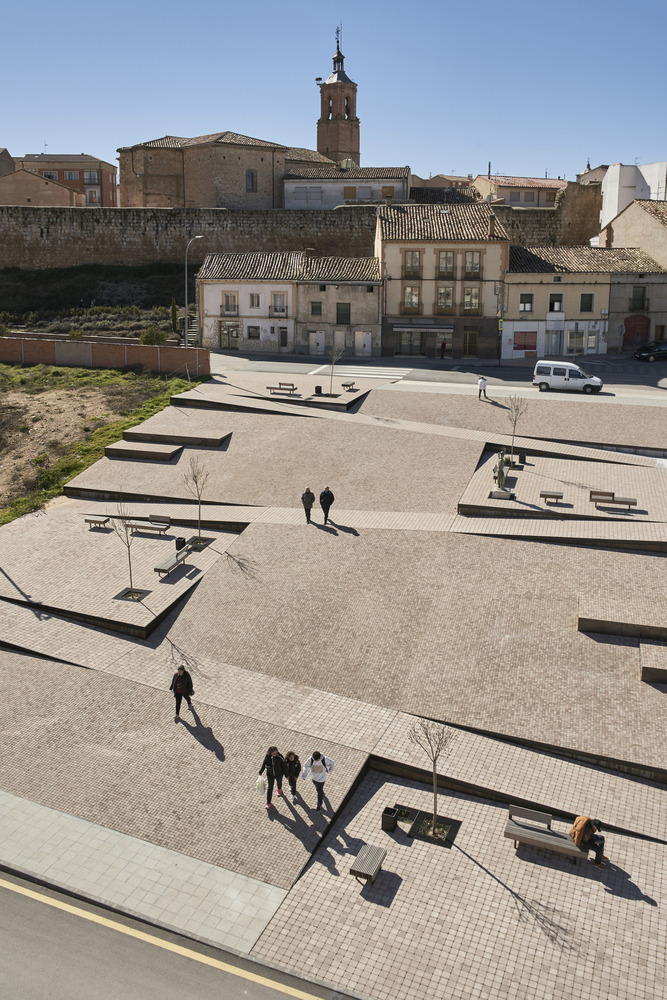
BOV ESTUDIO approached Plaza del Zarrón not as a conventional square, but as a spatial mediator between disparate parts of the town. The design is rooted in careful observation of pedestrian flows, social behavior, and the relationship between the historic walls, the Plaza Mayor, and surrounding neighborhoods. Rather than imposing a singular formal gesture, the project allows the geometry of the square to emerge from these movements, translating daily routines and ceremonial paths into a continuous public landscape.
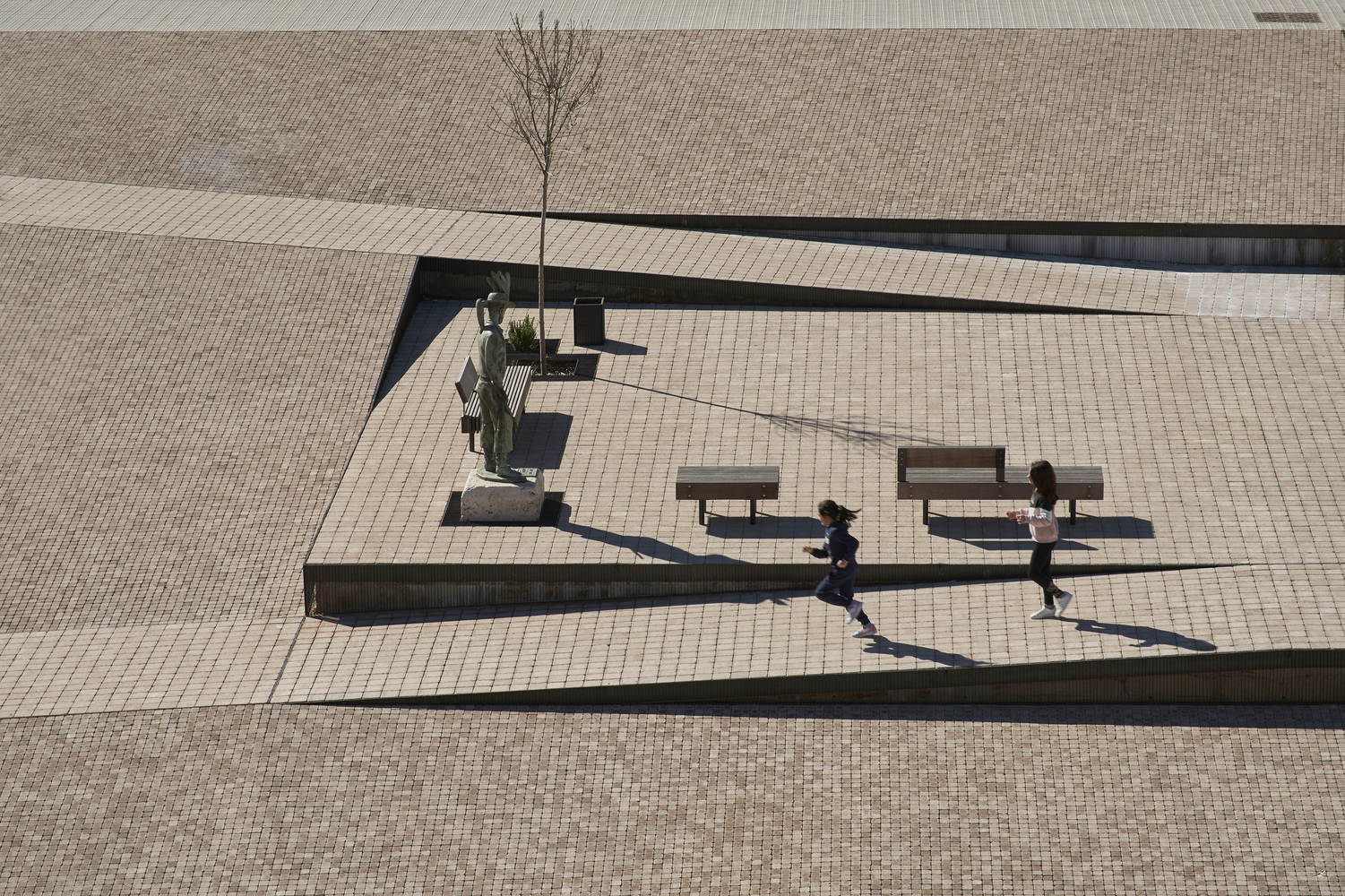
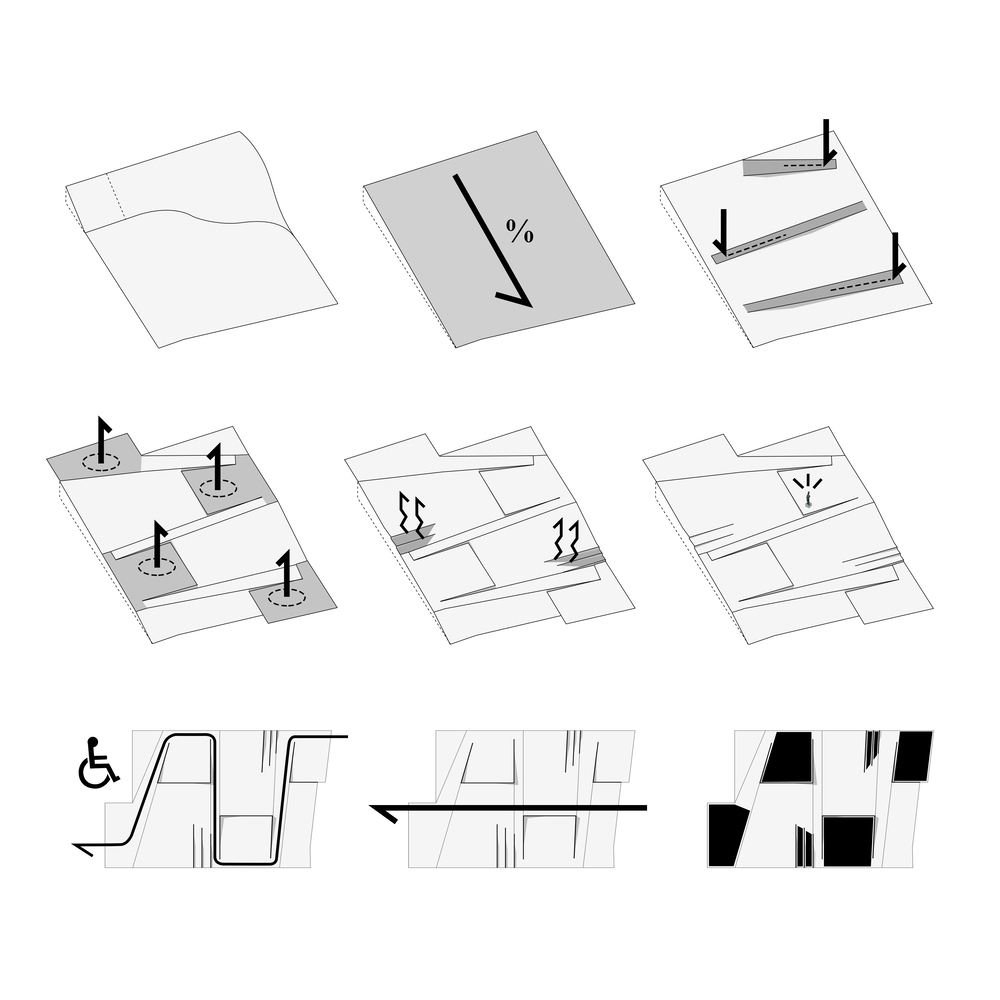
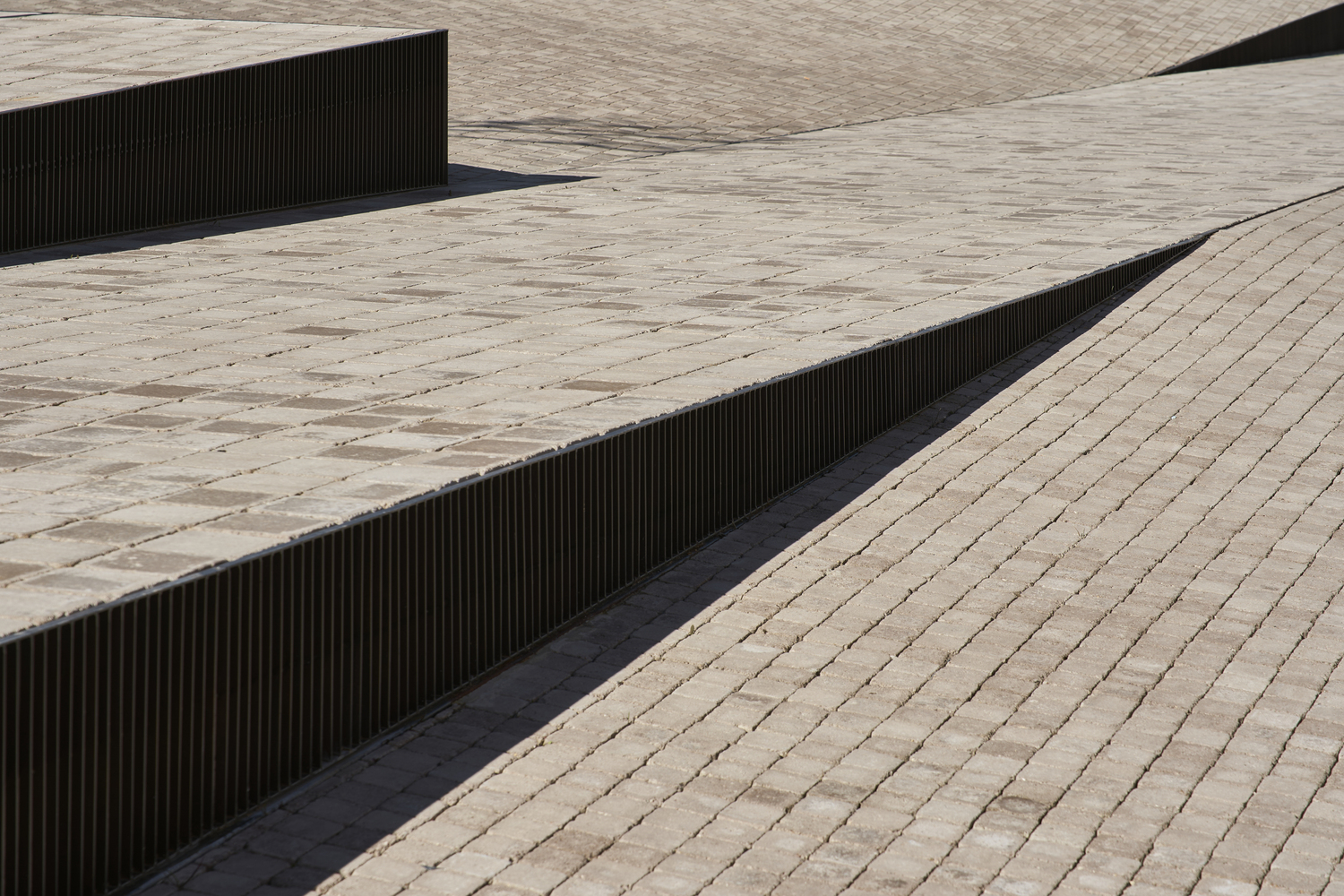
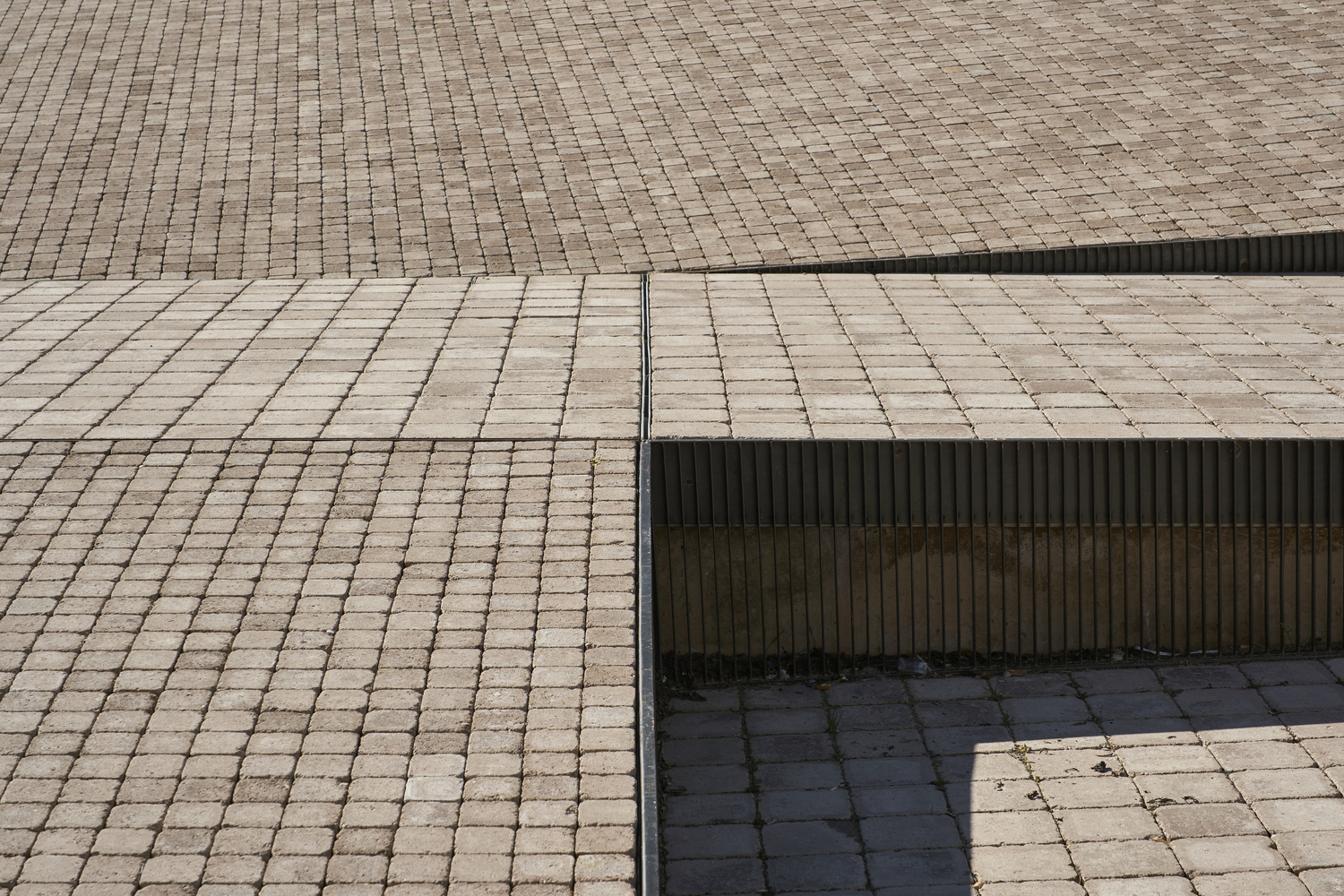
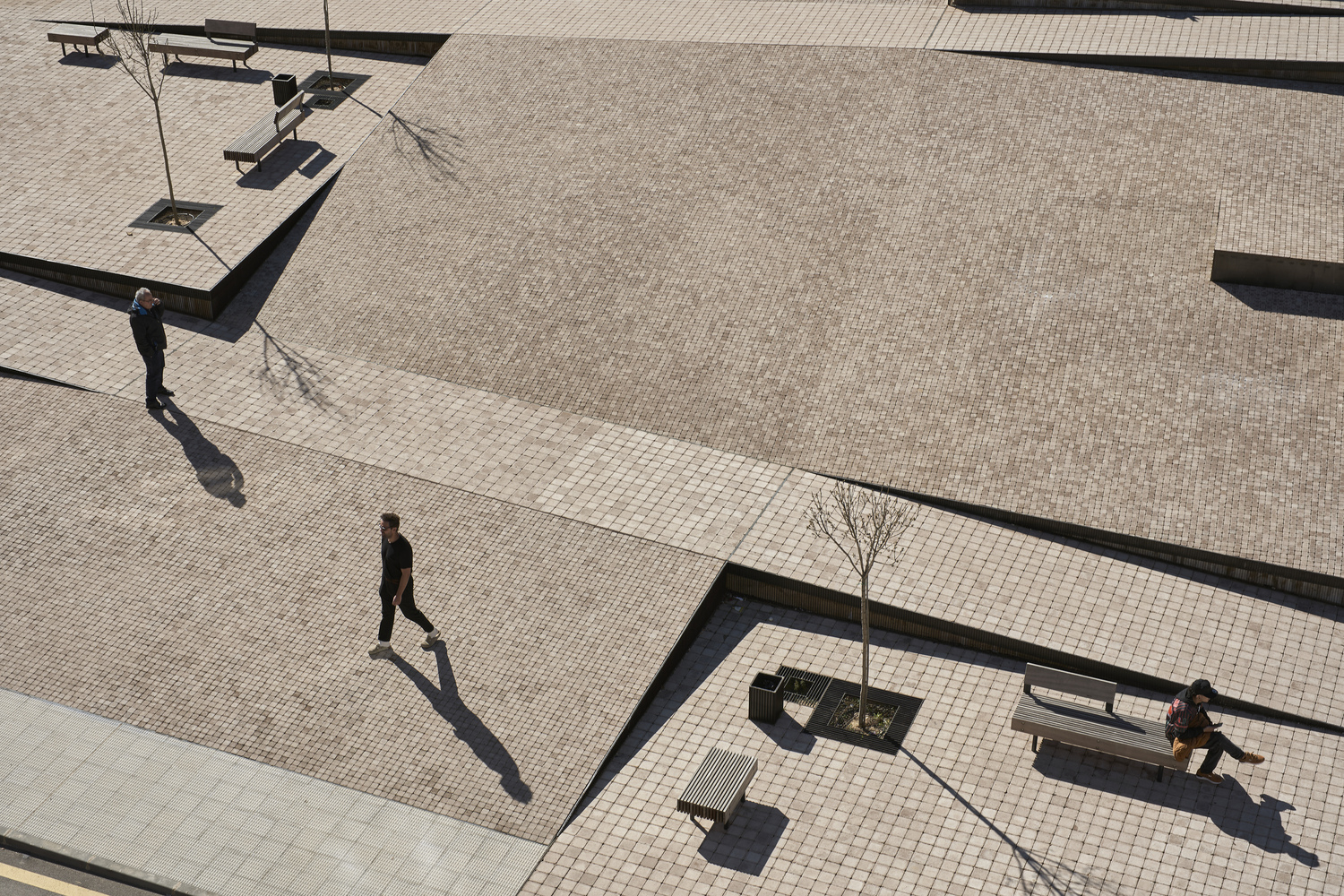
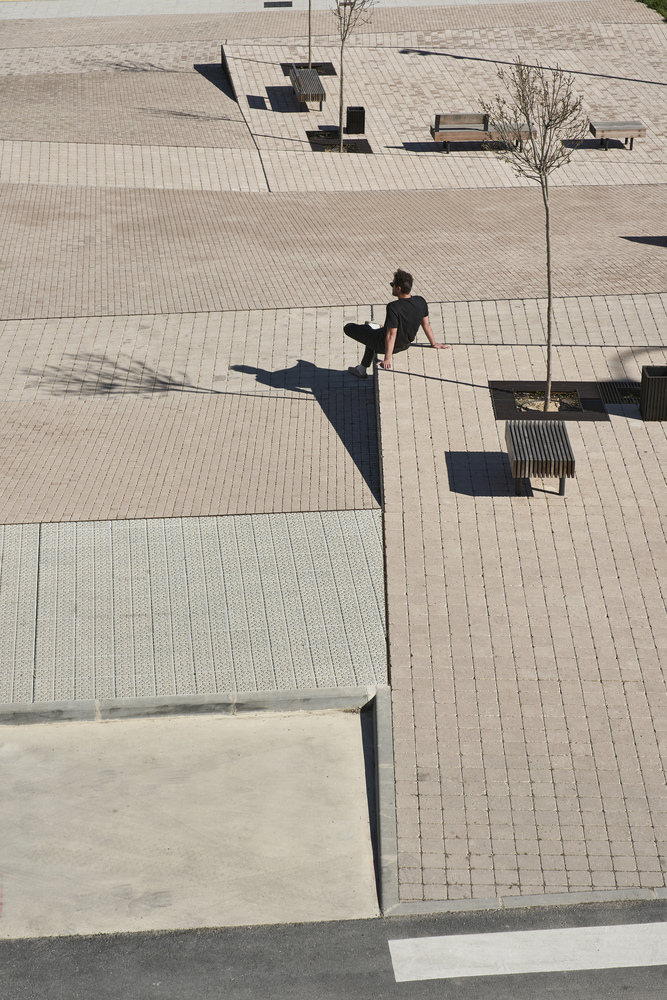
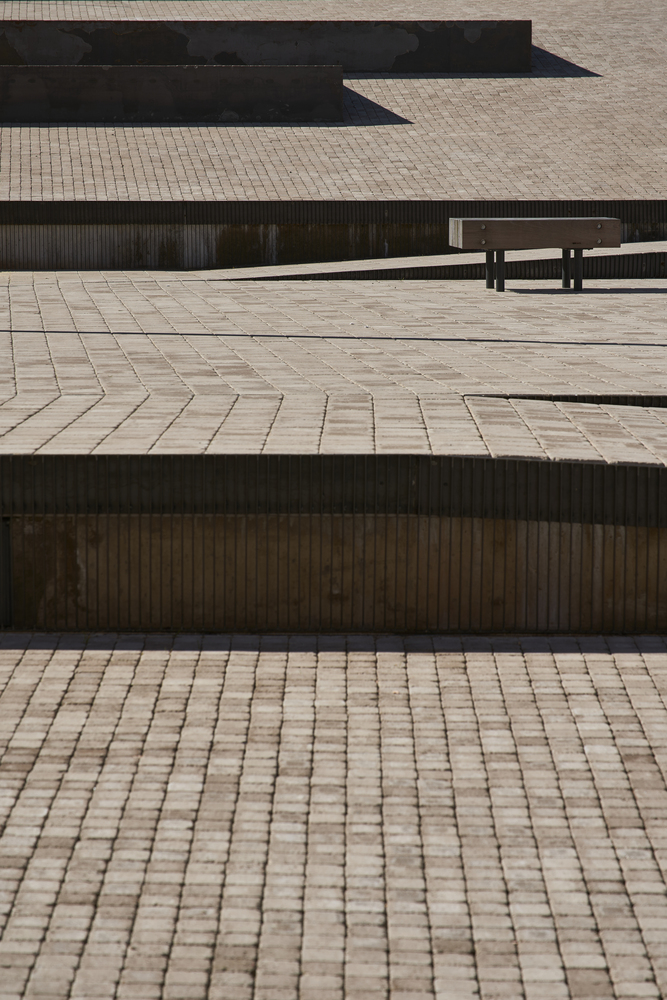
The most defining challenge of the site was the pronounced change in elevation that had long separated the old town from newer areas of Almazán. This five meter difference is resolved through a folded surface composed of zigzagging ramps and terraces that distribute the slope gradually across the plaza. Universal accessibility is embedded into the spatial logic, allowing all users to move freely without the need for secondary routes or isolated solutions.
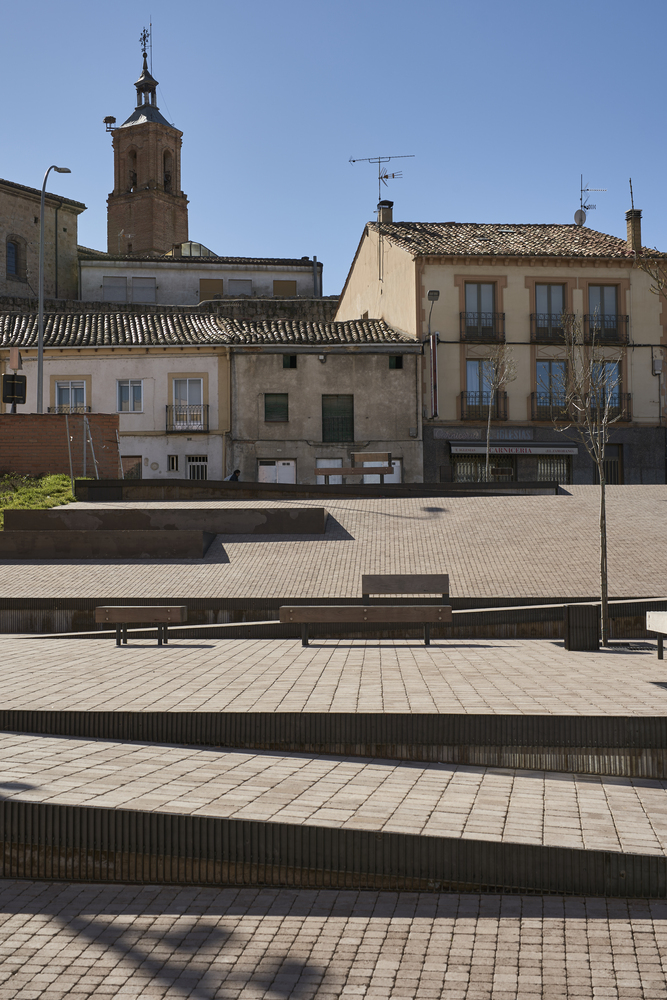

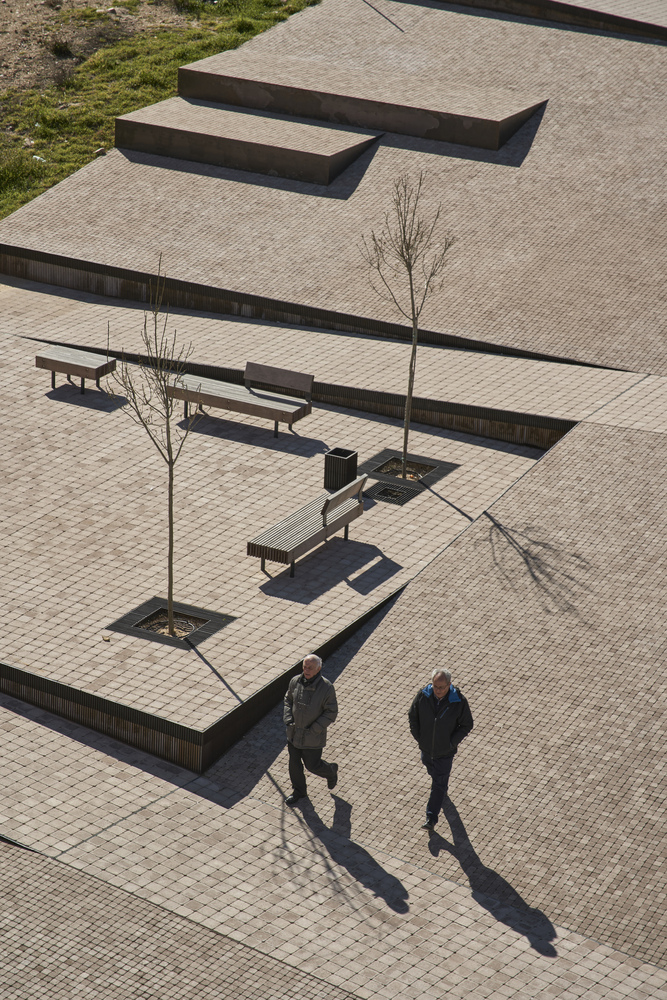
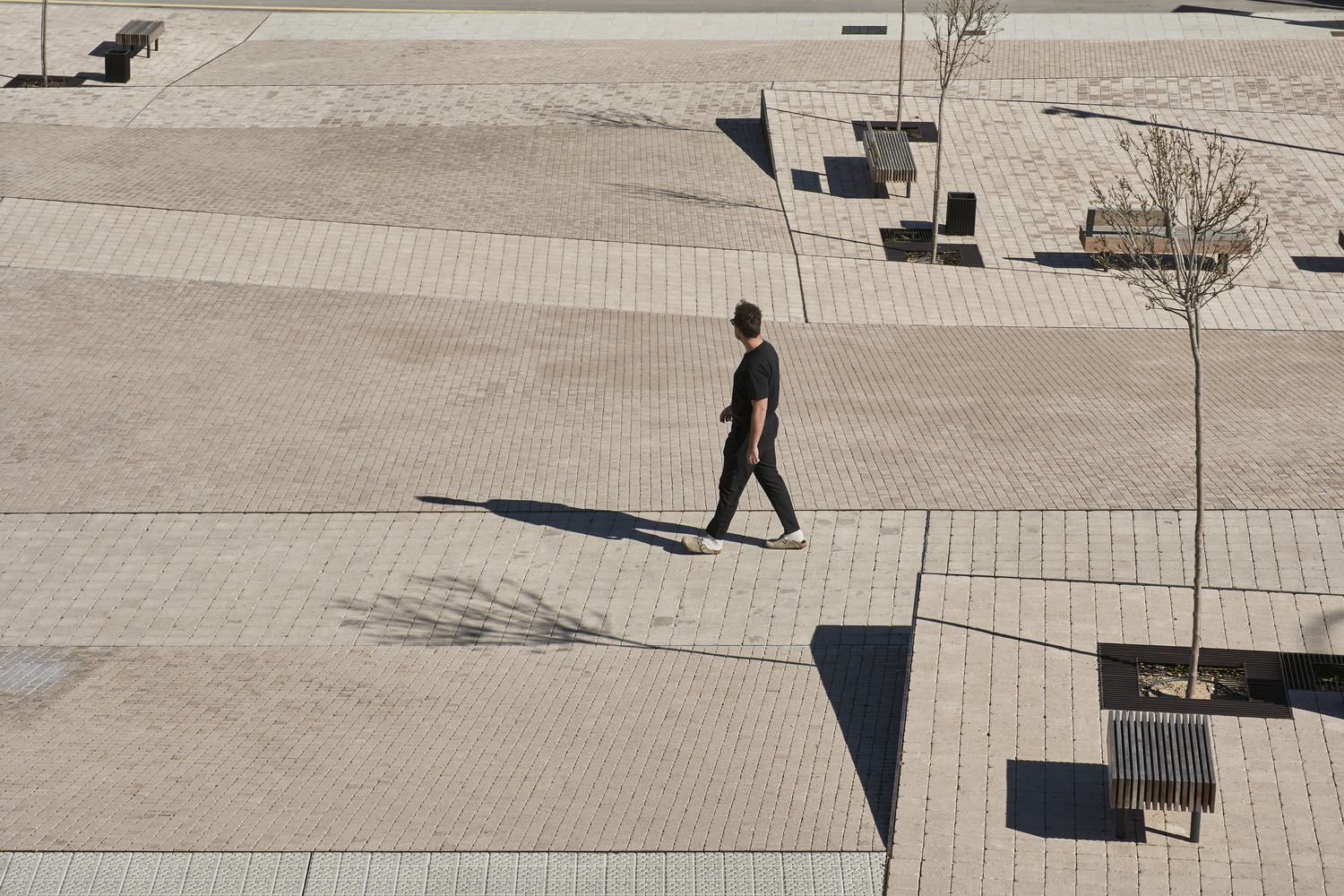
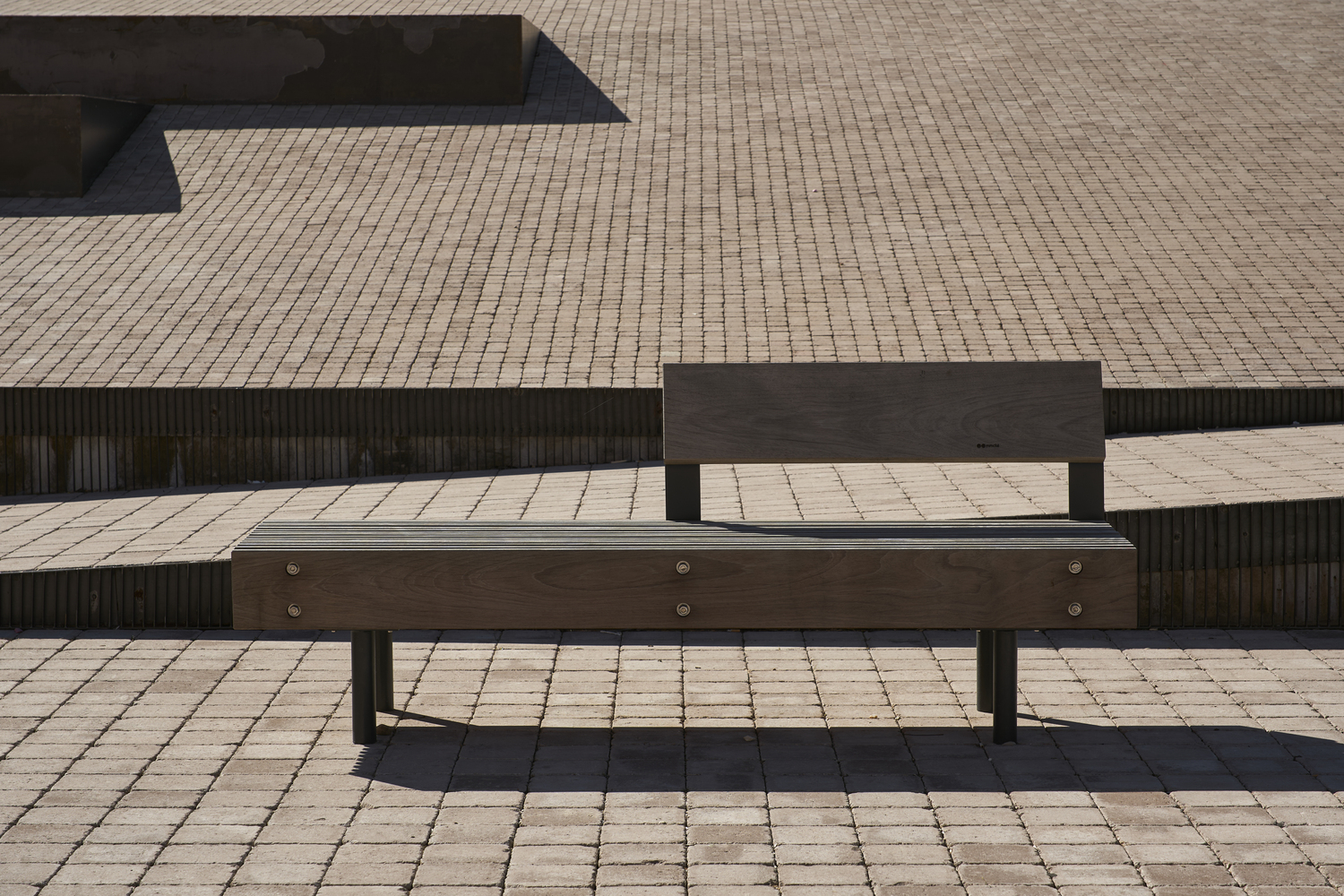
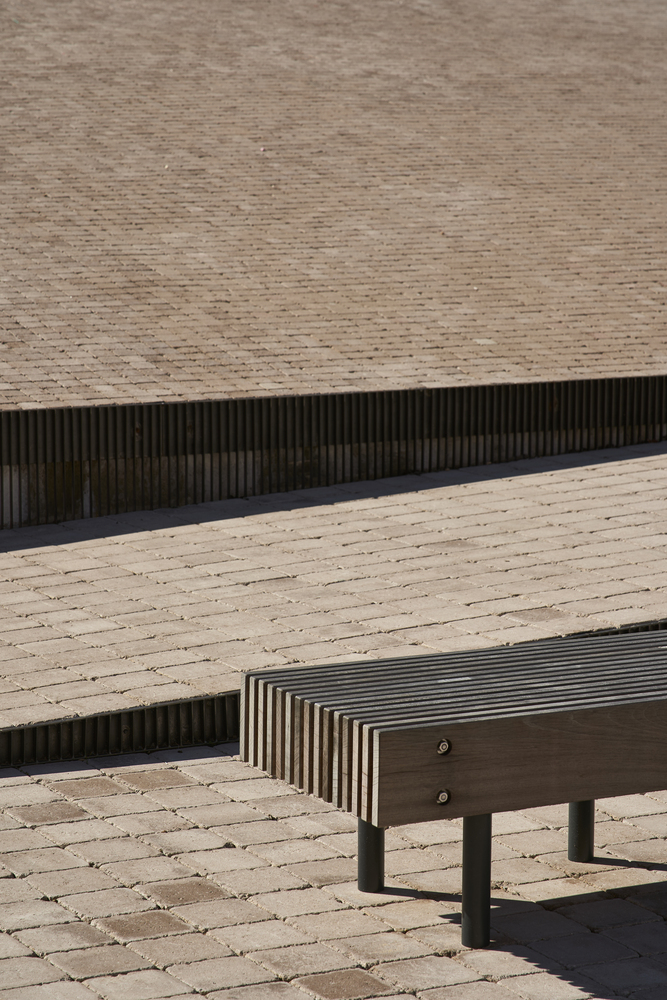
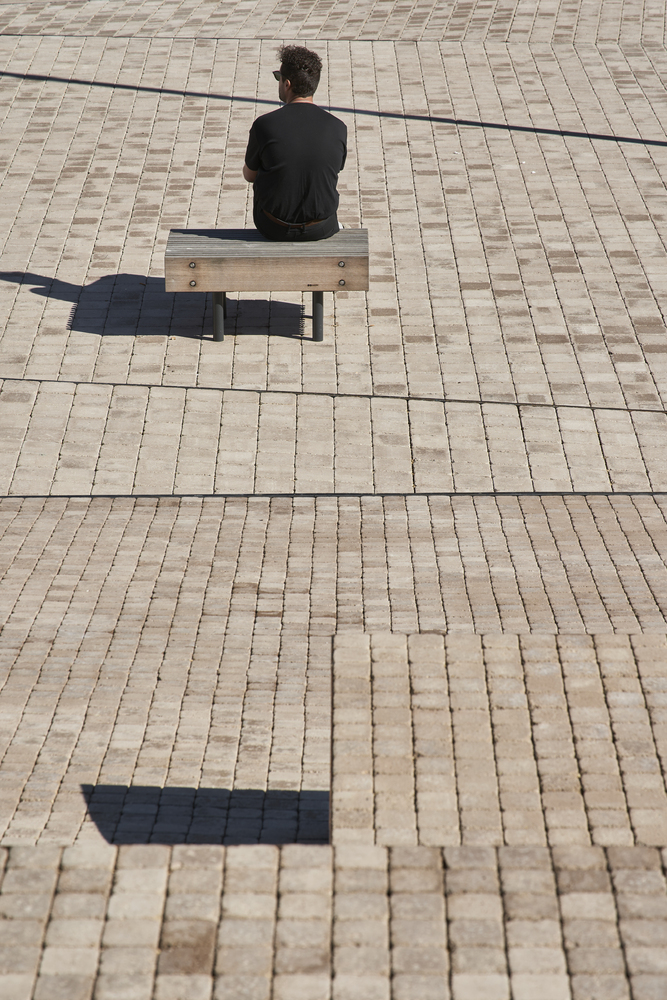
Along this primary sloping path, the square opens into a series of flatter platforms that function as smaller plazas within the whole. These spaces offer moments of pause, each oriented to capture distinct views, light conditions, or spatial relationships. Steps, recessed edges, and low retaining walls are deliberately proportioned to serve as informal seating, encouraging spontaneous gatherings and social exchange while maintaining visual continuity across the site.
Cultural significance is anchored through the relocation of the Zarrón sculpture, historically associated with festivities in the Plaza Mayor. Its new placement establishes a symbolic link between tradition and contemporary civic space, allowing celebrations such as the San Pascual Bailón festival to extend naturally into the square. In this way, Plaza del Zarrón becomes both a setting for ritual events and an active component of everyday urban life.
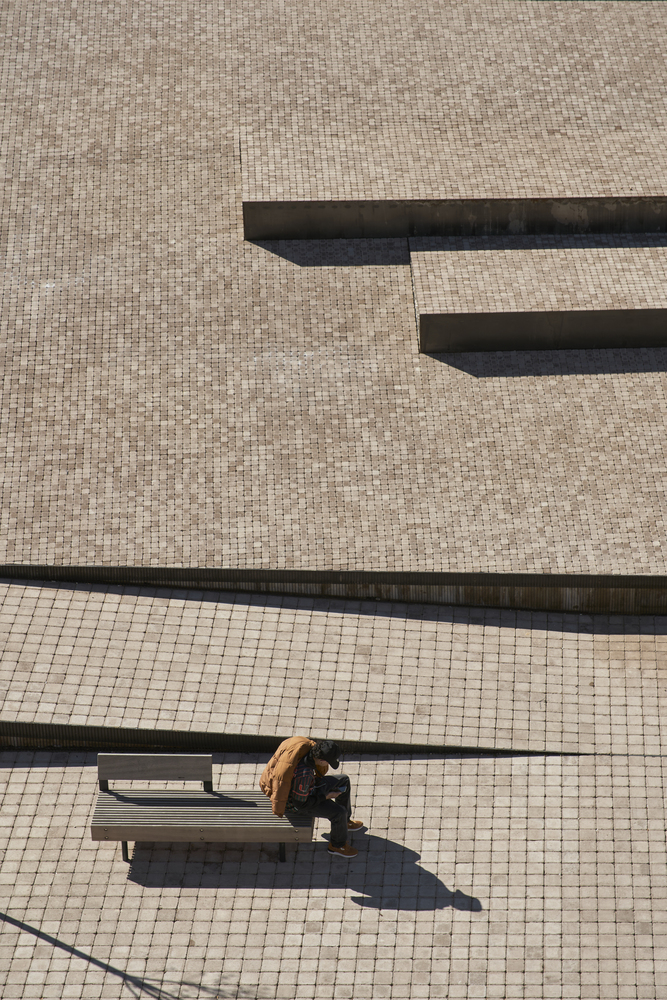
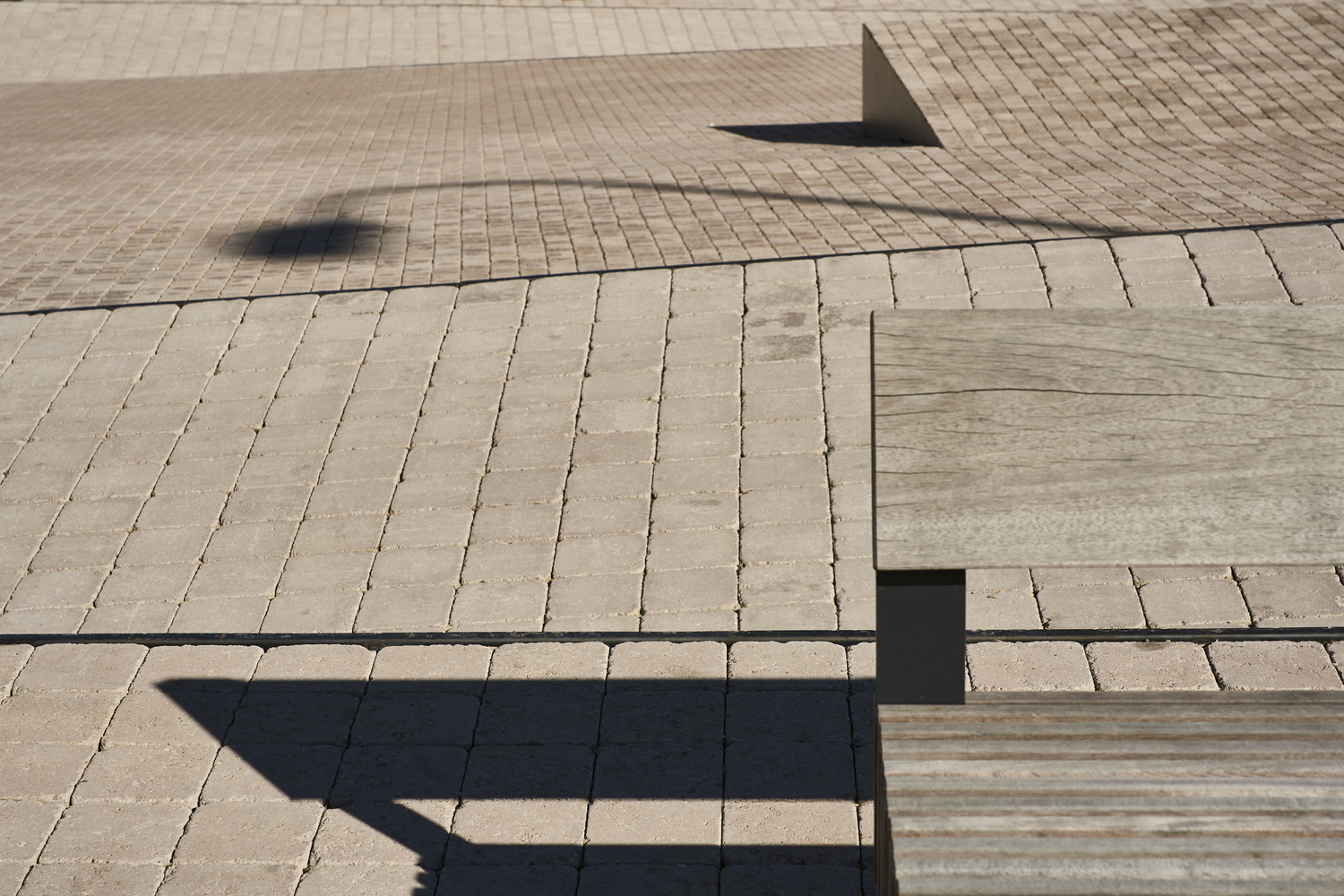
Materiality reinforces this dialogue between past and present. Aged concrete paving reflects the tones of the historic center, while wood and metal lattice elements reference local craftsmanship. The paving grid subtly differentiates areas for circulation and rest, supporting orientation and accessibility. Integrated seating, native deciduous trees, and lighting embedded along the plaza’s folds complete the composition, ensuring comfort throughout the year and maintaining a clear spatial identity after dusk. Together, these elements position Zarrón Square as a resilient and inclusive public space grounded in Almazán’s cultural and urban fabric.
Project Gallery
Project Location
Address: Almazán, Spain
The location specified is intended for general reference and may denote a city or country, but it does not identify a precise address.

