

Architects: atelier tao+c
Area: 186 m²
Year: 2022
Photography: Wen Studio
Design Team: Tao Liu, Chunyan Cai, Haojia Song, Weilu Wang, Jingying Cai (intern)
Contractor: Shanghai Tianci Architecture Deco, Limited, Co
City: Beijing
Country: China
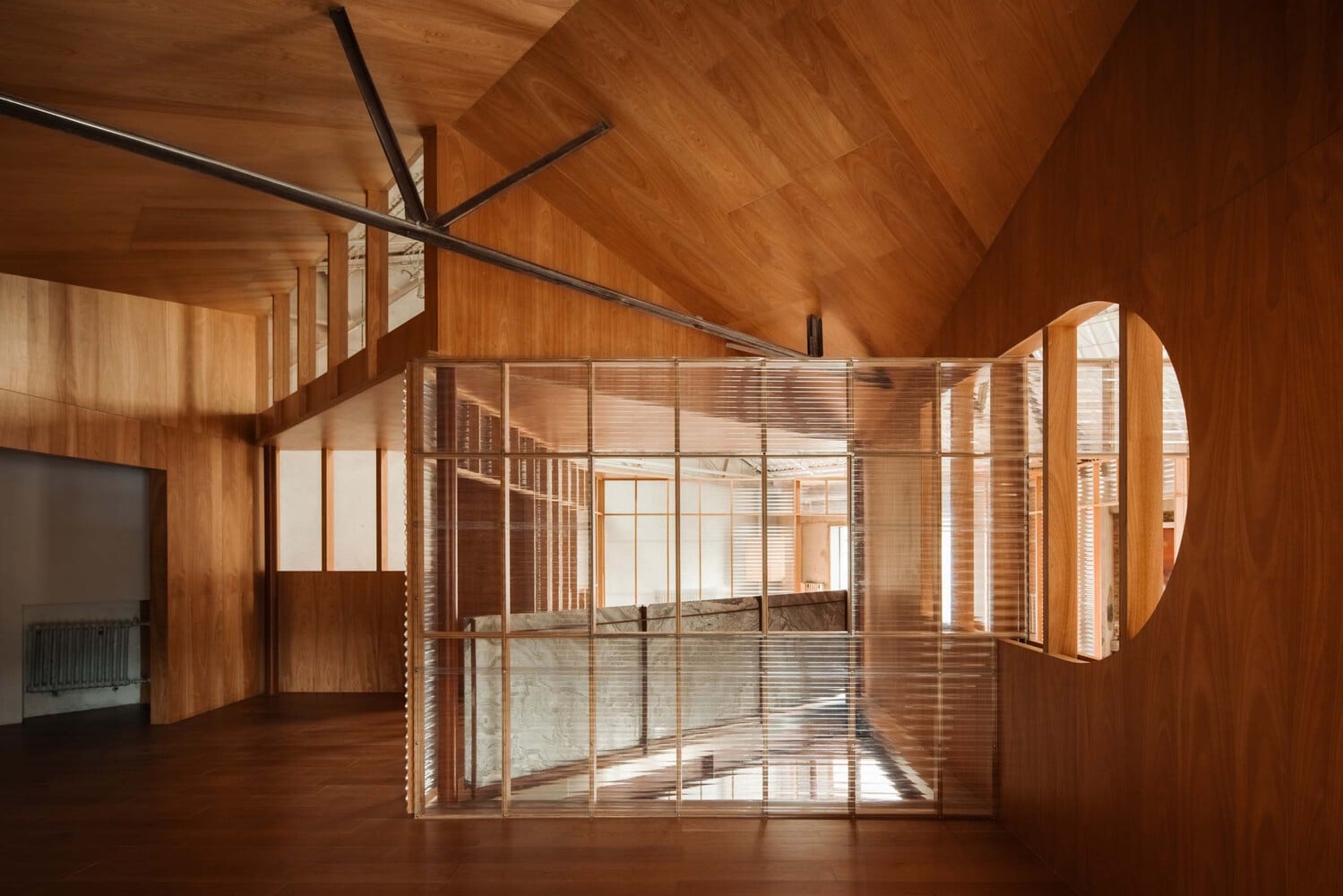
The ZIIN Beijing Store, designed by atelier tao+c, reinterprets a former textile warehouse from the 1960s within the Langyuan Station cultural district as a contemporary retail and exhibition environment. The project introduces a new architectural framework inside the historic industrial shell, establishing a layered spatial system that mediates between the existing brick structure and the new commercial program. Two square structural frames rotated at forty five degrees form a distinctive “house within a house” configuration that organizes circulation and display areas while maintaining a visual dialogue with the warehouse envelope. Transparent polycarbonate panels and timber surfaces differentiate the overlapping volumes, allowing natural light to move through the interior and emphasize the depth of the spatial composition. By exposing structural layers and utilizing ordinary industrial materials such as steel profiles, timber elements, and brick surfaces, the design foregrounds the process of construction itself. The project demonstrates how adaptive reuse strategies, combined with straightforward building techniques and cost conscious material selection, can produce a flexible and expressive retail space while preserving the character of the original industrial architecture.

The conversion of the former warehouse into the ZIIN showroom reflects atelier tao+c’s exploration of how new architectural systems can coexist with historic industrial structures. Instead of altering the existing shell extensively, the architects introduced an independent framework that sits within the building while maintaining connections to the original brick walls. This strategy allows the new intervention to remain legible while preserving the spatial memory of the warehouse.
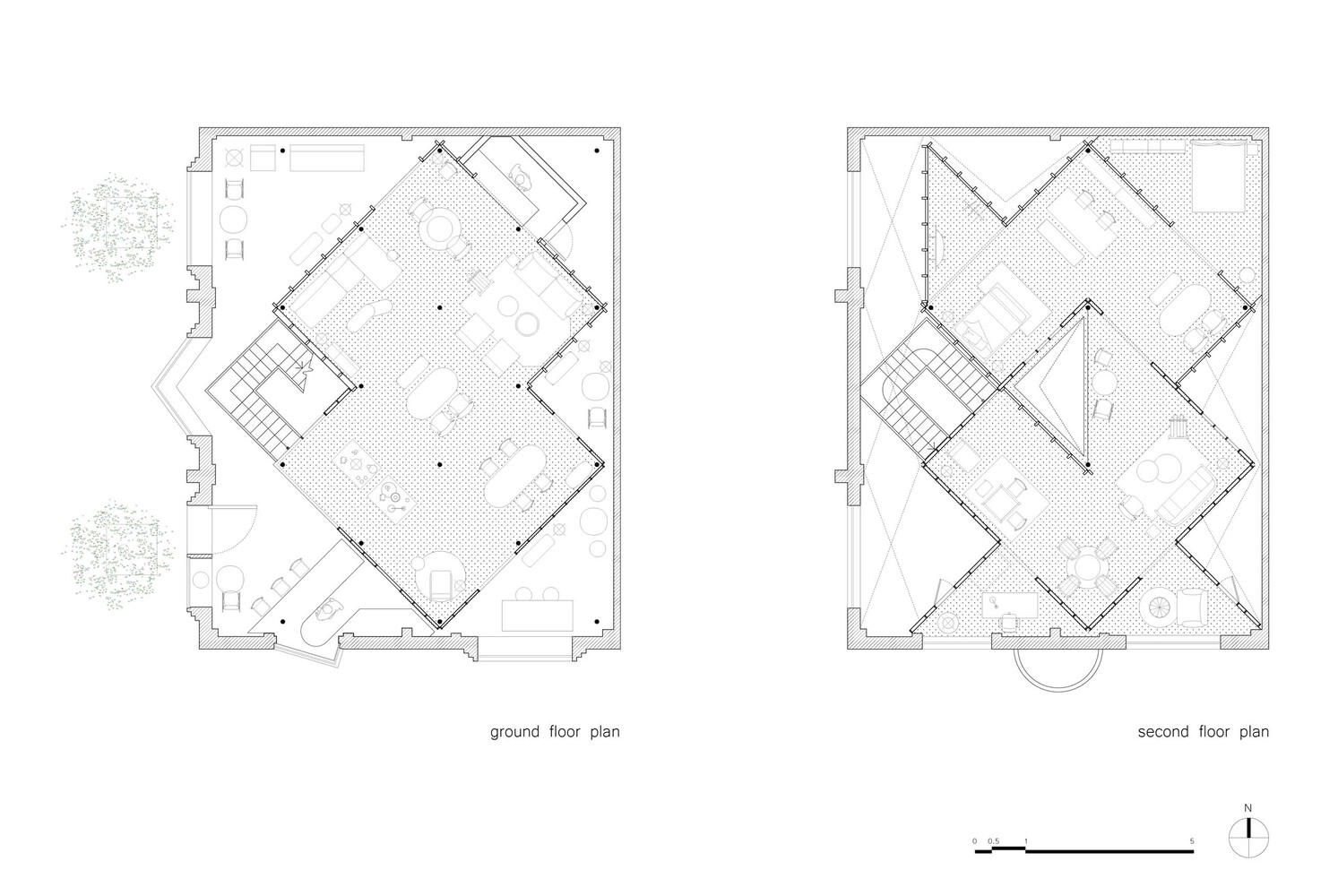
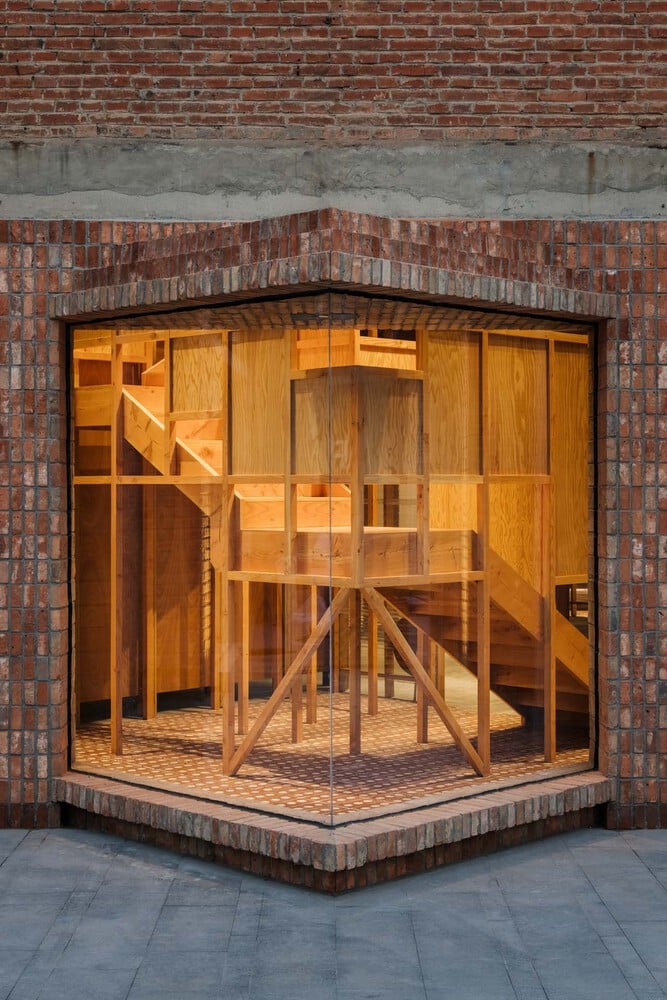
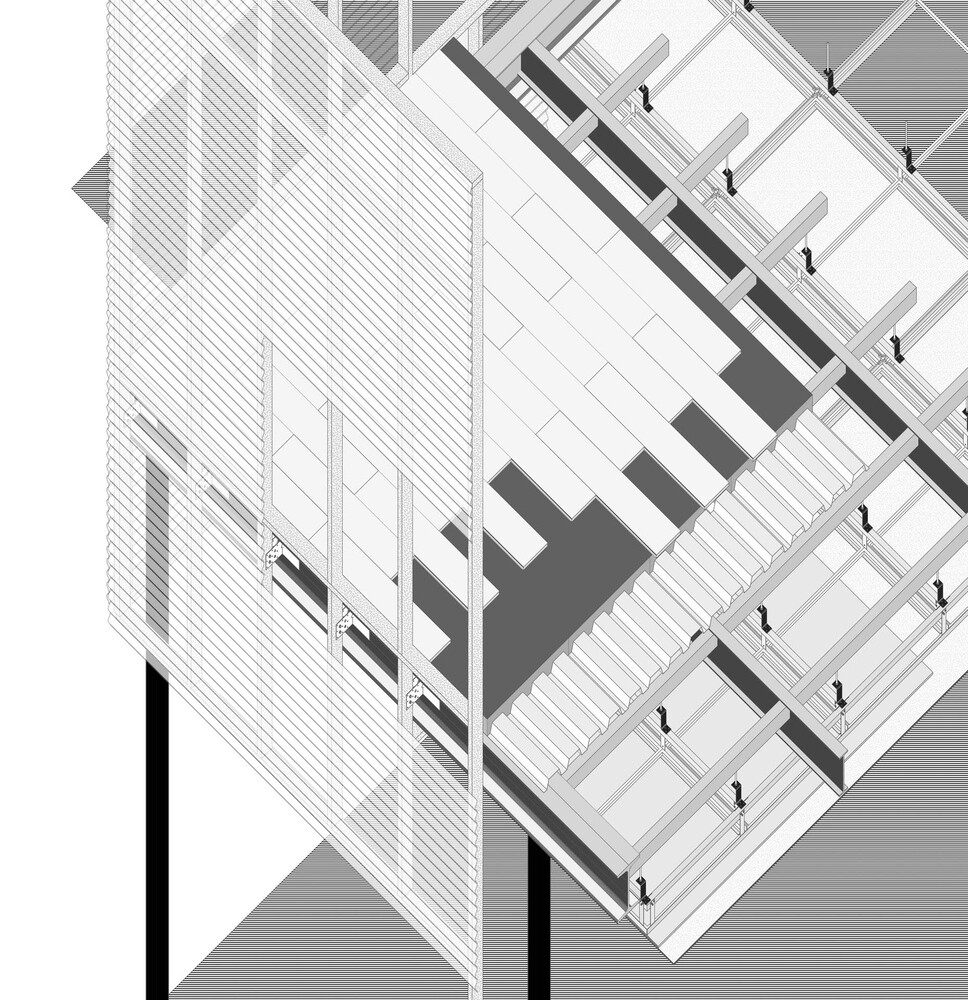
Central to the design are two intersecting square frameworks rotated diagonally at forty five degrees relative to the original structure. This geometric shift introduces a new spatial order that redefines movement through the building. The rotation generates dynamic visual perspectives while creating a layered relationship between the inserted structures and the existing envelope.

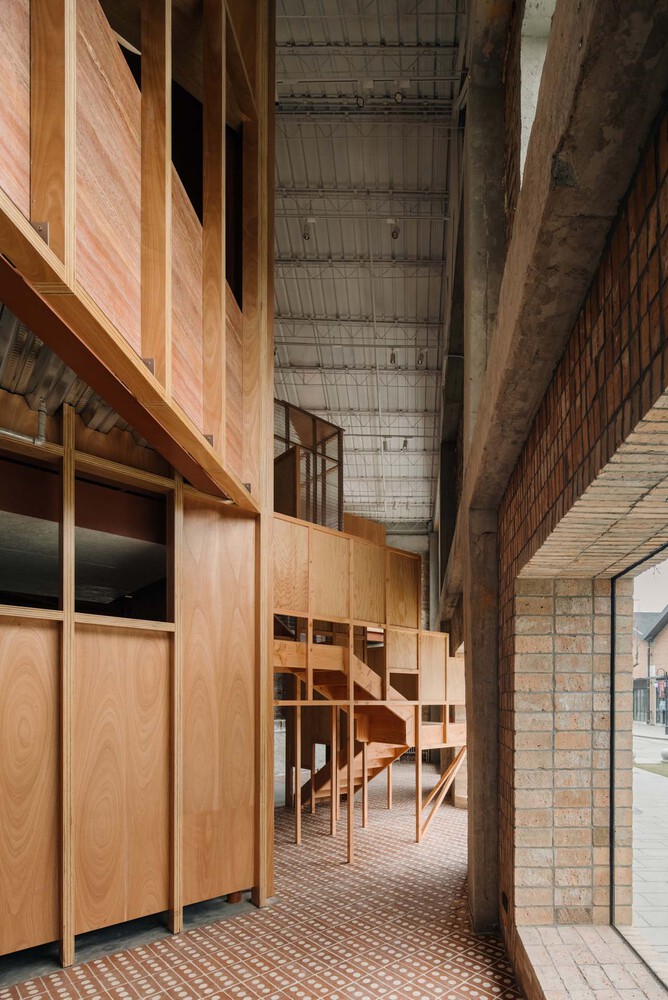
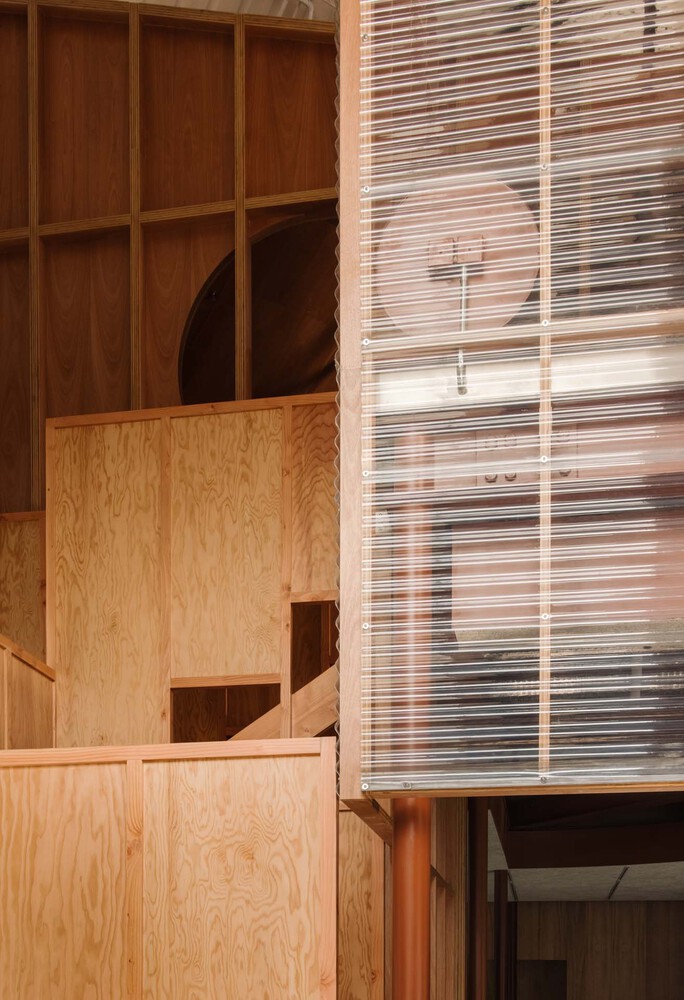
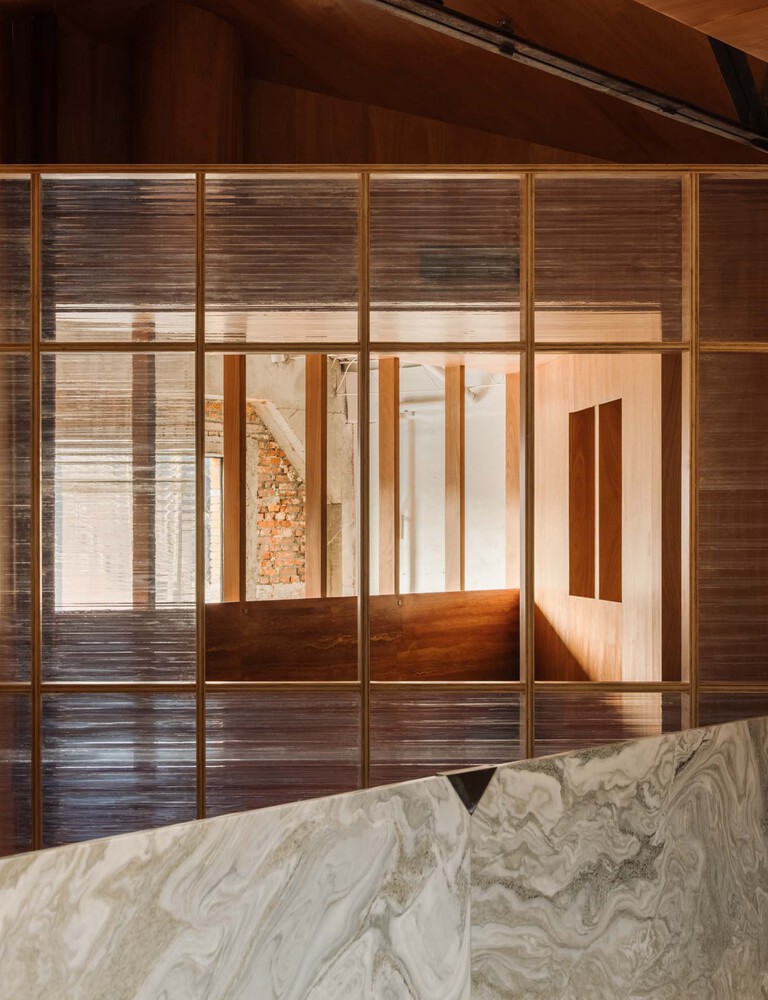
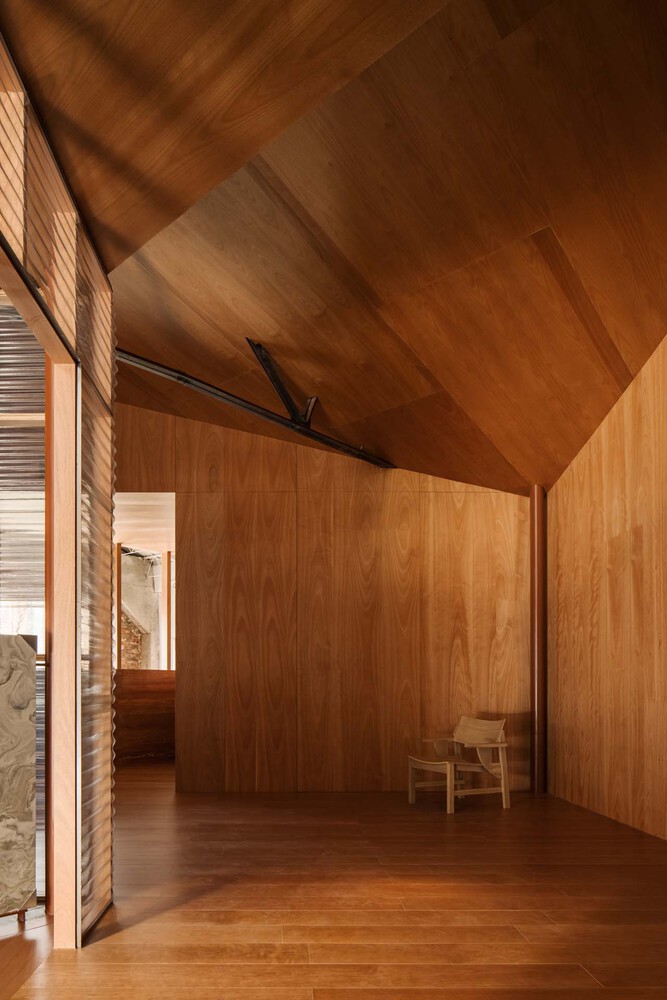
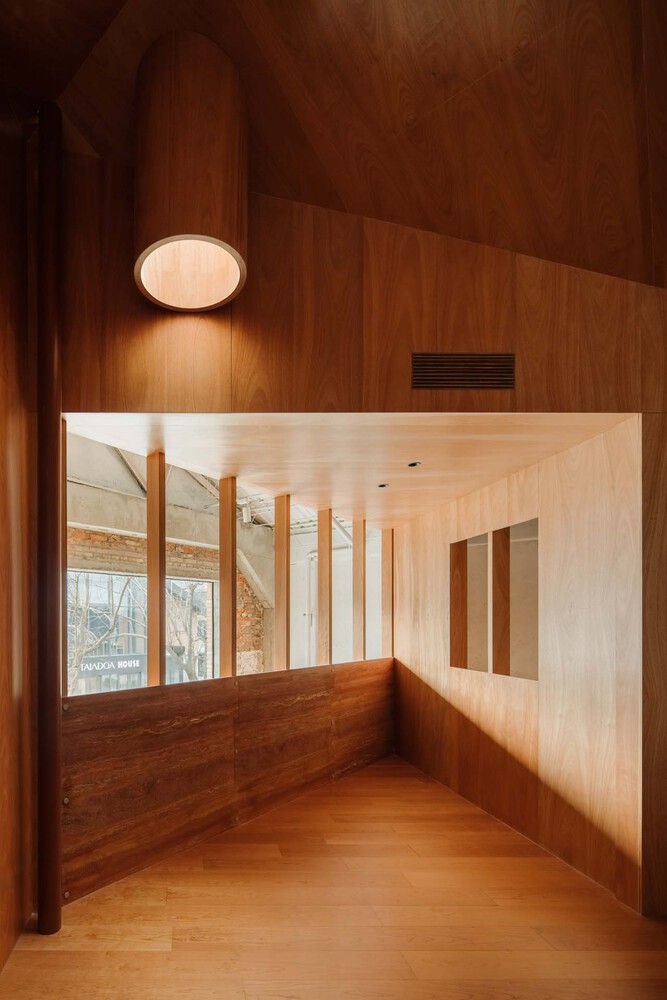
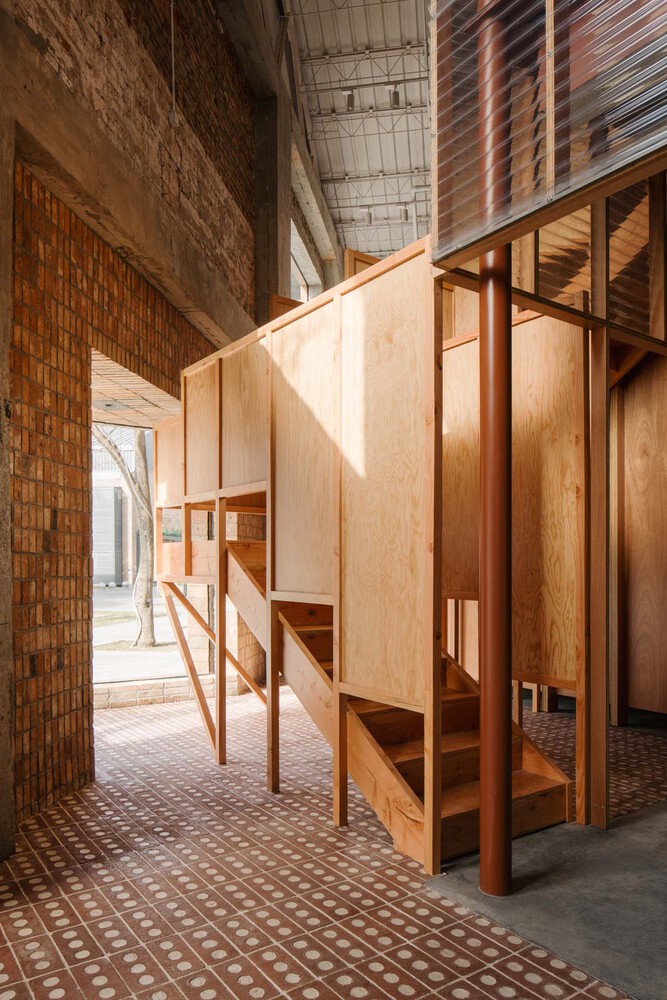
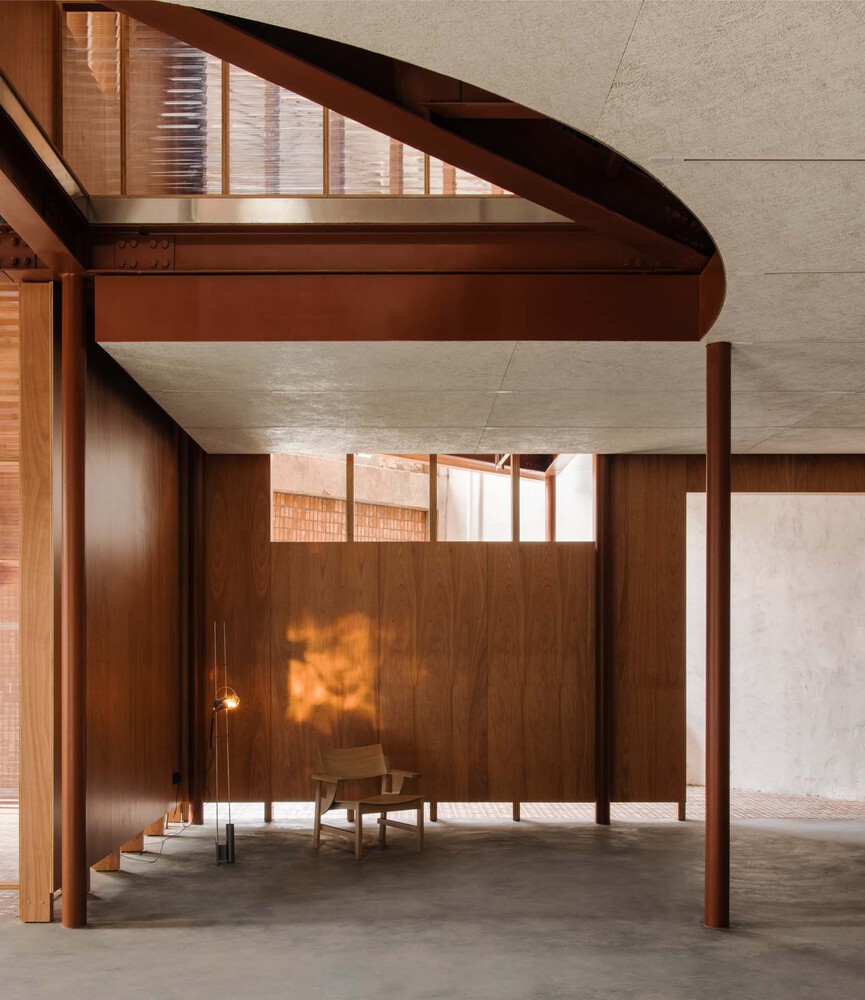
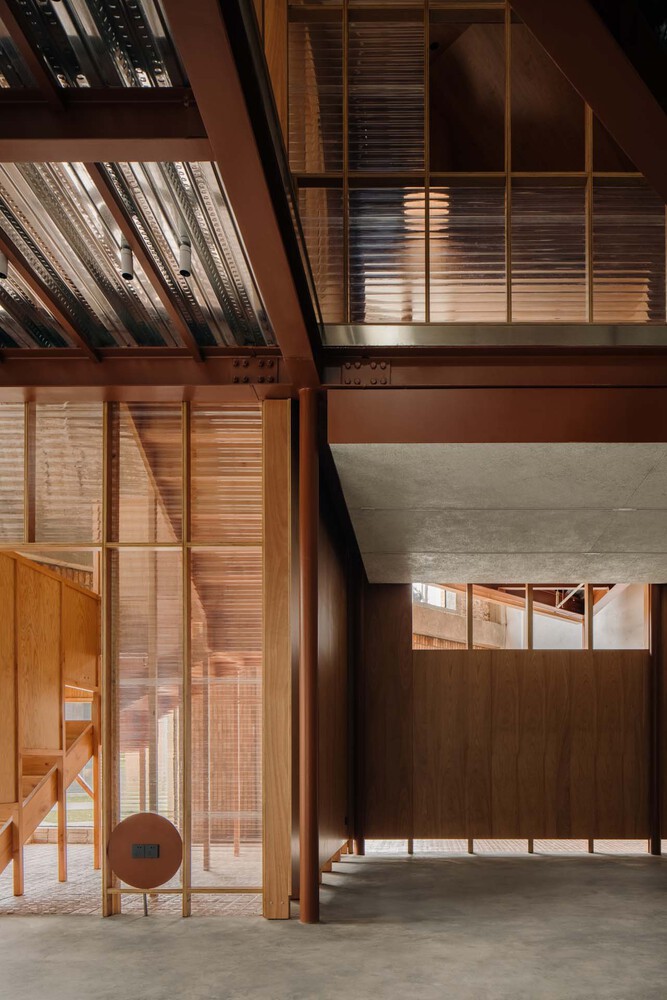
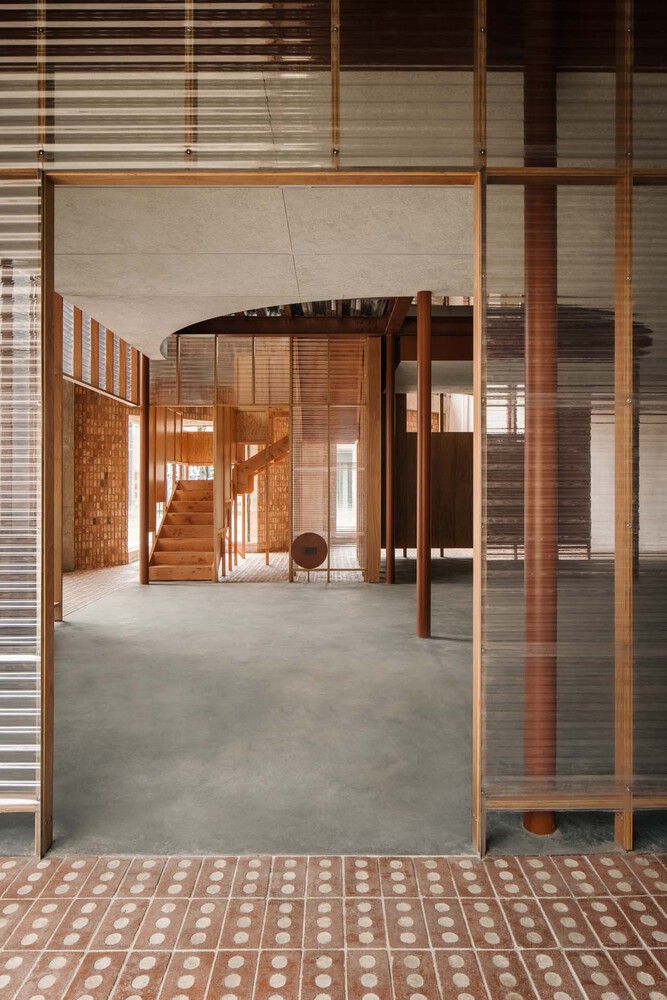
The two frameworks are treated differently in terms of enclosure and material expression. The first appears as a translucent volume clad in corrugated polycarbonate panels, subtly revealing the interior to visitors. Behind it, the second framework is wrapped in timber panels, creating a more solid and intimate setting for the display of furniture pieces.
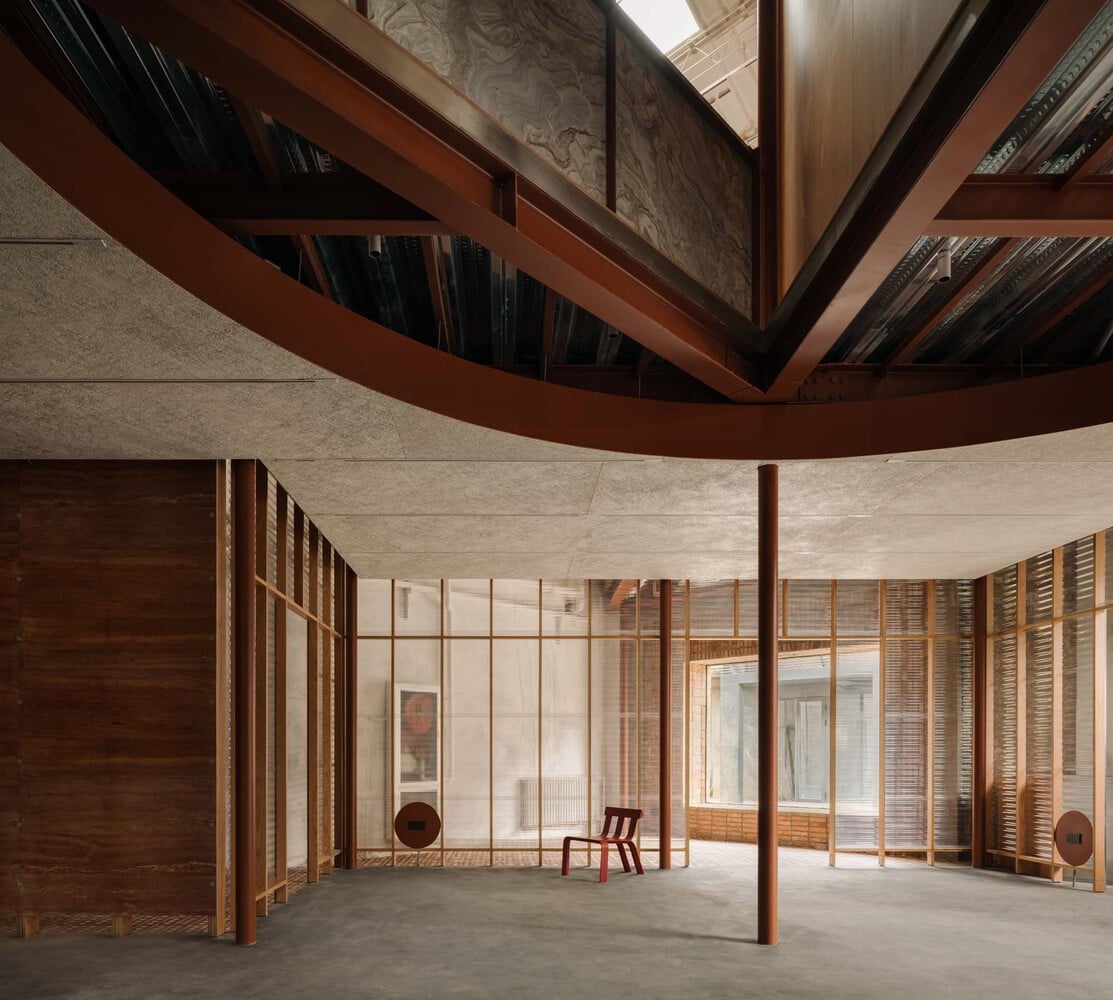
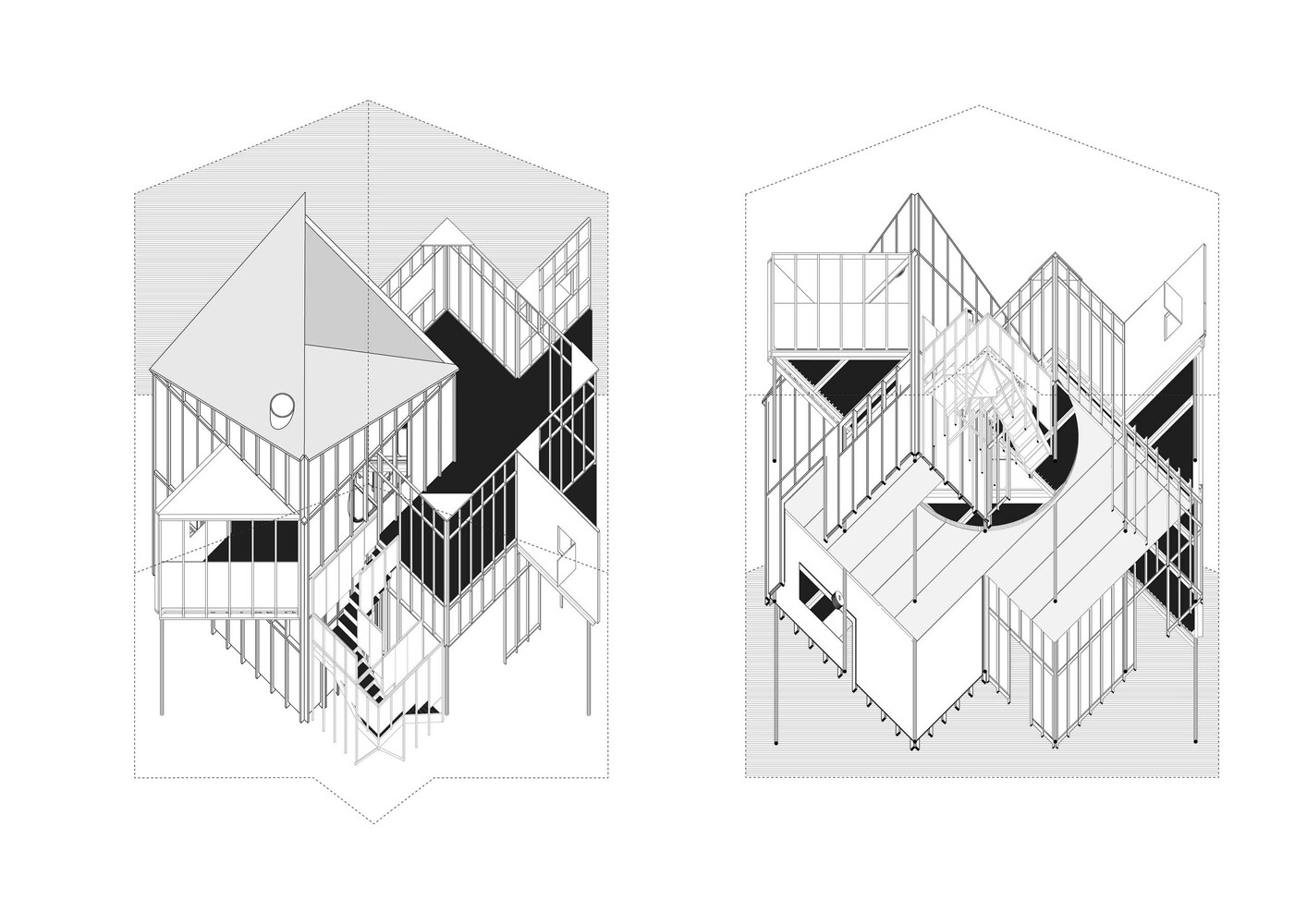
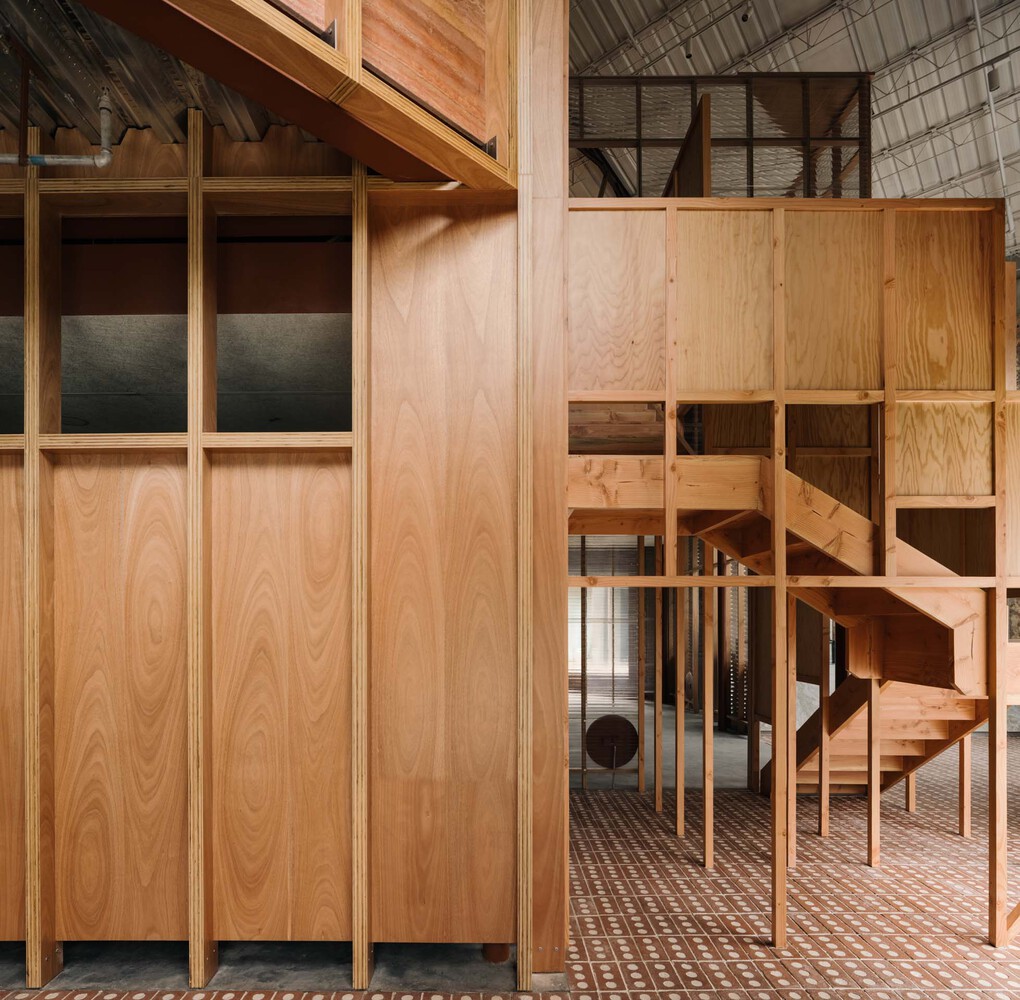
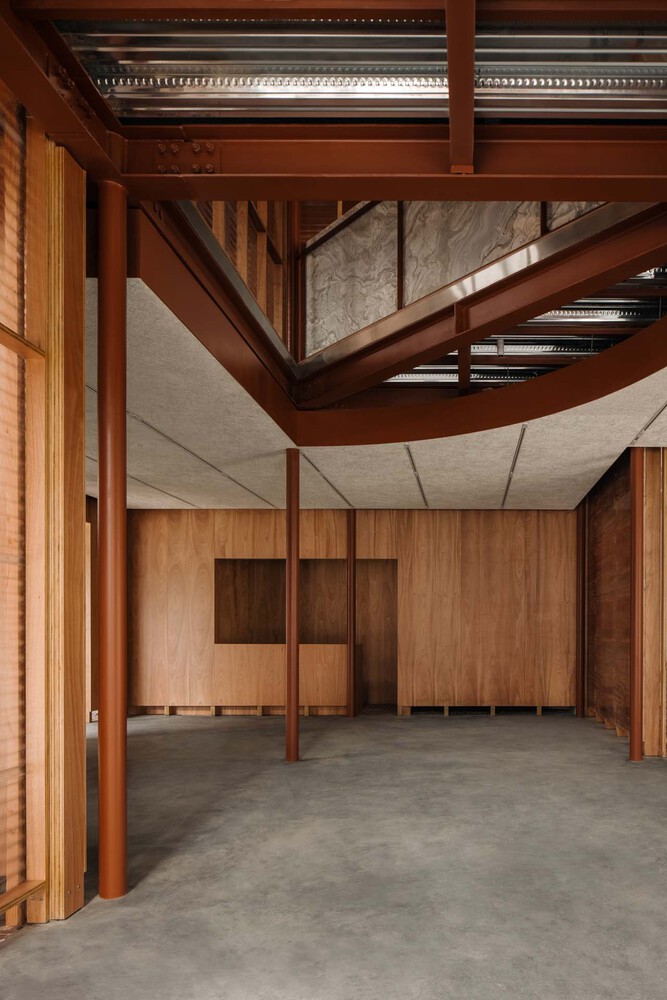
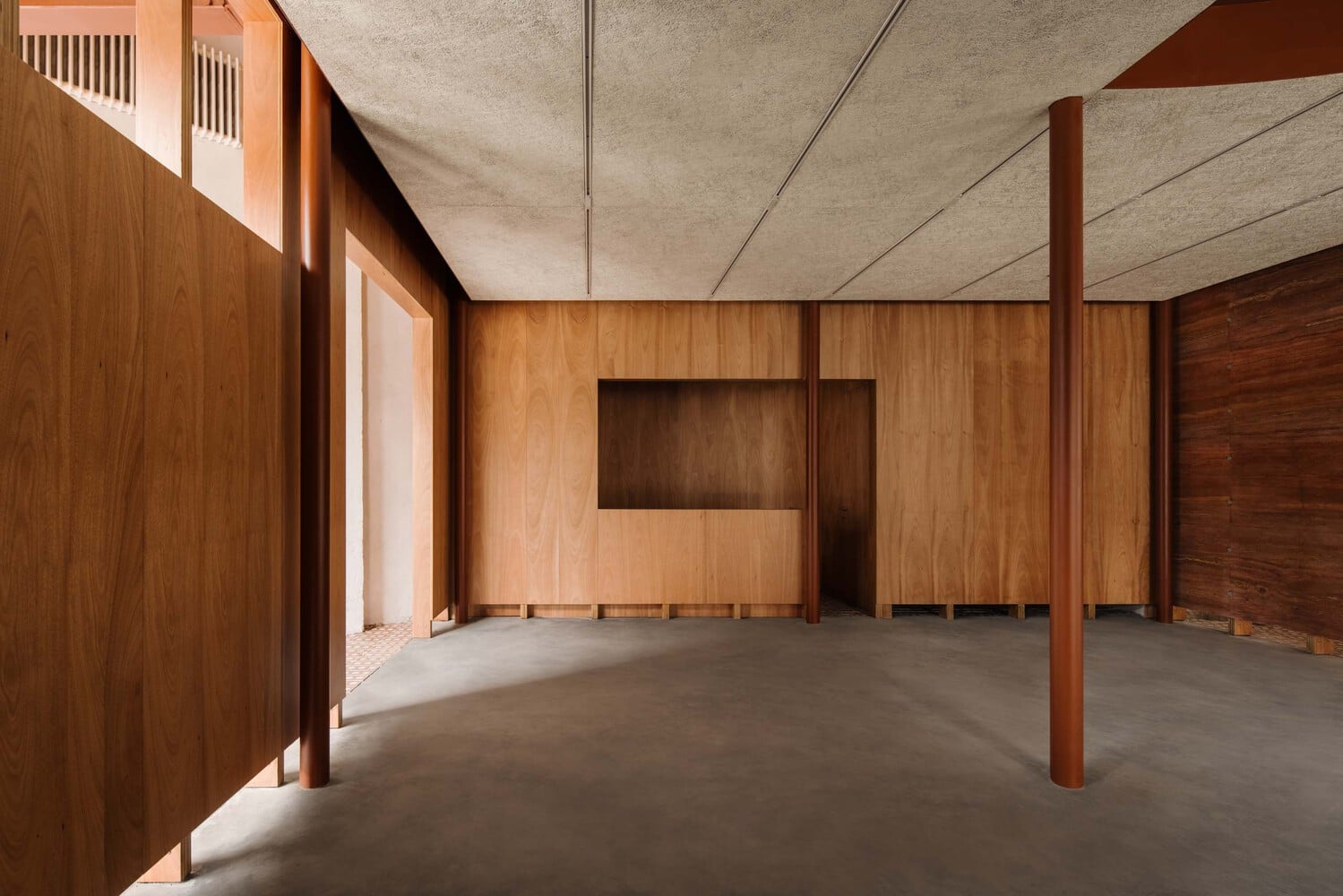
Inside the structure, a sequence of interconnected rooms is organized along two parallel rows of columns. Each space flows into the next, forming a continuous route that guides visitors through the showroom. This arrangement allows the interior to accommodate exhibitions, events, and informal gatherings while maintaining a coherent structural rhythm.
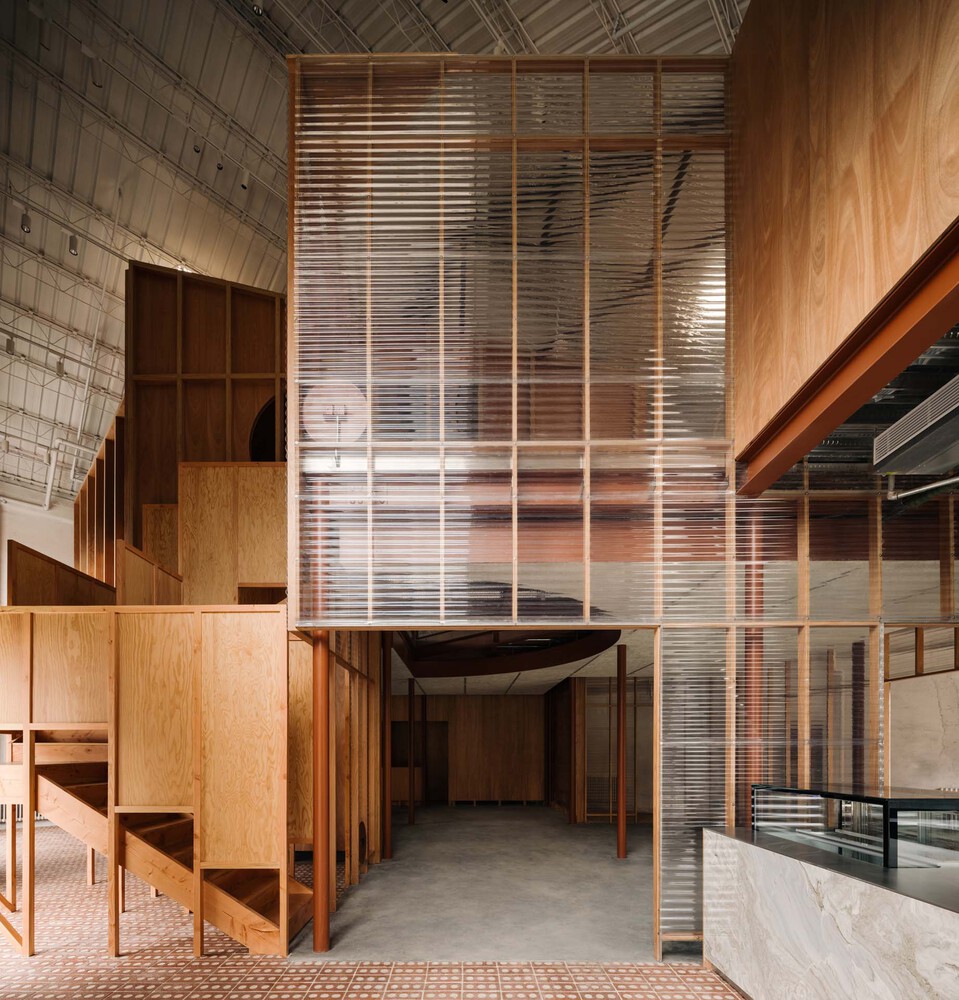

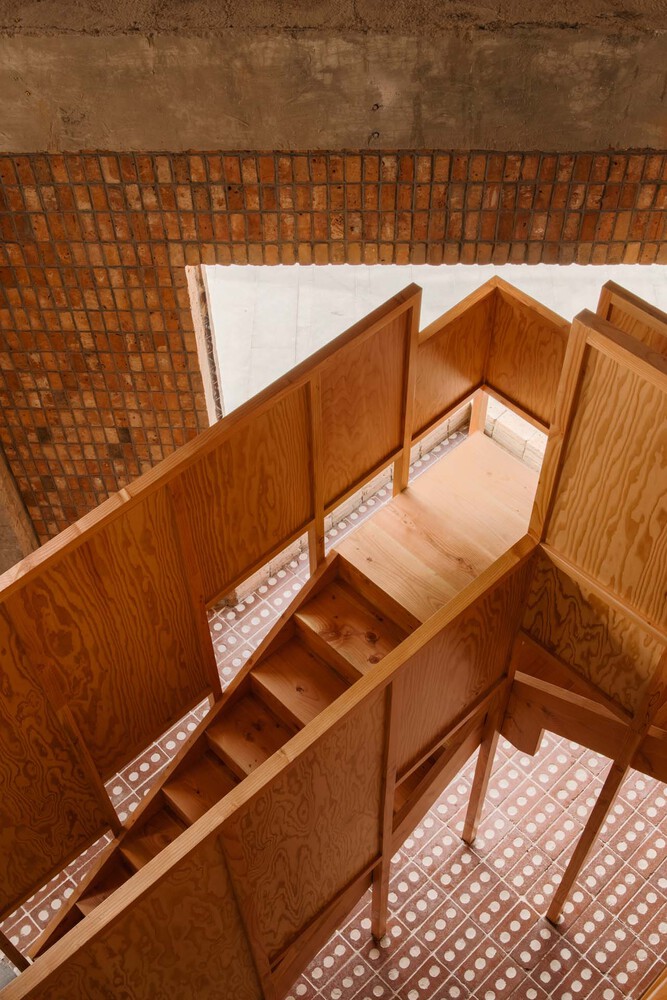
Between the inserted frameworks and the historic brick walls, a peripheral zone emerges as a transitional layer described as semi interior and semi exterior. Circulation moves through this space along the building’s perimeter, allowing visitors to experience the original architecture while observing the newly introduced structural elements from multiple vantage points.


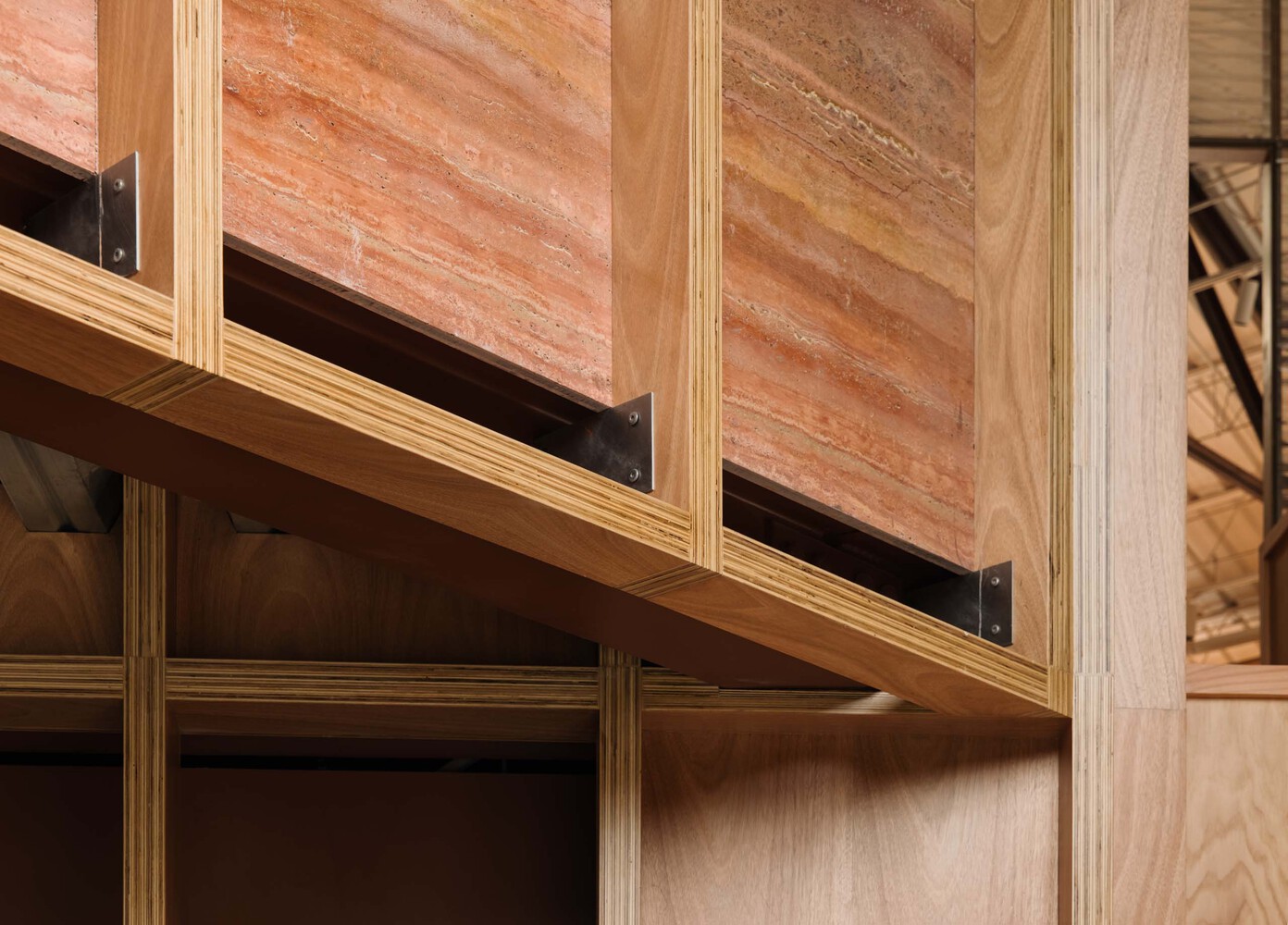
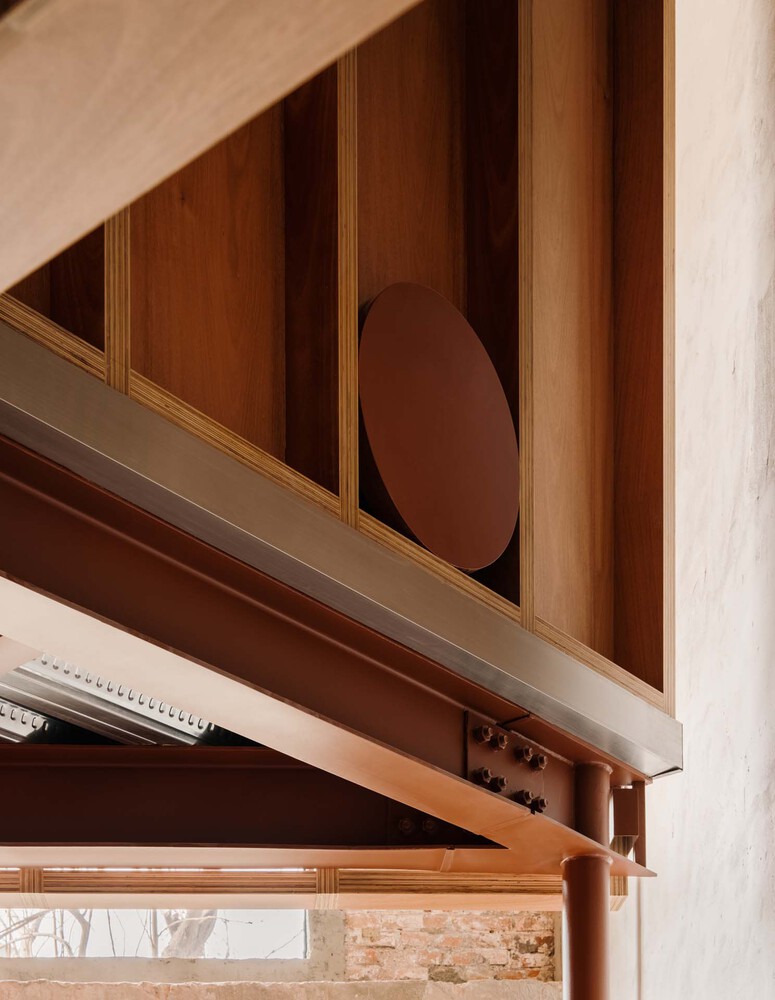
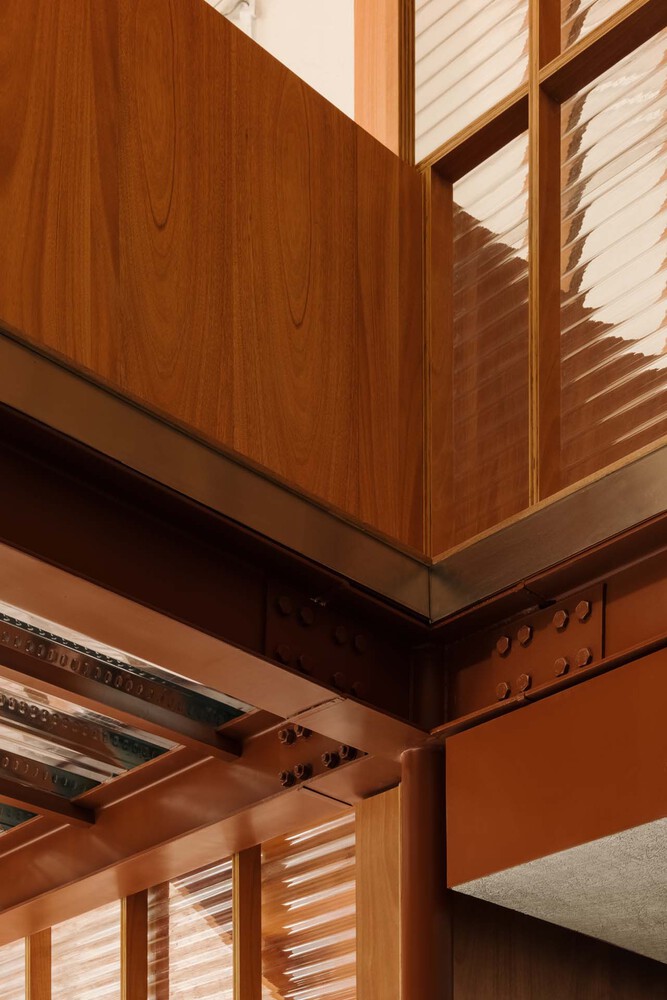
Material choices reinforce the architectural narrative of construction and assembly. Standard industrial components including steel beams, timber frames, and brick surfaces remain visible, while structural layers such as floor decks, ducts, and ceiling systems are intentionally exposed. Through the direct expression of these materials and construction processes, the project presents a clear demonstration of adaptive reuse that relies on simple formal logic and accessible building techniques to create a distinctive retail environment.

Project Gallery










Project Location
Address: Beijing, China
The location specified is intended for general reference and may denote a city or country, but it does not identify a precise address.

