

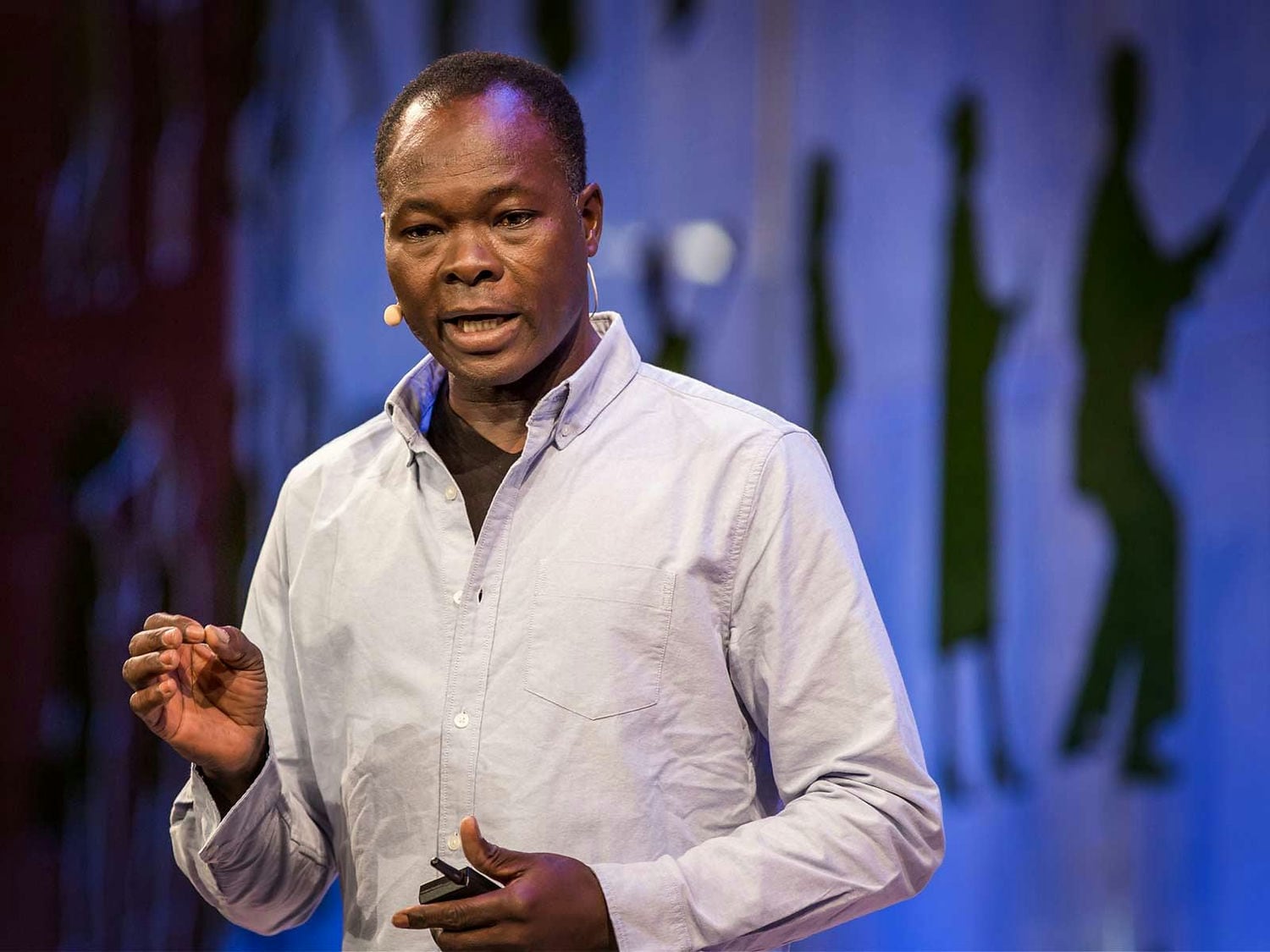
Diébédo Francis Kéré, born in Gando, Burkina Faso, in 1965, is a Burkinabé-German architect recognized for his work in contemporary sustainable design. He moved to Germany in the 1980s to study architecture at the Technische Universität Berlin, where he designed a school for his home village as his thesis project. In 2005, Kéré founded his firm, Kéré Architecture, in Berlin, focusing on projects that merge engineering with local building traditions. Kéré’s architectural style uses indigenous materials such as clay and laterite and relies on community-driven construction methods, an approach described as a modern vernacular architecture. His major achievement came in 2022 when he became the first African to win the Pritzker Architecture Prize, recognizing the social impact and technical quality of his work. Through buildings in West Africa and abroad, Diébédo Francis Kéré has shown that architecture can operate in underserved regions, influencing contemporary thinking on sustainability and social responsibility. Projects such as the Gando Primary School in Burkina Faso, the Lycée Schorge Secondary School in Koudougou, the Serpentine Pavilion in London, the Startup Lions Campus in Kenya, and the proposed National Assembly of Burkina Faso in Ouagadougou demonstrate his ability to create climate-responsive structures with minimal resources. Kéré’s work has influenced the architecture industry by showing that design can emerge from local contexts and participatory processes. He has avoided controversy and is known for working with communities. Most of Kéré’s work includes schools, community facilities, and cultural pavilions rather than skyscrapers. Educated in Europe and informed by African heritage, Kéré did not have a celebrity mentor; he established his path and now teaches at institutions including Harvard and Yale. Aspiring architects can study Francis Kéré’s work to understand how he integrates sustainable techniques, collaborative processes, and simplicity to create architecture that serves its users.
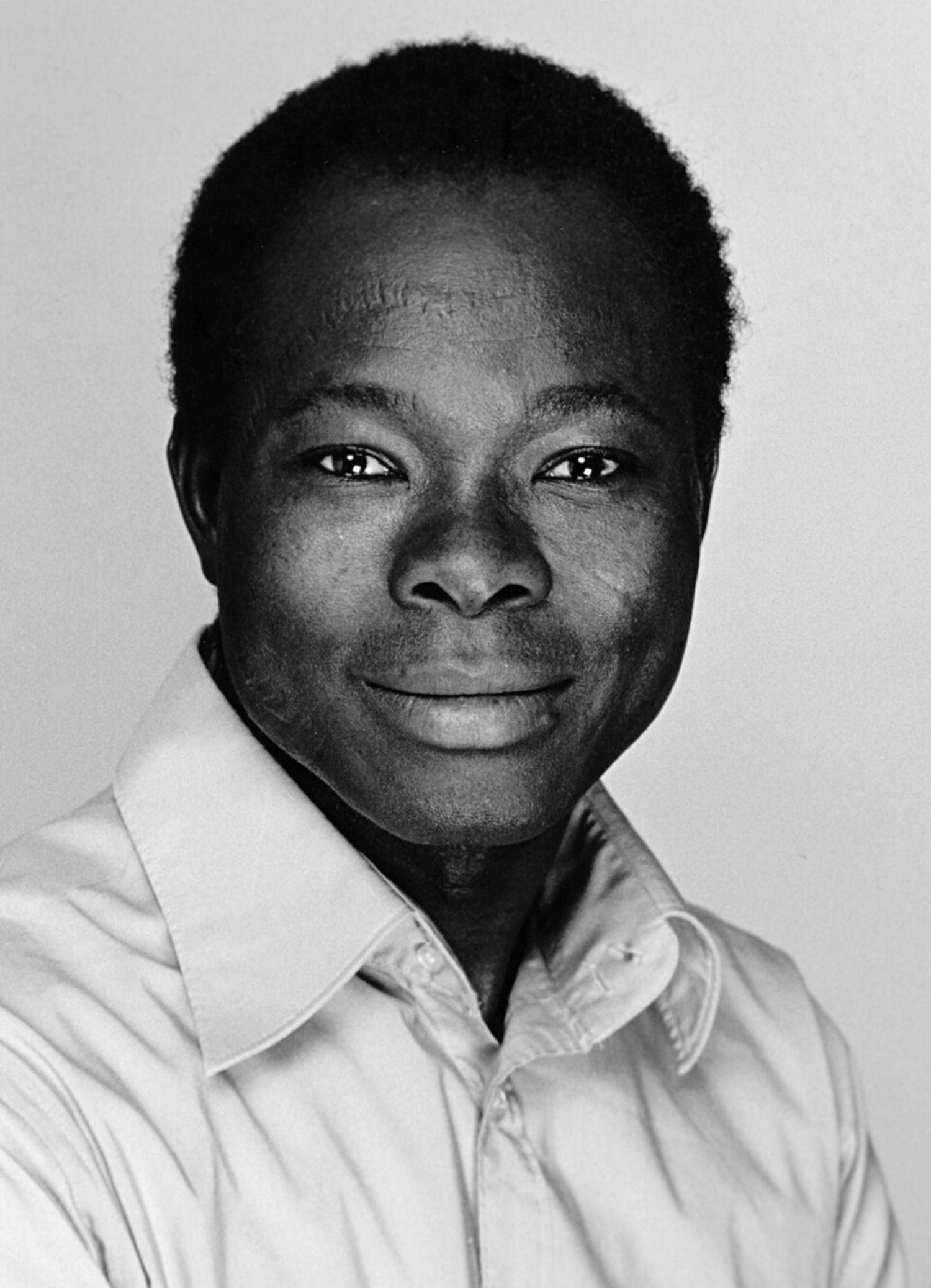
Who is Diébédo Francis Kéré?
Diébédo Francis Kéré is a Burkinabé architect with German citizenship known for his work in community-focused design. He was born on April 10, 1965, in the village of Gando in Burkina Faso. Growing up without access to a local school, Kéré was sent away as a child to receive an education, an experience that influenced his effort to improve educational facilities back home. In the 1980s, he moved to Berlin, Germany, where he later studied architecture at the Technische Universität Berlin. Kéré earned his architecture degree in 2004, having begun designing a primary school for Gando as his student project. He established Kéré Architecture in 2005 in Berlin. Over his career, Francis Kéré has been recognized for creating buildings that address social needs through the use of local materials. He combines European architectural training with African vernacular techniques, resulting in structures rooted in their context. Today, Kéré lives and works in Berlin, leading projects worldwide and lecturing at universities. He holds the title of 2022 Pritzker Architecture Prize Laureate.
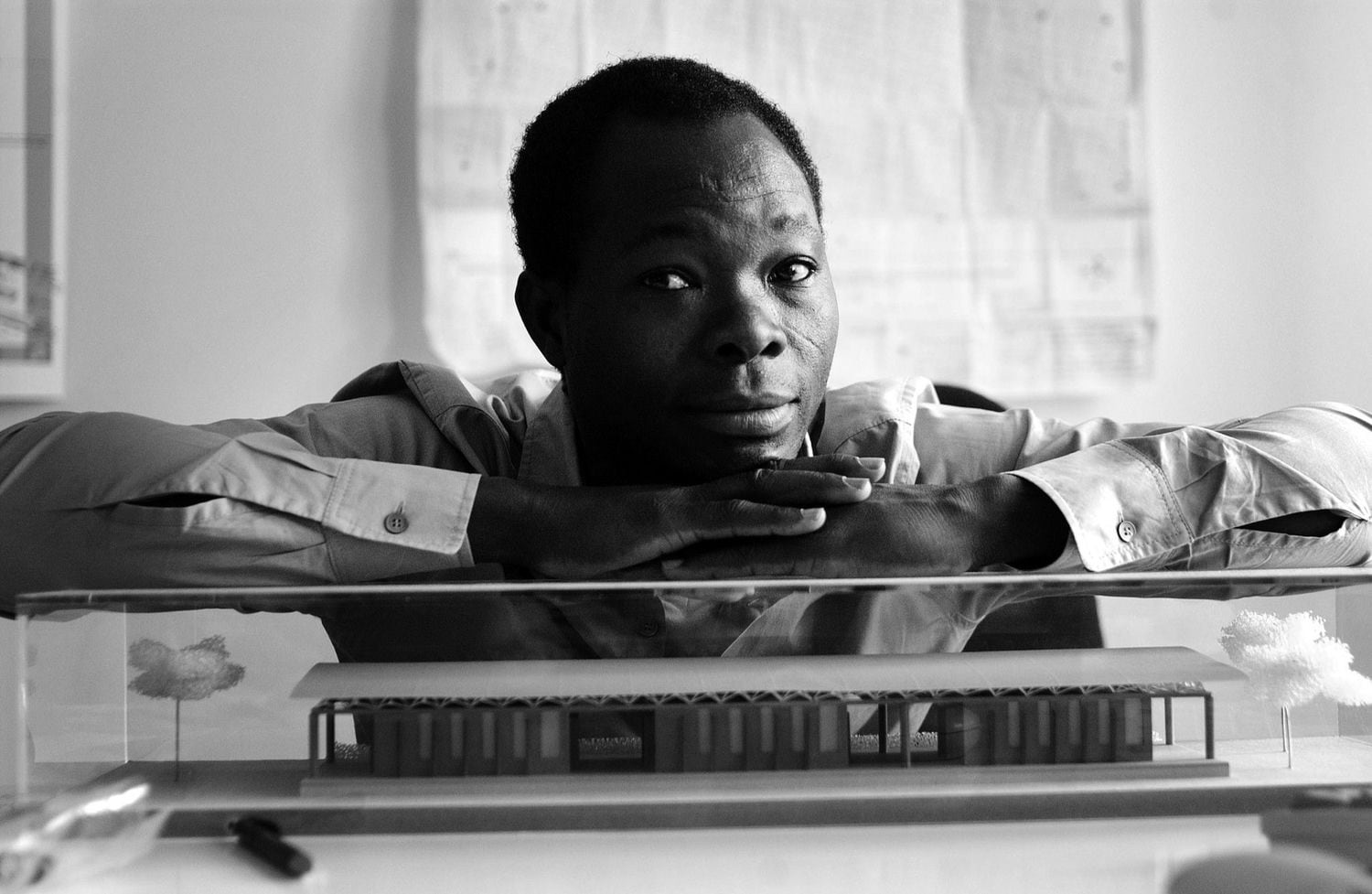
What type of architecture does Diébédo Francis Kéré represent?
Diébédo Francis Kéré represents an architectural approach centered on sustainable design and vernacular inspiration. His work is classified within the social architecture movement, focusing on buildings that serve communities and use locally available resources. Rather than adopting a high-tech or formalist style, Kéré’s designs follow a contemporary vernacular method. This means he uses traditional building techniques such as mud-brick construction, broad overhanging roofs, and natural ventilation strategies, refined with modern engineering insight. The result is an architecture that responds to environmental conditions and local culture. Kéré’s approach aligns with principles of sustainable development: materials such as clay, stone, and timber are used to create interior comfort without expensive technology. His buildings, from schools in Burkina Faso to pavilions in Europe, show a form-follows-function approach influenced by regional climates and customs.
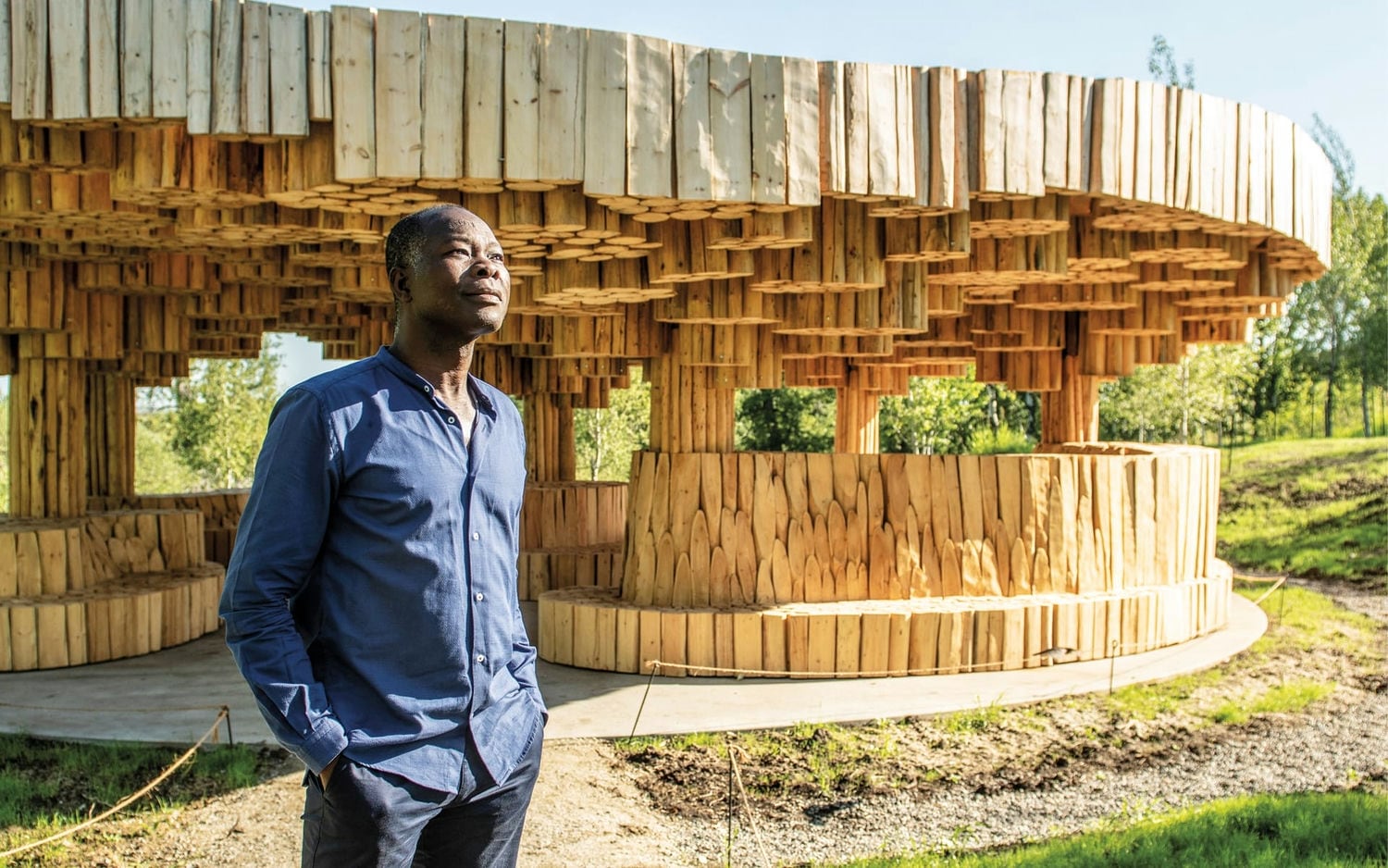
What is Diébédo Francis Kéré’s great accomplishment?
Diébédo Francis Kéré’s accomplishment is demonstrating that architecture can support communities and gain global recognition for this work. His recognition increased when he won the 2022 Pritzker Architecture Prize. He is the first African architect to receive this honor. Kéré’s accomplishment does not lie in a single building, but in a design approach he has advanced. Starting with the Gando Primary School project in 2001, Kéré showed that a rural community could create a well-designed building by combining local knowledge with design logic. In the 2010s, Kéré established himself as an architect delivering work in places with limited resources. The Pritzker Prize jury cited his approach as a model for others. One of Kéré’s early achievements was the Gando school’s success, which won the 2004 Aga Khan Award for Architecture and supported a career of socially engaged projects. Beyond awards, Kéré’s accomplishment is influencing architectural thinking by demonstrating that innovation is possible in varied contexts, from large-scale institutions to small community buildings.
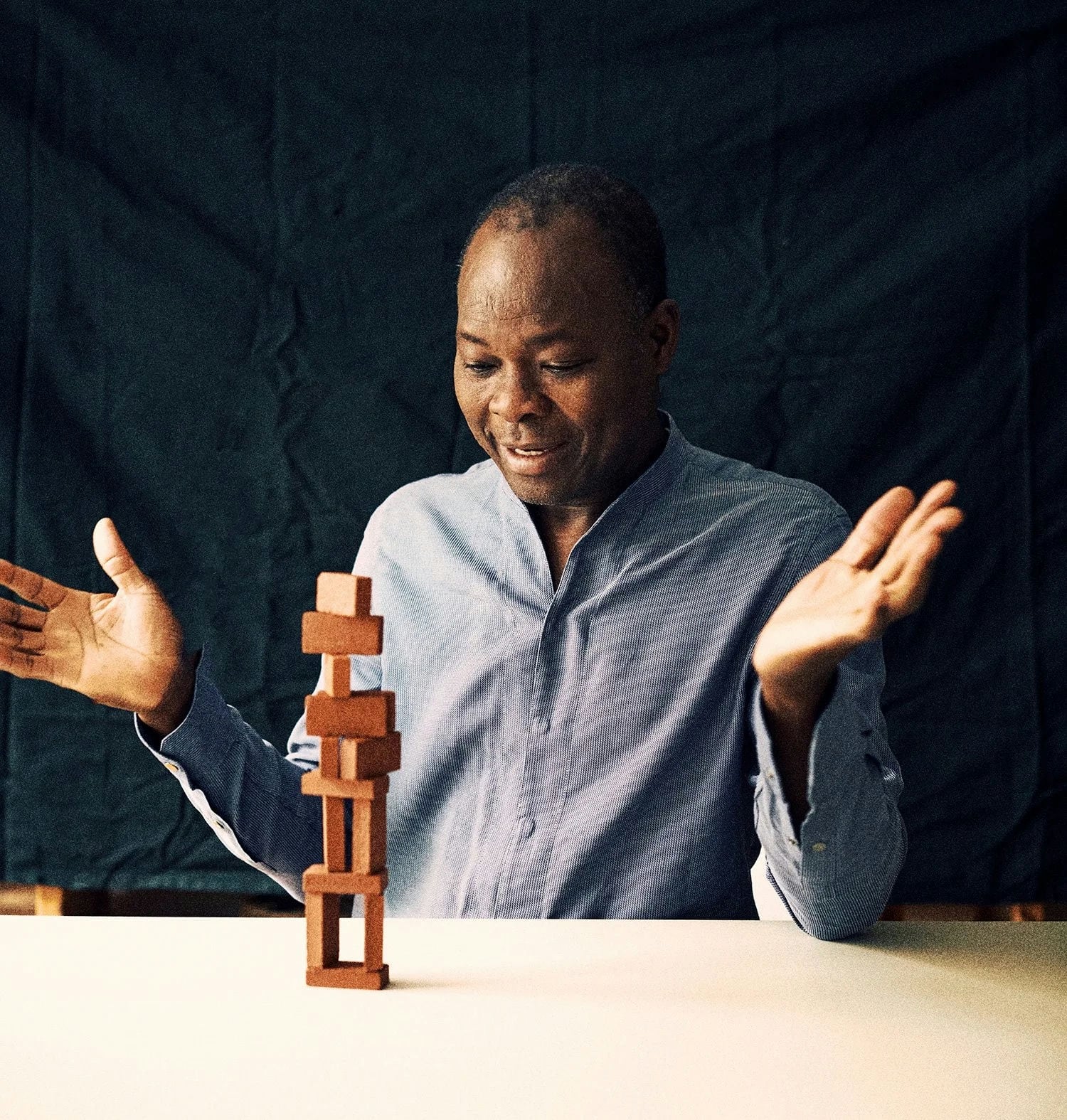
What are Diébédo Francis Kéré’s most important works?
Diébédo Francis Kéré’s most important works span educational buildings, cultural pavilions, and civic designs, exemplified by the Gando Primary School in Burkina Faso, the community-built project that launched his career; the Lycée Schorge Secondary School in Koudougou, a campus using local materials; the Serpentine Pavilion in London, which introduced his design approach to an international audience; the Startup Lions Campus in Kenya, a technology facility with a form influenced by termite structures; and the proposed National Assembly of Burkina Faso in Ouagadougou, a parliament design intended to express governmental openness.
01. Gando Primary School, Burkina Faso
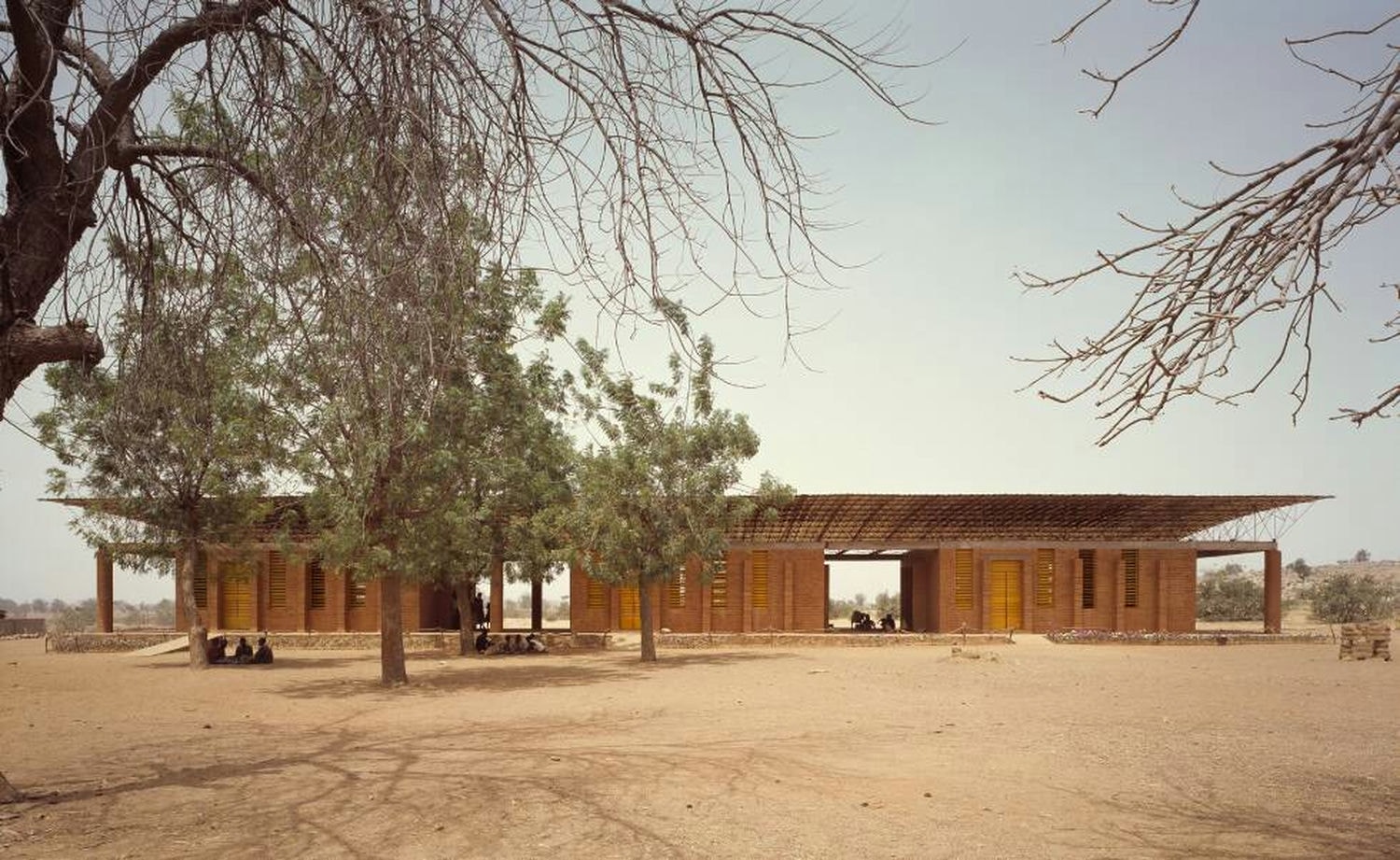
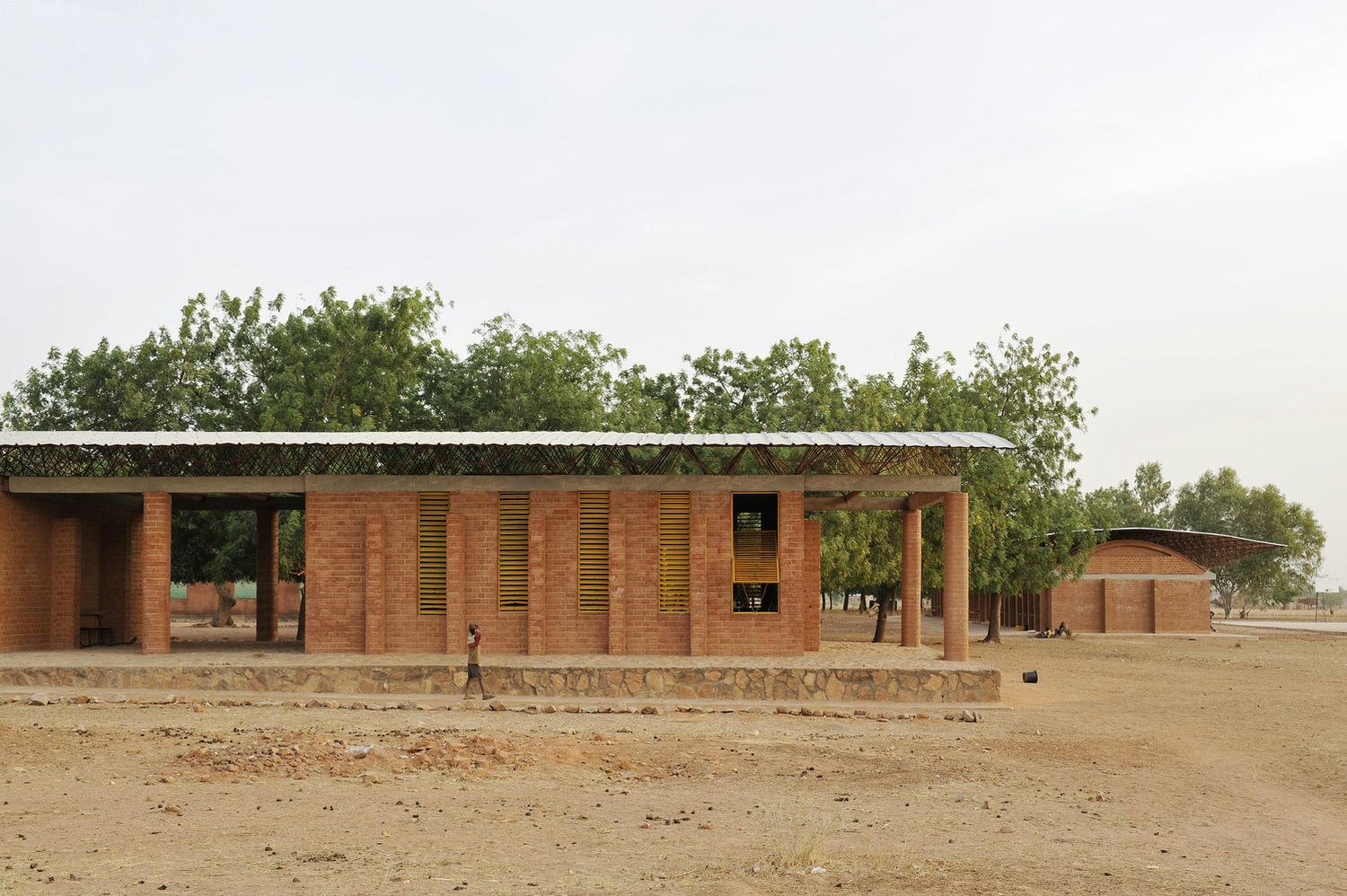
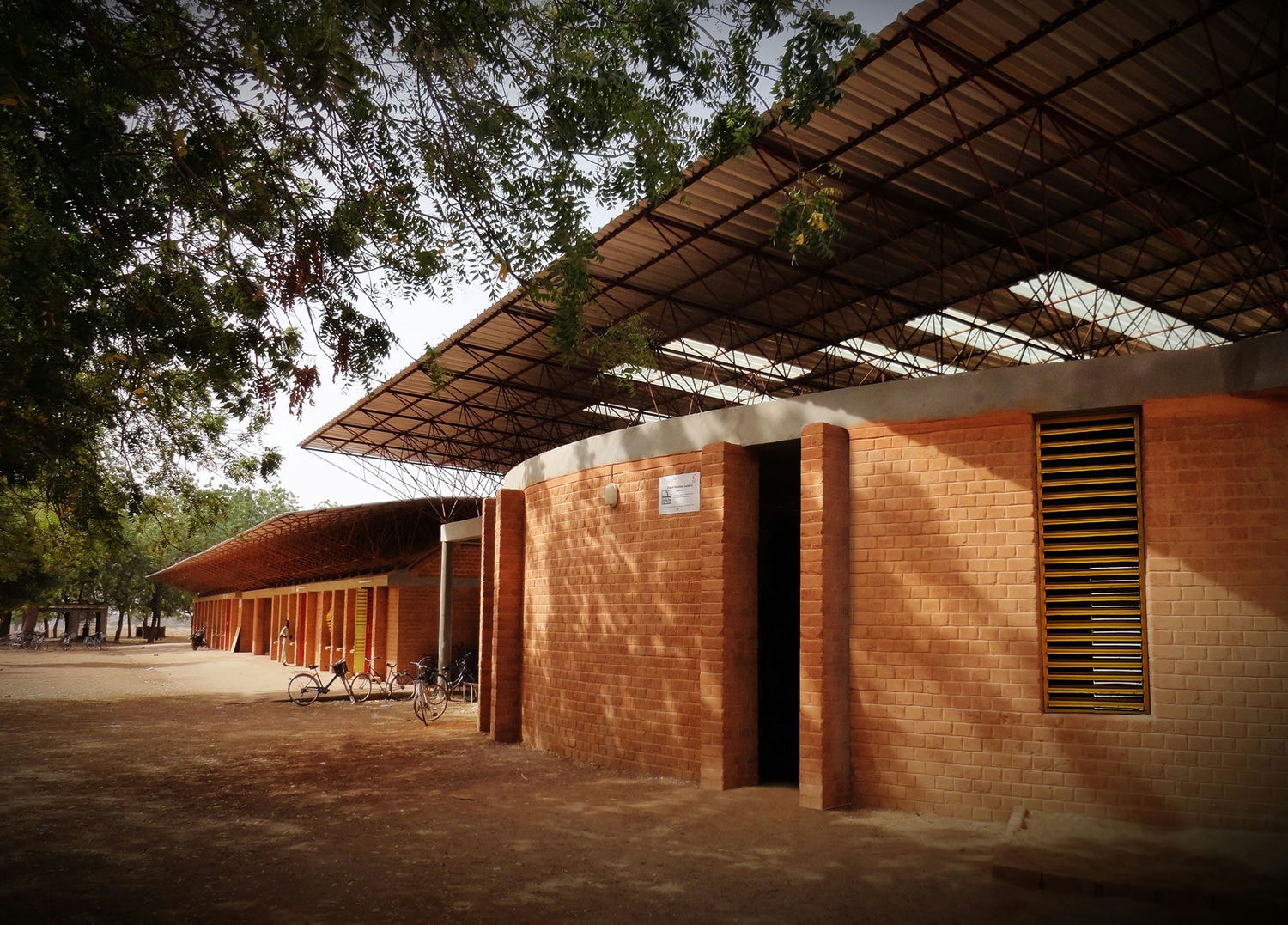
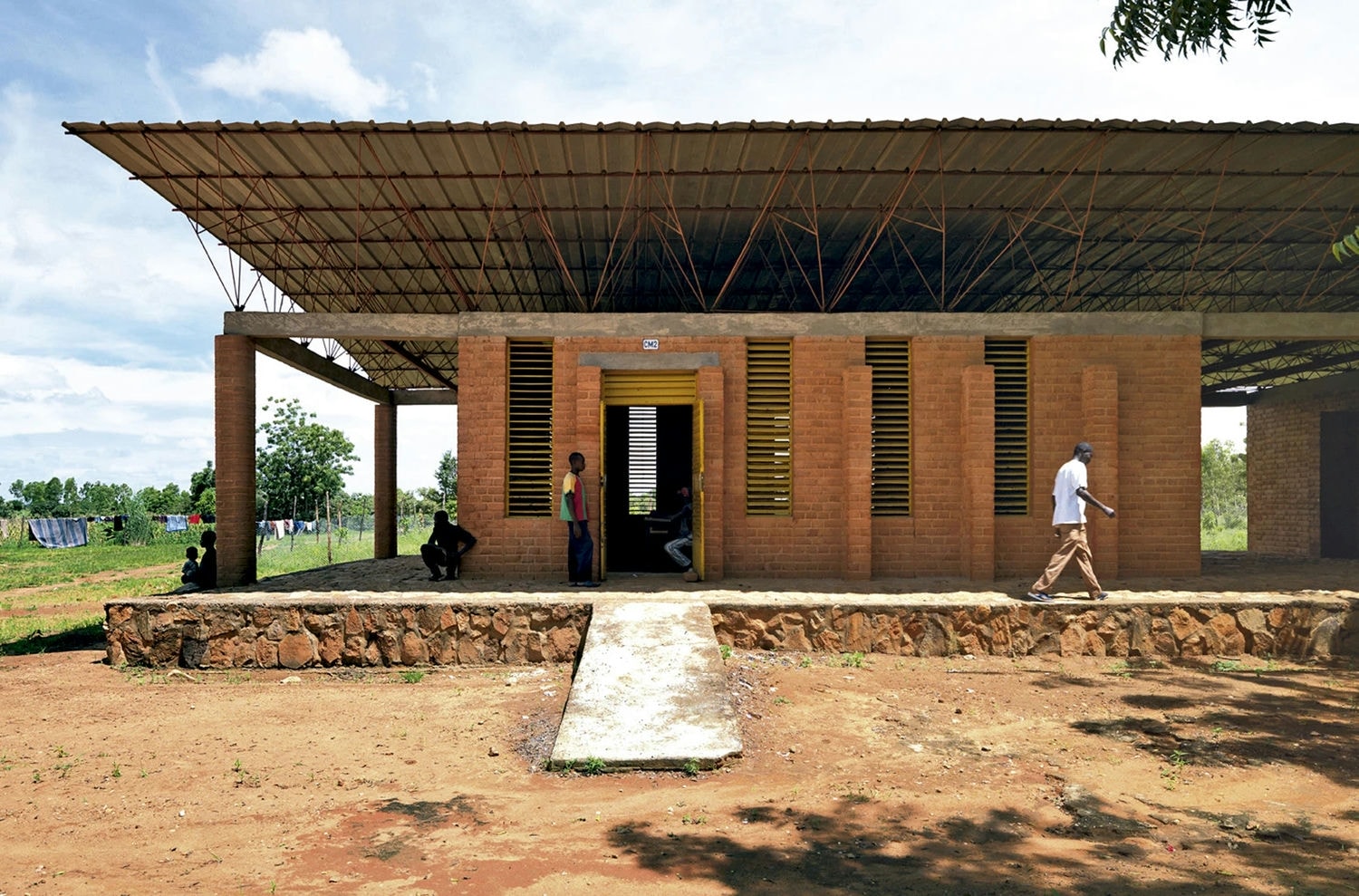
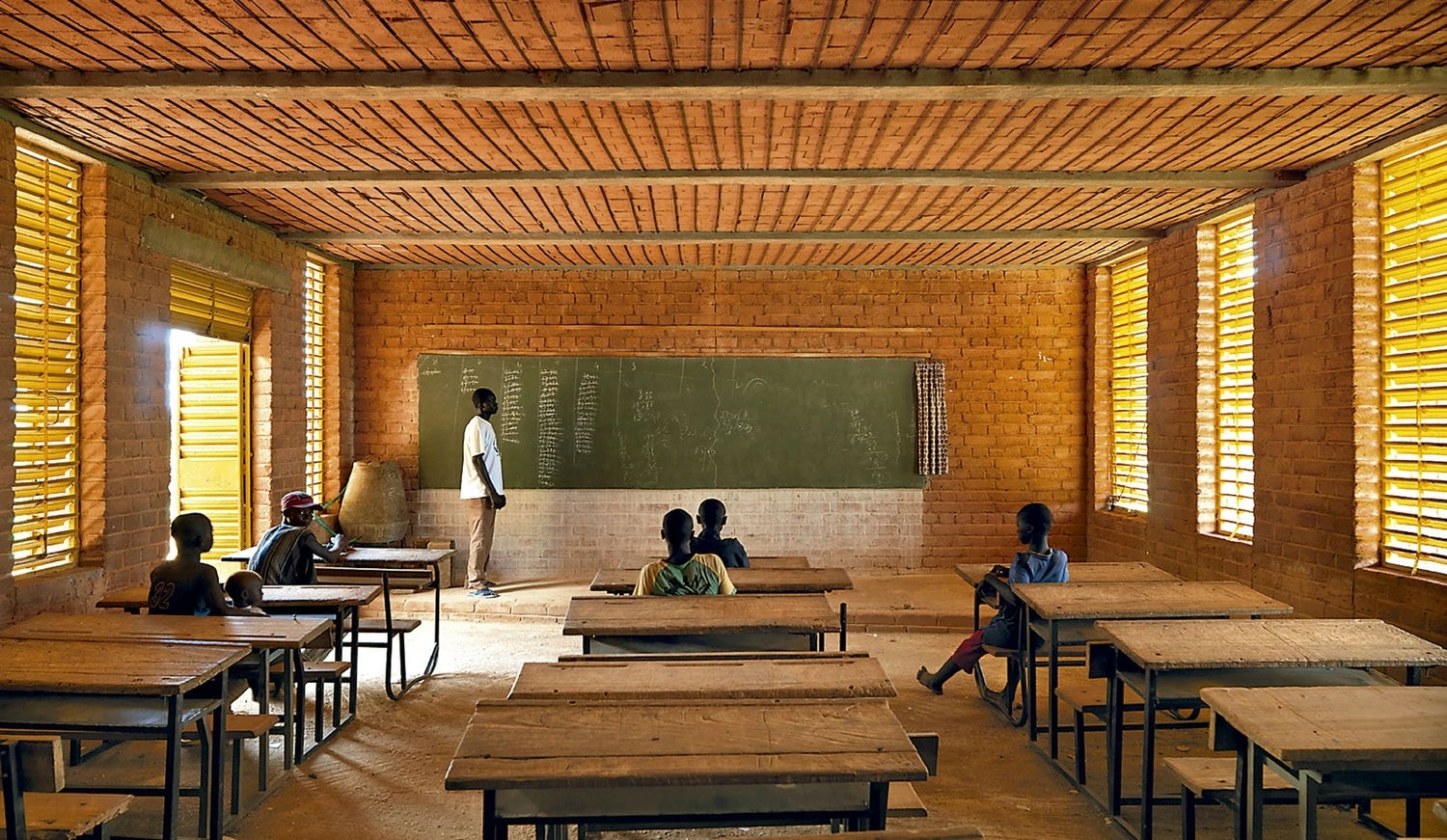
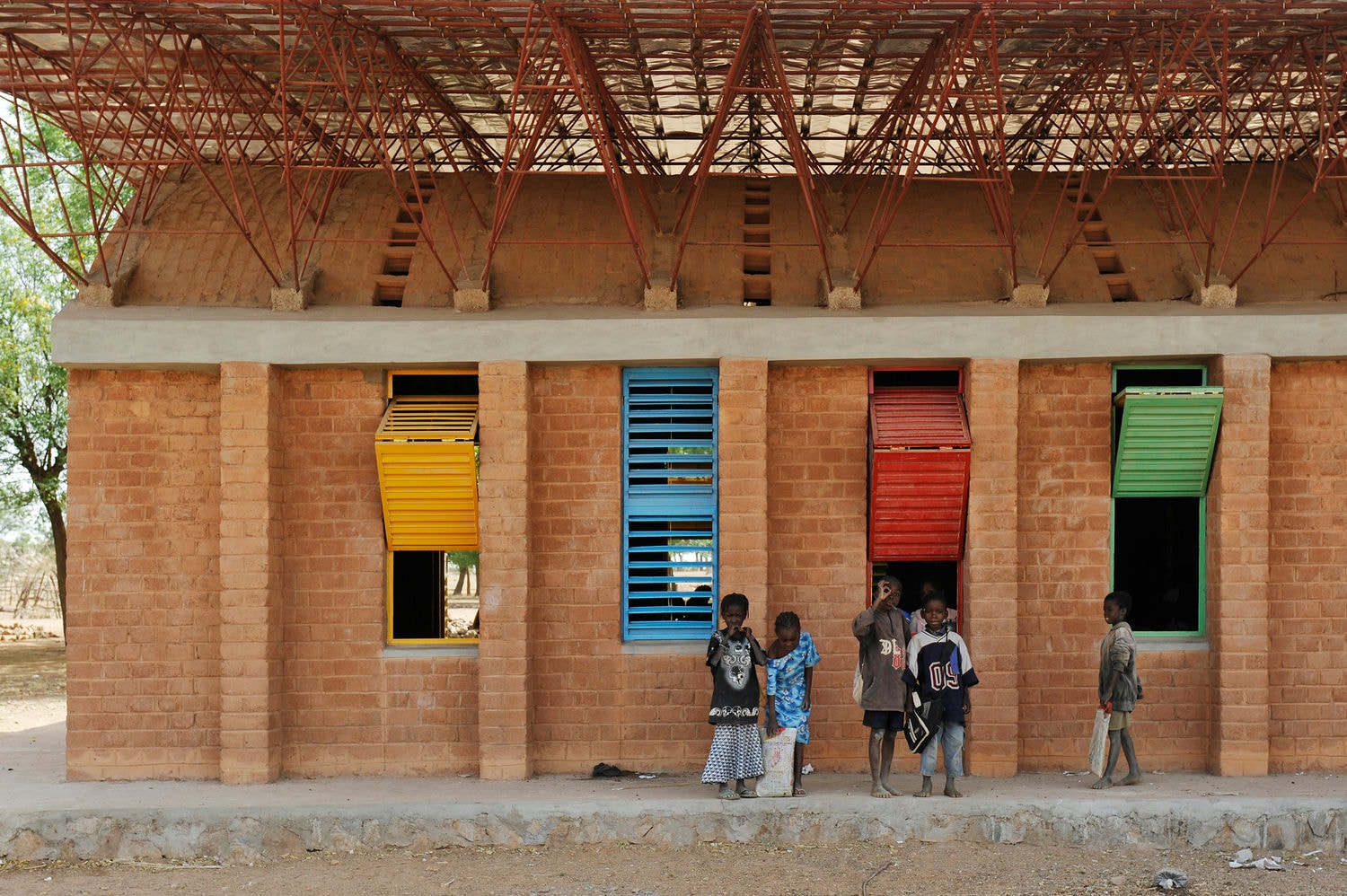
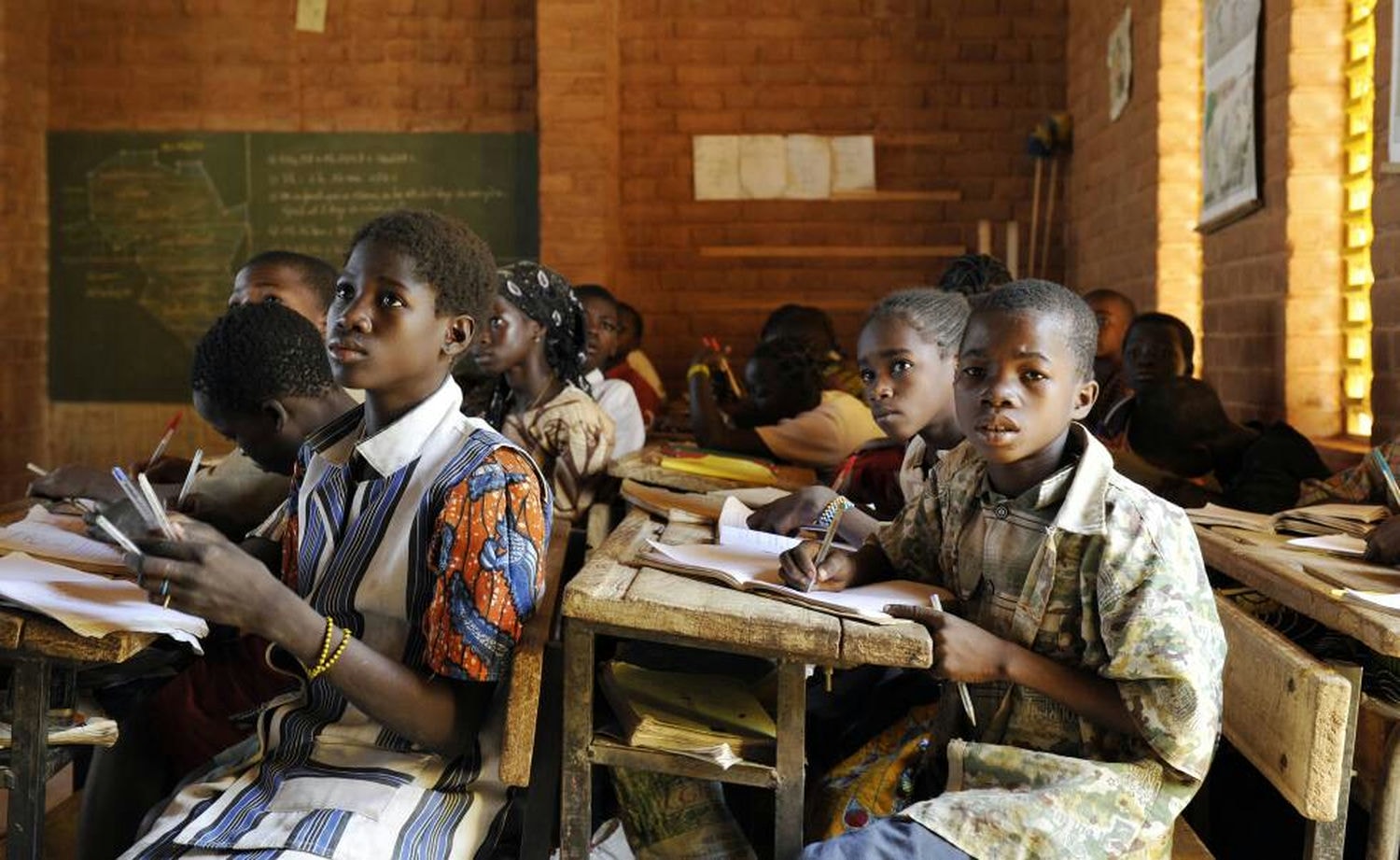
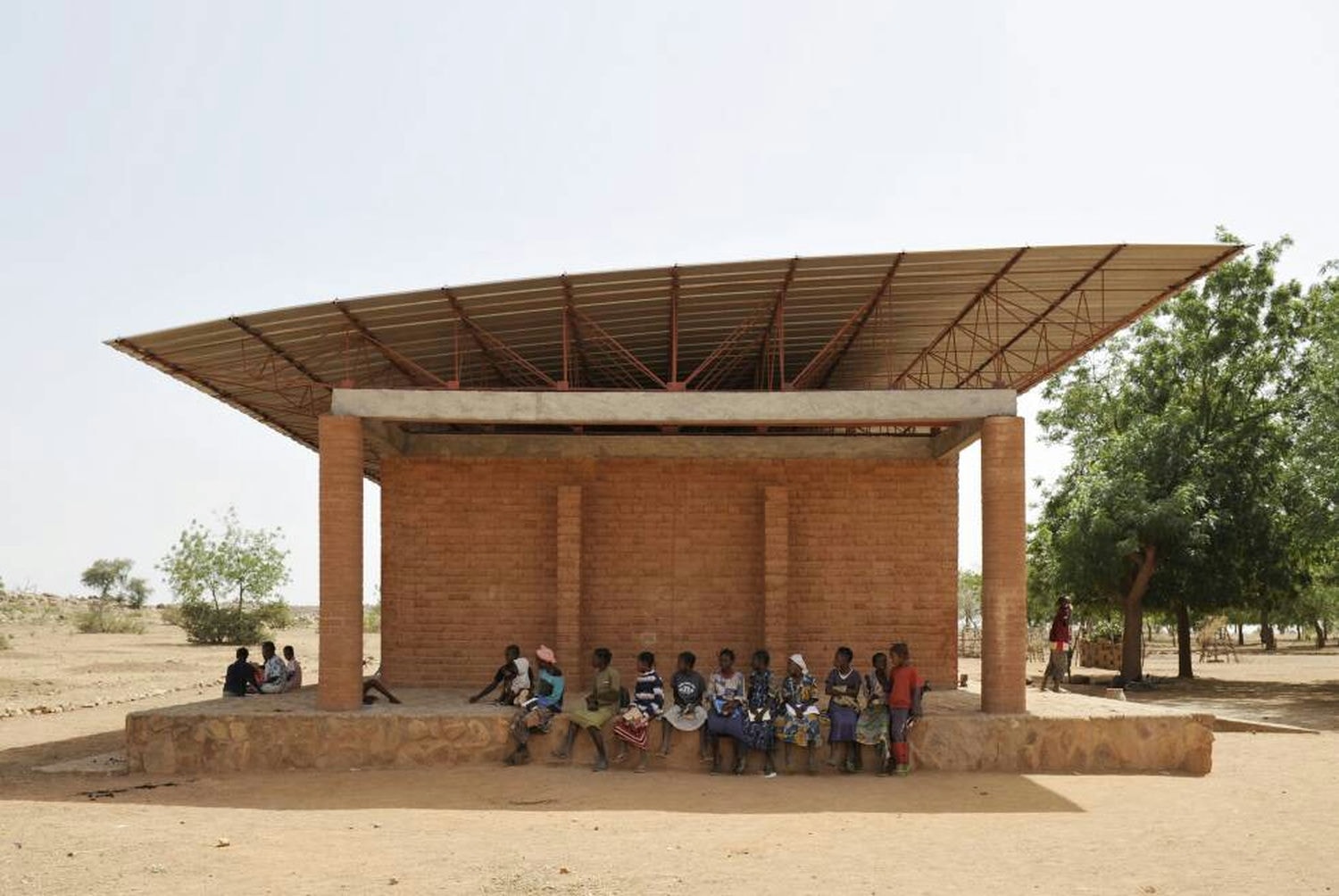
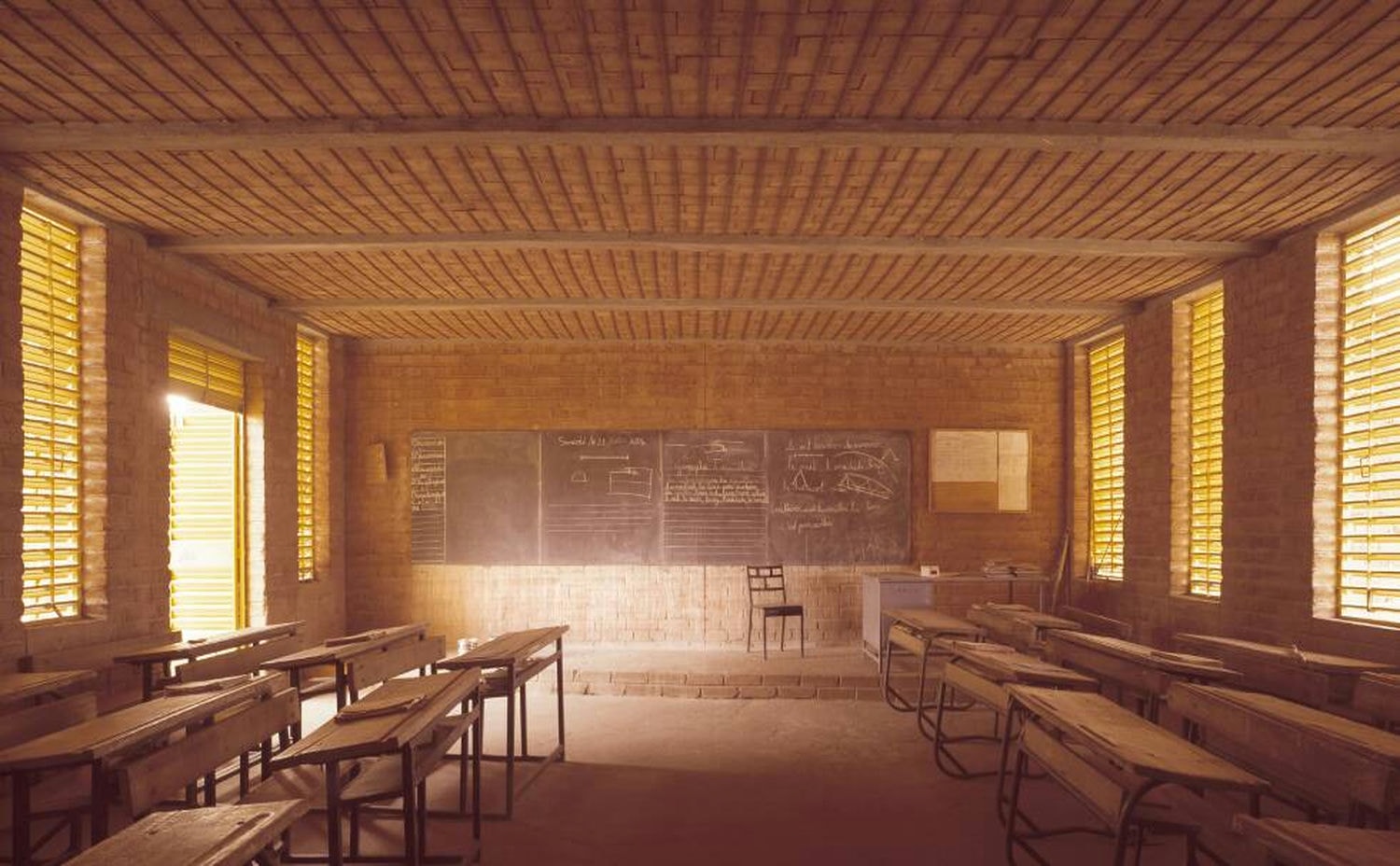
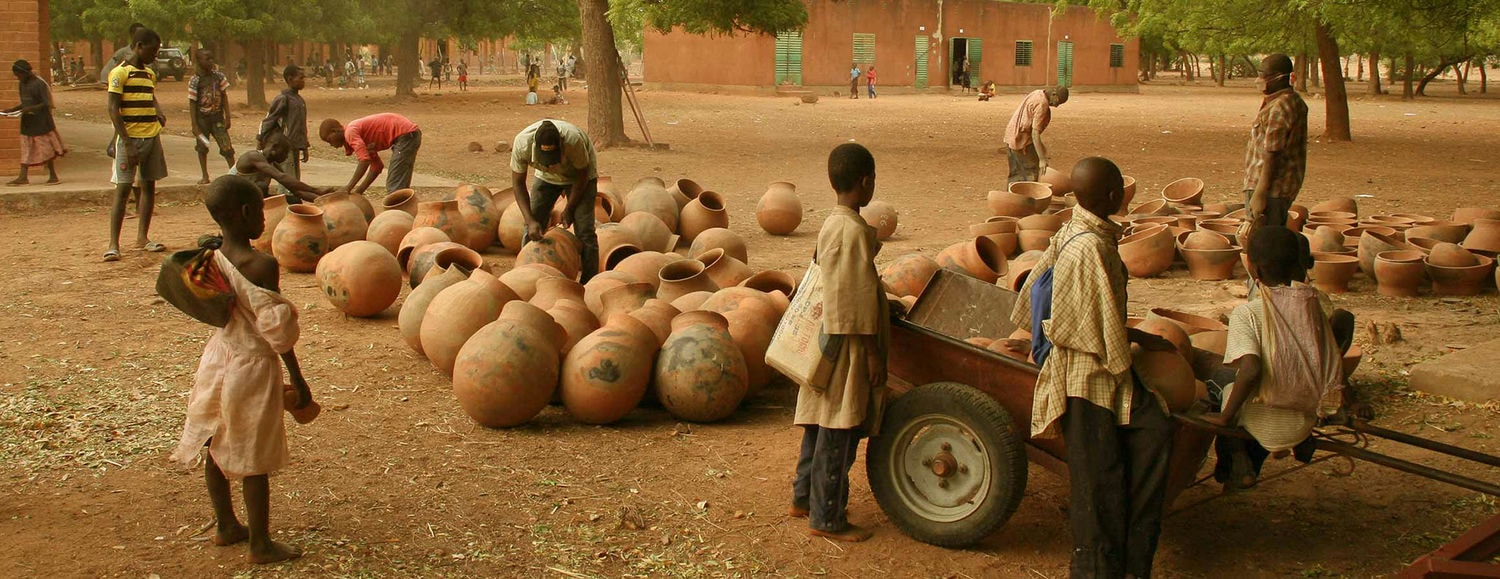
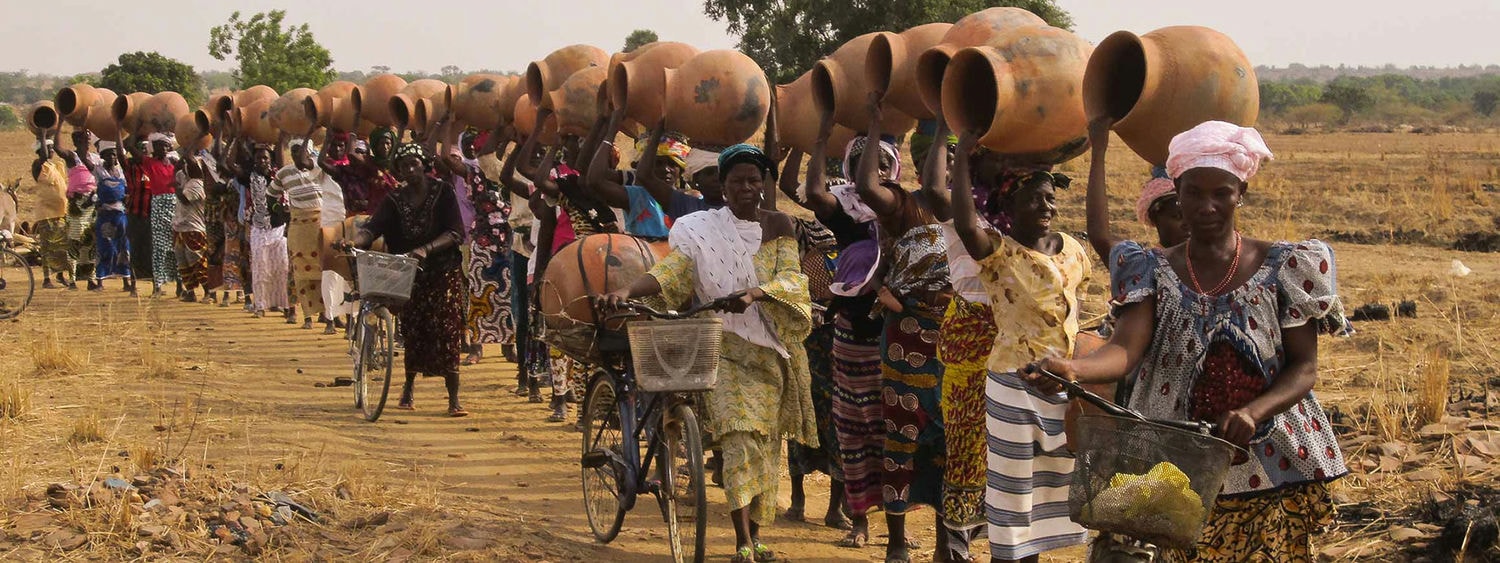
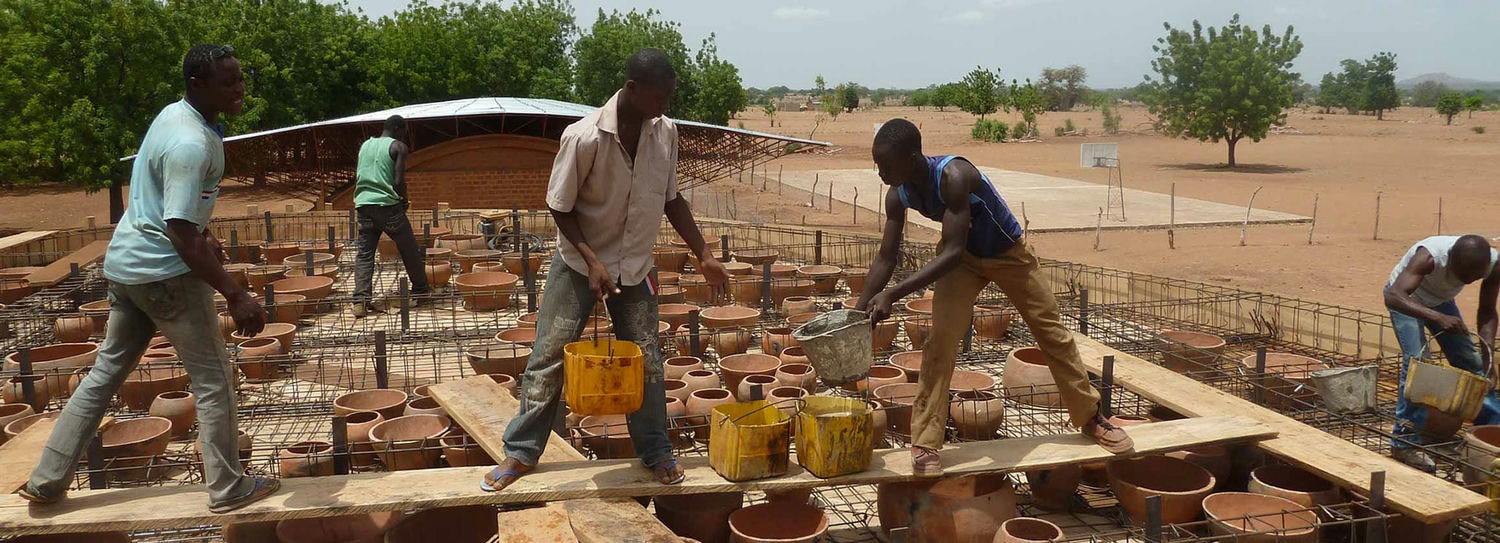
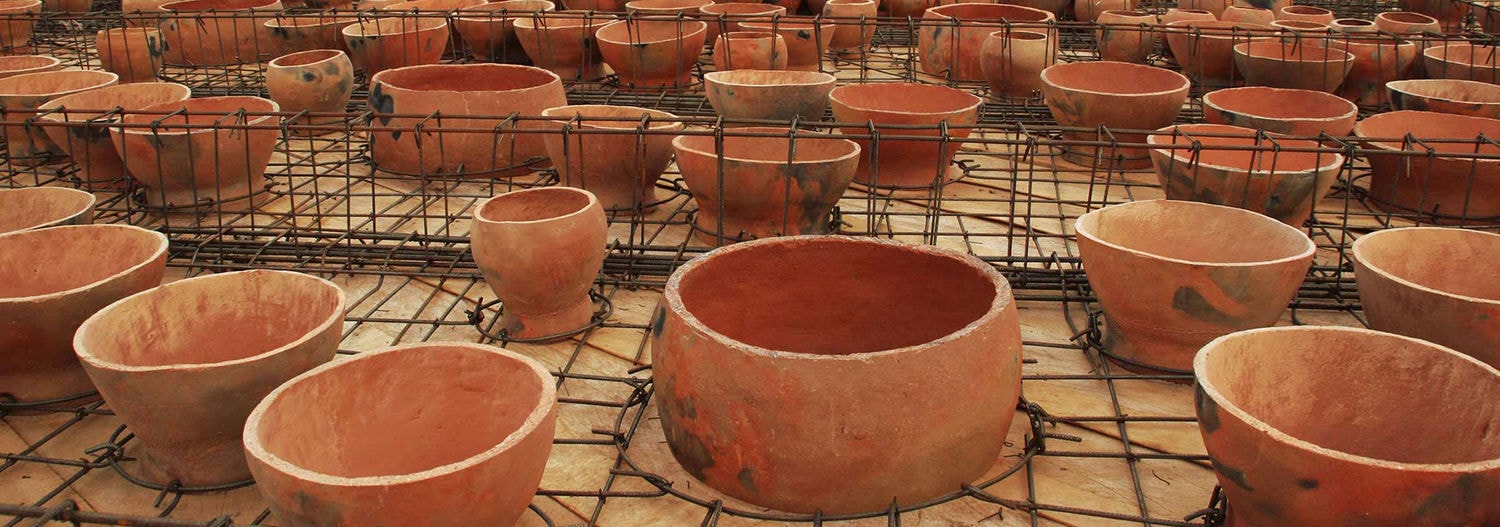
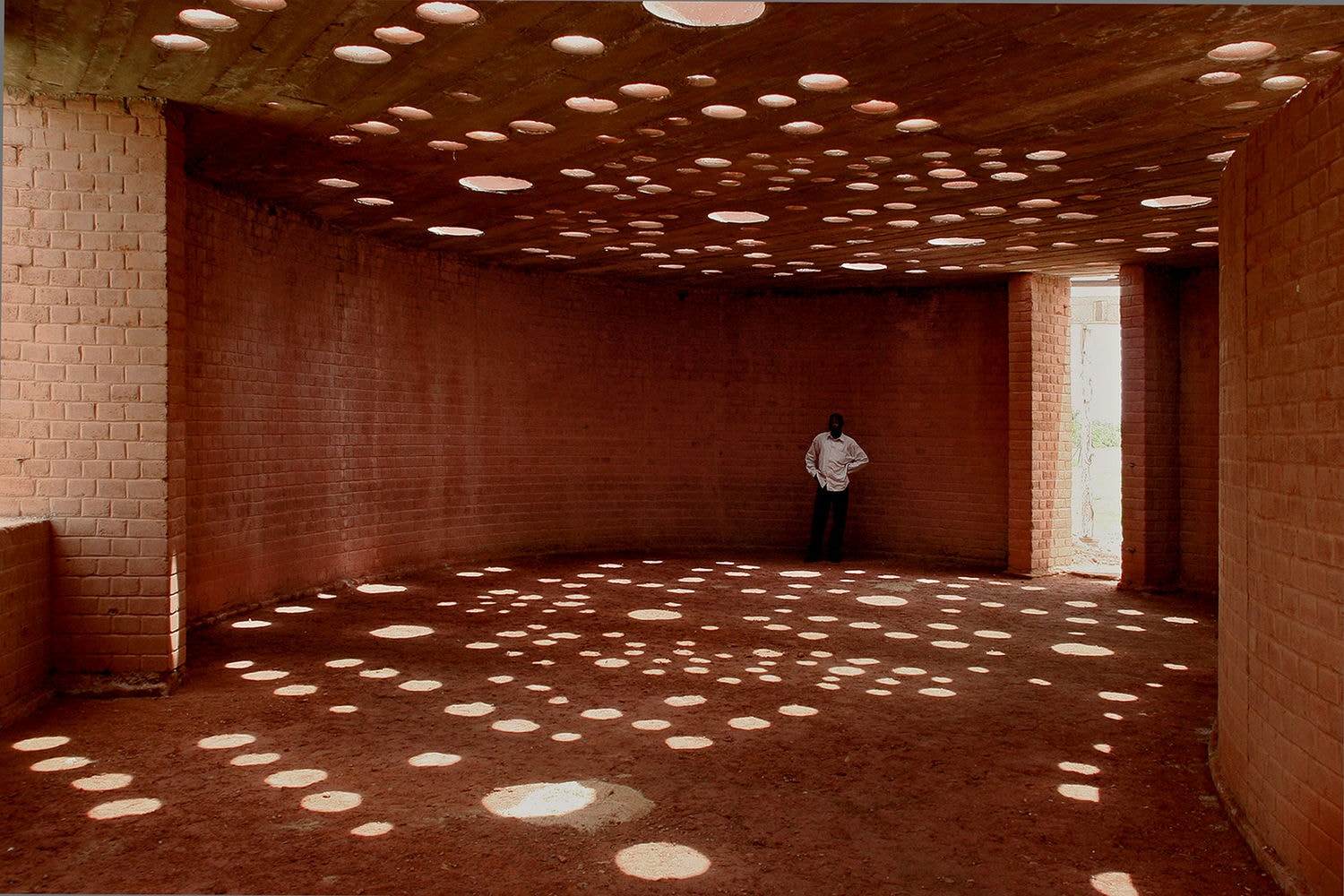
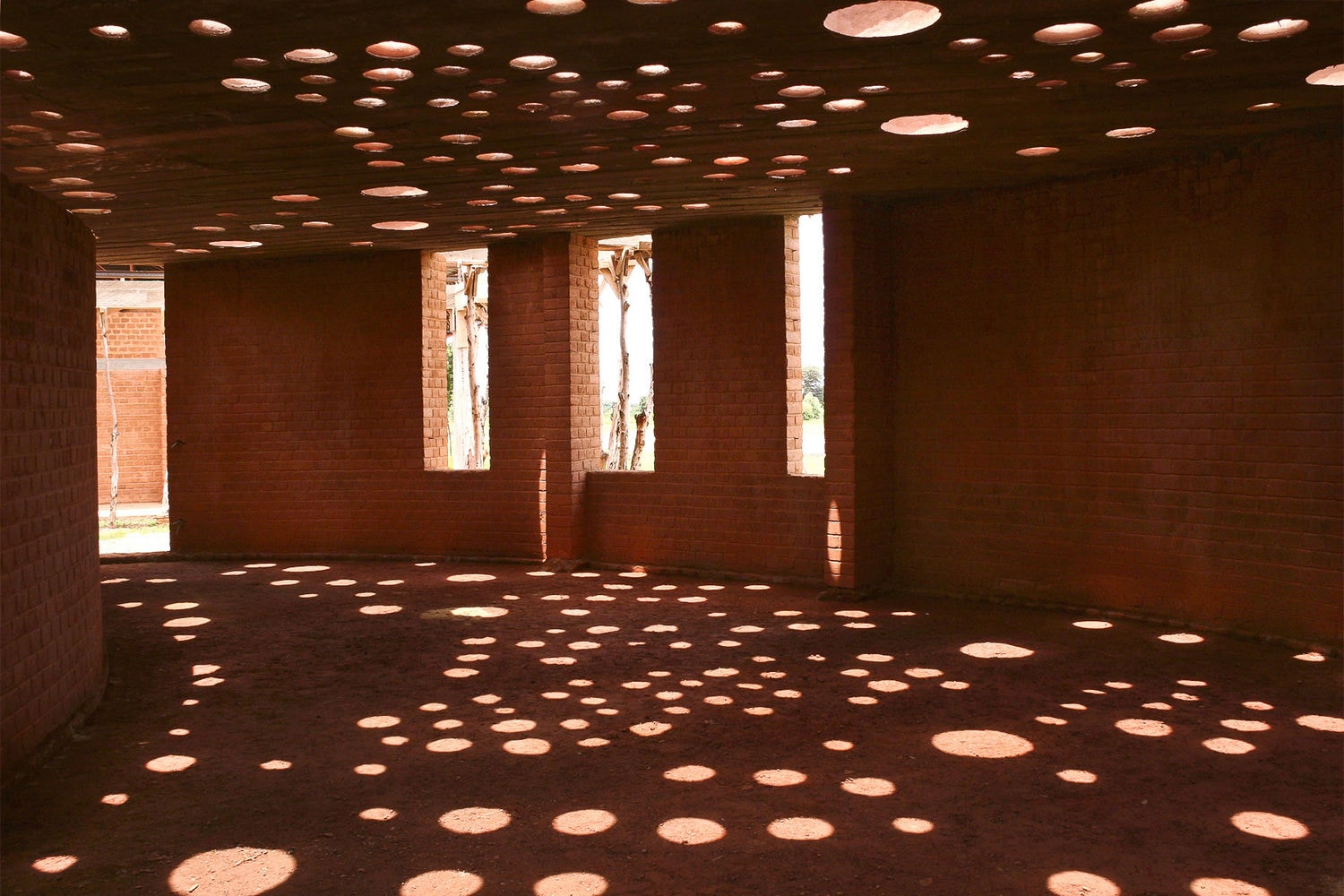
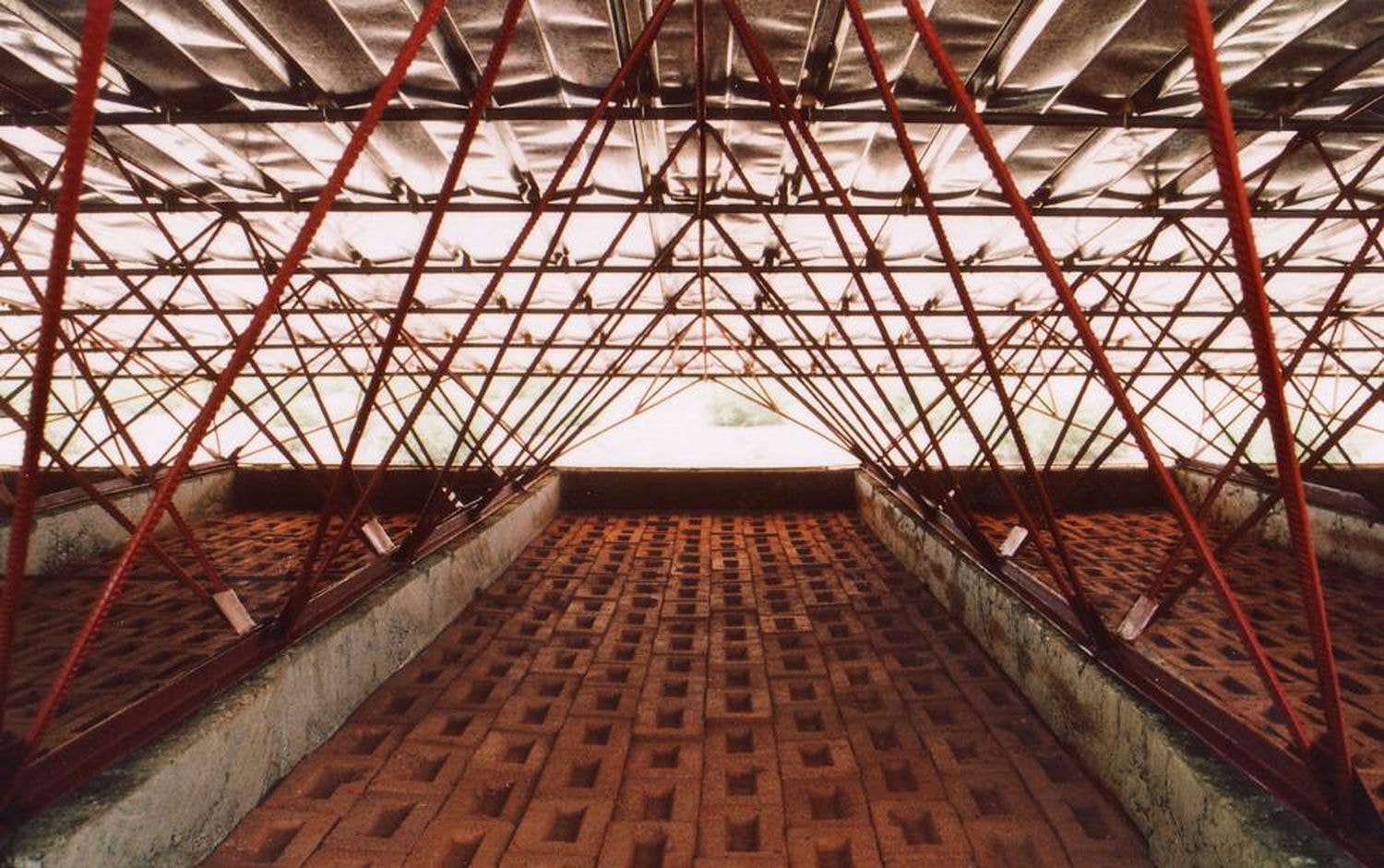
The Gando Primary School is the project that first established Francis Kéré’s work and remains one of his significant buildings. Completed in 2001 in his home village of Gando, Burkina Faso, this school was designed by Kéré while he was an architecture student. It is a small public primary school building and represents a shift toward community-driven, sustainable architecture. The building is constructed of locally made mud bricks, a material chosen for its low cost and thermal properties in the hot climate. To protect these earthen walls from rain and to keep the interior cool, Kéré designed a double-roof system: a corrugated metal roof is elevated above a ceiling of clay and concrete, creating an air gap that allows hot air to escape and cooler air to move through. This passive cooling design keeps the classrooms usable without electricity. The Gando Primary School’s architecture is simple and functional, including three classrooms and a verandah. Kéré involved the villagers in the construction process, providing training as they built the school. Completed for a modest budget, the school increased attendance in Gando and earned international attention. In 2004, Francis Kéré won the Aga Khan Award for Architecture for this project. Gando Primary School showed that sustainable architecture could take root in rural Africa and supported Kéré’s subsequent projects in Gando and abroad.
02. Lycée Schorge Secondary School, Burkina Faso
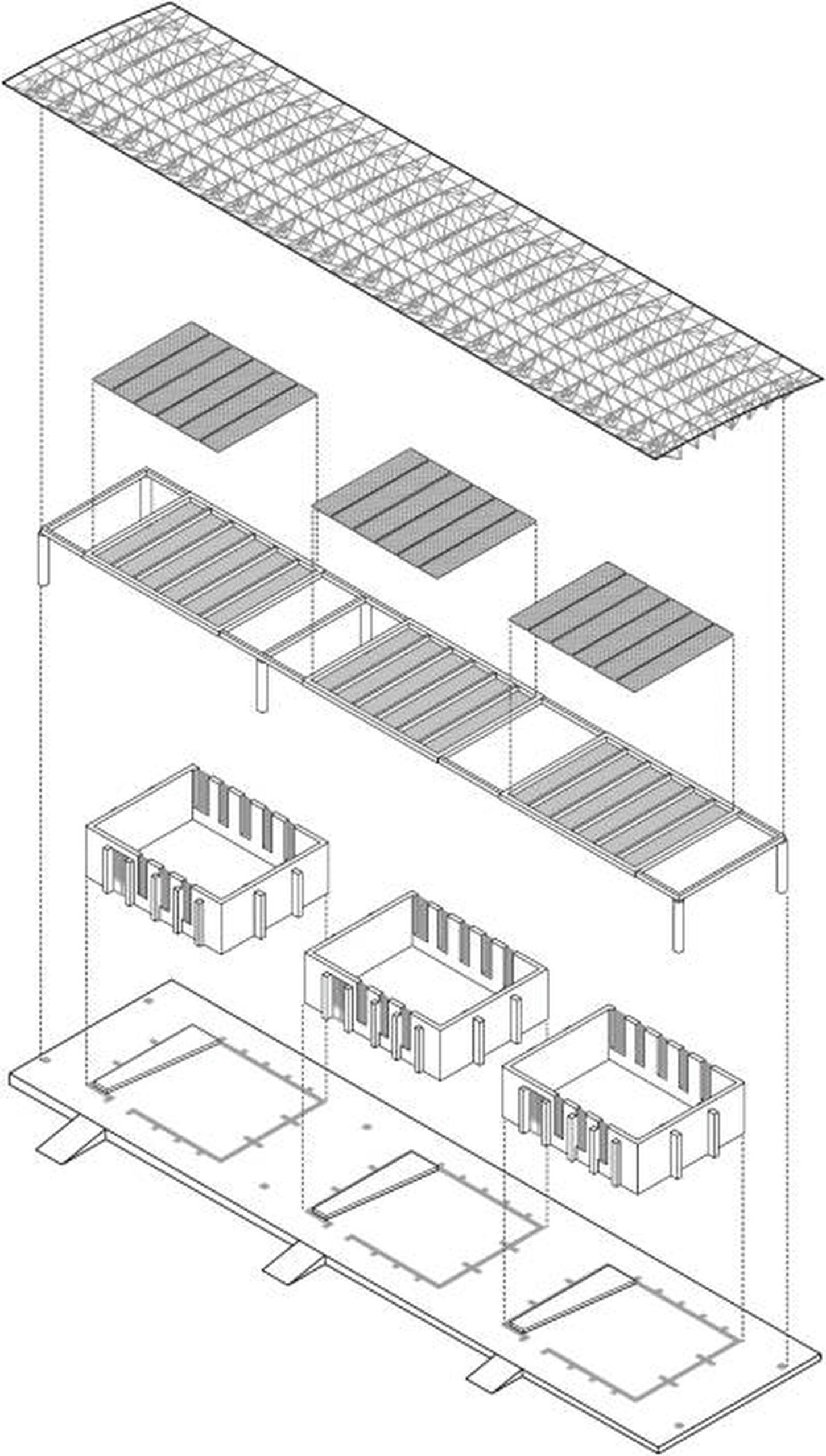
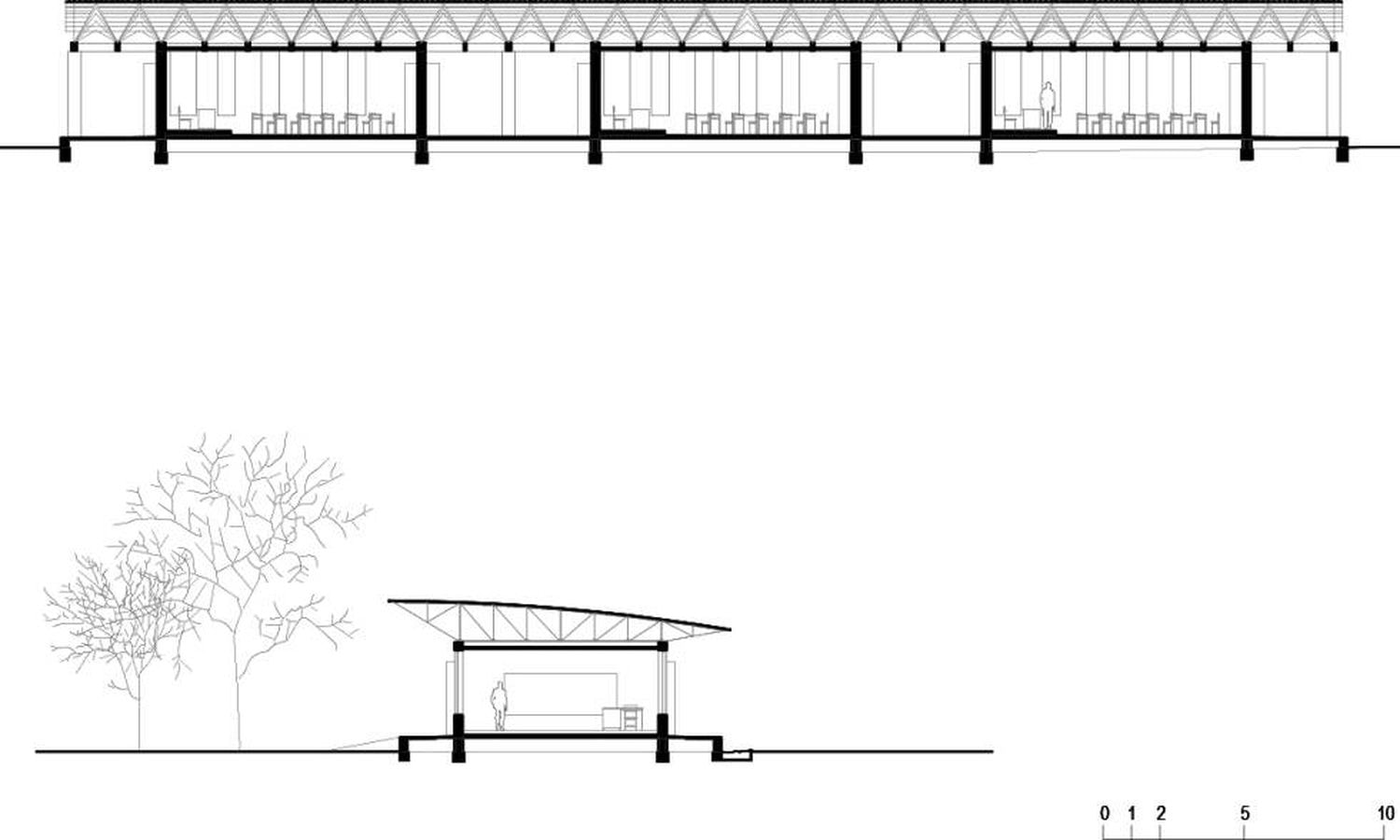
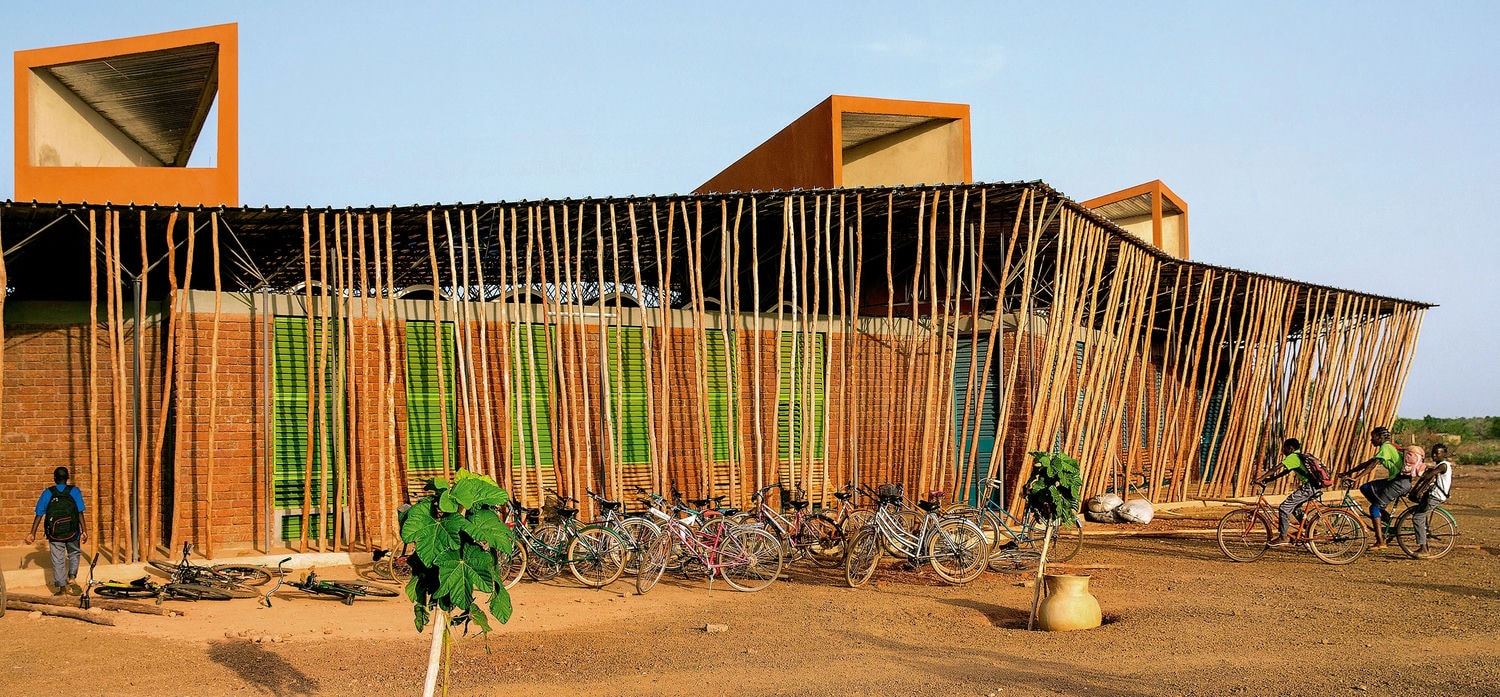
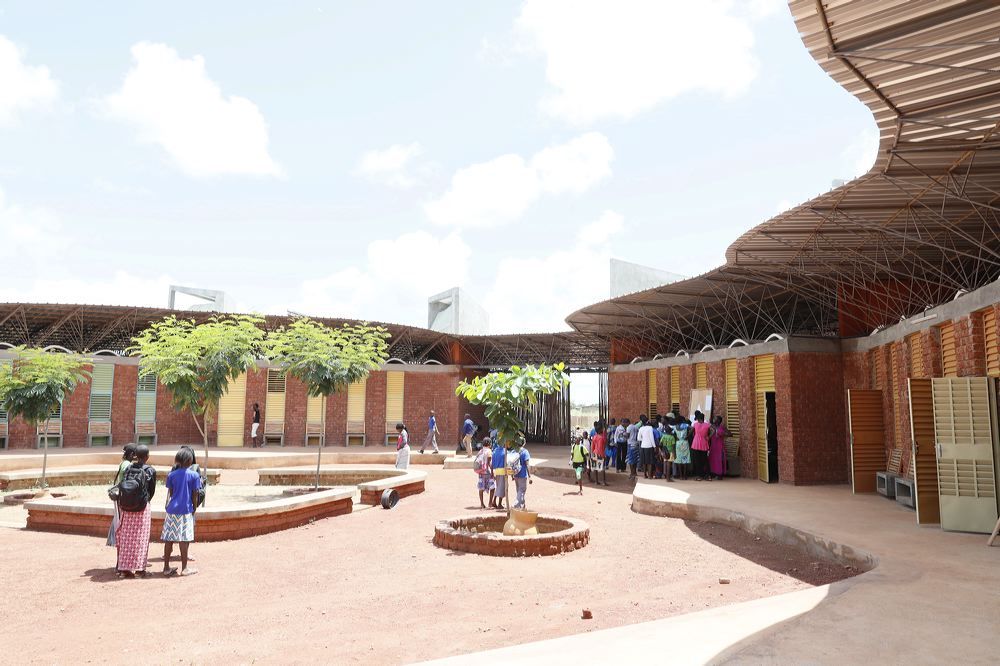
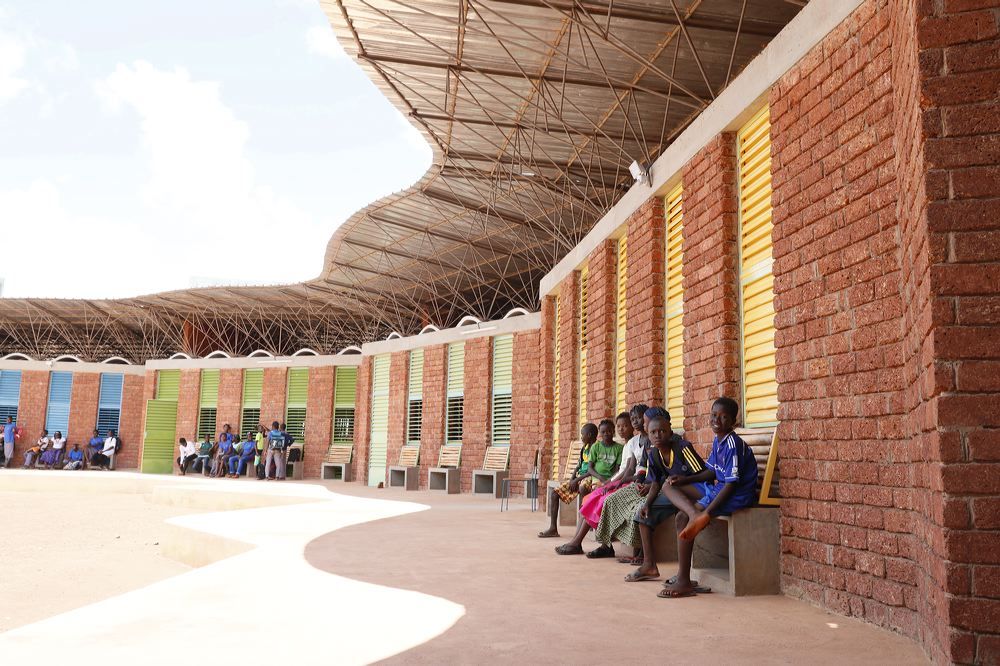
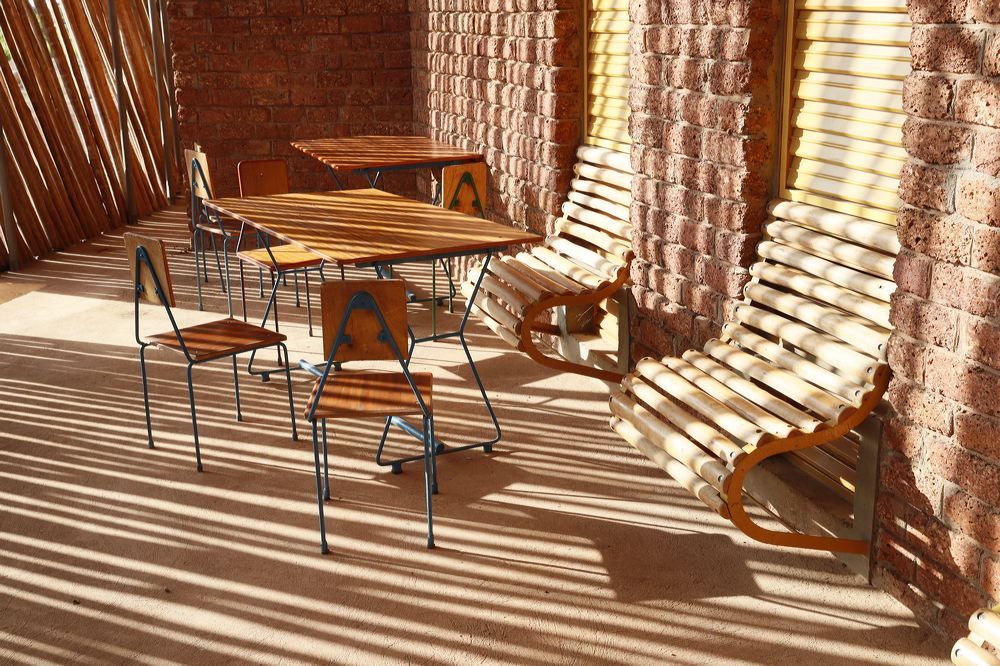
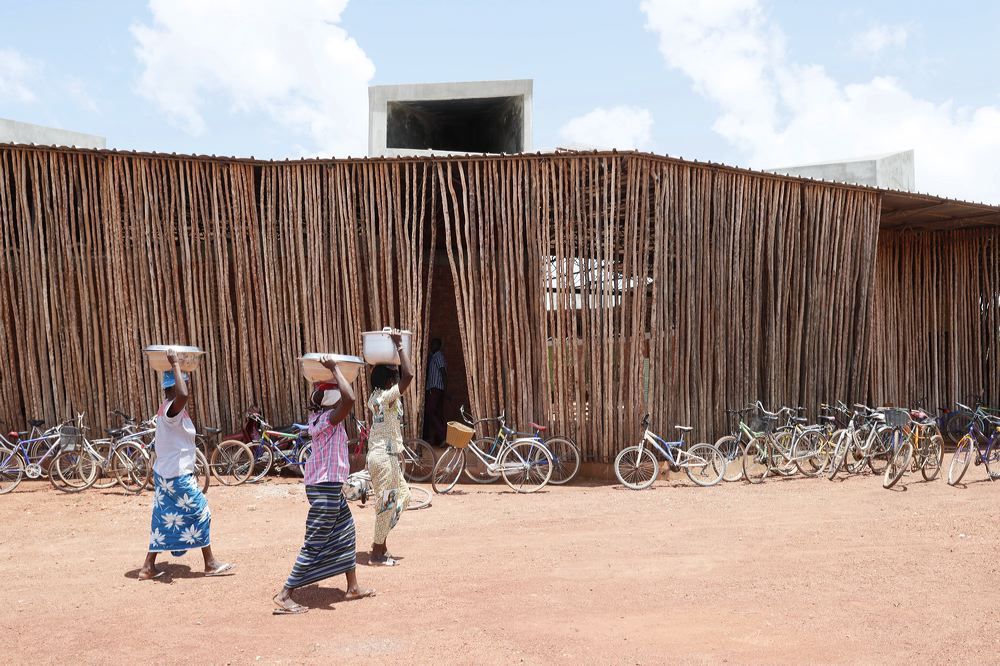
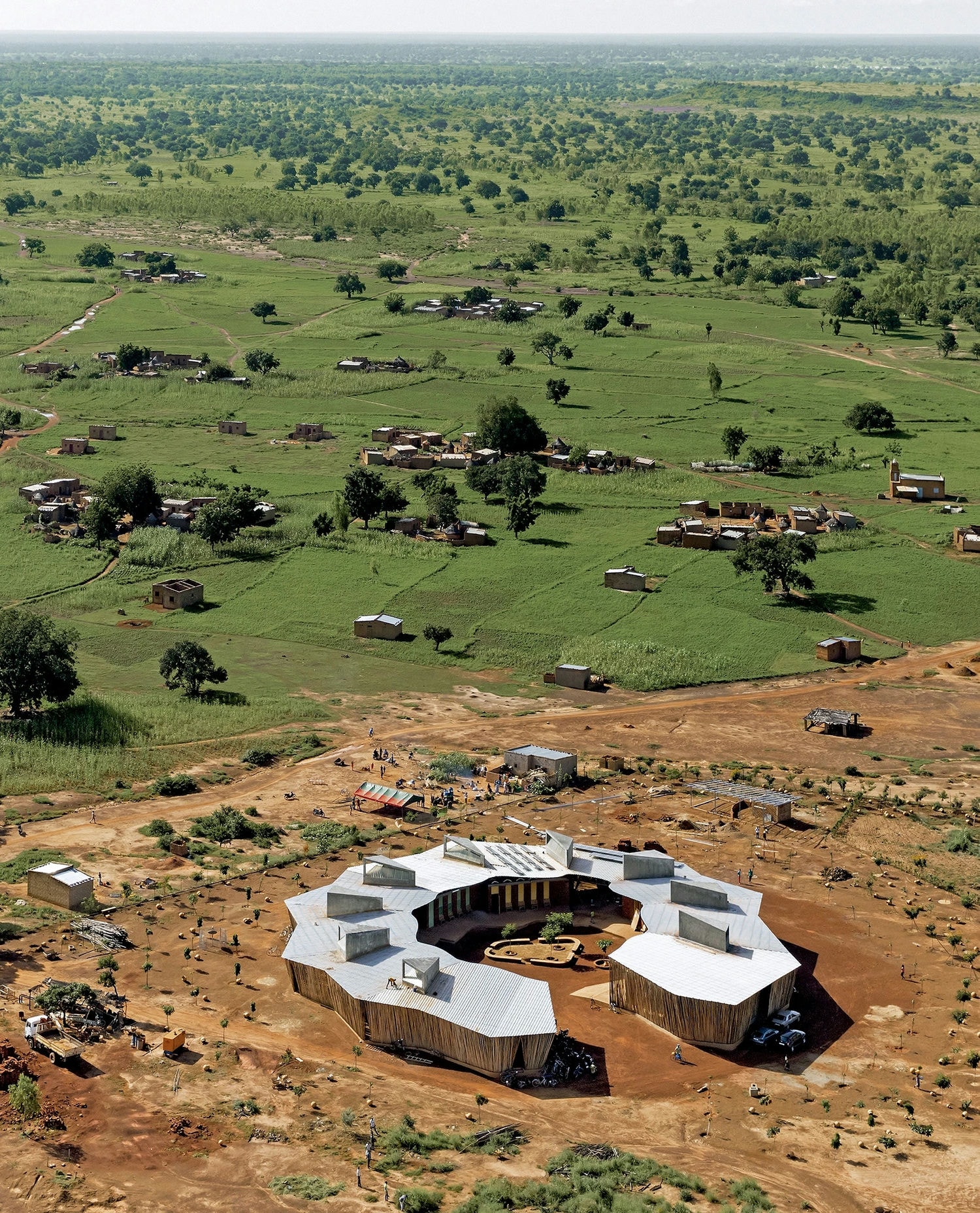
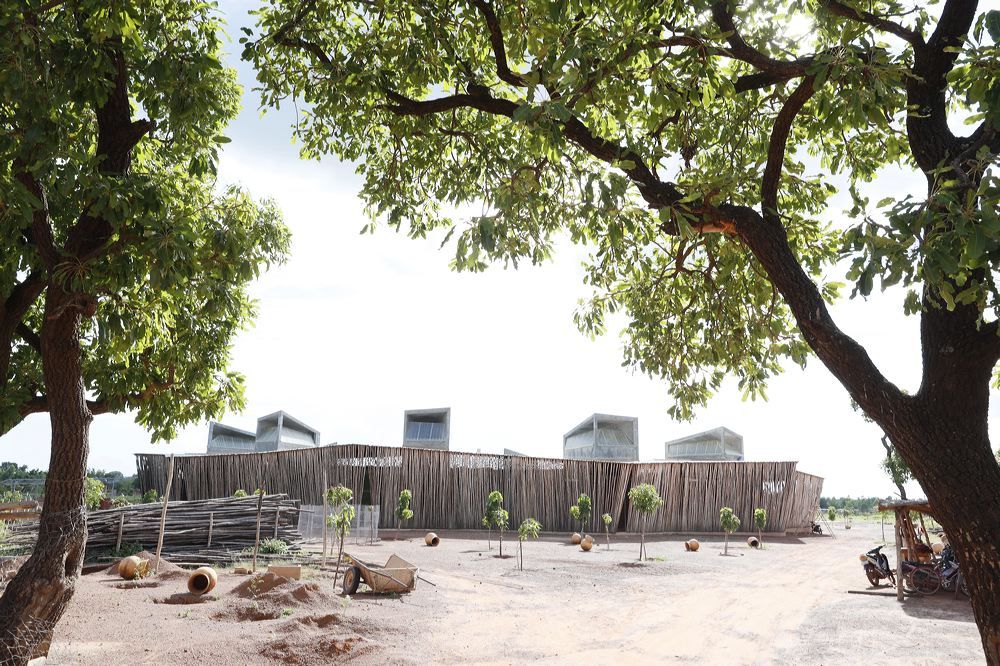
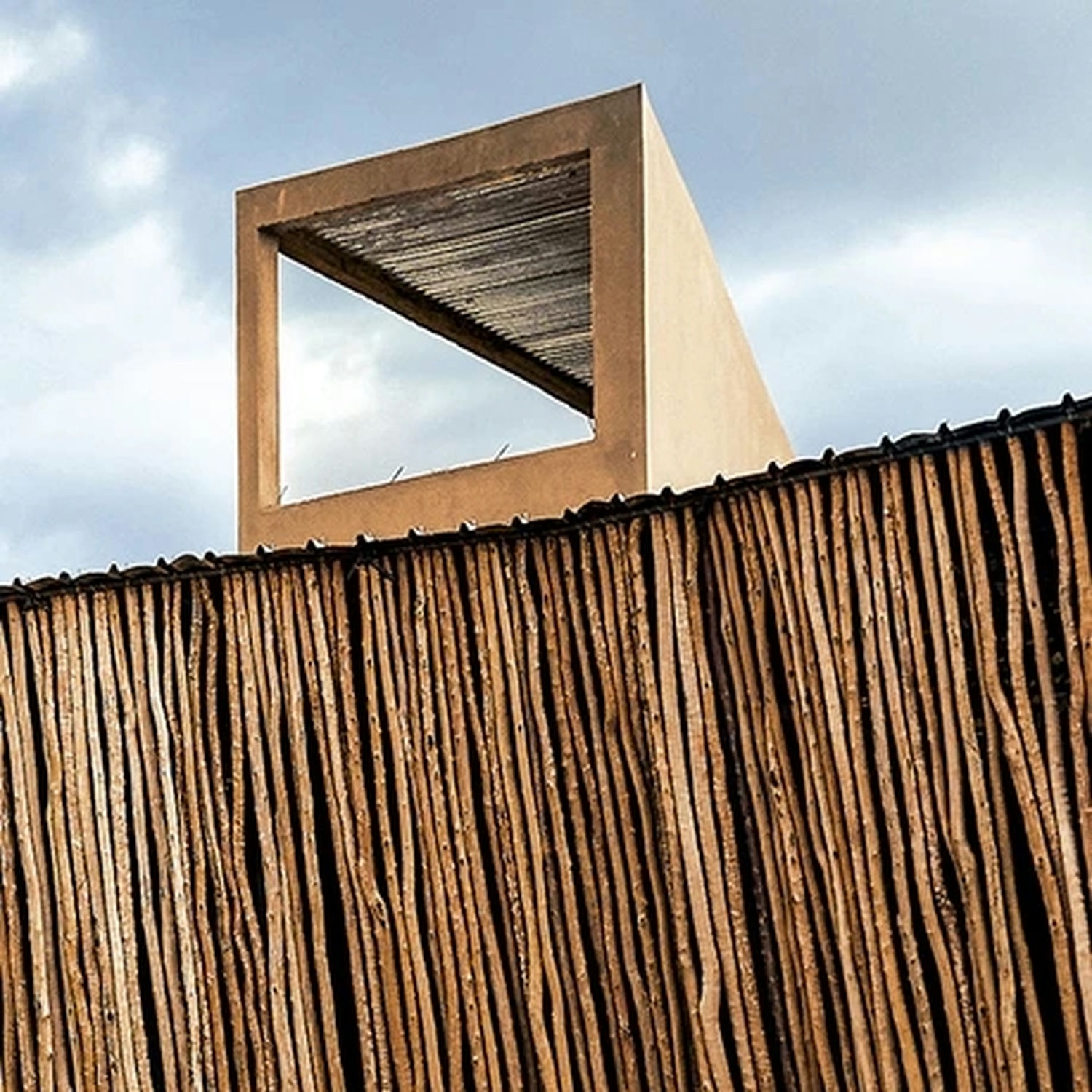
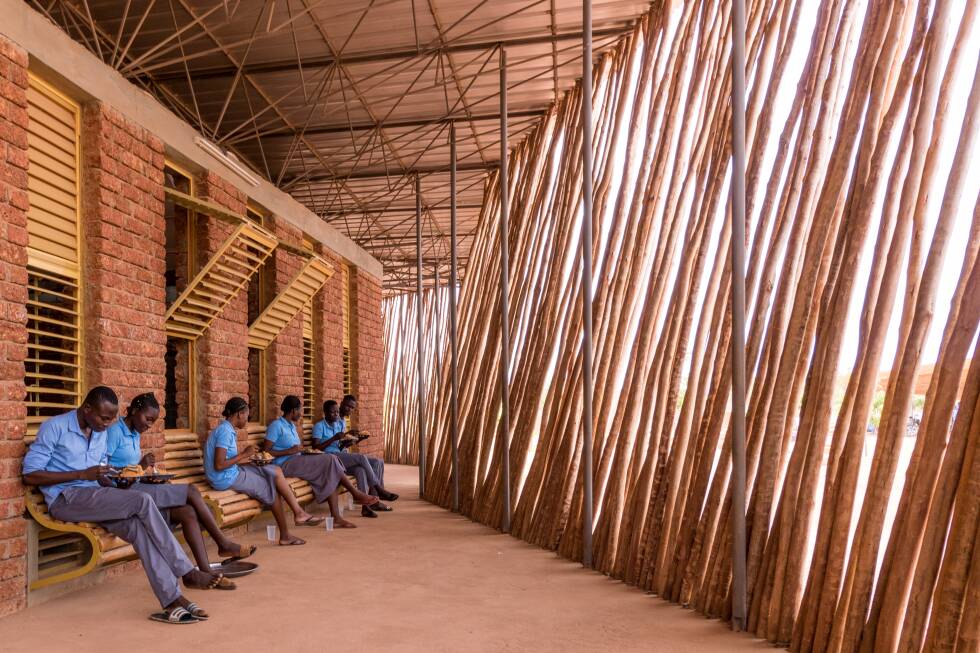
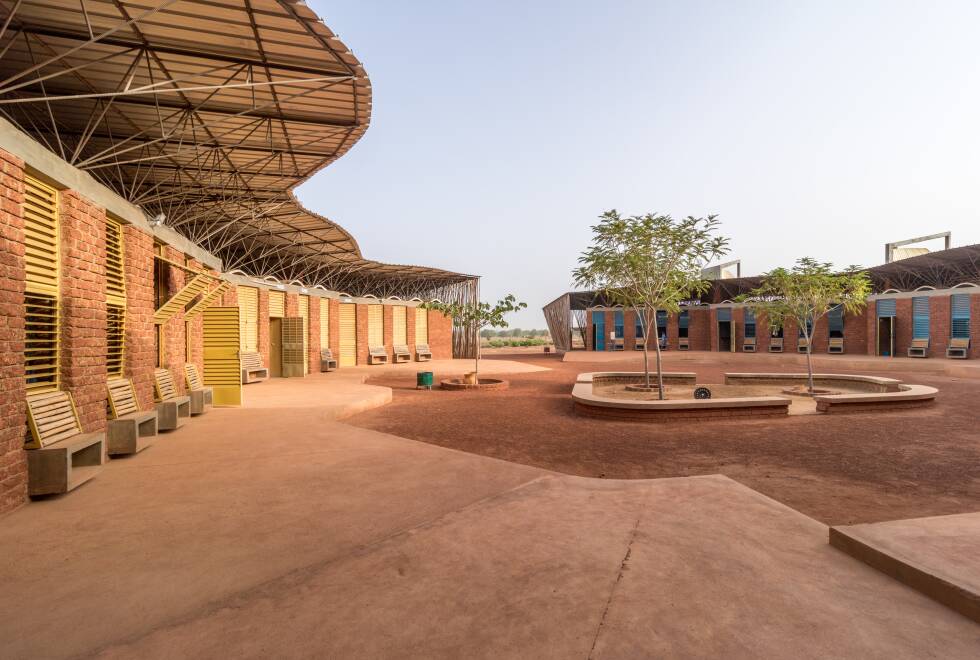
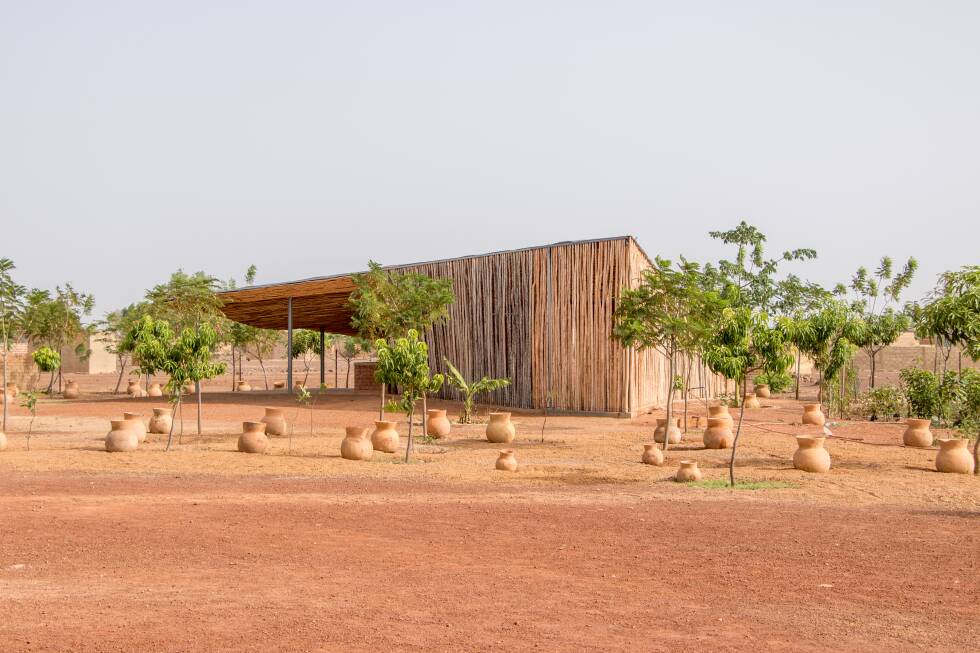
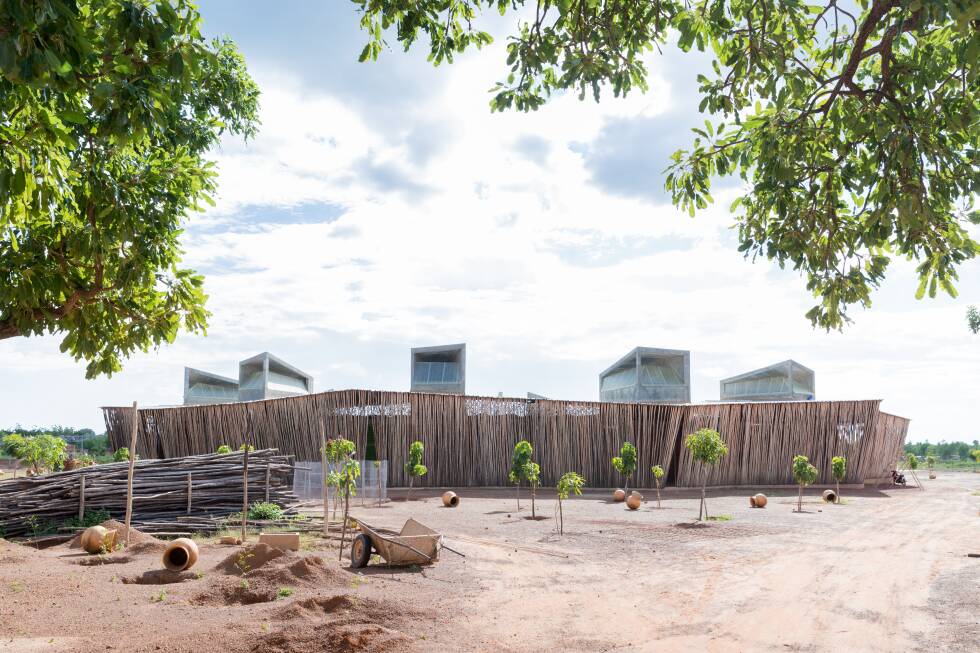
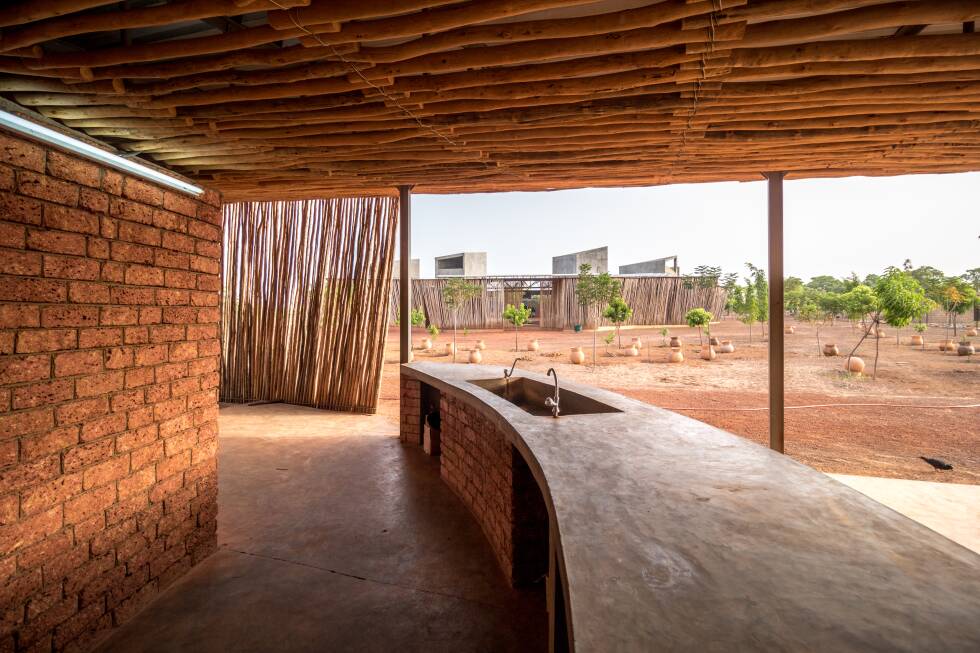
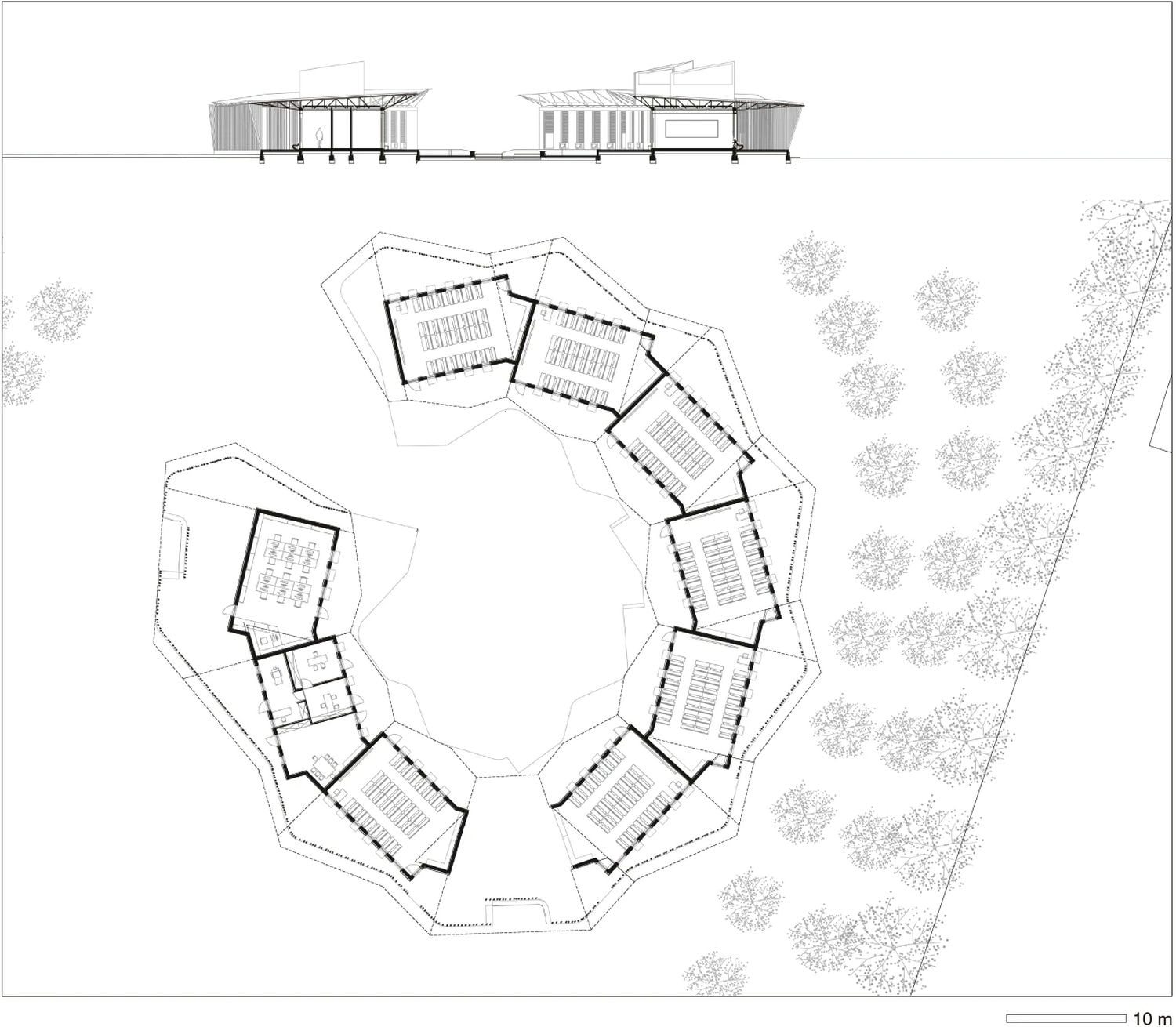
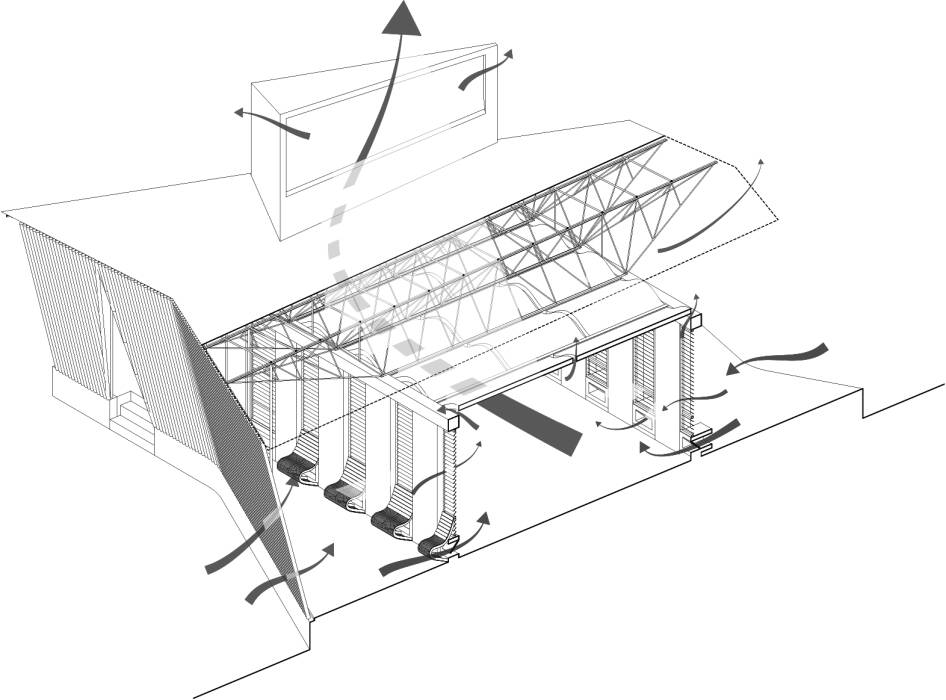
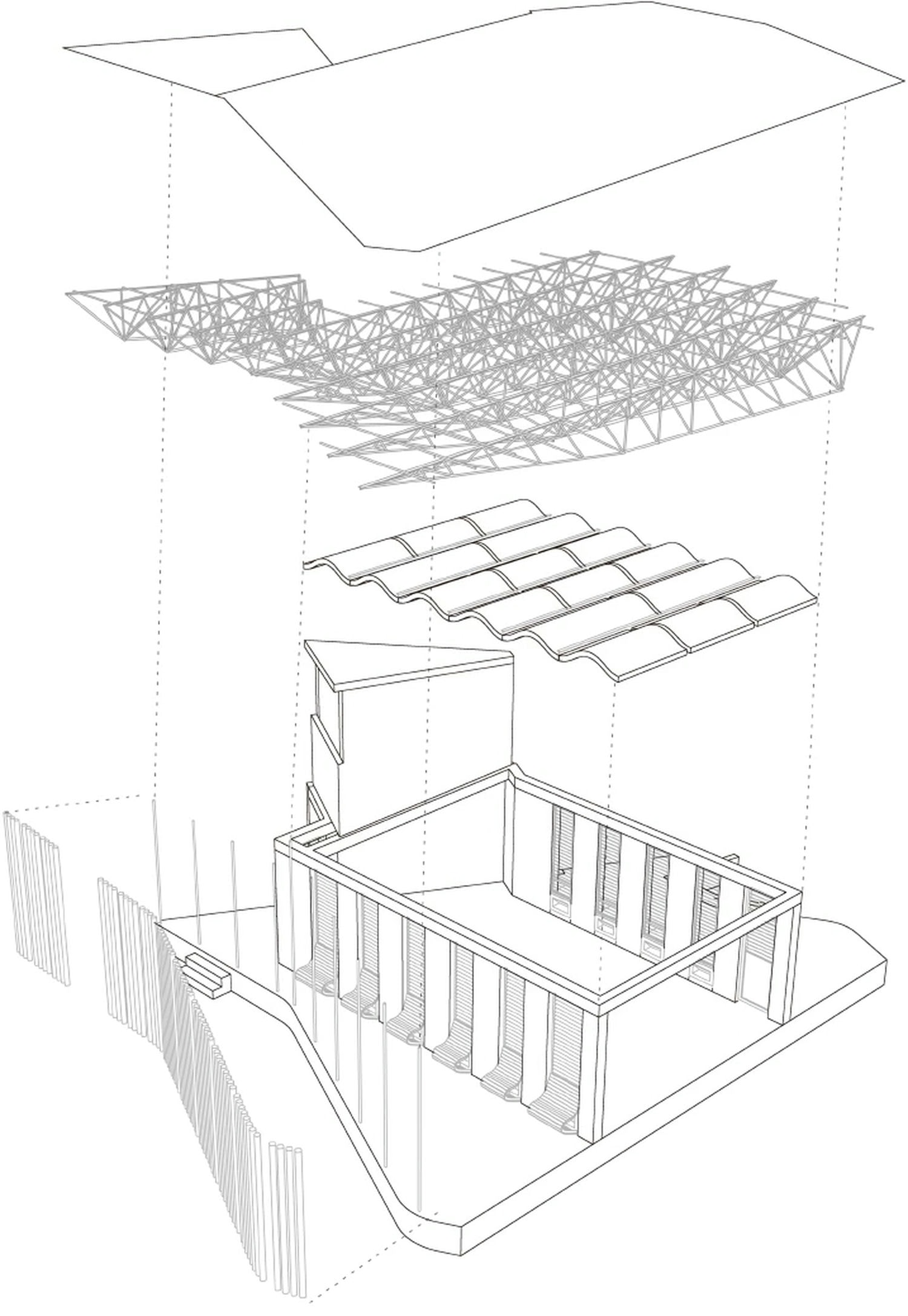
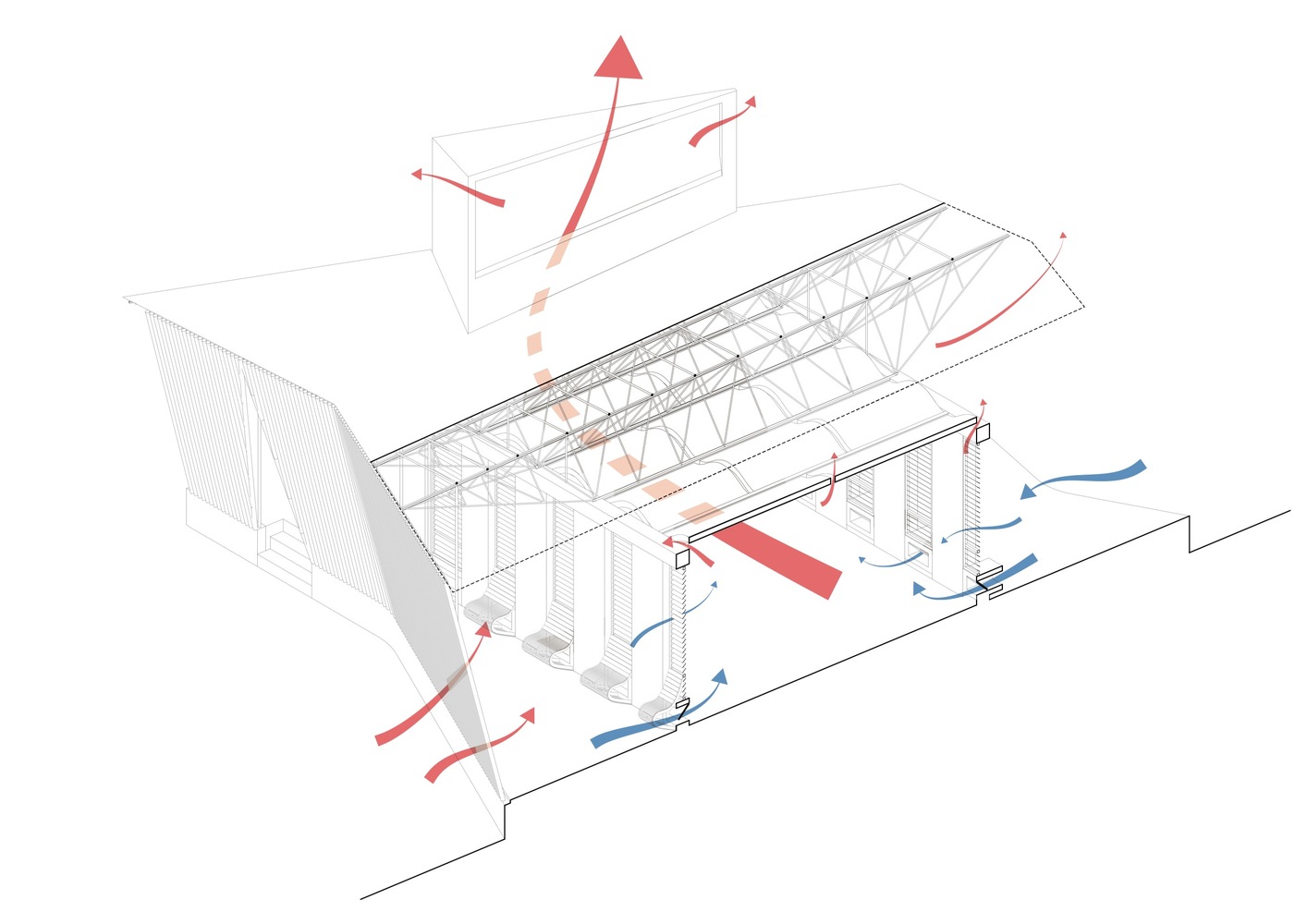
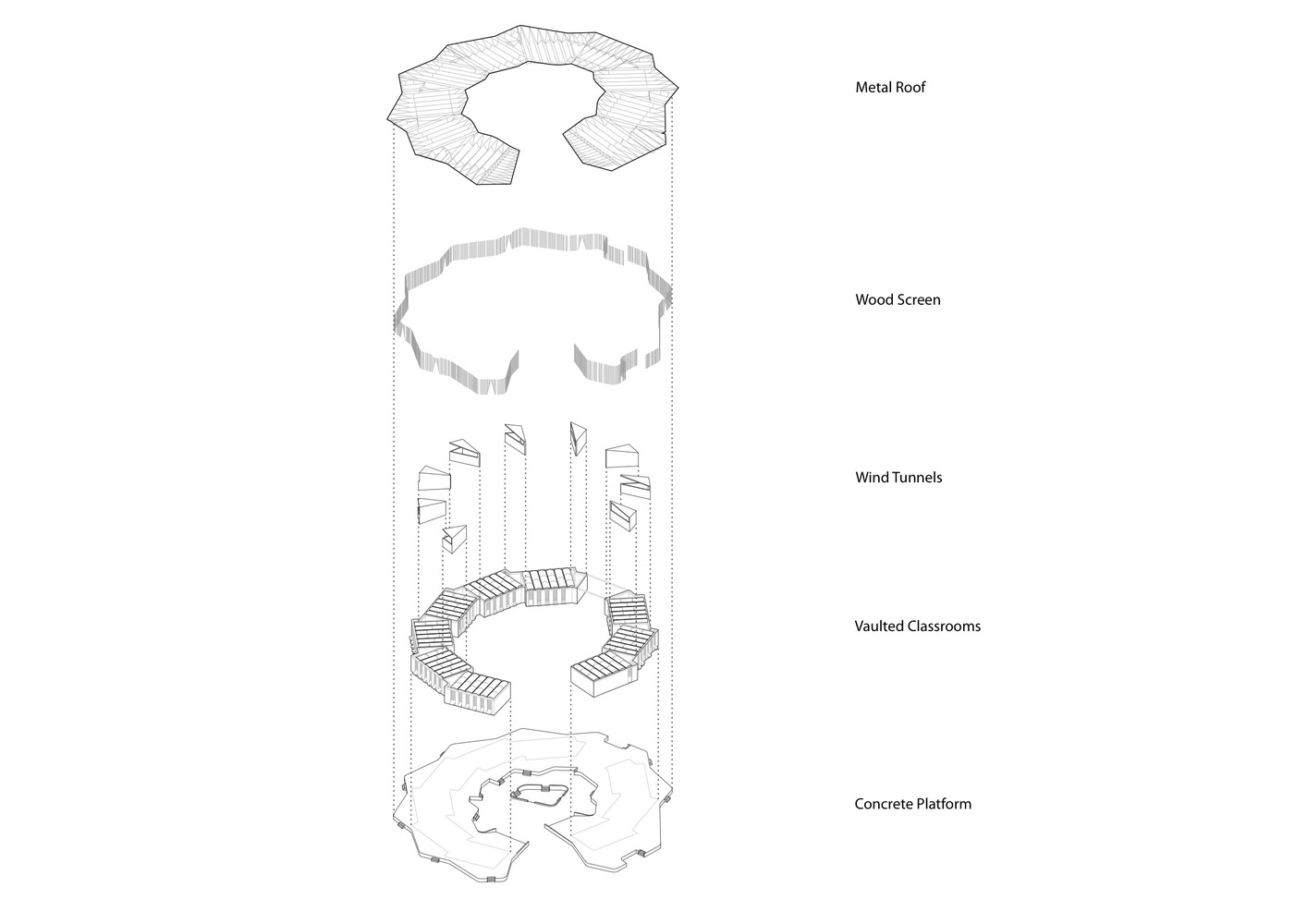
The Lycée Schorge Secondary School is an educational complex designed by Francis Kéré in Koudougou, Burkina Faso’s third-largest city. Completed in 2016, this project presents Kéré’s design approach at a larger scale. The Lycée Schorge is a high school campus consisting of nine classroom modules arranged in a radial plan around a central courtyard. This layout is based on traditional village compounds and creates a gathering space at the center of the school. Each classroom building has walls made of locally harvested laterite stone, which gives the structures a deep-red color. This material provides thermal mass that keeps interior temperatures lower in the hot climate. Around the stone buildings, Kéré added a secondary wooden screen made of local eucalyptus wood. This slatted facade wraps the classrooms and forms shaded semi-outdoor corridors where students can meet between classes. The design incorporates passive cooling elements: vented skylight towers atop the classrooms release hot air, and perforated plaster ceilings diffuse daylight while reducing heat gain. The Lycée Schorge’s design type is an educational campus and shows how contemporary architecture responds to local conditions. The campus includes classrooms and an open-air amphitheater formed by cascading steps in the courtyard, which the school and community can use for assemblies and performances. By using local materials and engaging local craftsmen, the project supported regional economic activity and skills development. The Lycée Schorge Secondary School has been published as an example of sustainable school design. It influenced educational building design in West Africa and reflects Kéré’s commitment to practical solutions for community needs.
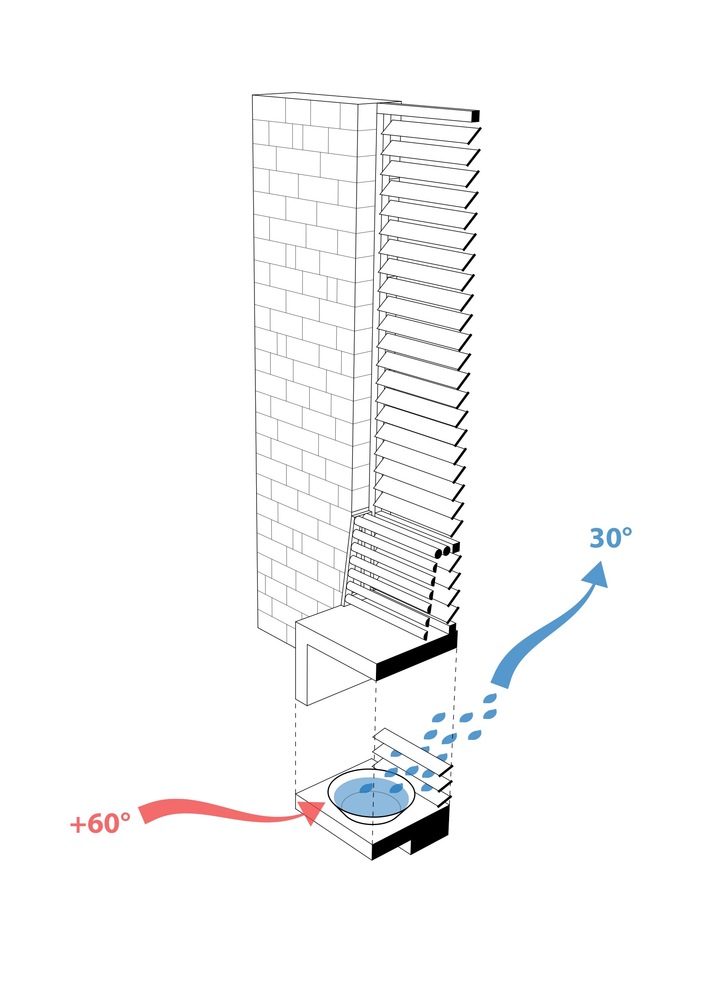
03. Serpentine Pavilion, London
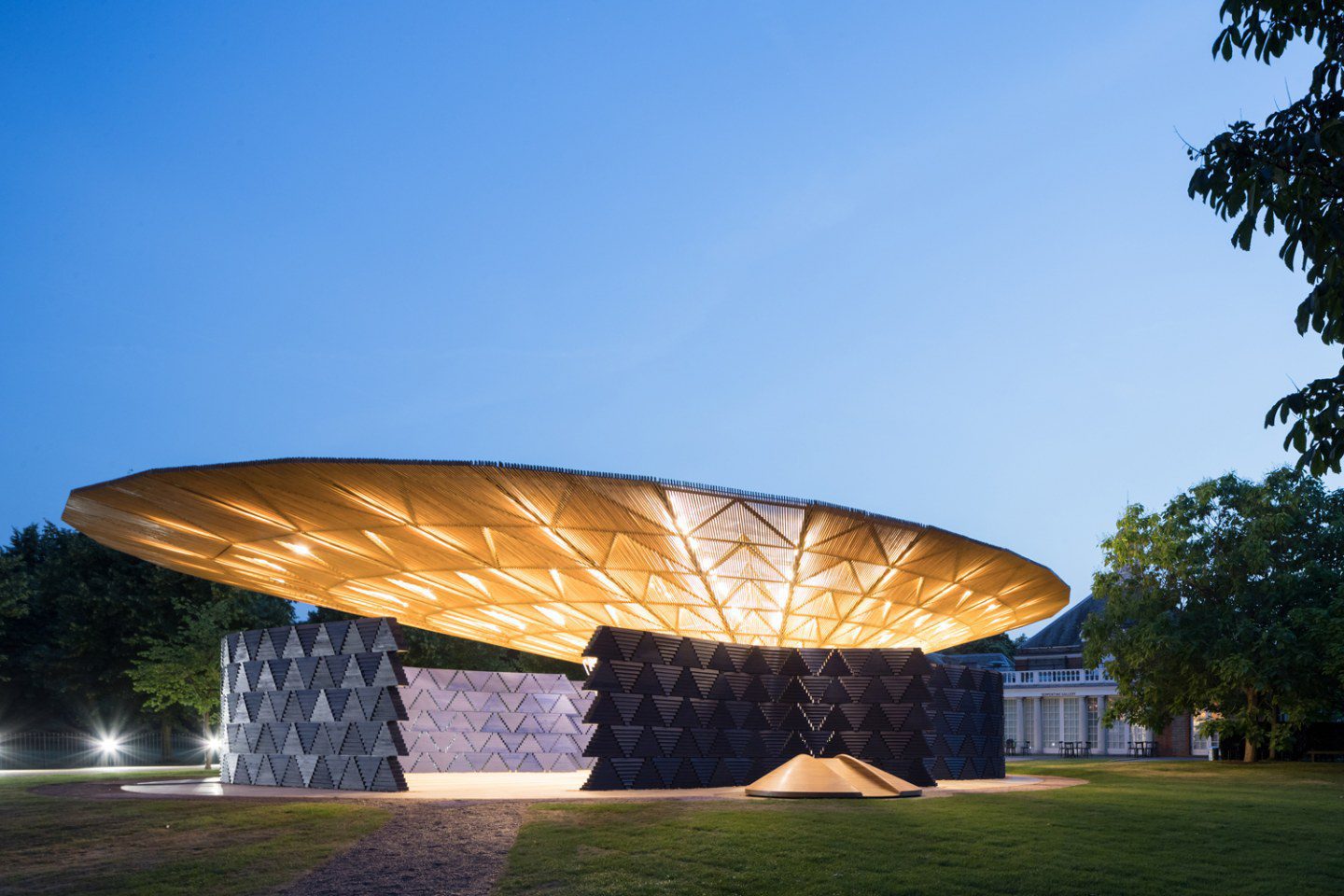
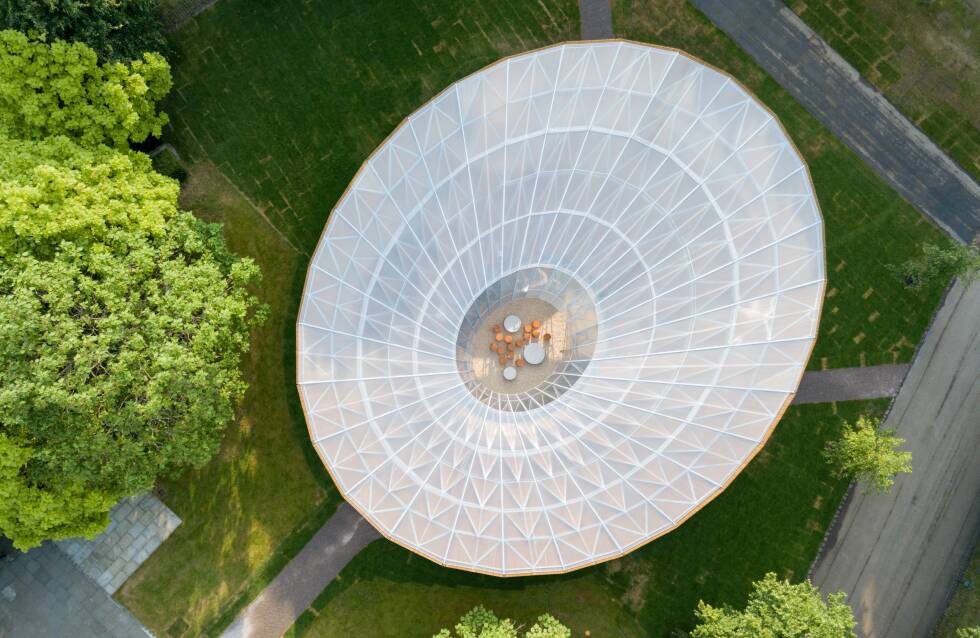
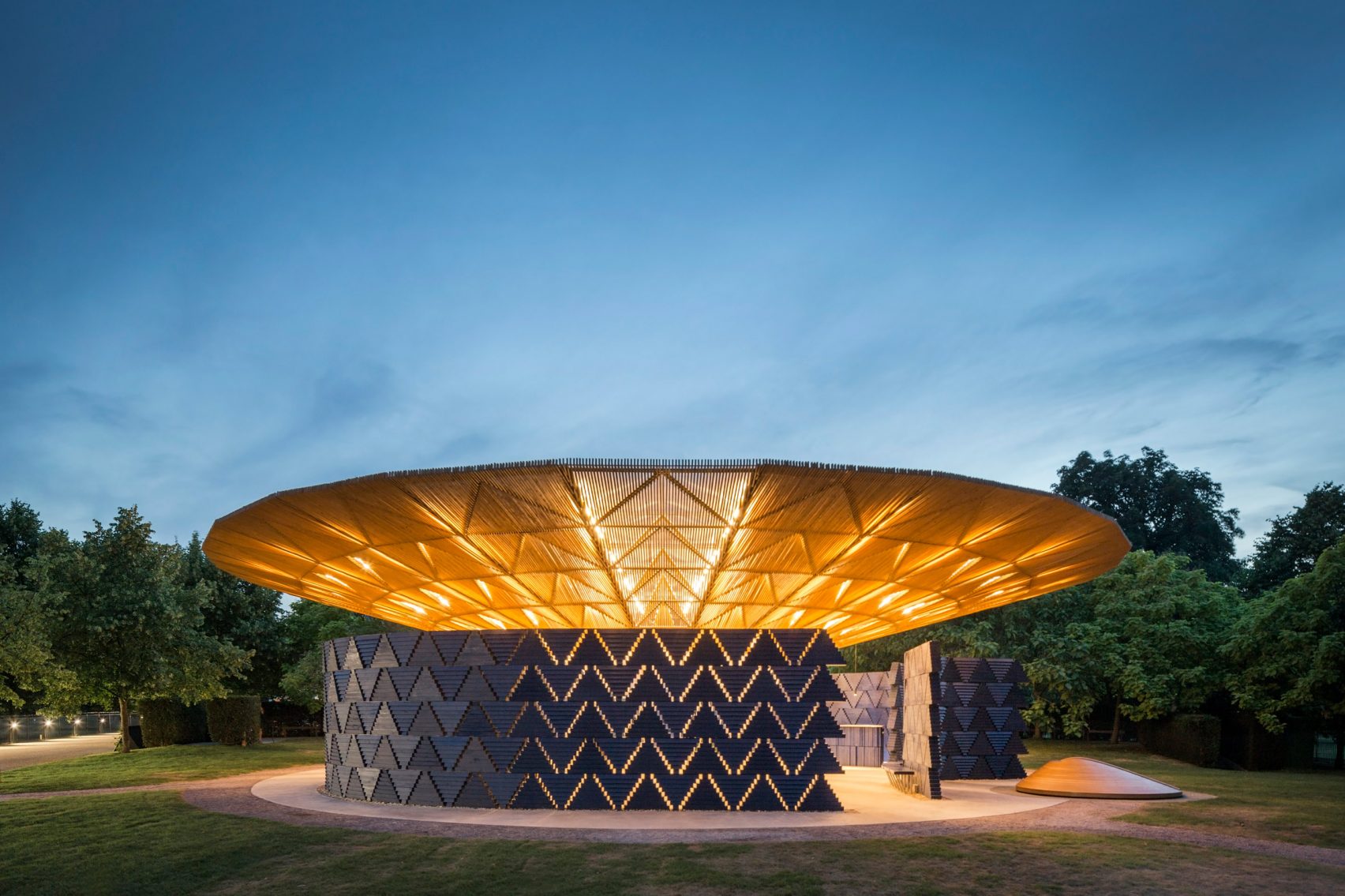
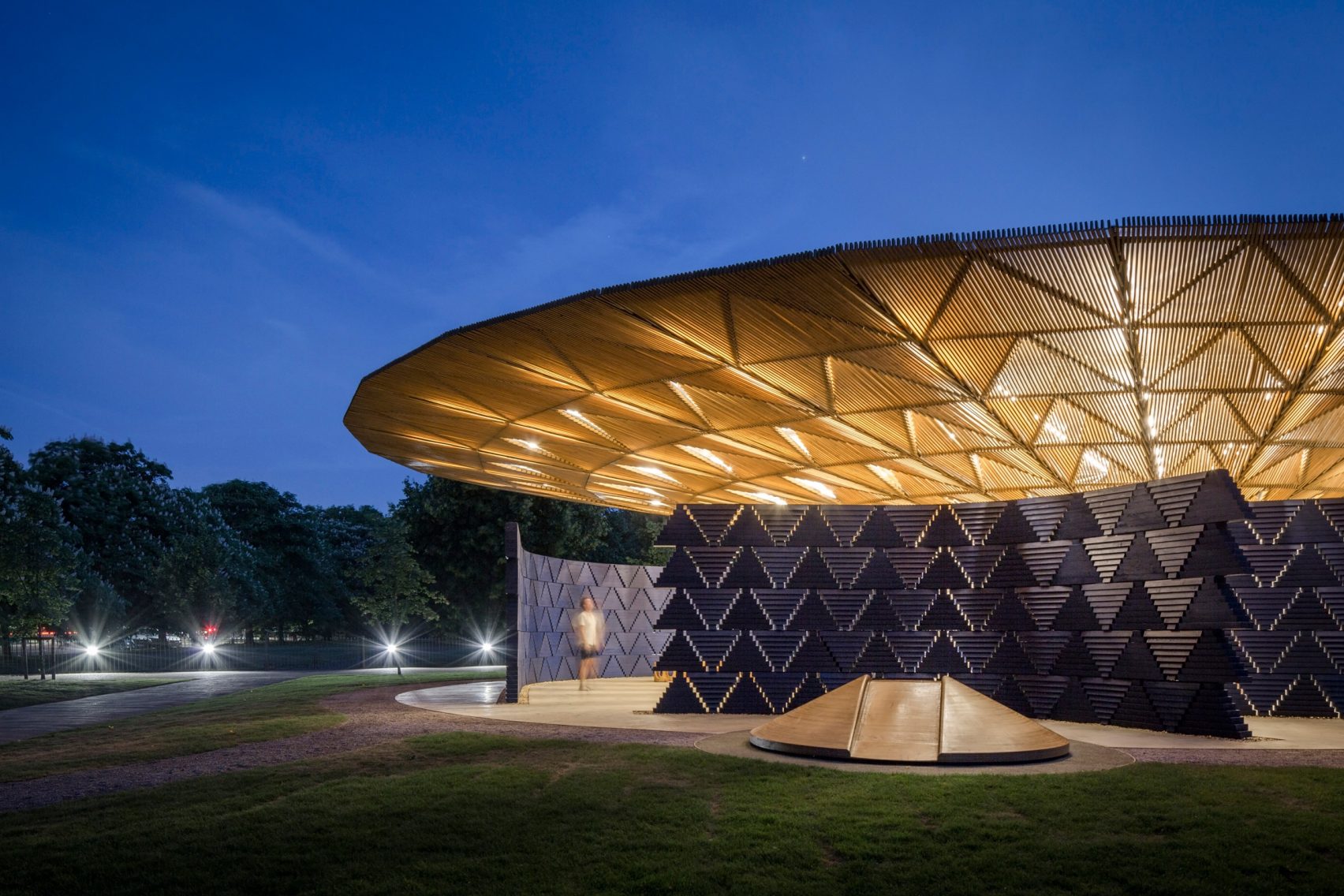
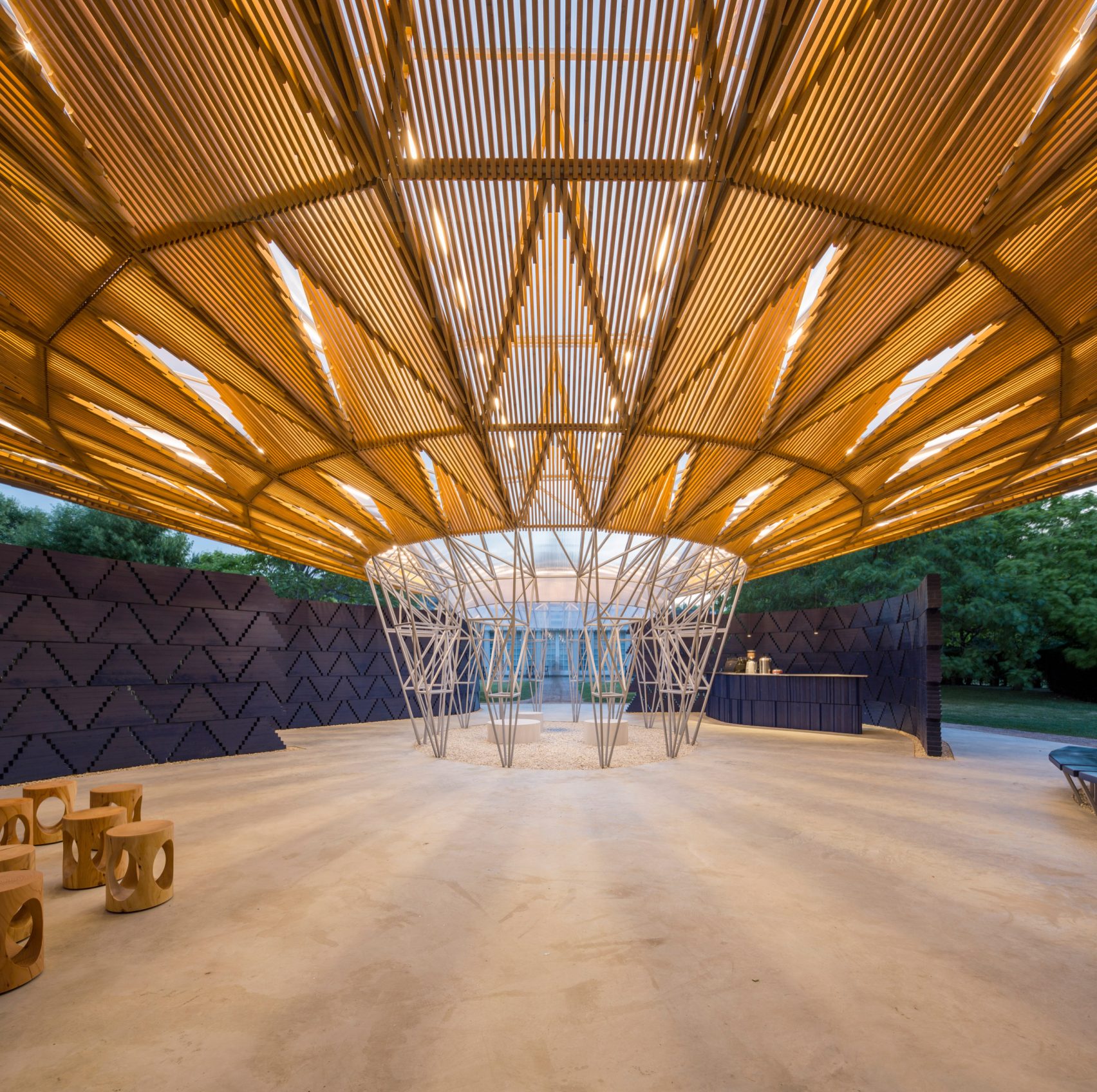
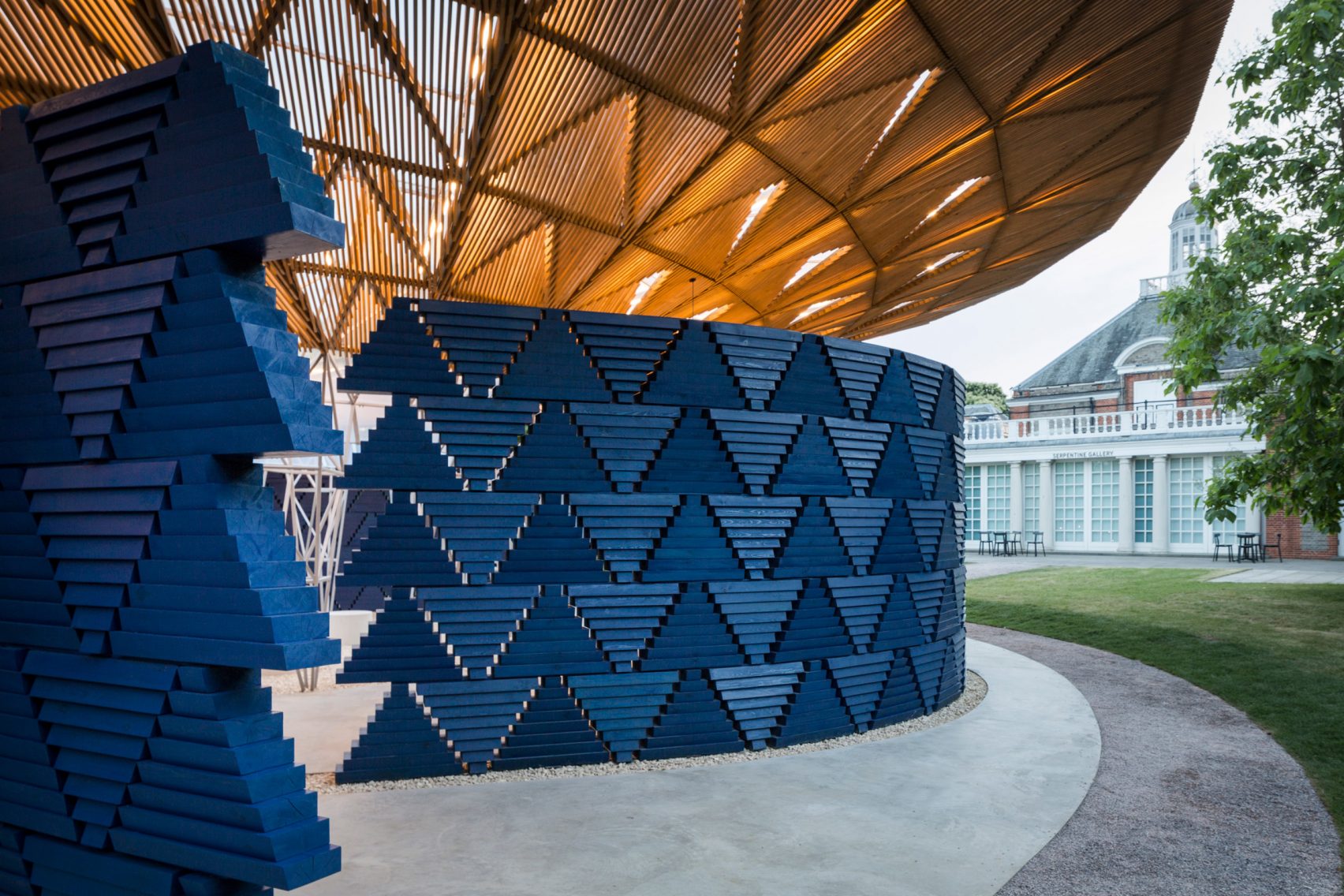
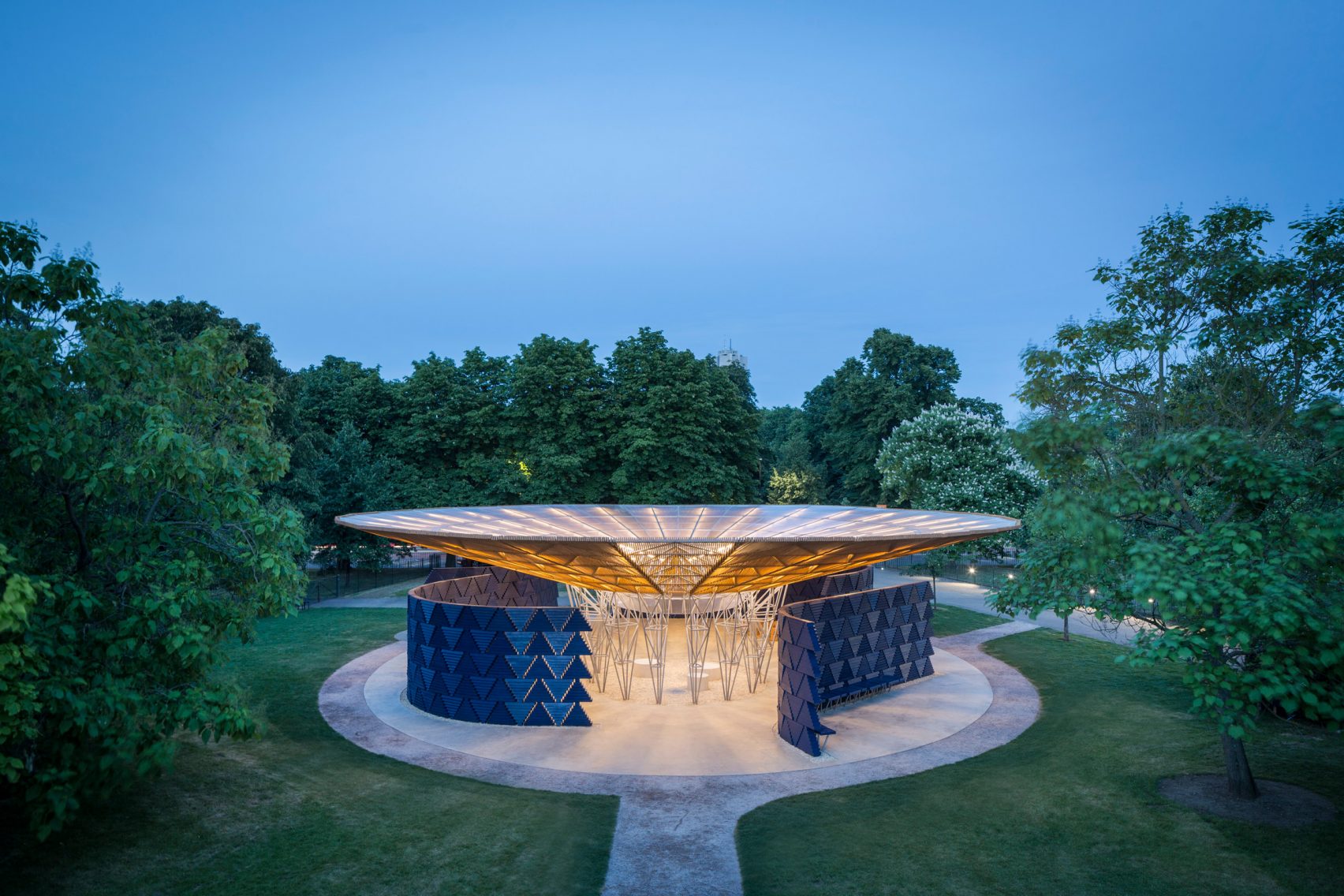
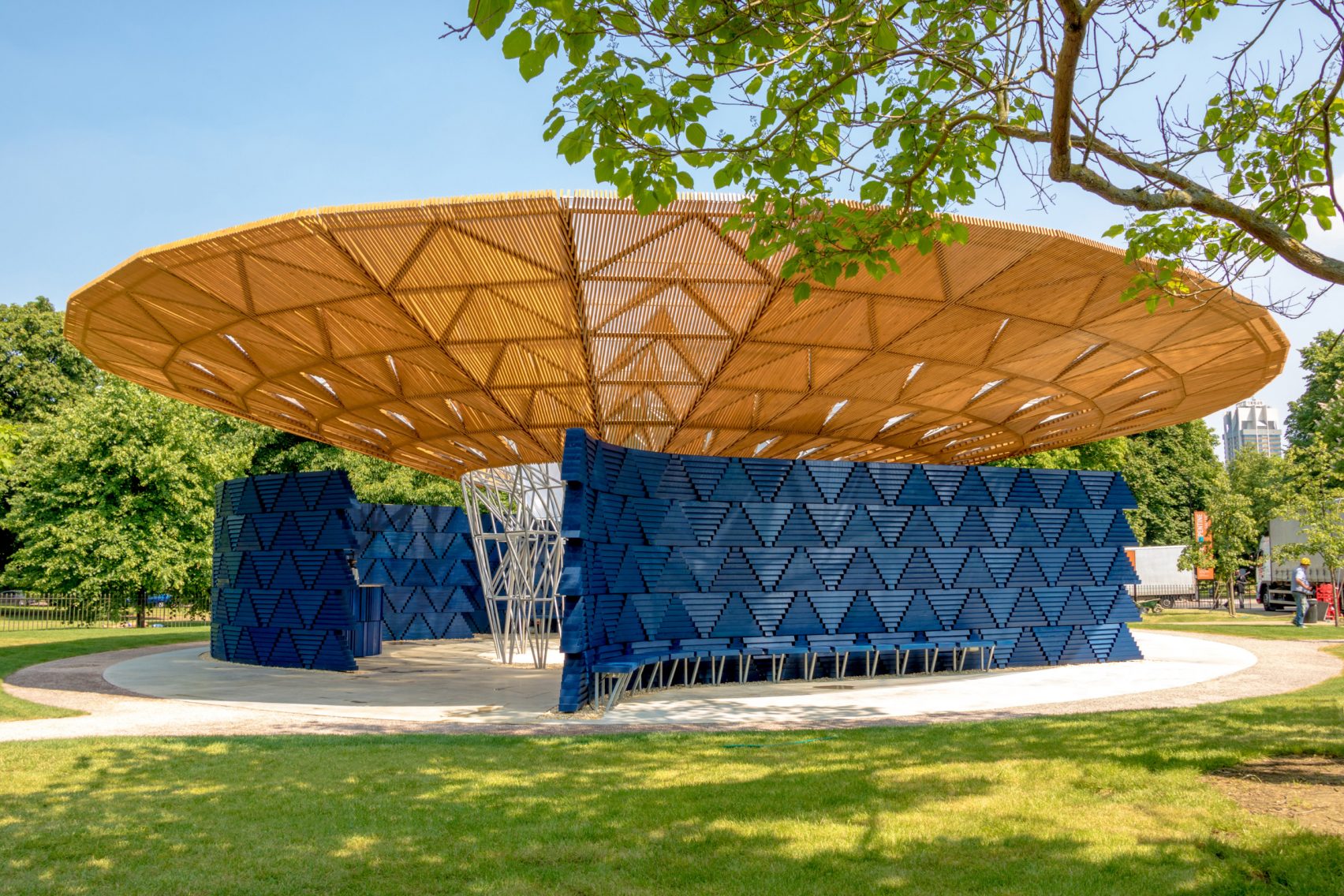
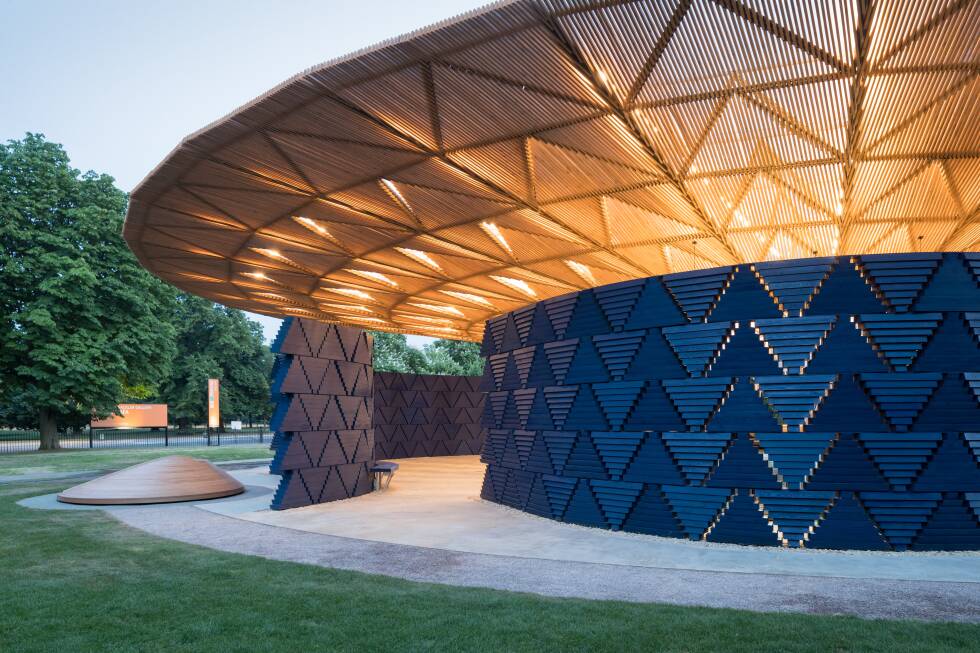
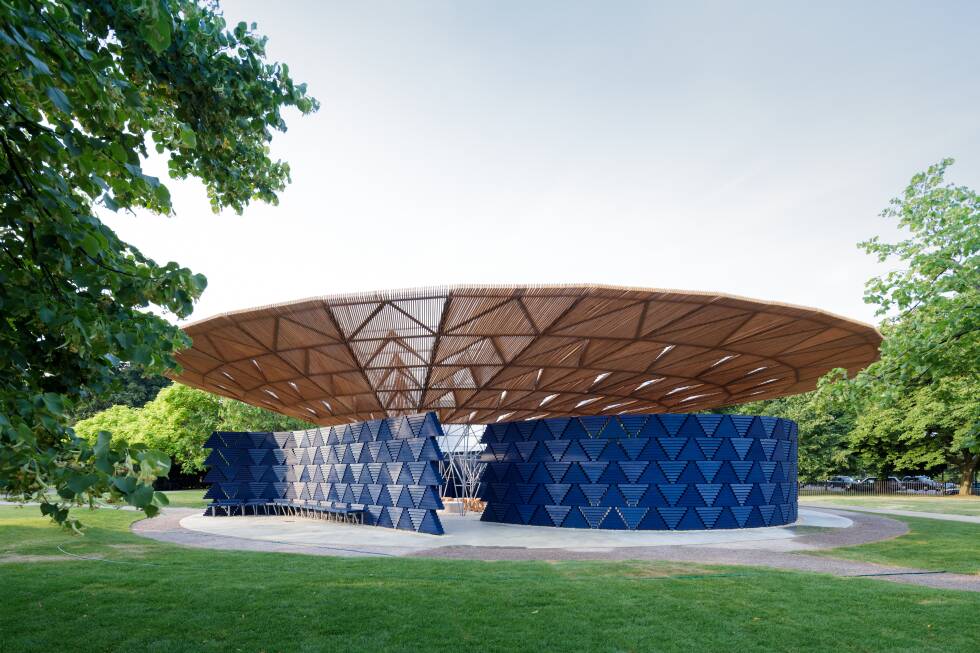
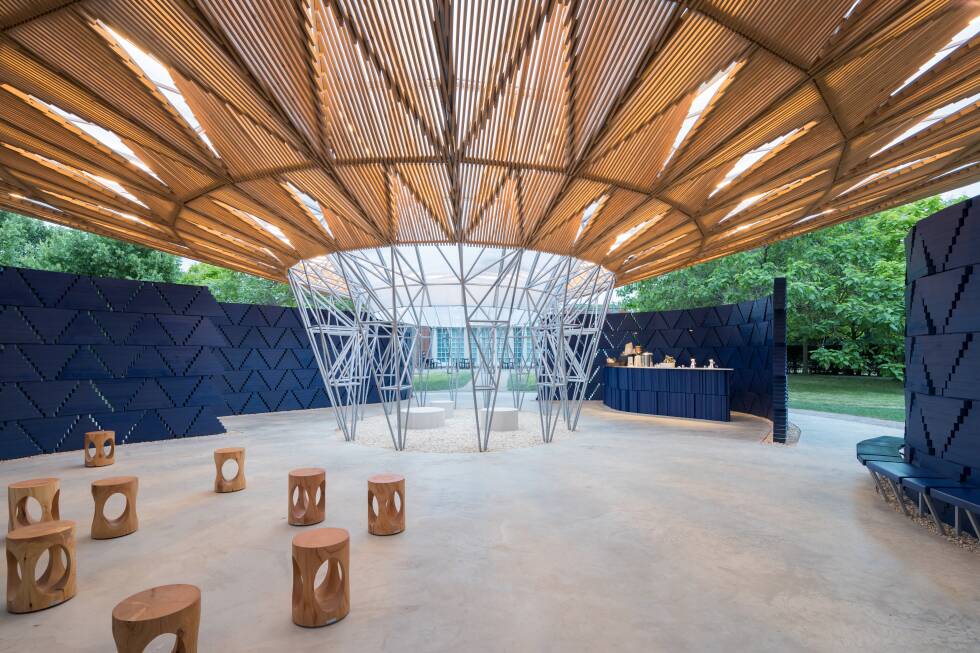
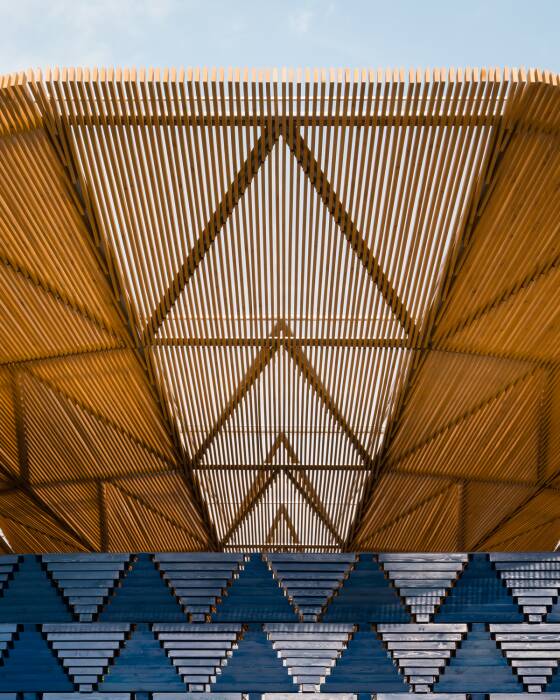
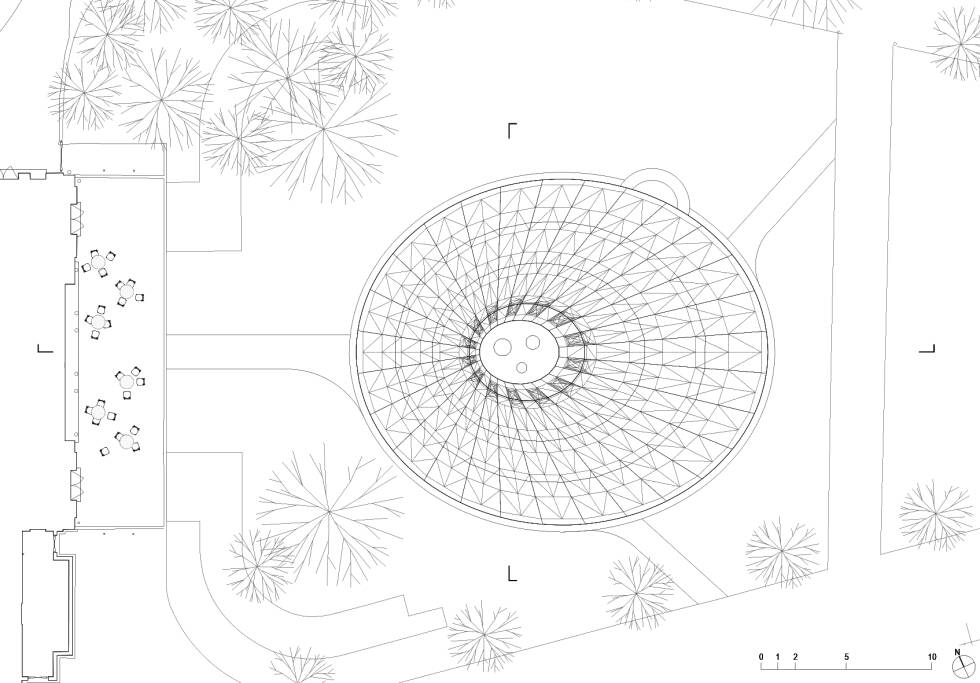
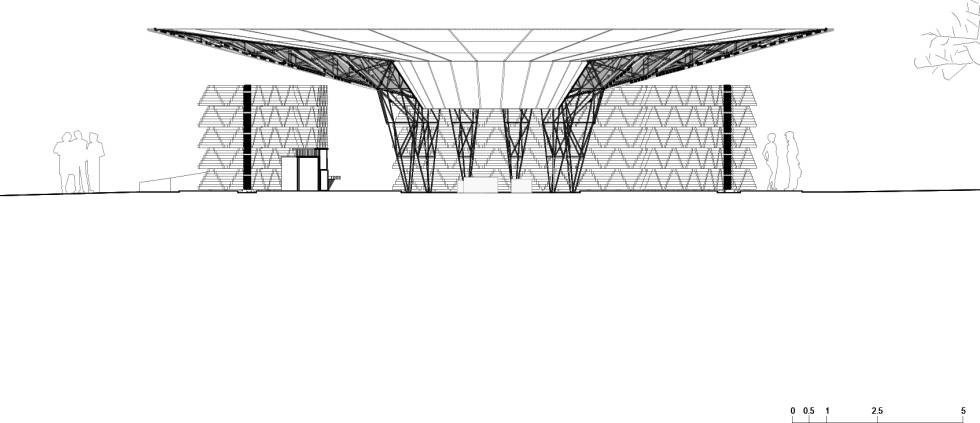
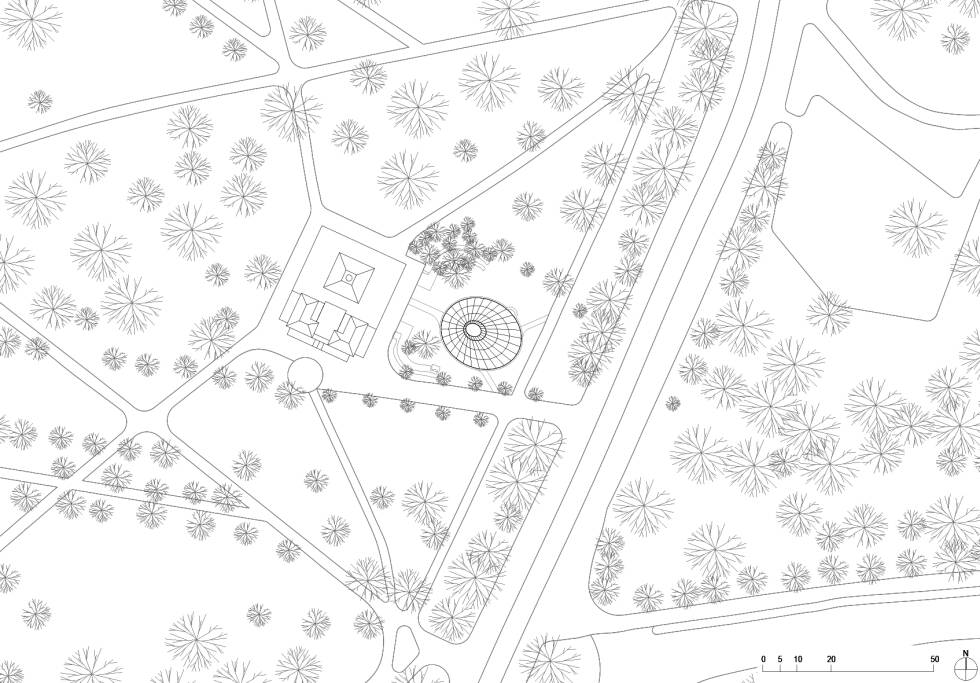
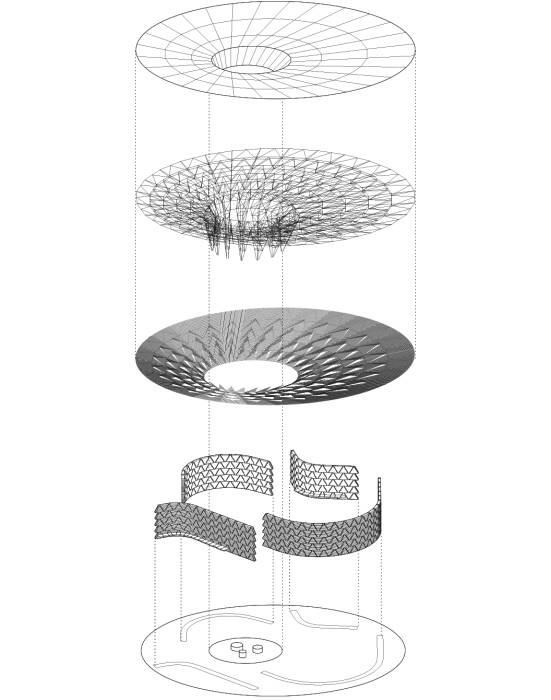
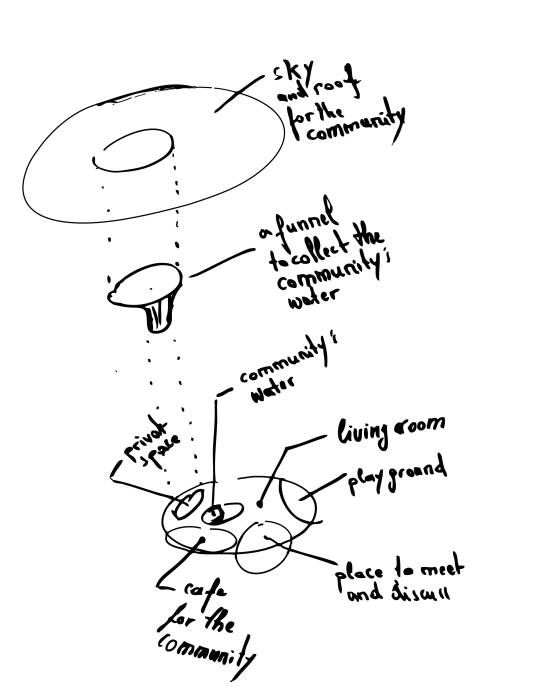
The 2017 Serpentine Pavilion in London is one of Francis Kéré’s well-known works and marked his entry onto the global architectural stage. Each year, the Serpentine Galleries commissions an architect to design a temporary pavilion in Hyde Park, and Kéré was selected for the 2017 edition. The pavilion is an open-air structure that reflects his African heritage and addresses the London context. Built as a temporary installation open to the public for several months, the pavilion’s design centered on a wooden roof canopy in an inverted funnel shape. This canopy, made of a radial lattice of timber, was influenced by the form of a broad tree in Kéré’s home village that functions as a gathering place. In the pavilion, the funnel-shaped roof was engineered to channel rainwater through an oculus at the center and direct it to the surrounding park. Beneath the canopy, the pavilion contained a courtyard-like space enclosed by curving blue walls. These walls were assembled from triangular modules and left open in sections to create variations of light and shade. The Serpentine Pavilion’s design type is a temporary exhibition structure used as a café, event space, and shelter for visitors. Its materials included wood for the roof and steel for structural support, along with plywood panels for the walls painted an indigo blue. The pavilion received international attention and presented elements of communal spatial logic from Burkina Faso in an urban European setting. For Francis Kéré, this project introduced his design approach to a wider audience and demonstrated principles of simplicity, community, and climate-responsive design.
04. Startup Lions Campus, Kenya
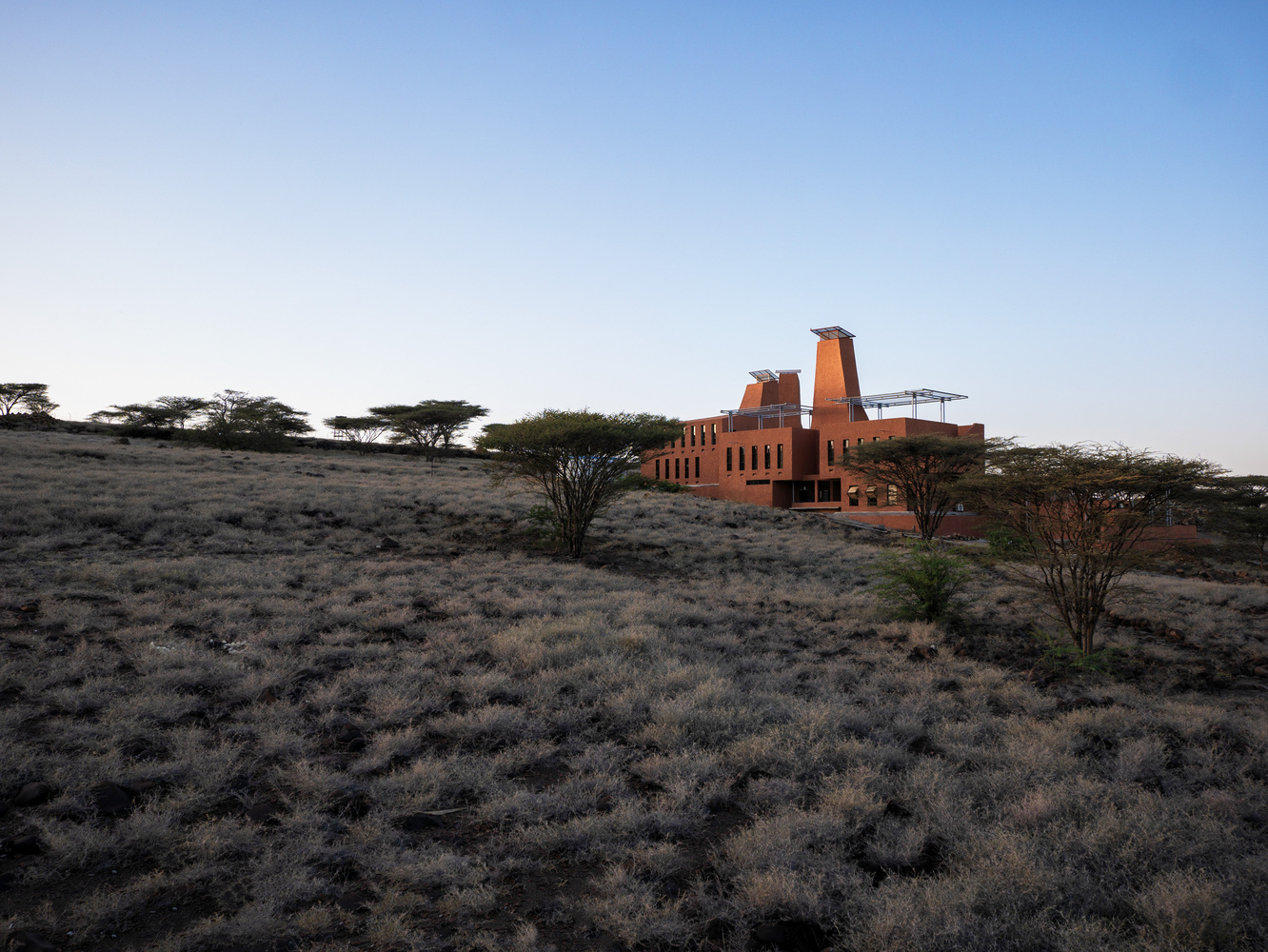
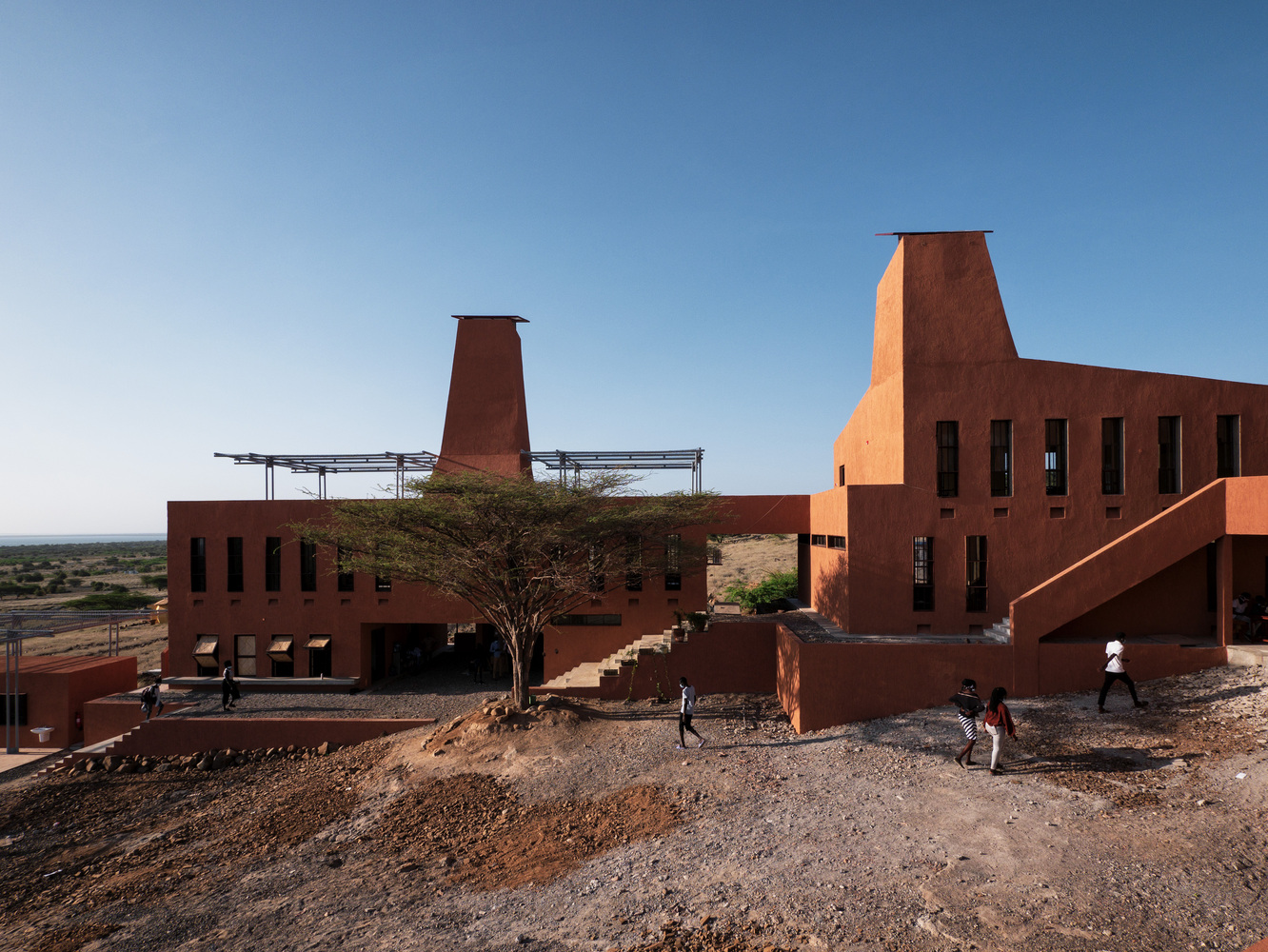
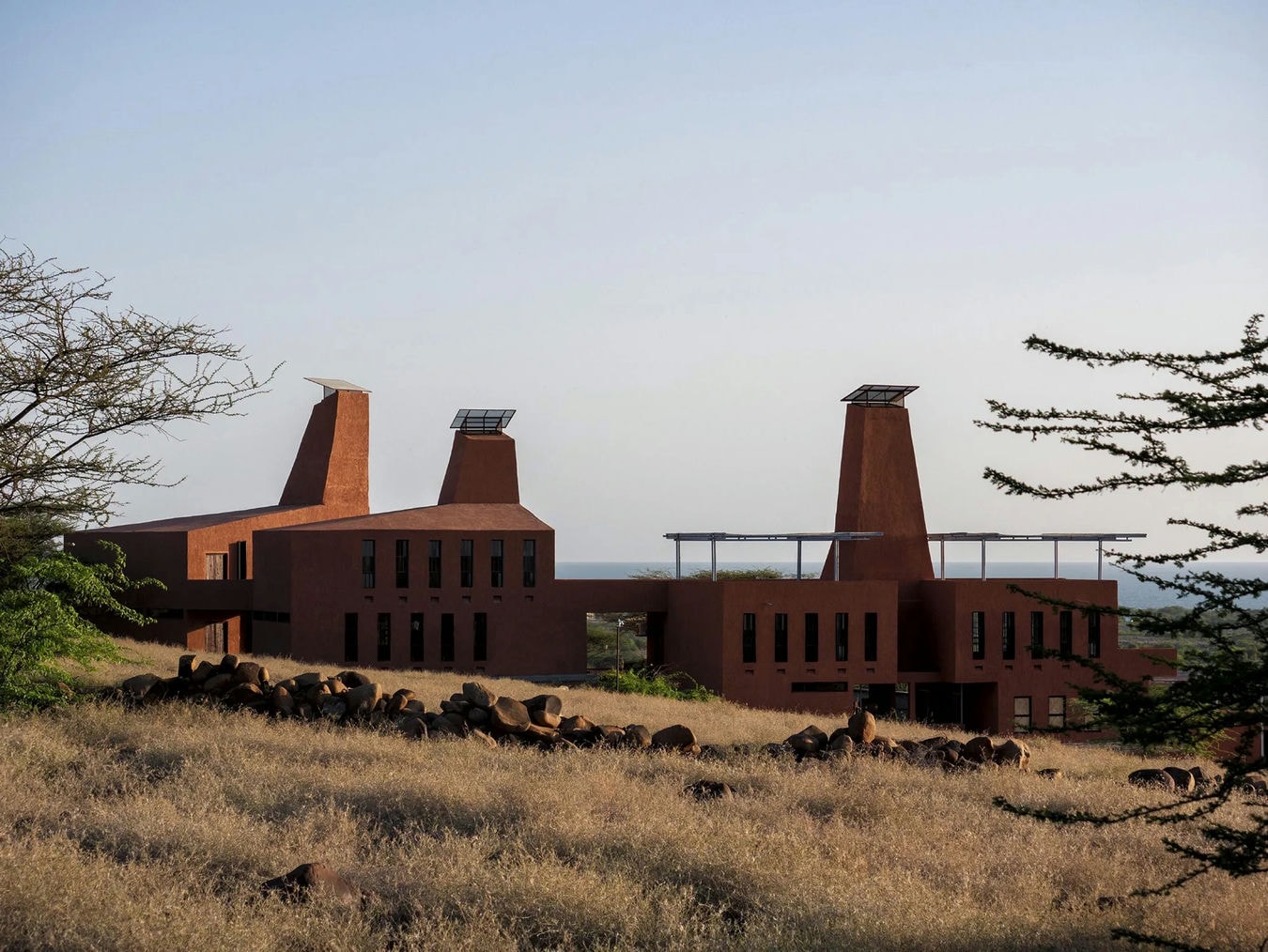
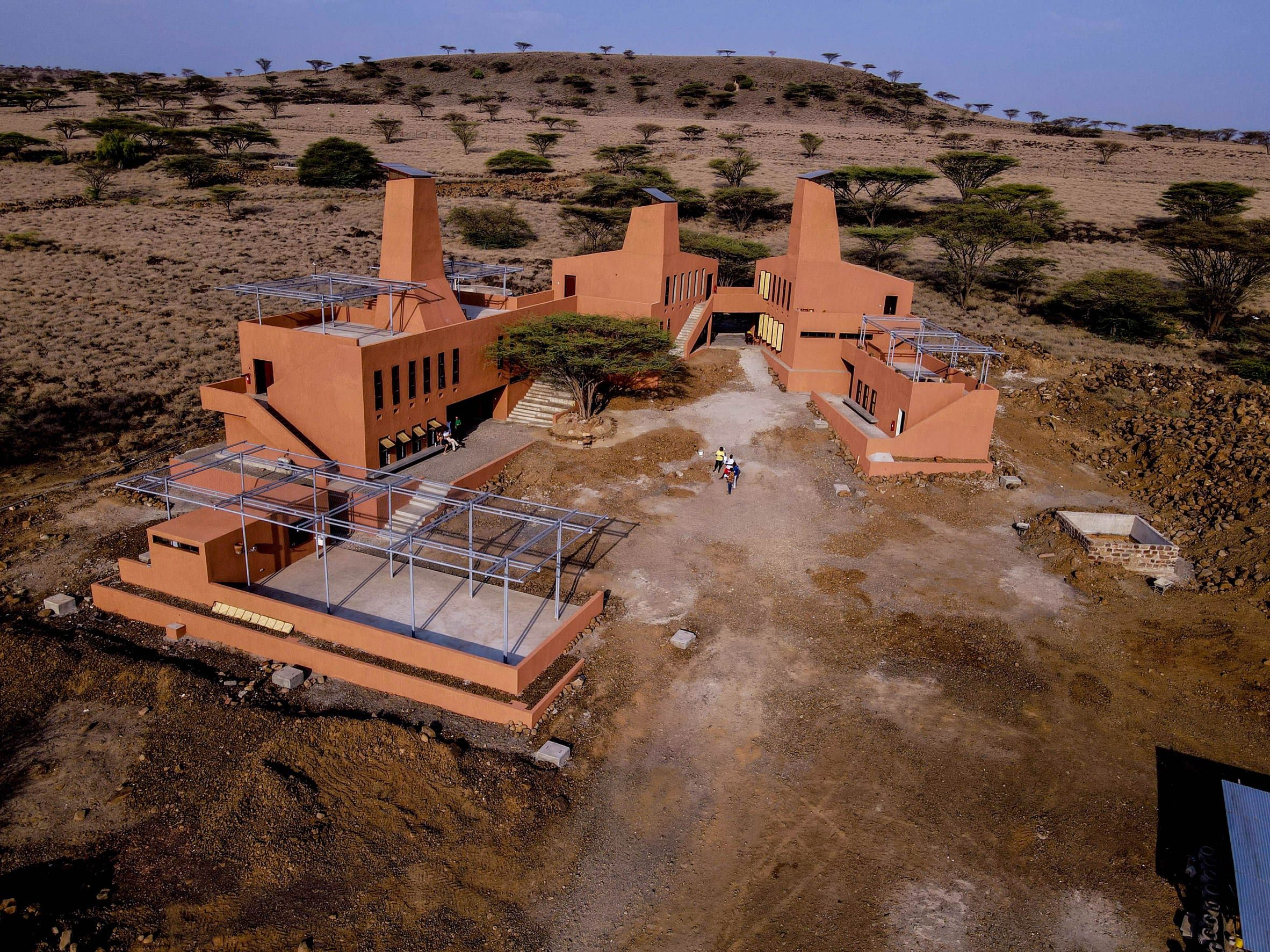
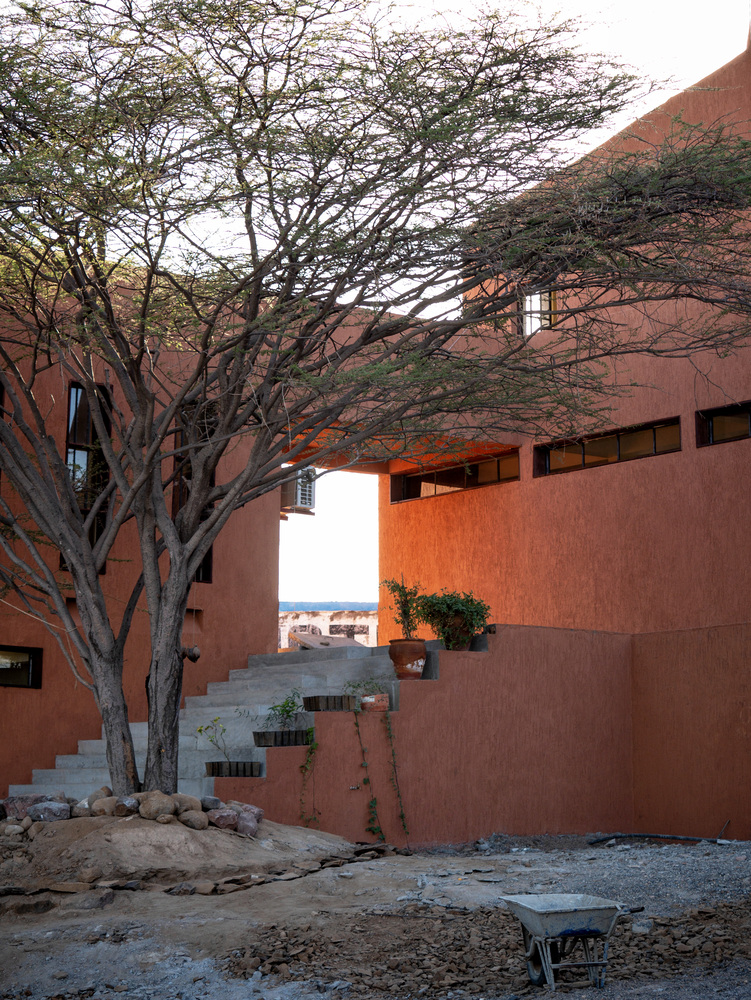
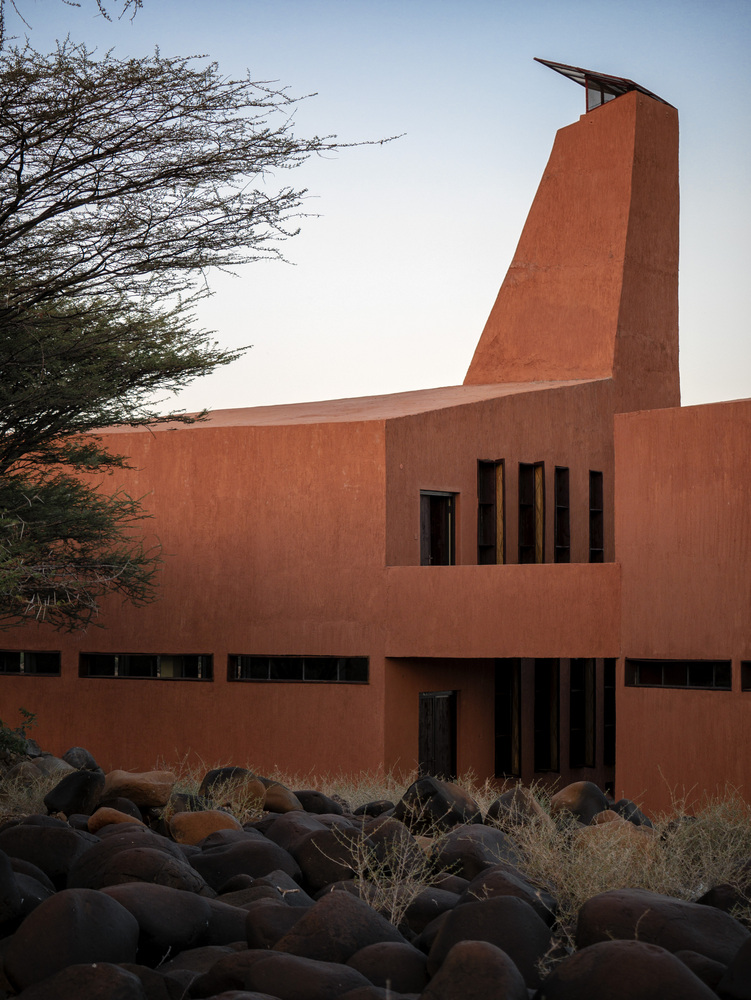
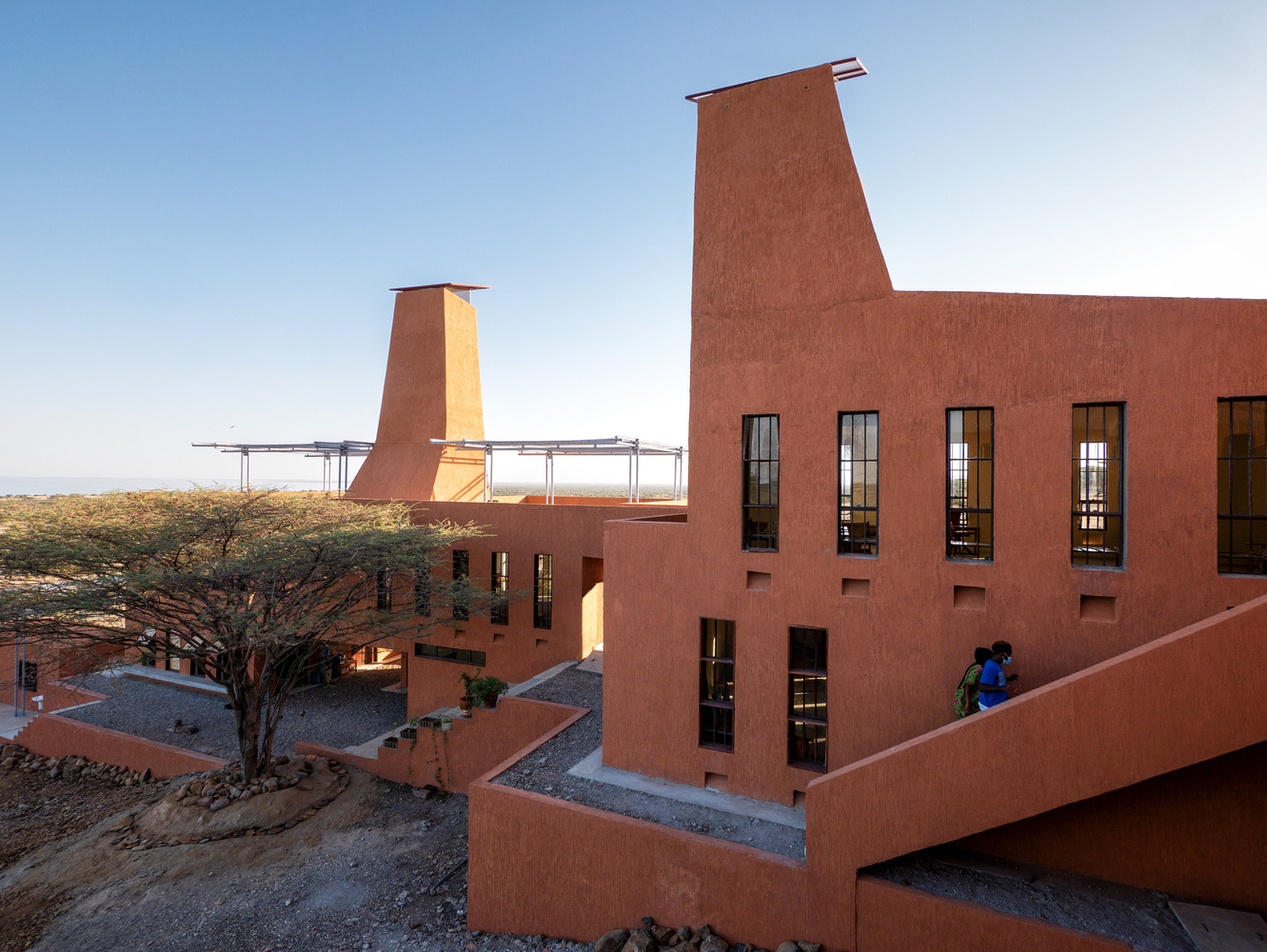
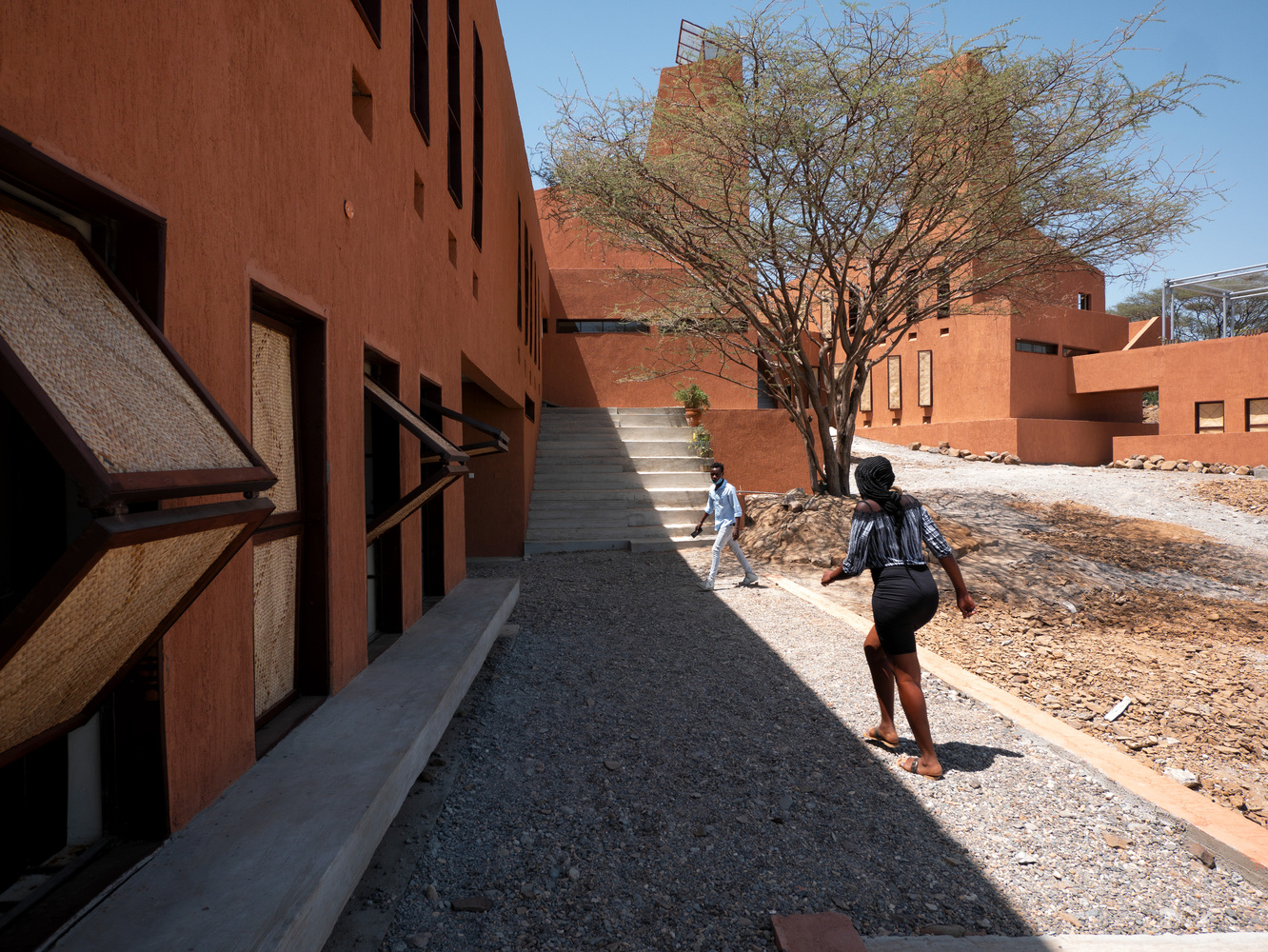
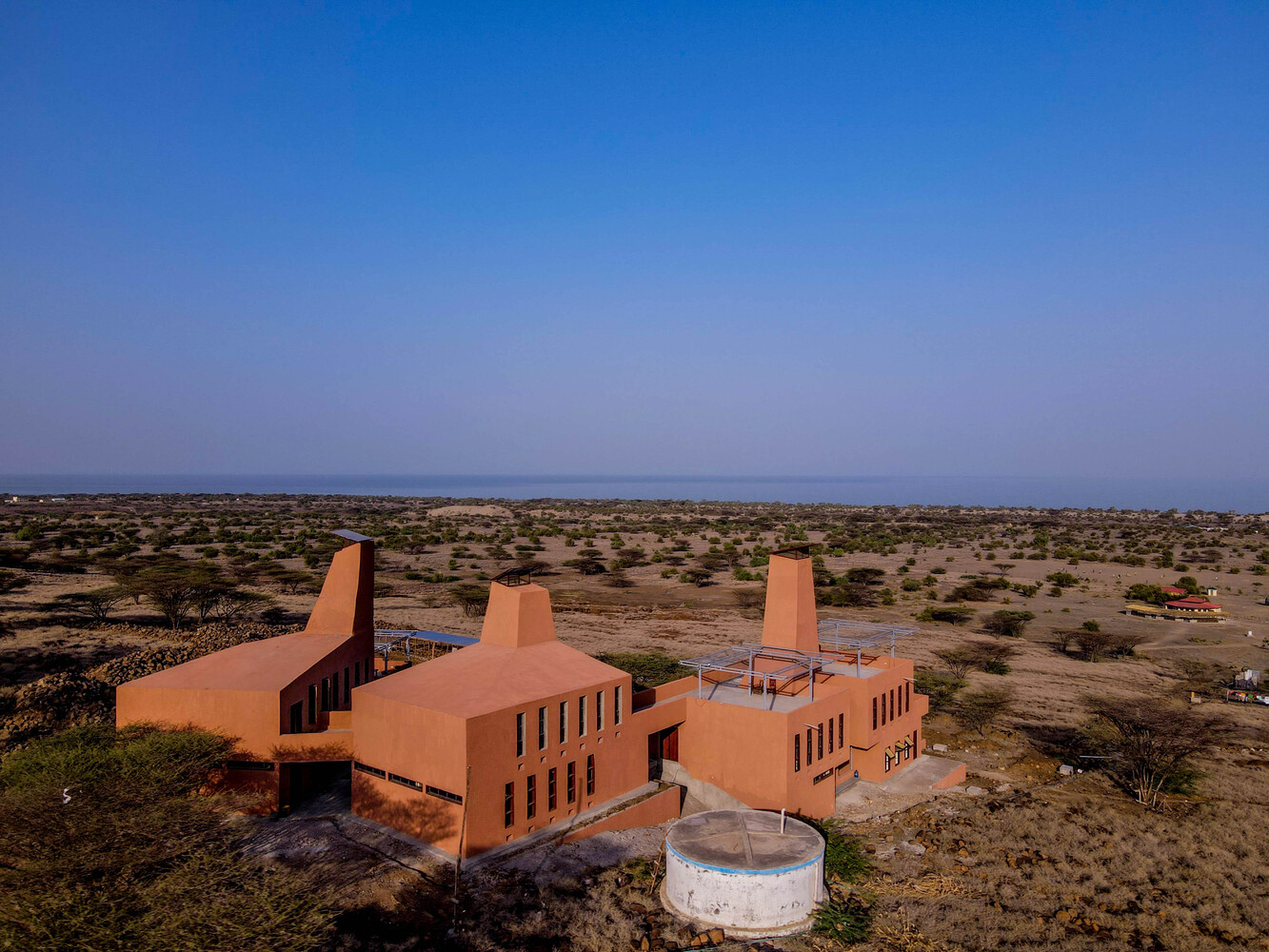
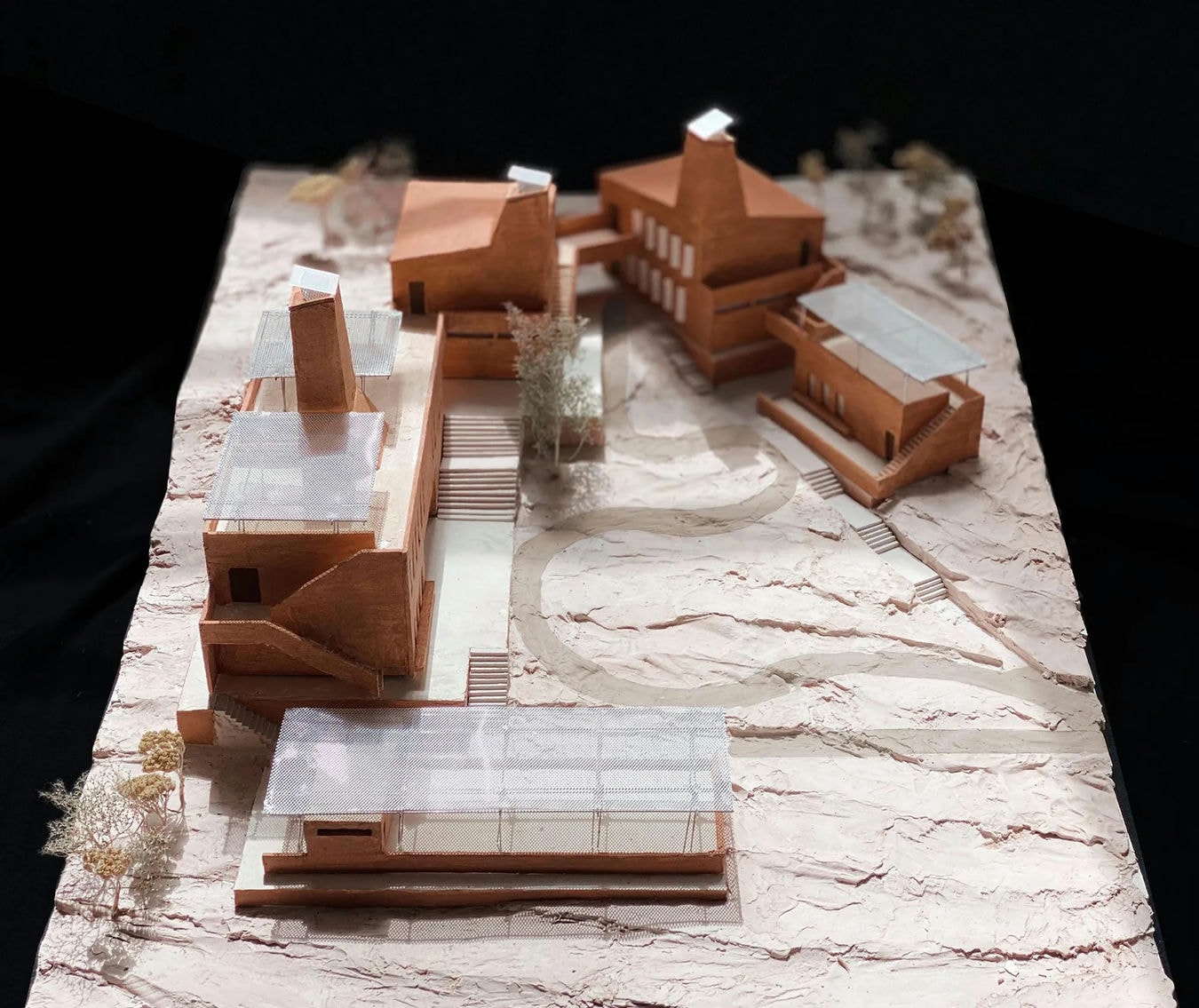
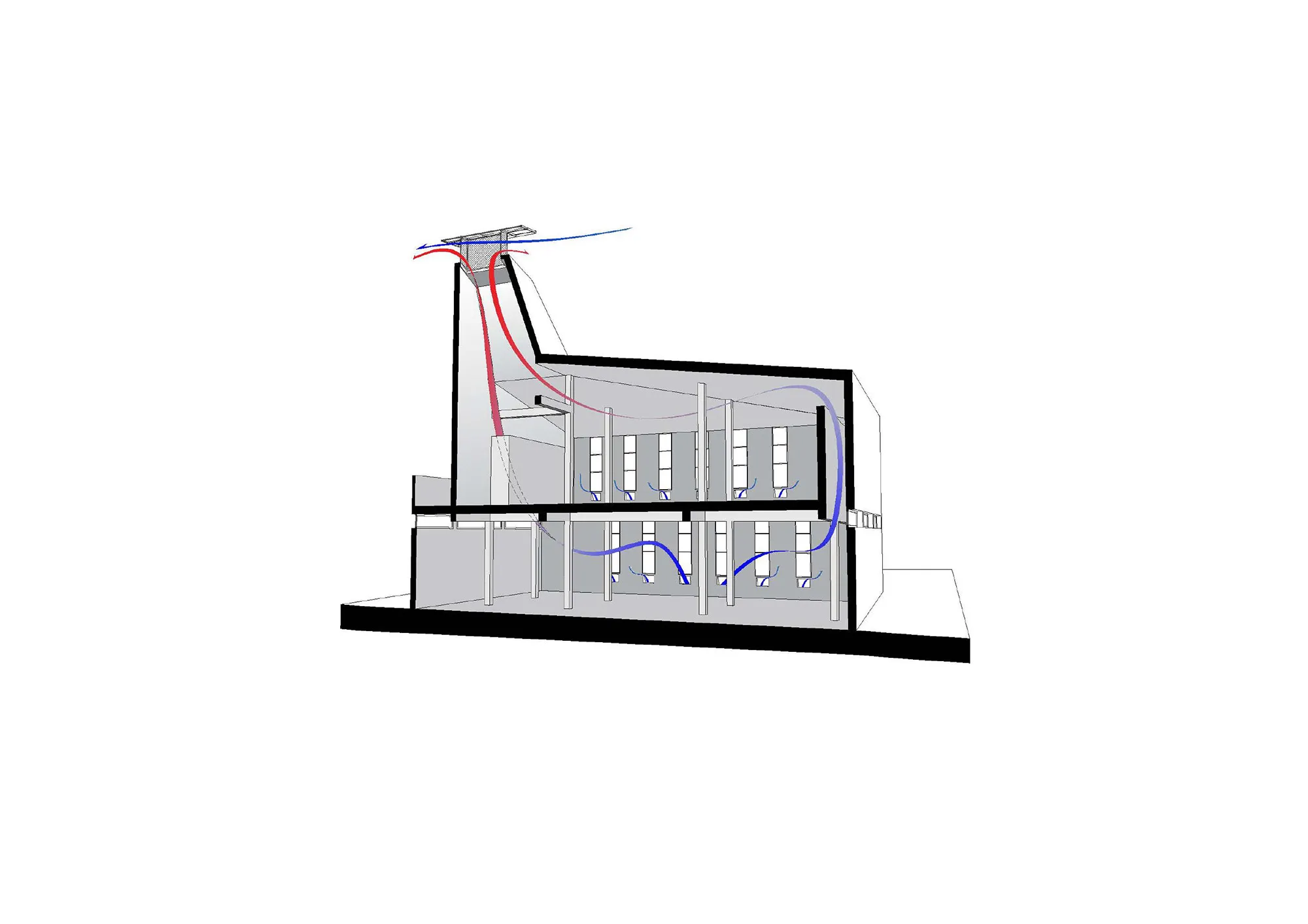
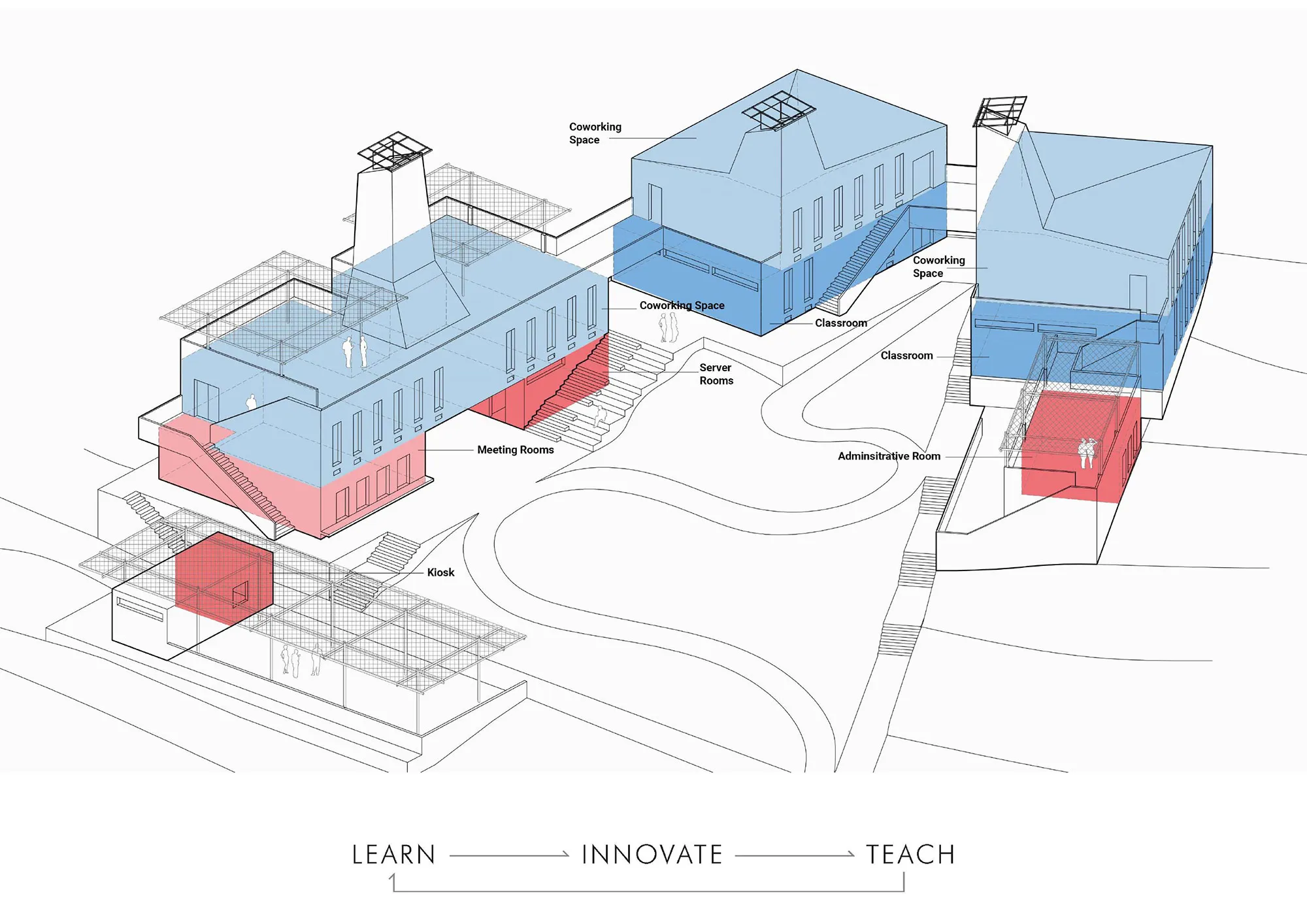
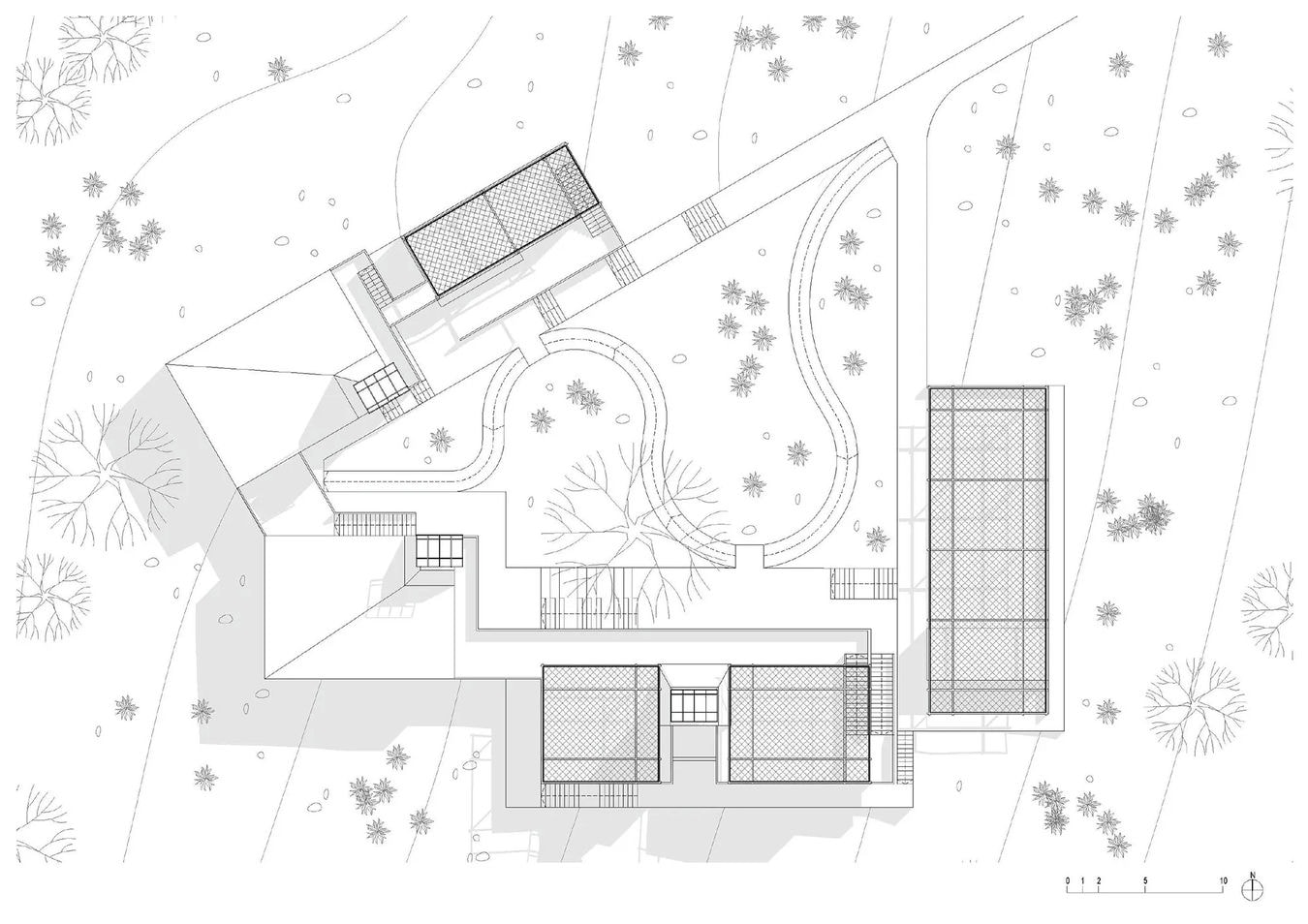
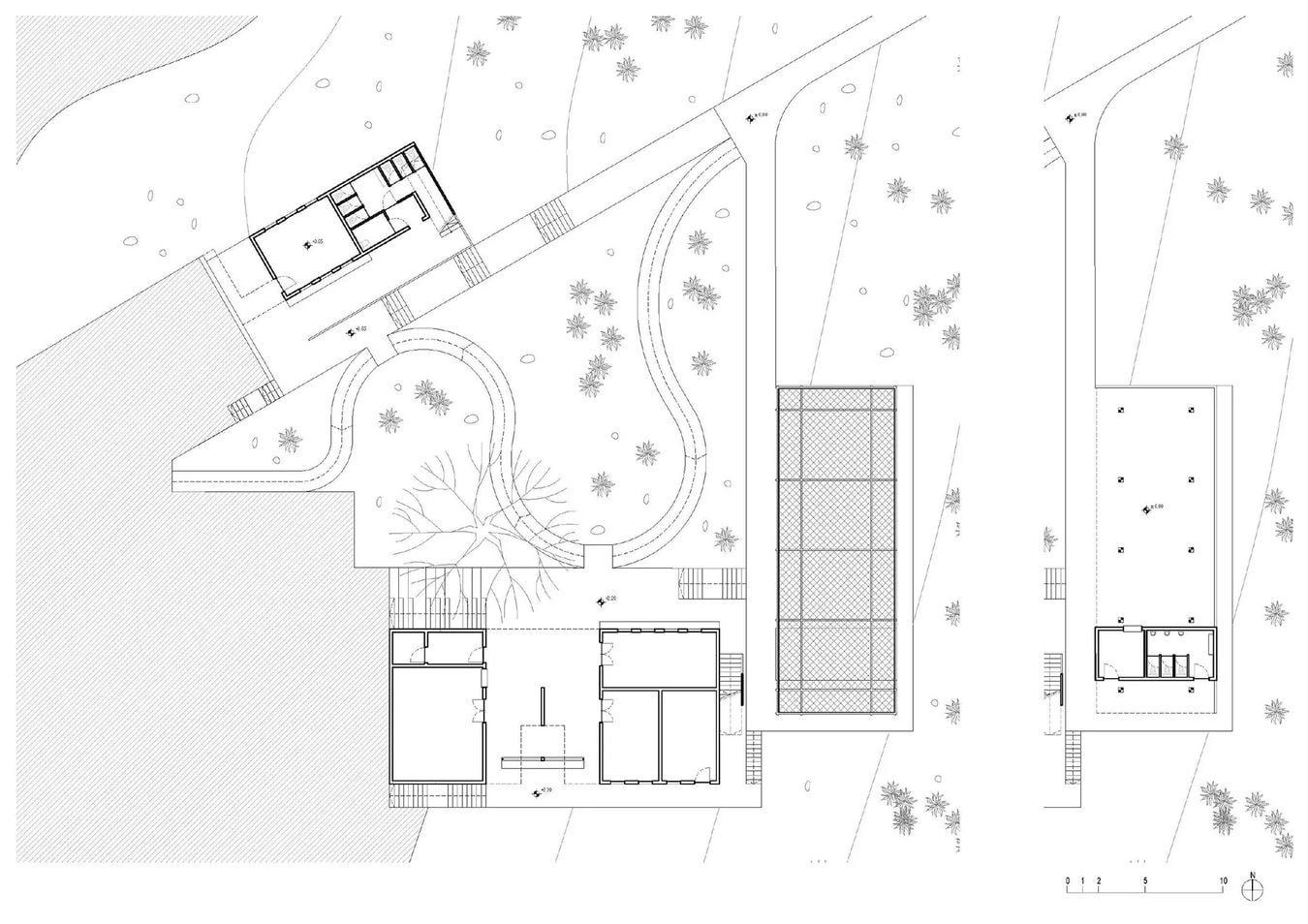
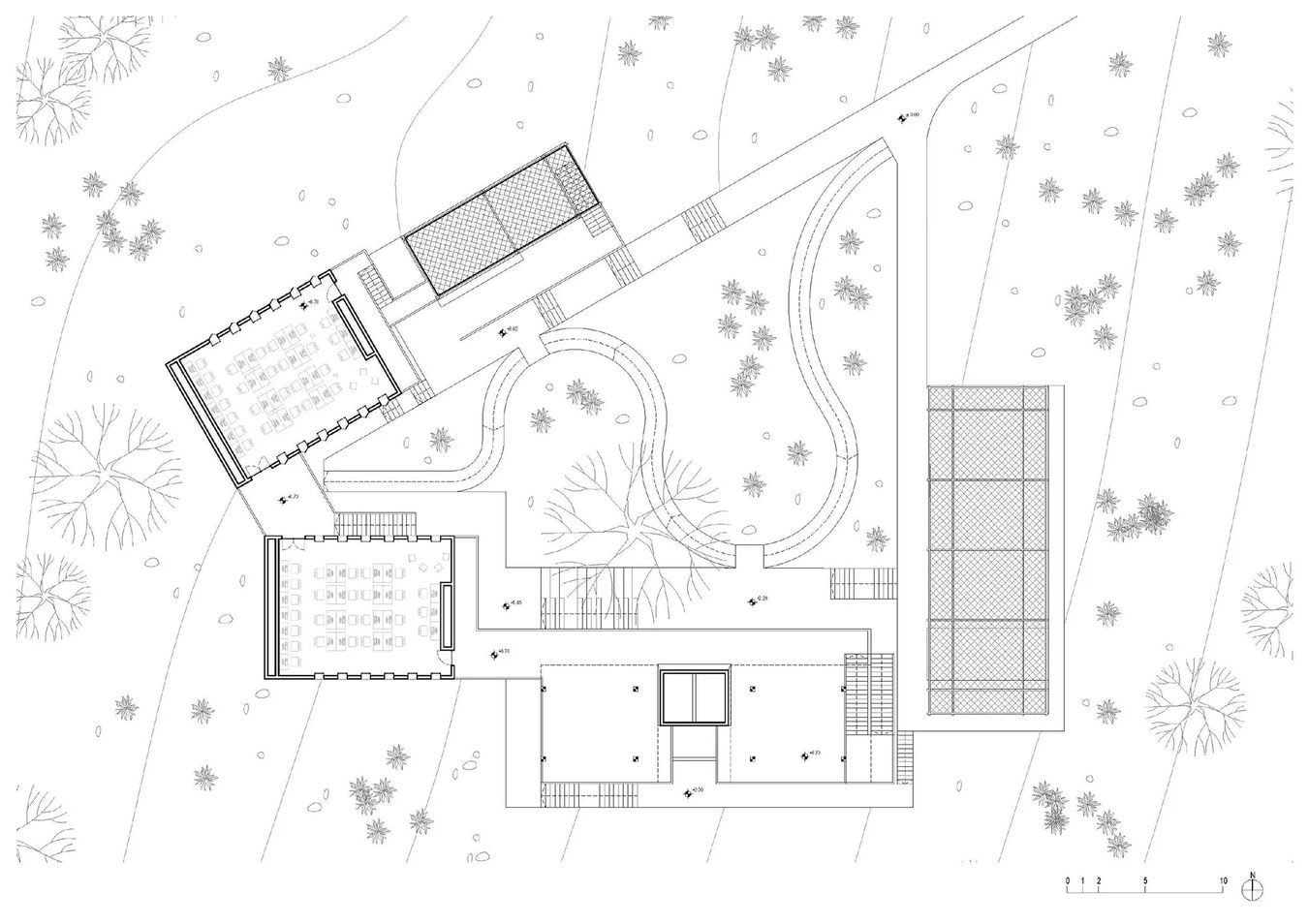
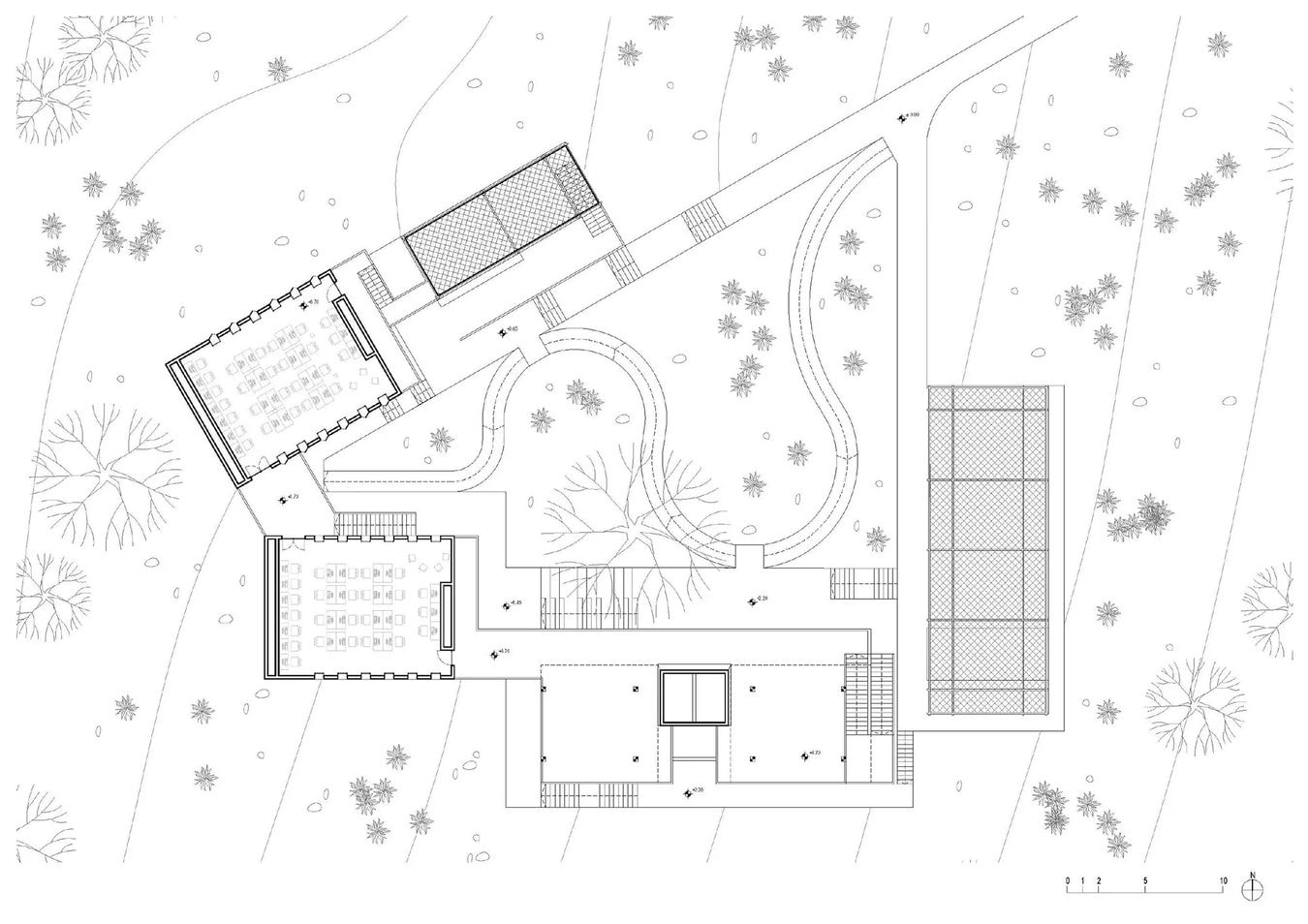
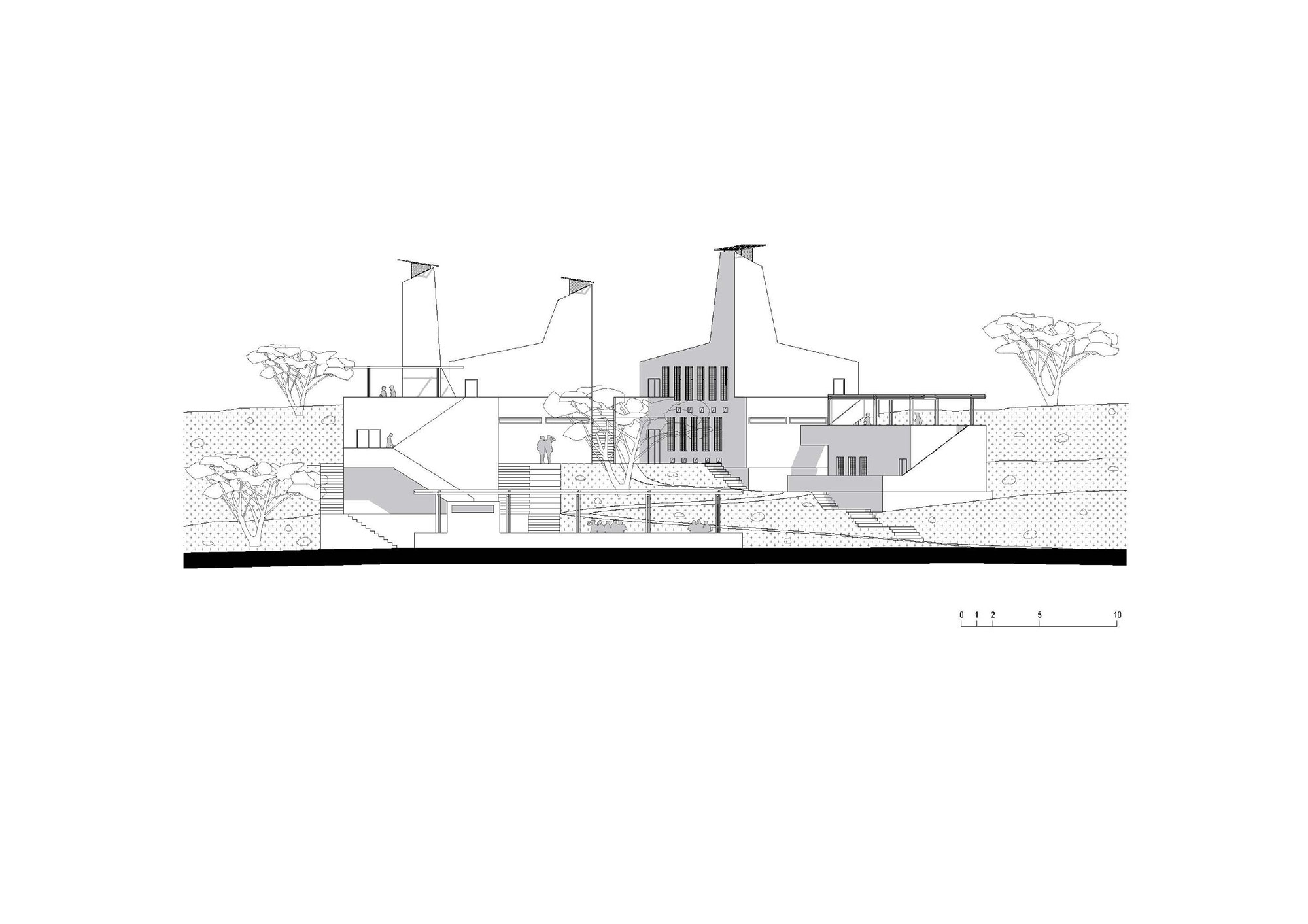
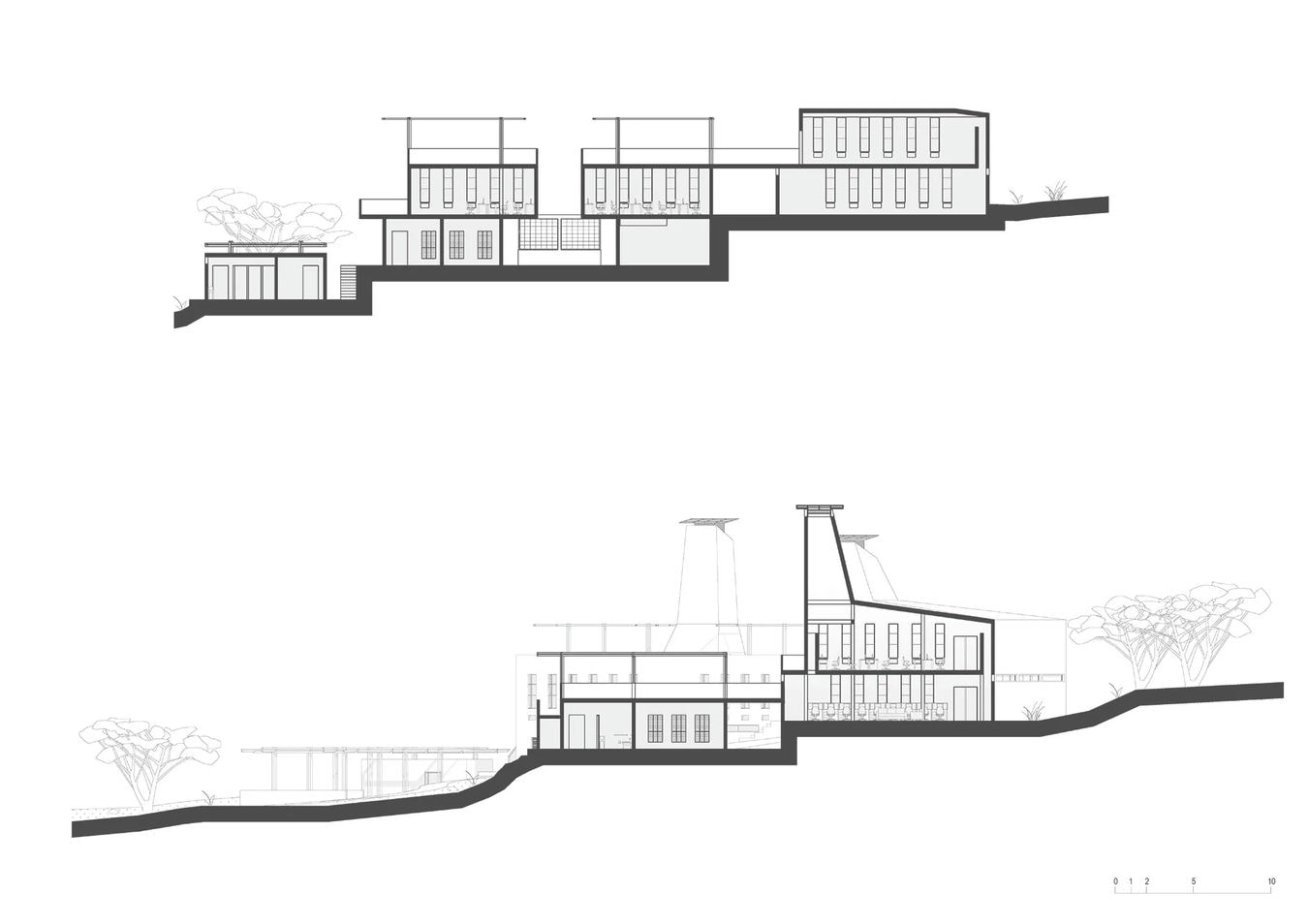
The Startup Lions Campus in Kenya is a project designed by Francis Kéré and completed in 2021. This campus is located on the shores of Lake Turkana in northern Kenya and serves as a facility for educating and incubating young IT entrepreneurs. The project is an information and communication technology center built to provide workspaces and training rooms for up to 100 students in a region with high youth unemployment. Architecturally, the Startup Lions Campus responds to the local landscape and climate. The design consists of a long, two-level building terraced into a slope overlooking the lake. One of its features is a series of tall, conical ventilation towers that rise above the roofline. Kéré drew inspiration from termite structures common in the environment and known for passive cooling. These towers function as thermal chimneys: hot air moves upward and out of the building, allowing cooler air to enter at lower openings and ventilate the interior while protecting equipment from heat and dust. The building’s layout includes open-air terraces and shaded roof decks used as meeting spaces. In terms of materials, the campus is constructed from locally quarried stone for the walls, which provides thermal mass, with a plaster finish. The roofs and tower structures incorporate concrete and steel for durability. The design type of Startup Lions is an educational and office facility for a non-profit tech incubator, and it serves as a model for architecture in rural Africa. It shows that technical functionality is achievable off the grid through sustainable means. For the local community in Turkana, the campus is a landmark combining contemporary form with cultural references, as the silhouette of the building with its towers echoes familiar structures in the region. The Startup Lions Campus reflects Kéré’s ability to work within constraints and create a building connected to its place.
05. National Assembly of Burkina Faso, Ouagadougou
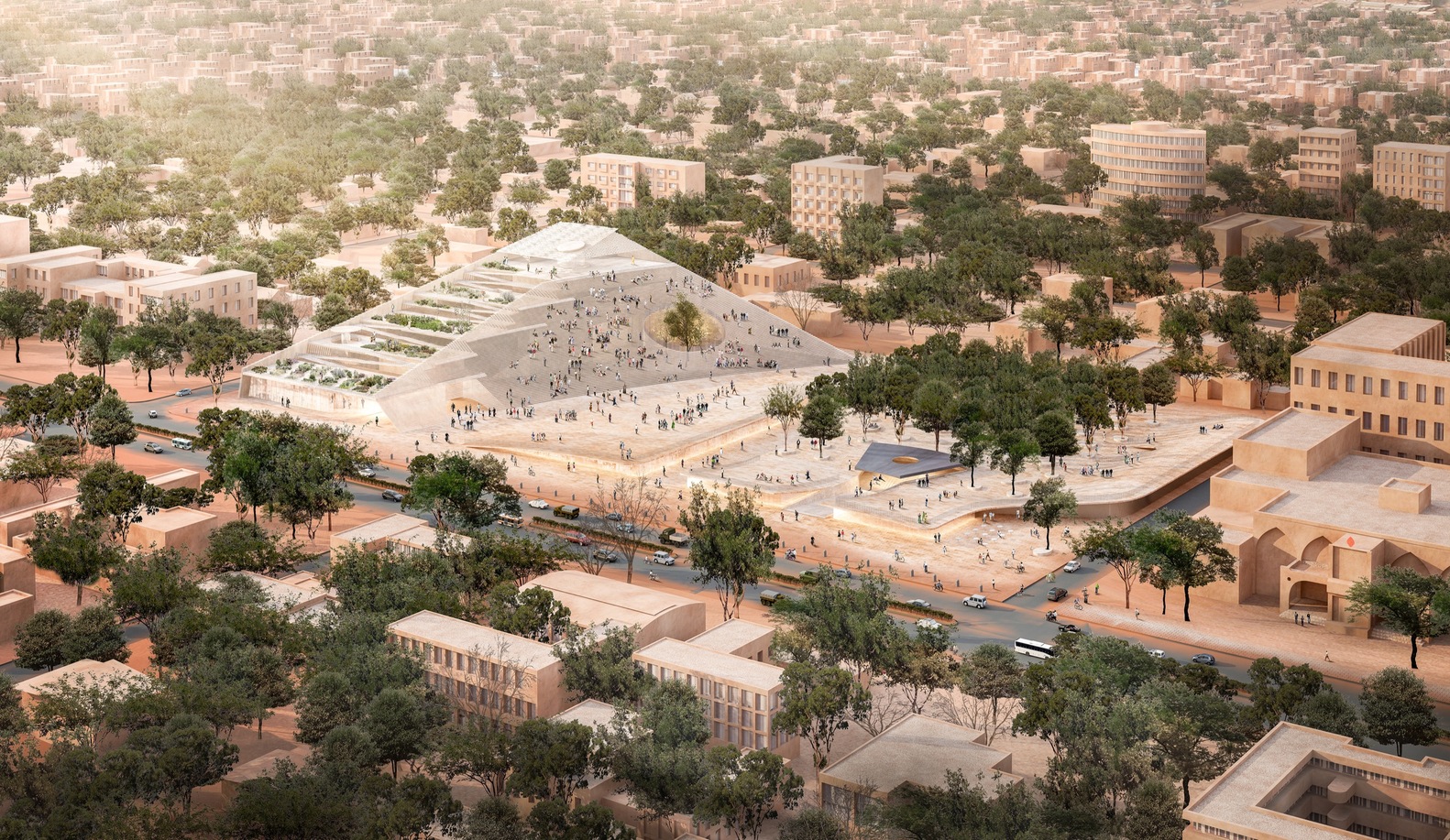
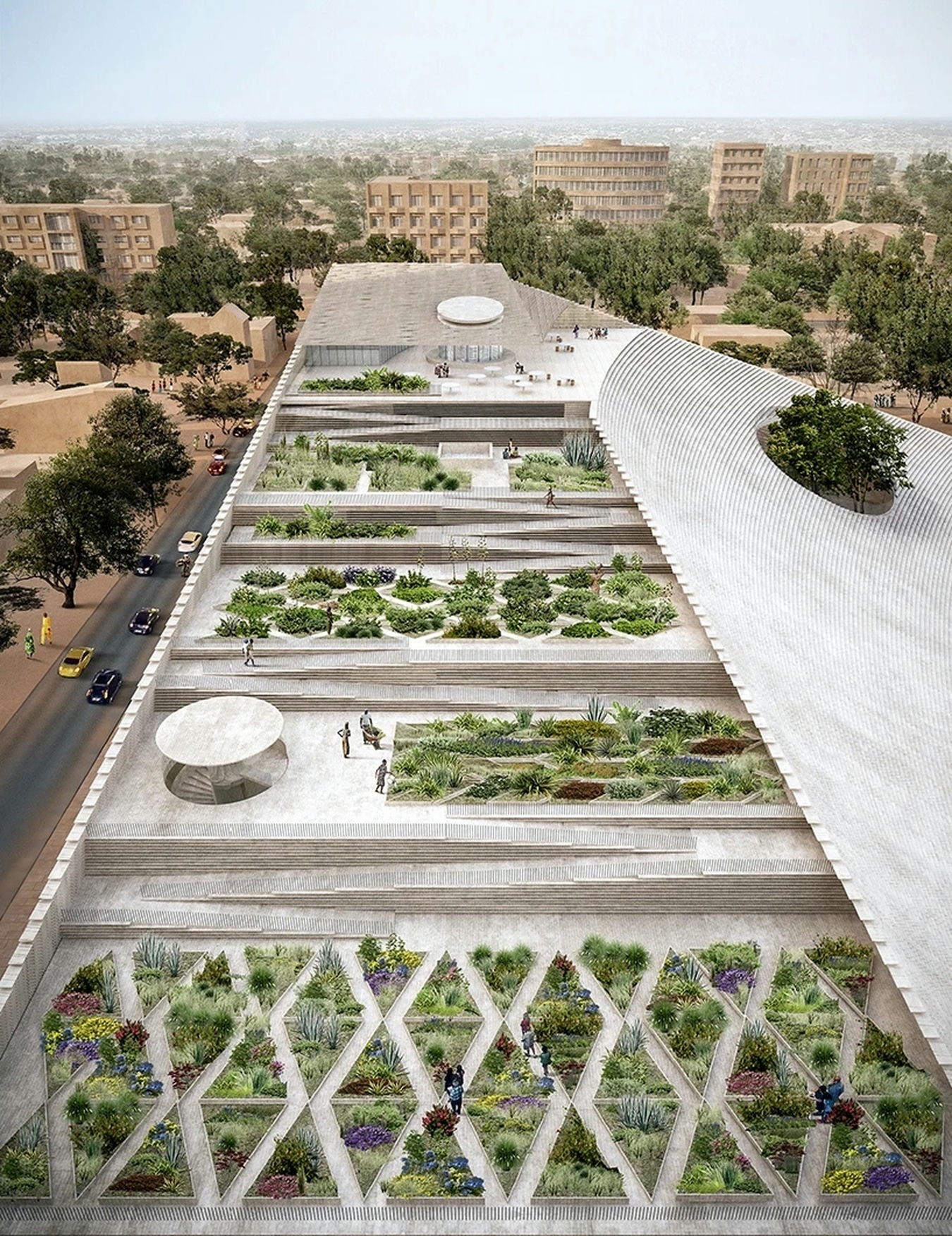
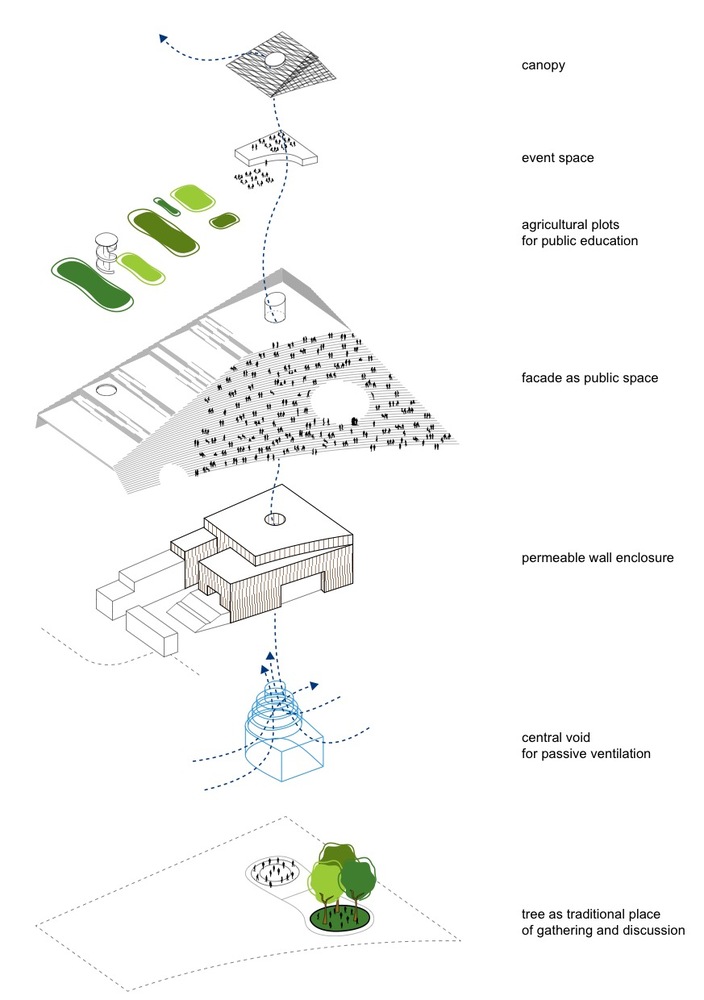
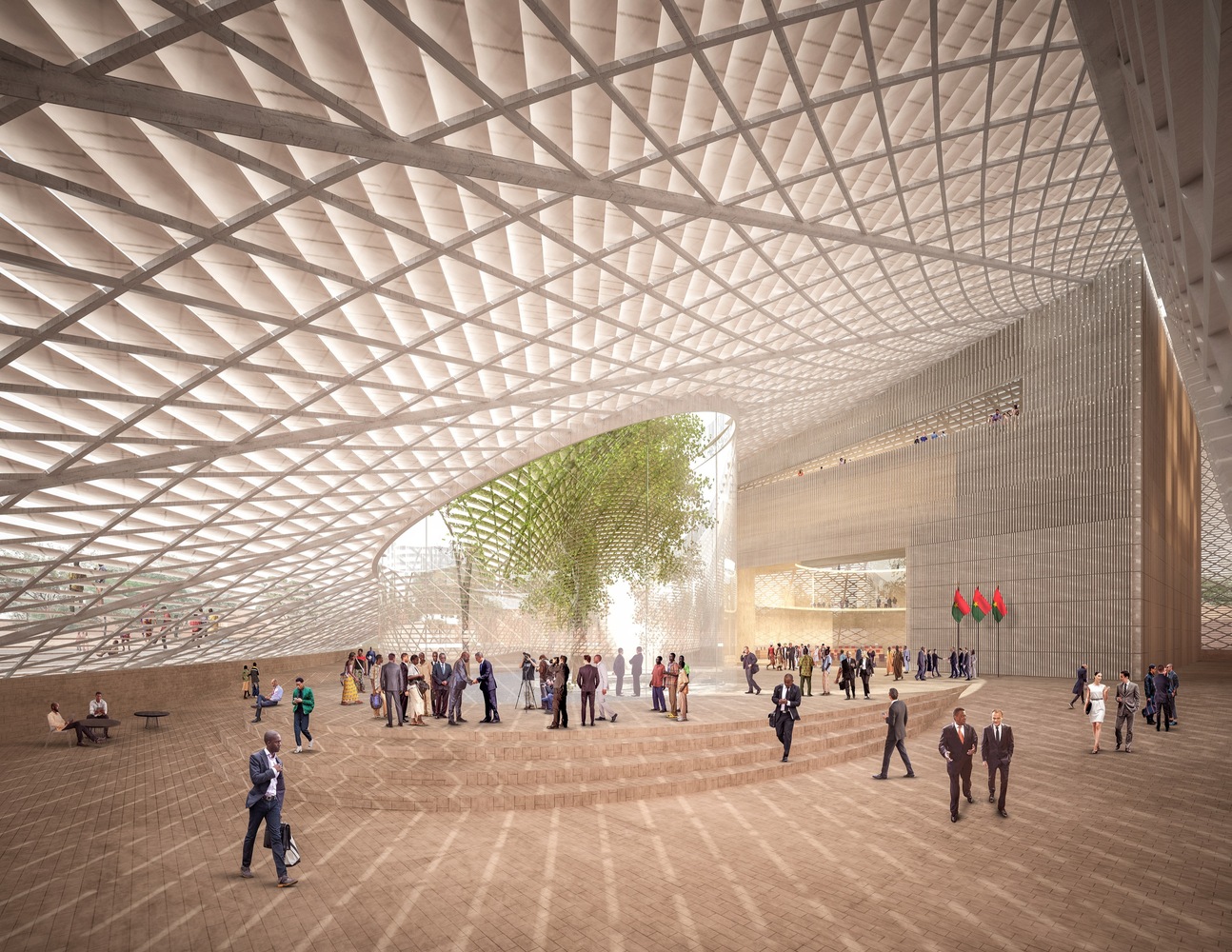
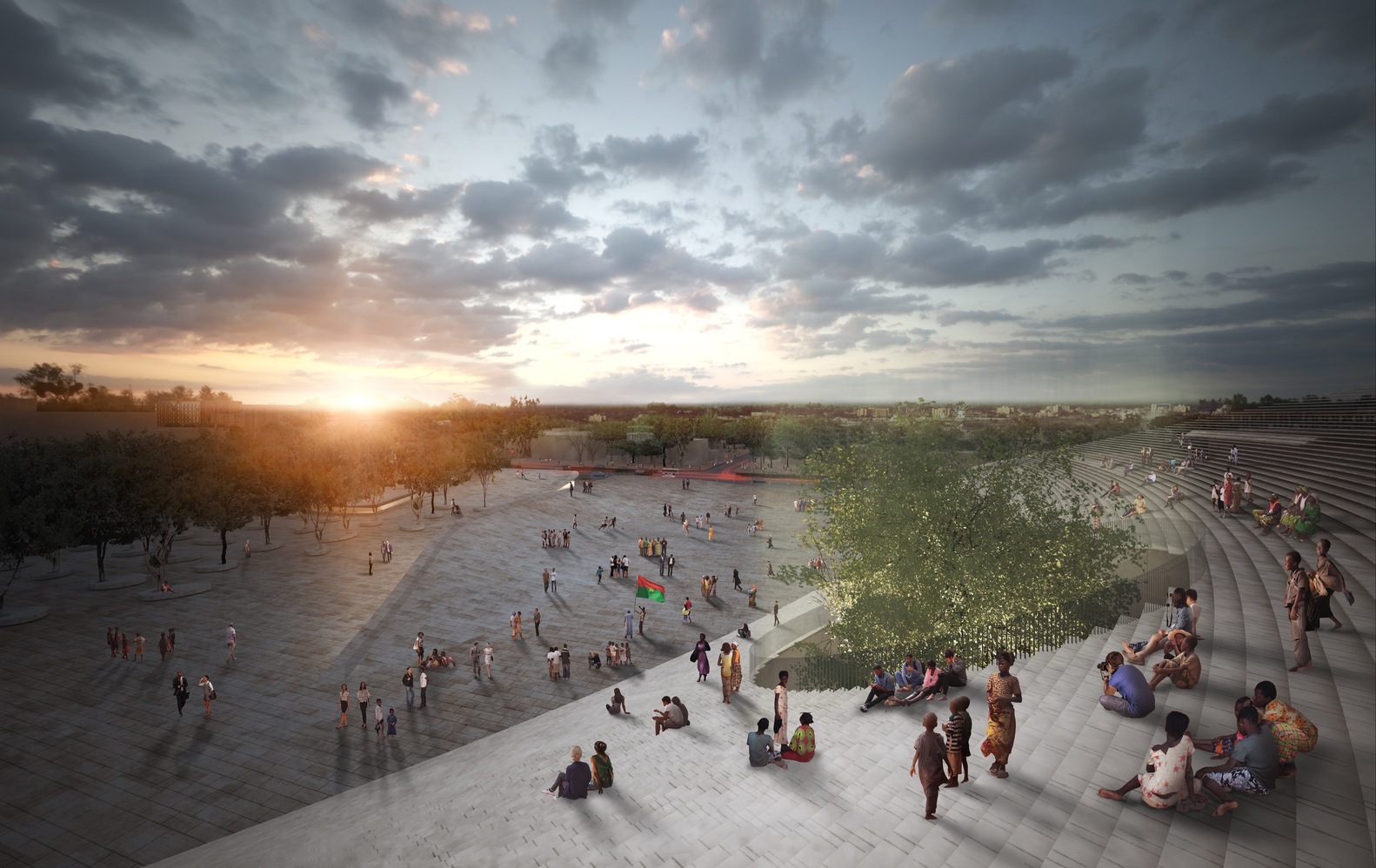
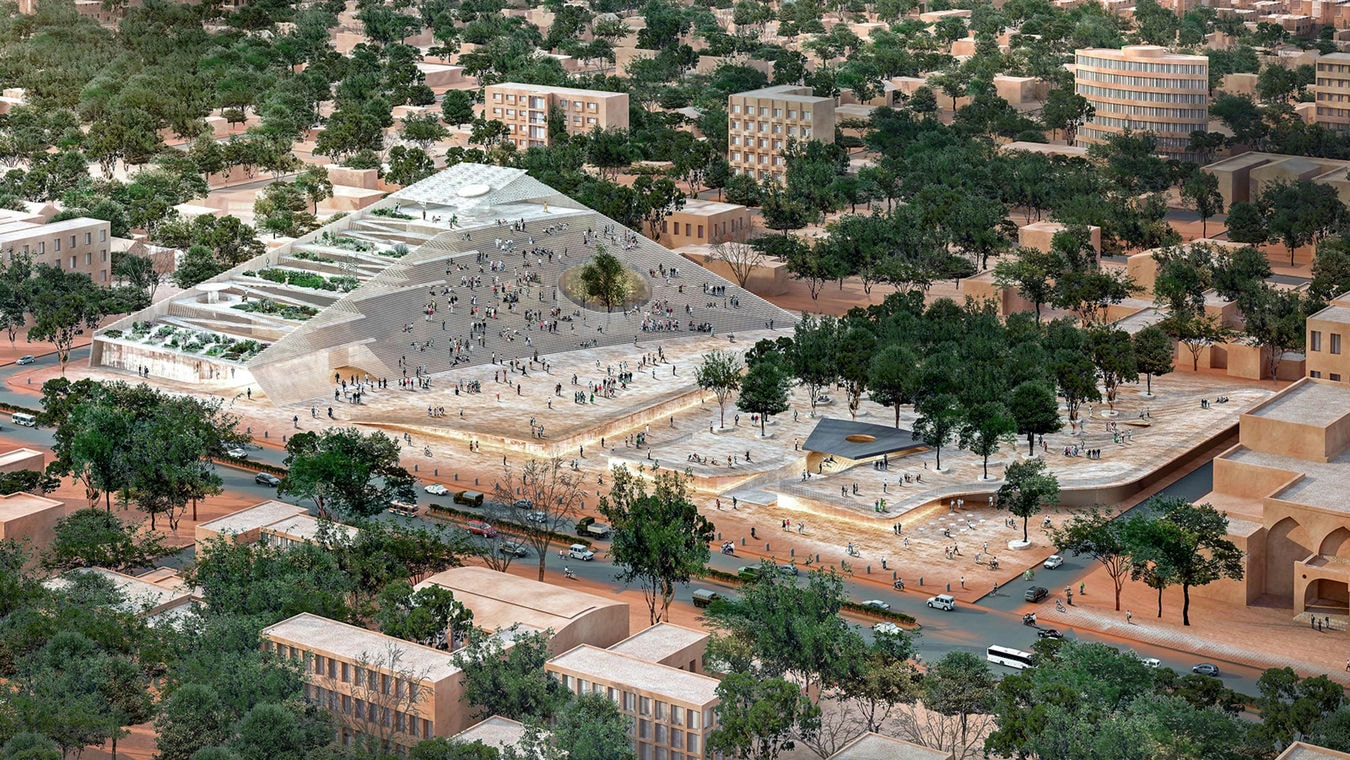
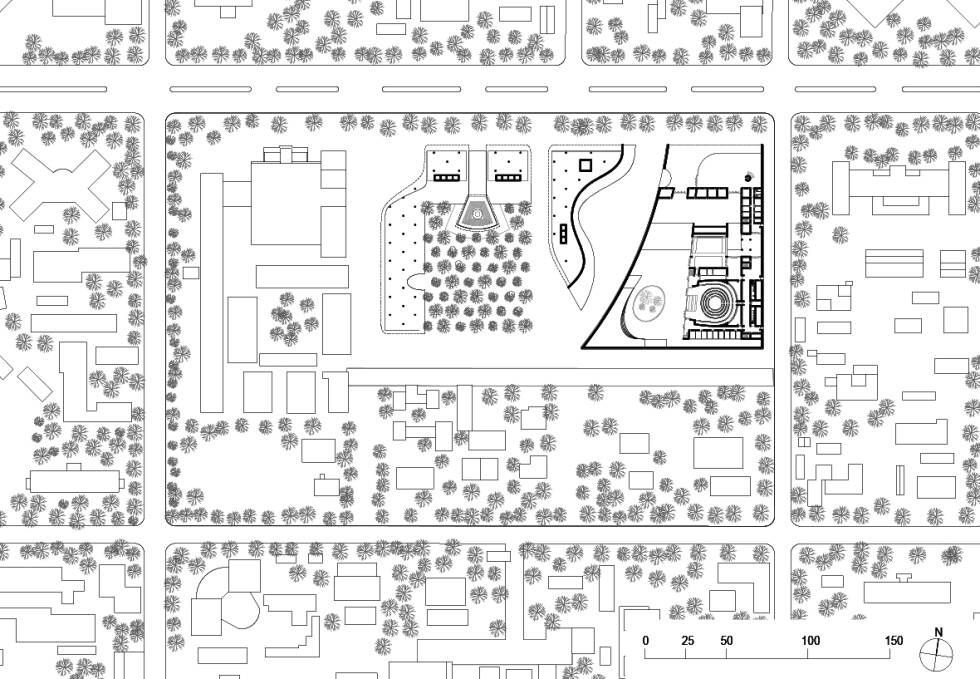
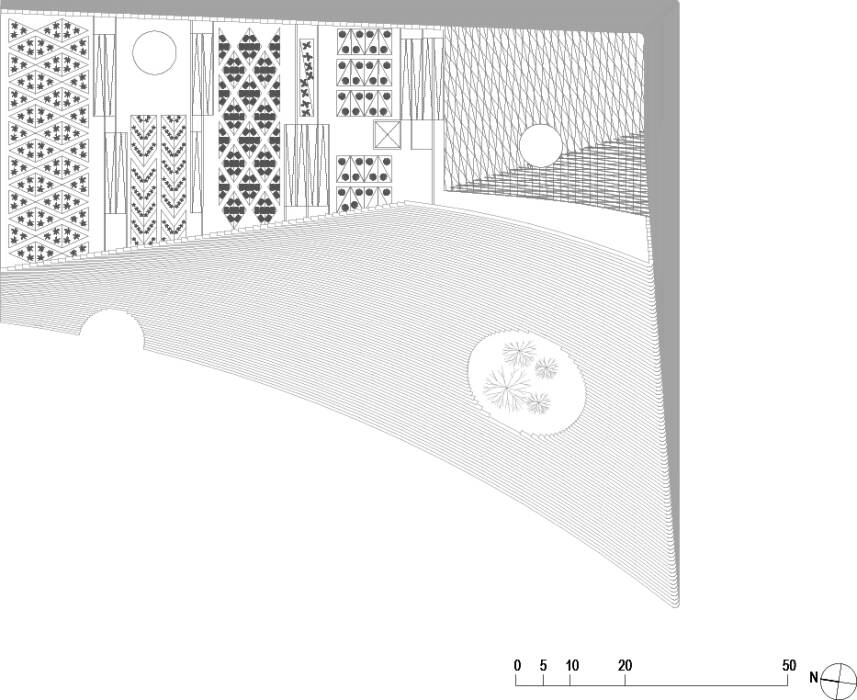
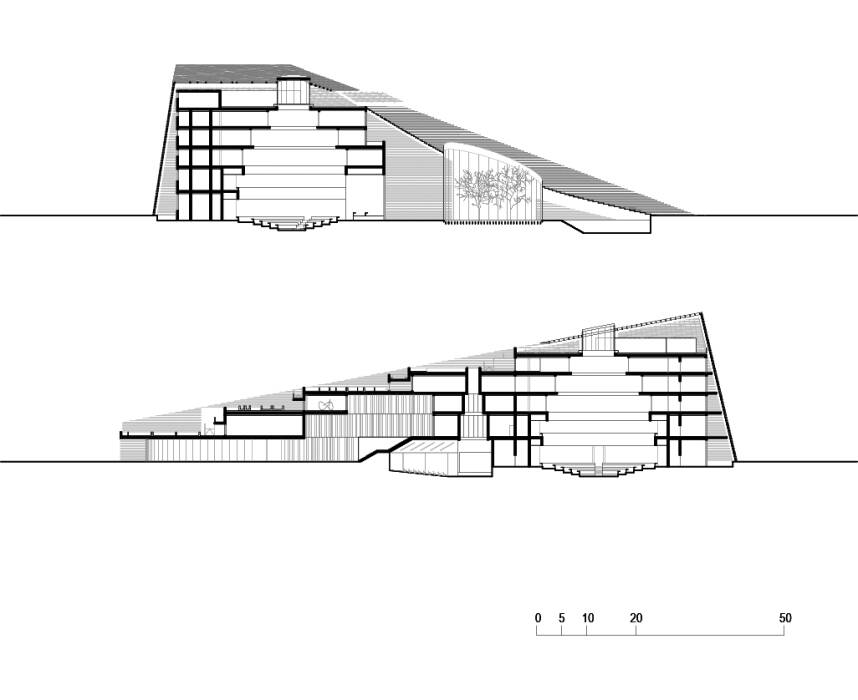
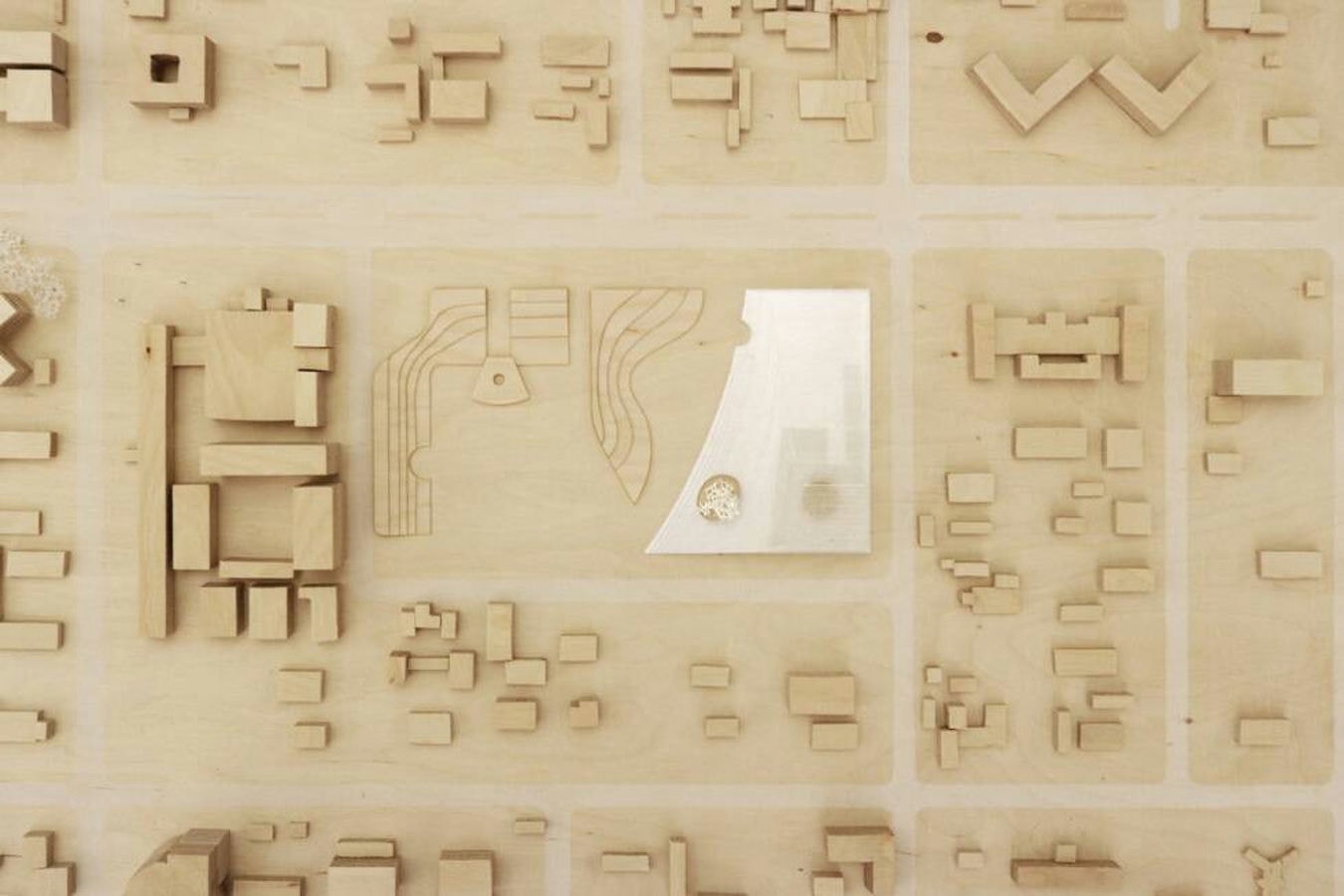
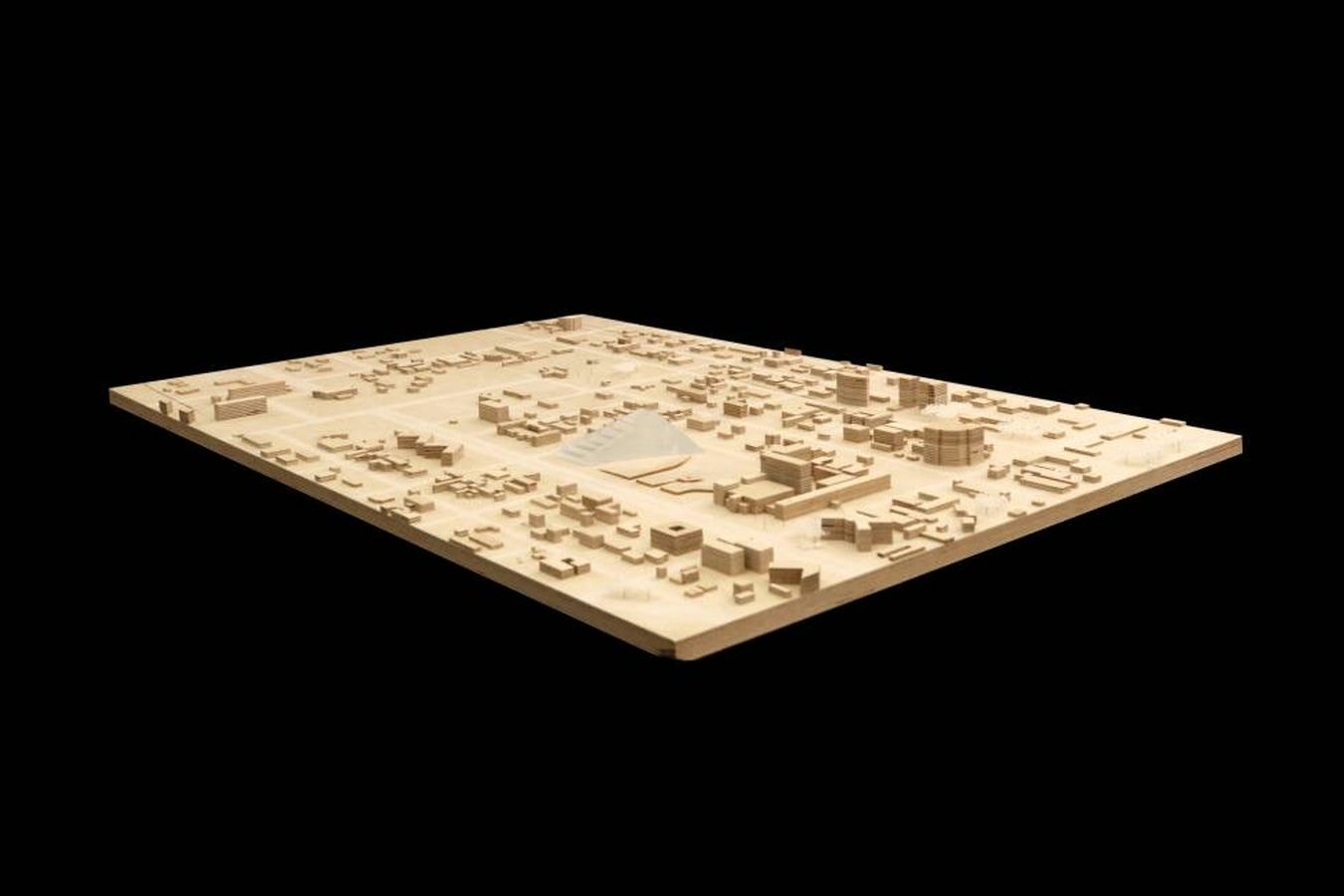
The National Assembly of Burkina Faso project is a conceptual design by Francis Kéré for a new parliamentary building in Ouagadougou, the capital of Burkina Faso. Proposed after the 2014 uprising that destroyed the former parliament, Kéré’s design reconsiders the form of a house of government in a contemporary African context. Although unbuilt as of 2025, it is regarded as one of Kéré’s important works for its symbolic intent. The design takes the form of a stepped pyramid, a triangular structure that the public can climb. This building would contain the parliamentary chamber and offices, while its exterior consists of steps or terraces rising in height. The terraces are intended to function as public space, allowing citizens to walk up part of the structure and gather on its ledges, turning the building into a civic monument. At the top, Kéré proposed an open-air platform with views of the city. This element signals openness in government and the idea that citizens oversee their institutions. In addition to the pyramid, the master plan includes a park and a memorial plaza to mark those who died during the 2014 protests. The National Assembly’s design type is a civic government building, and its style combines large-scale form with accessible public areas. Kéré incorporated sustainable elements: the structure was intended to use natural ventilation through its layered facade and plantings to provide shade. The proposed materials include concrete and local stone for durability in the Sahel climate. While political and economic conditions have delayed construction, the concept has had an influence. It has been displayed at architecture exhibitions as an example of design rooted in the African context. Francis Kéré’s vision for the National Assembly shows how architecture can support civic engagement by shaping a structure that invites public use.
How did Diébédo Francis Kéré contribute to architecture?
Diébédo Francis Kéré contributed to architecture by expanding the profession’s understanding of socially responsible design. In a field often dominated by large budgets and prominent buildings, Kéré introduced an alternative model focused on community involvement and sustainability. His projects showed that effective architecture is not dependent on expensive materials but on design that responds to local conditions. Kéré used traditional techniques such as adobe brick construction and ventilated roofs, and applied modern engineering so that buildings perform in their environment. This approach has influenced architects interested in sustainable and humanitarian design. Kéré’s work emphasized collaboration: by involving local communities in the building process, he transferred skills, created jobs, and supported a cultural fit for each project. This participatory design method provided a template for how architects can work with building users. Kéré contributed through education and advocacy as well. He has held teaching positions and given lectures, sharing knowledge about vernacular and ecological construction. As a result of his influence, terms such as humanitarian architecture and social sustainability gained visibility in architectural discourse.
What awards and honors has Diébédo Francis Kéré received?
Diébédo Francis Kéré has received awards and honors in recognition of his architectural work, including:
- Pritzker Architecture Prize (2022) – Awarded for his contributions to socially grounded and climate-responsive design, marking him as the first African architect to receive the honor.
- Praemium Imperiale in Architecture (2023) – Bestowed by the Japan Art Association for lifetime achievement.
- Aga Khan Award for Architecture (2004) – Granted for the Gando Primary School and recognizing community-built design and the use of local materials.
- Thomas Jefferson Foundation Medal in Architecture (2021) – Presented by the University of Virginia for contributions to the built environment.
- BSI Swiss Architectural Award (2010) – Granted for architectural work completed before age 50.
- Global Award for Sustainable Architecture (2009) – Recognizing commitment to environmentally appropriate design.
- Marcus Prize for Architecture (2011) – International honor for emerging architects.
Diébédo Francis Kéré has received honorary degrees, such as an Honorary Doctor of Fine Arts from the Rhode Island School of Design in 2023. He has served on juries for institutions including the Aga Khan Award for Architecture and the Holcim Awards for Sustainable Construction, roles that show the regard of his peers in the field of architecture internationally.
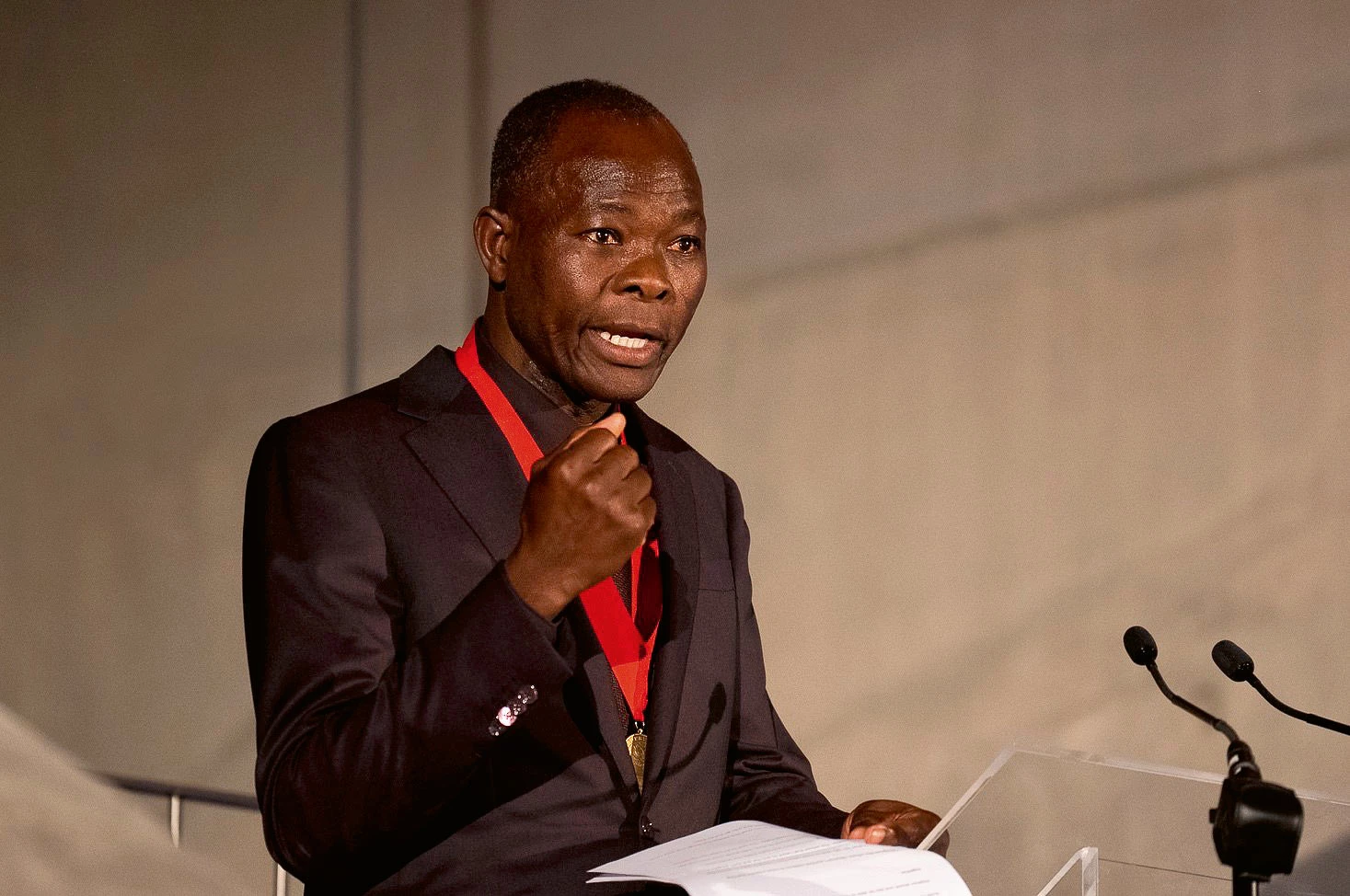
Did Diébédo Francis Kéré change the architecture industry?
Diébédo Francis Kéré changed the architecture industry by redefining architectural ambition through the lens of social impact. He pushed the industry toward valuing context-driven and sustainable design approaches at a time when such considerations were secondary. Kéré’s success with projects ranging from community-built schools in Burkina Faso to receiving major architectural recognition has given clients and architects confidence to pursue socially focused designs. His influence is visible in how contemporary architecture addresses sustainability and community engagement. By working on global stages with projects in regions with limited resources, Kéré broadened the industry’s perspective on where innovation emerges. His use of local materials and labor has encouraged interest in low-carbon construction and regional craftsmanship. Kéré’s collaborative design model, where architects work with engineers, villagers, and artisans, demonstrated a process for delivering complex projects. Architecture is shifting to consider varied contexts, in part because of contributions from Francis Kéré. His work set a precedent that architectural goals of creativity and public service are achievable in diverse settings and influenced how the industry defines quality.
Was Diébédo Francis Kéré ever controversial in any way?
Diébédo Francis Kéré has largely avoided controversy throughout his career and is respected for his approach and ethics. He has not been involved in scandals or major professional disputes. Kéré’s projects are modest in scale and based on local consensus, which means they rarely attract the backlash associated with large urban developments. Some proposals, such as the Burkina Faso National Assembly design, prompted debate regarding cost or feasibility, but these discussions were focused on practical issues rather than Kéré’s intent. In those cases, public and professional commentary supported the design while noting challenges. Kéré’s collaborative way of working has given him a reputation as an architect who listens and adapts, reducing the likelihood of conflict. Unlike avant-garde architects who may face criticism for imposing their vision, Kéré’s participatory method tends to limit disagreement.
Who are the most famous architects in modern history besides Diébédo Francis Kéré?
Aside from Diébédo Francis Kéré, Le Corbusier, Frank Lloyd Wright, and Zaha Hadid are among the most influential architects who shaped modern architecture. Le Corbusier (Swiss-French, 1887–1965) was a figure in modernist design and urban planning, known for works such as the Villa Savoye and the Unité d’Habitation and for principles including the Five Points of architecture. Frank Lloyd Wright (American, 1867–1959) developed an approach to organic design, producing buildings such as Fallingwater and the Guggenheim Museum in New York. Wright’s ideas on integrating buildings with their surroundings and his development of the Prairie style influenced architectural history. Zaha Hadid (Iraqi-British, 1950–2016), the first woman to win the Pritzker Prize in 2004, introduced forms and geometries into contemporary architecture; her projects, including the Guangzhou Opera House, the Heydar Aliyev Center, and the London Aquatics Centre, expanded technological possibilities in design. Other architects contributed to modern architecture as well. Ludwig Mies van der Rohe (German-American, 1886–1969) and Walter Gropius (German, 1883–1969) were central to the development of 20th-century modernism and the Bauhaus school, with Mies’s focus on minimal glass-and-steel construction seen in the Seagram Building. Frank Gehry (Canadian-American, born 1929) became known for sculptural, deconstructivist buildings such as the Guggenheim Museum Bilbao and the Walt Disney Concert Hall. Renzo Piano (Italian, born 1937), co-creator of the Centre Pompidou and designer of museums and civic buildings, is associated with high-tech construction and contextual responses, seen in projects from the Shard in London to the Beyeler Foundation in Switzerland. In socially focused architecture, Hassan Fathy (Egyptian, 1900–1989) promoted sustainable vernacular building in Egypt, and David Adjaye (British-Ghanaian, born 1966) developed projects such as the Smithsonian National Museum of African American History and Culture in Washington, D.C.
What did Diébédo Francis Kéré mostly design?
Diébédo Francis Kéré mostly designed community-oriented buildings and installations rather than commercial developments or high-rise towers. His work falls into several principal areas:
- Schools and Educational Buildings: Educational facilities form the core of Kéré’s portfolio. He has designed primary schools such as the one in Gando, secondary schools such as Lycée Schorge, and vocational training campuses such as the Startup Lions Campus in Kenya. These projects improve local education infrastructure and often function as community hubs.
- Civic and Institutional Structures: Kéré has designed civic buildings and government institutions. Examples include his concept for the National Assembly of Burkina Faso and the National Assembly project in Benin. He has also created community centers and cultural pavilions used for public gatherings. These works show his ability to scale his approach for national symbols and public infrastructure while maintaining accessibility and sustainability.
- Healthcare and Social Facilities: Some of Kéré’s commissions address health and social needs. The Léo Surgical Clinic and Health Centre, completed in 2014 in Burkina Faso, provided a clinic for a town near the Ghanaian border and incorporated natural ventilation and local materials to improve interior conditions in a hot climate. Projects of this type show how Kéré applies his design principles to essential services.
- Exhibition Pavilions and Installations: Beyond permanent buildings, Kéré created temporary structures. The Serpentine Pavilion in London is one example, and others include installations such as Sarbalé Ke for the 2019 Coachella Valley Music and Arts Festival. These works allow Kéré to test formal strategies and present themes from his background in broader design contexts.
Across these categories, Francis Kéré’s projects share common features: they respond to local climate conditions, use materials efficiently, and involve end-users in the design or construction process. Kéré has not focused on high-rise or luxury developments; instead, he has concentrated on modestly scaled structures with direct effects on daily life. His firm, Kéré Architecture, has completed projects on four continents and is known for work in West and East Africa. Unbuilt or ongoing projects as of 2025, such as a cultural institute in Togo and an art museum in Las Vegas, show that Kéré continues to apply a user-focused design approach to a range of programs. His portfolio shows that architecture can serve practical needs and support communities, with designs extending from schools to national monuments.
Where did Diébédo Francis Kéré study?
Diébédo Francis Kéré studied architecture in Germany, grounding his education in a technical university before launching his career. After growing up in Burkina Faso and completing a carpentry apprenticeship, Kéré earned a scholarship to study in Germany. He enrolled at the Technische Universität Berlin in the mid-1990s. At TU Berlin’s School of Architecture, he received training in architectural design, engineering, and theory. This training exposed him to modernist ideas and building technology, which he later combined with lessons from his upbringing. During his time as a student, Kéré began working on plans for a primary school in his hometown of Gando, using his education to support his community before graduating. In 2004, Francis Kéré completed his studies and graduated from TU Berlin with an advanced architecture degree. This educational foundation gave Kéré a grasp of structural principles and design methods, which he has combined with traditional knowledge from West Africa. His time at university also allowed him to build a network of supporters and collaborators who helped develop his early projects.
Did Diébédo Francis Kéré have any famous teachers or students?
Diébédo Francis Kéré did not have widely known personal mentors and has not produced a single prominent protégé, but he learned from a mix of influences and has inspired many through his work. During his studies at the Technische Universität Berlin, Kéré was taught by architects and engineers who were respected in their fields, though none were internationally recognized names. He did not apprentice under a well-known architect in the way Frank Lloyd Wright was mentored by Louis Sullivan. Kéré’s guidance came from a combination of professors in Germany and the practical knowledge of builders in Burkina Faso. He has noted that elders and craftsmen from his home village were among his important teachers because they taught him the value of local materials and community involvement. As for students, Francis Kéré has influenced many young architects, though not through a formal master-disciple structure. He has been a visiting professor at institutions such as Harvard University, Yale University, and the University of Munich, where he has taught studio courses and workshops. Through these roles, Kéré has mentored students who have carried his ideas on sustainable and participatory design into their own practices. Kéré’s firm in Berlin has attracted interns and junior architects interested in his approach, and some who worked at Kéré Architecture later established their own practices, carrying insights from their experience. Beyond direct teaching, Kéré’s lectures and the example of his projects have influenced many others. Architects in Africa often cite Kéré as an influence for pursuing contextually responsive design.
How can students learn from Diébédo Francis Kéré’s work?
Students can learn from Diébédo Francis Kéré’s work by analyzing his design principles and applying his strategies to their own projects. A key lesson from Kéré is the importance of responding to climate and context. Architecture students can study how Kéré’s buildings in Burkina Faso use deep overhangs, breathable materials, and courtyard layouts to moderate heat. By understanding these passive design techniques, students can see how to make architecture sustainable with minimal mechanical intervention. Another lesson is Kéré’s use of local materials. Students can examine how he uses materials such as mud brick or laterite stone to create structurally sound architecture. For example, replicating a small mud-brick construction or building a model with local materials can teach students about vernacular techniques. Kéré’s work encourages architects to explore resources in their own communities and to consider local knowledge. Kéré’s community-driven process is also relevant. His projects involve workshops with villagers, on-site training, and feedback from users. This approach can be adapted in architecture schools by engaging clients or communities in design studio projects. It shows that architecture is centered on people. Learning to communicate with community members, incorporate their input, and address their needs is part of Kéré’s method. Students might simulate a participatory design session for a community center to practice this process. Kéré’s balance of functionality and form is another point of study. His buildings are practical, and they use clear geometric elements such as the arch of the Serpentine Pavilion or the facade pattern of Lycée Schorge. Students can learn by sketching or modeling parts of these projects to understand the geometry and proportions Kéré uses. This shows how straightforward structural ideas can become defining architectural elements. Students can also examine Kéré’s approach to constraints. He has stated that limited resources should not restrict design quality. This outlook is useful for young architects. Constraints can be treated as parameters for design decisions. By studying Francis Kéré’s work and career, students can see that architecture can serve social and spatial needs. They are encouraged to observe, study, and gain experience through projects in a range of environments.


hello sir iama year 2 architecture students in university of rwanda so i like logic behind of your work i learnt many lesson from your work like how to use local materials properly and understanding the community and context in my design
this is such a good thing to use!!! it helps soooooooooooooooooooooo good trust me it help me with my essa