

Architects: Sampling
Area: 830 m²
Year: 2025
Photography: Madara Kuplā
Client: Hanzas nami
City: Riga
Country: Latvia
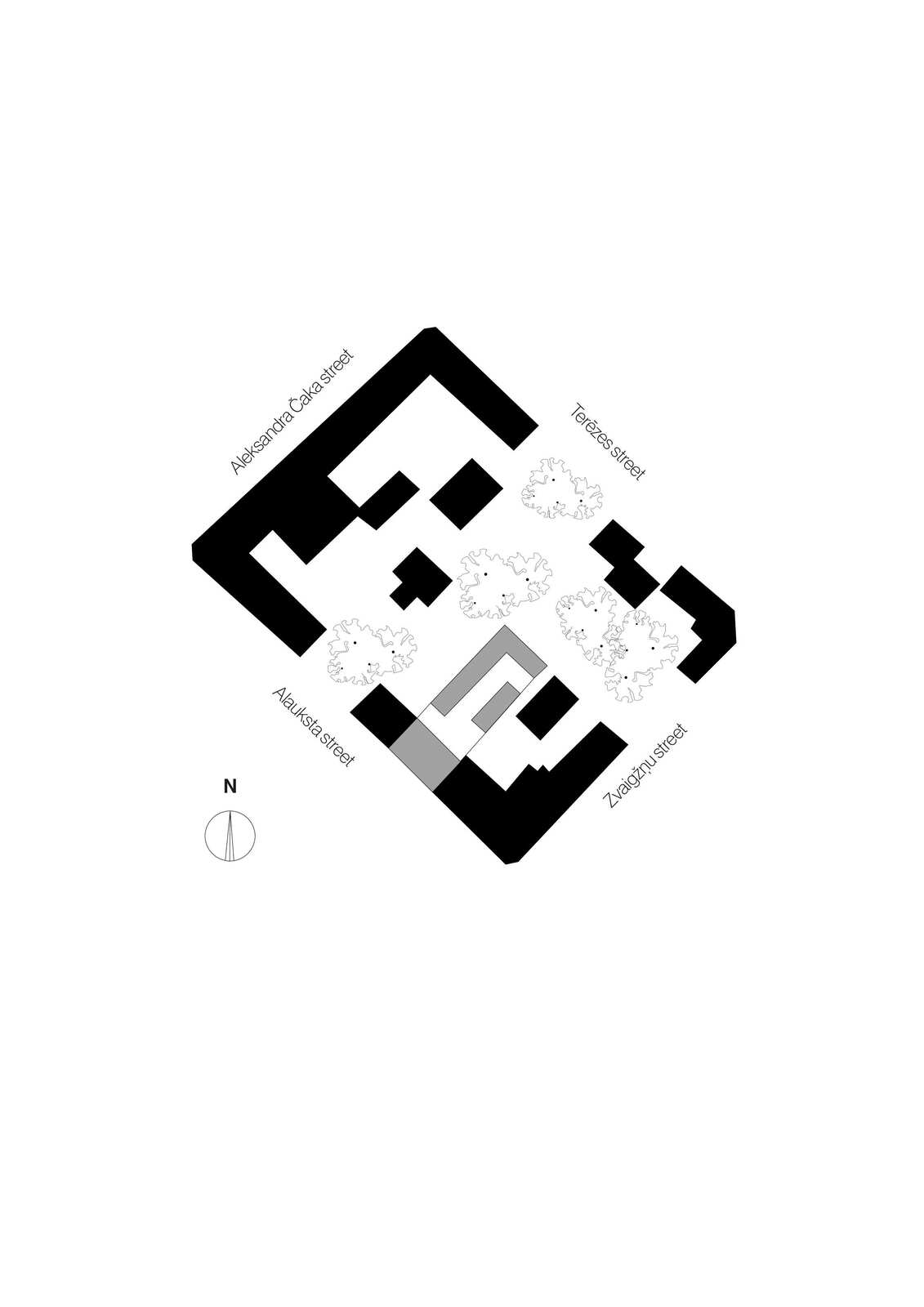
Augustine’s Garden is a residential redevelopment by Sampling Architects in Riga that transforms a historic early twentieth-century urban quarter through adaptive reuse. The project combines the renovation of an Art Nouveau tenement building with the reconstruction of former low-rise industrial structures located in the courtyard, converting the ensemble into contemporary housing. By preserving the layered material history of the site and minimizing new construction, the architects establish a dialogue between heritage and present-day living. The development includes studio duplexes and larger apartments with terraces and French balconies, organized around a landscaped communal courtyard conceived as an urban garden. Prioritizing bicycle parking and shared green space over vehicular use, the project reimagines the inner courtyard as social infrastructure. Through careful façade restoration, sensitive insulation strategies, and the retention of post-industrial textures, Augustine’s Garden demonstrates how existing buildings, regardless of their original status, can be adapted to meet contemporary residential needs while reinforcing urban continuity.
Against all odds, people don’t see it there. But you do see it as an architect, and that’s something really inspiring — that you have this vision and do all your efforts to turn this place into something contemporary, something cozy, something that people would want to inhabit.
Interview with Liene Jākobsone and Manten Devriendt of Sampling Architects
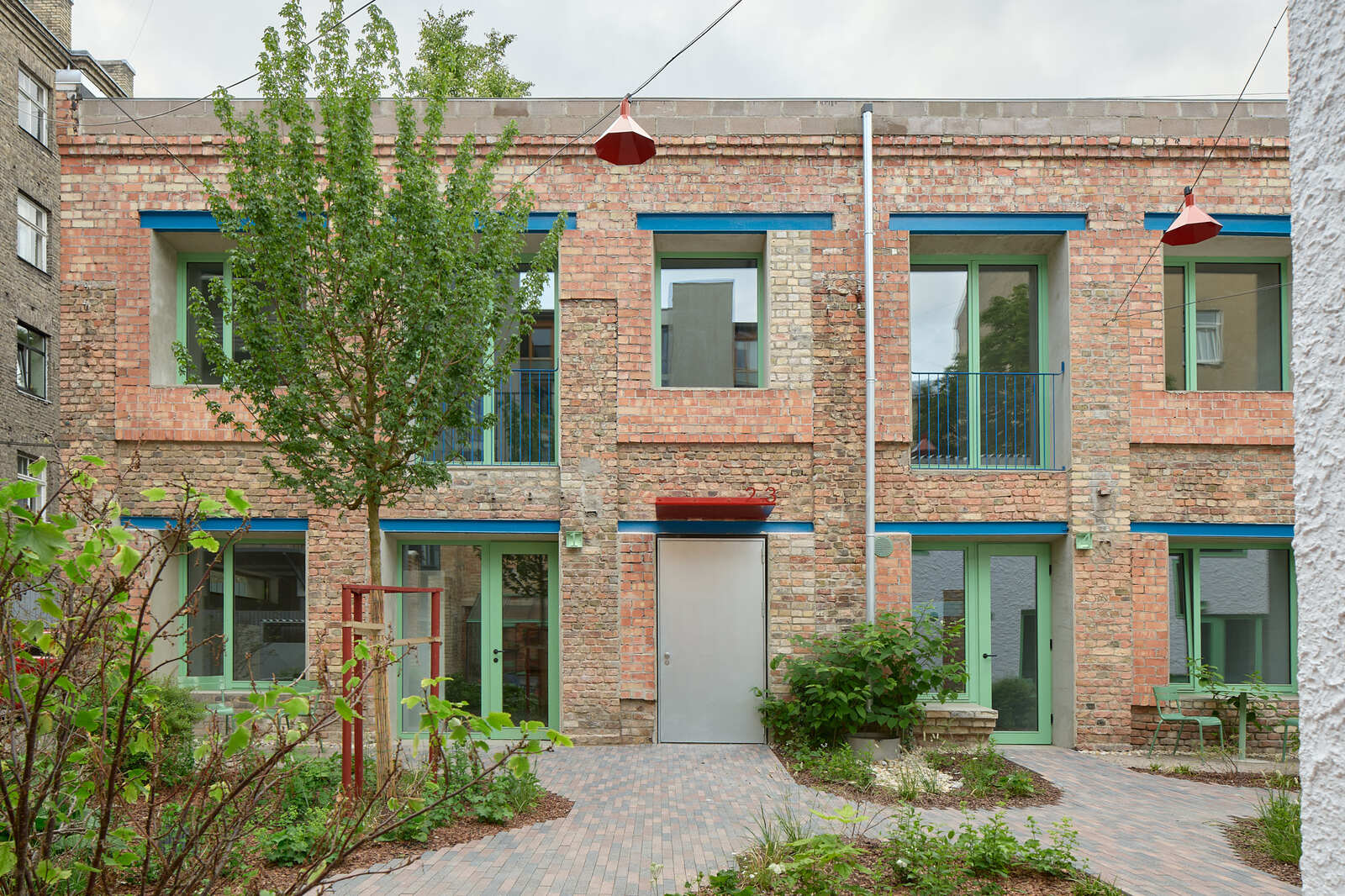
Augustine’s Garden proposes that architectural value can be recalibrated through transformation rather than replacement. Situated within a dense historic quarter of Riga, the project reframes a group of disparate structures as a coherent residential environment, revealing the latent spatial and material qualities embedded in both decorative and utilitarian buildings. The intervention operates across scales, from the restoration of a historically significant street façade to the reinterpretation of modest courtyard volumes.
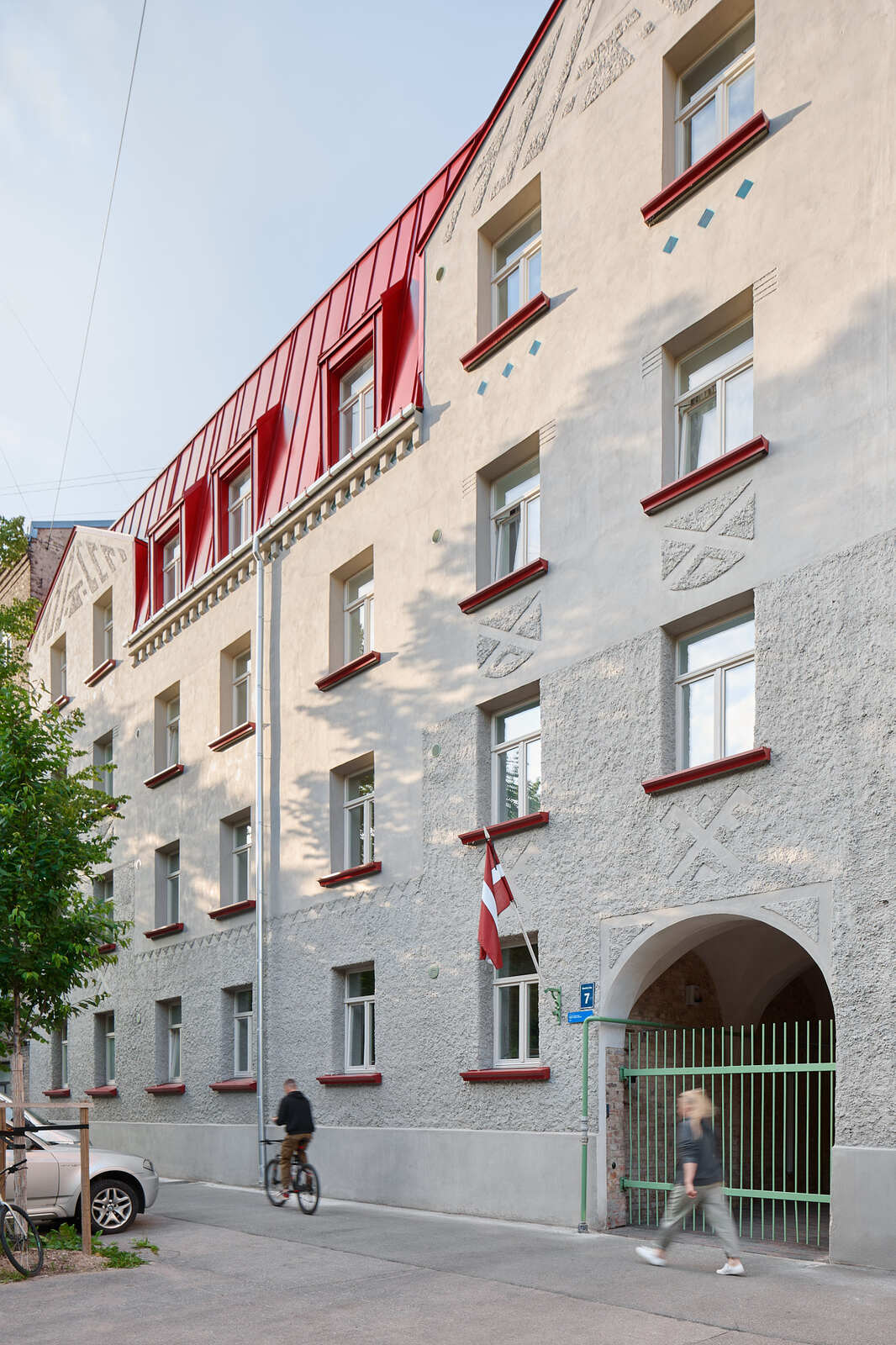
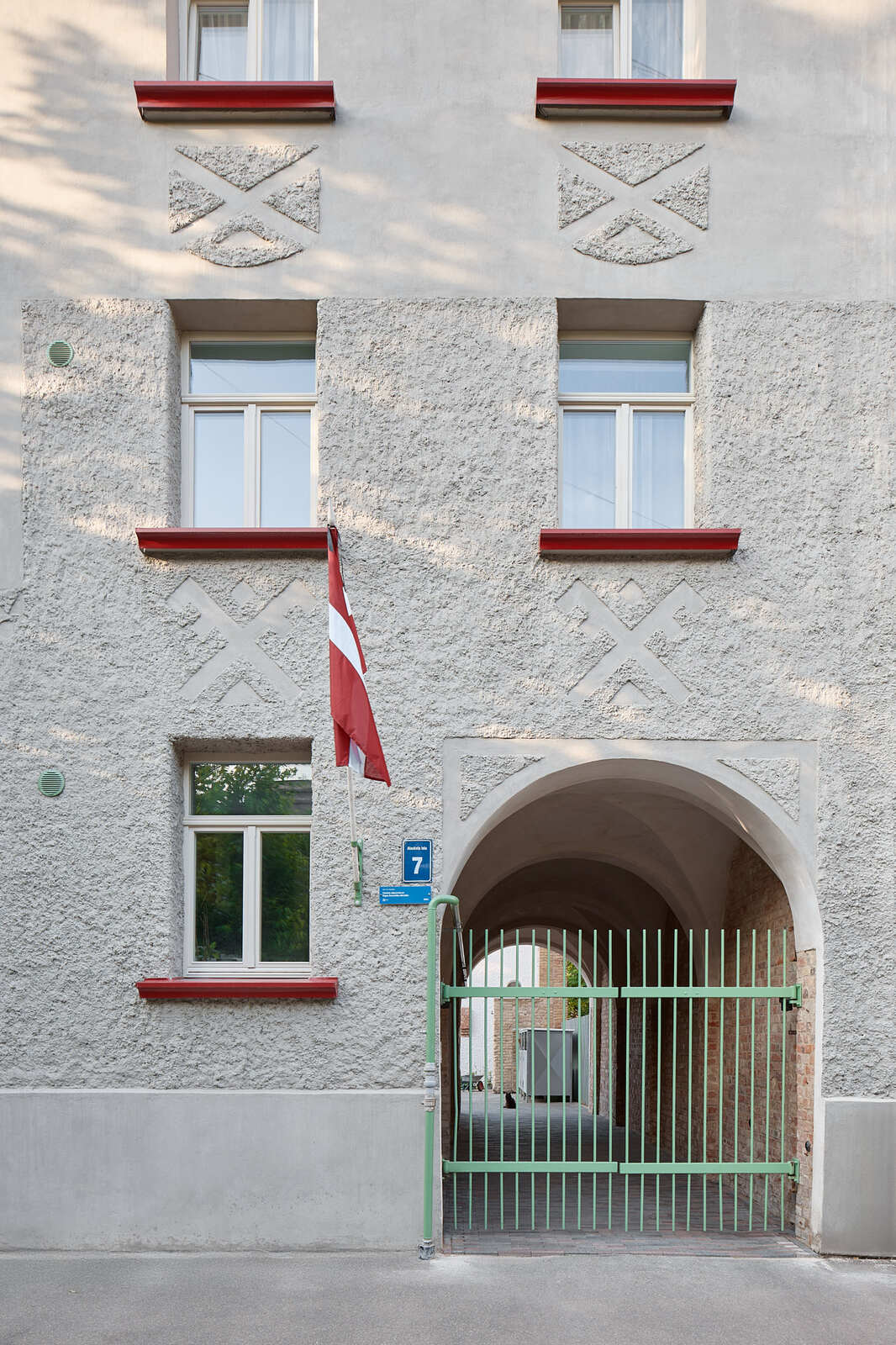
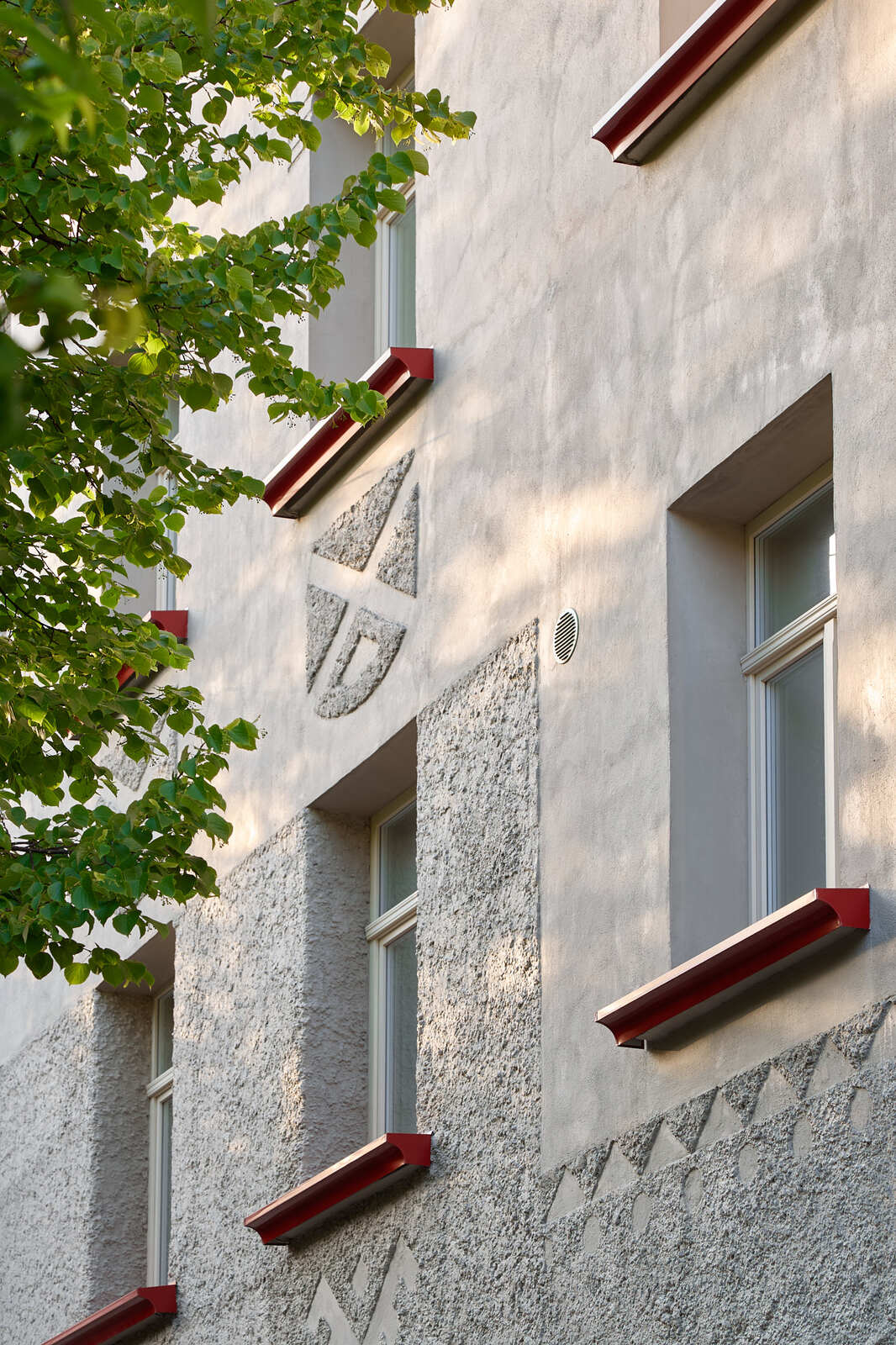
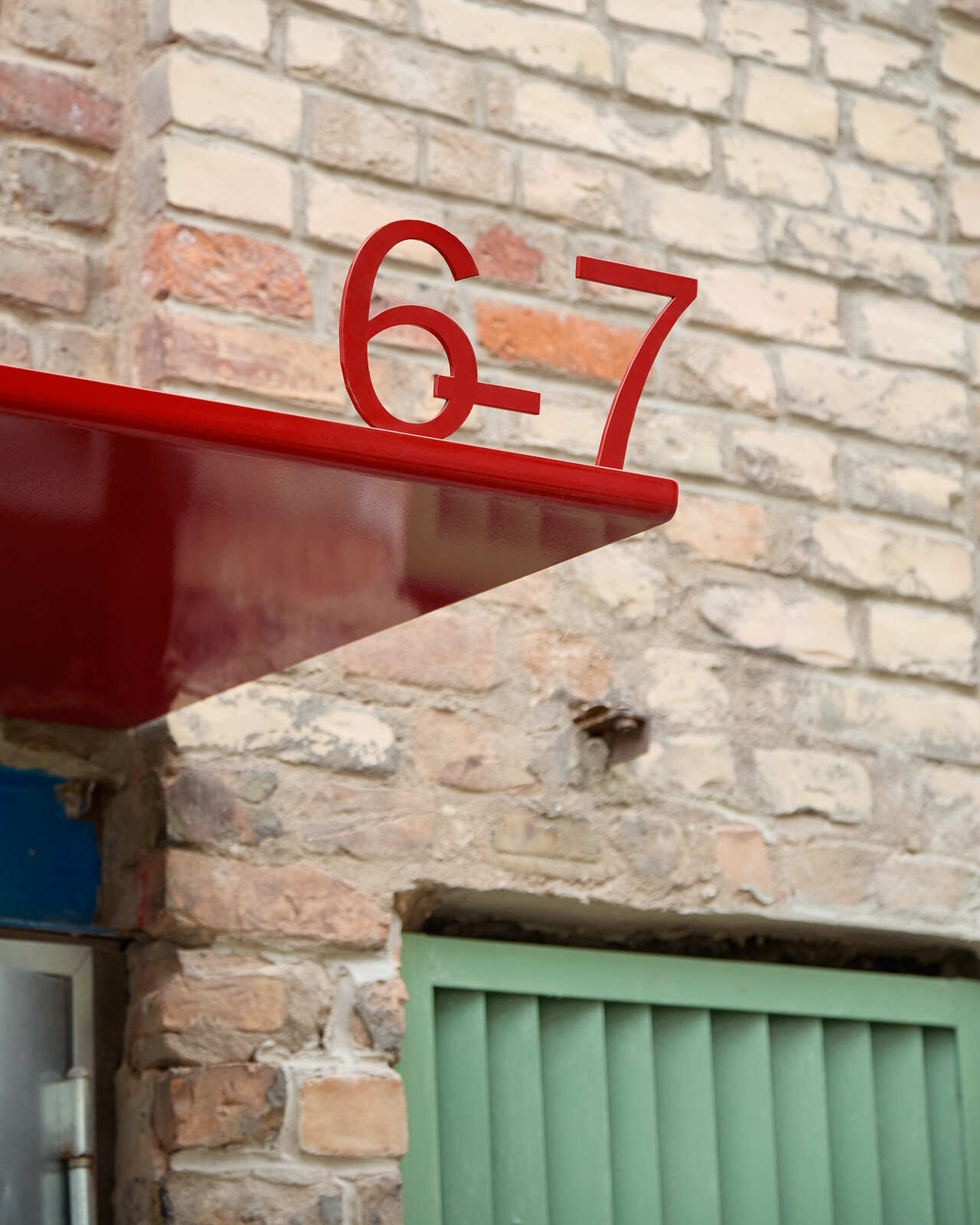
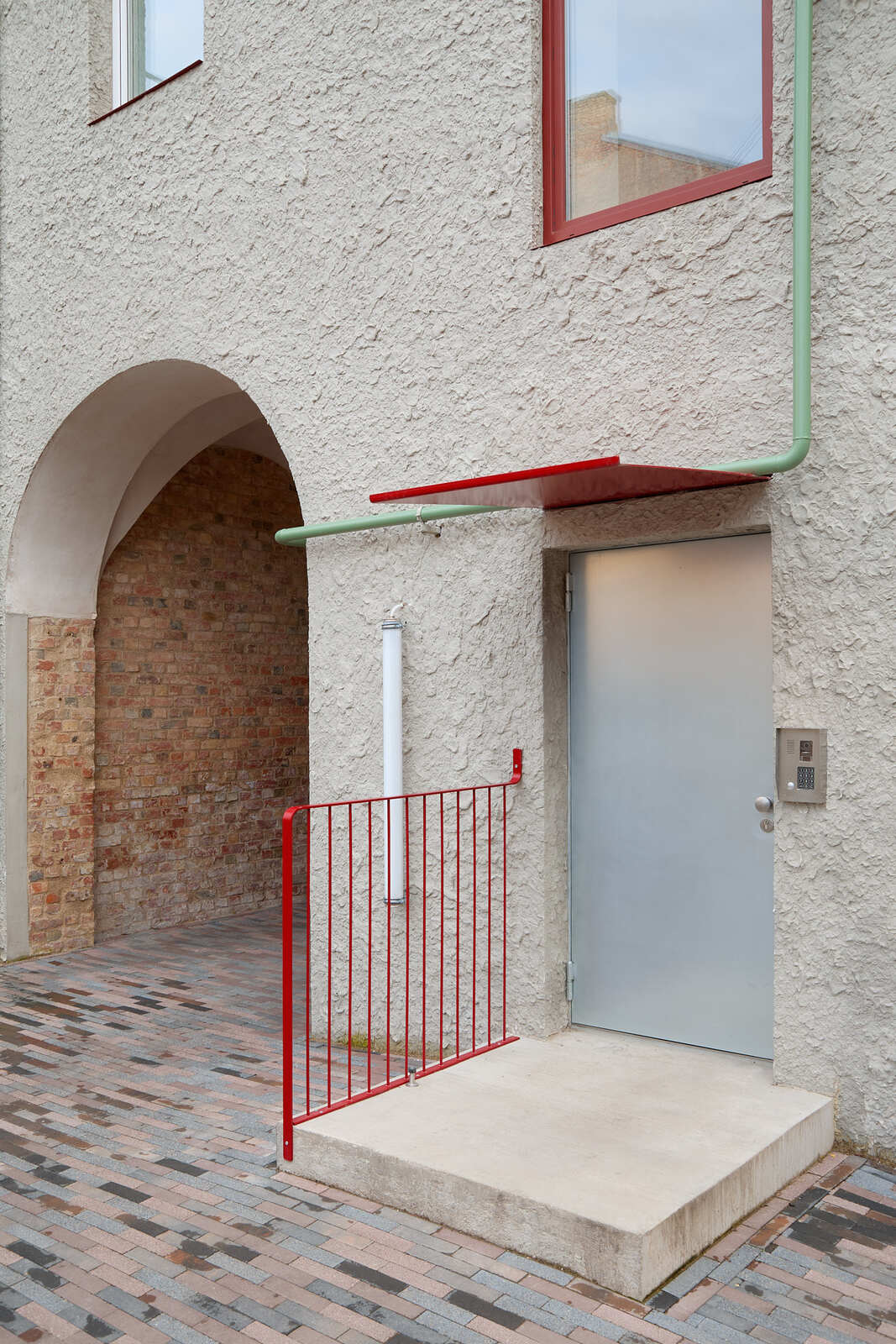
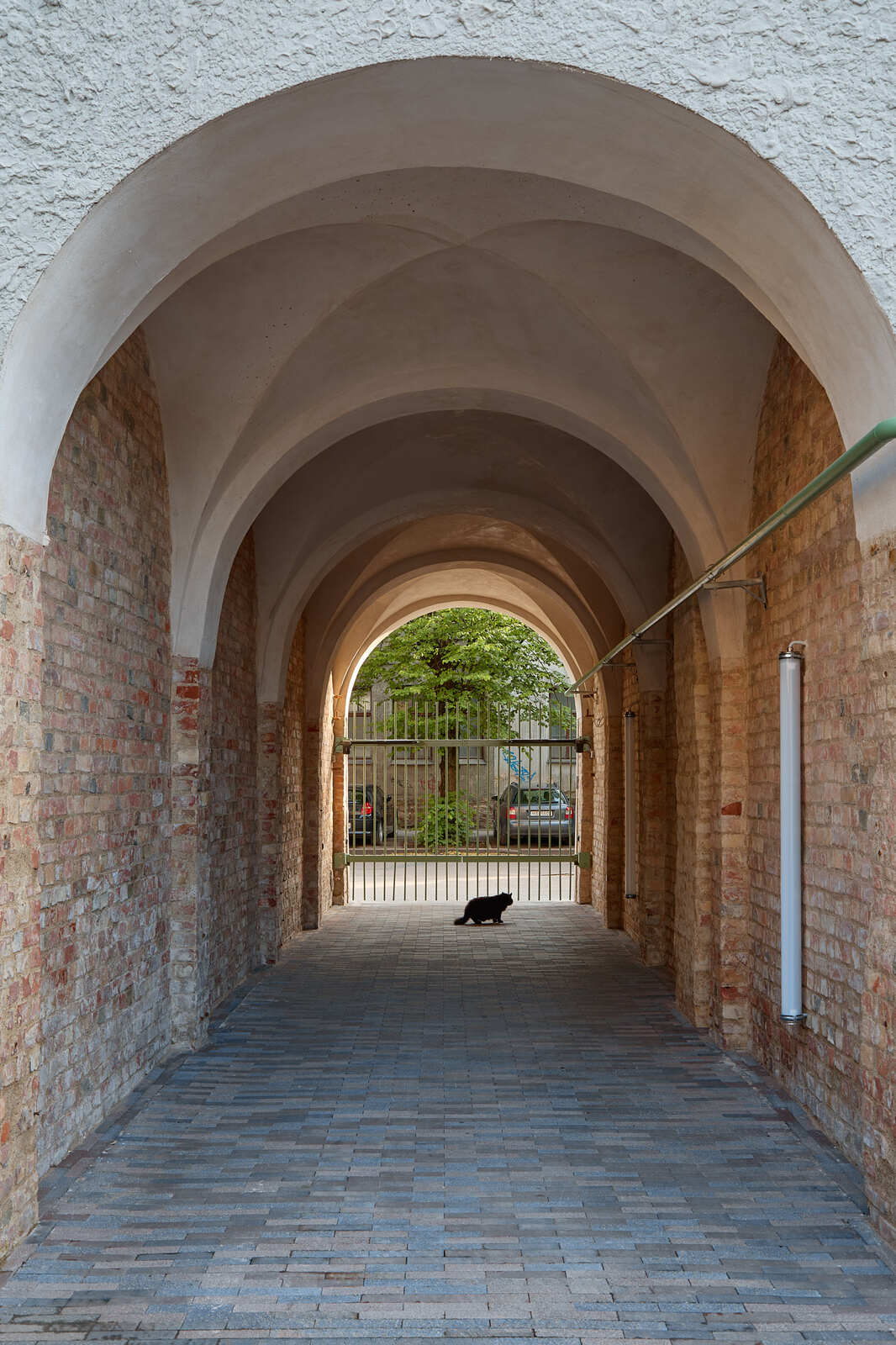
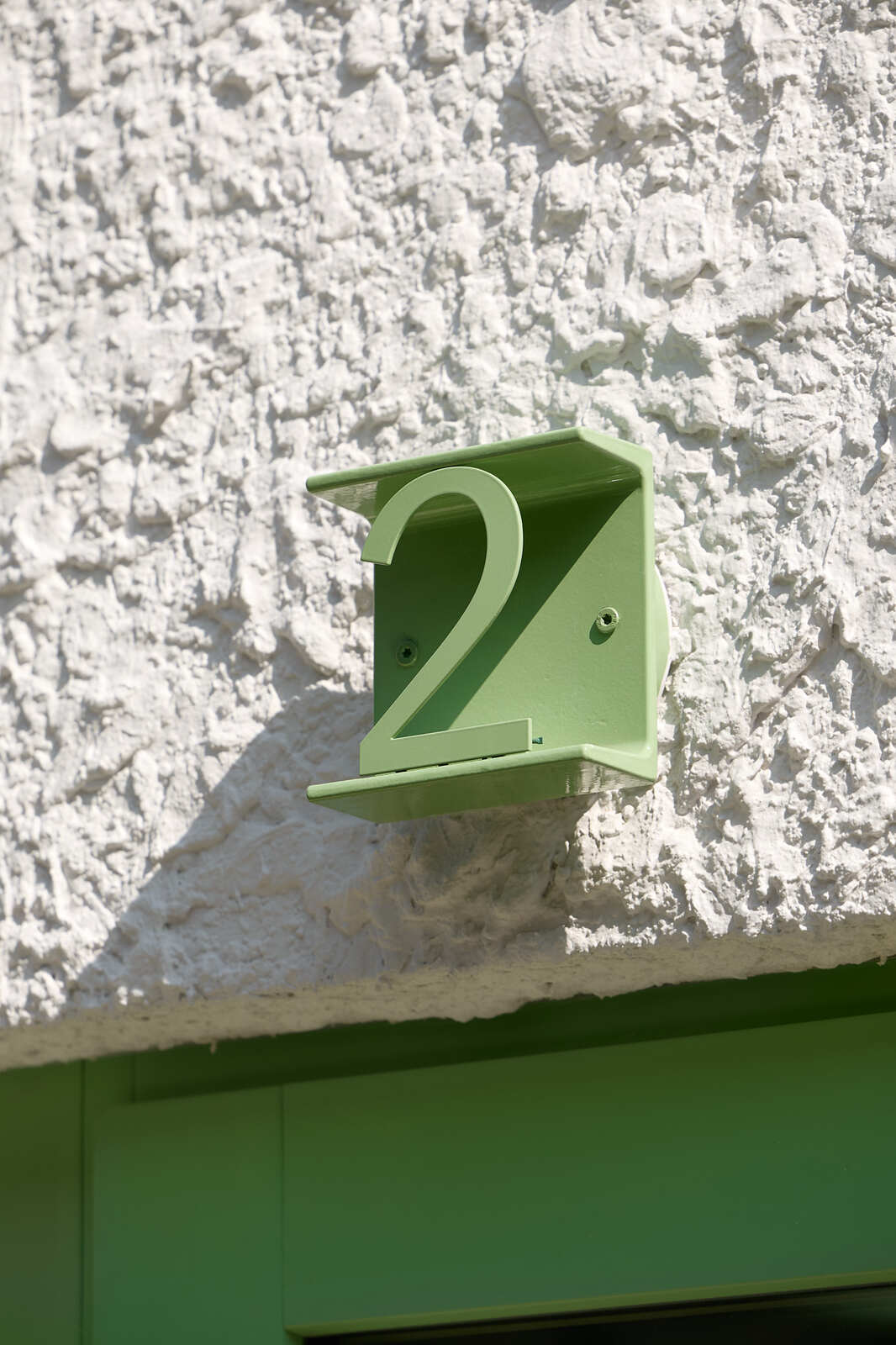
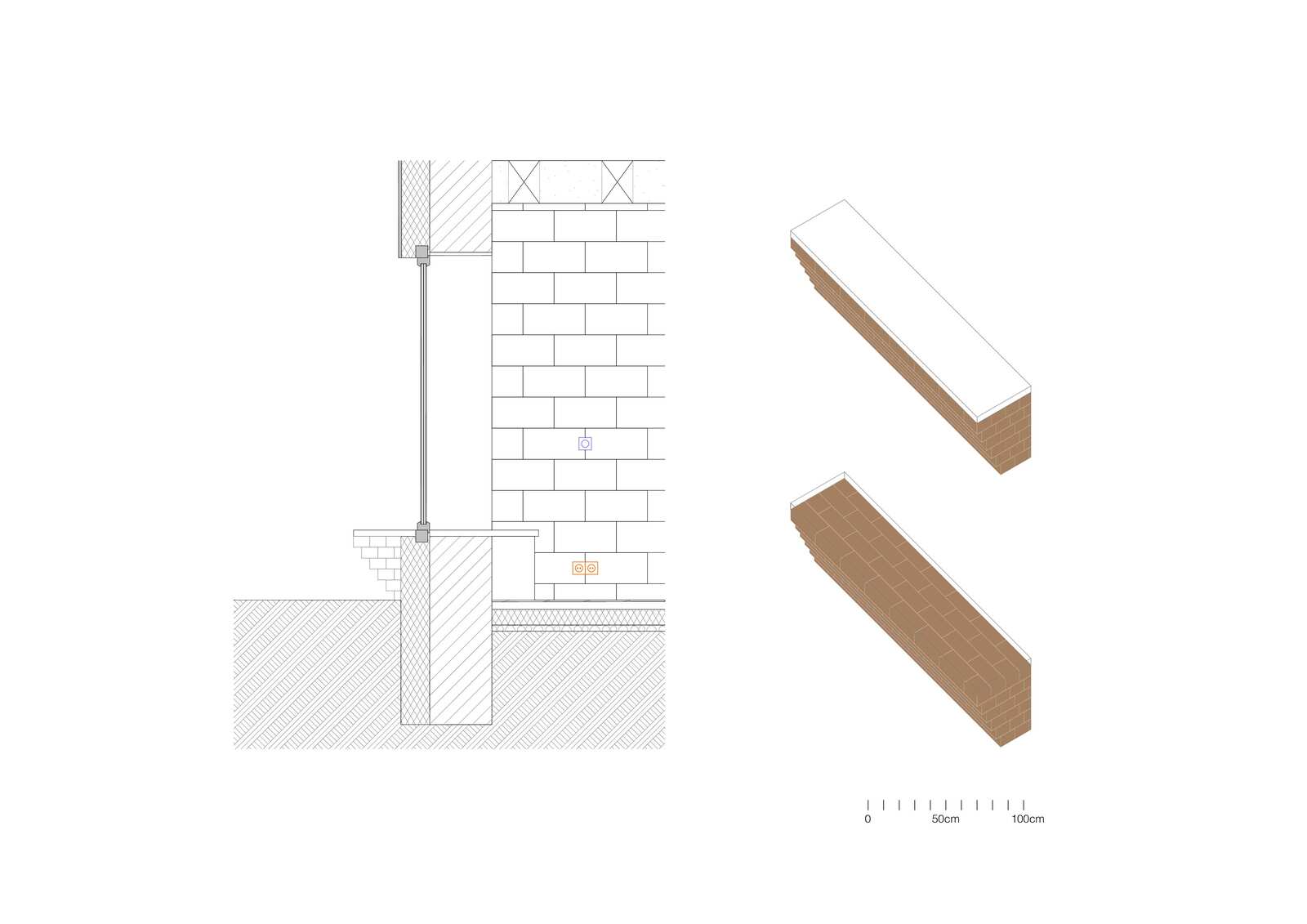
The street-facing building, an Art Nouveau tenement designed in the National Romantic style by Aleksandrs Vanags, underwent a meticulous renovation focused on preservation and performance. To maintain the integrity of the historic façade, insulation was introduced from the interior on the street side, allowing the exterior expression to remain intact. Original decorative elements were restored, including the characteristic alternation of rough and smooth plaster surfaces in a restrained monochrome composition. Carmine red accents define the renewed tin roof and window sills, where façade lighting is seamlessly integrated. At the same time, an olive-green gate marks the entrance, restoring historic vaulting and incorporating contemporary illumination.
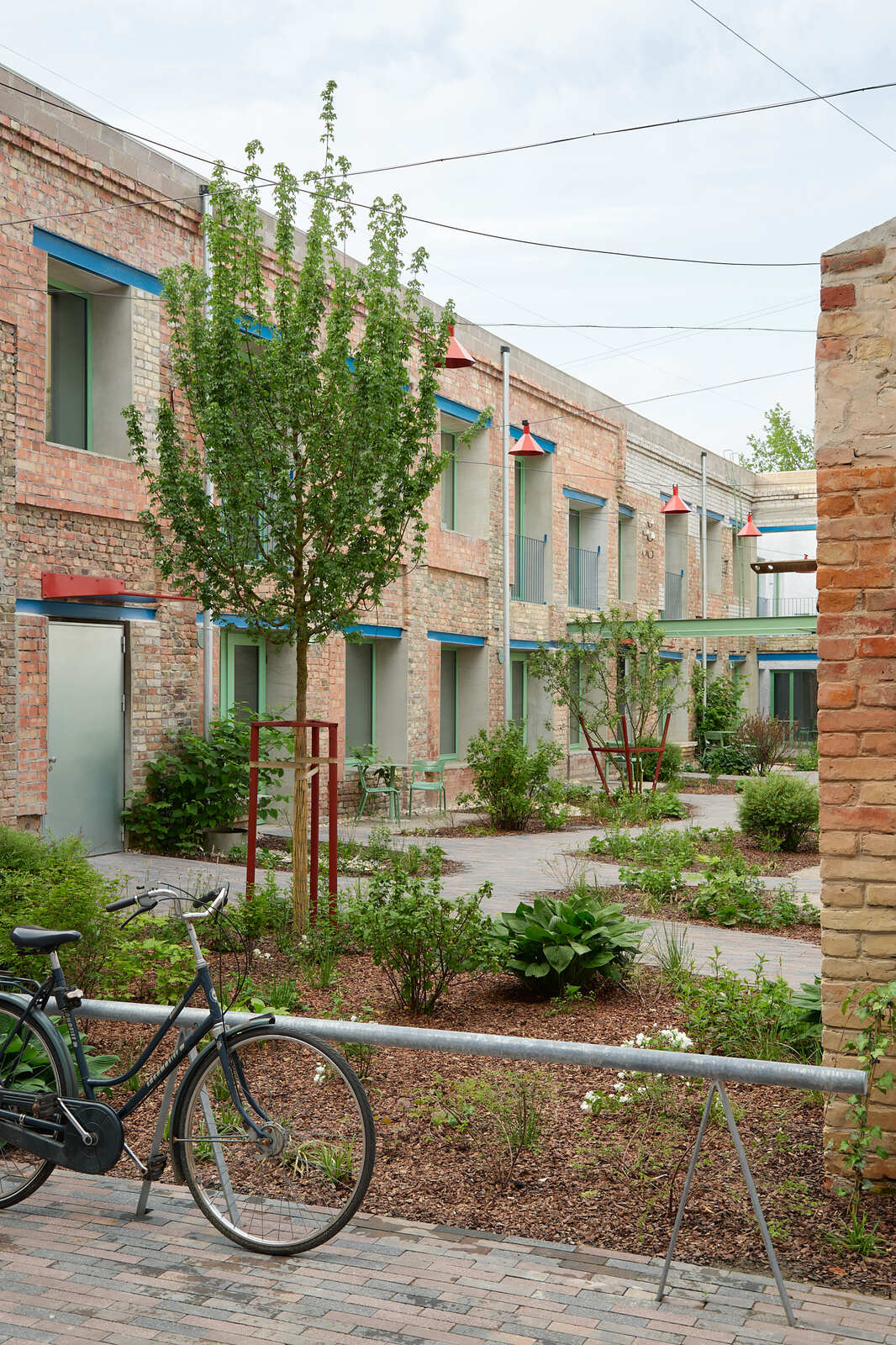
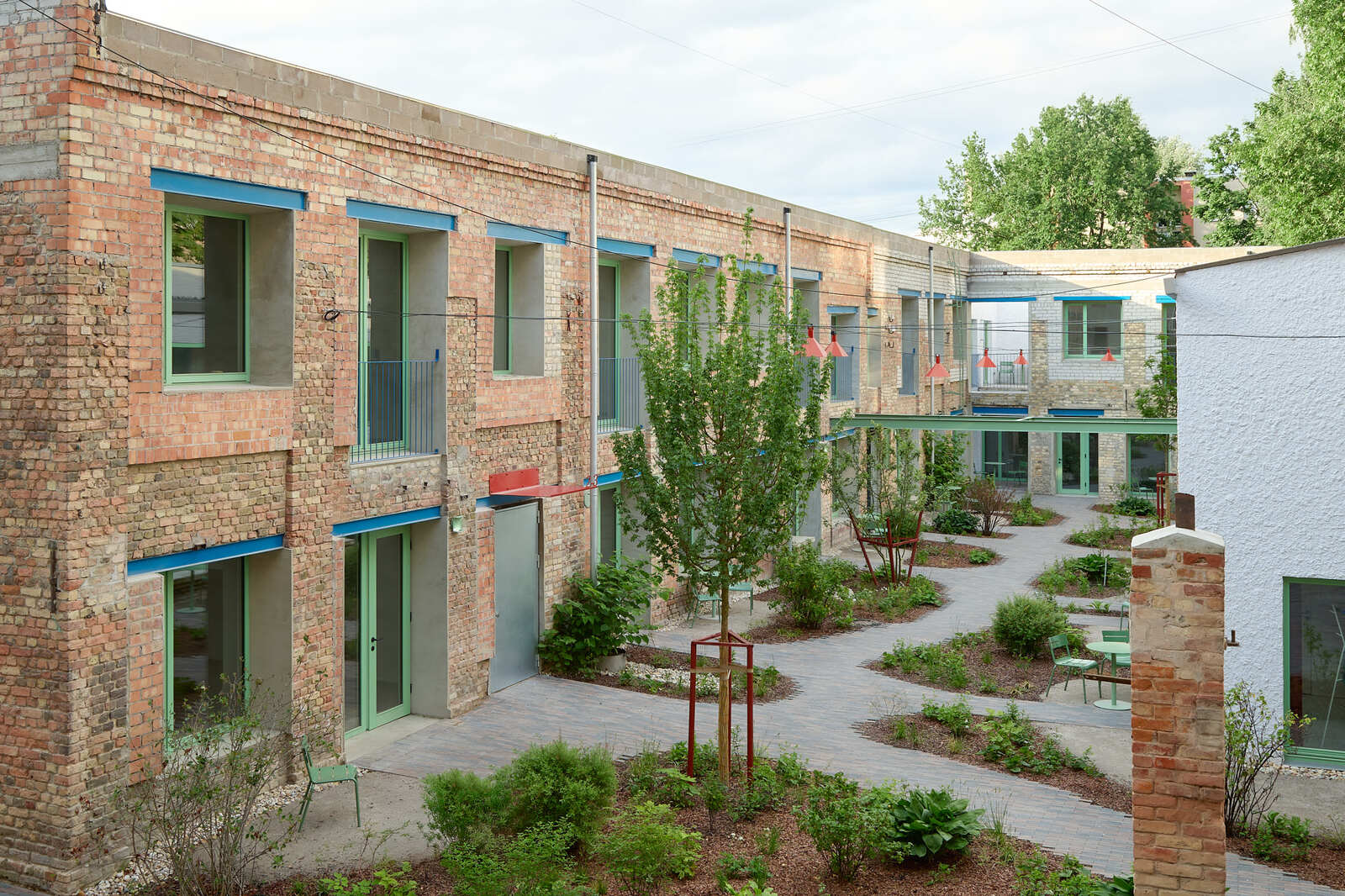
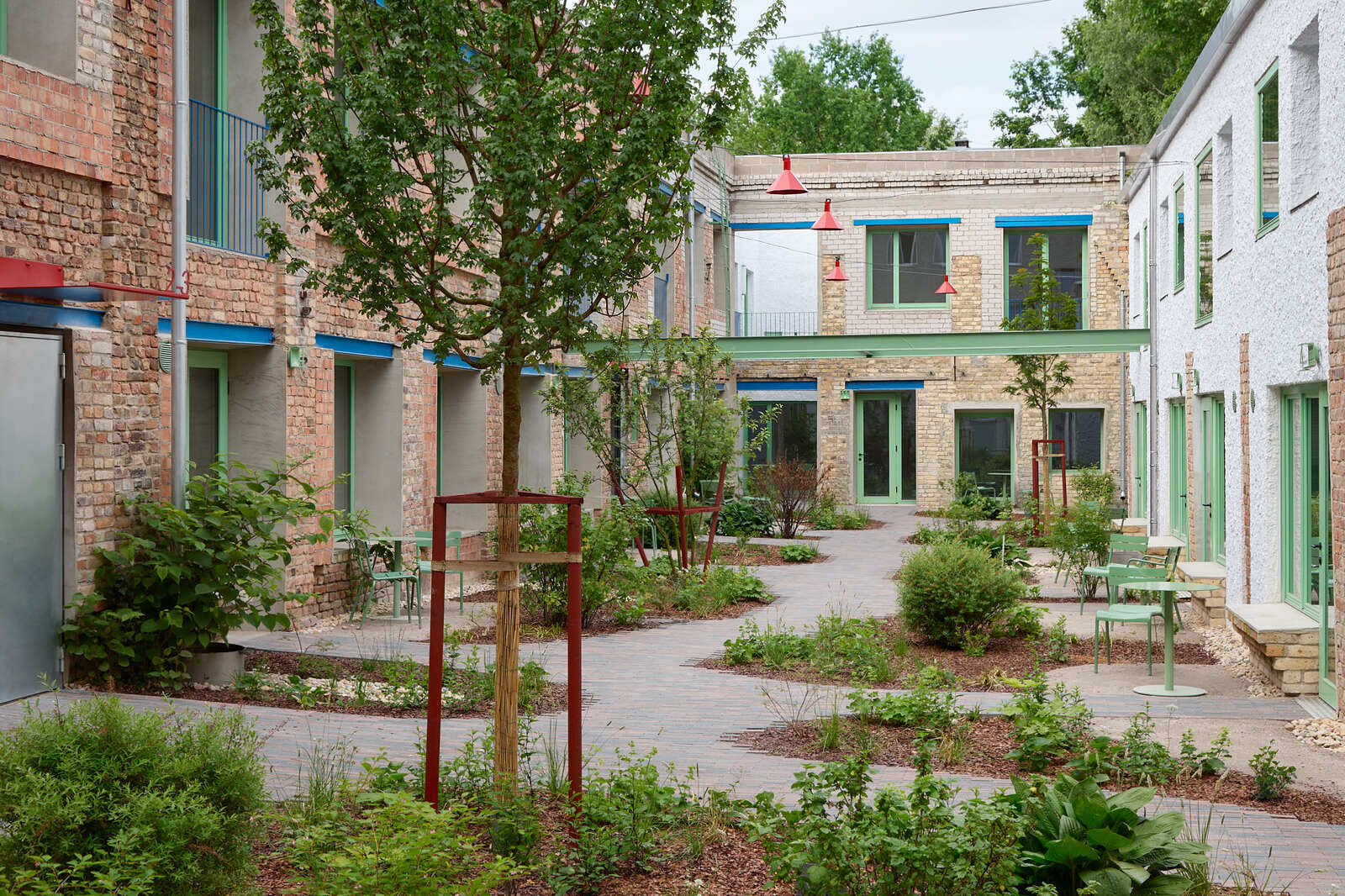
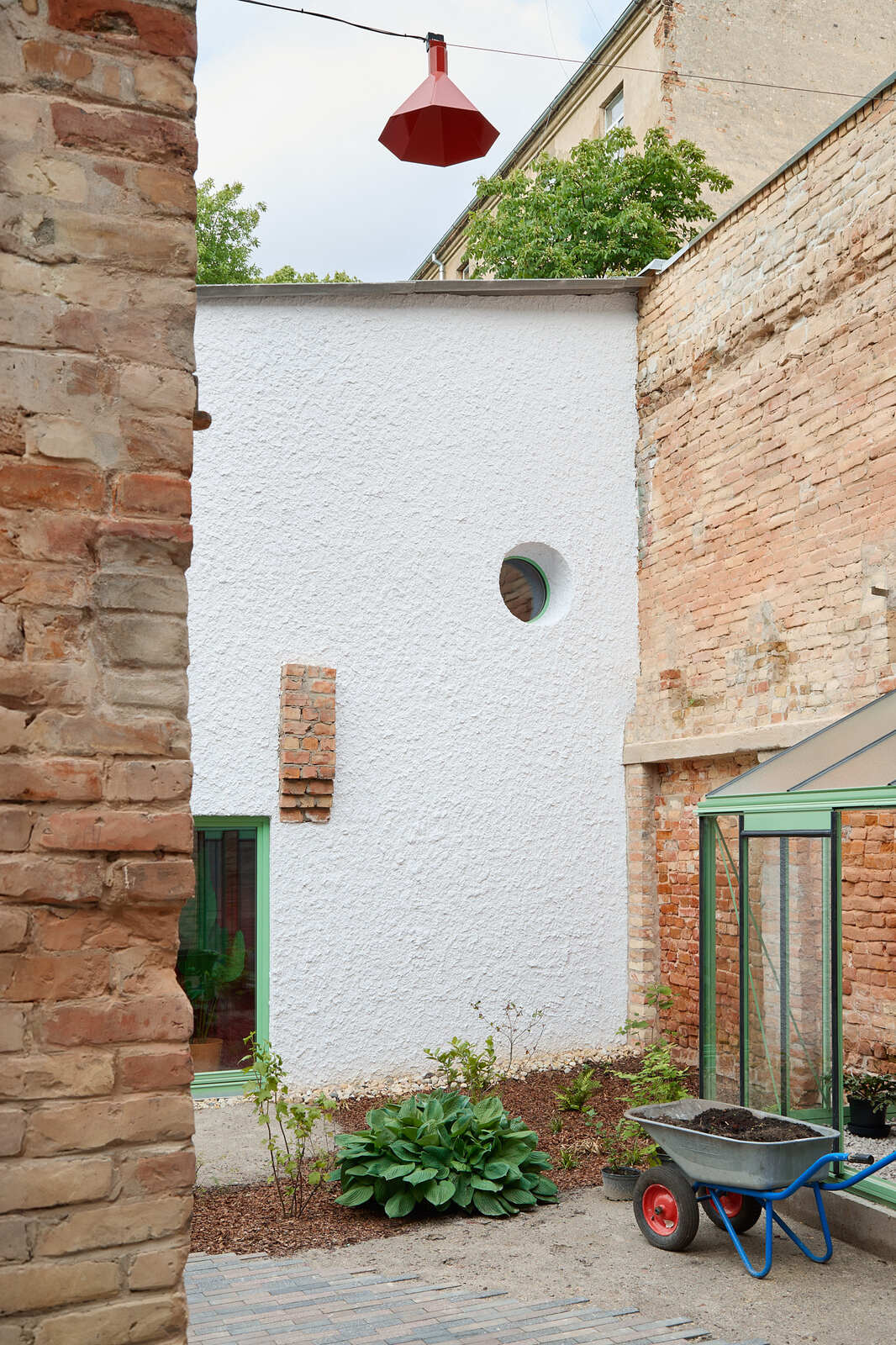
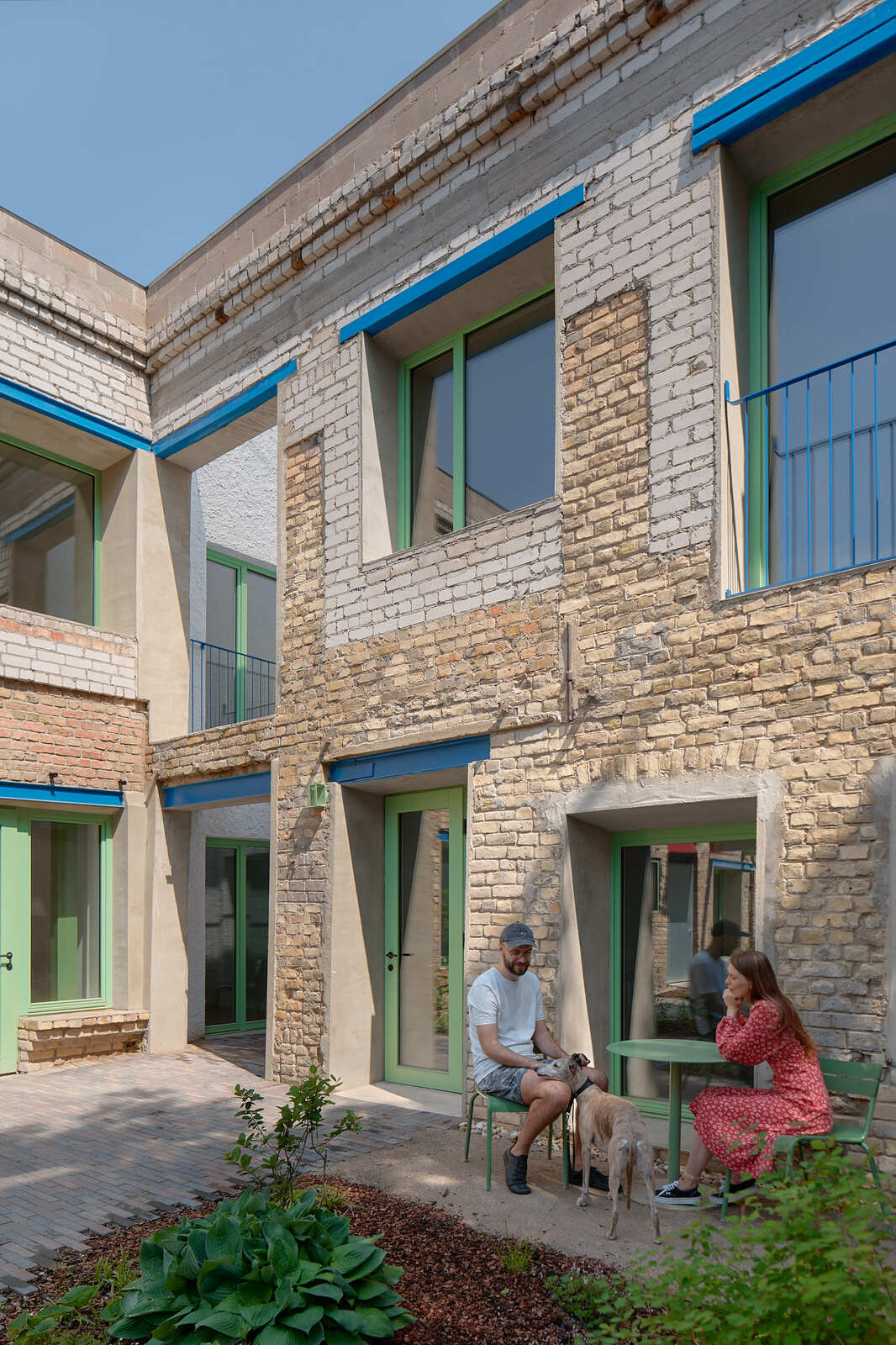
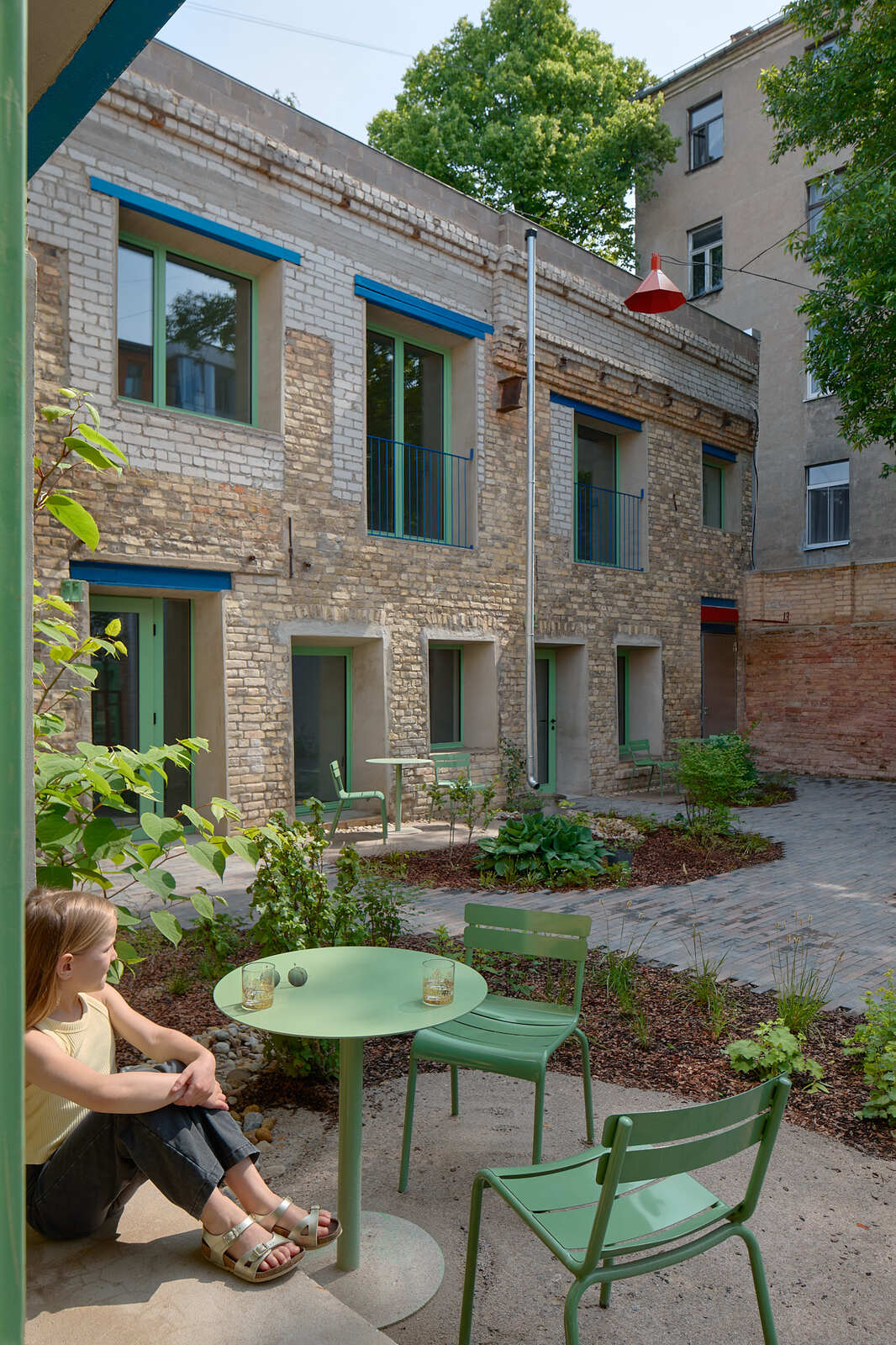
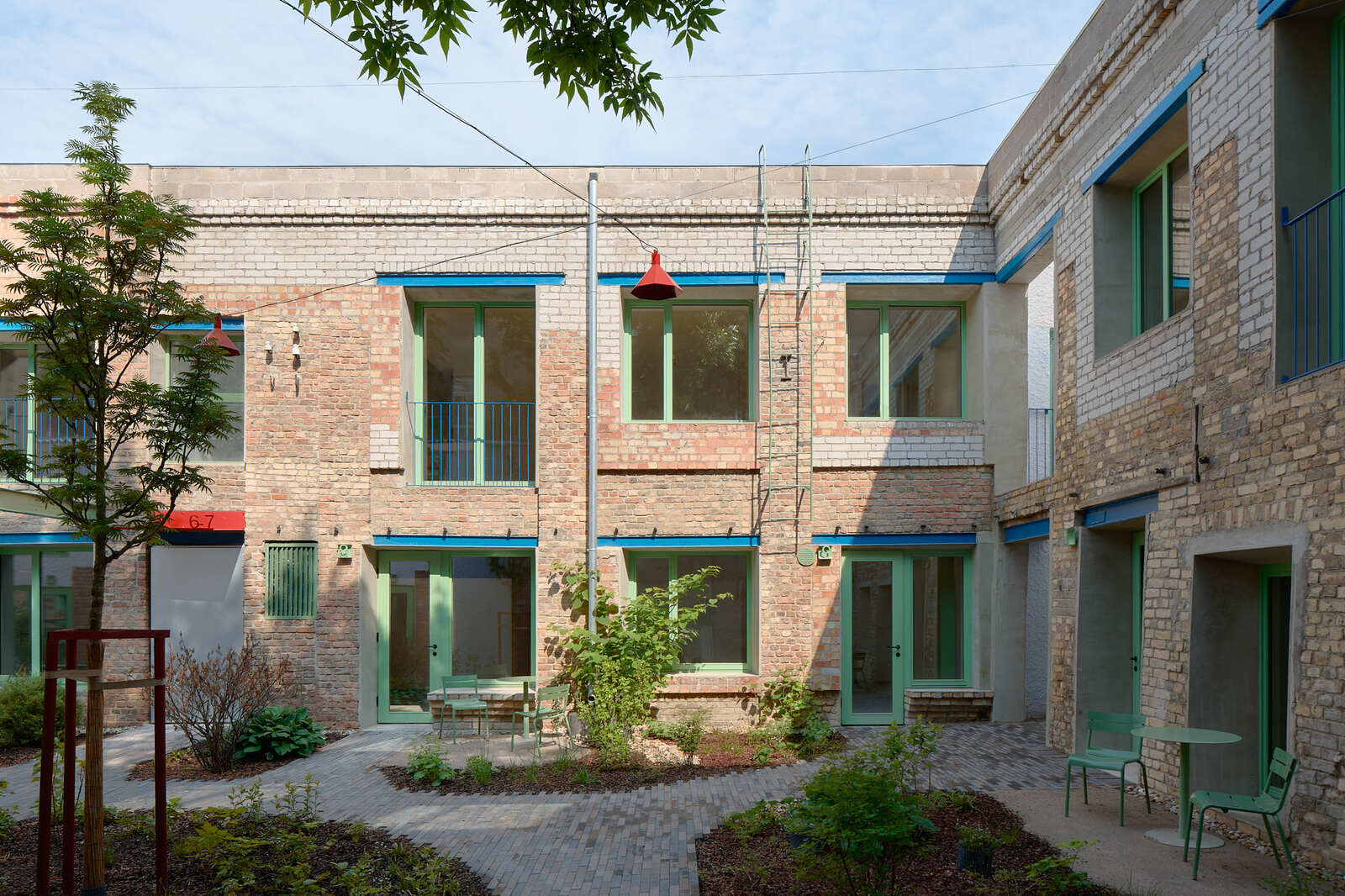
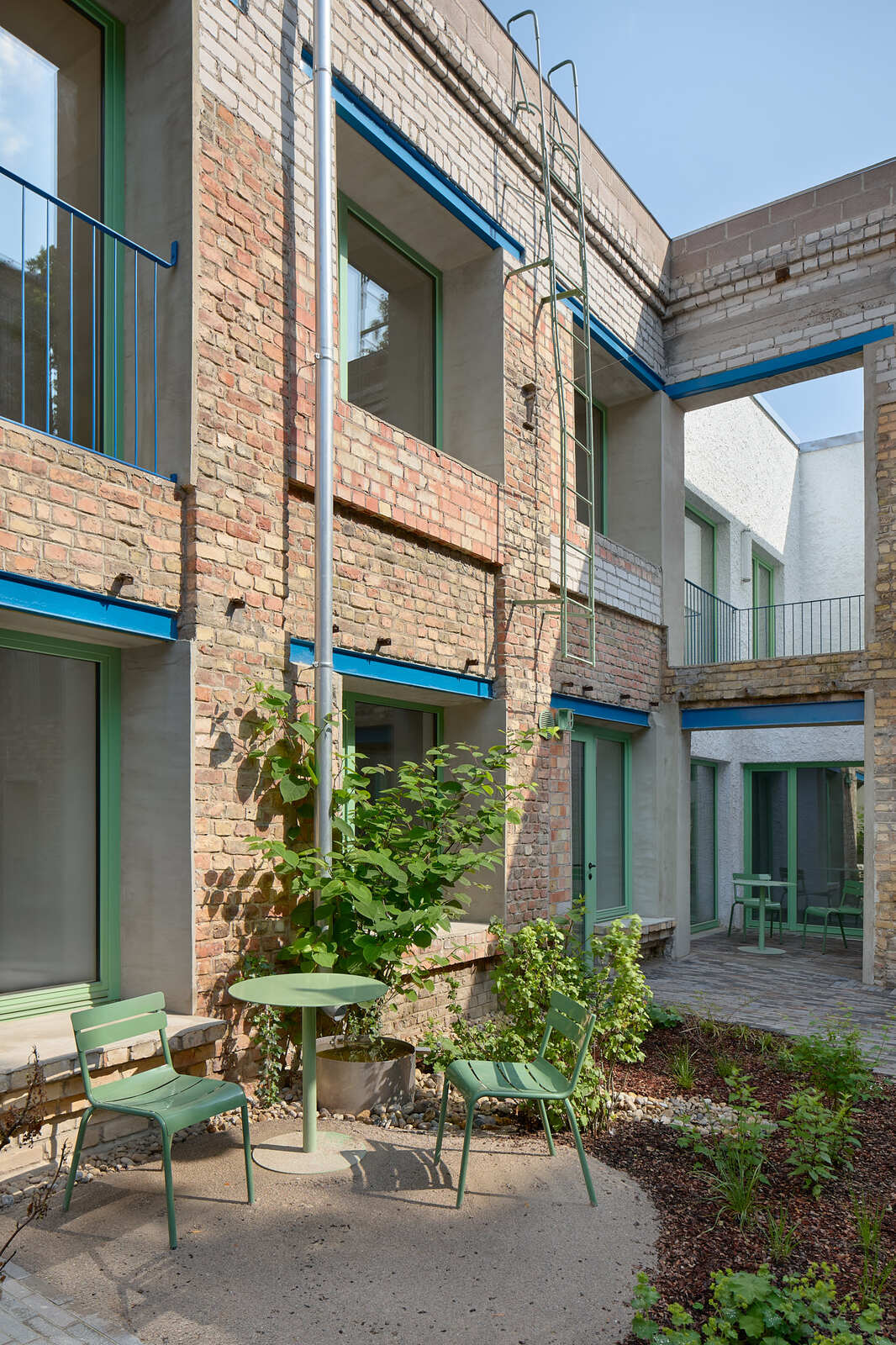
Beyond the gate, the courtyard reveals a markedly different atmosphere. Former industrial and workshop buildings, altered repeatedly over time, form a textured architectural backdrop. Their façades display a visible stratification of materials, from early twentieth-century ceramic brick and exposed metal beam lintels to white silicate brick associated with the Soviet period. Residual steel elements remain embedded within the structures, preserving traces of previous functions and reinforcing the project’s post-industrial character.
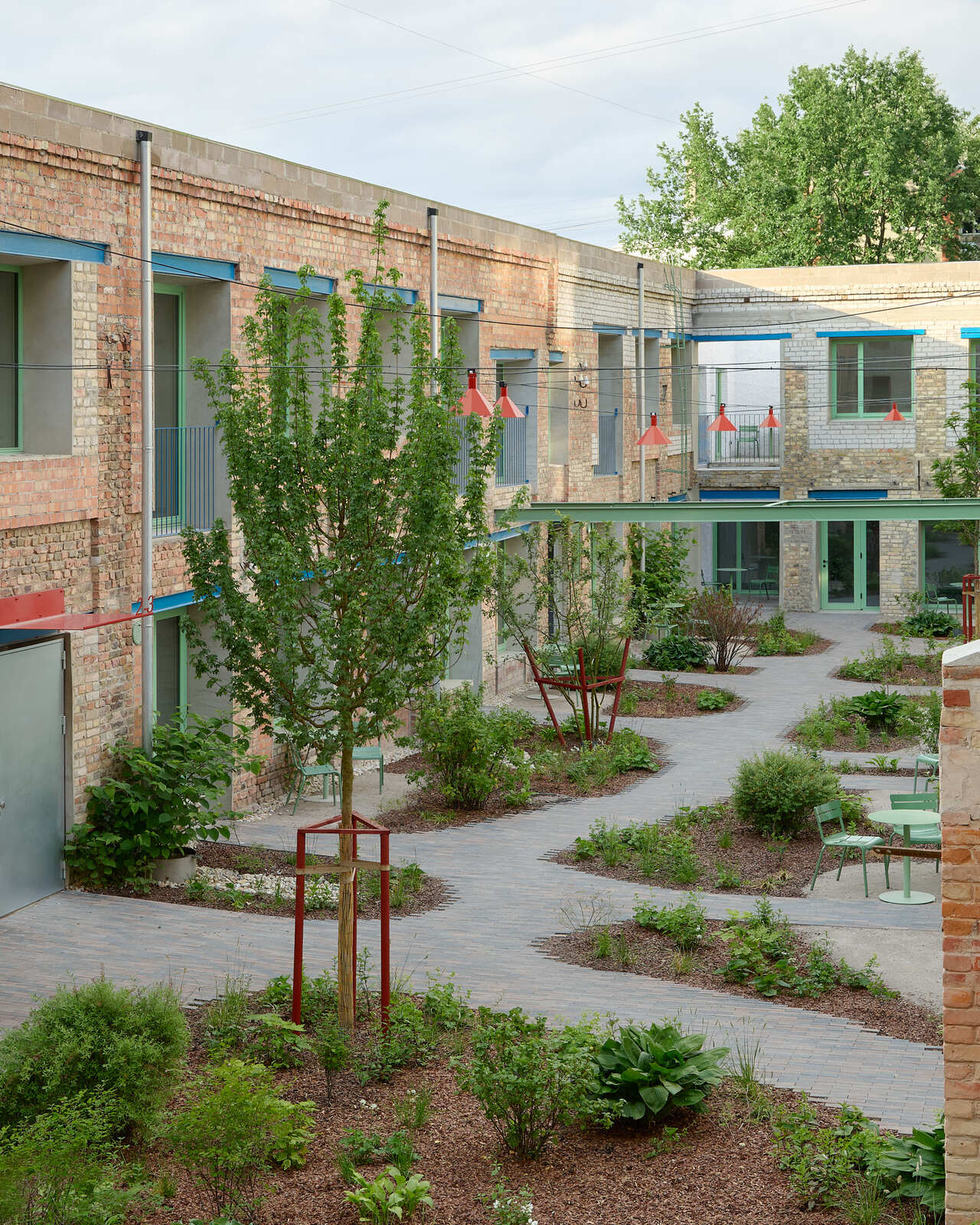
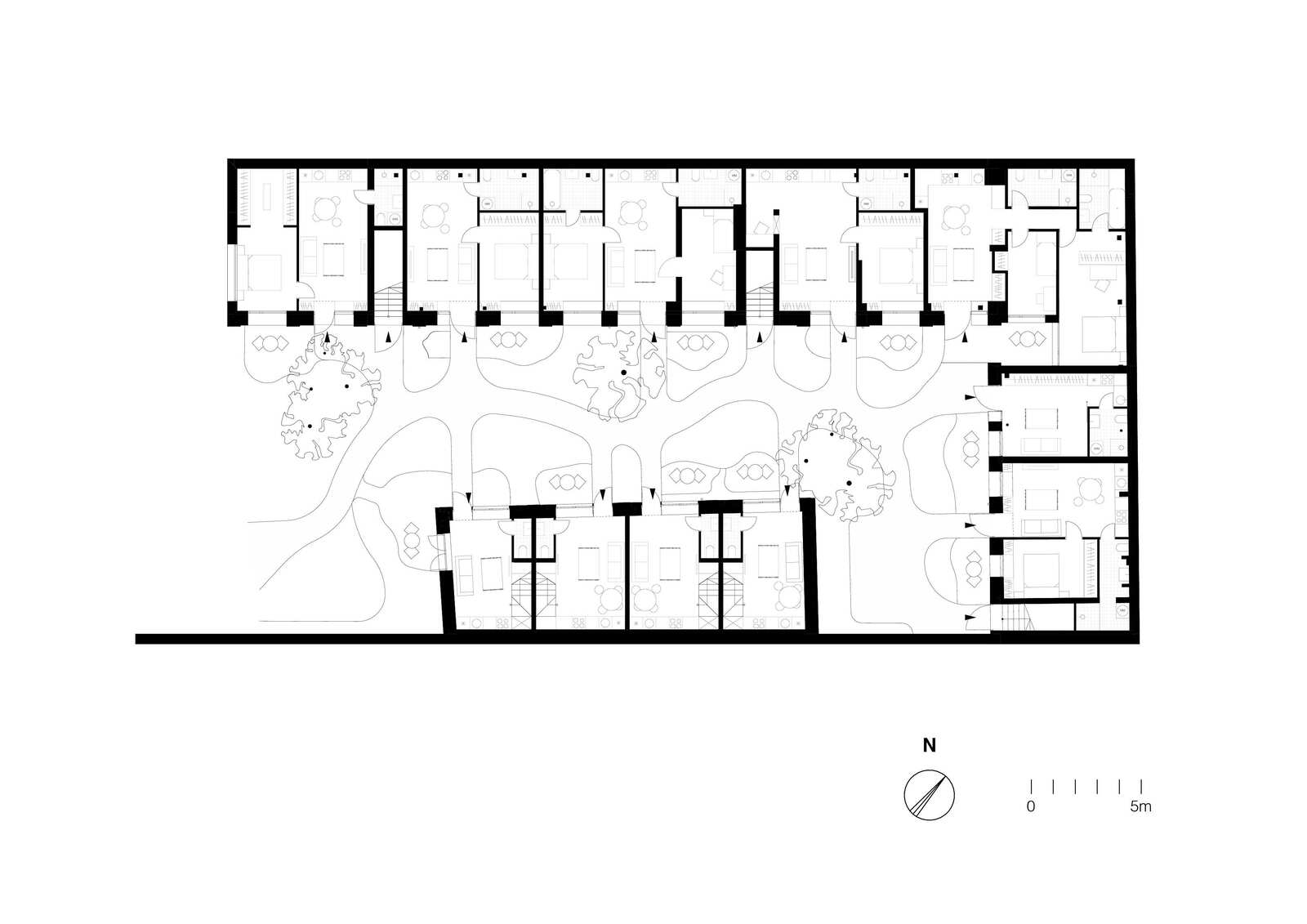
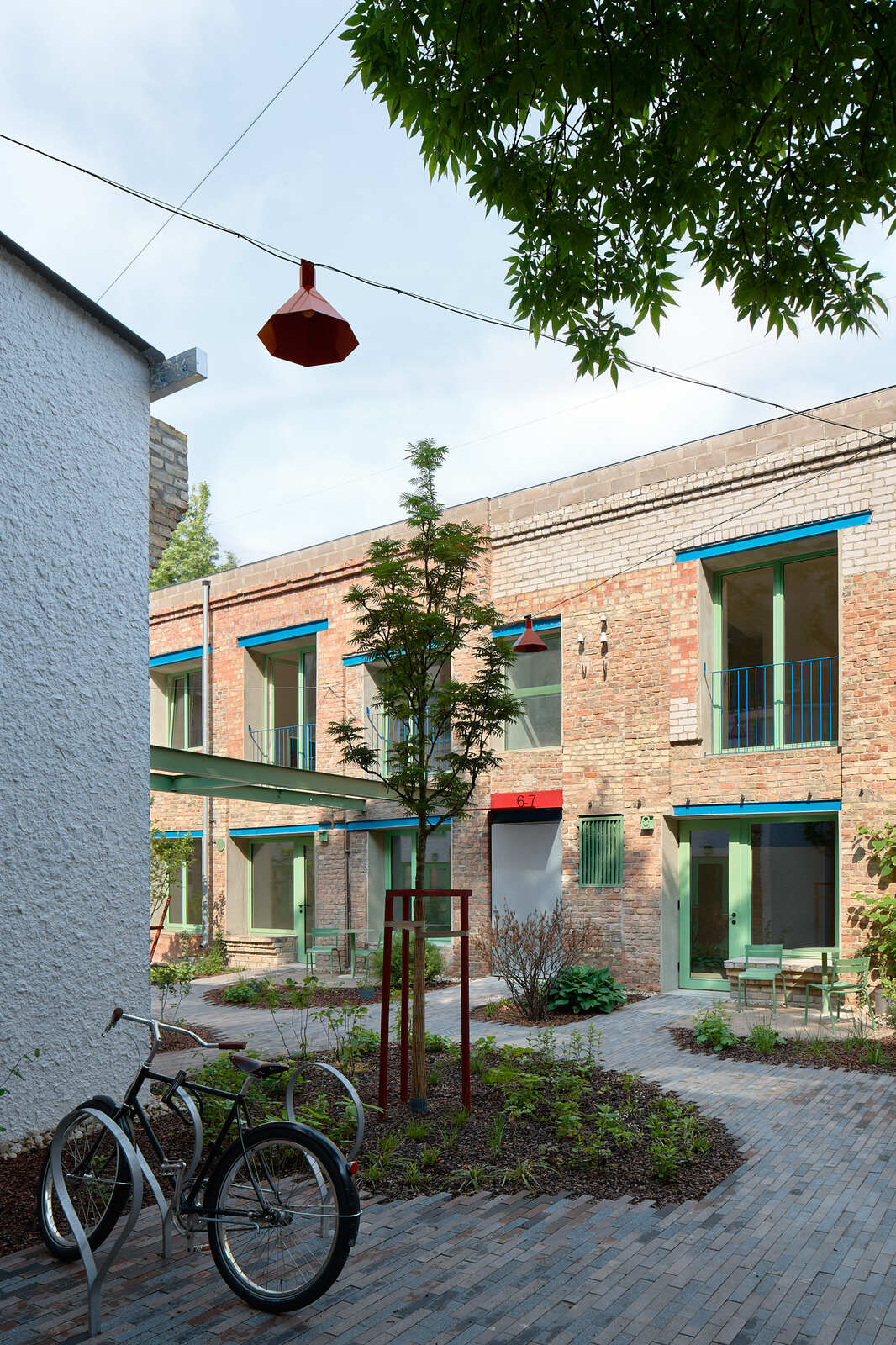
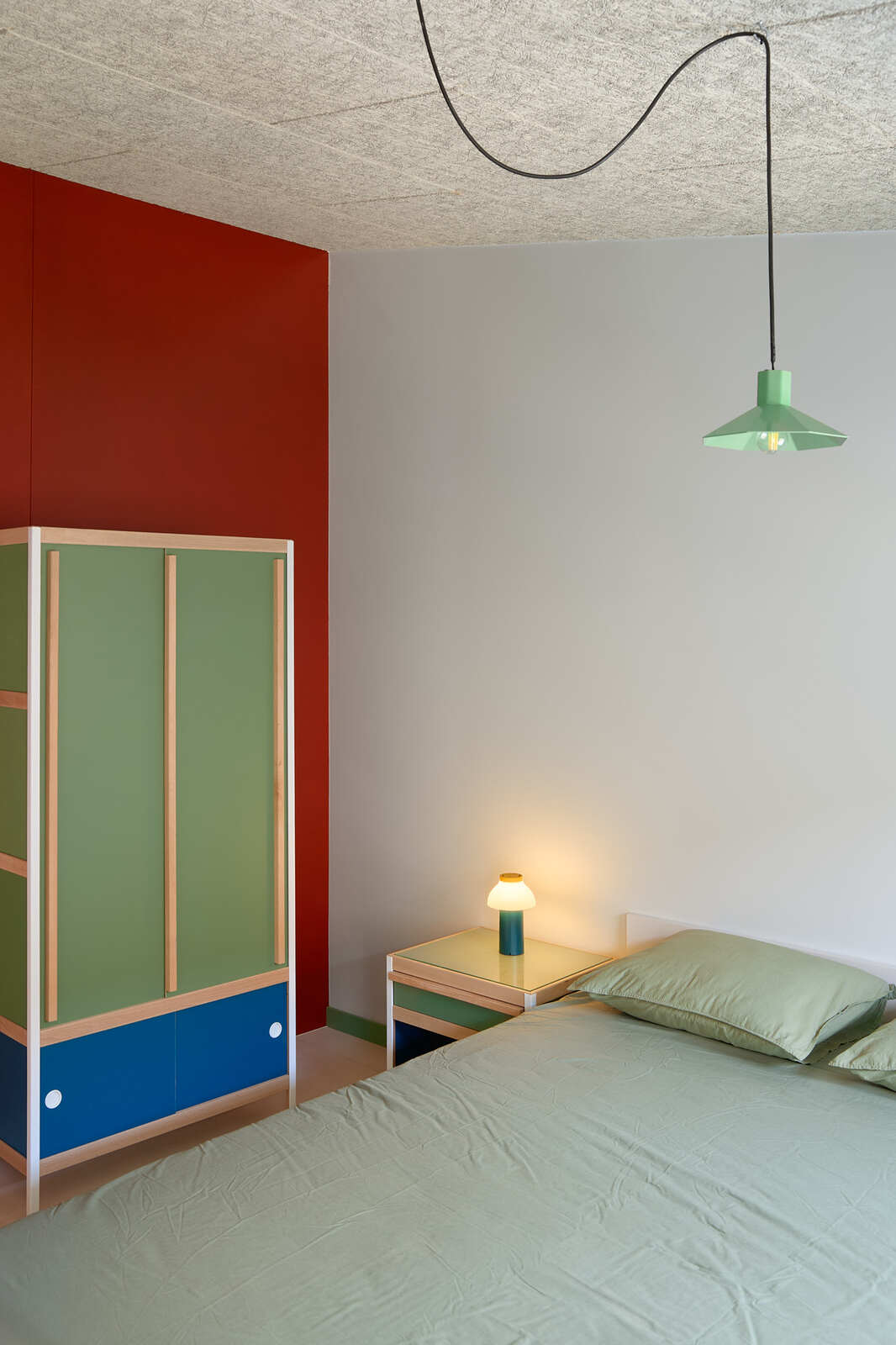
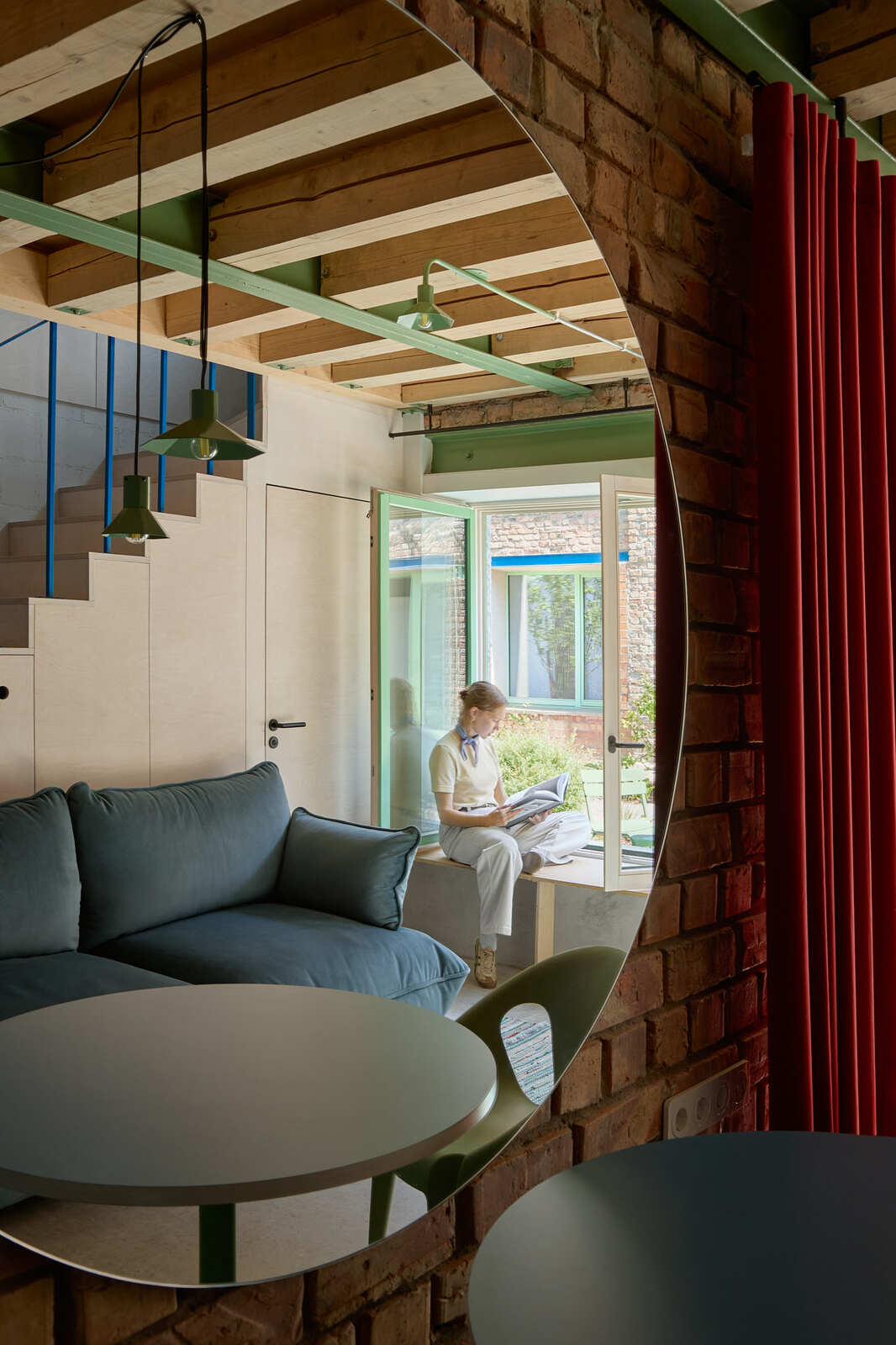
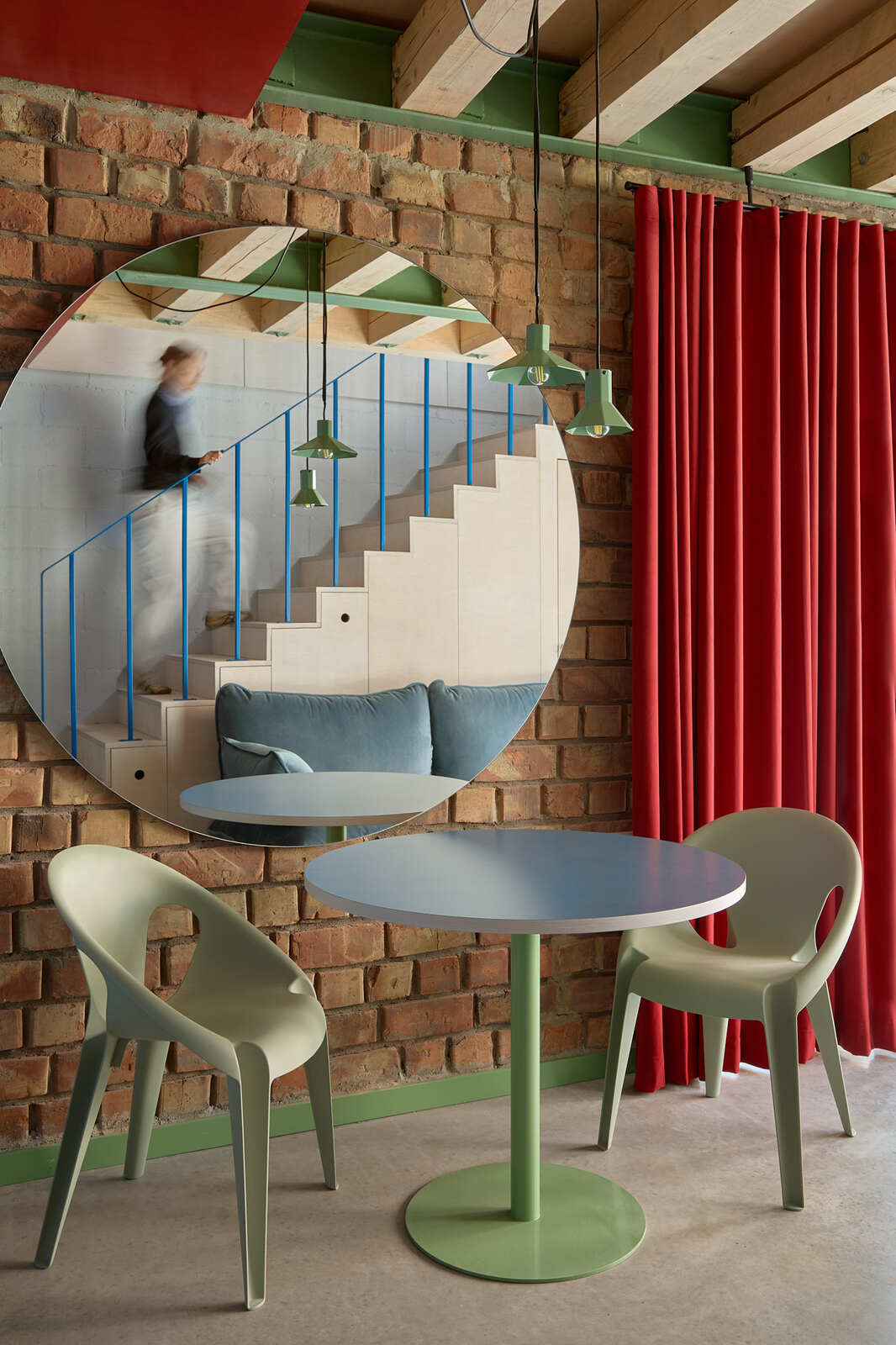
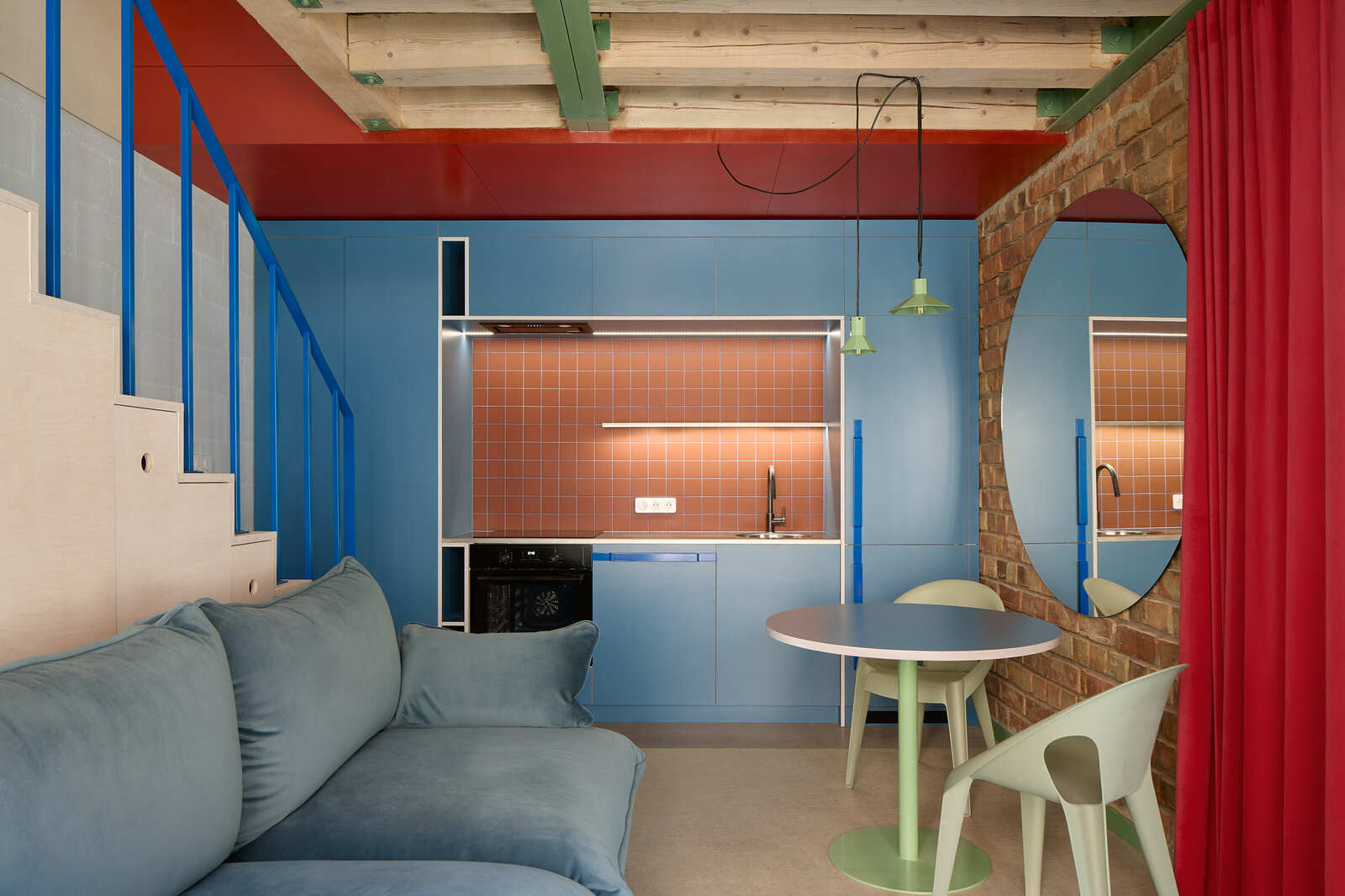
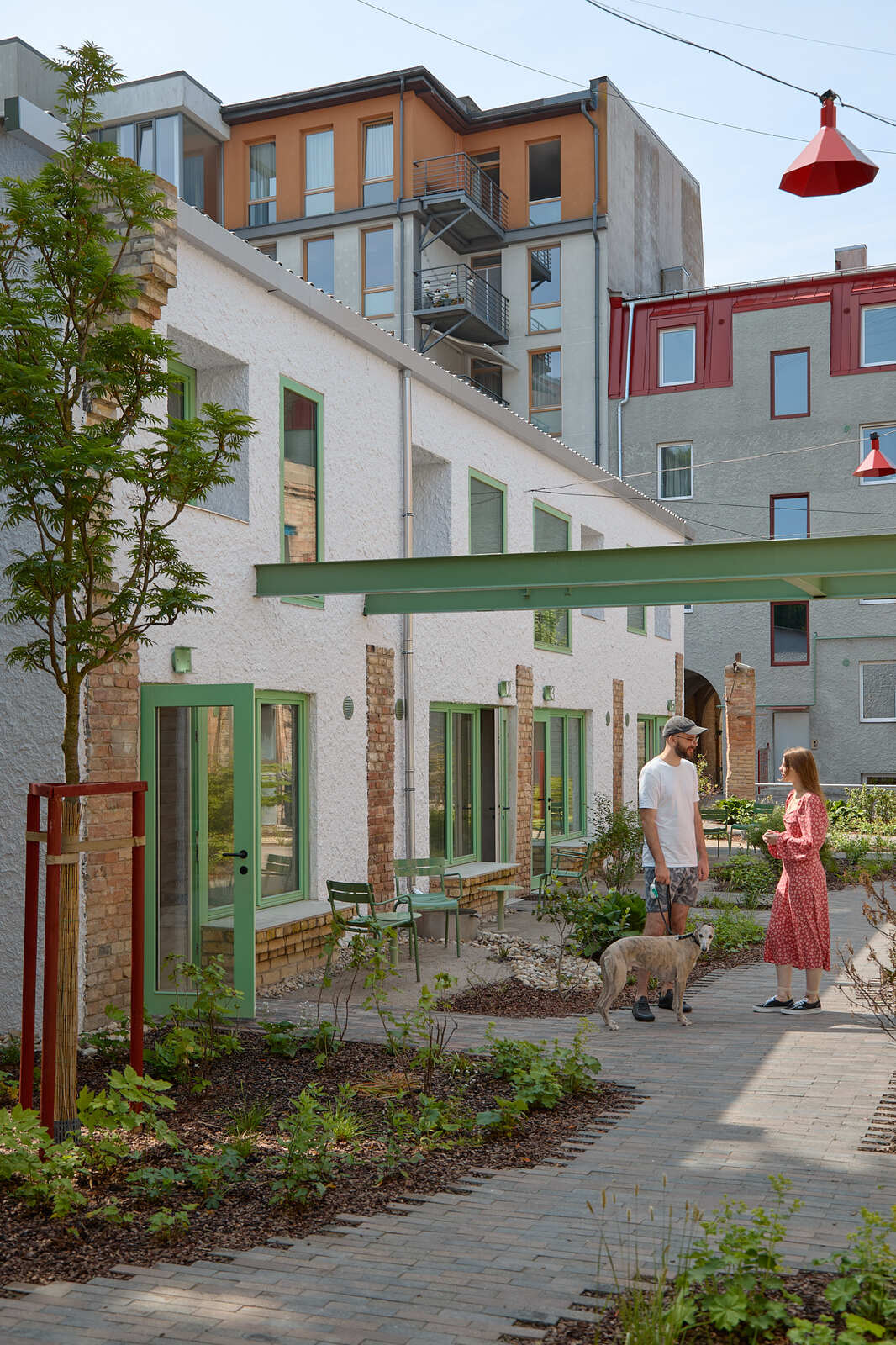
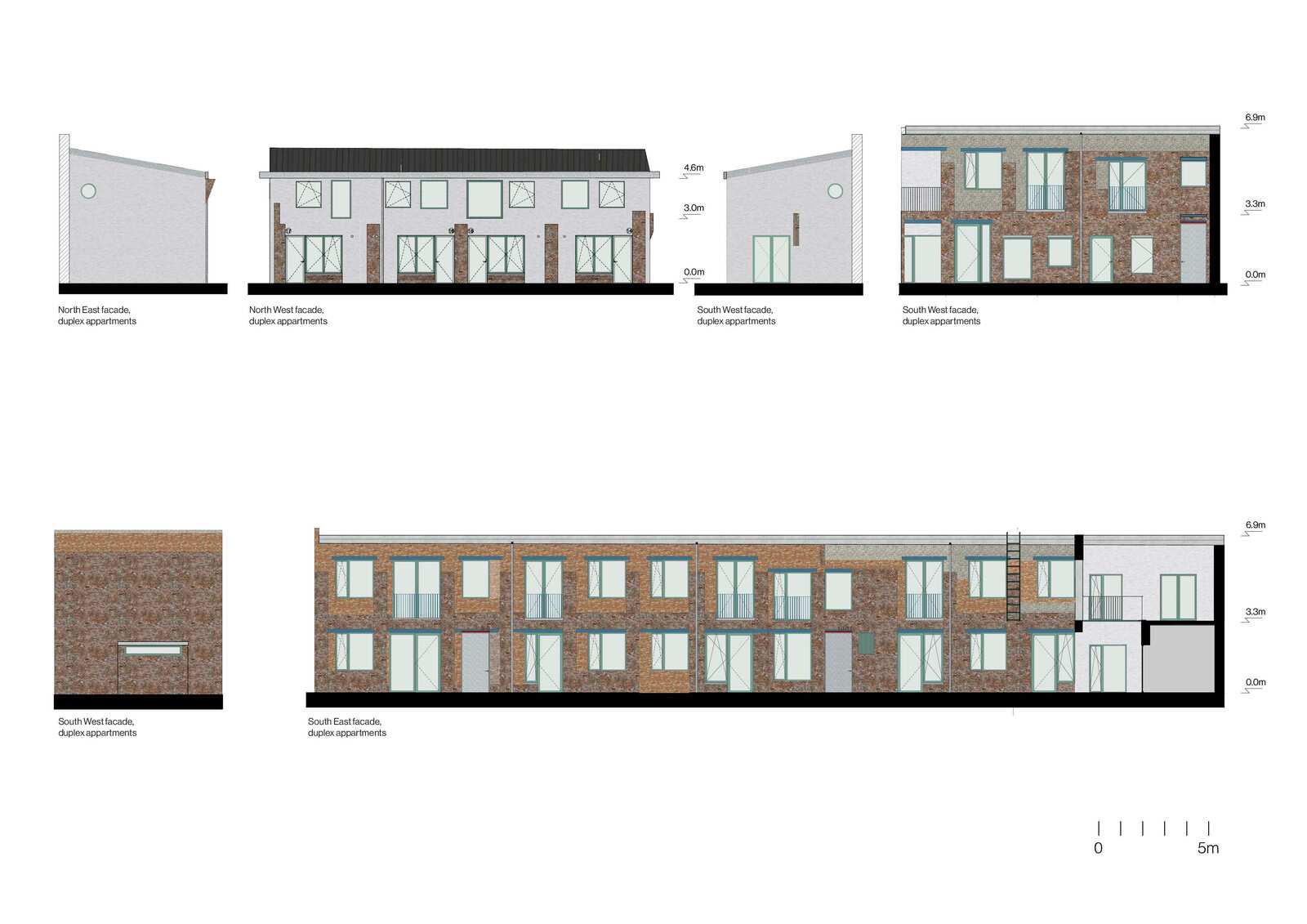
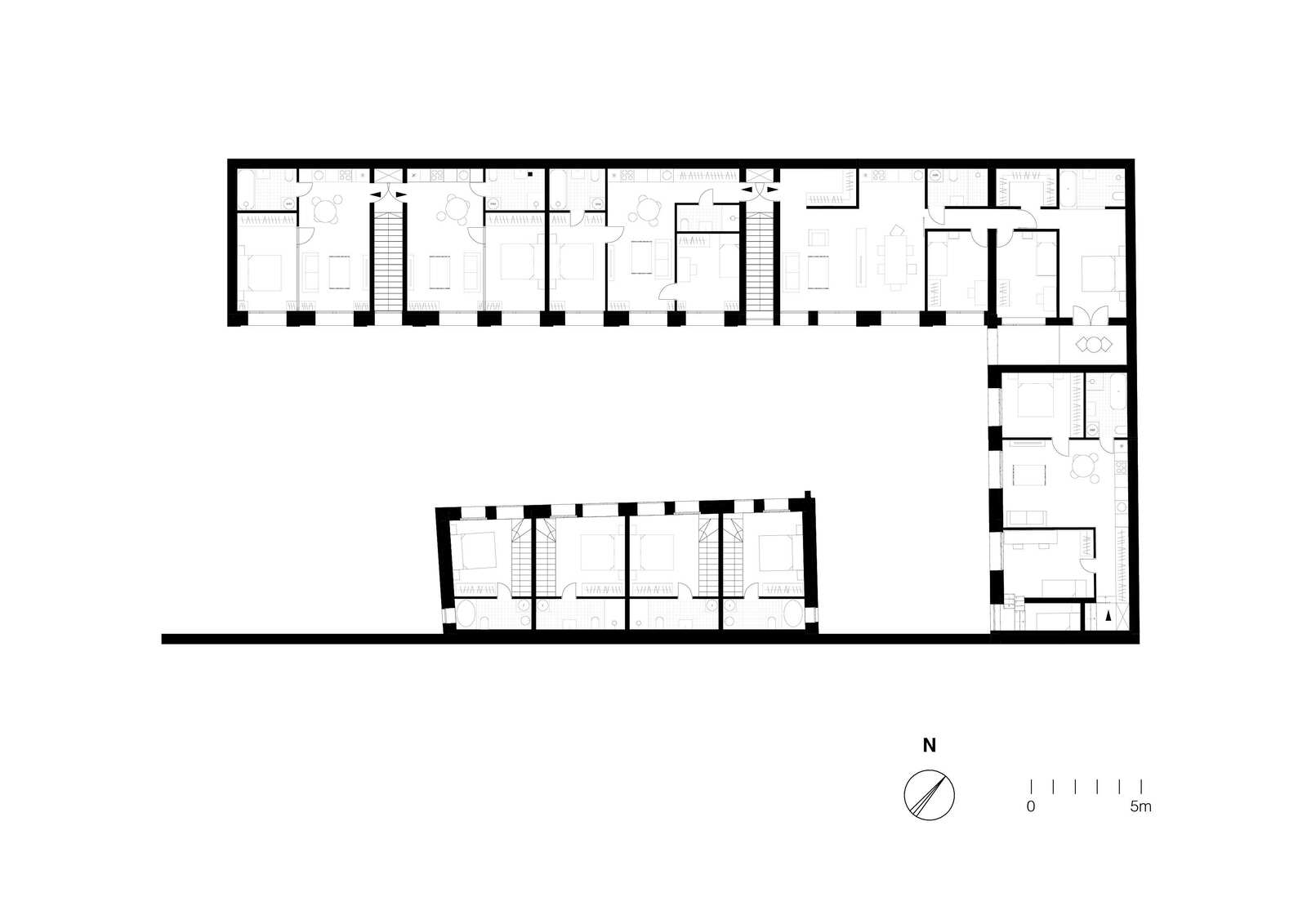
The adaptive reuse strategy prioritizes retaining and recalibrating existing volumes, minimizing demolition and new material introduction. Interior layouts were reorganized to accommodate contemporary residential life, resulting in a mix of compact duplex studios and more expansive apartments equipped with terraces and French balconies. This approach affirms that even buildings lacking conventional architectural distinction can acquire renewed spatial and aesthetic significance through thoughtful adaptation.
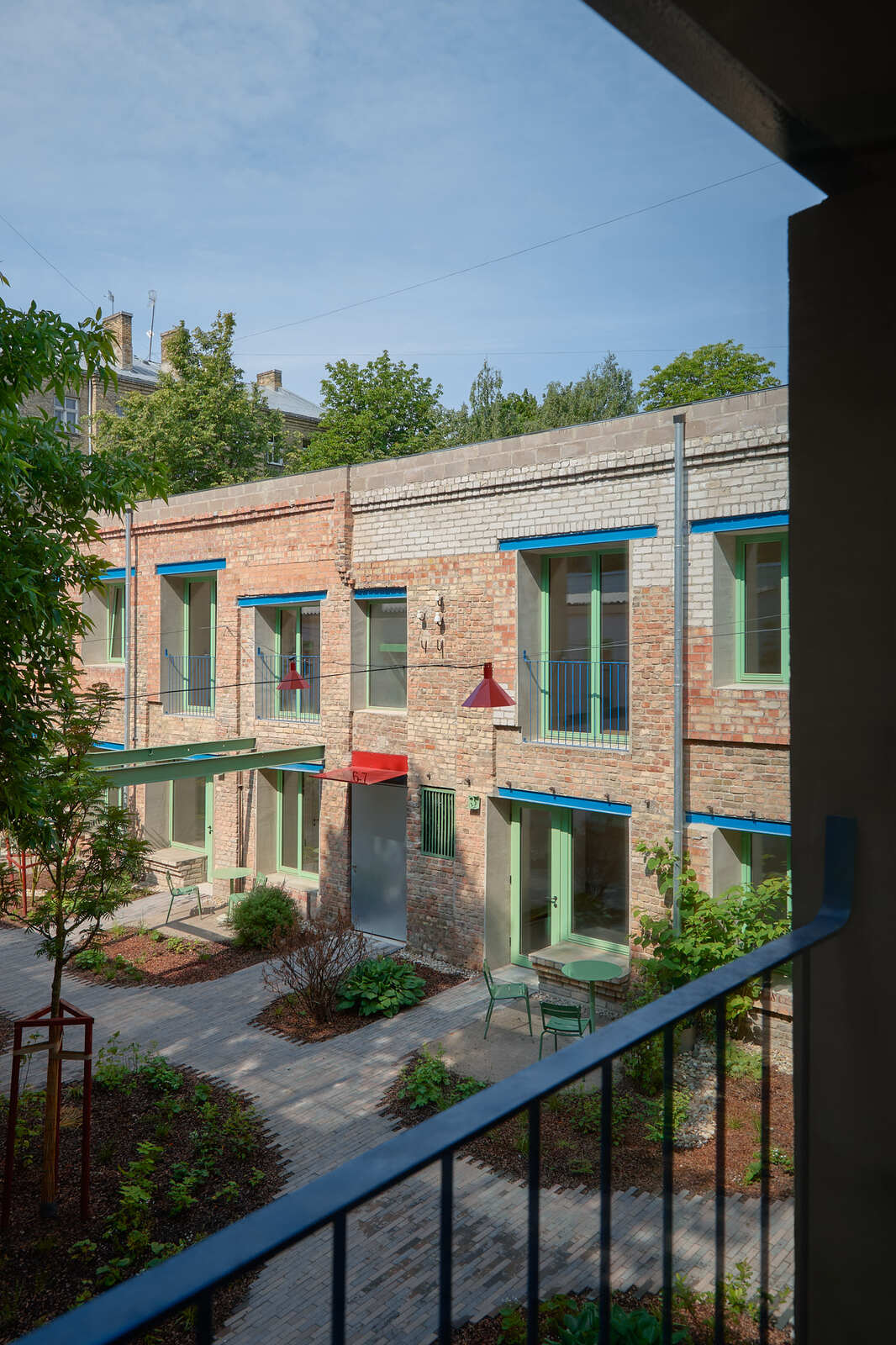
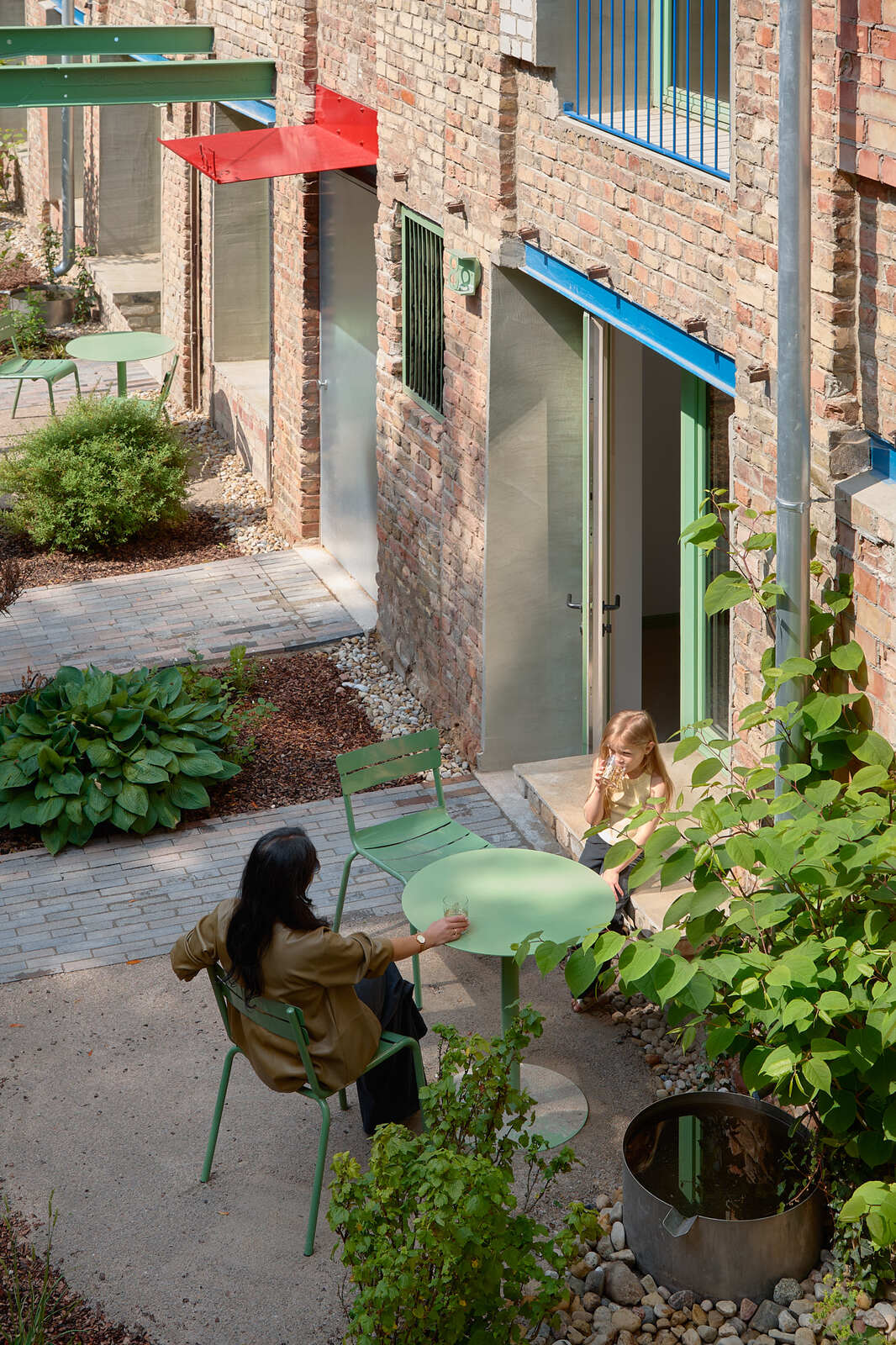
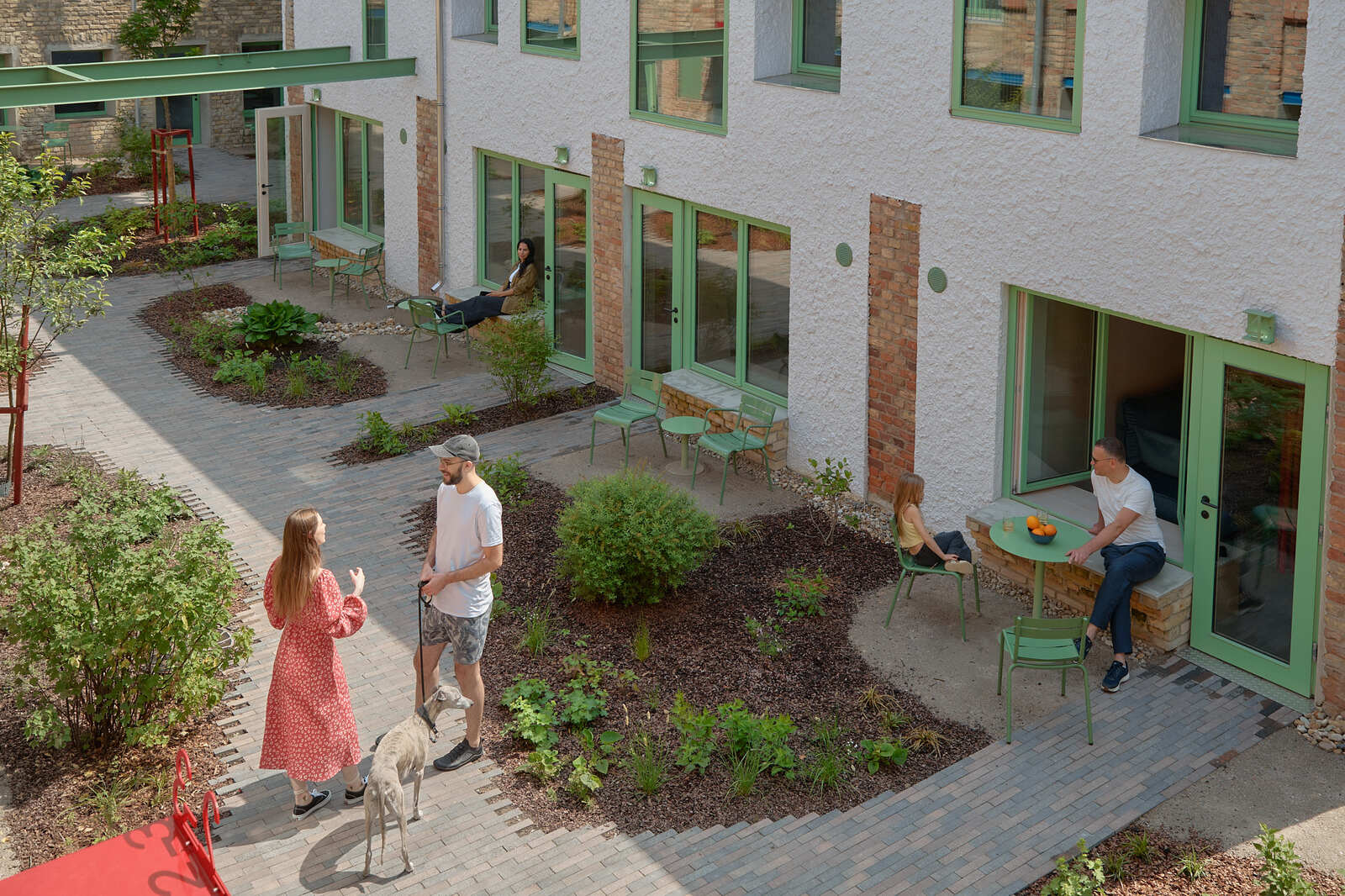
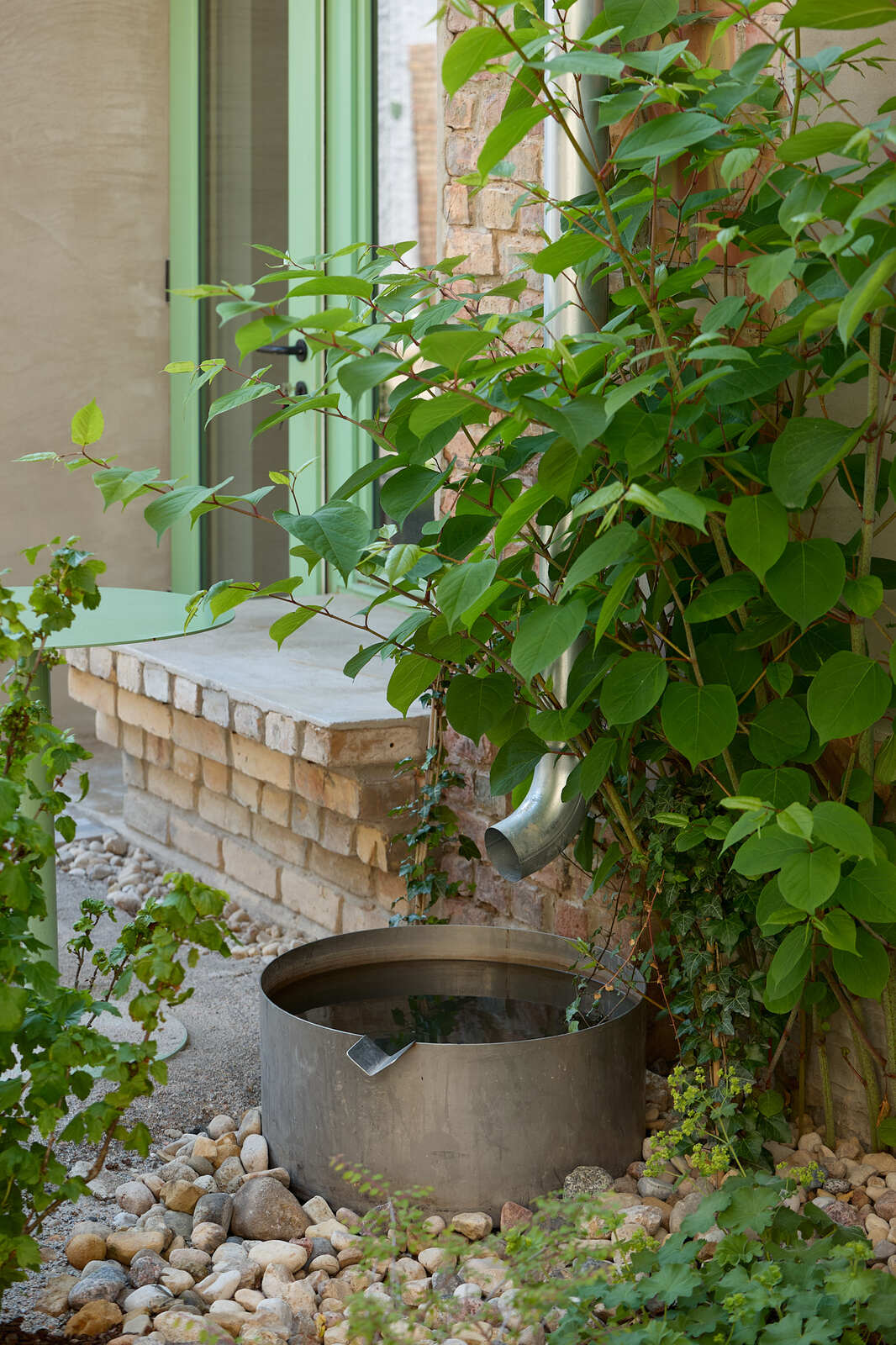
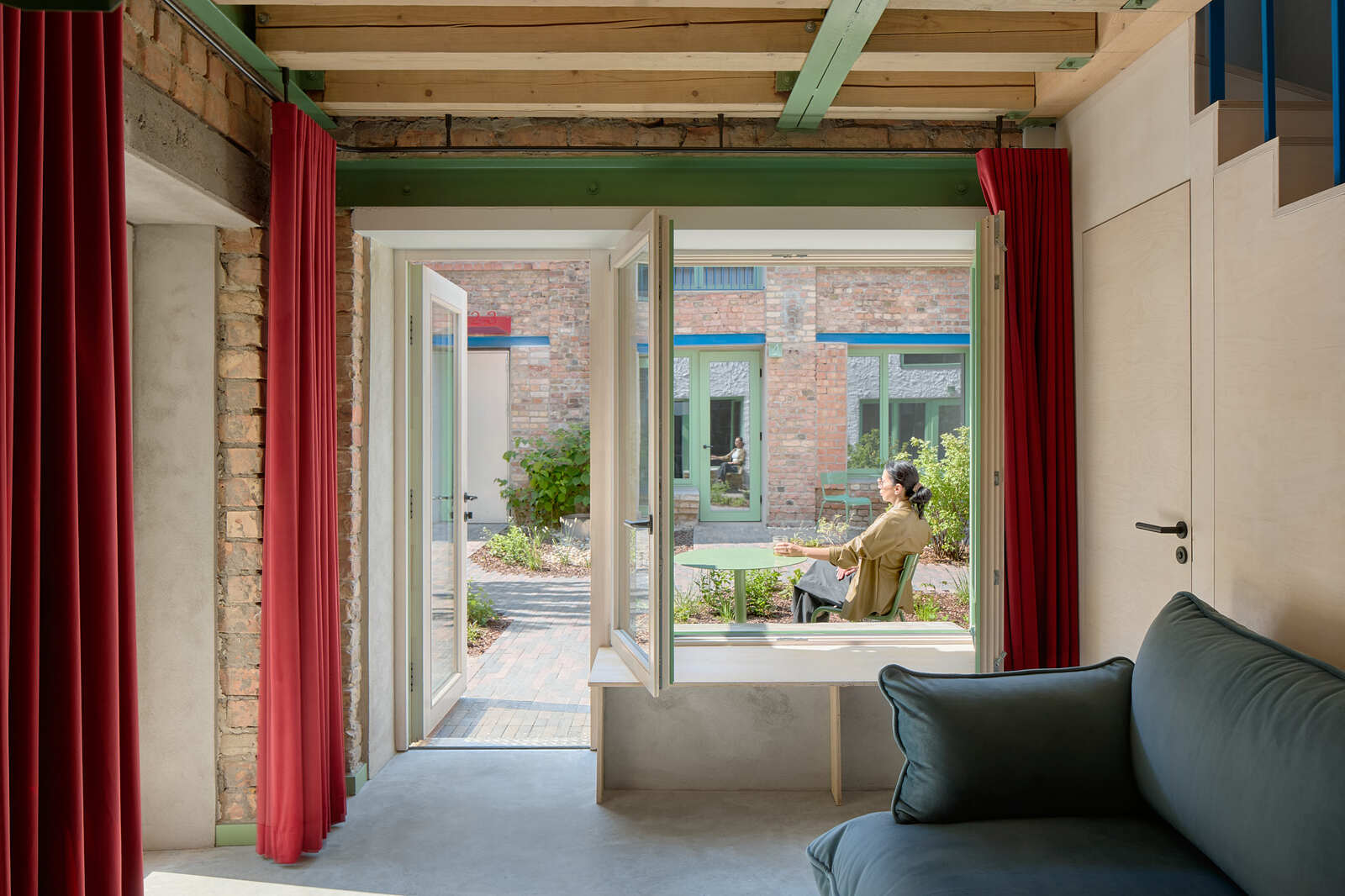
At the center of the ensemble, the courtyard garden functions as both landscape and communal framework. Rejecting the typical conversion of inner courtyards into parking areas, the project dedicates the space to bicycle storage and planting, establishing a green oasis within the urban block. Architectural gestures encourage interaction, including generous ground-floor windows with broad concrete sills that invite informal occupation and operable openings that extend interiors outward during warmer months. Gravel-finished terraces dissolve rigid boundaries between private and shared zones, allowing residents to inhabit the greenery while maintaining subtle gradations of privacy within a collectively owned space.
Project Gallery
Project Location
Address: Alauksta Street 7, Riga, Latvia
The location specified is intended for general reference and may denote a city or country, but it does not identify a precise address.

