

Liene Jākobsone is a Latvian architect, designer, and researcher; Manten Devriendt is a Belgian architect and designer; together they lead Sampling Architects, a Belgian-Latvian interdisciplinary architecture and design practice founded in 2010 and based in Riga and Ghent. Working across architecture, adaptive reuse, landscape, exhibition design, and product design, the studio focuses on the relationship between people, space, and environment, treating materiality, perception, and existing conditions as active generators of architectural experience. Their work includes House 61, Augustine’s Garden in Riga, Brewery Manufaktūra, and the Tērvete National Park Information Center, alongside research and exhibition projects including Latvia’s Pavilion at the 2025 Venice Architecture Biennale. Jākobsone holds a PhD and serves as senior researcher and director of the Institute of Contemporary Art, Design and Architecture at the Art Academy of Latvia, while both partners are active internationally through teaching, workshops, research, and publishing. Sampling’s work has been widely published and recognized internationally, positioning the practice within a contemporary discourse shaped by adaptive reuse, material experimentation, and the architectural framing of everyday life.

What inspires you?
What inspires us as architects is the history of architecture and the everyday life of the city. Walking and moving through the city gives us a lot of information that we use in our work, and generally, observing life and try to influence it through our work.
What inspired you to become an architect?
Liene Jākobsone
For me, the idea of leaving something of your own behind in this world is very inspiring. I like the idea of influencing the way people live. The way they interact with each other is very inspiring.
Manten Devriendt
Architecture, in general, is very responsible, so everything that we do or design leaves traces. And that’s something that’s really inspiring, because you are part of the well-being of everyone.
How would you describe your design philosophy?
We try to be honest in all kinds of ways. It can be in the materiality, it can be in a narrative, it can be in the beauty of making a building. We try to be as honest as possible with what we are doing.
In that sense, we try to make something very inspiring. The idea of making something new that hasn’t been there before is also important. Being part of some sort of greater movement in architecture that started a long time ago in history, and that is heading towards something, and we are part of this and contributing to this new.
What is your favorite detail?
Every detail that makes you experience nature in a building is, I think, for us, a favorite detail. We don’t have one of our most favorite details. But all the details we have made until now are maybe our favorite details.
It can also be a very small thing. Even if we see how water is falling down from a building, that could be a source of making a detail. We try to make this kind of experience more visible through the details.
Details are those parts of architecture that are interfaces between the user and the built. That’s where people come in touch, literally, with architecture. We try to approach detail in architecture in that way. That also holds for this relationship with nature.
If our architecture is capable of making the experience of nature in the built environment more interesting, to somehow enhance this experience, then for us it is very important.
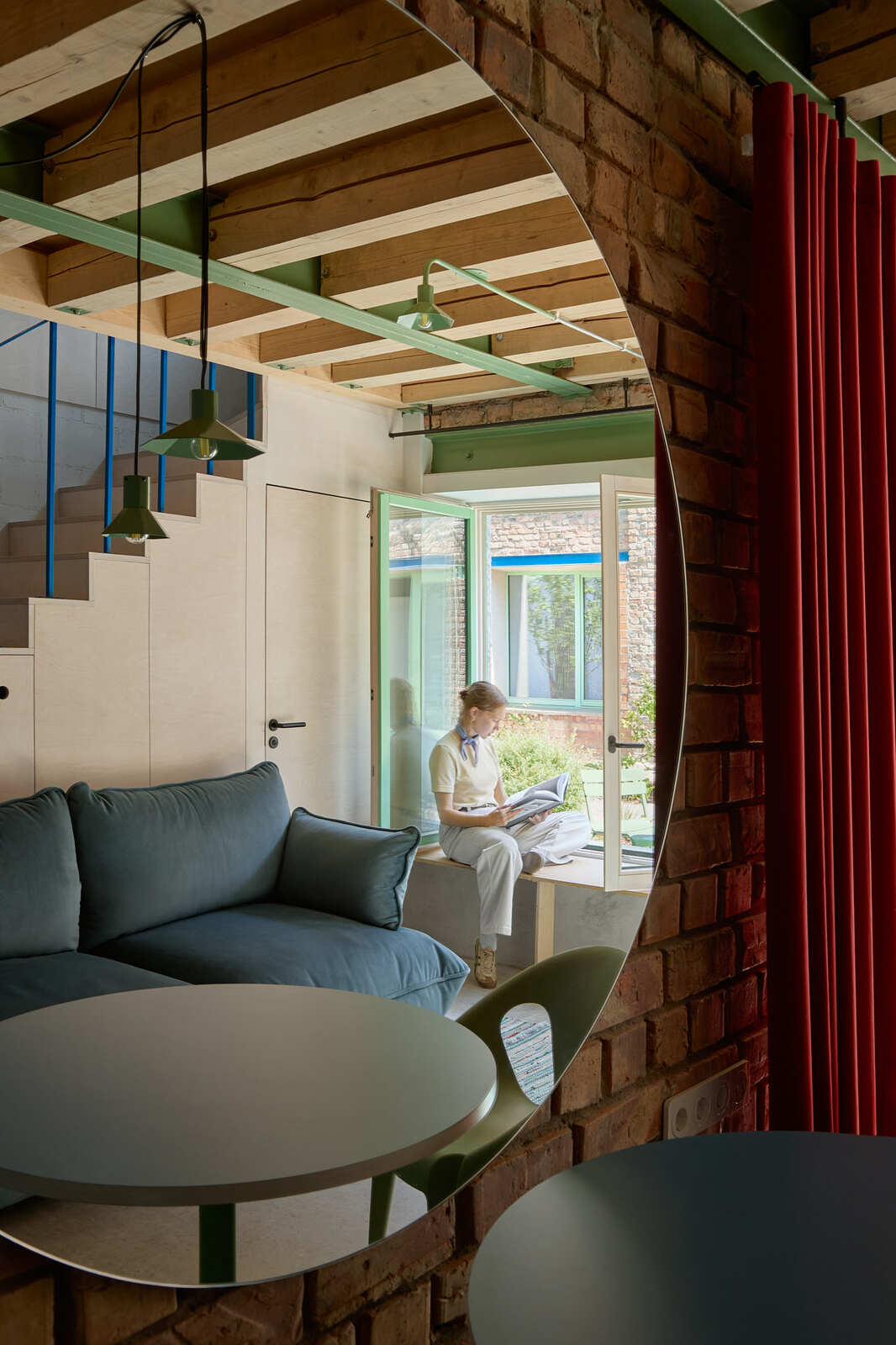
That detail is also an element that connects this natural feeling to a human feeling. For instance, in a project such as Augustine’s Garden, you will see that the window sill is a very important detail in the project, and it has been a steering element in how we approach the whole environment, and the way the inhabitant will receive his or her space.
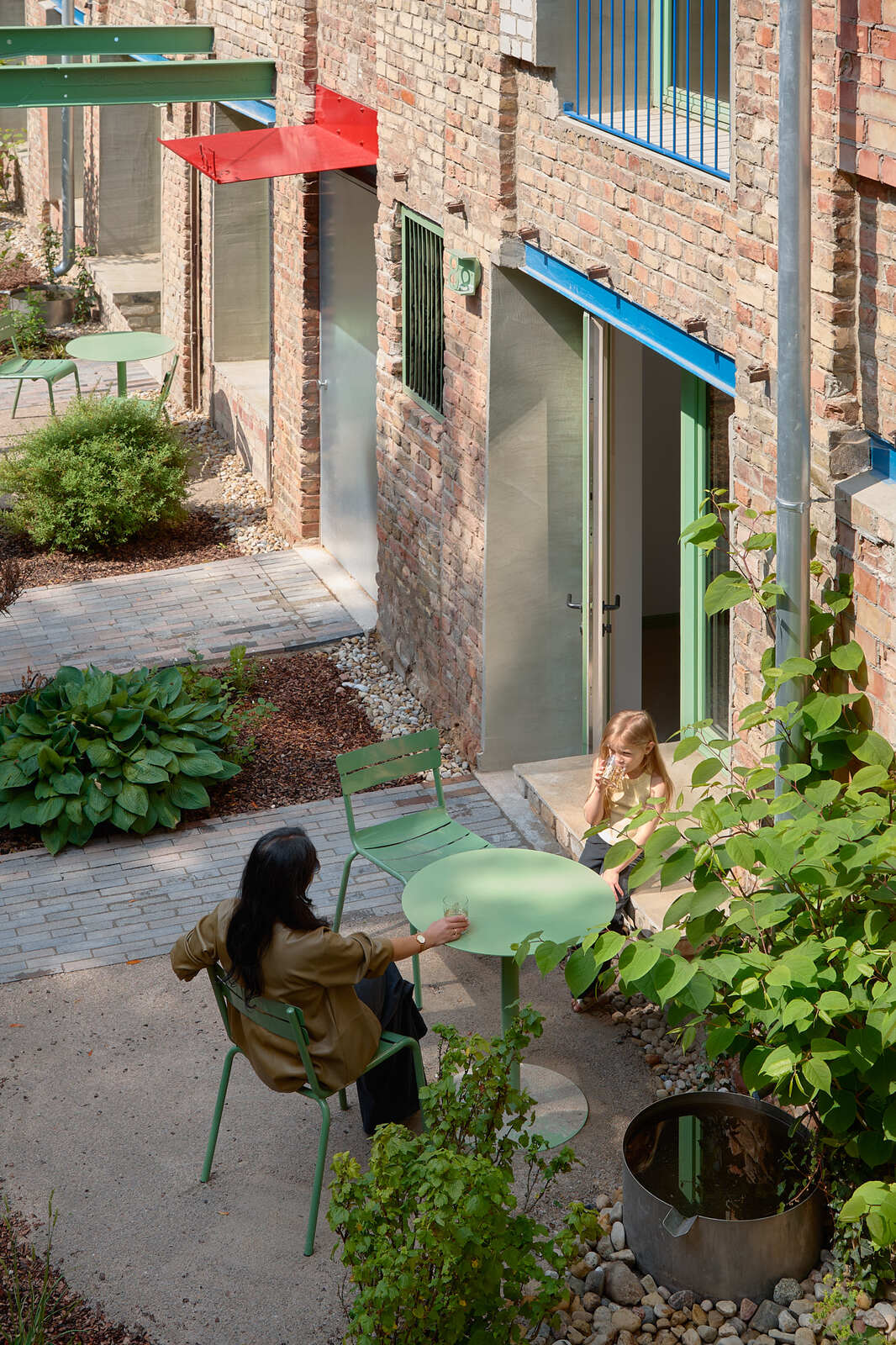
Rainwater management is also an important element of our projects. The way water gets from the roof down to the earth is something that can be designed. There is a whole scenography behind it. We don’t treat rainwater as something that has to be just hidden away and drained away. We try to make that part of the experience of the architecture, be it with visually expressive rain gutters or rainwater collection systems and so on.
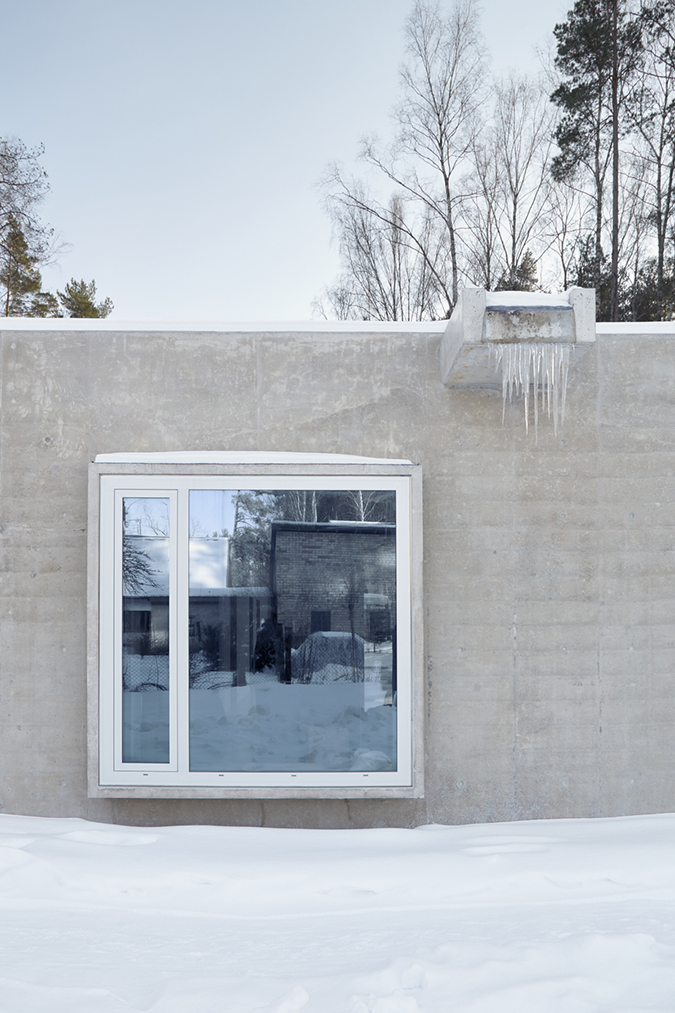
The same counts for light. We try to materialize the light in all kinds of things. It’s not just making a window, it’s making an opening in a building, connecting one with the other, trying to make the change of light during the day visible inside and outside the building.
Do you have a favorite material?
The same as a detail. No favorite material, but we like to work with what’s given. If we start with a project, we try to understand the building through its materiality. We try to understand what we can do with the materials that are already there. But that doesn’t mean that we only work with materials that are already there. We always add contemporary materials as well, materials that are sometimes necessary for keeping the building together.
In the case of reuse, you work with an existing situation, something that is already given. If you work with something new, then there is a different reasoning behind the material choice. But in any case, we really don’t think in terms of favorite materials because we believe that any material, be it natural or artificial, has specific characteristics, and that can also be the point of departure, the source of inspiration for a project.
If we had to say which is our favorite material, it’s a bit like saying which one is your favorite child. So it’s a bit of not a question. We could respond that way.
Another thing is sustainability. We look at sustainability maybe in a different way. Of course, we are taking into account the ecological footprint of a material, but it’s also looking at the lifespan of a building. Sometimes even a less ecological material will have a longer lifespan in that sense, or also the scale and the other things that determine the context.
That really depends on whether you’re doing some kind of large-scale development or a tiny detail in someone’s house. It really determines the material choice. Sustainability, carbon footprint, and ecological footprint is something that is really important for us.
But aesthetics, I think that’s the main challenge: how do you make something aesthetically inspiring, new, but at the same time also ecological? That’s probably something that we are striving for.
With materiality, we try to research the material as much as possible. We like to go in depth. Once we find a material really interesting for a project, we try to understand what the opportunities are with this material. In that sense, once we have the material, it becomes our favorite material for the project.
What is your process for starting a new project?
Since we are two partners, I think the discussion is the starting point. Sitting at a table, walking around, discussing what we could do and how we can understand the brief and react to that. I think that’s the starting point.
Allowing ourselves to be inspired by the site, by the client’s brief, by the other given conditions, trying to imagine what that specific place and those specific people who will inhabit or use the place, what we could contribute to that. How can we turn it into something better than it is at this moment, regardless of whether it’s in an existing building or a newly built one? You always try to understand what can be specific for this site and for this occasion that will make the project meaningful.
Then, of course, we also start with a concept. We start drawing, sometimes even before going to the site, exchanging thoughts through a sketch. Or it can also be a small model. That is a way of trying to understand what we want to do.
Next to that, as we explained already, there is the material bank, the understanding of what the given elements of the site or the given elements of the building are.
Researching the given, really deeply. Sometimes at the beginning of a project, you think back about all the things that you’ve seen. As we said in the beginning, the history of architecture is this whole amount of information that is in our heads and just waiting to get out and to be realized and to be turned into something new.
Sometimes you see the site or you hear the client talking about their needs, and you already see something new that is inspired by things that are already out there in the world, but that you see combined or continued in your way, in our way, in this case, because we really believe that there are many different ways to do architecture, and there is no one correct way, so to speak.
Of course, we have our artistic ambition. In any case, it’s not that the client will come up with an idea and explain it to us, and we will kind of fulfill the idea of the client. No, we try to express our artistic ambition, and it can sometimes be a tough discussion with the participants in the making of the building.
How do you fuel your creativity?
I believe that in the everyday life of an architect, lots of things, I would say 80 to 90% of what we do, is not creative. Those are reproductive tasks that need to be accomplished in order to get to the point of having new architecture.
In that sense, those little moments that you have where you can be creative, where you can actually think of creative things, you are longing for them in your practice. It’s not that you have to necessarily do something specific to fuel your creativity. You are actually waiting for the moment to be able to express that.
As a creative person, you want to be creating at any given moment, but you also have to do other things to get the buildings done.
It’s more about sometimes downscaling. If you put too many ideas in a project, it’s not going to be the best project. You have to be very specific. And then, at least for us, there’s no problem with fueling.
What inspired Augustine’s Garden?
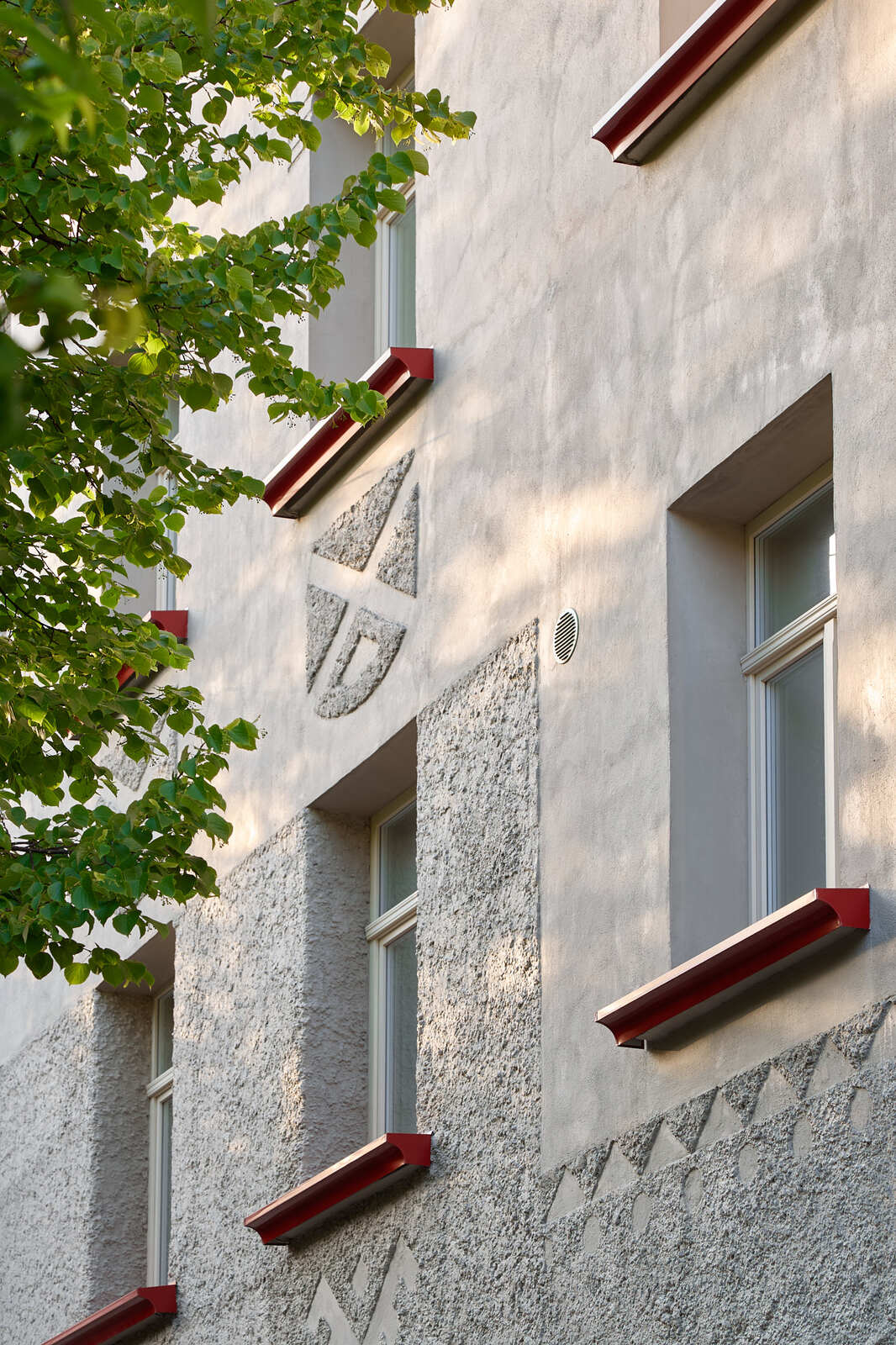
In this case, the answer is quite easy because Augustine’s Garden is a project of adaptive reuse. There is a whole given situation and existing situation, the built environment, the city, the potential users, the actual neighbors, and so on. That is all a really powerful source of inspiration in the case of this project.
It was a neglected site in a city. It’s a back side. The city of Riga has wonderful facades, mostly from the Jugendstil and Art Nouveau periods. Our site also has this kind of facade on the street side. We also did a small intervention with that one, but that’s more like a renovation of what is already there.
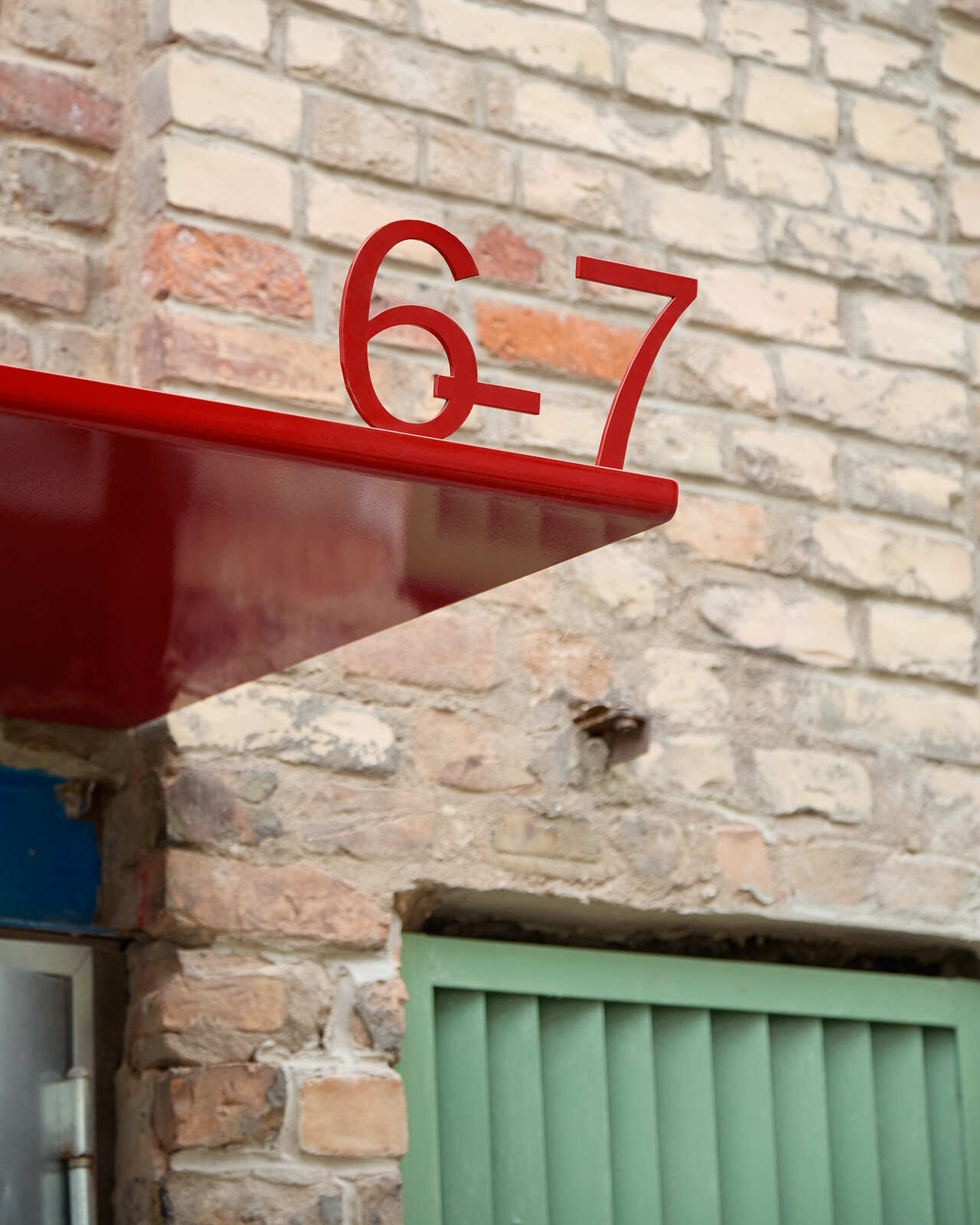
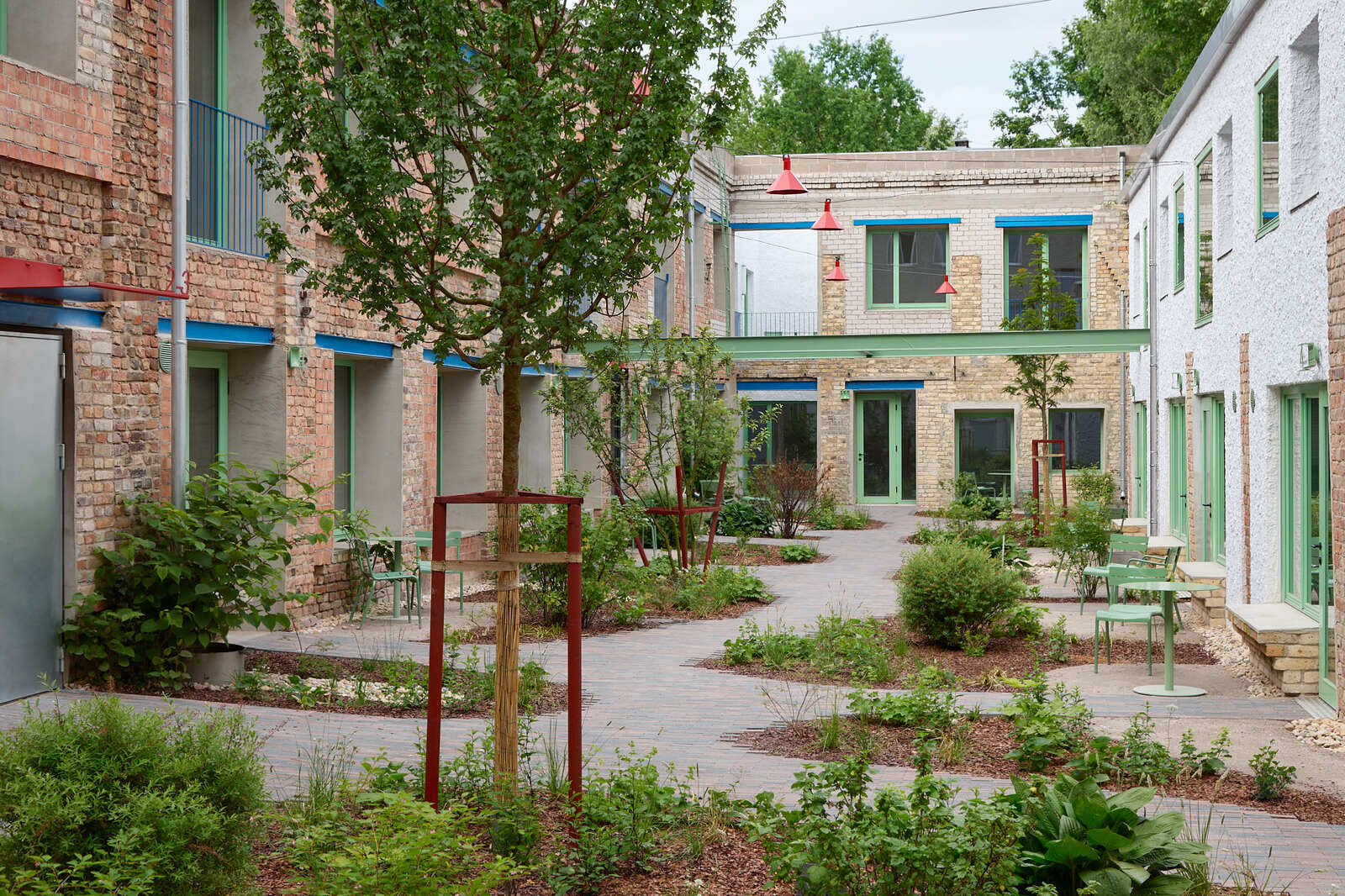
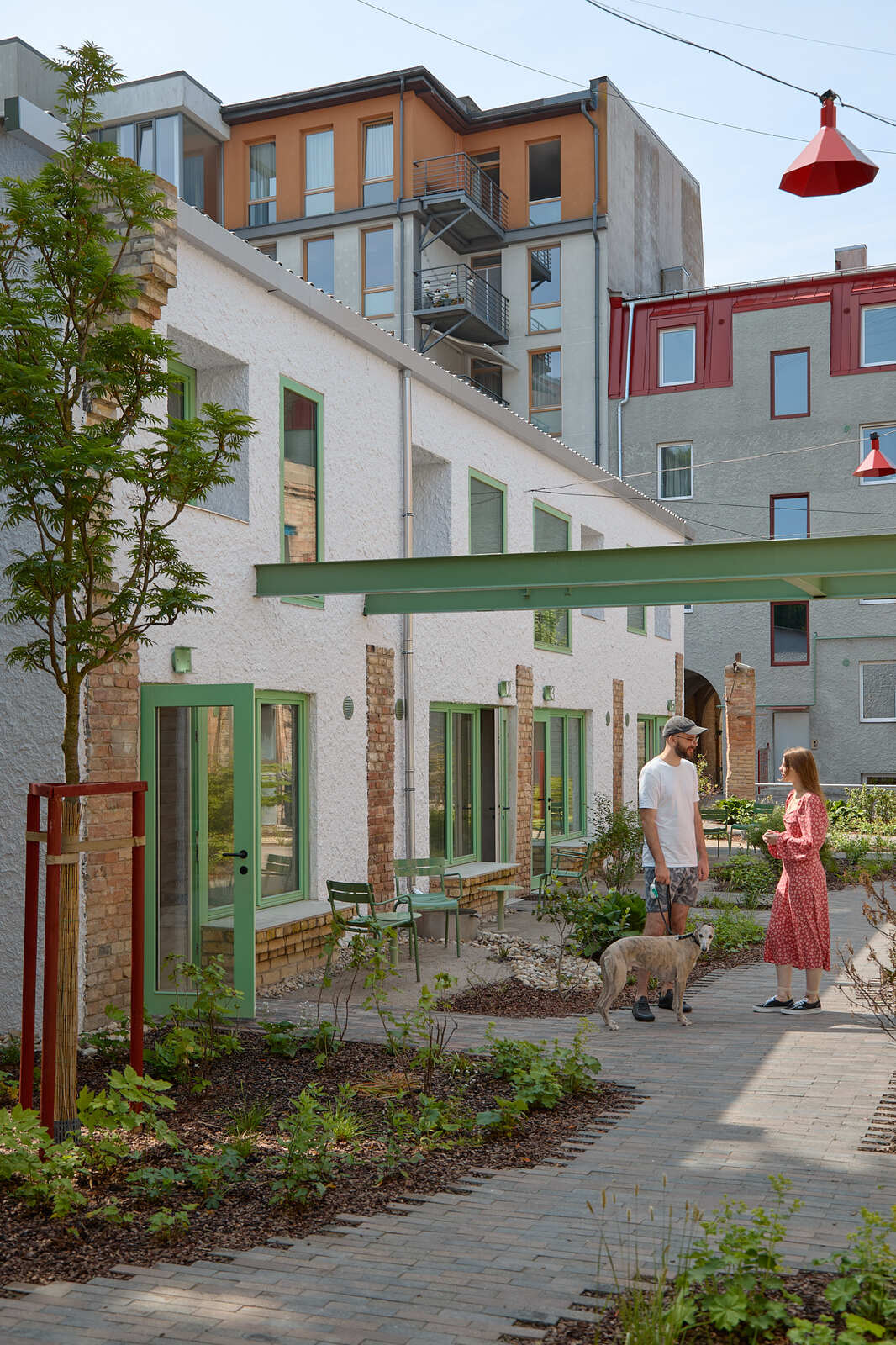
The site is specific in that sense that it is a working neighborhood of the city. Even the big block had only backside entrances. And then you have this kind of backside that was used in an industrial way.
You encounter this courtyard, which at that point had never been intended to be representative. It had never been representative, or considered to be beautiful or even appropriate for residential function at all.
That is very inspiring when you see such a place. Against all odds, people don’t see it there. But you do see it as an architect, and that’s something really inspiring, that you have this vision and you do all your efforts to turn this place into a huge makeover that, in the end, makes people really surprised: wow, how is that even possible? That such a rundown, industrial, built heritage can be turned into something contemporary, something cozy, something nice, something that people would want to inhabit.
How did materiality shape House 61?
In the case of House 61, materiality is at the core of the architectural concept. The moment that we chose concrete as a base material for this building, many things were sort of determined.
First of all, we knew that we would want to use concrete not only as a visual or aesthetic solution, but also as a bearing solution in construction. Basically, it’s a bearing structure because we really believe, as already said before, in the honesty of materials. Concrete is one of those materials that is very durable, very sustainable in the sense of being able to last long.
In this case, regardless of the contemporary discourse on the ecological sustainability of concrete, it’s a house for one family. So it’s a really, really small building. We thought that this was the moment where we could use concrete as a material and create something very sculptural, something very special, and at the same time do actually very little harm, if we can consider it that way from the ecological point of view.
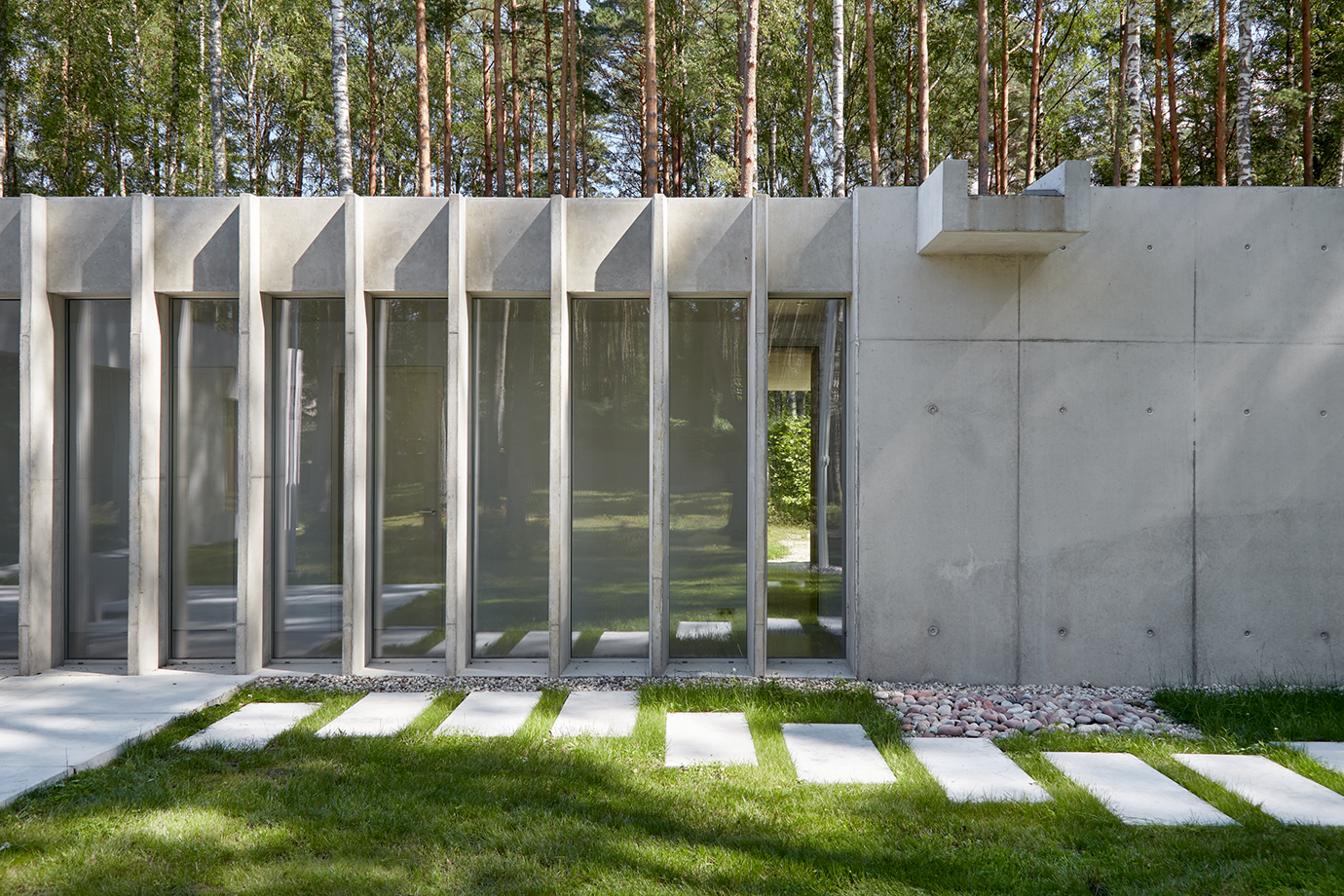
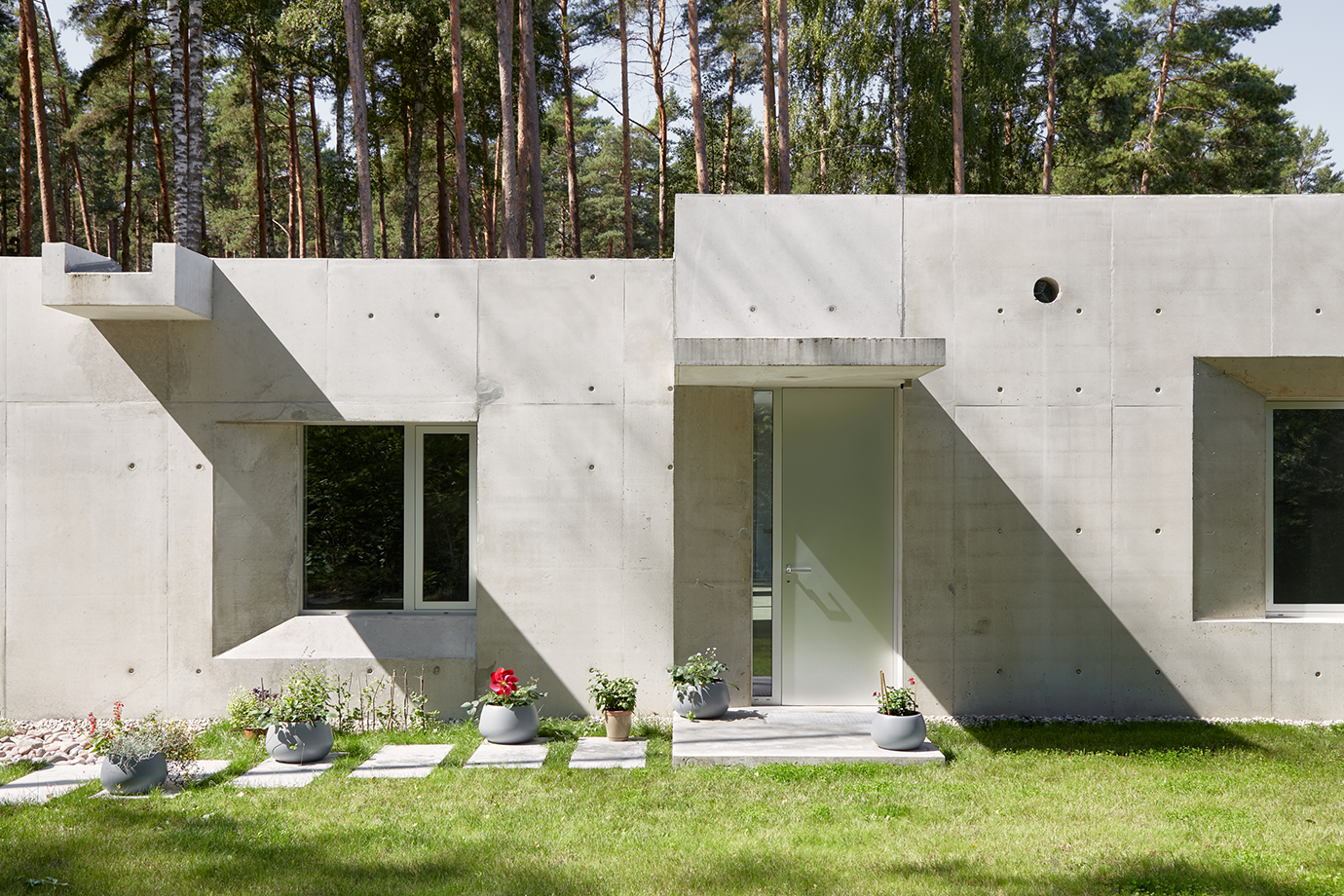
Concrete being sculptural also helped us to work with nature, which is kind of the opposite of what you would expect of concrete. With the forms, you can control the light or also control the views from inside to outside, but also from outside to inside, because the house is situated in a beautiful environment. It’s along the coastline between the pine trees.
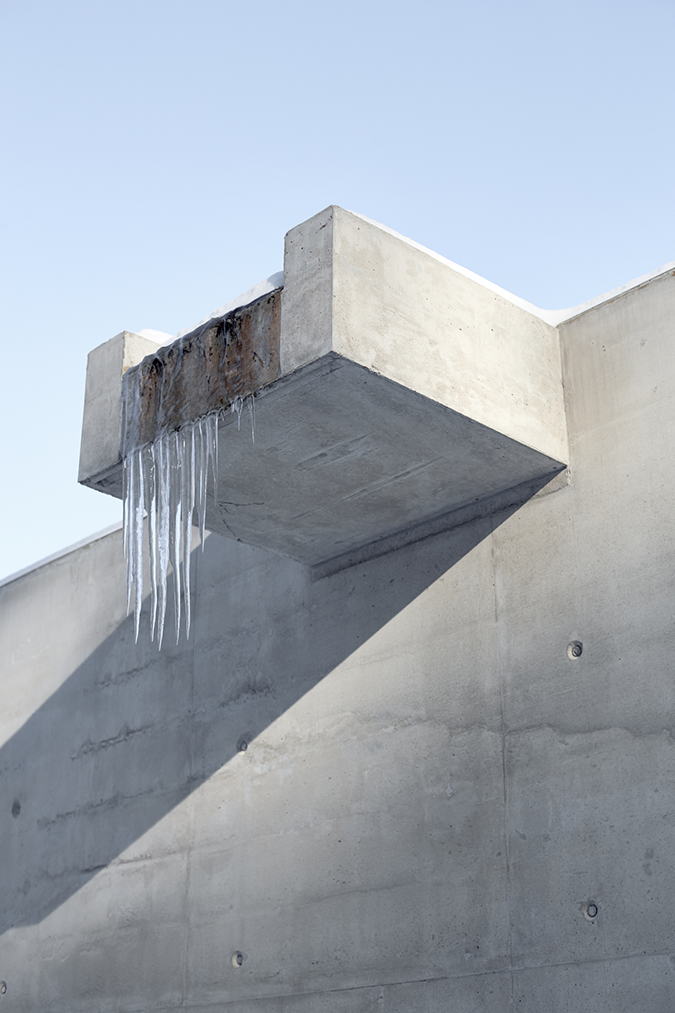
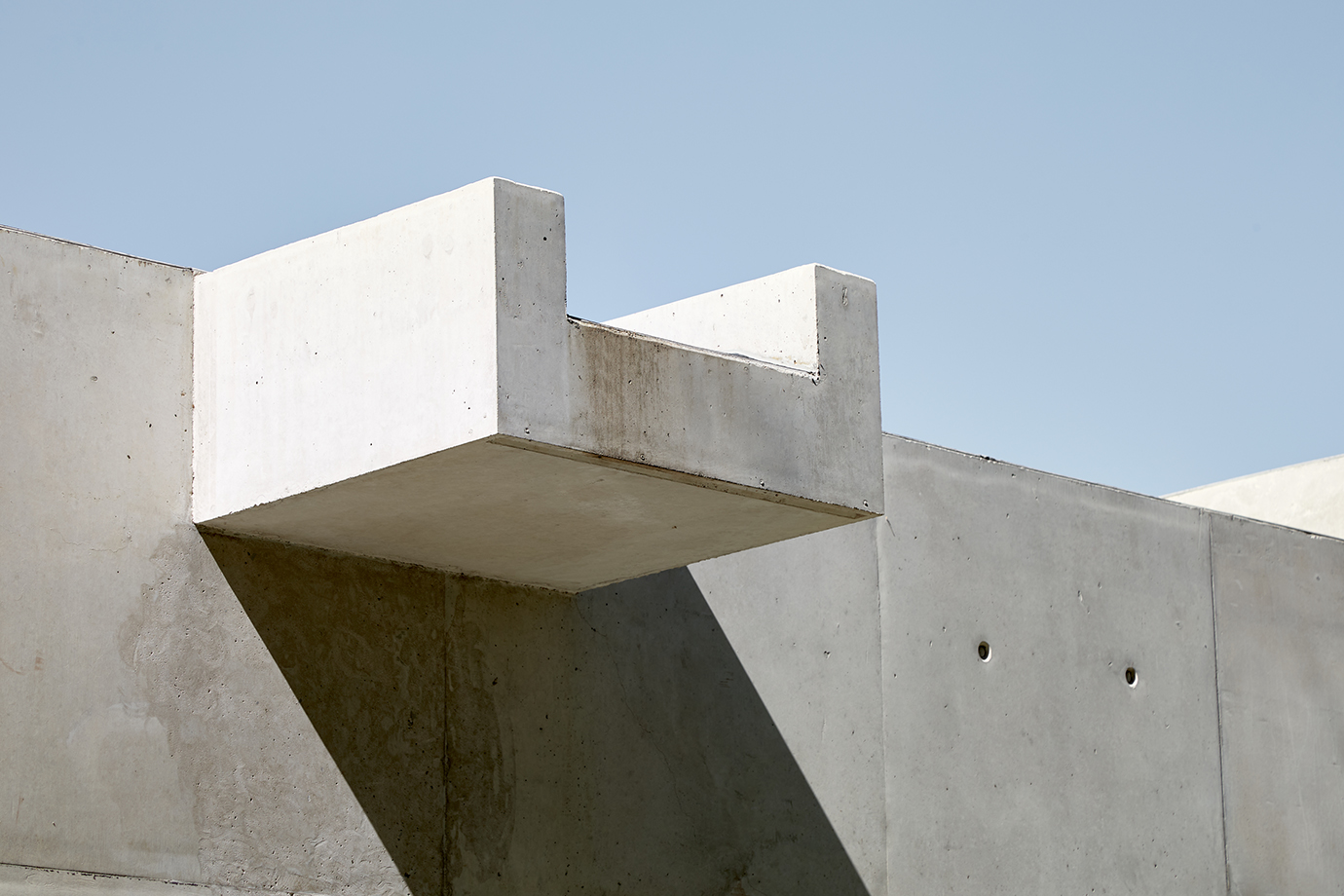
The landscape, which is a kind of micro, hilly, extremely natural environment, comes into the building. You can step out of the building, and you’re immediately in nature. You can pick berries, pick mushrooms. So the concrete is kind of the only shelter that protects somebody from being inside and outside. That’s why we also played with these huge cantilevers, the same size as the openings, that mark, on the one hand, the way of entering a space, and protect oneself from rain or weather conditions. The concrete really shaped the space.
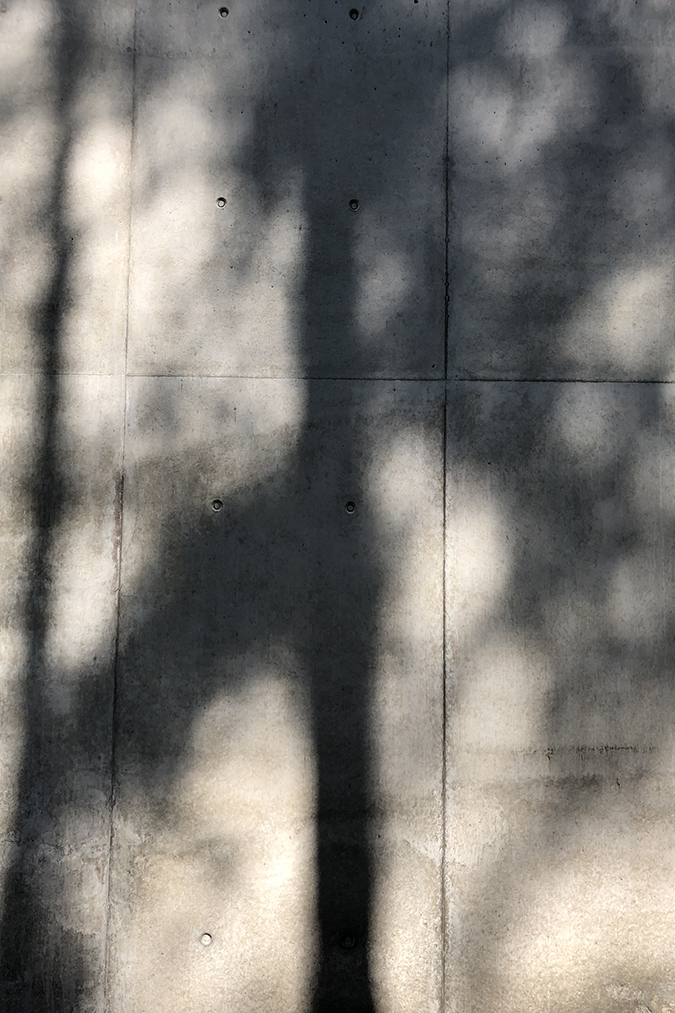
I remember the moment when the shadow of the trees was cast on the concrete. Suddenly, the concrete started to be alive. So it’s not a dead material.
This project is architecturally simple, with large, flat surfaces, but at the same time, it has very diverse, ingenious details.
The roofs that extend above the entrances are two meters long, and the rainwater spouts are positioned at strategic points on the building so that certain spots gain attention. You can have one simple facade without any openings or anything, but you have this one rainwater gutter, and nature does its work.
Whenever it rains, you see water pouring over. That is this scenography of nature and architecture that we really enjoy. Actually, that’s maybe the reason why this project inspired dancers and filmmakers, as there was a short film created in this building based on its architecture, where a contemporary dance performance was carried out, and the film is now to be seen on television.
There, you also see that they understood the rhythm of the columns. For instance, they are structural. But at the same time, if you move through the space, you have a completely different feeling than if you’re standing in front of the building. In front of the building, you can look through it, but it also creates a beautiful corridor where the light is falling.
But if you move along this corridor, and you look forward, you will not see what’s happening inside. Then you slow down, and you look out through those small columns. All of a sudden, you see this picture outside. That is how movement in architecture also defines your experience and your perceptions of architecture.
The concrete, indeed, even the details that you see, like really elegant thin columns, they are load-bearing. In that sense, we are trying not to be decorative at all times. We really believe that the materials that we use, the shapes that we devise for a building, need to have some kind of meaning beyond the aesthetics.
The shapes of the window openings as well. They look nice, but at the same time, they also bring in more light from a certain side, where the natural light comes from.
The only thing that is maybe kind of decorative is the casting of the concrete. You have the panels, you have these little dots that are used, in fact, for keeping the formwork in its place. That’s the place where we, as architects, started to play with it.
As you can also see in the building itself, it’s not that we use the beautiful concrete panels with the 6 or 4 dots, but we used a very regular system due to the fact that we had to work with not the highest-skilled concrete people.
In that sense, we really made the drawings as perfect as possible. Sometimes you see that there is an opening, sometimes not. And that’s in fact also like the play that we had together with the formwork. With this building, it was very exciting to see that before the concrete was there, while this formwork structure or sculpture was standing there, you already had an impression of the building, and then suddenly you undertake this form and the form appears, and the form is there for the whole time.
Then you start with the rest of the building, let’s say the insulation part, the vision of the spaces inside. In that sense, this house was a process in itself.
What advice would you give to young architects?
From our perspective, that’s also something that we have always followed as a principle: be brave enough to dare to do something that is special.
First of all, architecture is a slow process. As an architect in your life, you will not have too many opportunities to do something because it is really slow to design and to build something.
In that sense, we really think that young architects who are ambitious should carefully consider where they put their thoughts, so that they do not do things where they see they will not be able to achieve the best result. Really invest your efforts where you see that there is a fruitful ground, where you could actually realize something special, where there are people who understand what you’re doing.
Don’t lose yourself in compromises. That’s something really important for us. The fact that you, at the end, are really 100% behind that built work, that you can really respond to every detail and anything, and you’re proud of it. I think that’s the ambition we have, and we really recommend it to young architects as well.
Taking a risk is not easy at all. It is even something for which maybe you have to be careful, which is a pity because, as we have been saying, in history, good architecture, or let’s say architecture that stays, is architecture that took risks. Risks not in the sense of putting someone in danger.
When we talk about taking risks in architecture, we mostly mean trying to do something different, trying to do something that hasn’t been done before, also in terms of aesthetics. Often, people just think of risk in the sense of doing complicated constructions, but daring to propose a different aesthetic is risky, especially in a case of a commercial brief where you know a client’s profit depends on your work.
But that is exactly where you can make a difference. You can make history because history is a continuous movement, continuous change. That is what is interesting. That is why we study history, why we find it interesting. Because it’s not all the time the same thing. In that sense, we really encourage other architects to be more daring in exploring the new.
That’s what we see in both projects described in this talk, Augustine’s Garden and House 61. Both were projects where, when we started with the initial concept, it was not that the client was like, yes, let’s go for it. We took a lot of risks.
The clients were not always even able to imagine what we had in our minds. Since we deliberately choose oftentimes not to work with visualizations, with renders, and so on, but rather use some low-res tools, such as working models in different materials that do not necessarily represent the result in a really understandable way for someone who is not used to reading such tools, or doing sketches, really low-res sketches with pencils.
The whole story is about colors. In one country, it’s accepted, in another country, it’s not accepted. It’s not that it’s an easy job. In that sense, if you want to get somewhere, you have to do it. Otherwise, we will end up with the same thing, as we also see in architecture in general.
There is some kind of common understanding of what the architect should be and a standard of taste, so to speak, and people know what we want to do. I mean, we want to make a difference.
That could also be part of the advice to young architects: really follow others, follow your peers, younger or older doesn’t matter, the architects, the contemporary architectural community, and see who’s doing things that inspire you. Try to be part of the movement, not isolated from others, not trying to necessarily be original per se, but trying to contribute even a little something to that movement that others are also part of.
Really being part of a nice community that together forms this critical mass that creates a contemporary architecture of value, because it’s needed nowadays, and always.
Featured Image Liene Jākobsone and Manten Devriendt © Reinis Hofmanis

