

Architects: i/thee
Area: 100 ft²
Year: 2018
Photography: Daniel Schwartz
Lead Architects: Neal Lucas Hitch, Martin Hitch, Kristina Fisher
Design Team: Thatsama Leeumnadwong, Thanjira Vimonanupong, Ranchana Rungwatanawong, Tanaboon Kittisrikangwan, Chutimon Suetragulwong
Manufacturers: Elmer’s, Tarps Now
Materials: Wood frames, canvas sheets, non-toxic adhesive
Location: Morongo Valley, California
Country: United States
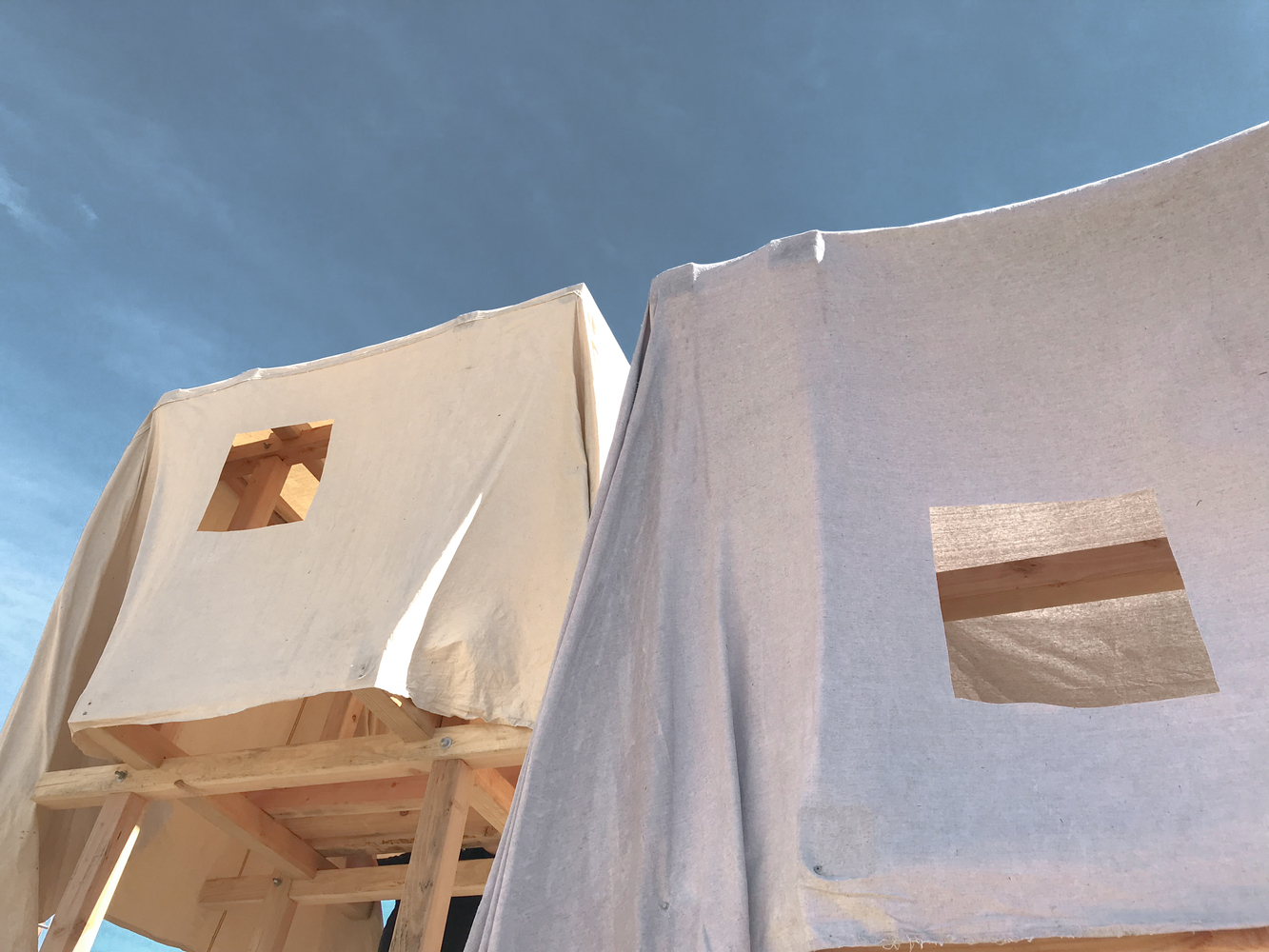
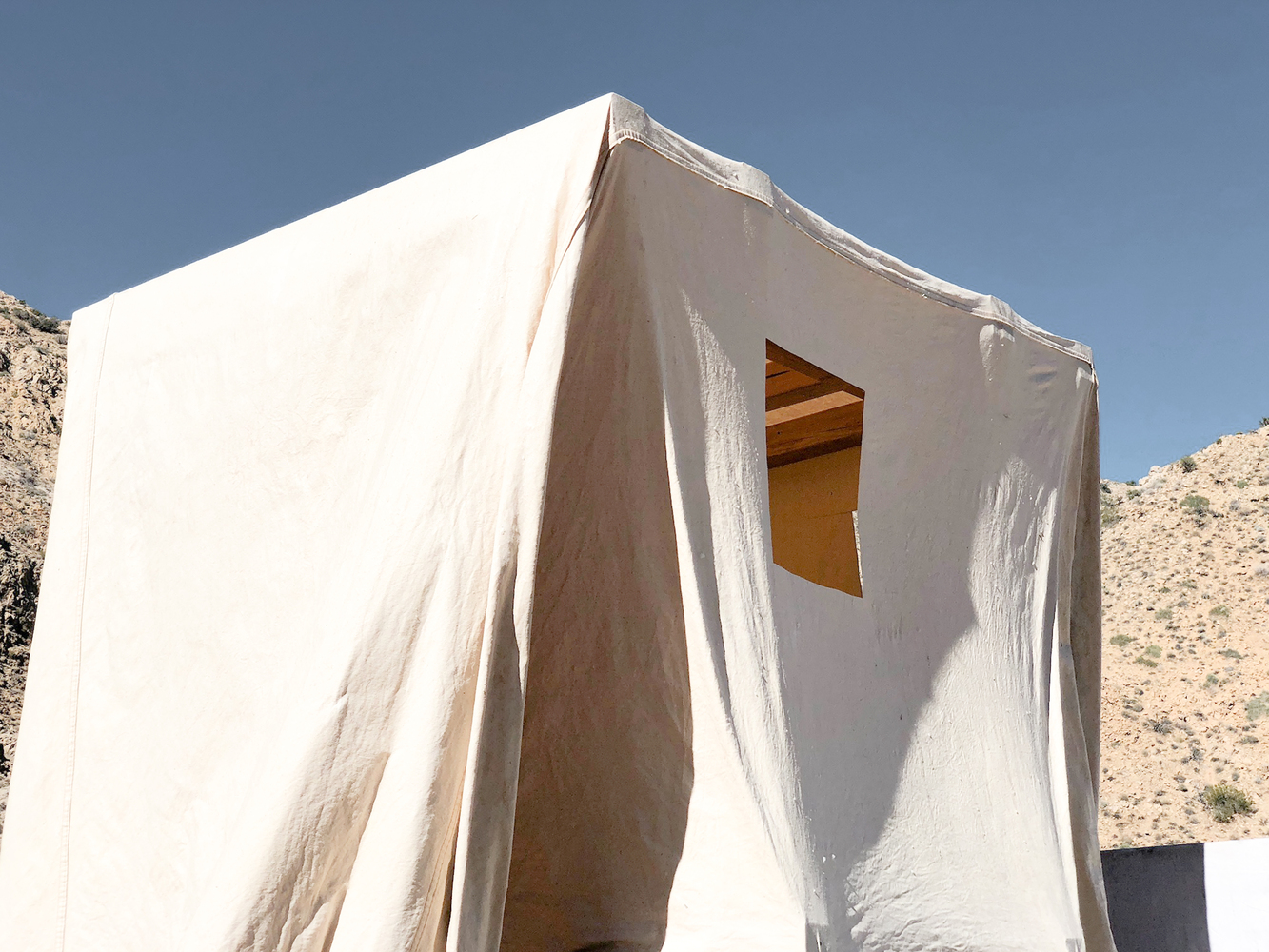
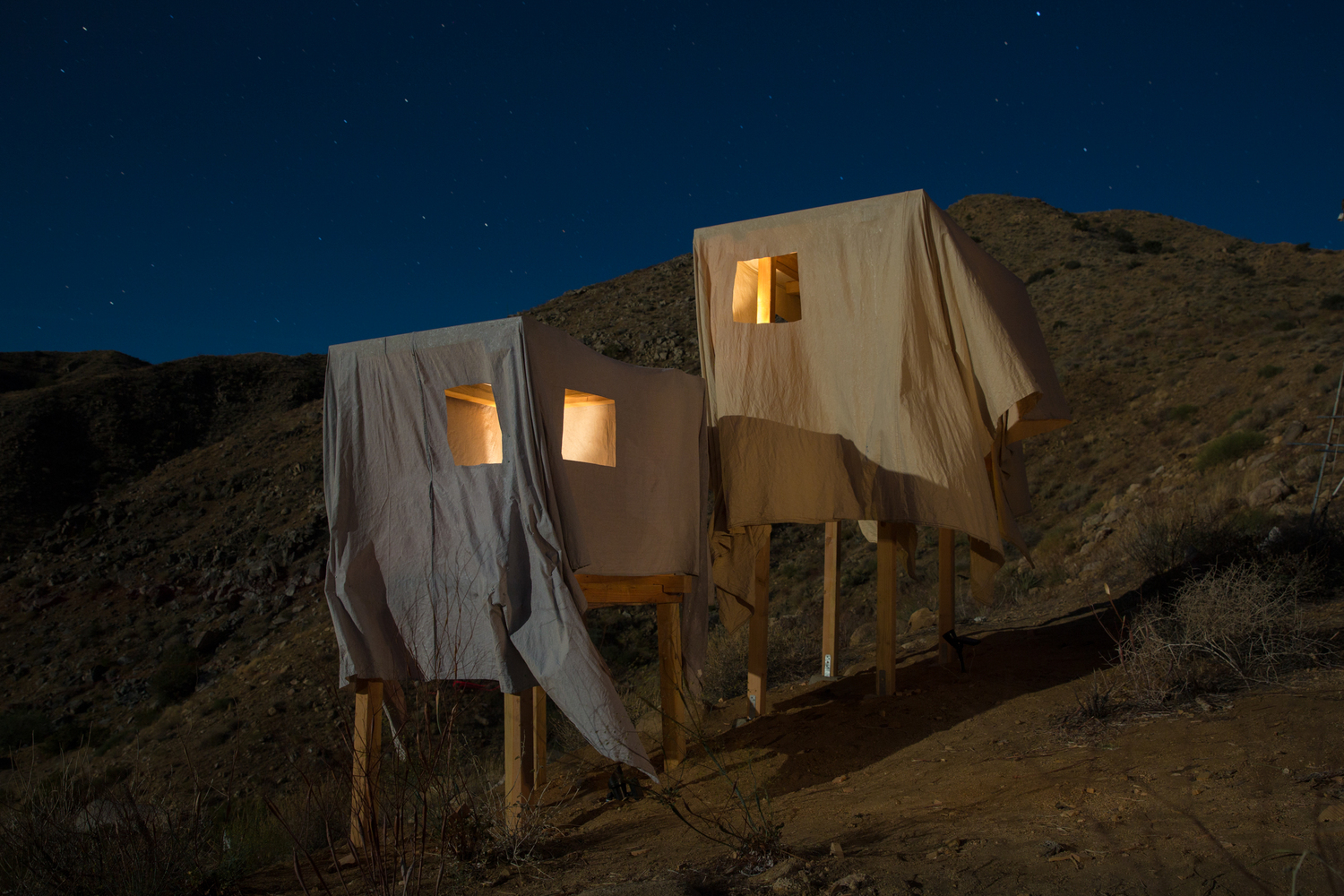
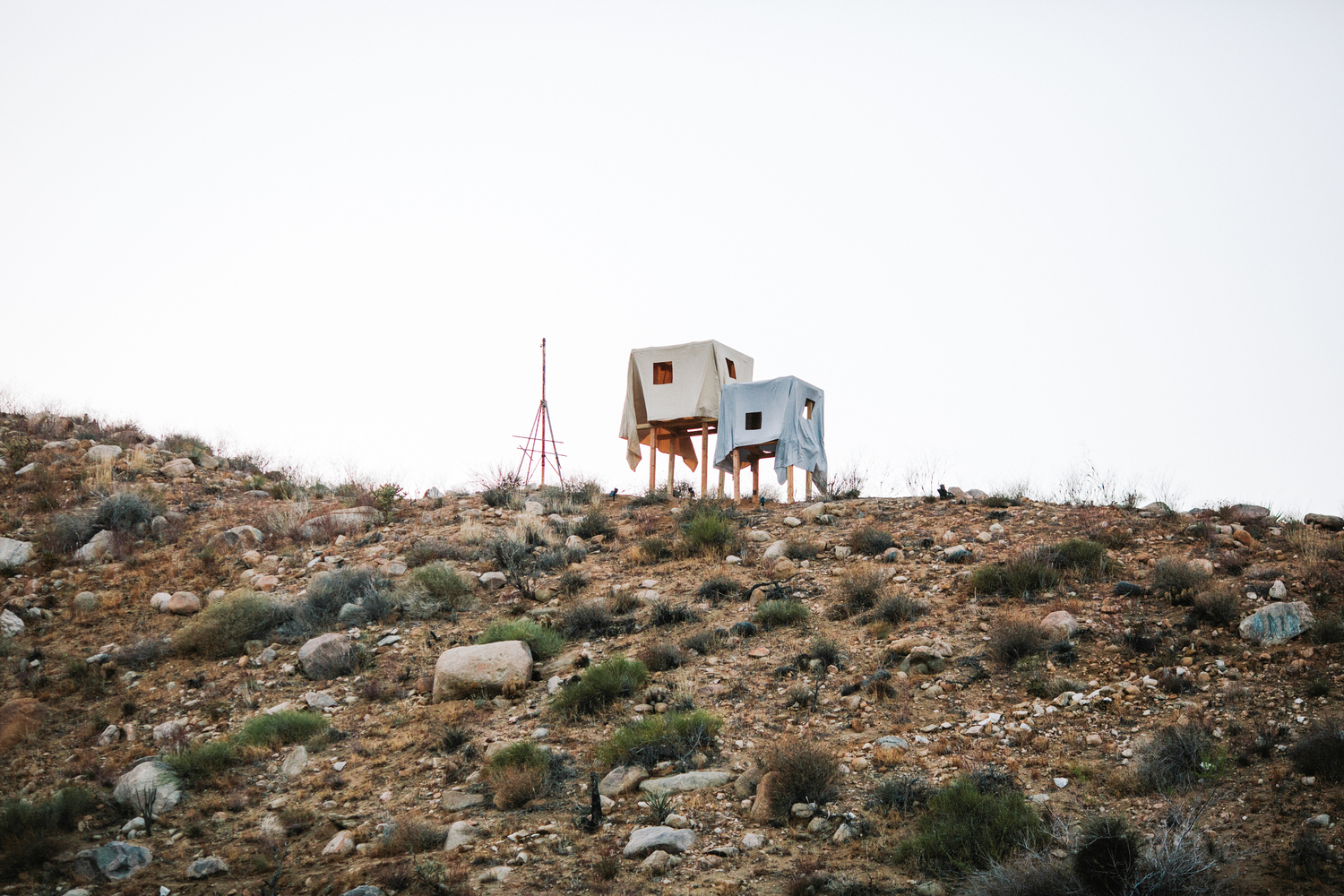
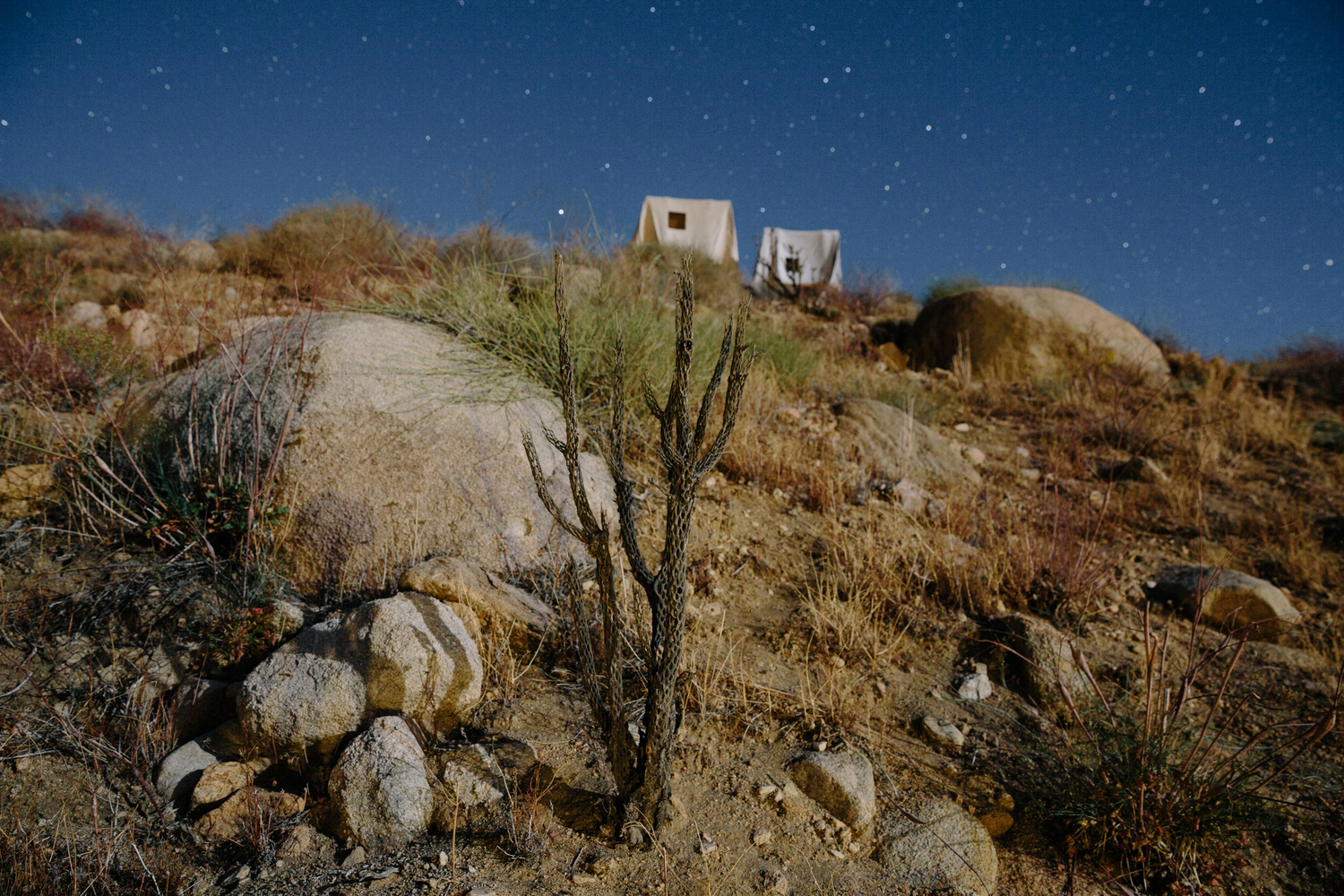
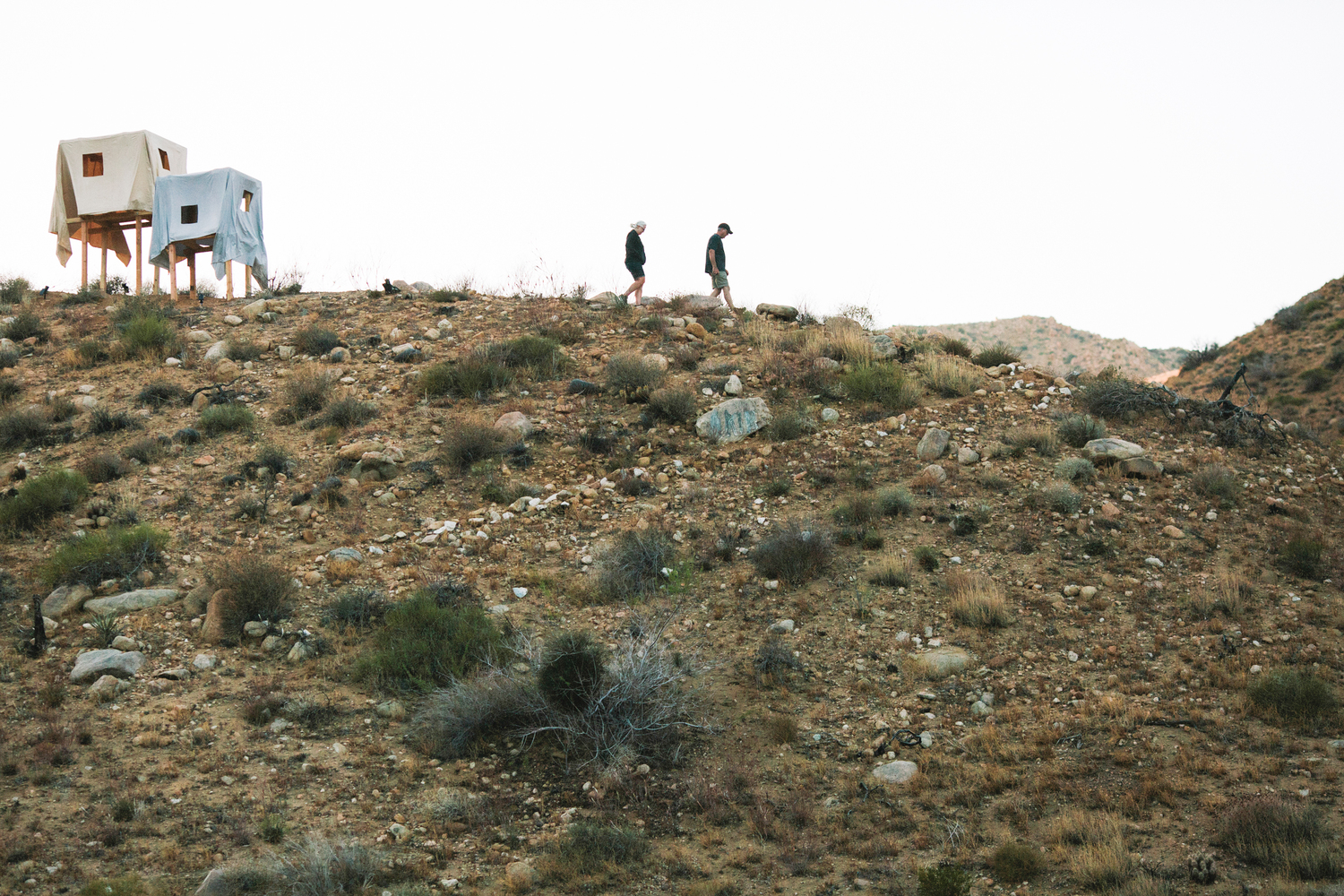
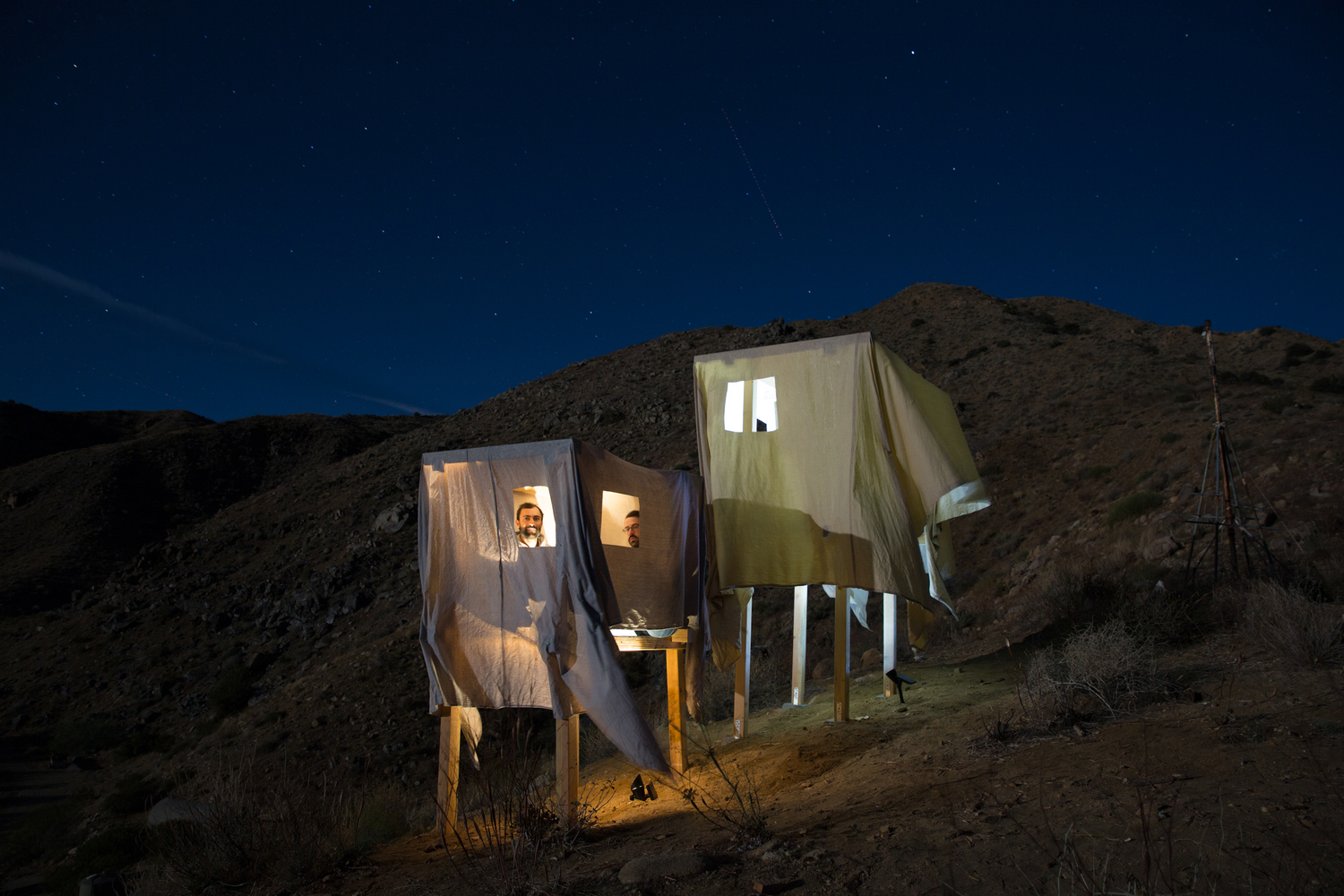
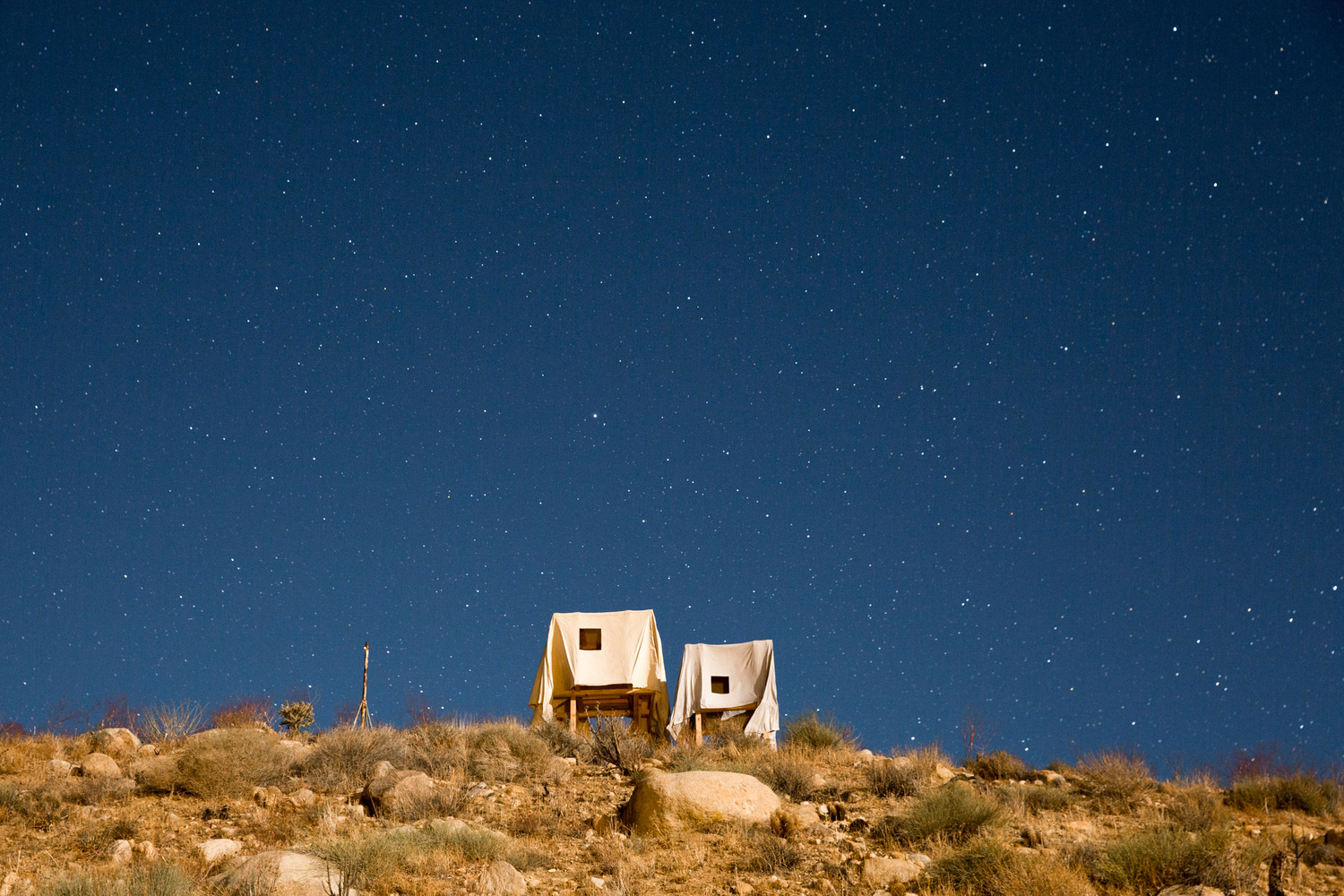
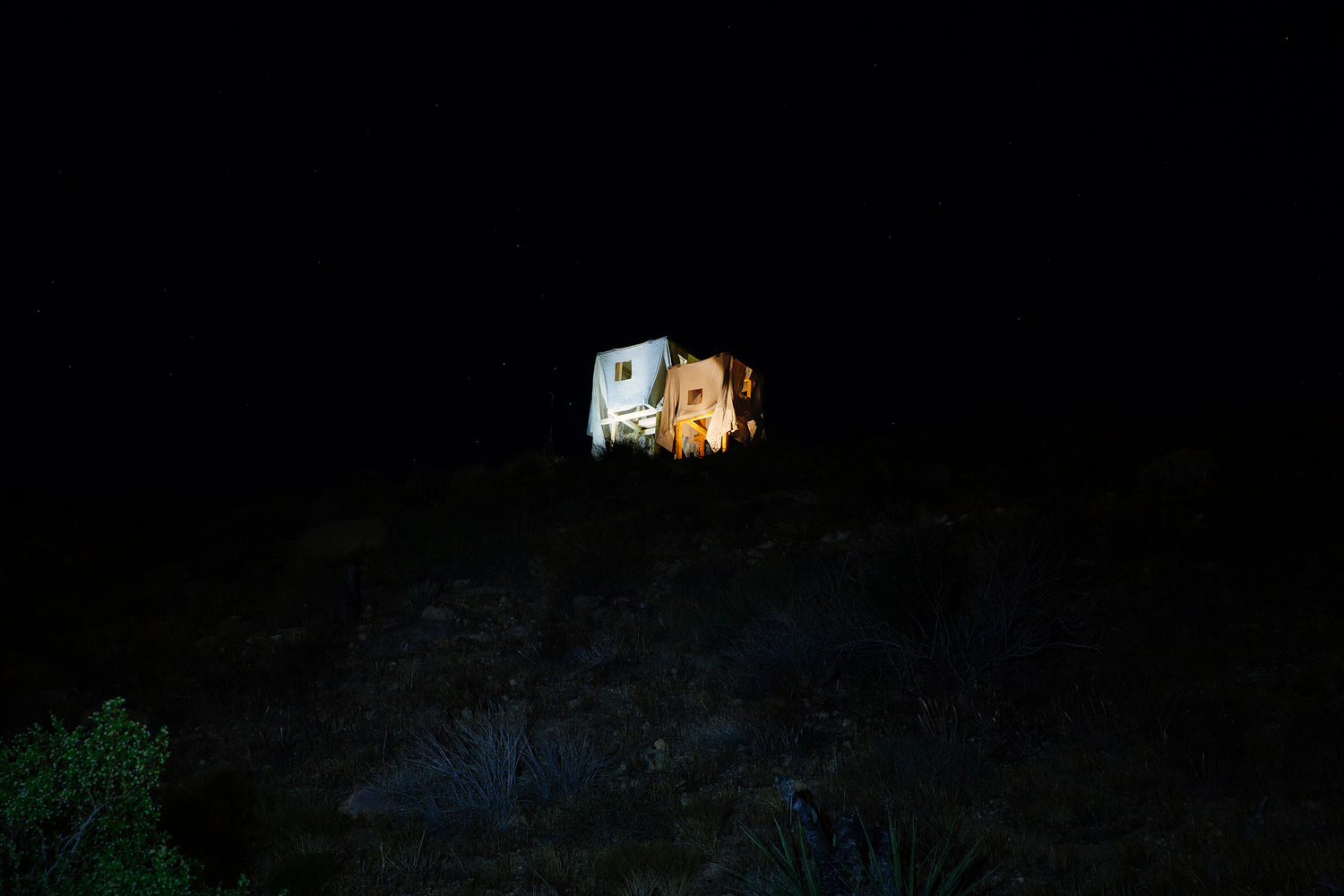
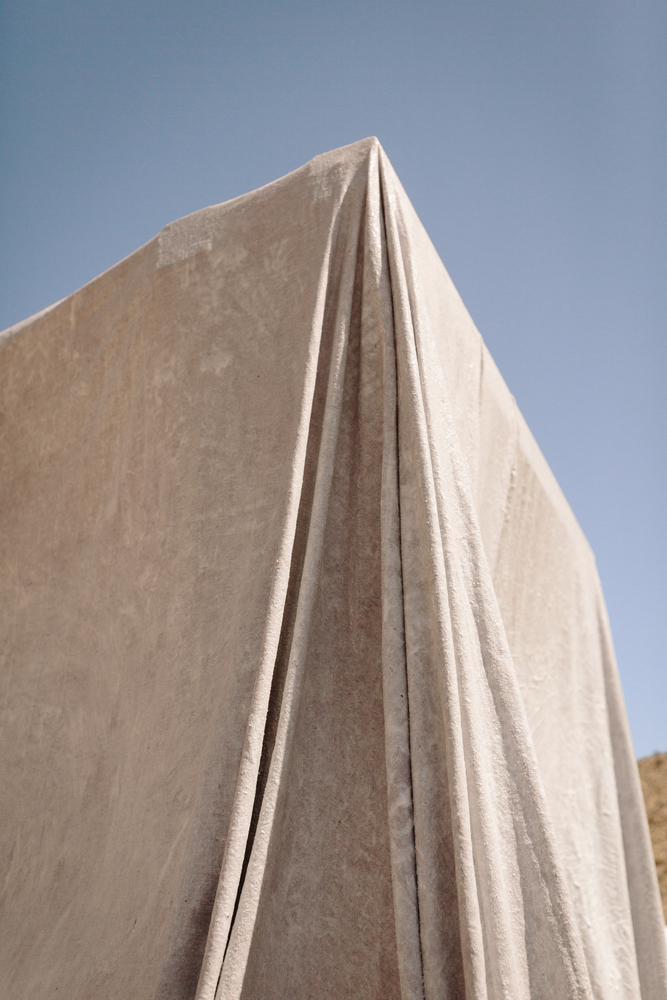
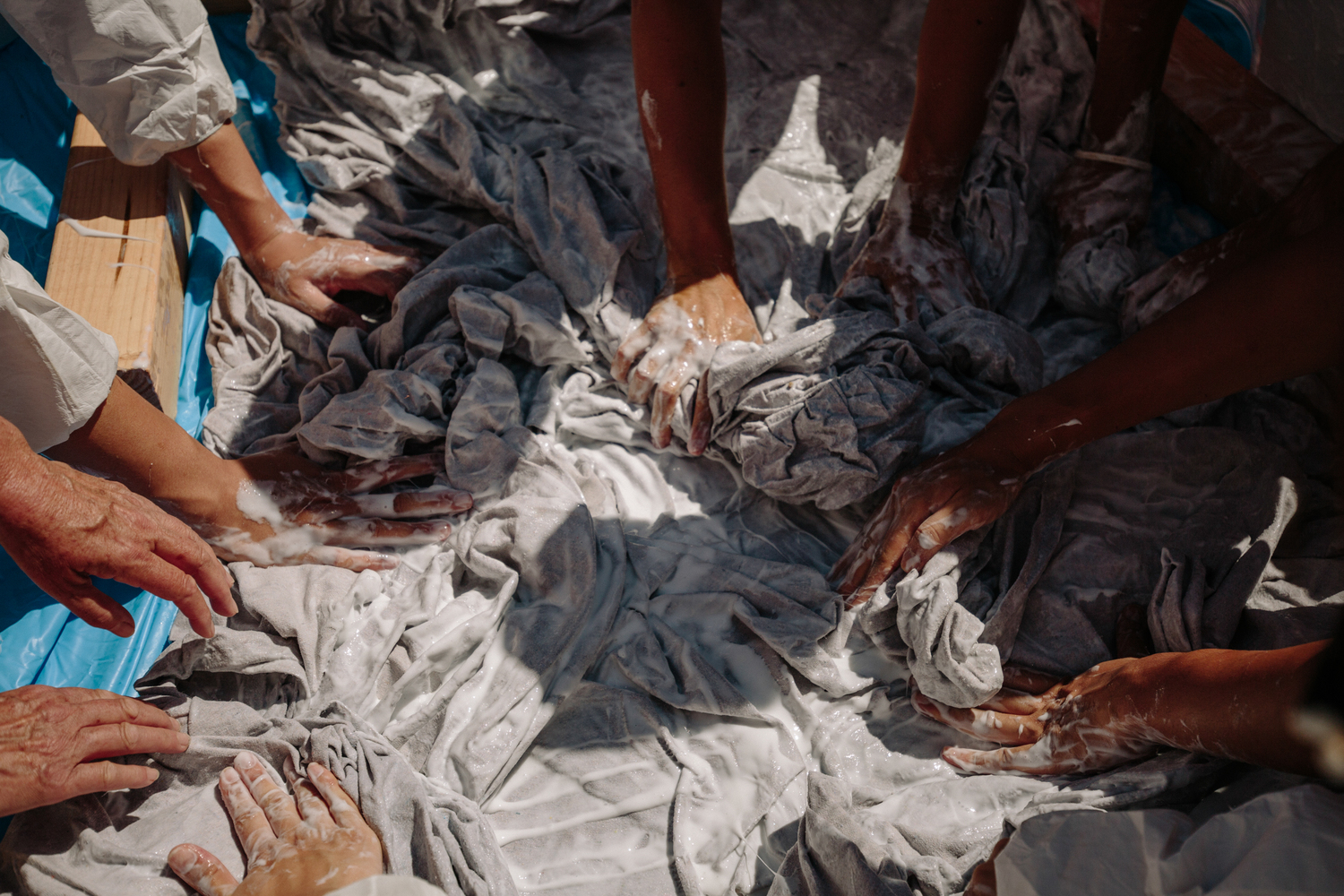
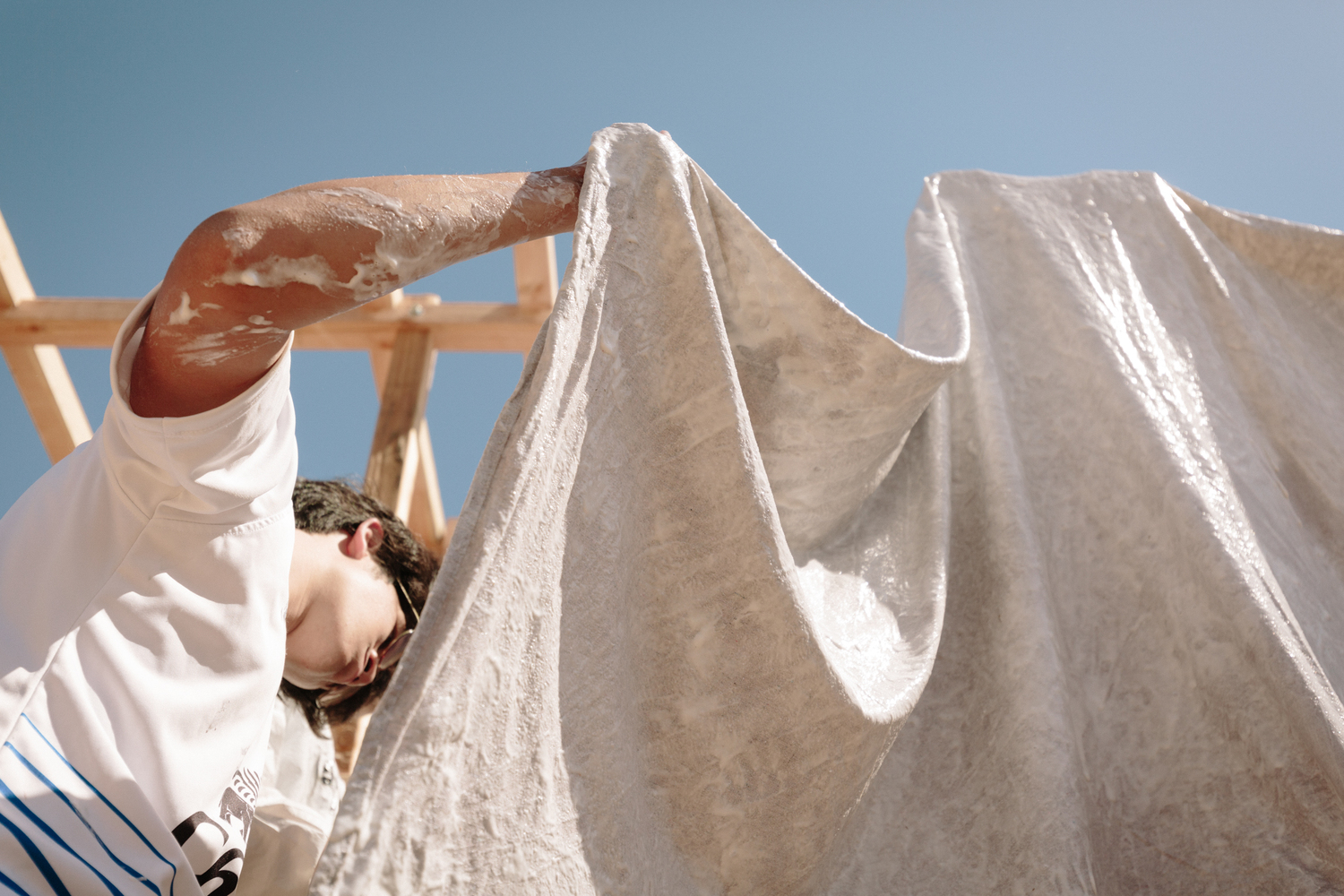
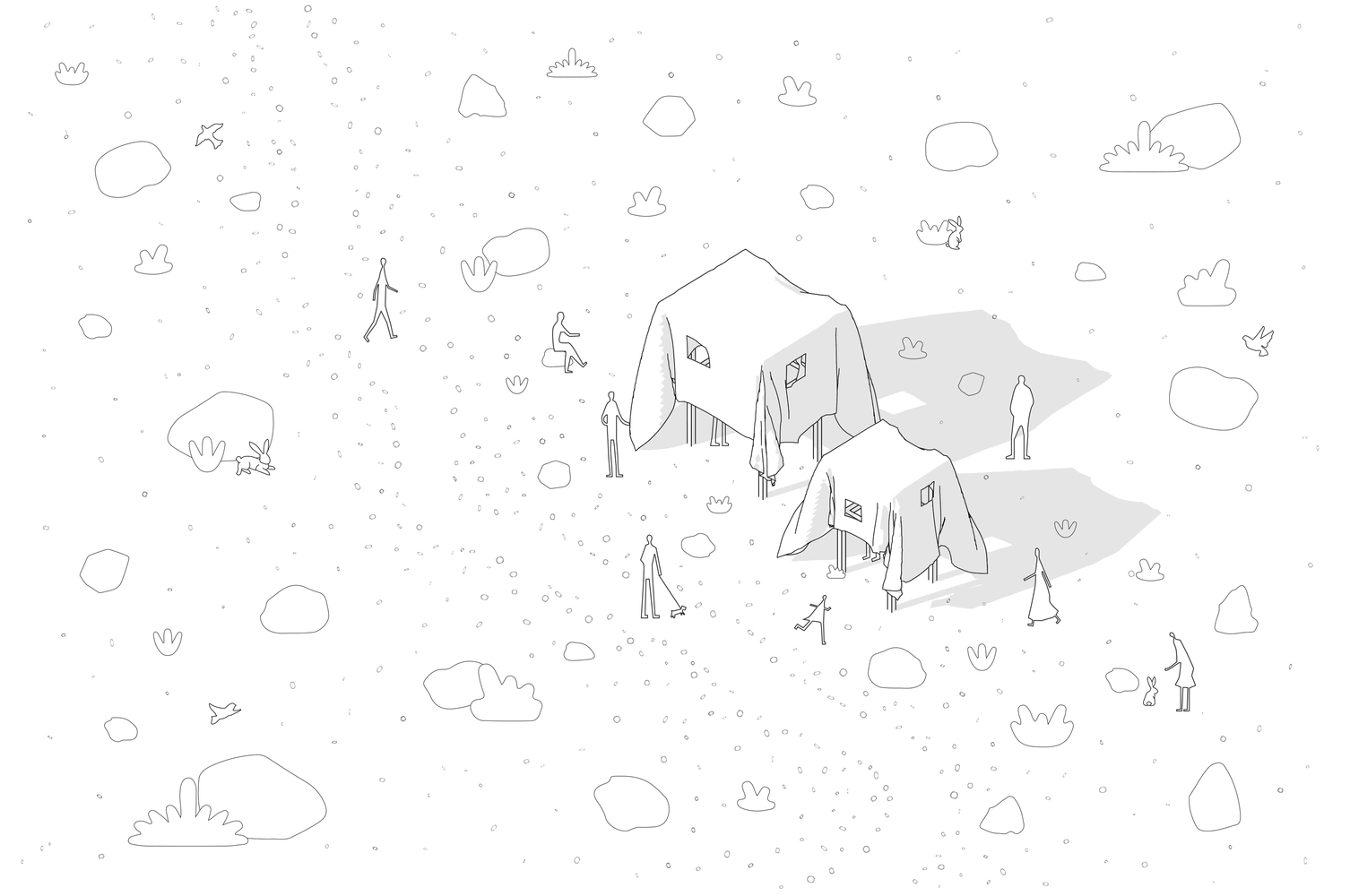
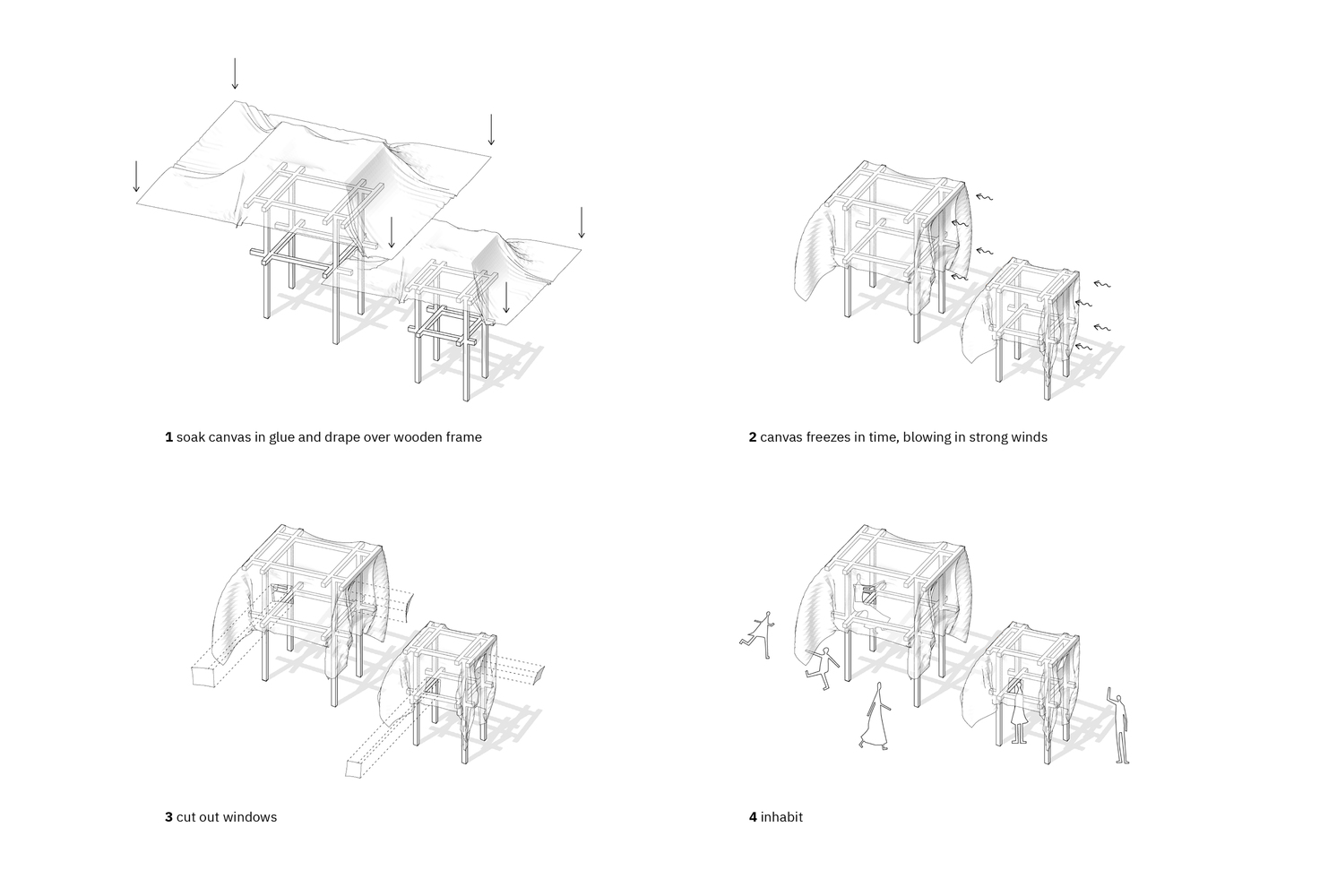
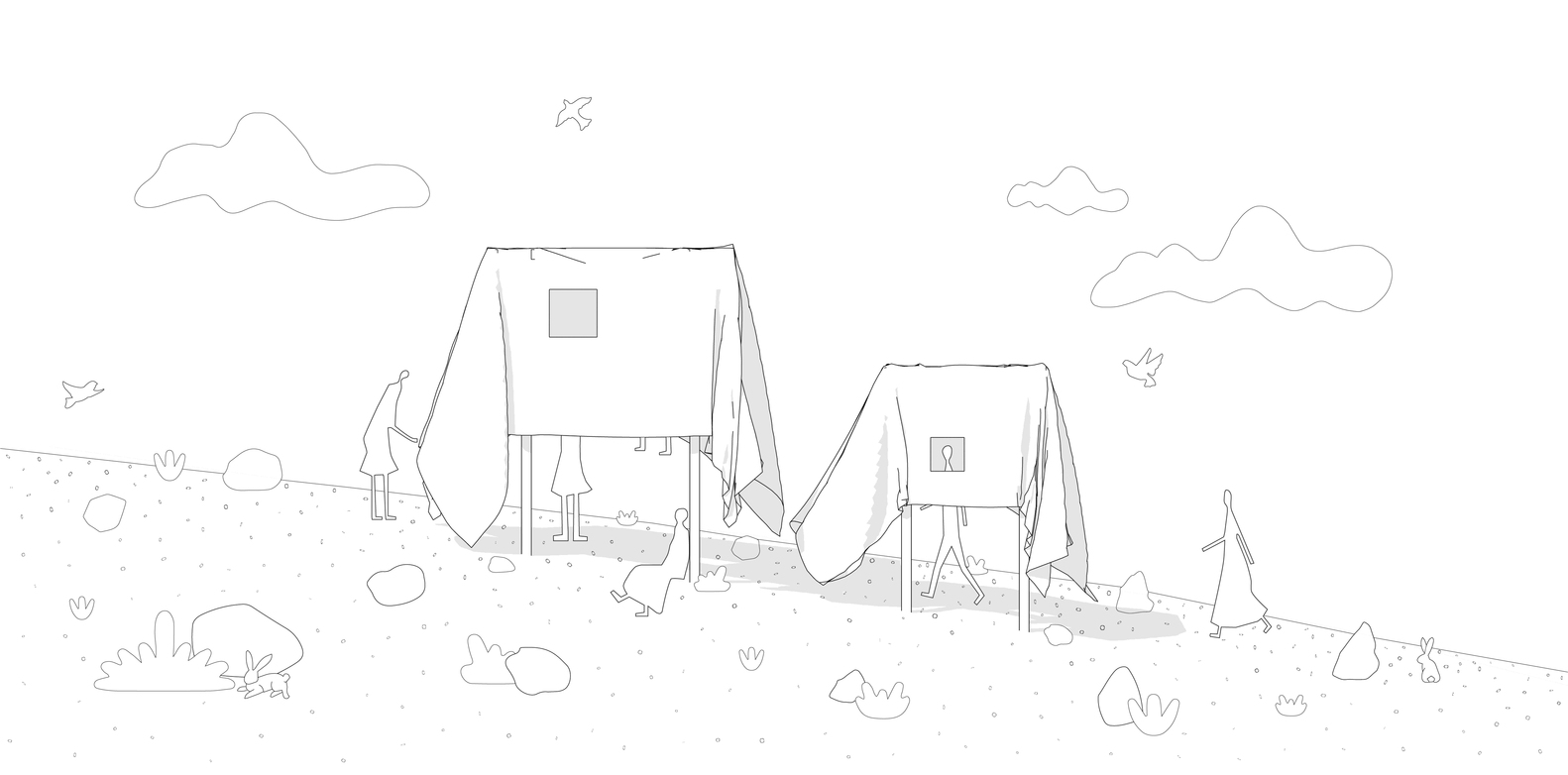
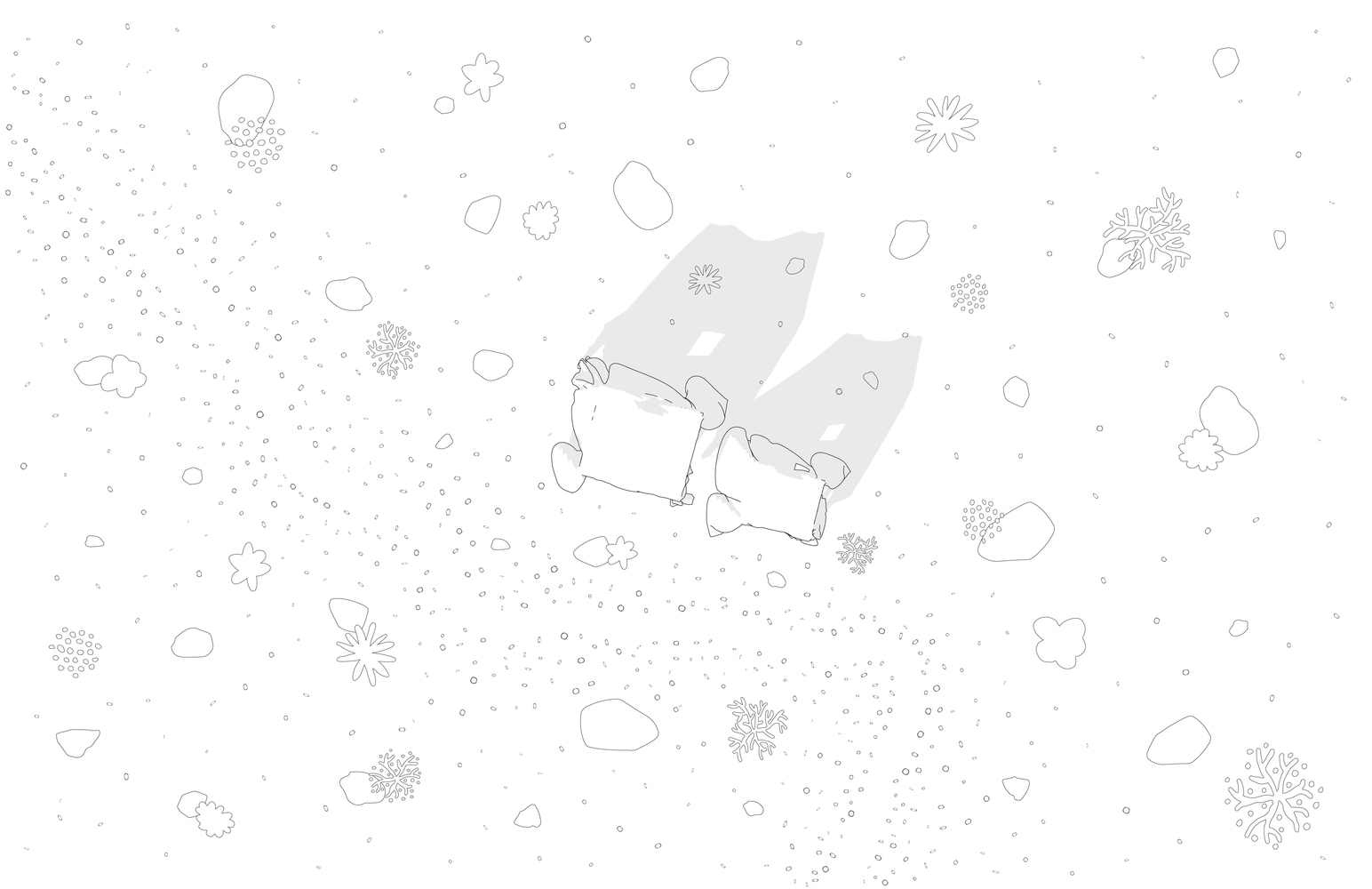
Ghost House Installation by i/thee is a 100-square-foot experimental structure completed in 2018 in Morongo Valley, United States. Developed as part of Space Saloon’s 2018 mobile education camp, the project explores how architecture can be shaped by environmental forces rather than placed within them. Its construction began with lightweight wooden frames outlining two archetypal house forms. Custom-cut canvas sheets were soaked in non-toxic adhesive and draped across the frames, where strong mountain winds transformed them into billowing surfaces before they hardened. Cubic apertures were later cut into the canvas, strengthening the installation’s reference to domestic architecture. The work captures a fleeting climatic condition in fixed material form, allowing wind, weather, and time to become active contributors to the design. Through this process, Ghost House Installation challenges conventional ideas of authorship, permanence, and architectural control.
The site was located in the high desert of California. We were inspired by the strong gusts of wind and envisioned a structure that would itself act as a kind of recording device.
Interview with Neal Lucas Hitch, Kristina Fisher & Martin Hitch of i/thee
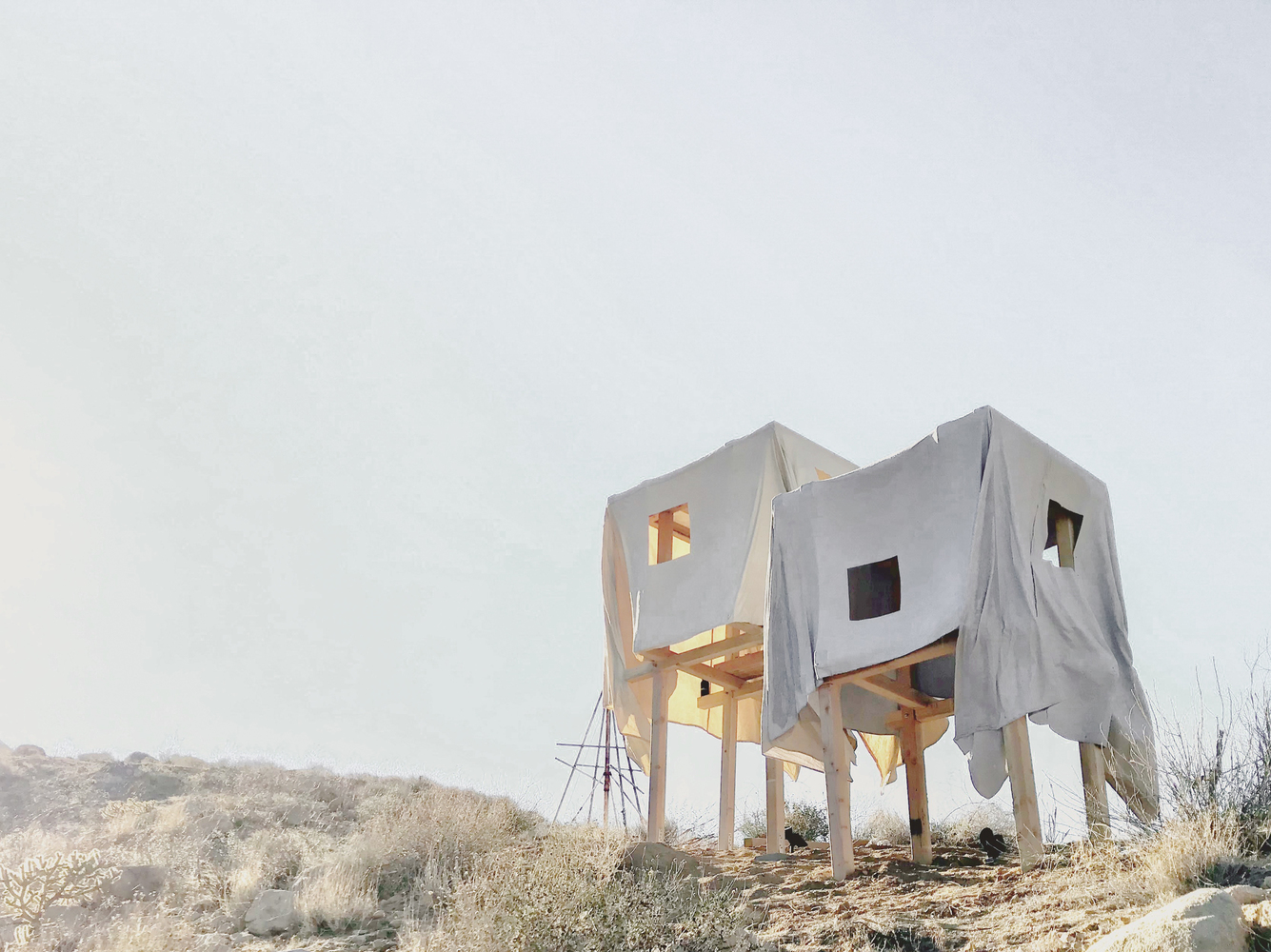
Ghost House Installation by i/thee approaches architecture as a record of atmospheric force, transforming the high desert from a passive setting into an active participant in the making of form. Rather than prioritizing enclosure, function, or conventional composition, the installation gives physical presence to wind, a force that is usually perceived through movement, resistance, and sound rather than through fixed architectural matter.
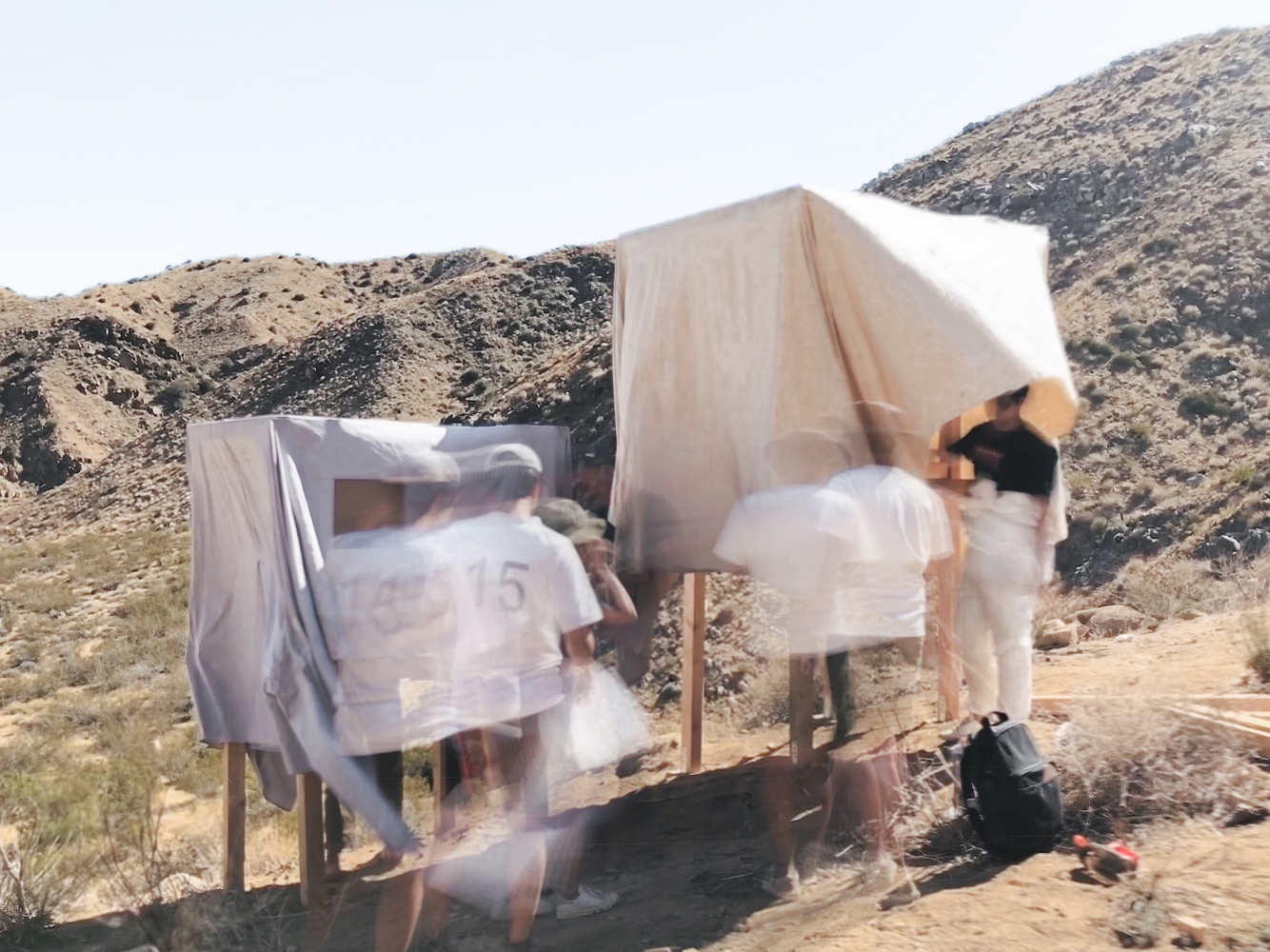
The project was conceived through a process of material manipulation in which the final form depended on weather, environment, and time. The architects began by erecting light wooden frames to establish the outlines of two houses. These simple frameworks created a recognizable domestic silhouette while leaving the project open to transformation through external forces. Canvas sheets were then custom cut, soaked in non-toxic adhesive, and draped over the frames. As the sheets moved in the strong mountain winds, they froze into rigid forms over several hours, preserving the motion of fabric at a specific instant.
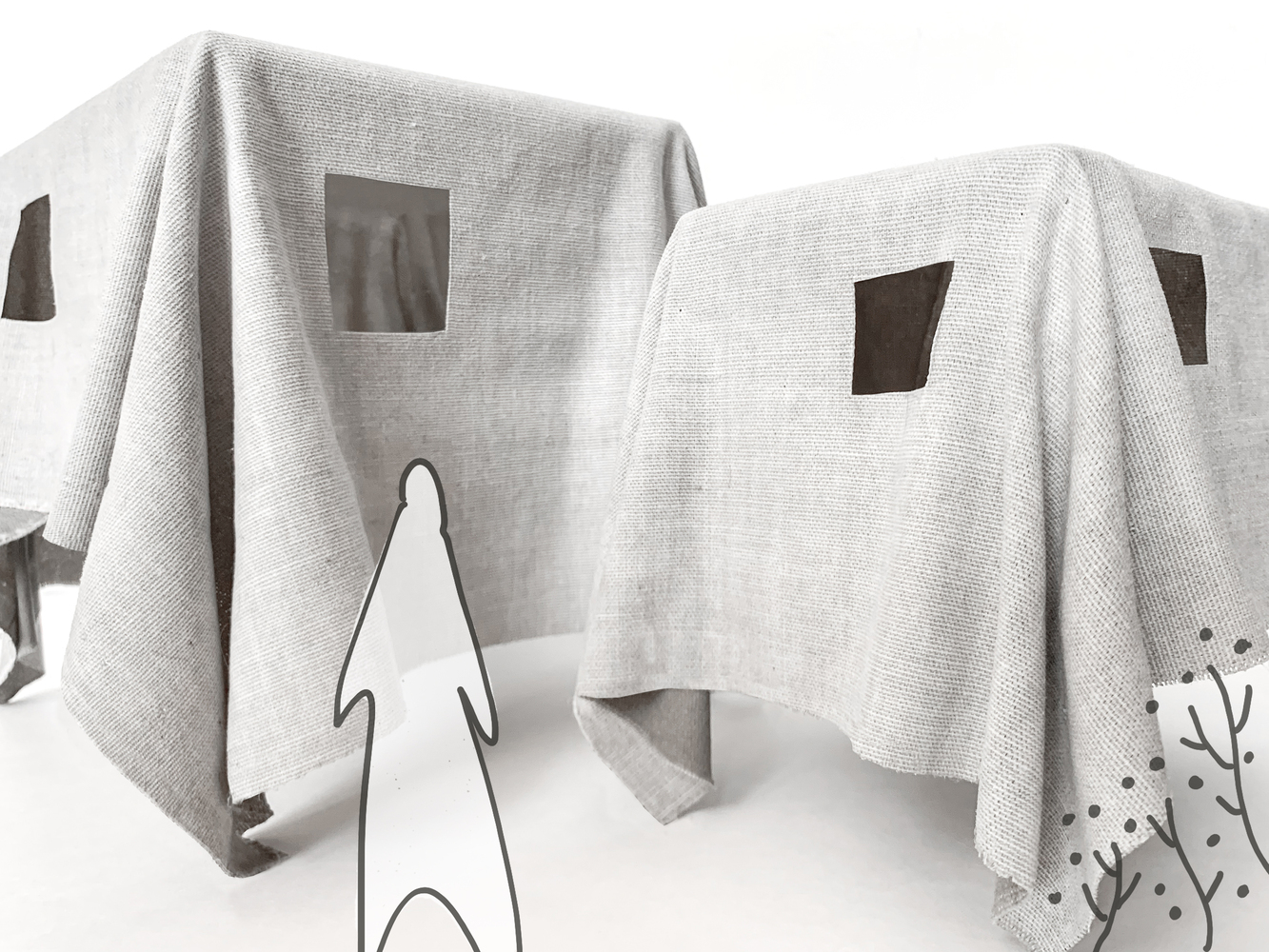
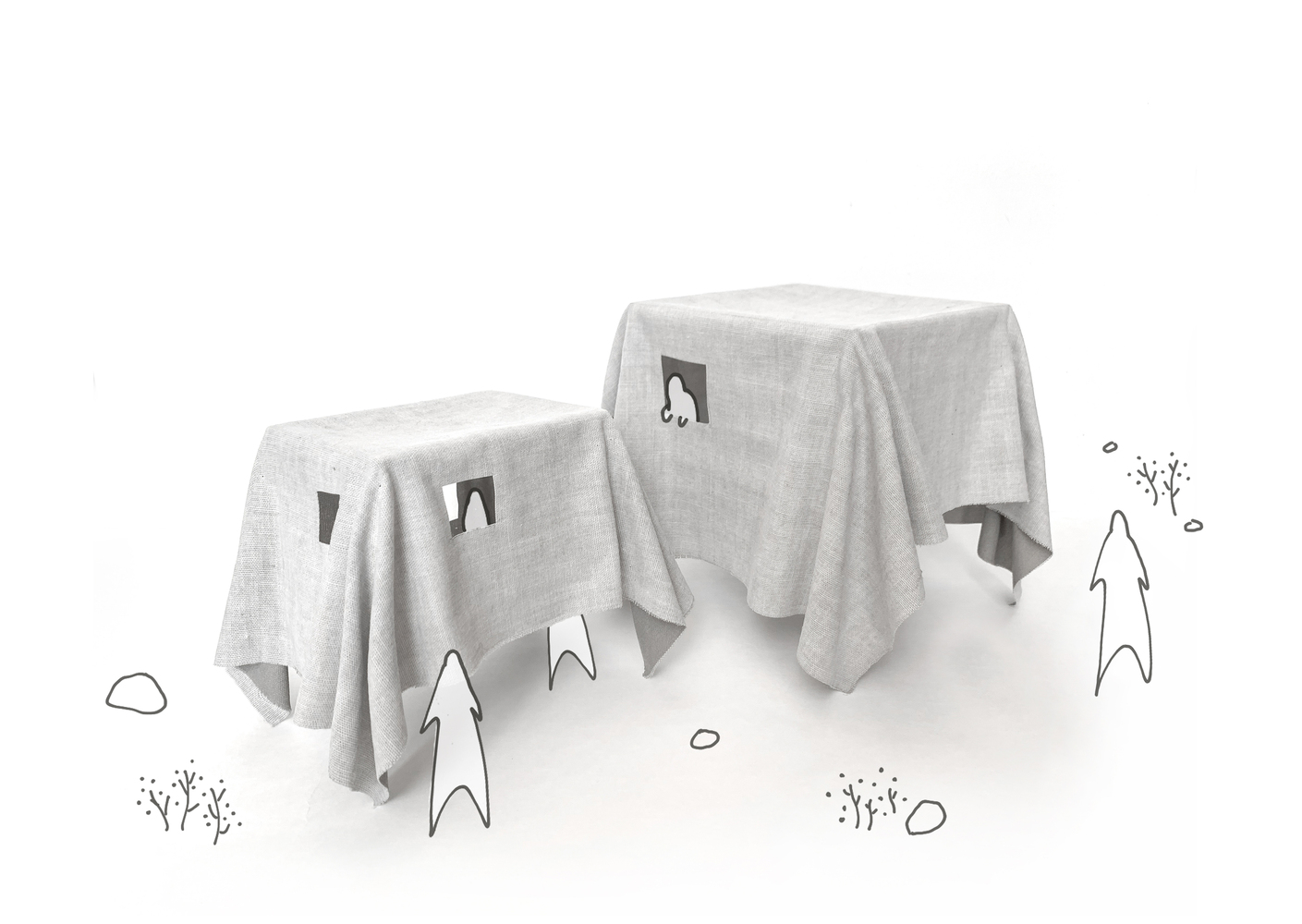
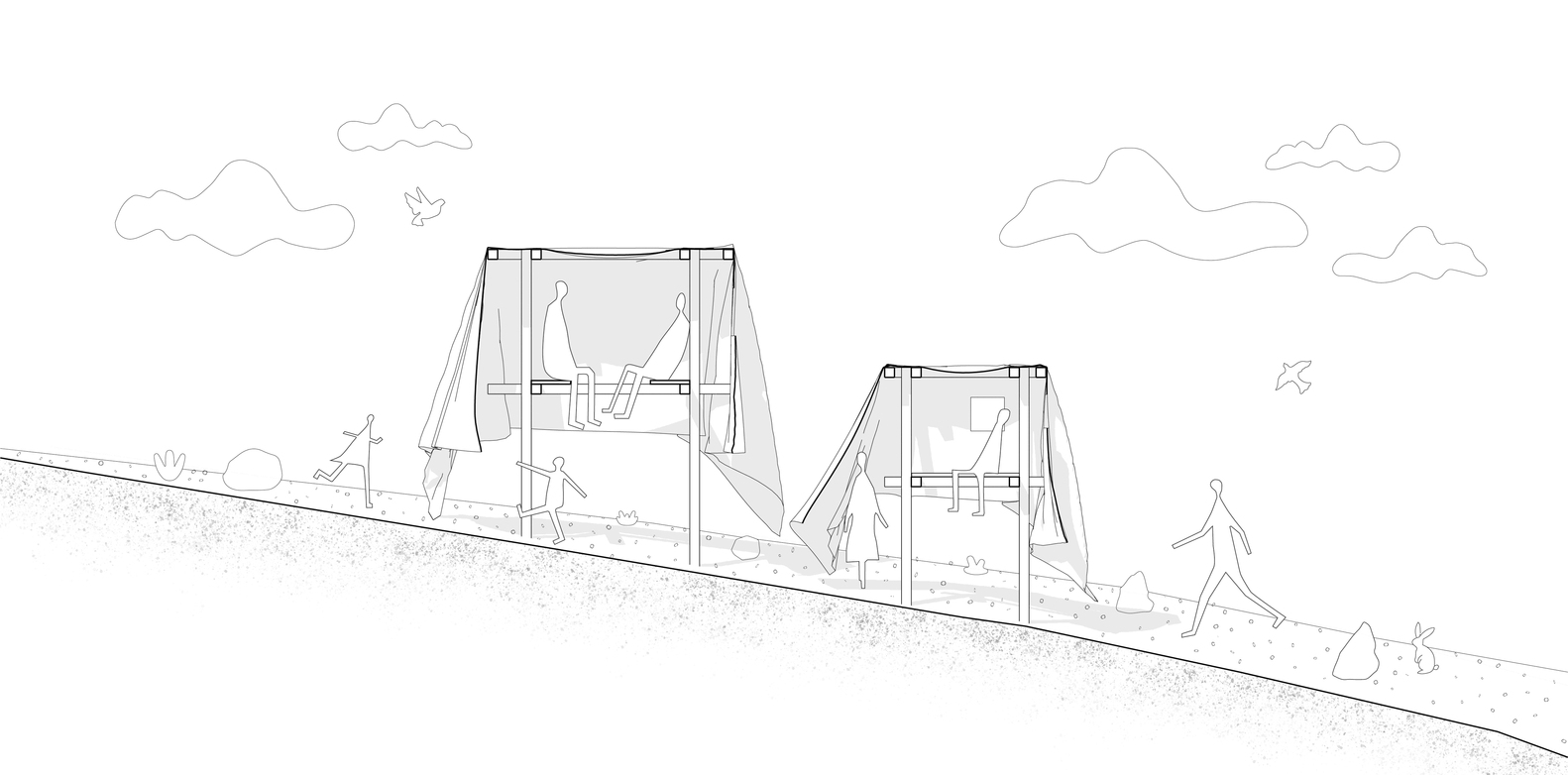
The resulting installation functions as what the architects describe as “a three-dimensional snapshot of a specific moment in time.” Its form is neither fully designed in the traditional sense nor entirely accidental. The architects established the conditions, materials, and framework, while the wind determined the precise shape of the hardened canvas. In this exchange, authorship becomes shared between human intention and environmental action.
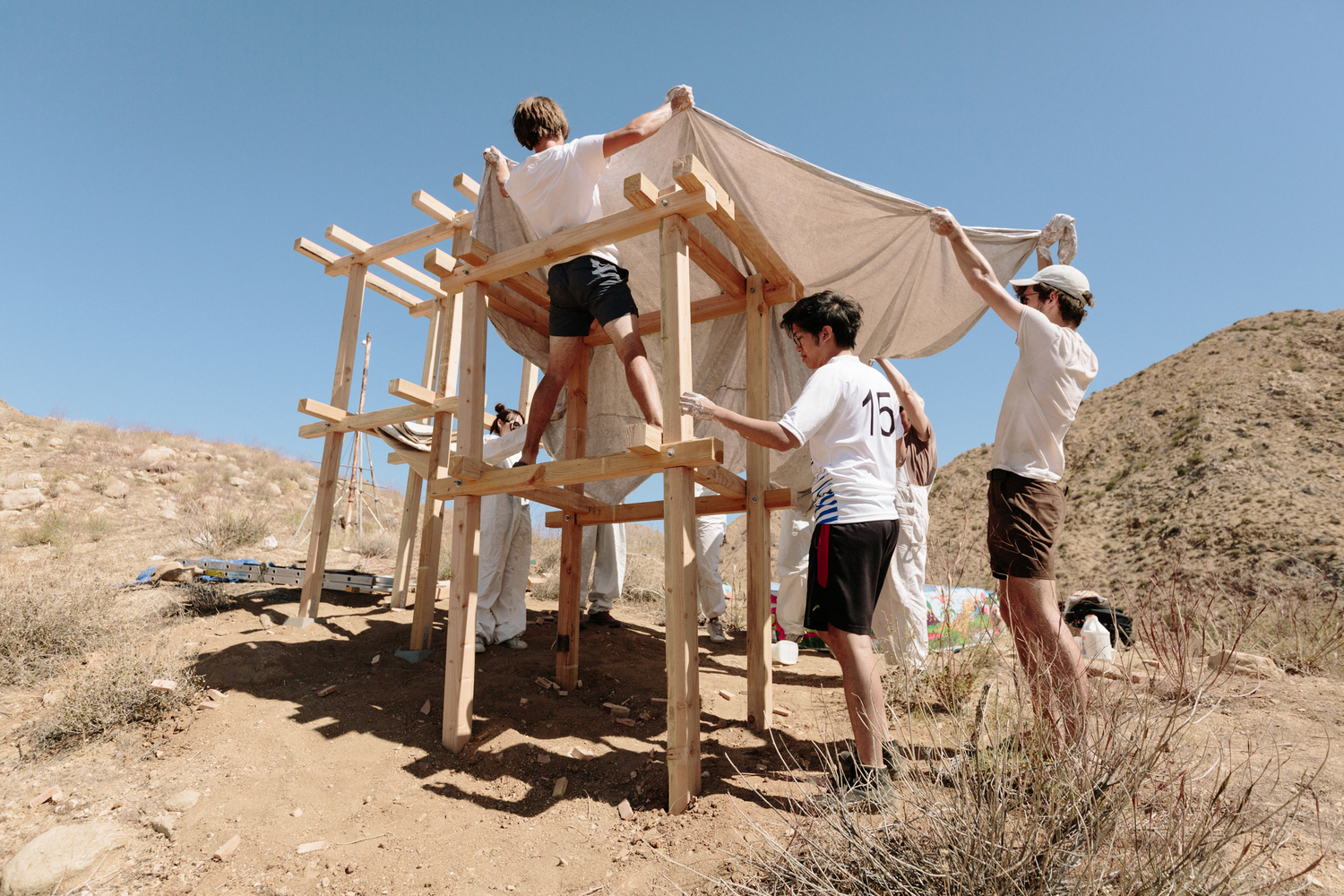
After the canvas surfaces had solidified, cubic apertures were cut into them, adding a further reference to the formal memory of a house. These openings suggest windows, thresholds, and inhabitable space, yet the installation resists becoming a conventional building. It remains suspended between architecture and sculpture, between a recognizable domestic figure and an abstracted environmental imprint. This ambiguity gives the project its ghostly quality, recalling the image of a house without offering the permanence or utility typically associated with one.
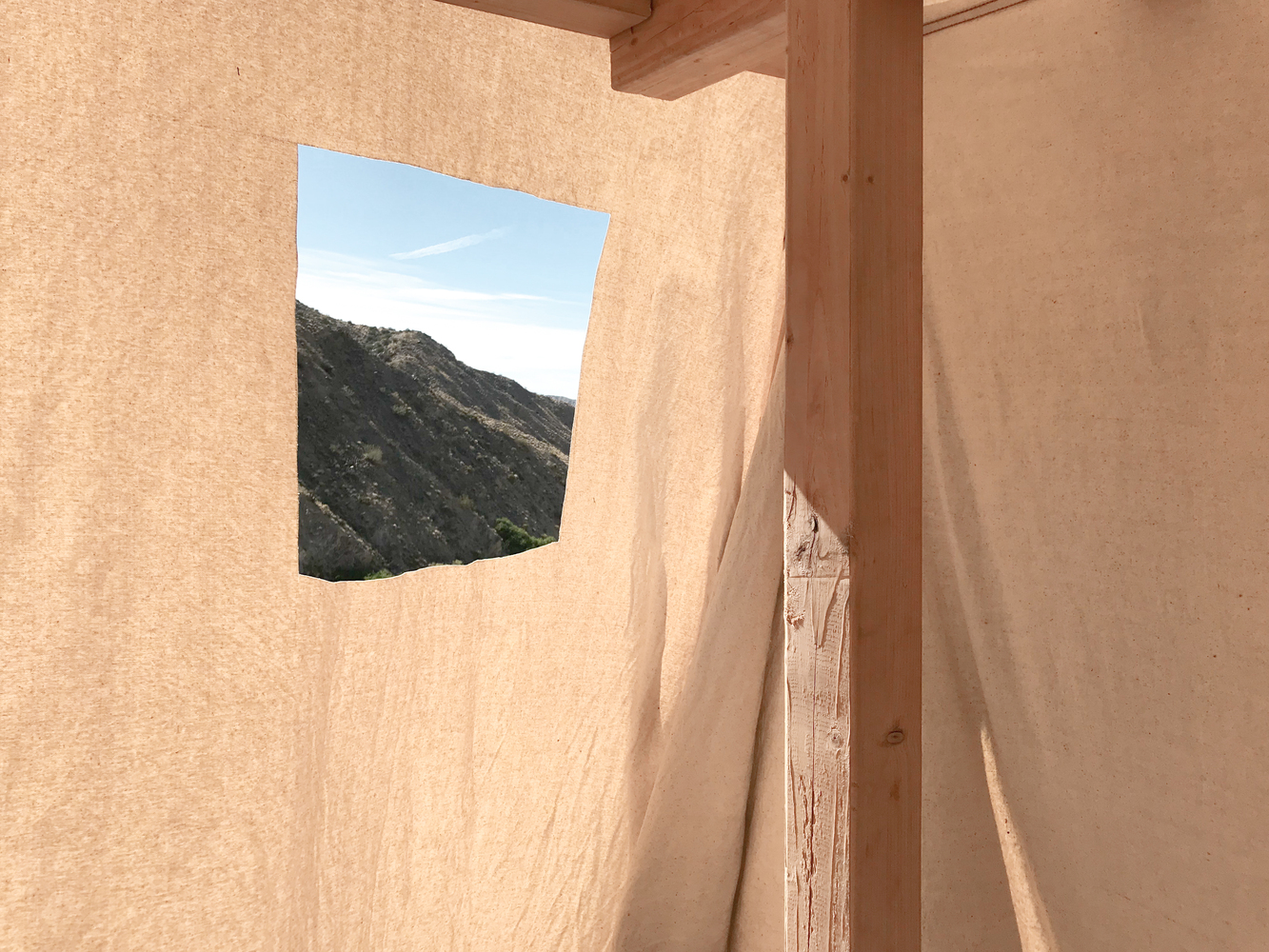
Ghost House Installation was realized as part of Space Saloon’s 2018 mobile education camp, which invited architects and artists to design and build installations that examined context through environmental factors. i/thee’s contribution focused specifically on architecture’s relationship to wind, described in the source material as “a historically and mythologically mysterious force that is only now beginning to be fully understood.” Using specialized equipment, the team identified and recorded wind patterns at highly specific locations across California’s high desert, then selected the final site based on its microclimate.
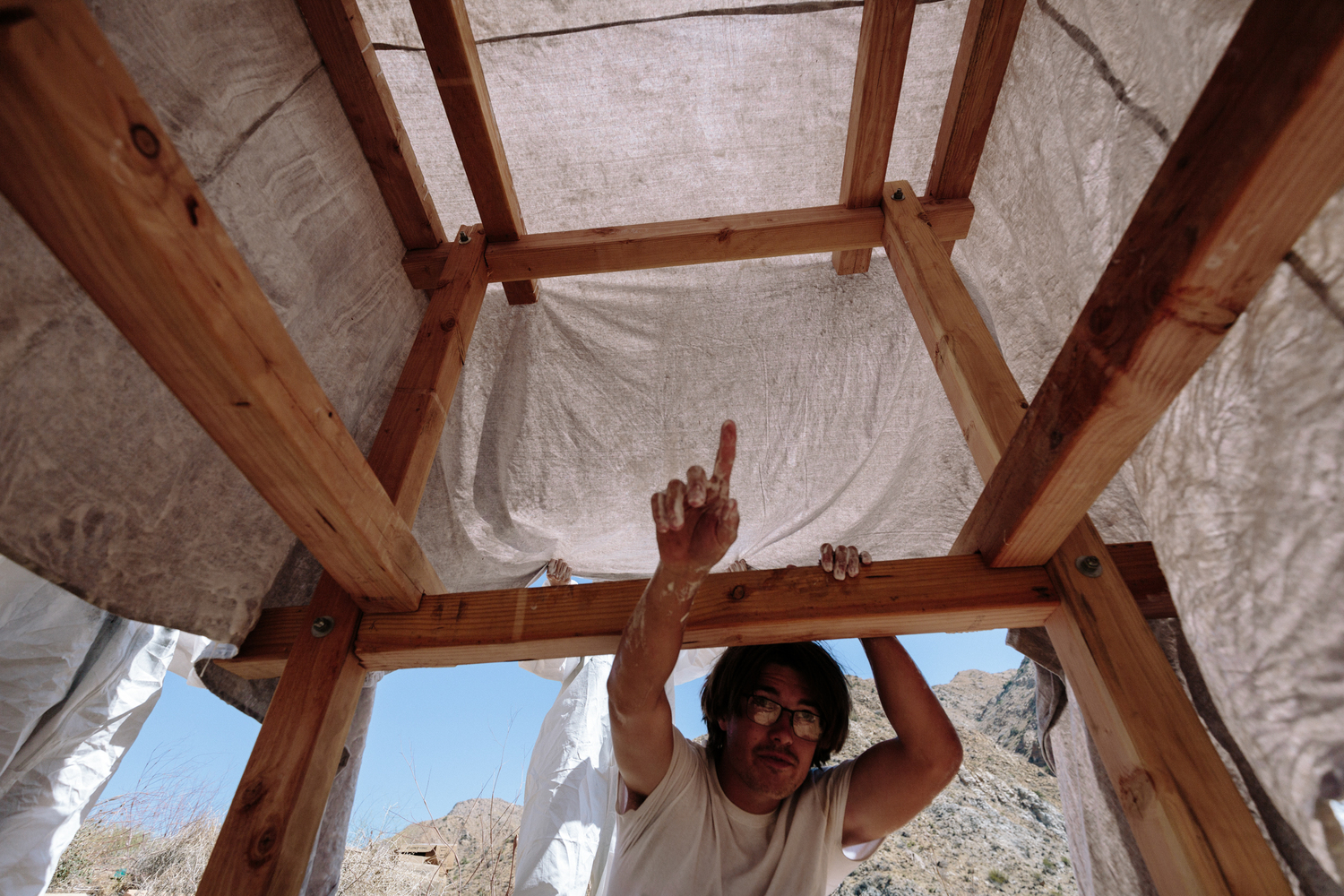
The installation’s significance lies in its literal engagement with natural process. As the architects state, “Ghost House doesn’t just look like a curtain blowing in the wind; it is a curtain blowing in the wind.” This distinction separates the work from an aesthetic imitation of nature. Instead of representing movement through form, the project allows movement itself to generate form. In doing so, Ghost House Installation proposes an architecture shaped by contingency, exposure, and collaboration with the environment. The work transforms a temporary climatic condition into a solid artifact, allowing the invisible behavior of wind to remain present long after the moment of its formation has passed.
Project Gallery
Project Location
Address: Morongo Valley, California, United States
Location is for general reference and may represent a city or country, not necessarily a precise address.

