

Neal Lucas Hitch, Kristina Fisher, and Martin Hitch are designers, educators, and co-founders of i/thee, an experimental design collaborative established in 2017. Working across architecture, installation, research, fabrication, and public engagement, the practice explores reciprocal relationships between people, materials, landscapes, and environments. The name i/thee reflects this position: a fusion of self and other, architecture and ecology, human and non-human systems. Their work investigates participatory forms of making, adaptive use, environmental agency, and unconventional material processes through projects such as Ghost House in California, Puddle Pavilion in Iowa, Agg Hab Prototypal Eco-Dwelling, and Half of a House in Hungary. Combining speculative research with hands-on construction, the studio frequently works with timber, earth, paper, resin, biomaterials, and environmental forces as active collaborators in the design process. Their projects have been featured in Architecture Lab, Designboom, ArchDaily, Archello, and international exhibitions, positioning the practice within contemporary conversations around ecological design, material experimentation, and architecture as a participatory cultural act.
What inspires you?
We are inspired by many different things: art, film, books, museum exhibitions, and the natural environment. What excites us most, however, is finding inspiration in unusual places. Maybe there is nothing new under the sun, but there is still much that is hidden, underground, strange, and outright weird. Those are the things we try to dig up, mine, unearth, and use as inspiration.
What inspired you to become a designer?
The practice was inspired by an animate vision of the built environment living in reciprocity with its immediate and extended communities/environments. To this end, we named the practice i/thee. The slash is doing a lot of work here; unlike other conjunctions that merely place subjects in relation to one another (i.e., I and Thee; I plus Thee), the slash connotes a condition of simultaneity—a fusion.
In the words of Lauren Elkin in Art Monsters, the slash “is the hieroglyphic equivalent of the verb to cleave, which simultaneously means one thing and its opposite. It slashes/tears, but it also strokes/heals. Against the grain; with the grain. The slash provides alternatives, which sit together in an uneasy, impossible simultaneity.”
Ultimately, “The slash creates a space of simultaneity, a zone of ambiguity. The slash joins genres, genders, blurs, blends, invites, marks.”
How would you describe your design philosophy?
We like to describe our design philosophy by what we have termed “radical participatory design.” It is a vision of architecture that doesn’t just engage with its environment—or with its community—but that actually invites the immediate communities and environments in as active participants in the design process.
Sometimes this means designing and building projects alongside student groups or community volunteers. Other times it means interfacing directly with the environment by letting natural forces like erosion, wind, or fluid dynamics literally shape the architecture.
What is your favorite project?
Rather than one of our own projects, we often point to the Liberty Bridge in Budapest as a formative precedent. We had a really impactful experience with the bridge as undergraduate students, and it has subsequently shaped a great deal of our design thinking.
As we understand the story, the bridge was closed to vehicular traffic in 2014 during the construction of a nearby metro line. In the interim, while the bridge was closed to cars, the people of the city spontaneously took it over for the summer as a kind of adapted public park. People picnicked on the rafters, hosted choreographed dances, and at one point even organized a concert series. The phenomenon was later documented as part of the Hungarian Pavilion at the 2018 Venice Architecture Biennale.
The bridge speaks directly to our design philosophy: allowing users to participate in the activation of space rather than imposing a predetermined use or program upon them. Beyond adaptive reuse, we like to think about this as adaptive use. How can we design new architecture that functions more like a renovation project, where the program itself remains open to adaptation?
This idea is similar to what Sou Fujimoto—another favorite of ours—has called the indifference of architecture. How can architecture function more like a tree? Something that was not designed with humans in mind, but nevertheless provides shade and, for our not-so-distant ancestors, even shelter.
What is your favorite detail?
We all shared a professor during our undergraduate studies who used to say that it is actually harder to design a minimal detail than an expressive one. That idea has really stuck with us. All of the great minimalist architects—Sejima, Nishizawa, Ishigami, Chipperfield—are, in their own way, masters of detailing. Behind those seemingly seamless facades, a tremendous amount of work is happening.
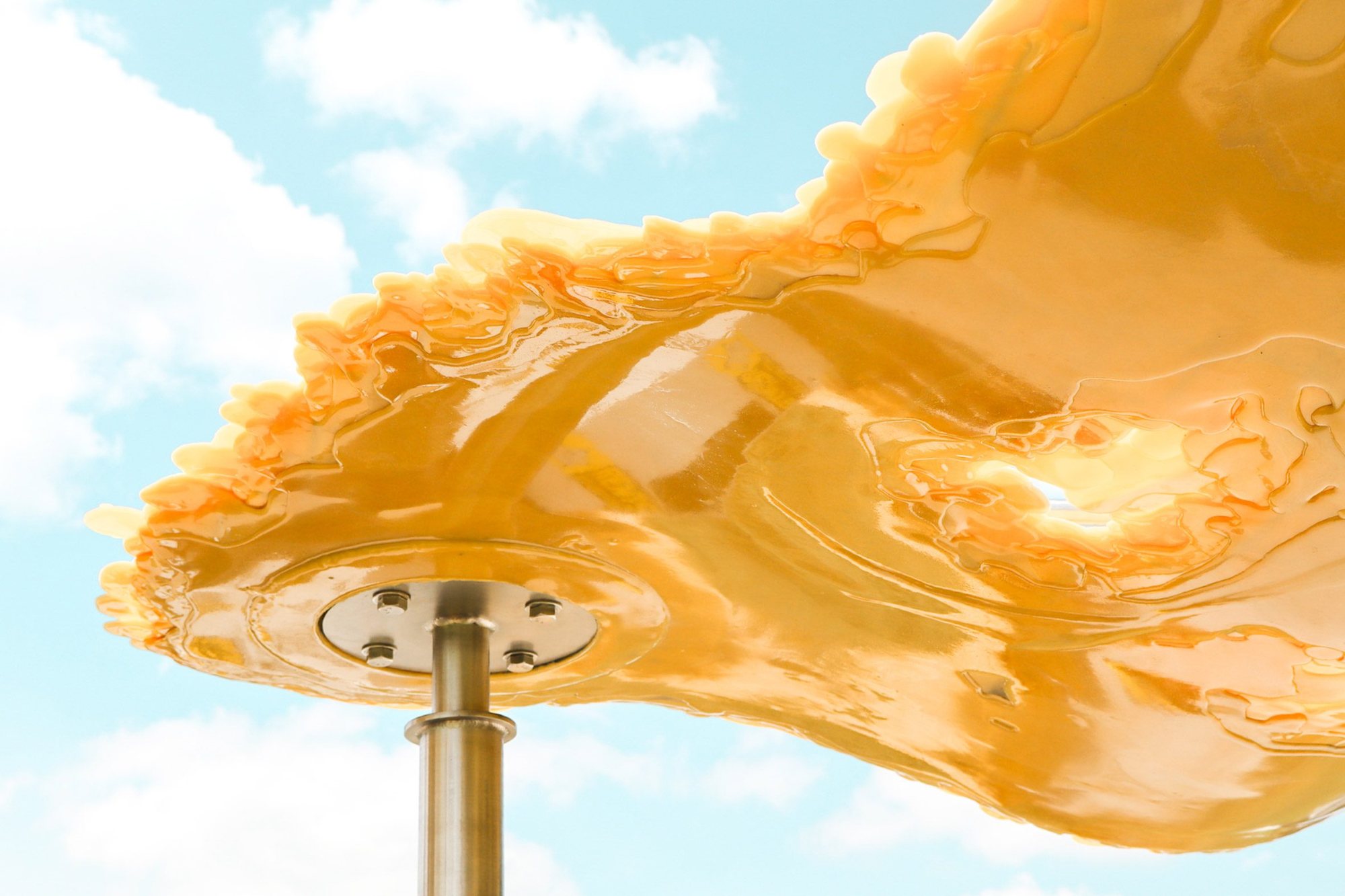
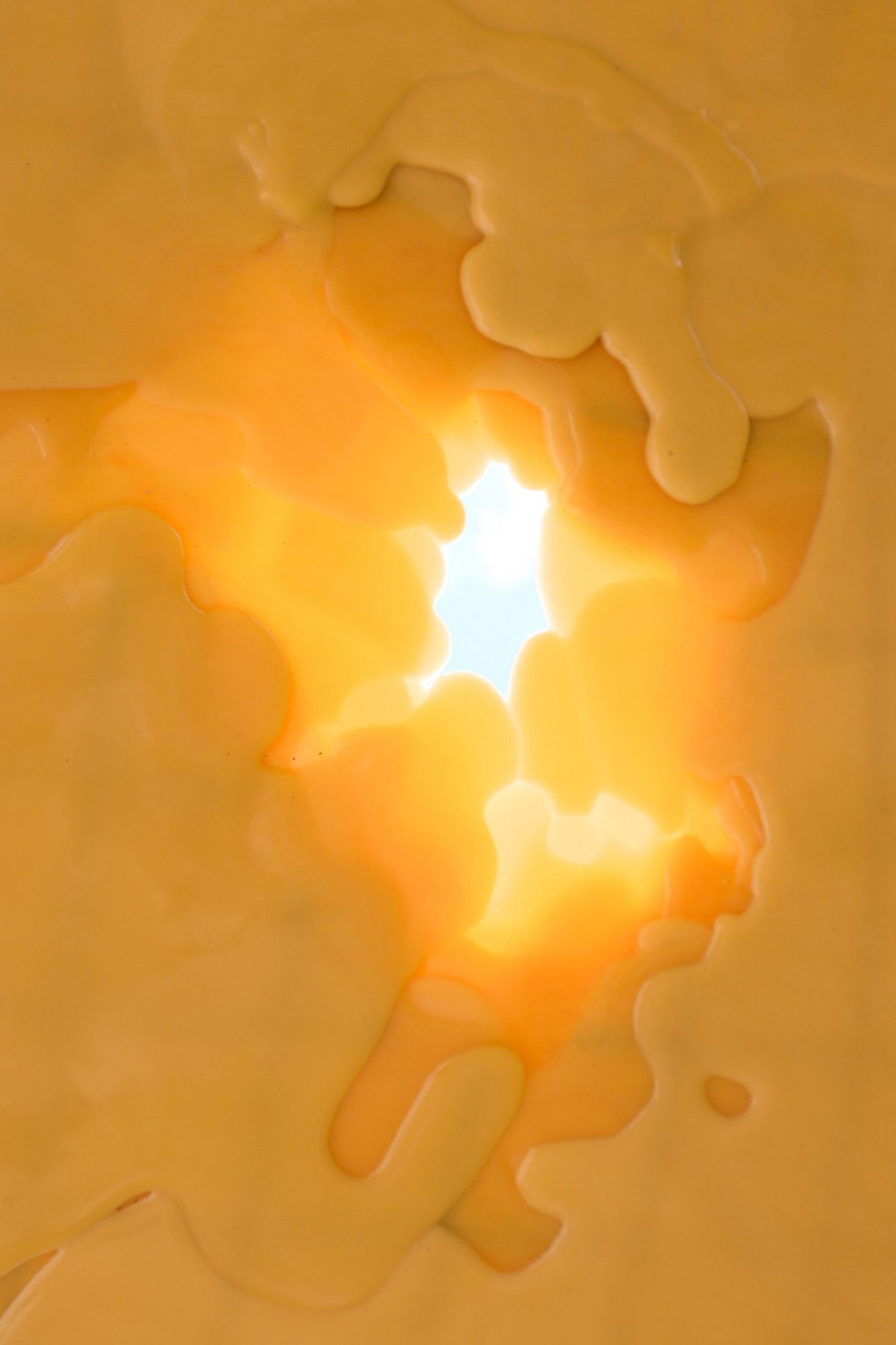
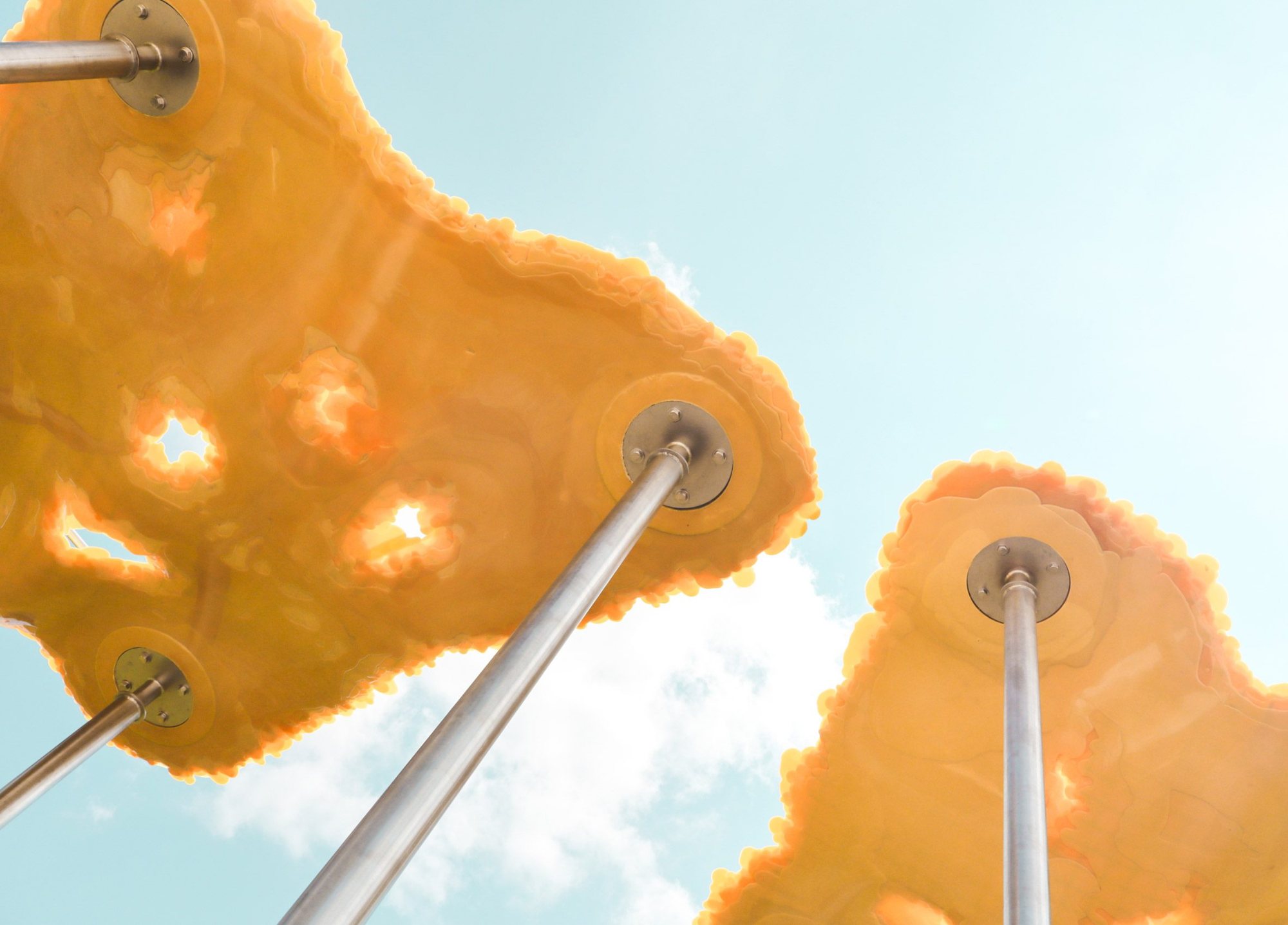
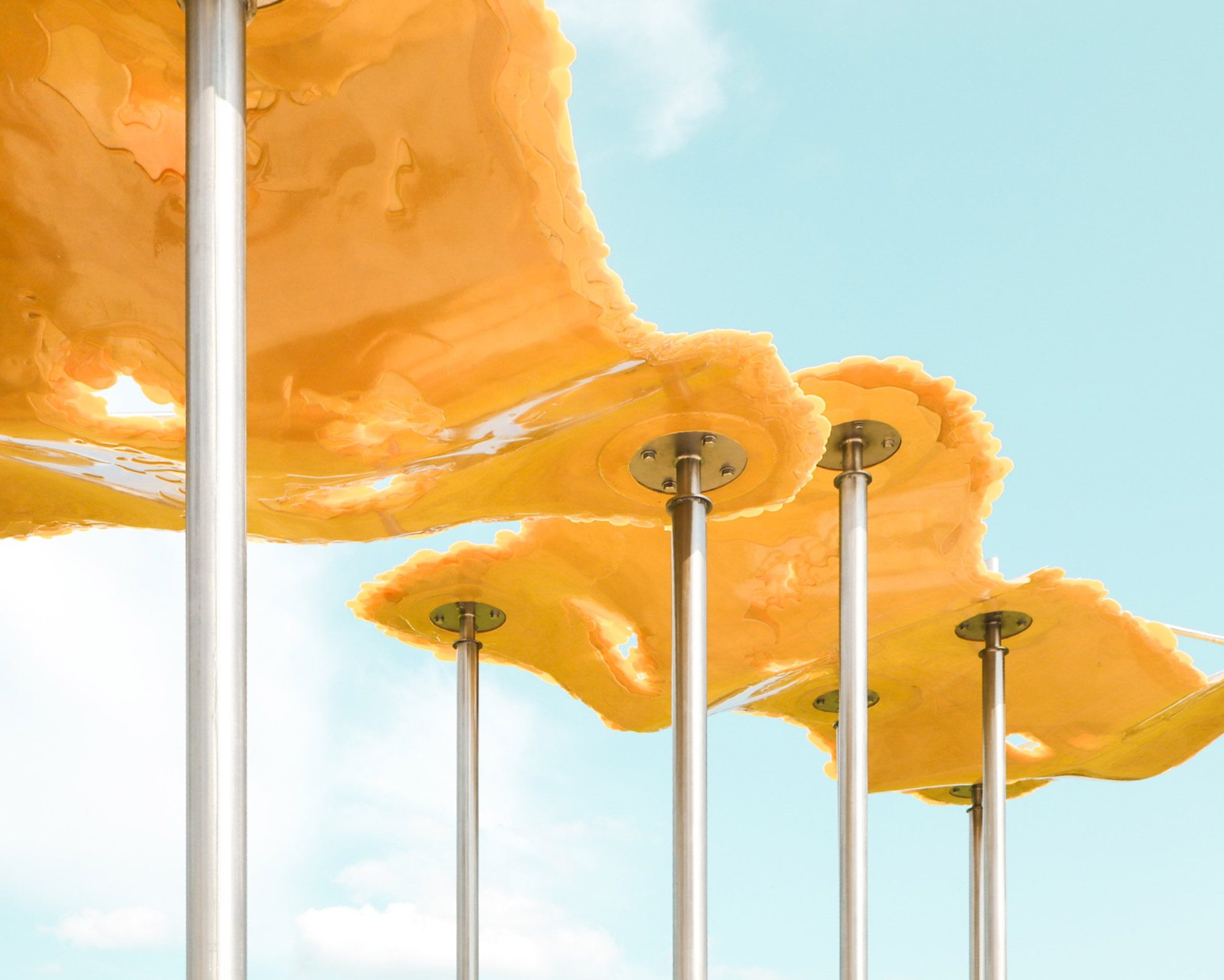
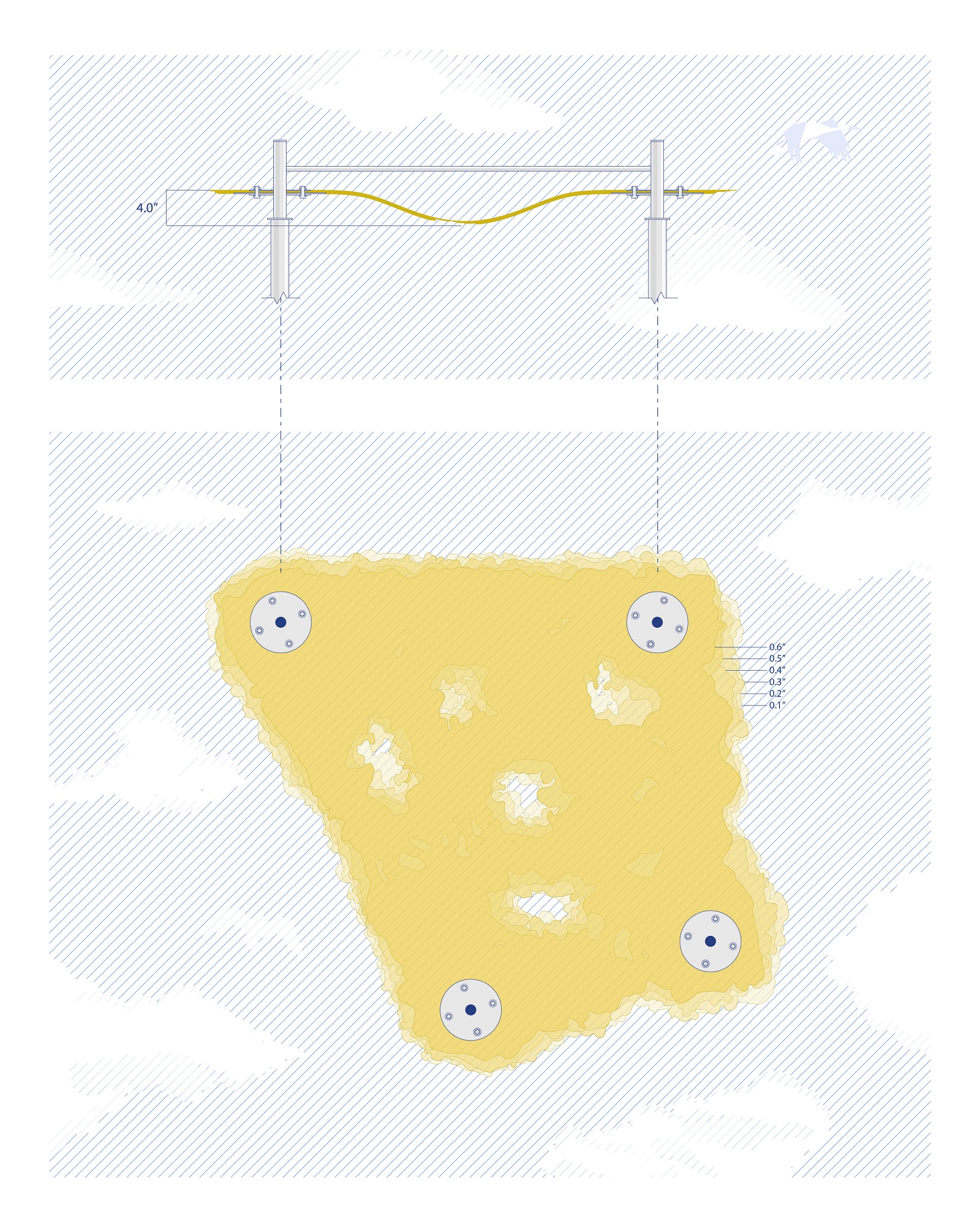
In this vein, the most satisfying detail in one of our projects is probably the steel-to-resin connection in Puddle Pavilion, a project we completed in 2024 that literally exists as a cast resin puddle floating in the air atop slender steel columns.
To execute this detail, we partnered with an engineer at Schlaich Bergermann Partner, as well as a steel fabricator based in Minneapolis, Zeus Richardson. Through extensive discussion and prototyping, we developed a detail in which cylindrical stainless-steel disks were embedded within the resin canopy and docked into corresponding disks mounted atop the two-inch-diameter steel columns, secured with nuts and bolts.
Ultimately, the detail appears subtle, but a great deal of thought and work went into achieving that subtlety.
Do you have a favorite material?
Throughout our career, we have worked with myriad novel materials—straw, stucco, canvas, paper, bio-resin, coffee grounds, and earth, to name a few. While each has presented its own benefits, we keep coming back to wood and timber.
Sometimes people forget that wood is also a biomaterial; it seems mundane and commonplace, but is actually one of the rarest materials in the universe. In many ways, it is almost a perfect construction material: sturdy, yet forgiving; strong in both compression and tension; capable of supporting both high-tech and low-tech forms of construction.
Homo sapiens evolved in close relationship with trees, and I think we remain biologically inclined toward the material.
What is your process for starting a new project?
Every project takes a slightly different path. As much as we, and everyone else, might want there to be, there is no formula for design. That is one of the things that makes it so difficult to teach.
It is also why the cliché, “the process is just as important as the product,” has endured for so long. The iterative process—brainstorming, model making, sketching, reading, talking—is not formulaic; it is exploratory, and each project sets us down that journey anew.
How do you fuel your creativity?
So to speak, we try to keep our antennas up. It is easy, as you get older and caught up in the grind, to become comfortable keeping your head down.
We try to be intentional about staying open to new things and receptive to the interesting stuff happening around us. We love to travel, see new places, visit exhibitions, and read new books—the usual things.
I think the real trick is simply remaining open to new experiences and saying yes more often.
What inspired the Ghost House?
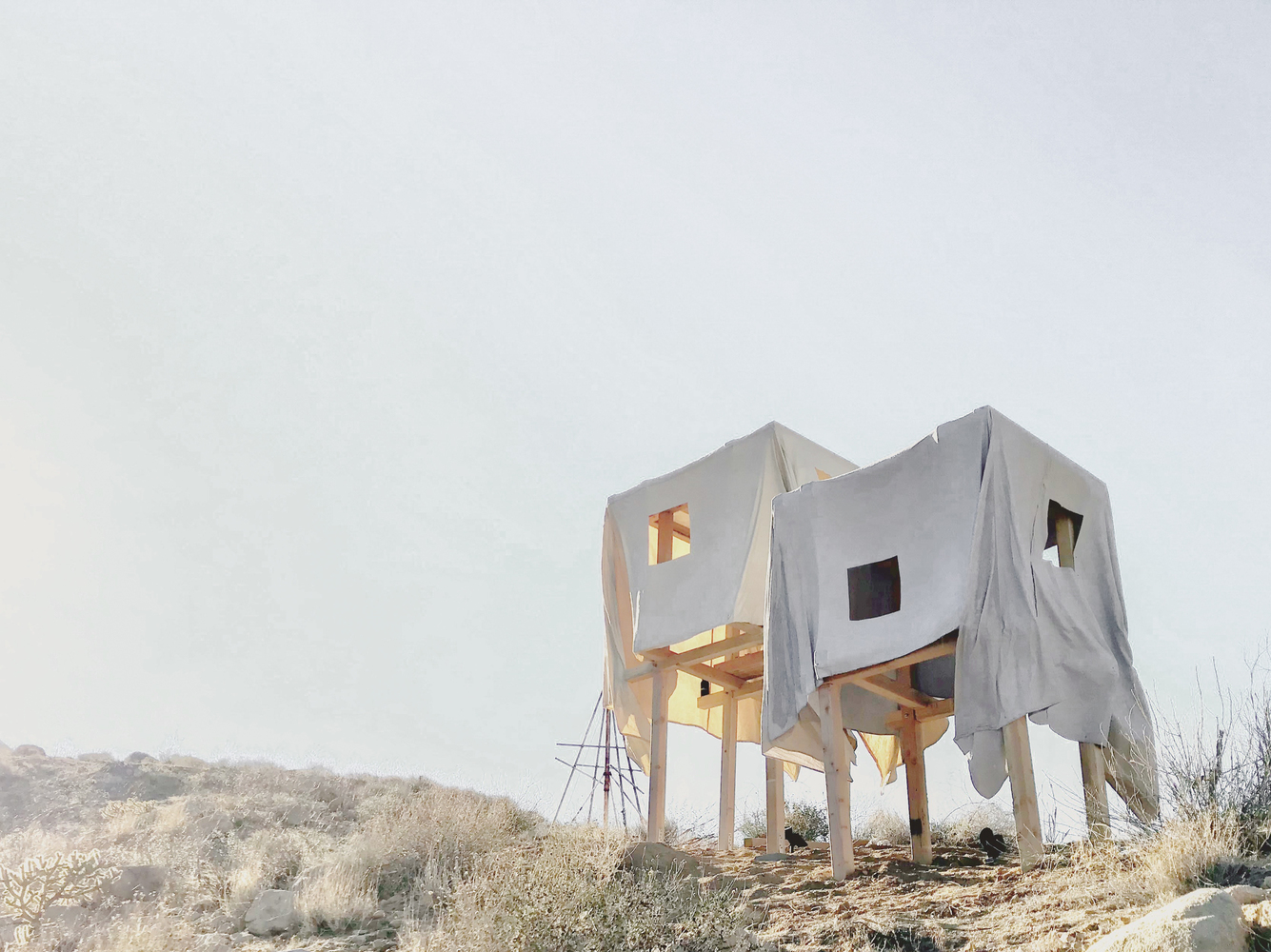
Ghost House was commissioned for a festival hosted by a mentor of ours called Space Saloon: Landing, which prompted participating designers to imagine novel ways of collecting environmental data and implementing it creatively within a design project.
The site was located in the high desert of California. We were inspired by the strong gusts of wind and envisioned a structure that would itself act as a kind of recording device.
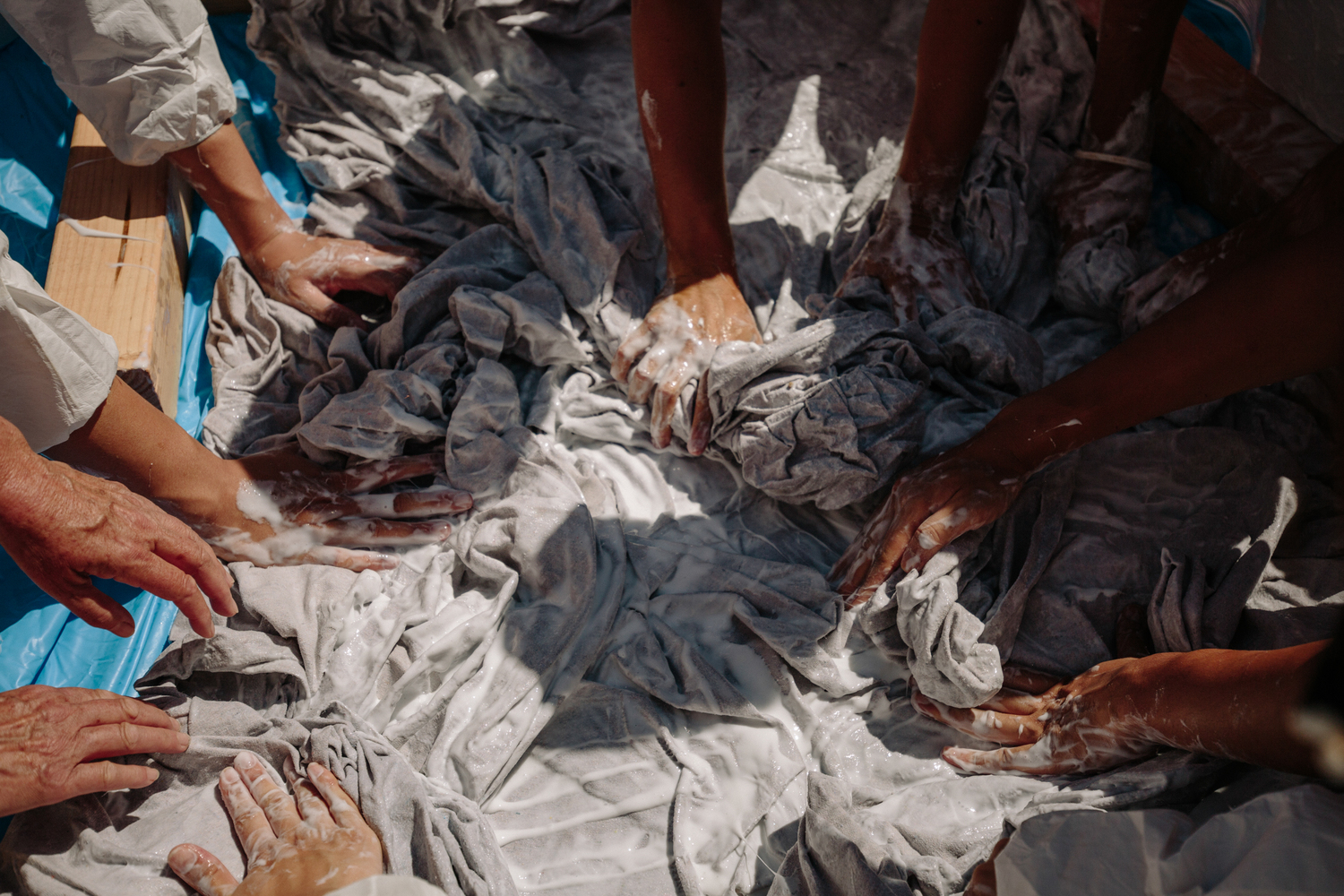
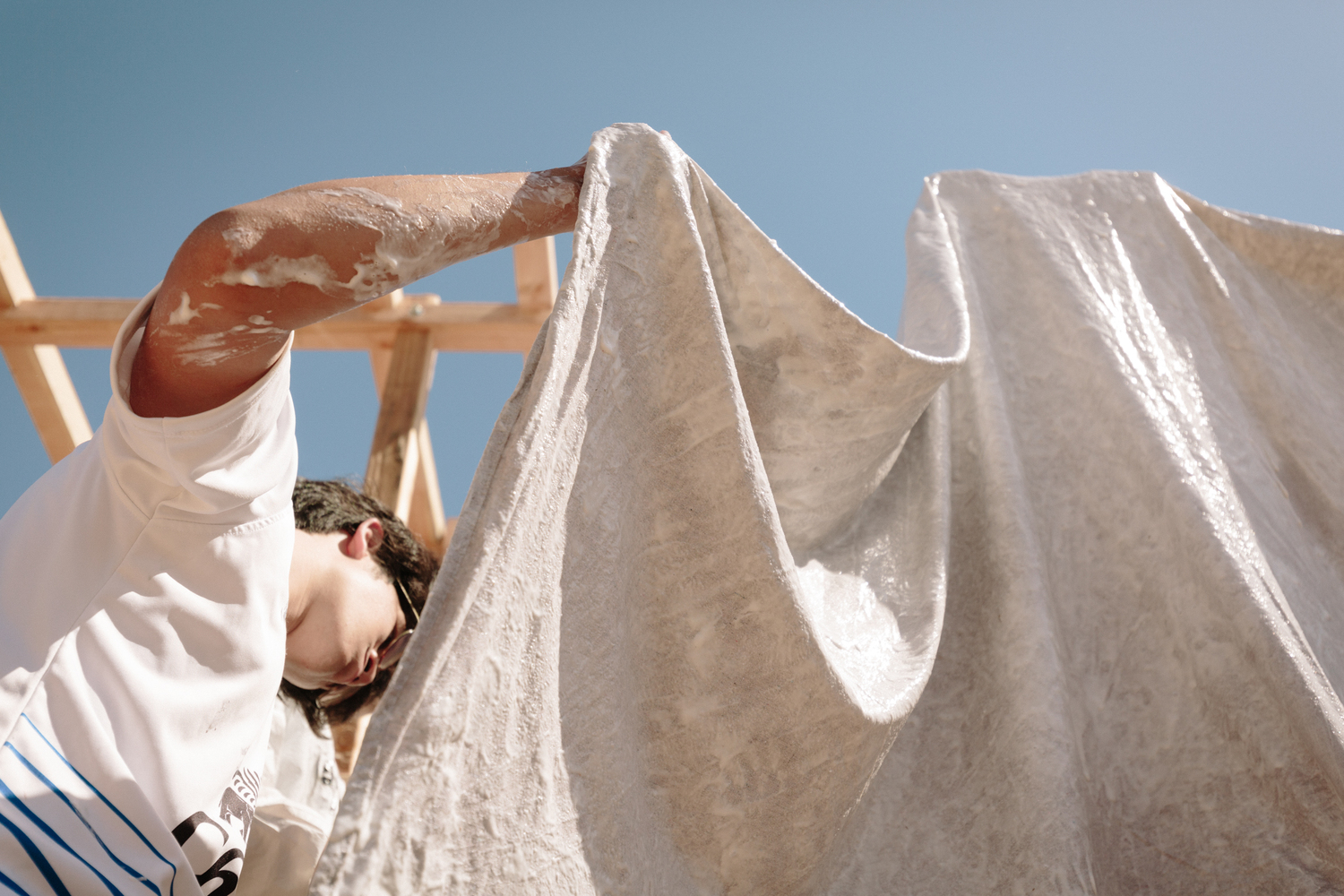
Our team first erected a series of lightweight wooden frames atop a mountain. Next, we filled a kiddie pool with Elmer’s glue and soaked custom-order canvas sheets until they were fully impregnated. Finally, we draped the canvases over the frames and let them dry in the wind. Over the course of just a few hours, they became rock solid.
Here, the structure itself functions as a recording device attuned to its environment, embodying the specific microclimate of the site at a particular moment in time. In this way, the project is a ghost—a physical sketch or imprint of the past haunting the present.
How did materiality shape the Agg Hab Prototypal Eco-Dwelling?
It is perhaps a surprising answer, but what has come to define the project—the innovative use of paper—was not the starting point.
Agg Hab Prototypal Eco-Dwelling was first envisioned as a novel construction process in which mirrored holes could be used to cast thin-shell caps that could, in turn, be flipped over to create roofs for those same holes. In large part, the initial idea was purely conceptual—not in the architecture-school sense of the word, but in an art-historical sense. We wanted to investigate a kind of formal reciprocity between the formwork—in this case, the earth itself—and the casting—in this case, the shell.
That was the idea; it was the implications of that endeavor, however, that ultimately justified the project. By using the formwork—the hole—as part of the structure, material costs could be reduced by roughly 50 percent, and the entire process became easier to manage.
Initially, we wanted to construct the structure out of concrete; however, it ultimately proved cost prohibitive. The idea to use paper emerged as a low-cost alternative.
After about a year of testing different papers and adhesives alongside our collaborators at Roundhouse Platform, we ended up constructing the final pavilion using builder’s paper—a product itself made from recycled paper—and wheat paste that we cooked ourselves using only flour and water.
The process of casting the shells became remarkably similar to the papier-mâché projects many of us remember from childhood, just on a much larger scale.
For us, the project became an example of how innovation can emerge from a lack of resources; more money almost never begets better art.


What advice would you give to young architects?
This is a tricky one. In some ways, we are hesitant to give concrete advice. We forged a path that worked well for us, but it may not be as relevant in the current media and economic landscape.
In their song Fearless, Pink Floyd sings, “I’ll climb the hill in my own way,” and I think that is really the challenge facing each generation. The conventional wisdom of the previous generation is often outdated; the most successful young architects will not follow in our footsteps—they will find their own way.

