

Architects: TIMM
Area: 1010 m²
Year: 2025
Photography: Grigoriy Sokolinsky
Lead Architects: Nikoloz Lekveishvili
Design Team: TIMM
Manufacturers: Louis Poulsen, Porro, RBW
City: Tbilisi
Country: Georgia
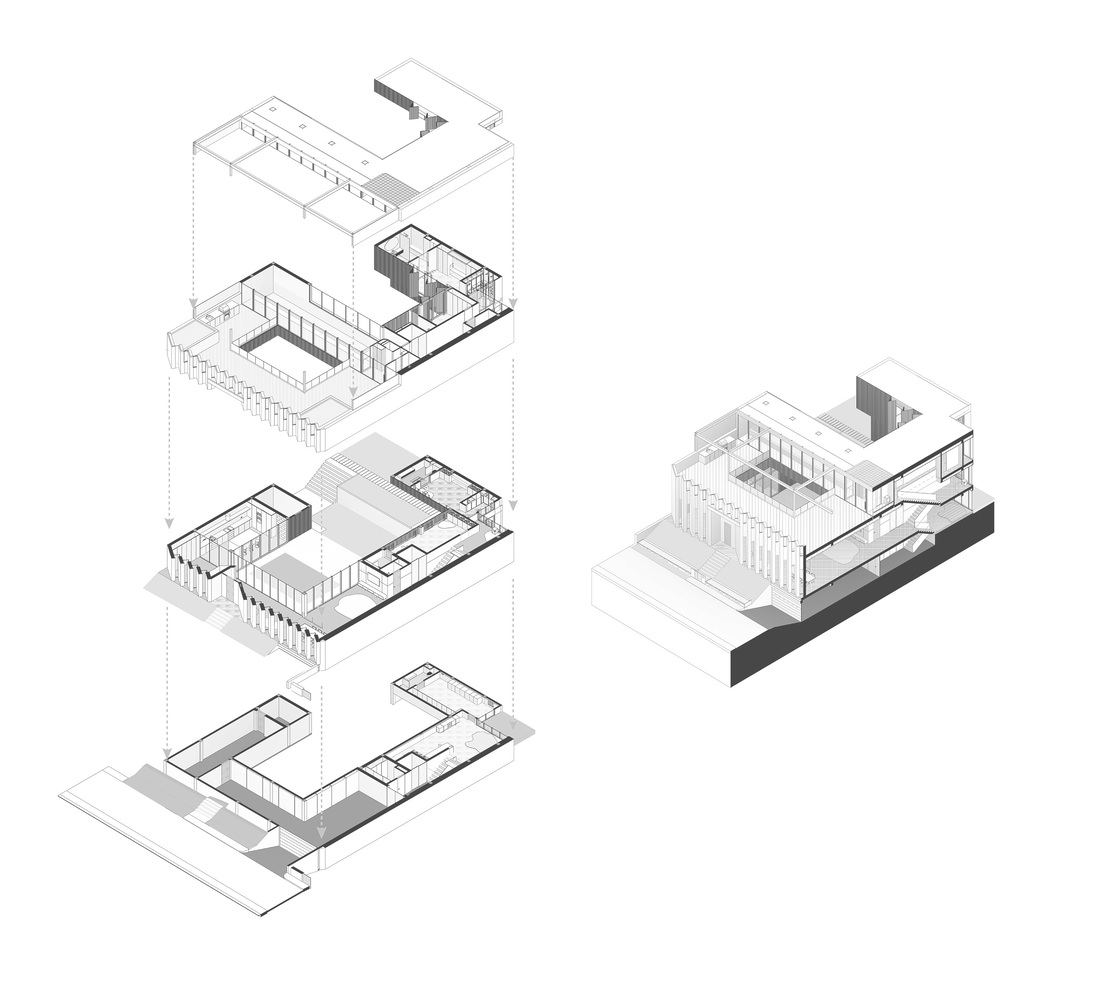
Inverted House, designed by TIMM in Tbilisi’s Okrokana district, reimagines suburban residential architecture through a typology shaped by inwardness and spatial introspection. Built on a constrained hillside plot enclosed by neighboring walls, the project rejects the conventional separation between house and boundary by transforming the building itself into a protective perimeter. Organized around a central courtyard and a secondary garden facing the street, the residence generates privacy, daylight, and openness from within rather than relying on outward orientation. The sectional composition rises to three stories at the rear while maintaining a restrained street-facing presence, creating a sequence of split-level spaces and a double-height living area that intensifies spatial continuity. Materially, the design reinforces its conceptual framework through a progression from charred timber cladding on the exterior to untreated natural wood in the courtyard and luminous white interior finishes. Through this layered spatial and material strategy, the project converts restrictive site conditions into a carefully calibrated domestic environment that proposes a new model for dense suburban living.
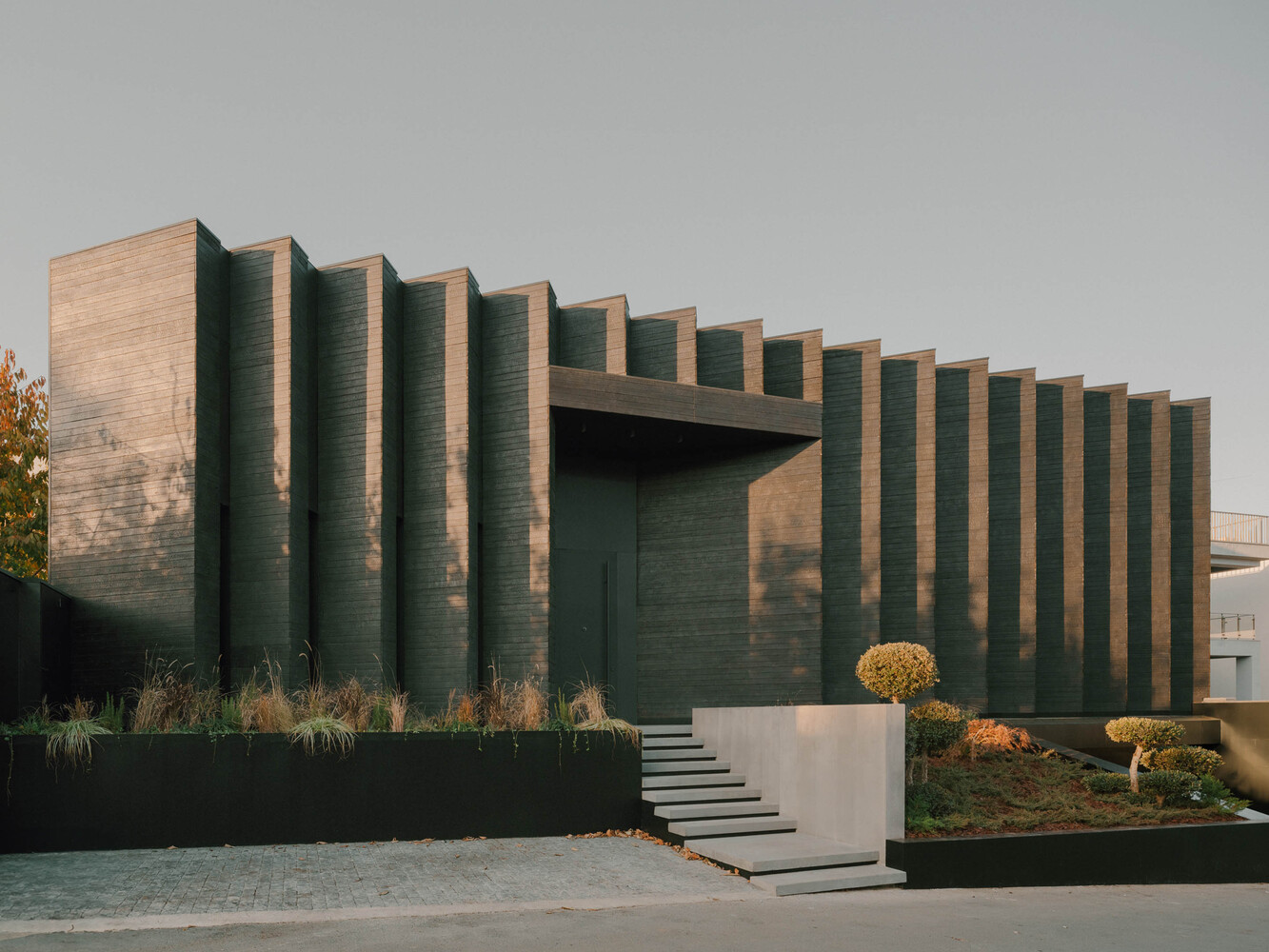
The architectural proposition of Inverted House emerges from a deliberate reconsideration of suburban enclosure as a spatial asset rather than a constraint. In many of Tbilisi’s hillside residential districts, the dominance of perimeter walls has produced fragmented streetscapes defined by separation and opacity. Rather than replicating this defensive condition, TIMM reframes it through an architectural response that internalizes the logic of enclosure and transforms it into the generator of domestic experience.
Located in Okrokana, an elevated residential district on the outskirts of Tbilisi, the project occupies a site constrained on three sides by neighboring walls and exposed to the street only along its fourth edge. Although the area is often regarded as prestigious due to its topographical position and relative proximity to the city, its physical reality is one of compressed plots and limited visual openness. These conditions offered little opportunity for outward-facing views or conventional façade articulation.
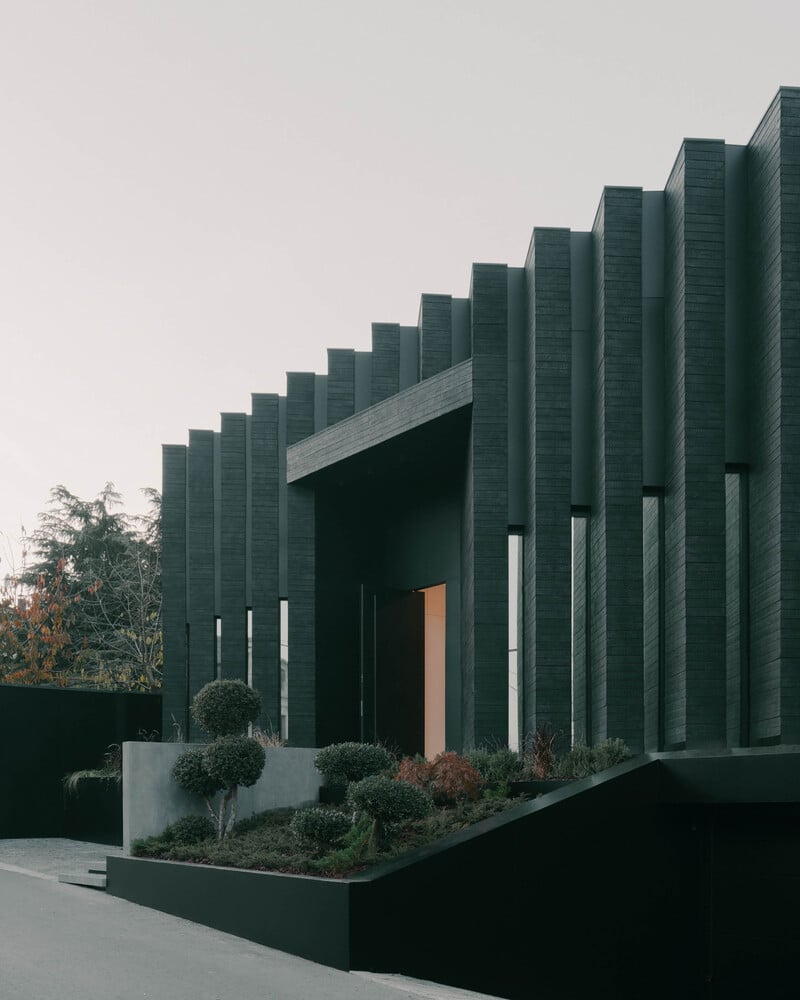
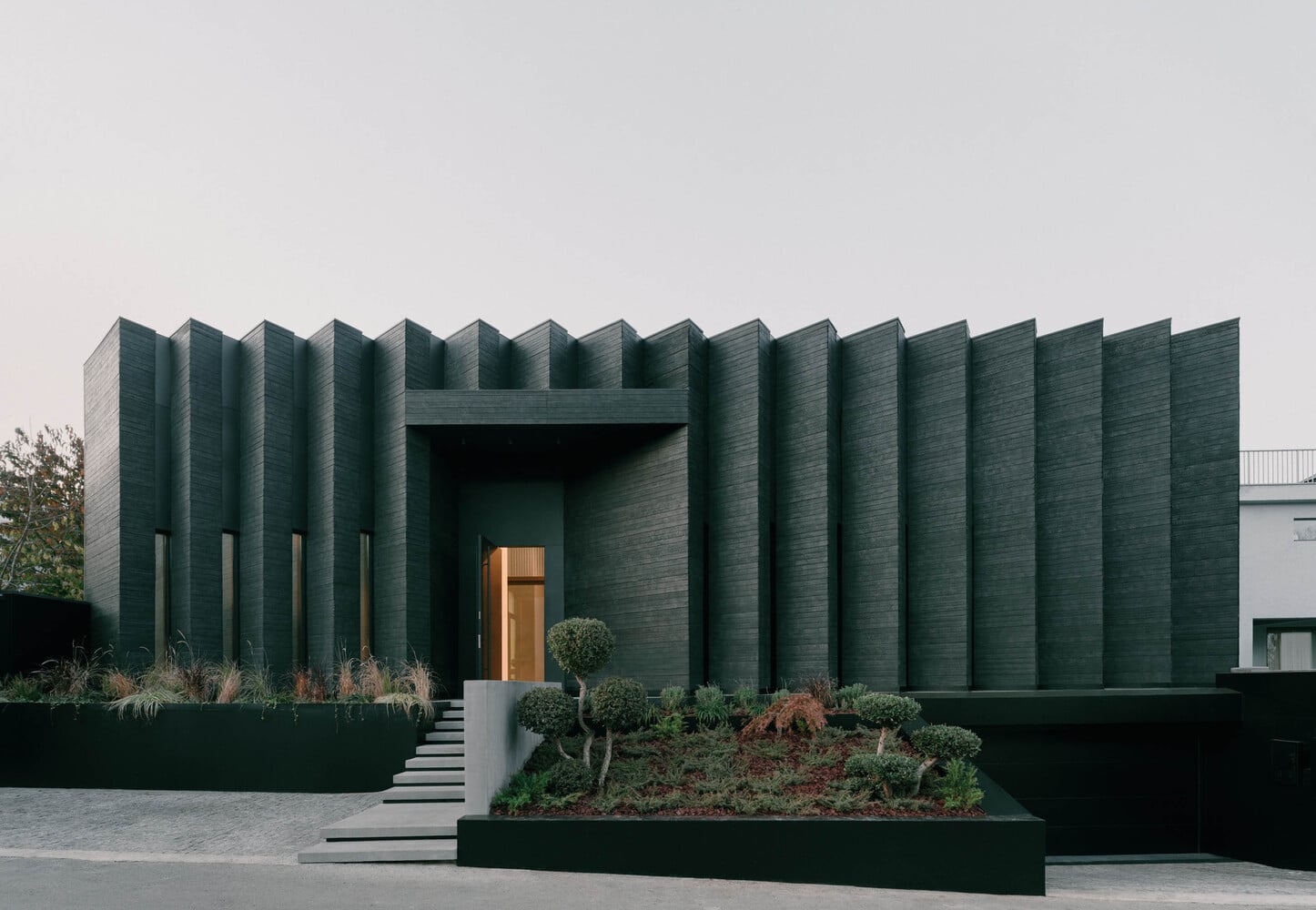
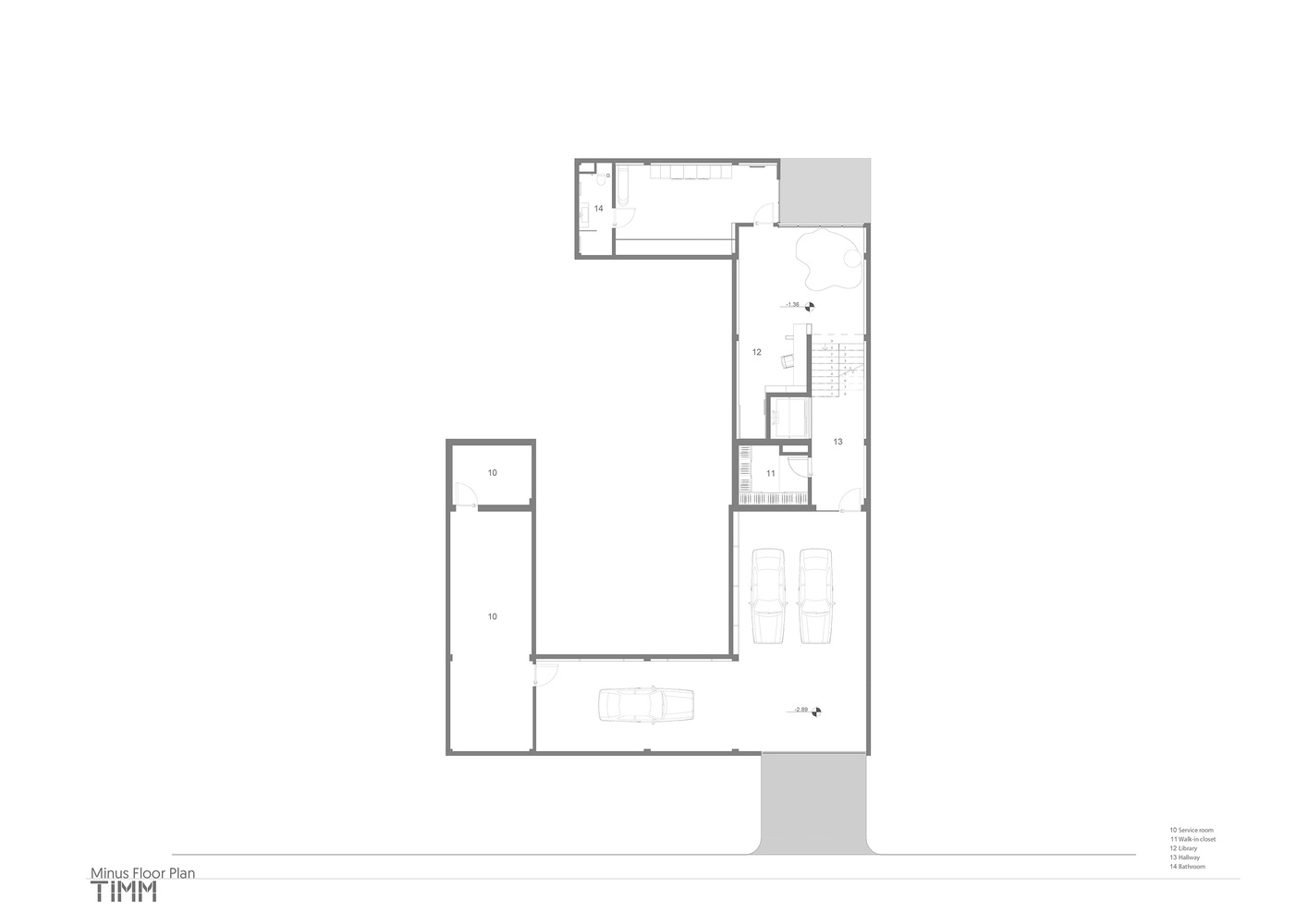
Instead of forcing visual connections to an inhospitable context, the architects developed an alternative typology in which the house itself becomes the perimeter. This inversion eliminates the need for a separate boundary wall and establishes the architecture as both enclosure and inhabitable space. Slightly recessed from the street line, the building softens its relationship to the public realm while maintaining privacy through form rather than imposed barriers.
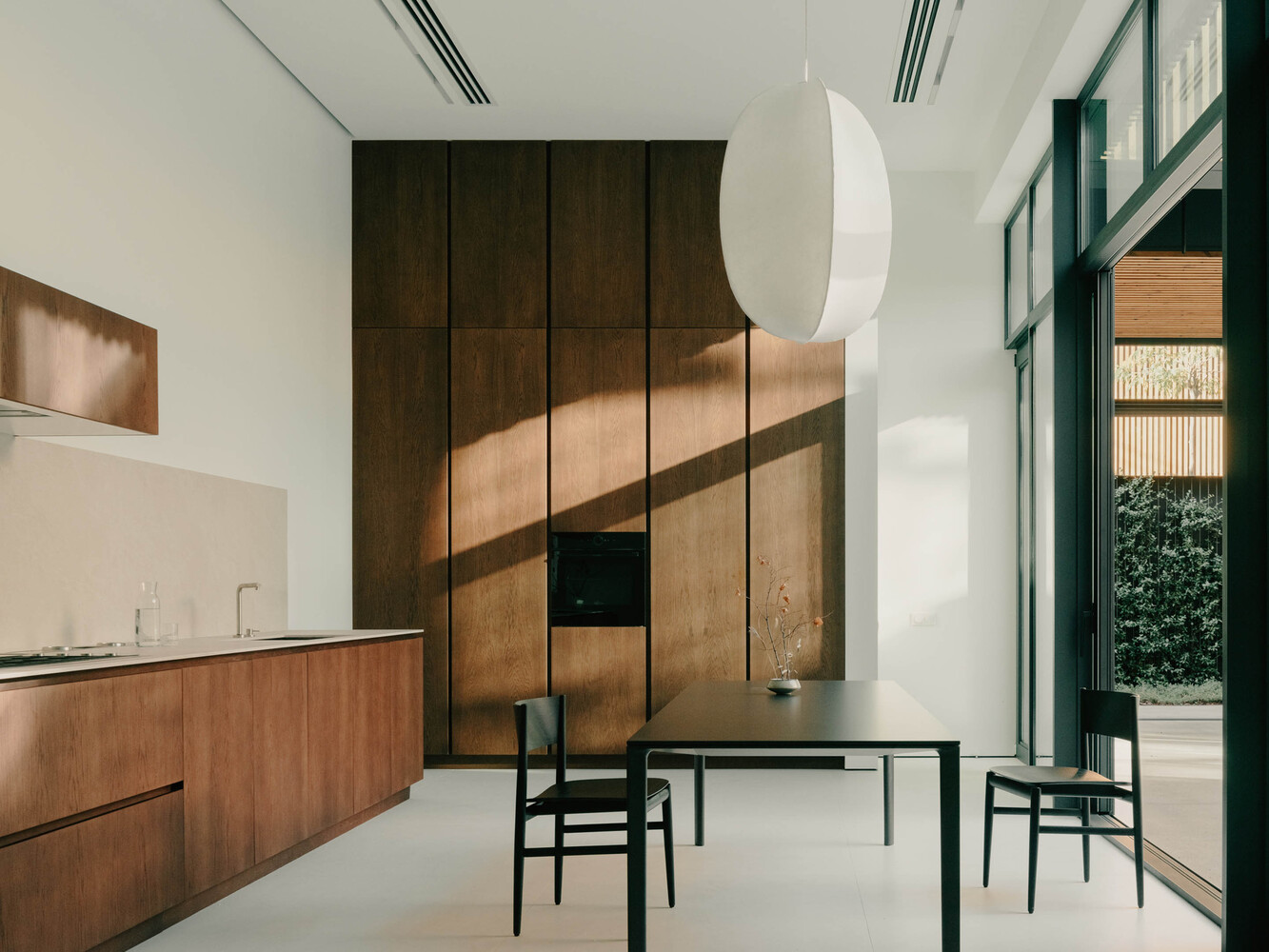
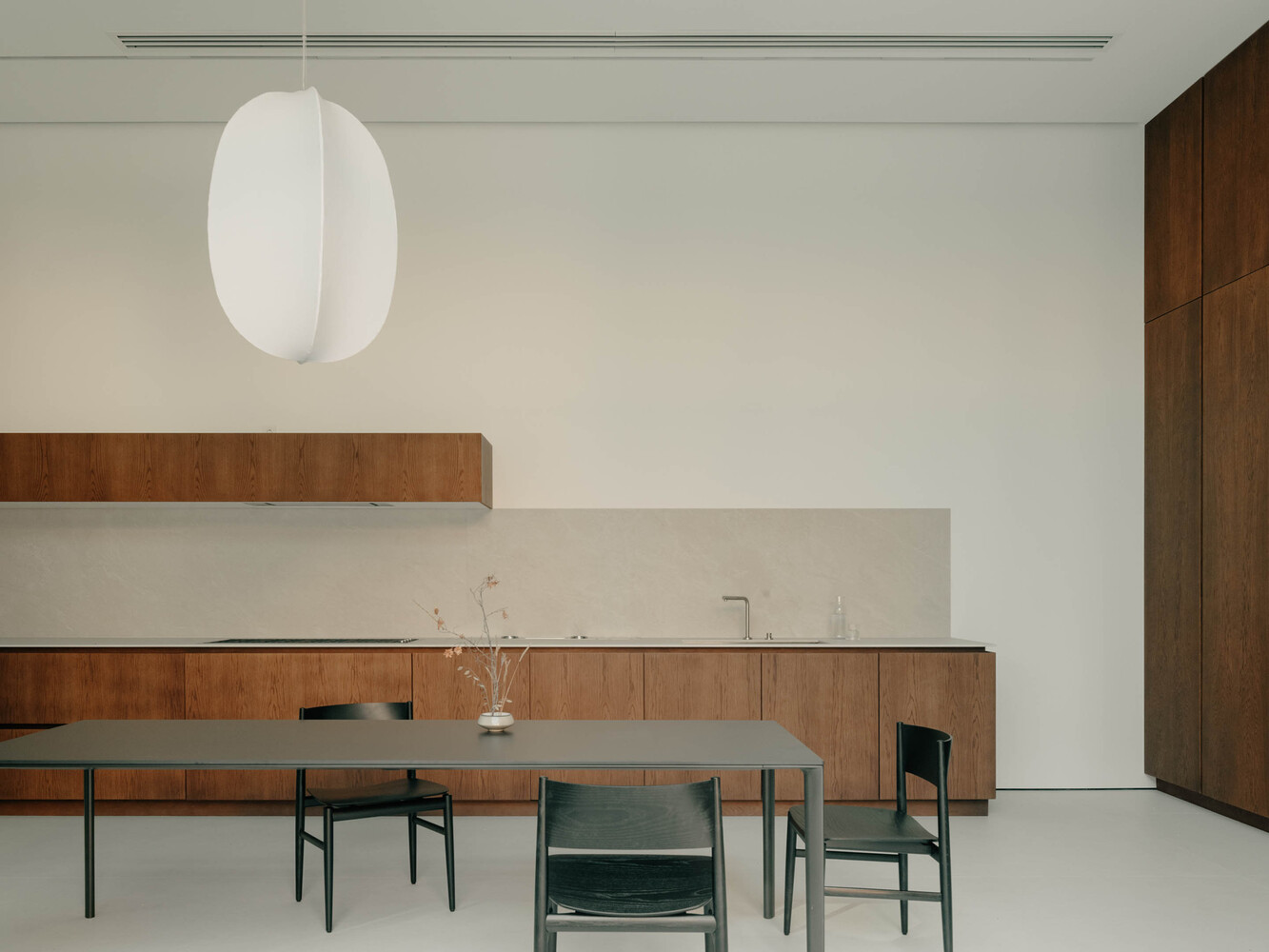
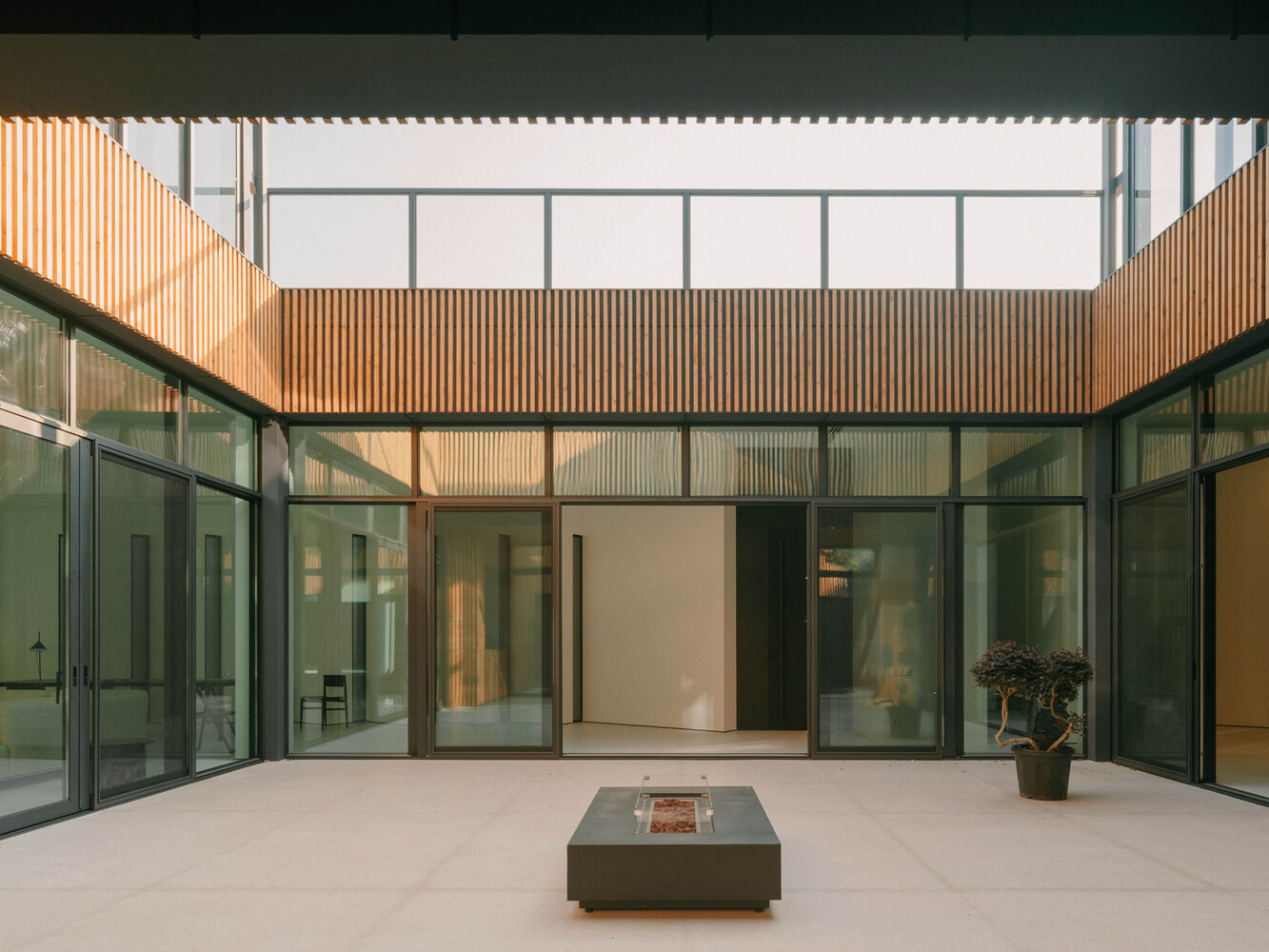
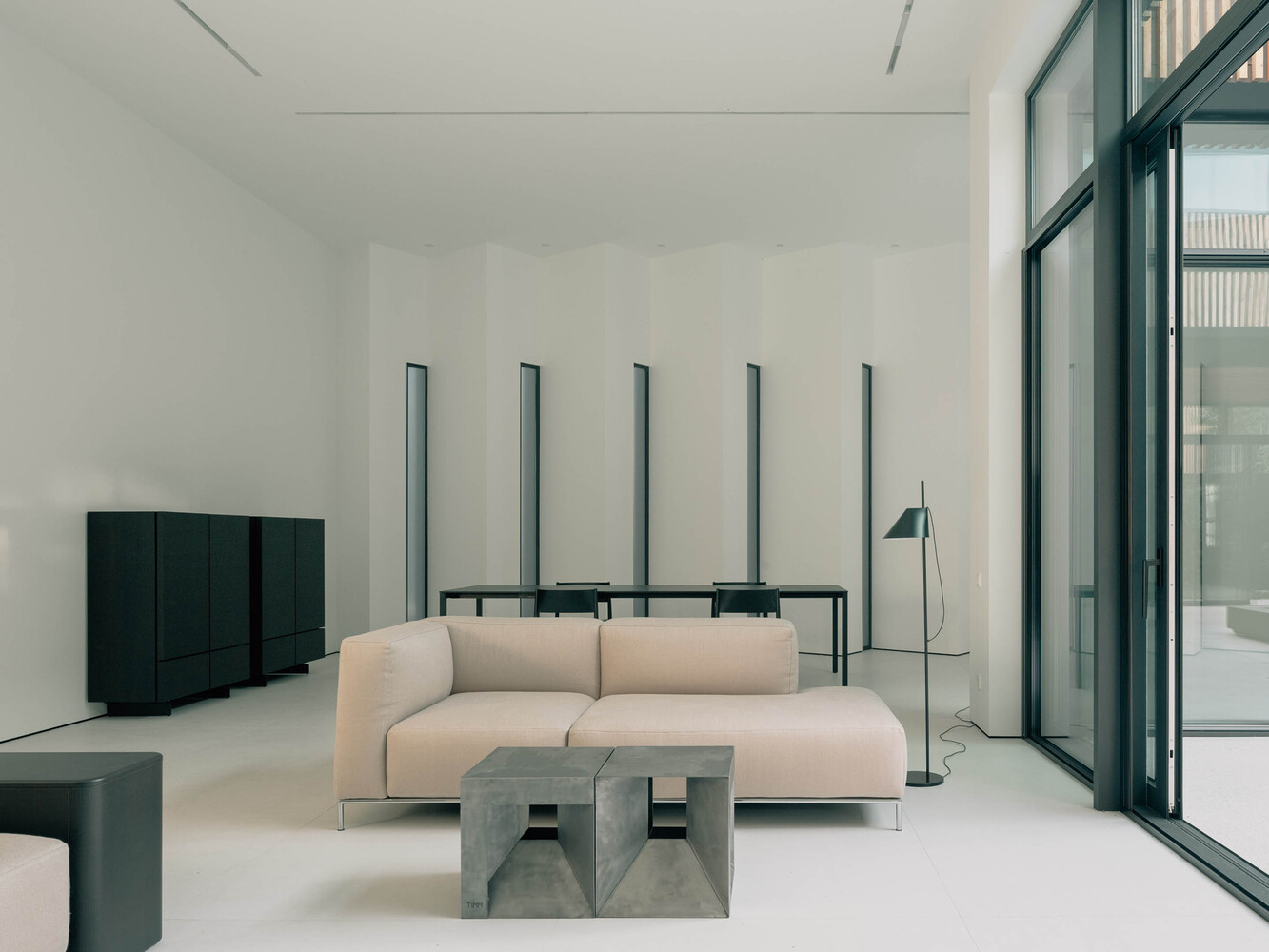
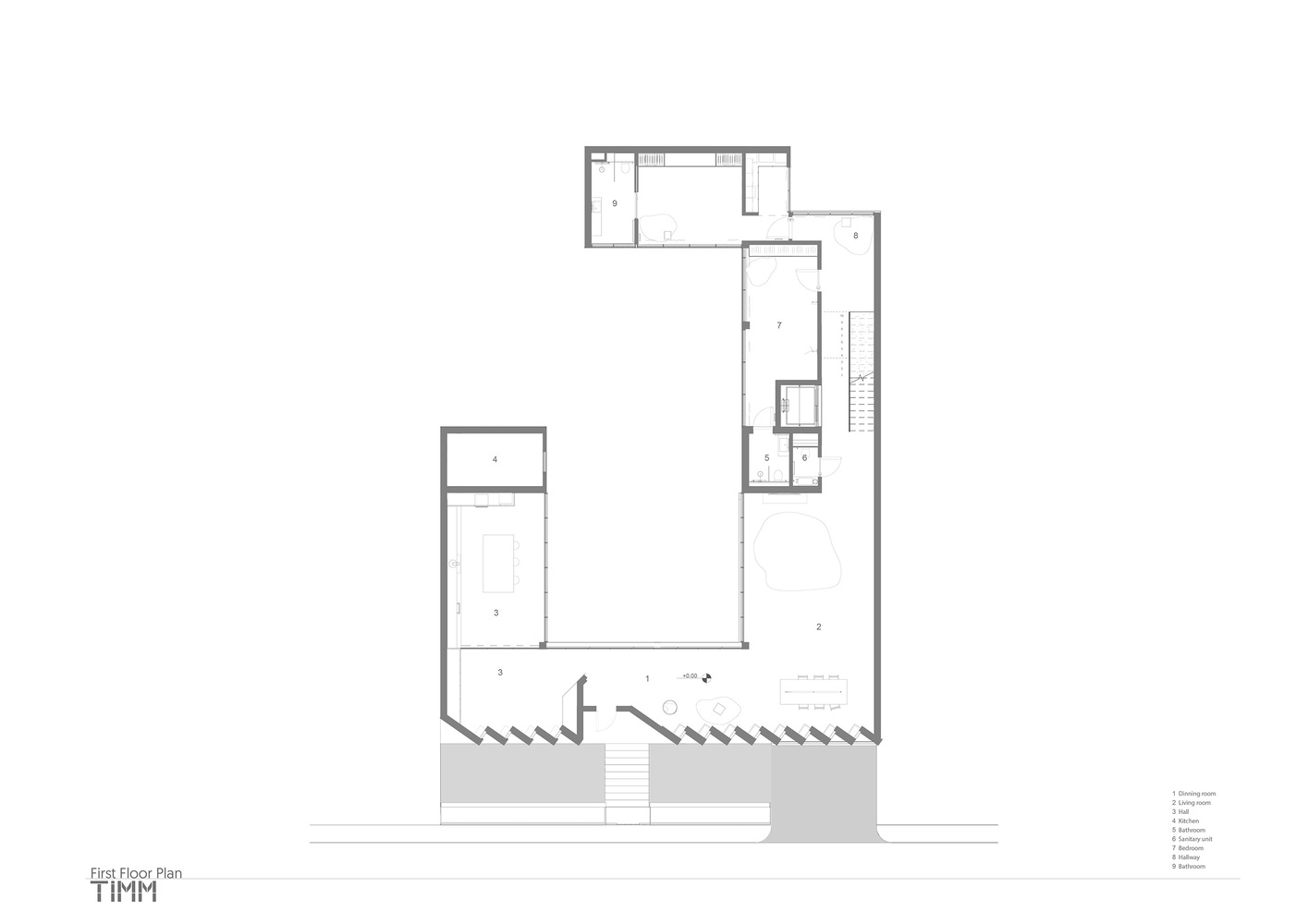
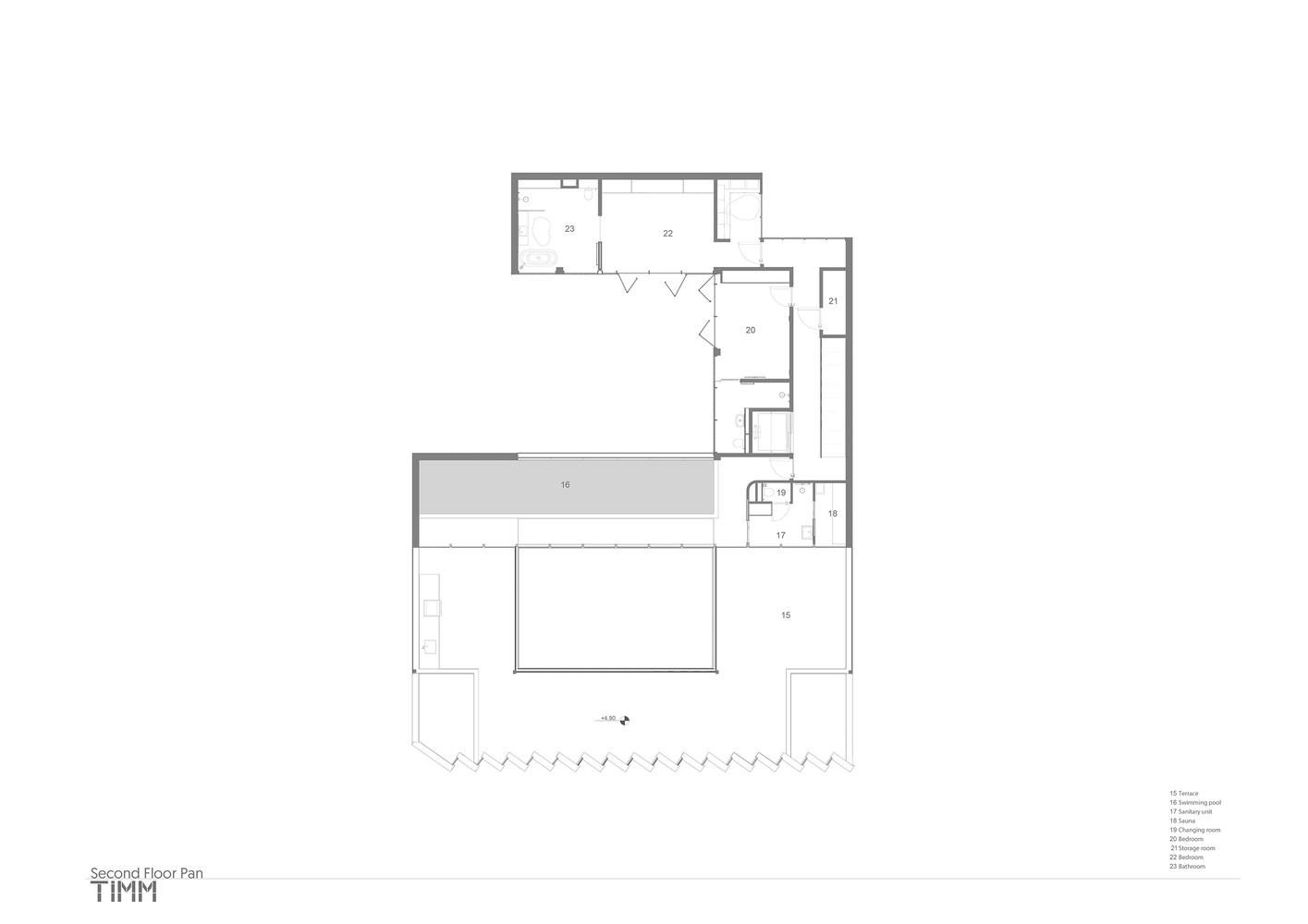
At the center of the composition lies the internal courtyard, conceived as the true heart of the residence. More than an outdoor void, this space functions as an open-air central hall around which the daily rhythms of the house are organized. The entrance hall, kitchen, and living spaces all orient toward this interior landscape, allowing natural light and visual continuity to permeate the plan while creating a fluid exchange between enclosed and open-air environments.
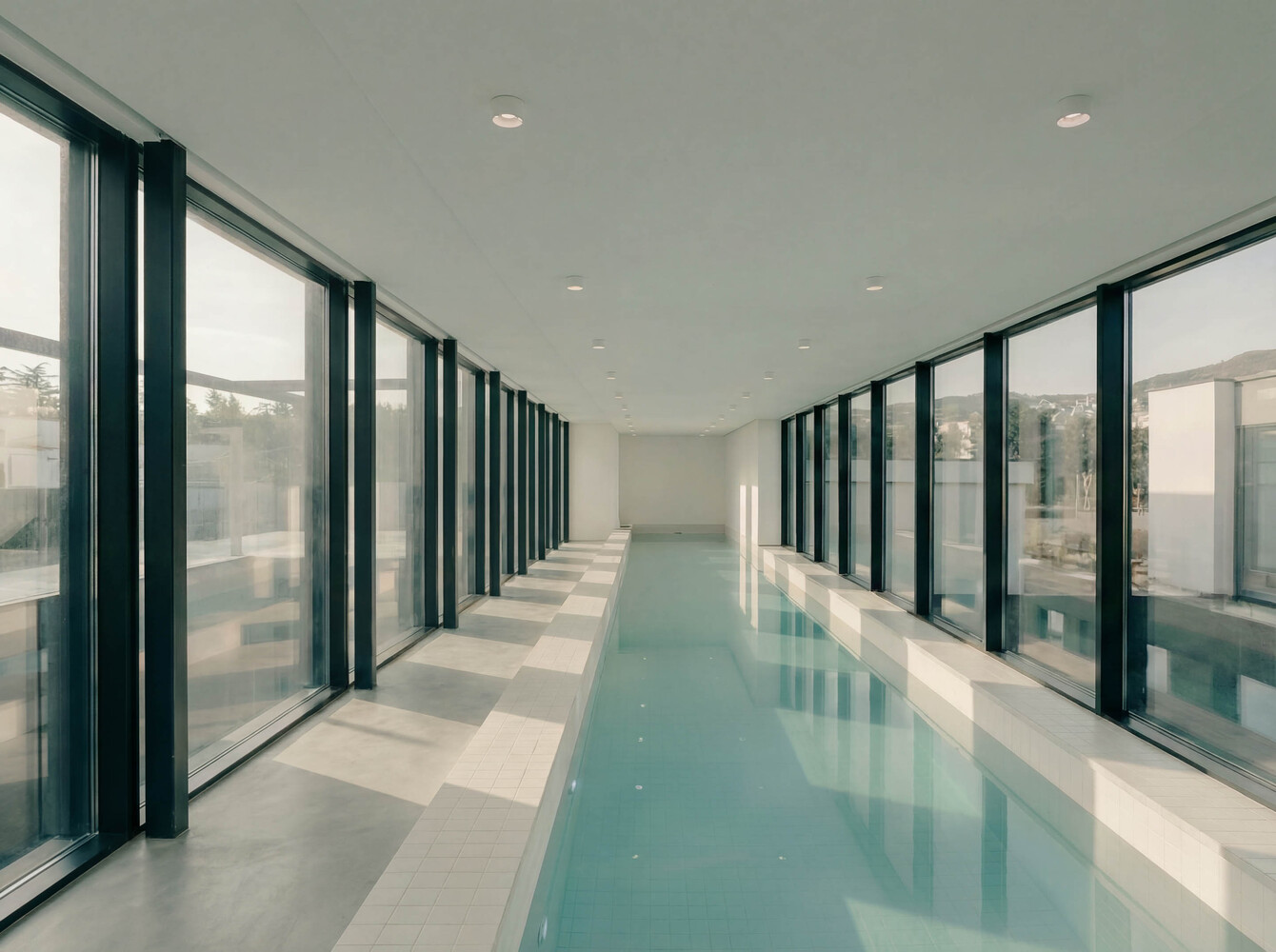
The sectional organization intensifies this sense of spatial dynamism. Responding to the site’s slope, the house presents itself as a restrained single-story volume from the street while extending upward to three levels at the rear. This manipulation of height allows for intermediate half-levels and a double-height living space that unfolds gradually through the interior. The suspended swimming pool spanning the courtyard introduces a dramatic architectural gesture, simultaneously bridging upper levels, filtering light below, and reinforcing the project’s emphasis on layered spatial relationships.
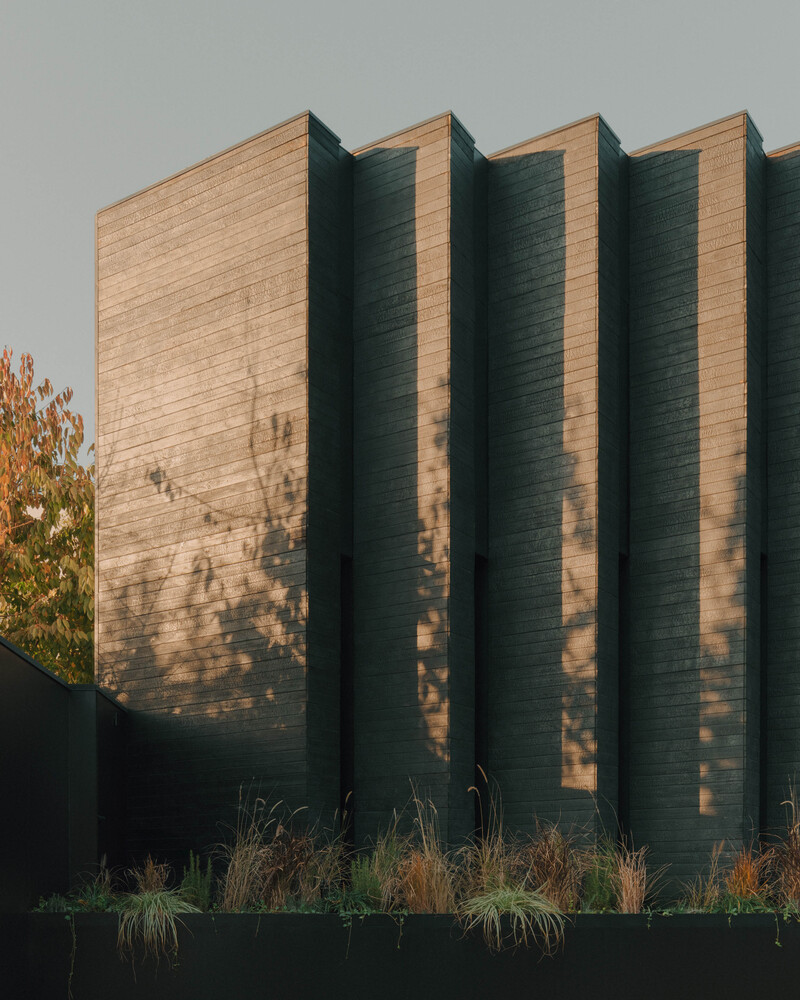
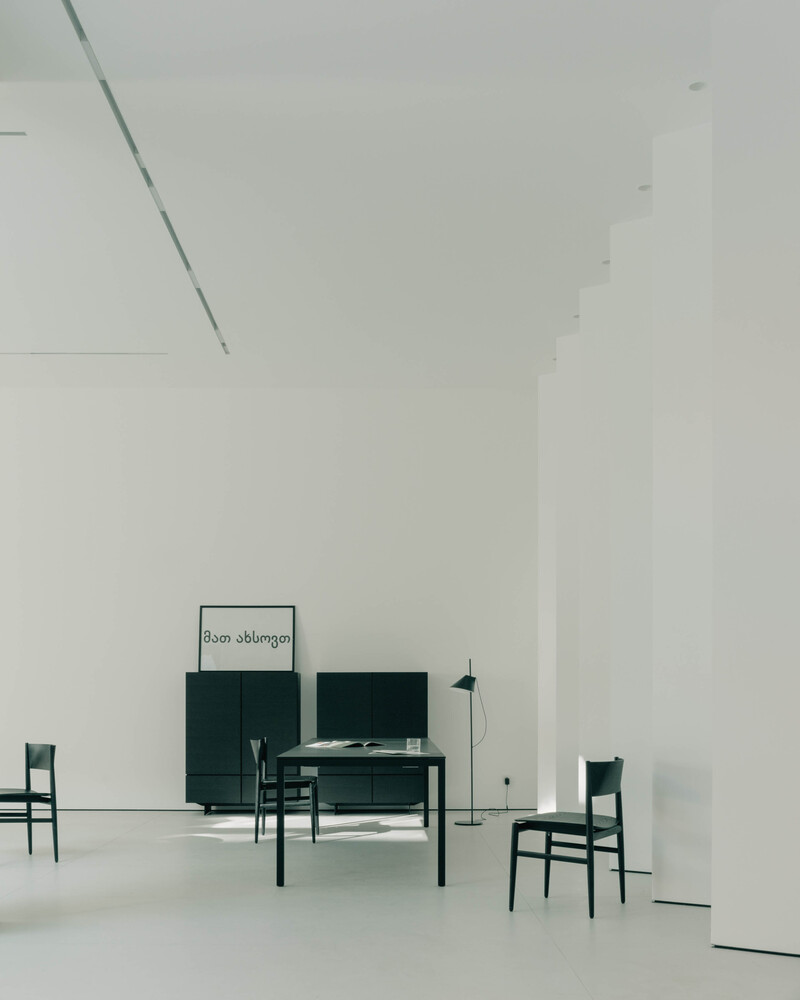
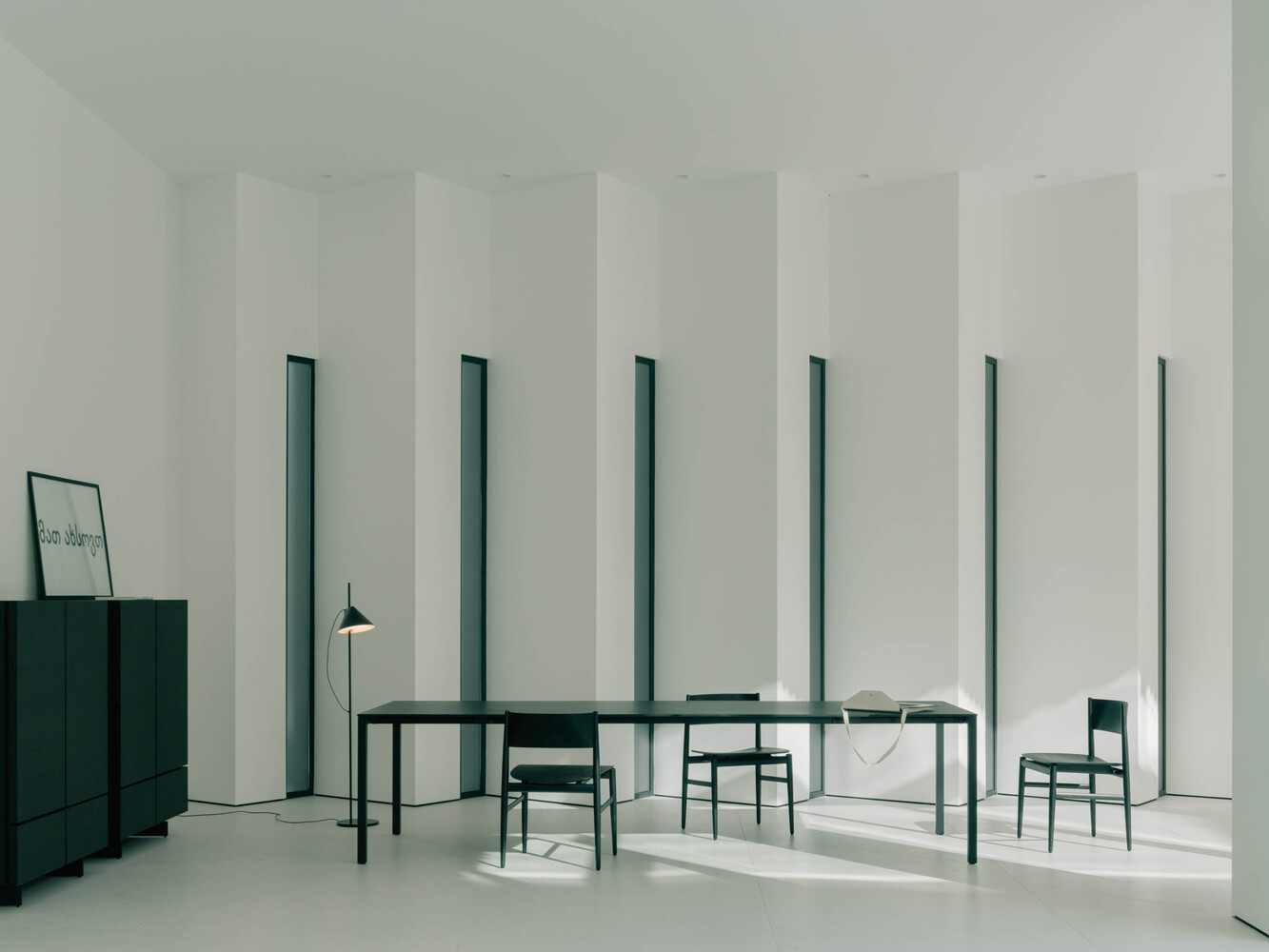
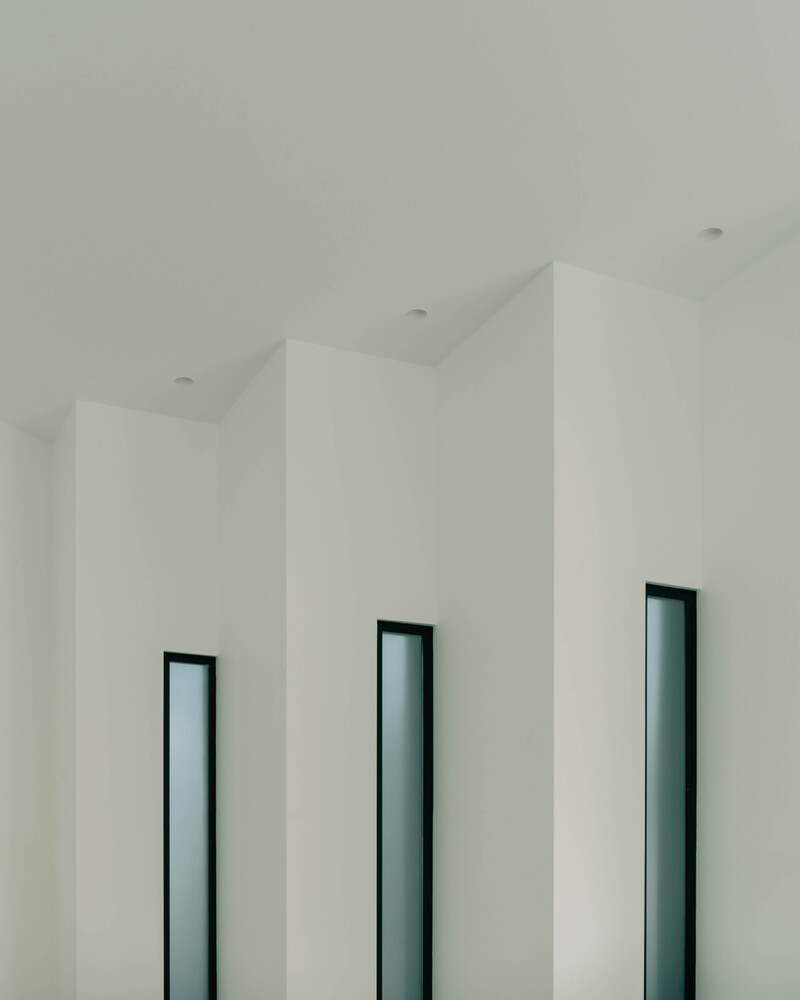
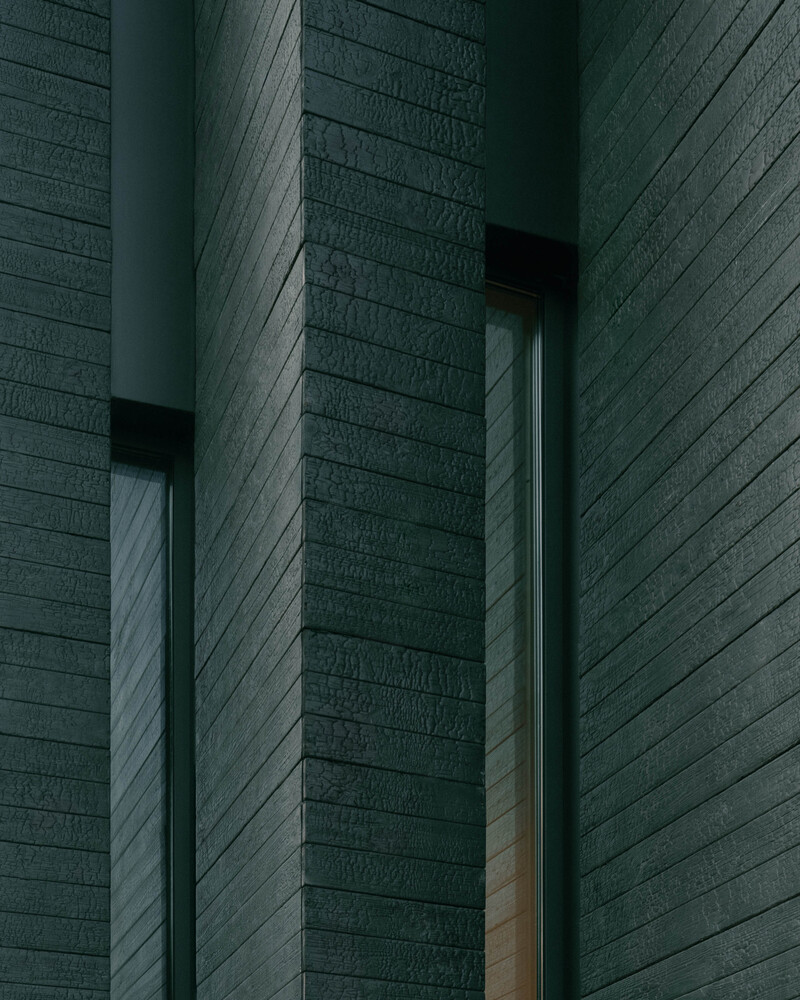
Material transitions further articulate the project’s conceptual inversion. The street-facing façade is wrapped in charred wood, its darkened surface recalling traditional timber-preservation techniques while projecting a dense, protective exterior character. Within the courtyard, this expression softens into untreated natural timber that introduces warmth and tactile richness. The progression culminates in white interior spaces where proportion, shadow, and reflected light define the atmosphere with remarkable restraint.
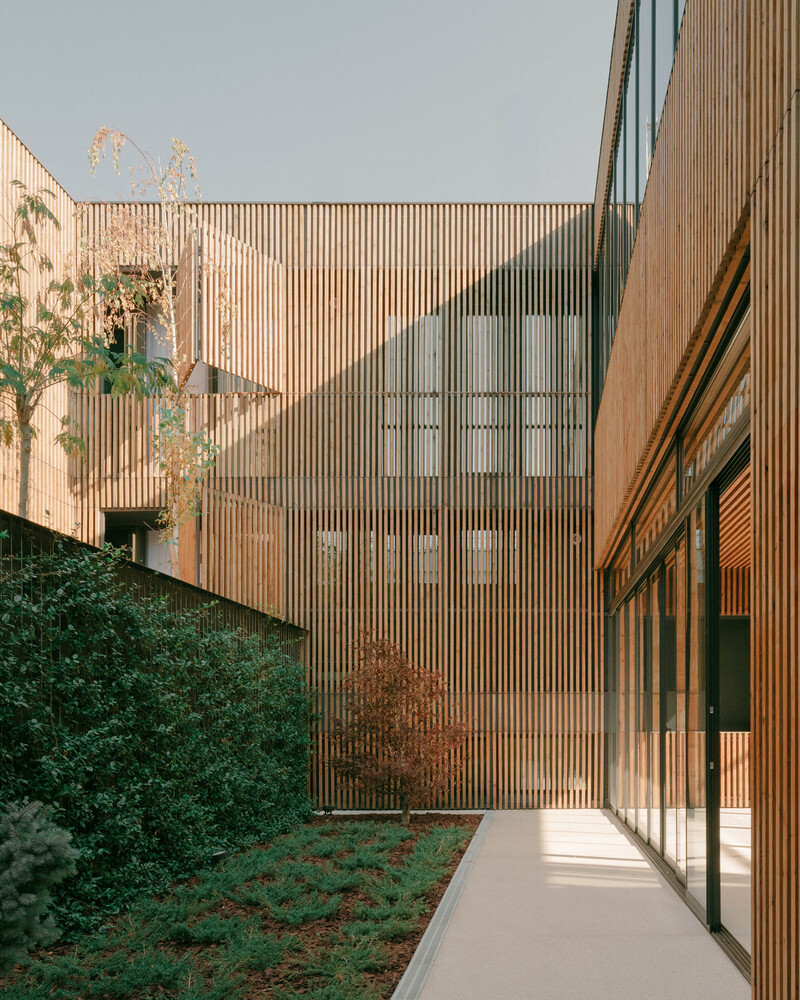
Through this carefully orchestrated sequence of enclosure, sectional variation, and material dematerialization, Inverted House proposes a compelling alternative to conventional suburban domesticity. By redefining the fence as inhabitable architecture, TIMM demonstrates how spatial richness can emerge from conditions of limitation. The project offers a nuanced response to urban density, suggesting that privacy and expansiveness are not opposing conditions but can coexist through architectural precision and conceptual clarity.
Project Gallery
Project Location
Address: Tbilisi, Georgia
The location specified is intended for general reference and may denote a city or country, but it does not identify a precise address.


Courtyard houses are not a new idea. From Lhasa to Mexico City courtyard houses have been a well known design strategy for some time. In fact, in the ancient mid-East this form dates back to 6000 BCE in places like Sumeria. Claiming this is a new architecture is a bit of a stretch for TIMM to say the least. Why is this a better version?The problem here is similar to so many courtyard fortresses. The inward focus gives back nothing to the street except the sawtooth facade. But the skimpy front windows, averting their glance, do not make for a welcoming face. The image is dark and fearful.