

a serpentine Pavilion project by LANZA atelier in Kensington Gardens, London, has examined historical wall-making traditions and spatial permeability through a minimalist intervention for the 25th Serpentine Pavilion commission, opening June 6, 2026. Designed by Isabel Abascal and Alessandro Arienzo, the Mexico City-based studio’s design takes direct reference from the traditional English crinkle-crankle wall, a curved brick structure originally from ancient Egypt and introduced to England by Dutch engineers. The project uses this form to articulate geometry, material economy, and stability. The Pavilion integrates two curved walls, one of which frames the site in relation to the landscape and another that preserves the tree canopy. The structure’s main volume is supported by brick columns and covered with a translucent roof, allowing natural light and air to circulate while mediating between interior and exterior conditions. Brick was selected to resonate with the garden typology of English landscapes and to establish continuity with the Serpentine South Gallery’s existing brickwork. As only the second Mexican studio invited to design the Pavilion, LANZA atelier continues the commission’s intent to elevate architectural practices grounded in local craft and experimental thinking. The studio’s focus on drawing, model-making, and spatial intelligence in informal conditions is central to this proposal. a serpentine Pavilion 2026 will host Serpentine’s live program through October. The anniversary year will include a special partnership with the Zaha Hadid Foundation, revisiting the inaugural 2000 Pavilion and fostering architectural discourse across generations. A monograph by LANZA will accompany the Pavilion, designed by Estudio Herrera and including contributions from José Esparza Chong Cuy.
We can’t anticipate how the performers, musicians, poets, and artists will use the space, and that is one of the beautiful things that architecture can accomplish: being able to host the unpredictable.
Interview with Isabel Abascal and Alessandro Arienzo of LANZA atelier
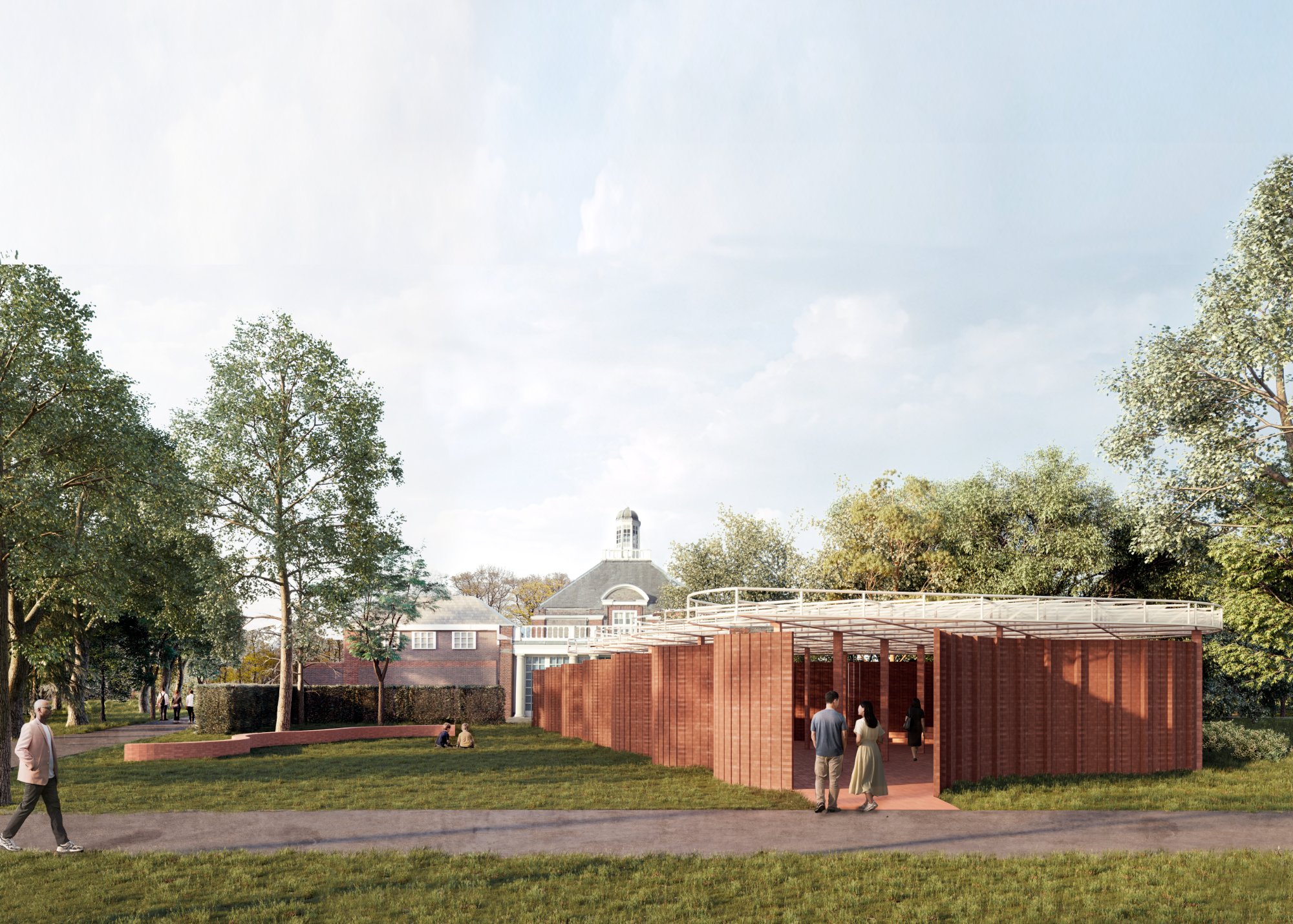
LANZA atelier, the Mexico City-based architecture studio founded by Isabel Abascal and Alessandro Arienzo, has been selected to design the 2026 Serpentine Pavilion. Titled a serpentine Pavilion, the Pavilion will open to the public at Serpentine South in Kensington Gardens on June 6, 2026. The project is supported by Goldman Sachs for the twelfth consecutive year. This edition marks the 25th iteration of the Pavilion, and will be accompanied by a special collaboration with the Zaha Hadid Foundation. Since its launch in 2000, the Serpentine Pavilion has served as a significant platform for architects at key points in their careers. It has expanded to support experimental and interdisciplinary approaches to architecture through public programming, educational events, and spatial exploration.
Founded in 2015, LANZA atelier works at the intersection of local craft, spatial economy, and material awareness. Their practice focuses on drawing and model-making as core design tools and pursues architecture that responds to the everyday and the informal. Their work spans residential design, public infrastructure, and furniture, often responding to diverse cultural contexts through critical engagement. The 2026 Pavilion draws from the crinkle-crankle wall, a traditional English brick wall with alternating curves. This historic form originated in ancient Egypt and was later introduced in England by Dutch engineers. Its serpentine geometry enhances lateral stability, enabling thinner single-brick-width construction. LANZA atelier incorporates this feature as both a structural strategy and a reference to the adjacent Serpentine lake, echoing its winding form.
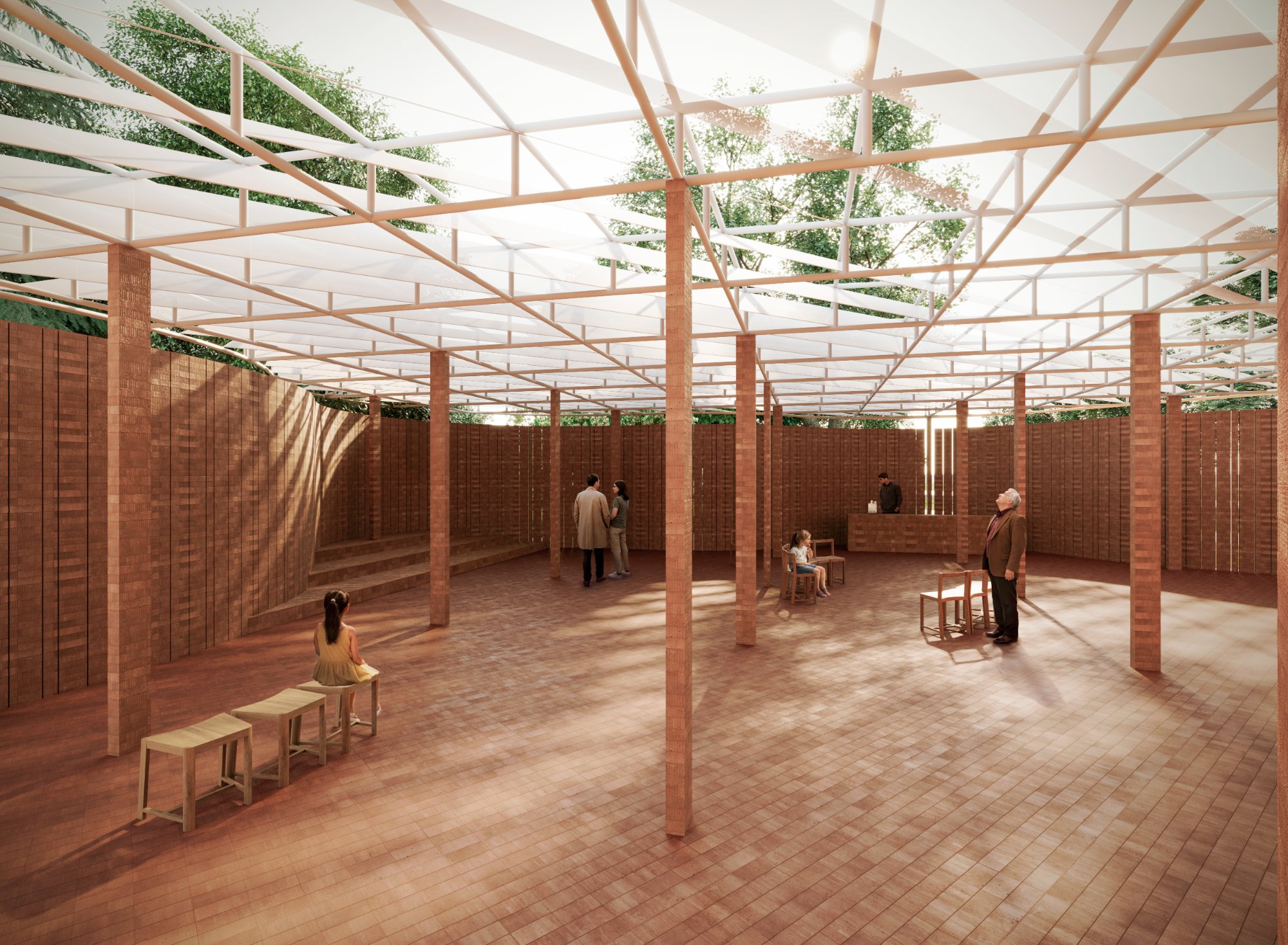
Two brick walls define the pavilion. One wall references the historic serpentine type and shapes the architectural edge of the site. A second wall engages with the existing tree canopy without disturbing it. The main volume of the Pavilion is located at the northern boundary, composed of rhythmic brick columns supporting a translucent roof. This light overhead structure recalls a grove of trees and filters daylight and air into the space. The arrangement establishes a porous spatial condition that blurs the limits between open and enclosed environments.
Brick is used as the primary material to engage with the English garden tradition and to create a visual dialogue with the Serpentine South Gallery’s original brick façade, itself a former tea pavilion. The Pavilion transitions from opacity to permeability through the spacing of its columns, framing views and circulation paths, and metaphorically connecting geographies between Europe and the Americas.
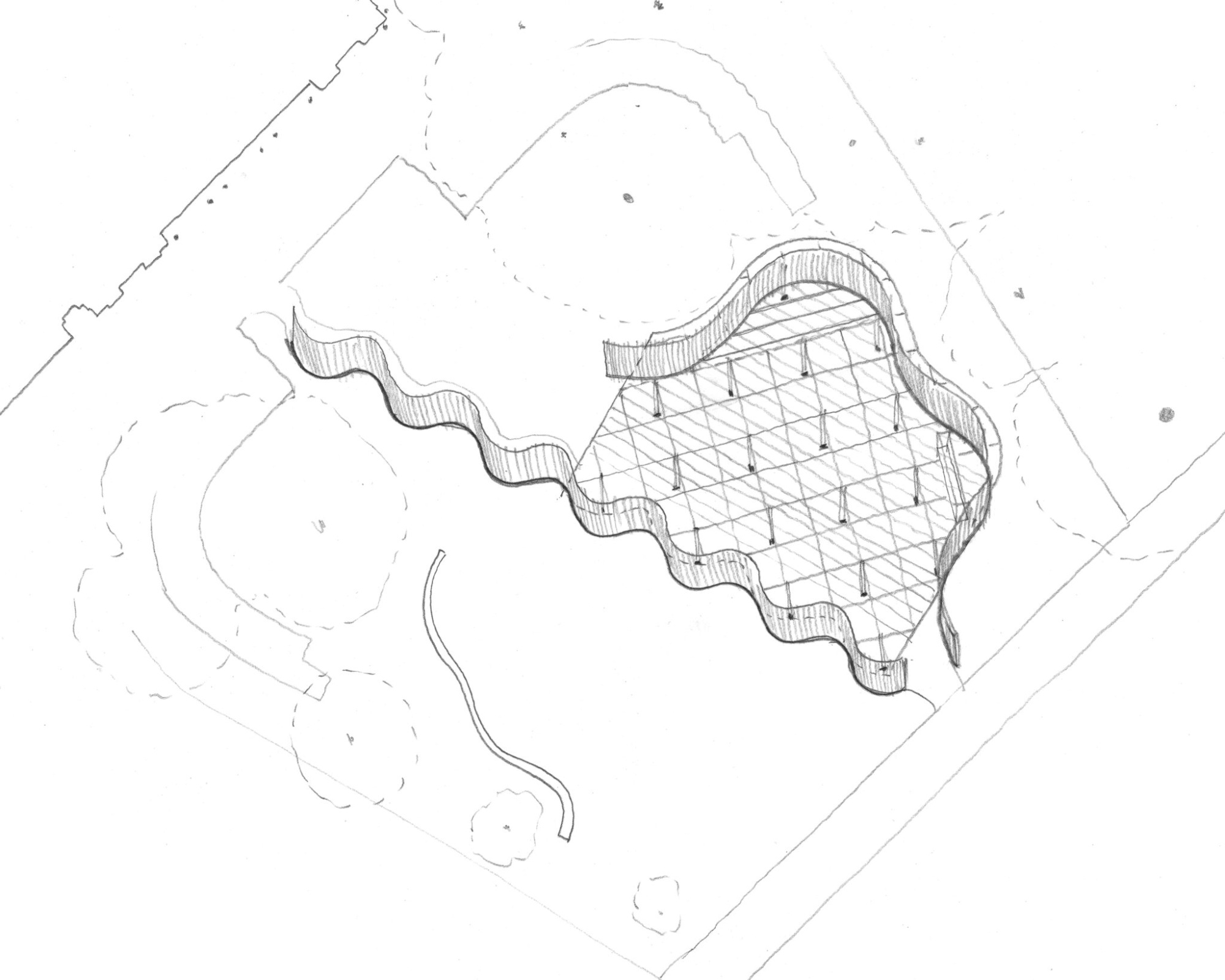
“It is an honor to be selected as the architects of the 25th Serpentine Pavilion, a milestone year for the commission. We are deeply grateful for the opportunity to share our work with a wider public and to contribute to the Pavilion’s ongoing legacy of spatial experimentation and collective encounter. Set within a garden, an evocation of the natural world, the project takes the form of a serpentine wall, conceived as a device that both reveals and withholds: shaping movement, modulating rhythm, and framing thresholds of proximity, orientation, and pause.
Inspired by the figure of the serpent as a generative and protective force, we draw a parallel with England’s winding fruit walls, which are structures that temper climate, create shelter, and enable growth. From this idea emerges a pavilion built of simple clay brick, foregrounding vernacular craft and the elemental capacity of architecture to bring people together. The 2026 Pavilion proposes built forms that are permeable, shaped and held by a gentle geometry, and continually responsive to those who move through it.” – LANZA atelier said

Serpentine’s Chief Executive Bettina Korek highlighted the significance of the Pavilion in connecting architecture with civic and cultural spaces: “For 25 years, the Serpentine Pavilion has been a leading global platform for architectural experimentation, first inviting internationally significant architects yet to build in London, and later championing emerging voices. It offers a rare brief to test ambitious ideas in an open, accessible setting. Conceived as a structure that extends beyond its walls, the Pavilion connects architecture, landscape, and people. With LANZA atelier, we strengthen cultural exchange with Mexico and reaffirm the Pavilion as a free, civic space of connection, central to our summer and autumn programs. We are deeply grateful to our partners and supporters for making the Pavilion possible.”
Hans Ulrich Obrist, Artistic Director of Serpentine, emphasized LANZA atelier’s material and contextual sensibilities: “Over the last 10 years the Serpentine Pavilion has increasingly focused on giving opportunities to younger architectural practices. We are excited to announce that Mexican architects LANZA atelier will design the 2026 Serpentine Pavilion. LANZA atelier’s architecture always involves a deep engagement with the local context, materials, and lived experience. In their own words, they create contemporary spaces whose energy can last. Their spaces invite people to imagine a more connected, compassionate, and creative future.
As always, the Pavilion will be a content machine with lectures, film screenings, and performances. We will also remember Zaha Hadid (1950–2016), who gave us our motto that ‘there should be no end to experimentation.’ As we mark the 25th Pavilion, we reflect on these origins. Since its inception in 2000, the Pavilion has acted as a catalyst for architects at pivotal moments in their careers. LANZA atelier’s Pavilion will mark the second time Mexican architects are appointed since Frida Escobedo in 2018. We are grateful to LANZA atelier for embracing this invitation, and we extend our sincere thanks to Sou Fujimoto for his generous guidance.”
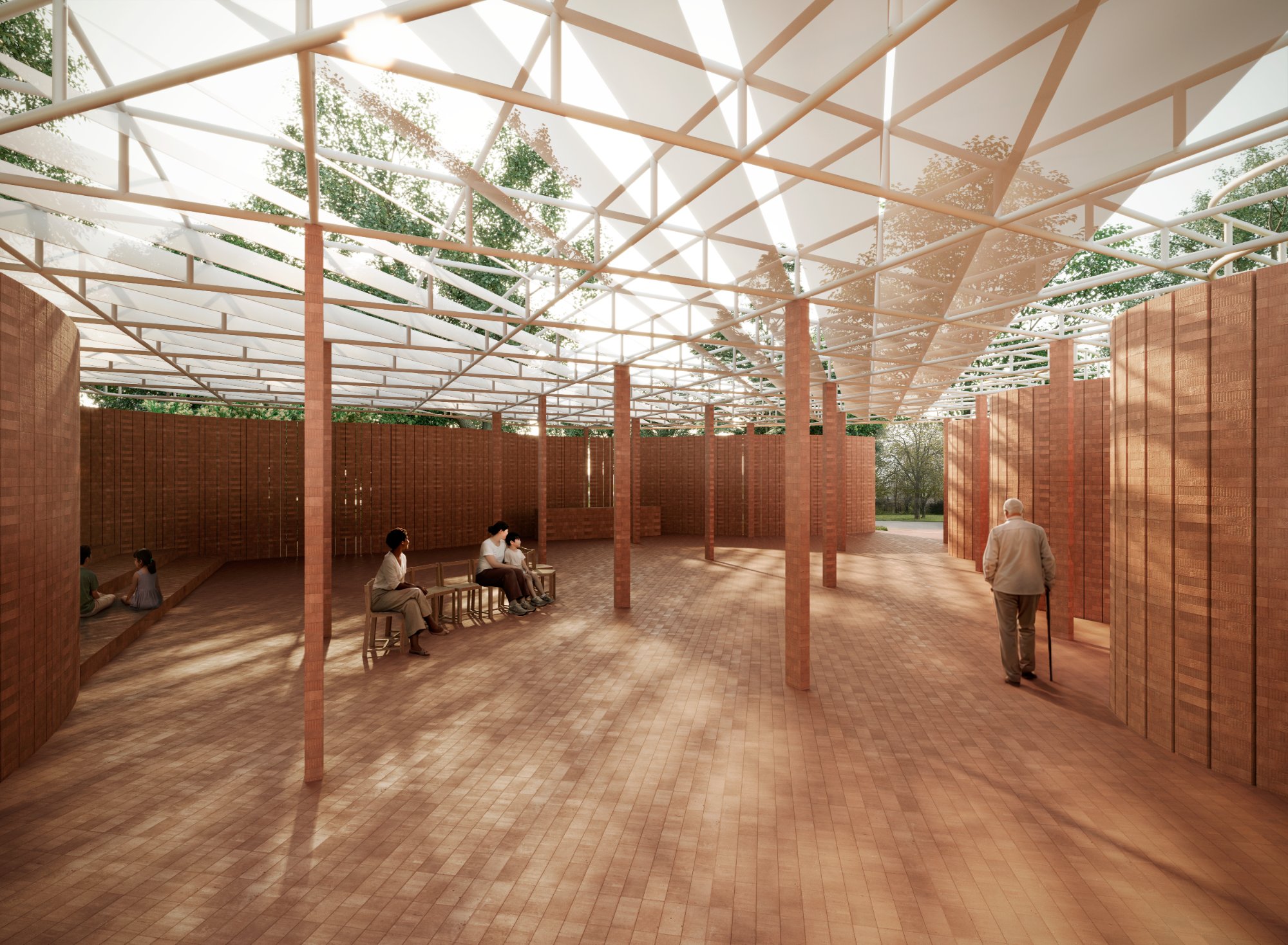
a serpentine Pavilion will host Serpentine’s live events program through October 2026, engaging audiences across music, performance, literature, design, and philosophy. Each Pavilion is activated by these uses, inviting new forms of occupation and public encounter. In parallel, Serpentine will partner with the Zaha Hadid Foundation to produce a dedicated architectural program celebrating Hadid’s legacy. A series of talks, exhibitions, and discussions will explore her contributions to the discipline and the Pavilion’s evolving role. The program will include former Pavilion architects and practitioners, fostering dialogue across generations and international contexts.
The selection committee for the 2026 Pavilion included Serpentine CEO Bettina Korek, Artistic Director Hans Ulrich Obrist, Director of Construction and Special Projects Julie Burnell, Exhibitions Curators Chris Bayley and Tamsin Hong, Assistant Curator Liz Stumpf, and architectural advisor Sou Fujimoto. Serpentine will publish LANZA atelier’s first monograph to accompany the Pavilion. Designed by Estudio Herrera, the publication will include new essays and contributions from architecture, art, and poetry, featuring an extended conversation between the architects and Hans Ulrich Obrist and an essay by José Esparza Chong Cuy.

