

Architect: Le Corbusier
Year: 1951
Photography: Laurian Ghinitoiu, Scott Norsworthy, archinect.com, theculturemap.com
Collaborating Architects: Pierre Jeanneret, Jane Drew, Maxwell Fry
Initial Planning Team: Albert Mayer, Matthew Nowicki
City: Chandigarh
Country: India
The Master Plan for Chandigarh, designed by Le Corbusier with Pierre Jeanneret, Jane Drew, and Maxwell Fry beginning in 1951, was conceived as a modern capital for the Indian state of Punjab following the Partition of India in 1947 and the loss of Lahore. Building upon an earlier proposal by Albert Mayer and Matthew Nowicki, Le Corbusier reorganized the plan into a rectilinear grid structured by a hierarchy of circulation and neighborhood sectors. The city was conceived metaphorically as a human body, with the Capitol Complex as the “head,” Sector 17 as the commercial “heart,” extensive parks as the “lungs,” and an integrated road network as the circulatory system. Chandigarh’s primary planning unit is the sector, a self-contained neighborhood measuring approximately 800 by 1200 meters with housing, services, and internal green spaces. Movement through the city is organized by the hierarchical 7V road system, ranging from regional highways to pedestrian paths and cycle routes. Large open spaces and the continuous Leisure Valley park integrate landscape into the urban structure while reflecting principles derived from both the Garden City movement and Le Corbusier’s Ville Radieuse. The Capitol Complex at the northern edge of the city contains the Secretariat, High Court, and Legislative Assembly, arranged within a monumental civic landscape. Although the architect originally proposed high-rise residential blocks inspired by the Unité d’Habitation, Jeanneret, Drew, and Fry ultimately designed the housing at a lower density. Constructed largely during the 1950s and 1960s, Chandigarh became one of the most significant modernist urban planning projects of the twentieth century.

The master plan for Chandigarh, developed by Le Corbusier in collaboration with Pierre Jeanneret, Jane Drew, and Maxwell Fry, emerged from the political upheaval that followed the Partition of India in 1947. When the historic Punjabi capital of Lahore became part of Pakistan, the Indian state of Punjab required a new administrative center. Prime Minister Jawaharlal Nehru envisioned the project as more than a functional replacement: the new city would symbolize the aspirations of an independent nation and represent India’s commitment to modernization and progress.

Initial planning for the city began in 1949 under American planner Albert Mayer and architect Matthew Nowicki. Their proposal envisioned a fan-shaped city structured by curving roads and neighborhood units inspired by Garden City principles. After Nowicki died in an air accident in 1950, Mayer withdrew from the project. The Indian government subsequently invited Le Corbusier to lead a new planning team in 1951. Rather than simply completing the existing design, the architect reinterpreted the scheme in accordance with his own urban principles, transforming the curvilinear layout into a disciplined rectilinear grid.


Situated at the foothills of the Shivalik range in northern India, Chandigarh was conceived as a carefully ordered modern capital organized through a hierarchy of spatial components. Le Corbusier famously described the city through the metaphor of a human body. The Capitol Complex formed the “head,” housing the principal governmental institutions, while the commercial center in Sector 17 represented the “heart.” Extensive green spaces and parks functioned as the city’s “lungs,” educational and cultural institutions formed the “intellect,” and the industrial zone was positioned as the “viscera.” The network of roads served as the circulatory system that connected these urban organs.

The fundamental planning unit of the city is the sector, a self-contained neighborhood measuring approximately 800 by 1200 meters. Each sector was designed as a largely autonomous community containing housing, schools, shops, health facilities, and places of worship within walking distance. A commercial street typically runs through the center of each sector, while internal green spaces provide recreation and environmental relief. Vehicular access into these residential districts is intentionally limited, reinforcing the idea of the sector as a protected neighborhood environment.
Movement through Chandigarh is organized by a carefully structured hierarchy of roads known as the 7V system. At the largest scale, regional highways (V1) connect the city to surrounding territories, while major urban arteries (V2) distribute traffic across the metropolitan area. Fast vehicular roads (V3) define the boundaries of each sector and carry through-traffic around residential districts. Internal circulation is handled by secondary streets and commercial roads (V4 and V5), while smaller access roads (V6) lead directly to housing. Pedestrian paths and cycle routes (V7 and later V8) provide independent networks that allow movement through the city’s green spaces without interference from automobiles.
The urban plan also reflects Le Corbusier’s broader modernist ideas about the relationship between landscape and settlement. Large areas of open space were preserved between sectors, and a continuous linear park known as the Leisure Valley extends across the city, linking gardens, parks, and recreational areas. While these strategies echo the Garden City principles initially proposed by Mayer, they also reveal the influence of Le Corbusier’s own urban theories, particularly those developed in his concept of the Ville Radieuse, adapted here to the climate and social structure of northern India.
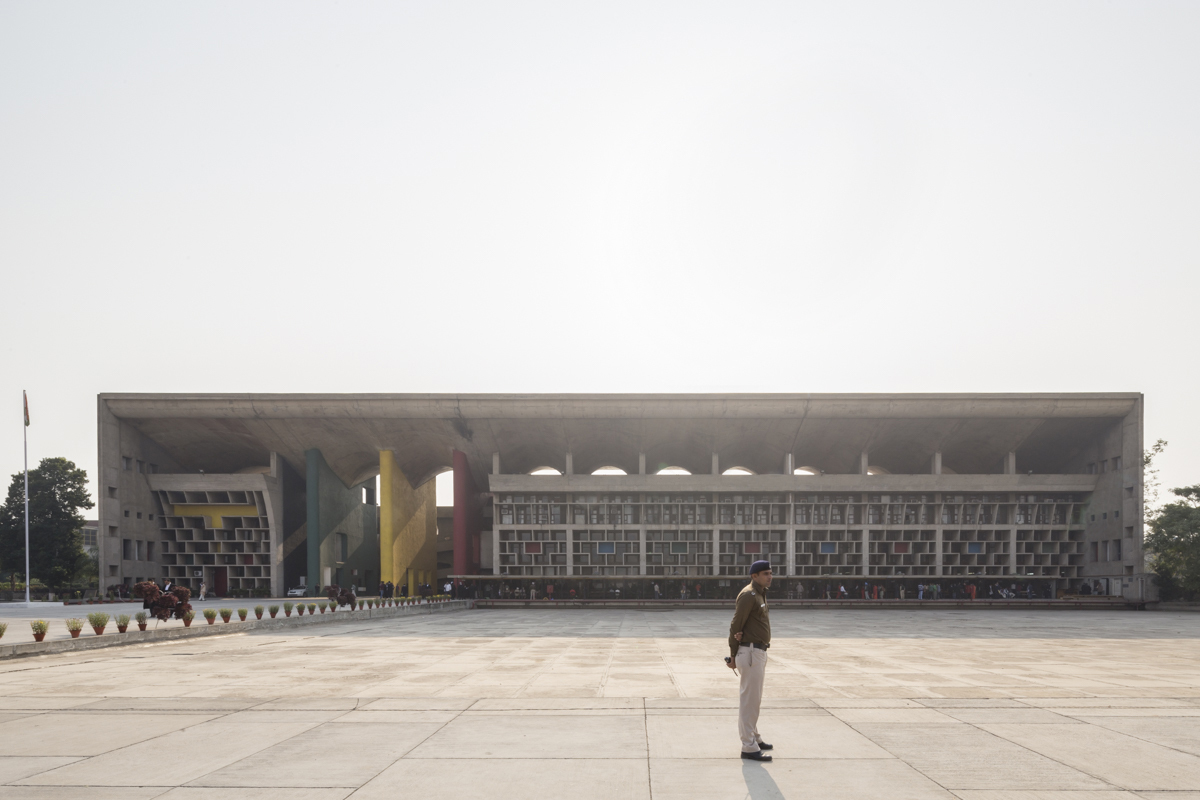
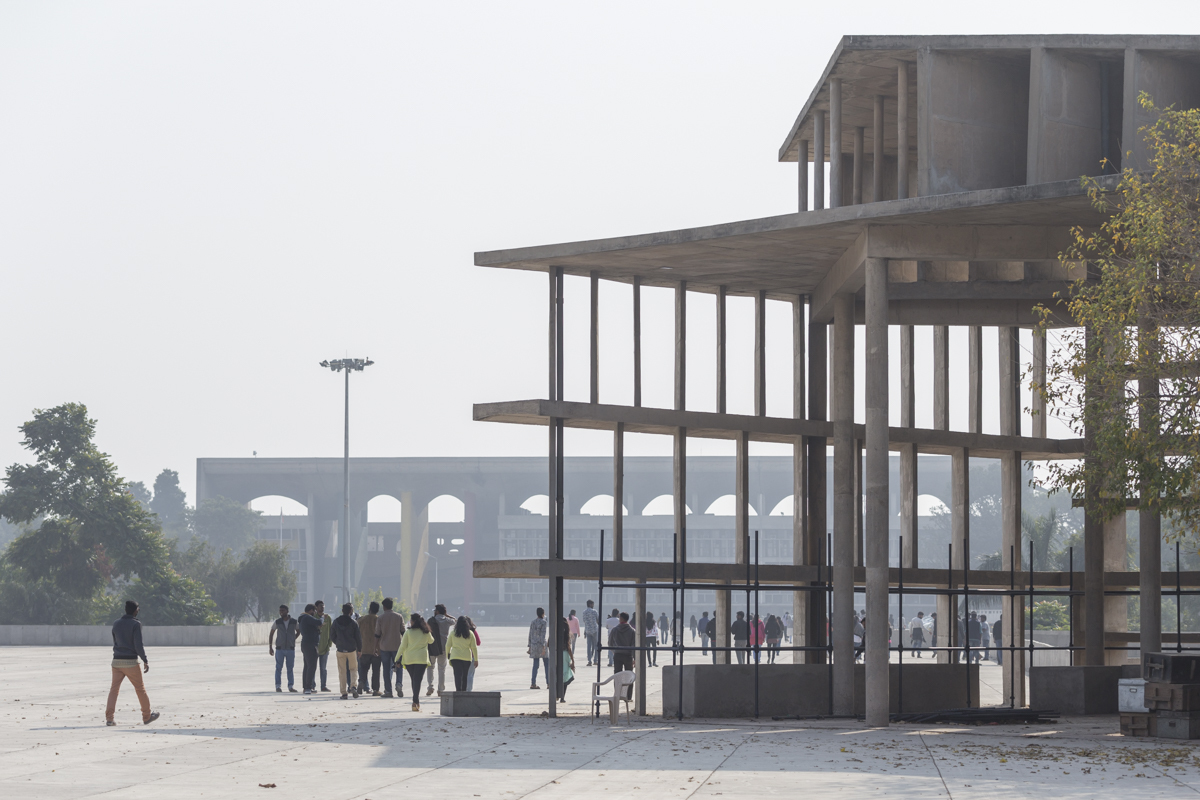
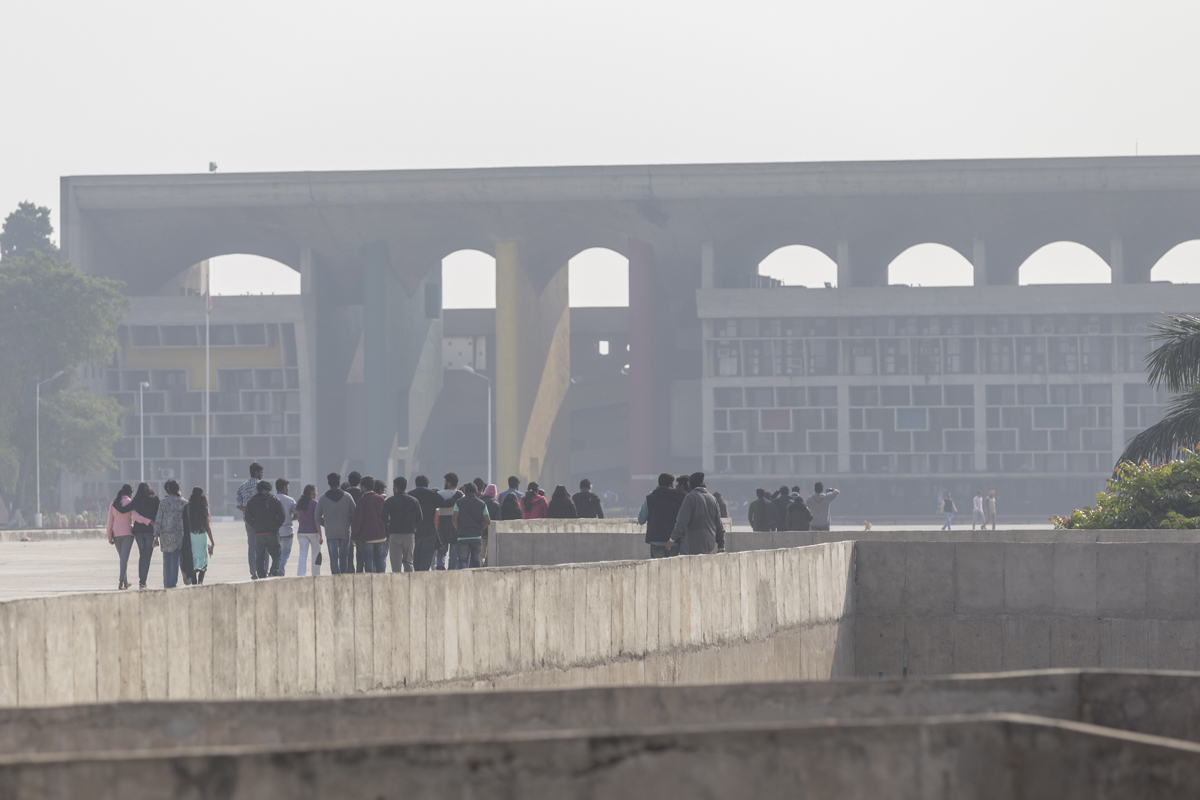
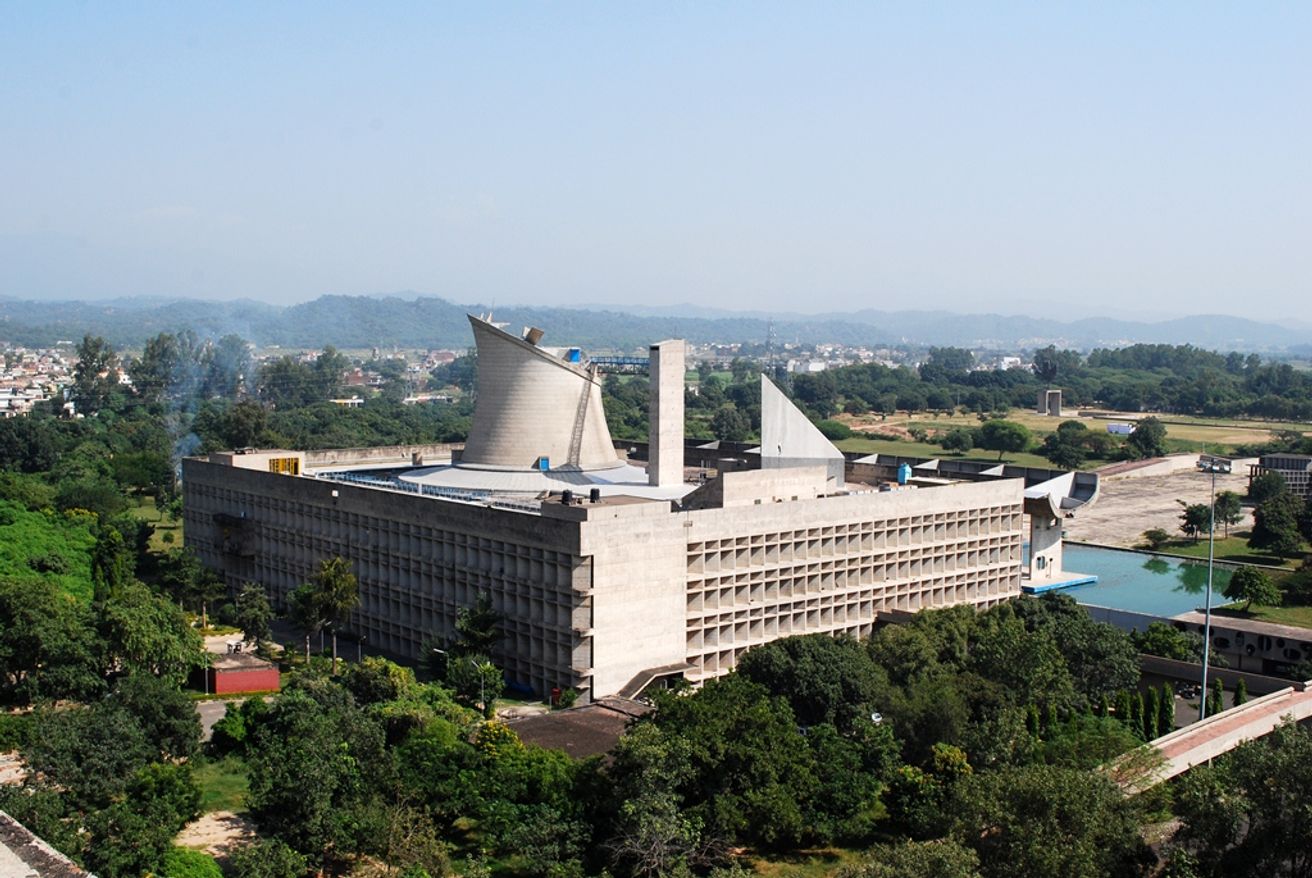
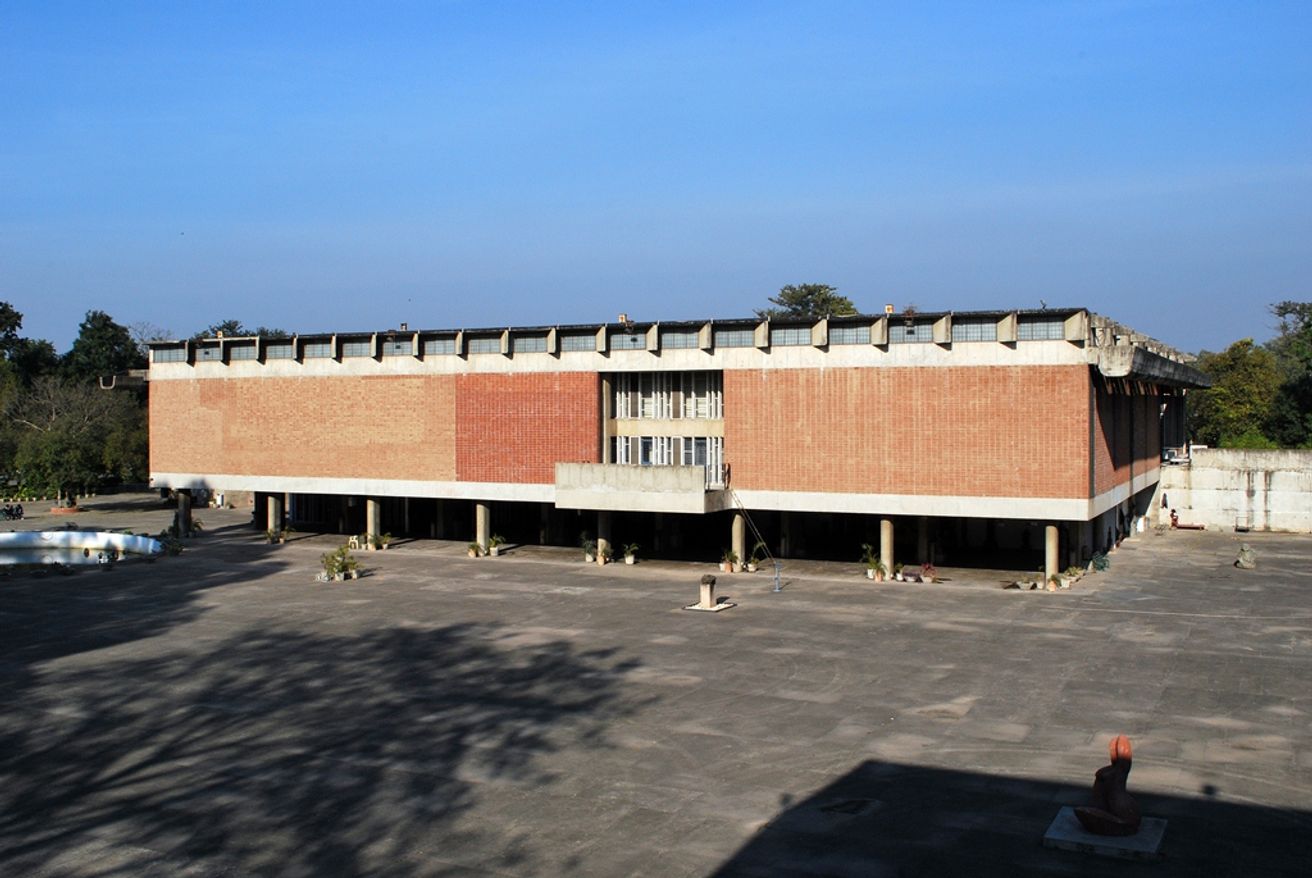
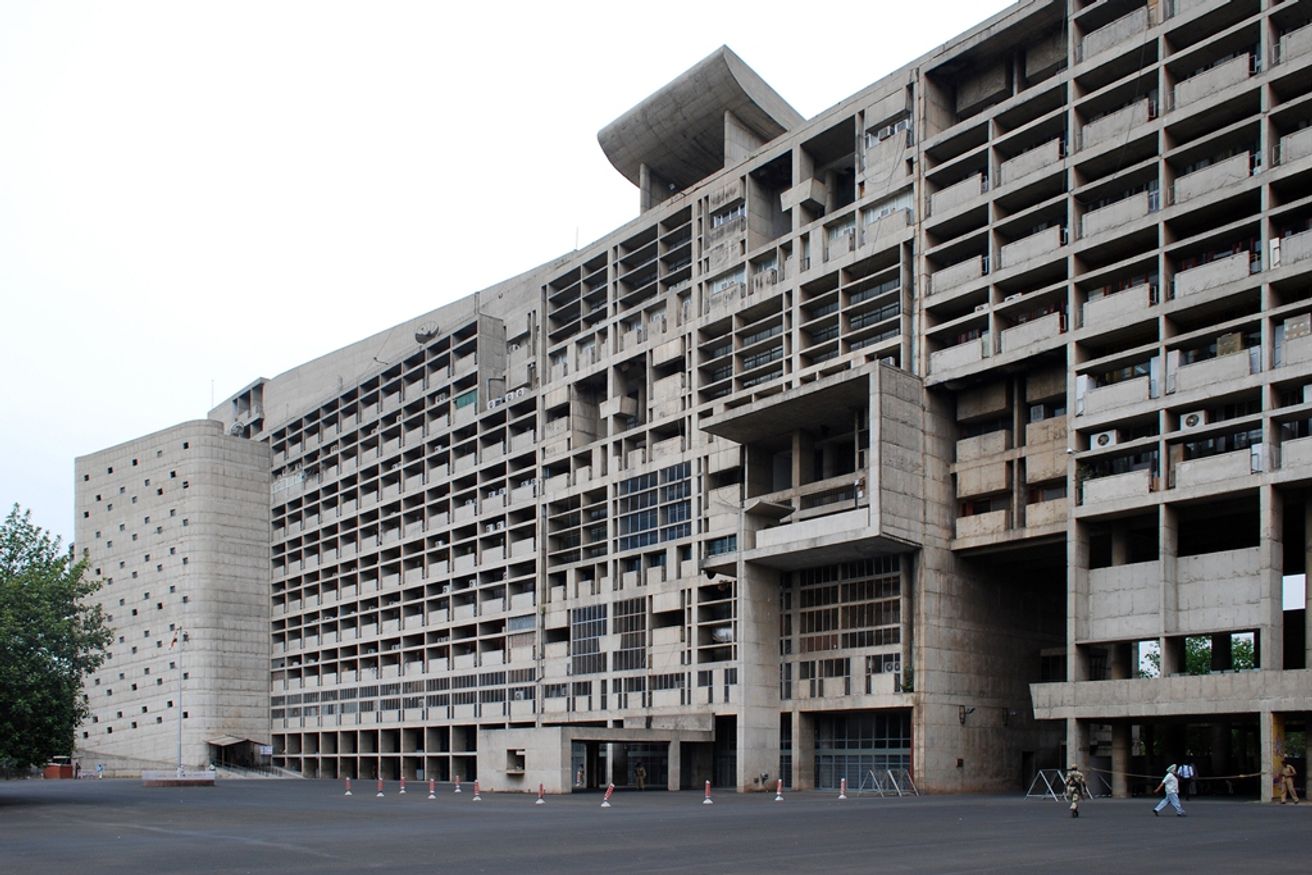
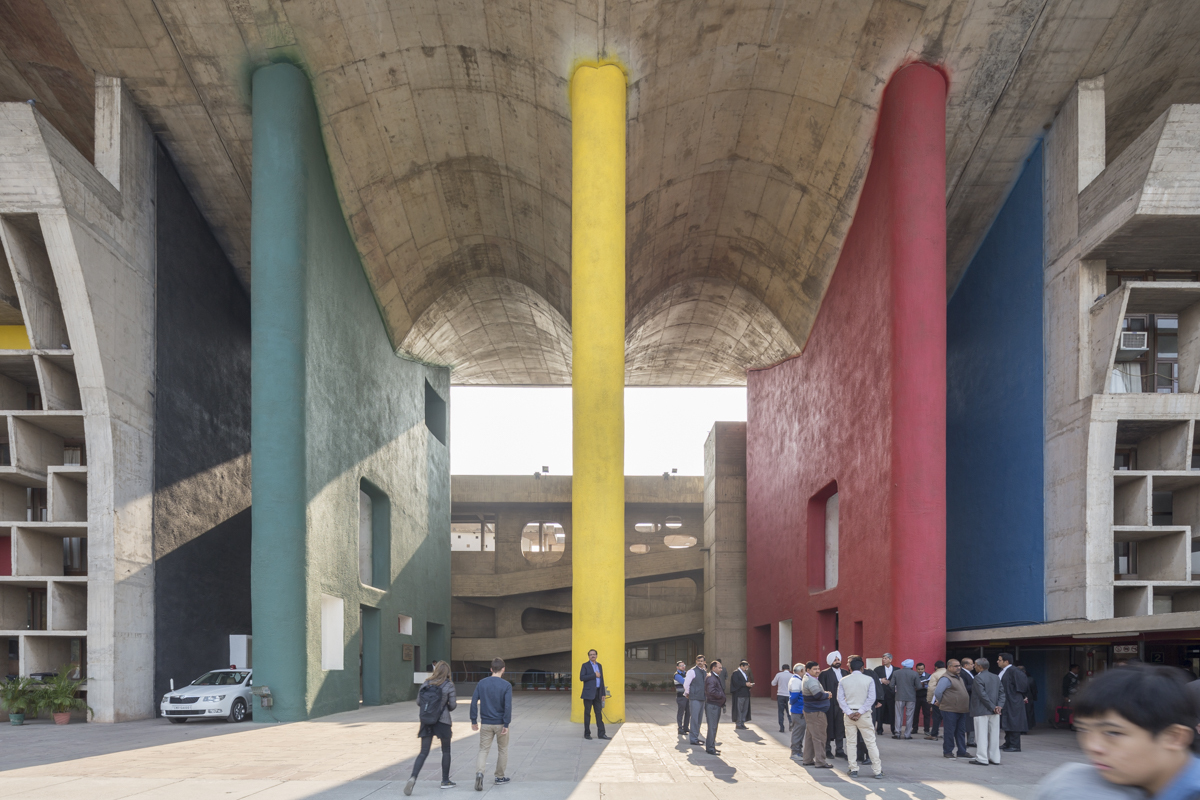
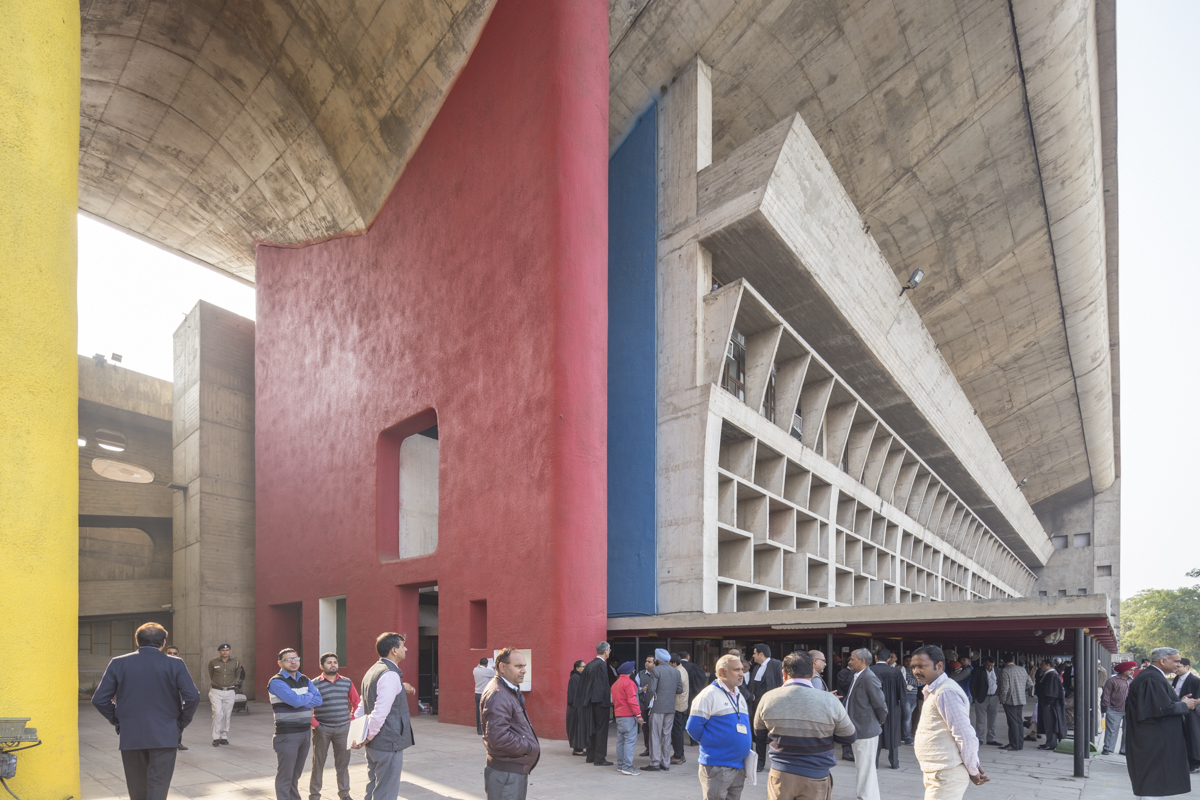
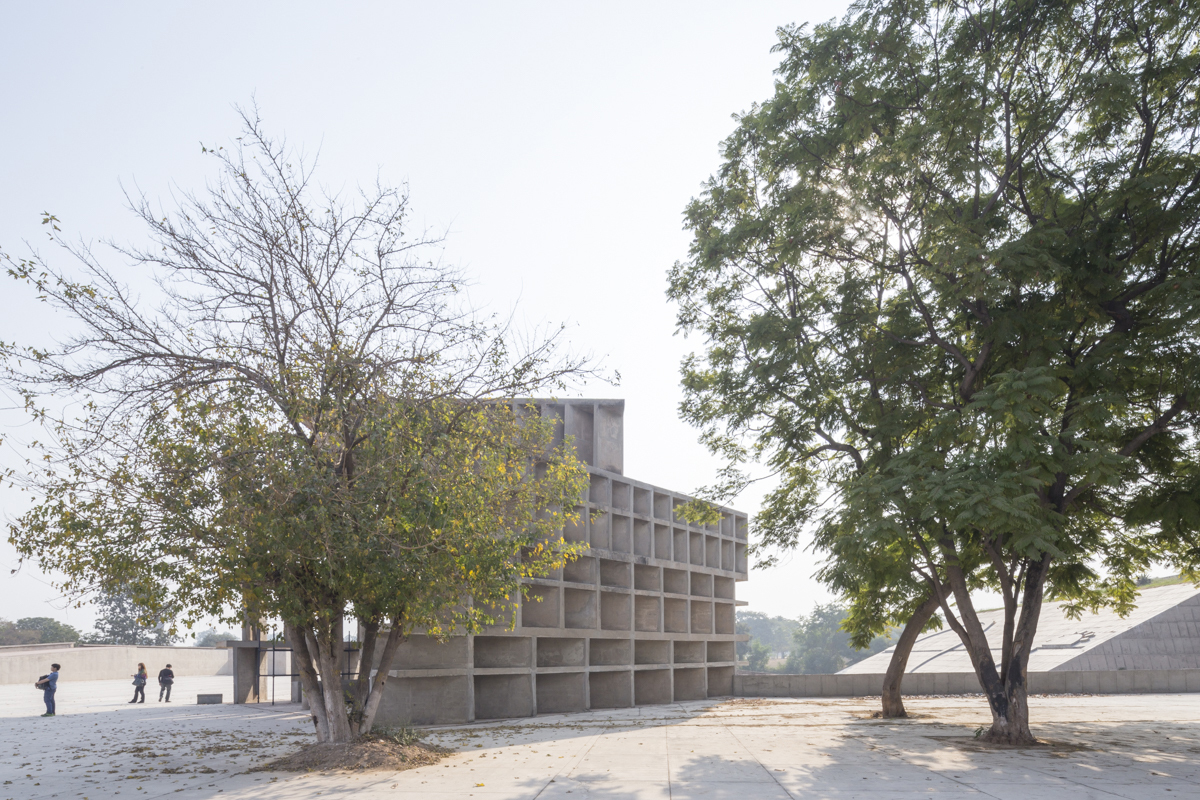
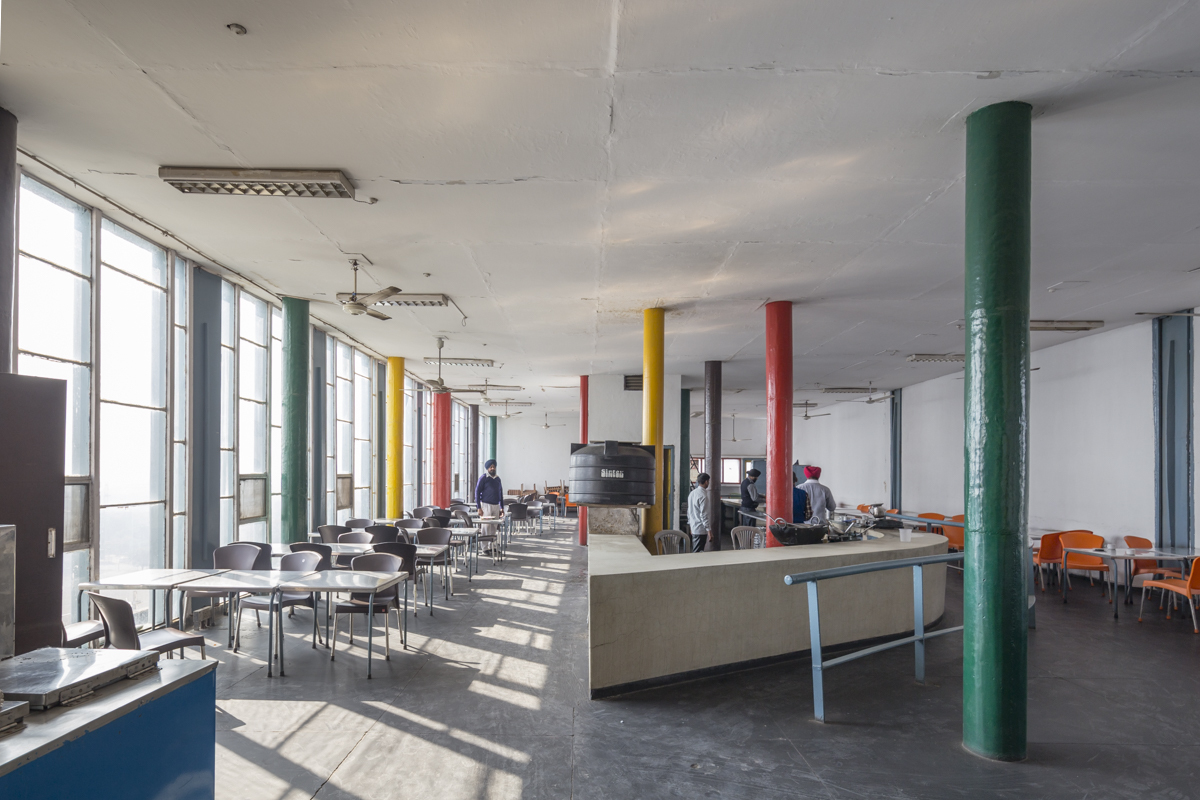
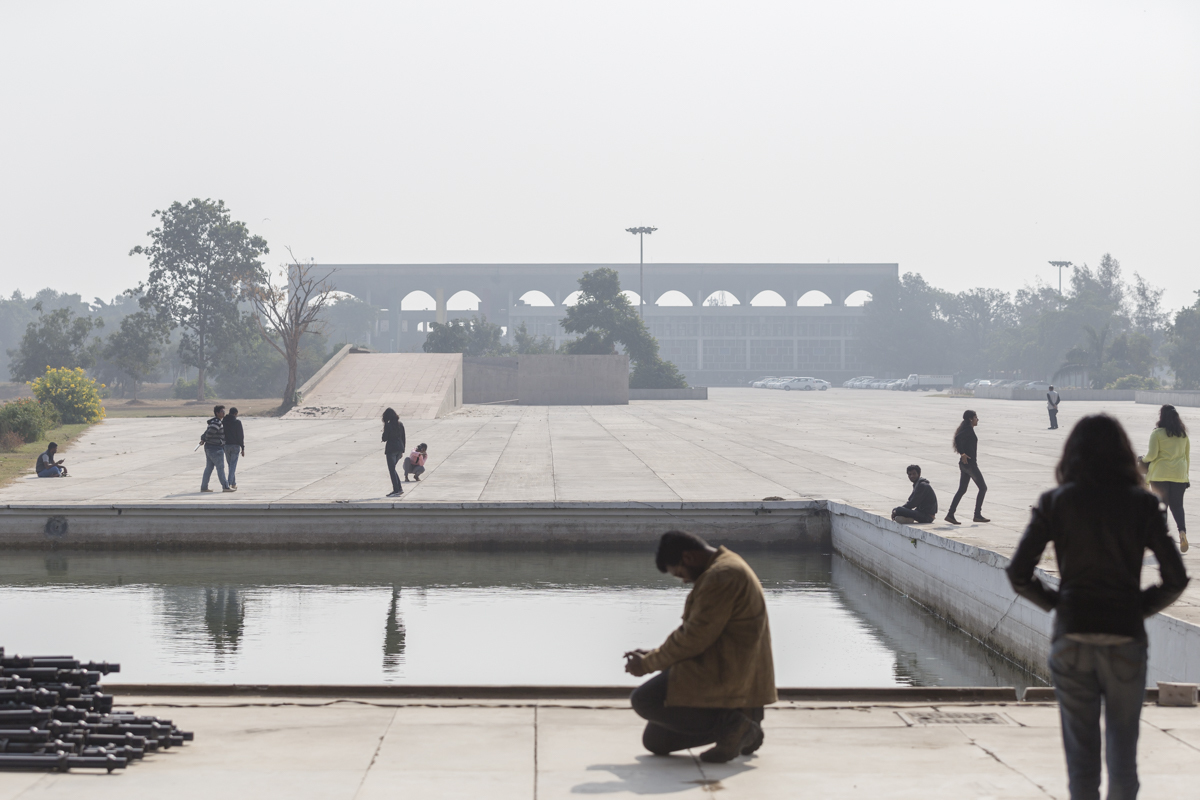
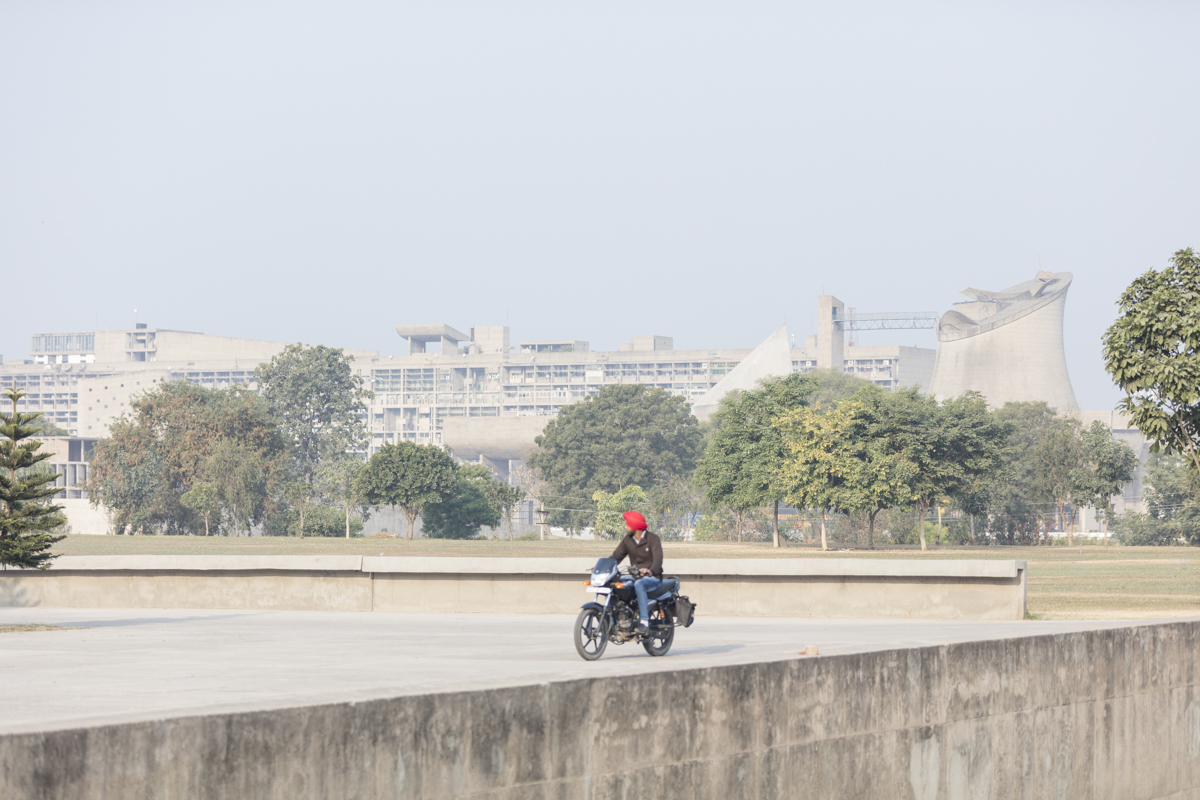
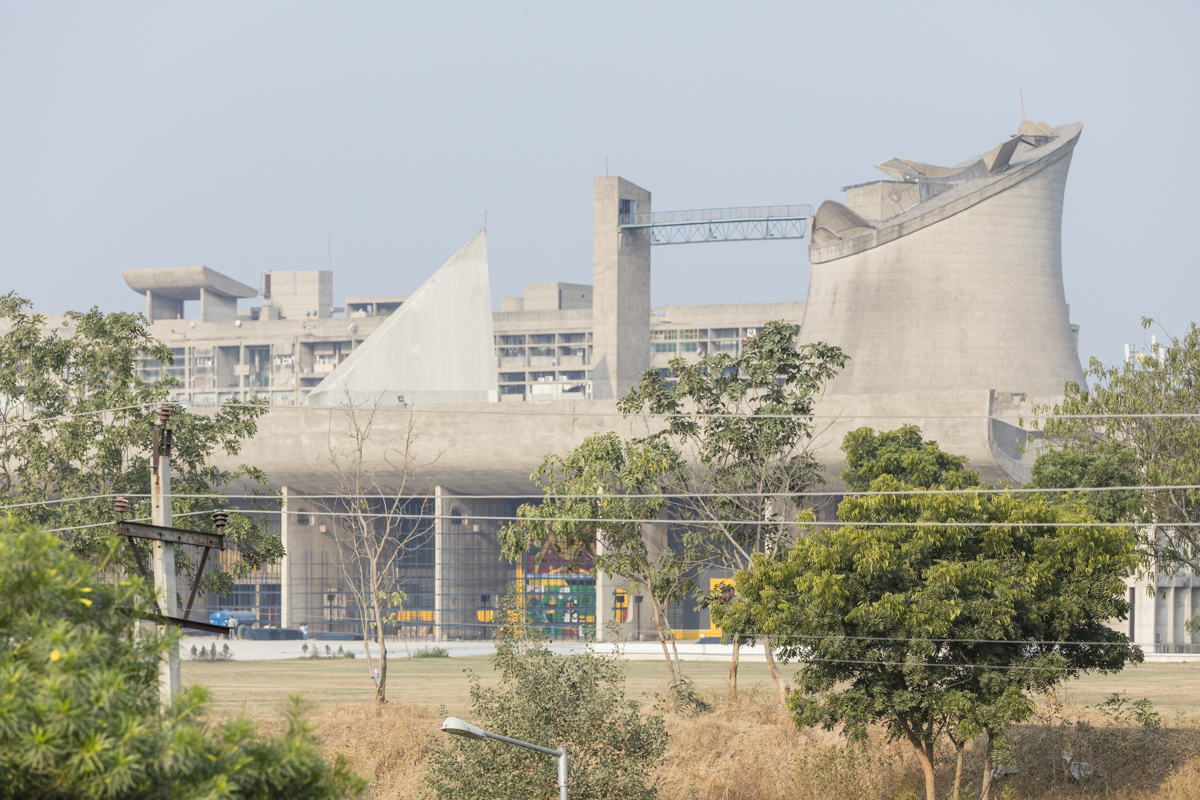
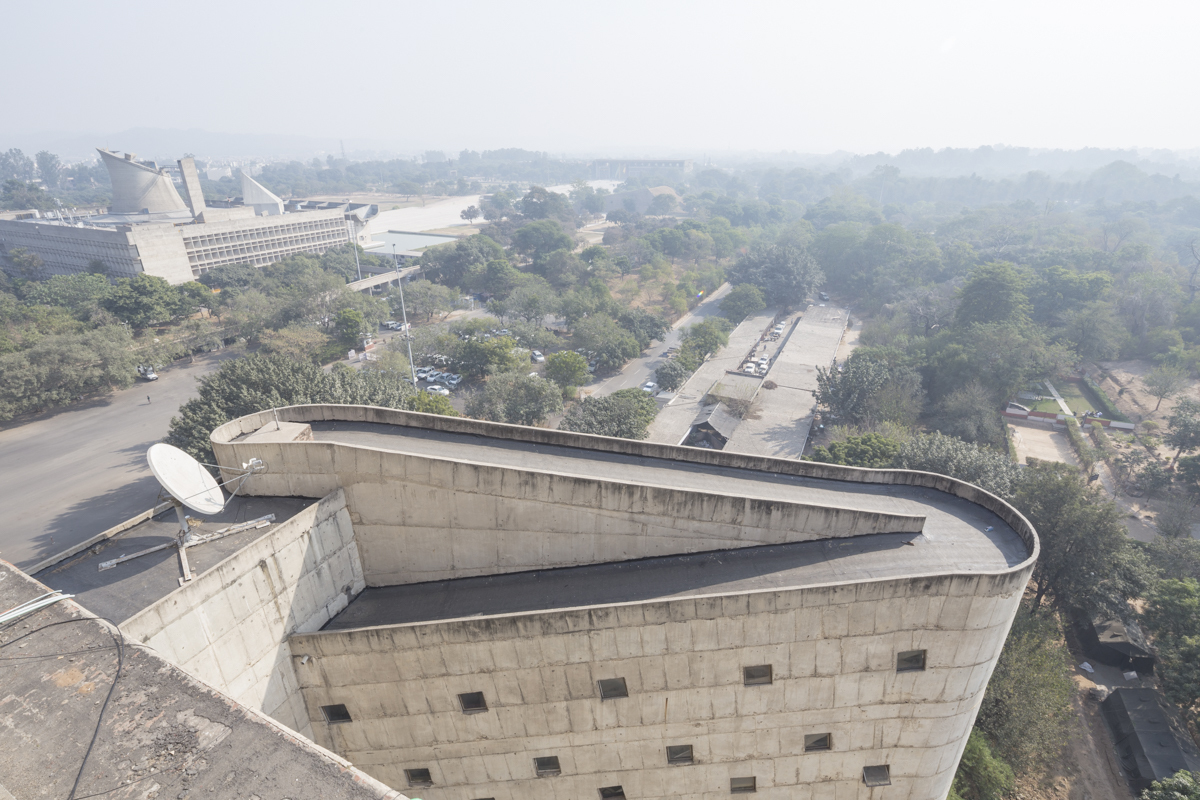
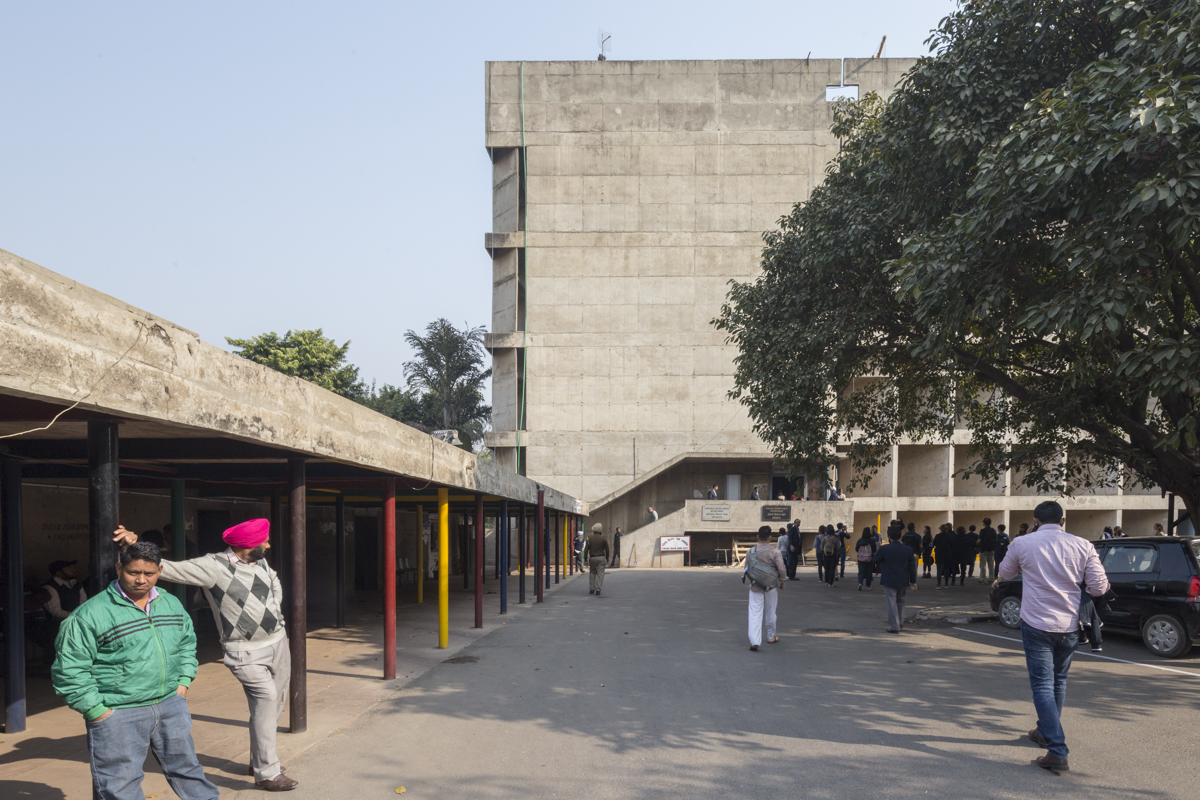
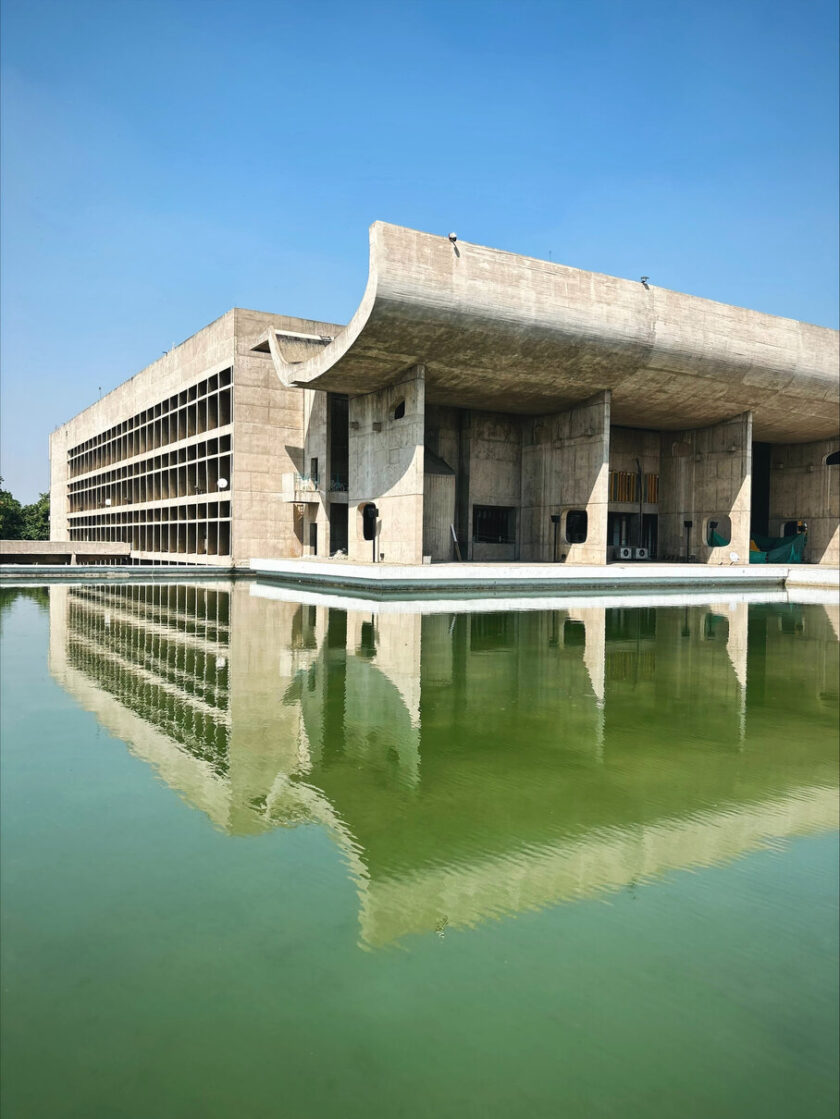
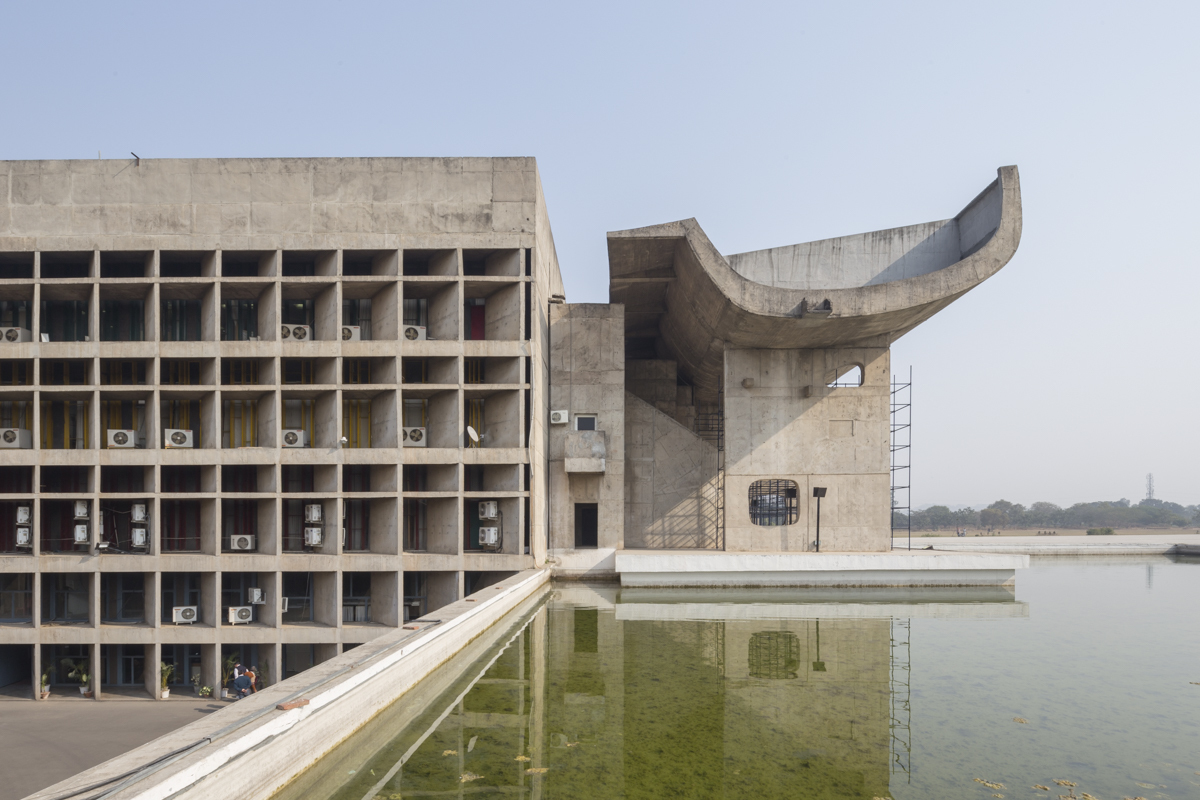
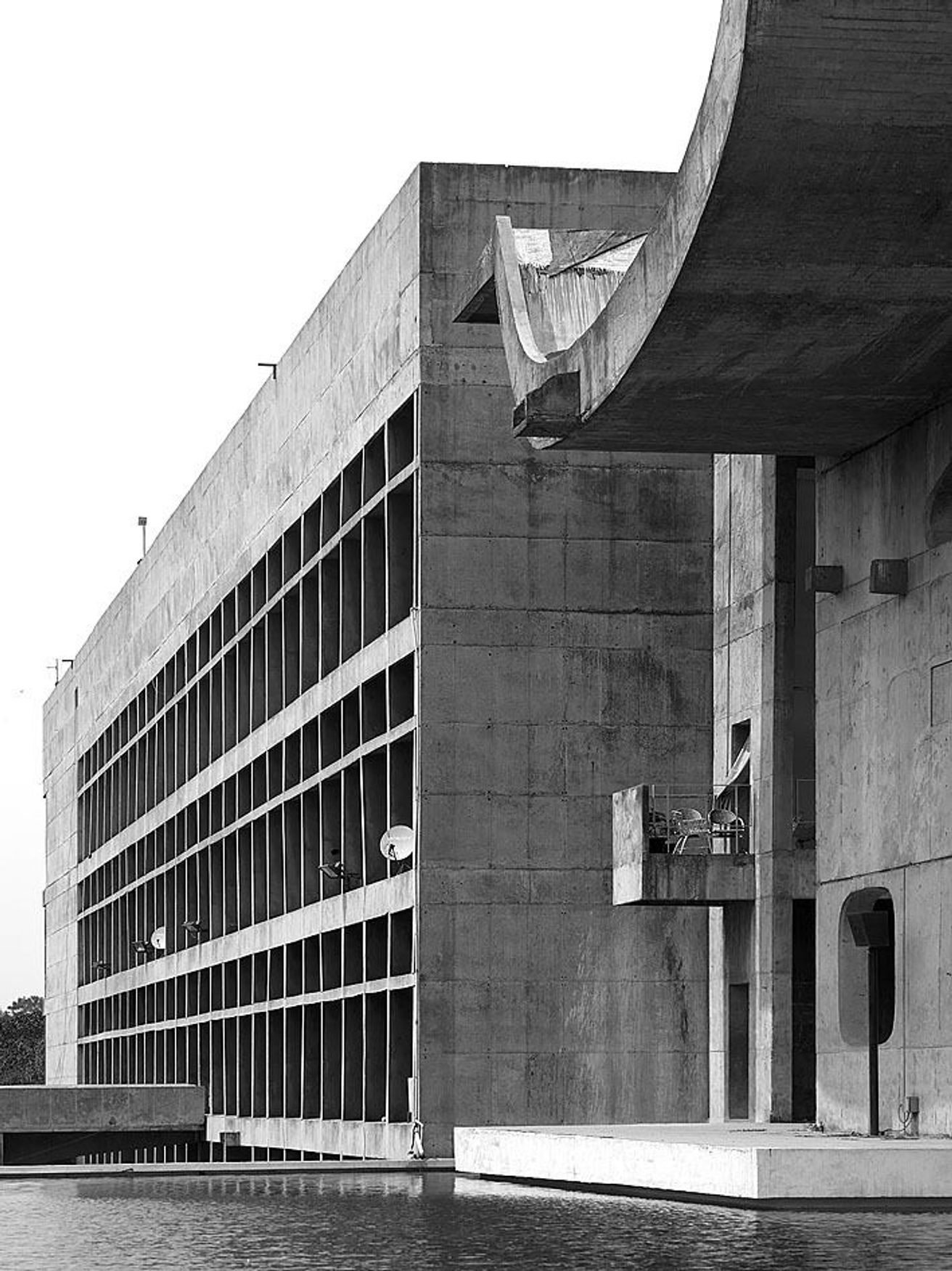
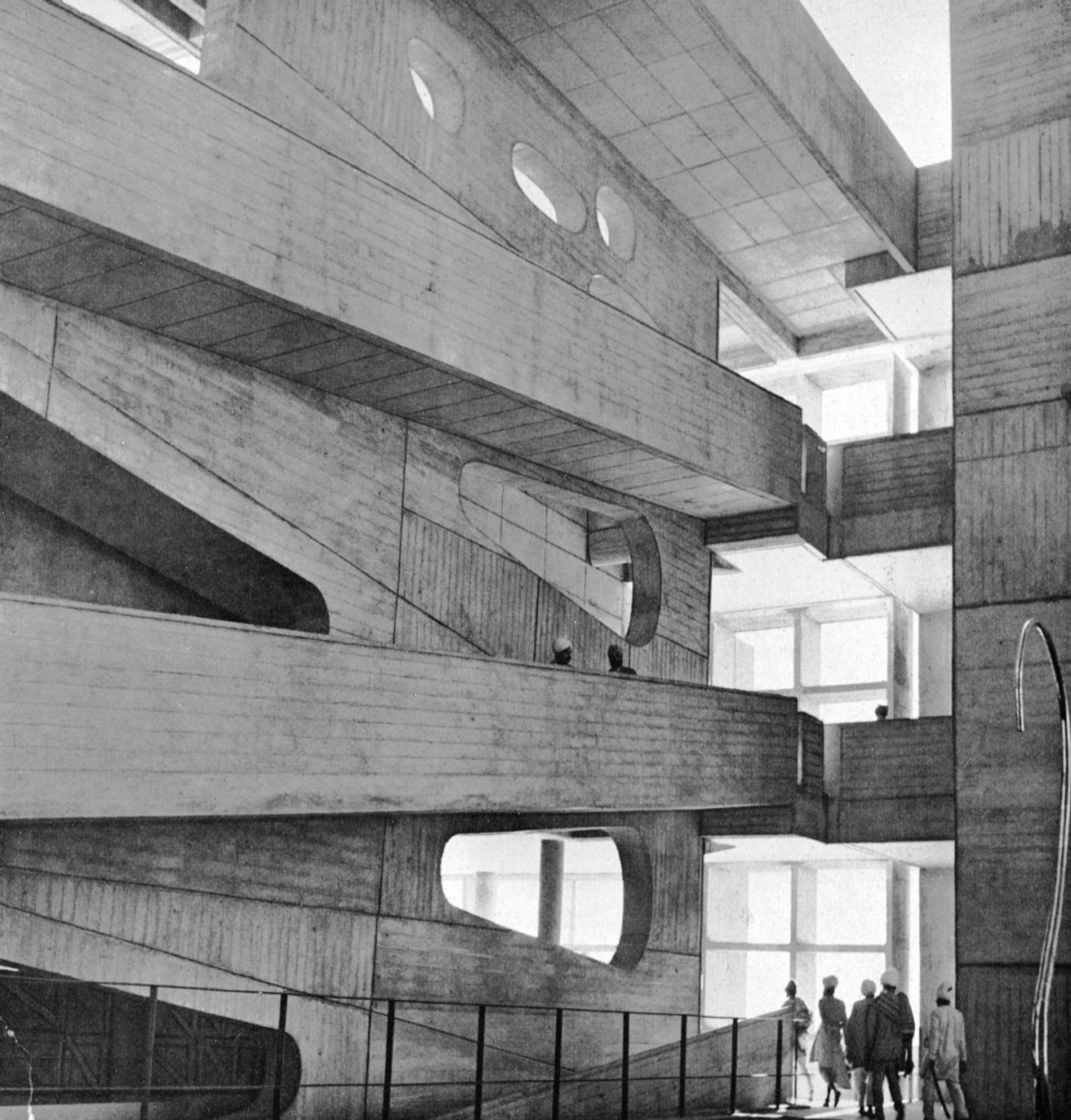
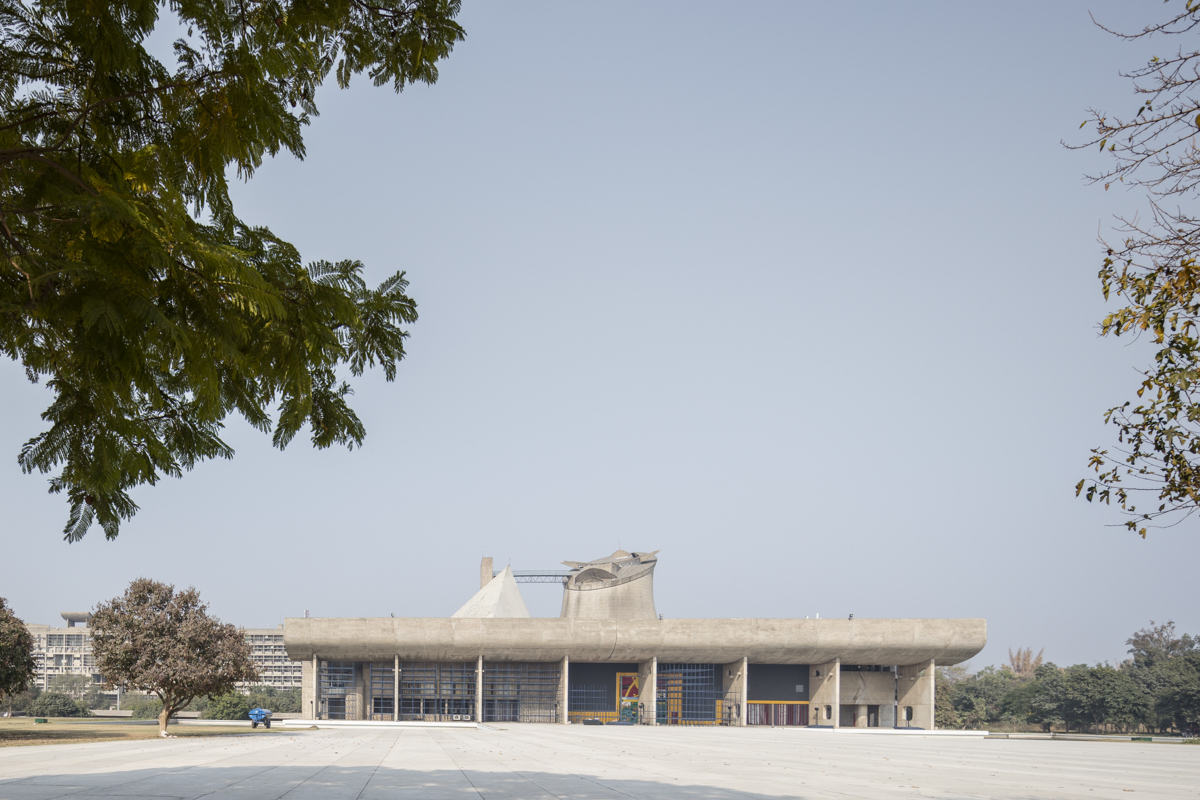
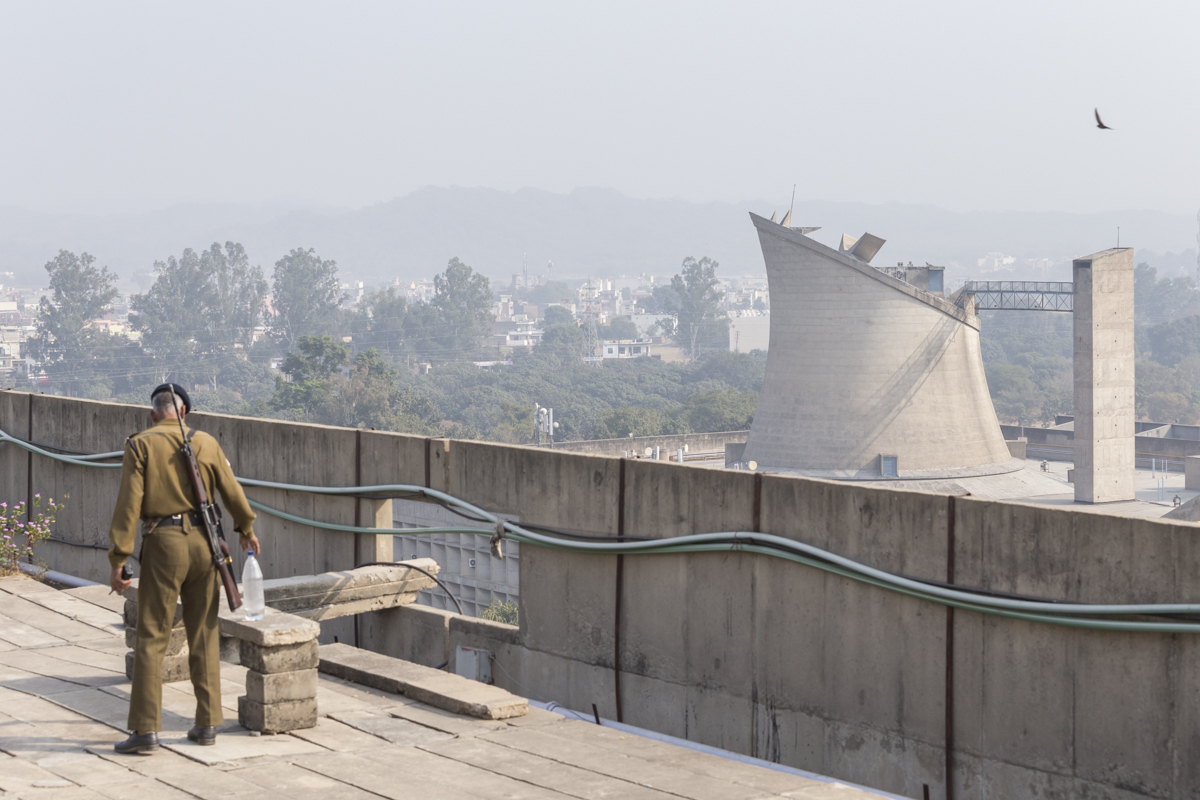
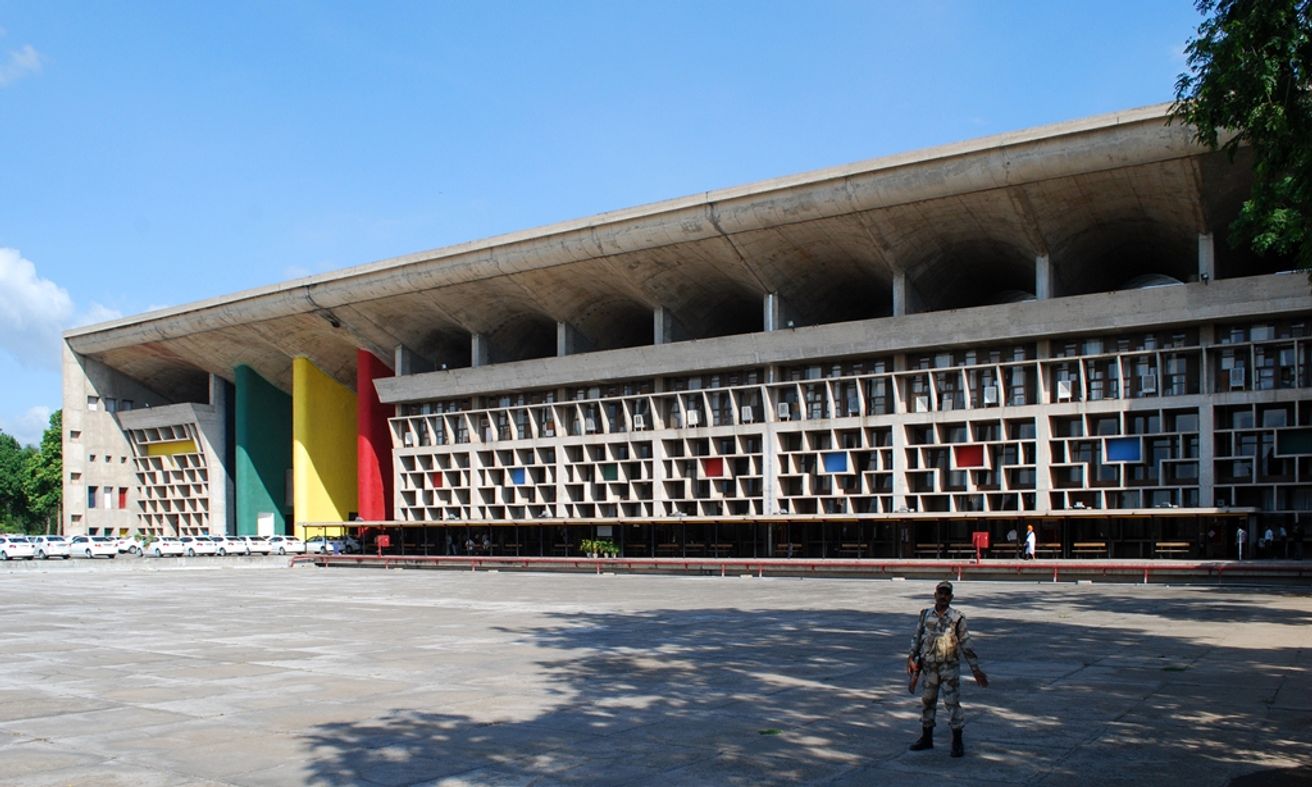
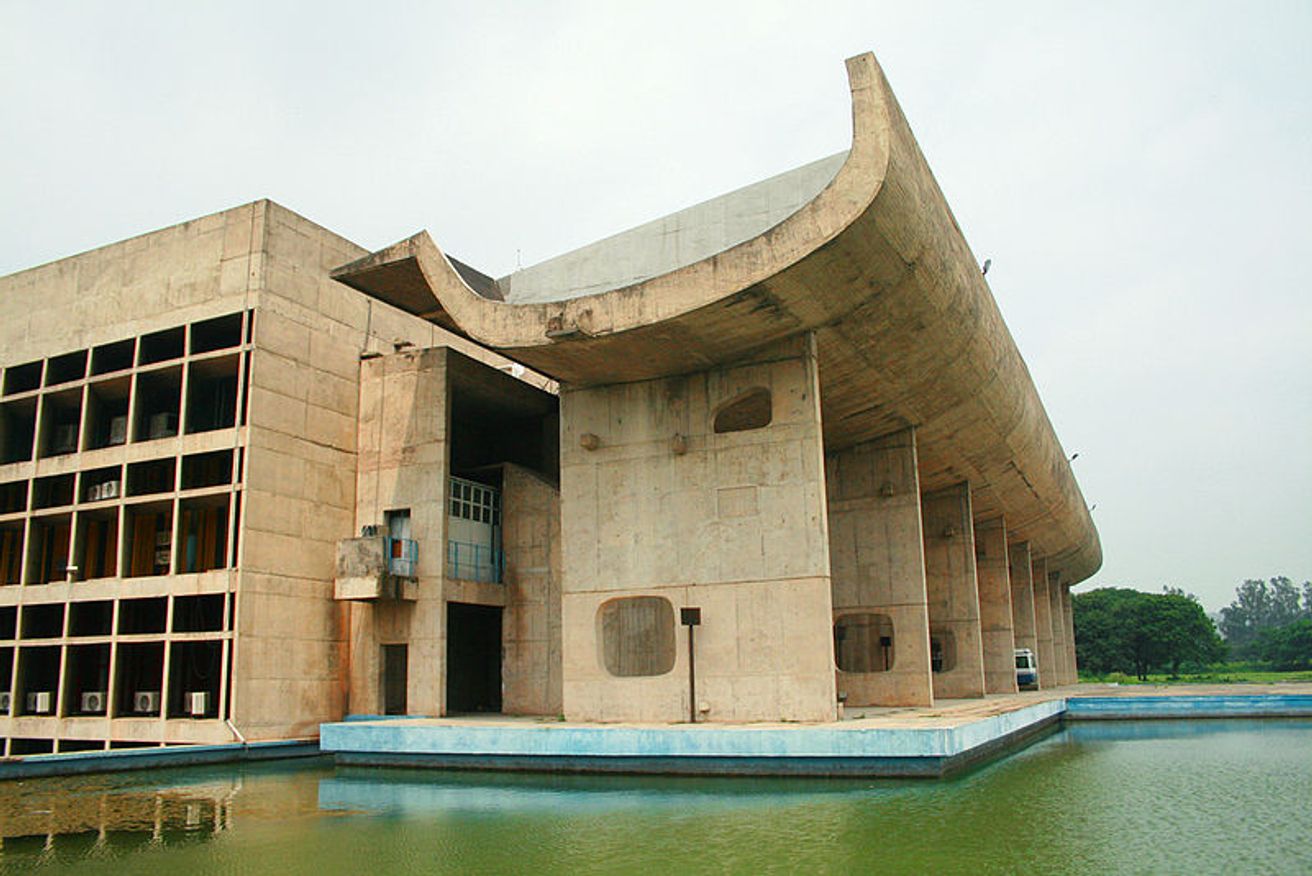
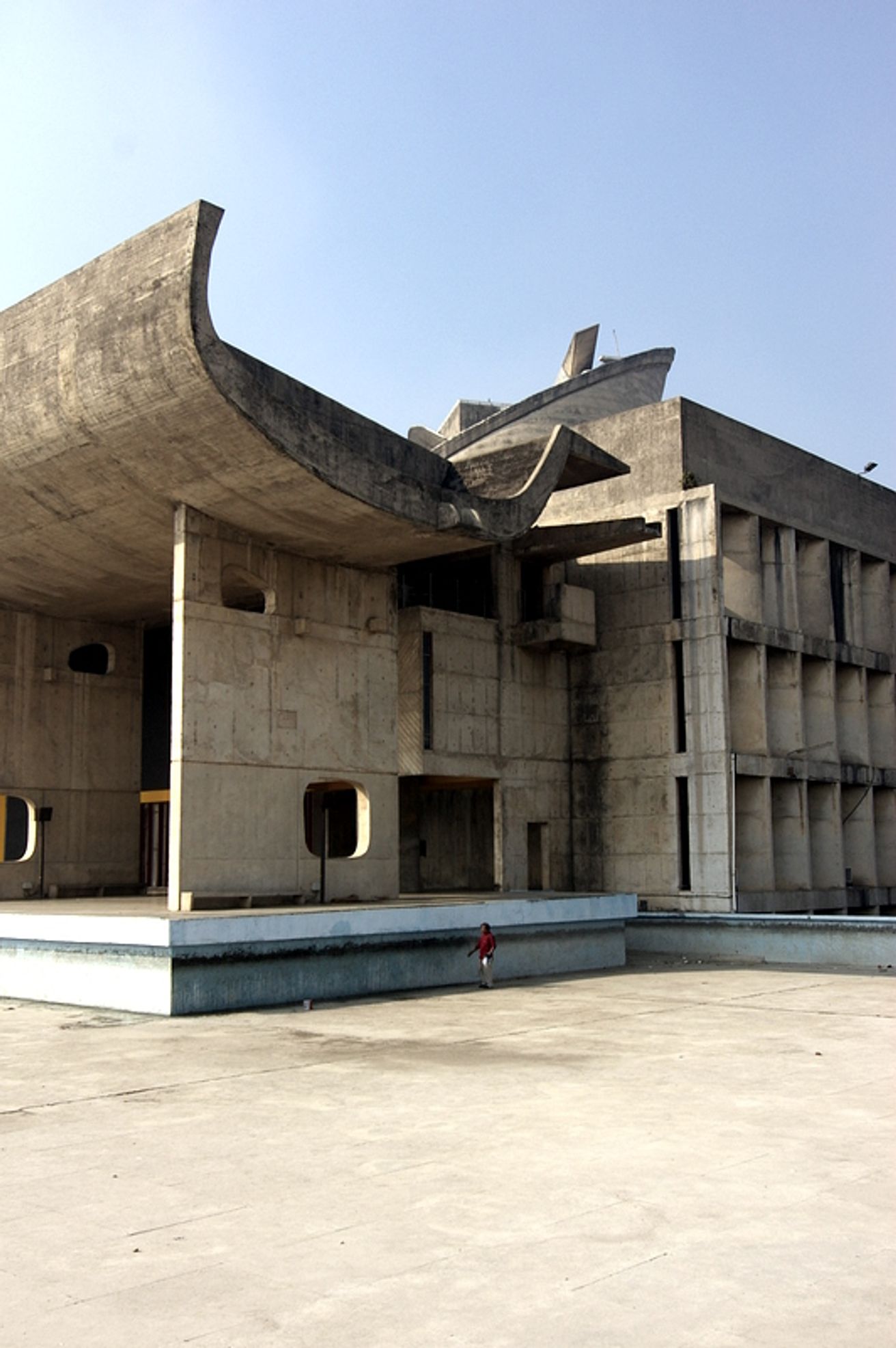
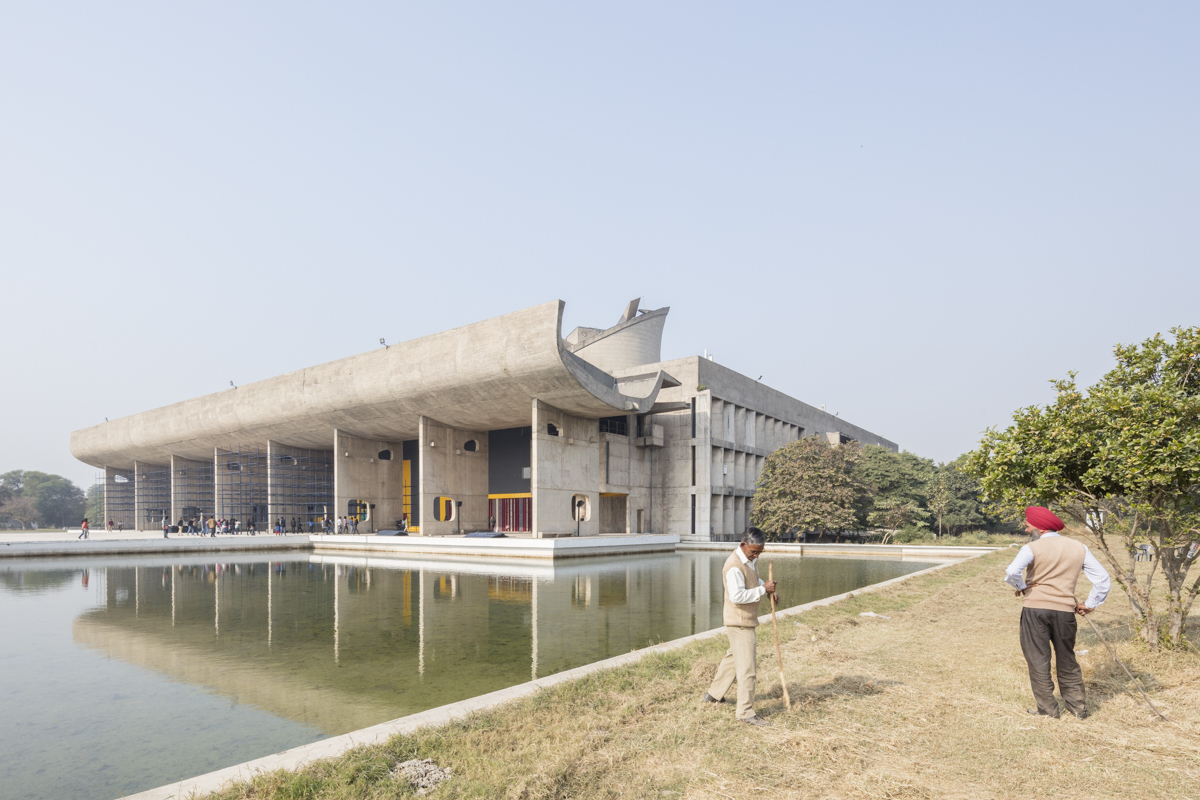
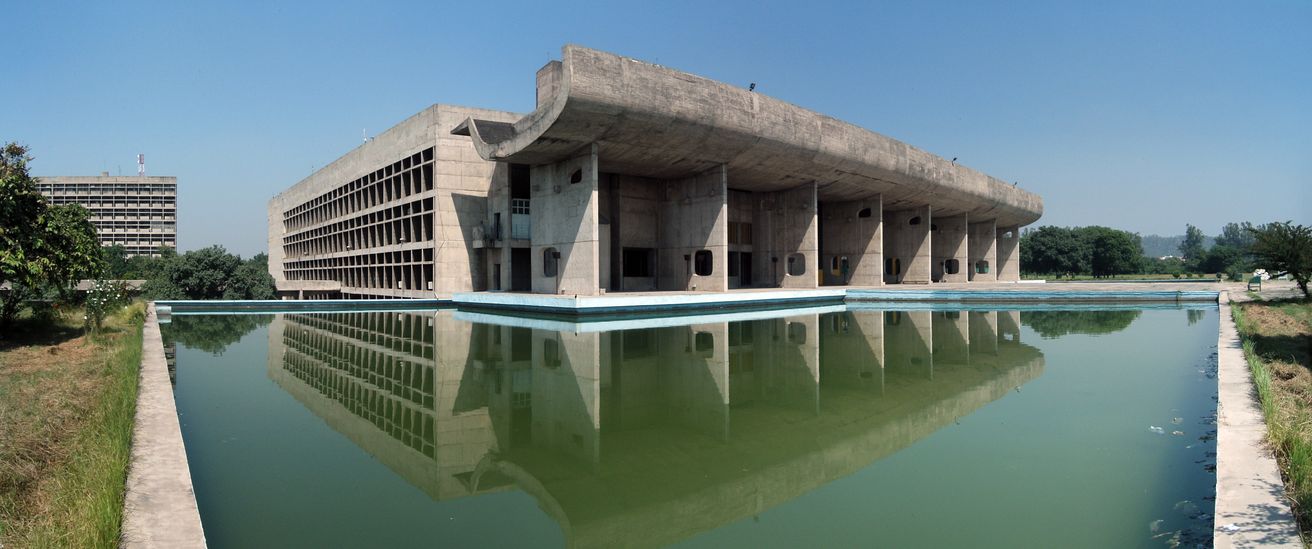
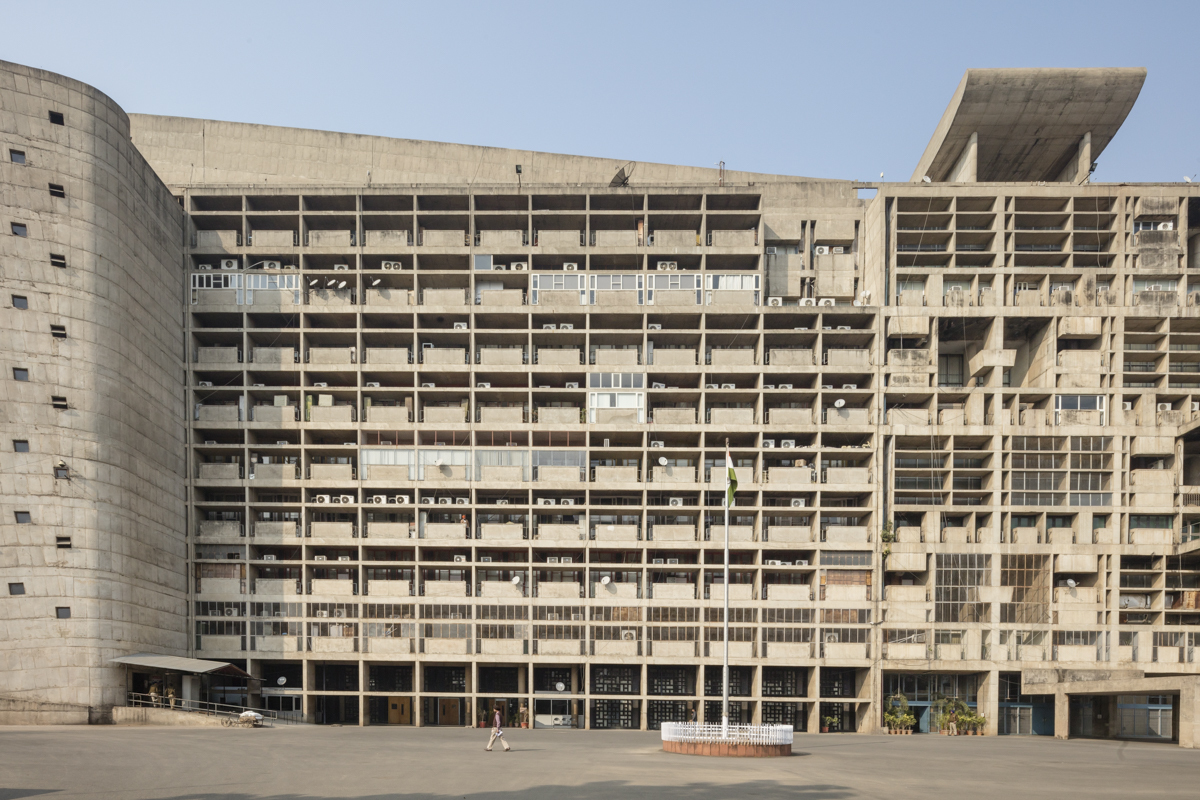
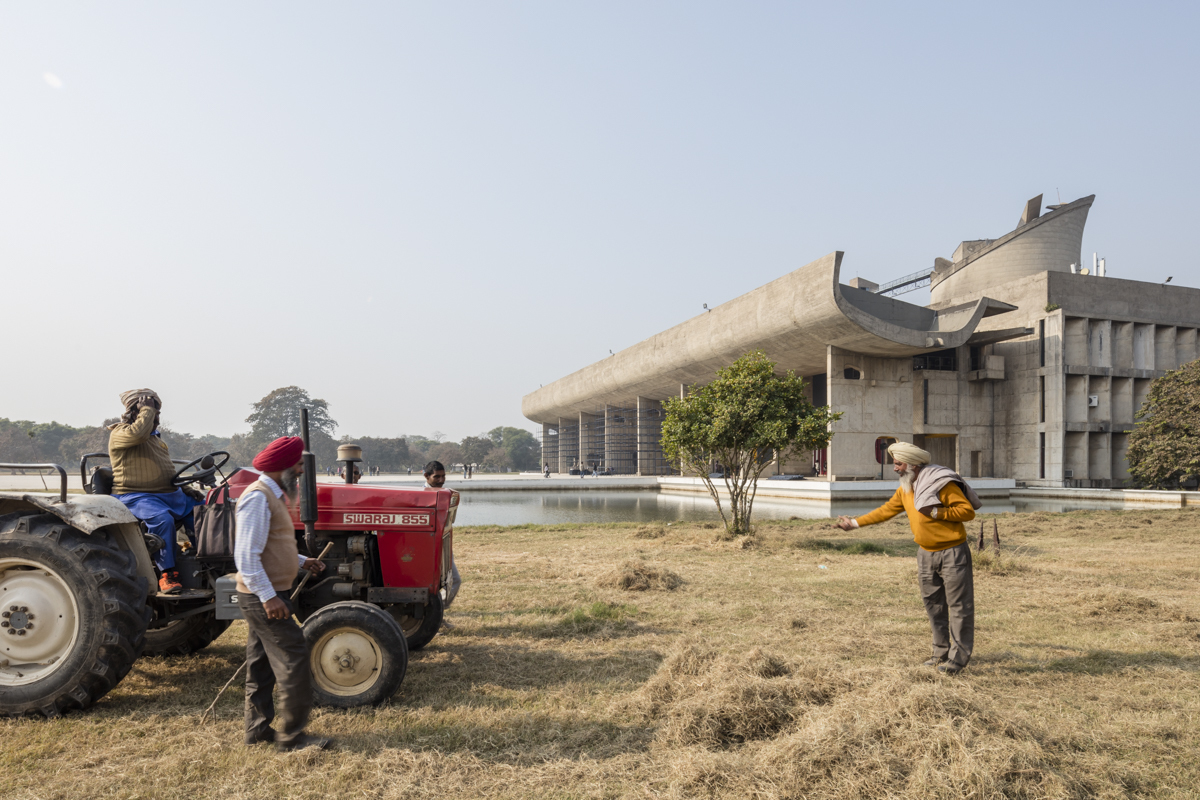
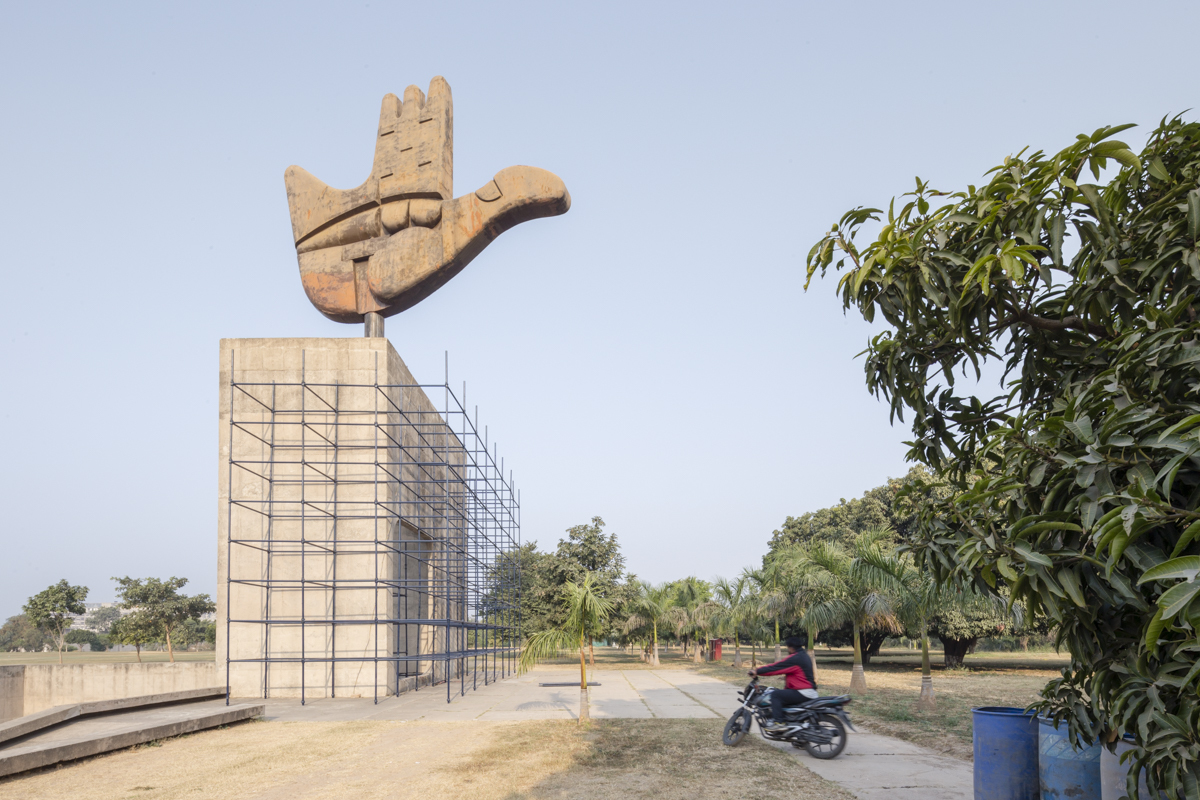
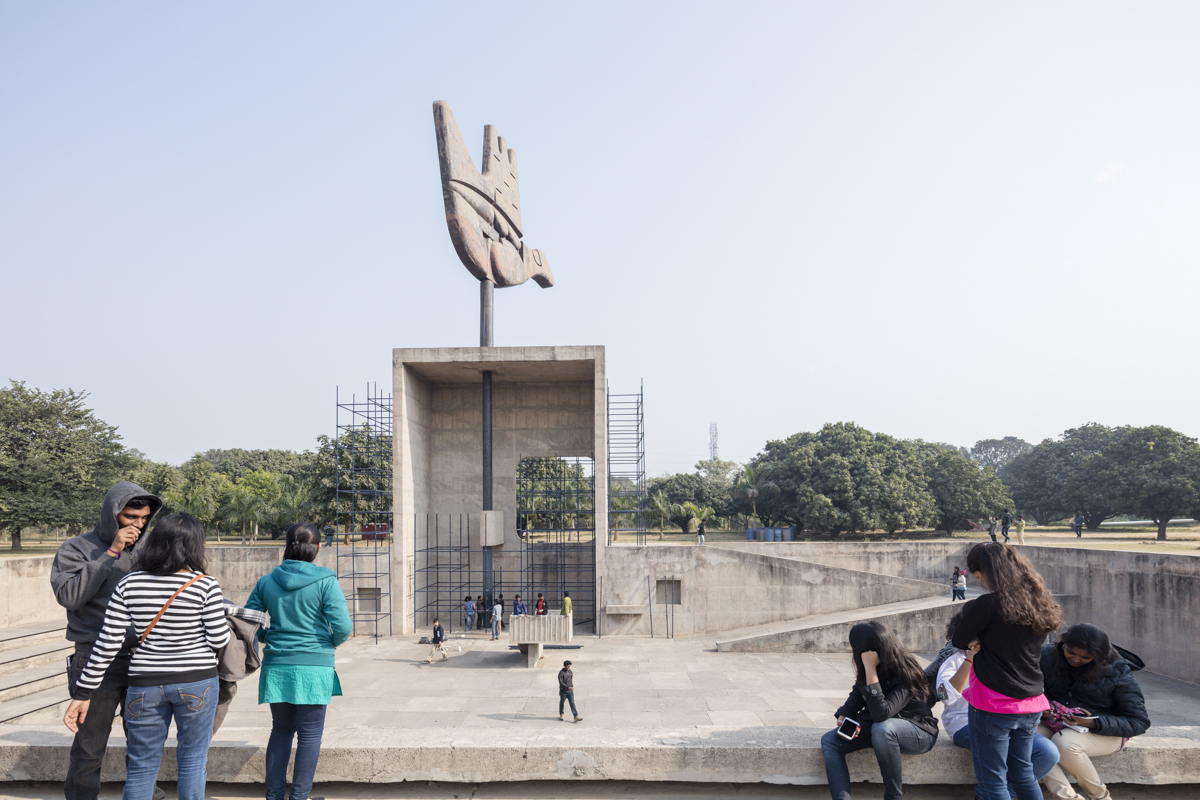
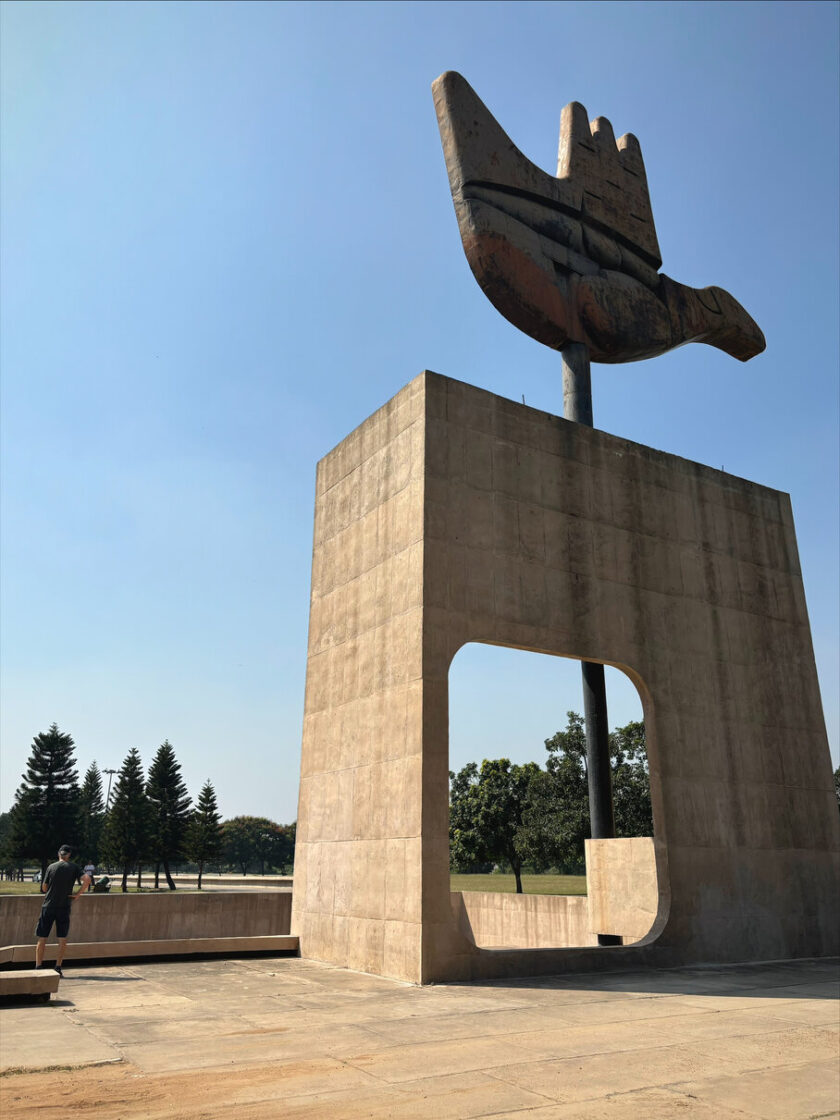
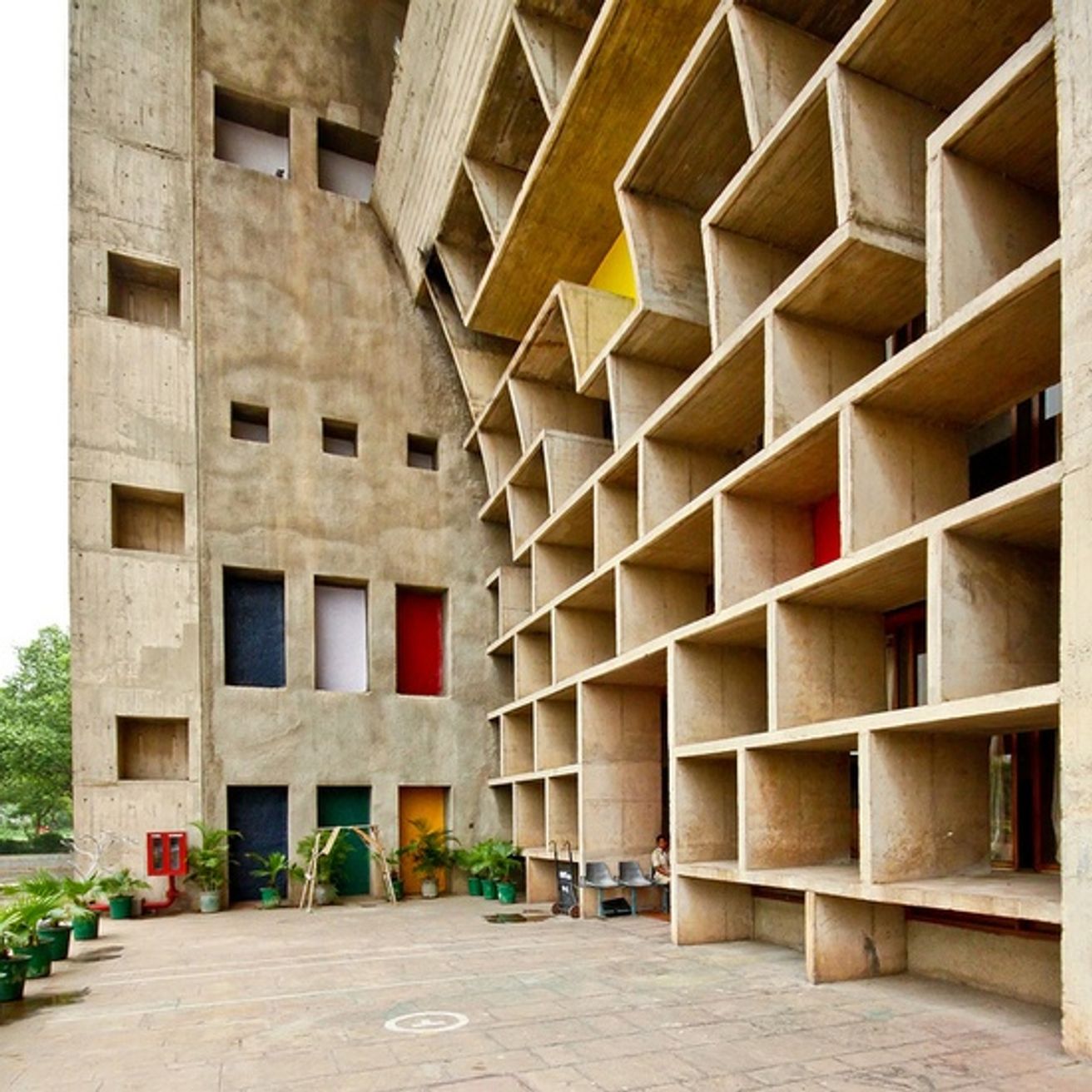
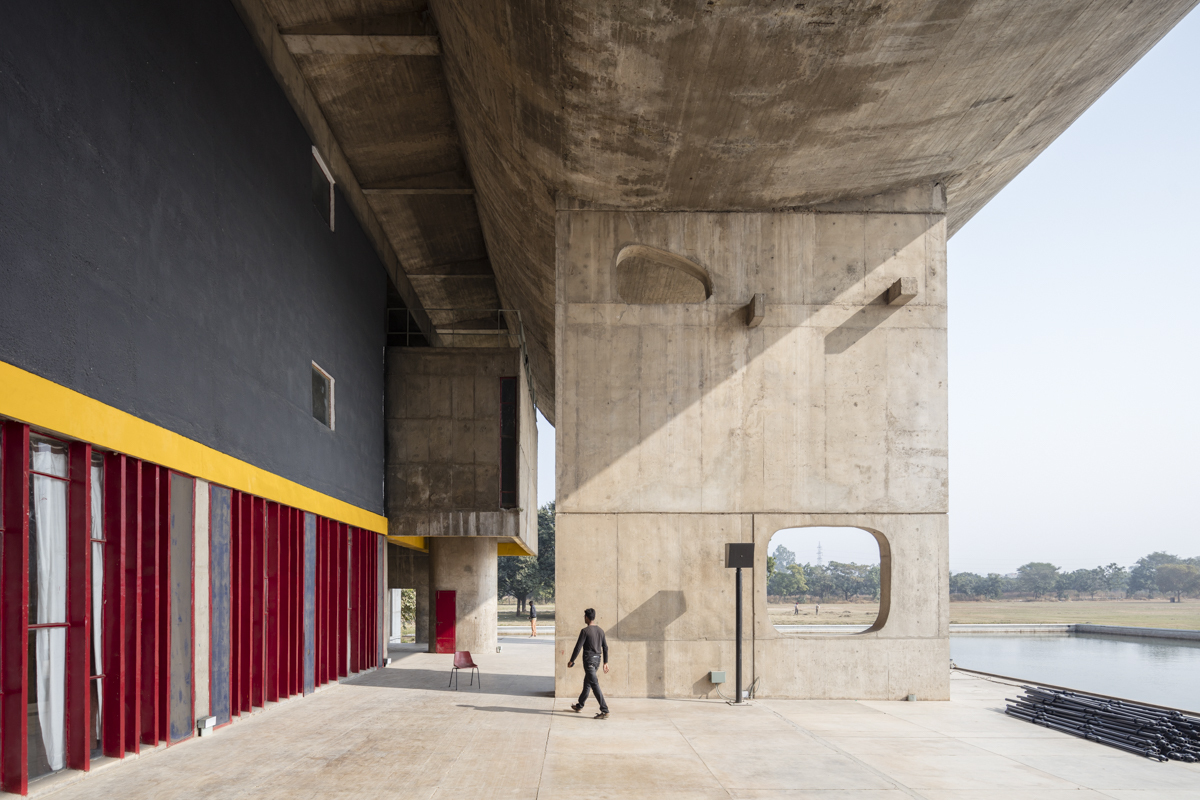
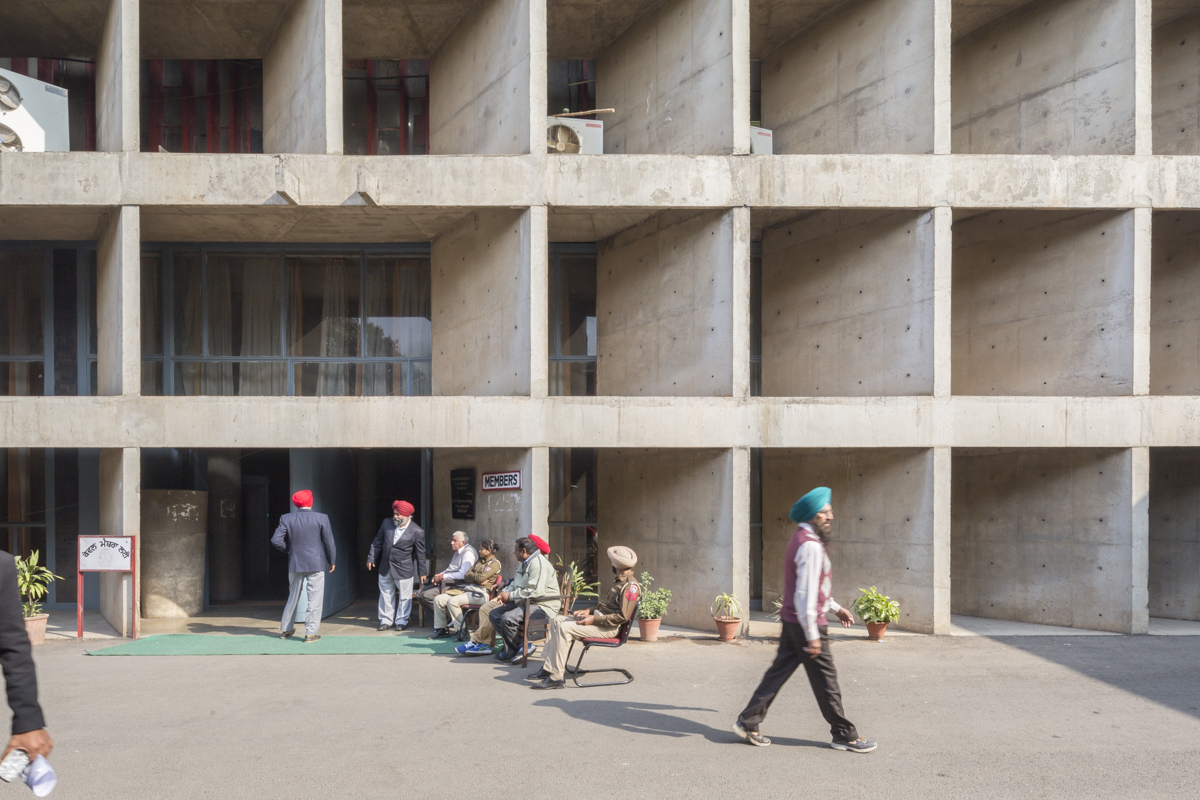
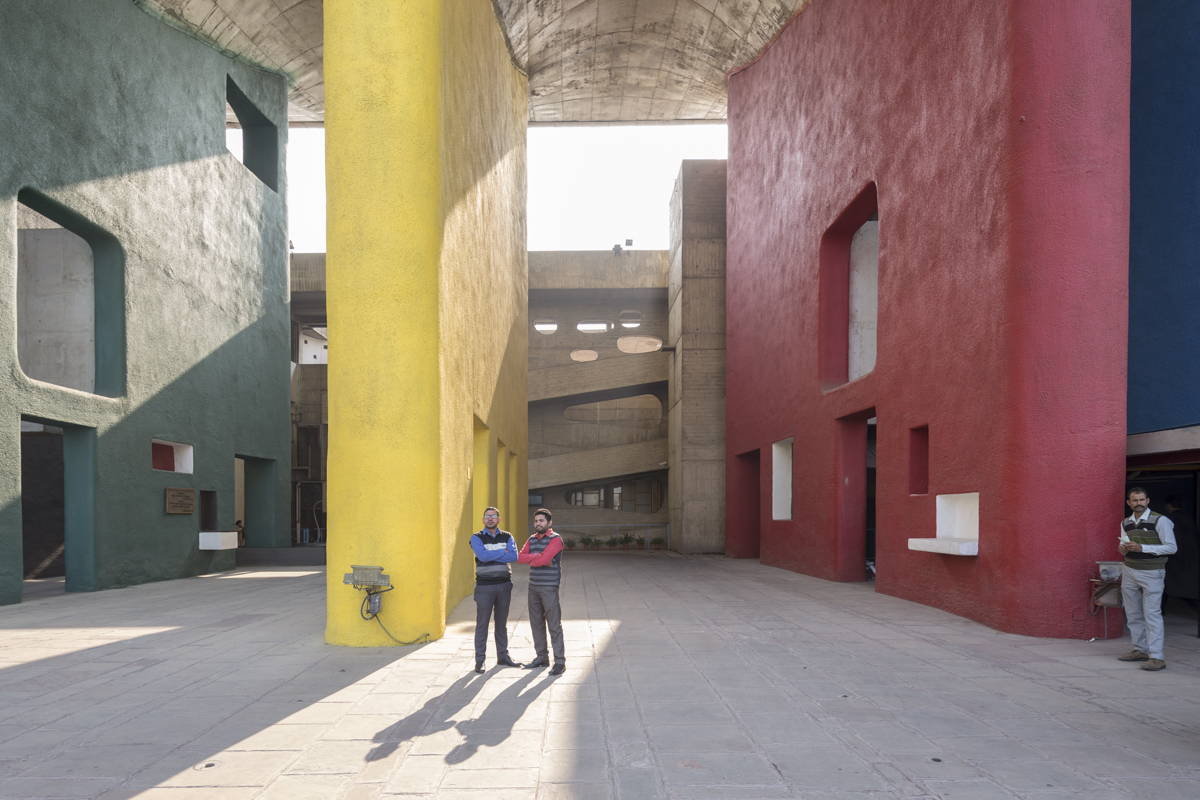
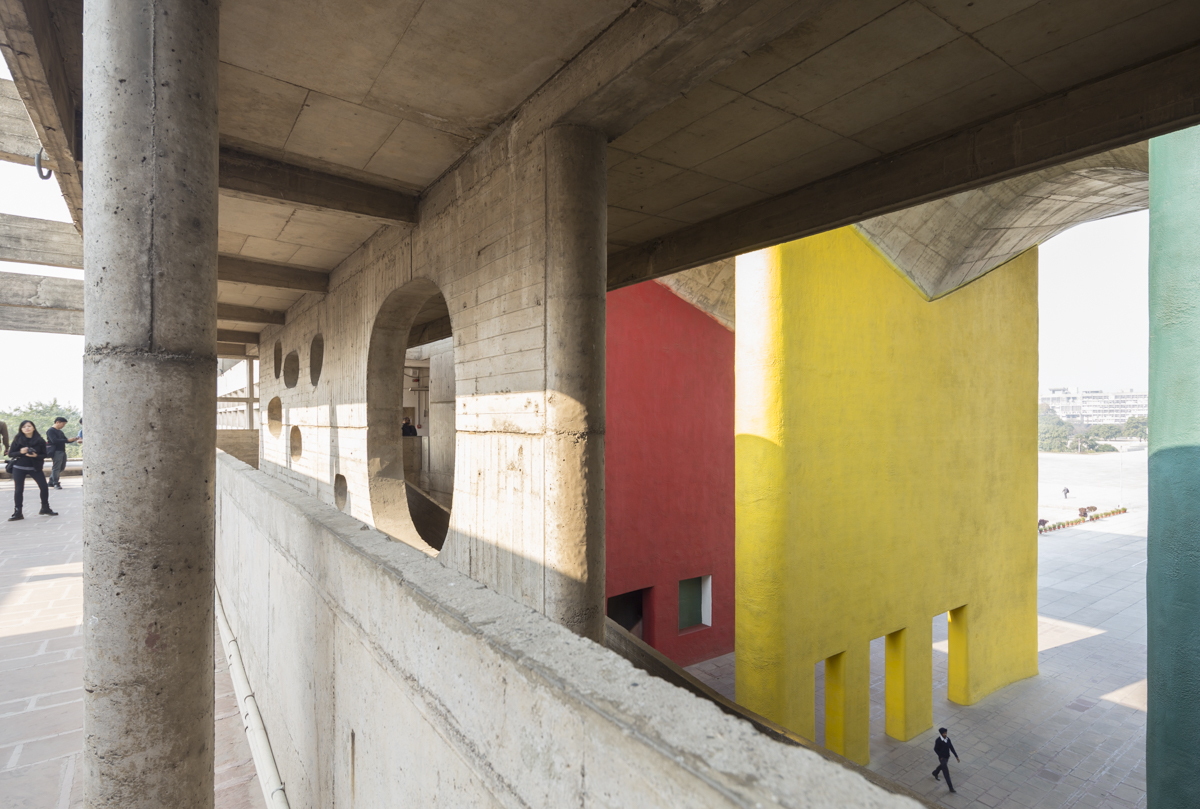
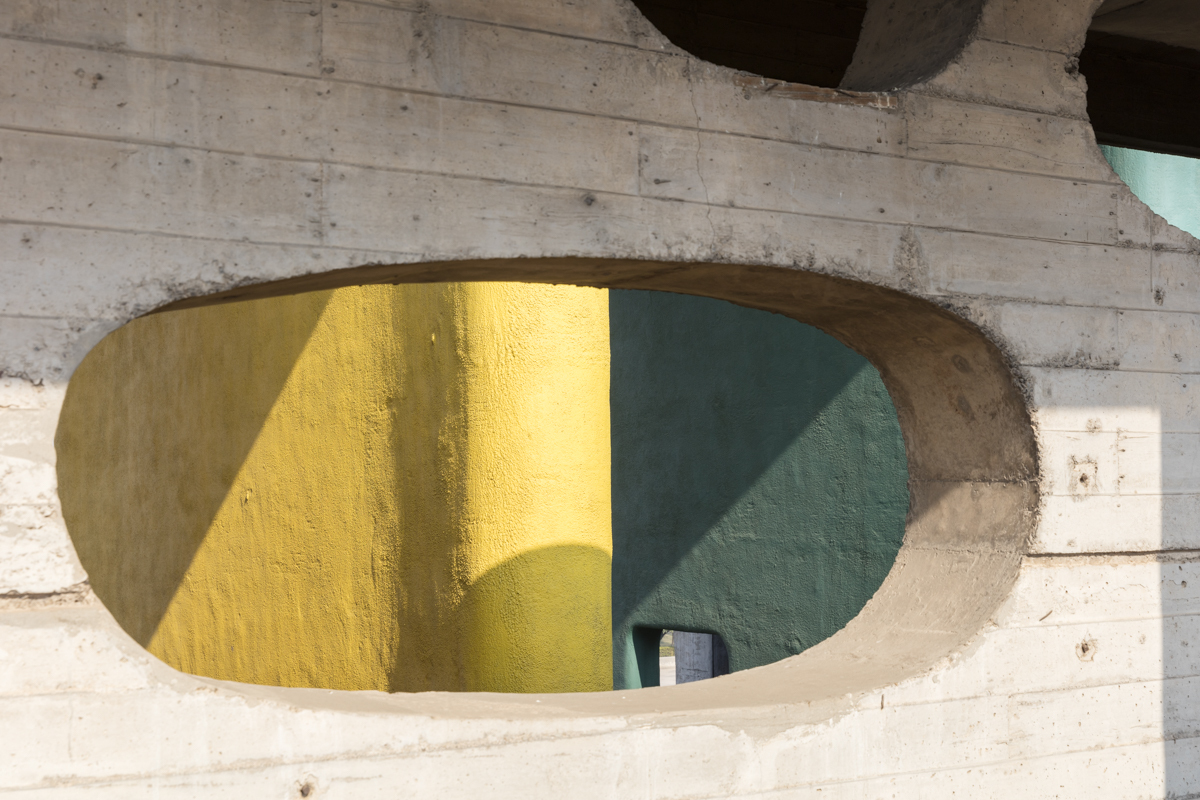
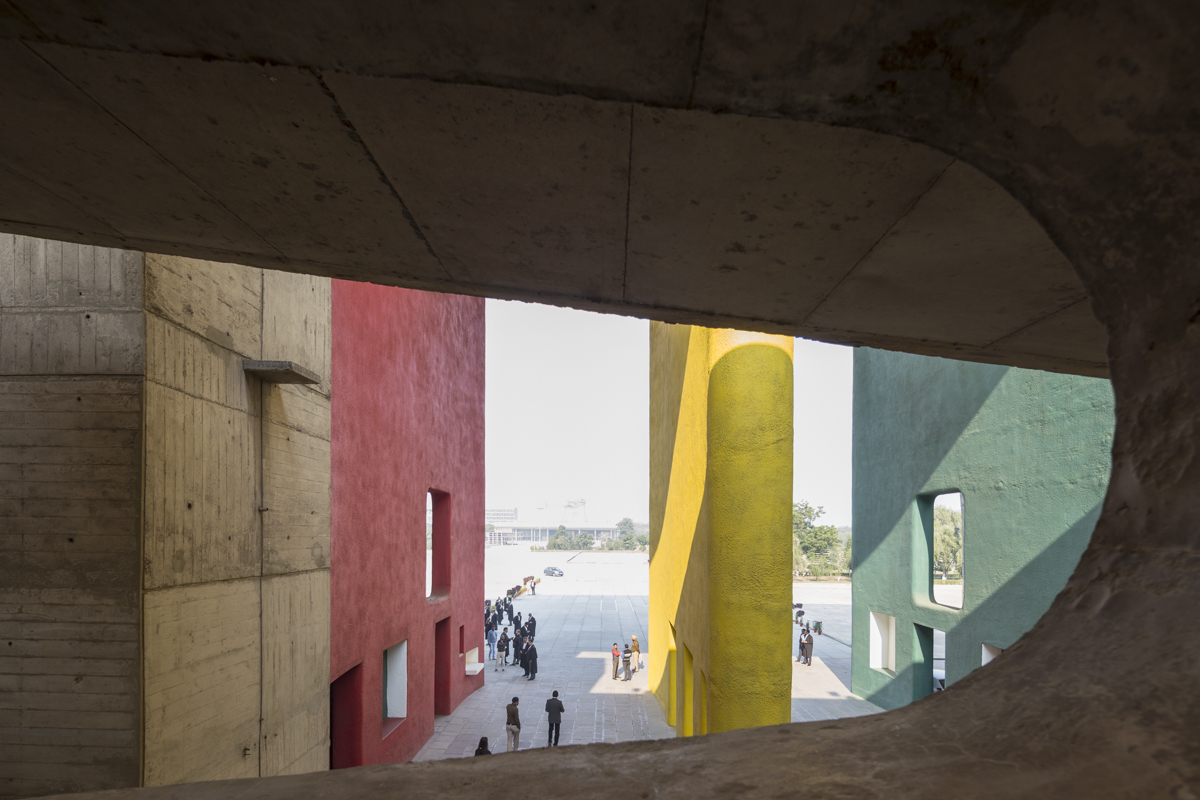
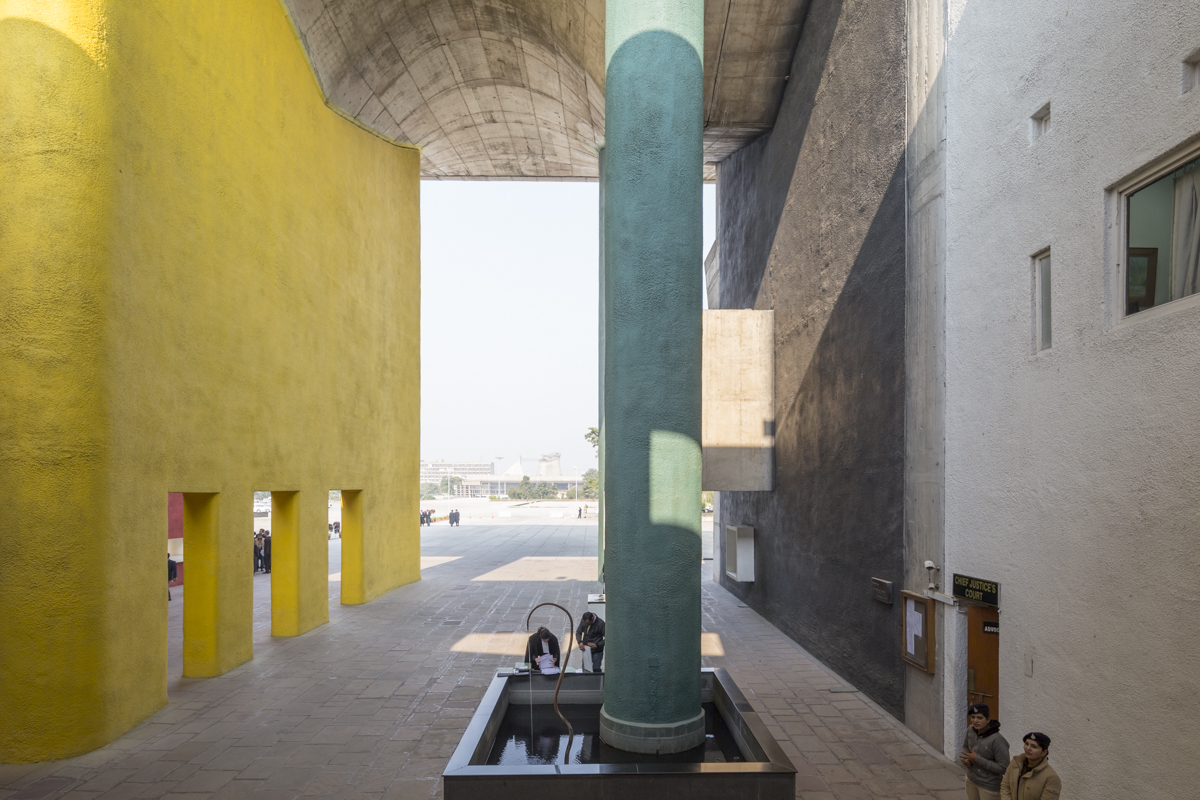
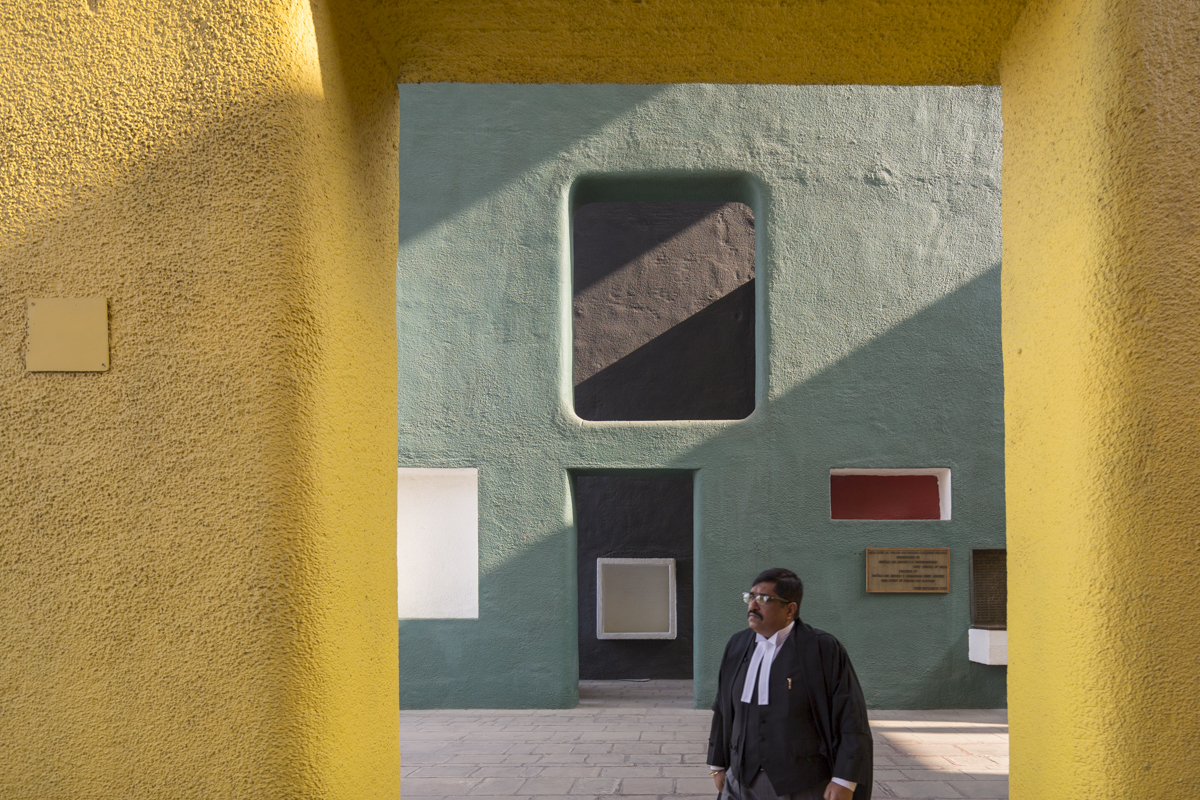
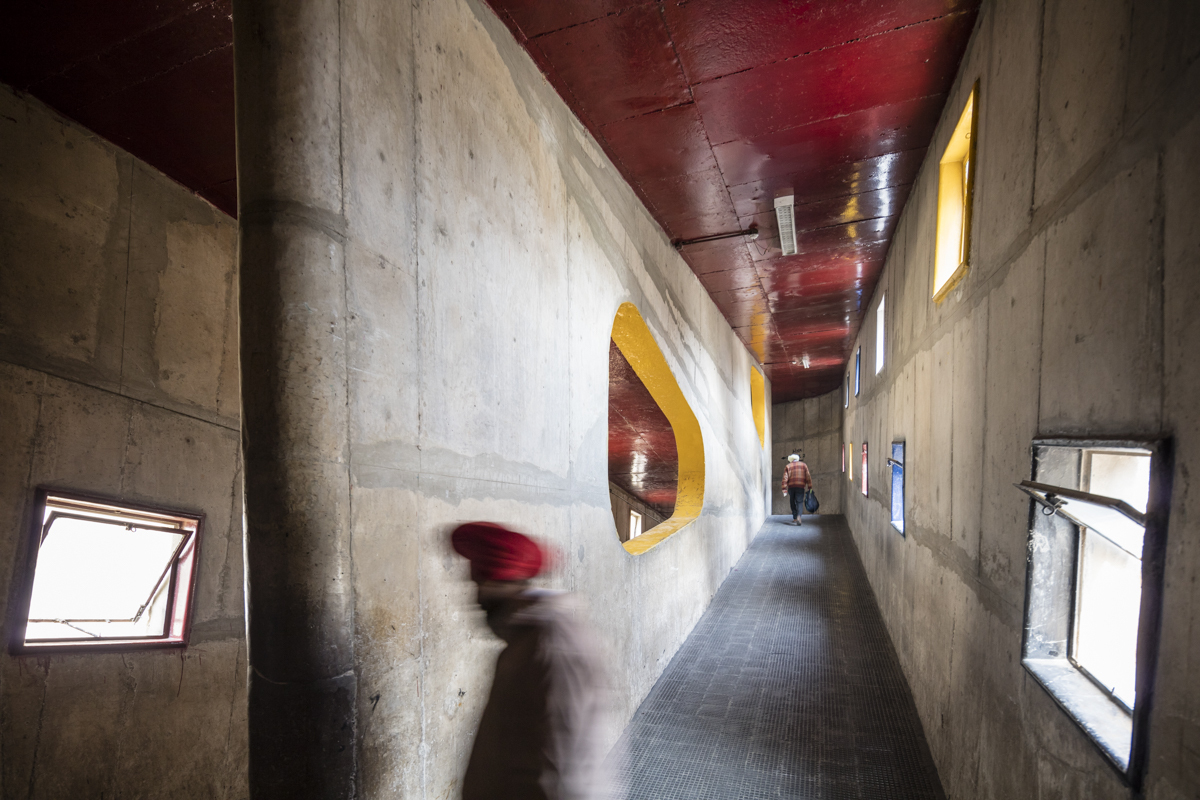
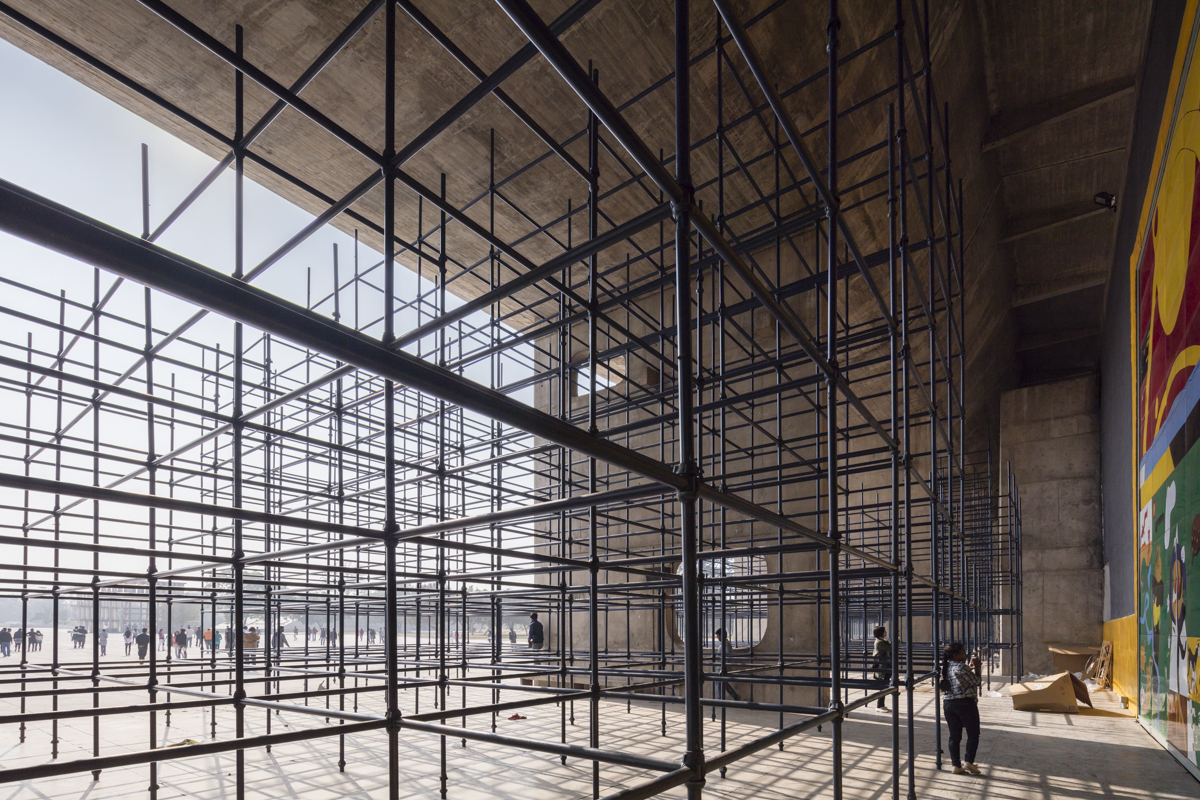
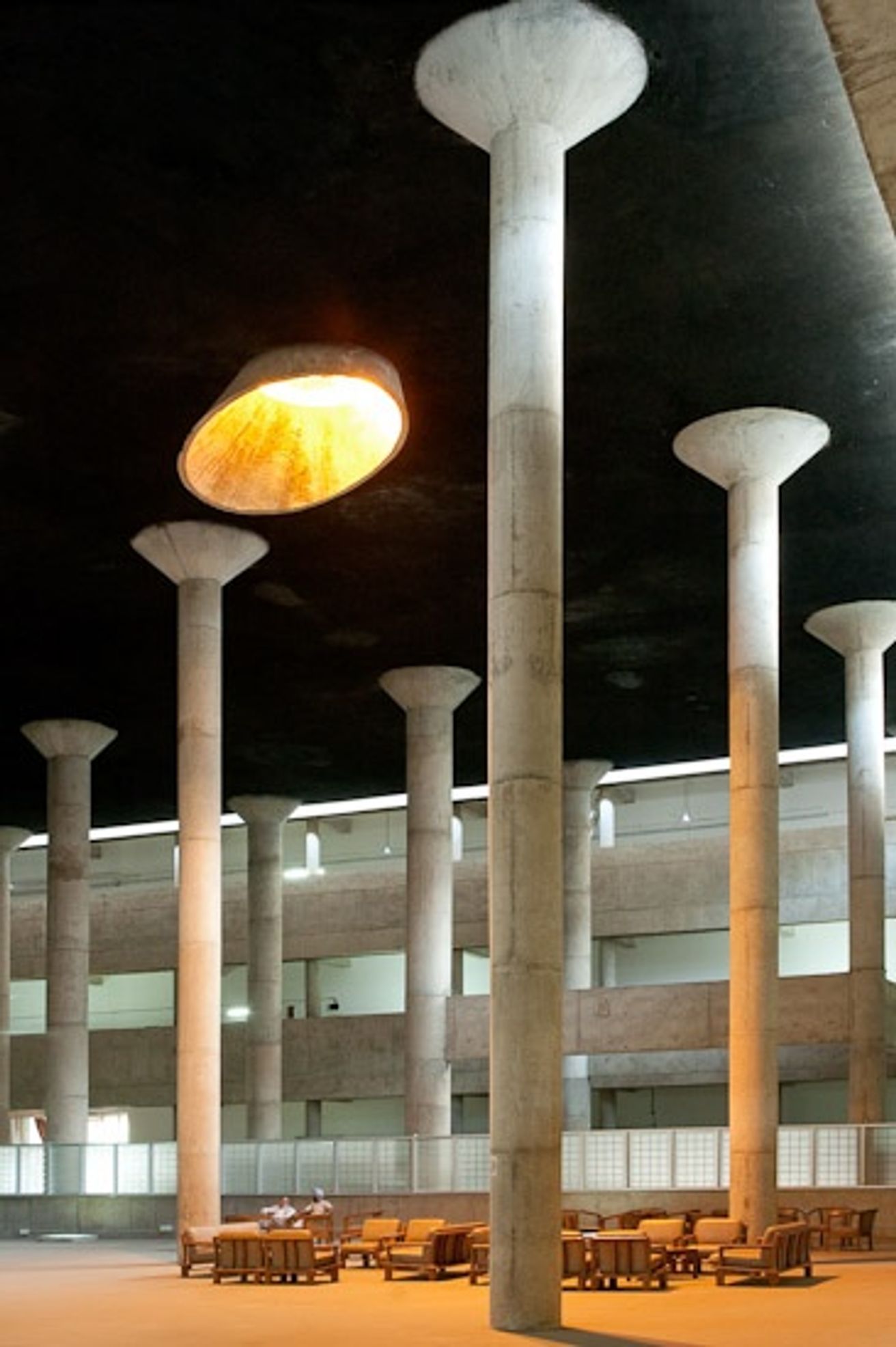
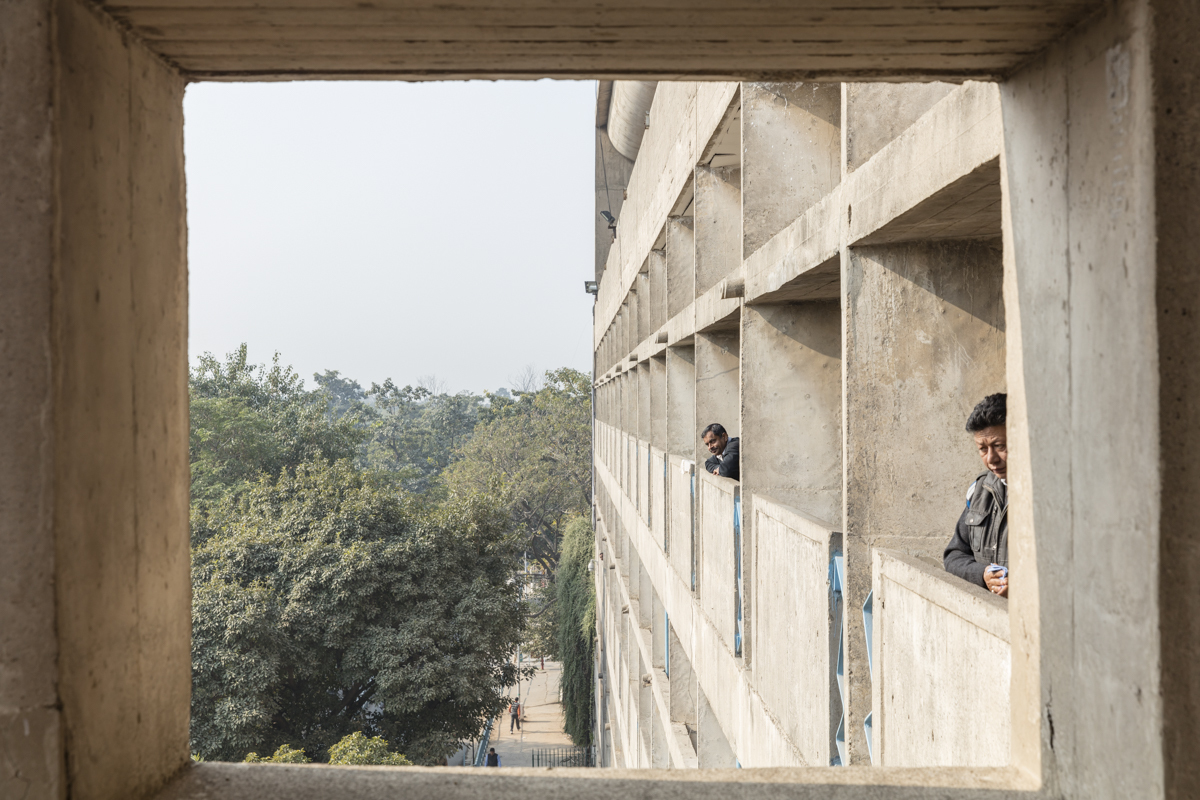
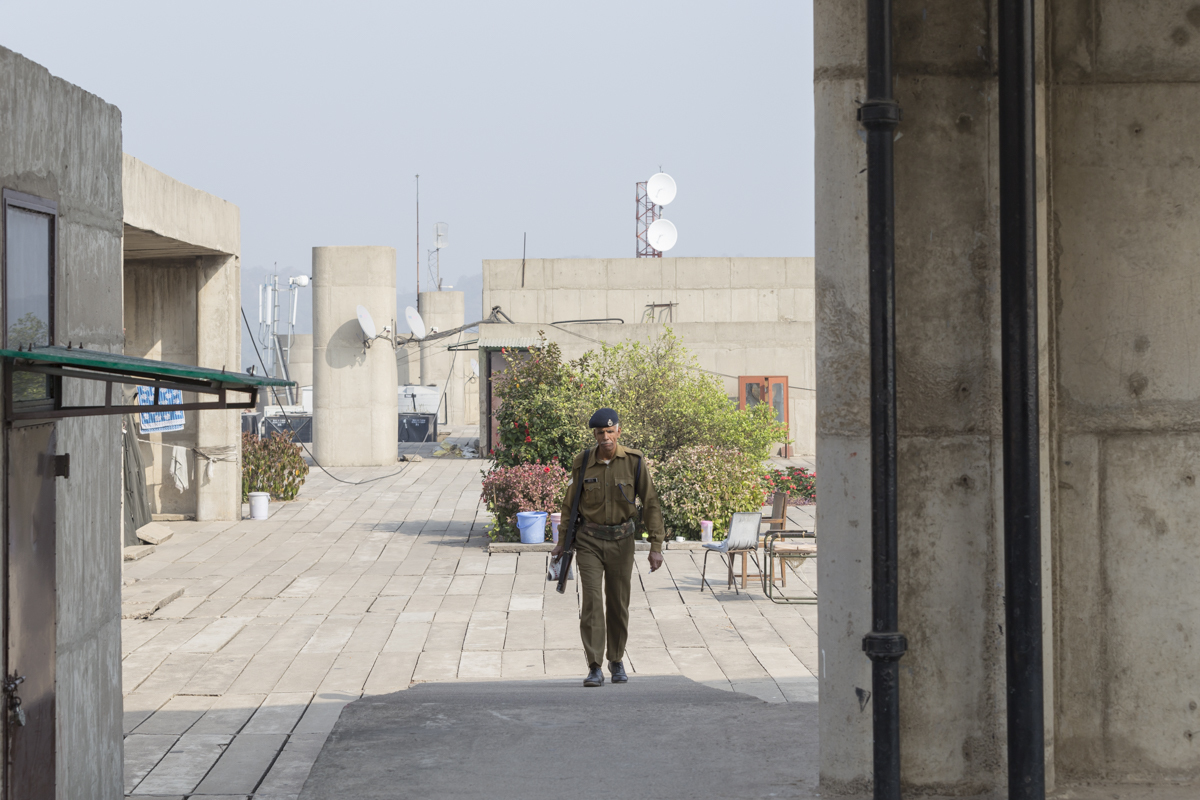
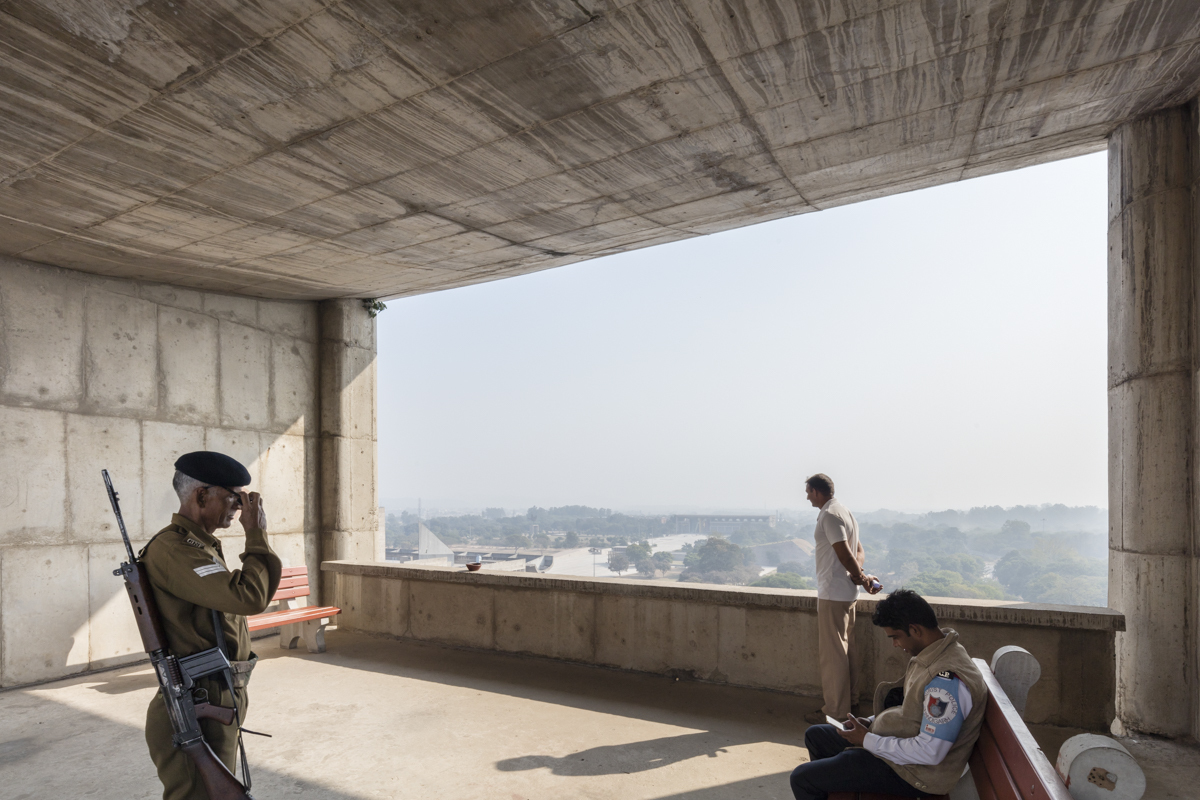
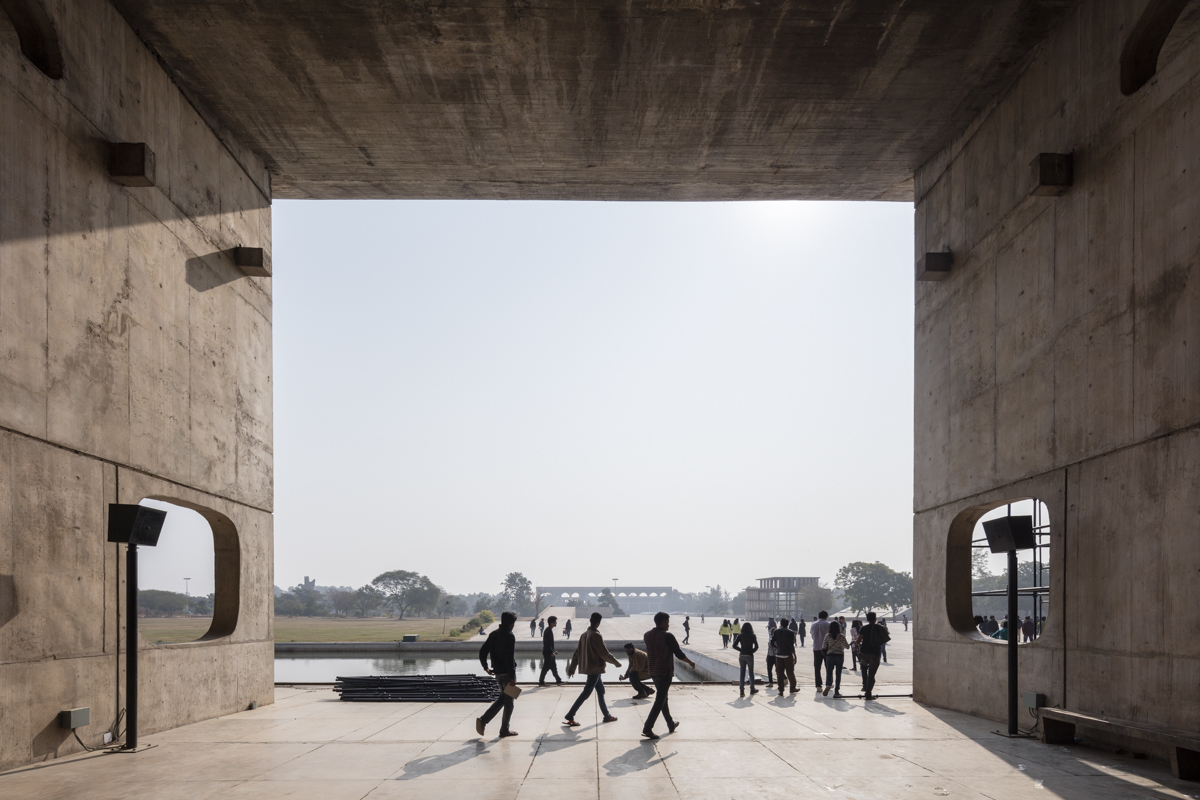
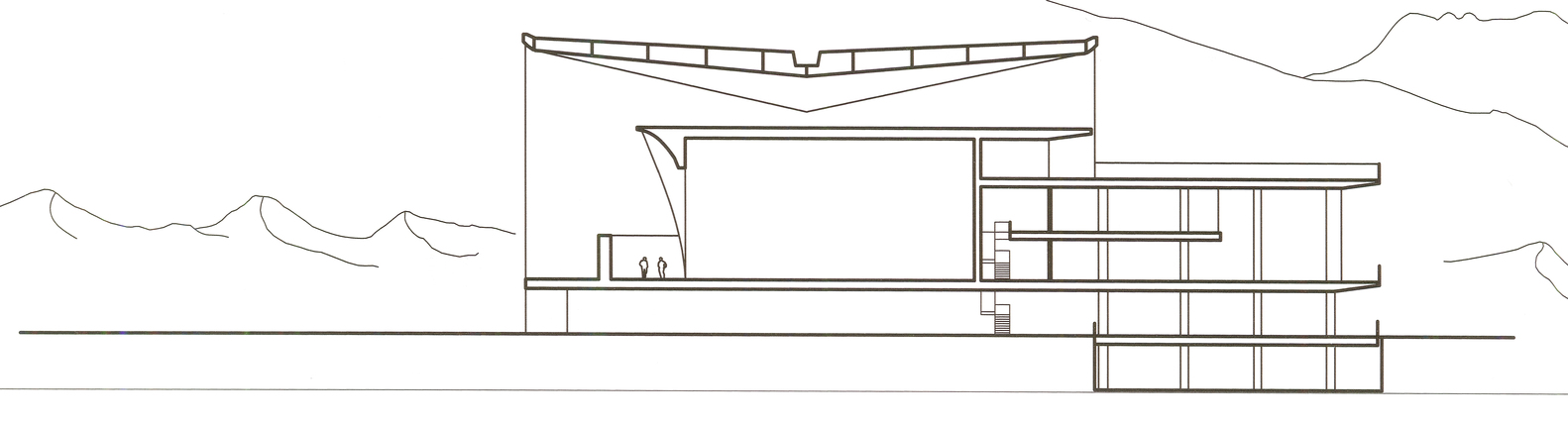
The northern edge of the city is defined by the Capitol Complex, conceived as the symbolic and administrative head of the urban composition. Here, three major government buildings—the Secretariat, the High Court, and the Legislative Assembly—are arranged across a monumental open landscape of plazas and reflecting pools. Designed primarily by Le Corbusier, these structures display the architect’s mature architectural language, characterized by monumental concrete forms, deep brise-soleil for solar control, and sculptural roof elements responding to the region’s intense sunlight.


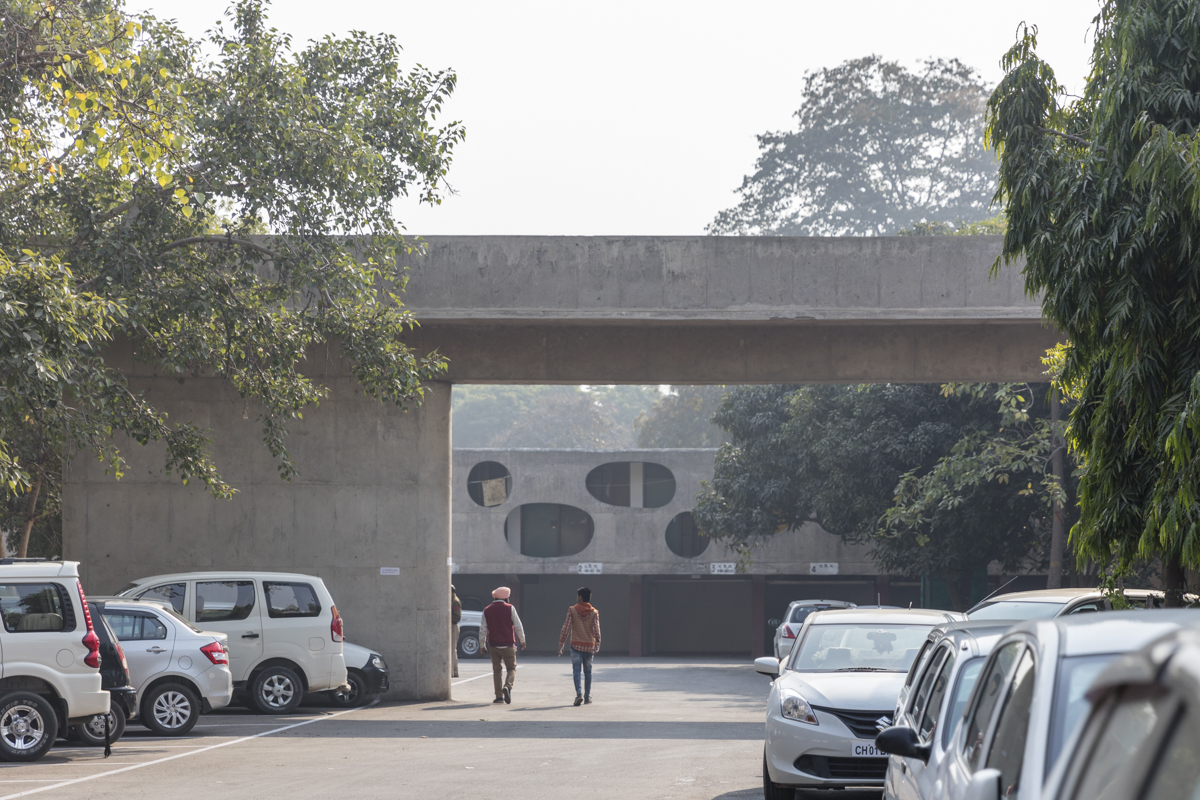
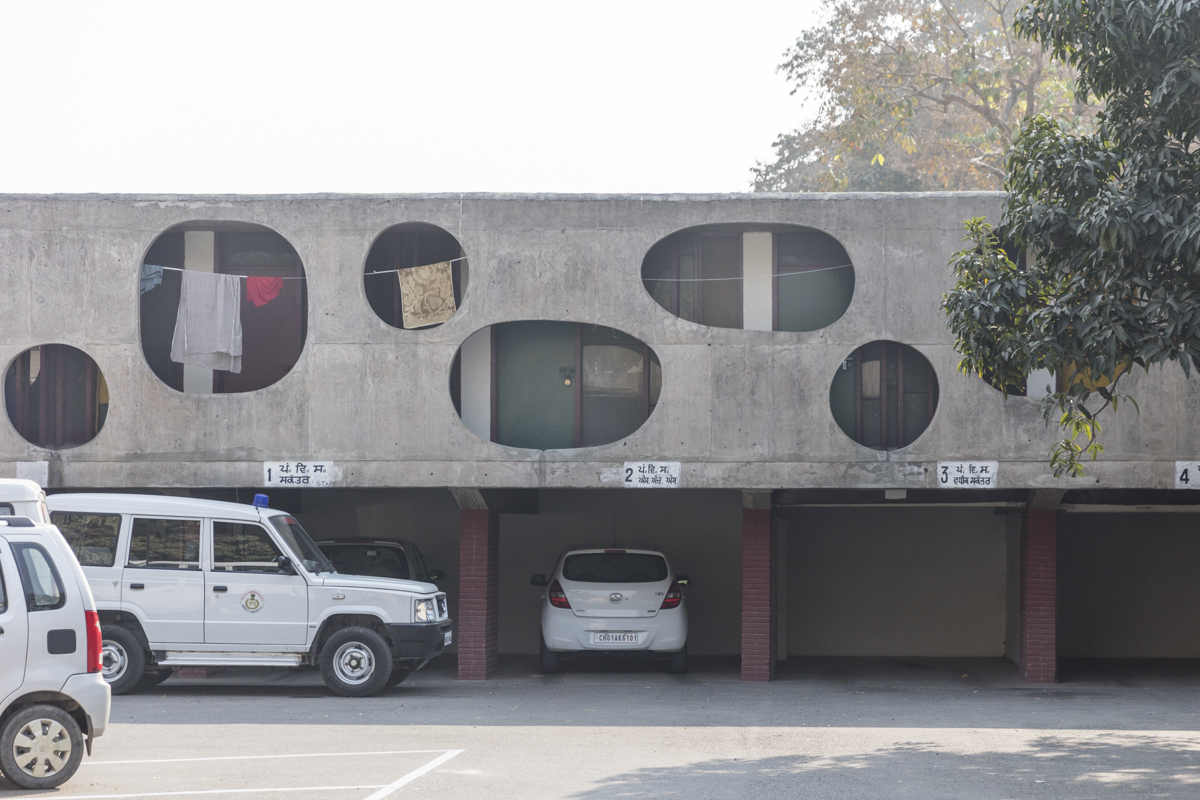
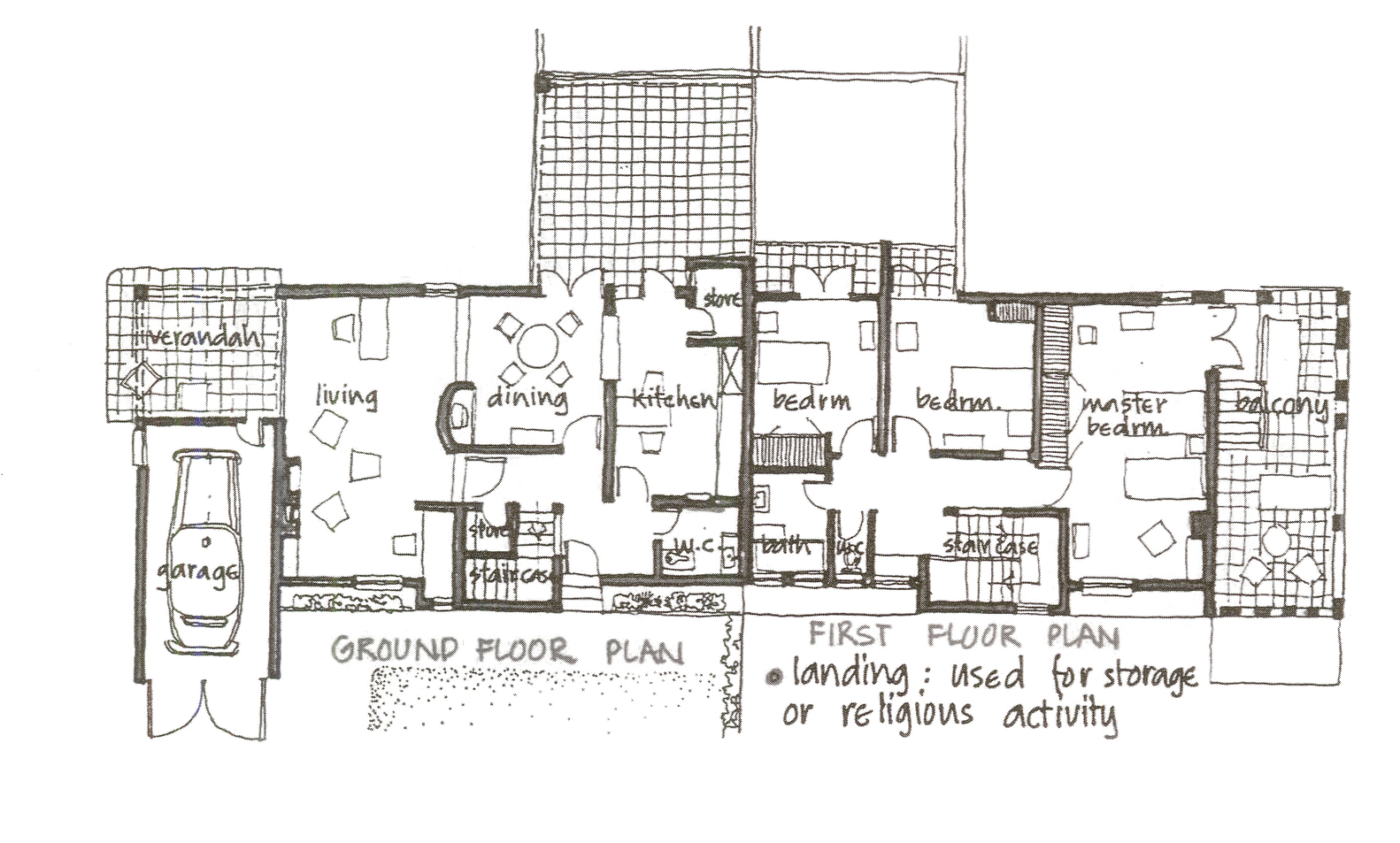
Although the master plan established a strong conceptual framework, the realization of Chandigarh diverged in certain respects from Le Corbusier’s original ambitions. The architect had initially proposed introducing residential high-rise blocks inspired by his Unité d’Habitation concept, but local authorities rejected this idea in favor of lower-density housing better suited to local lifestyles. Consequently, the design of much of the residential fabric was undertaken by Pierre Jeanneret together with Jane Drew and Maxwell Fry.

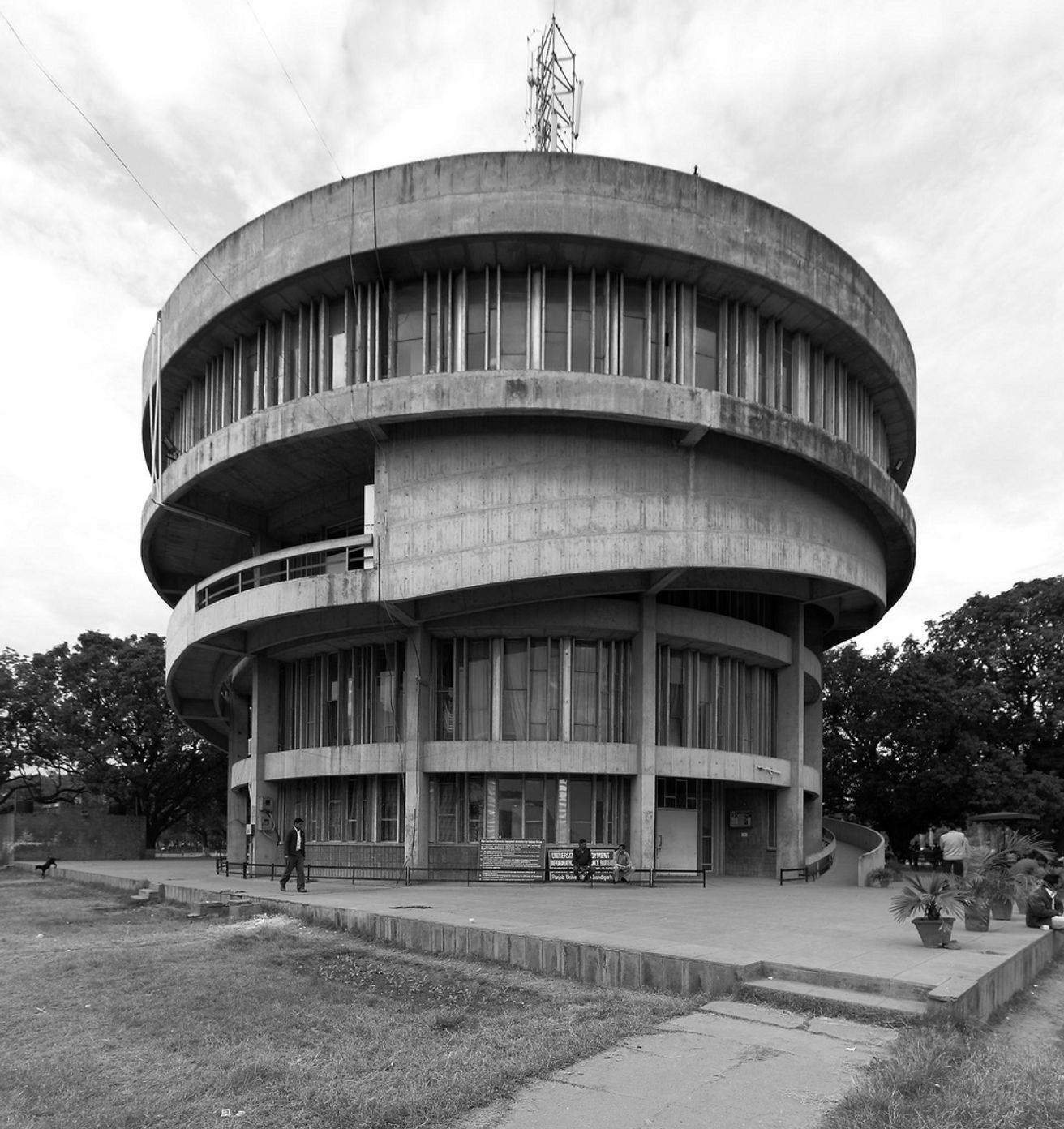
Constructed gradually throughout the 1950s and 1960s, Chandigarh became one of the most influential urban planning experiments of the twentieth century. Its sector-based organization, hierarchical circulation network, and integration of landscape established a model of modern city planning adapted to the conditions of post-independence India. Although the metropolitan population has expanded far beyond the original projection of 500,000 residents, the structural logic of Le Corbusier’s master plan continues to shape the city’s urban form.

Project Gallery











Project Location
Address: Capitol Complex, Sector 1, Chandigarh 160001, India
Location is for general reference and may represent a city or country, not necessarily a precise address.

