

Architects: Le Corbusier
Area: 5,000 m² (53,820 ft²)
Year: 1954
Photography: Le Corbusier, Cemal Emden, Roland Vančo, Ajay Bhatia, Mahemot, Carlo Fumarola, Evan Chakroff, Hairy Yeti, Prashant Chavan, Arnout Fonck, Matt Loosley, Panovscott, Thom Mckenzie, Thomas Winwood Mckenzie, Dave Morris, Nicholas Iyadurai, motaleb architekten, Wikimedia Commons, Sanyam Bahga
Collaborator: Balkrishna Doshi
Client: Ahmedabad Textile Mills Association (ATMA) / Mill Owners’ Association
Investor: Surottam Hutheesing
City: Ahmedabad
Country: India
The Mill Owners’ Association Building, designed by Le Corbusier in Ahmedabad, Gujarat, and completed in 1954, served as the headquarters of the Ahmedabad Textile Mills Association. The project adapted modernist principles to the climatic and cultural conditions of western India through deep façade recesses, brise-soleil, exposed concrete, and naturally ventilated interiors. Its proportions were shaped by Le Corbusier’s Modulor system, which used the human body as a reference for scale, rhythm, and spatial harmony. Positioned between Ashram Road and the Sabarmati River, the building brings together administrative offices, meeting rooms, and an assembly hall within a carefully choreographed architectural promenade. The interplay of structure, circulation, light, and shade gives the building both functional clarity and a strong spatial identity. As Le Corbusier’s first completed project in Ahmedabad, it established design strategies that would later reappear in works such as Villa Shodhan and the Carpenter Center for the Visual Arts. The building remains a defining example of Tropical Modernism and one of Le Corbusier’s most significant postwar works.
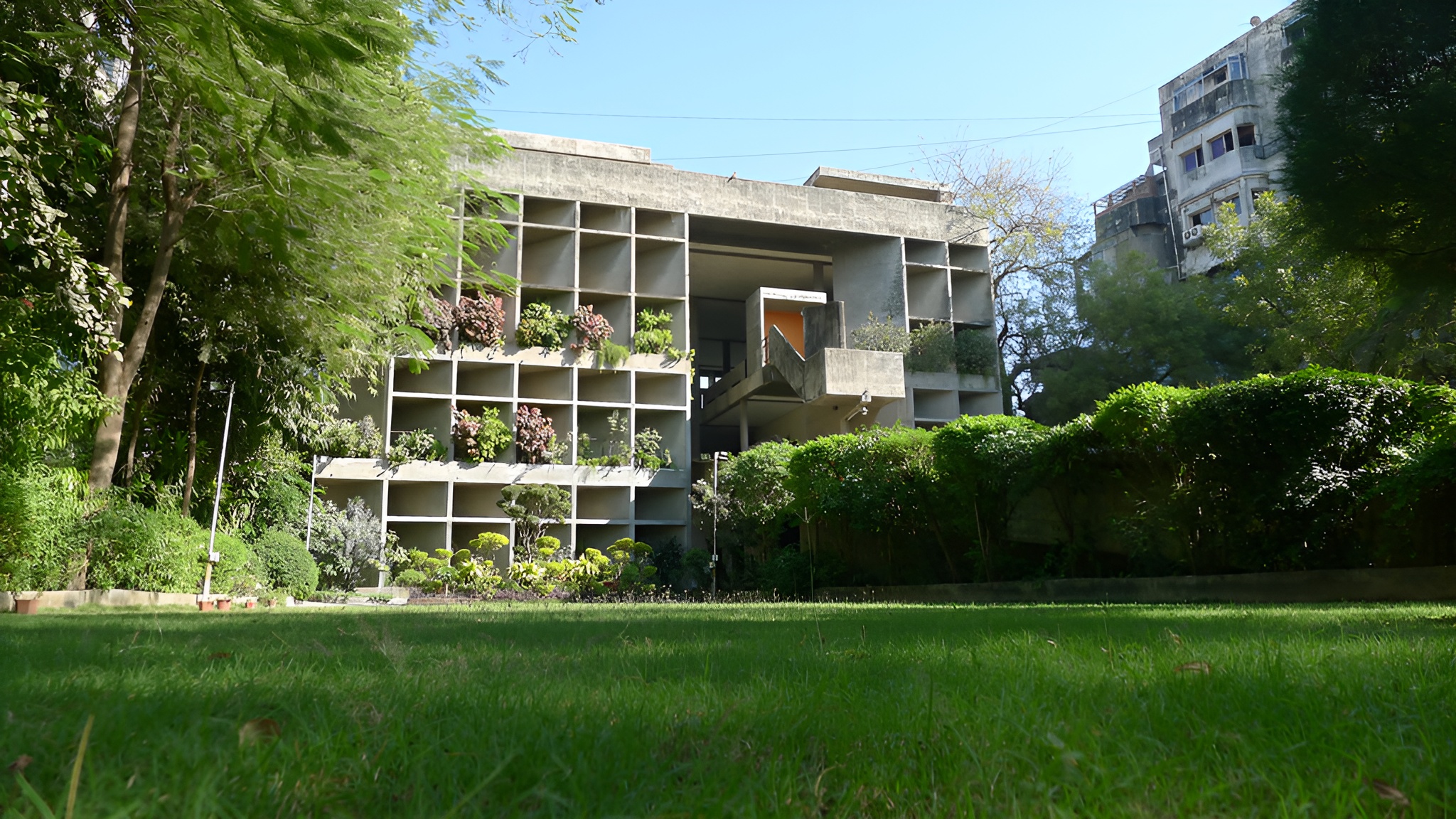
Mill Owners’ Association Building was commissioned by the Ahmedabad Textile Mills Association as its headquarters in Ahmedabad, a city long associated with India’s textile industry. Designed by Le Corbusier and completed in 1954, the project became the first of his four realized commissions in the city and a key expression of his approach to architecture in tropical climates.
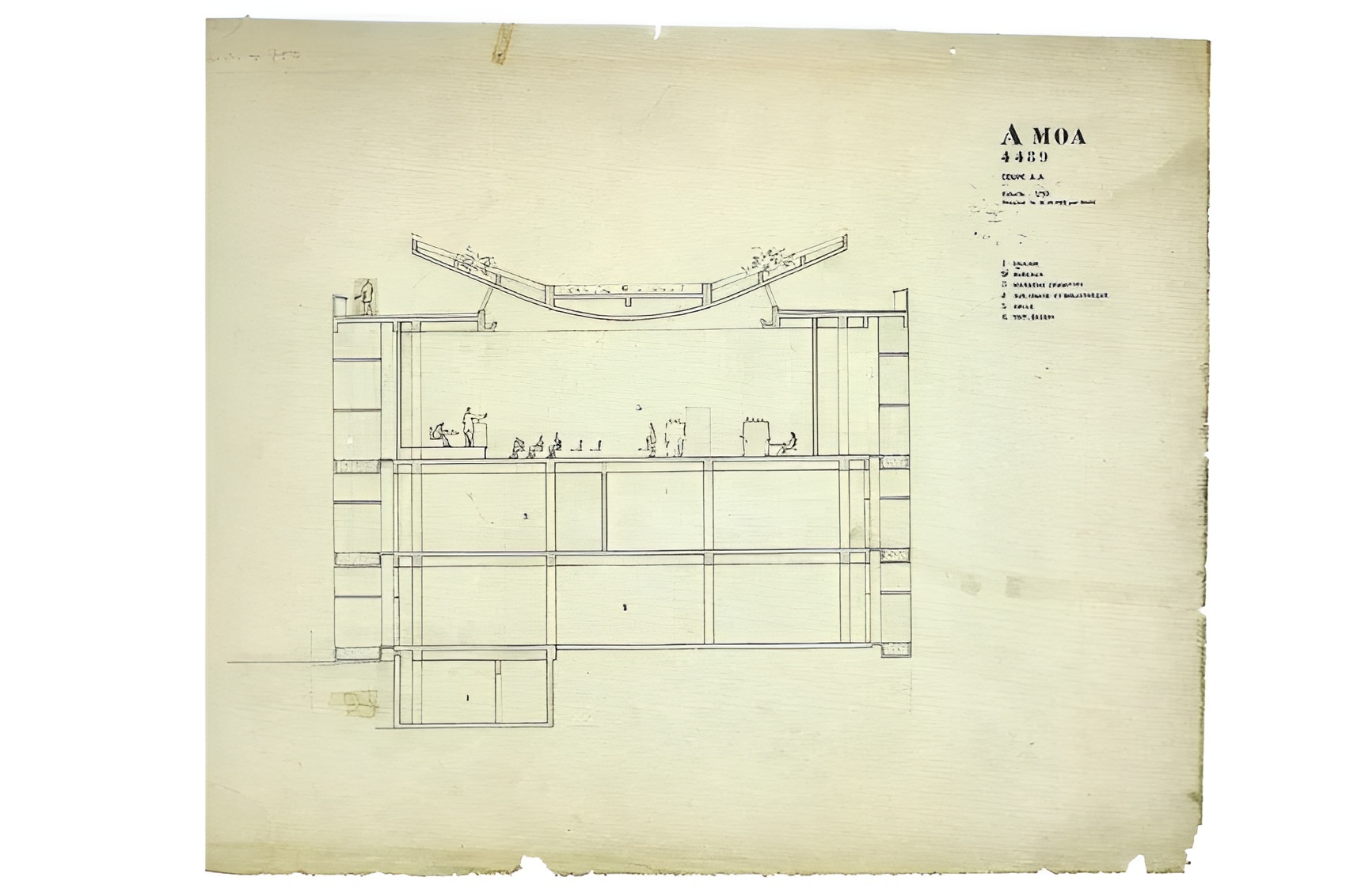
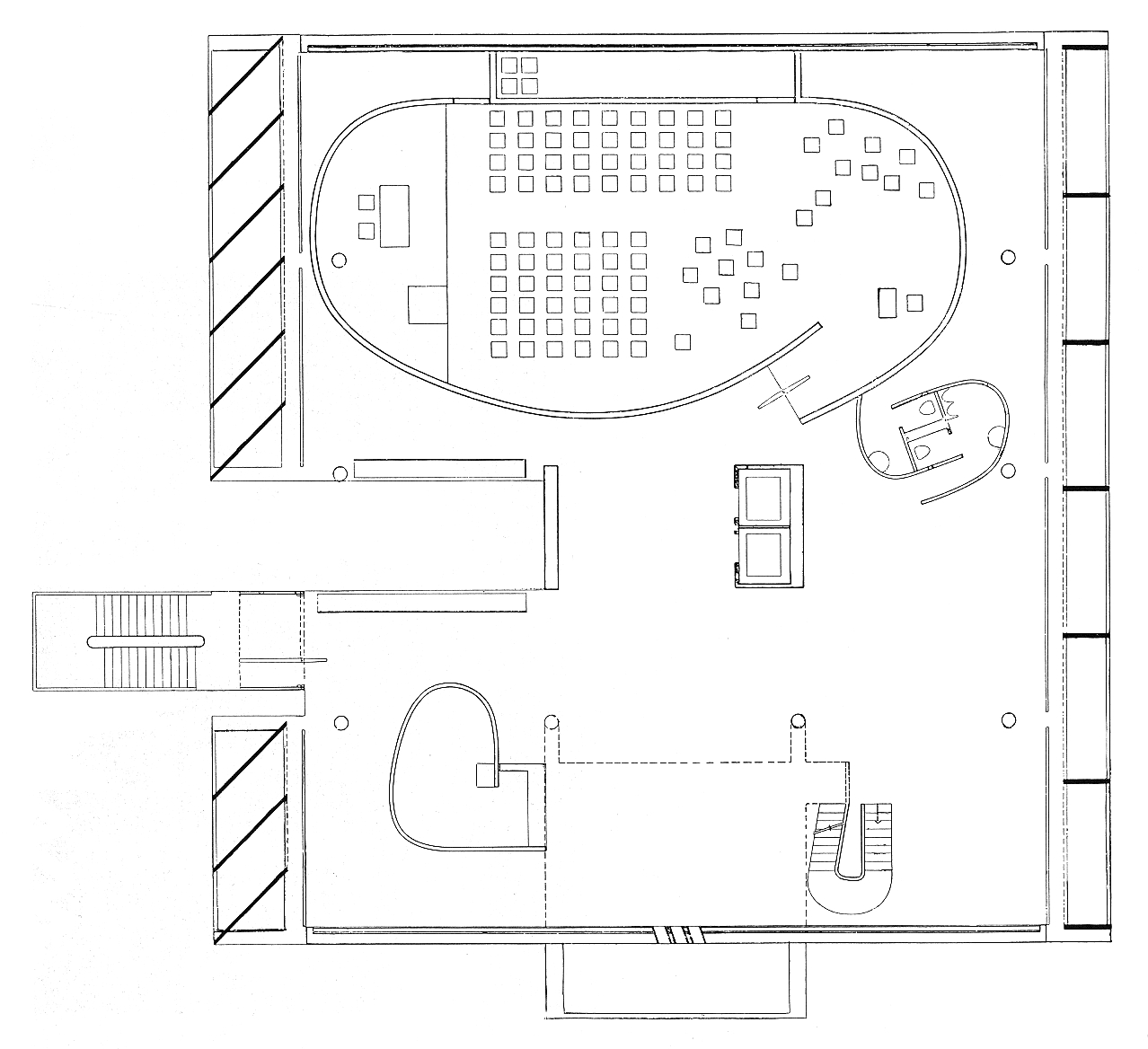
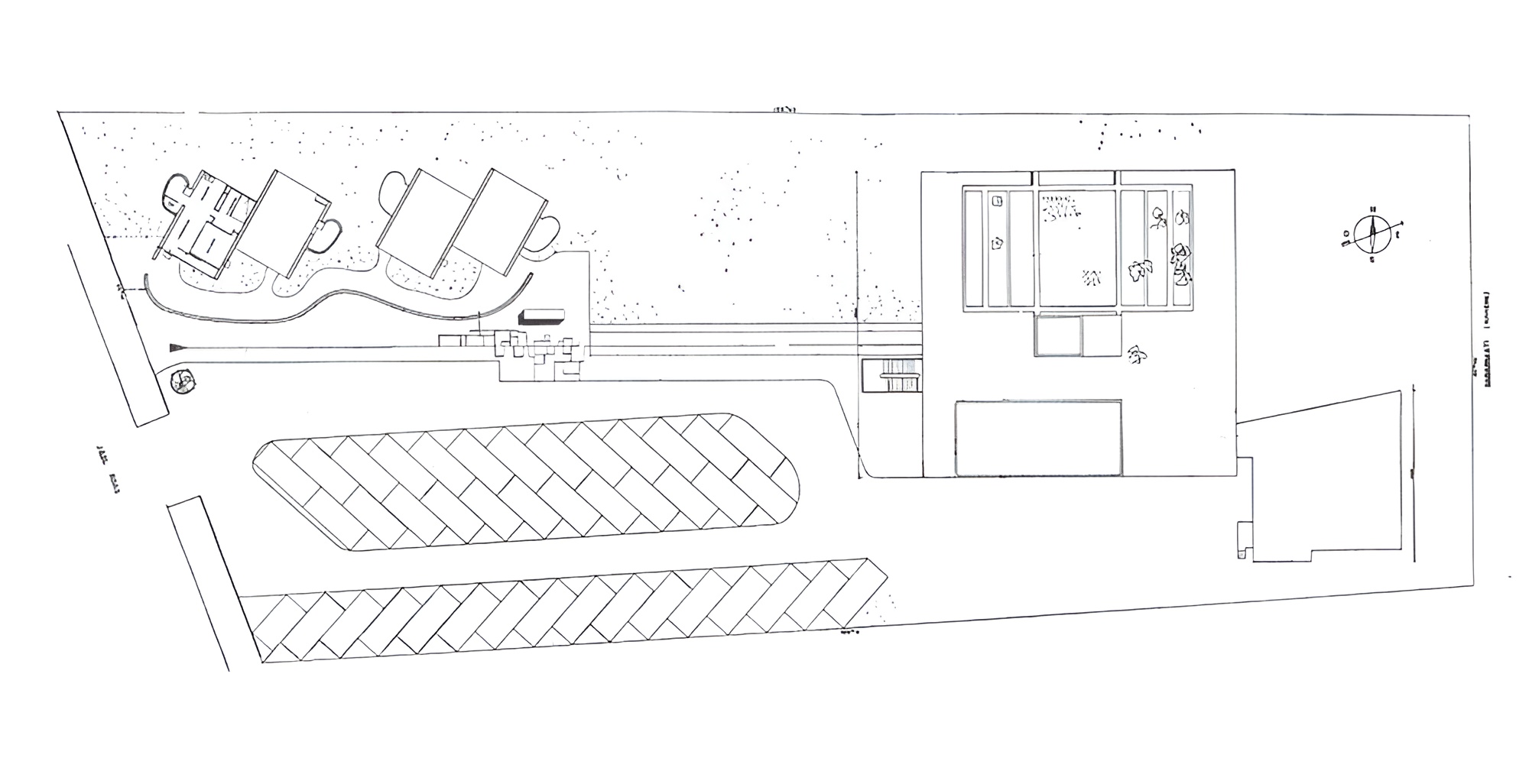
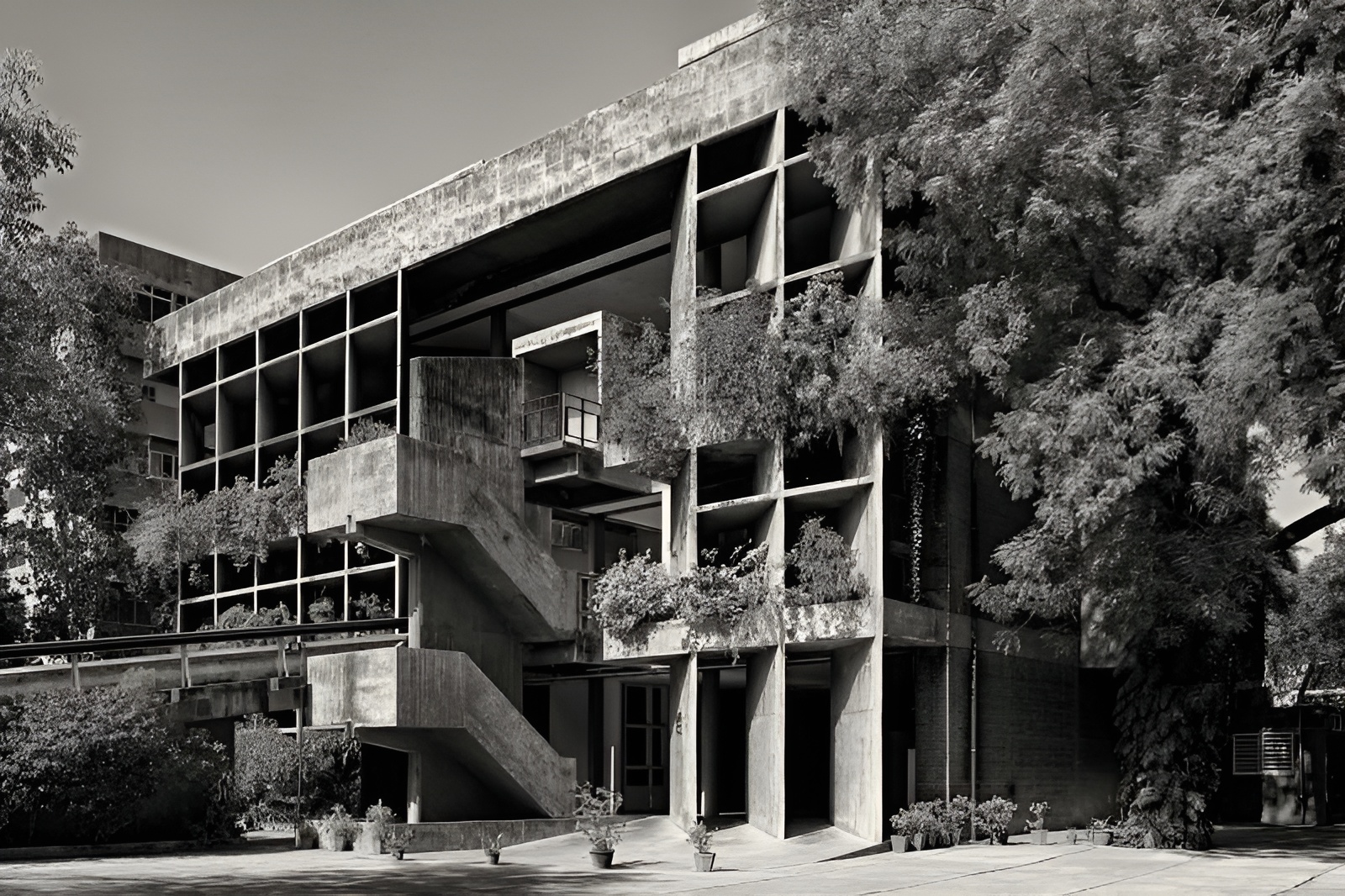
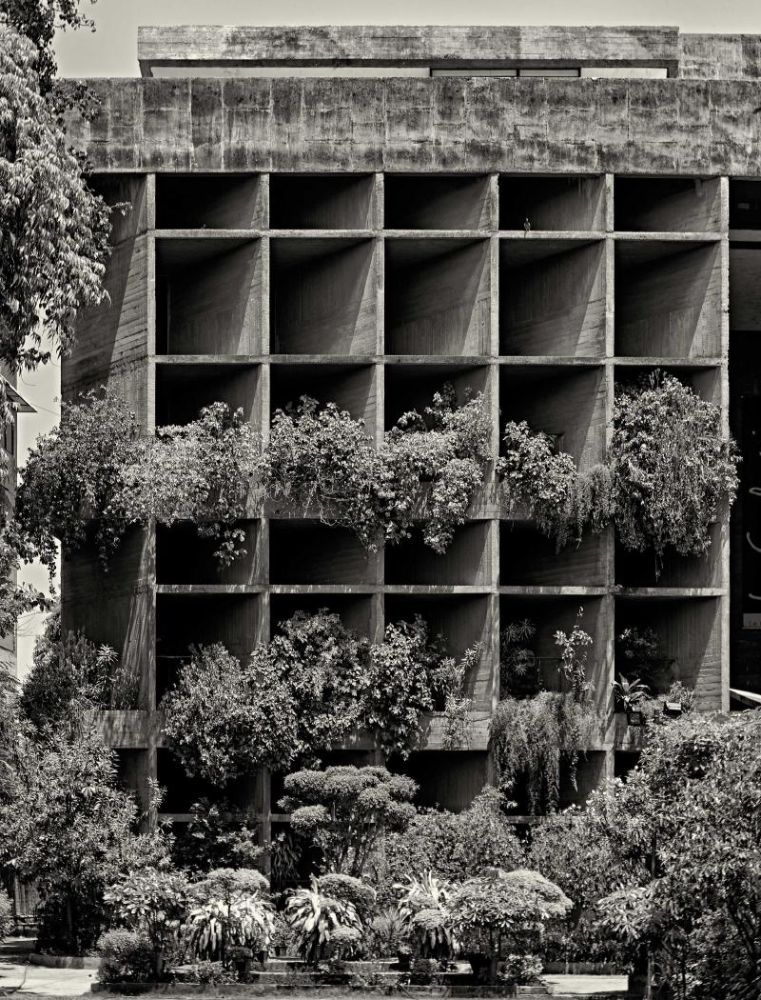
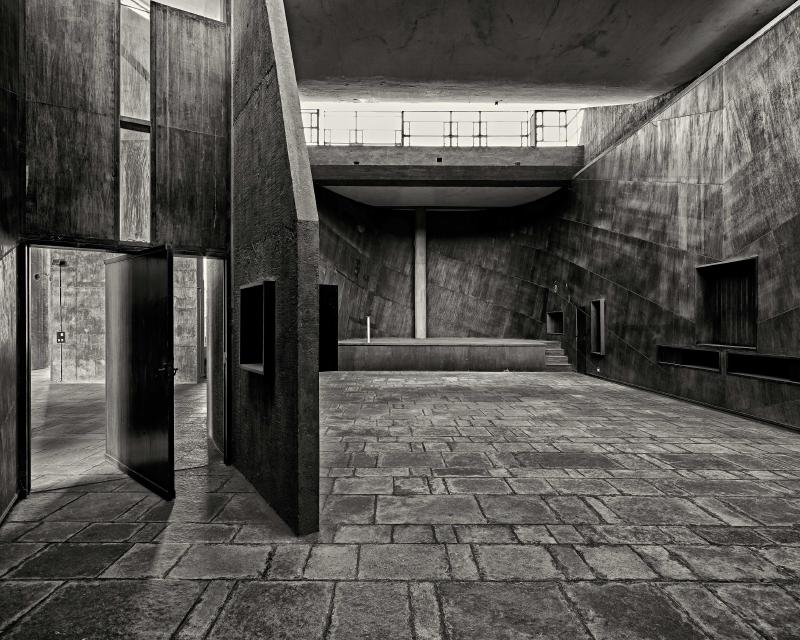
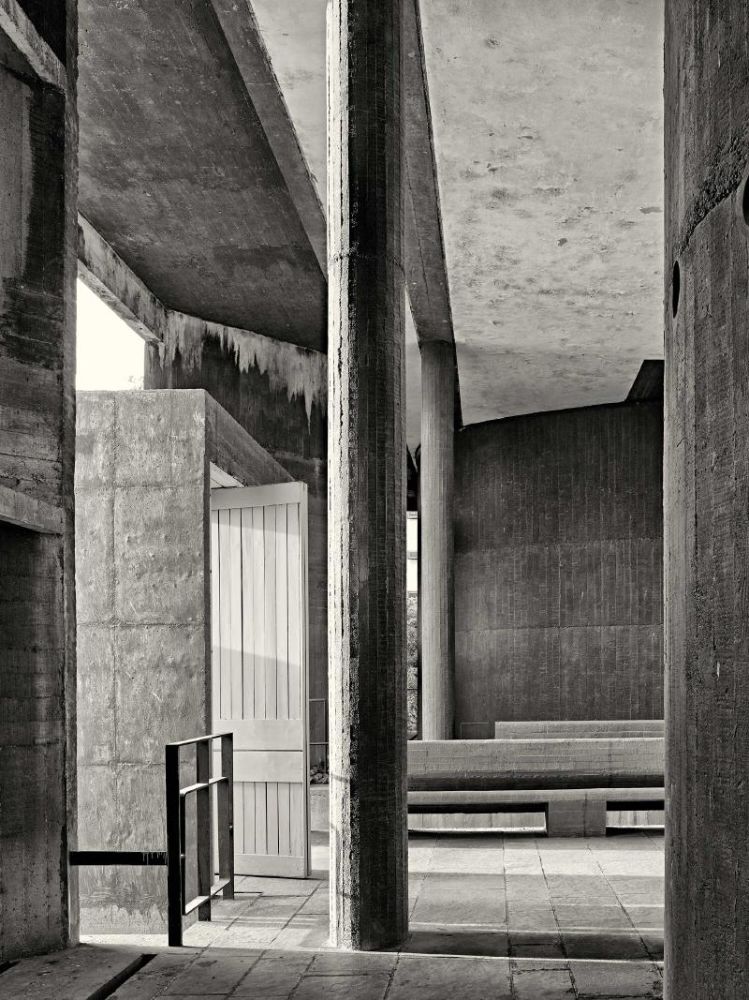
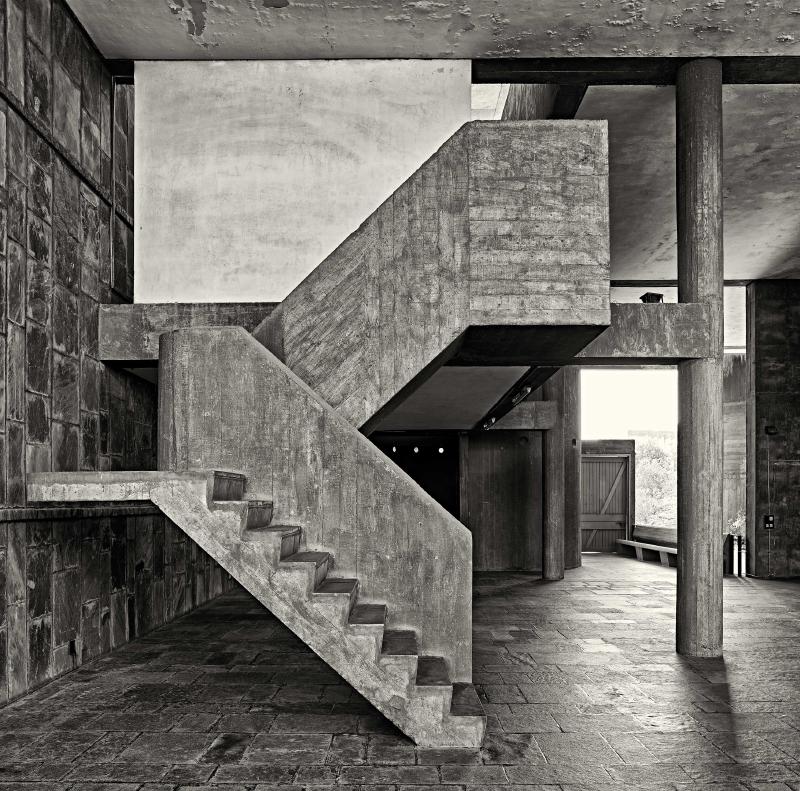
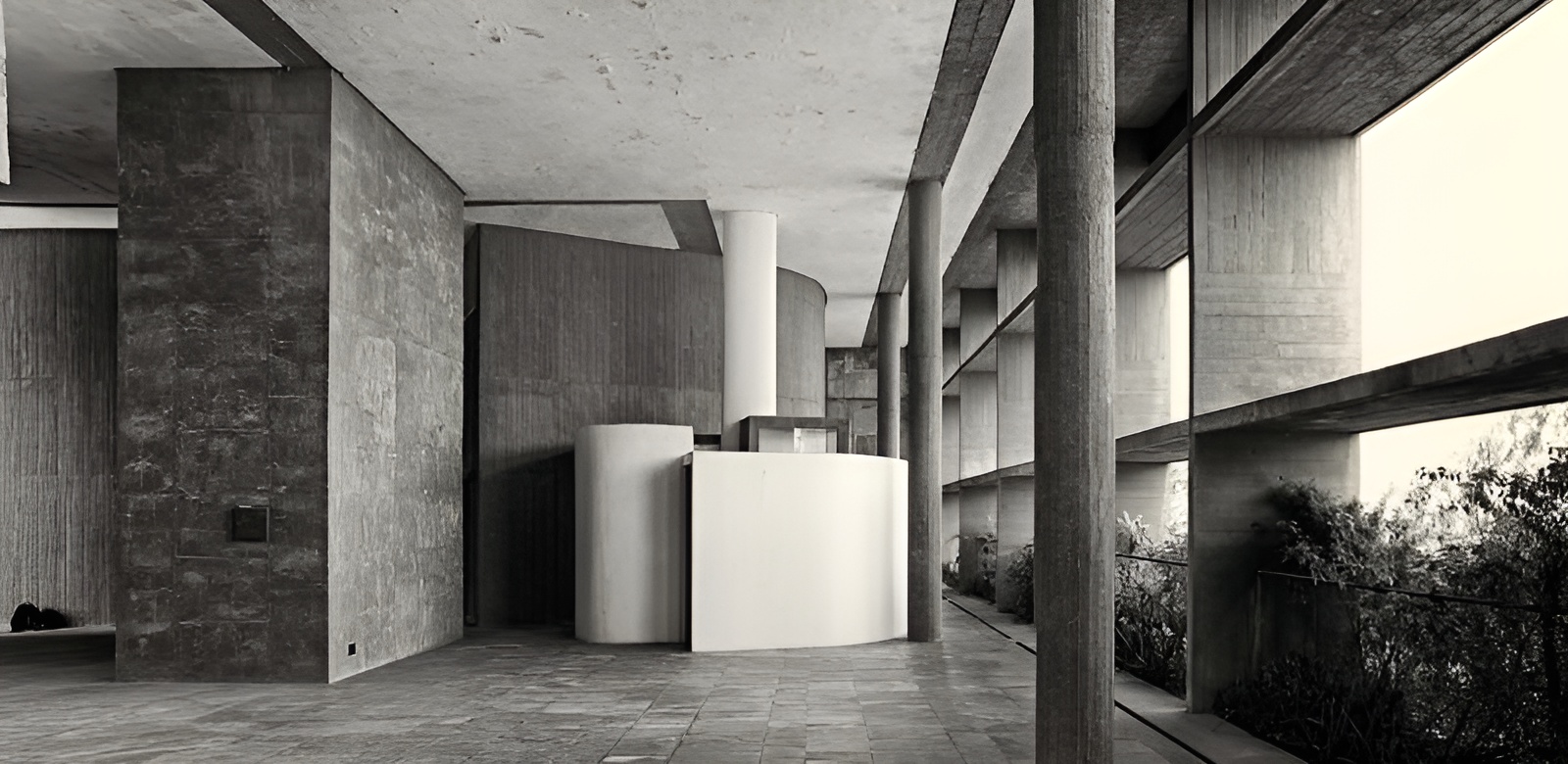
The building occupies a site between Ashram Road and the Sabarmati River, surrounded by open grounds that allowed Le Corbusier to develop a distinct architectural response independent of a dense urban context. The project was commissioned by Surottam Hutheesing, then president of the Mill Owners’ Association, who sought a headquarters that would represent the organization’s role within Ahmedabad’s industrial and civic life.
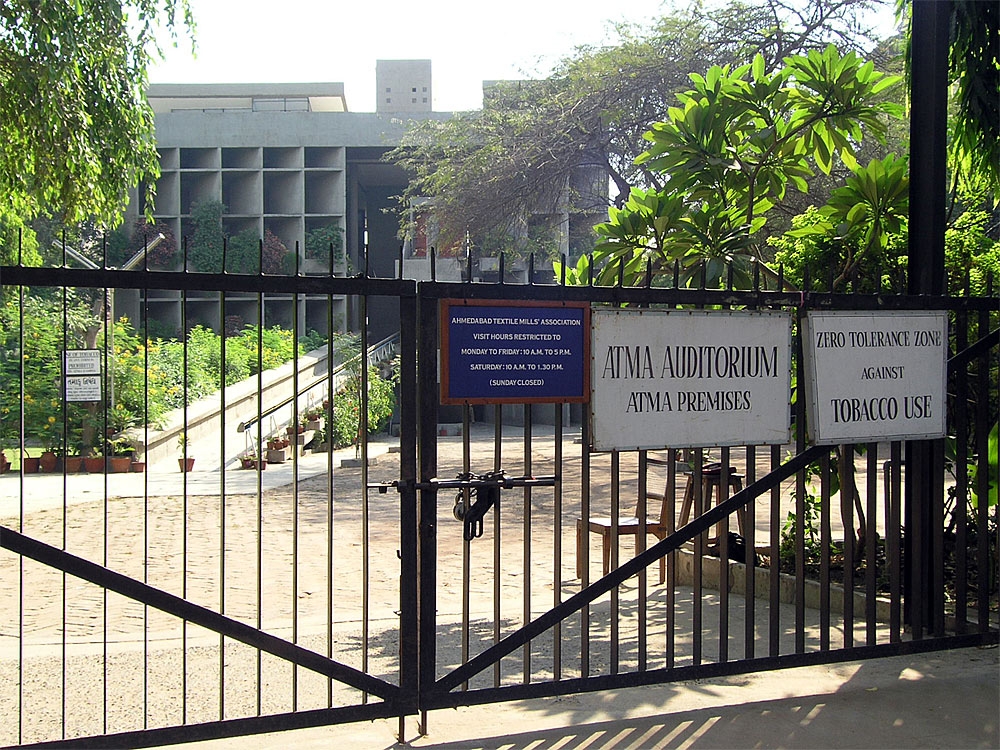
The design reflects a shift in Le Corbusier’s work during the 1950s as he adapted modernist principles to warmer environments. Drawing from local architectural traditions, he incorporated deep recesses, shading devices, open circulation areas, and large covered spaces. These elements were combined with exposed concrete construction and environmental strategies that responded directly to Ahmedabad’s climate.
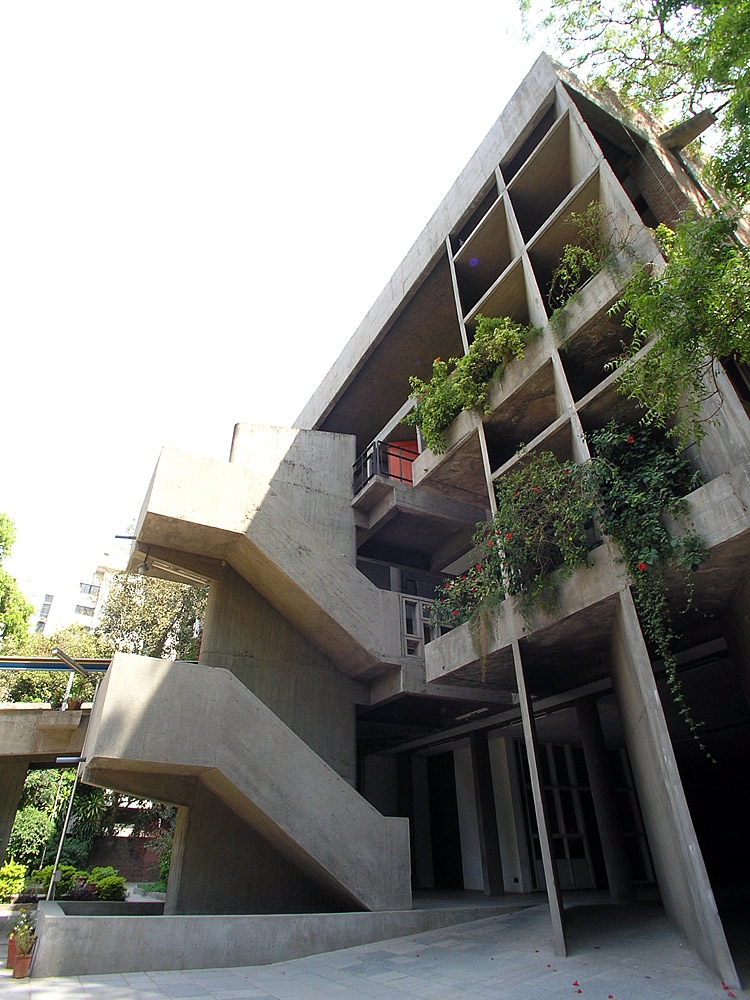
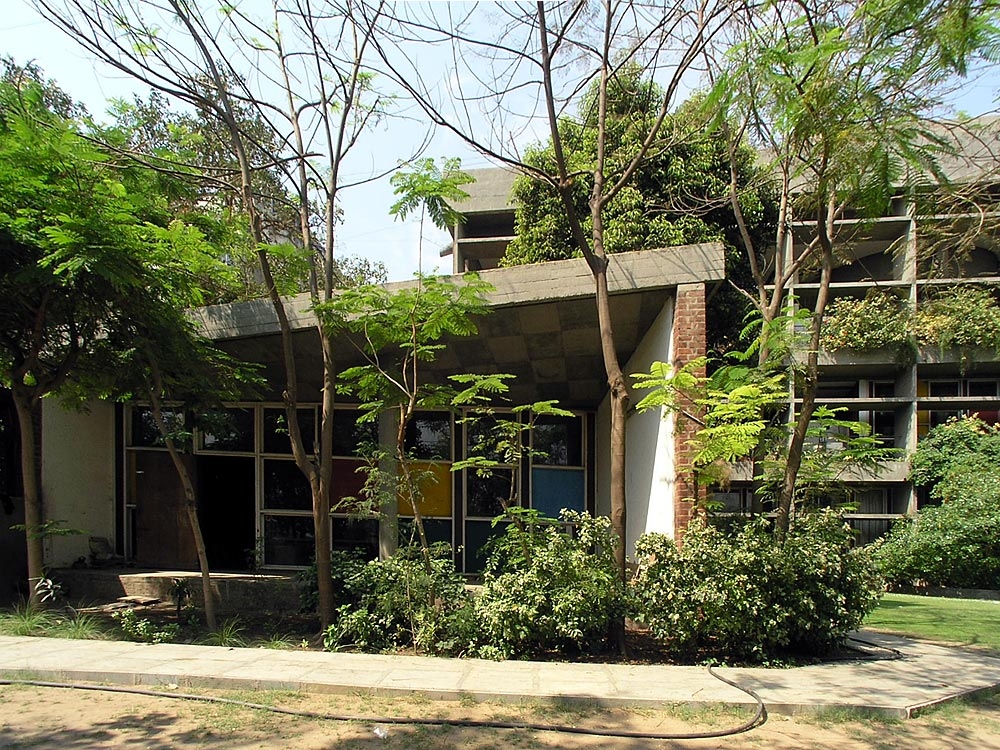
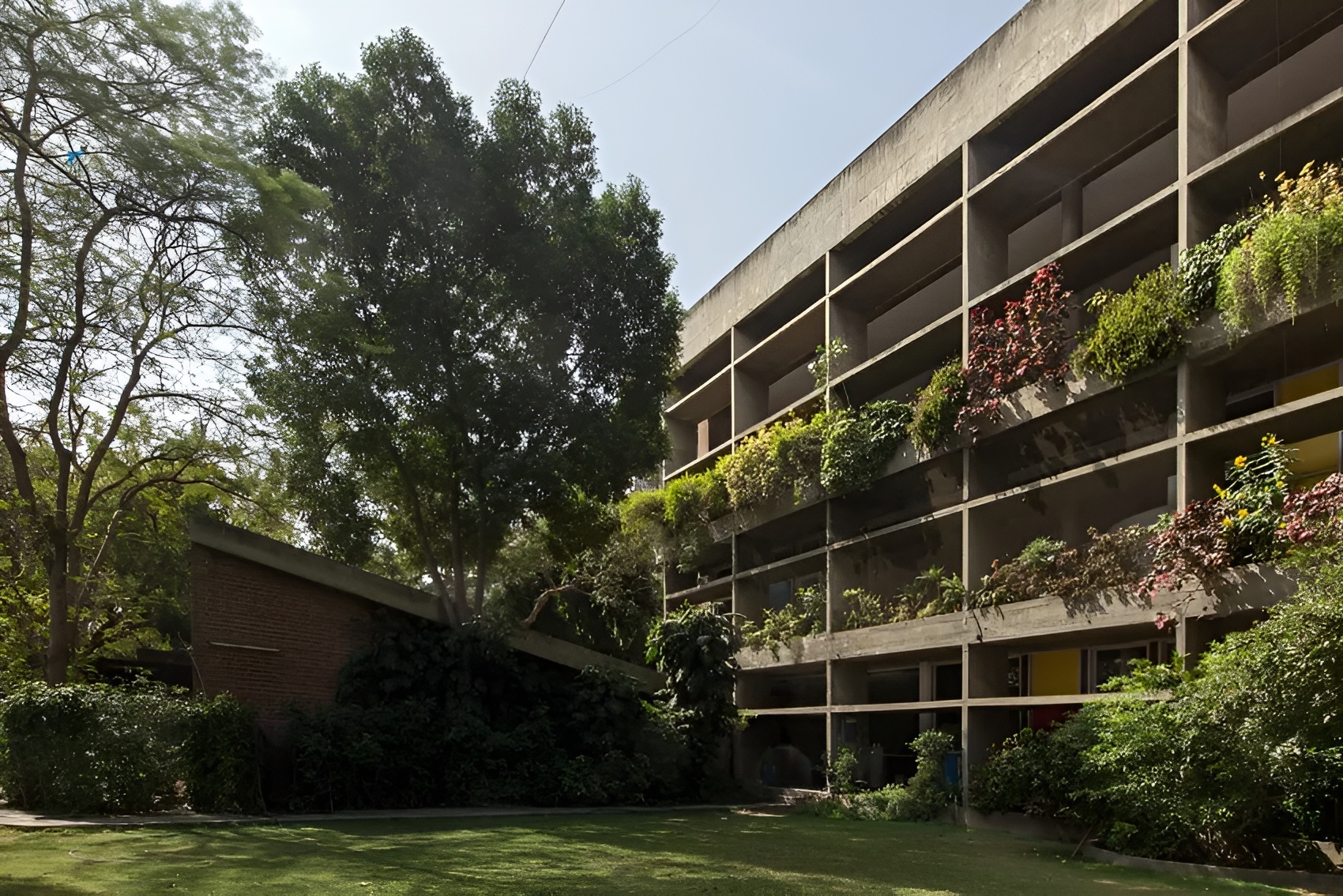
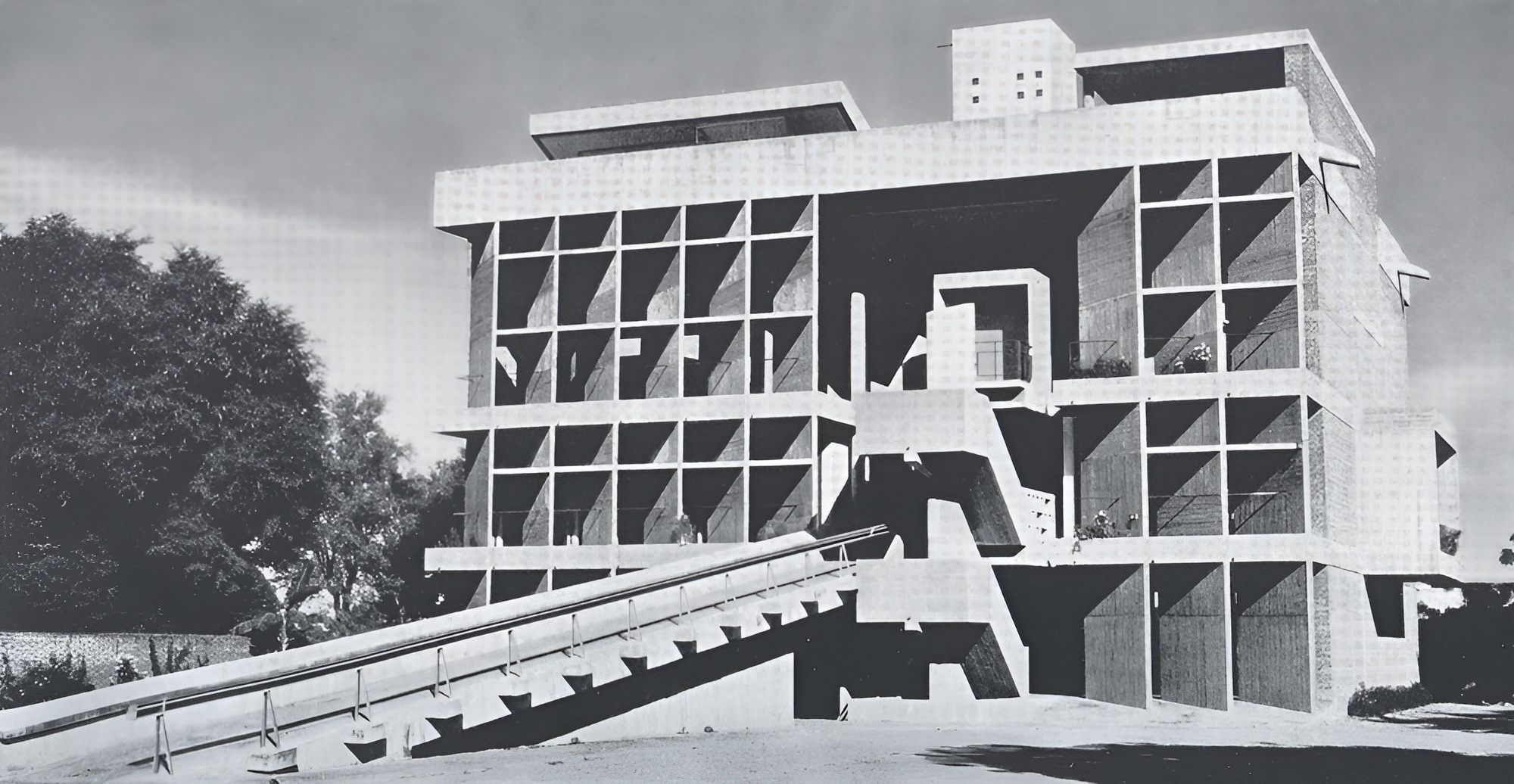
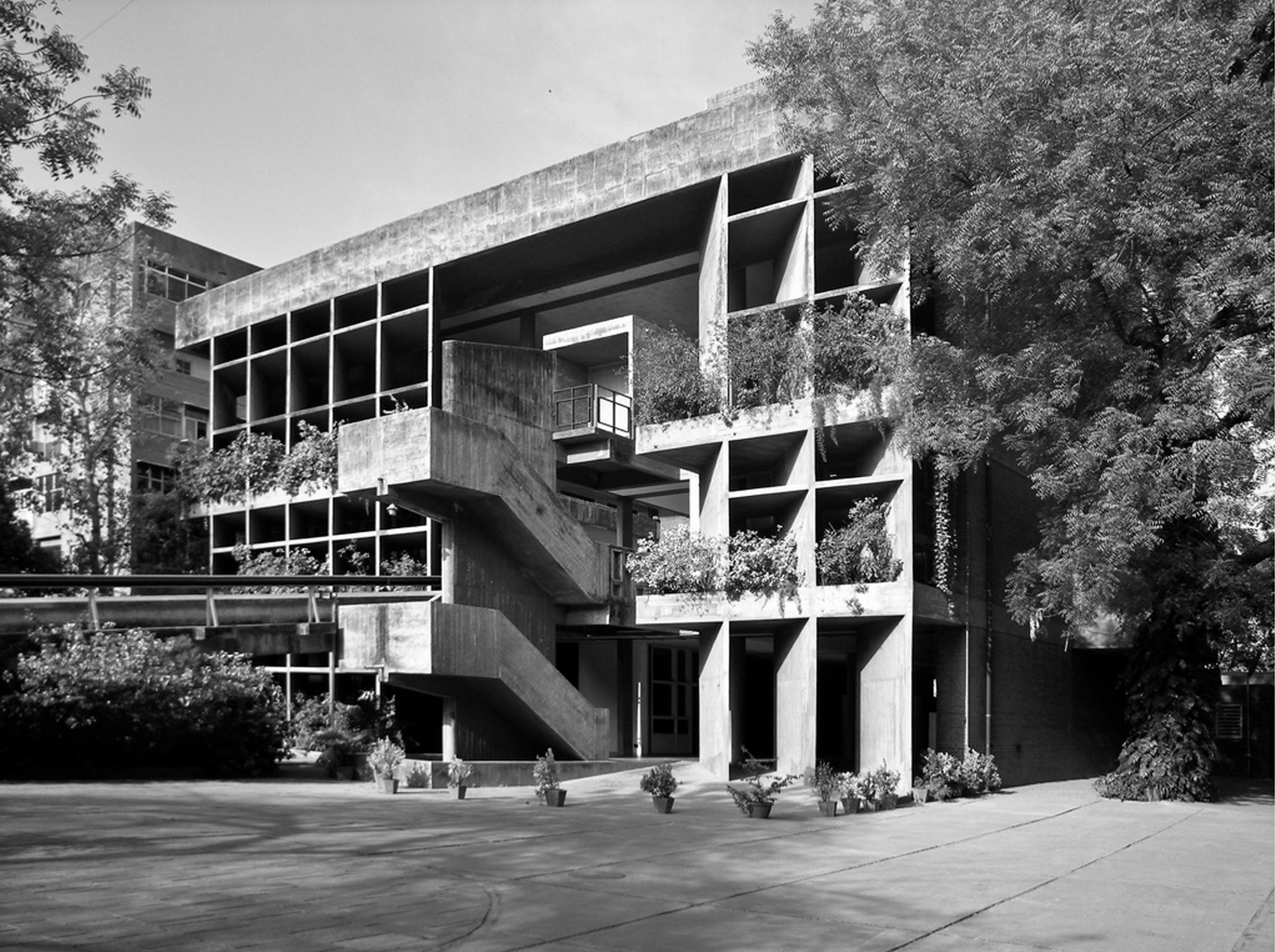
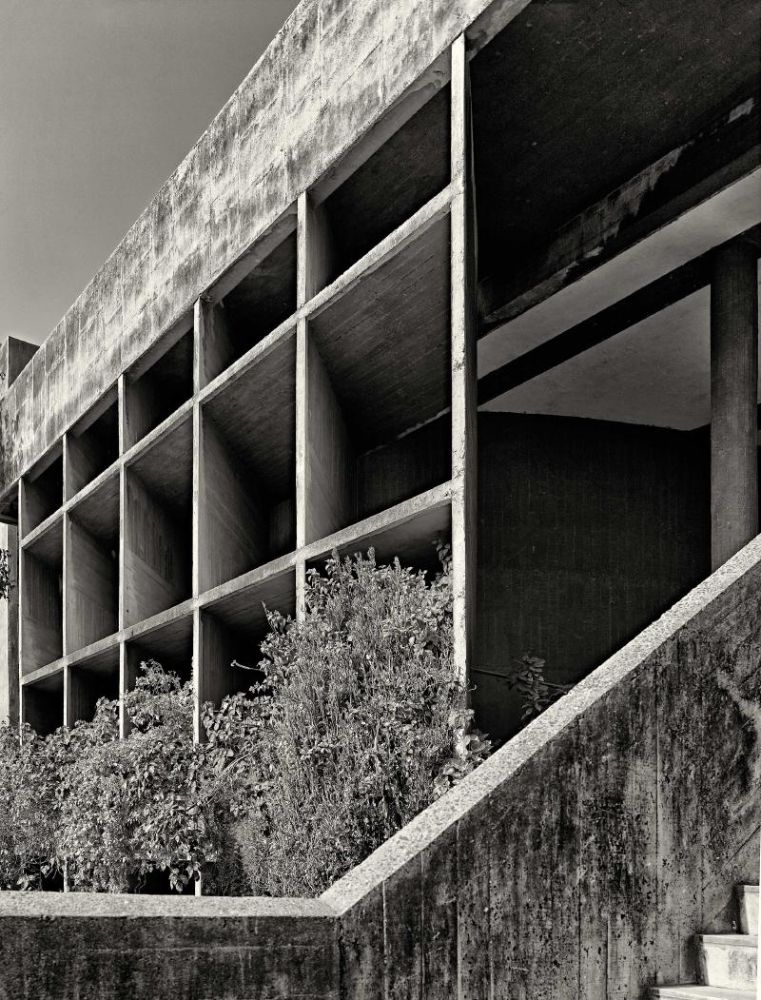
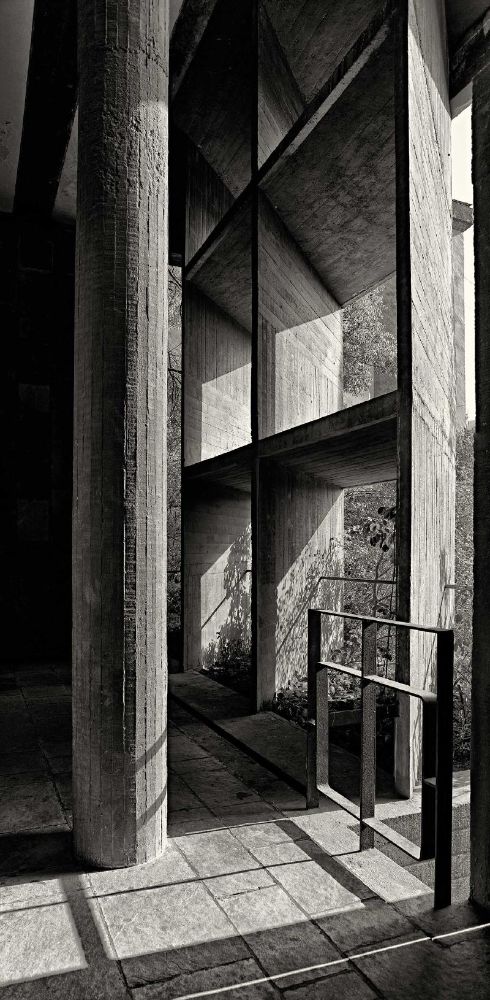
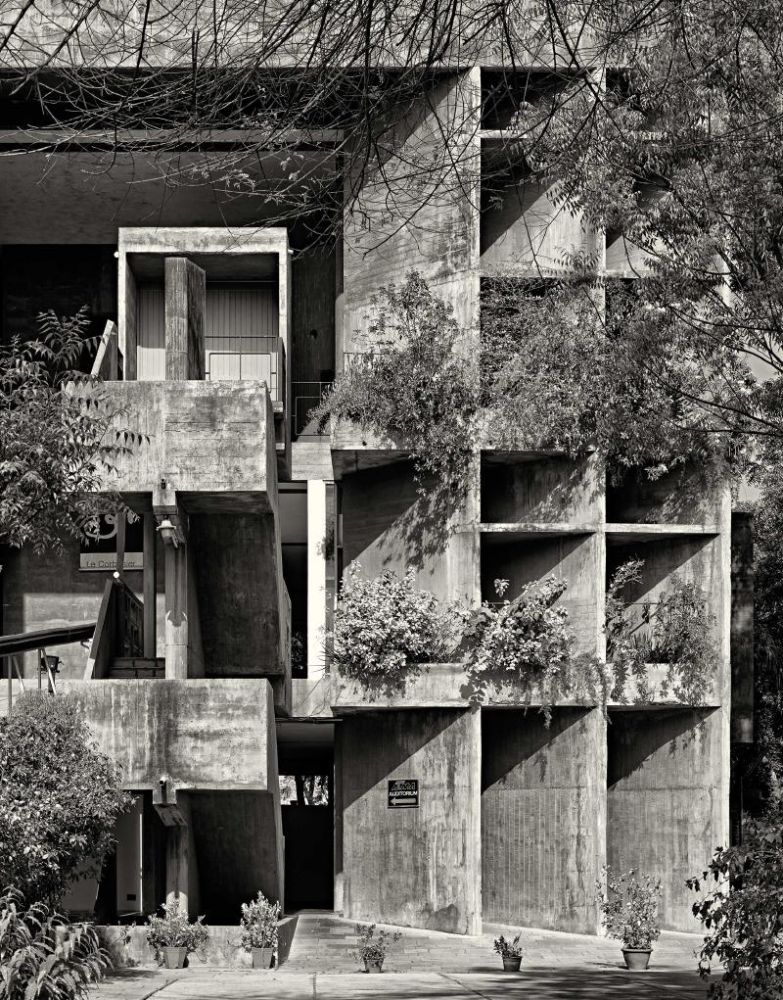
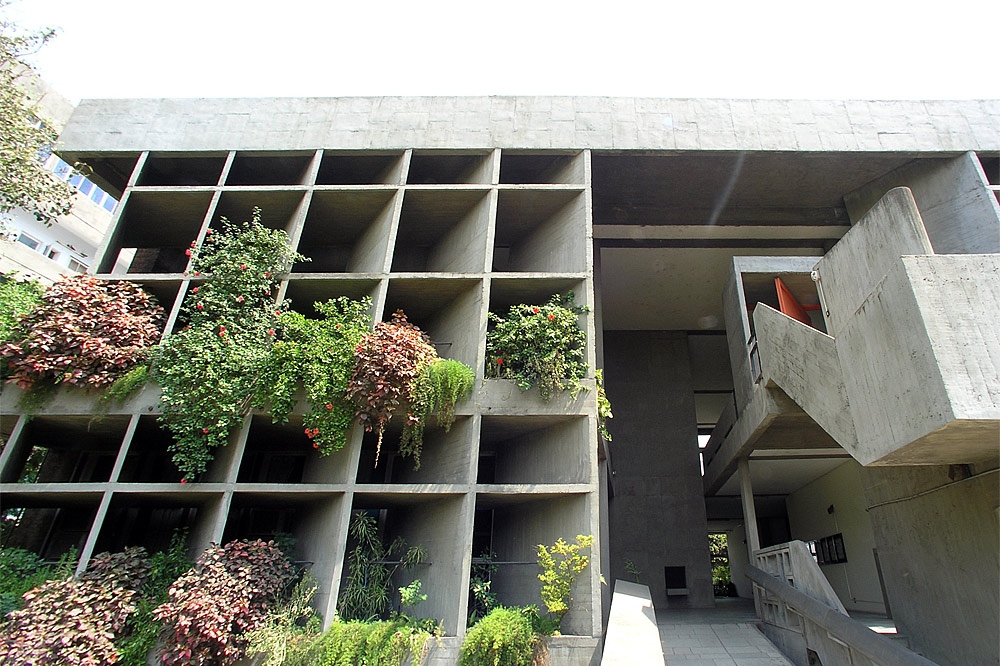
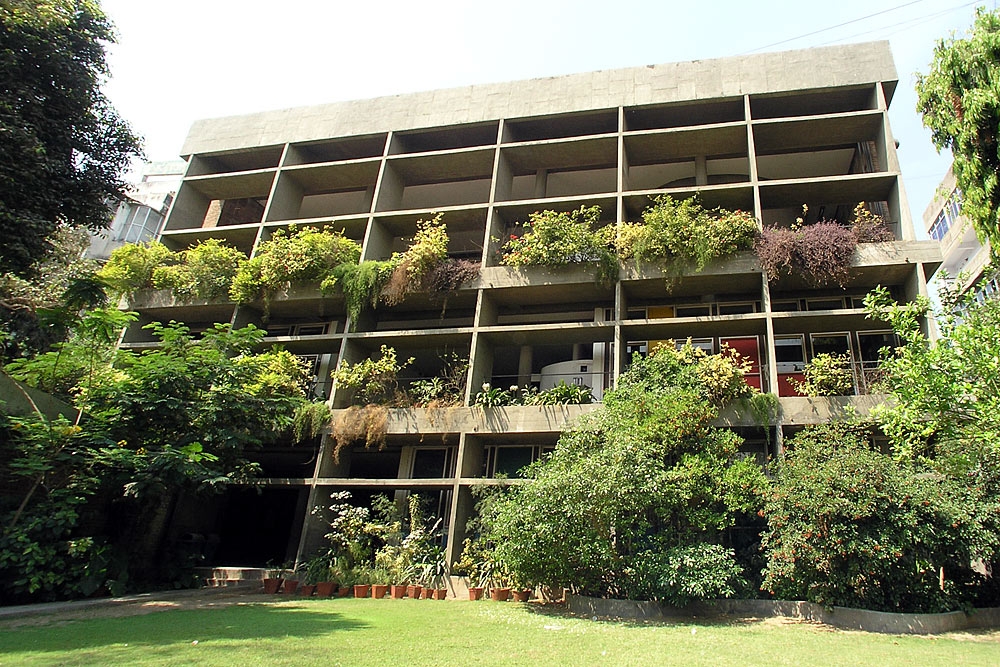
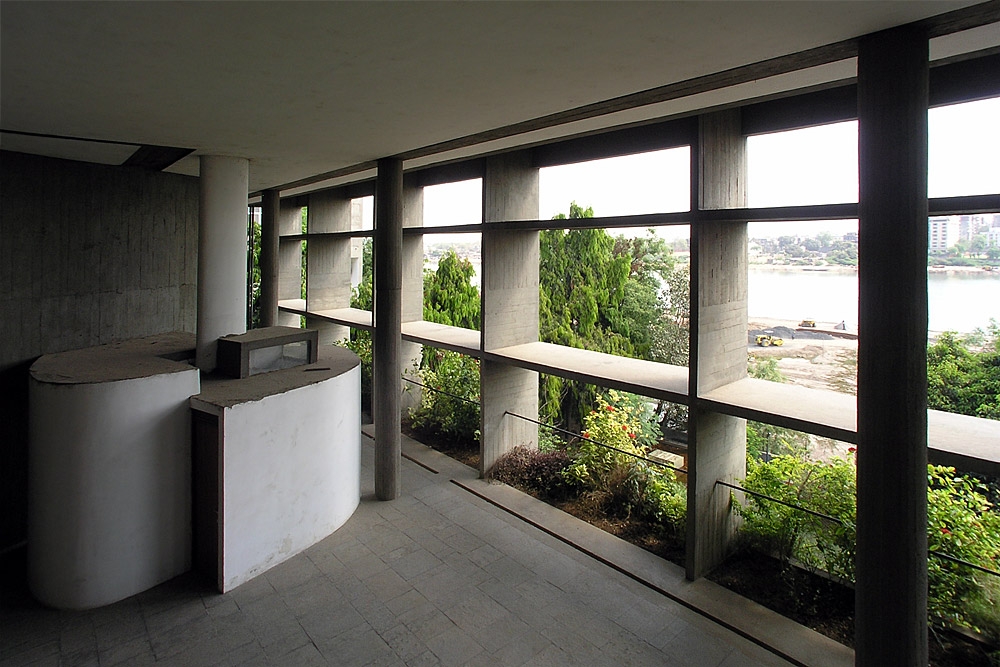
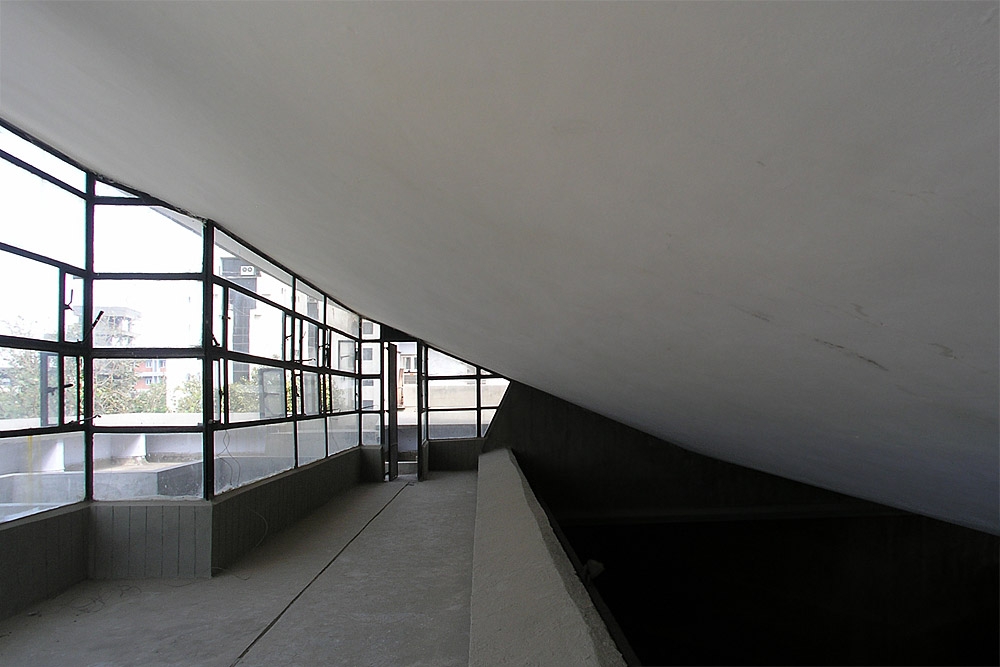
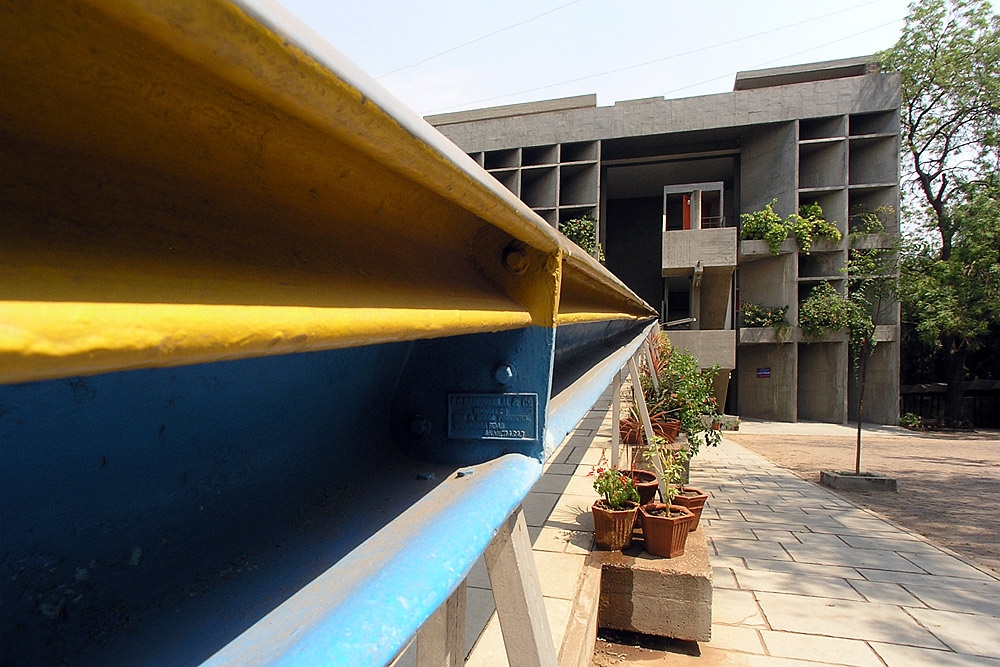
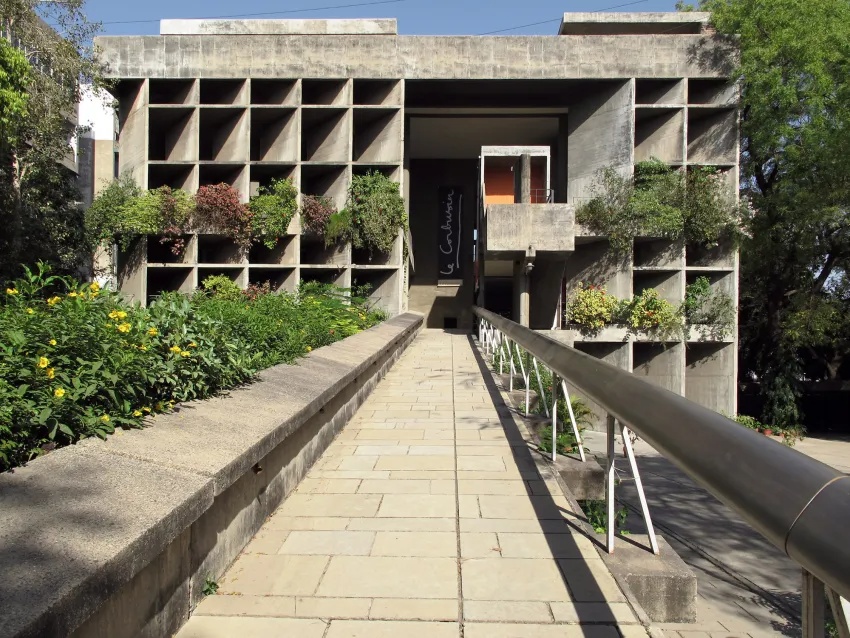
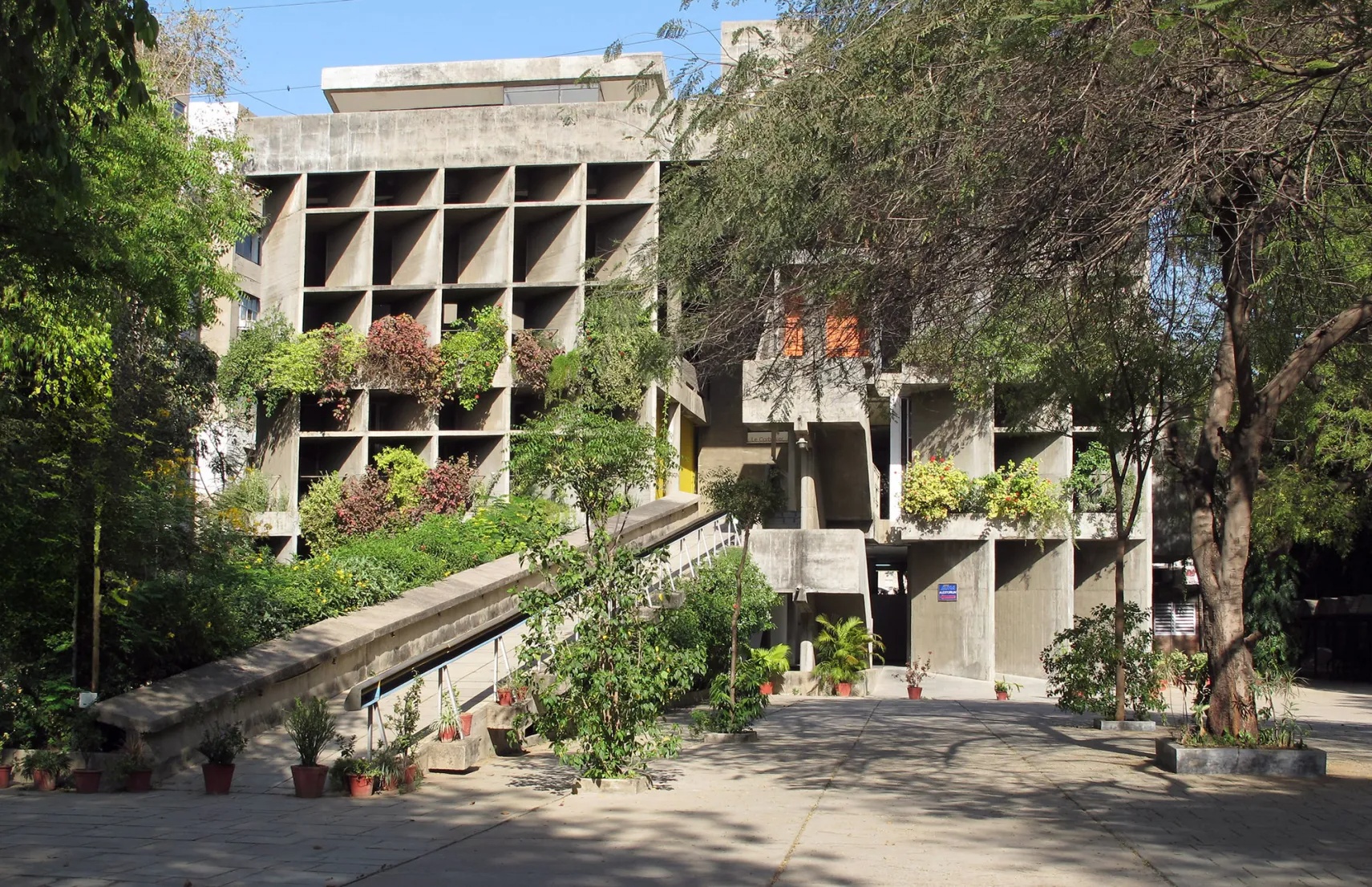
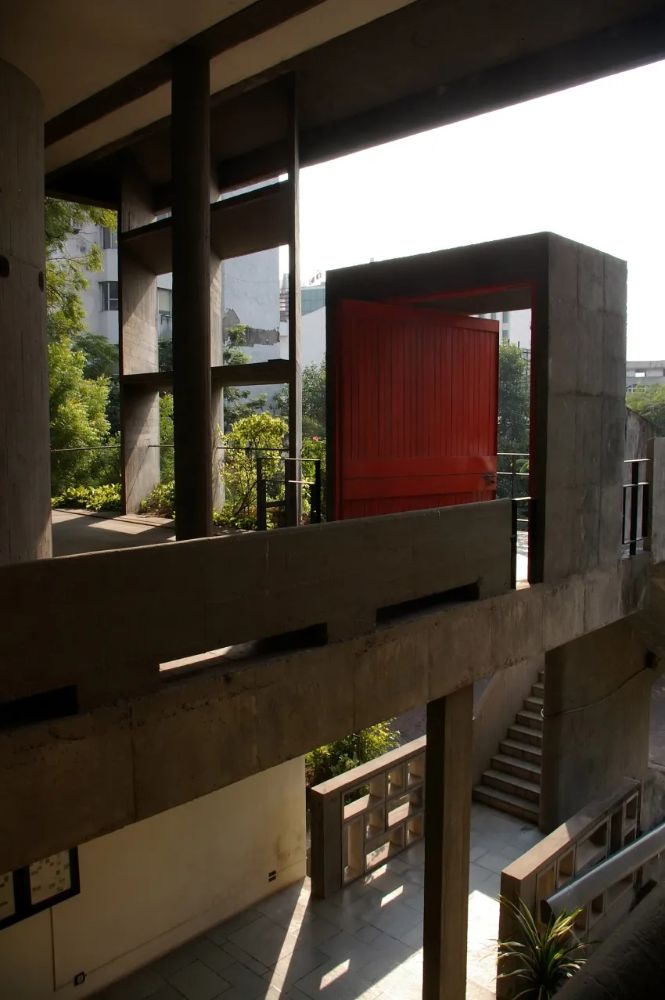
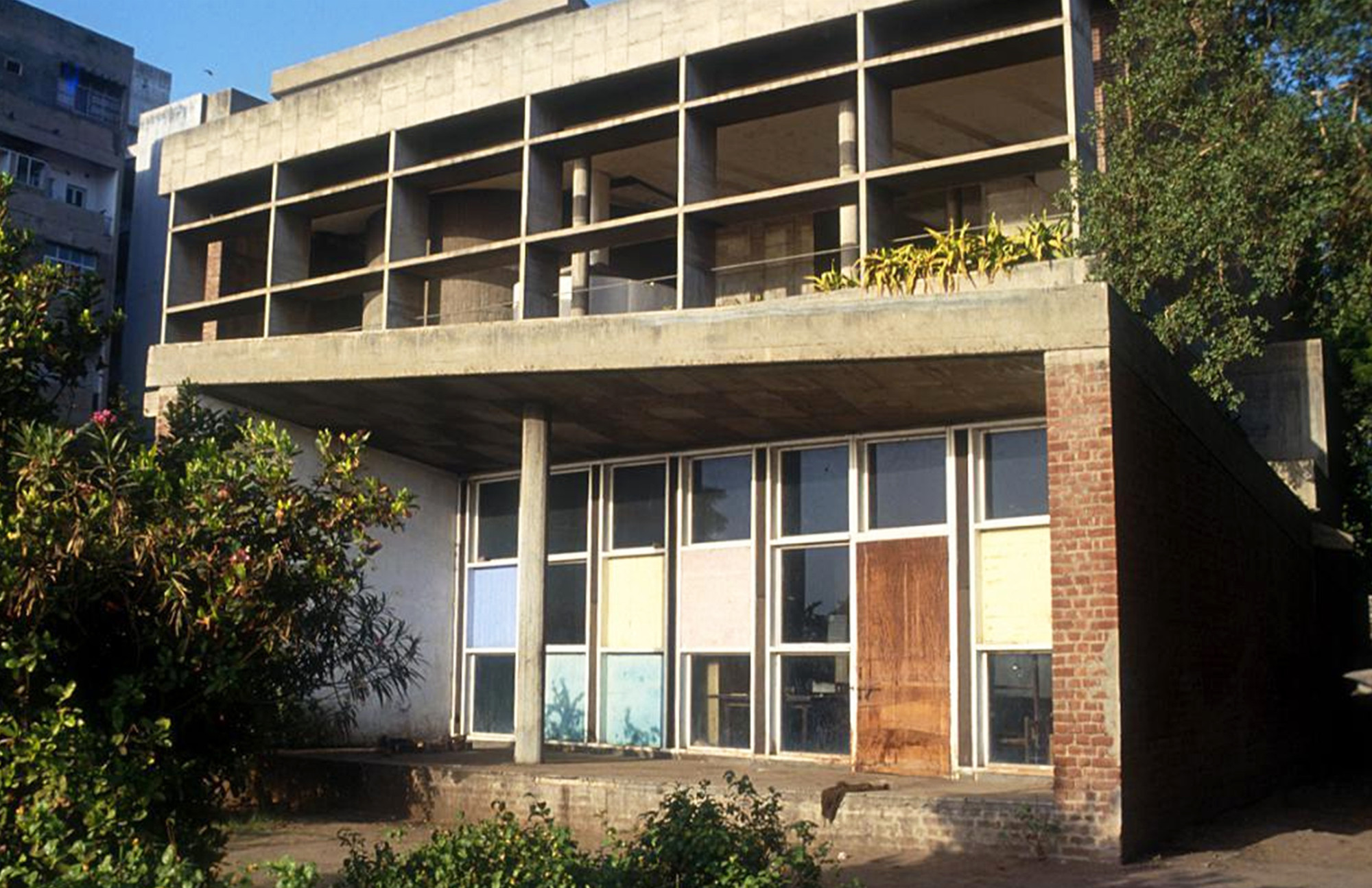
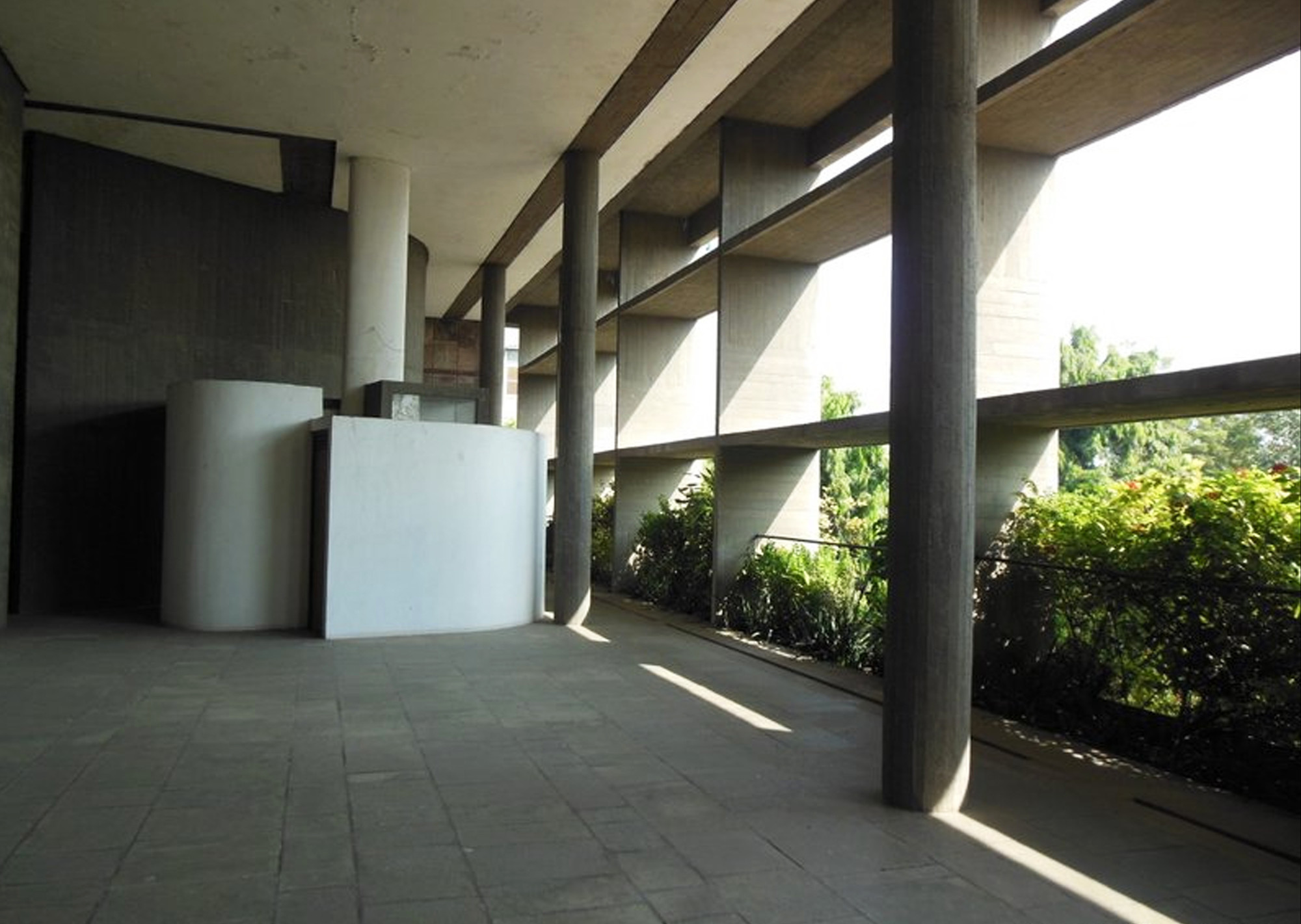
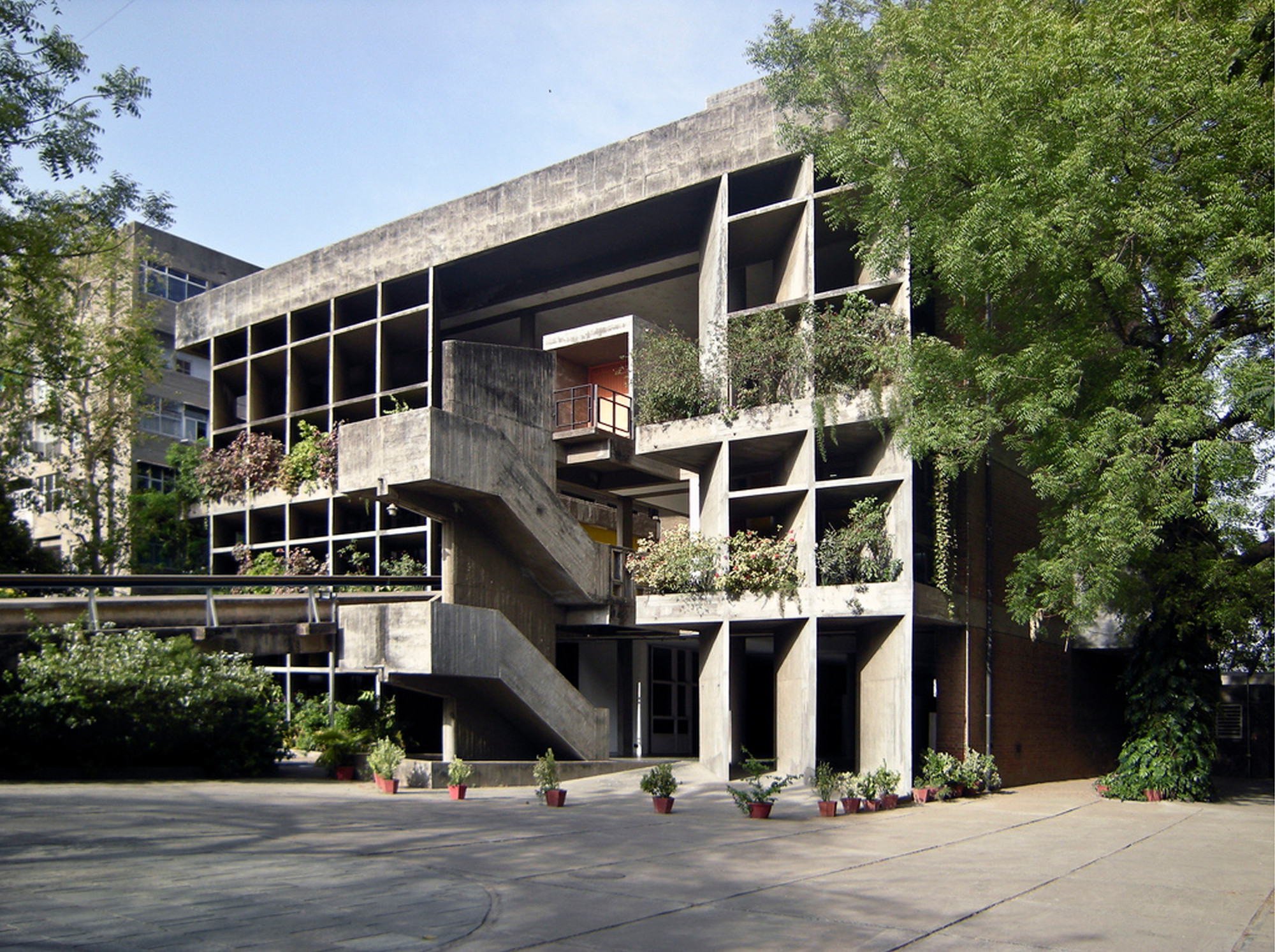
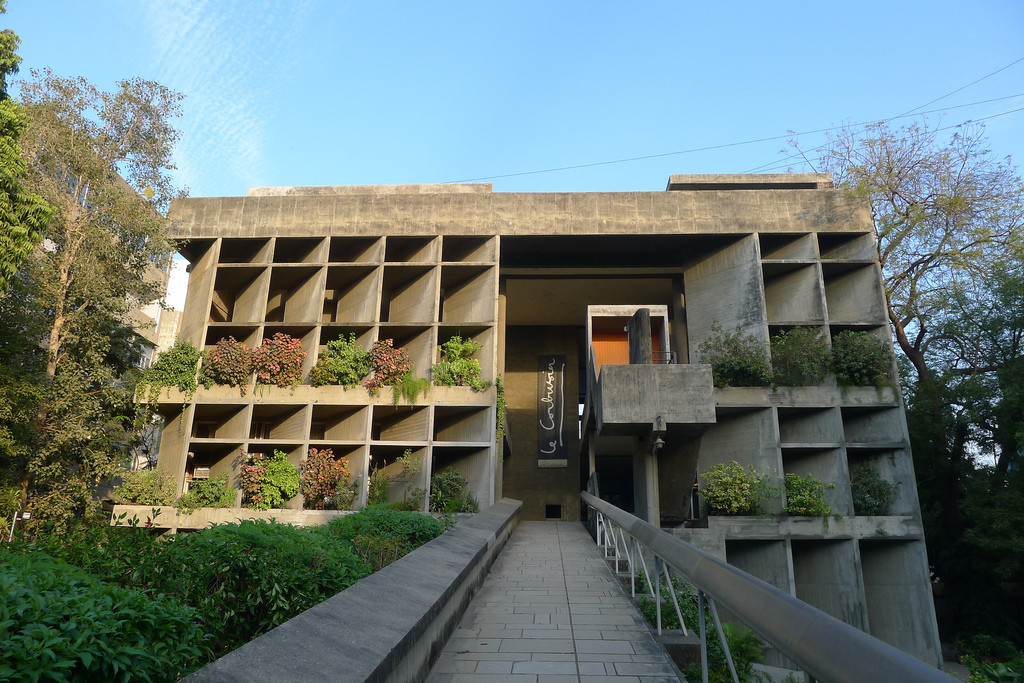
The building is organized according to prevailing winds and solar orientation. The east and west façades are protected by deep brise-soleil designed to reduce heat gain while allowing natural ventilation and filtered daylight. On the western elevation, the concrete screens are angled to limit views from the street while admitting air and indirect light. The eastern façade facing the river employs a more open arrangement that frames views of the Sabarmati while encouraging cross-ventilation through the building.
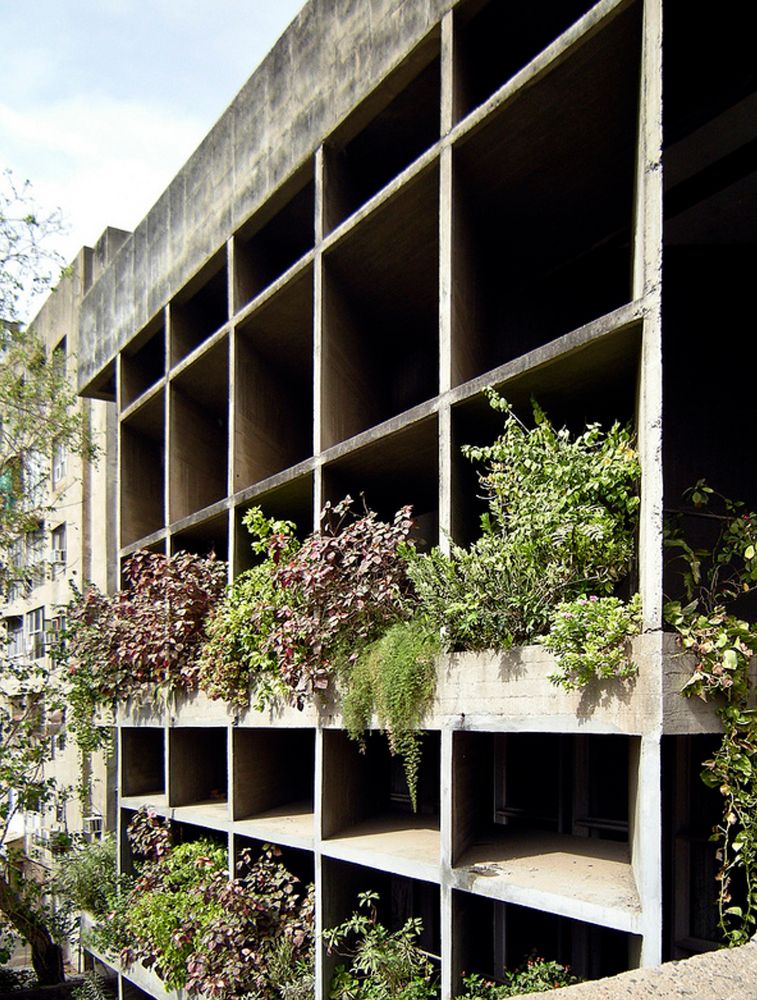
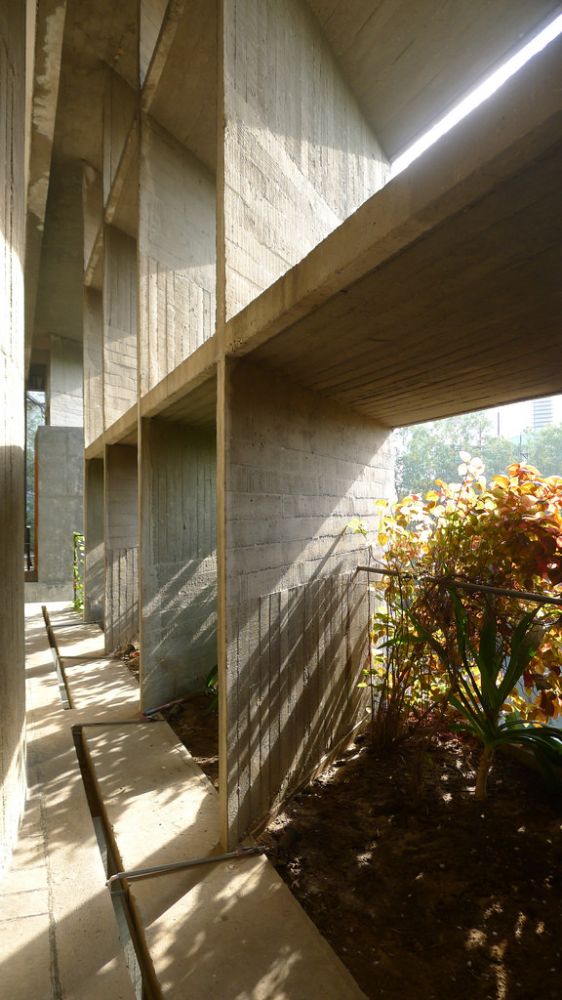
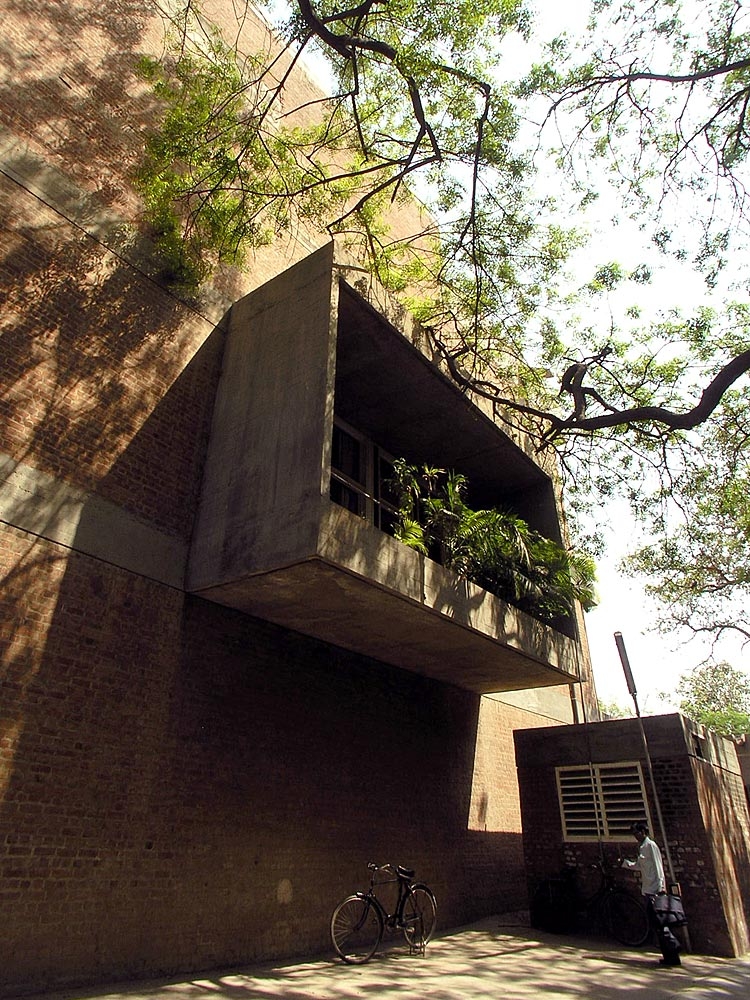
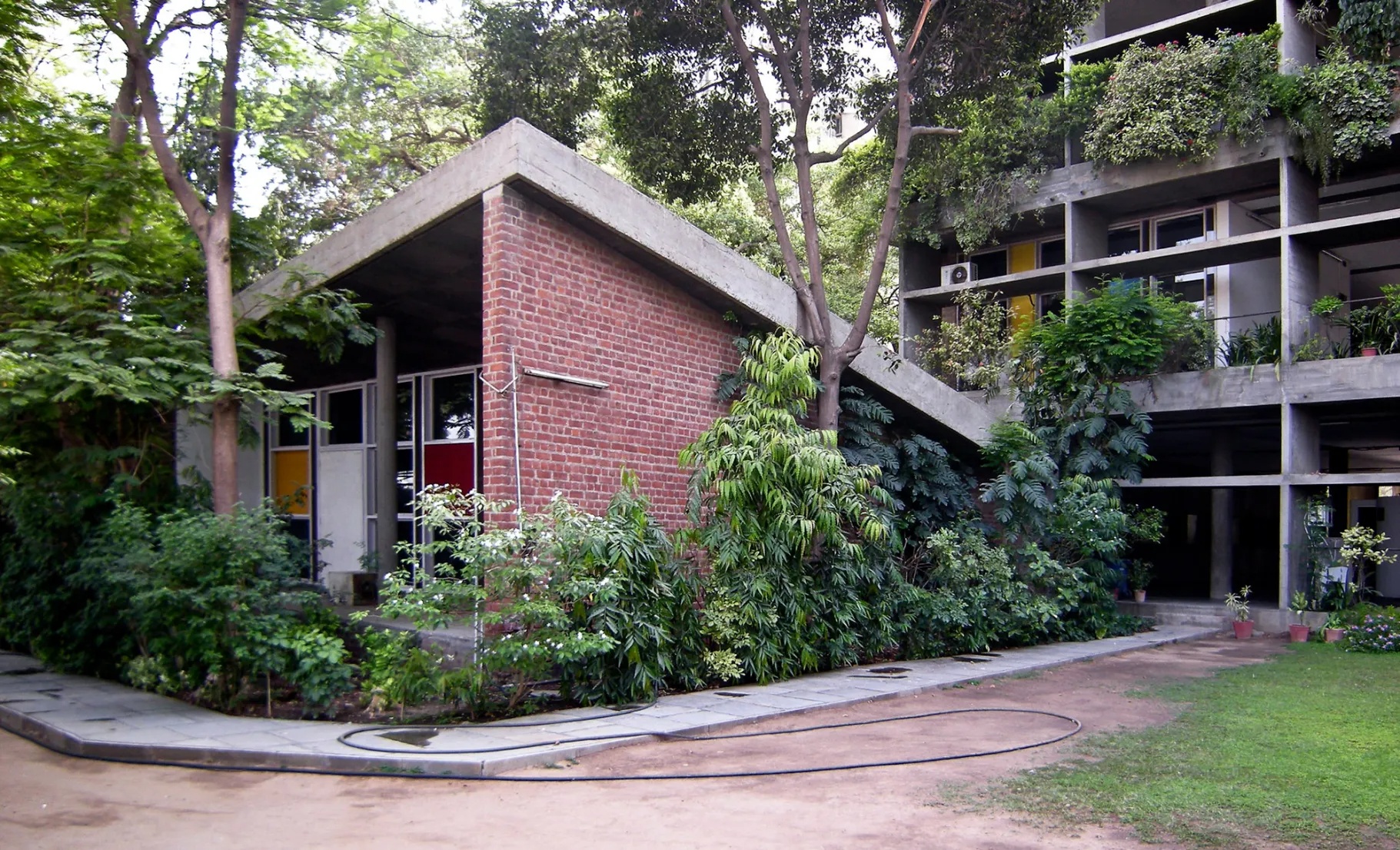
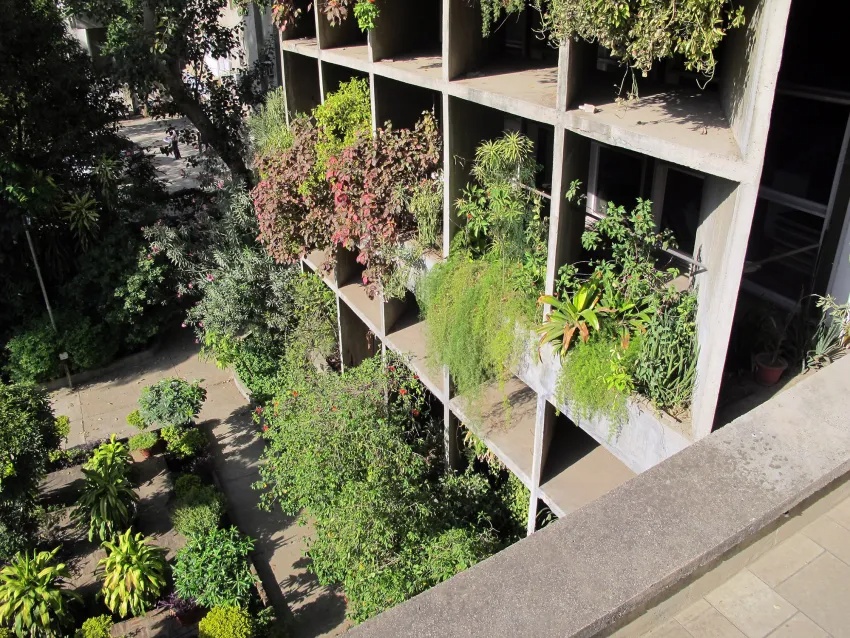
The north and south elevations are largely solid and constructed of rough brick and stone. This contrast between open and closed façades reinforces the environmental performance of the building while emphasizing its sculptural massing. Vegetation integrated into the façade and roof terrace softens the exposed concrete surfaces and contributes to passive cooling.
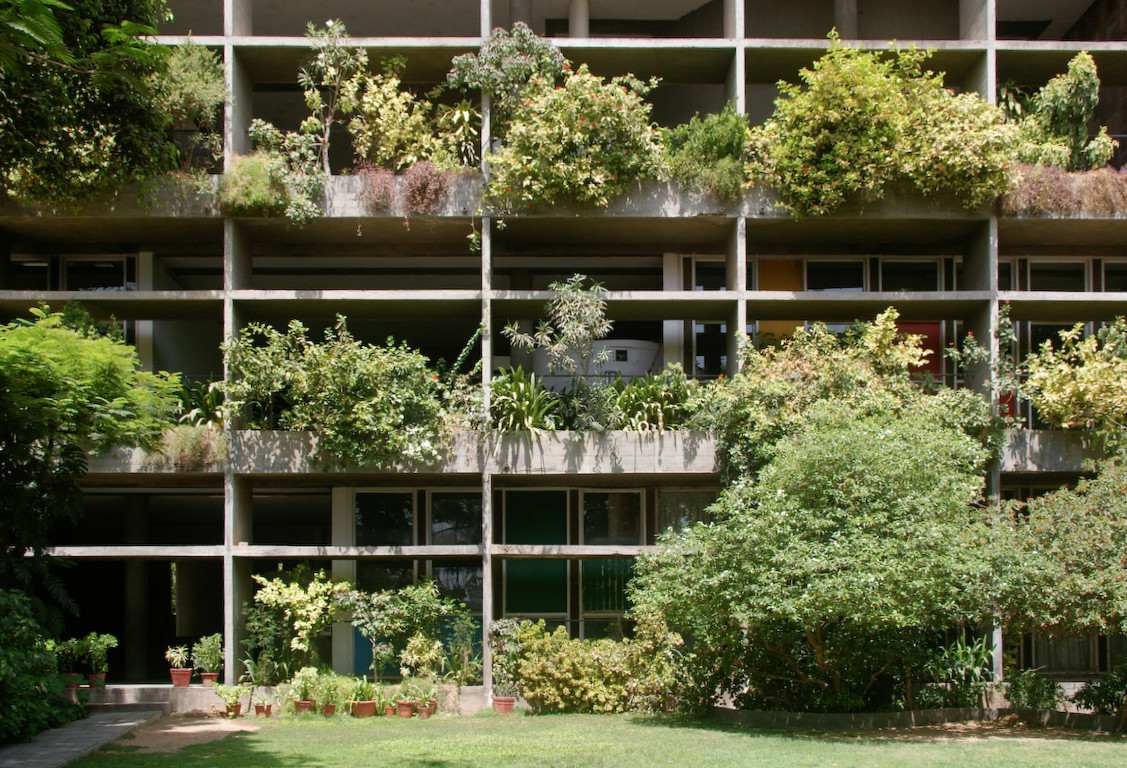
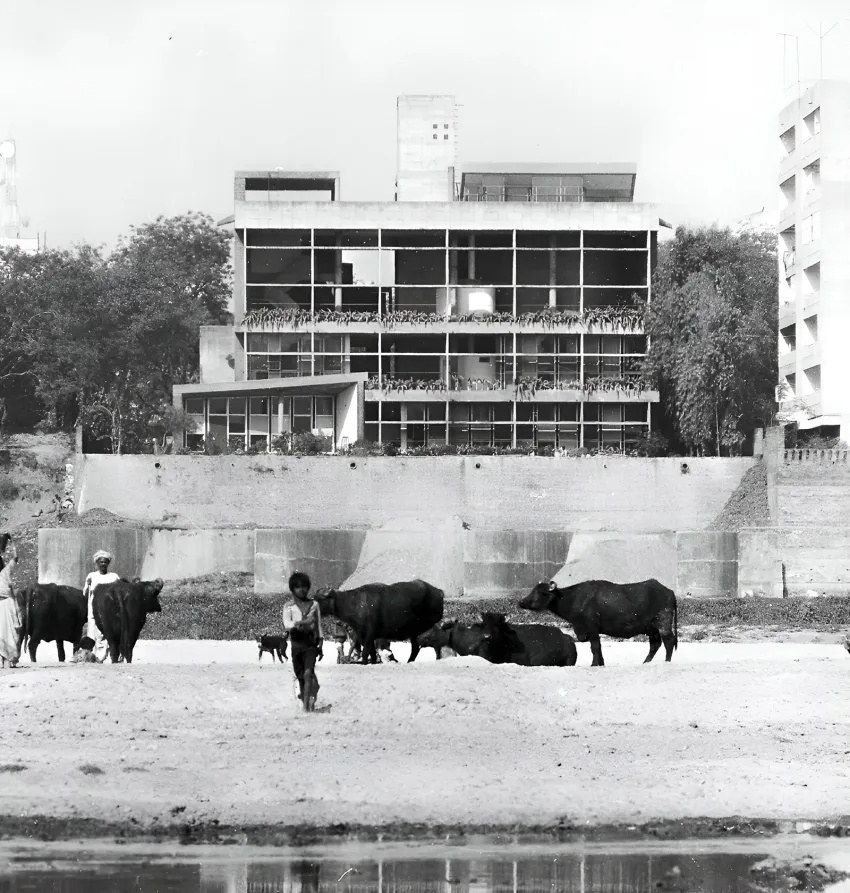
Le Corbusier described the riverside setting as an essential part of the project, noting the activity of textile workers washing and drying fabrics along the riverbanks. The building’s openings were positioned to frame these views and establish a visual connection between the association’s headquarters and the industry it represented.
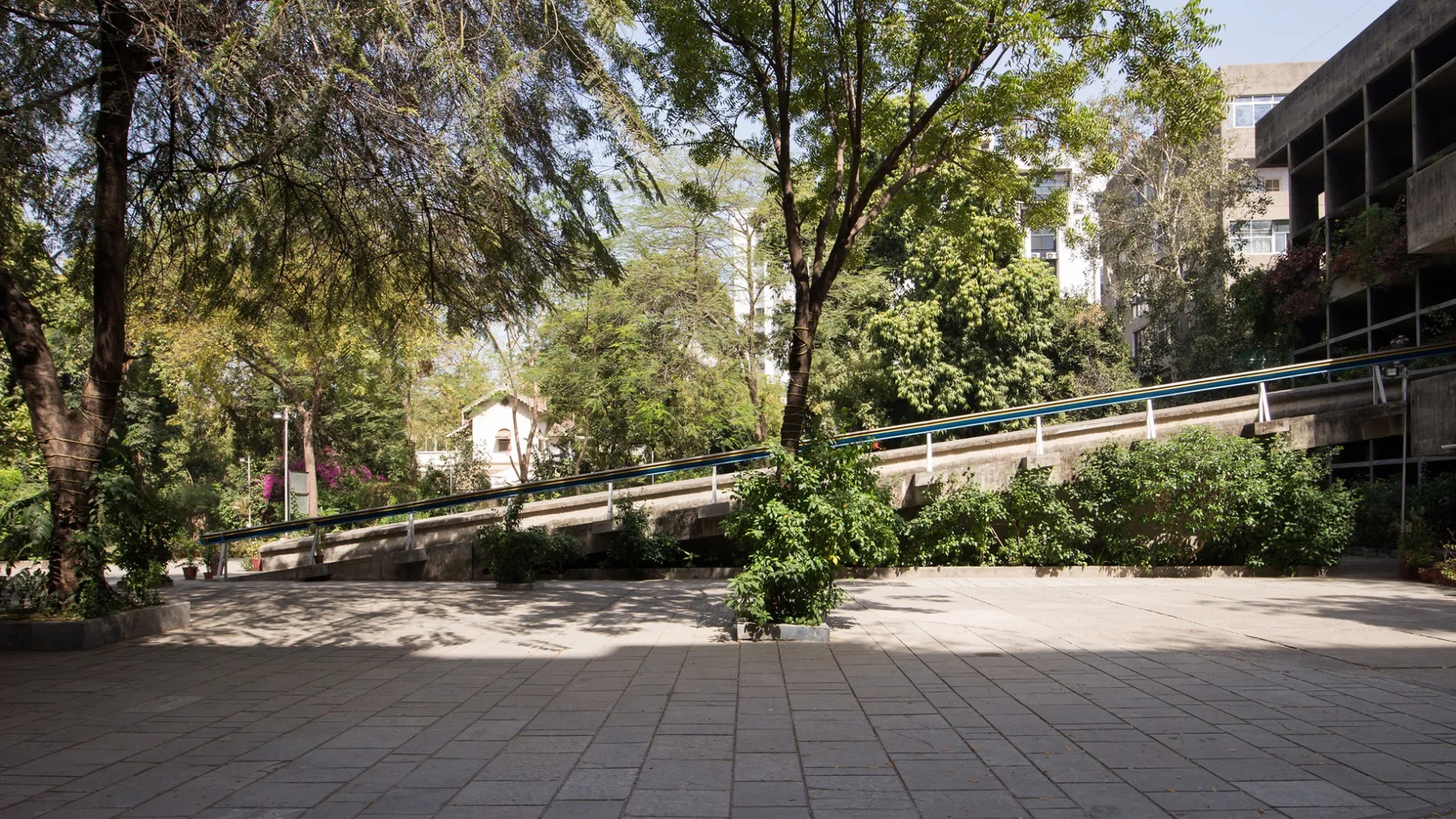
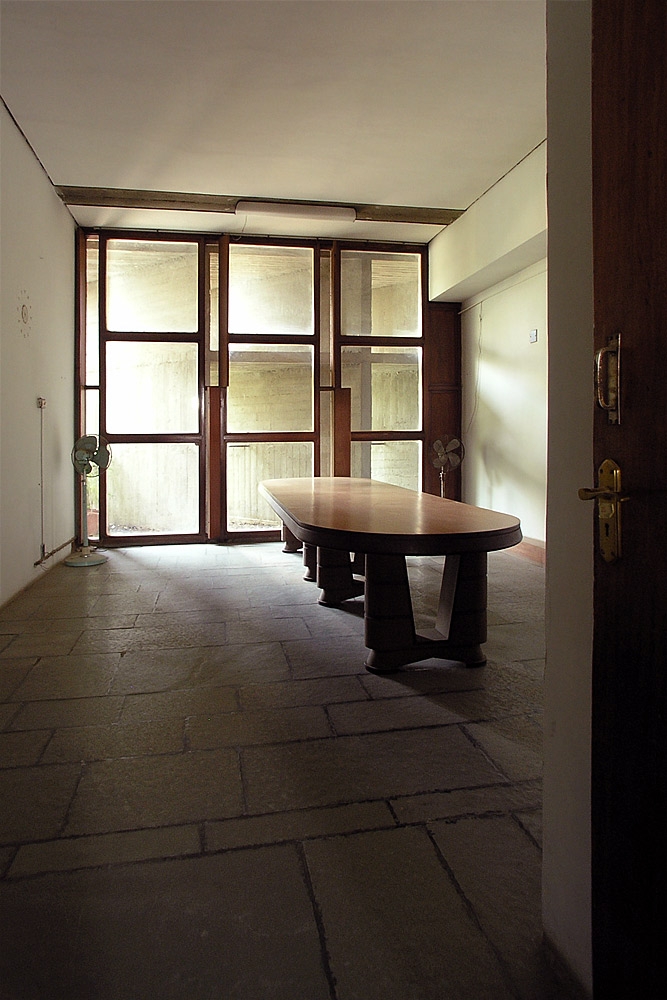
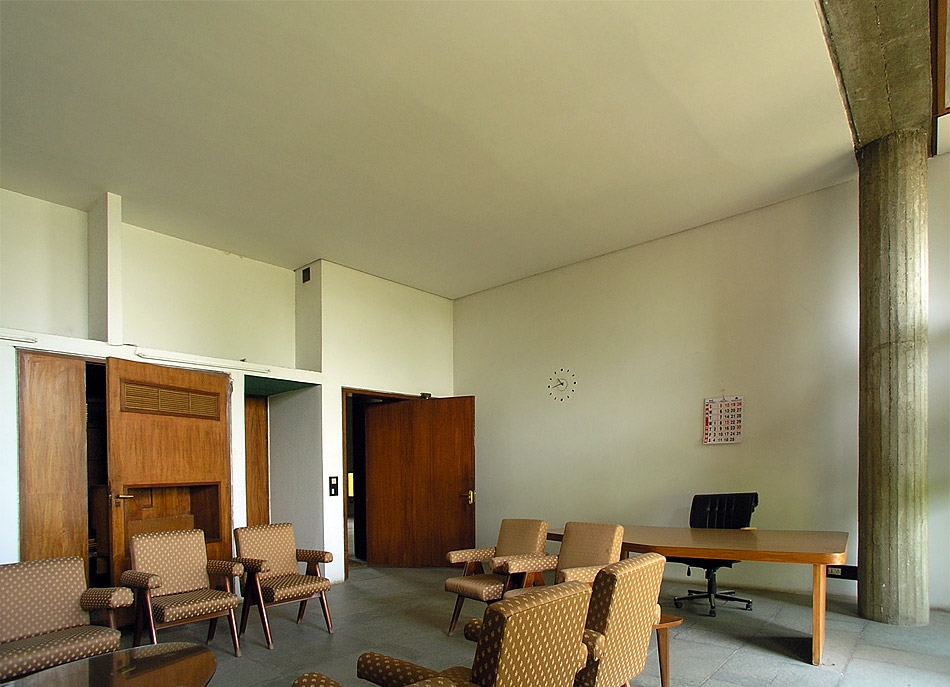
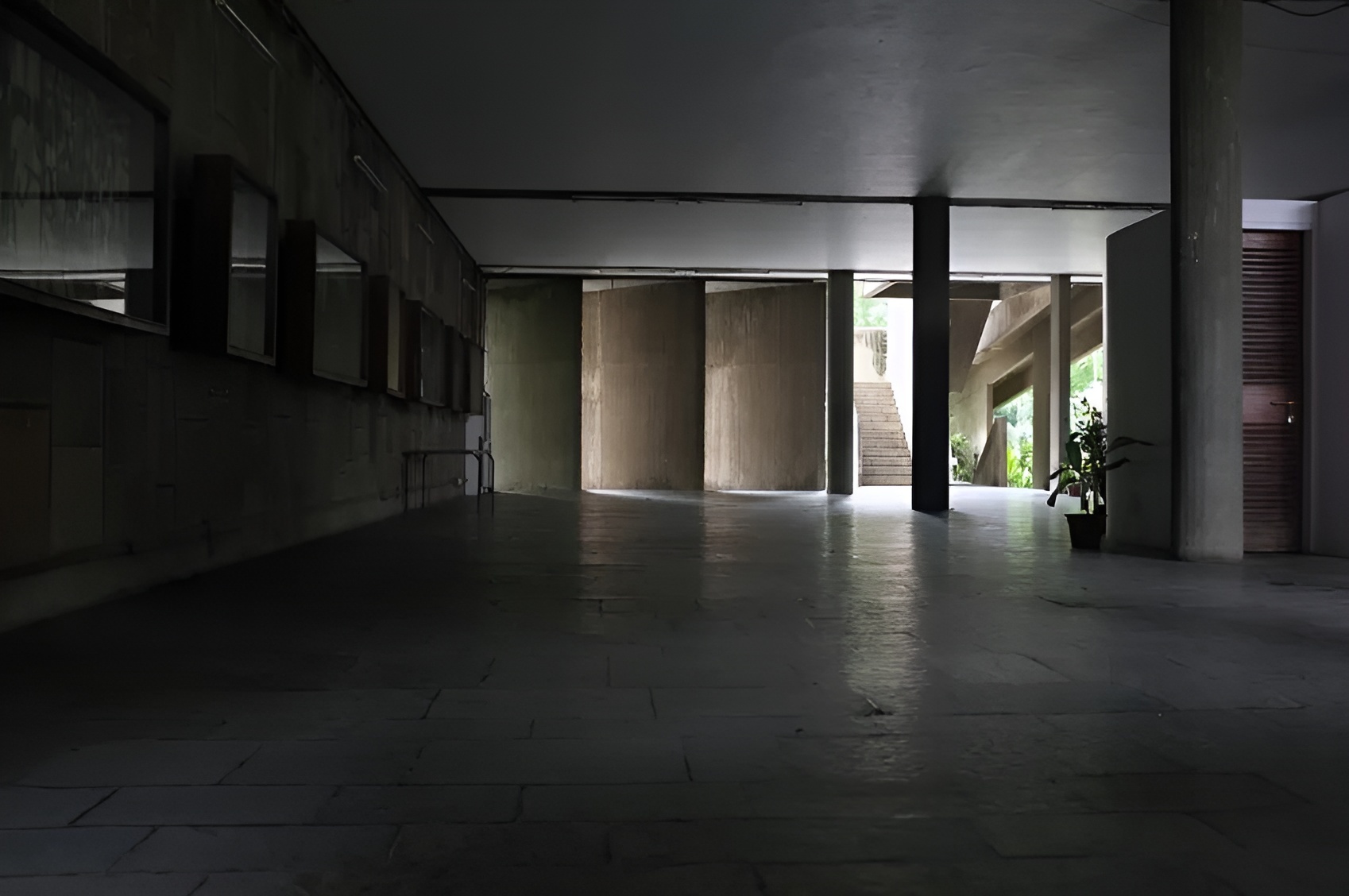
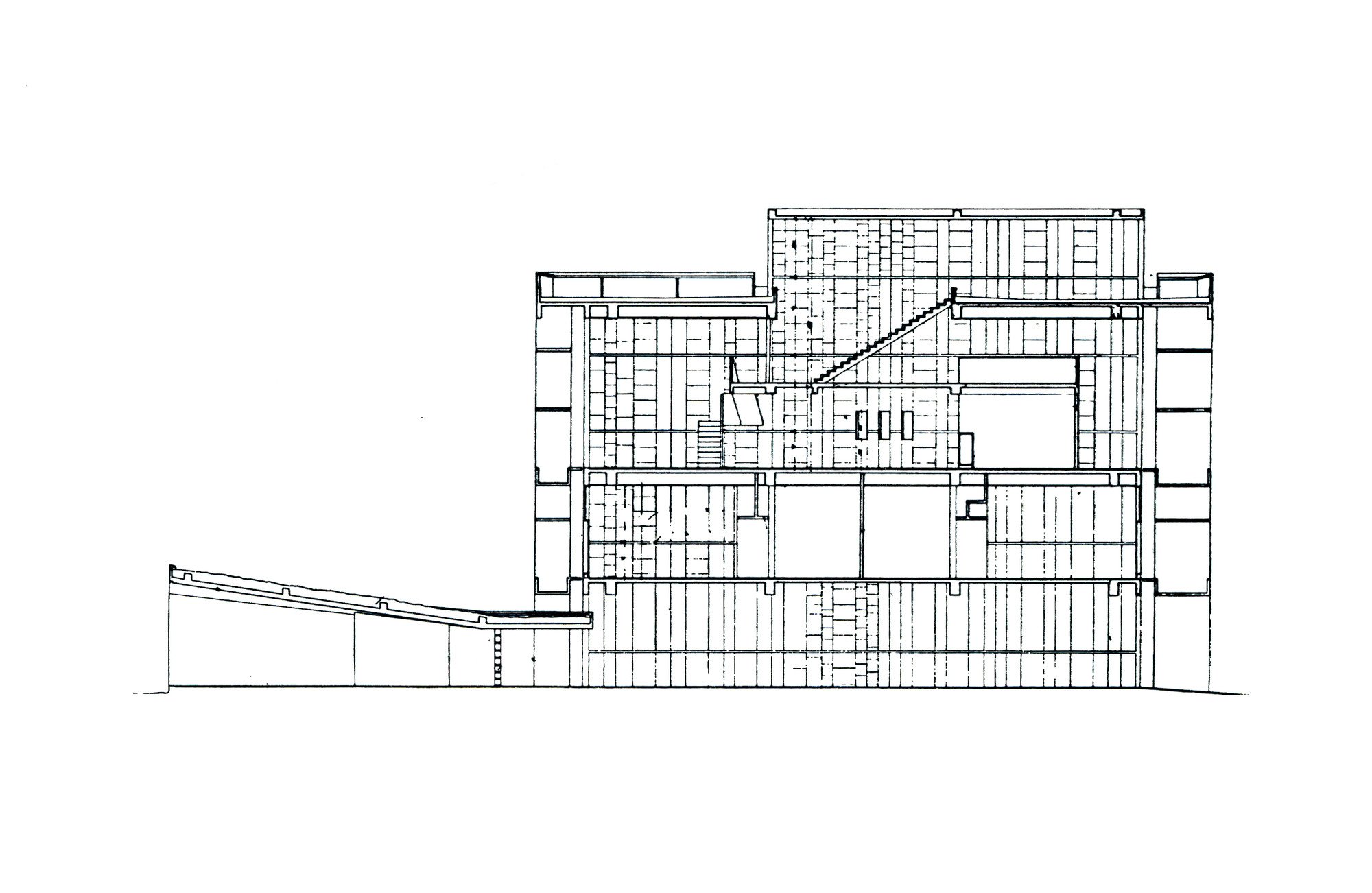
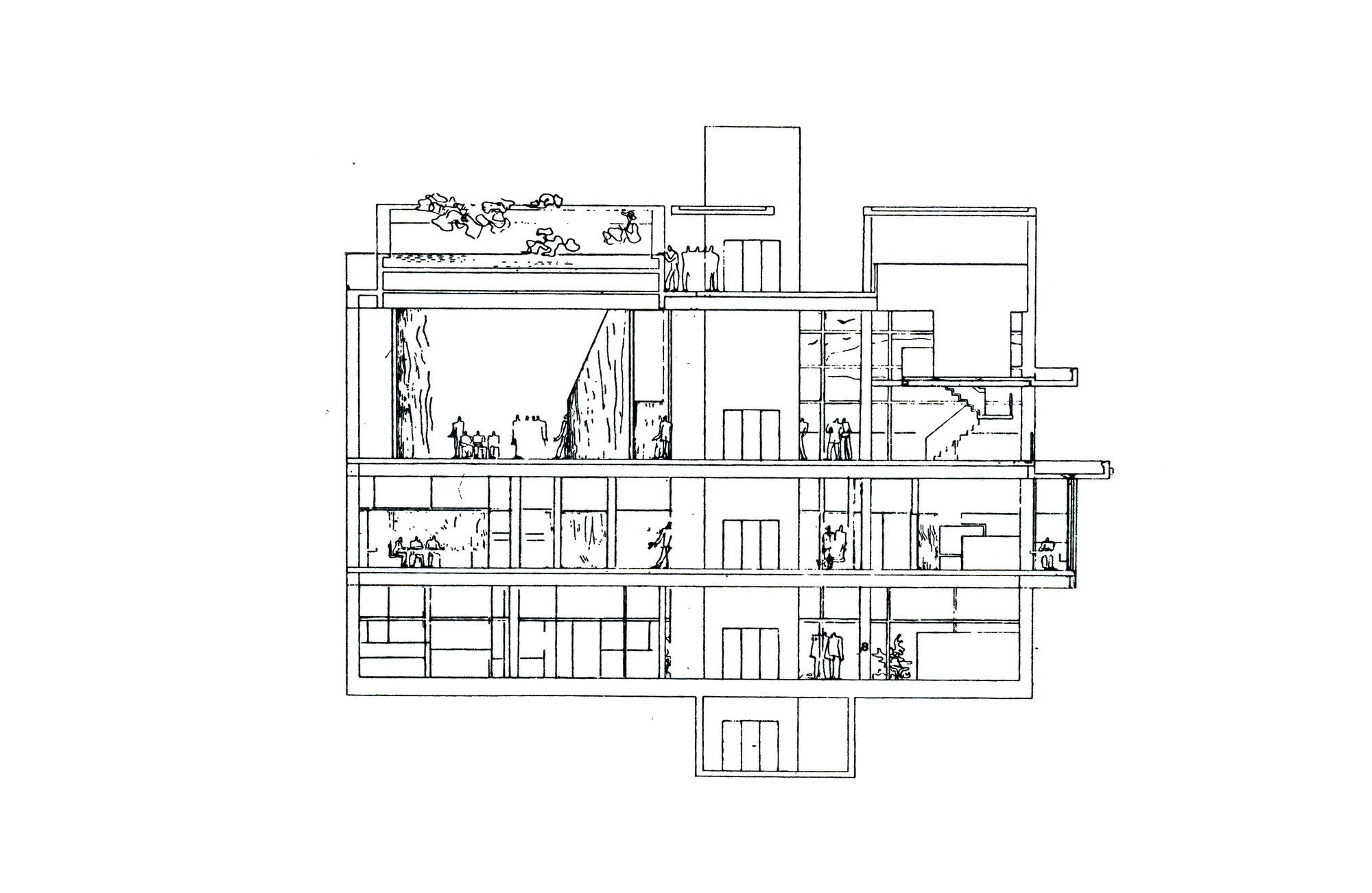
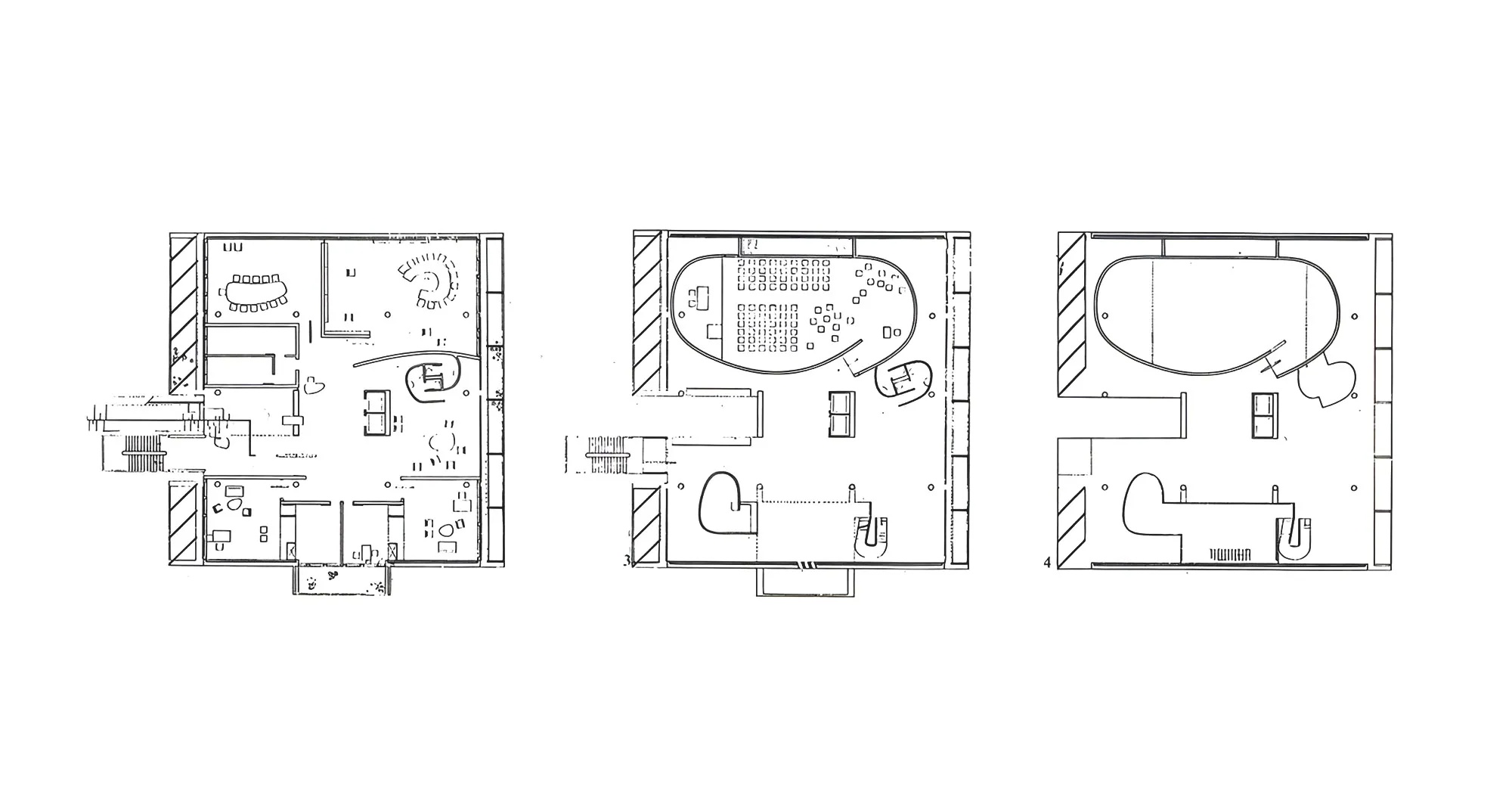
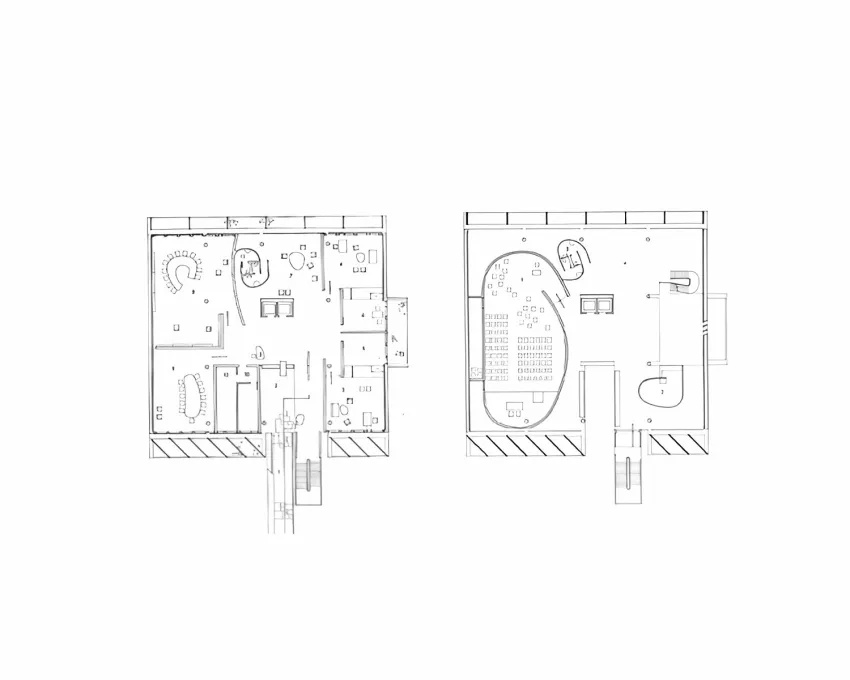
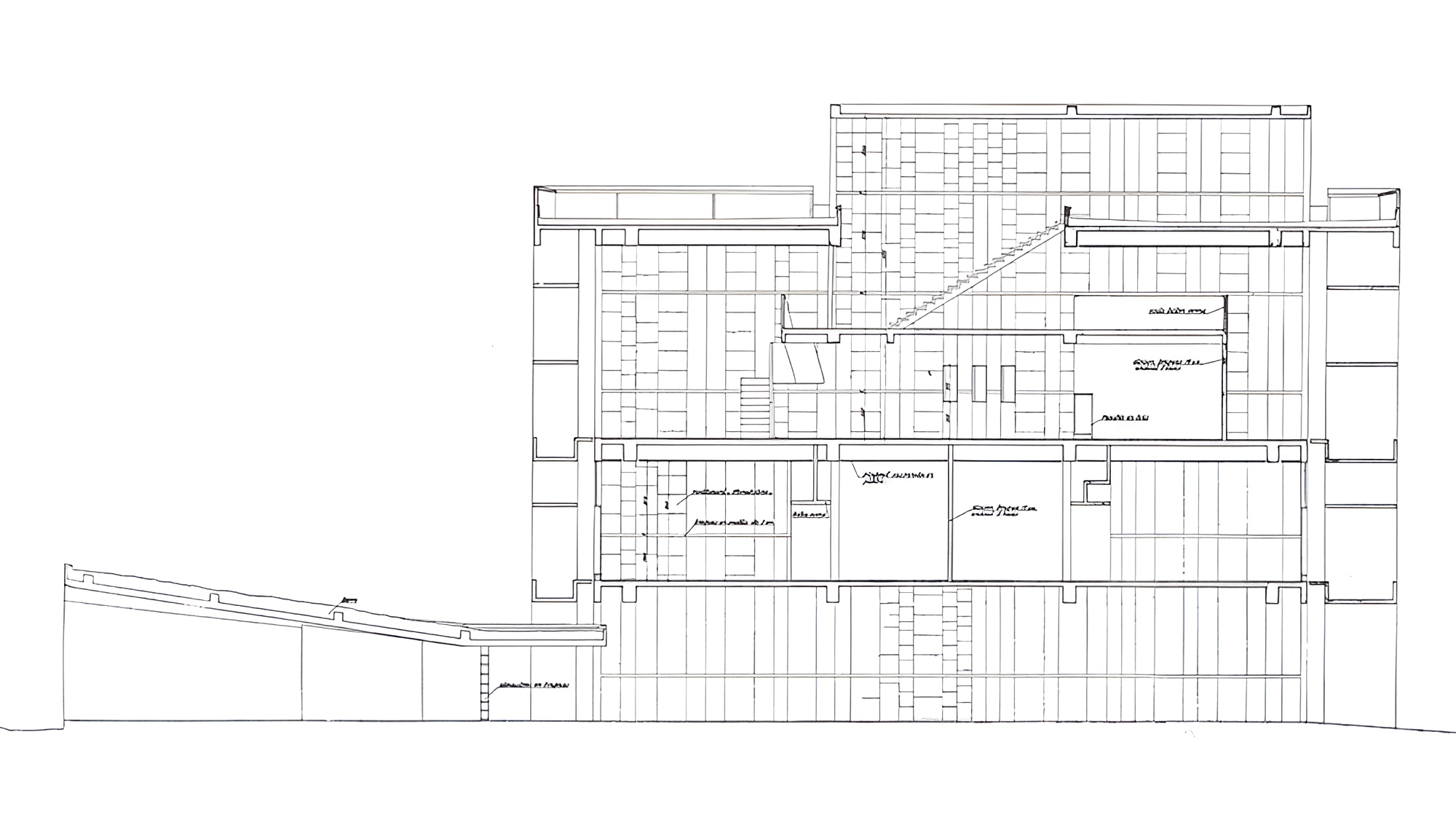
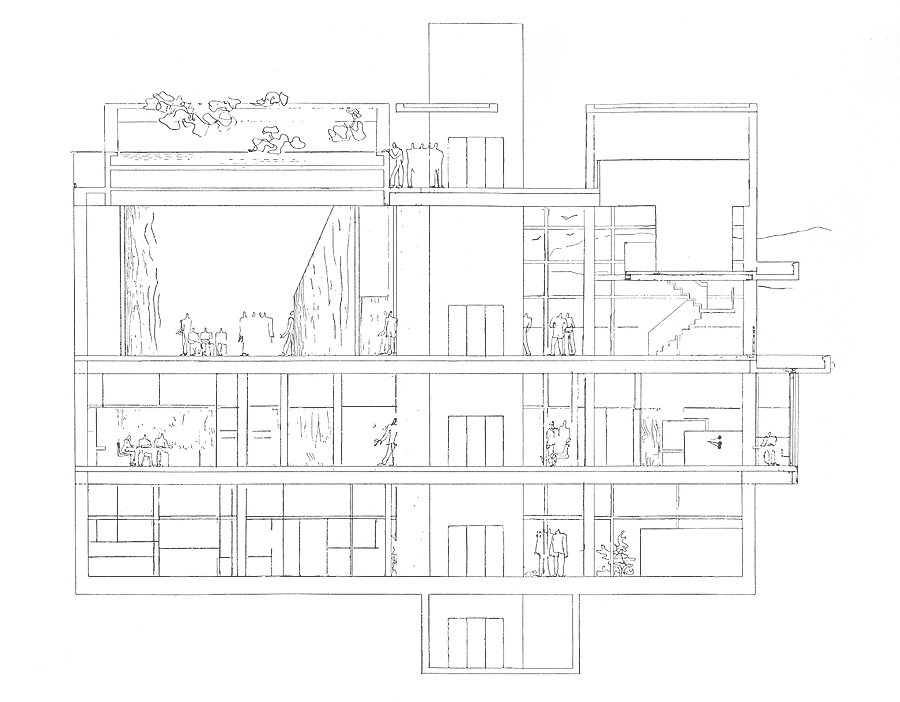
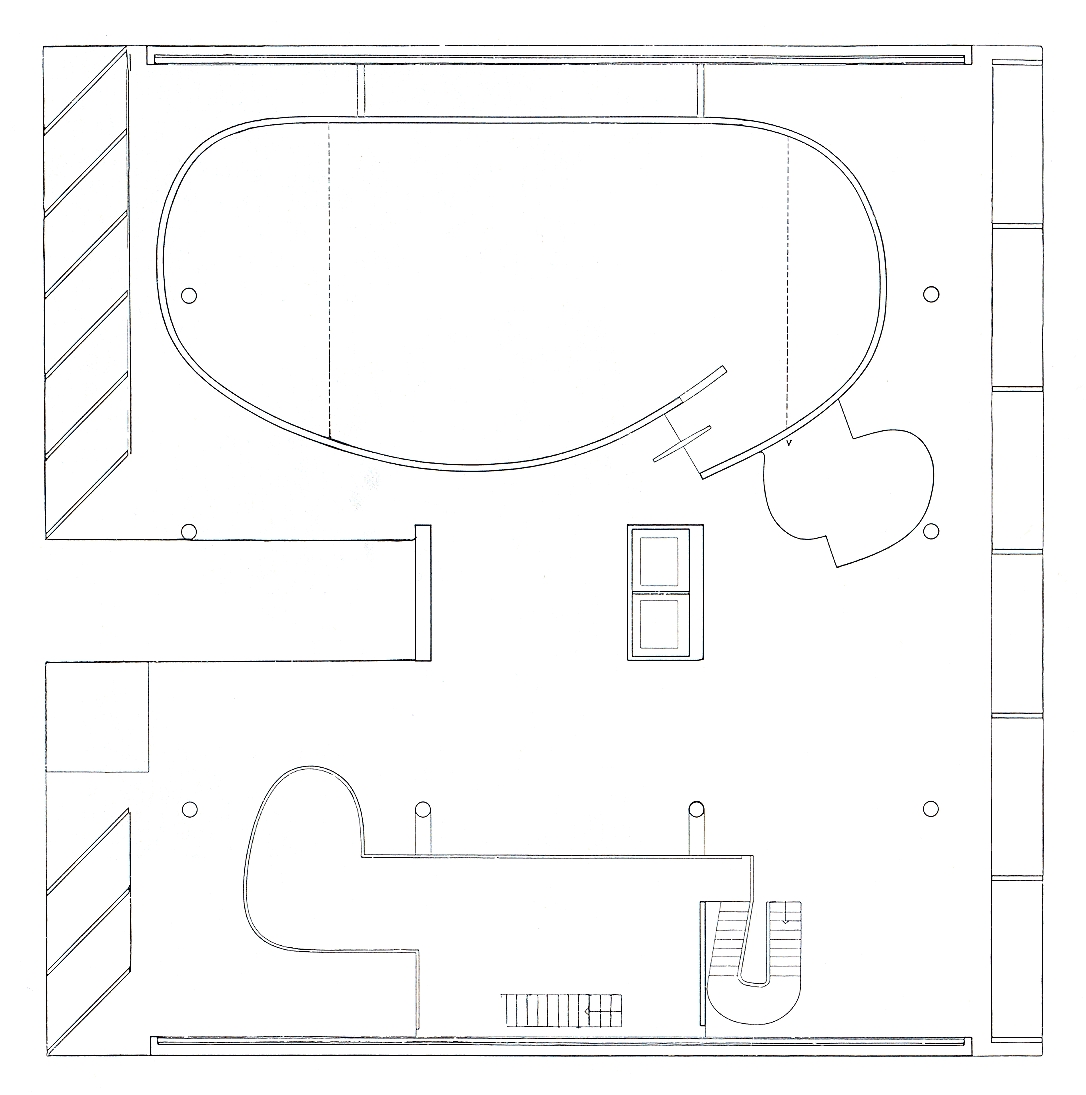
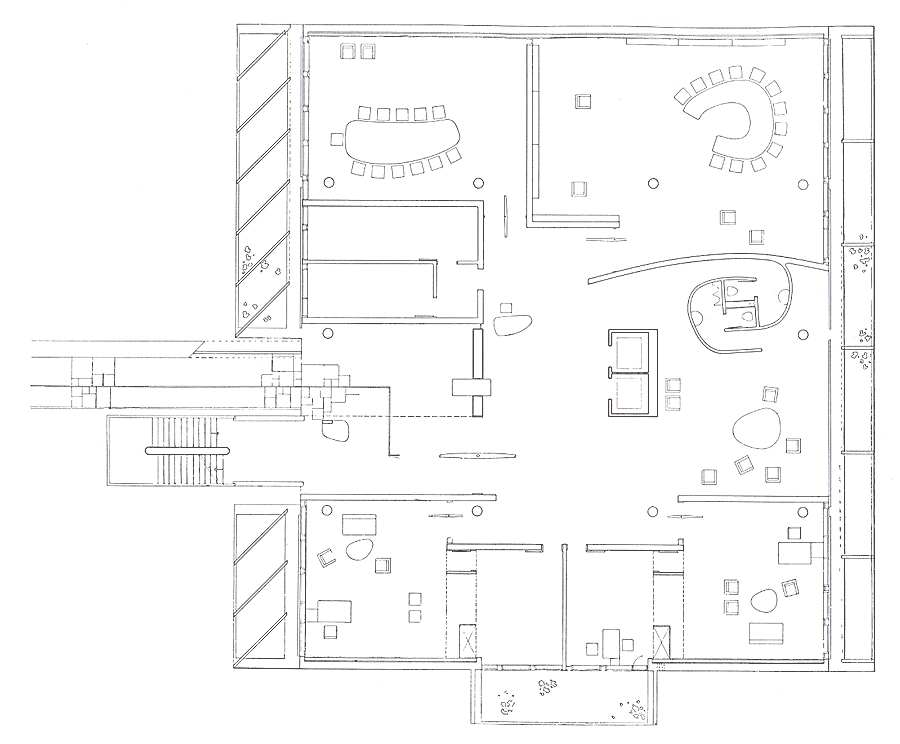
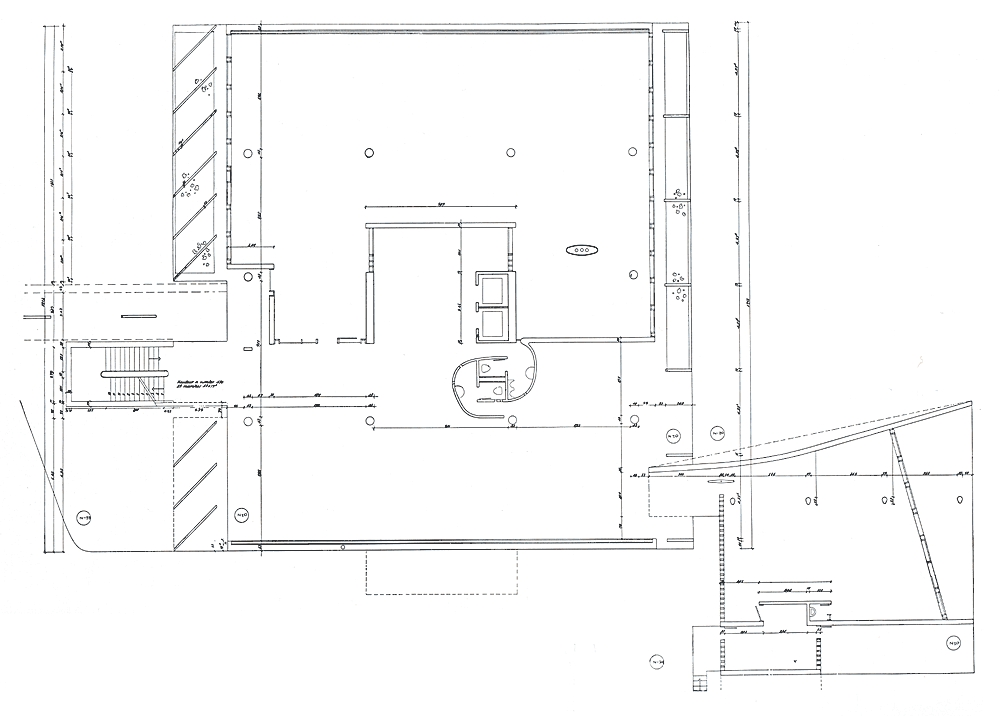
The program is distributed across several levels. The ground floor originally accommodated clerical workspaces and service functions. Executive offices and meeting rooms occupy the principal administrative level, while the upper floor contains reception areas, assembly spaces, and access to the roof terrace. A separate canteen was positioned at the rear of the complex.
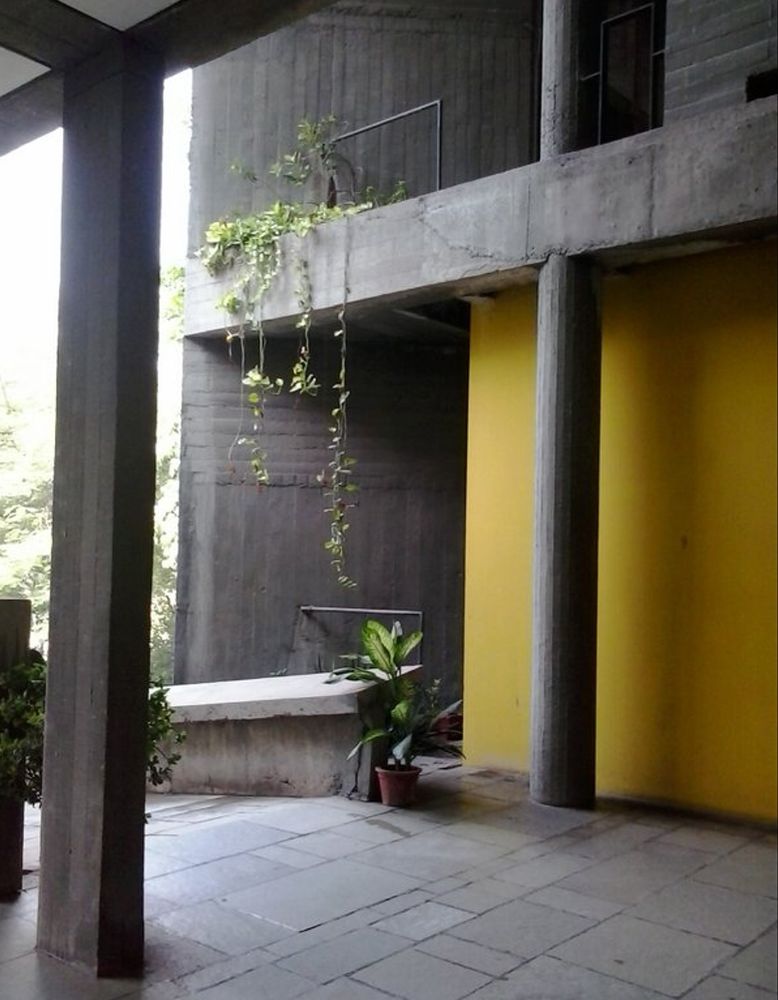
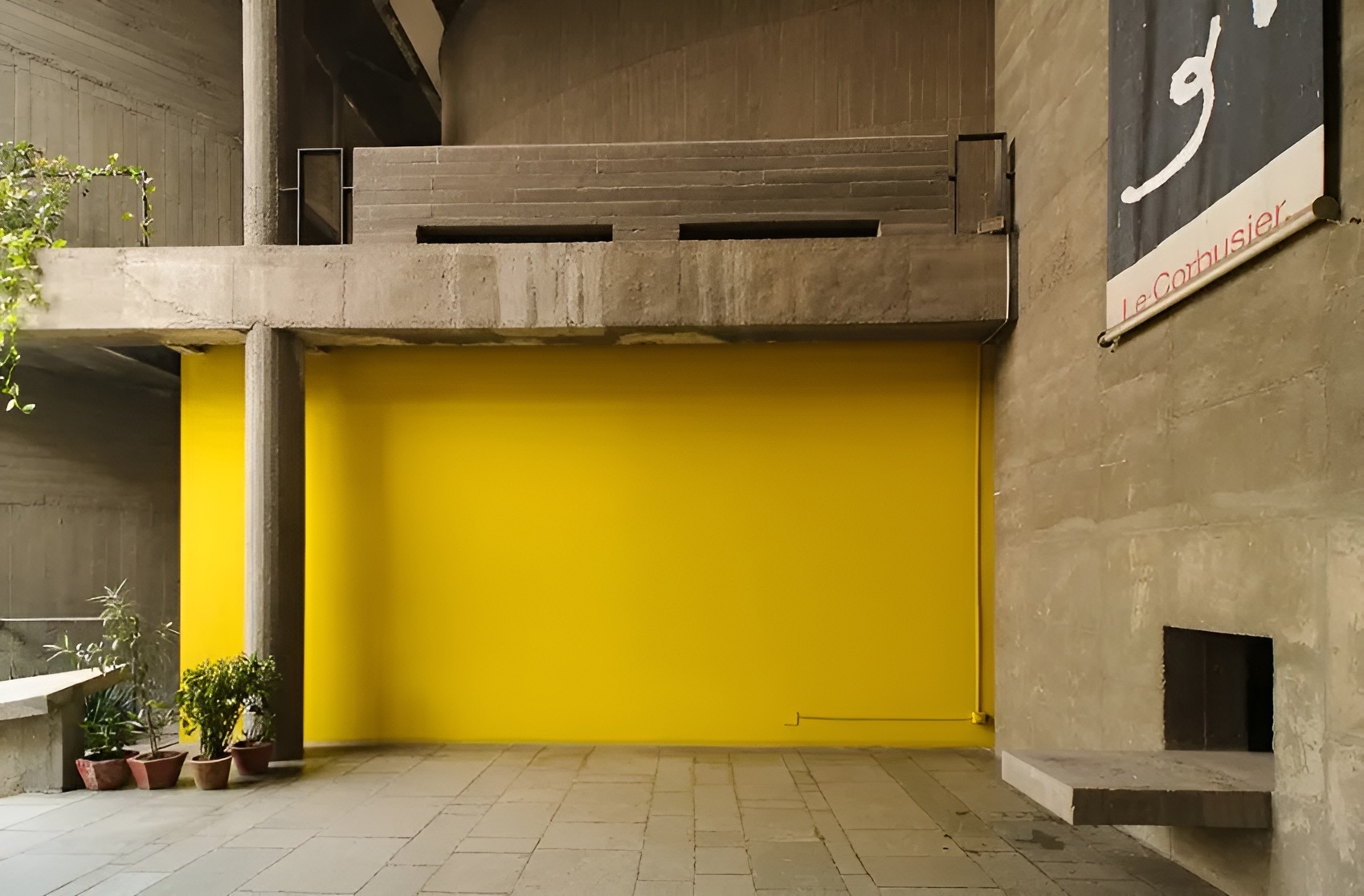
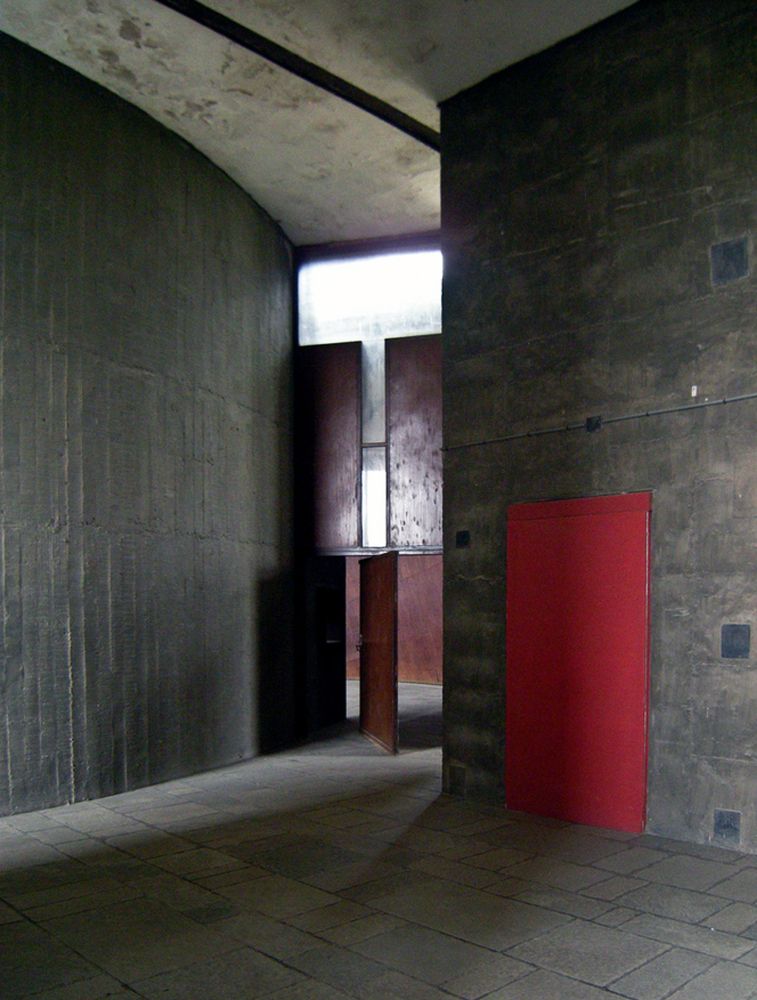
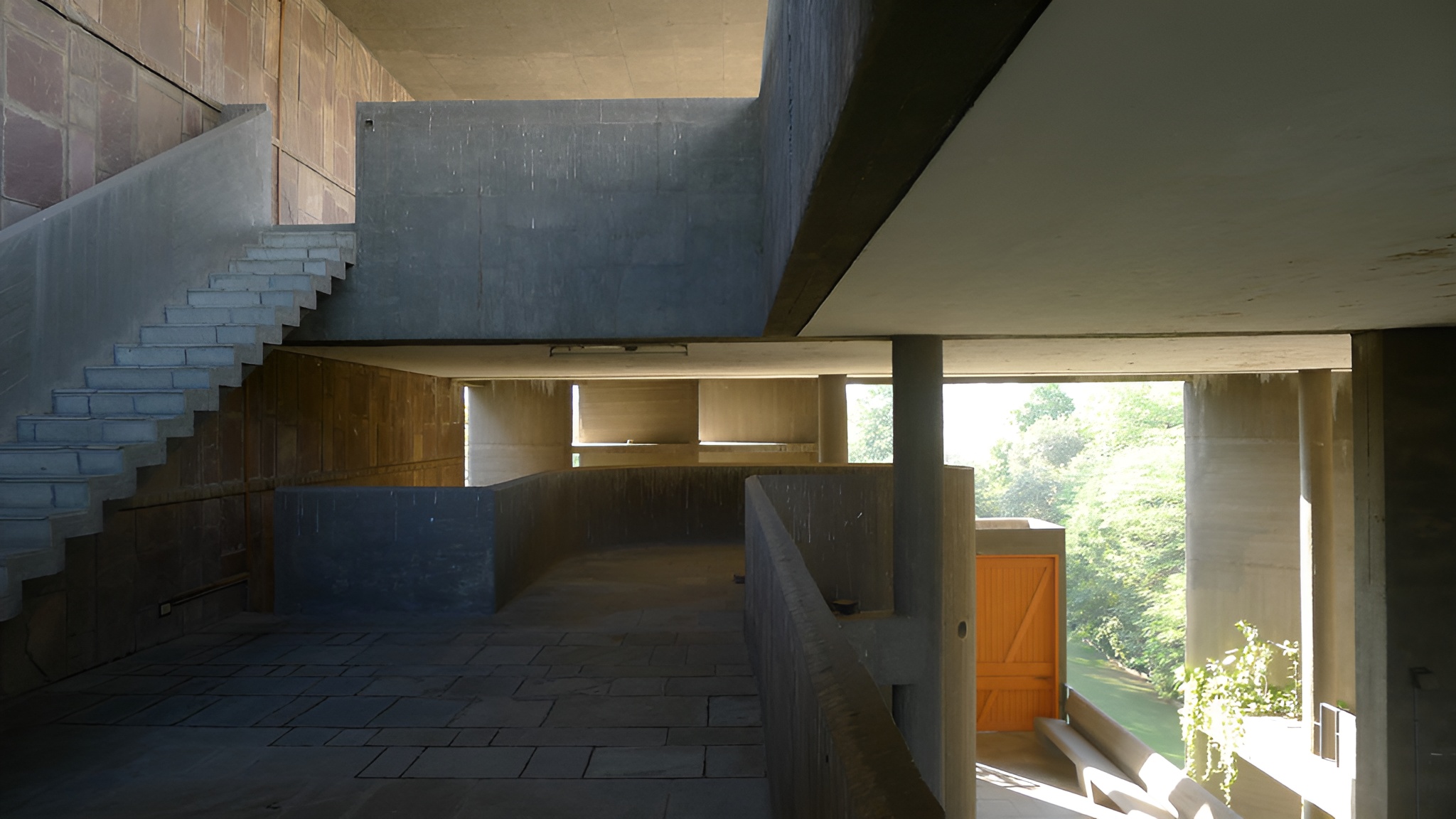
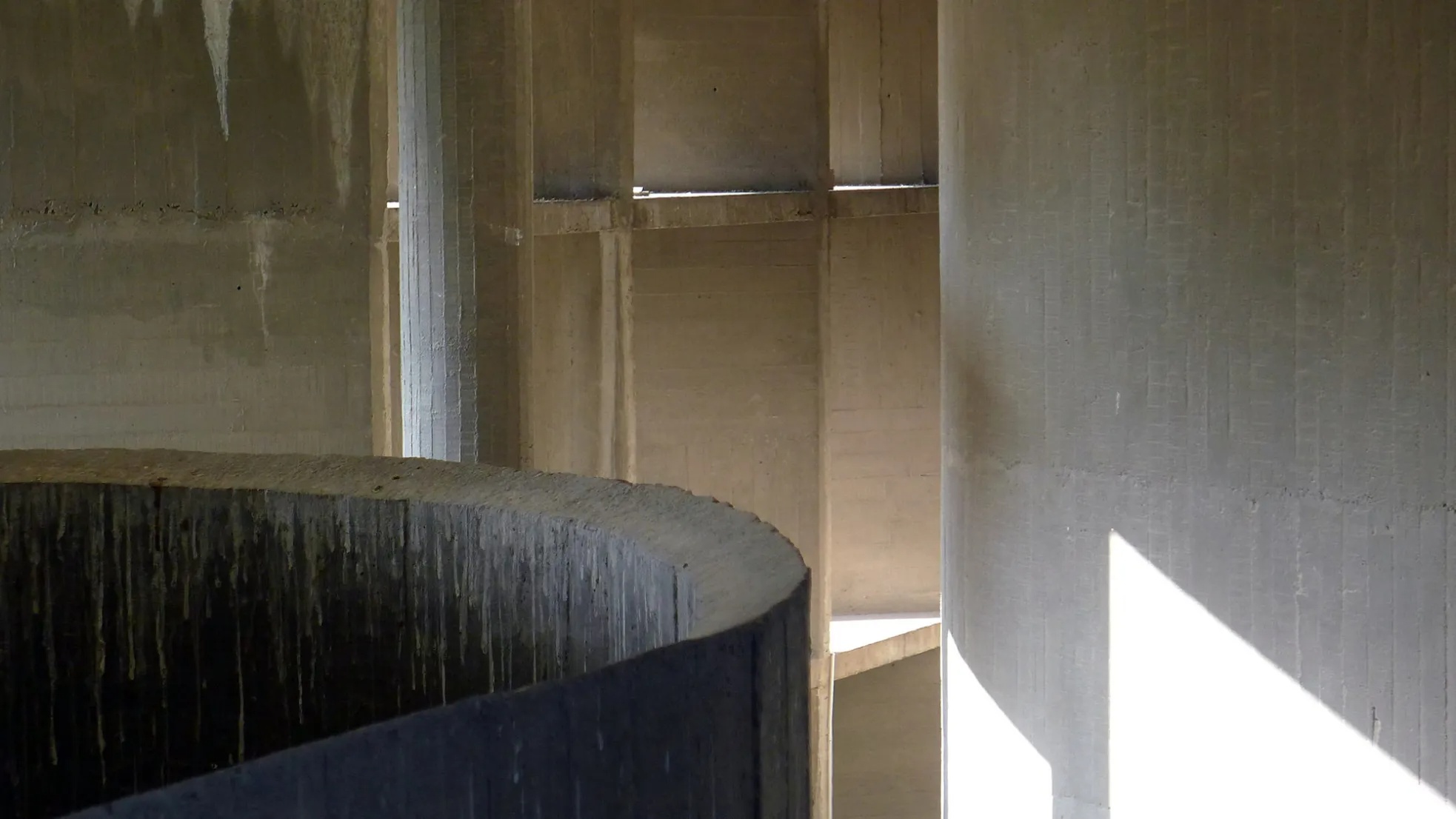
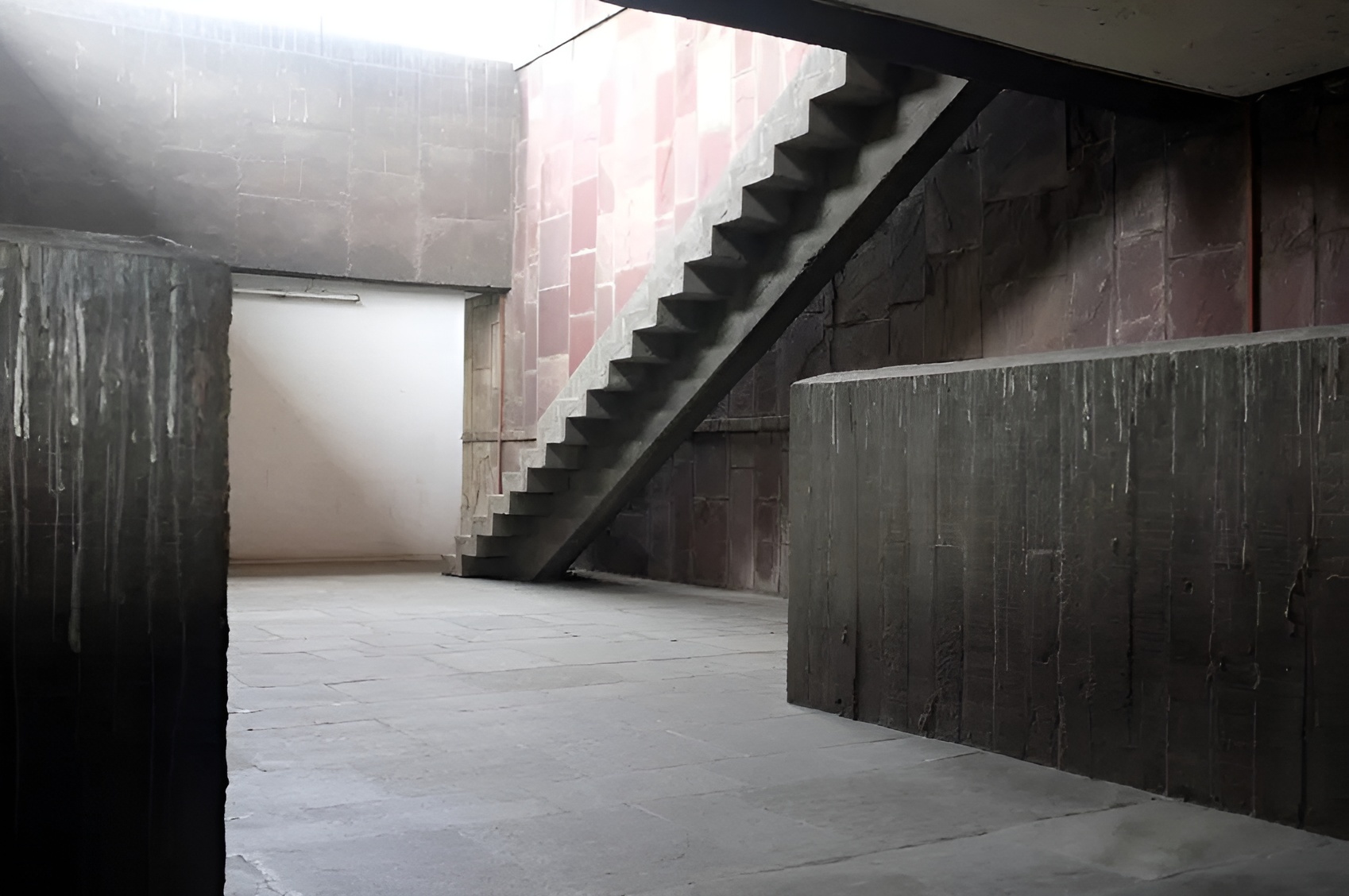
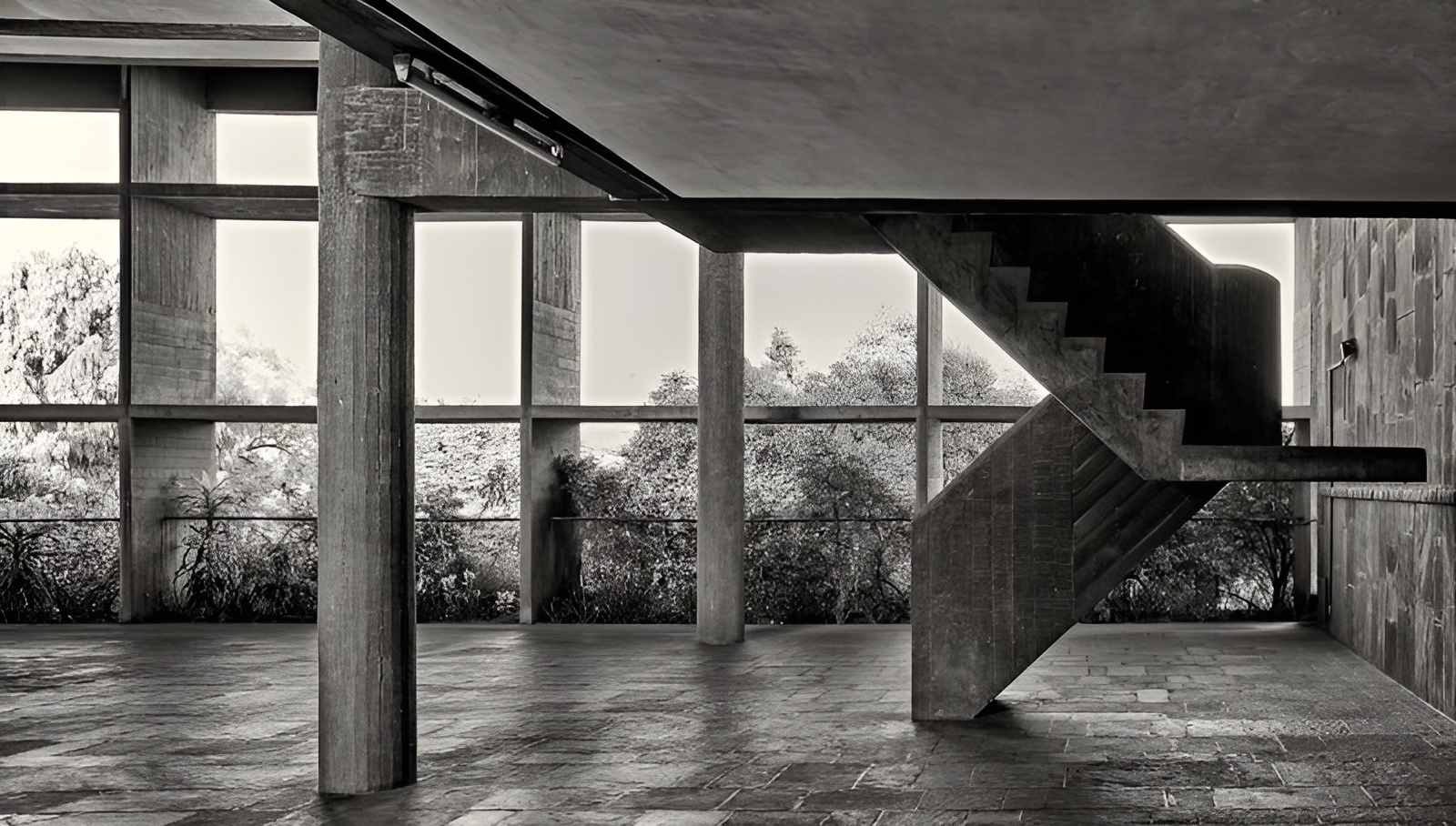
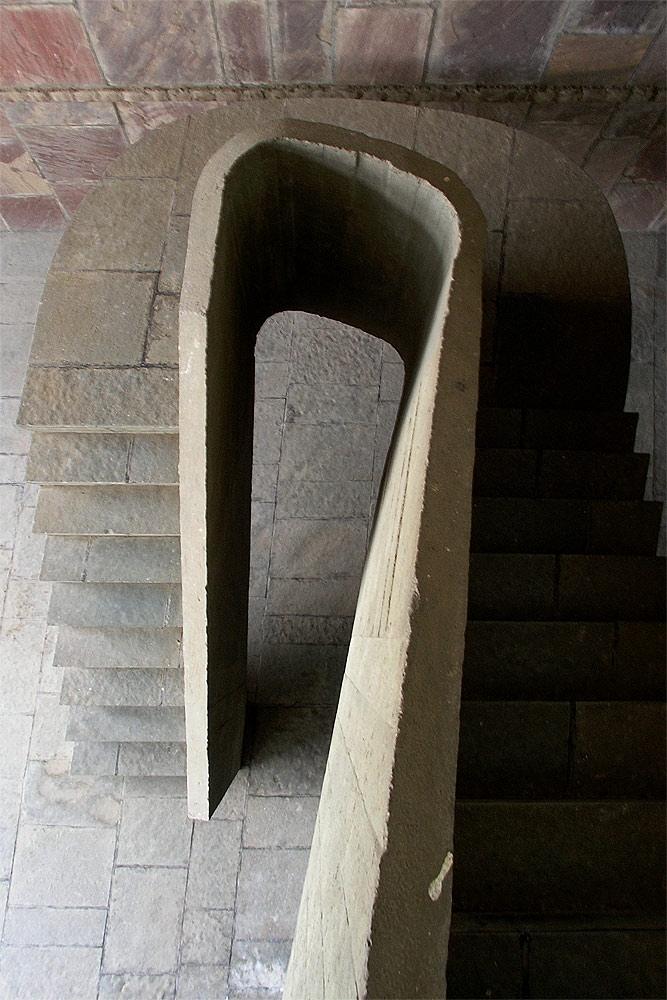
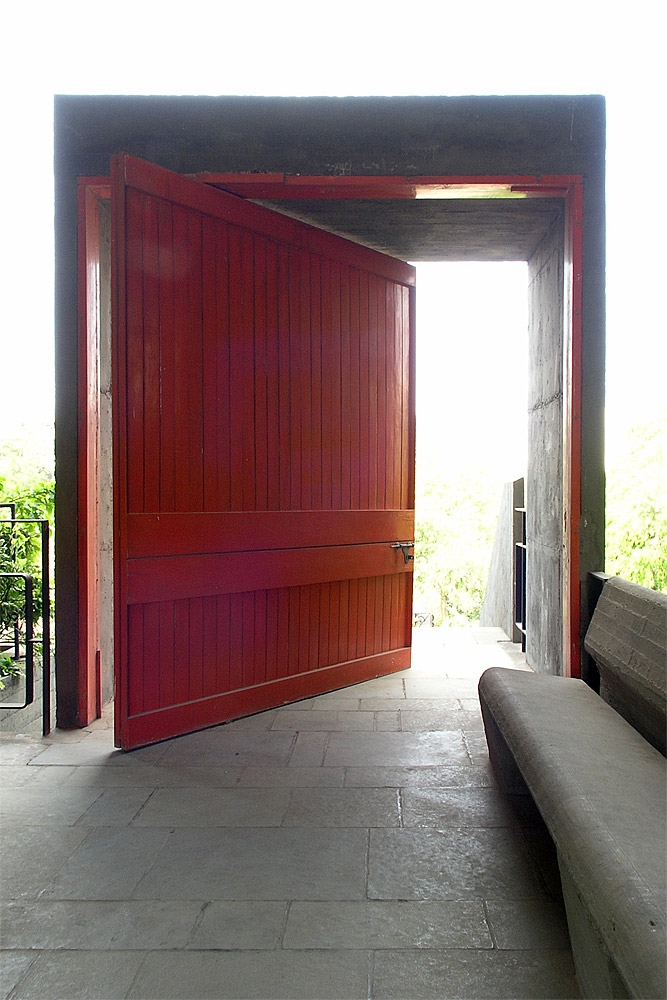
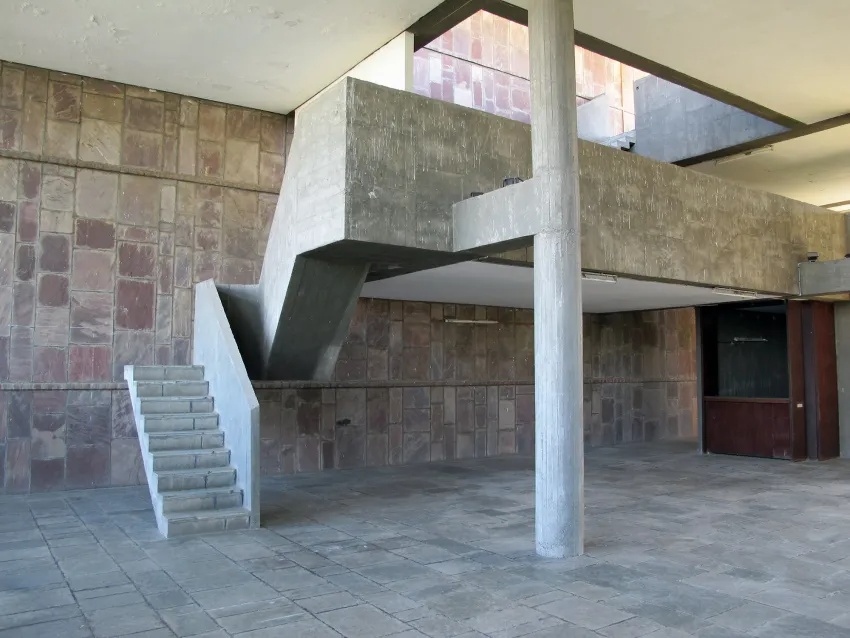
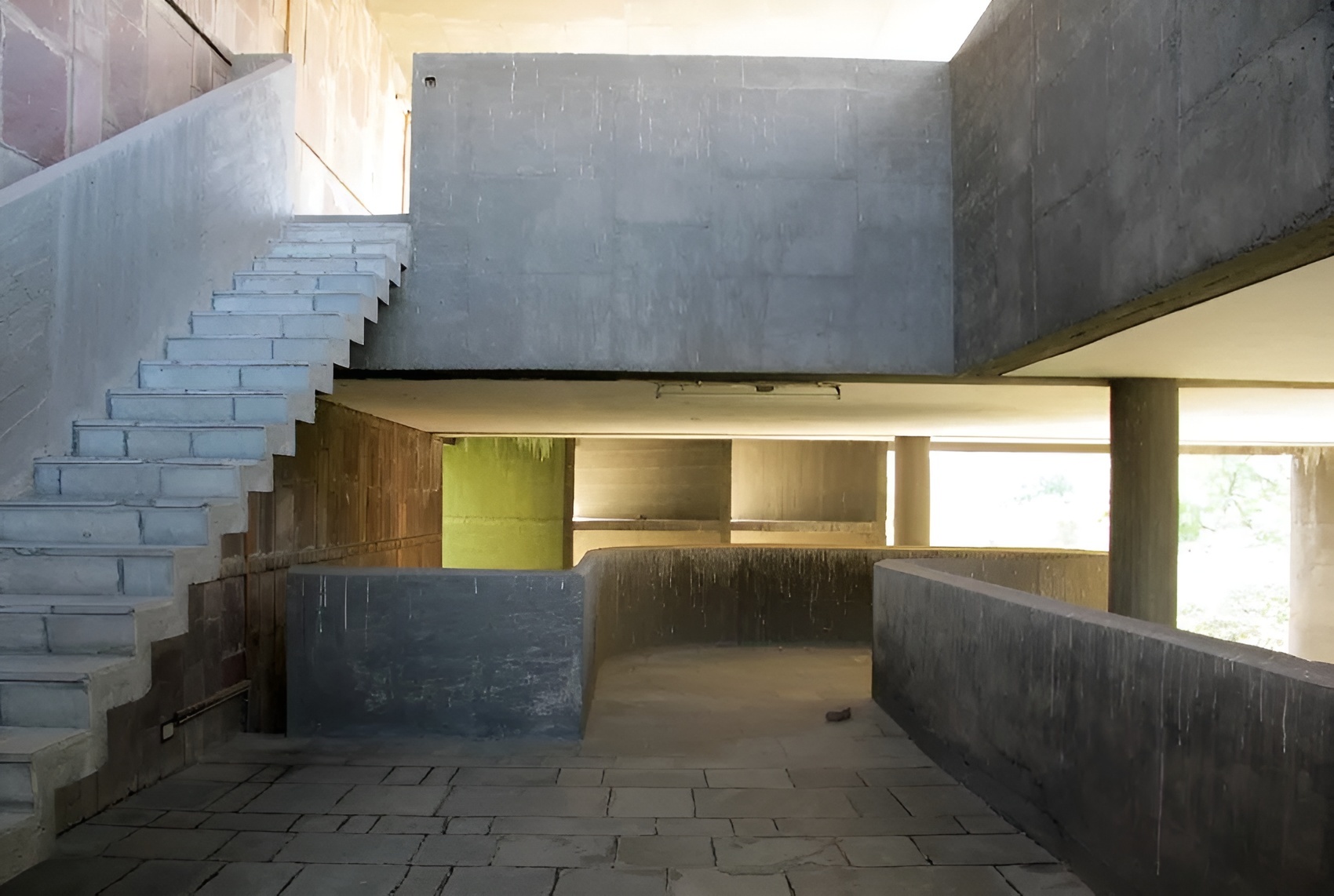
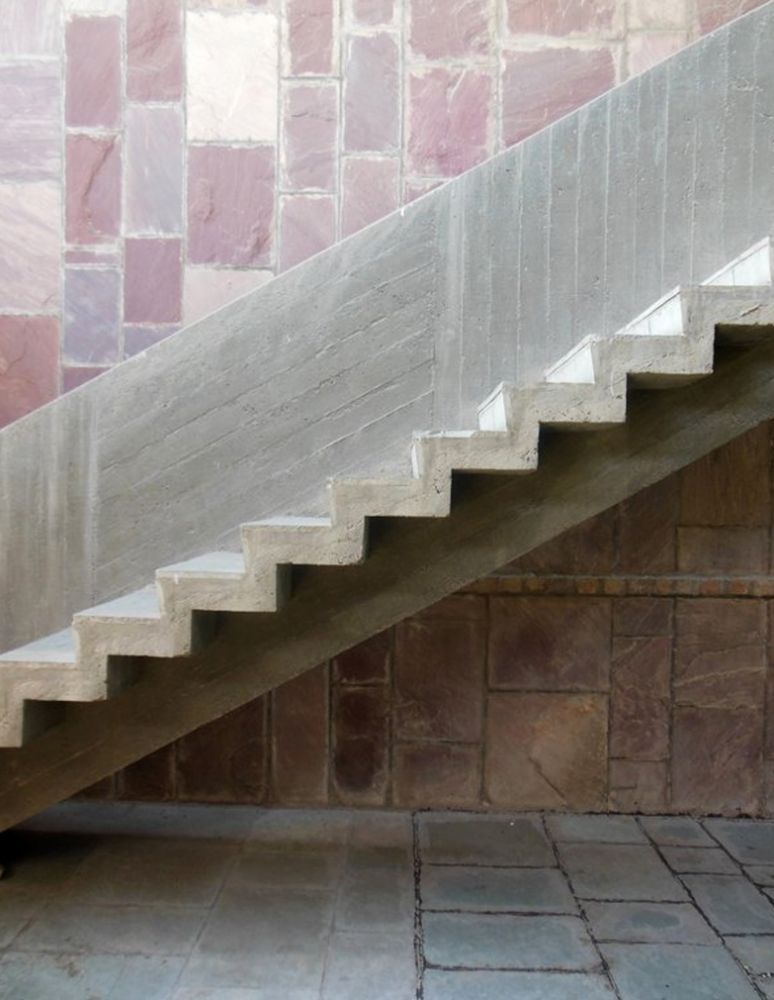
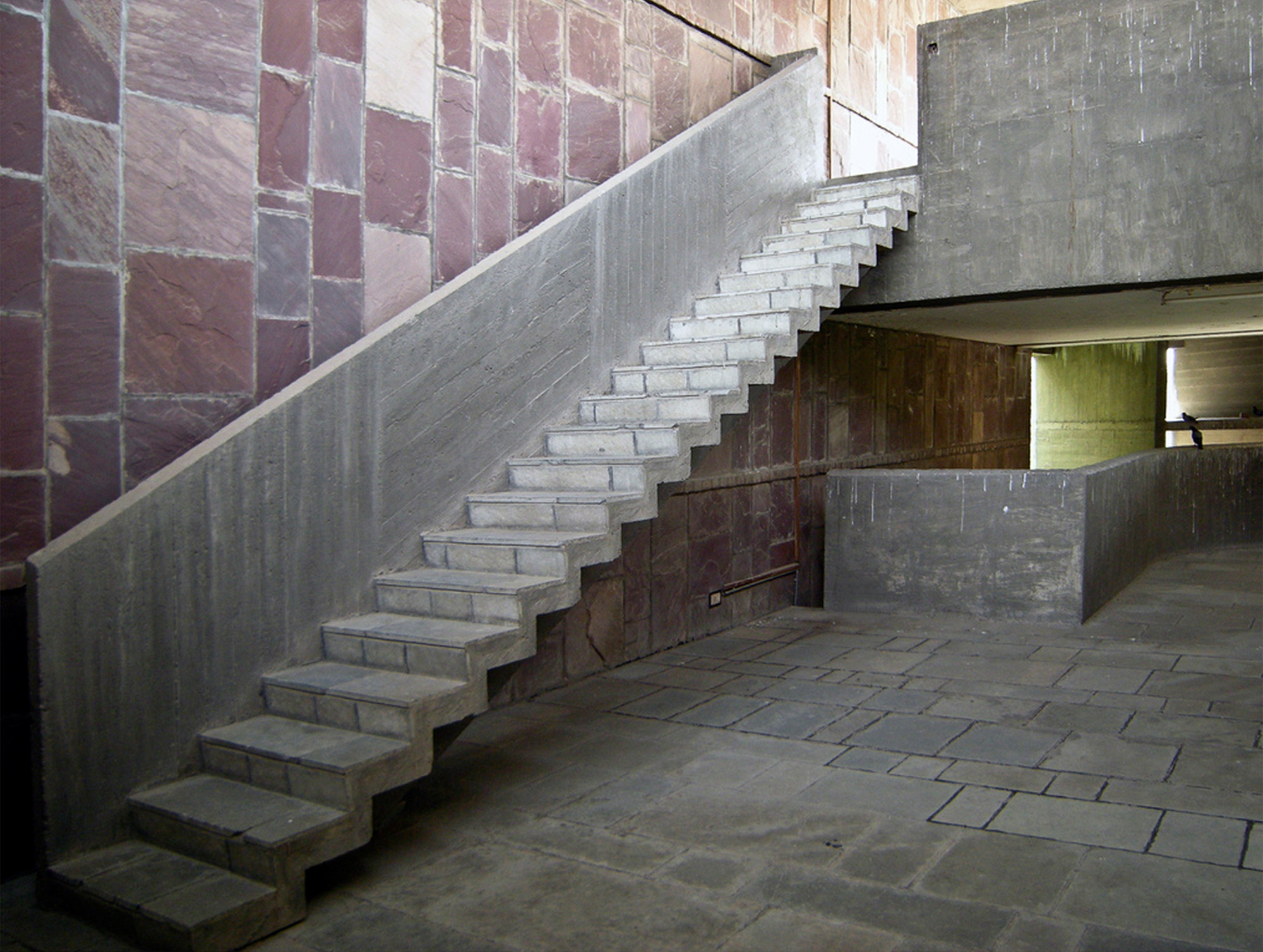
Circulation is organized as an architectural promenade, a concept central to Le Corbusier’s work. A ceremonial ramp rises from the parking area and leads into a triple-height entrance volume at the center of the building. As visitors ascend, views unfold through the brise-soleil and toward the river beyond. Exterior staircases and vertical circulation elements extend beyond the primary building volume, reinforcing the relationship between movement, light, and landscape.
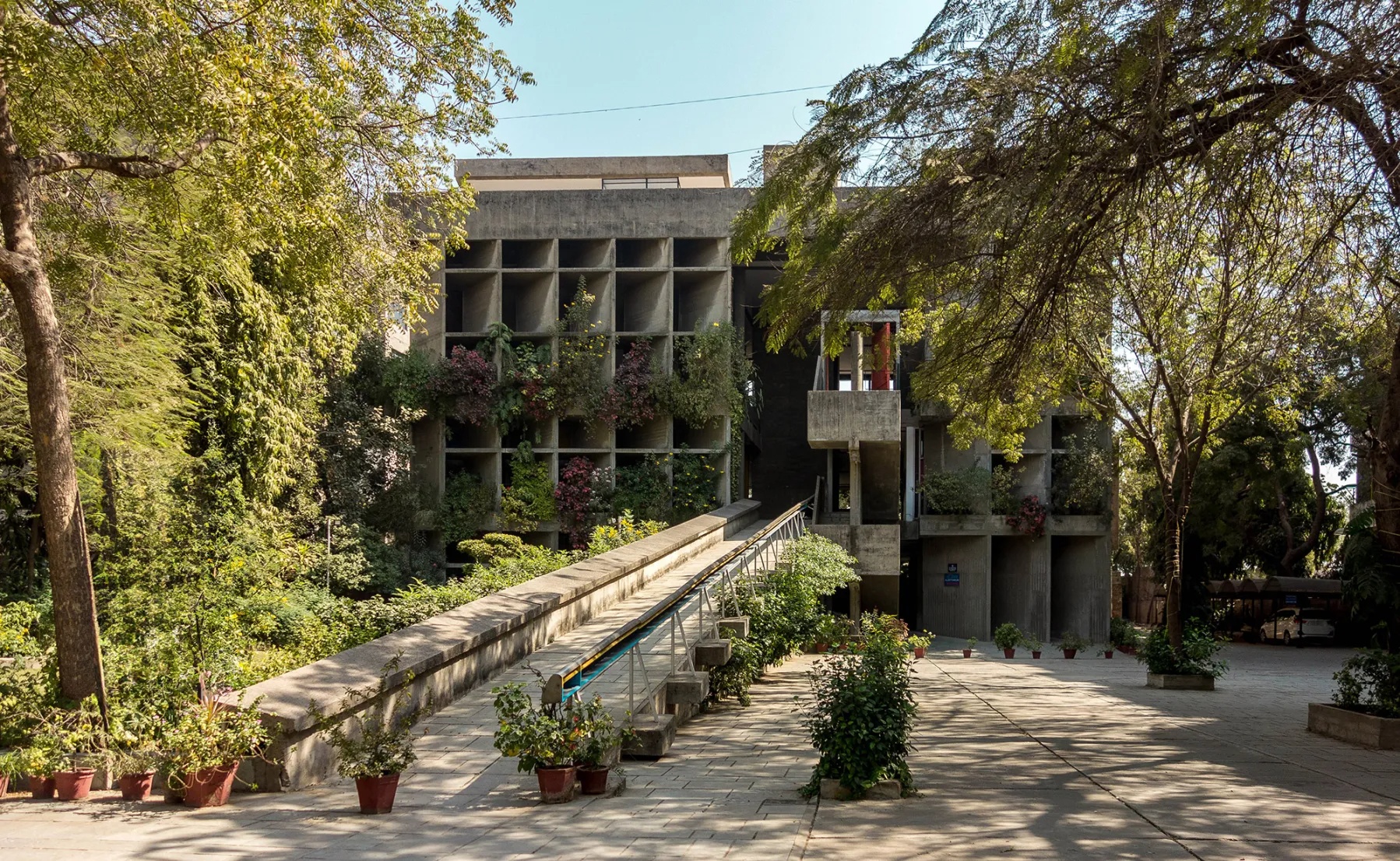
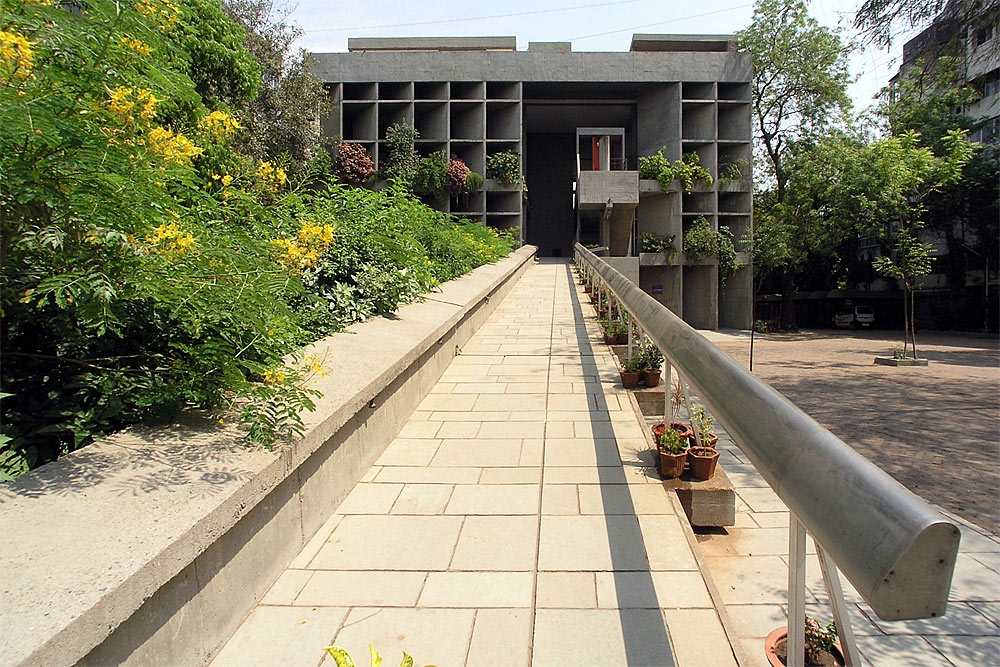
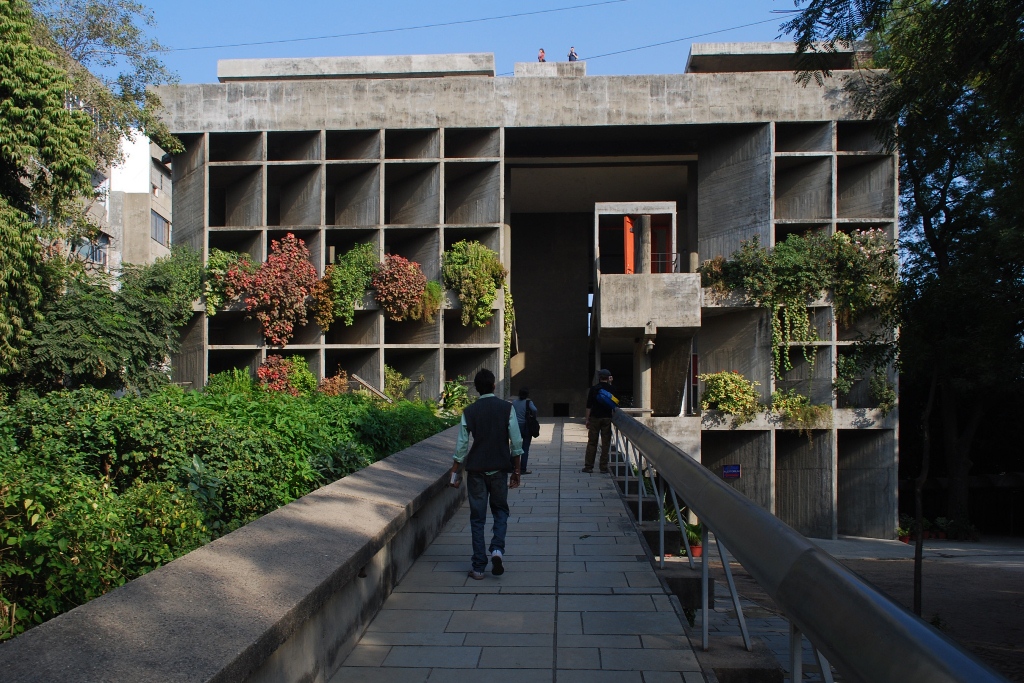
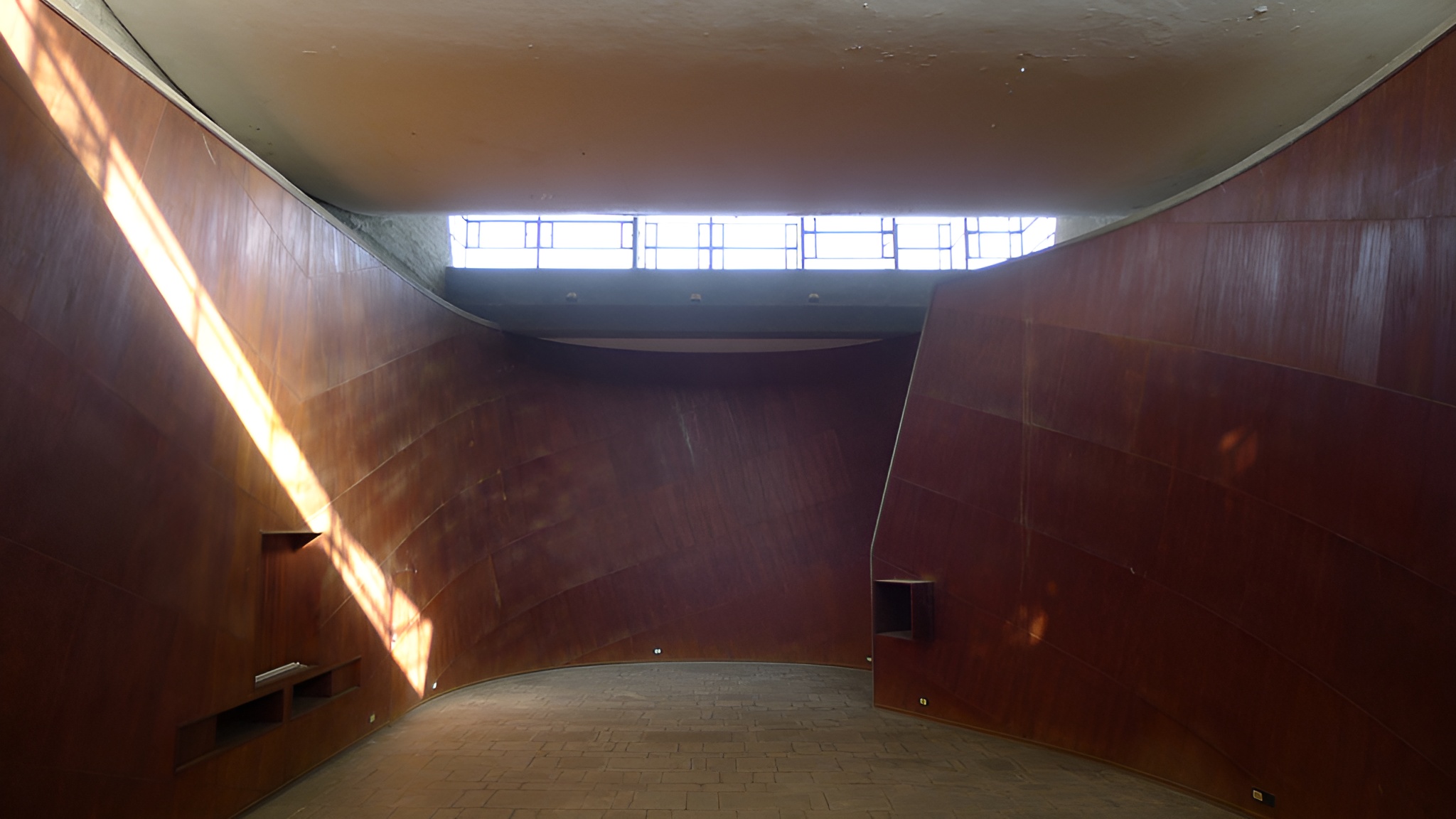
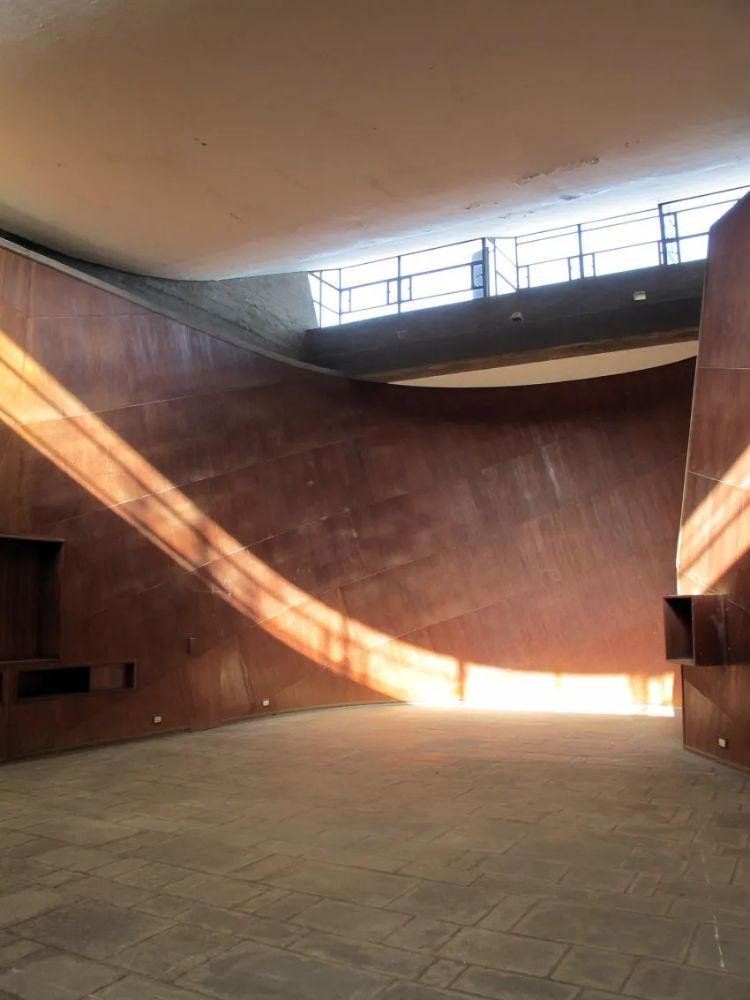
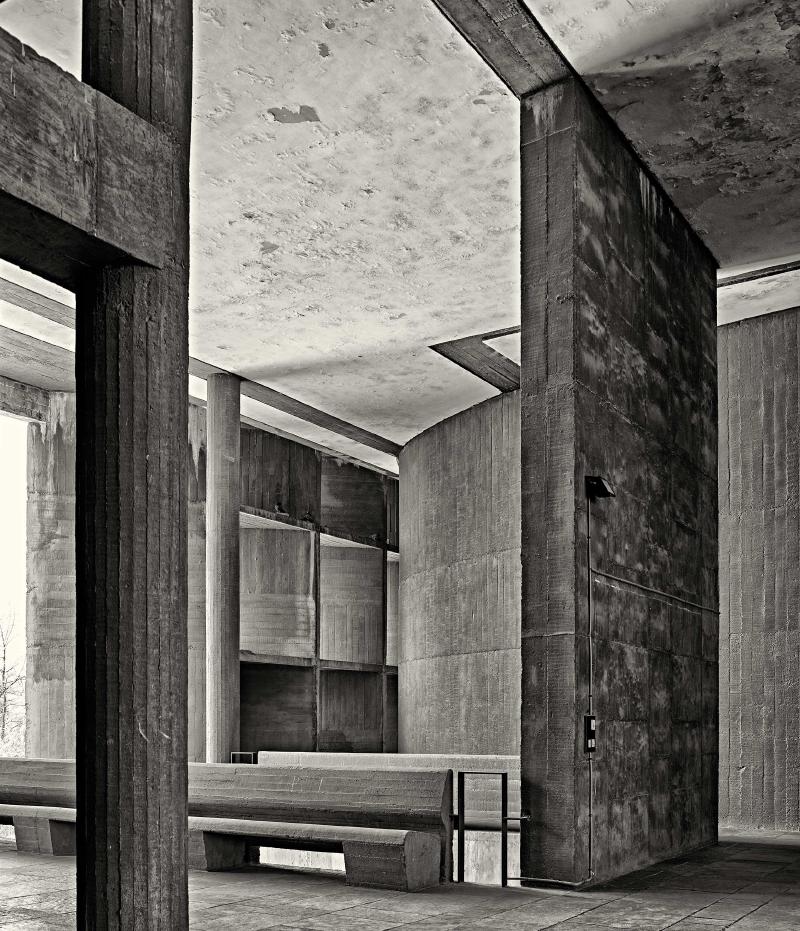
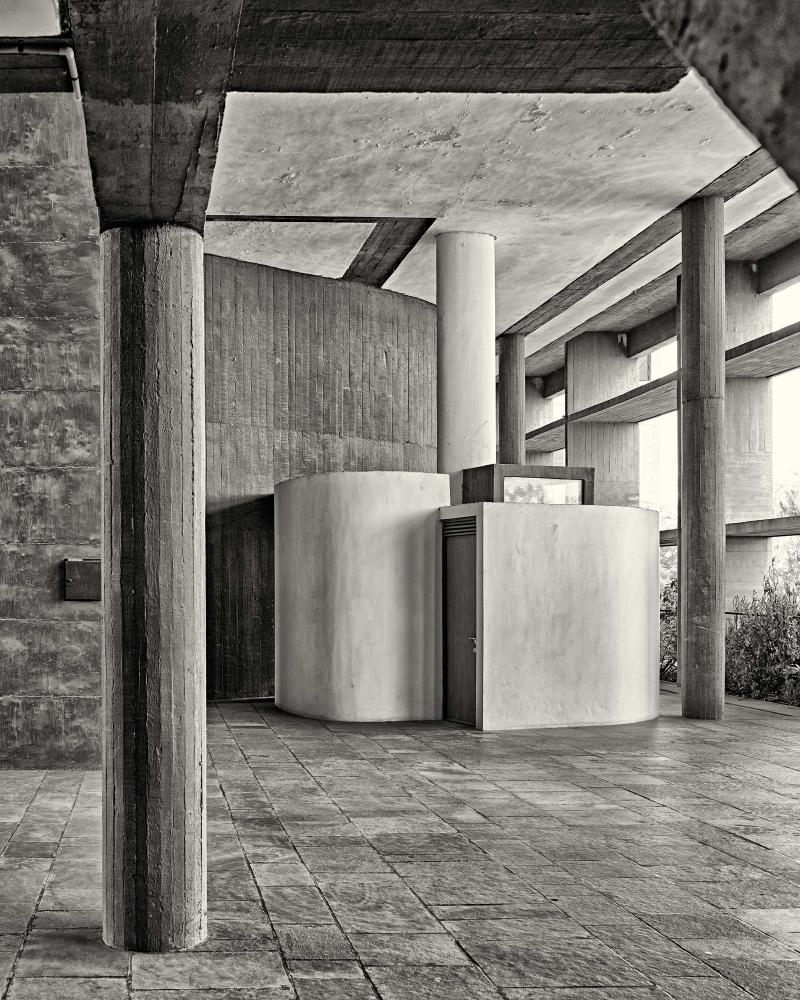
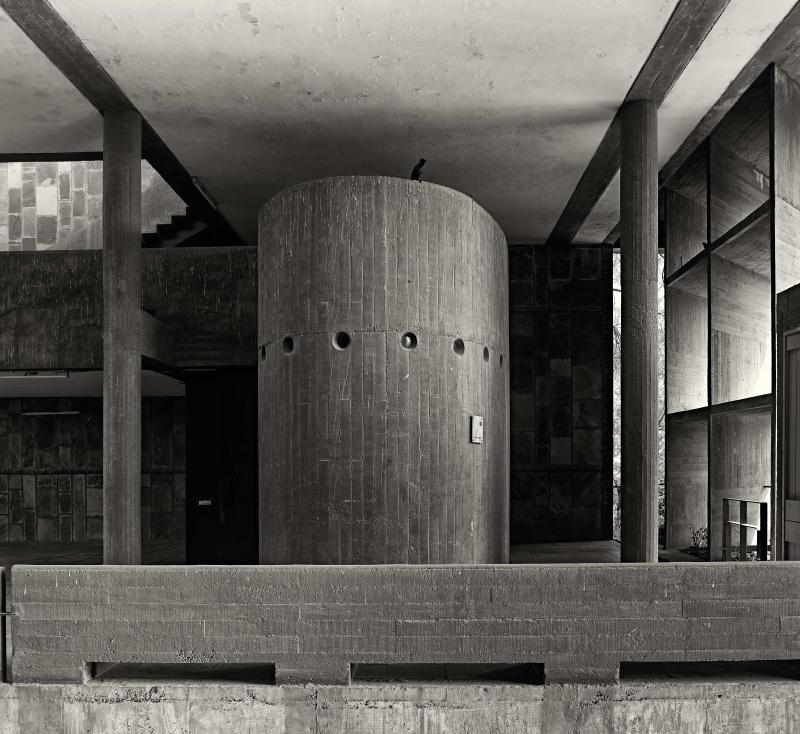
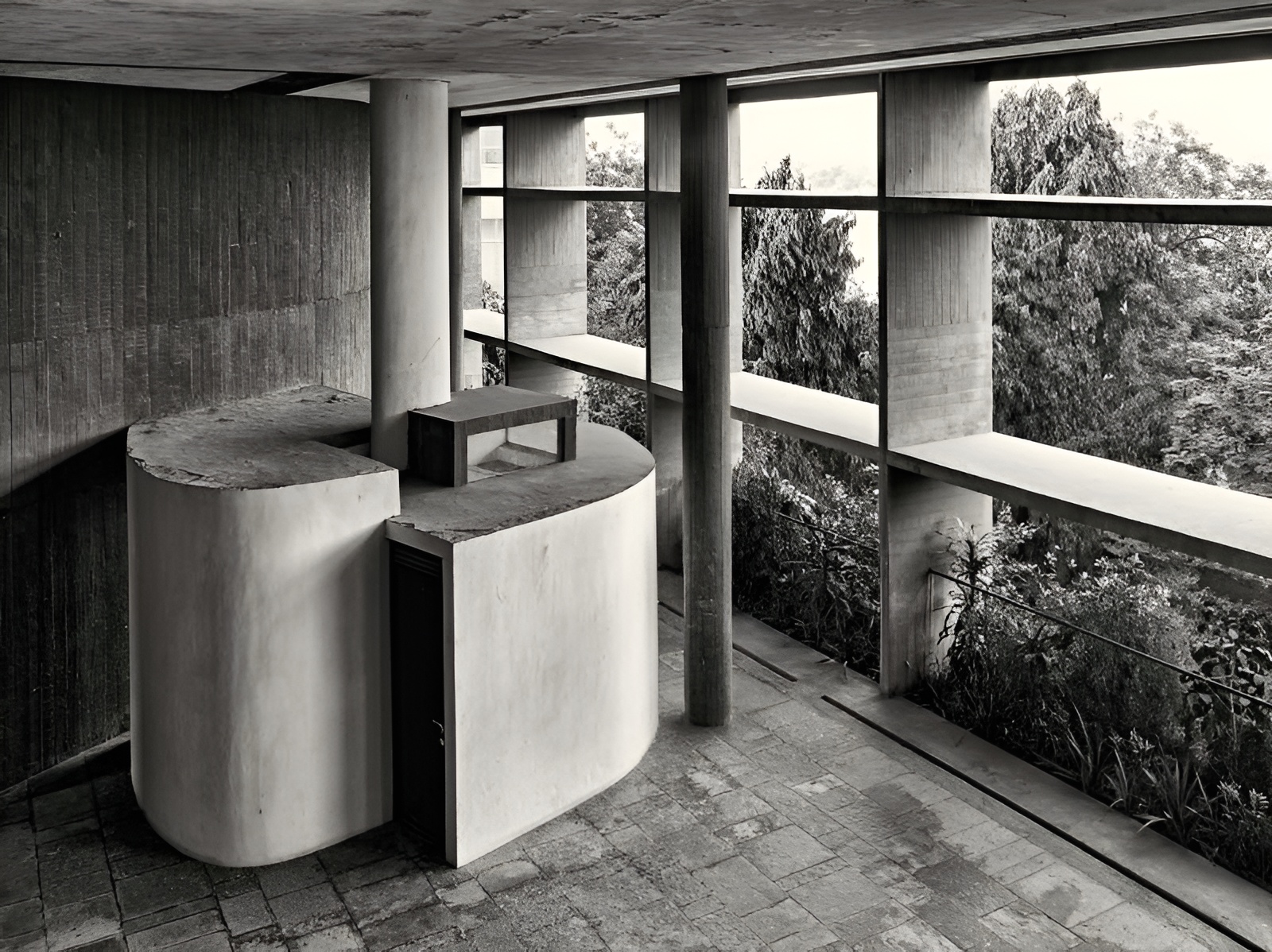
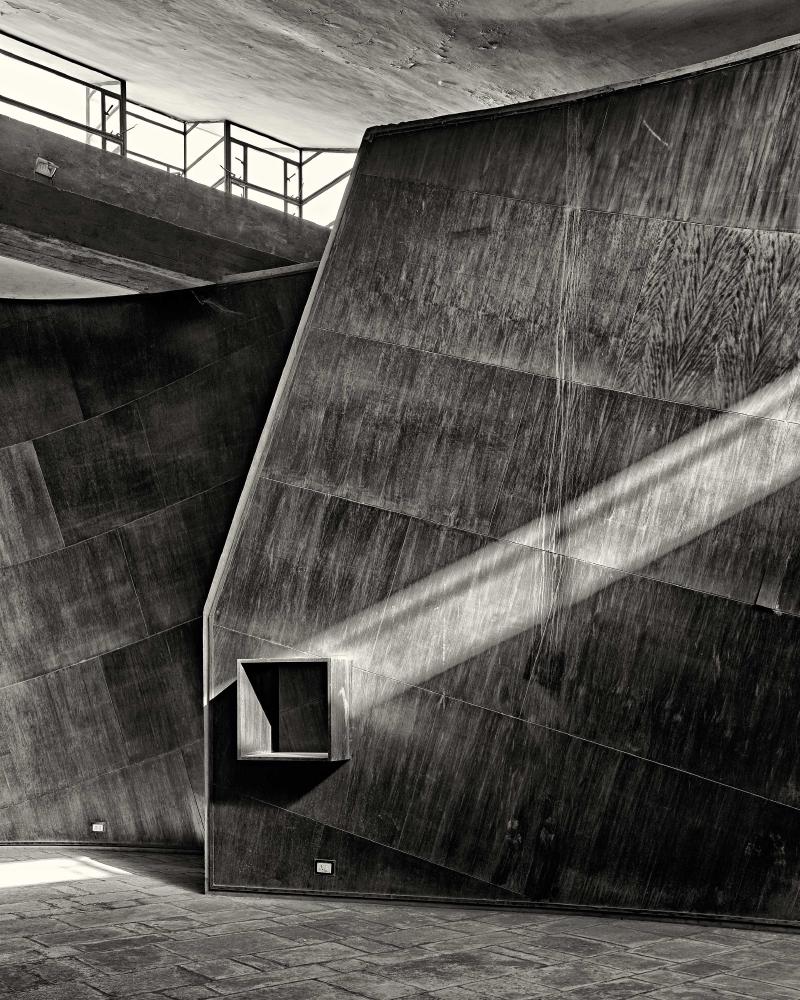
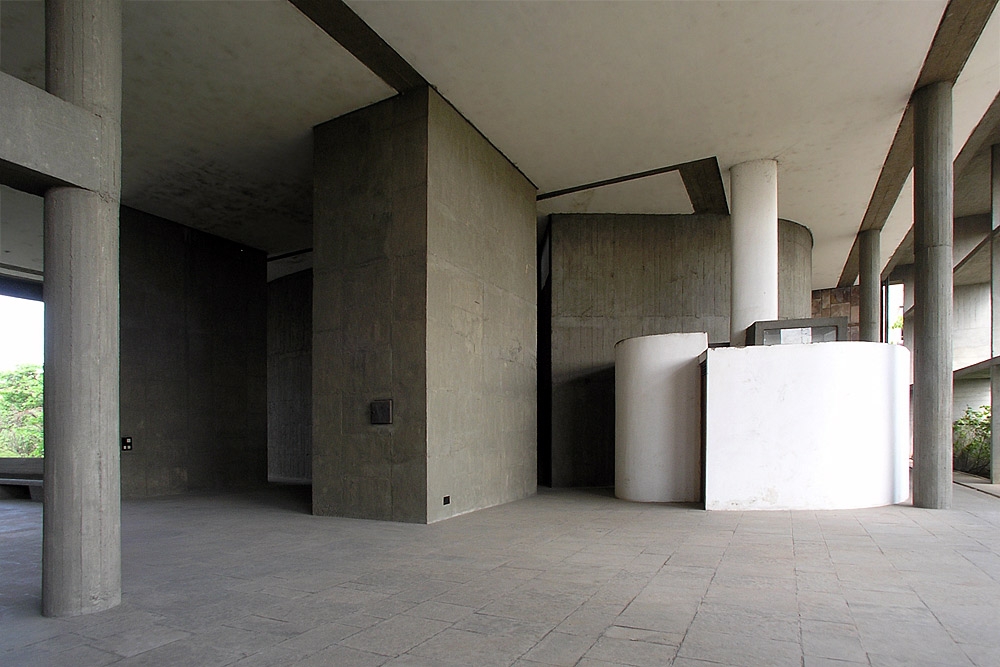
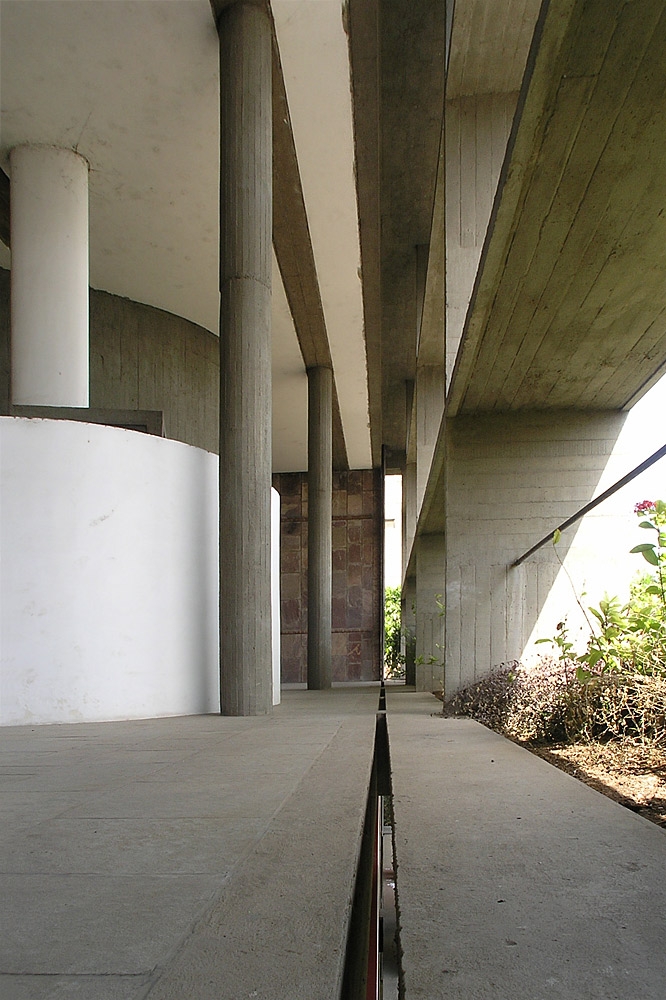
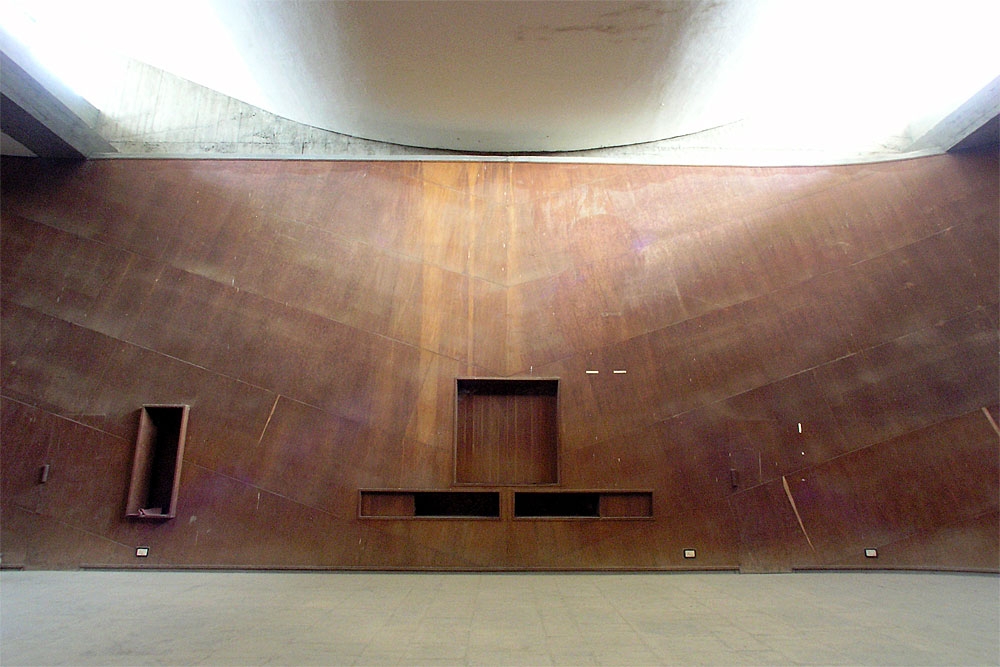
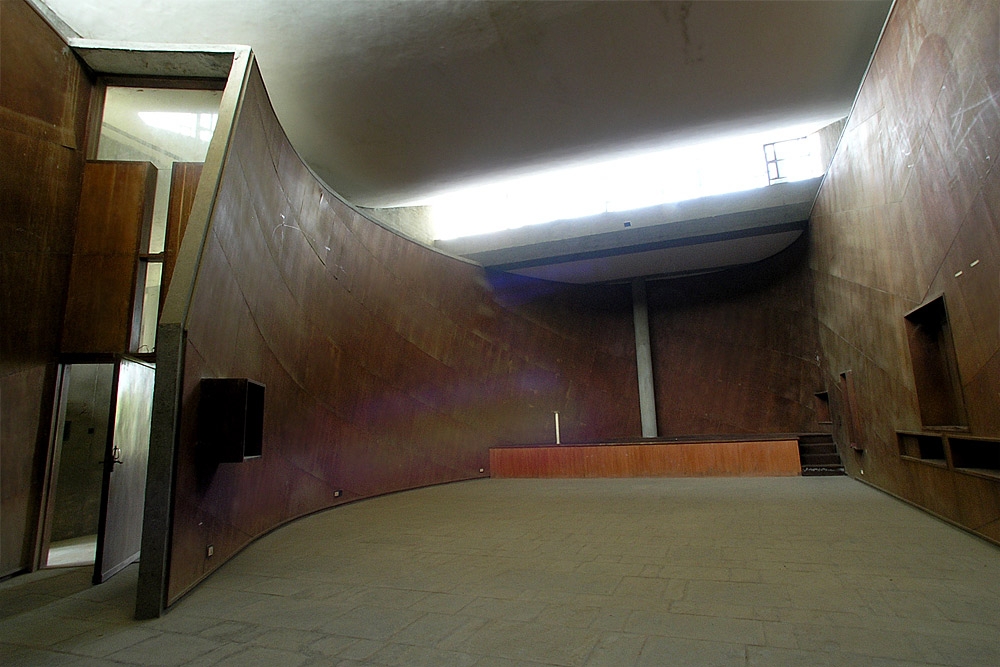
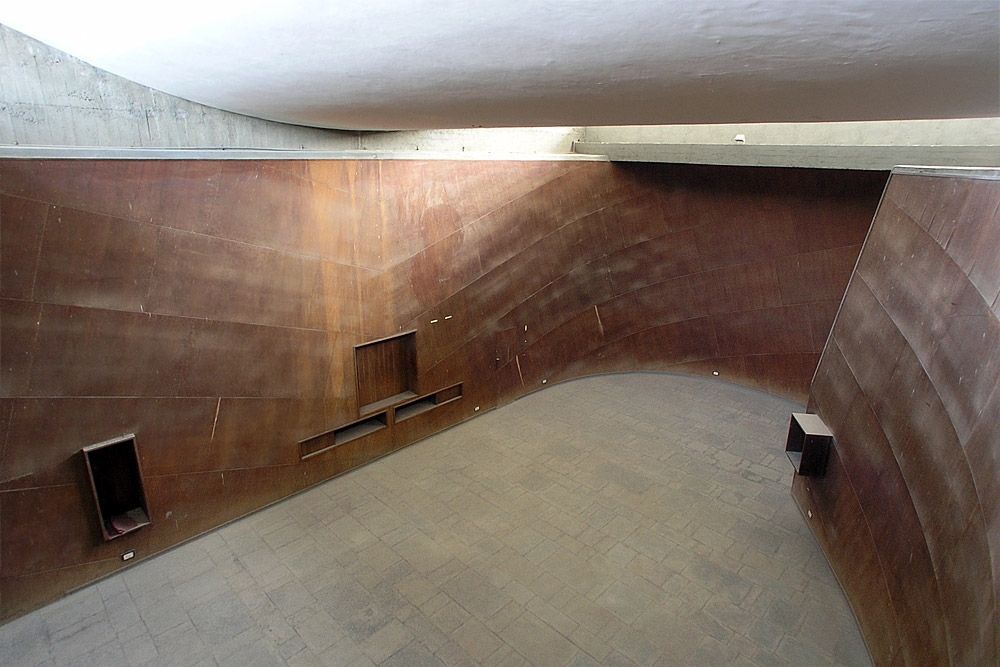
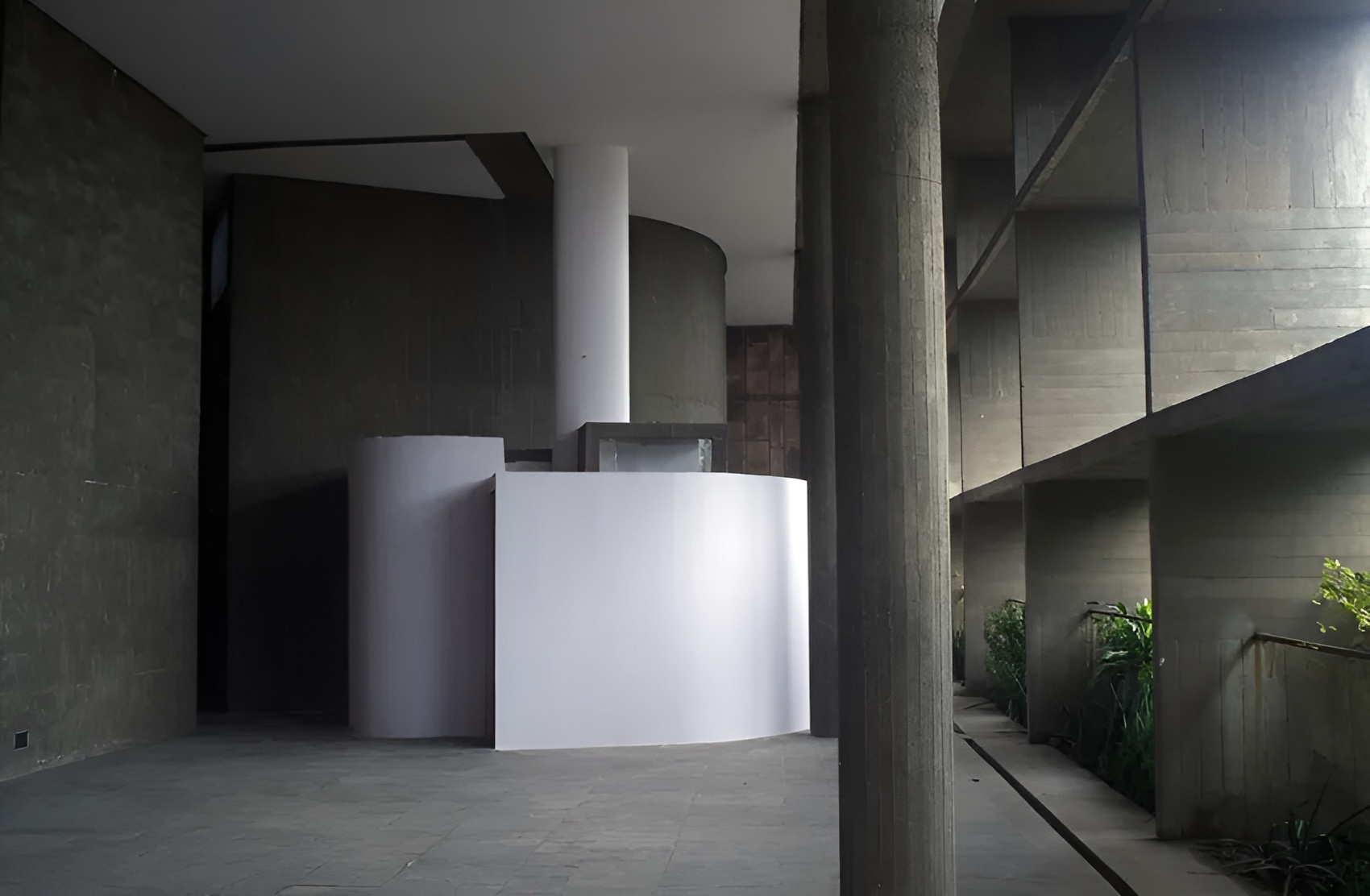
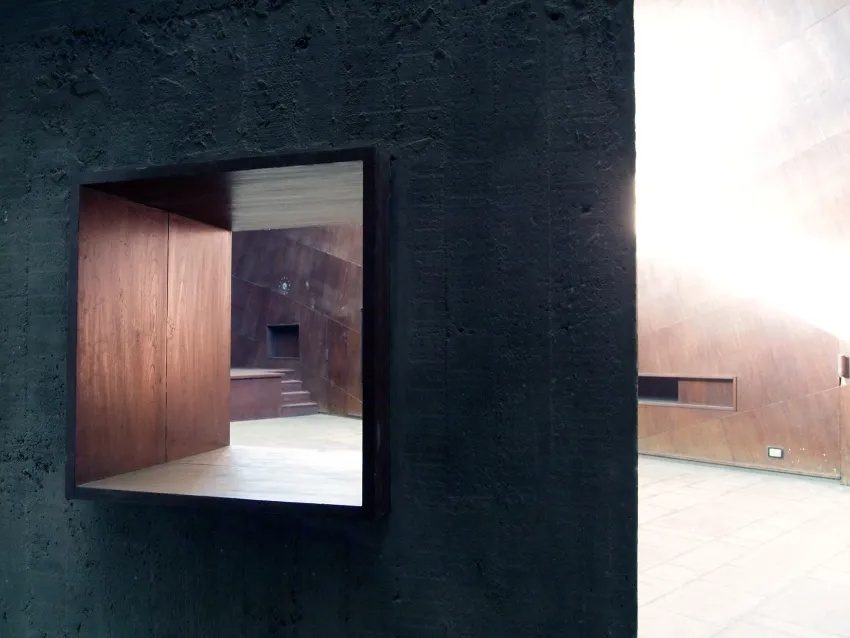
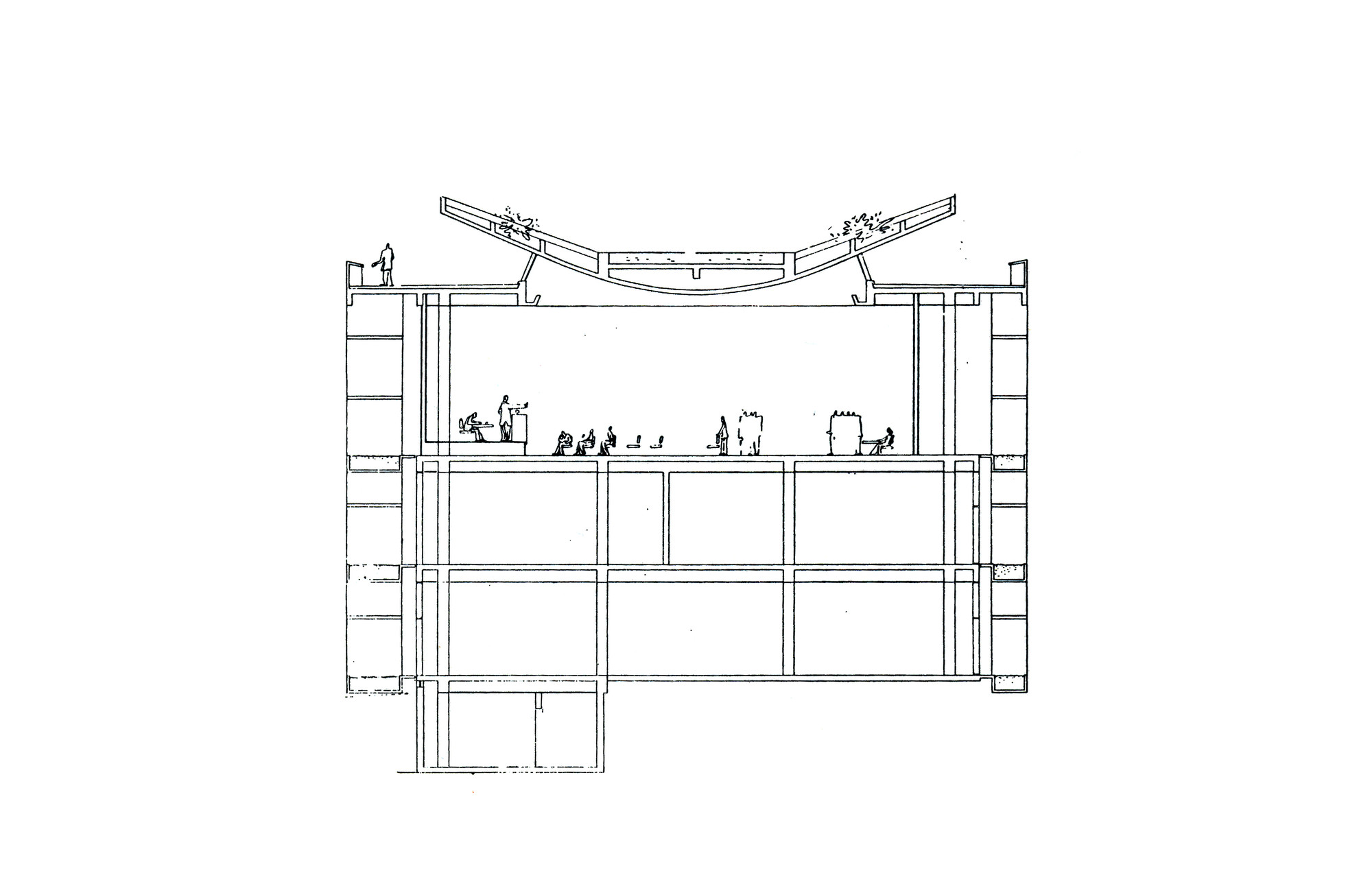
The structural framework follows a disciplined orthogonal order, yet the interior introduces a contrasting language of curved forms. This relationship is most evident in the assembly hall, where a curved enclosure rises through multiple levels within the rectilinear structure. The auditorium is defined by double brick walls clad in wood panels and illuminated indirectly through a curved ceiling that reflects natural light from above.
A reflecting pool and roof gardens positioned above the assembly hall were intended to moderate heat gain while enhancing interior comfort. The roof itself functions as an occupied terrace and gathering space, extending the building’s program into the open air.
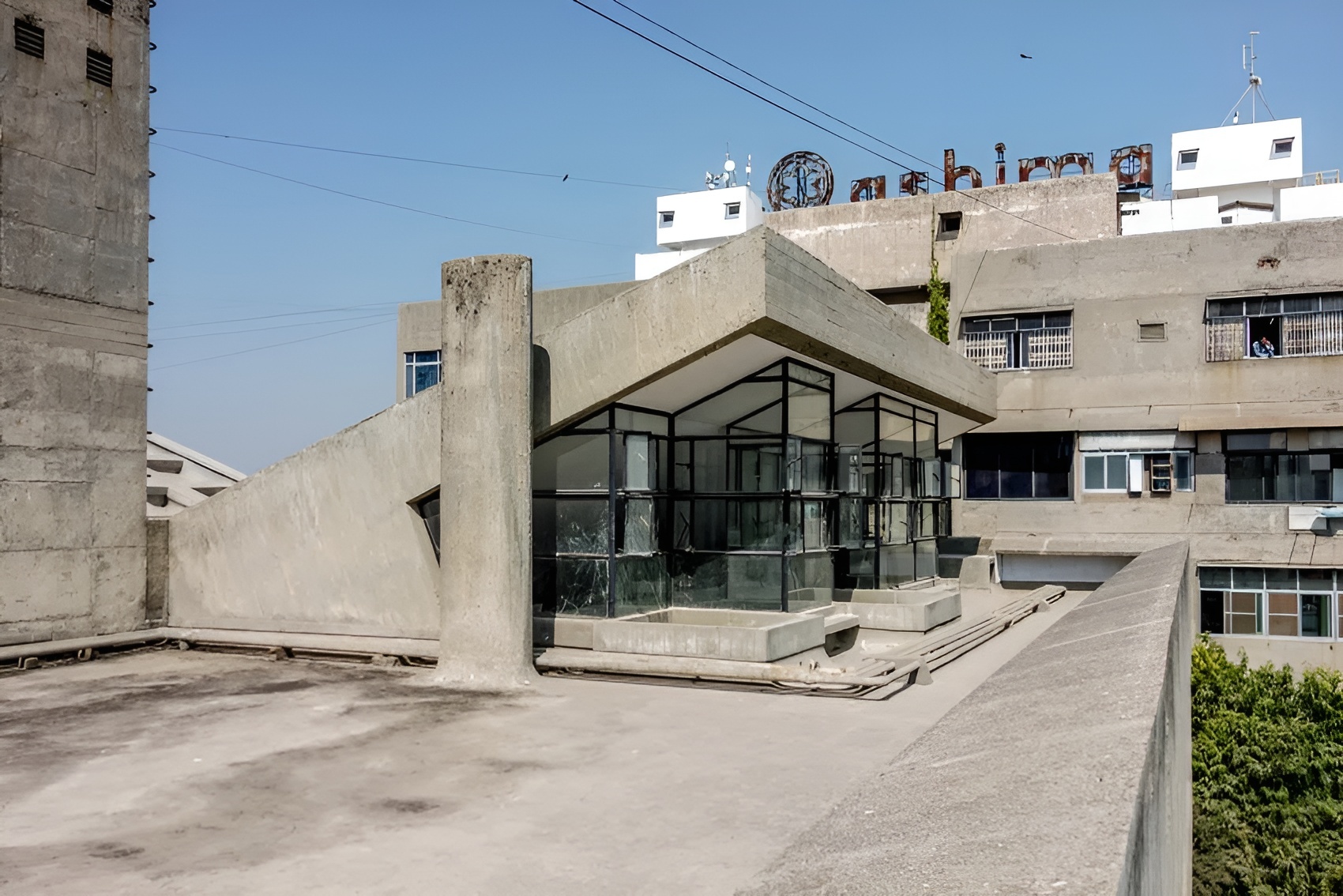
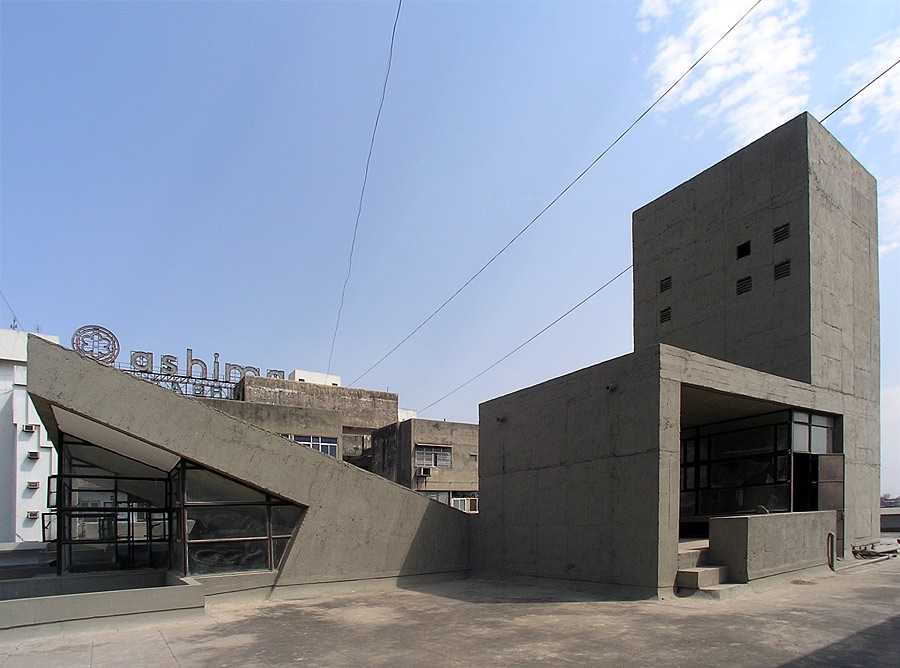
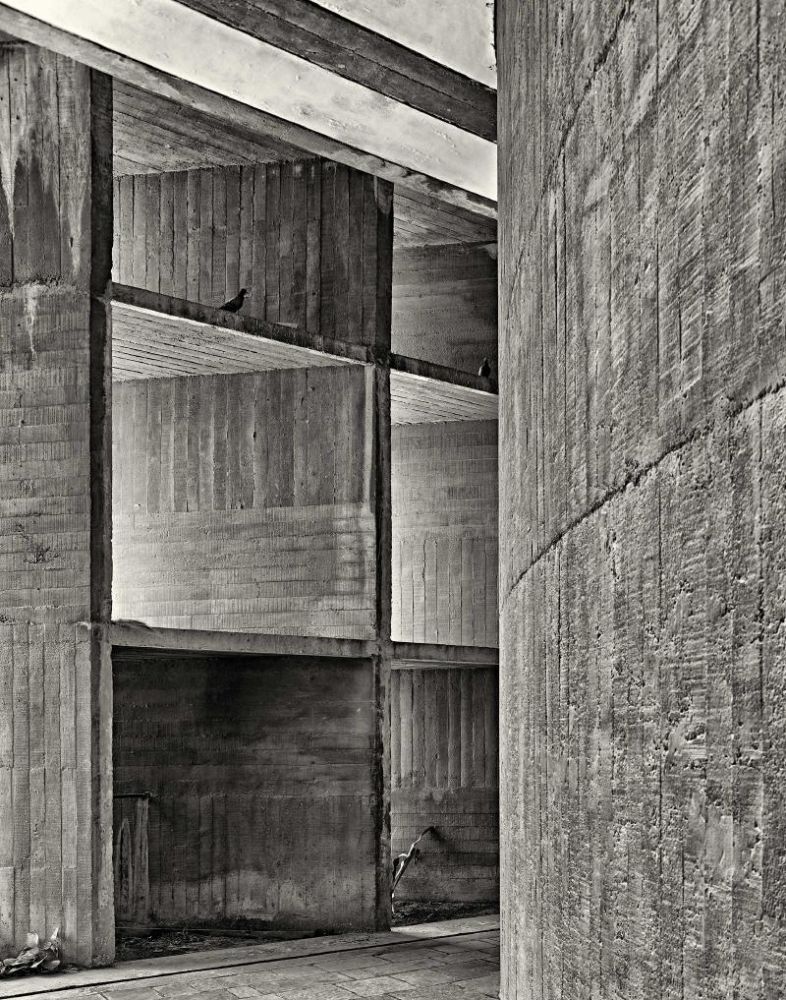
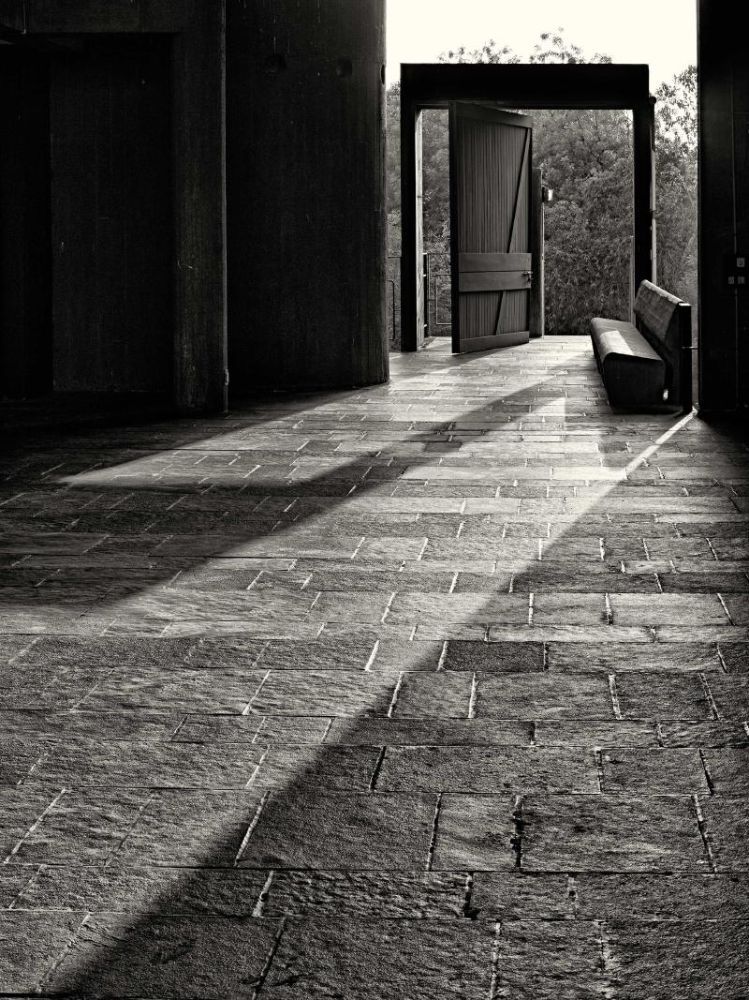
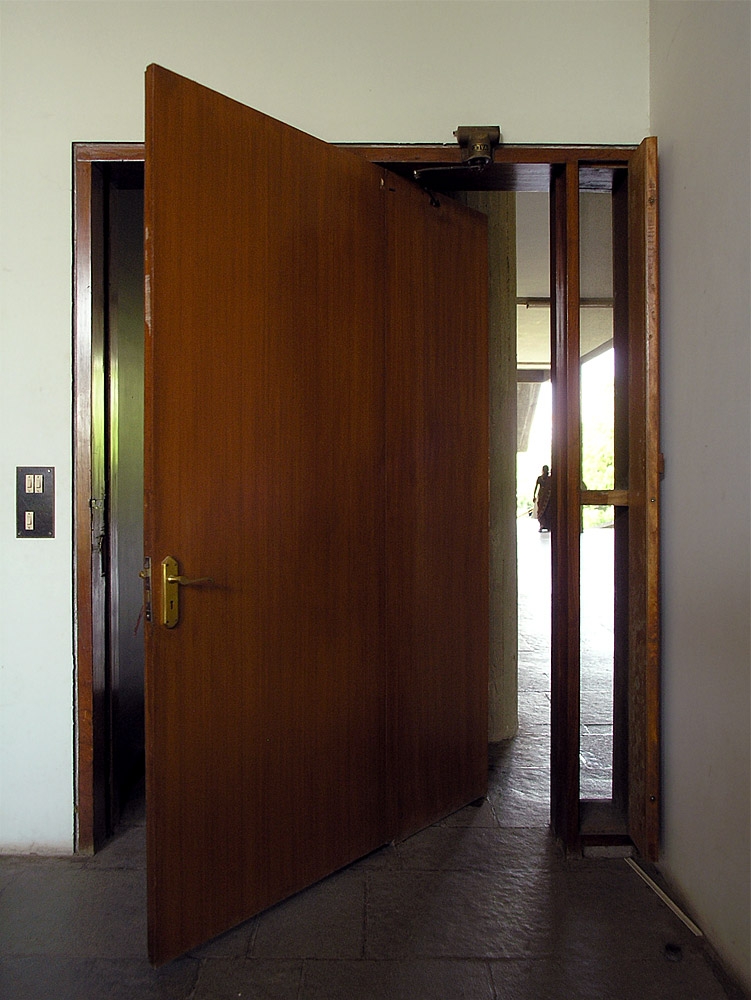
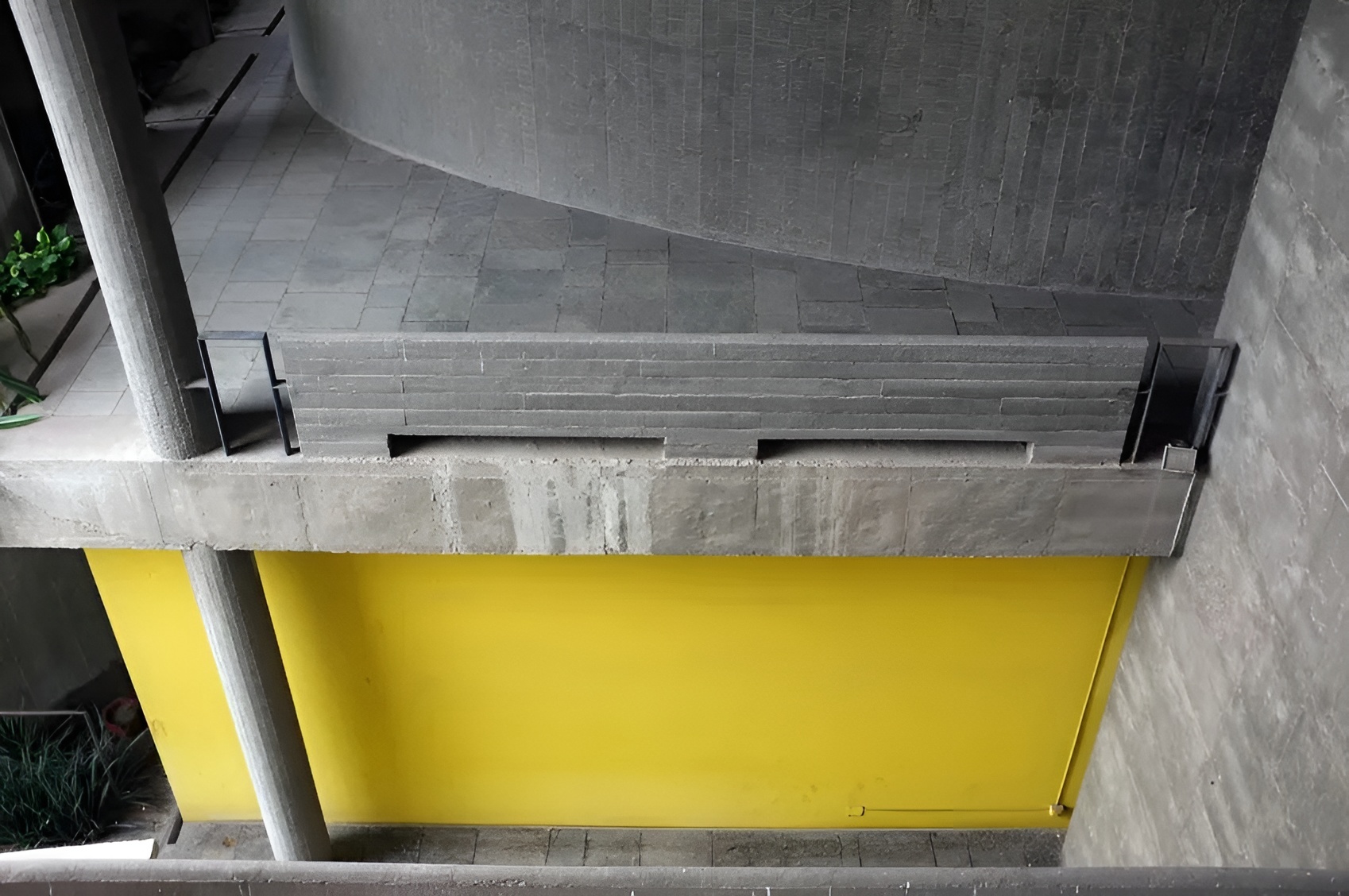
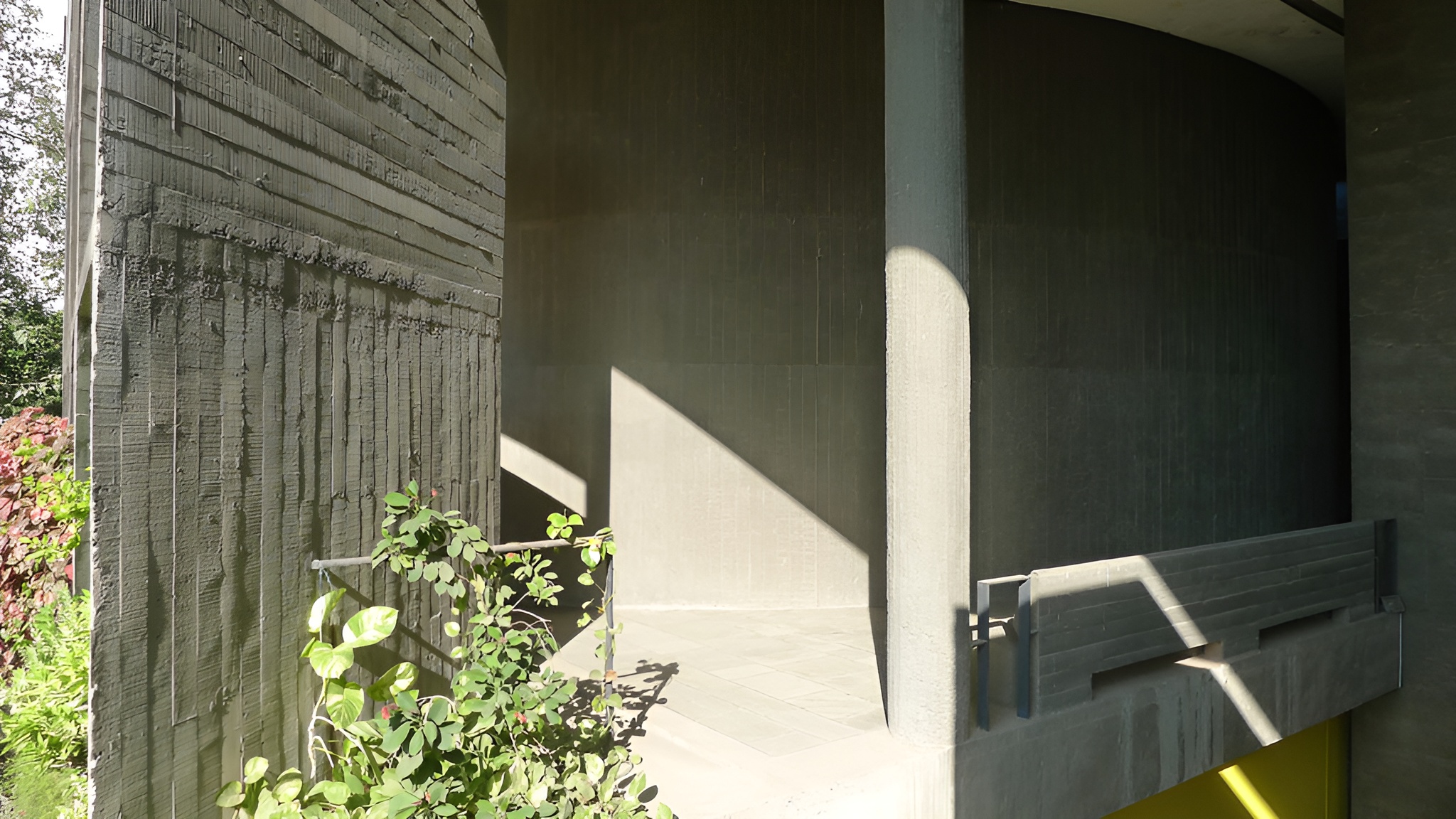
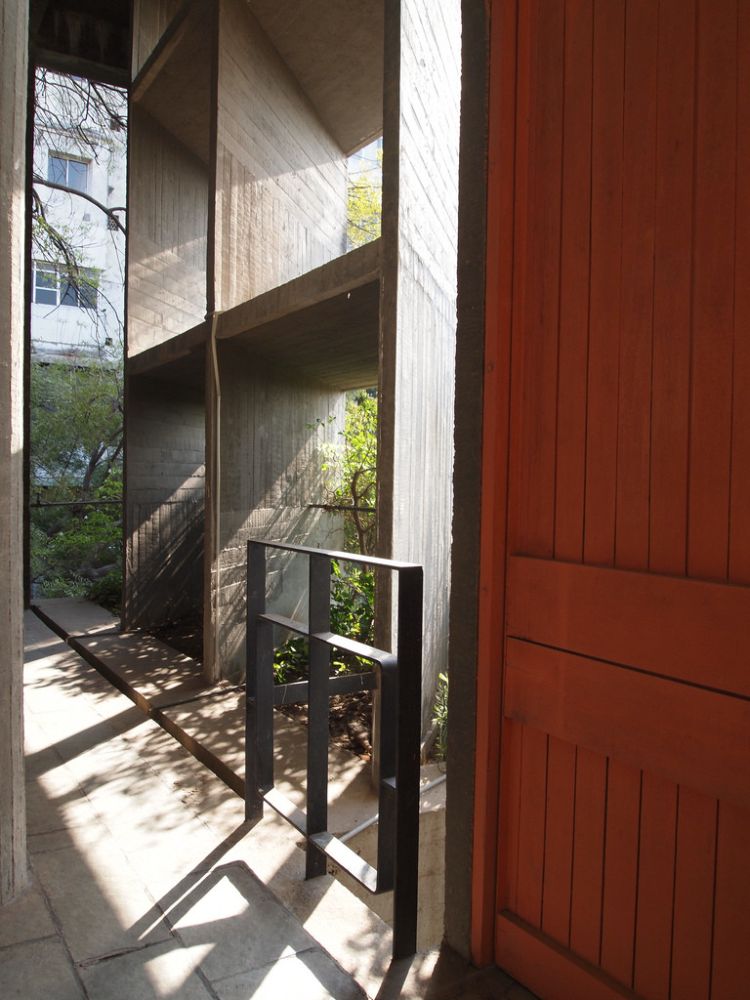
Material expression plays a central role in the project. Exposed concrete brise-soleil, unplastered brick walls, stone flooring, sheet-metal surfaces, and timber finishes are used throughout the building. The contrast between rough and smooth textures reinforces the distinction between structural and environmental elements while emphasizing the building’s climatic response.
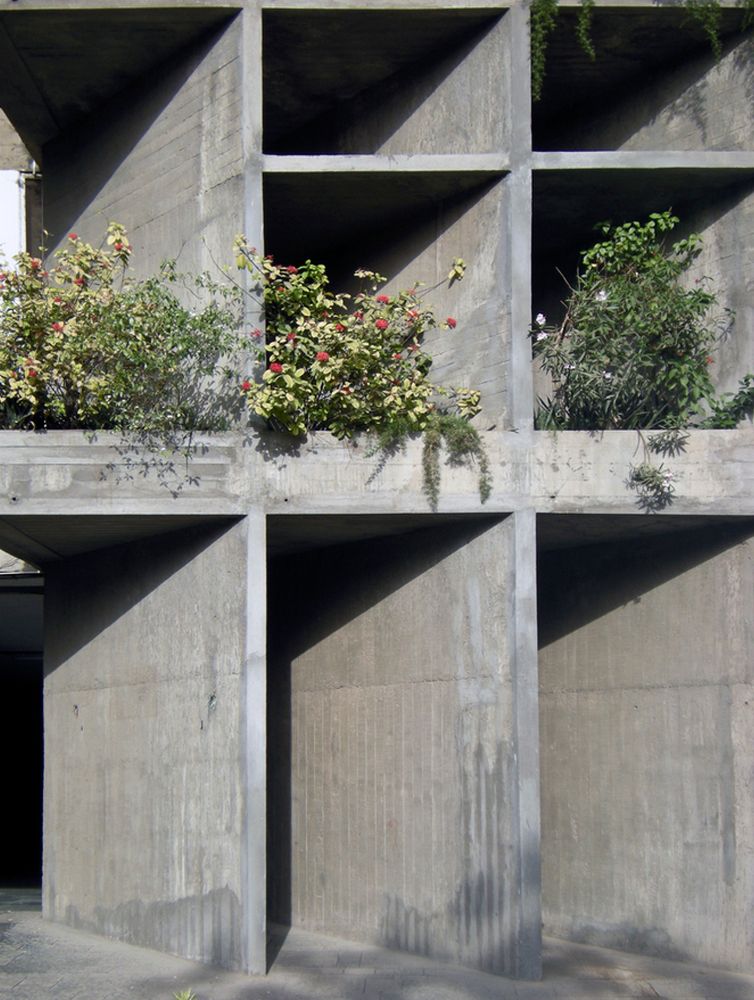
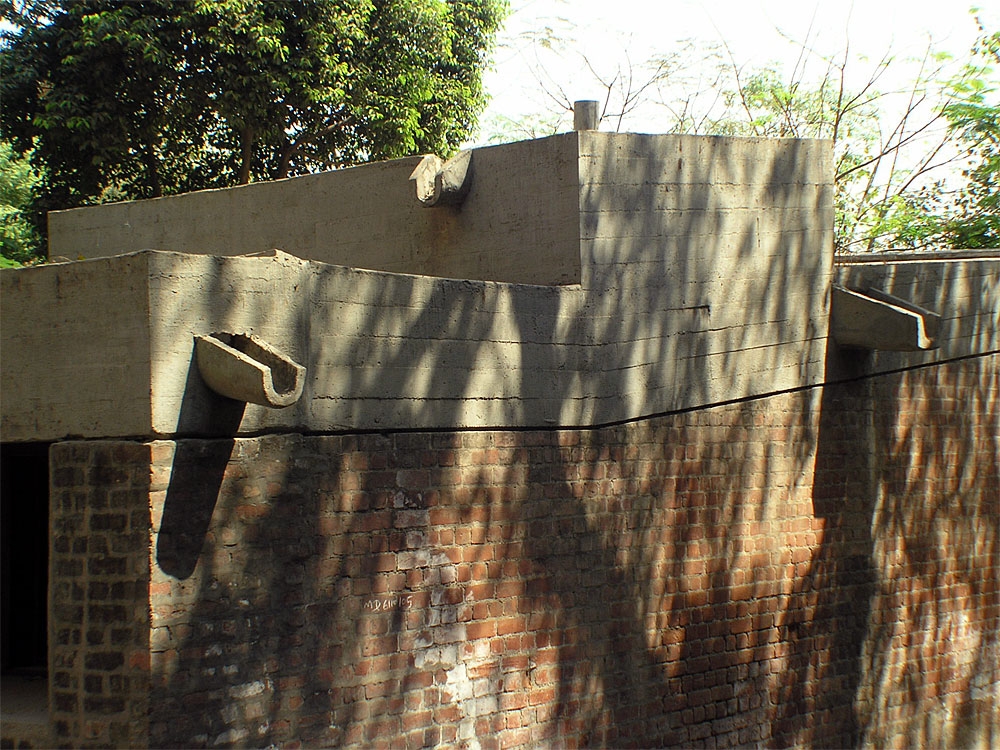
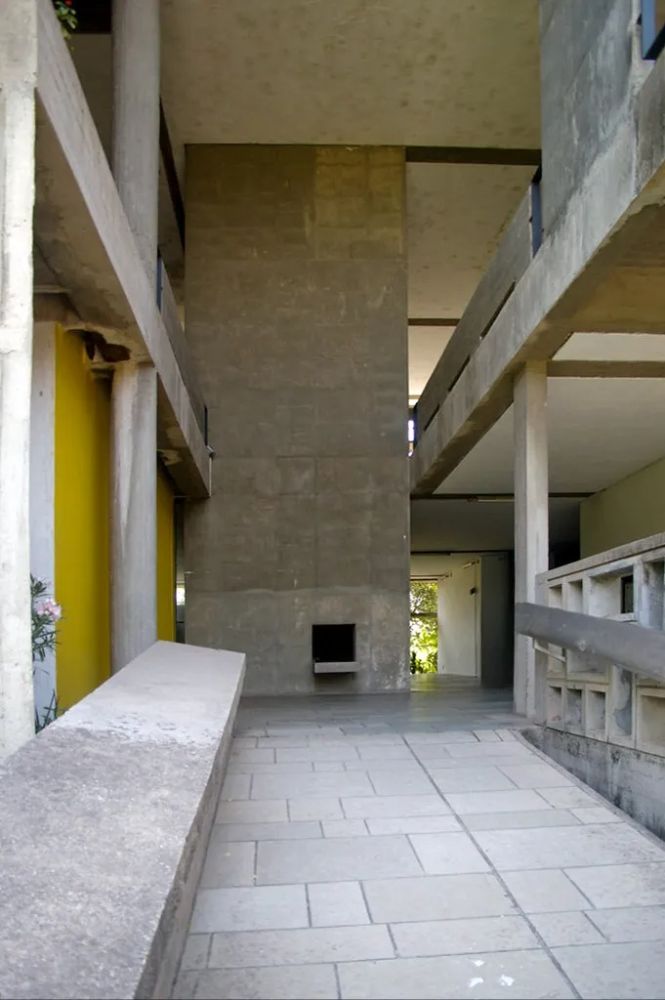
Mill Owners’ Association Building occupies an important position within Le Corbusier’s body of work. Completed shortly after the Unité d’Habitation and before many of his later civic projects, it marks a transition between the geometric discipline of his earlier architecture and the more sculptural forms that would characterize works such as Notre-Dame du Haut at Ronchamp. The project introduced ideas that would reappear in Villa Shodhan in Ahmedabad and later in the Carpenter Center for the Visual Arts at Harvard University.
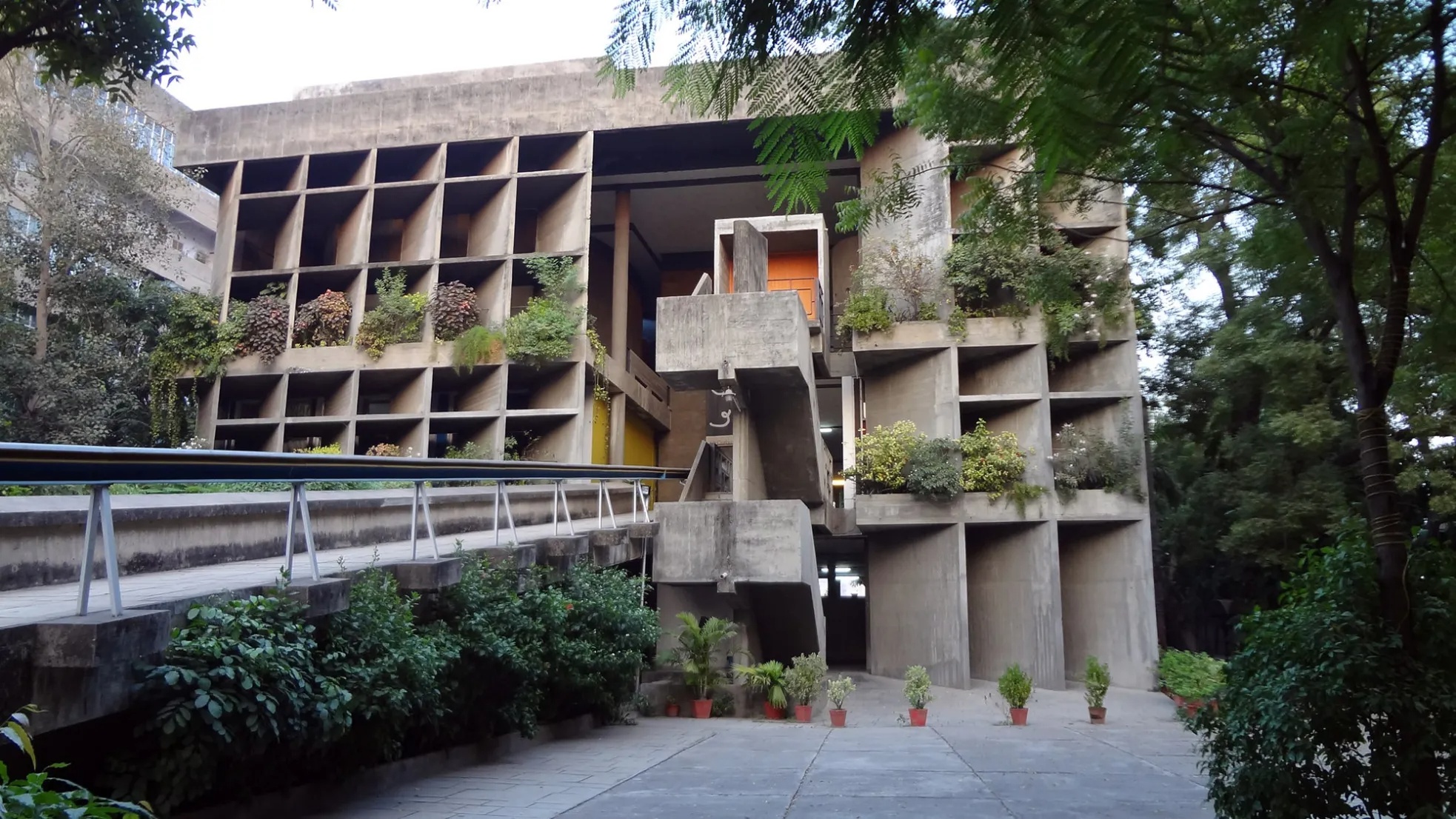
More than seventy years after its completion, Mill Owners’ Association Building continues to serve the organization that commissioned it. Its integration of environmental control, spatial sequencing, and modernist form remains a significant reference for architects exploring the relationship between climate, culture, and architecture.
Project Gallery
Project Location
Address: Ashram Road, Vishalpur, Navrangpura, Ahmedabad, Gujarat 380009, India
Location is for general reference and may represent a city or country, not necessarily a precise address.

