

Architects: Renzo Piano Building Workshop
Year: 2013
Photography: Shunji Ishida, Alessandro Gadotti, Enrico Cano, Stefano Goldberg, Paolo Pelanda
Manufacturers: Goppion, Acqua Risolta, Cielo
Consultants: Iure, Manens Intertecnica, Dia Servizi, GAE Engineering, BBM, Origoni & Steiner, Piero Castiglioni, Riccardo Giovannelli
Design Team: S. Scarabicchi, E. Donadel, M. Menardo, M. Orlandi, G. Traverso, D. Vespier, P. Carrera, L. Soprani, M. Pineda; I. Corsaro
City: Trento
Country: Italy
The MUSE development by Renzo Piano Building Workshop transforms a former industrial district in Trento into a continuous urban landscape that reconnects the city with the River Adige. Positioned between the railway infrastructure and the river edge, the masterplan addresses long-standing fragmentation caused by physical barriers and introduces a new spatial logic based on permeability, hierarchy, and environmental integration. The proposal organizes a mixed-use district comprising residential, commercial, cultural, and public functions distributed across a carefully structured urban fabric. A science museum serves as the primary cultural anchor, positioned within a broader system of parks, canals, and pedestrian routes. The design prioritizes horizontal urban density, balancing built volumes with extensive open spaces that extend toward the riverfront. Integrated infrastructure systems for energy, water, and mobility underpin the project’s sustainability strategy, reinforcing efficiency while reducing environmental impact. The result is a cohesive district that operates as an extension of the historic city, where landscape and architecture function as a unified civic framework.
A project is shaped as much by its smallest elements as by its overall form.
Interview With Albert Giralt Of Renzo Piano Building Workshop [RPBW]
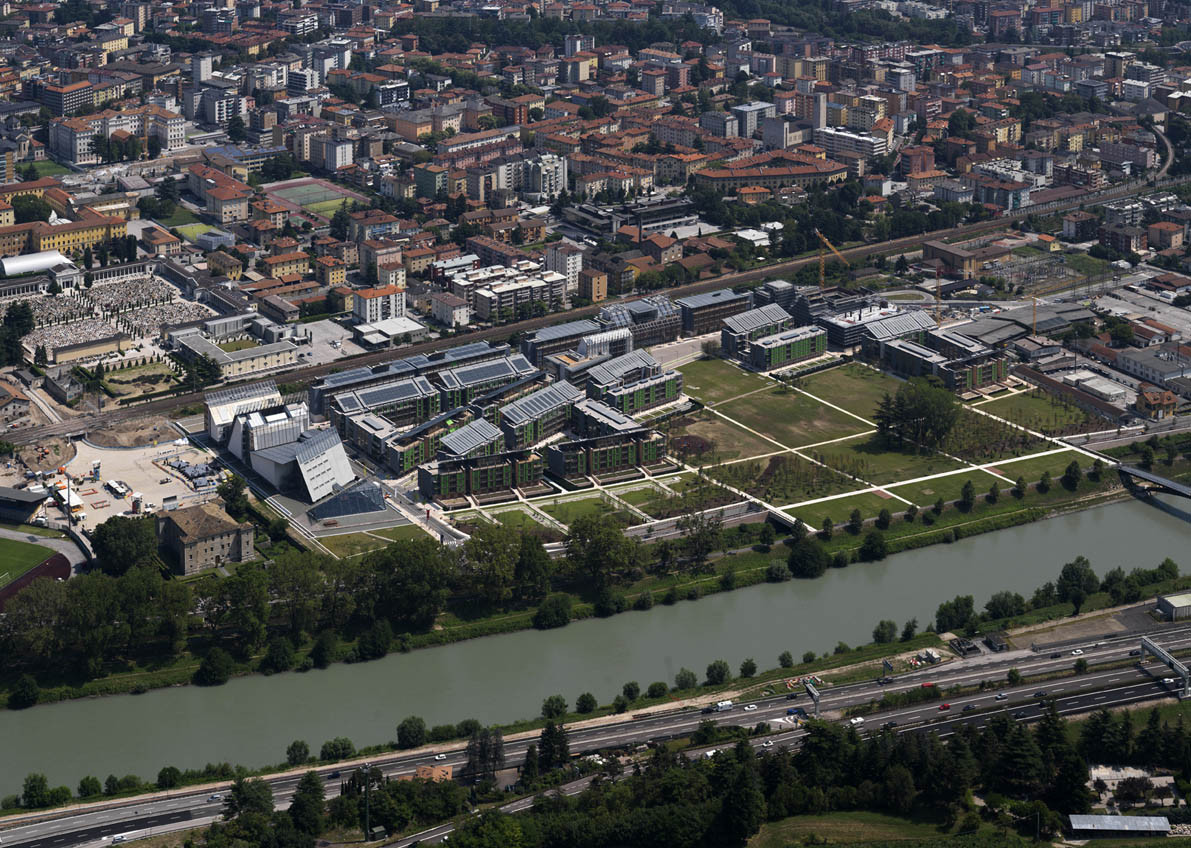
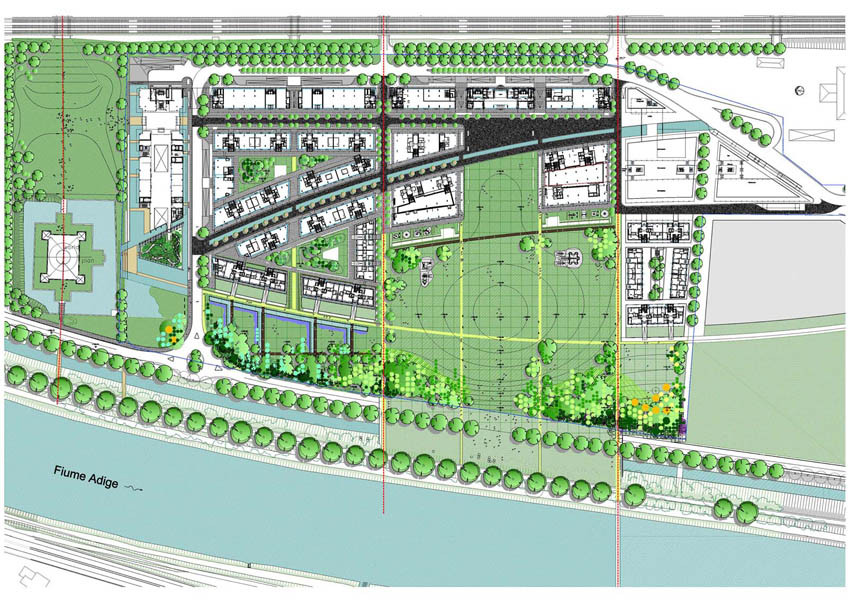
The redevelopment of the Ex-Michelin area in Trento establishes a comprehensive urban strategy that reframes a formerly marginal industrial zone as a connected extension of the city. The intervention is structured around the reconciliation of fragmented territories positioned between the railway corridor and the River Adige, two dominant infrastructural edges that historically limited spatial continuity.
Central to the masterplan is the restoration of permeability across these barriers. The railway is addressed through new crossings and spatial alignments that allow the district to maintain continuity with the historic urban core. At the same time, the riverfront is reactivated as an accessible civic edge rather than a distant natural boundary.
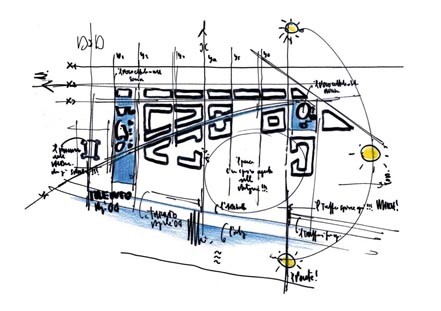
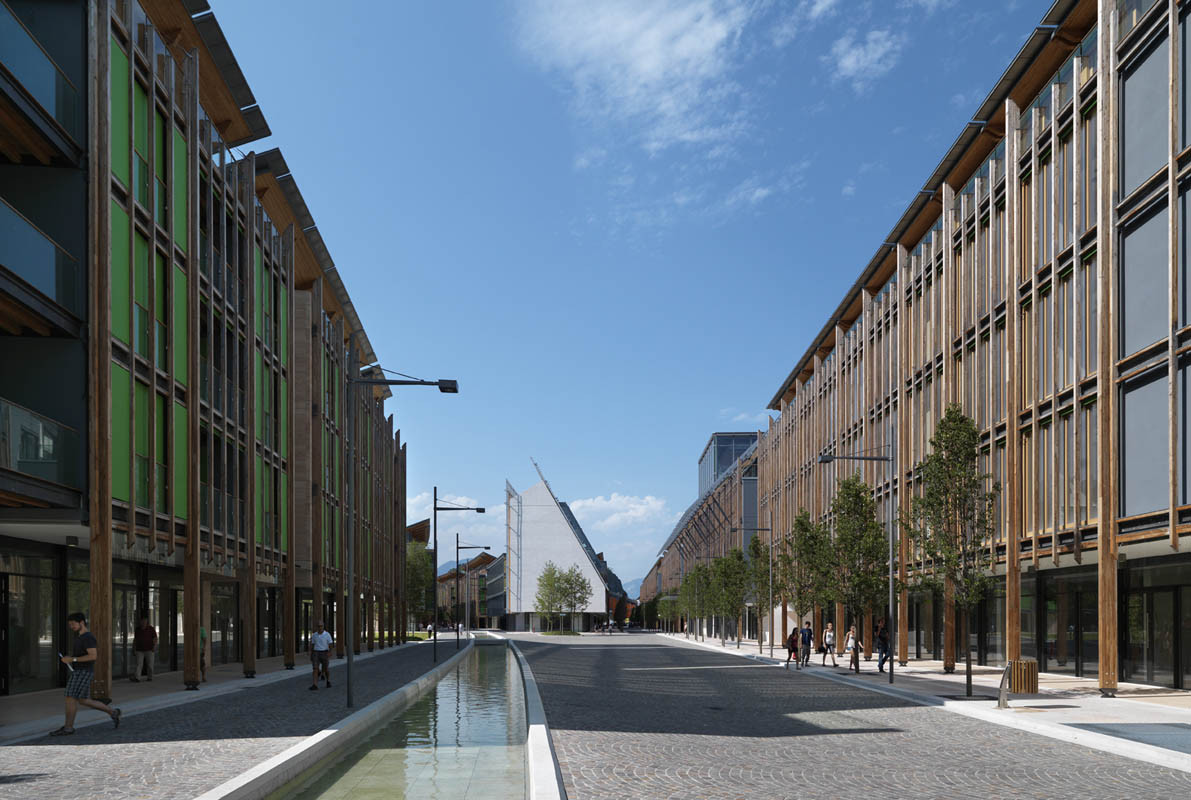
A system of east-west and north-south axes organizes movement through the site, linking urban blocks to the riverside park. These routes are reinforced by linear tree plantings that establish a clear spatial rhythm, guiding pedestrian circulation while reinforcing ecological continuity across the district.
The architectural composition is defined by a dual typology of building forms. Linear structures positioned along infrastructural edges serve as acoustic buffers while hosting non-residential programs. Courtyard buildings, in contrast, introduce more domestic spatial conditions oriented toward shared internal gardens and semi-private communal spaces.
Public landscape functions as the primary unifying element of the development. A continuous park system extends from the urban edge to the riverbank, integrating recreation, ecological restoration, and civic gathering spaces into a single territorial structure that connects multiple layers of the city.
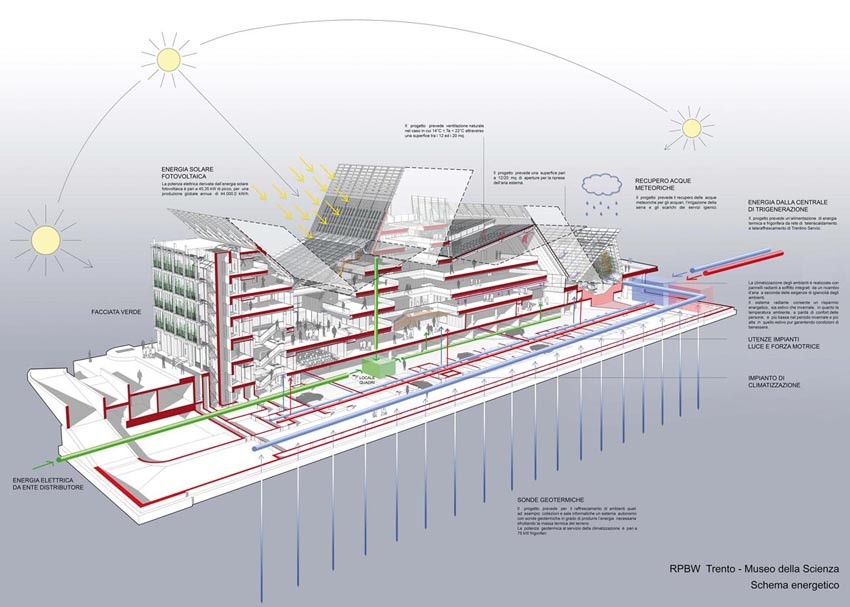
Water is treated as both infrastructure and spatial experience through a network of canals that traverse the site. These channels support irrigation, fire prevention, and flood management while simultaneously forming visual and environmental corridors that structure the identity of the district.
Energy infrastructure is consolidated into a centralized system that distributes power through underground networks. This approach reduces redundancy and concentrates technical facilities in strategic locations, improving efficiency while minimizing the environmental footprint of the development.
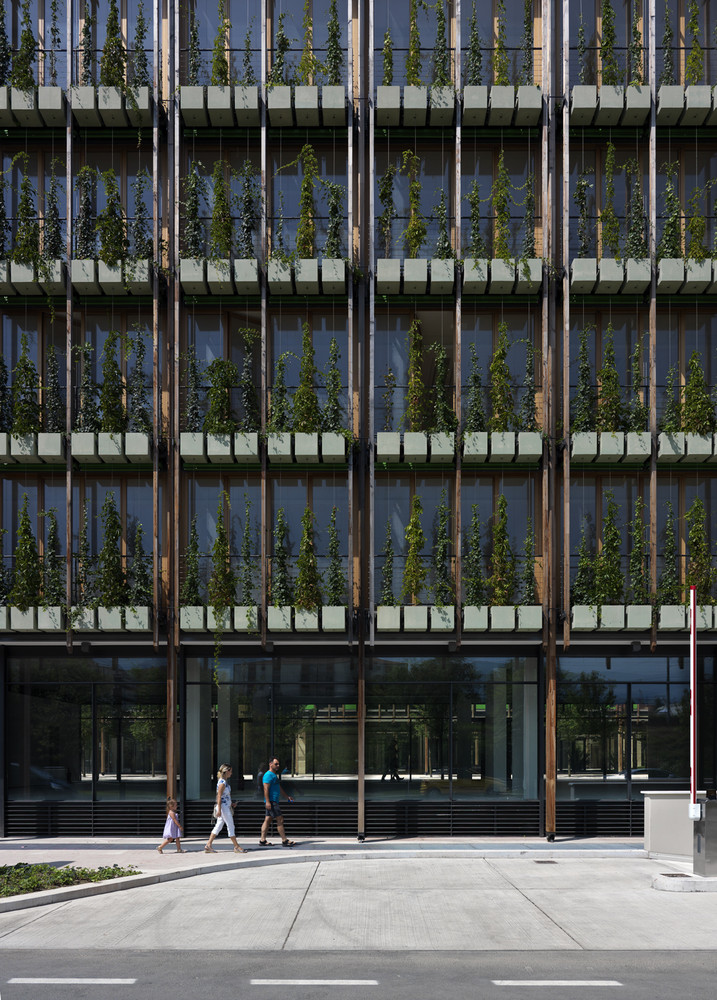
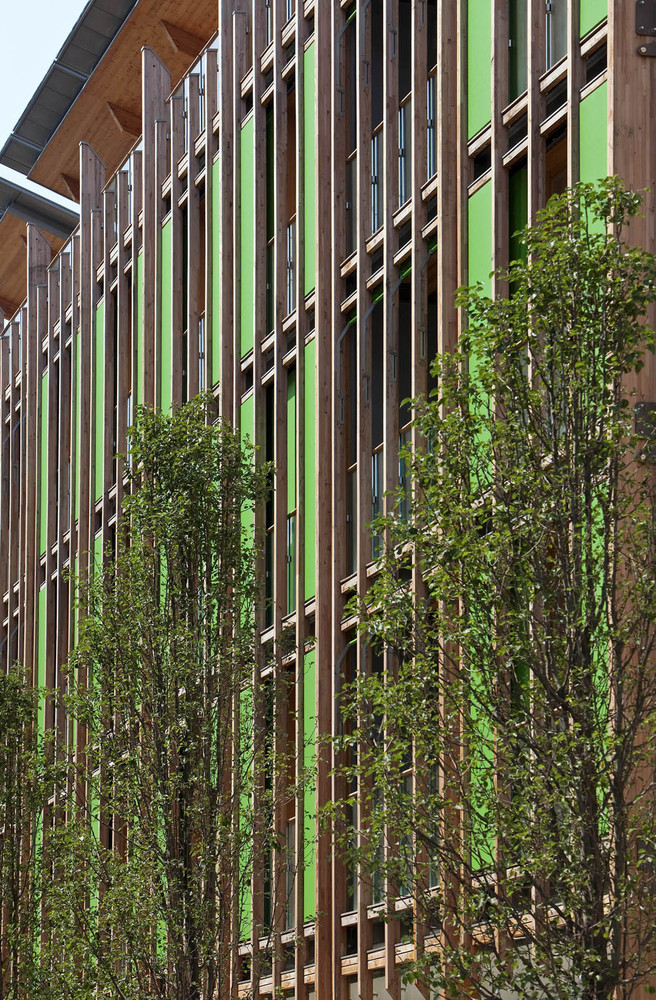
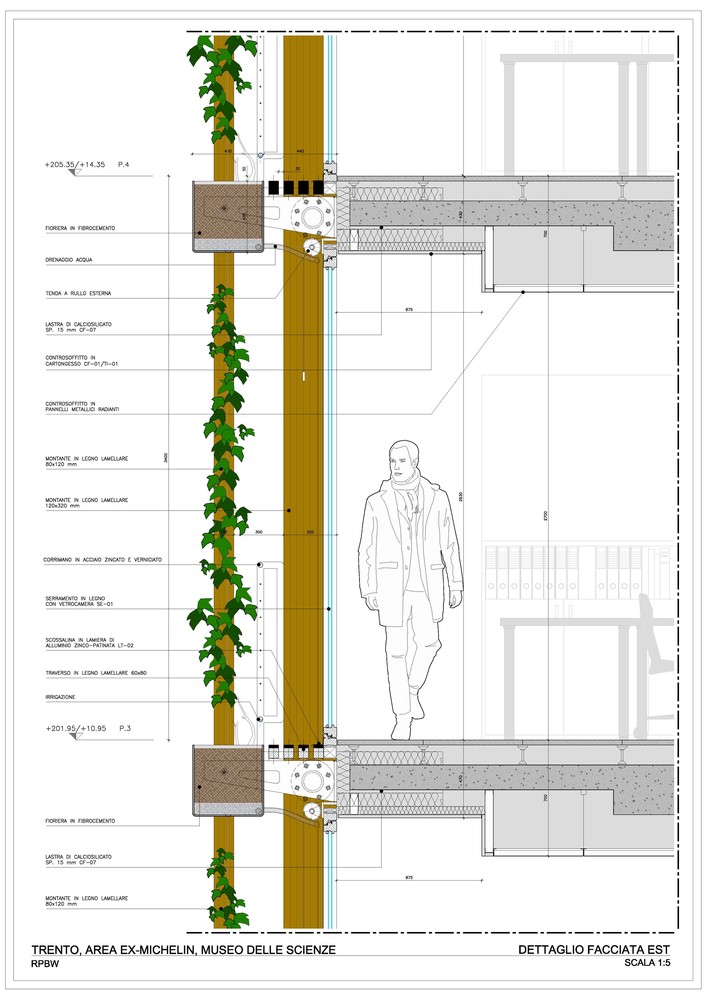
The building system incorporates acoustic and environmental considerations, particularly along the railway edge where specialized façades mitigate noise while reinforcing urban continuity. This strategy allows the district to maintain high-density functions without compromising environmental quality in adjacent areas.
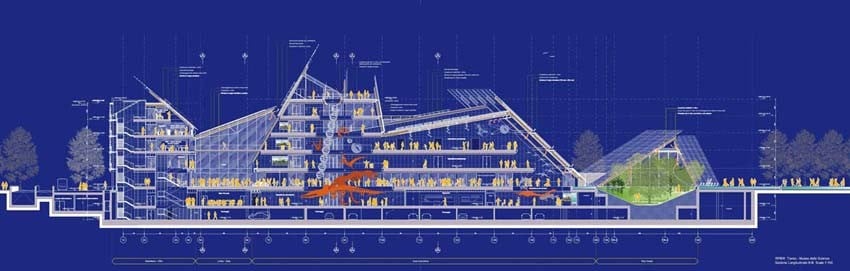
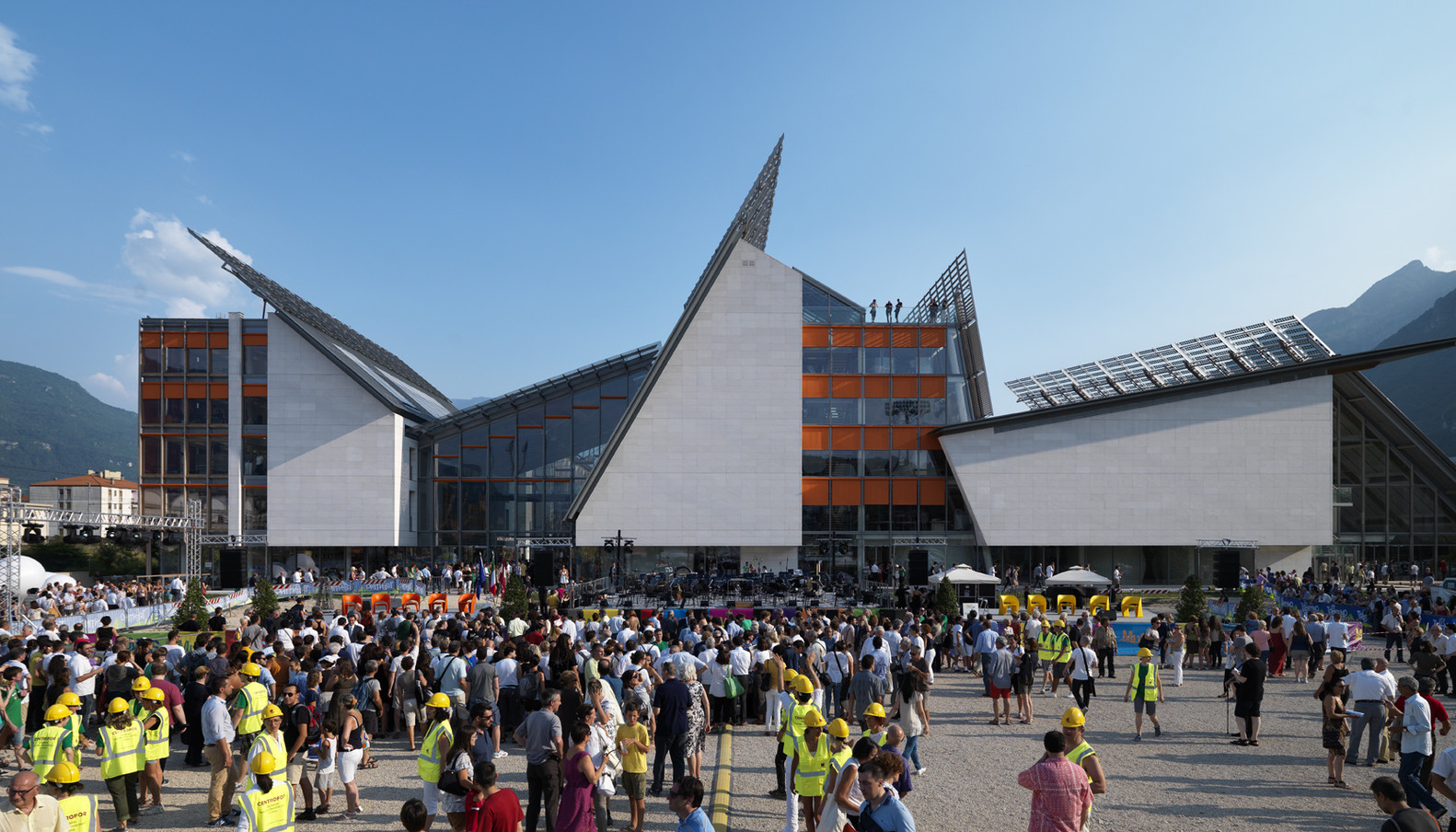
A continuous roofing system operates as a unifying architectural language across the entire development. Despite variations in function, height, and orientation, the roofs establish a cohesive visual identity that reinforces the perception of the district as a single integrated composition.
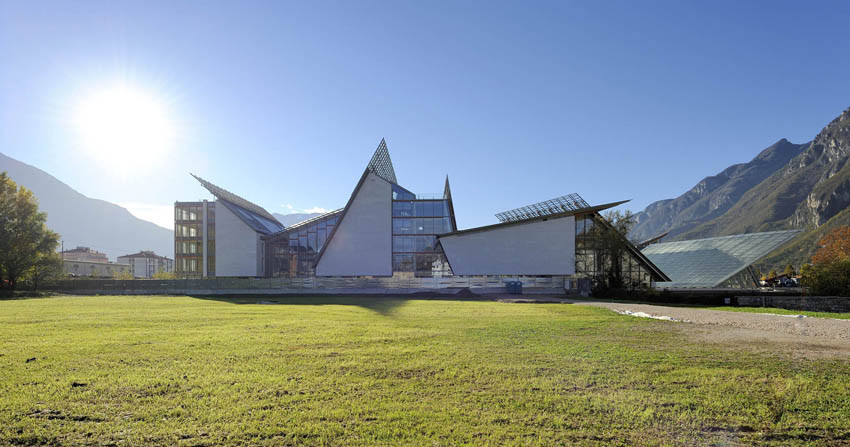
The programmatic structure of the district is deliberately mixed, combining residential, commercial, cultural, and institutional uses. This horizontal stratification of functions mirrors historical urban patterns, ensuring continuous activity throughout the day and preventing temporal fragmentation.
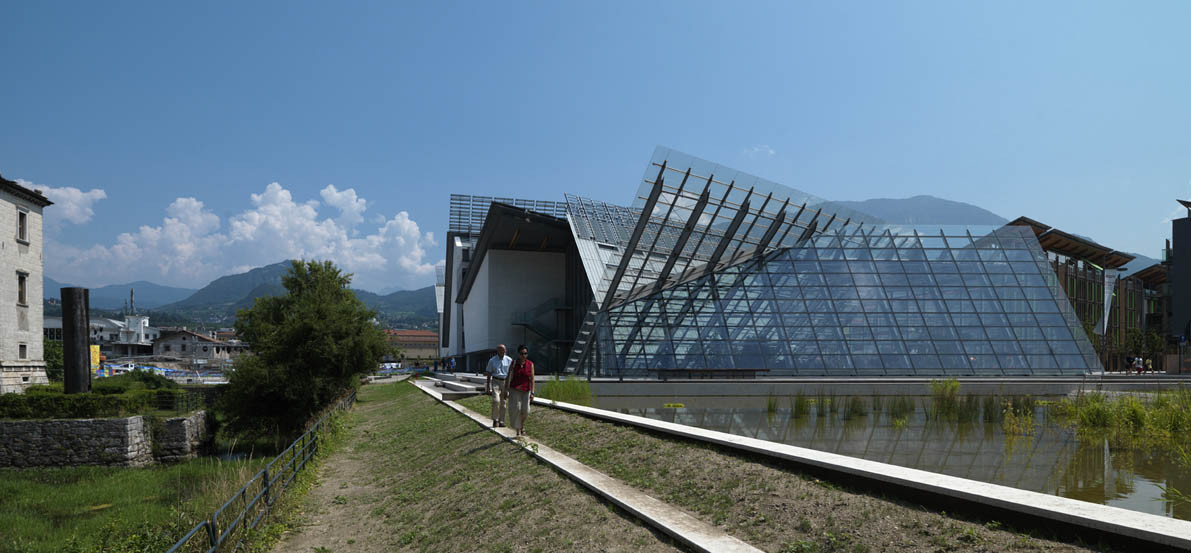
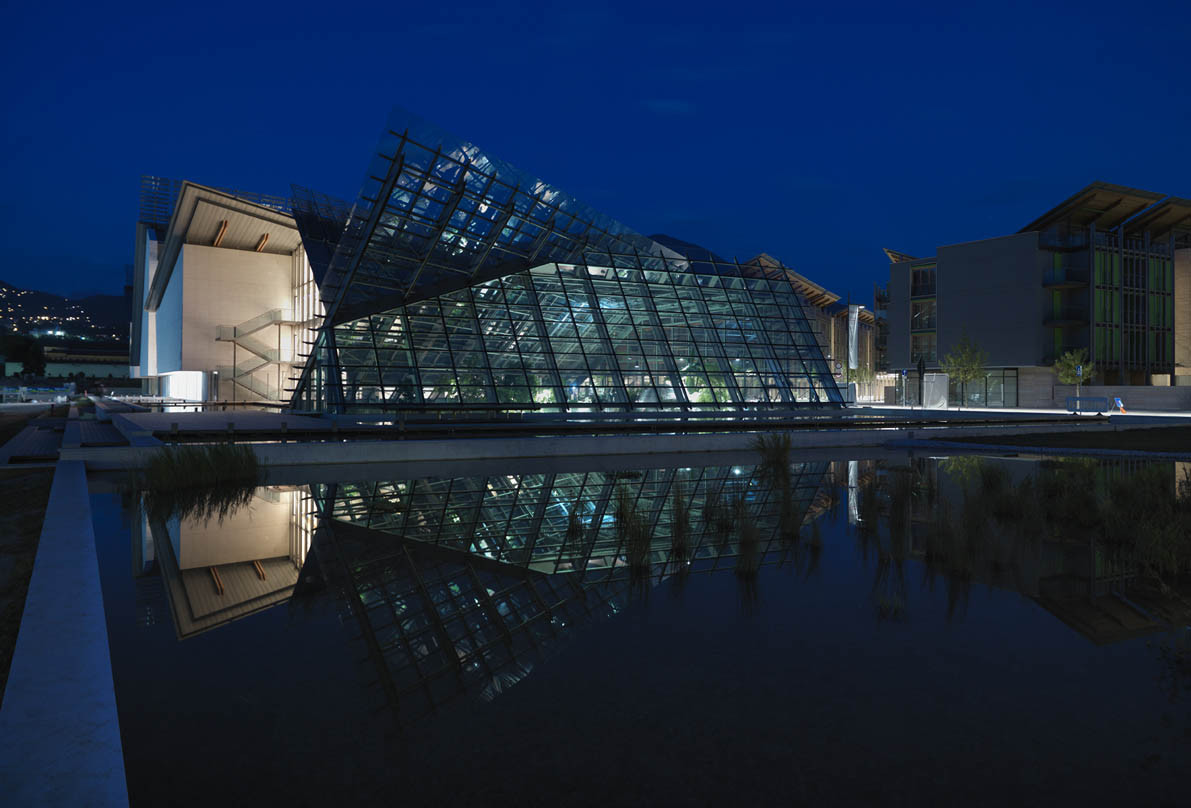
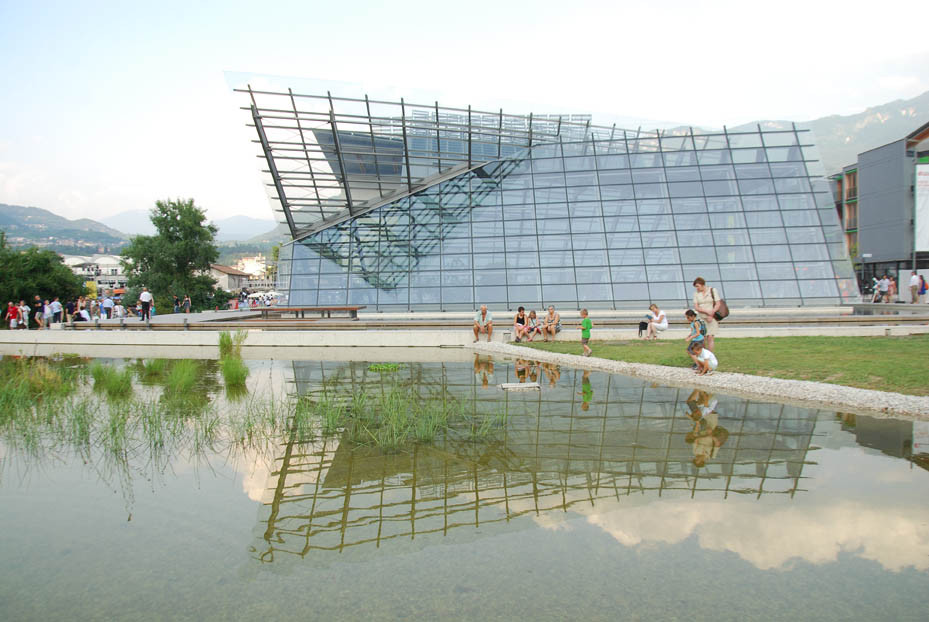
At the northern edge of the site, the science museum acts as the principal cultural anchor. Positioned near the park and Palazzo delle Albere, it establishes a strong relationship between landscape, heritage, and contemporary cultural production.
The museum is conceived as a sequence of spatial volumes that interact with water and light. Its composition alternates between solid and transparent elements, creating a dynamic architectural presence that engages directly with the surrounding landscape systems.
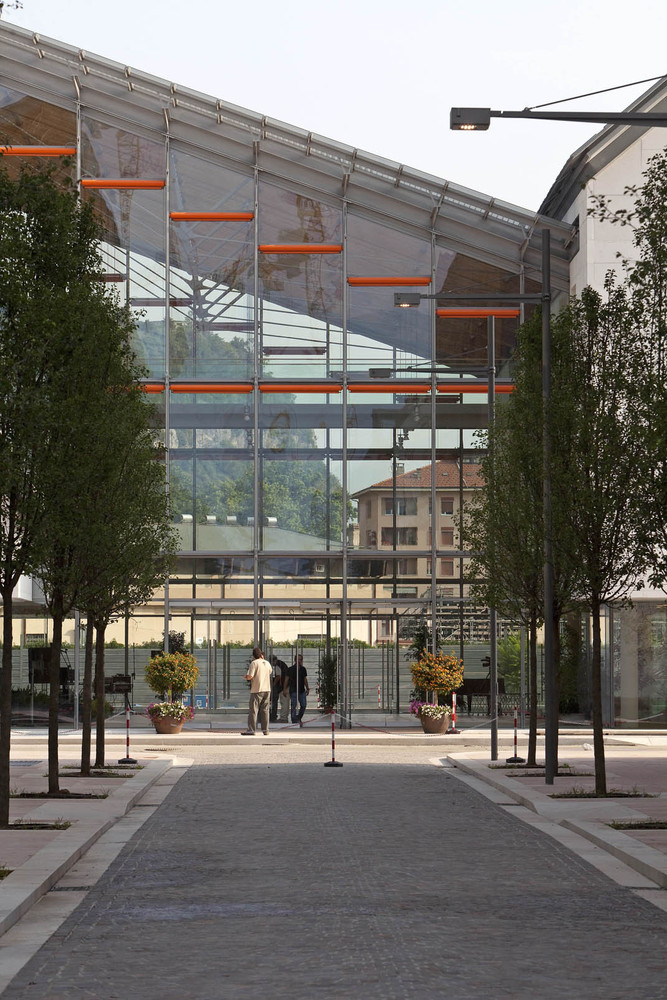
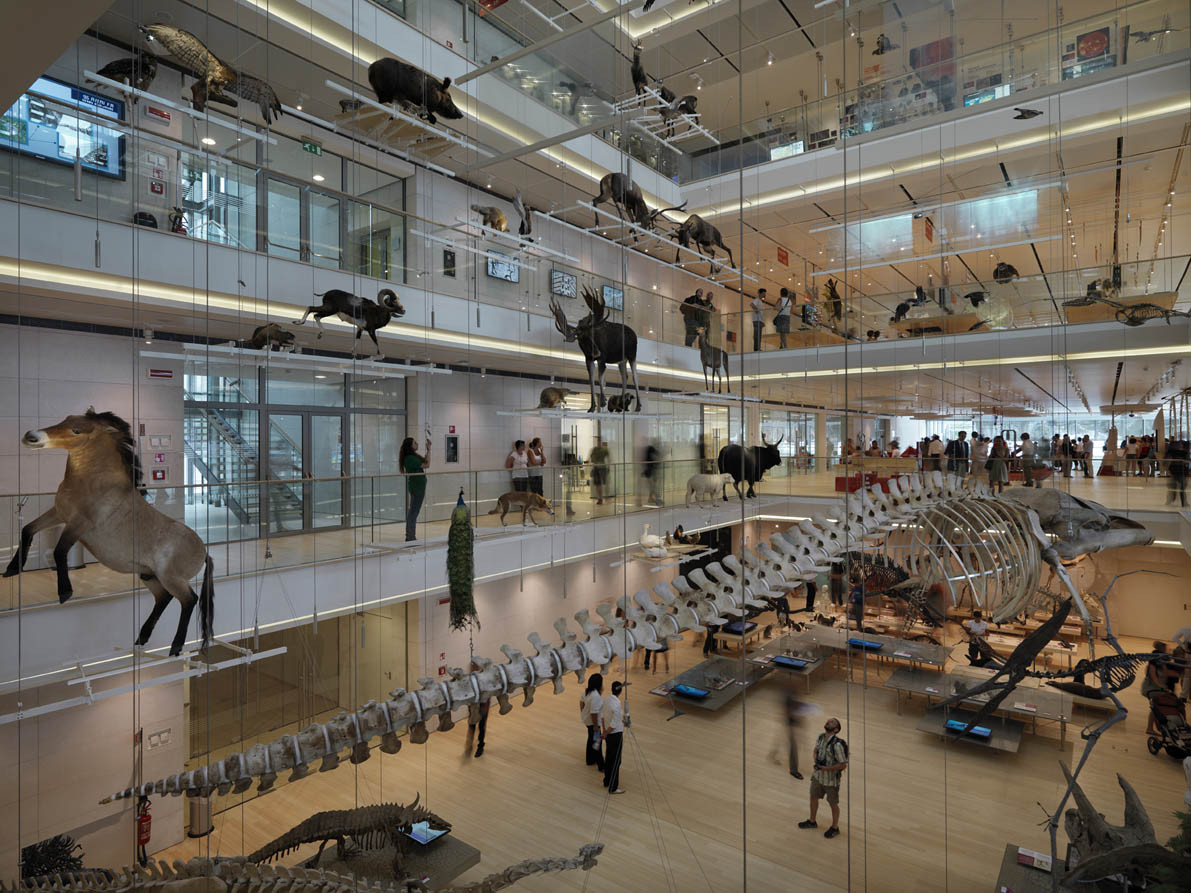
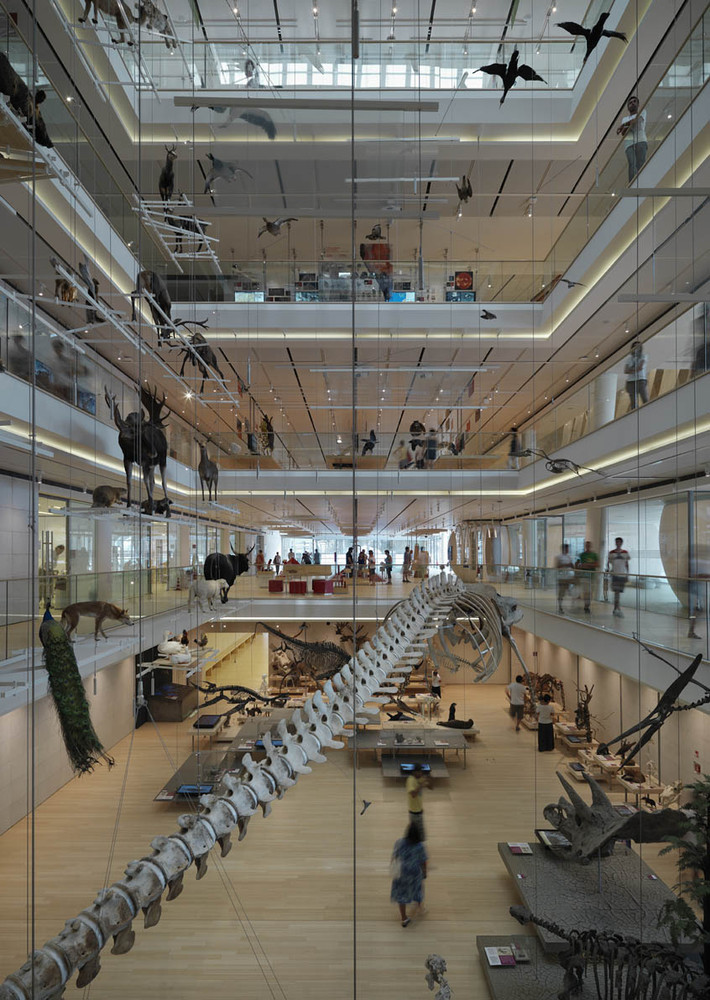
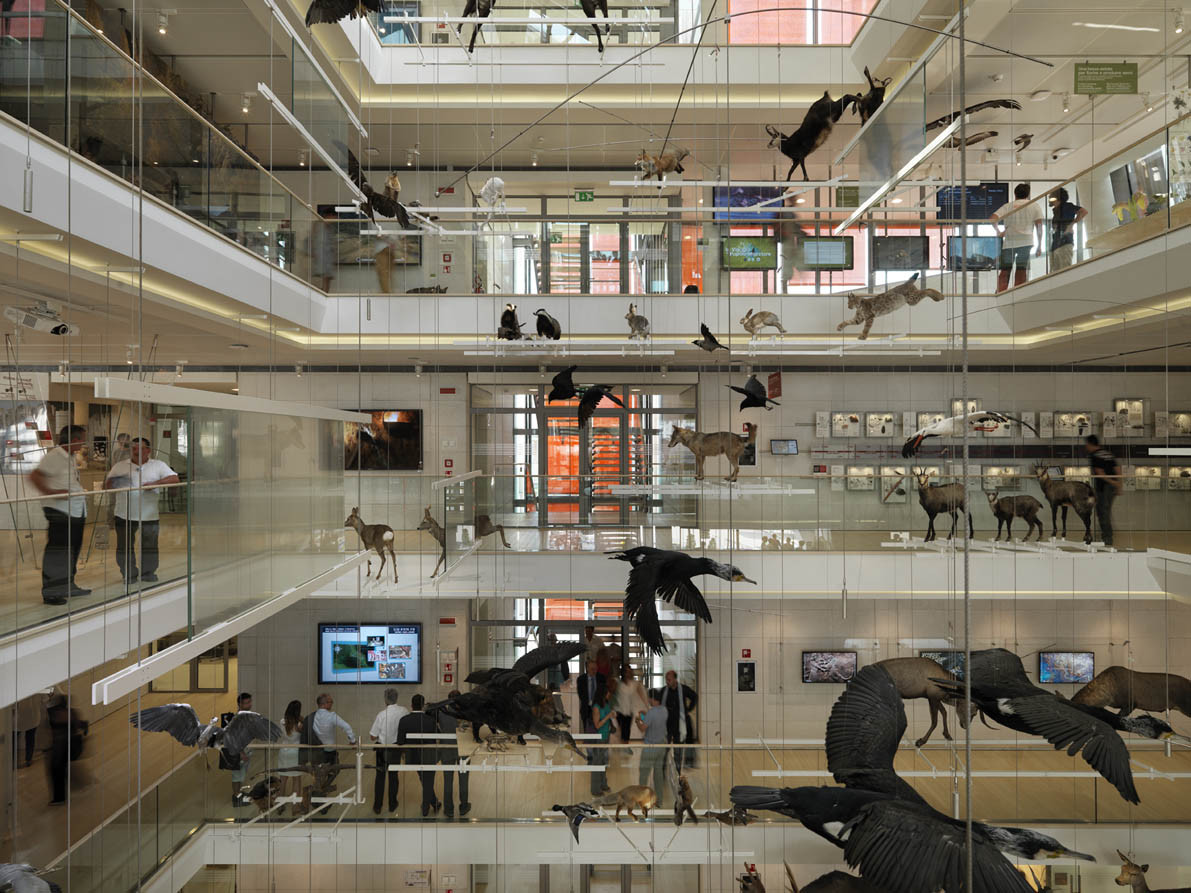
Internally, the museum unfolds through a progressive sequence of spaces that transition from administrative and research functions to immersive exhibition environments. These spaces are organized to support both scientific display and experiential interpretation of natural phenomena.
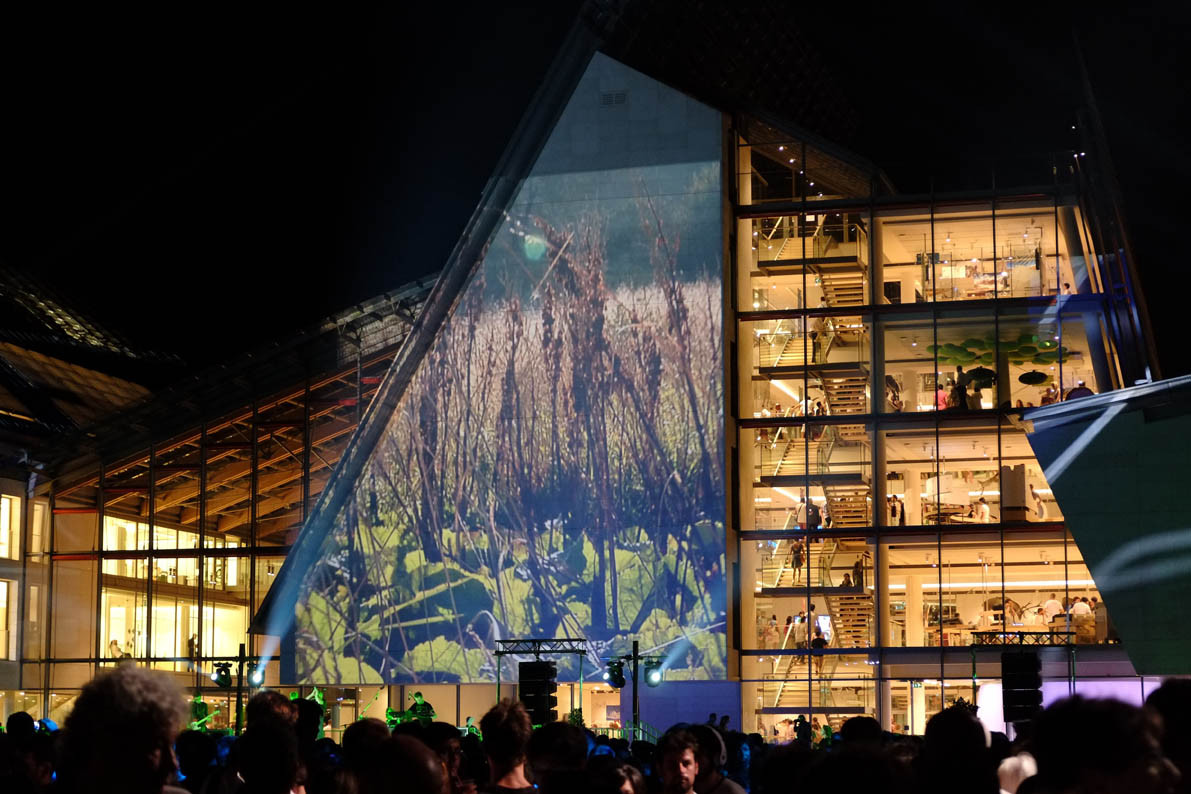
Exhibition areas are structured around thematic narratives that explore environmental systems, including mountain and glacier landscapes. Vertical and horizontal spatial expansions create varied viewing conditions that enhance the interpretive experience of scientific content.
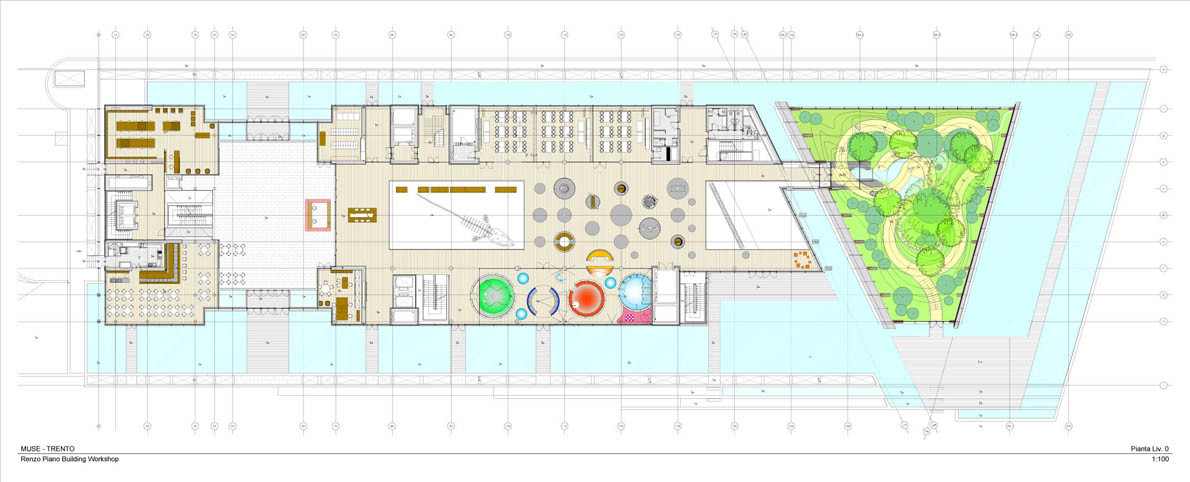
Overall, the MUSE district establishes a comprehensive urban framework in which infrastructure, architecture, and landscape operate as an interconnected system. The project redefines the relationship between city and river, transforming a fragmented industrial territory into a cohesive civic environment characterized by accessibility, ecological integration, and continuous public life.
Project Gallery
Project Location
Address: Corso del Lavoro e della Scienza, 3, 38122 Trento TN, Italy
The location specified is intended for general reference and may denote a city or country, but it does not identify a precise address.

