

Architects: Renzo Piano Building Workshop
Area: 20,400 m²
Year: 2004
Photography: Gianni Berengo Gardin; Vittorio Grassi; Christian Richters; Michel Denancé
Lead Architects: Renzo Piano Building Workshop
Contractor: FABBRICA DELLA CHIESA s.c.a.r.l
Structural Engineering: Favero & Milan
Civil Engineering: Studio Ambiente
Materials: Apricena stone, timber, steel, glass
Client: Provincia dei Frati Minori Cappuccini di Foggia
Manufacturers: TECU®, Campolonghi
Landscape Design: E. Trabella
Urban Planning: Studio Ambiente
Lighting Design: P. Castiglioni
Acoustics: Müller BBM
Services: Manens Intertecnica
Fire Prevention: Tecnocons + C. Manfreddo
Cost Consultants: Austin Italia
Graphic Design: F. Origoni
Stone Consultant: D. Lagazzi
Timber Consultant: N. Albertani
Art Consultant: M. Codognato
Roof Drainage System: HR Wallingford
Site Supervision: G. Muciaccia
Liturgical Advisor: liturgical advisor
Artists: Arnaldo Pomodoro; Giovanna Canegallo; Mario Rosello; Floriano Bodini; Giuliano Vangi; Mimmo Paladino
Location: San Giovanni Rotondo
Country: Italy
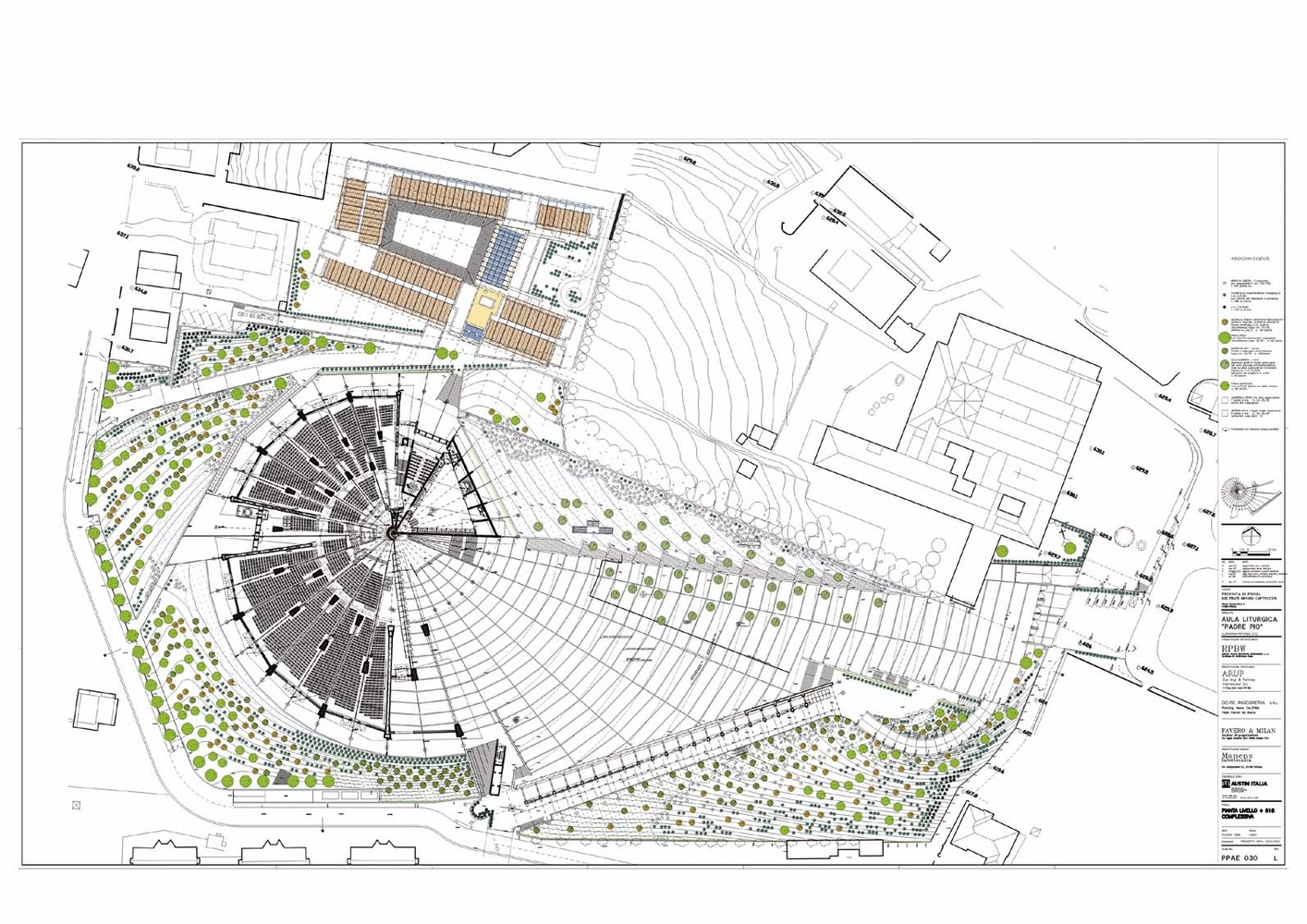
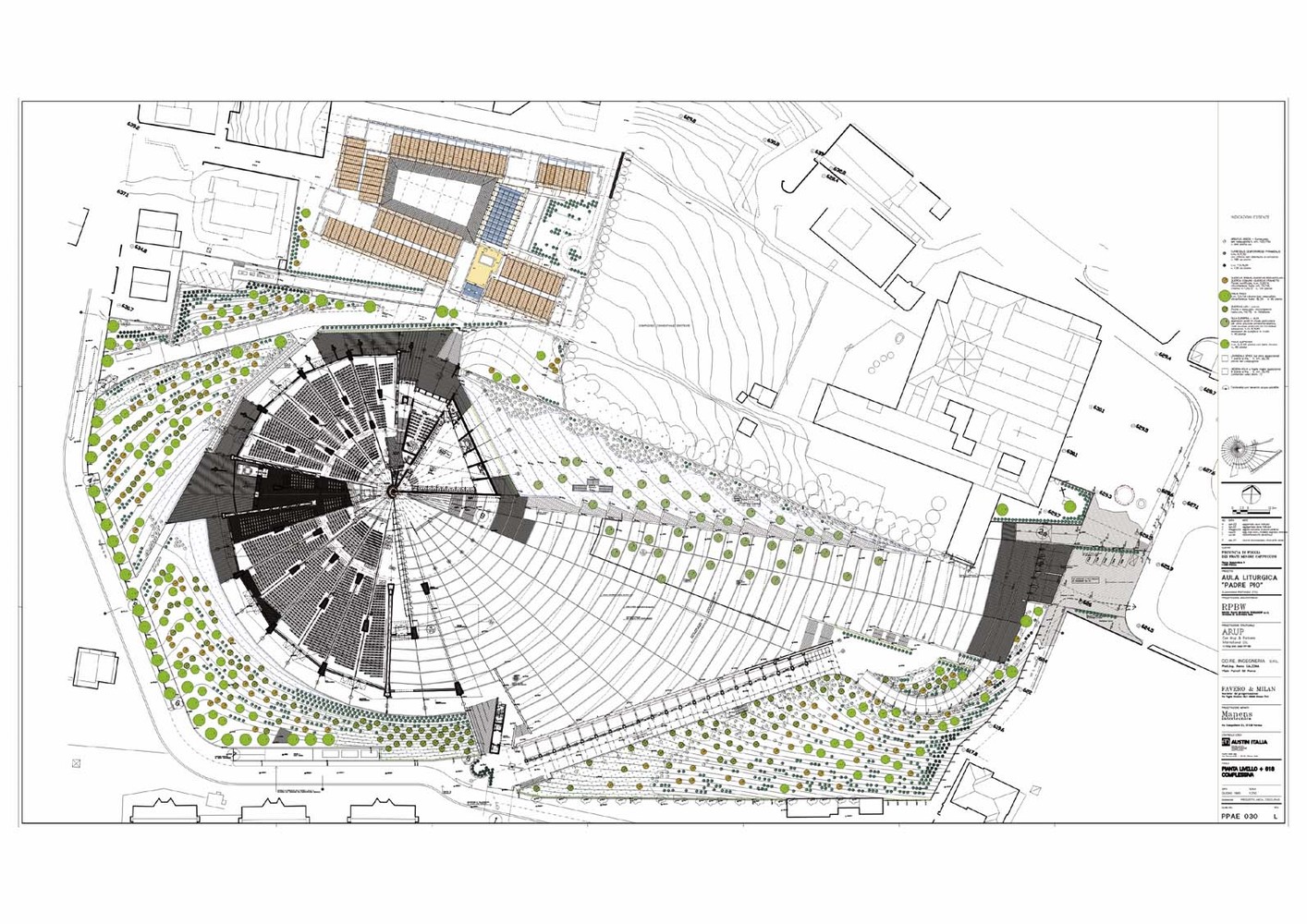
The Padre Pio Pilgrimage Church in San Giovanni Rotondo is conceived as a contemporary sanctuary capable of accommodating large congregations while preserving a sense of intimacy and spiritual focus. Designed by Renzo Piano Building Workshop, the project responds to the increasing number of pilgrims visiting the site by organizing a sequence of expansive exterior spaces and a capacious interior hall. Its architecture balances scale and accessibility through a restrained palette of materials and a carefully articulated structural system of radial stone arches supporting a layered roof. Natural light is modulated to emphasize the altar, reinforcing the liturgical center. The integration of art, landscape, and engineering results in a cohesive environment that merges technical innovation with symbolic expression, establishing the church as both a functional gathering place and a contemplative spiritual setting.
Architecture should not be valued for the image it projects, but for the spaces it creates and the experiences it sustains over time.
Interview With Albert Giralt Of Renzo Piano Building Workshop [RPBW]
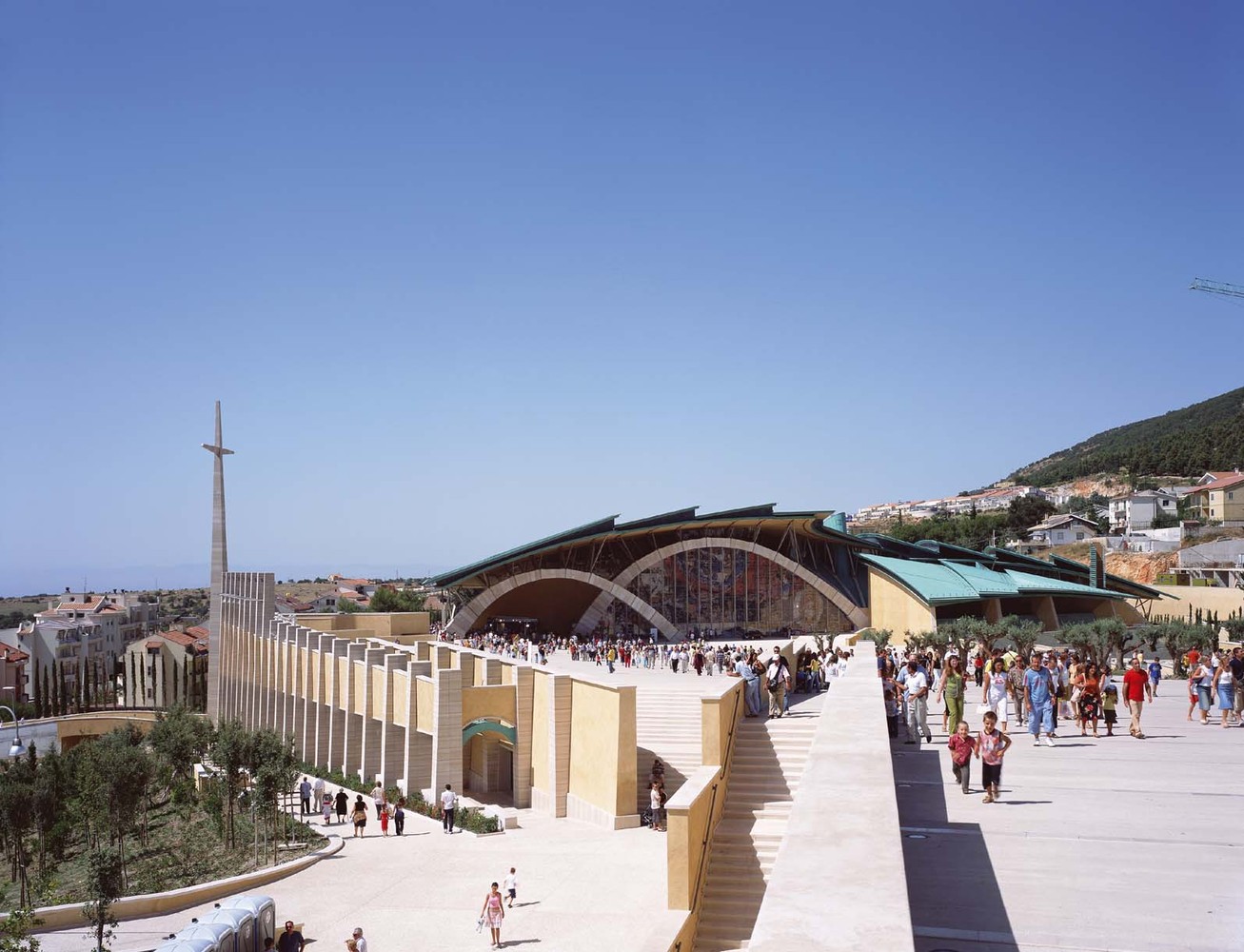
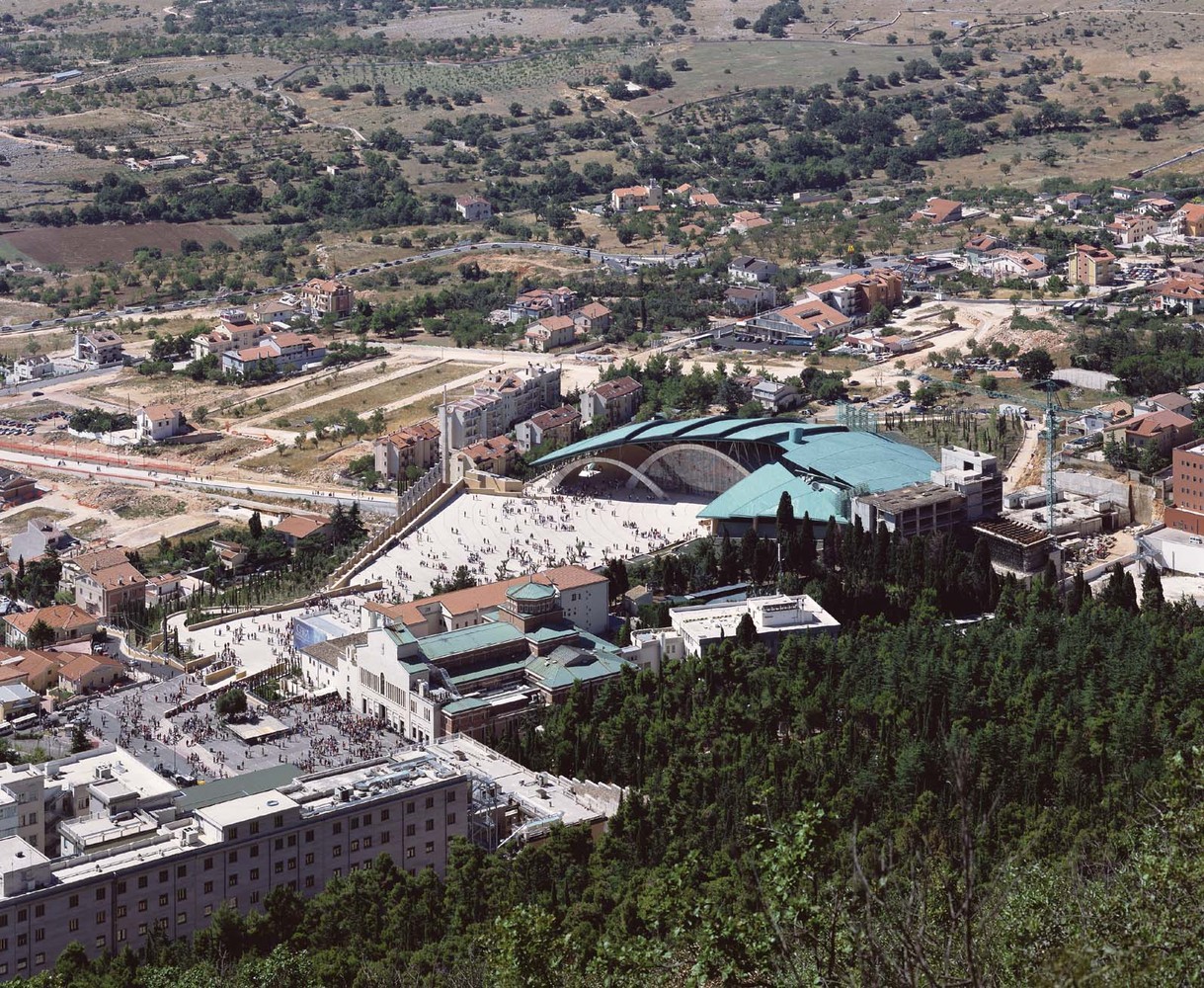
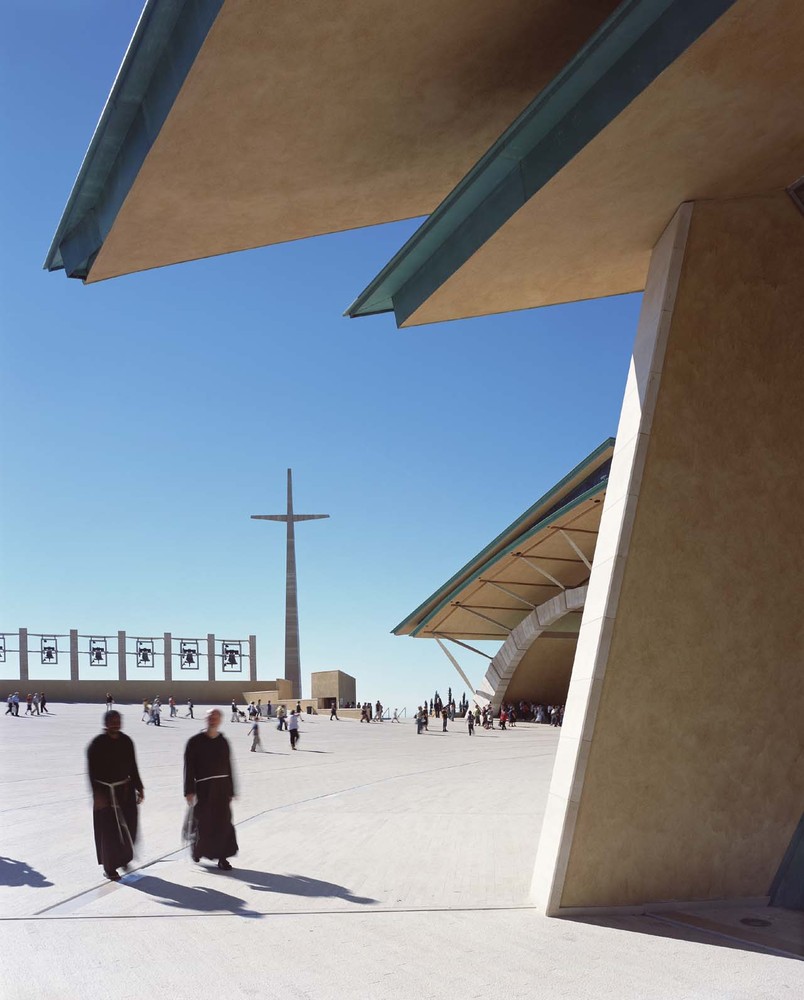
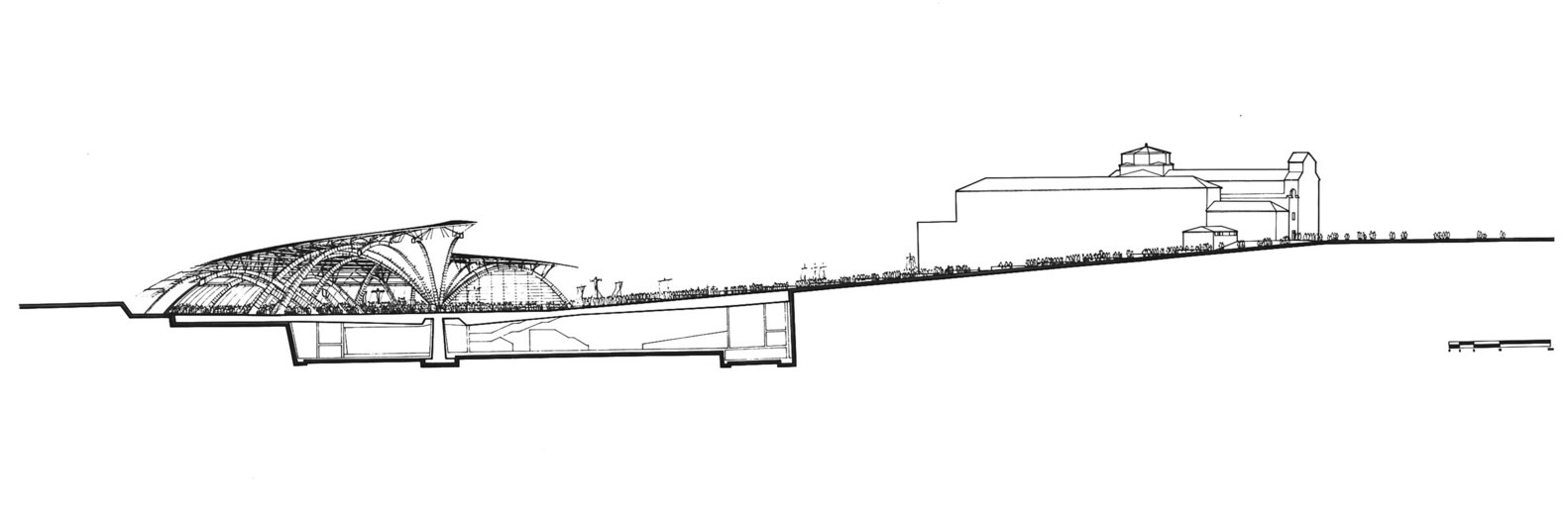
Set within the elevated landscape of the Gargano region, the church reframes the notion of pilgrimage architecture through a deliberate rejection of overt monumentality. Instead of asserting dominance, the building extends an invitation, its low, flowing profile and expansive forecourt creating a gradual threshold between the everyday and the sacred. The spatial sequence is carefully choreographed to accommodate the movement of thousands of visitors, yet it avoids the rigidity often associated with large religious complexes. This balance allows the project to function simultaneously as infrastructure and sanctuary.
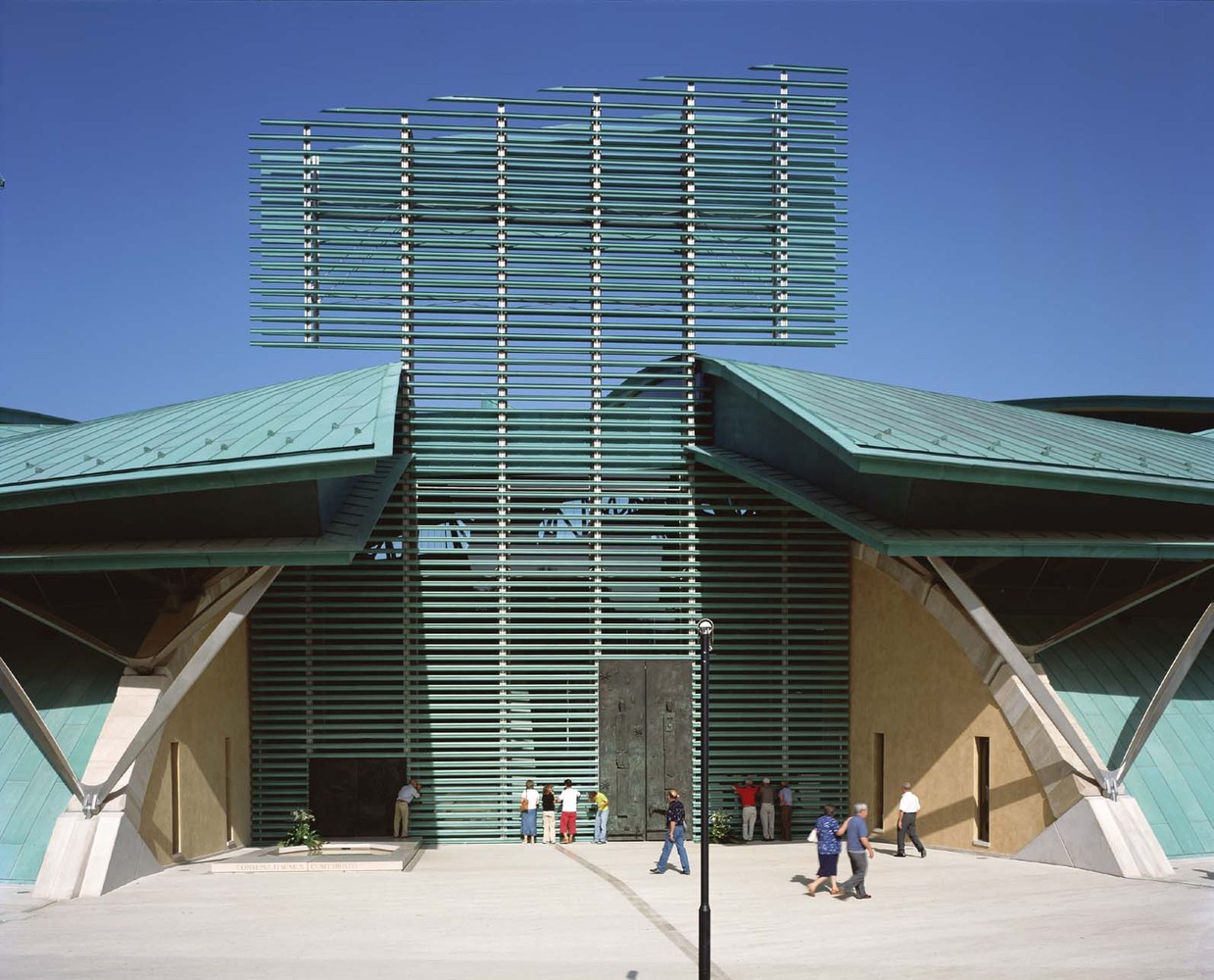
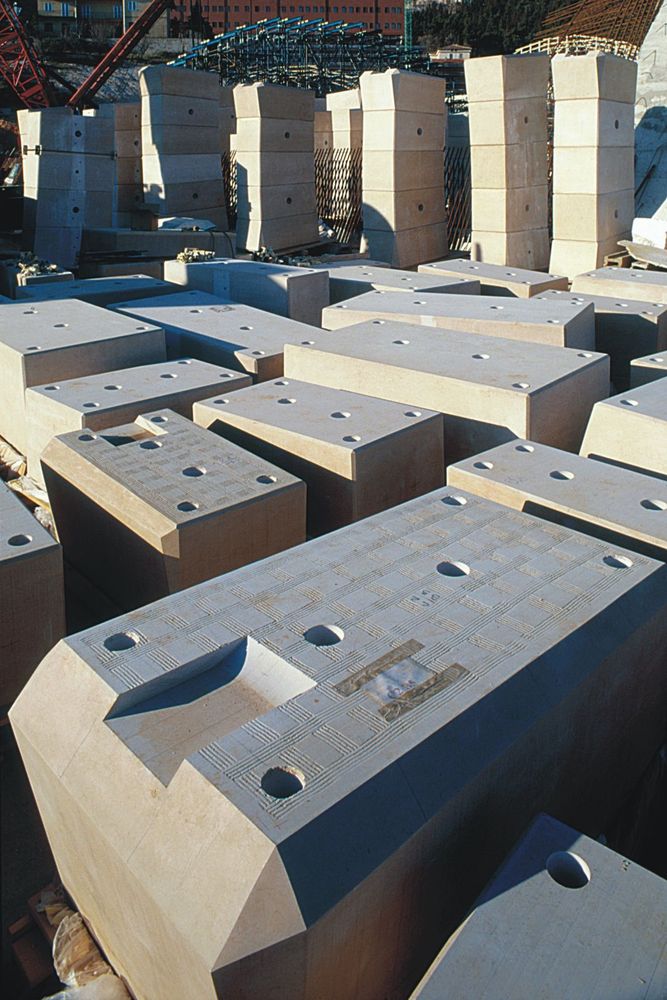
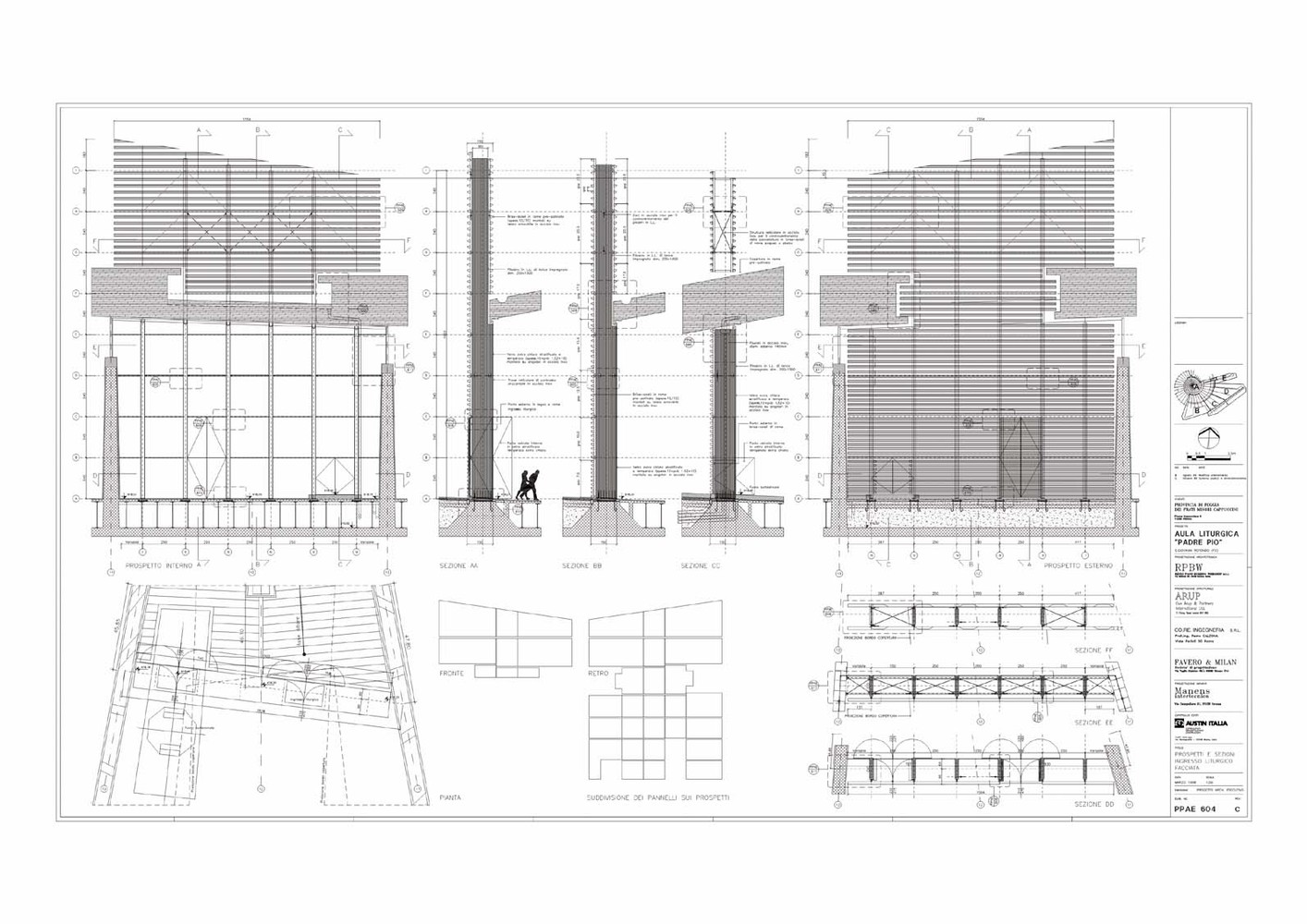
Central to the design is the idea of continuity, both material and conceptual. The exclusive use of Apricena stone establishes a direct relationship with the surrounding terrain, embedding the structure within its context while reinforcing a sense of unity. The material’s warm tonality softens the building’s scale, contributing to an atmosphere of welcome rather than awe. This decision reflects a broader intention to conceive the church as a collective home, open and accessible rather than distant or hierarchical.
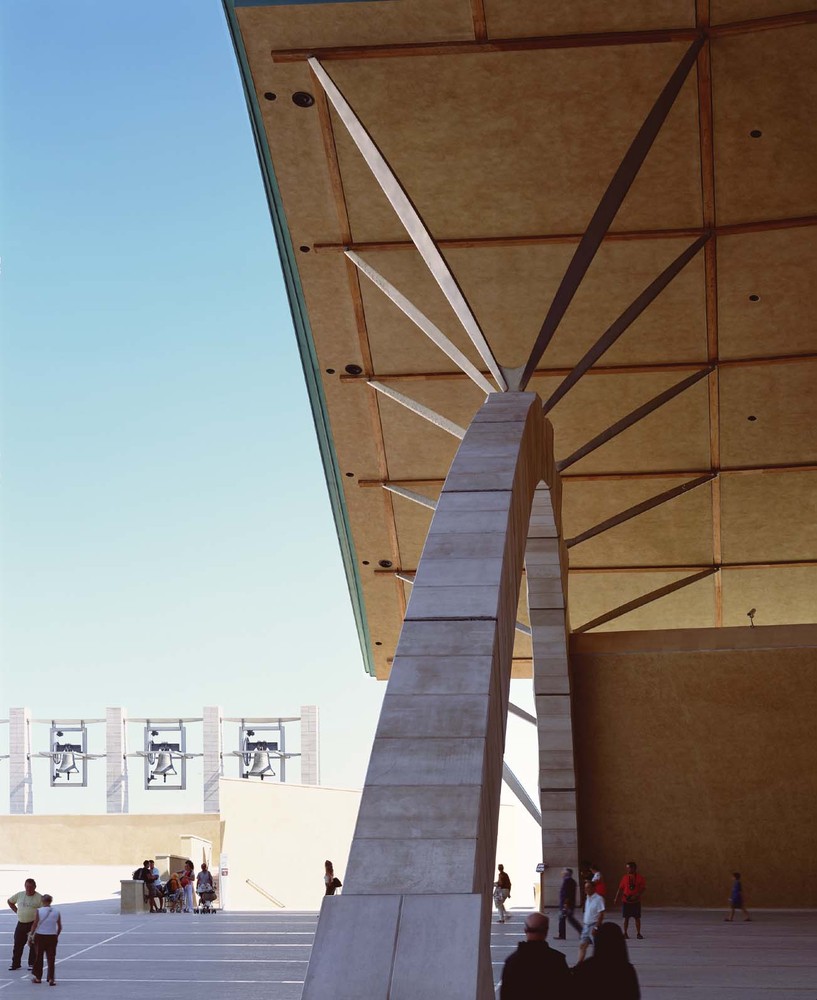
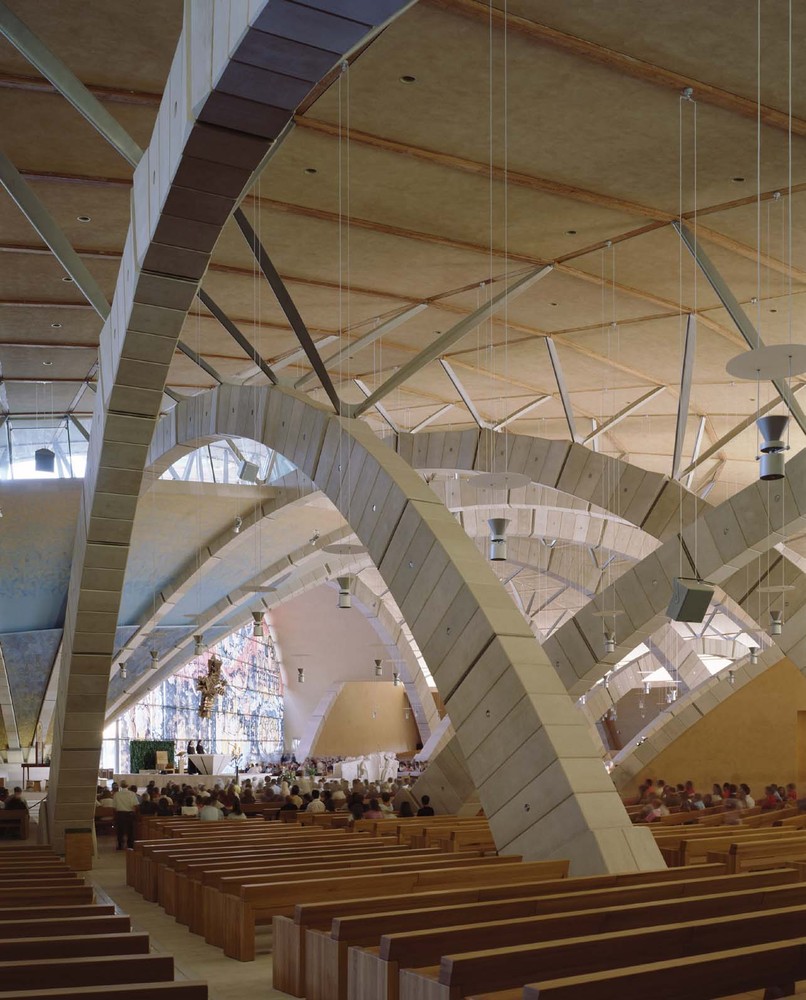
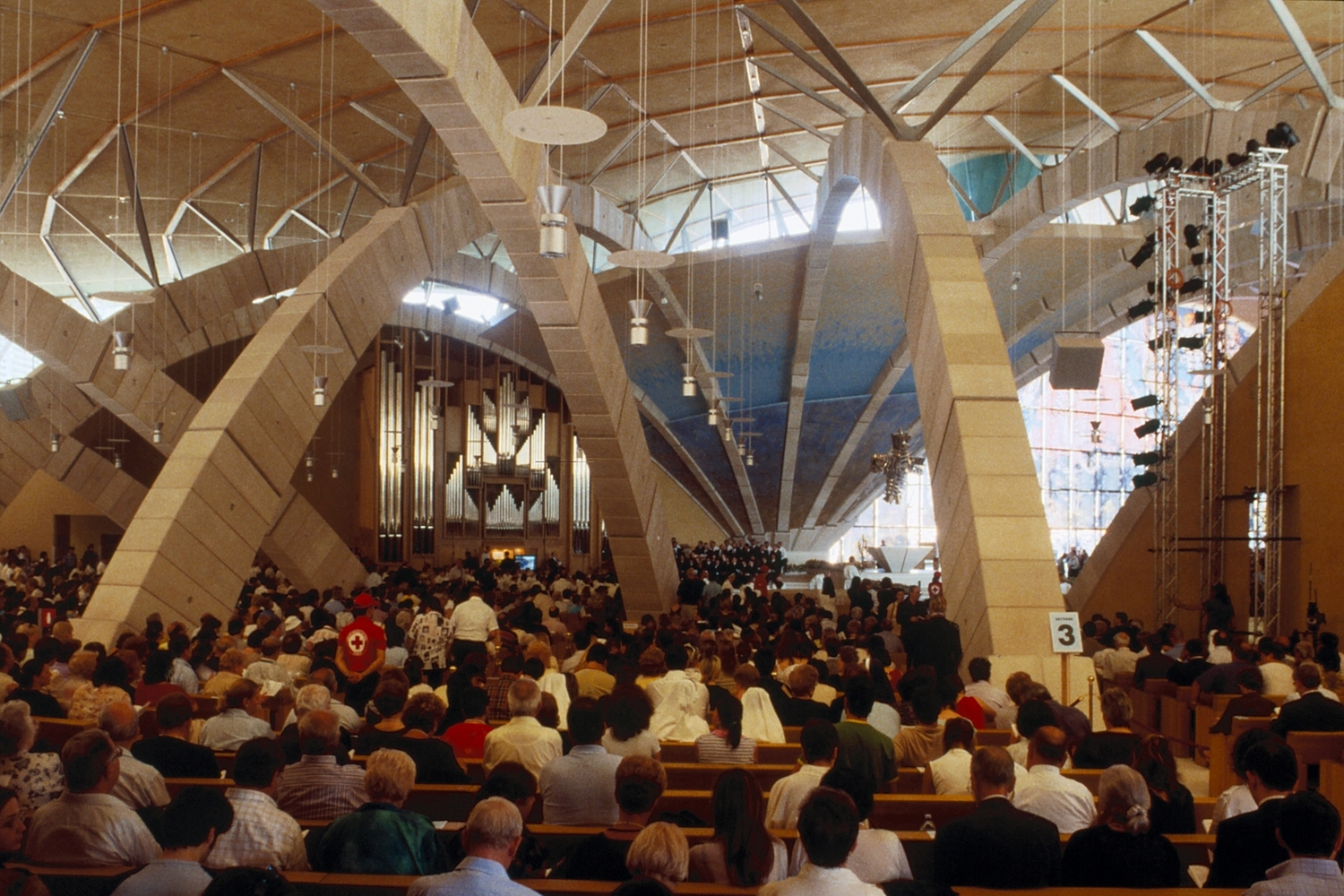
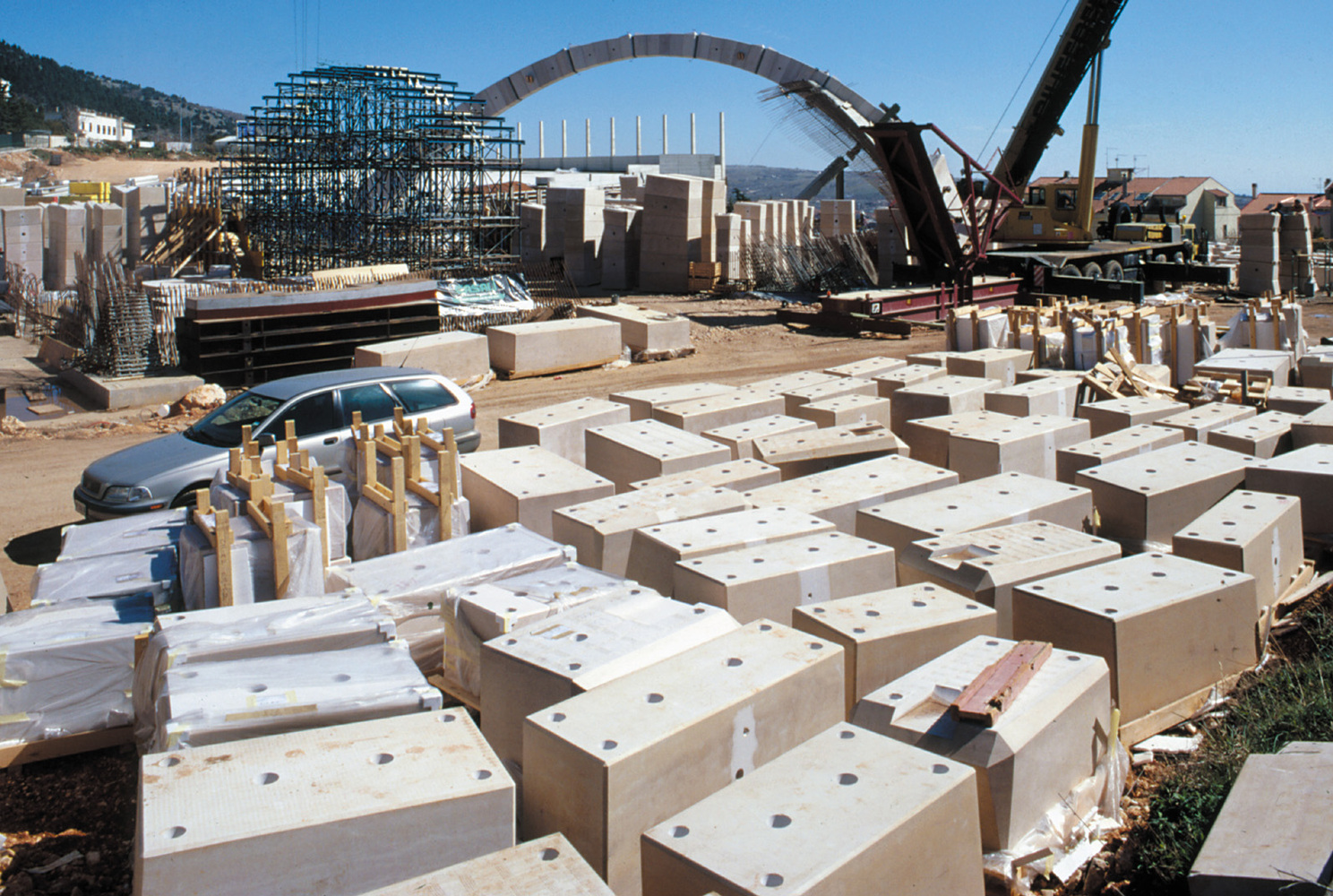
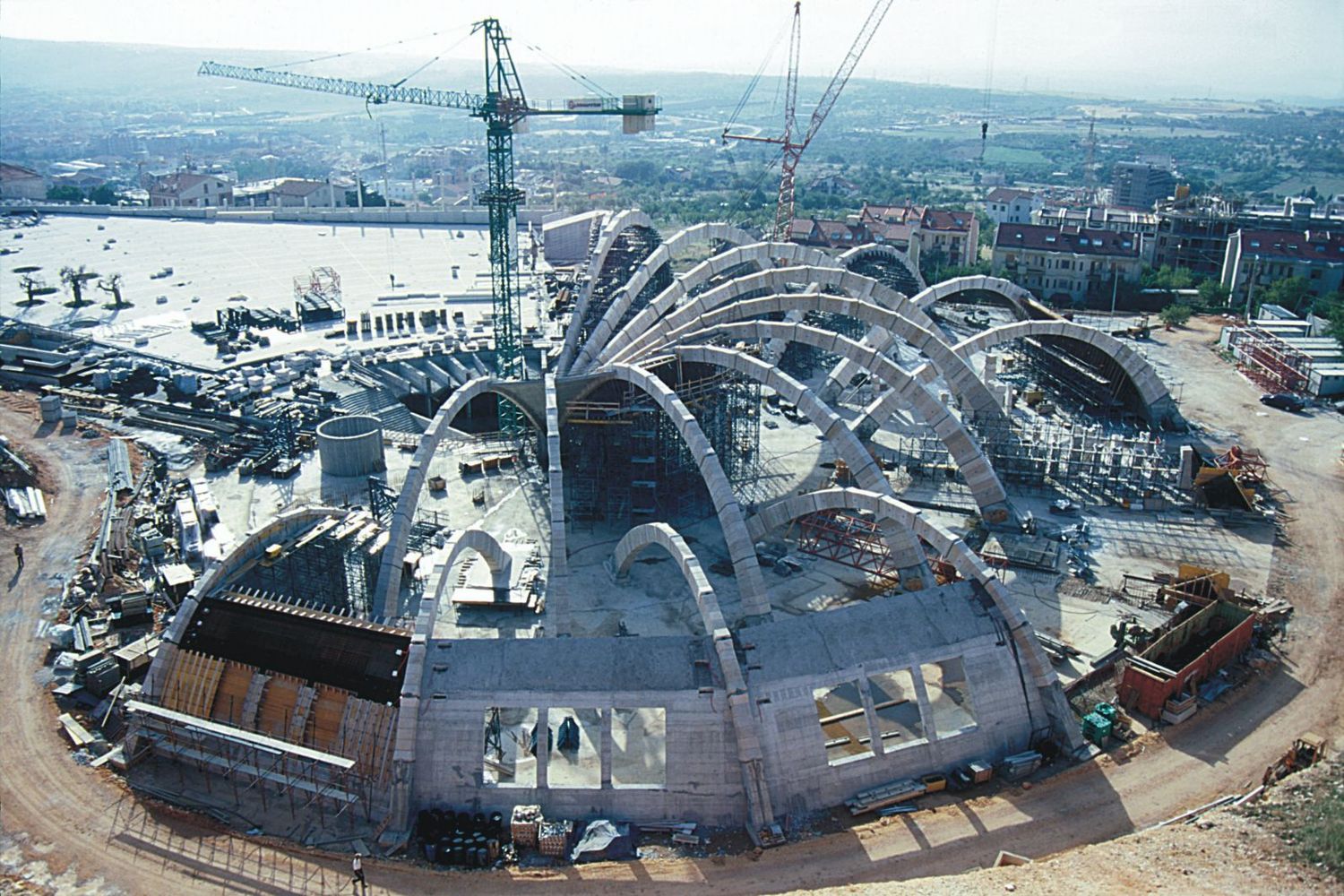
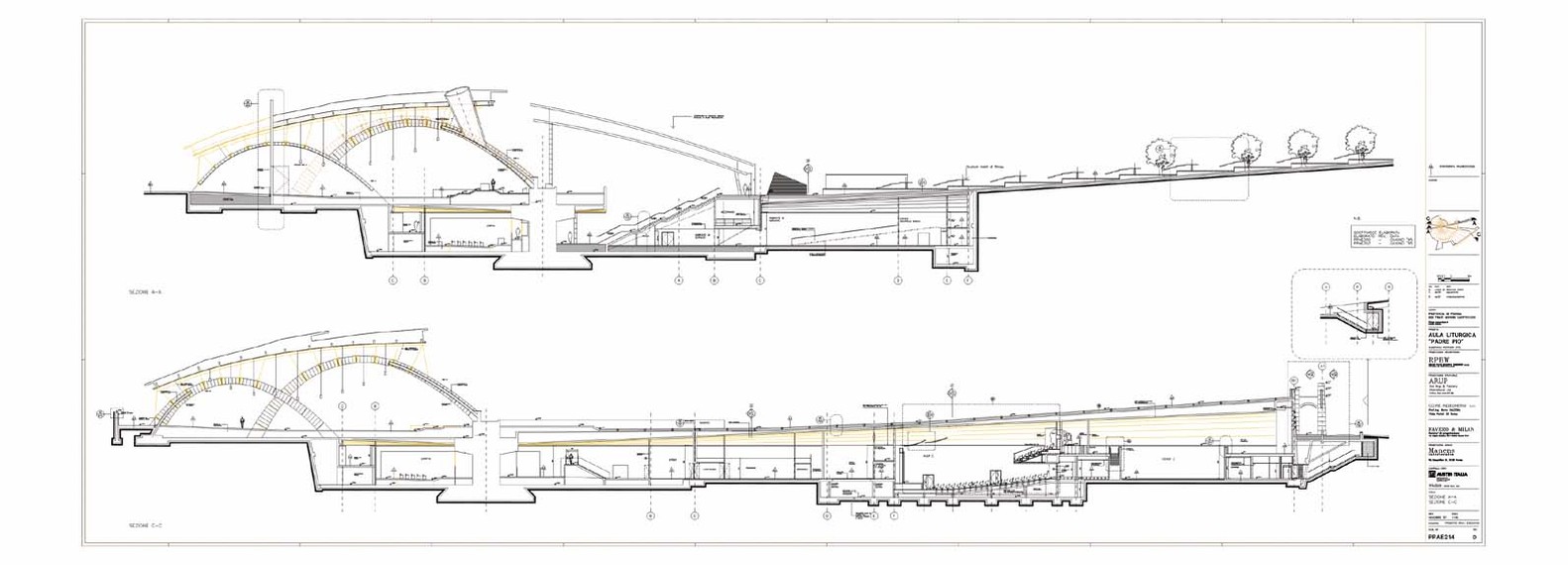
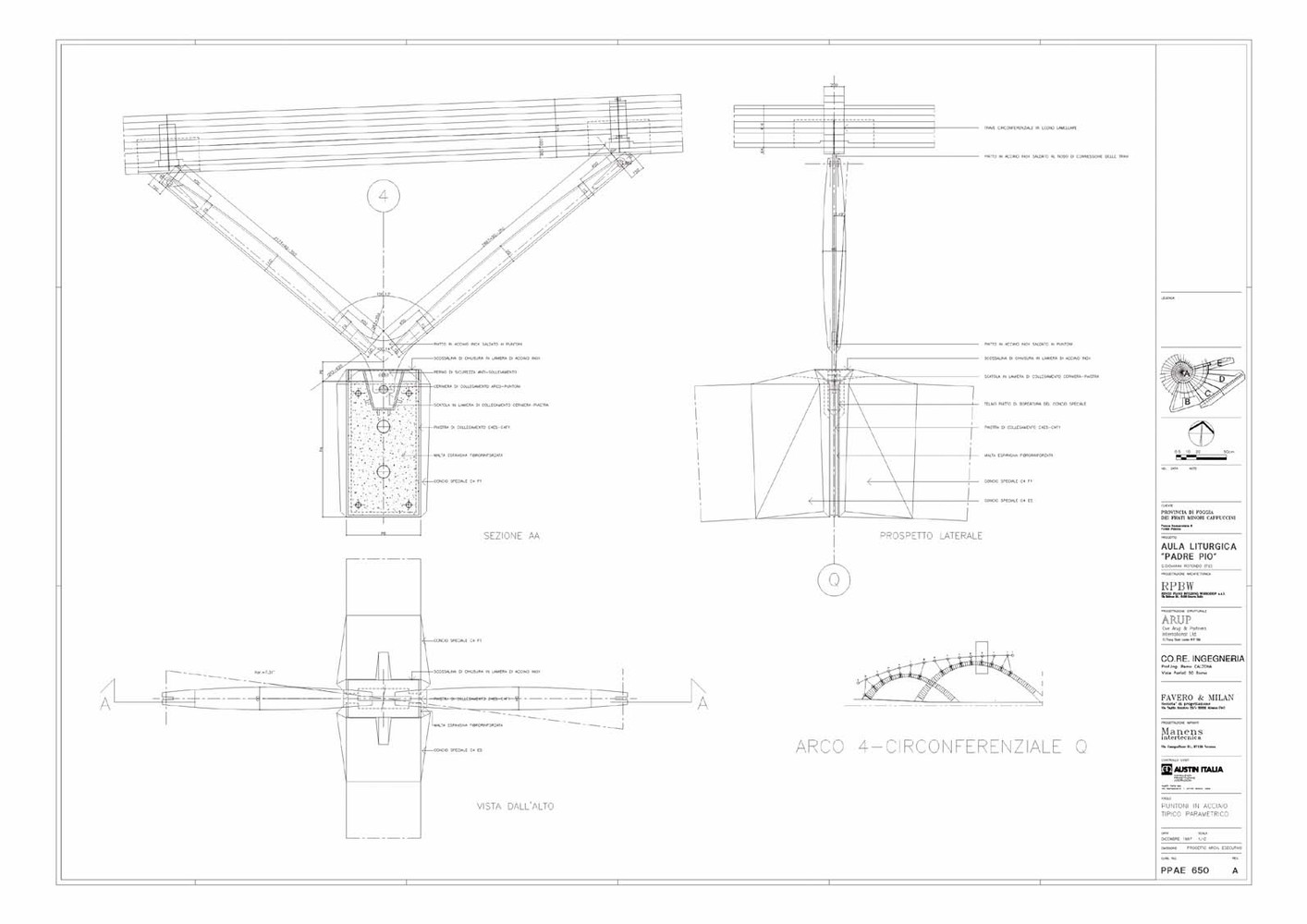
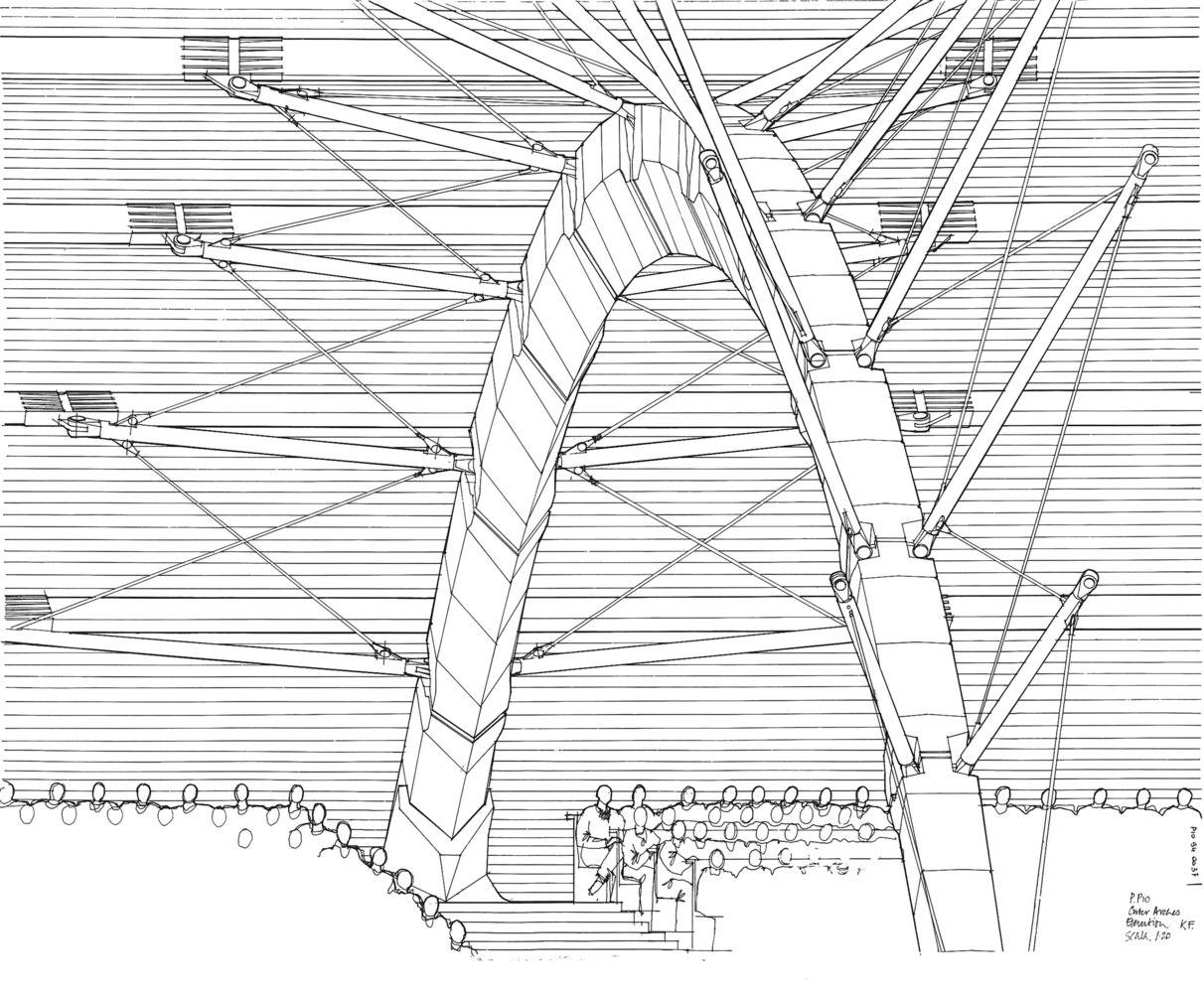
The structural system introduces a nuanced interpretation of monumentality through engineering innovation. Twenty-two arches radiate from the altar in a rhythmic sequence, diminishing in size as they extend outward. Constructed from pre-compressed stone blocks, these elements challenge traditional perceptions of masonry by incorporating flexibility into their behavior. In a seismically active region, this approach allows the structure to absorb and dissipate energy, ensuring stability without sacrificing spatial clarity or formal coherence.
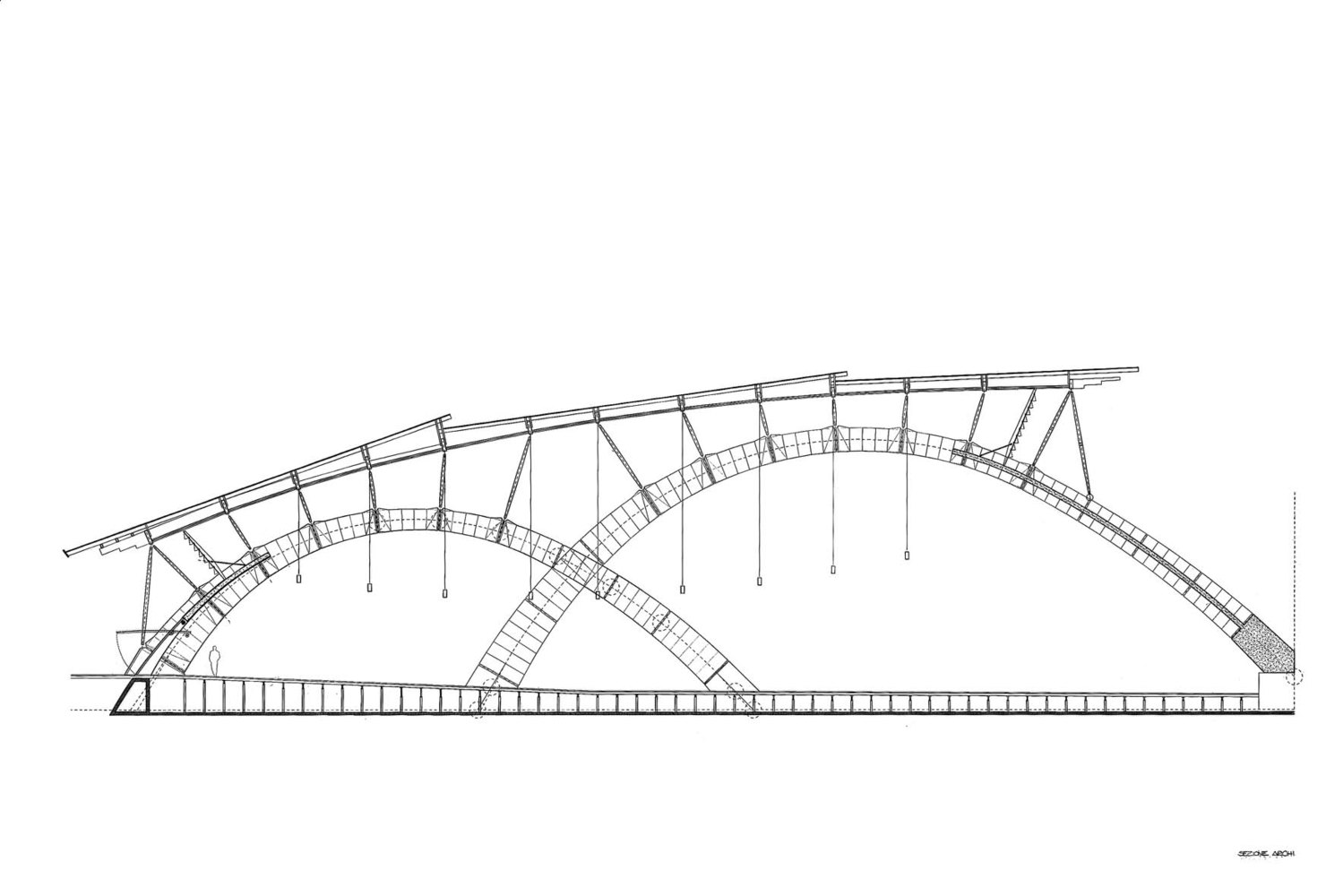
Above the arches, a layered roof system of timber and steel appears to float, its components articulated to allow independent movement. This separation is both functional and expressive, enhancing seismic performance while creating a visual lightness that contrasts with the mass of the stone below. The roof’s curved geometry guides daylight into the interior, where it is filtered and concentrated to highlight the altar. This orchestration of light recalls historical ecclesiastical precedents while translating them into a contemporary architectural language.
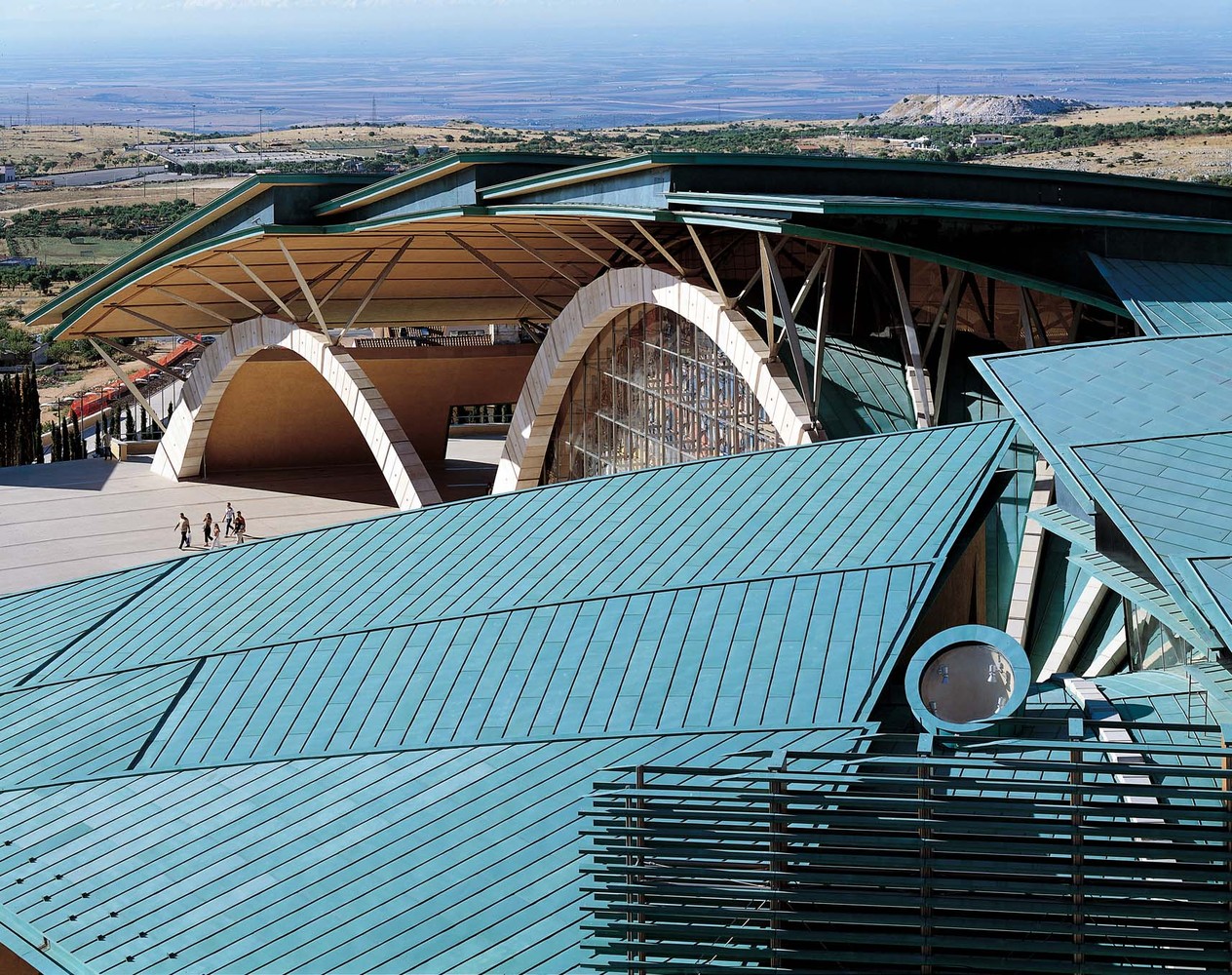
Artistic interventions are integrated throughout the complex, reinforcing the dialogue between architecture and liturgy. Sculptural elements, liturgical furnishings, and crafted surfaces contribute to a layered sensory experience, enriching the spatial narrative without overwhelming it. In synthesizing large-scale infrastructural demands with refined material and spatial strategies, the Padre Pio Pilgrimage Church stands as a significant example of contemporary sacred architecture, in which technical precision and symbolic resonance are carefully aligned.
Project Gallery

Project Location
Address: San Giovanni Rotondo, Italy
The location specified is intended for general reference and may denote a city or country, but it does not identify a precise address.

