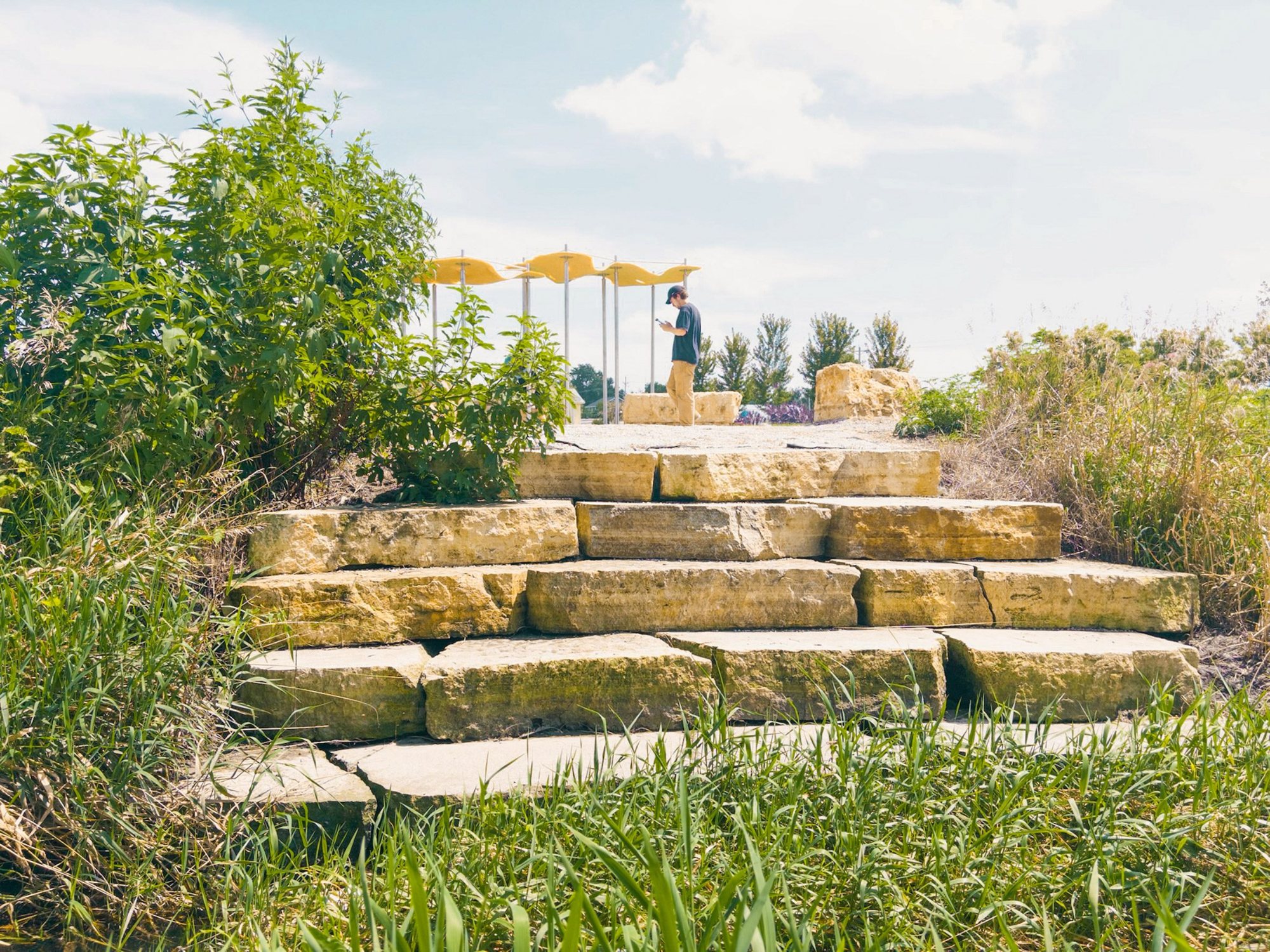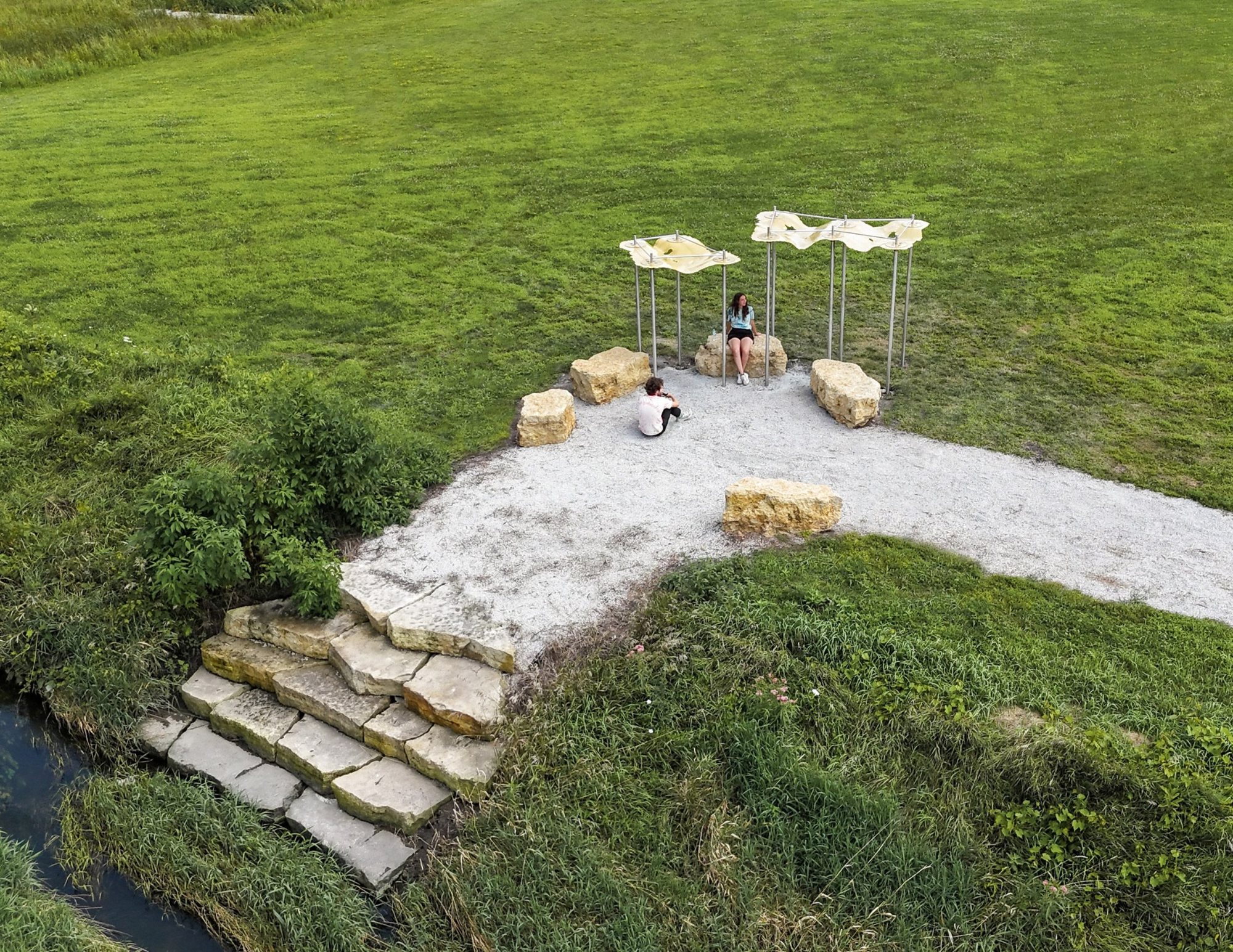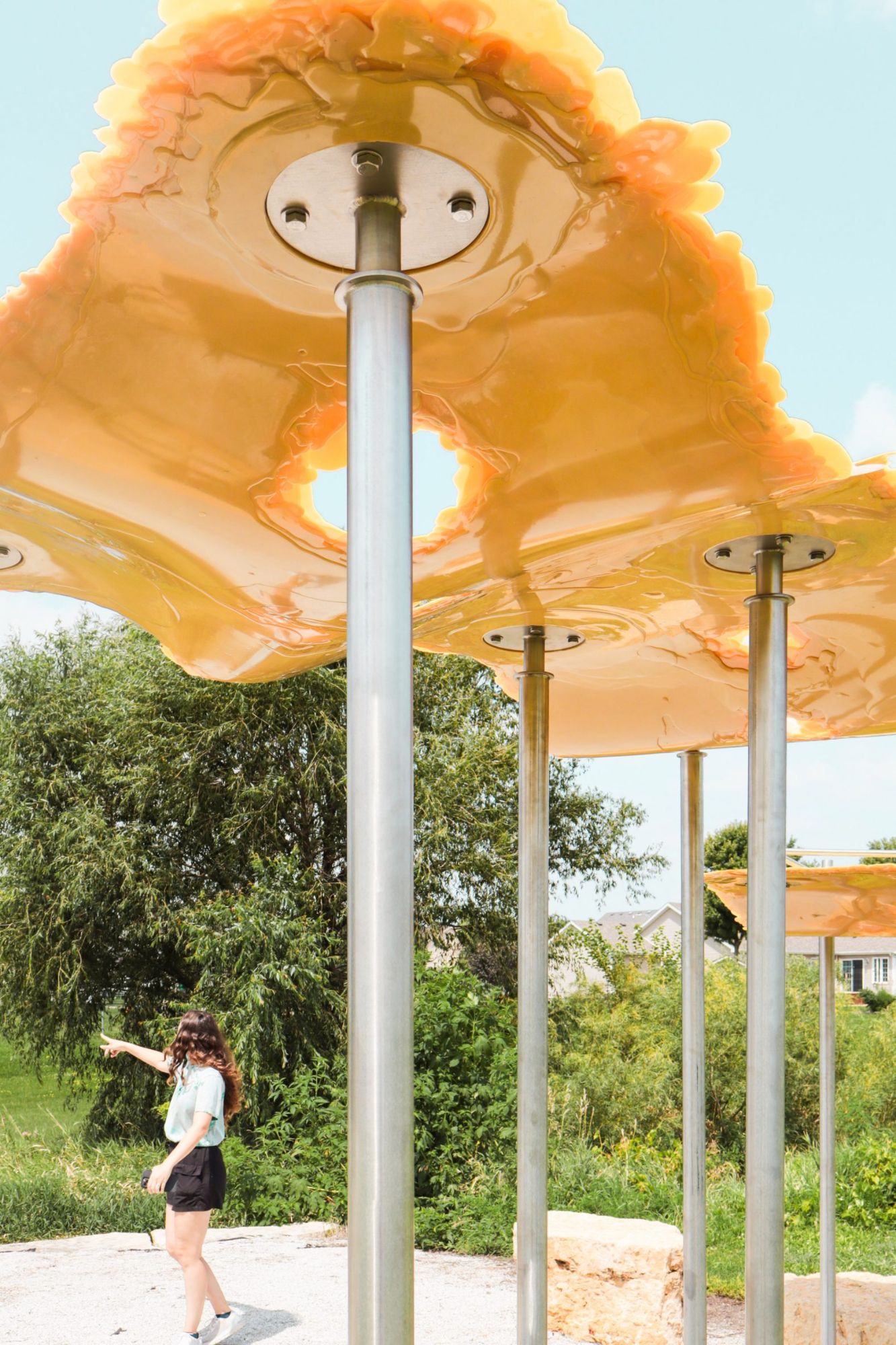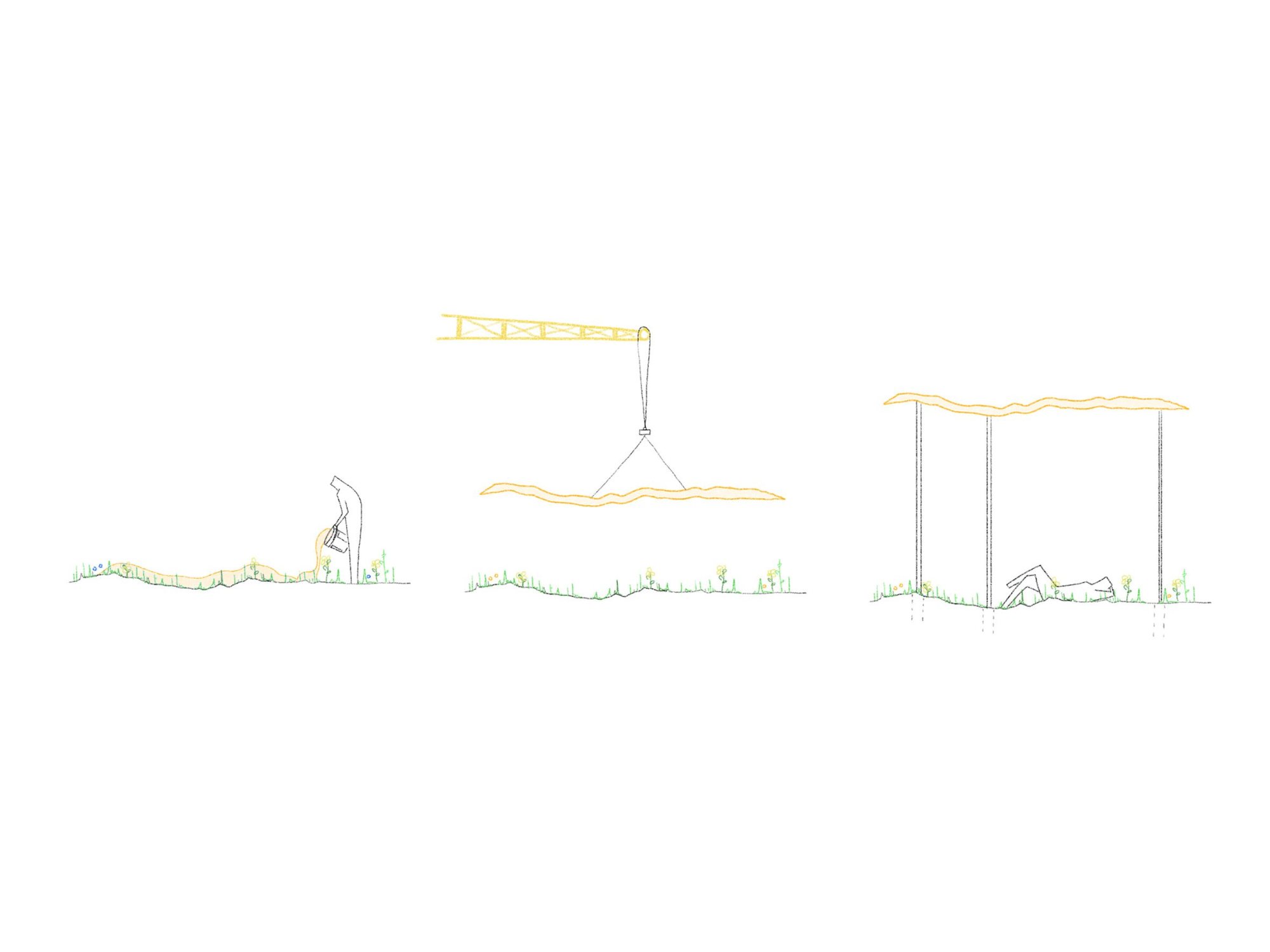
Puddle Pavilion public installation designed by i/thee in Bondurant, Iowa, has turned algae-based bio-resin into a creekside architectural canopy at Eagle Park. The Arizona design studio, led by Neal Lucas Hitch, Kristina Fisher, and Martin Hitch, developed the project as part of the ARTocka Trail Loop, a public art initiative for local greenspace. The pavilion uses resin with 56 percent bio-based content from algae-derived oil produced by Checkerspot. i/thee hand-mixed the material, then poured, splattered, and flung it directly onto the ground, where gravity, surface tension, fluid dynamics, temperature, and wind shaped two bright-yellow canopies. The cured resin sheets were suspended on custom slender steel columns, with engineering by Schlaich Bergermann Partner and steel fabrication by Zeus Welds. The installation is arranged as two volumes beside a stone pathway, while large boulders create seating and a staircase toward Mud Creek. Puddle Pavilion follows The Dining Room, completed in 2024, and precedes The Garden, planned for 2026, extending i/thee’s experimental work along the floodplain.
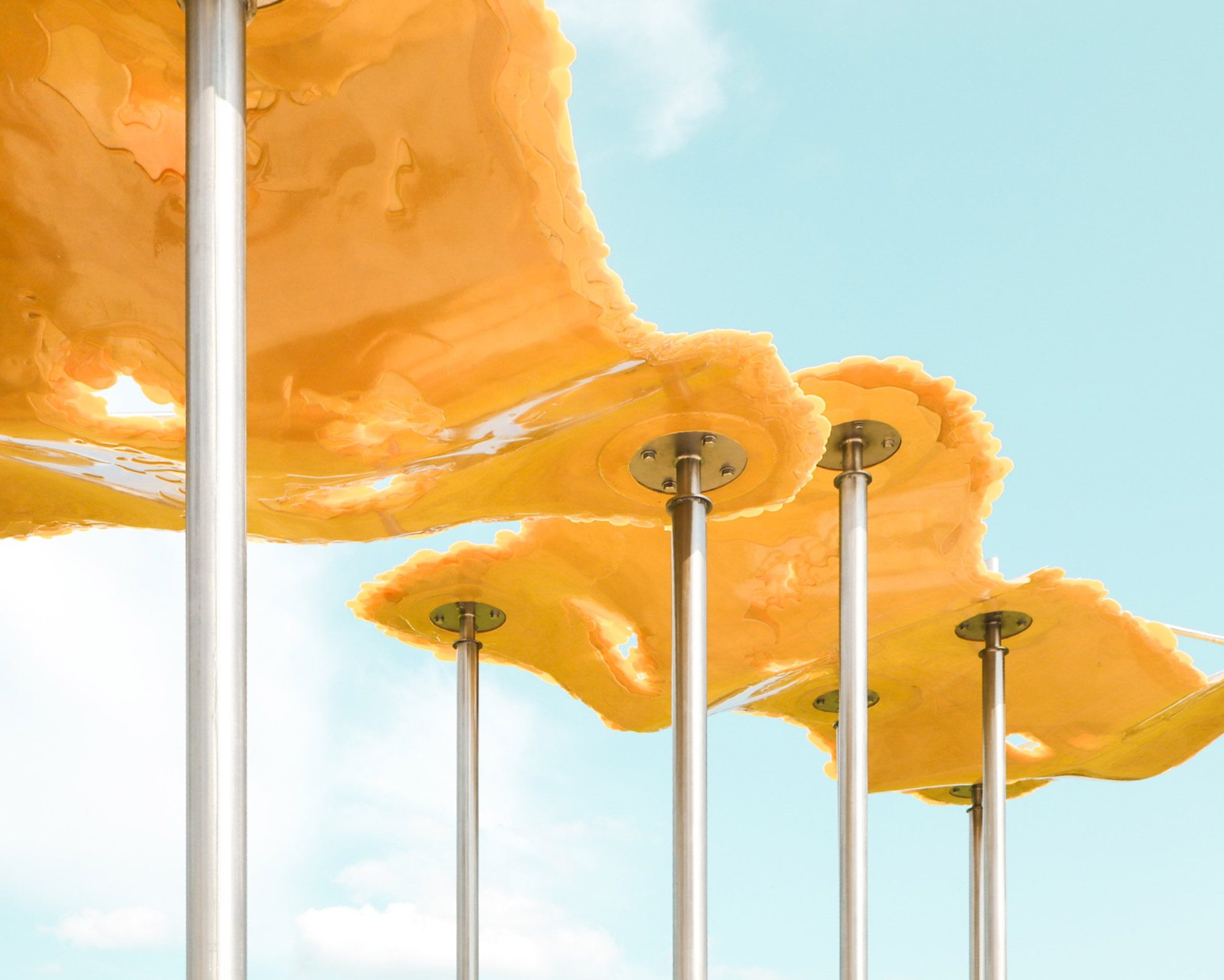
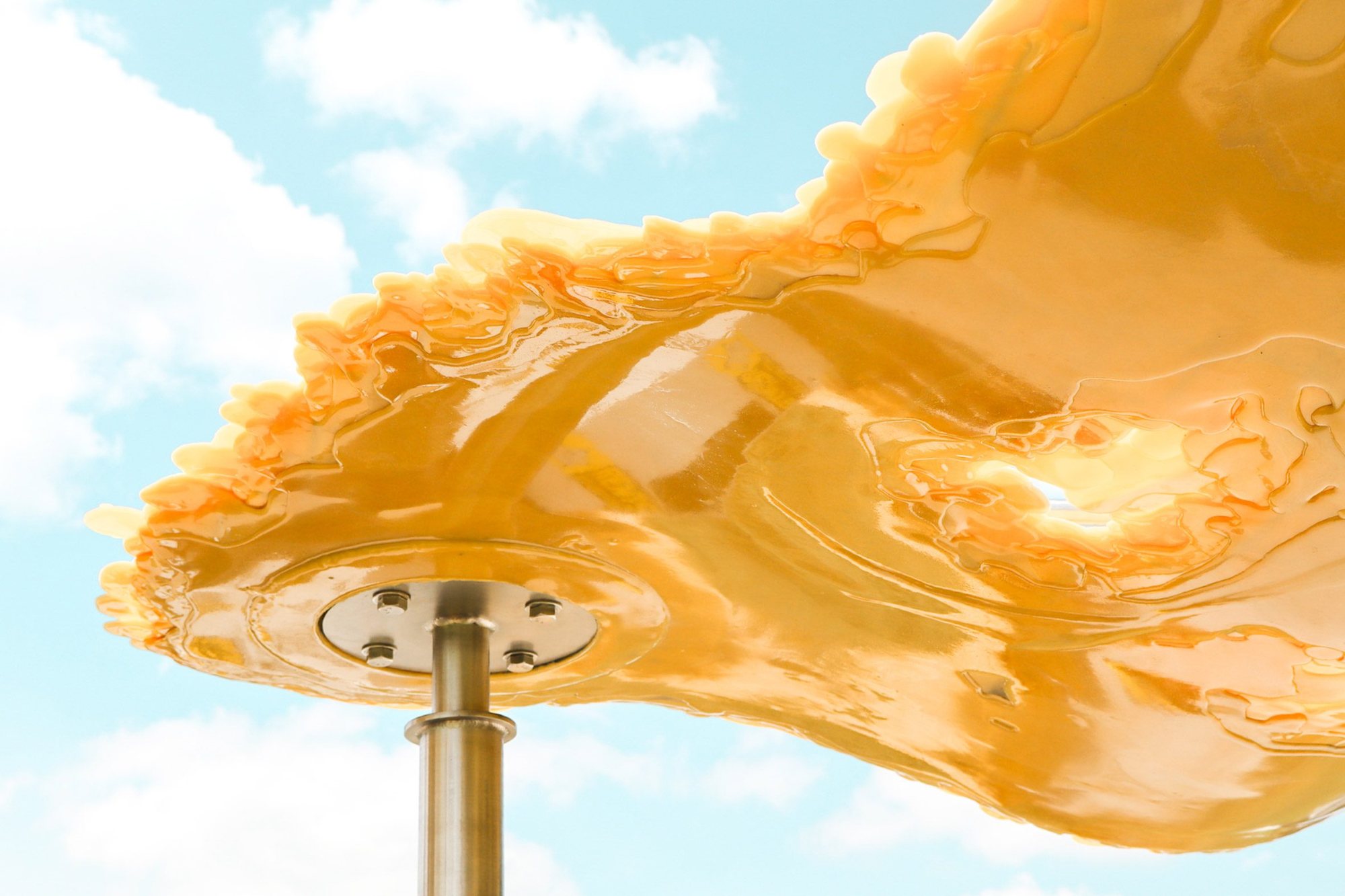
The most satisfying detail in one of our projects is probably the steel-to-resin connection in Puddle Pavilion, a project we completed in 2024 that literally exists as a cast resin puddle floating in the air atop slender steel columns.
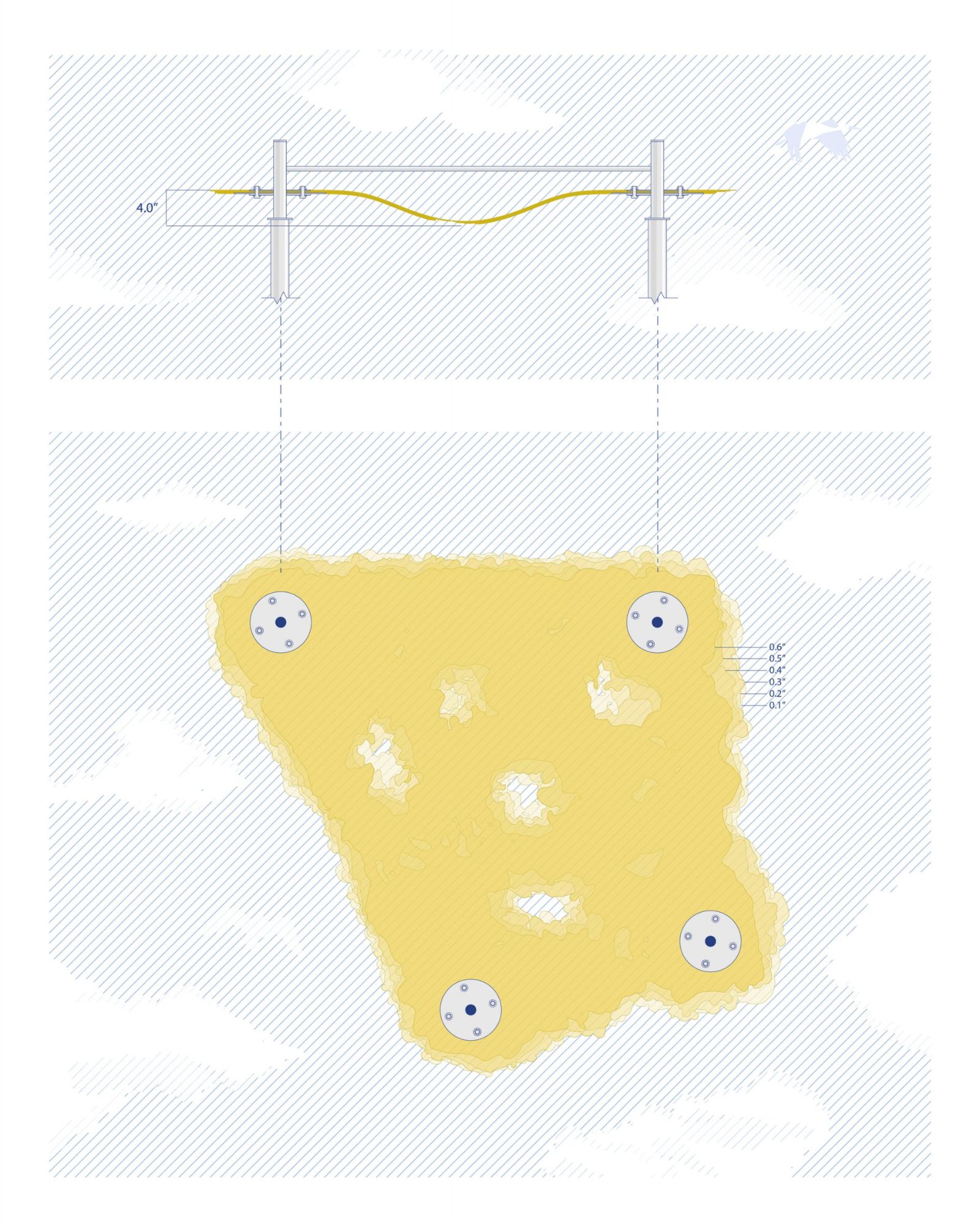
To execute this detail, we partnered with an engineer at Schlaich Bergermann Partner, as well as a steel fabricator based in Minneapolis, Zeus Richardson. Through extensive discussion and prototyping, we developed a detail in which cylindrical stainless-steel disks were embedded within the resin canopy and docked into corresponding disks mounted atop the two-inch-diameter steel columns, secured with nuts and bolts.
Ultimately, the detail appears subtle, but a great deal of thought and work went into achieving that subtlety.
Interview with Neal Lucas Hitch, Kristina Fisher & Martin Hitch of i/thee
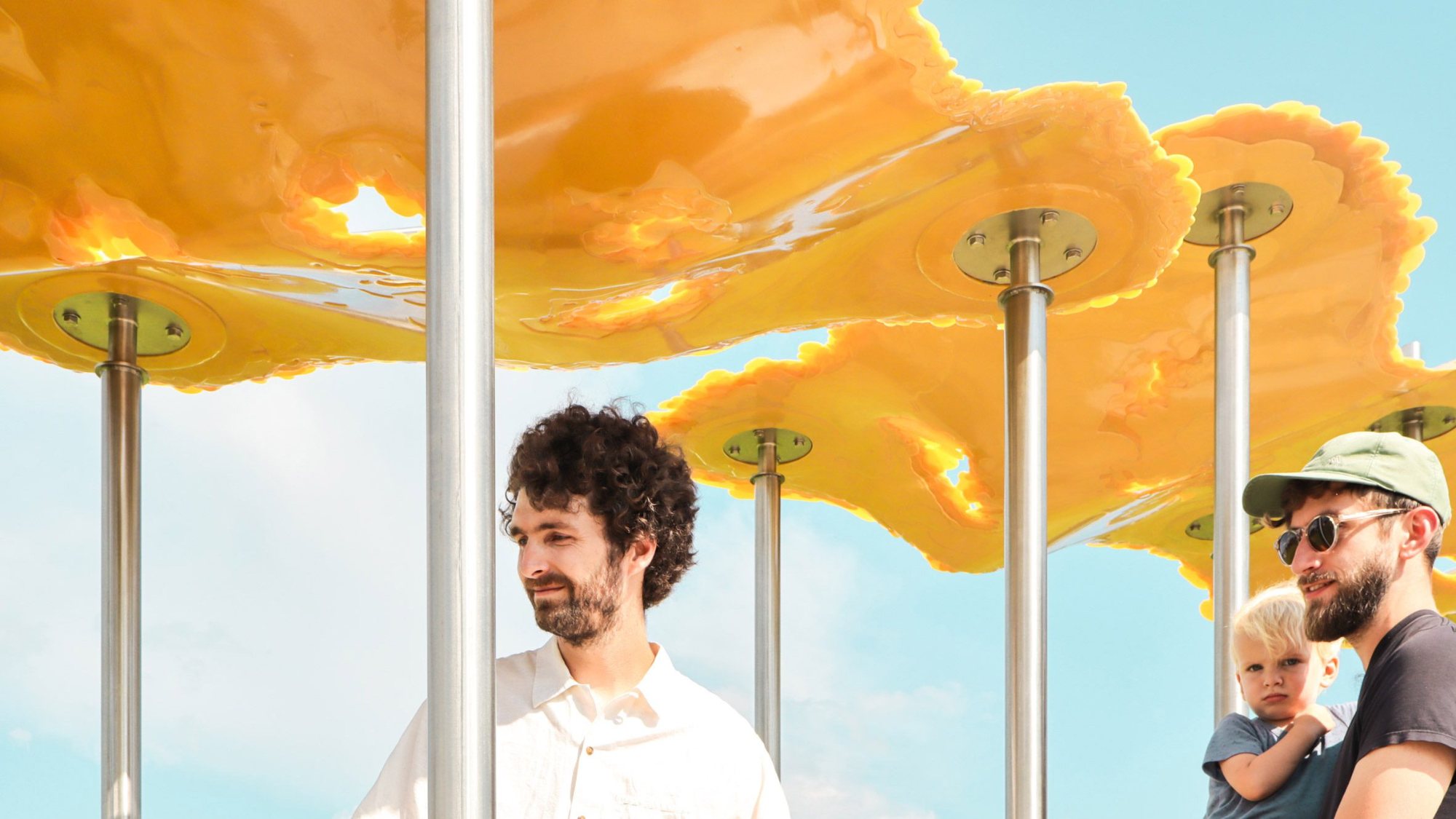
Puddle Pavilion stands along Mud Creek in Bondurant, Iowa, where i/thee has transformed algae-based bio-resin into a public canopy for Eagle Park. The Arizona design studio created the installation as part of a series of pavilions in the Iowa park system and the ARTocka Trail Loop, an initiative that activates local greenspace through public art installations. The work gives visitors a place to pause near the water and, according to i/thee, to “engage more deeply” with the creekside site.
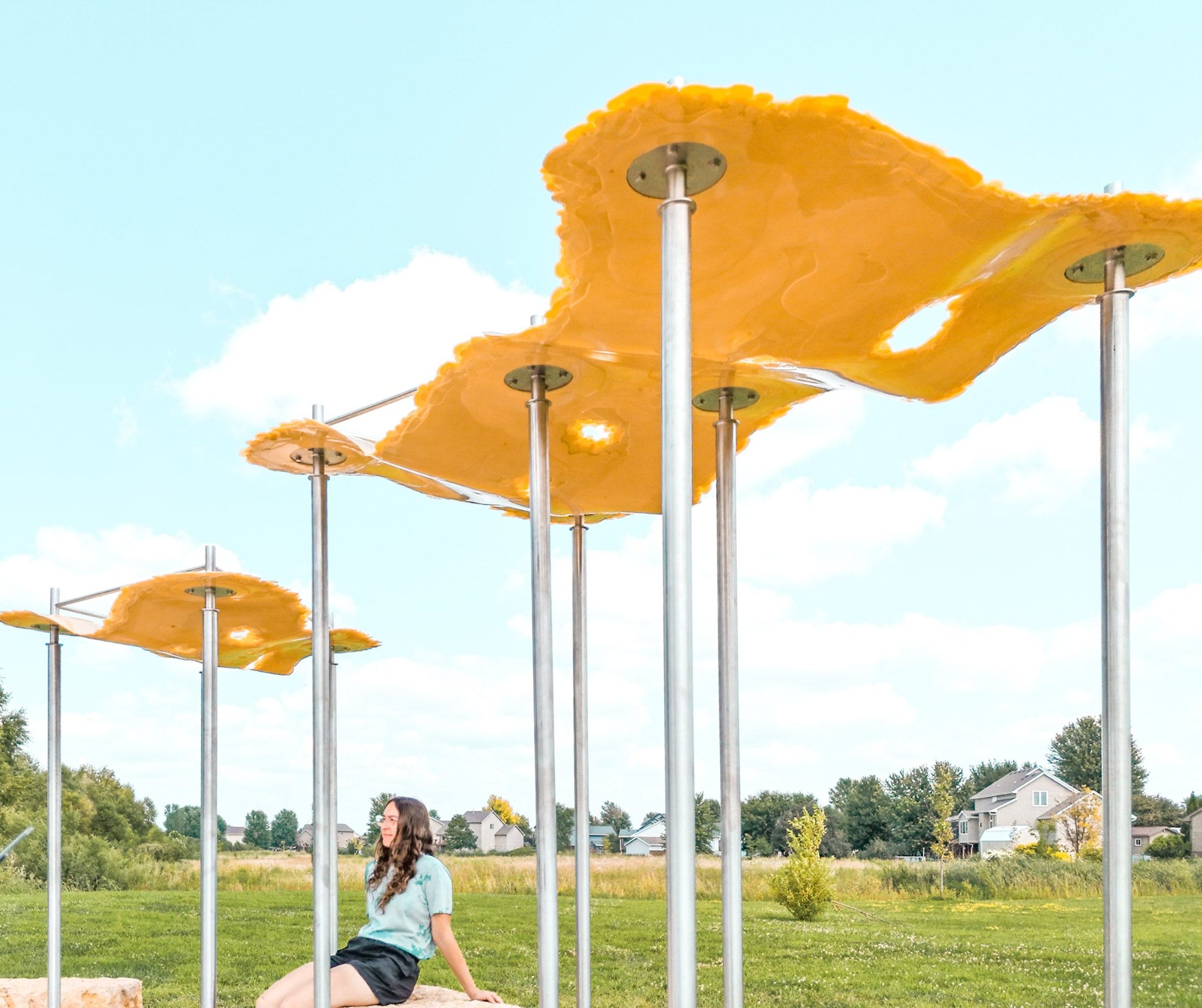
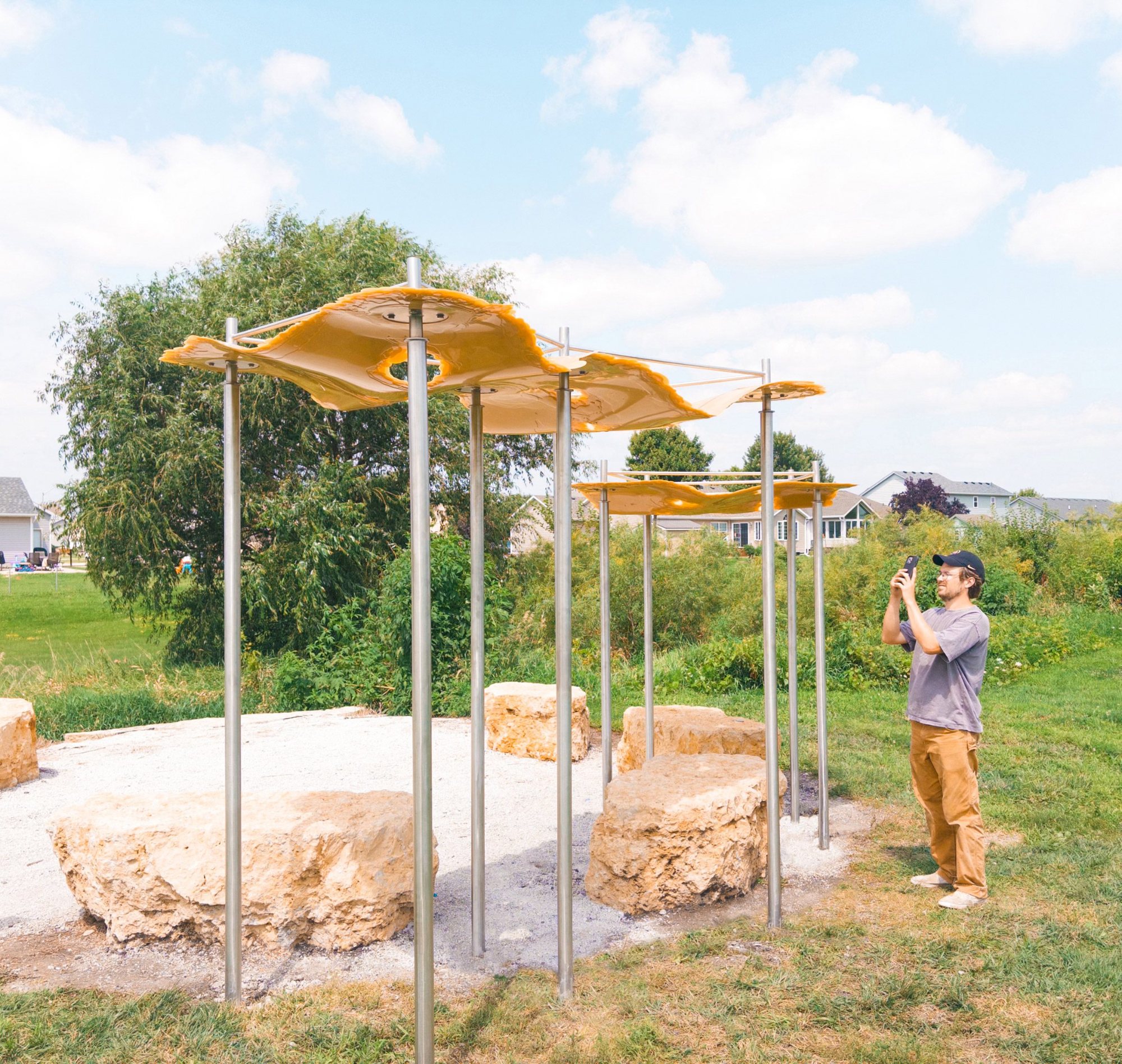
“The Puddle Pavilion is a free-form canopy made of algae-based bio-resin, poured, splattered, and flung directly onto the ground without any formwork before being suspended on slender steel columns to create a frozen river in the sky,” said the studio.
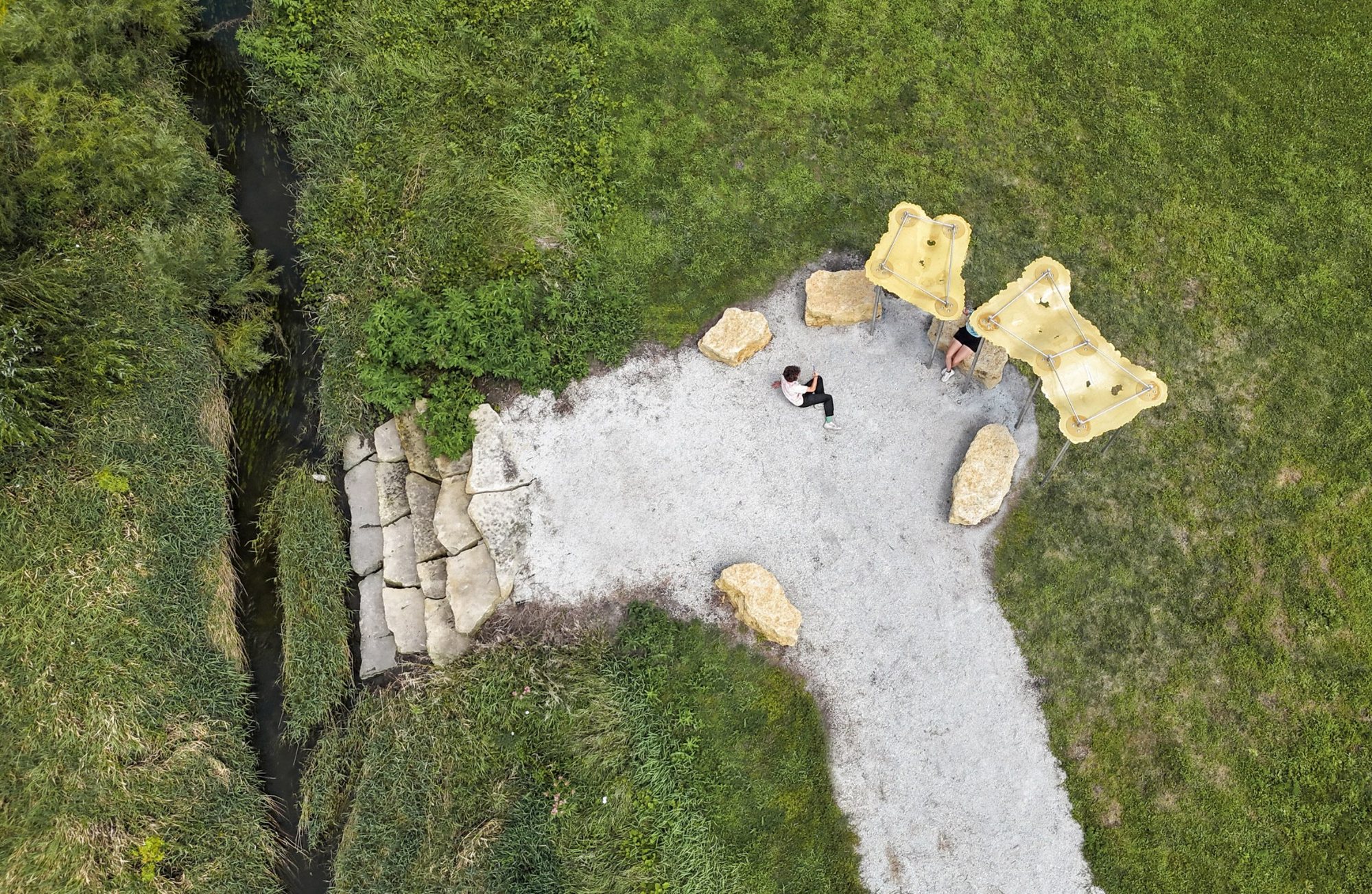
The pavilion is composed of two volumes beside a stone pathway leading toward the adjacent creek. Large boulders placed around the structure serve as informal seating and form a staircase down to the water. Above the pathway and stones, two bright-yellow, undulating canopies rest on custom steel columns. The steel supports are fixed to the undersides of the resin sheets, while added structural members connect the columns above the canopies.
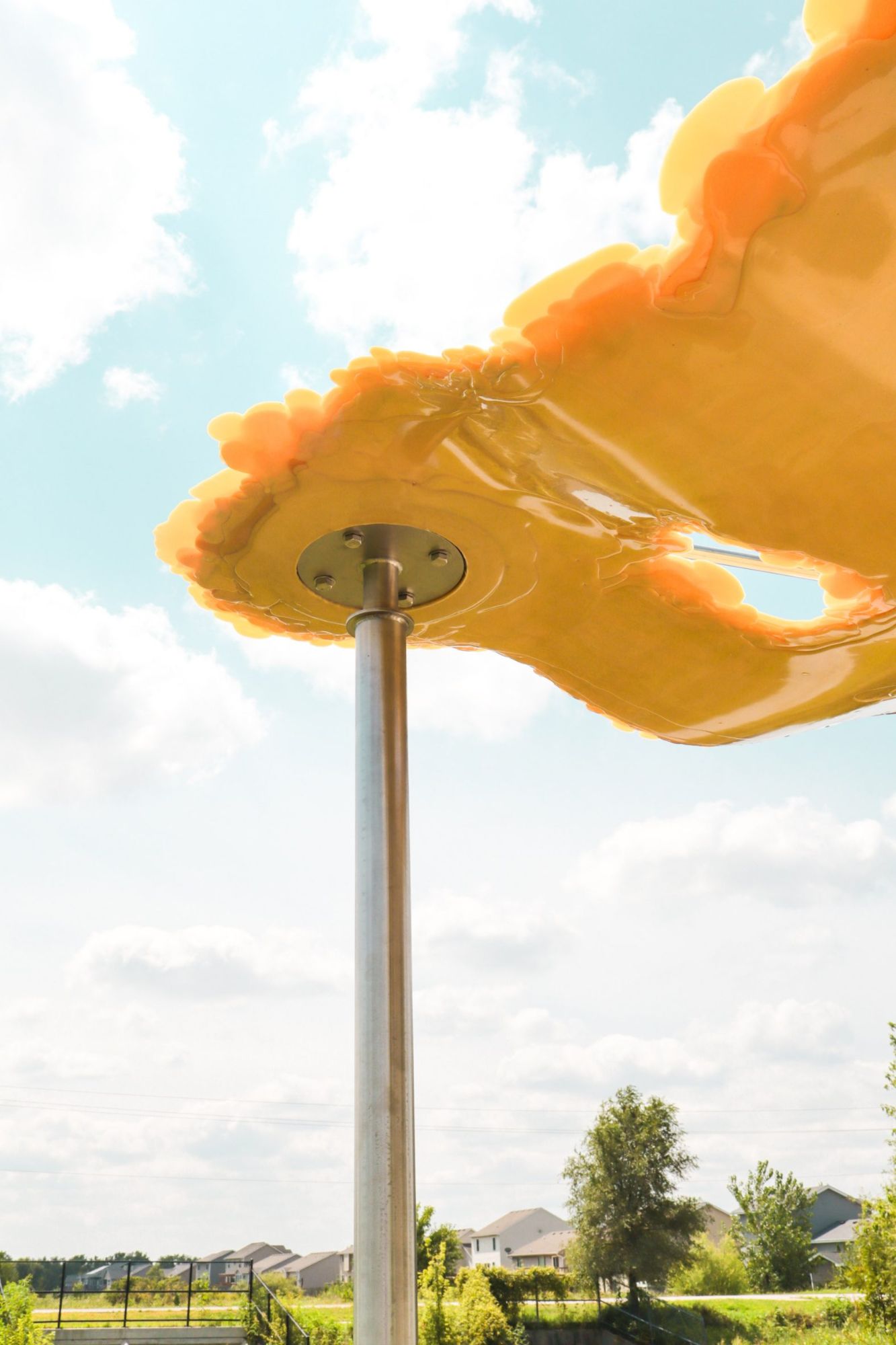
i/thee made the canopy material from a resin containing 56 percent bio-based content derived from algae oil produced by Checkerspot. The team mixed the resin by hand before pouring it onto the ground, where it hardened in its puddle form. The process avoided molds and conventional formwork, reducing casting waste while allowing the material to determine its own geometry.
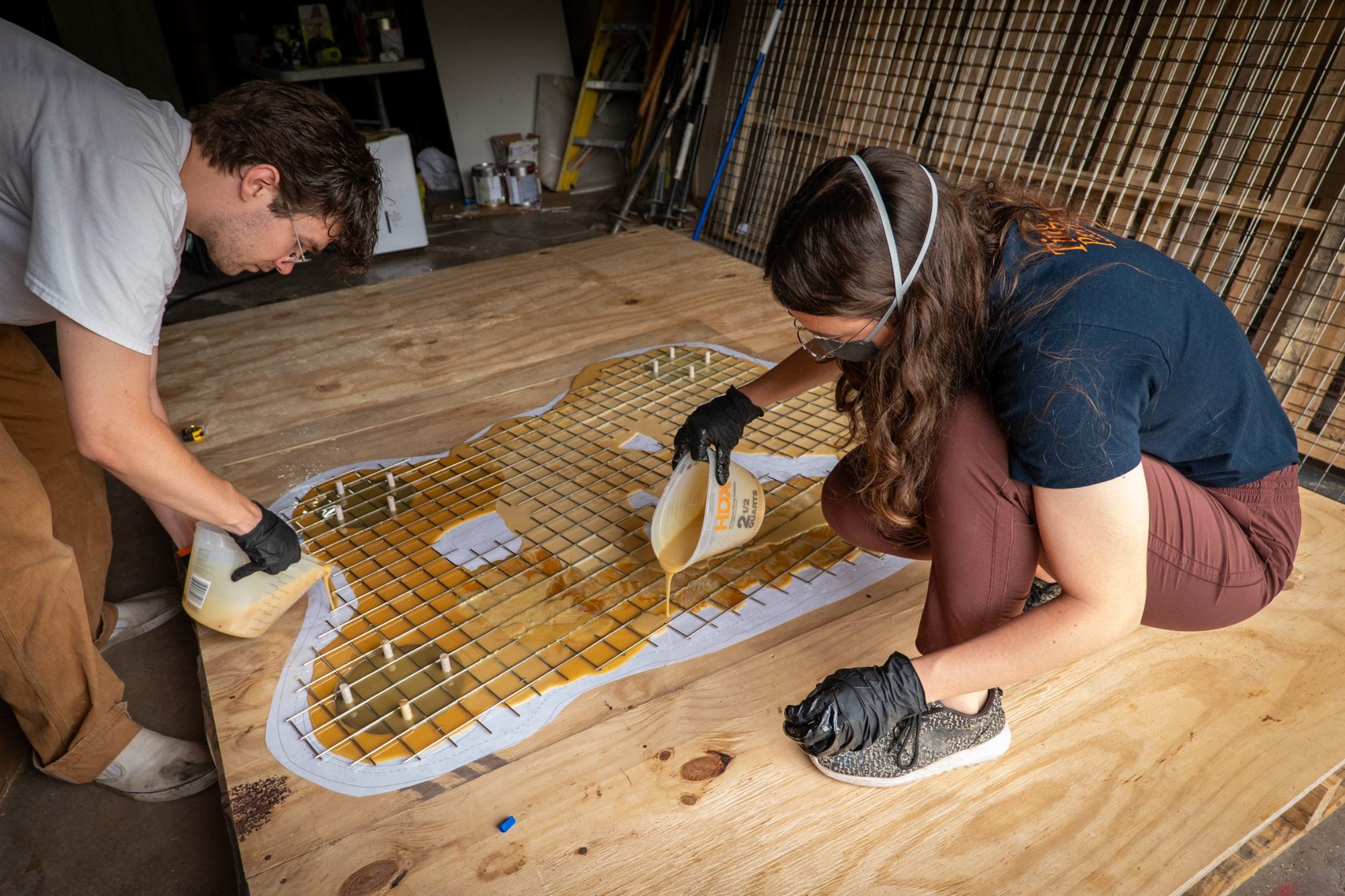
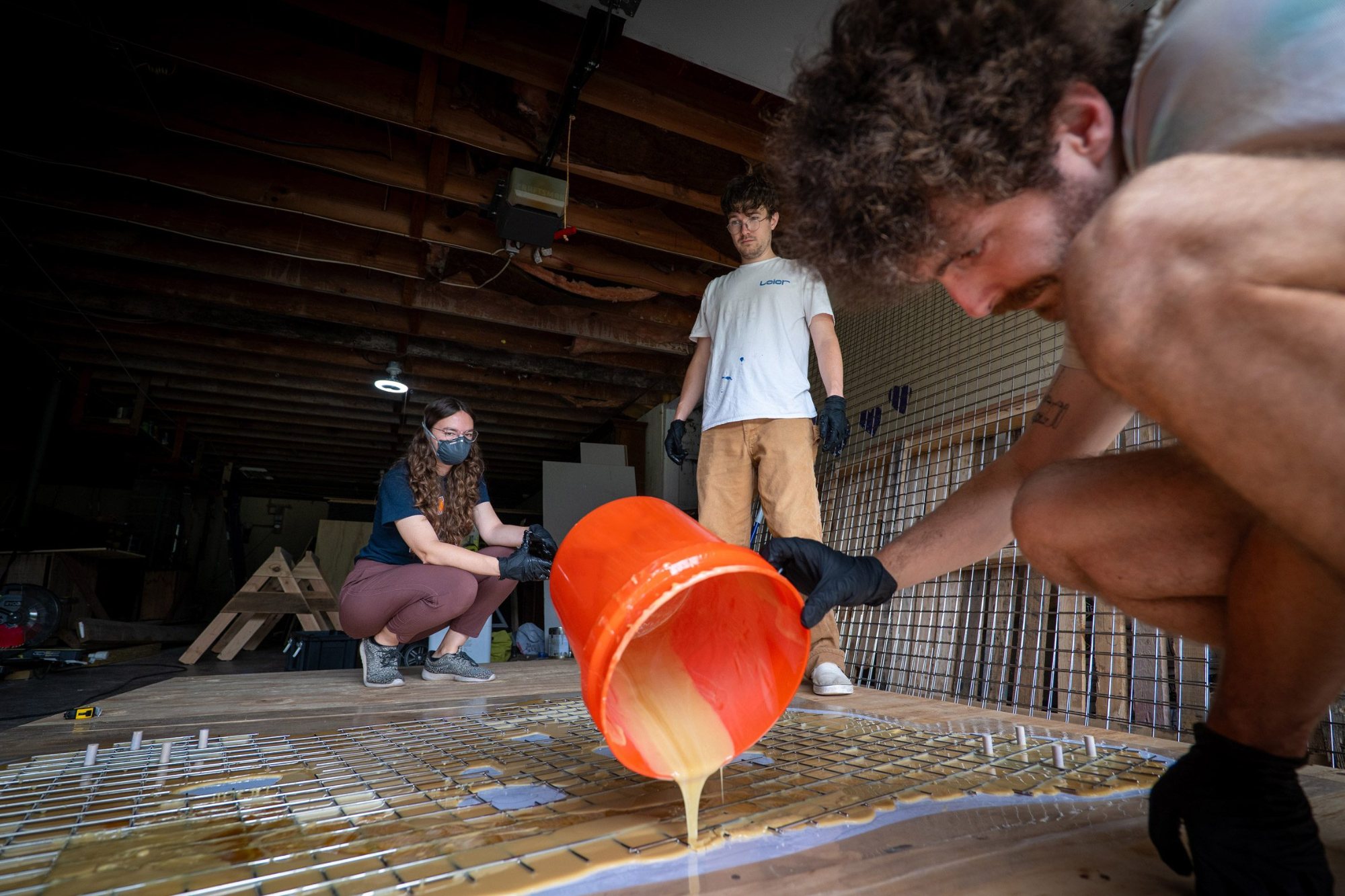
Project leads Neal Lucas Hitch, Kristina Fisher, and Martin Hitch frame the work through i/thee’s method of “Action Architecture,” where design develops through making rather than through a fixed top-down plan. The studio gave material behavior an active role in the construction process. Gravity, surface tension, fluid dynamics, temperature, and wind shaped the resin into uneven sheets with curled edges and layered thickness.
“The Pavilion is not a metaphor: it is not like a puddle, but rather it is a puddle – made by carefully poured layers of algae-based resin, left to find their own forms under the influence of natural forces such as gravity, surface tension, and fluid dynamics, as well as environmental variables including temperature and wind speed,” said the studio.
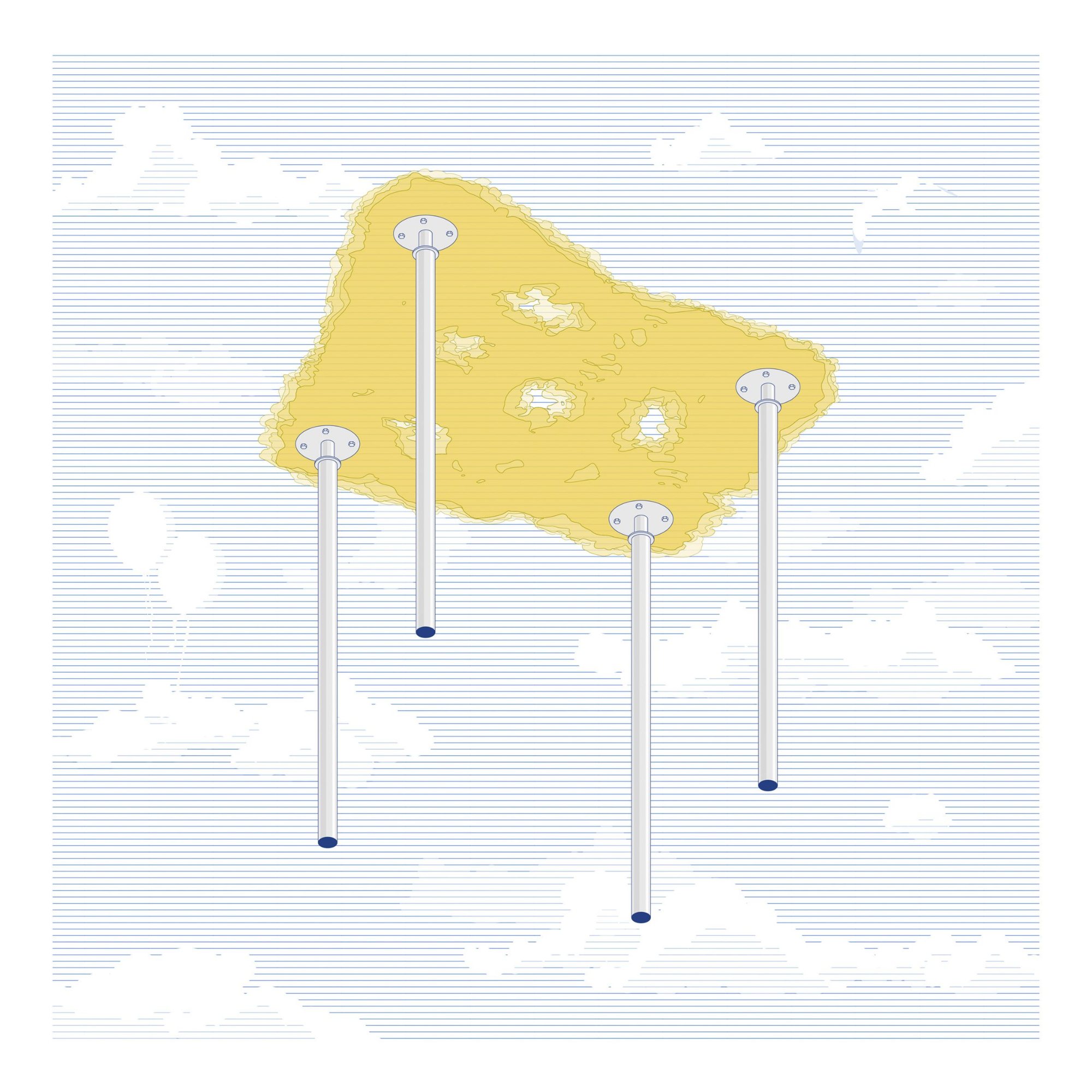
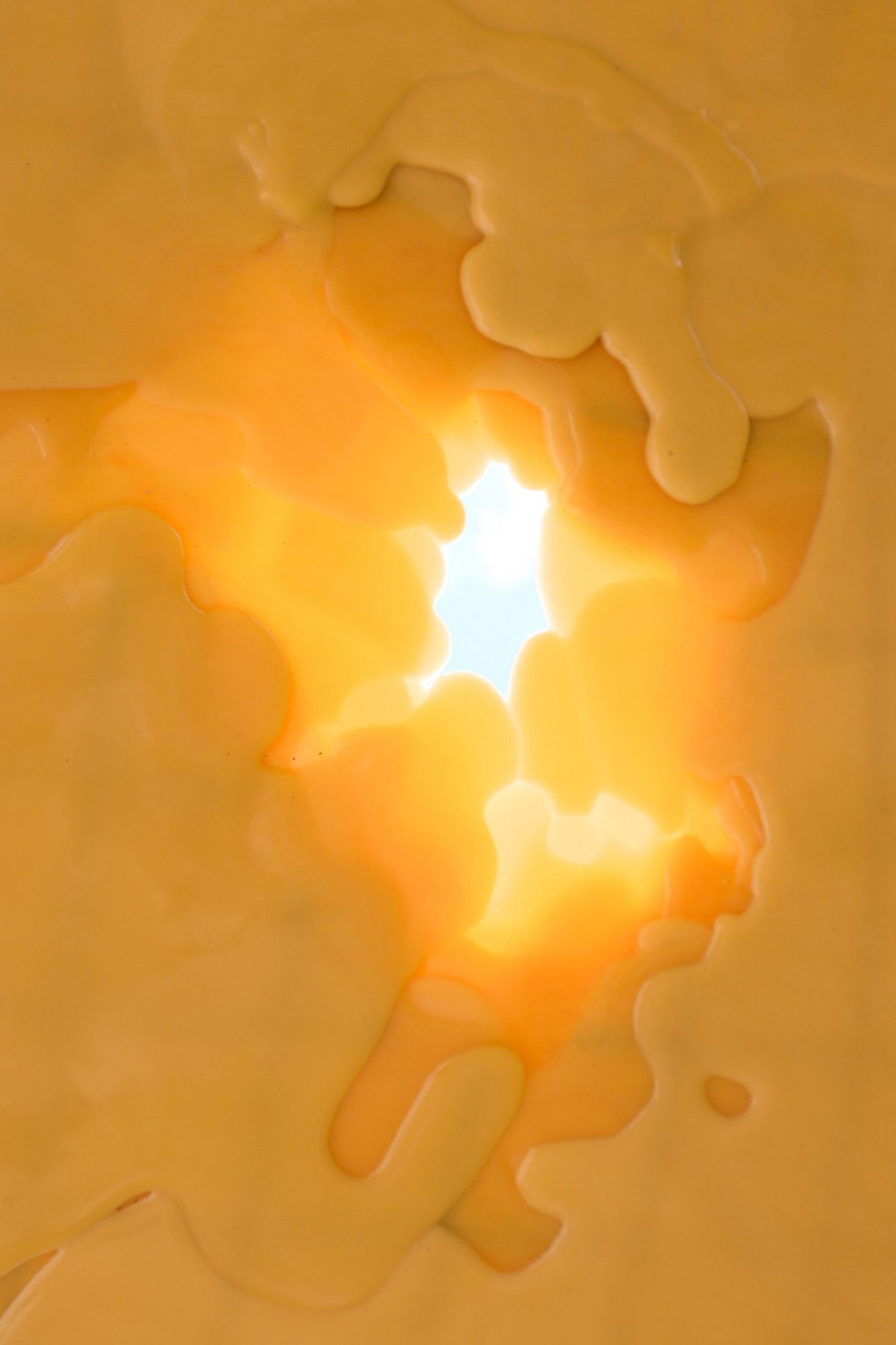
After curing, the resin sheets were raised onto slender steel columns, with engineering by Schlaich Bergermann Partner and steel fabrication by Zeus Welds. Seen from above, the work reads as a frozen resin river. Seen from below, its semi-transparent surface filters light, casts irregular shadows, and frames views of the surrounding greenery. The canopy appears closer to water held in the air than to a conventional pavilion roof.
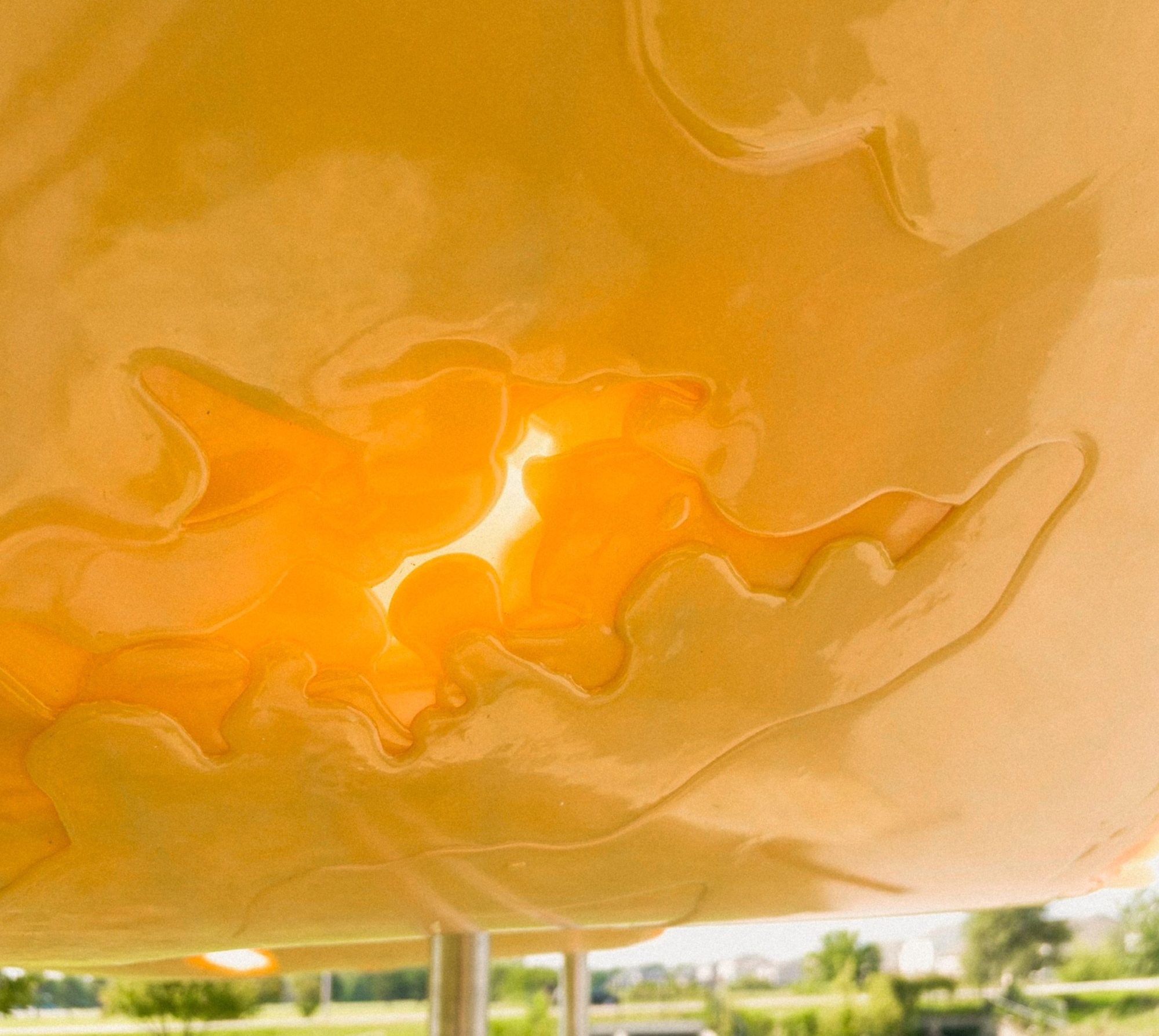
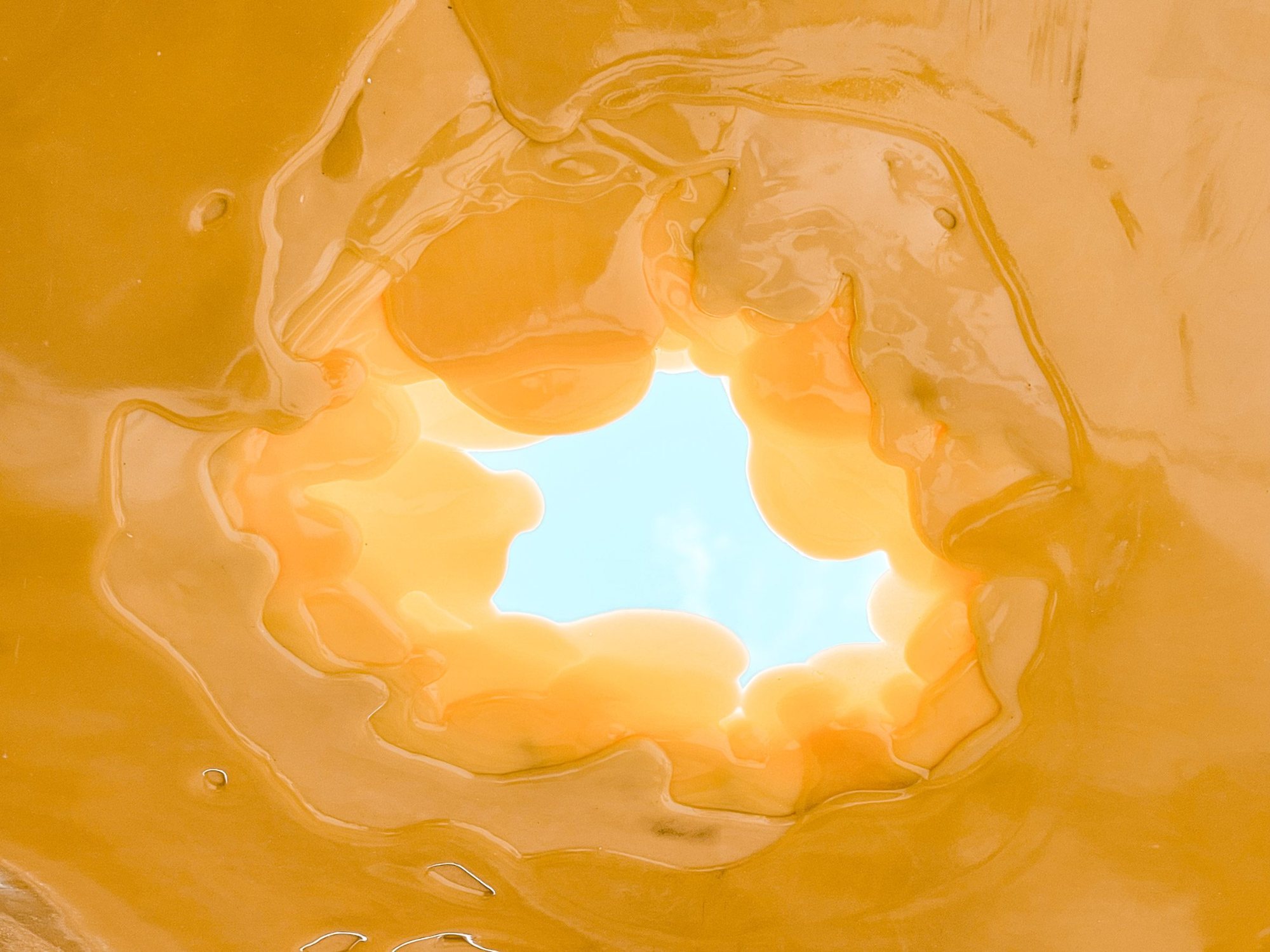
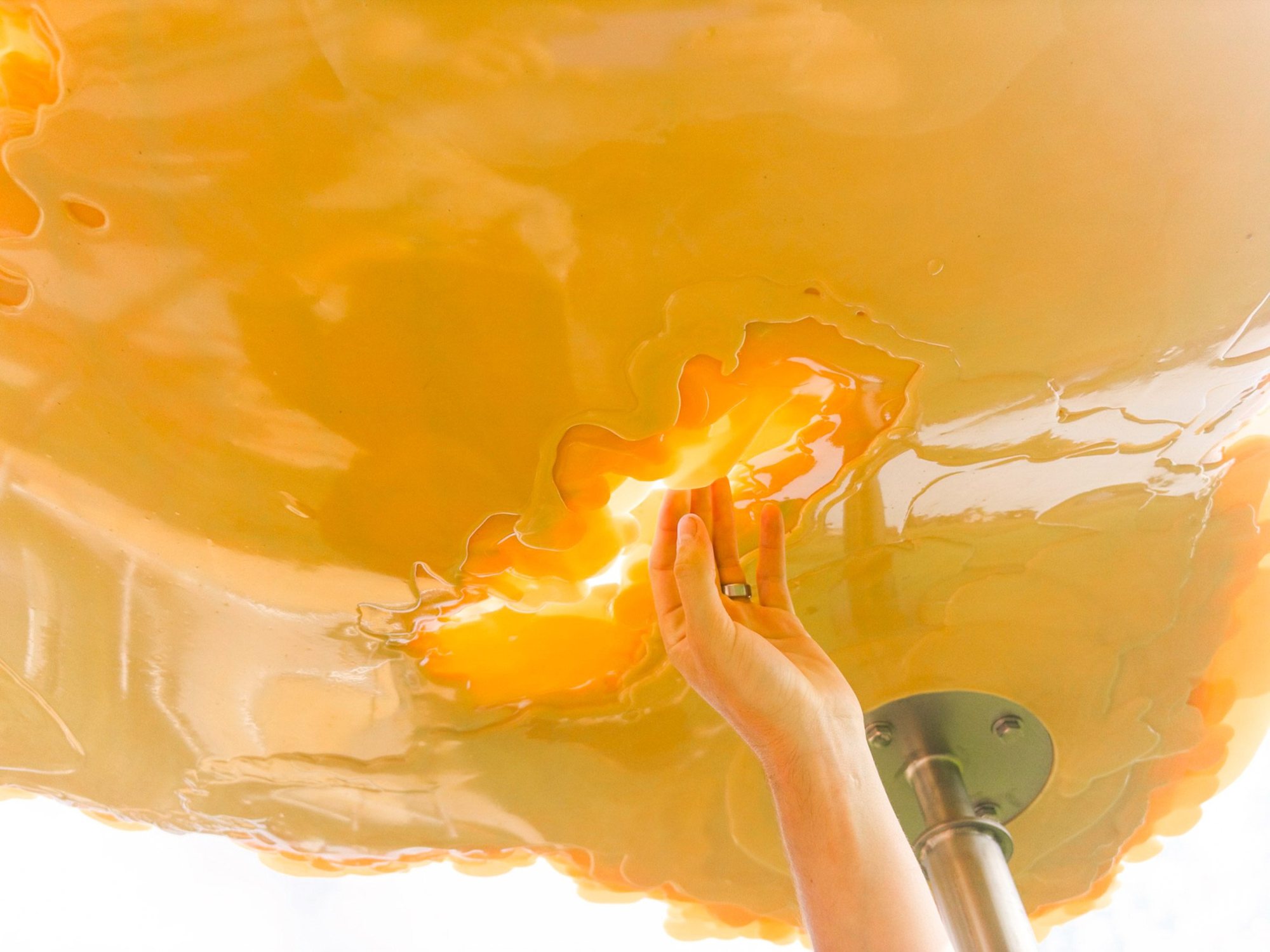
i/thee describes the project as an exploration of Abstract Realism. The pavilion does not depict or symbolize a natural condition; it forms through direct contact with natural forces. Its abstraction comes from the absence of a fixed composition, while its realism comes from physical formation. The project places architectural control in dialogue with chance, treating the site as a collaborator in the design process.
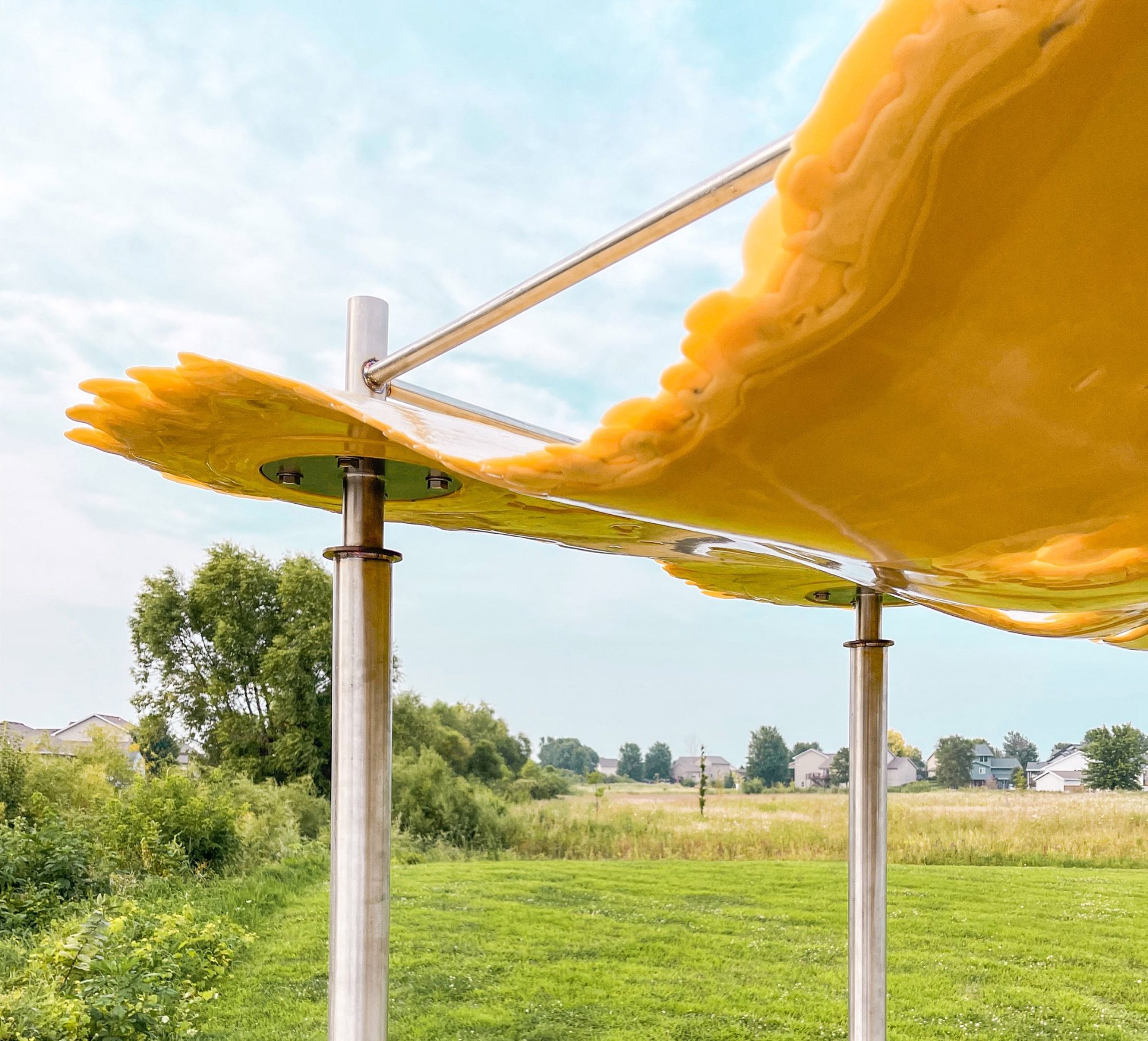
Puddle Pavilion continues i/thee’s work along the Mud Creek floodplain. The Dining Room, completed in 2024, used rammed-earth walls deliberately left to erode into frames and included bright blue picnic benches. The Garden, planned for 2026, will introduce a fractal boardwalk through the terrain. Together, the works create a gradual masterplan that treats Mud Creek as public space, ecological setting, and site for material experimentation.
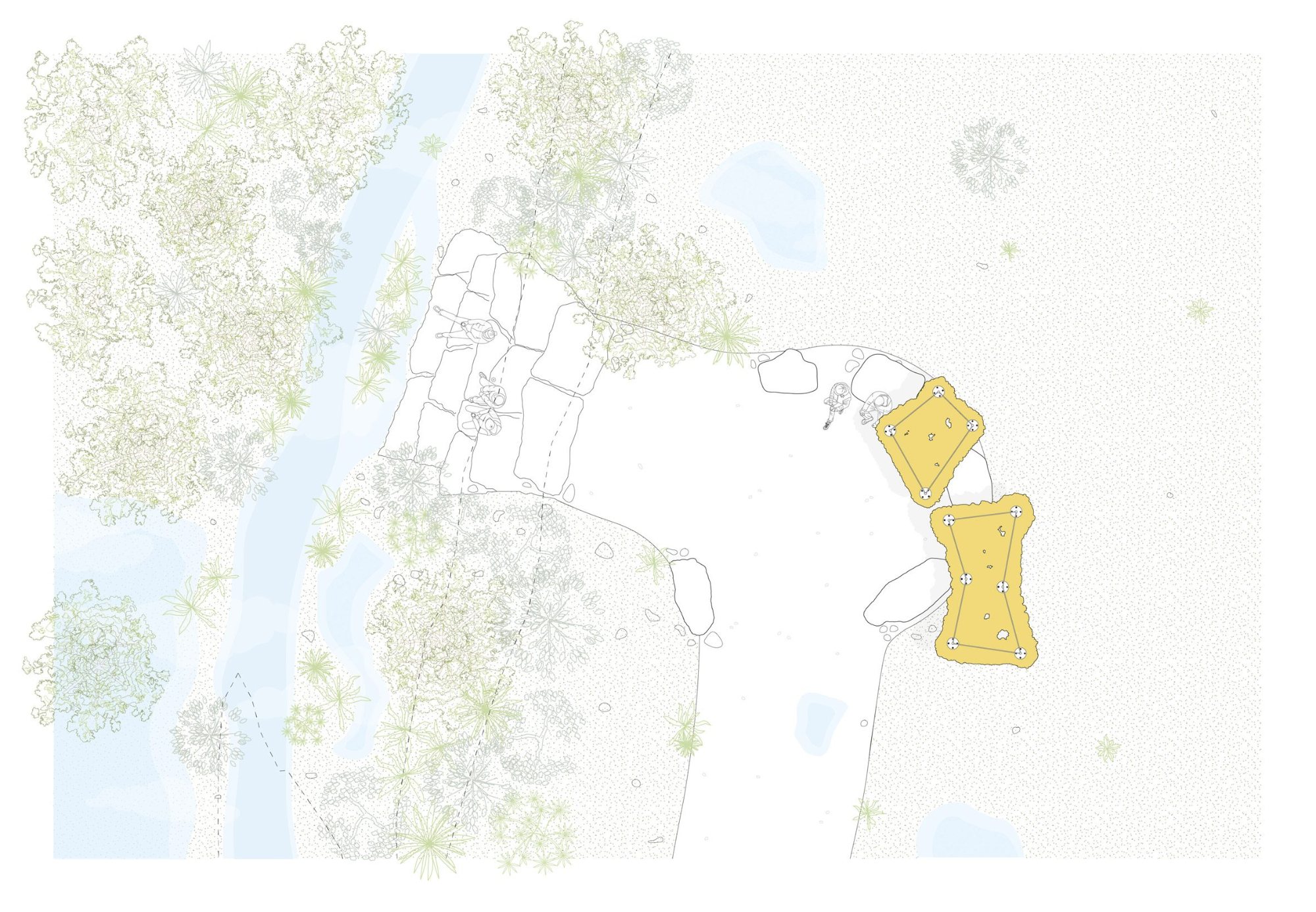
The project presents algae-based bio-resin as a renewable alternative to petroleum-based plastics. Its use connects the pavilion to broader research into algae-derived materials, including Checkerspot’s kit for making components from algae-based plastics and algae-based carbon-neutral concrete developed by researchers at the University of Colorado Boulder. In Bondurant, that research becomes a public threshold where children play, community events gather, and visitors meet the creek through architecture.
Gallery