

Architects: Mies van der Rohe
Area: 78,876 m² (849,014 ft²)
Year: 1958
Photography: Mies van der Rohe, Ben Pentreath, 375parkavenue.com, Smallforks, Ezra Stoller, House of Patria, Gottscho Schleisner, Gottscho-Schleisner Collection, Irving Penn, Richard Pare, Elisa.rolle, Steven Bornholtz, Epicgenius, Jules Antonio, Ken OHYAMA, dandeluca
Co-Architect: Philip Johnson
Associate Architects: Ely Jacques Kahn; Robert Allan Jacobs
Structural Engineer: Severud Associates
Mechanical Engineer: Jaros, Baum & Bolles
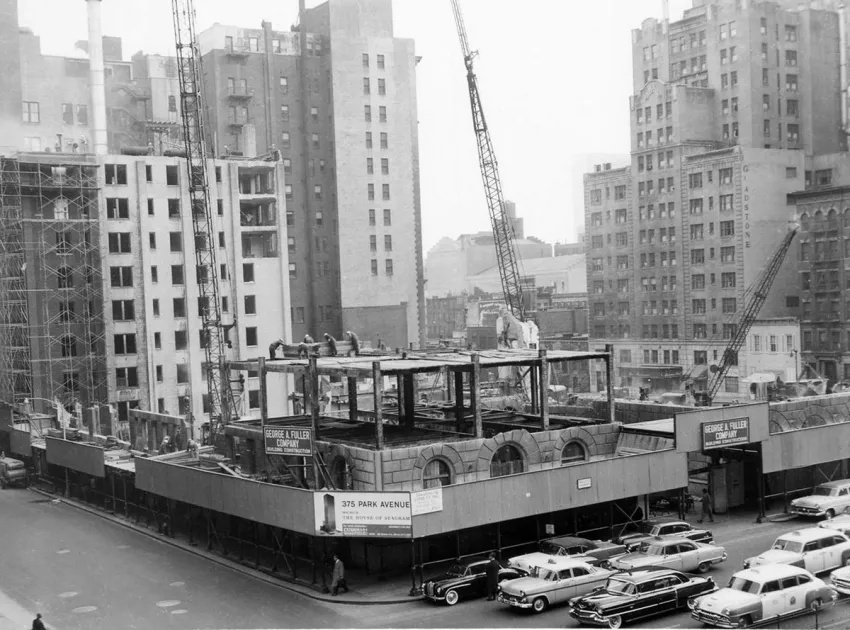
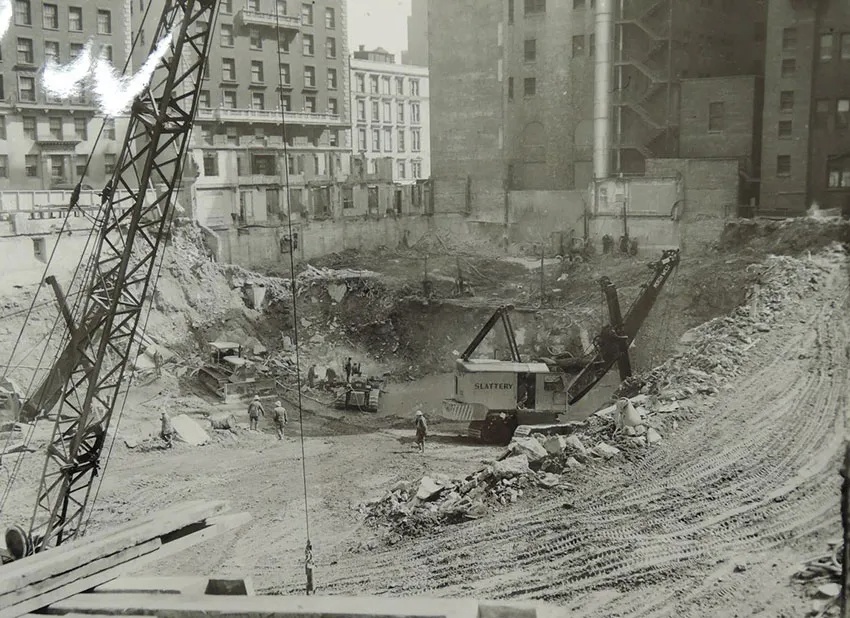
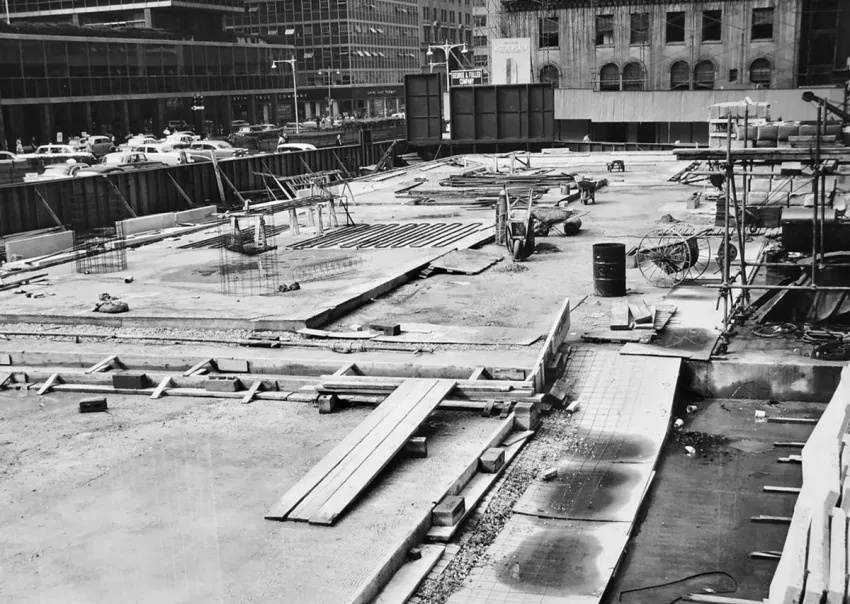
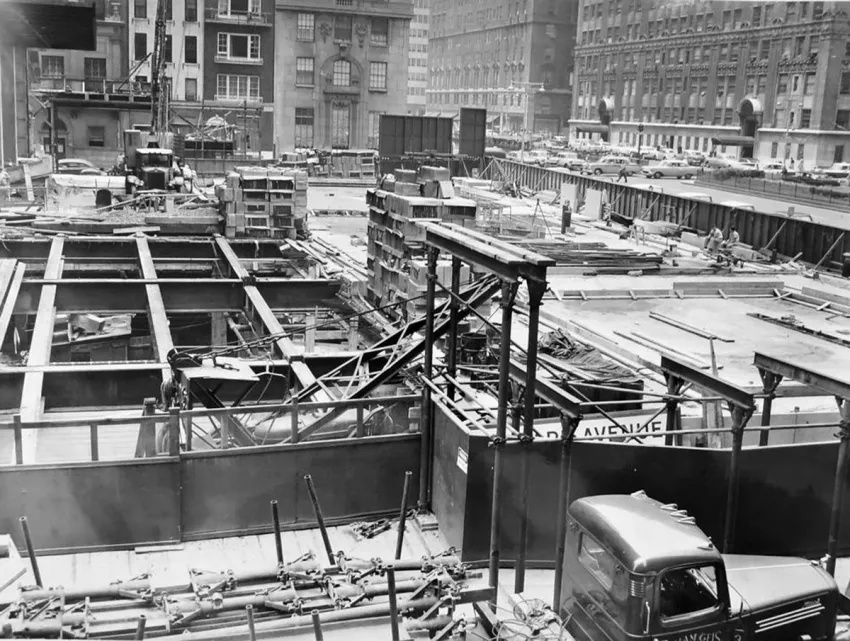
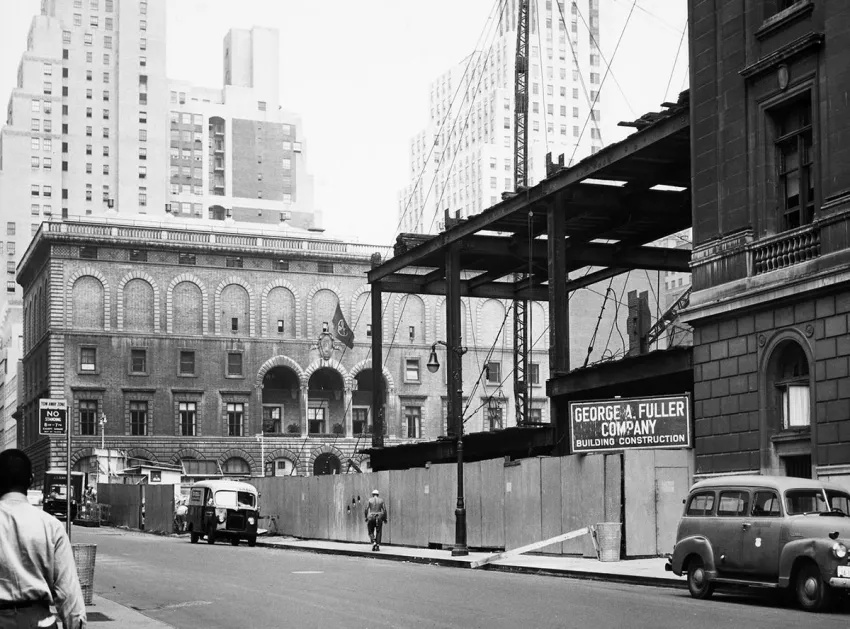
Construction: George A. Fuller Company
Client: Joseph E. Seagram & Sons, Phyllis Lambert
City: New York City
Country: United States
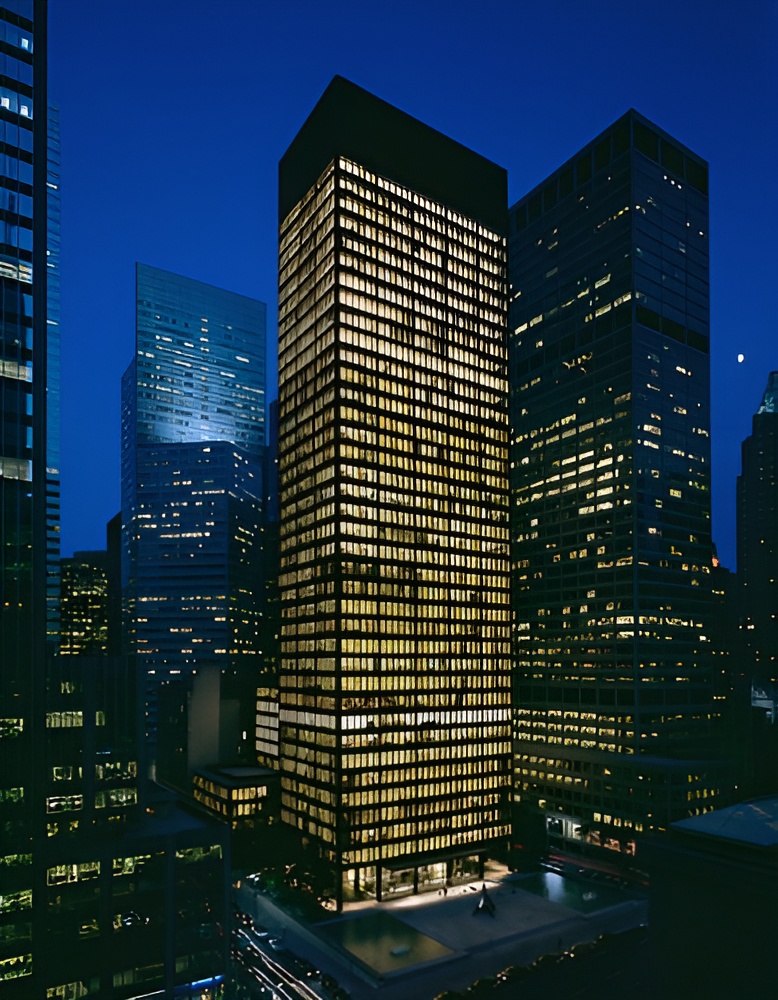
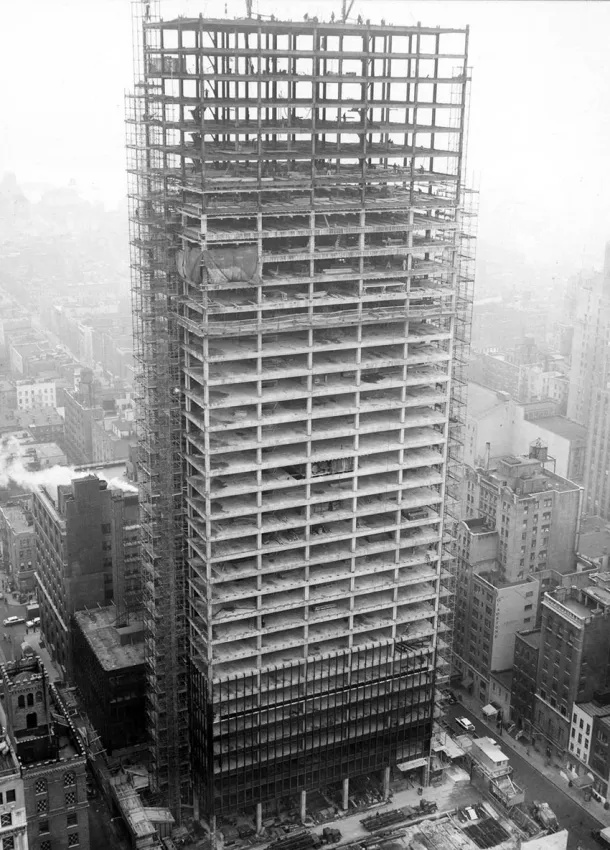
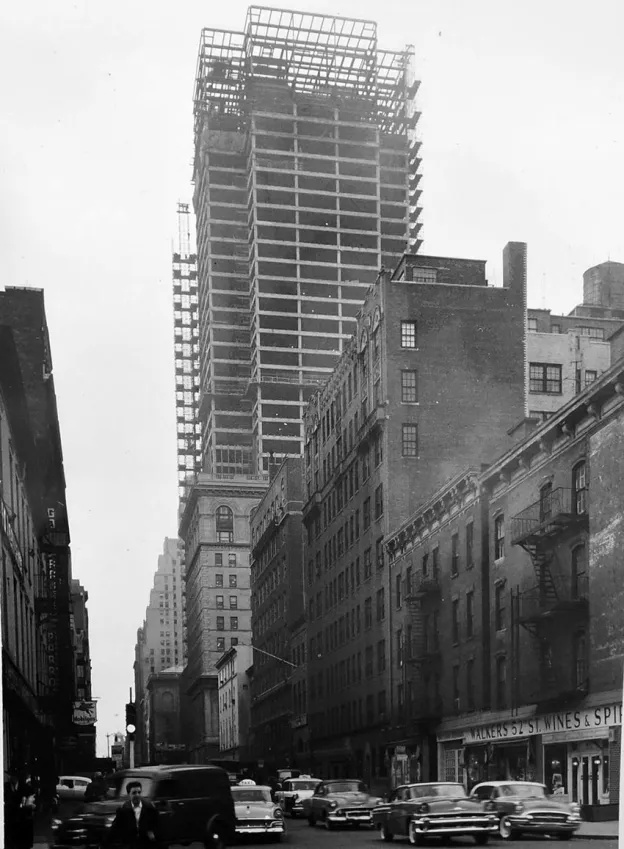
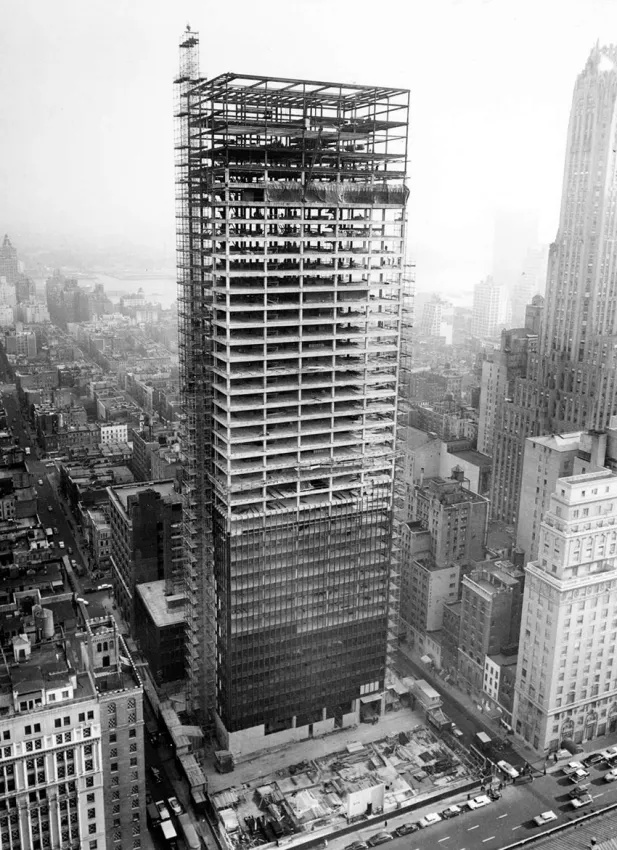
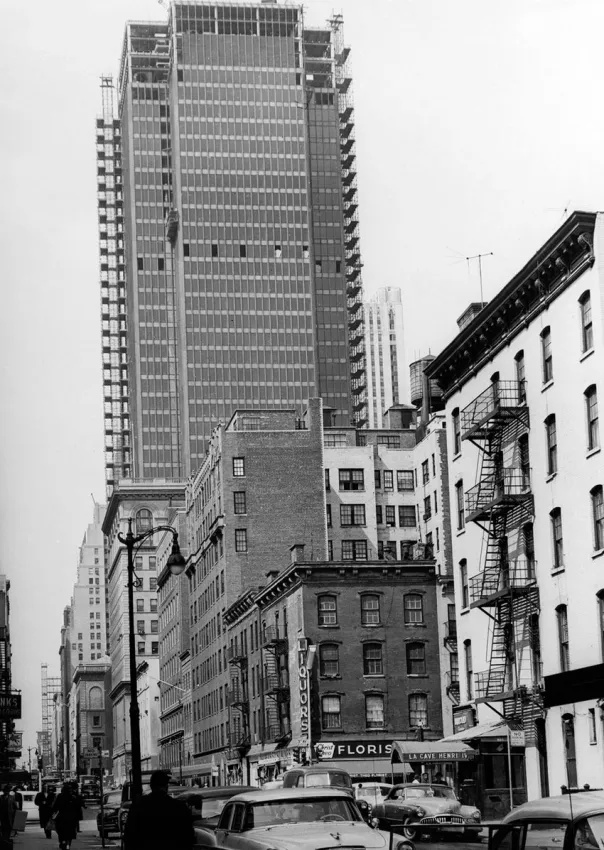
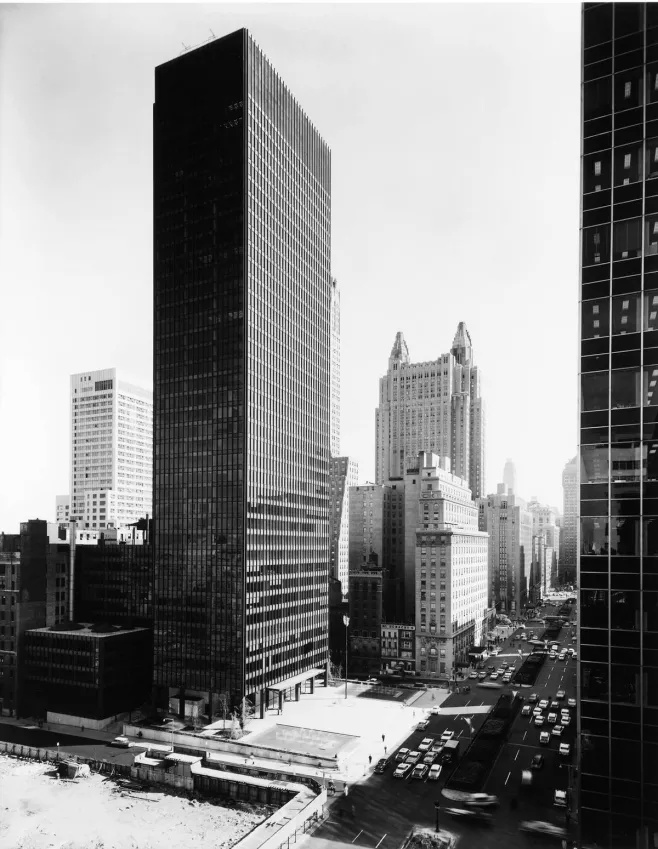
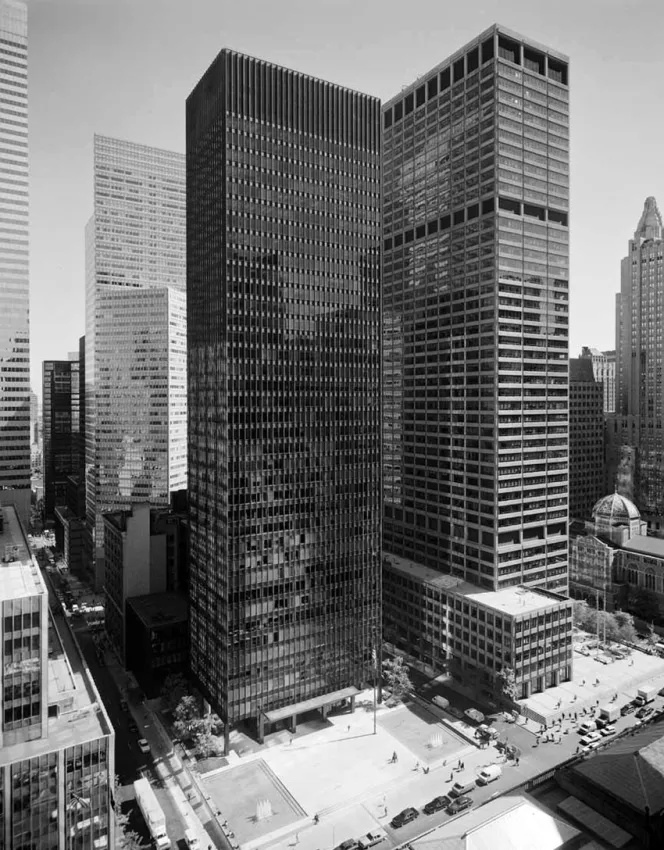
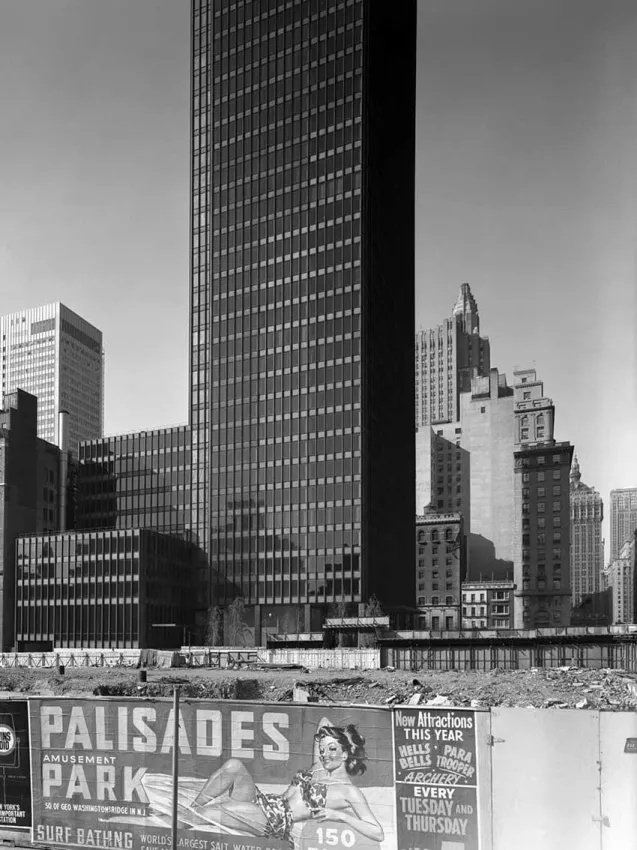
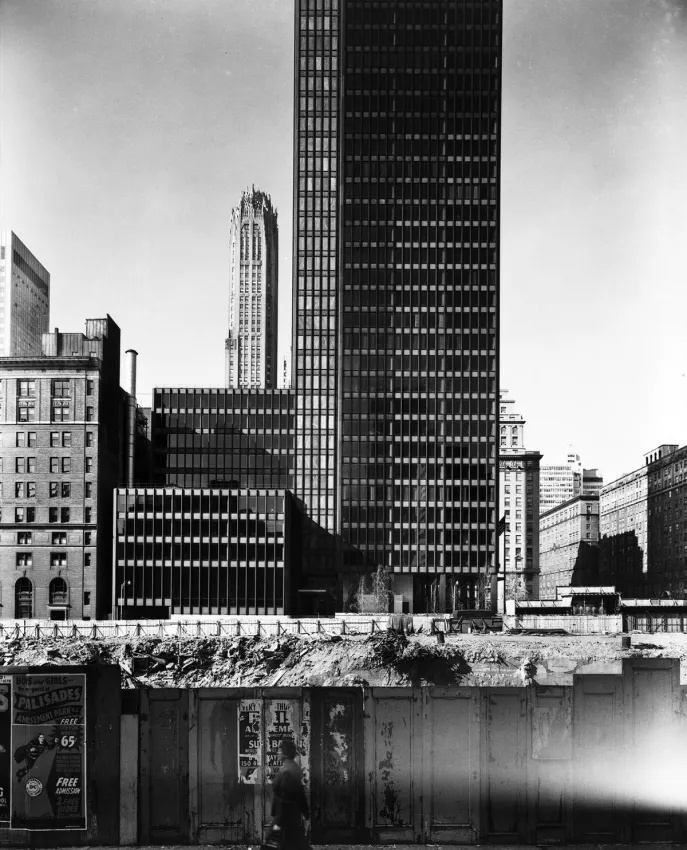
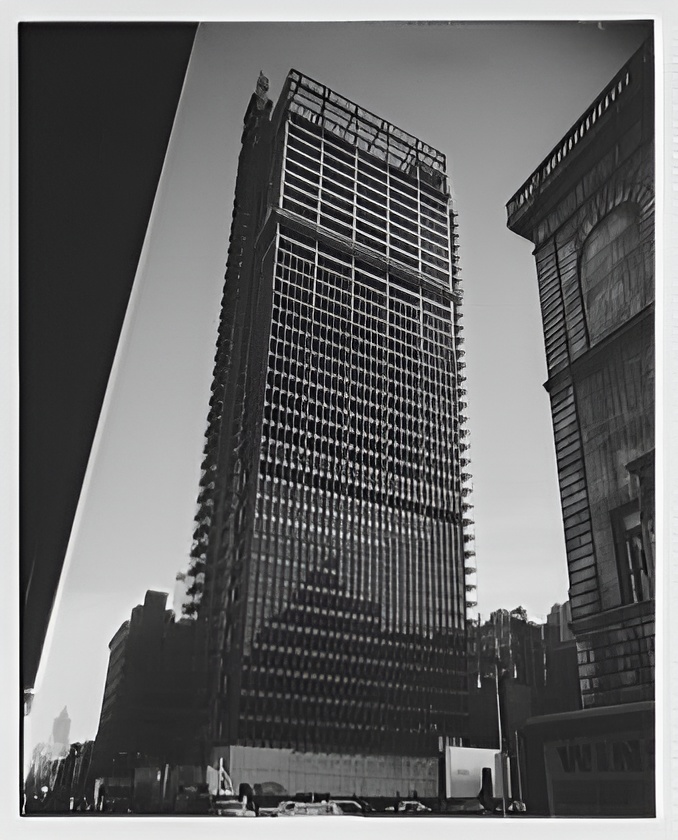
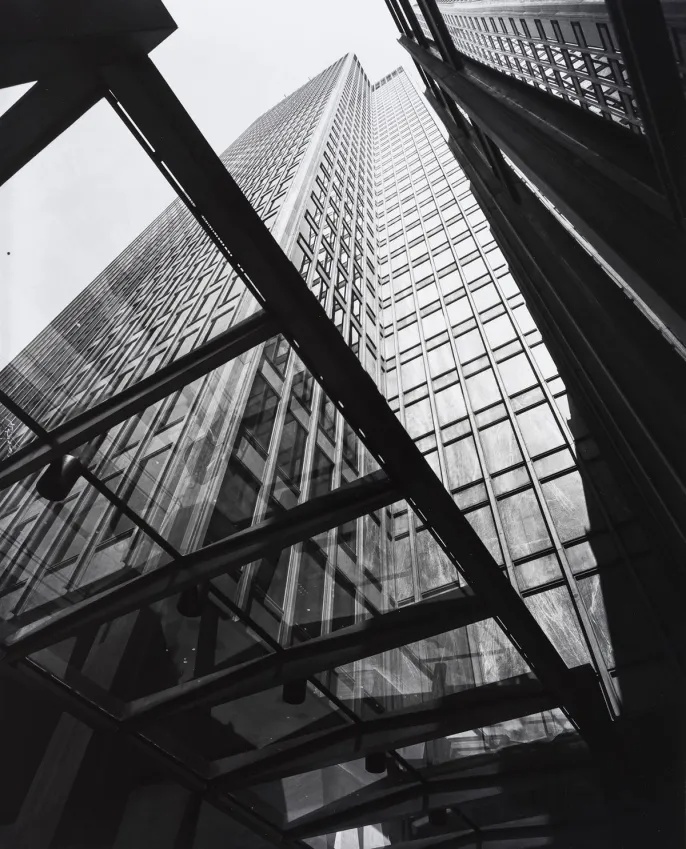
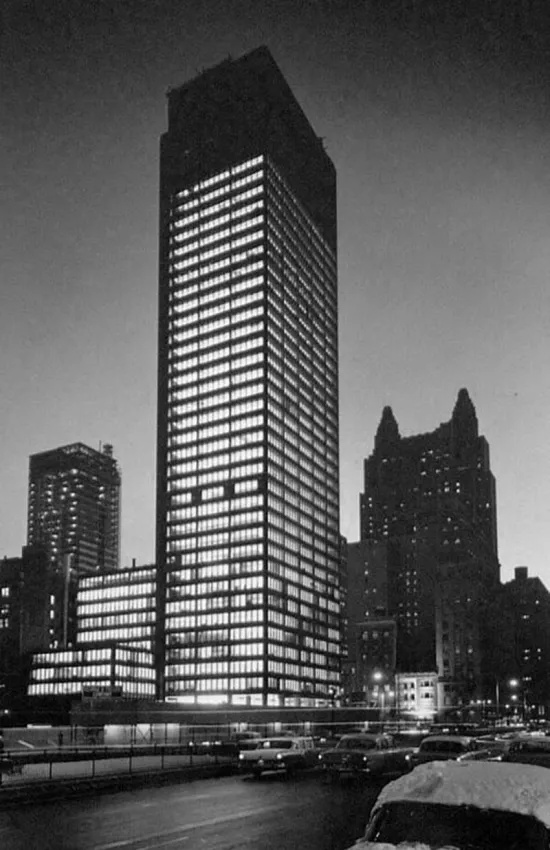
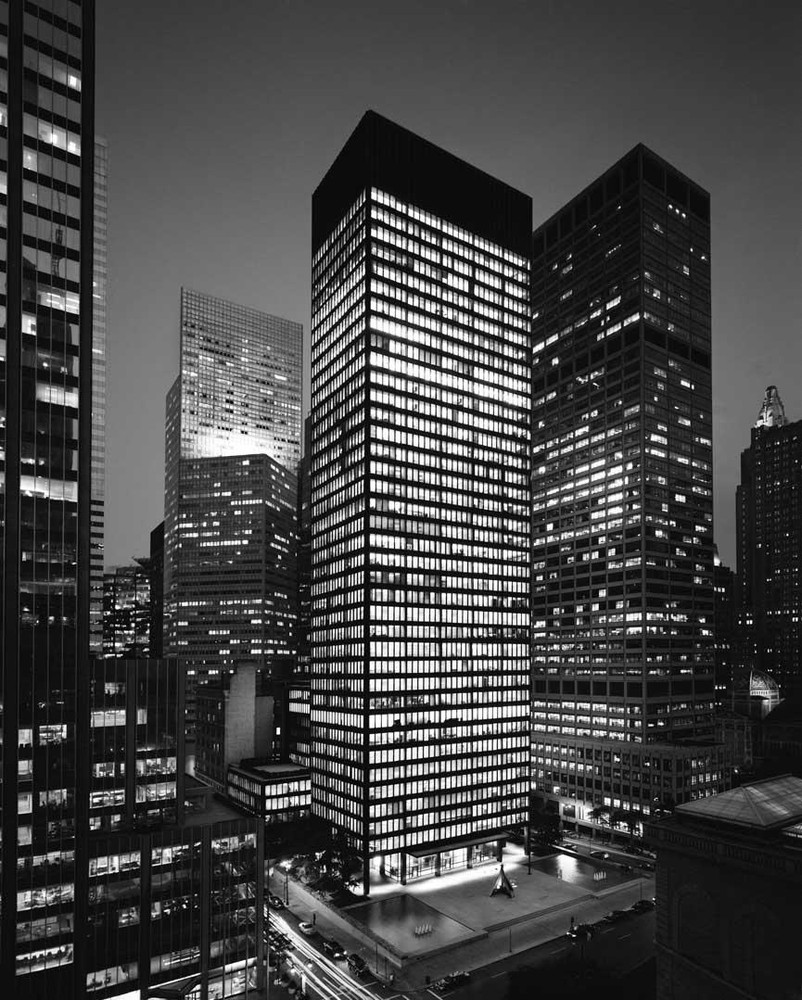
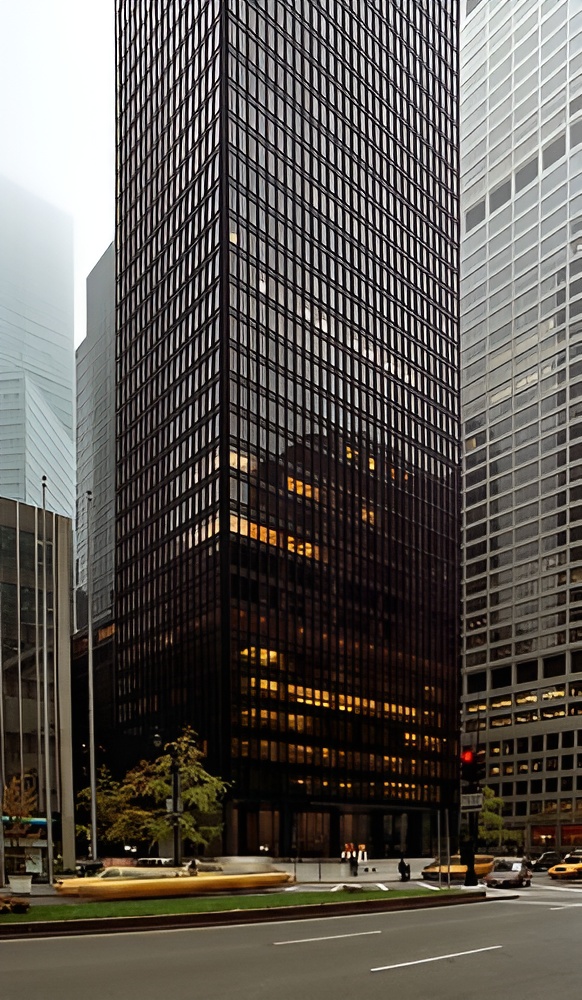
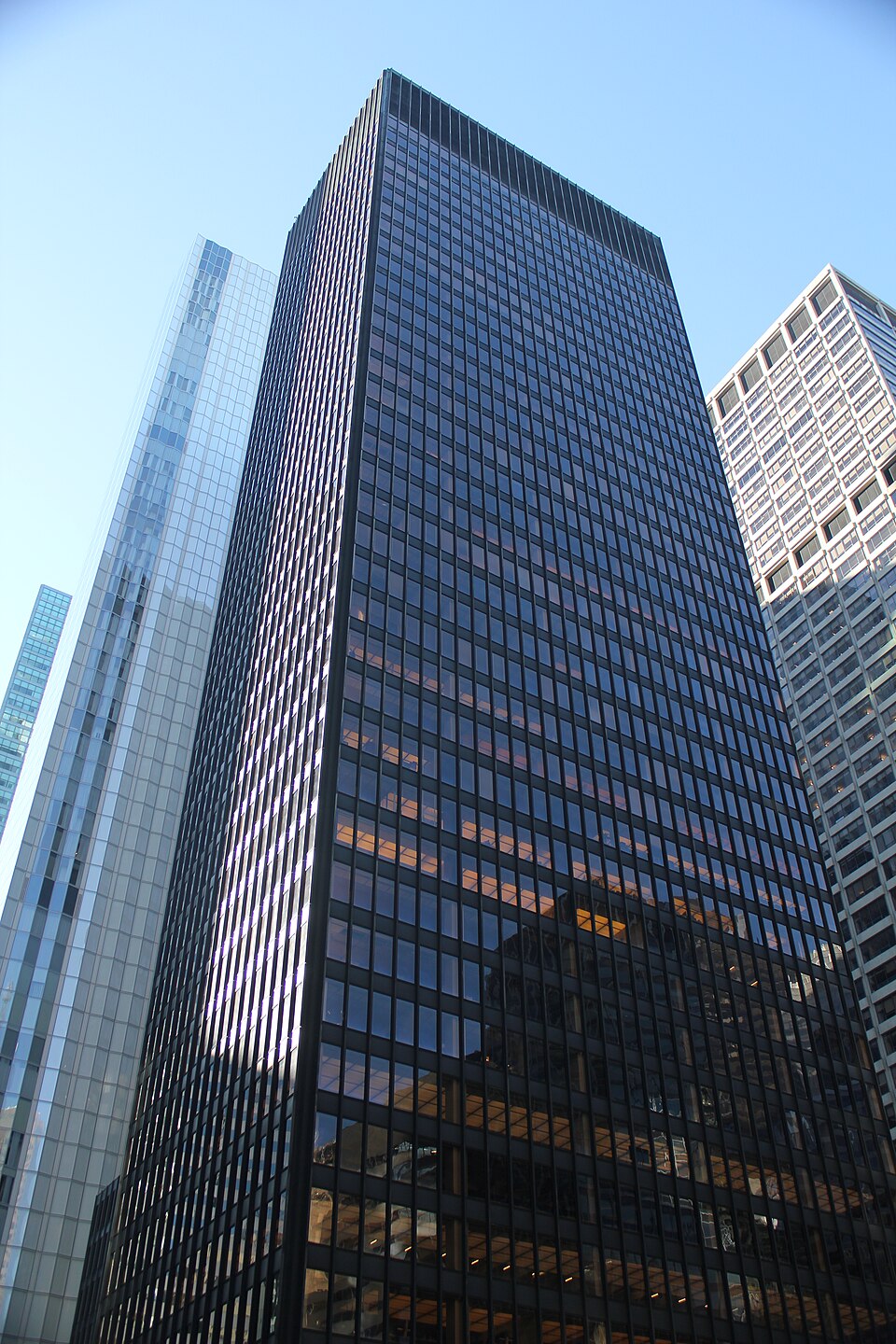
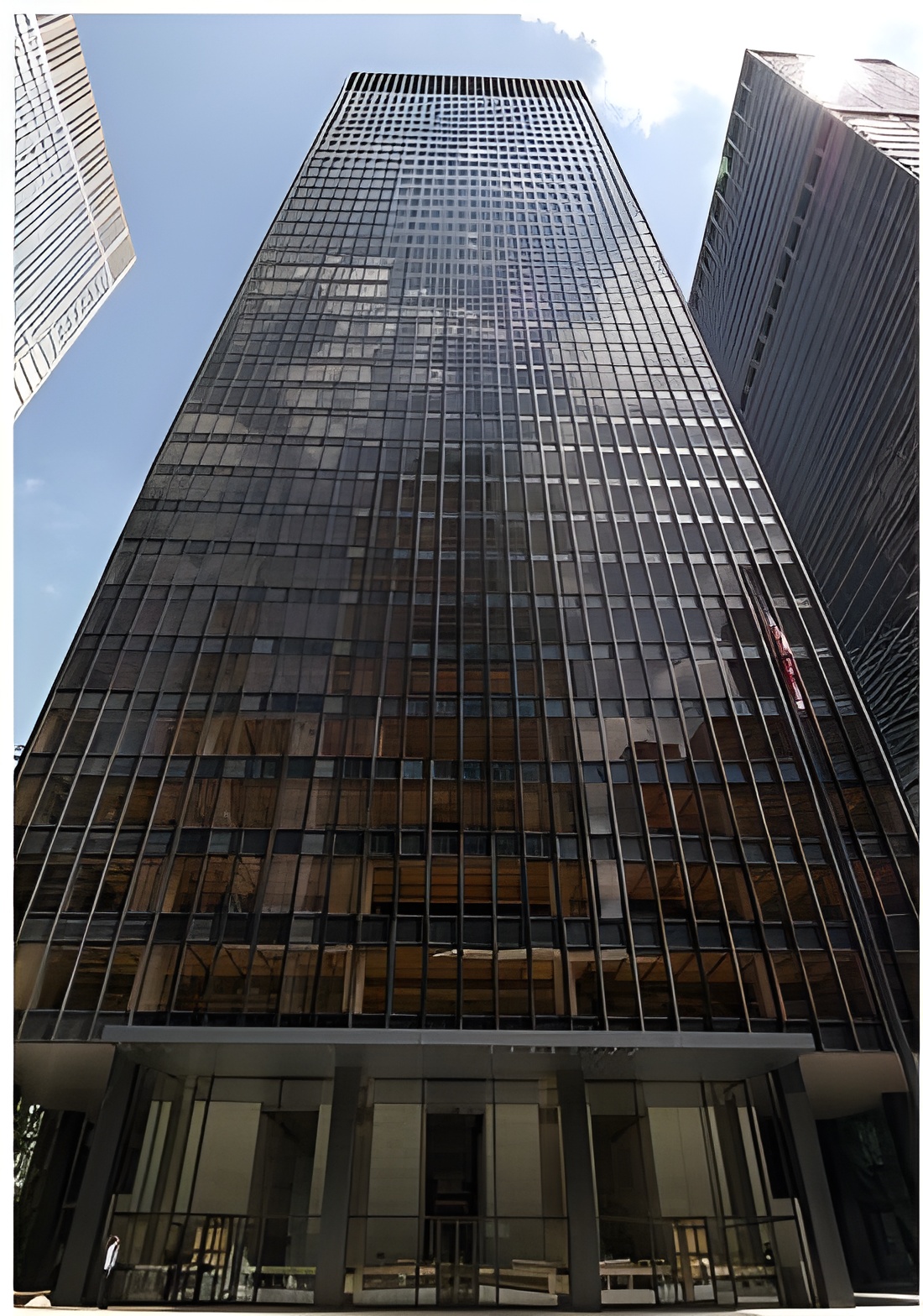
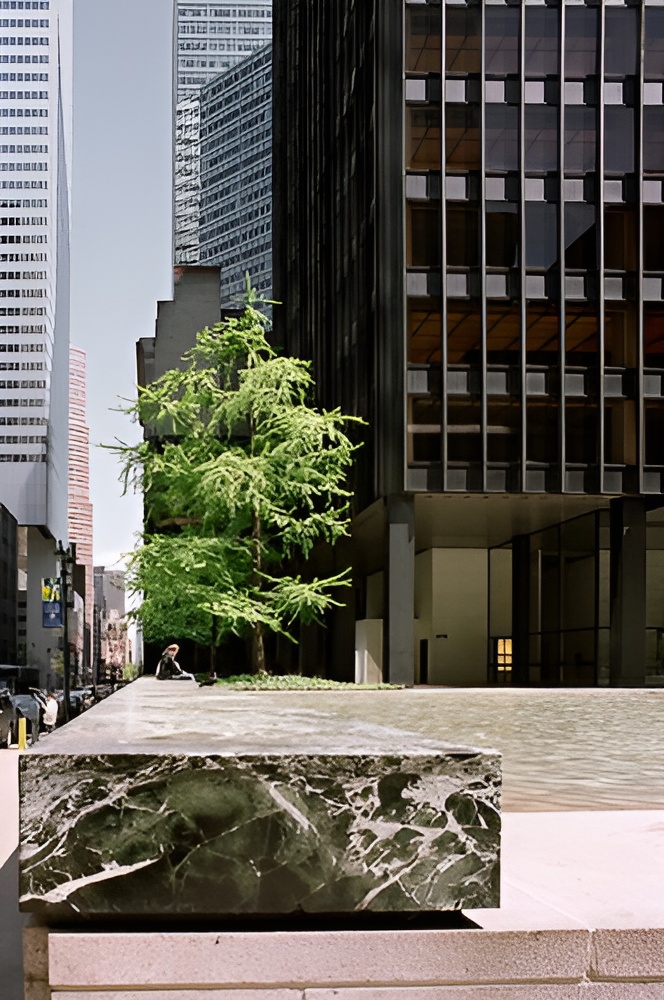
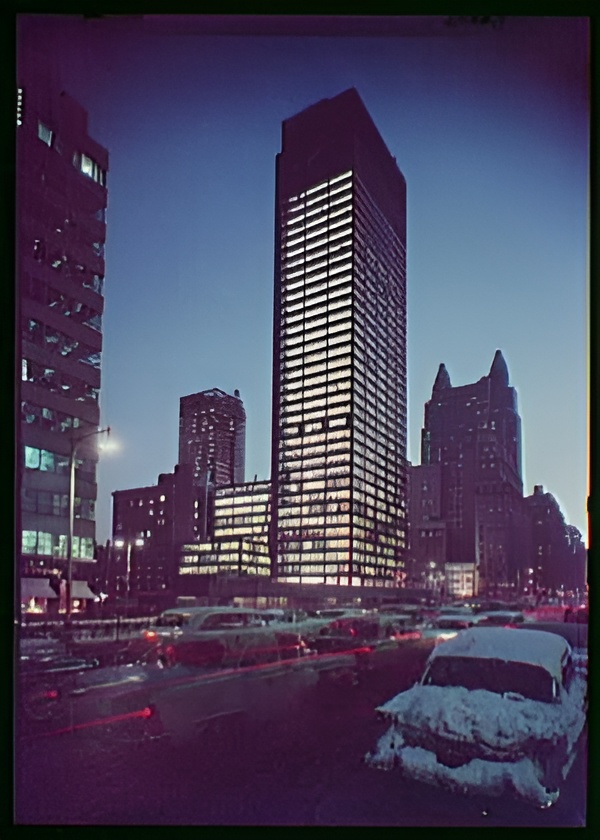
Seagram Building office tower designed by Ludwig Mies van der Rohe and Philip Johnson in New York City, established a new model for the postwar corporate skyscraper through structural discipline, material precision, and urban setback strategy, completed in 1958. The 38-story tower, rising 515 feet (157 m) at 375 Park Avenue, occupies only part of its site to create a granite forecourt that redefined the relationship between private development and public space within Midtown Manhattan. A steel moment frame combined with a reinforced concrete core enables open, modular office floors organized around a central service spine, while a bronze and glass curtain wall articulates vertical order through applied non-structural I-beams that visually express the concealed structure. Heat-resistant glazing, controlled blind positions, and a consistent façade grid reinforce formal uniformity. Interior continuity extends from plaza to the lobby through aligned paving, restrained material transitions, and direct circulation to elevator banks and restaurant spaces. The project influenced the principles later formalized in the 1961 New York Zoning Resolution by demonstrating the spatial and economic viability of the plaza-and-slab typology. Landmark designation in 1989 and inclusion on the National Register of Historic Places in 2006 confirm its architectural and urban significance.
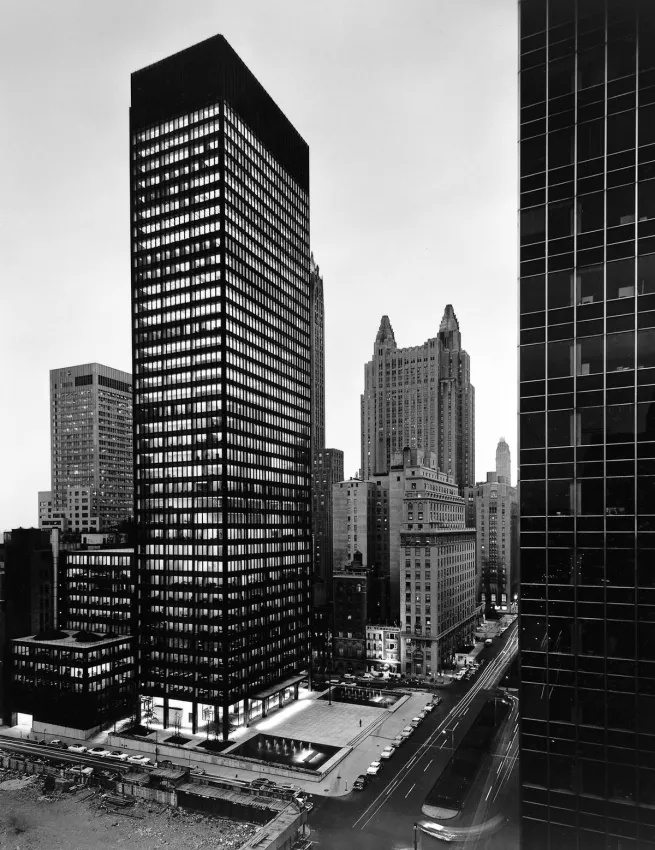
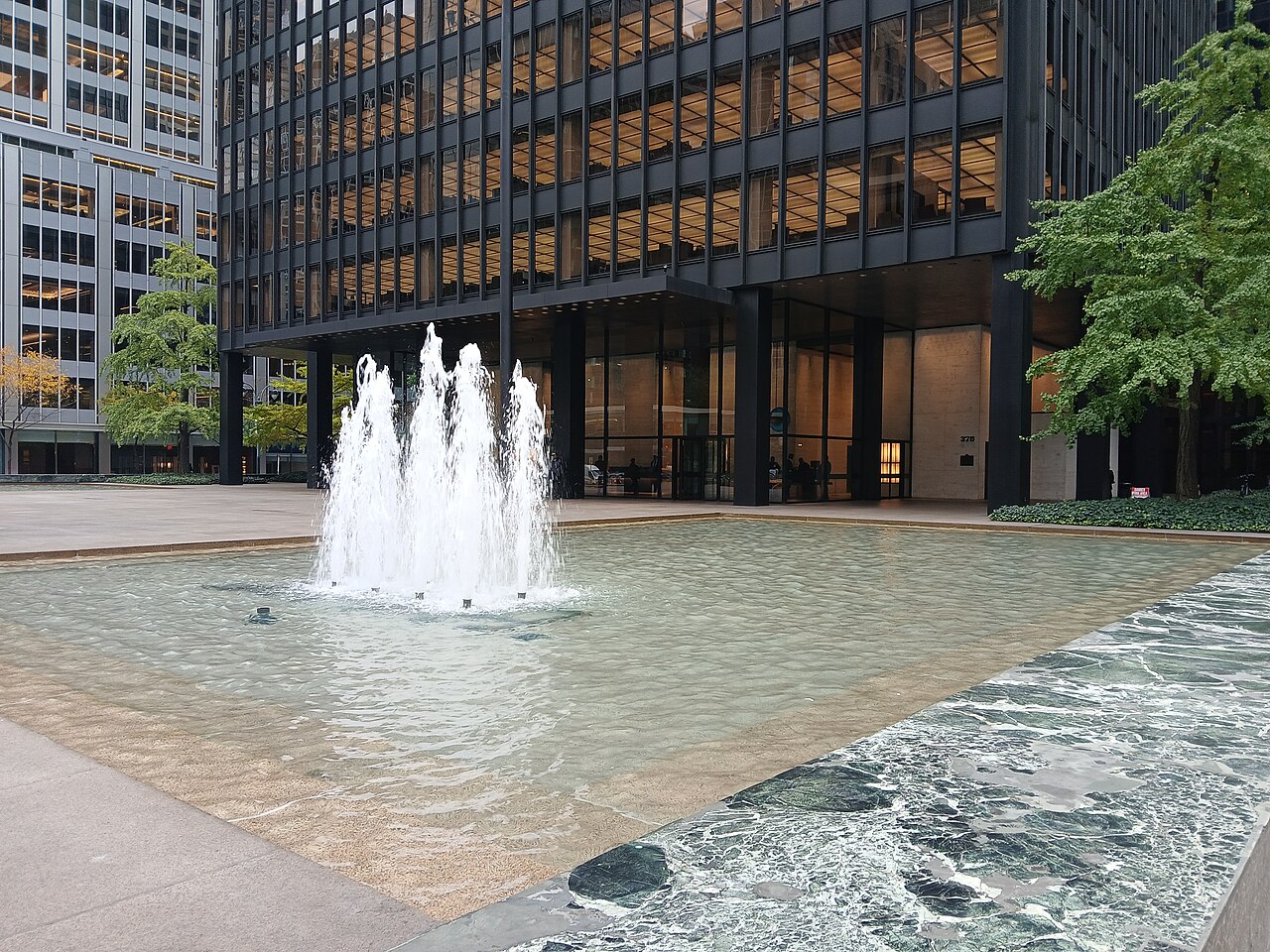
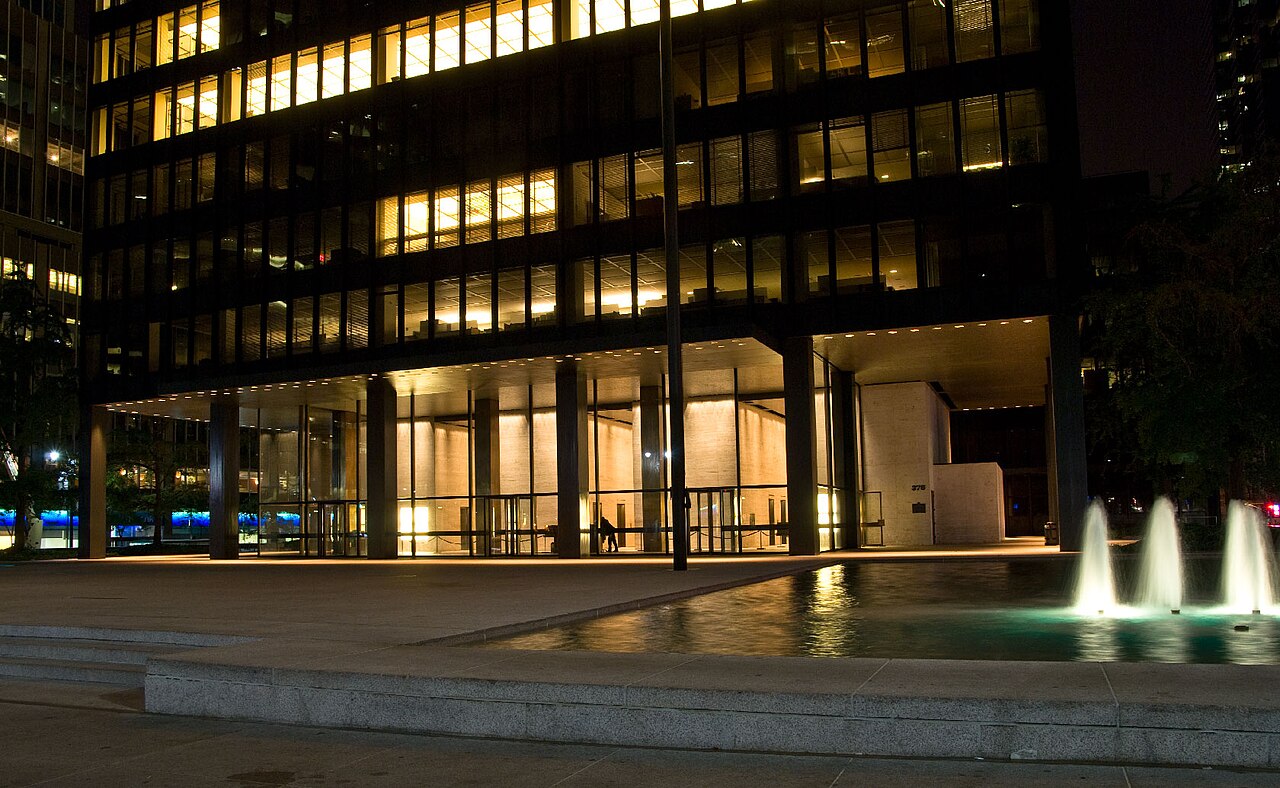
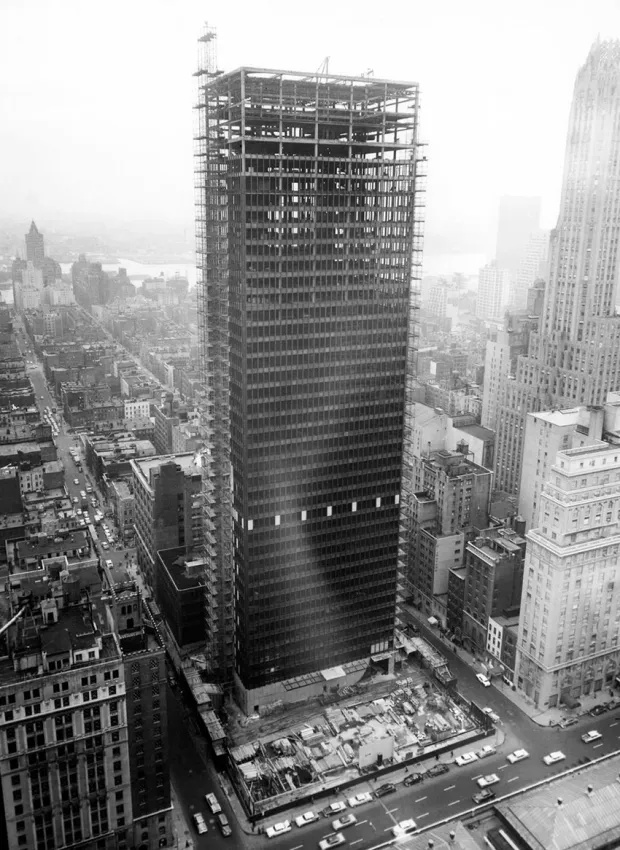
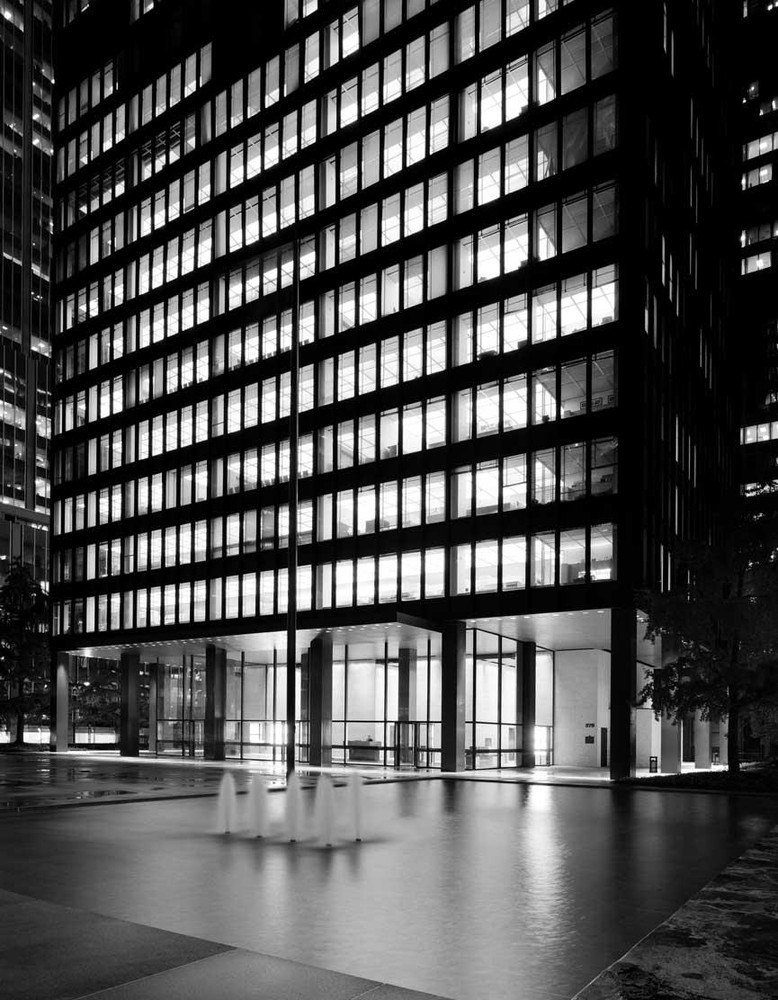
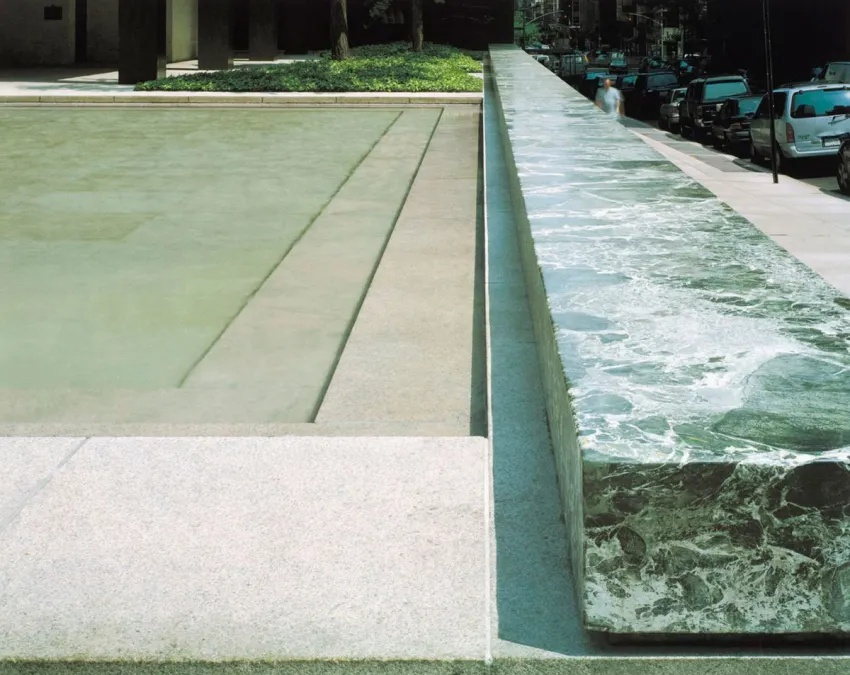
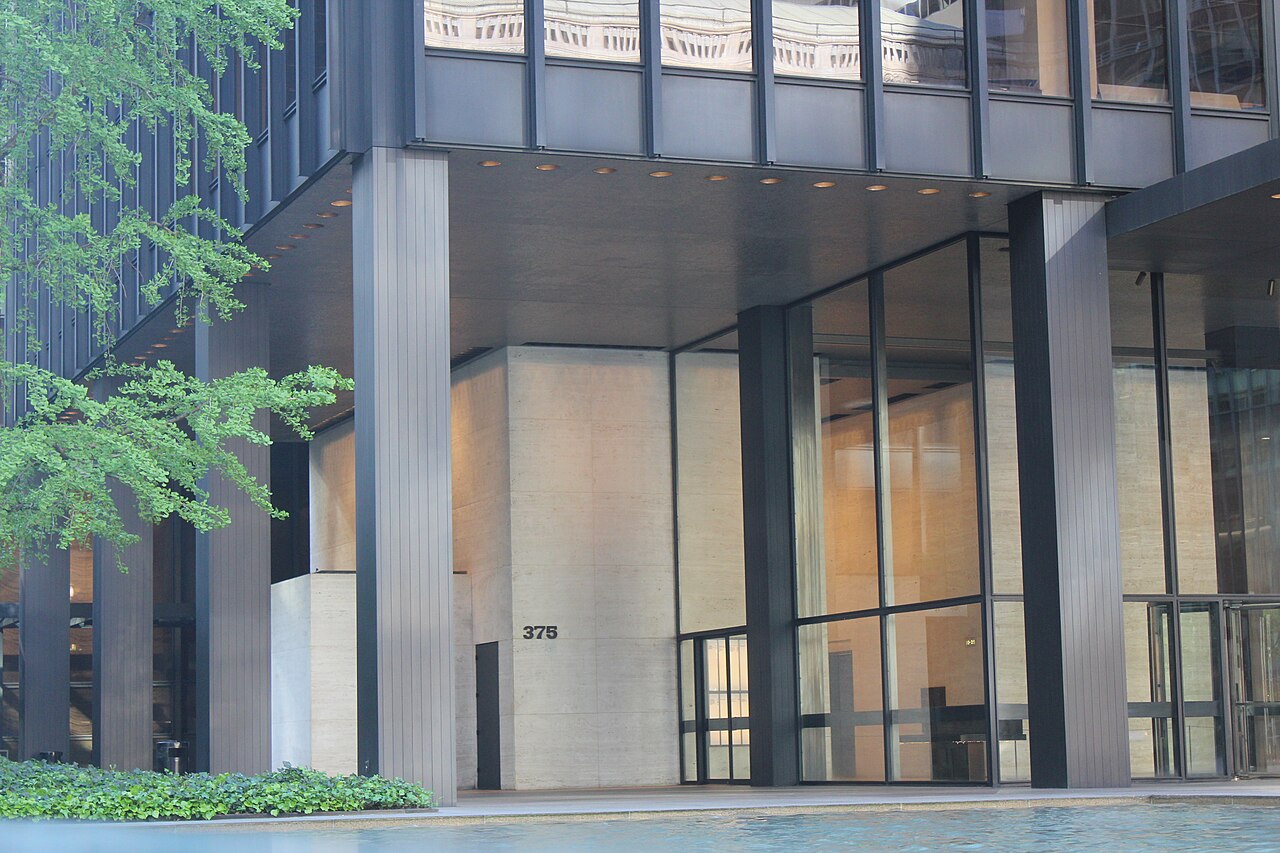
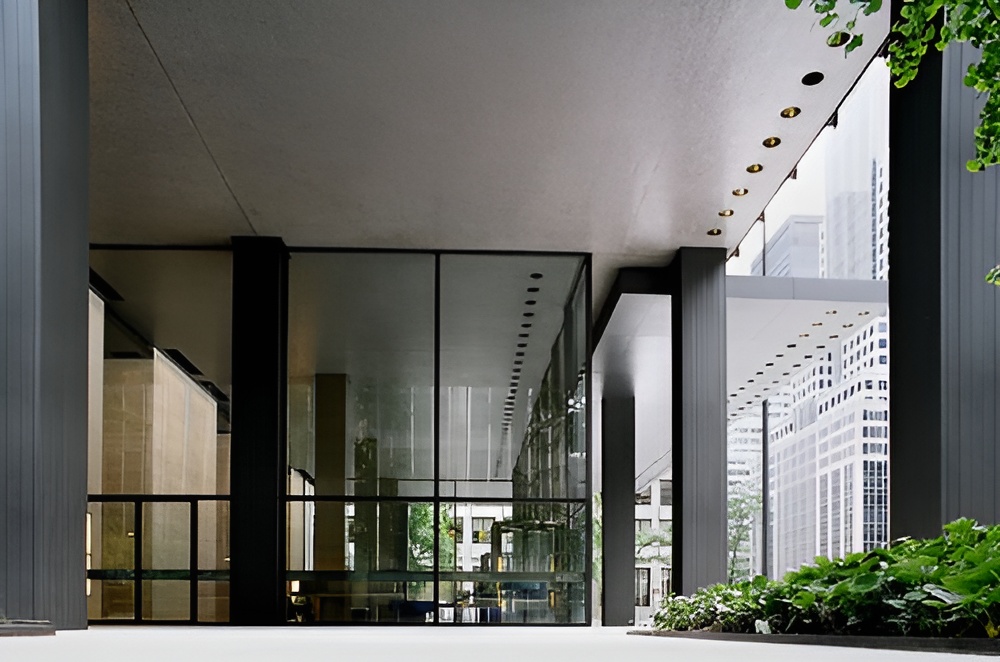
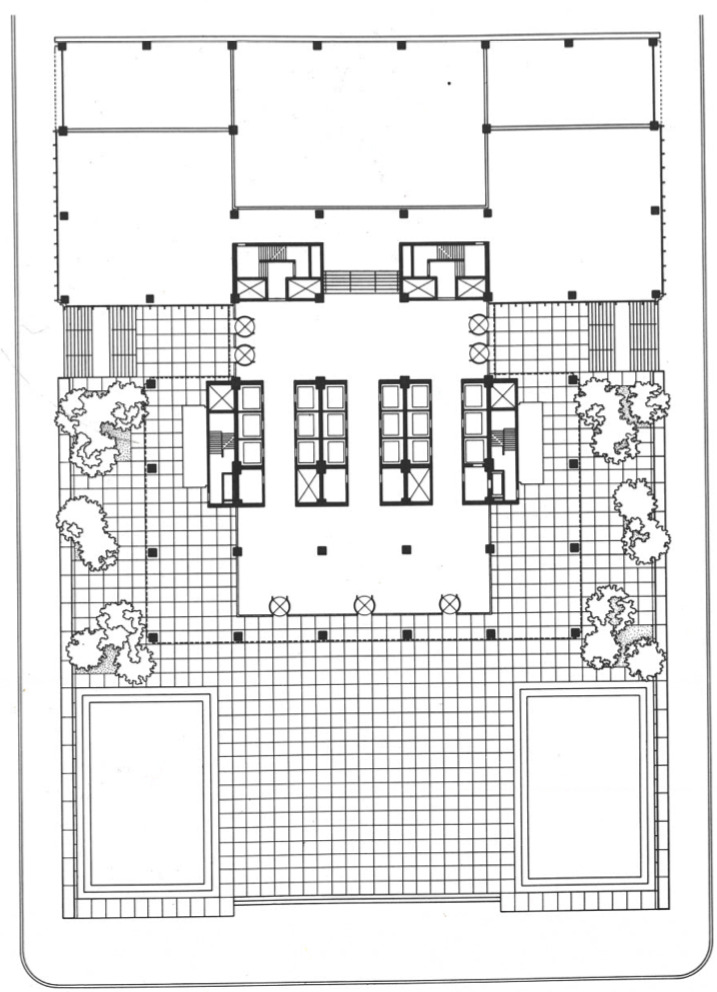
Seagram Building office tower, designed by Ludwig Mies van der Rohe and Philip Johnson in New York City, redefined the corporate skyscraper through structural clarity and a disciplined urban gesture, completed in 1958. The 38-story tower rises 515 feet (157 m) on Park Avenue between 52nd and 53rd streets. A setback of approximately 90 feet (27 m) generates a pink granite plaza with reflecting pools and fountains, establishing a measured transition between avenue and entrance. This intervention contributed to the spatial logic later reinforced in the 1961 New York Zoning Resolution, where additional height was exchanged for public open space.
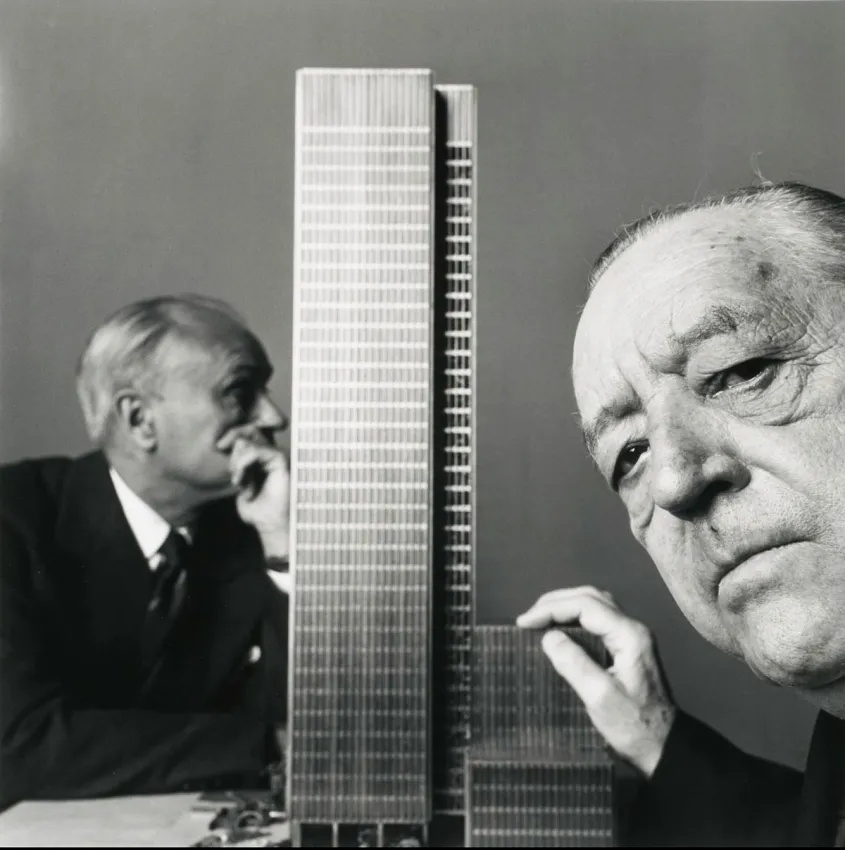
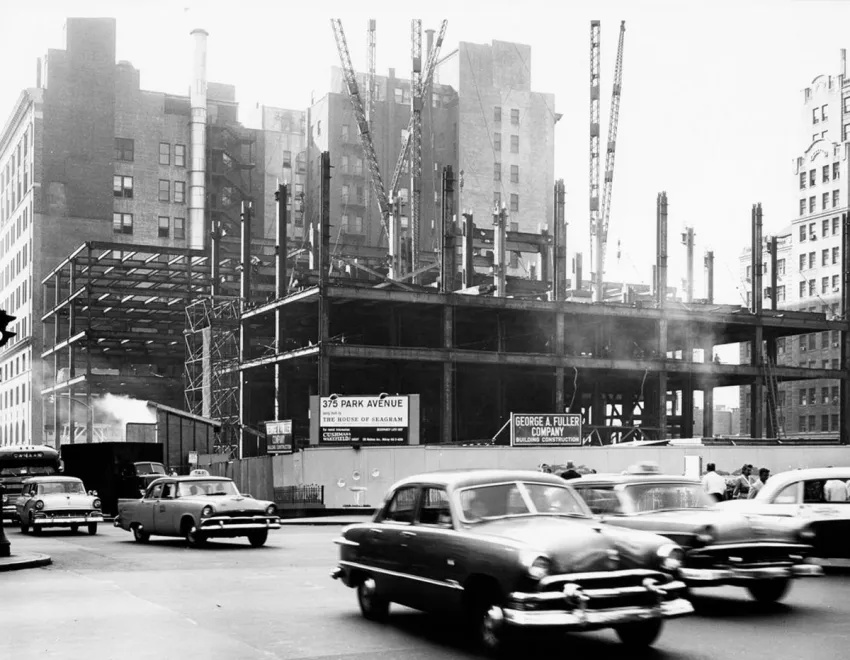
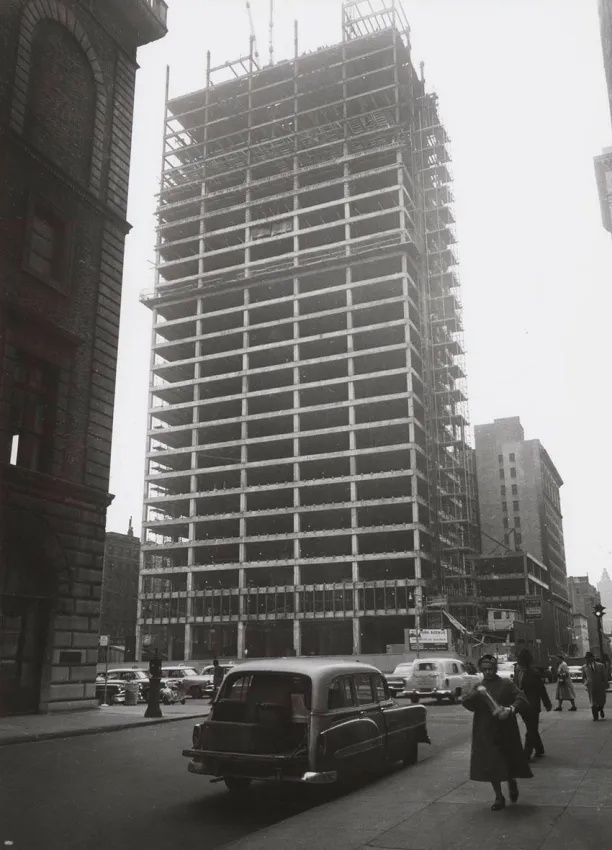
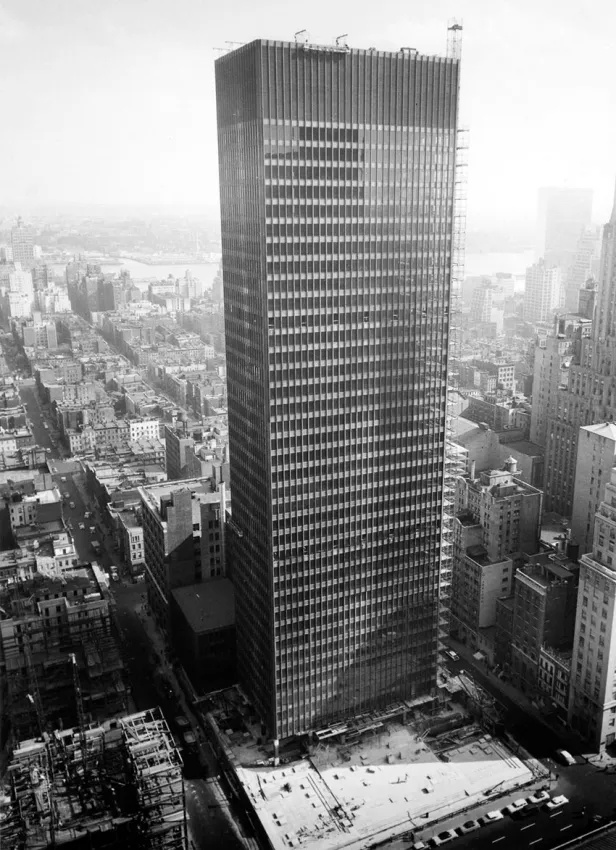
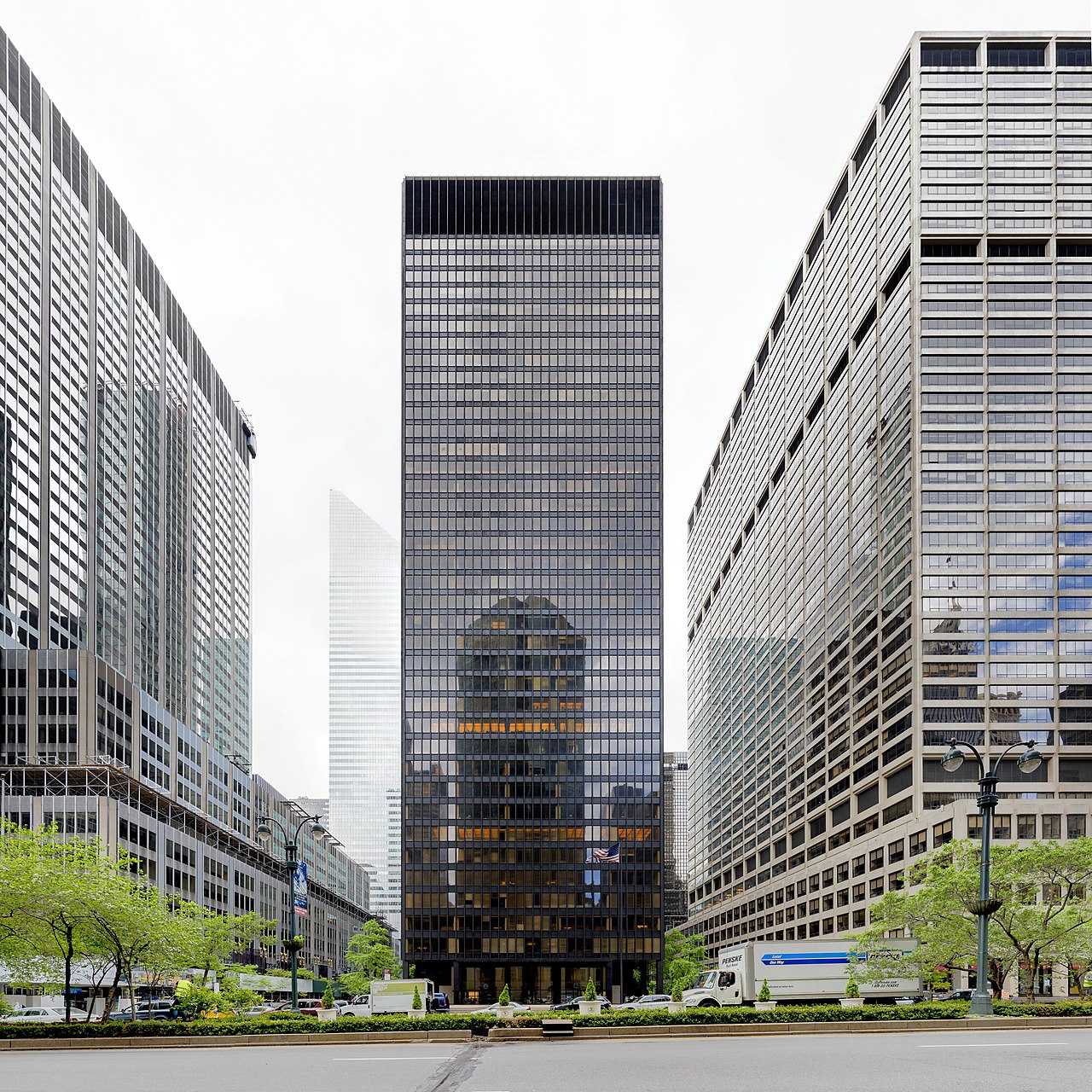
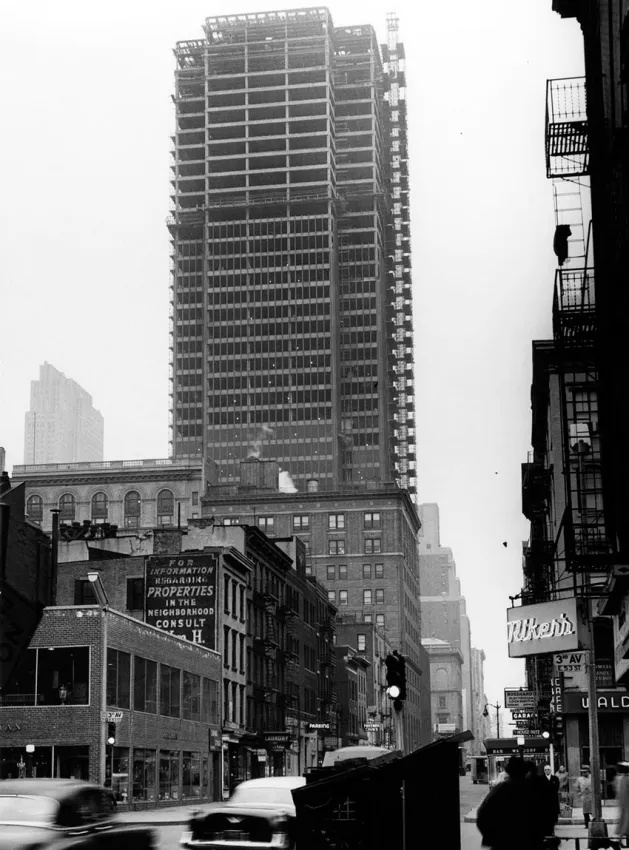
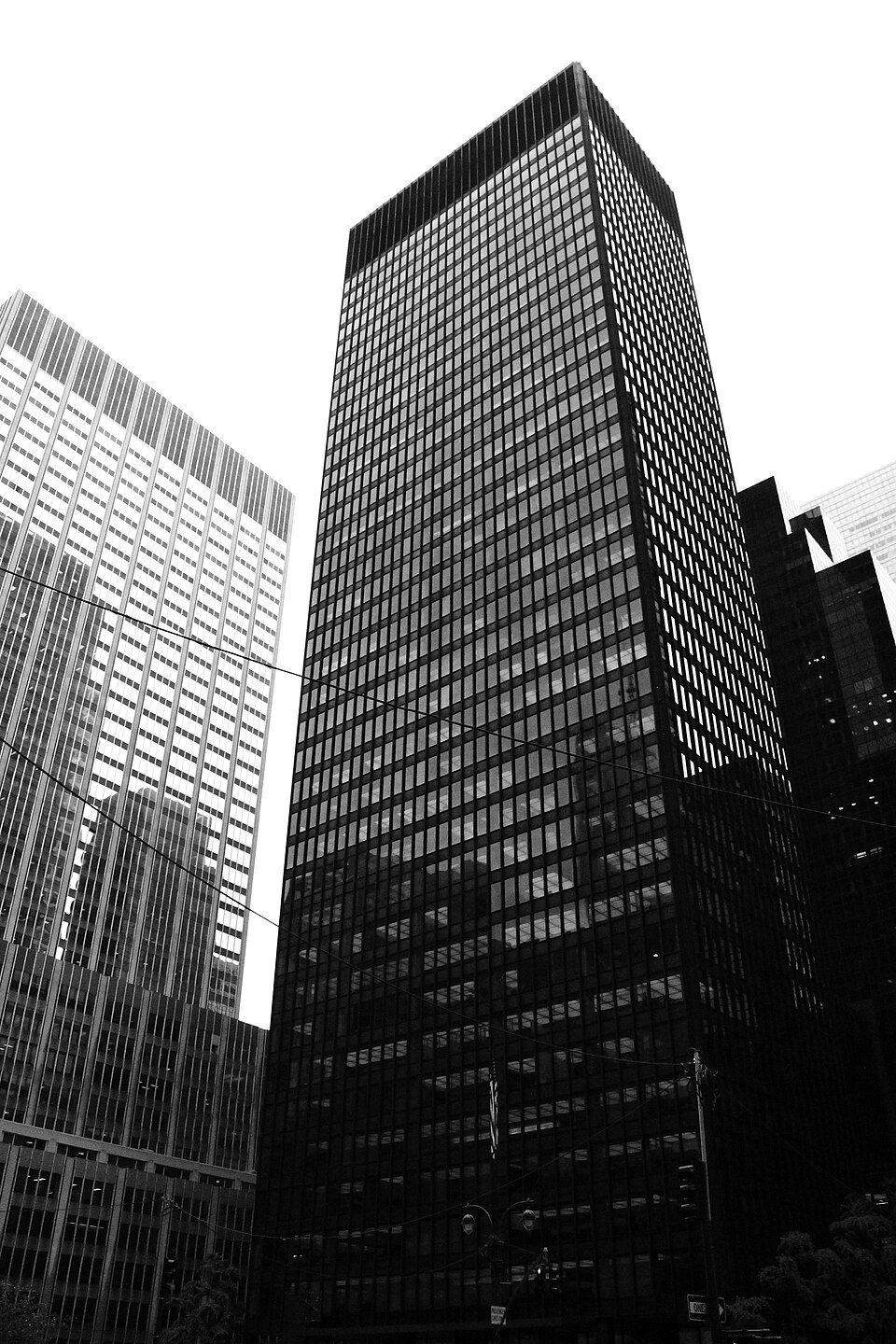
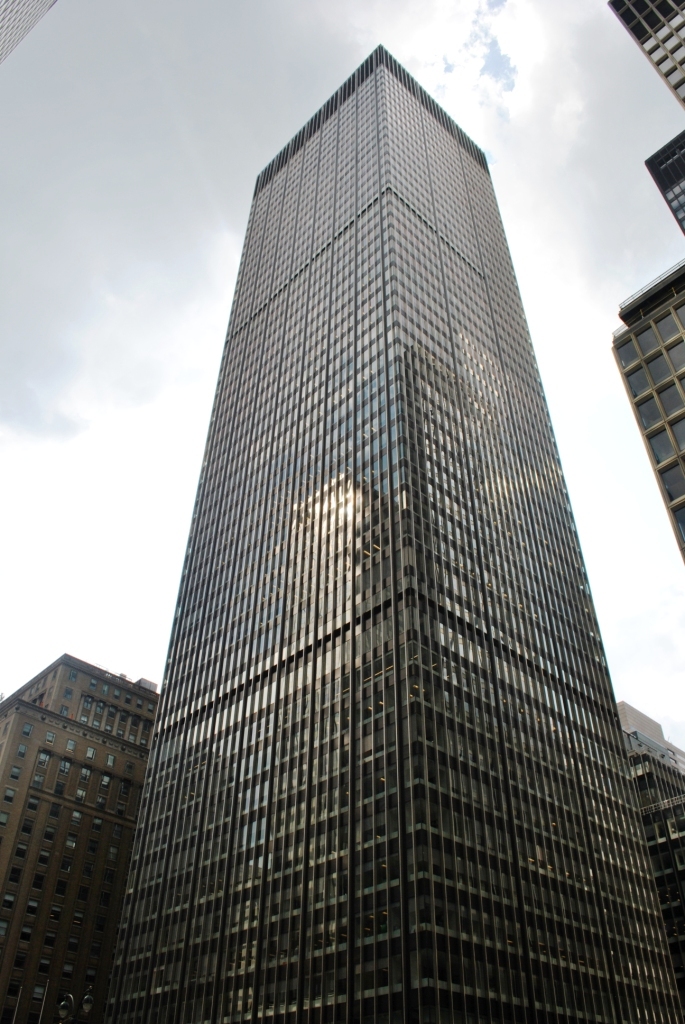
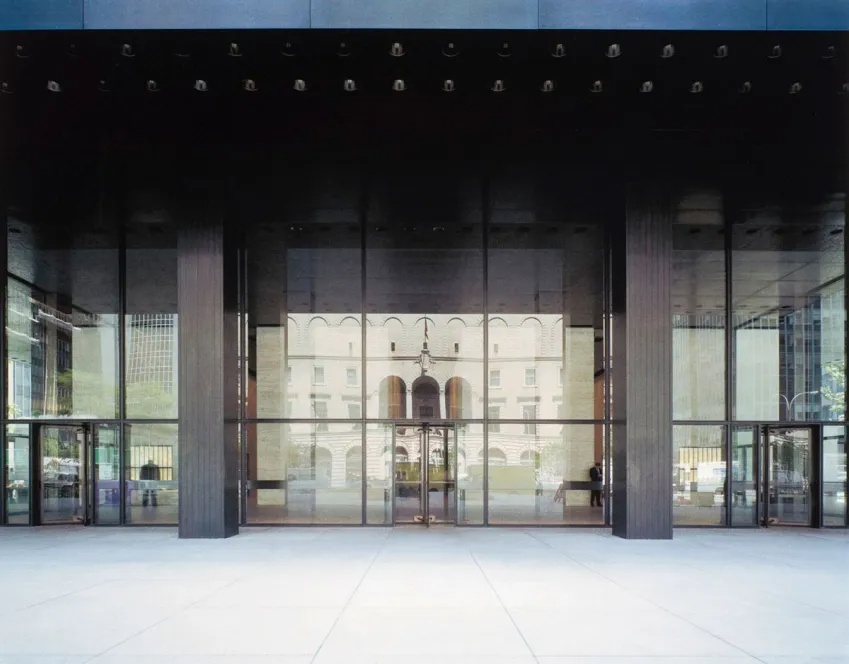
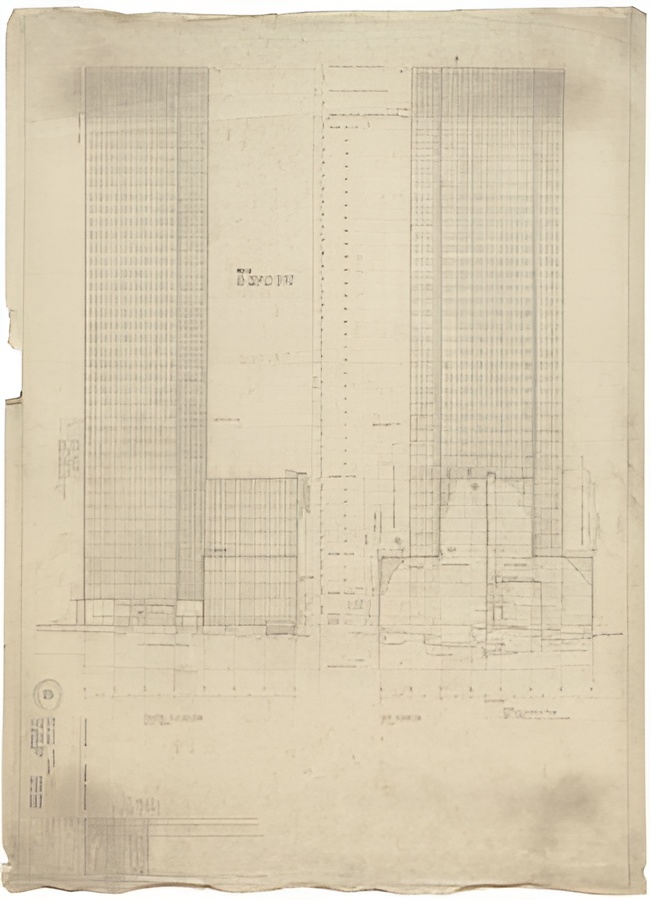
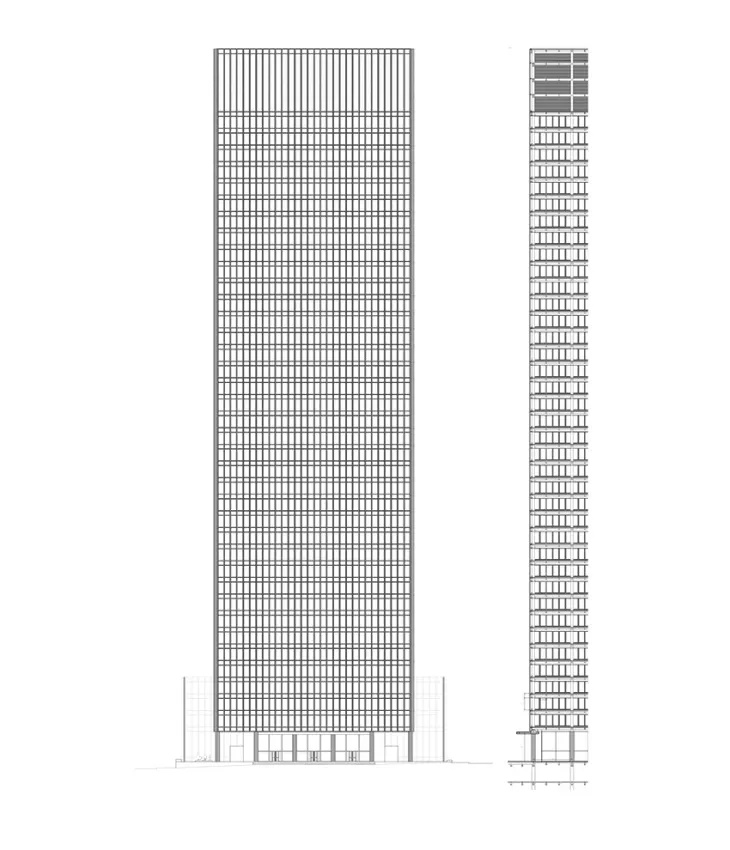
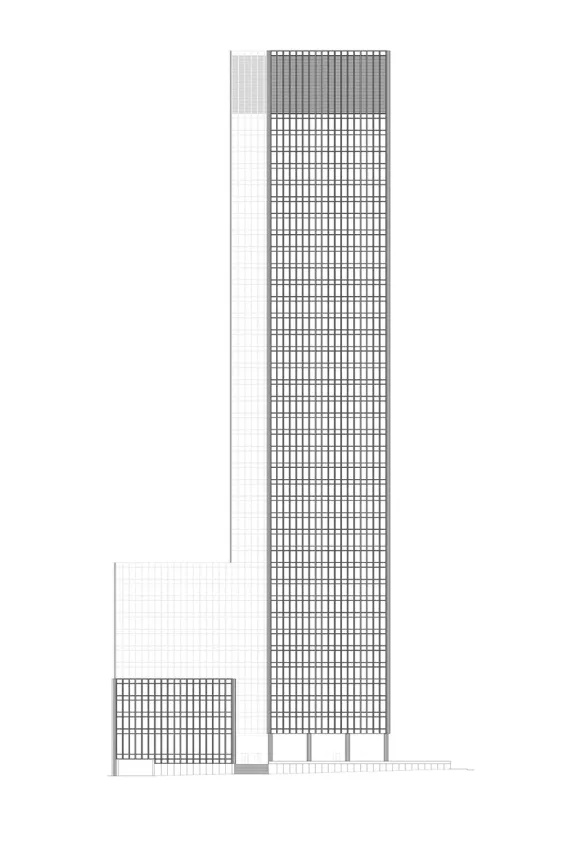
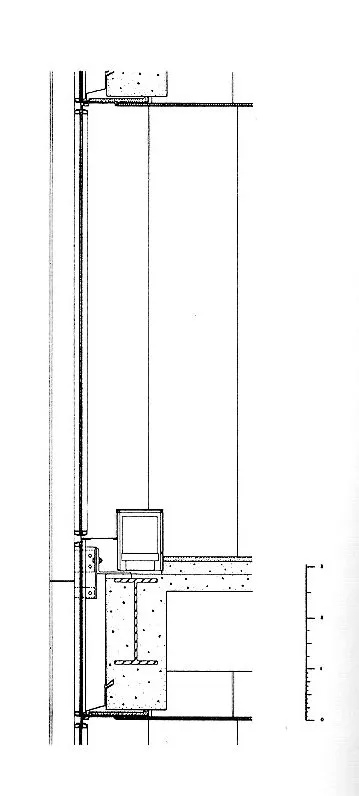
The slab form eliminates traditional setbacks and presents a continuous vertical volume. Bronze-toned mullions and horizontal spandrels define the curtain wall grid, while heat-resistant glass panels reinforce façade uniformity. Non-structural bronze I-beams articulate vertical order and reference the structural frame concealed within fireproofed steel. Window blinds operate in three fixed positions to preserve exterior consistency.
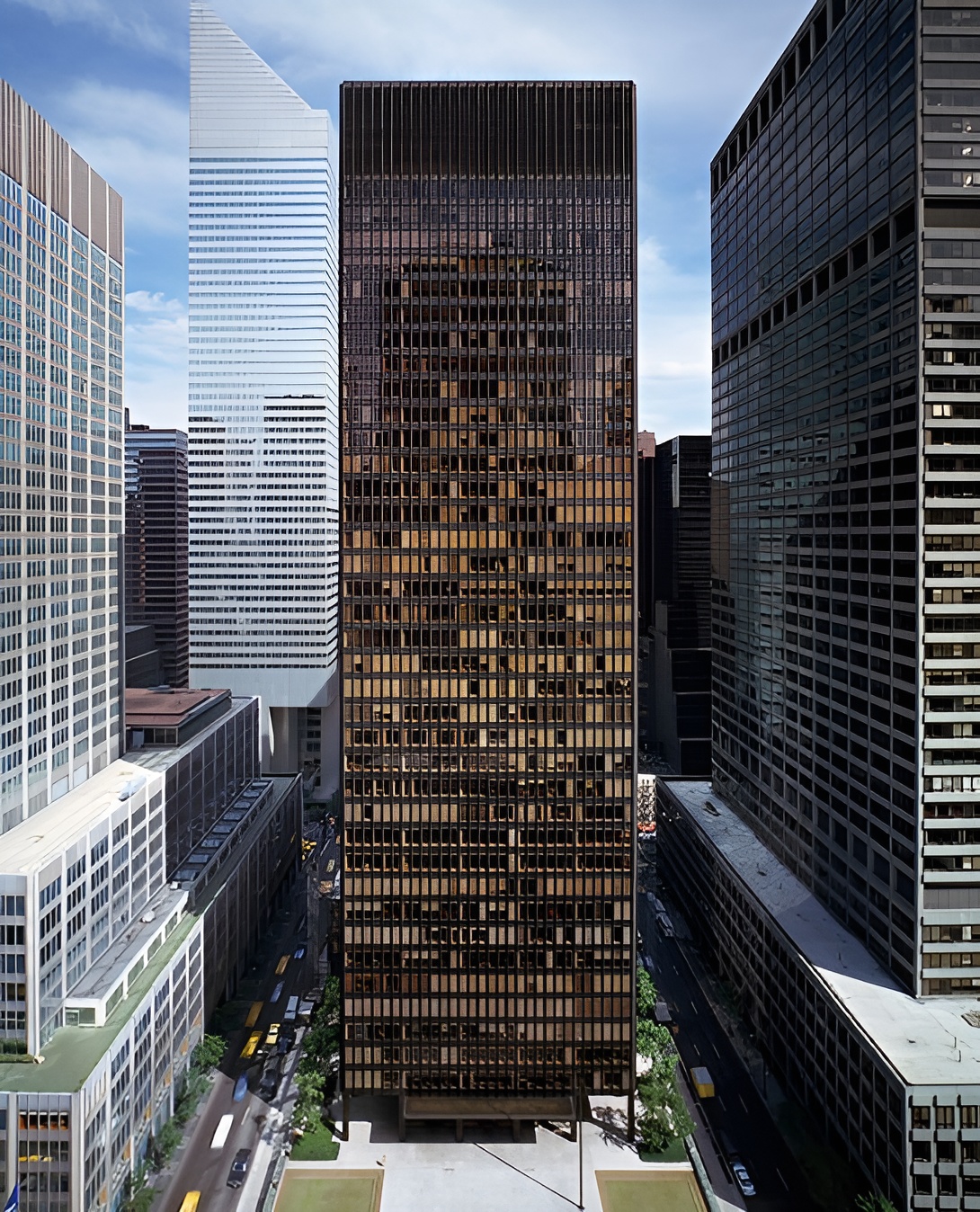
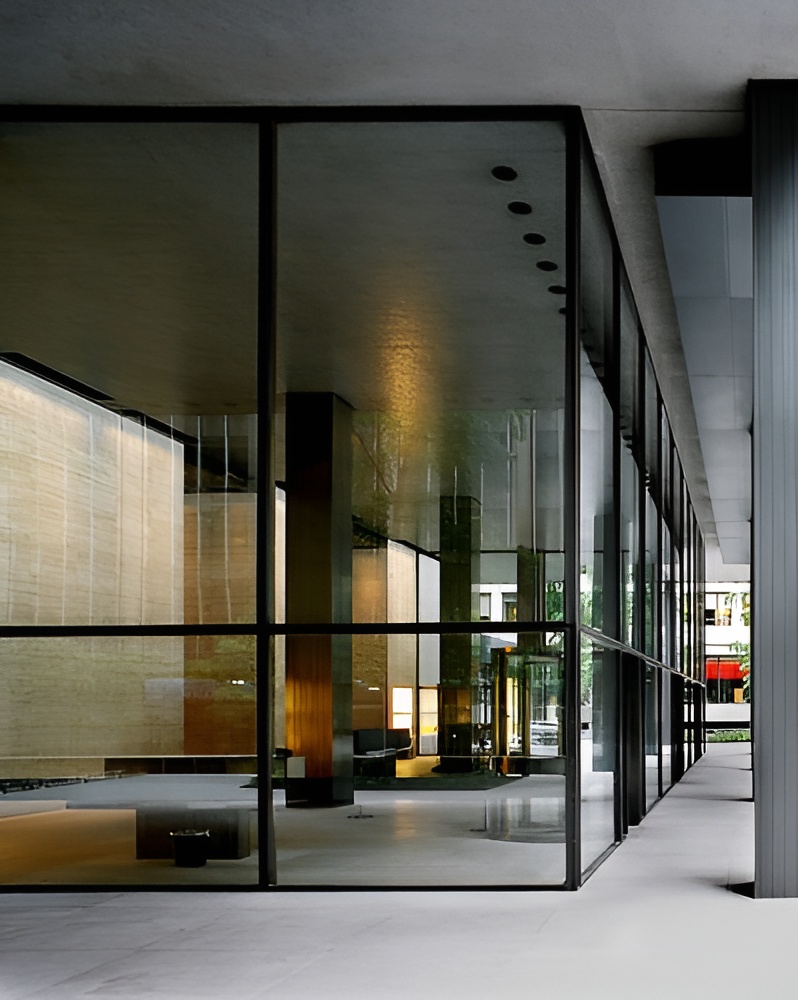
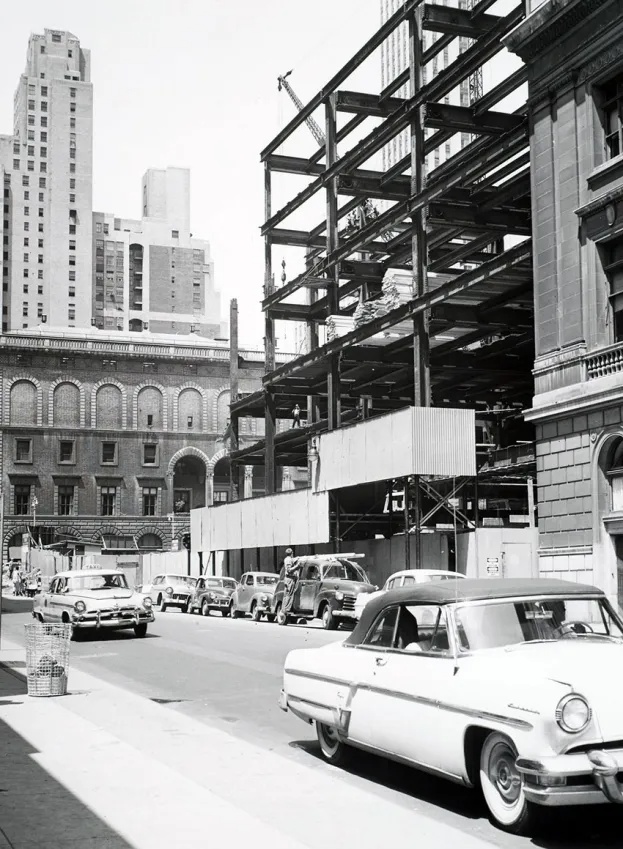
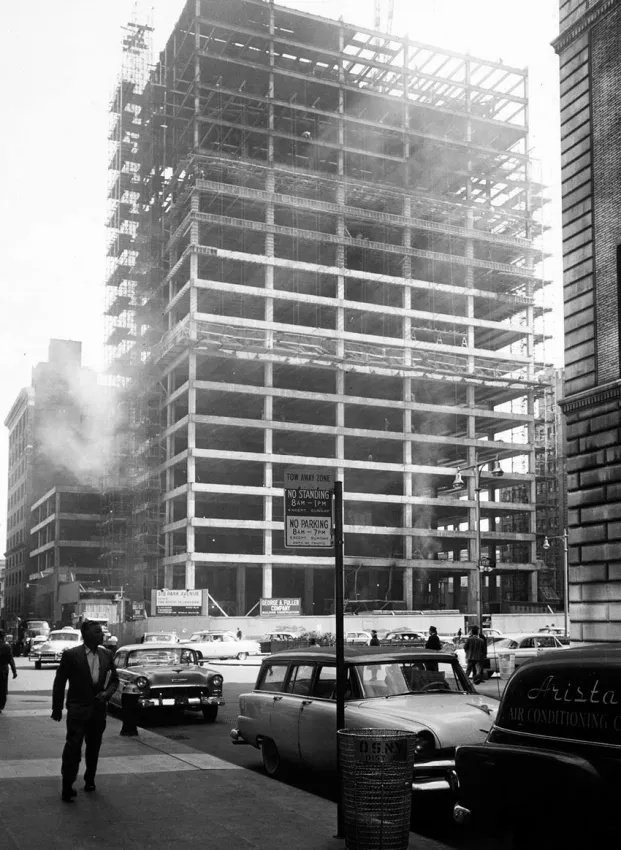
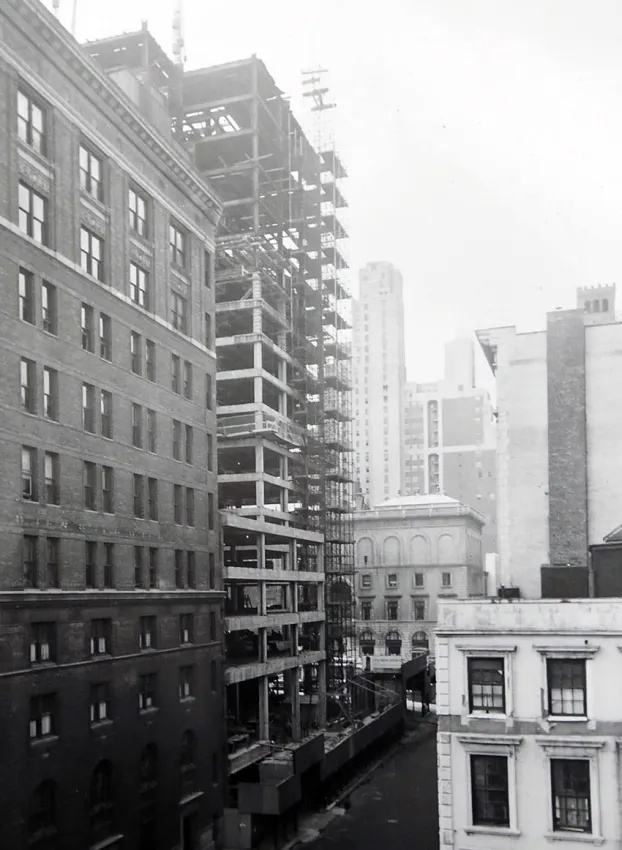
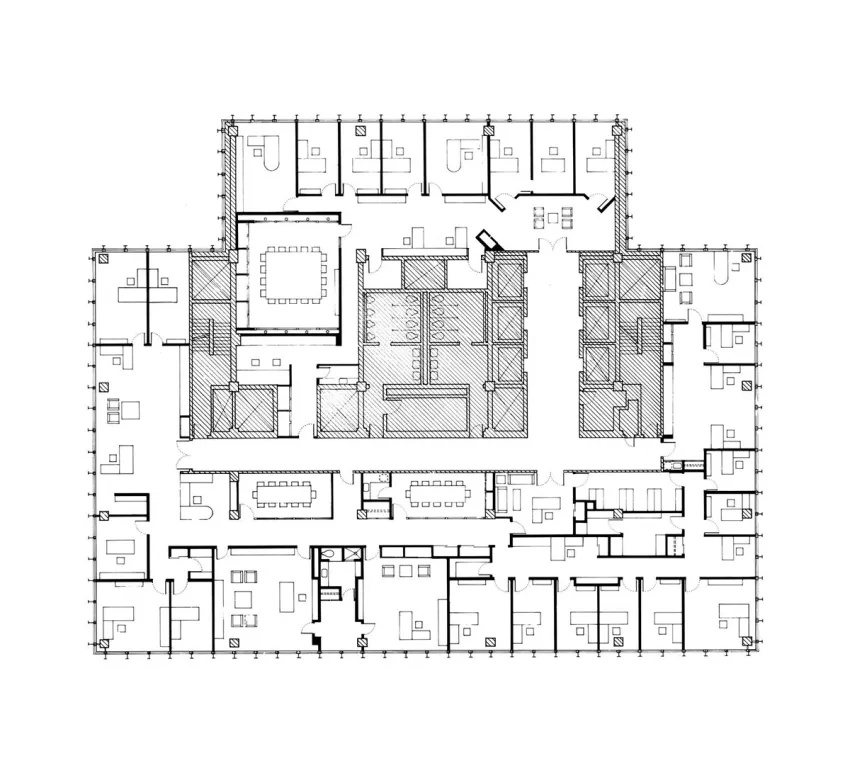
A steel moment frame combined with a reinforced concrete core provides lateral stability and enables open office floors. Modular planning around the central service core allows flexible tenant layouts without perimeter structural interruption. Mechanical and service systems integrate within the structural framework to maintain spatial continuity.
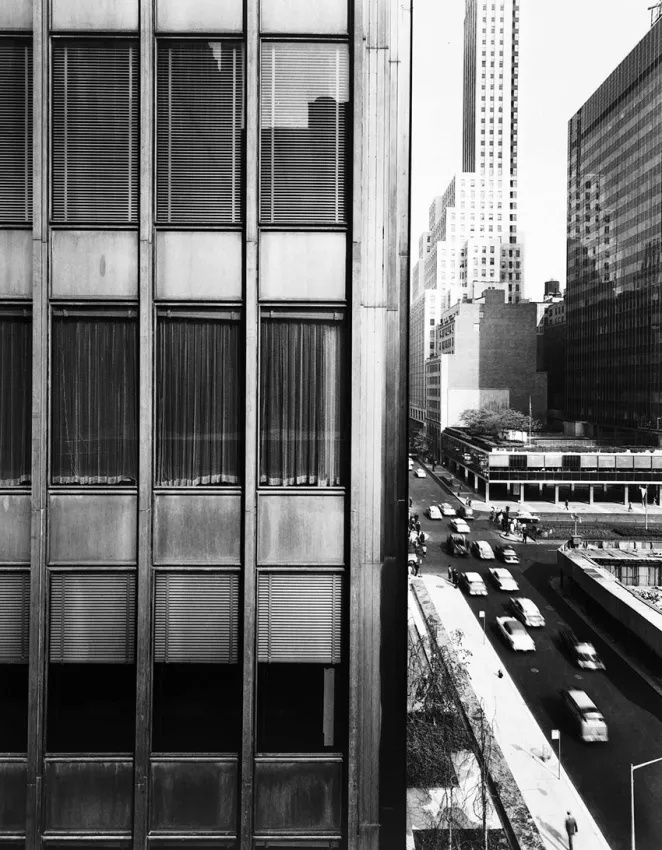
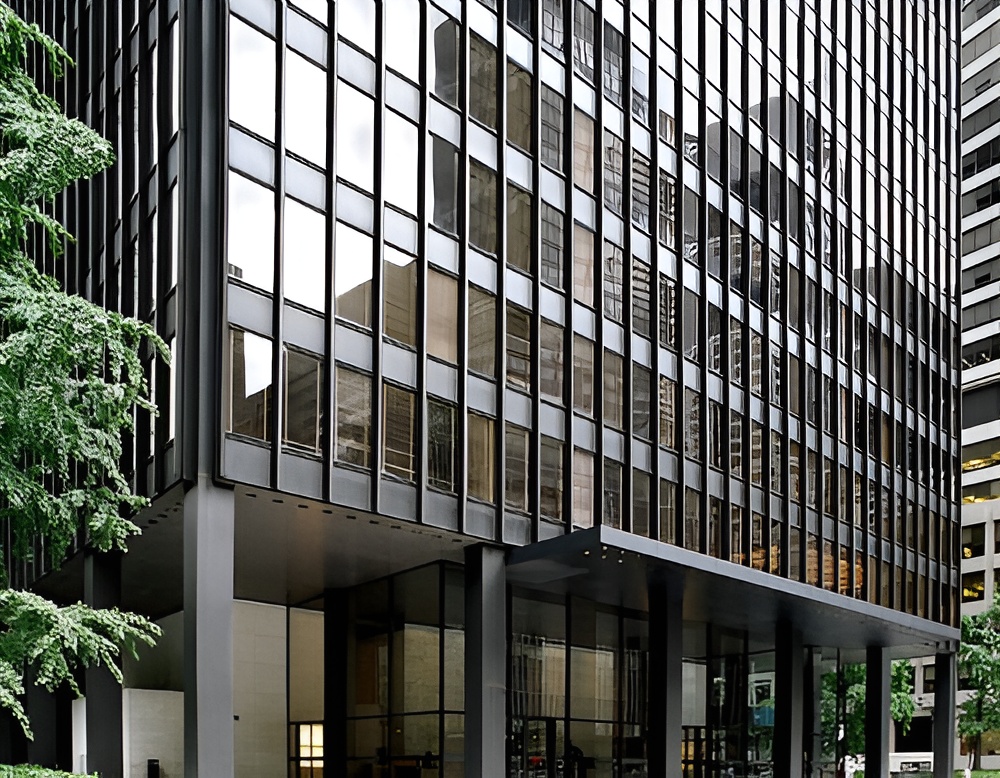
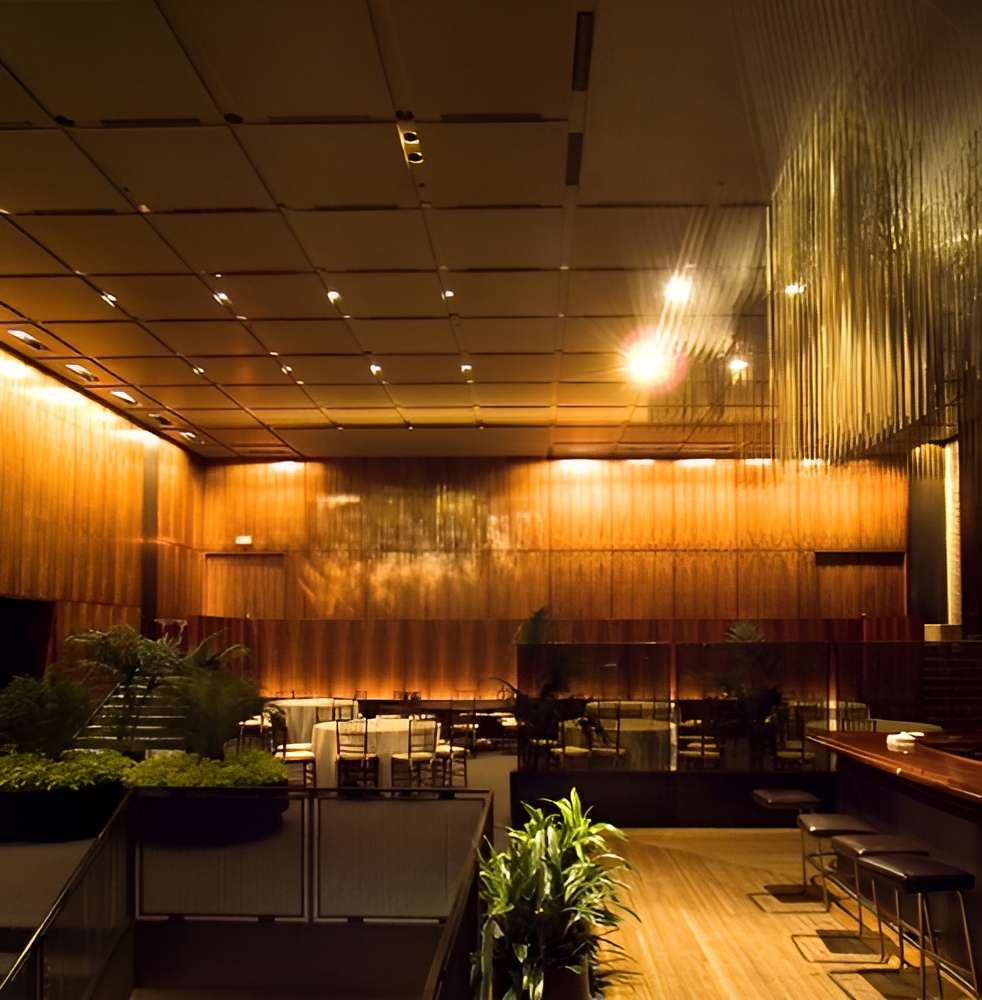
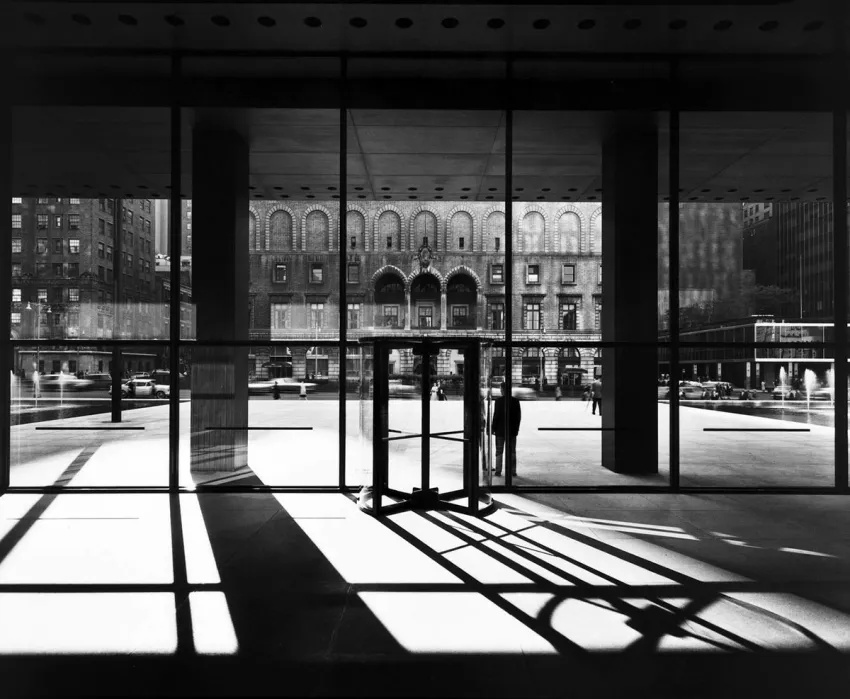
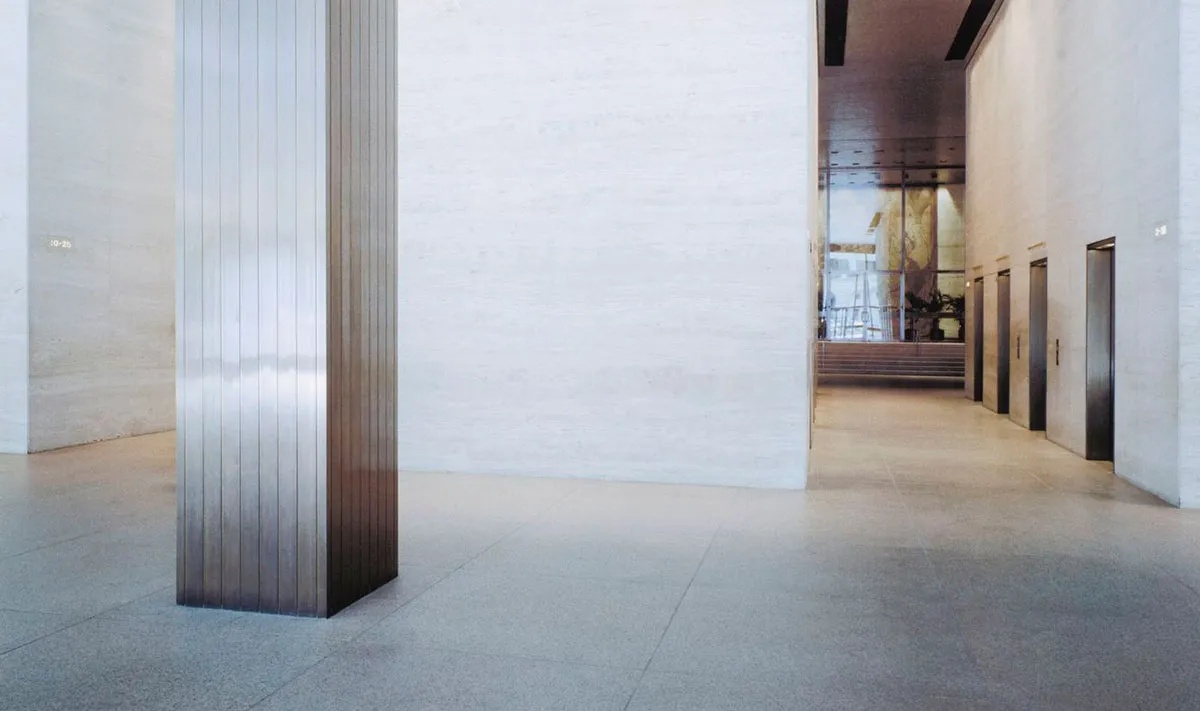
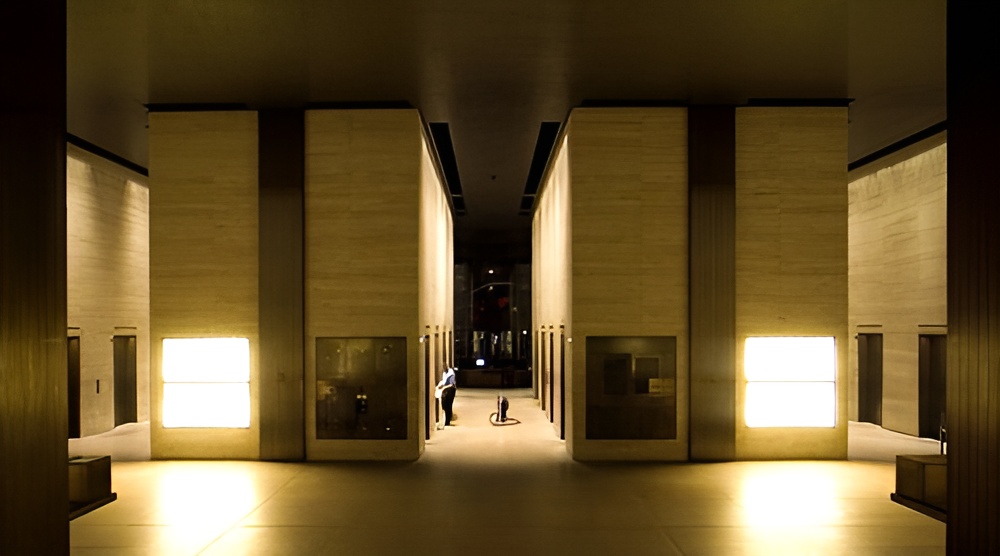
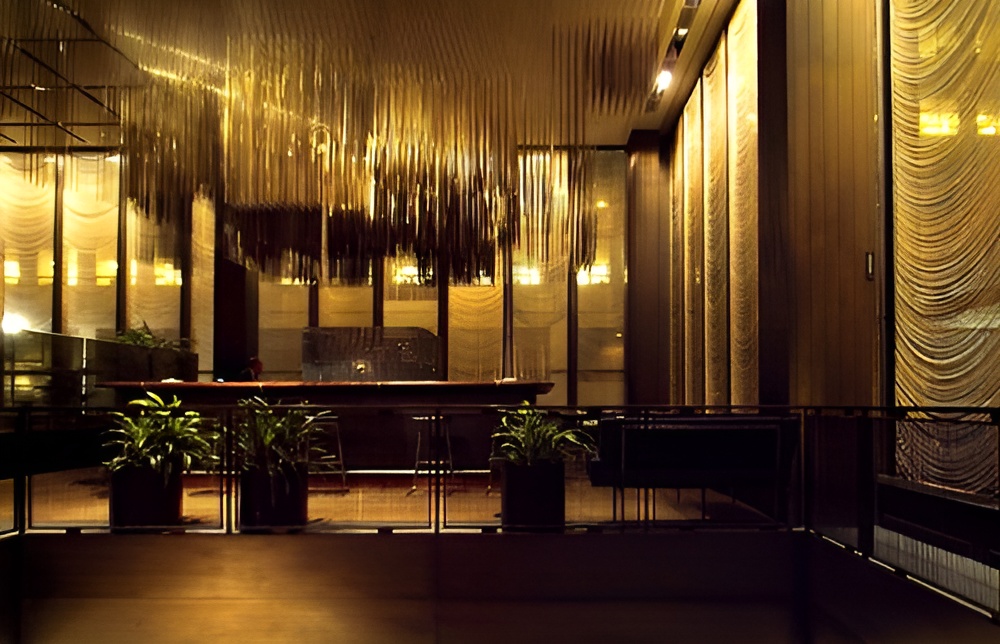
The lobby extends the exterior granite paving inward, dissolving conventional thresholds and aligning public space with interior circulation. Bronze, glass, and stone continue as a coherent material language from plaza to elevator halls. Restaurant spaces originally included the Four Seasons, later replaced by the Grill and Pool, reinforcing the building’s relationship to public life at ground level.
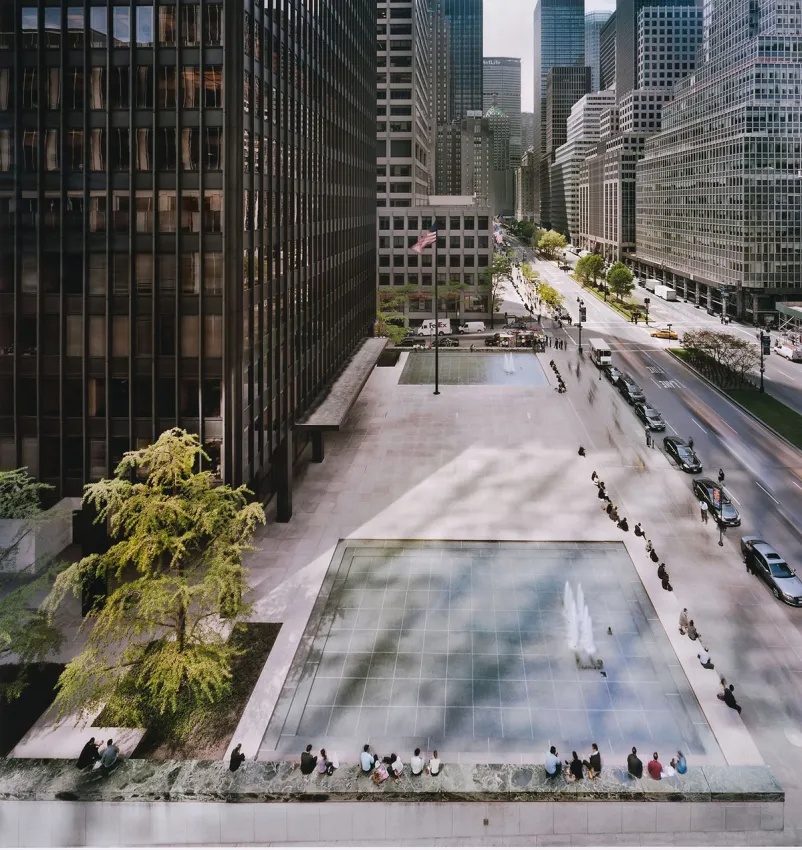

The influence of this tower established the plaza-and-slab typology as a model for subsequent office development in New York and internationally. Landmark designation by New York City in 1989 and listing on the National Register of Historic Places in 2006 formalized its architectural and urban significance.
Project Gallery

Project Location
Address: 375 Park Avenue, New York, NY 10152, United States
Location is for general reference and may represent a city or country, not necessarily a precise address.


The Seagram Building remains the ultimate masterclass in how bronze and glass can create a sense of permanence that most modern skyscrapers just can’t replicate. It’s fascinating how Mies van der Rohe’s obsession with the “functionalist” aesthetic still dictates so much of our current understanding of high-end structural design. I often look back at these iconic proportions for inspiration, especially when considering how to bring that same level of timelessness and quality to residential spaces. It’s a great reminder that true luxury isn’t about adding more, but about making sure every single detail—from the joints to the materials—is executed with absolute precision.