

How the open office became the most acoustically hostile environment in modern architecture — and what the science, history, and an unfolding design reckoning reveal about building for the human brain
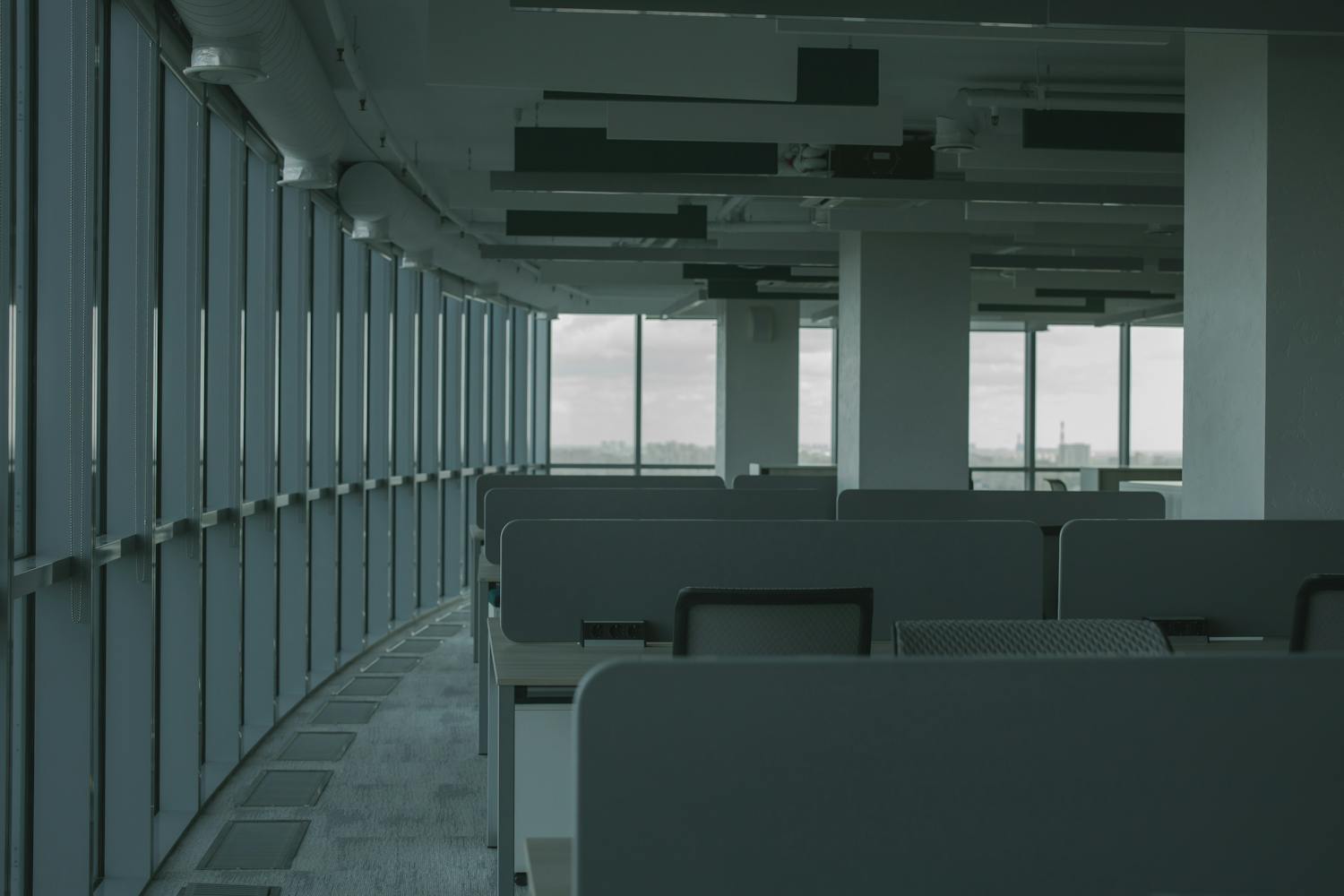
The meeting ended twenty minutes ago, but you cannot write. Three desks away, a colleague is on a call with a client in Chicago. You cannot hear the words clearly — only syllables surfacing above the ambient hum, speech in shallow water — and that is precisely the problem. Your brain is spending calories it does not have trying to decide whether those syllables are meant for you. It concludes, several hundred times per minute, that they are not. It reaches this conclusion automatically, compulsively, below the level of conscious thought, and the effort of reaching it is quietly dismantling your ability to do anything else.
This is not a problem of volume. The office is not loud. It rarely is. The problem is something more insidious: intelligibility. The sound of a nearby conversation, even at conversational levels — 55 to 65 decibels, roughly equivalent to a quiet restaurant — is among the most cognitively expensive inputs the human brain processes. We are wired, deep in the architecture of working memory, to decode language. We cannot turn this off. And the open office, in its seventy-year iteration as the dominant workplace form, has never stopped producing it.
“Noise is the most serious problem in the open-plan office, and speech is the most disturbing type of sound because it is directly understood in the brain’s working memory.” — Valtteri Hongisto, Turku University of Applied Sciences
What follows is an investigation into how a workspace design philosophy — born in post-war Germany as an act of democratic idealism, corrupted by corporate cost pressure, turbocharged by Silicon Valley, and now returned to in a post-pandemic world with new and poorly understood consequences — became an architecture problem that neuroscience, acoustic engineering, and building standards are only now catching up to. The data is not subtle. The solutions are not mysterious. What is remarkable is how long both have been ignored.
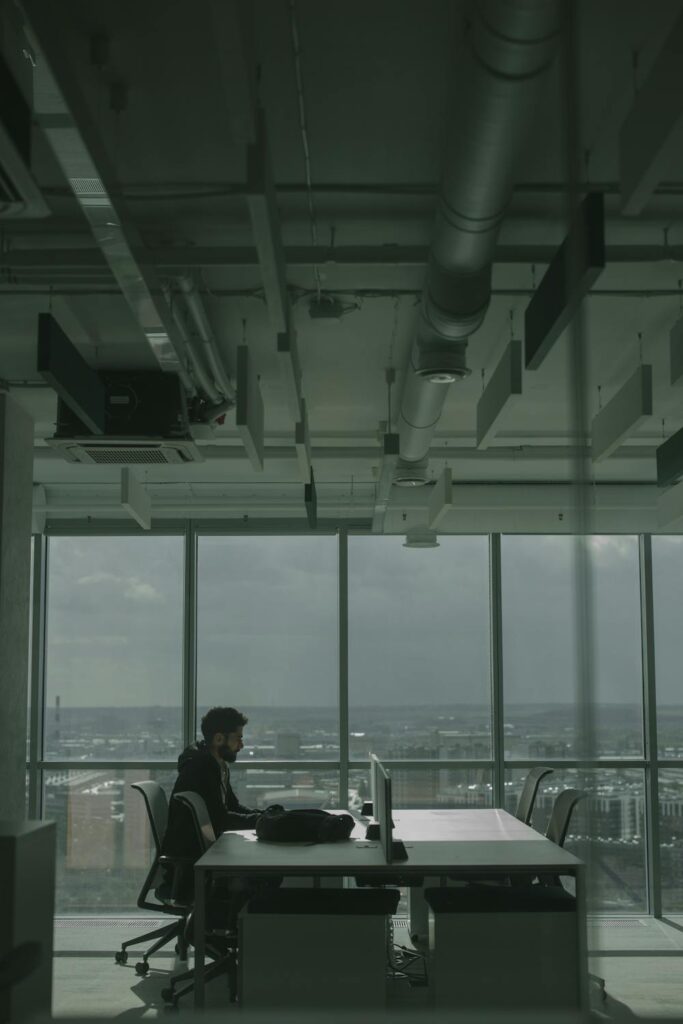
What Speech Does to a Working Brain
The foundational discovery — that background speech degrades cognitive performance even when you are not listening to it — was made in 1976 by Colle and Welsh, published in the Journal of Verbal Learning and Verbal Behavior. They established what would come to be called the Irrelevant Speech Effect (ISE): irrelevant speech disrupts the serial recall of visually presented items even when listeners are instructed to ignore it. The effect, importantly, has nothing to do with the meaning of the words. It is a function of phonological structure. The sound pattern of speech is what hijacks working memory, not its content.
Dylan Jones and William Macken at Cardiff University refined the mechanism through the 1990s. Their key finding: the critical variable is not speech itself but “changing state” — any sound that varies over time. Speech is disrupted not because the brain understands it but because it cannot stop processing it. It is an obligatory response to acoustic variation. This distinction matters architecturally because it means the common instinct to lower the volume is insufficient. Quieter speech at conversational distance remains highly intelligible. A hushed open office may be worse than a buzzing one.
Simon Banbury and Dianne Berry at DERA Farnborough quantified the practical cost in a 1998 study in the British Journal of Psychology: combined office noise with speech reduced accuracy on cognitive tasks by up to 67 percent under certain conditions. Their 2005 follow-up surveyed 88 employees and found 99 percent were affected by at least one type of background noise, and 57 percent reported severe attention impairment from at least one common office sound. These are not marginal effects. They are the routine operating conditions of most knowledge workers.
Valtteri Hongisto, formerly of the Finnish Institute of Occupational Health and now at Turku University of Applied Sciences, has spent three decades translating these laboratory findings into field measurements. His model, published in Indoor Air in 2005, demonstrated a direct relationship between Speech Transmission Index (STI) — the acoustic metric for how intelligible speech is at a given distance — and work performance. The maximum predicted performance decline in his conservative model is seven percent. Most laboratory studies show larger decrements. His broader research program, surveying offices across Finland, found that workers in the worst acoustic environments lose approximately 16 percent of productive capacity compared to those in well-designed ones. Daily self-reported time wasted by noise was double in open offices compared to private rooms.
The physiological evidence is equally stark and far less well known. Gary Evans at Cornell University assigned female clerical workers to quiet or simulated open-office noise conditions for three hours and measured their urinary epinephrine levels — a stress hormone marker associated with cardiovascular disease risk. Workers in noisy conditions had elevated adrenaline, made 40 percent fewer attempts to solve problems presented to them, and made only half as many ergonomic adjustments to their workstations. They did not report feeling more stressed. The body was absorbing the cost of noise before the mind registered it. Evans’ conclusion was blunt: “Just because people fail to report that environmental conditions are negative, we can’t assume that there are no adverse impacts.”
“We are wired, deep in the architecture of working memory, to decode language. We cannot turn this off. And the open office has never stopped producing it.”
Nilli Lavie at University College London’s Institute of Cognitive Neuroscience offers the theoretical framework for why this happens without awareness. Her perceptual load theory establishes that when cognitive control resources are taxed — when you are doing something moderately demanding — distractors break through more easily, not less. Counterintuitively, routine tasks leave you maximally susceptible to auditory intrusion: the brain has spare capacity and cannot resist processing whatever enters the auditory stream. And filtering speech is not free. A 2004 PET imaging study found that when subjects filtered irrelevant speech under increased working memory load, the brain recruited the dorsolateral prefrontal cortex, consuming executive resources that would otherwise support the task itself.
Individual biology compounds these effects non-uniformly. Adrian Furnham at UCL has shown consistently that introverts suffer measurably more than extroverts in noisy conditions, with significant performance differences on reading comprehension under background speech. The arousal basis is Eysenck’s: introverts operate at a higher baseline cortical arousal, meaning additional environmental stimulation pushes them past the optimum sooner. Workers with ADHD inhabit a different acoustic universe entirely. Göran Söderlund’s research at Stockholm University found that moderate white noise can actually improve cognitive performance in individuals with attention deficits through stochastic resonance — moderate external noise can amplify weak neural signals. Autistic workers, meanwhile, frequently experience hypersensitivity that makes the cocktail of an open office not merely unpleasant but genuinely disabling. The open plan does not treat its occupants equally. It distributes its costs in ways that correlate with neurodiversity, personality, and gender in ways that most organizations have never measured.
How We Got Here: From Democratic Ideal to Corporate Rathole
The open office began as something beautiful. In 1959, Eberhard and Wolfgang Schnelle — brothers, organizational consultants working in Quickborn near Hamburg — formalized their workplace philosophy as the Quickborner Team. Their method was called Bürolandschaft: office landscape. The first realized project was for the mail-order division of Bertelsmann, completed in 1960 and 1961, accommodating 270 employees on a single undivided floor. The arrangement was deliberately organic — no grids, no parallel rows — derived from communication flow analysis. Plants and curved moveable dividers created pockets of privacy within the open plan. Most significantly, it was non-hierarchical: all ranks on one floor, a statement of equality that was explicitly rooted in post-war German democratic ideals.
Bürolandschaft spread rapidly. By the mid-1960s, it had crossed the Atlantic. In 1967, the first American office landscape was built for DuPont in Wilmington. The New York Times called the Quickborner Team “the German radicals.” But the concept, as it moved from ideological foundation to corporate adoption, began to decohere. The Schnelle brothers left their firm in the early 1970s after internal disputes. What remained was the form — open floor, no walls — without the acoustic principles, the communication analysis, or the democratic intent that had animated it.
Simultaneously, Robert Propst at Herman Miller was pursuing a parallel vision. Propst, an inventor with over 120 patents, was recruited in 1958 and became president of the Herman Miller Research Corporation in Ann Arbor, Michigan. His assessment of the standard office was devastating: “Today’s office is a wasteland. It saps vitality, blocks talent, frustrates accomplishment.” The Action Office II, launched in 1968, introduced movable panel walls intended to give workers both exposure to colleagues and acoustic retreat. Crucially, Propst understood acoustics as a design variable, not an afterthought. He and Michael Wodka wrote The Action Office Acoustic Handbook in 1975, and Propst designed the Acoustic Area Conditioner — a basketball-sized white-noise globe spaced at 3 to 3.5 meters along panel tops — as a component of the system.
The corporation ate it. Tax code changes in the 1960s incentivized depreciable furniture assets. Competitors entered and stripped features to cut costs. Managers discovered that moveable walls could pack employees more densely than any previous configuration. Propst’s response, in his final years, was unambiguous: “The cubiclizing of people in modern corporations is monolithic insanity.” He had invented the tool that built the prison. He died in 2000 with that irony unresolved.
The tech industry inherited the open plan and rebranded it as liberation. Facebook’s Building 20, designed by Frank Gehry Partners and opened in 2015, placed approximately 2,800 employees in a single room across 433,000 square feet — described at the time as the world’s largest open-plan office. Its explicit premise was spontaneous collision and serendipitous collaboration. Google’s Googleplex, designed by Clive Wilkinson Architects after winning a 2004 competition, was built on the Stanford campus model: fluid, open, designed for encounter. Wilkinson, in a 2022 NPR interview, would later call cubicles “like human chicken farming” — but the open plan that replaced them created acoustic conditions that were, in many cases, demonstrably worse.
The definitive data came from Harvard Business School. Ethan Bernstein and Stephen Turban, using sociometric badges at two Fortune 500 companies transitioning to open offices, found that face-to-face interaction dropped by 72 percent in the first study and 67 to 71 percent in the second. Email increased by 56 percent; instant messaging by 67 percent. The conclusion inverted the founding premise of the open office entirely: rather than prompting vibrant collaboration, the layout triggered a natural human response to socially withdraw and retreat to mediated communication. The headphone, by 2012, had already replaced the wall. Raj Udeshi, a software entrepreneur in a SoHo loft, described it to the New York Times that year: “Headphones are the new wall.”
The Most-Complained-About Feature in 900+ Office Buildings
| Dissatisfaction Category | % of Occupants Dissatisfied | Source |
| Sound privacy | 54% | CBE / Parkinson et al. (2023), 62,360 respondents |
| Temperature | 39% | CBE / Graham et al. (2021) |
| Noise level | 34% | CBE / Graham et al. (2021) |
| Lighting | 26% | CBE / Graham et al. (2021) |
| Air quality | 22% | CBE / Graham et al. (2021) |
Source: Center for the Built Environment, UC Berkeley. Survey data from 900+ office buildings across 84,366 respondents. Acoustical quality had the largest single negative impact on self-reported productivity of all nine factors measured.
The Center for the Built Environment at UC Berkeley, running the largest post-occupancy evaluation database in the world — over 84,000 respondents across 900-plus buildings — has measured this with consistency for two decades. Sound privacy is the number one complaint in offices everywhere, reported by 54 percent of occupants. It has held that position survey after survey. Jason Kim and Richard de Dear at the University of Sydney put the conclusion bluntly: the benefits of enhanced ease of interaction in open offices were smaller than the penalties of increased noise and decreased privacy. The trade was never worth it.
The Science of What Makes an Office Acoustically Functional
Most architects and clients approach office acoustics through a single variable: loudness. If it seems quiet, it seems fine. This framing misses the mechanism entirely. The controlling variable is not decibel level but speech intelligibility — specifically, how far from the speaker a conversation remains comprehensible. An office where voices are intelligible at ten meters is acoustically worse than an office that registers five decibels louder but where voices blur into noise at four.
ISO 3382-3, the international standard for measuring acoustic quality in open-plan offices — first published in 2012 and technically revised in January 2022 — was developed primarily by Hongisto and his colleagues at FIOH. It defines four key parameters that together describe the acoustic quality of an open space. D₂, S measures the spatial decay rate: how fast the speech level drops with doubling of distance, in decibels. Lp, A, S,4m is the speech level at four meters from the source, derived from regression. rD — distraction distance — is the critical number: the distance from a speaker at which the Speech Transmission Index drops below 0.50, meaning speech becomes unintelligible enough that it no longer functions as the primary distractor. Smaller is better. A well-designed office achieves a distraction distance of under five meters. The worst offices measure eighteen meters or more — meaning a conversation at the far wall of the floor is acoustically equivalent to someone talking directly behind you.
The 2022 revision introduced a fifth parameter: rC, the comfort distance, defined as the point at which the A-weighted speech level drops below 45 dB. A 2021 paper by Hongisto and Keränen in Applied Sciences analyzed 185 offices and found comfort distances ranging from 3 meters in the best cases to 30 meters in the worst. The gap is not incidental. It is the product of design decisions made — or not made — during specification.
“The most counterintuitive finding in office acoustics: adding too much sound absorption can increase distraction. The problem is not that the office is too loud. It is that it has become too quiet.”
The most counterintuitive finding in the acoustic literature — the one most at odds with the intuitions of both designers and clients — concerns absorption. Adding sound-absorbing material to a room (ceiling tiles, wall panels, carpet) reduces reverberation and lowers average noise levels. It also reduces background noise. But background noise, being diffuse and reverberant, is attenuated by absorption more than speech is, because speech retains a strong direct-path component. The signal-to-noise ratio of speech, therefore, increases in a heavily treated room. Higher SNR means higher Speech Transmission Index, which means speech is more intelligible at a distance, which means the distraction distance extends outward. You have made the office quieter and more distracting at the same time. This is the pin-drop paradox: the quieter the room, the farther a whispered conversation carries.
Hongisto’s lab established this relationship experimentally, and it underpins the professional consensus that absorption alone is insufficient. The solution, codified in what practitioners call the ABC framework, requires all three elements working together. Absorb: ceiling tiles rated NRC 0.85 or above, wall panels, carpet, any soft surface that attenuates reverberant buildup — and for anyone undertaking a retrofit of an existing office, the options for soundproofing existing walls without demolition are more extensive than most clients realize, ranging from resilient channel overlays to mass-loaded vinyl lamination. Block: physical barriers — screens at or above seated head height — that interrupt direct sound paths and contribute three to five decibels of reduction. Cover: sound masking systems that restore the background noise floor that absorption removed, making distant speech unintelligible by raising the ambient level to approximately 45 to 48 dBA using a carefully shaped frequency spectrum tuned to the human voice range.
The Two Ratings That Most Designers Confuse
NRC — Noise Reduction Coefficient — measures how well a material absorbs sound within a room. Concrete and glass measure approximately 0.05 to 0.10. Standard acoustic ceiling tiles reach 0.55 to 0.70. High-performance tiles reach 0.90 to 0.95. For open-plan offices, the recommended minimum ceiling NRC is 0.85. Choosing the right material matters enormously: a full breakdown of how soundproofing materials compare on absorption, mass, and installation complexity is worth consulting before any specification is written. STC — Sound Transmission Class — measures how well a wall or partition blocks sound between spaces. A single layer of drywall achieves STC 33. Double drywall with insulation reaches STC 44 to 50. A standard hollow-core door achieves STC 20 to 25 — which is why it breaks every STC-optimized wall assembly it touches. The best-performing proprietary option in this category is soundproof drywall, with multi-layer viscoelastic constructions achieving STC ratings above 50 from a single sheet.
These two ratings measure entirely different phenomena. A high-NRC ceiling tile does not block sound from traveling to adjacent spaces — that requires high-STC walls and a third metric, CAC (Ceiling Attenuation Class), which measures how well a suspended ceiling prevents sound from flanking over partition walls through the shared plenum. An office designed purely for NRC sounds soft and intimate, but leaks every conversation to neighboring rooms. An office over-specified for STC feels oppressively silent, which creates the paradox described above. The acoustic brief for a well-functioning office requires all three ratings in balance, calibrated to zone type.
Acoustic Targets by Zone Type
| Zone Type | Ambient Target (dBA) | Key Metric | Primary Strategy |
| Deep focus/concentration | 30–40 | rD ≤ 5 m (ISO 3382-3) | High NRC ceiling + screens + masking |
| Open collaboration | 45–50 | Moderate STI acceptable | Moderate absorption + diffusion |
| Confidential / meeting | 30–35 background | STC 45–50+ walls | Masking outside room; high CAC ceiling |
| Common / café | 48–55 | — | Acoustic zoning buffer from quiet areas |
| Phone/concentration pods | 25–30 inside | 25–35 dB insertion loss | Full-enclosure panel construction |
Sources: ISO 22955:2021; ASHRAE Applications Handbook Ch. 49; ISO 3382-3:2022; Framery Design Guide. Targets represent design goals, not code minimums. WELL v2 Feature S02 sets enforceable maximum background noise levels per space type.
Sound masking warrants particular scrutiny because it is the most misunderstood tool in the acoustic palette. The common alternatives — white noise and pink noise — are both inferior to engineered speech-spectrum masking. White noise (equal energy at all frequencies) sounds hissy and fatiguing over eight hours. Pink noise (equal energy per octave) sounds smoother but still lacks the targeting precision of modern systems. Thomas Horrall, a Fellow of the Acoustical Society of America writing for Cambridge Sound Management, concluded: “Both white noise and pink noise are anything but unobtrusive, and neither is very effective at blocking speech.” Engineered masking runs at a -5 dB/octave slope concentrated in the 500 to 4,000 Hz range — the dominant frequencies of the human voice. It sounds like a ventilation system. At the optimal operating level of 45 to 48 dBA, most workers stop noticing it within days.
The Autodesk case at their Waltham, Massachusetts facility, first reported in the New York Times in 2012, remains the most striking demonstration of masking’s effect. The company installed a pink-noise system and ran it for three months without telling employees. When they turned it off, complaints spiked immediately. Workers couldn’t identify what had changed. They only knew something was wrong. Speech that had been unintelligible at twenty feet was now clearly audible at sixty. The system was quickly reactivated. A 2023 study published in Applied Acoustics found that raising background noise from approximately 30 dBA to 42 dBA through level-adaptive masking significantly reduced intelligible speech distraction and improved short-term mental health indicators among employees.
The Post-Pandemic Reckoning
In March 2020, roughly 50 percent of employed Americans began working from home. The ambient noise of the office — which the Evans and Johnson study had already shown causes measurable physiological stress without awareness — was suddenly replaced by the sounds of the home environment. Workers adapted to their kitchens, coat closets, bedrooms, and, in documented cases, to the backseat of parked cars. They calibrated their expectations. They learned what it felt like to produce work in conditions of moderate acoustic control.
Then they were asked to return. What they returned to was worse than what they had left. Eighty percent of companies downsized their real estate post-pandemic, according to a Robin/Fortune survey from late 2023. Fewer square feet, same or increasing headcount, mandated presence. The industrial aesthetic that had dominated office design since 2010 — exposed concrete ceilings, polished floors, open plenums, glass everywhere — had removed the absorptive surfaces that carpets, suspended ceilings, and partition walls had once provided. Jabra’s 2024 Global Survey of 2,000 knowledge workers found 47 percent are actively stressed by noise that prevents focus; 63 percent struggle with concentration due to workplace noise; and ten percent — one in ten workers — hide in the bathroom to escape the noise of the space they are supposed to work in.
The Oxford Economics and Plantronics study, surveying 500 senior executives and employees across eight countries, found that employees in the noisiest environments were significantly more likely to intend to leave within six months. Only one percent said they could block out distractions without intervention — down from twenty percent in a comparable 2015 study. The same research found that only six percent of executives had actually equipped their offices with noise-mitigating features. The gap between the stated importance of employee productivity and the investment in the acoustic conditions that govern it is, measured by these numbers, almost total.
The hybrid meeting introduced a new category of acoustic failure. When half the team is in a room, and half is on a screen, the in-room group shares a single microphone and speaker system while remote participants use their own devices. Sound reflects off hard surfaces, re-enters the microphone, and arrives at remote participants as an echo. HVAC hum, keyboard clicks, and side conversations are amplified indiscriminately and transmitted to remote attendees who cannot spatially separate these sounds, because the cocktail party effect, the brain’s mechanism for focusing on one voice among many, depends on binaural processing of spatial differences in sound arrival. Through a single conference speaker, all voices arrive from the same location. The brain’s directional cues collapse. Colin Cherry, who first described the cocktail party effect in 1953, originally studied the problem in air traffic controllers who struggled to hear intermixed pilot voices over a single loudspeaker. The hybrid meeting is that problem, in every conference room, every day.
“A little noise in the background can bring you over a tipping point where communication becomes much more difficult.” — Mario Svirsky, Professor of Hearing Science, NYU Langone Health
Jeremy Bailenson at Stanford’s Virtual Human Interaction Lab has documented Zoom fatigue through four distinct mechanisms — hyper gaze, mirror anxiety, physical entrapment, and cognitive load from degraded nonverbal cues — all of which are compounded by the auditory strain of listening through compressed, noisy, echo-laden conference audio for eight hours. The phenomenon is measurable, and its acoustic dimension is underweighted in how organizations respond to it. Most responses focus on camera fatigue. The listening effort imposed by poor room acoustics is an equal contributor.
What Architectural Solutions Actually Work
The good news — and it is genuinely good — is that the acoustic toolbox available to architects and designers is larger, more sophisticated, and more commercially accessible than at any prior point in the history of office design. The challenge is not technical. It is procurement: acoustic performance is invisible on a rendering, undetectable in a floor plan, and not contractually required in most commercial leases. It is specified or it is not, and when cost pressure arrives during value engineering, it is typically the first casualty.
Ceiling performance is the highest-leverage single intervention. Hongisto is unambiguous: “Ceiling absorption material is the most important factor in mitigating office noise. It is the number one solution to achieve a short distraction distance and the cheapest solution.” A real-world study by HLW’s Ark Research Lab found zones with acoustic ceiling tiles were consistently 10 to 20 decibels quieter than exposed-ceiling areas. The industrial preference for open plenums — exposed ductwork, raw concrete, no suspended ceiling — is an aesthetic choice that carries a measurable cognitive cost. For organizations seeking integrated acoustic solutions for offices that address ceiling, wall, and masking within a single coordinated system, the design brief must establish acoustic targets before any ceiling aesthetic decisions are made — not after.
Suspended baffles and acoustic clouds offer a partial remedy where full ceiling treatment conflicts with design intent. Vertical baffles and horizontal cloud panels below the structural deck absorb sound before it reflects off hard surfaces. The air gap between panel and deck boosts low-frequency absorption. Installation guidelines converge on spacing that matches baffle depth, with a minimum depth of 8 to 12 inches for maximum effect. For spaces that require both acoustic treatment and visual flexibility, the current generation of soundproof panels — available in fabric-wrapped fiberglass, perforated wood veneer, and printed custom formats — has closed most of the gap between acoustic performance and design intent.
Biophilic acoustic solutions have moved from decorative aspiration to measurable performance. Preserved moss walls — a genuine product category, not a metaphor — have been tested at the University of Liège using ISO 11654. Dense ball moss and pole moss varieties measure NRC 0.73 and above. A caveat: most of the acoustic performance in a moss wall comes from the PET foam backing, not the moss itself. Architects specifying these products should require substrate testing and treat NRC claims for moss alone with skepticism. Living plant walls have also been measured, producing weighted sound absorption coefficients of approximately 0.40. Neither replaces a proper acoustic ceiling, but both contribute meaningfully in a layered treatment strategy and produce the additional productivity and well-being effects documented in the Human Spaces Global Study — 15 percent higher well-being, six percent more productivity, 15 percent more creativity compared to spaces without natural elements.
The acoustic pod market deserves particular attention, both for what it signals about the failure of open-plan acoustic design and for what it has become in its own right. Over 100,000 pods were sold globally in 2023. Market research projects the broader meeting pods category growing from $2.08 billion in 2023 to $12.10 billion by 2032 — a compound annual growth rate of 22 percent. Framery, the Finnish company that is the acknowledged market leader, delivers units with noise reduction up to 42 dB. Hushoffice’s Class A certified HushFree pods achieve 30.2 dB of measured insertion loss. The economics have shifted: a traditional meeting room costs over $29,000 per room to build; a high-performance pod costs 55 percent less, deploys in a weekend, and moves with the tenant. The pod is not a supplement to good acoustic design. It is increasingly the default because good acoustic design is not being commissioned.
Activity-Based Working — the model in which workers move between zones calibrated to task type rather than occupying assigned seats — requires acoustic zoning to function. Erik Veldhoen’s original framework, implemented at Interpolis in 1996 at a scale of approximately 2,600 employees and one million square feet, reduced space from two buildings to one and cut occupancy costs by 45 percent. It worked because it was built on a genuine acoustic gradient: focus zones at 35 dB ambient with speech privacy Class A, collaboration zones with 20 to 25 dB separation, and social zones buffered from quiet areas. Without that gradient — without the acoustic infrastructure to make the zoning real — ABW produces chaos in quiet zones and abandonment of open ones. Most failed implementations were acoustic implementations.
The software dimension of office acoustics has advanced considerably. AI-powered noise cancellation is now standard in professional conferencing hardware. NVIDIA Broadcast, Krisp, Google’s Adaptive Audio, and Microsoft Teams Spatial Audio all use neural networks or GPU-accelerated processing to separate voice from background noise in real time. At the room level, beamforming ceiling microphone arrays allow conference systems to steer pickup patterns toward speaking participants while attenuating ambient noise. Microsoft’s research group demonstrated in 2022 that target speech hearing — a system that learns enrolled speakers’ voice characteristics — allows users to focus on a specific talker in a crowd with hardware worn on the body. The acoustic problem of the office is no longer purely architectural. It is increasingly addressable in the signal domain, not just the material one.
The Economic Case That Should Not Need to Be Made
The American Society of Interior Designers estimates that noise-related productivity loss costs U.S. companies up to $600 billion annually. The WHO’s 2011 burden of disease analysis calculated the financial cost in Europe alone at $30.8 billion per year. At the individual level, Steelcase and Ipsos found that open-plan employees lose an average of 86 minutes per day to distractions. These losses are asymmetric: the investment required to prevent them is a fraction of the cost they impose. A detailed breakdown of how much it costs to soundproof a room — from acoustic caulk at under $100 to full QuietRock drywall assemblies — makes clear that even comprehensive treatment is recoverable in days of recaptured productivity, not years.
The Leesman Index — the world’s largest workplace satisfaction benchmark, with 350,000 employees surveyed across 2,700 workplaces in 69 countries — has measured acoustic dissatisfaction consistently for over a decade. Nearly 75 percent of employees say managed noise levels are important for an effective workplace. Only 30 percent are satisfied with what they get. The Index’s researchers are unambiguous: “Dissatisfaction with noise is statistically the strongest indicator of poorly perceived productivity” and the main source of workspace dissatisfaction. Not temperature. Not lighting. Sound.
The turnover implications are material. Oxford Economics found that employees in the noisiest environments are significantly more likely to report intent to leave within six months. A Swedish study analyzing 1,852 companies found workers in open offices with six or more people took over 160 percent more sick days than those in private offices. A Queensland University of Technology study documented not only higher absenteeism but also greater instances of conflict and higher blood pressure in open-plan workers. The cost of replacing a professional employee is estimated at 50 to 200 percent of annual salary, depending on the employee’s seniority. The acoustic investment required to reduce that attrition risk — NRC-compliant ceiling tile, a masking system, acoustic screens, partitioned focus zones — is a fraction of one replacement hire.
“96% of executives acknowledge employee productivity as critical to financial performance. Only 6% have equipped their offices with noise-mitigating features.”
The single most damning data point in the literature comes from Oxford Economics: 96 percent of executives acknowledge employee productivity as critical to financial performance. Only six percent have equipped their offices with noise-mitigating features. The gap between what is known and what is built is not a knowledge problem. It is a specification problem, a procurement problem, and — above all — a failure to treat acoustic performance with the same contractual weight as thermal comfort, lighting levels, or air quality. Buildings do not heat themselves because warmth is valued. They are designed and specified to a standard that is enforced through code, and the occupant has recourse when it fails. Acoustics, at present, occupy no equivalent position in commercial construction. They are the last unregulated dimension of indoor environmental quality.
What the Standards Are Trying to Say
The regulatory infrastructure around office acoustics has been maturing, if slowly. ISO 3382-3, revised in 2022, provides the measurement protocol for open-plan offices and the performance benchmarks against which any designed space can be evaluated. ISO 22955:2021 — Acoustics: Acoustic Quality of Open Office Spaces — takes the next step, prescribing target values by activity type: ambient noise between 35 and 45 dBA, reverberation time between 0.6 and 0.8 seconds, distraction distance under 4.5 meters. As of October 2024, ISO 22955 is under revision (code 90.92), with updated guidance presented at DAGA 2025 in Copenhagen. The standard is moving faster than most building codes.
The WELL Building Standard v2, now covering 74,000 locations and 6.26 billion square feet across 133 countries, has the most operationally detailed acoustic requirements in any voluntary certification system. Sound Mapping (S01) requires proactive acoustic planning as a precondition for certification. Maximum Noise Levels (S02) sets enforceable limits per space type over five-minute measurement periods. The 2022 revision added Feature S04, requiring explicit reverberation time compliance in certified spaces, and mandated NIC verification — actual measurement of wall performance, not just specified STC values. A July 2024 study in Scientific Reports, analyzing 3,268 surveys from 20 WELL-certified and 49 LEED-certified buildings, found WELL-certified buildings showed a 39 percent higher probability of satisfied occupants on acoustic measures. Certification is not magic. But the requirement to measure creates accountability that specification alone does not.
Finland, where Hongisto’s research program has had the most direct policy impact, implemented national room acoustic regulations for offices in 2018. These are mandatory standards, not voluntary guidelines. They require acoustic design of office spaces to achieve sufficient speech privacy, measured against the ISO 3382-3 parameters. No comparable national mandate exists in the United States, the United Kingdom, or most of Europe. The Finnish precedent is worth citing precisely because the evidence base that supports those regulations was generated by the same researchers whose work appears throughout this article. The science is not contested. The political will to encode it into requirements is simply absent elsewhere.
Designing With the Ear
Julian Treasure, in the best-attended TED Talk ever given on office acoustics, estimated that open-plan workers are one-third as productive as they would be in acoustically appropriate conditions. His figure is difficult to verify precisely, but the range of evidence reviewed here puts conservative productivity losses between seven and sixteen percent for typical open-plan arrangements — losses that compound daily, that most workers cannot consciously attribute to their acoustic environment, and that most organizations are not measuring.
The open office is not going away. The density economics are too compelling, the cultural commitment to visible collaboration too deep, and the lease structures too inflexible for a return to enclosed private offices at scale. The question is whether the next generation of workplace design will treat the acoustic dimension of that choice as a design variable — something to be specified, measured, and held to a standard — or whether it will continue to be treated as an afterthought, addressed after move-in through the purchase of noise-cancelling headphones and the proliferation of phone booths that exist to apologize for the space they sit in.
The tools are available. The science is mature. The measurement standards exist. The economic argument is overwhelming. What acoustic design requires is the same thing that good thermal design, good lighting design, and good air quality require: a client who asks for it by name, a designer who specifies it with precision, and a contractor who is held to the standard on delivery. “There is absolutely nothing stopping us from designing with our ears as well as our eyes,” Treasure has said. The evidence suggests there is one thing stopping it: the decision not to.
“Acoustic design is not a luxury feature. It is a precondition for buildings that function.”
The distraction distance in a well-designed office — the distance beyond which a colleague’s conversation becomes acoustically private — can be reduced from eighteen meters to four. That twelve-meter difference is not an abstraction. It is the difference between an environment that quietly dismantles cognition all day and one that allows the people inside it to think. Architecture has always shaped what its occupants can do. In the case of the open office, it has shaped what they cannot. Reversing that is not a soft amenity. It is the job.
Resources
Yadav, M., Kim, J., Hongisto, V., Cabrera, D., and de Dear, R. — Noise disturbance and lack of privacy: Modeling acoustic dissatisfaction in open-plan offices, Journal of the Acoustical Society of America, 157(5), 3378–3389 (2025)
Banbury, S.P., and Berry, D.C. — Disruption of office-related tasks by speech and office noise, British Journal of Psychology, 89(3), 499–517 (1998)
Banbury, S.P., and Berry, D.C. — Office noise and employee concentration: Identifying causes of disruption and potential improvements, Ergonomics, 48(1–2), 25–37 (2005)
Bernstein, E.S., and Turban, S. — The impact of the open workplace on human collaboration, Philosophical Transactions of the Royal Society B, 373(1753), 20170239 (2018)
Colle, H.A., and Welsh, A. — Acoustic masking in primary memory, Journal of Verbal Learning and Verbal Behavior, 15(1), 17–31 (1976)
Evans, G.W., and Johnson, D. — Stress and open-office noise, Journal of Applied Psychology, 85(5), 779–783 (2000)
Furnham, A., and Strbac, L. — Music is as distracting as noise: The differential distraction of background music and noise on the cognitive test performance of introverts and extraverts, Ergonomics, 45(3), 203–217 (2002)
Gensler Research Institute — 2025 Global Workplace Survey, 16,000+ respondents across 15 countries (2025)
Haapakangas, A., Hongisto, V., Hyönä, J., Kokko, J., and Keränen, J. — Effects of unattended speech on performance and subjective distraction: The role of acoustic design in open-plan offices, Applied Acoustics, 86, 1–16 (2014)
Haapakangas, A., Hongisto, V., Eerola, M., and Kuusisto, T. — Distraction distance and perceived disturbance by noise — An analysis of 21 open-plan offices, Journal of the Acoustical Society of America, 141(1), 127–136 (2017)
Hongisto, V. — A model predicting the effect of speech of varying intelligibility on work performance, Indoor Air, 15(6), 458–468 (2005)
Hongisto, V., and Keränen, J. — Comfort Distance — A Single-Number Quantity Describing Spatial Attenuation in Open-Plan Offices, Applied Sciences, 11(10), 4596 (2021)
International WELL Building Institute — WELL Building Standard v2 (WELL v2), Sound Concept Features S01–S05 (current edition, 2024 updates)
ISO 3382-3:2022 — Acoustics: Measurement of room acoustic parameters — Part 3: Open plan offices, International Organization for Standardization (2022)
ISO 22955:2021 — Acoustics: Acoustic quality of open office spaces, International Organization for Standardization (2021)
Jabra — Global Hybrid Work Study, 2,000 knowledge workers across the US, UK, Germany, and France (2024)
Jones, D.M., and Macken, W.J. — Irrelevant tones produce an irrelevant speech effect: Implications for phonological coding in working memory, Journal of Experimental Psychology: Learning, Memory, and Cognition, 19(2), 369–381 (1993)
Kim, J., and de Dear, R. — Workspace satisfaction: The privacy-communication trade-off in open-plan offices, Journal of Environmental Psychology, 36, 18–26 (2013)
Kristiansen, J., et al. — Stress reactions to cognitively demanding tasks and open-plan office noise, International Archives of Occupational and Environmental Health, 82(5), 631–641 (2009)
Lavie, N., Hirst, A., De Fockert, J.W., and Viding, E. — Load theory of selective attention and cognitive control, Journal of Experimental Psychology: General, 133(3), 339–354 (2004)
Leesman Index — The Leesman Review: Workplace Effectiveness, annual benchmark data, 350,000+ respondents (current edition 2025)
McDermott, J., and Griffith, I. — Gain modulation and the cocktail party effect, Nature Human Behavior (March 2026)
Oxford Economics / Plantronics — When the Walls Come Down: How Smart Companies Are Rewriting the Rules of the Open Workplace, survey of 500 professionals across 8 countries (2018)
Parkinson, T., Schiavon, S., Kim, J., and Betti, R. — Common sources of occupant dissatisfaction with workspace environments in 600 office buildings, Buildings and Cities, 4(1), 17–35 (2023)
Söderlund, G., Sikström, S., and Smart, A. — Listen to the noise: Noise is beneficial for cognitive performance in ADHD, Journal of Child Psychology and Psychiatry, 48(8), 840–847 (2007)
Virjonen, P., Keränen, J., and Hongisto, V. — Determination of acoustical conditions in open-plan offices: Proposal for new measurement method and target values, Acta Acustica united with Acustica, 95(2), 279–290 (2009)
World Health Organization Regional Office for Europe — Burden of Disease from Environmental Noise: Quantification of Healthy Life Years Lost in Europe (2011)

