

Architects: Specht Novak
Area: 3,300 ft²
Year: 2026
Photography: Leonid Furmansky
Structural Engineering: Fort Structures
Landscape Architecture: Open Envelope Studio
Materials: Texas brick, vertical wood battens, glass
City: Austin, Texas
Country: United States
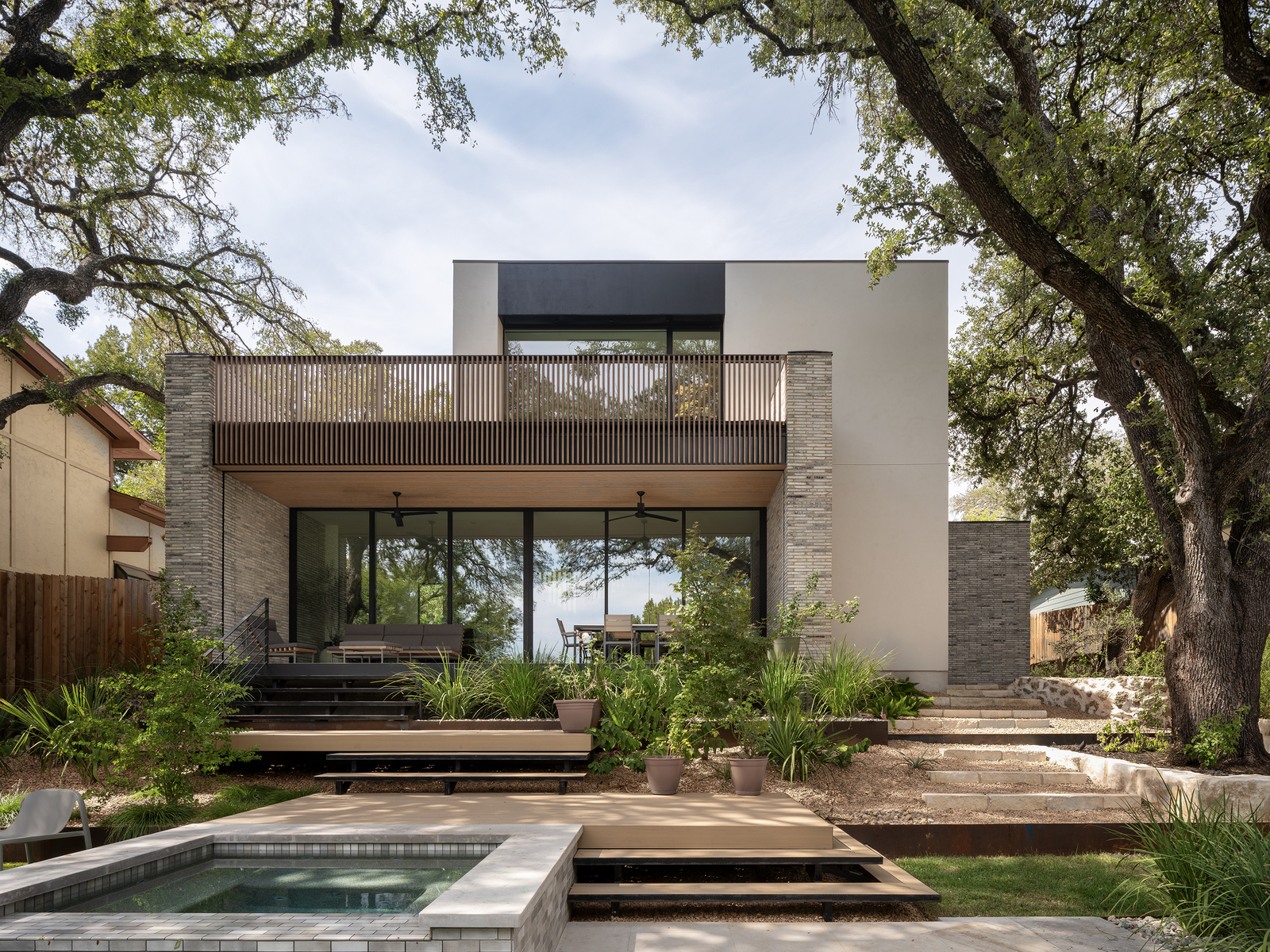
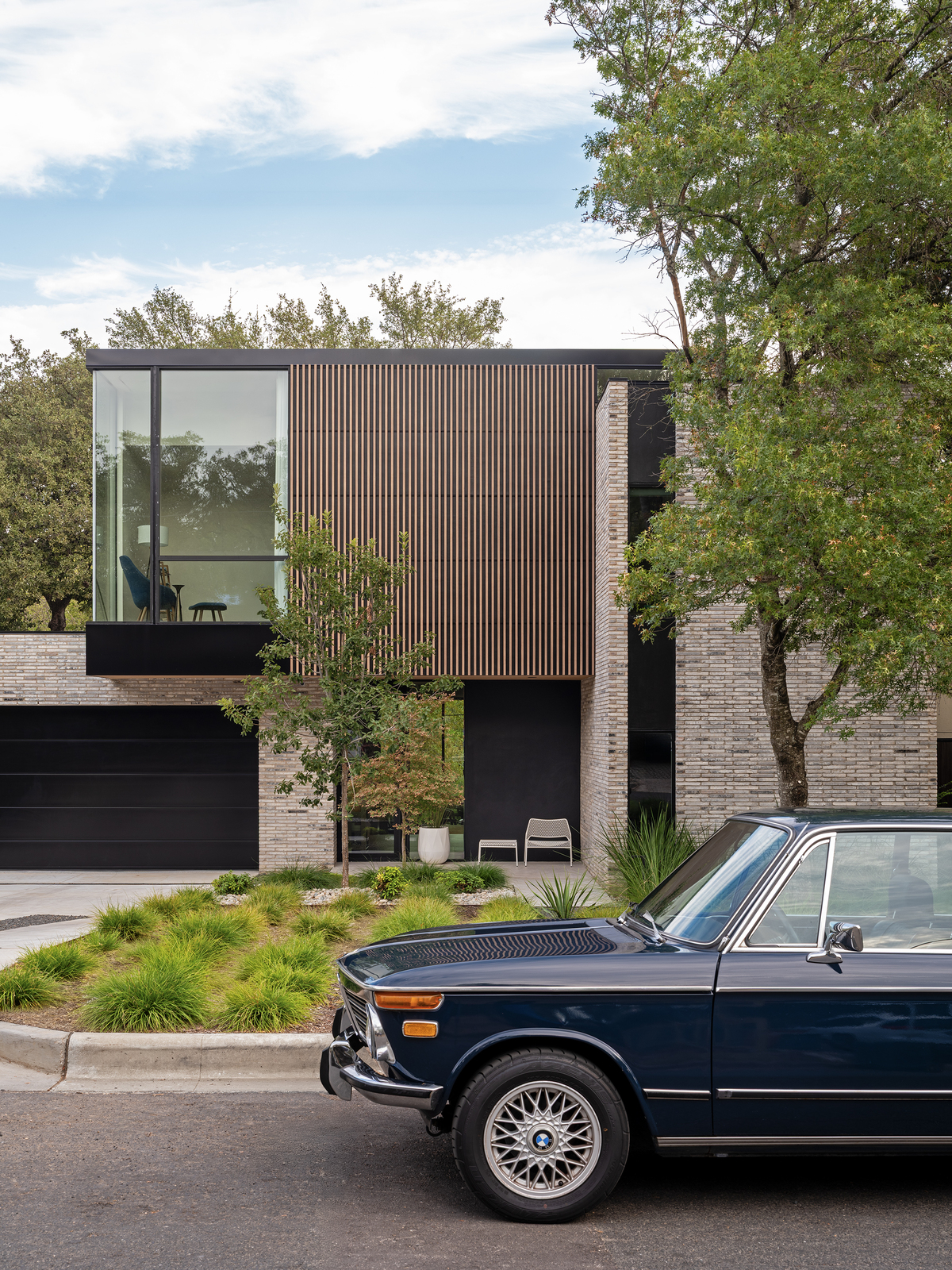
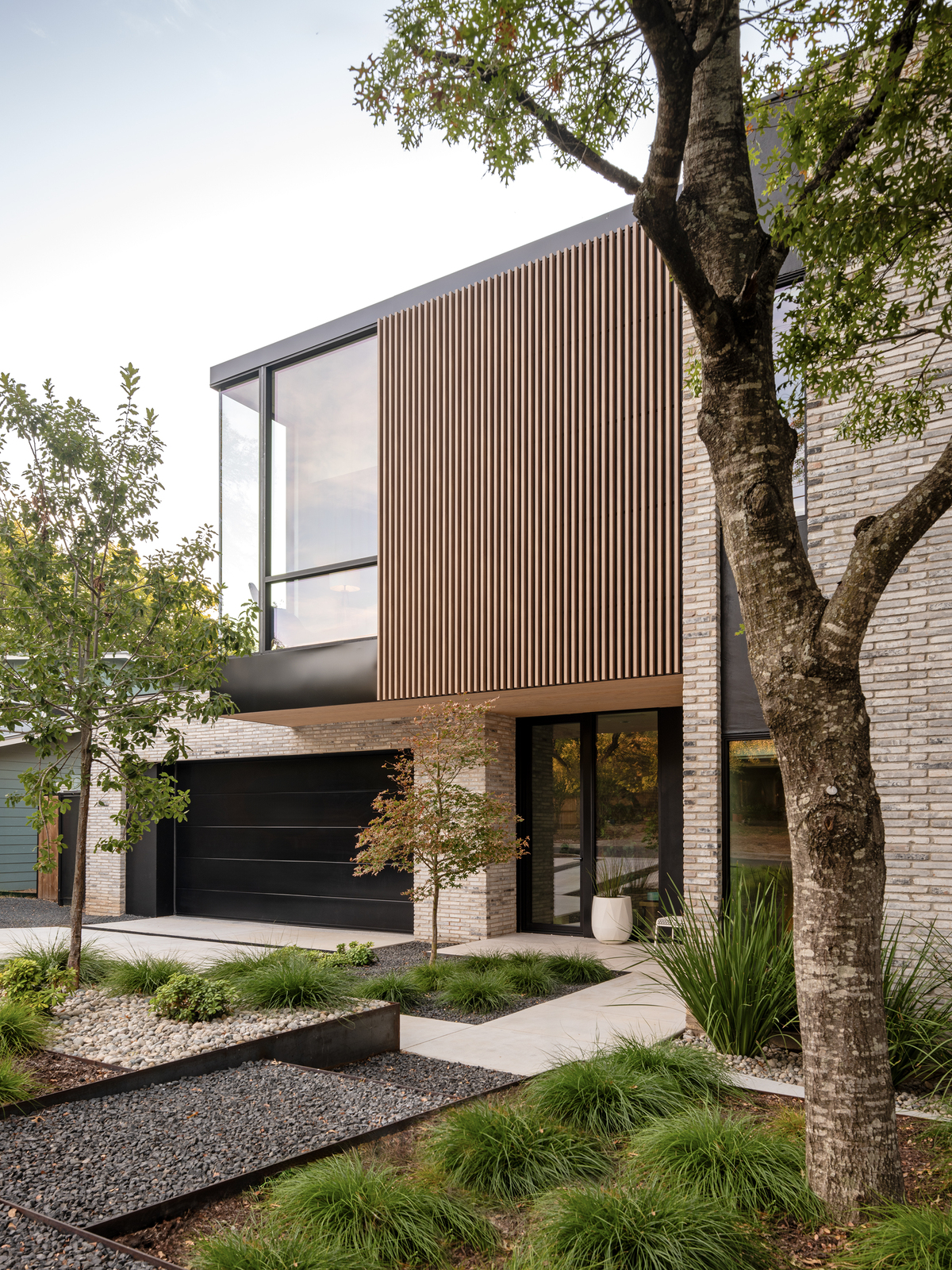
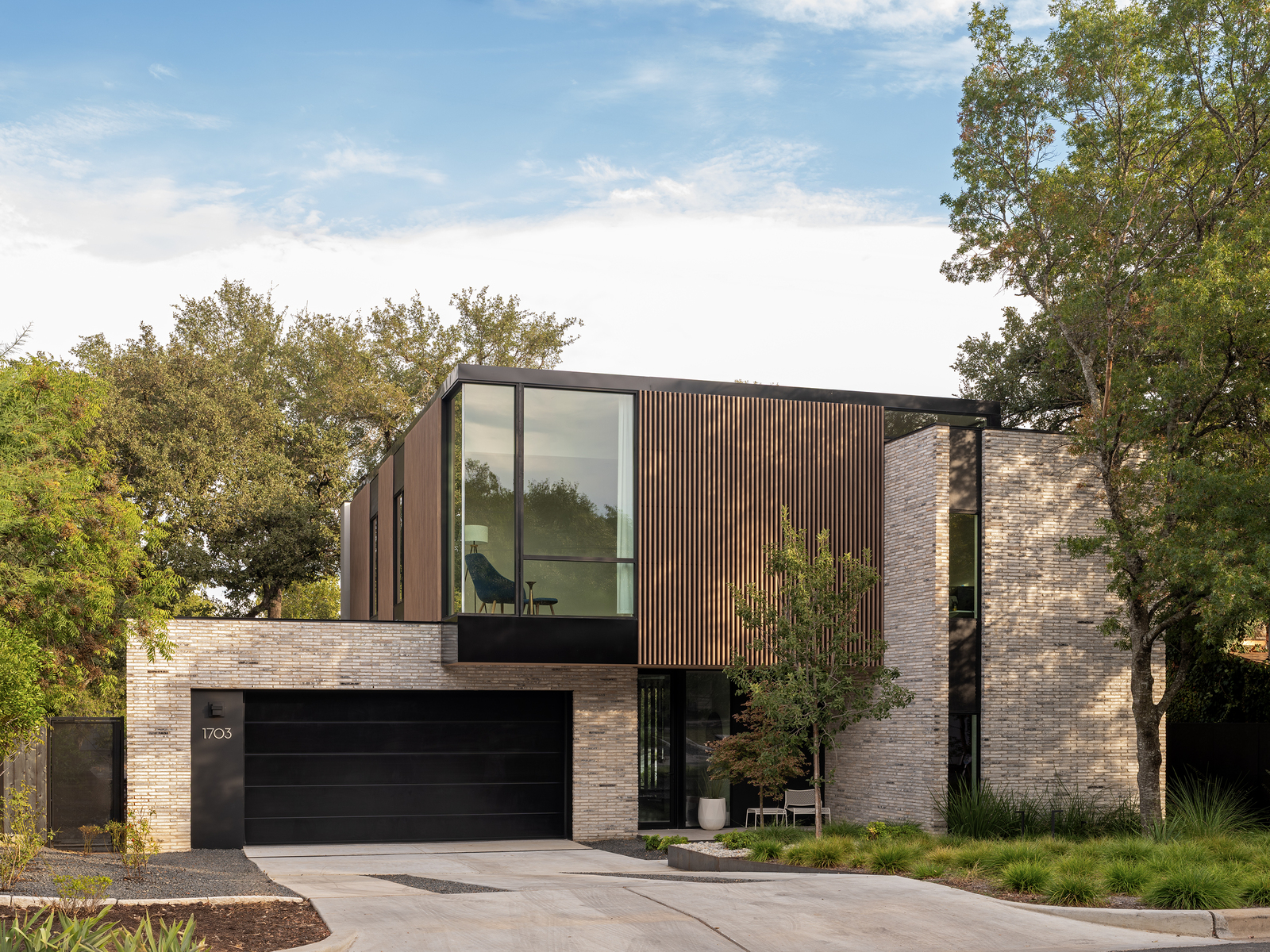
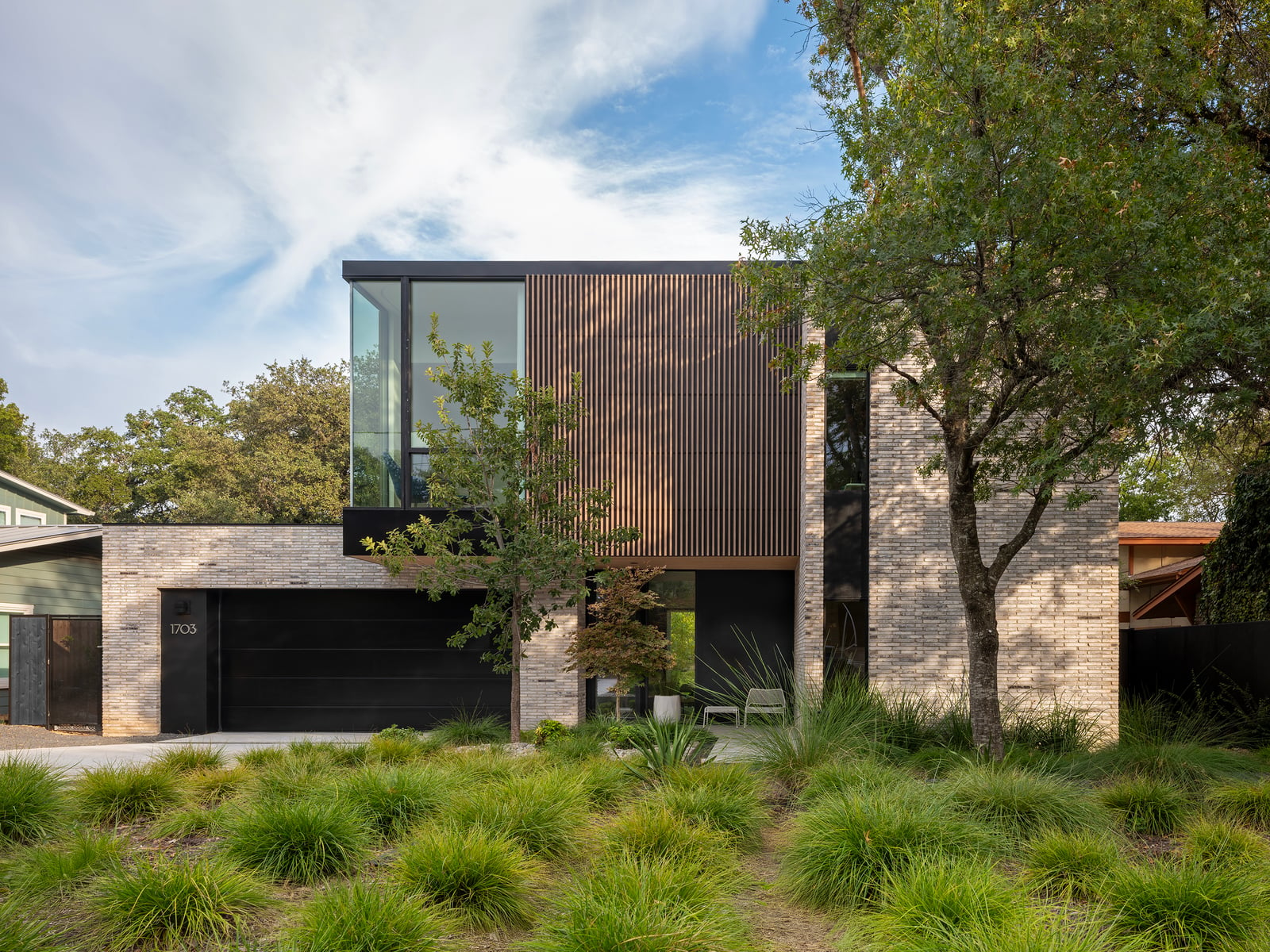
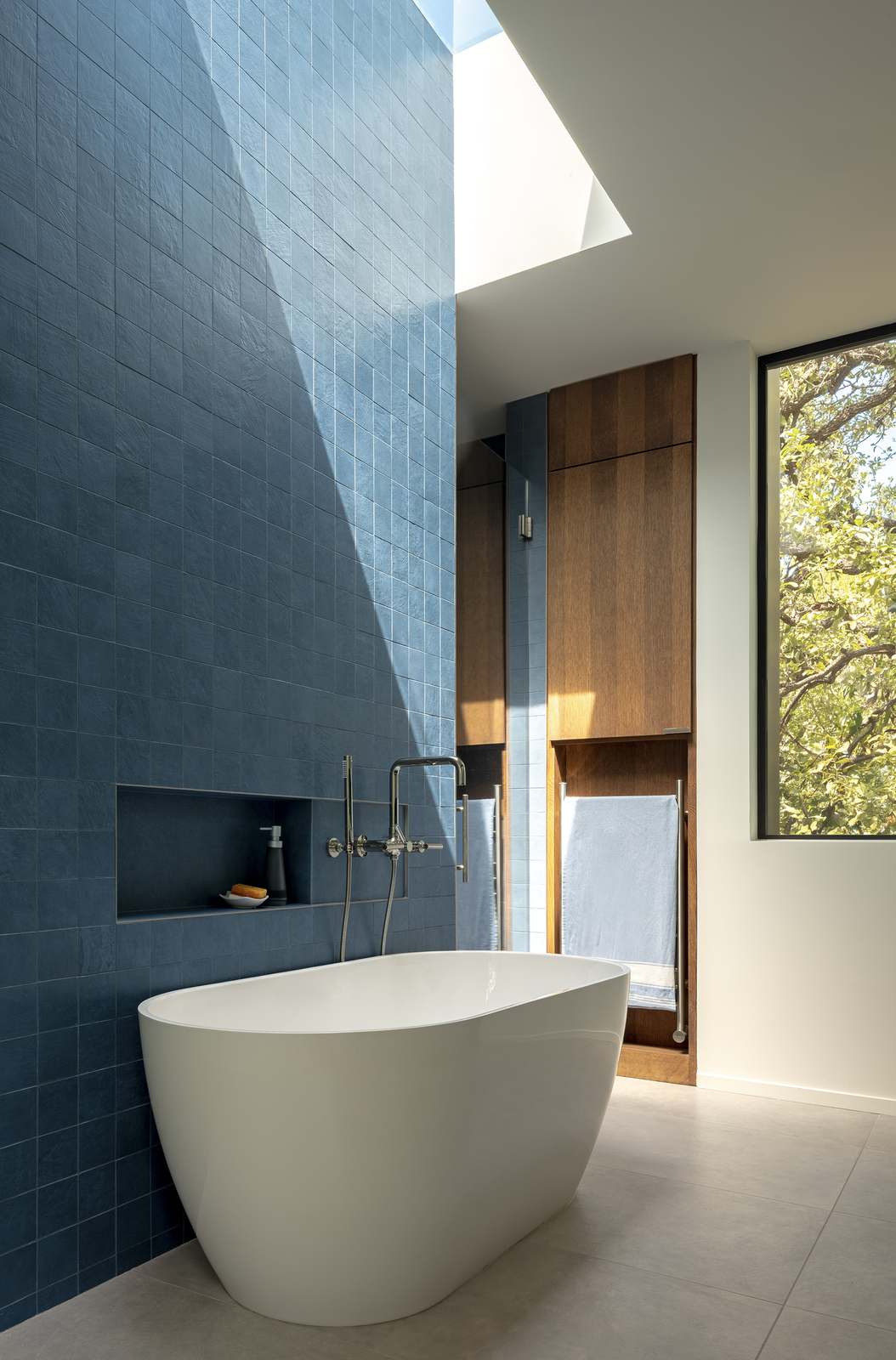
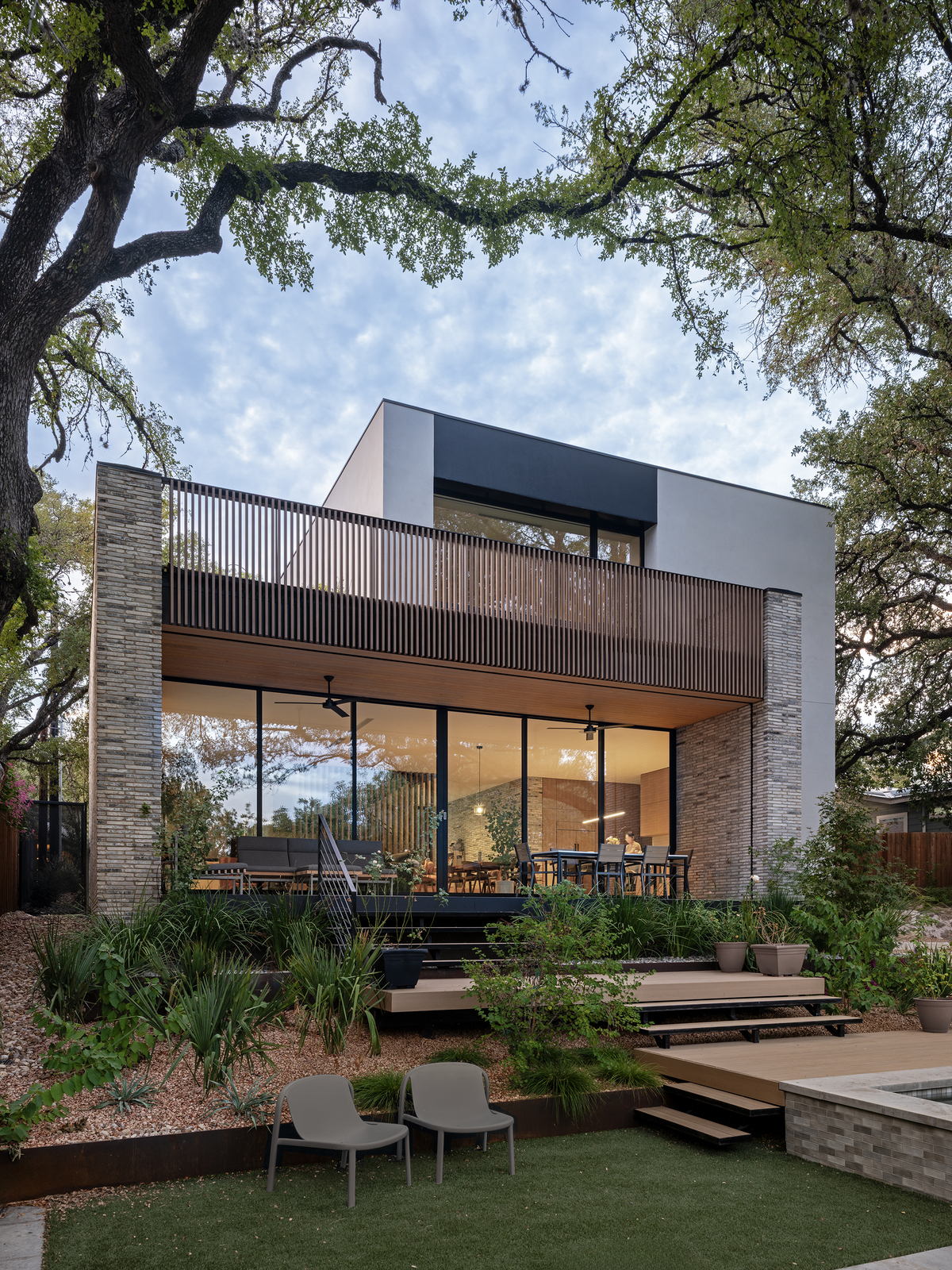
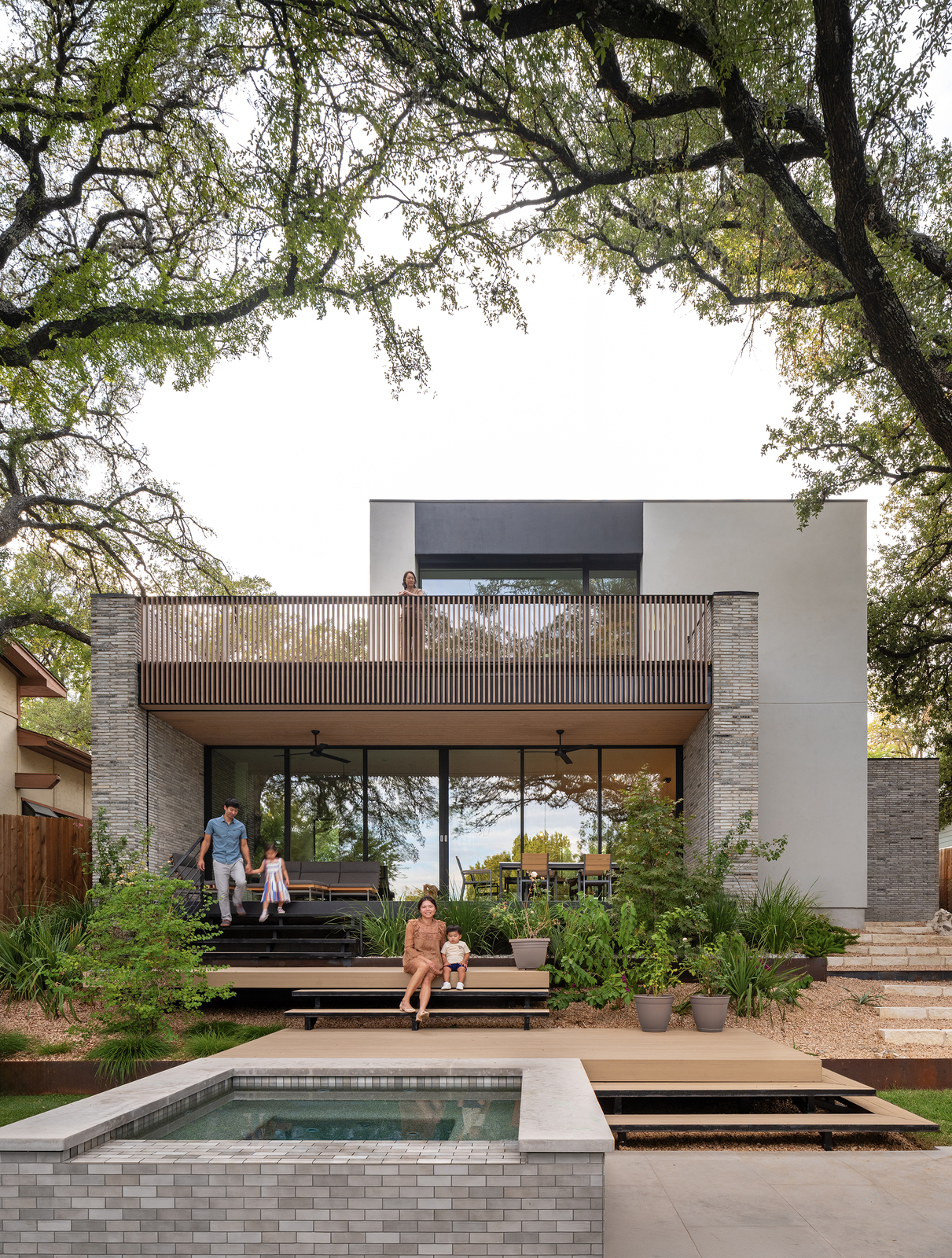
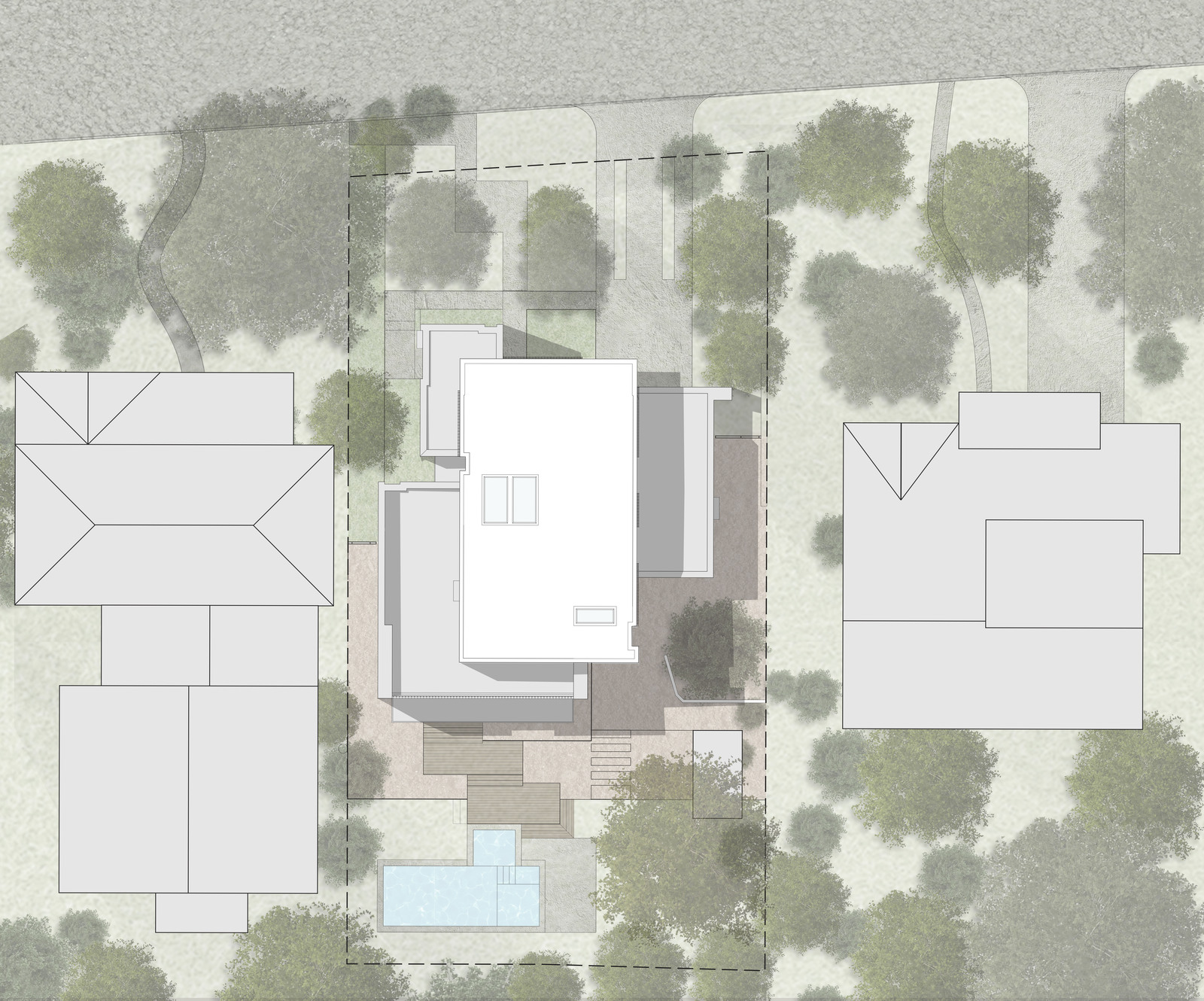
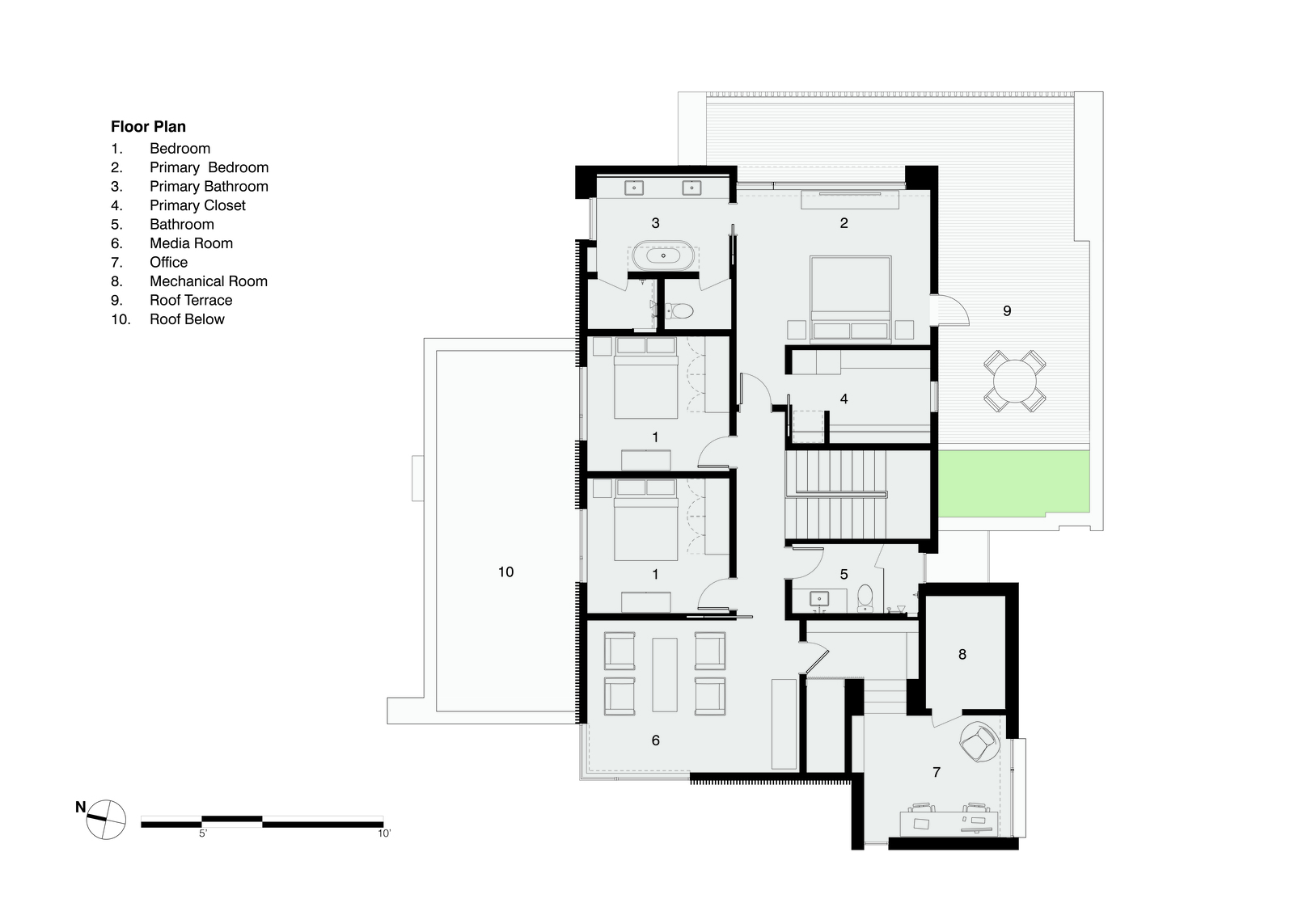
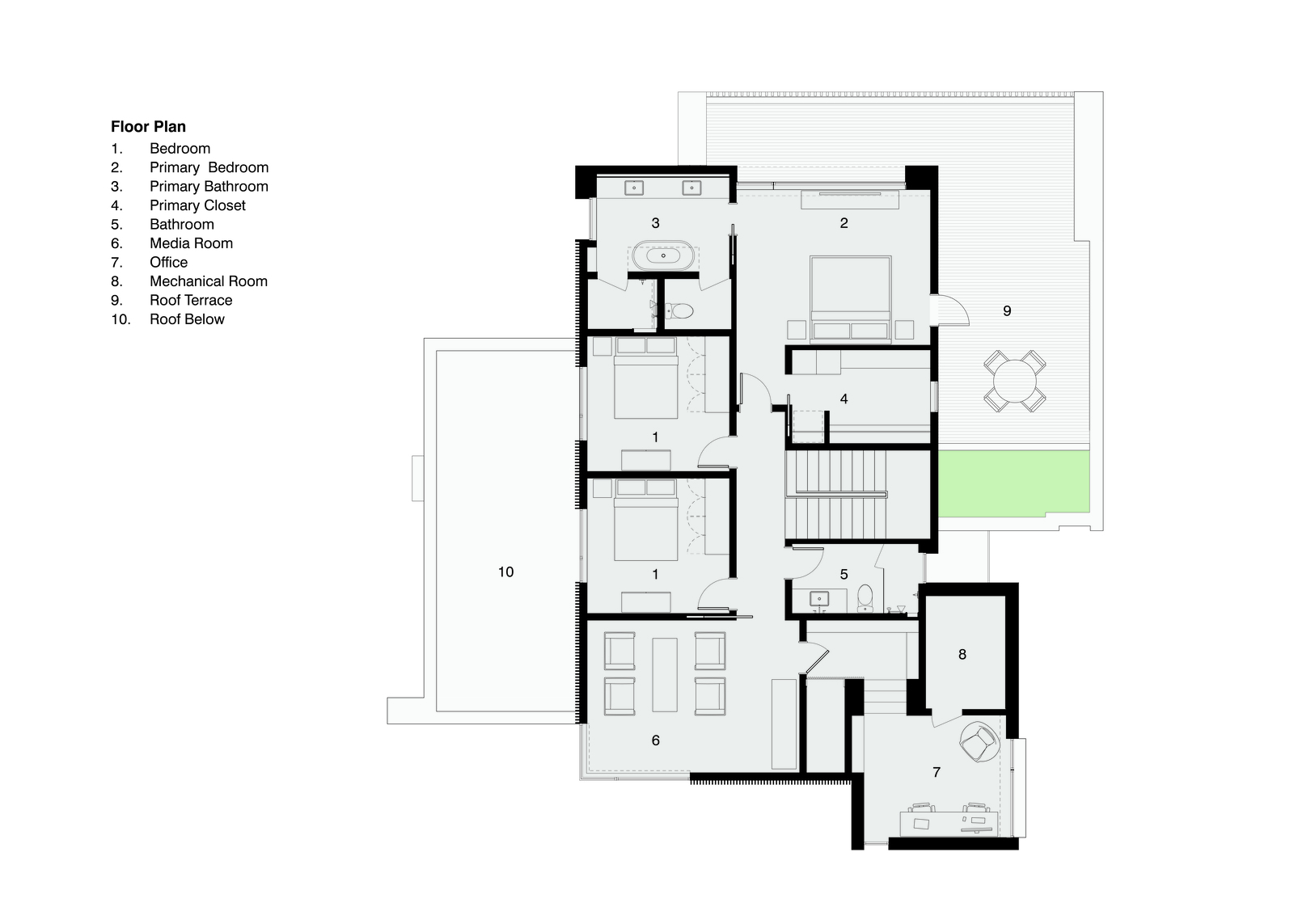
Zilker Park House is a 3,300-square-foot residence located in Austin’s Zilker neighborhood, an area shaped by intensifying residential development and a diverse architectural fabric. Designed by Specht Novak, the house occupies a narrow infill lot marked by a fifteen-foot slope from front to rear. Its massing is calibrated to respond to adjacent structures, stepping in height to mediate between a neighboring bungalow and a taller residence while acknowledging the presence of mature trees. Natural Texas brick and vertical wood battens establish a tactile material identity that continues into the interior. Terraced floors and outdoor platforms follow the topography, culminating in a rear pool area with views toward downtown Austin. The project proposes a context-driven approach to density that aligns contemporary living with neighborhood continuity.
In my experience, working within these constraints almost always leads to a more creative and ultimately more fulfilling design.
Interview with Scott Specht of Specht Novak
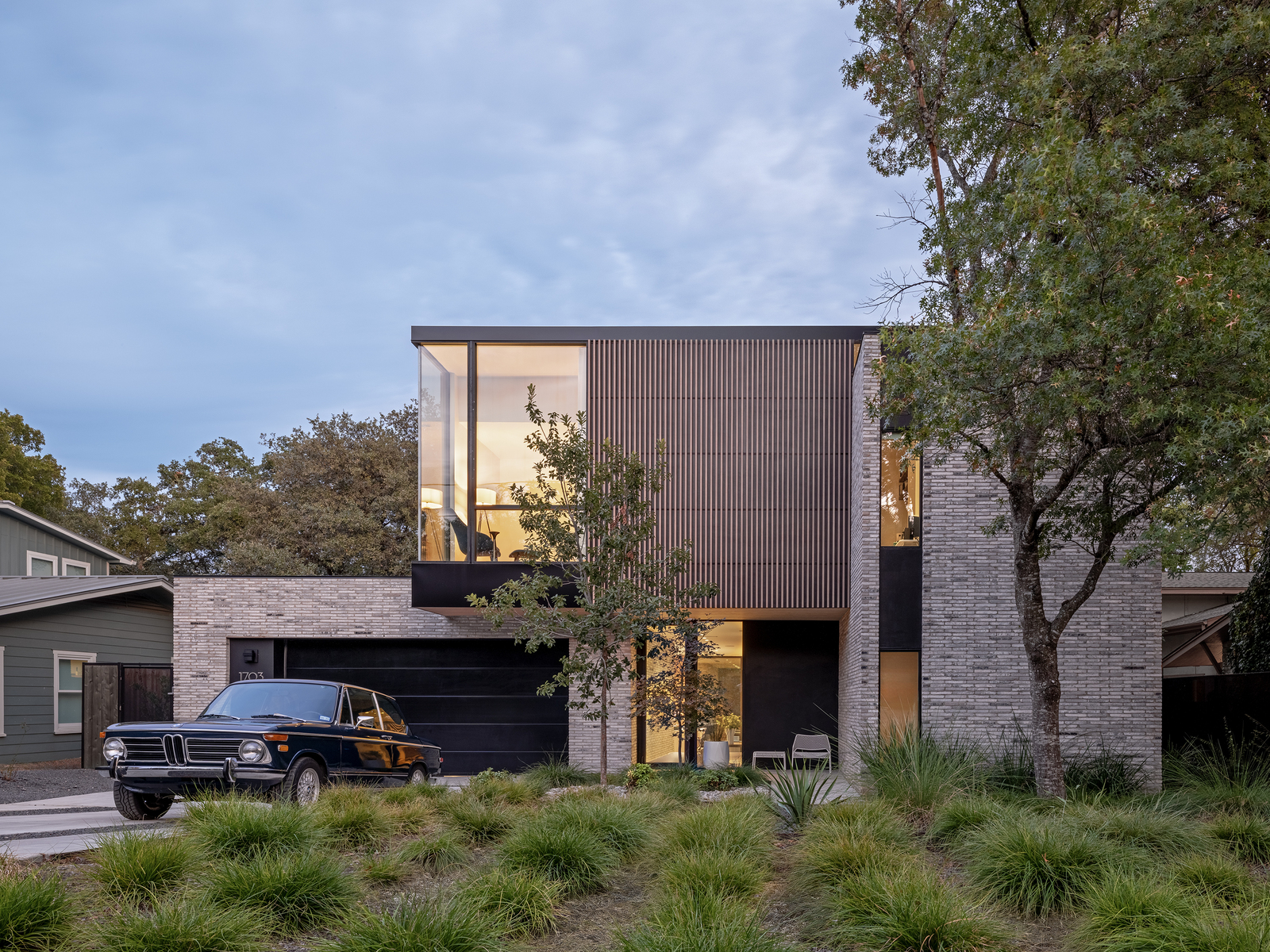
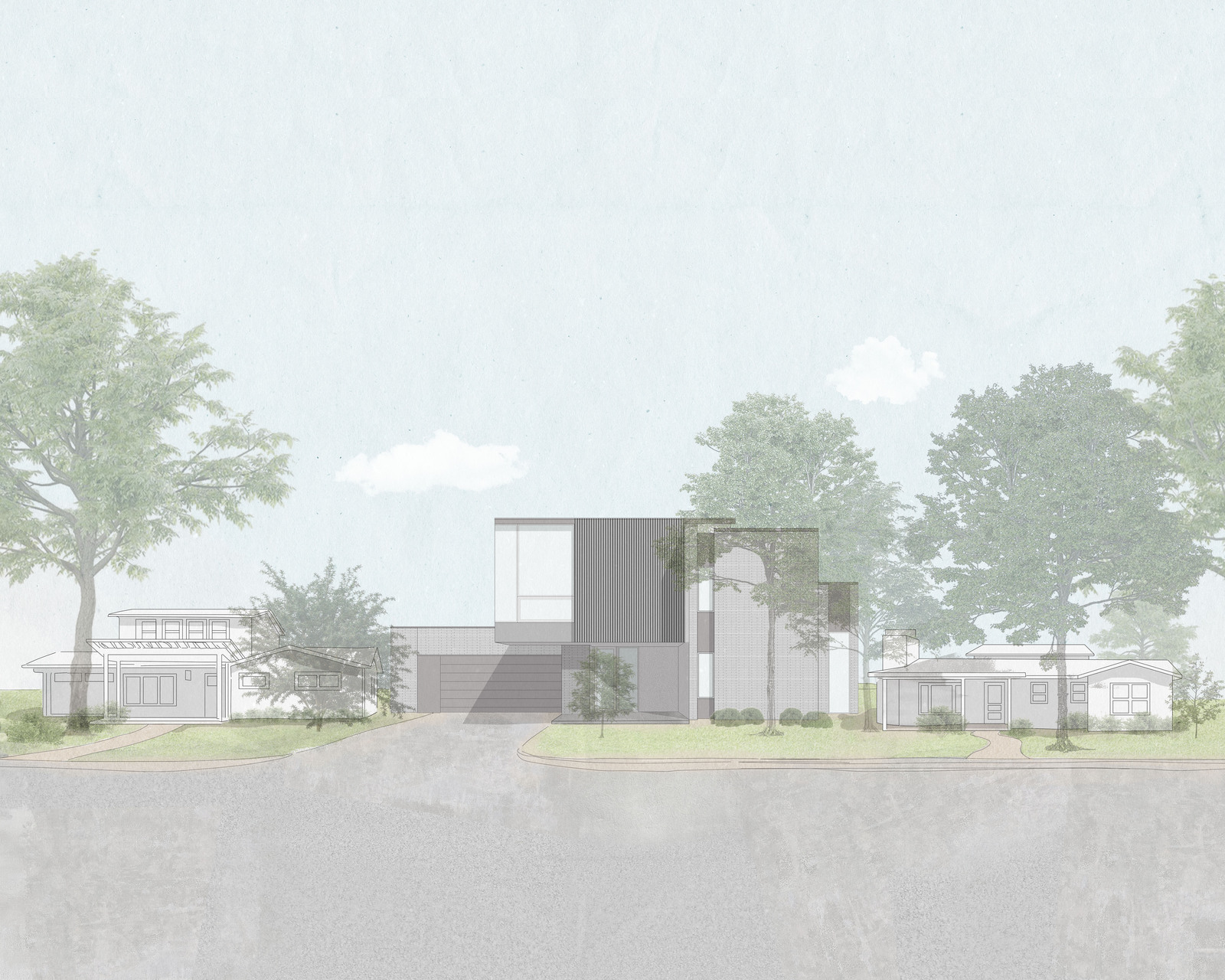
In a district where redevelopment often prioritizes maximum allowable volume, the Zilker Park House adopts a more measured stance. Rather than presenting a singular, imposing street wall, the façade is composed as an assembly of rectilinear forms that shift to reduce perceived scale. This strategy allows the building to absorb the pressures of densification while maintaining visual compatibility with its surroundings.
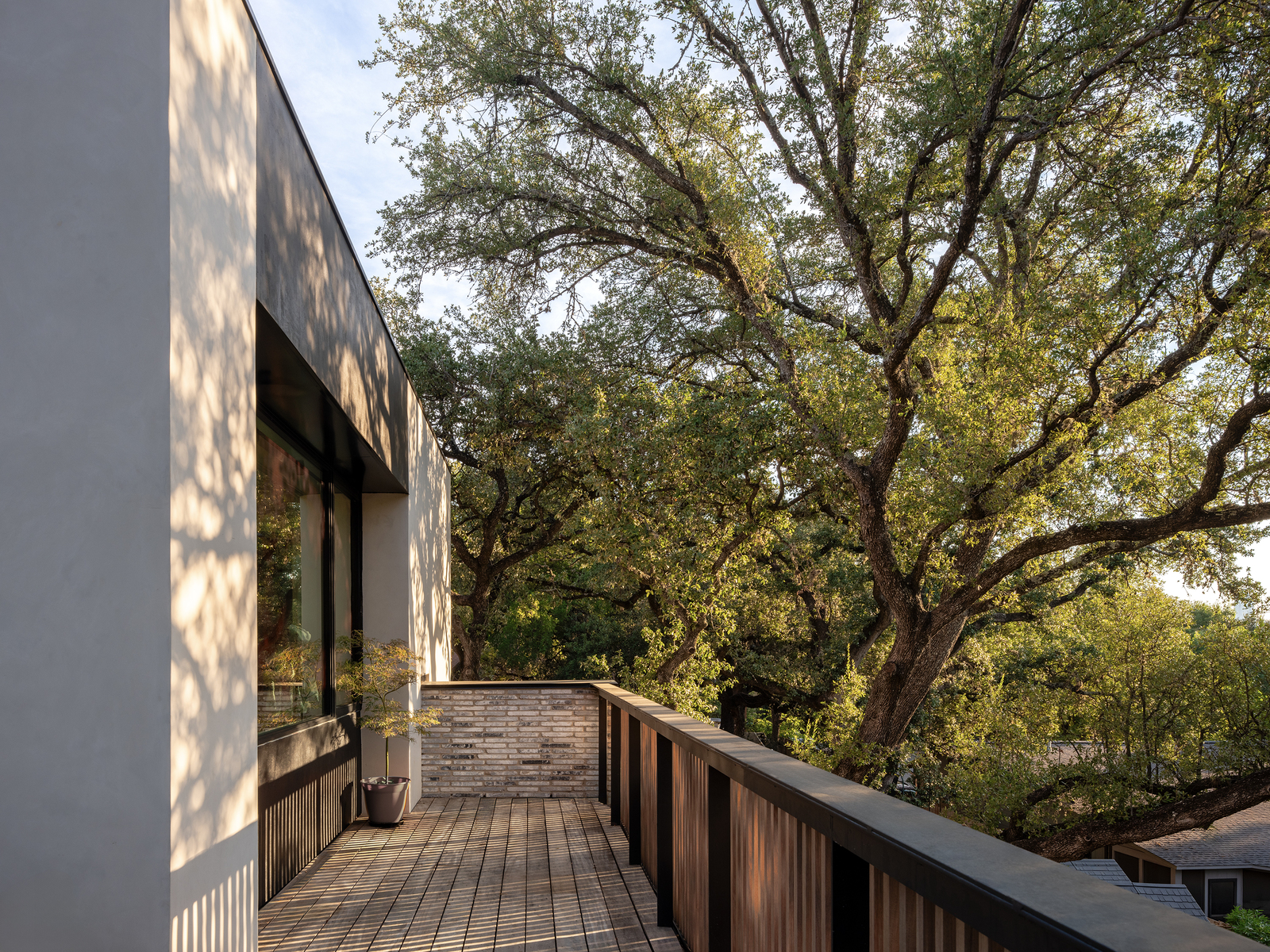
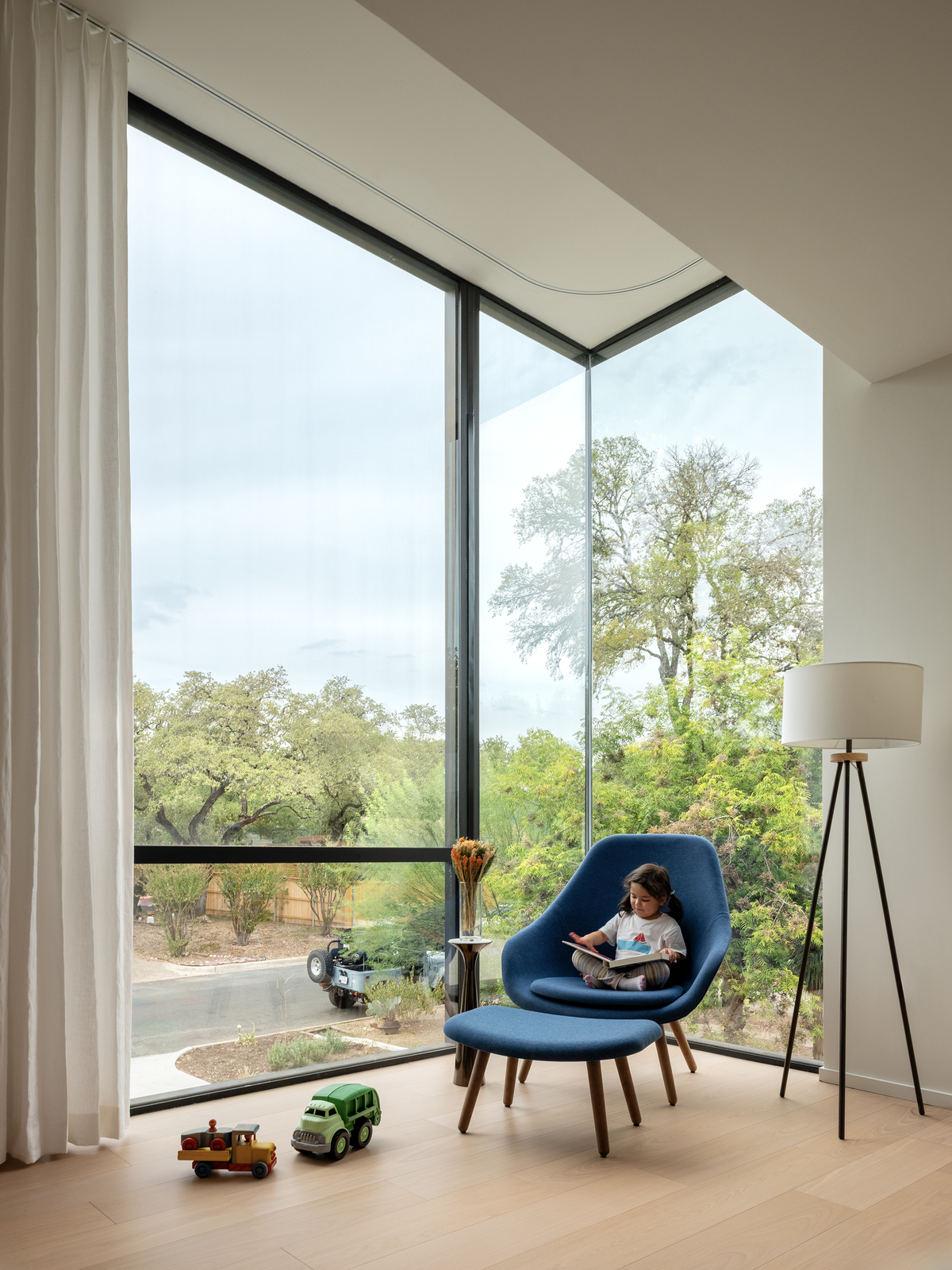
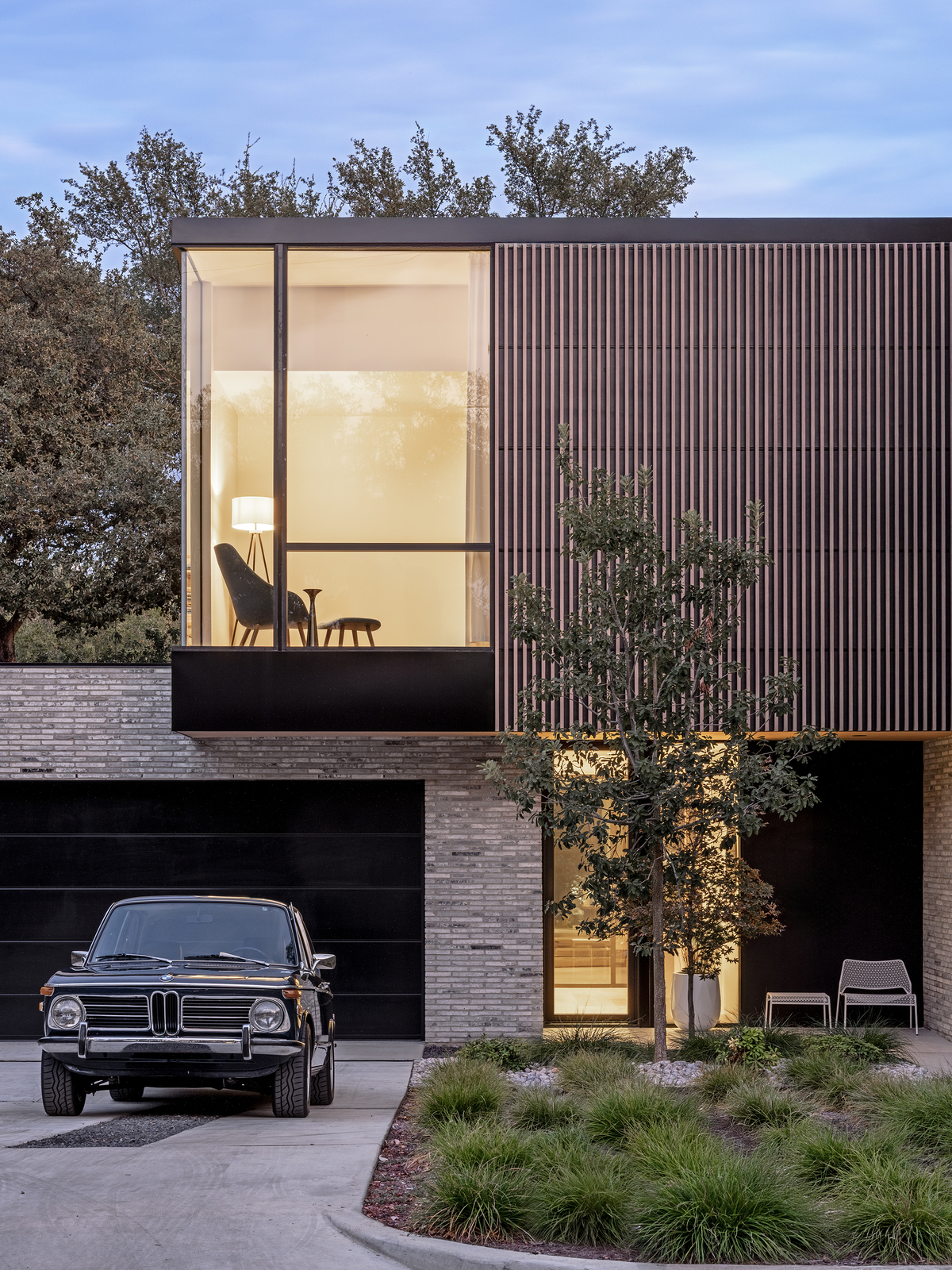
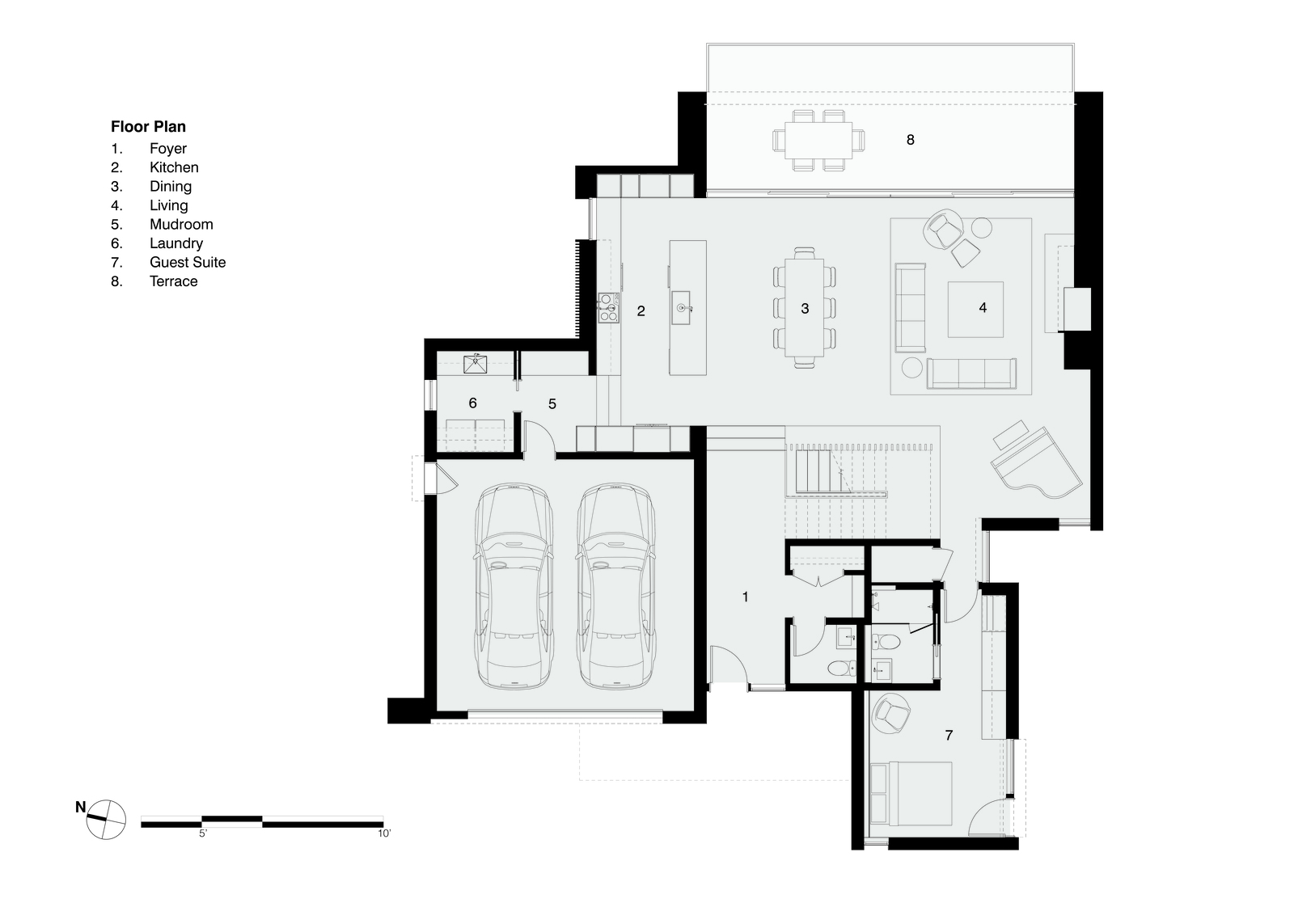
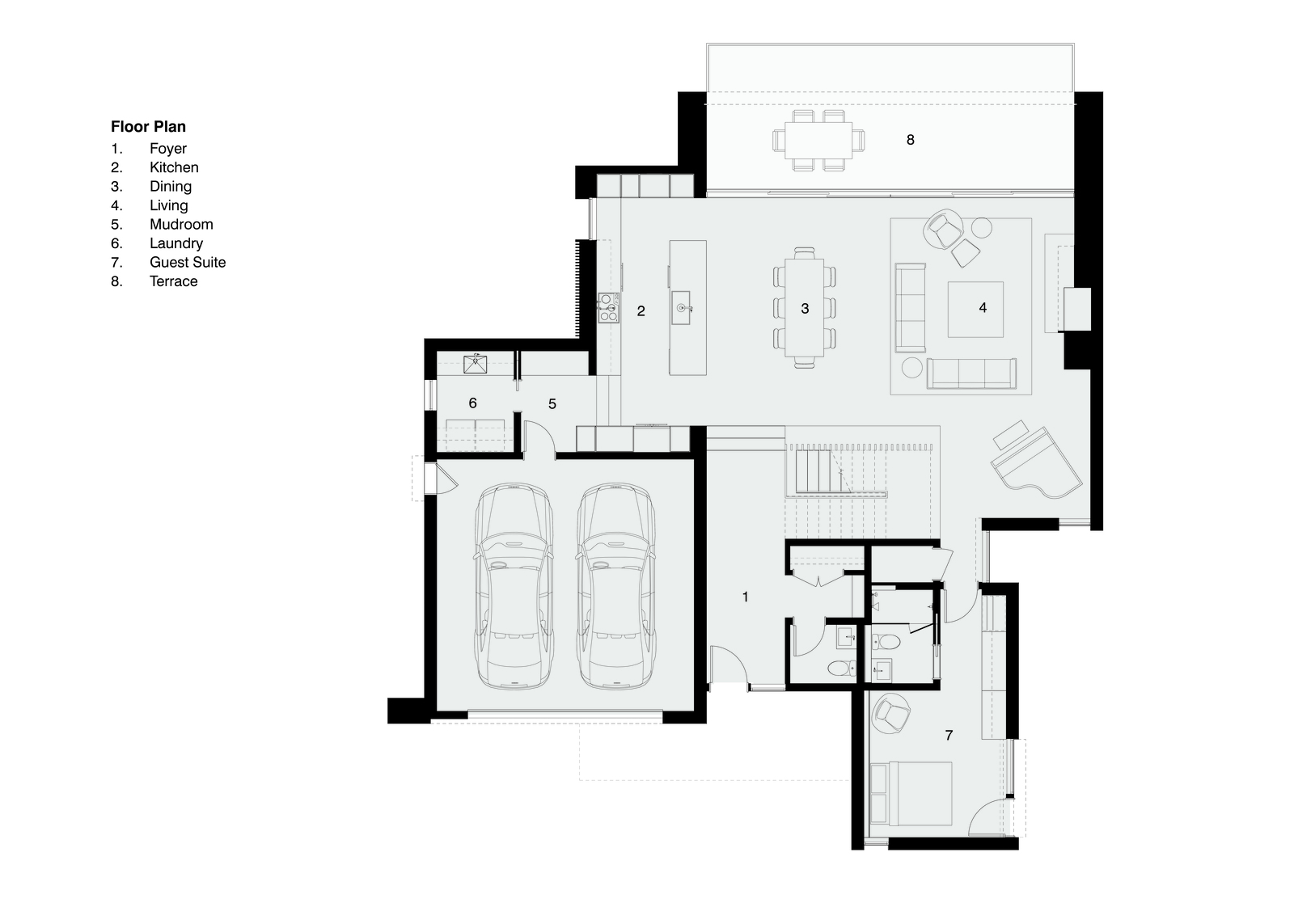
The north edge of the house remains deliberately low, aligning with the datum of an adjacent bungalow. Toward the south, the volume steps upward to correspond with a taller neighboring structure and the canopy of heritage oaks. The required street-facing garage, frequently a disruptive presence on narrow lots, is integrated as a graphic component within the overall composition. At ground level, the façade is largely solid and controlled, punctuated by a single glazed entry, while the upper floor opens through a prominent corner window that frames views into the surrounding trees.
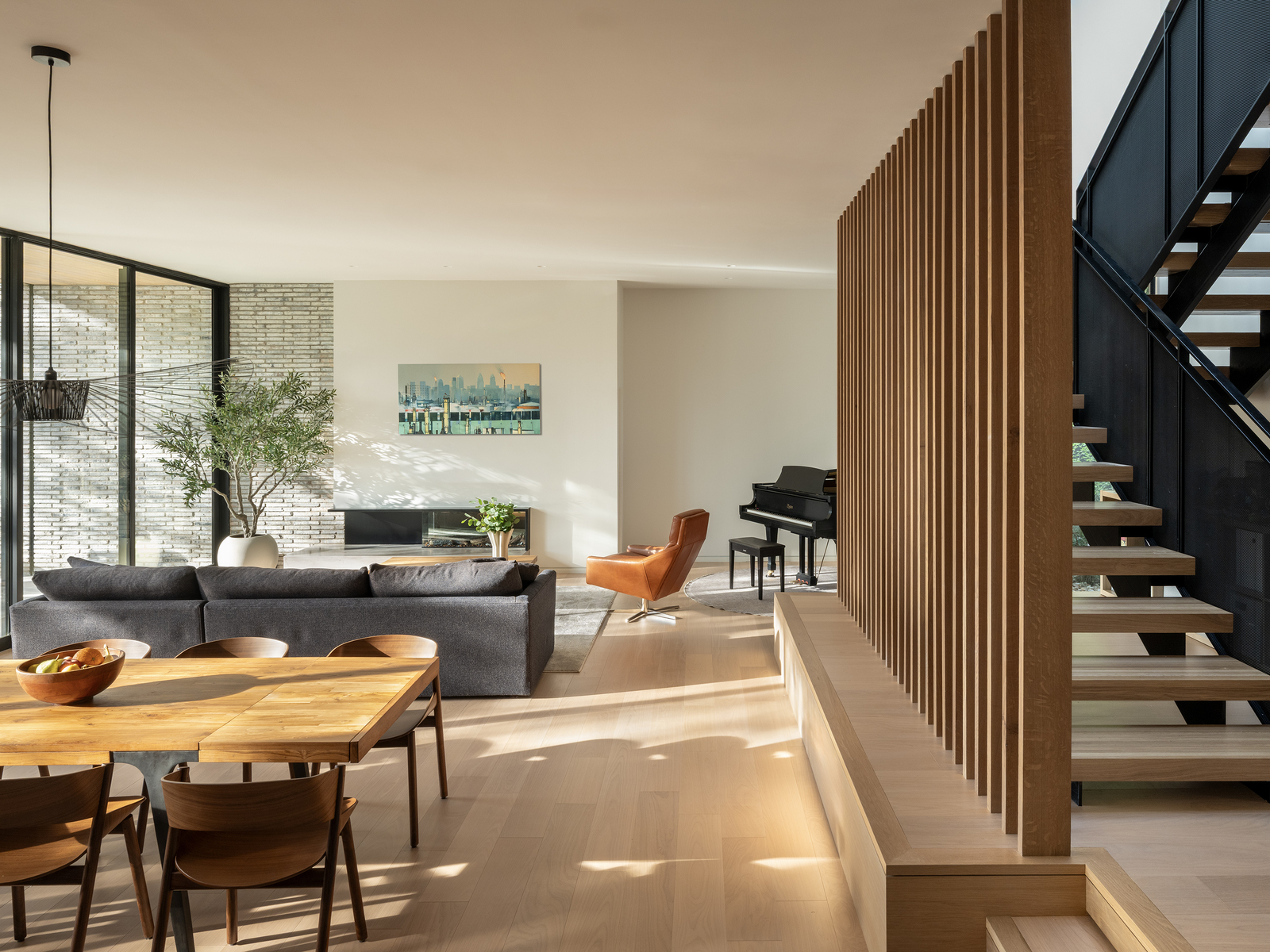
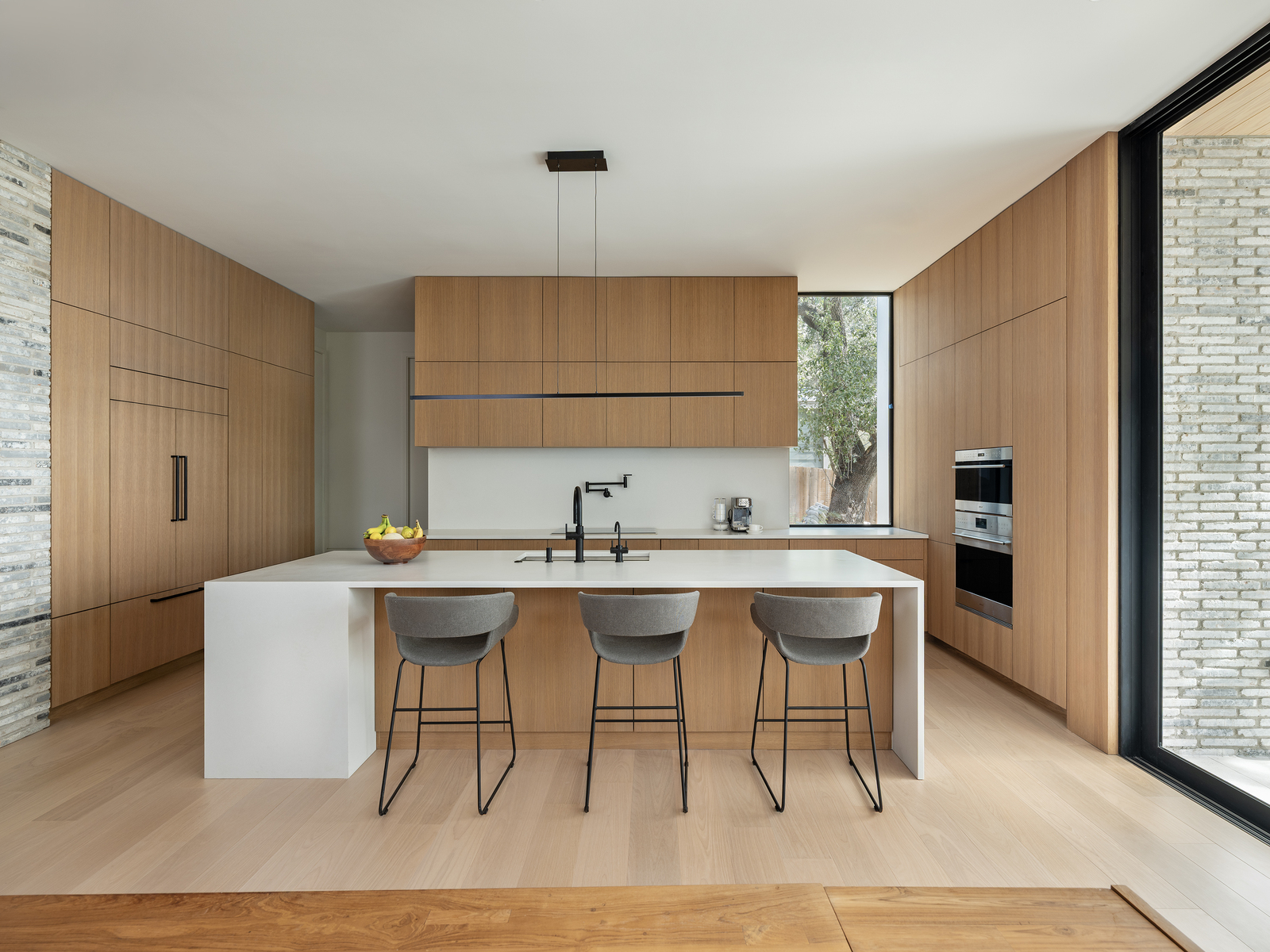
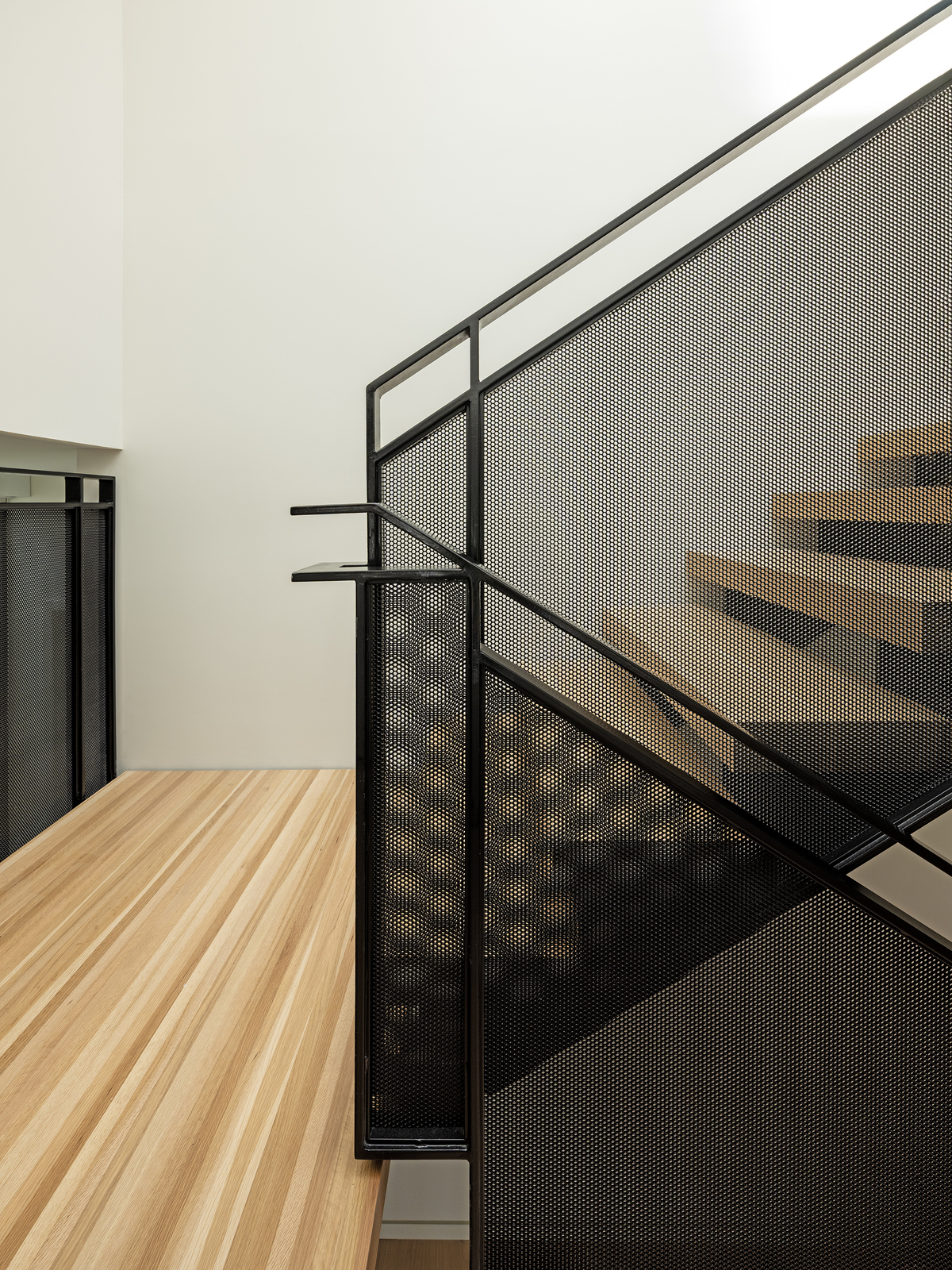
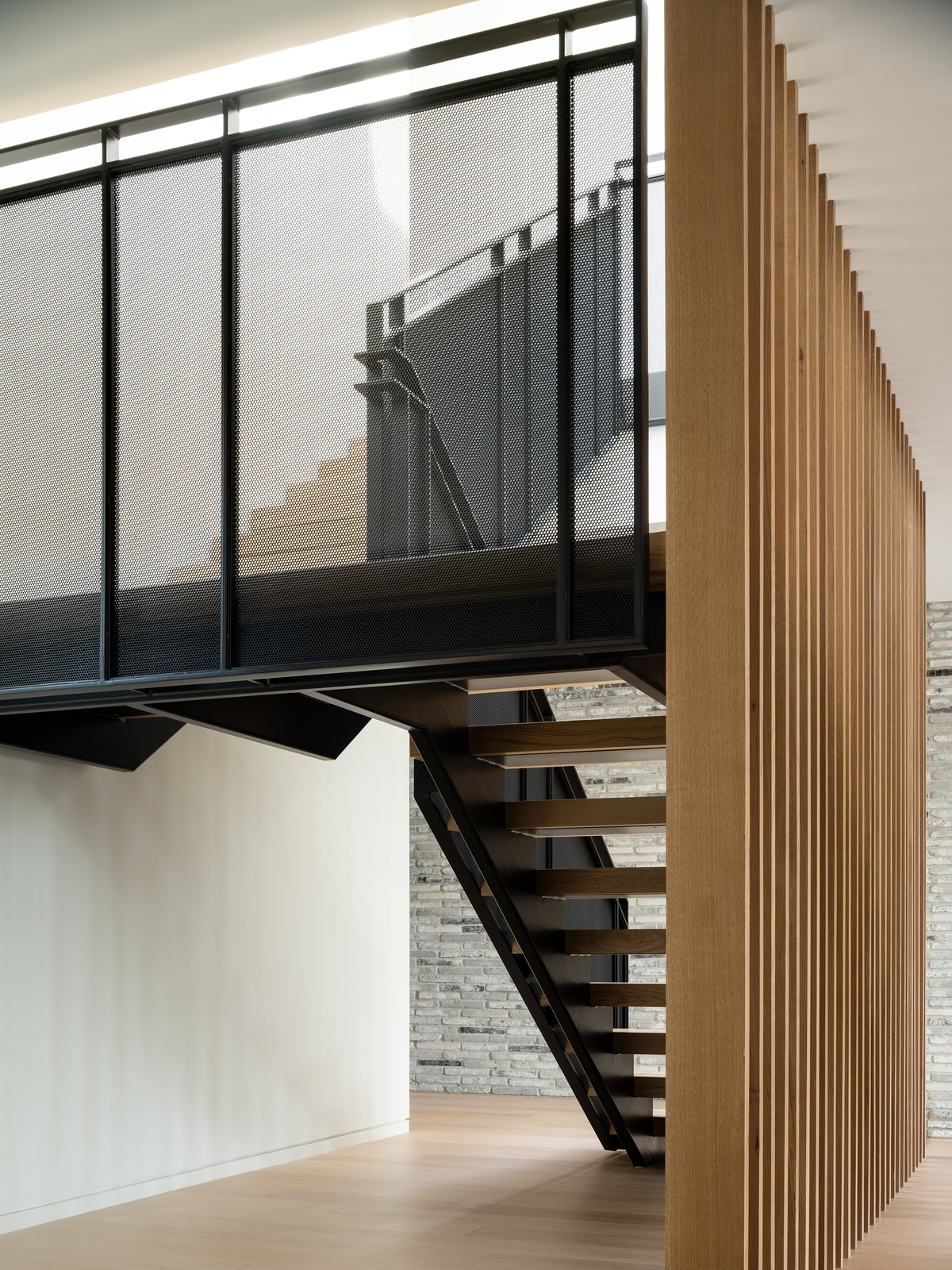
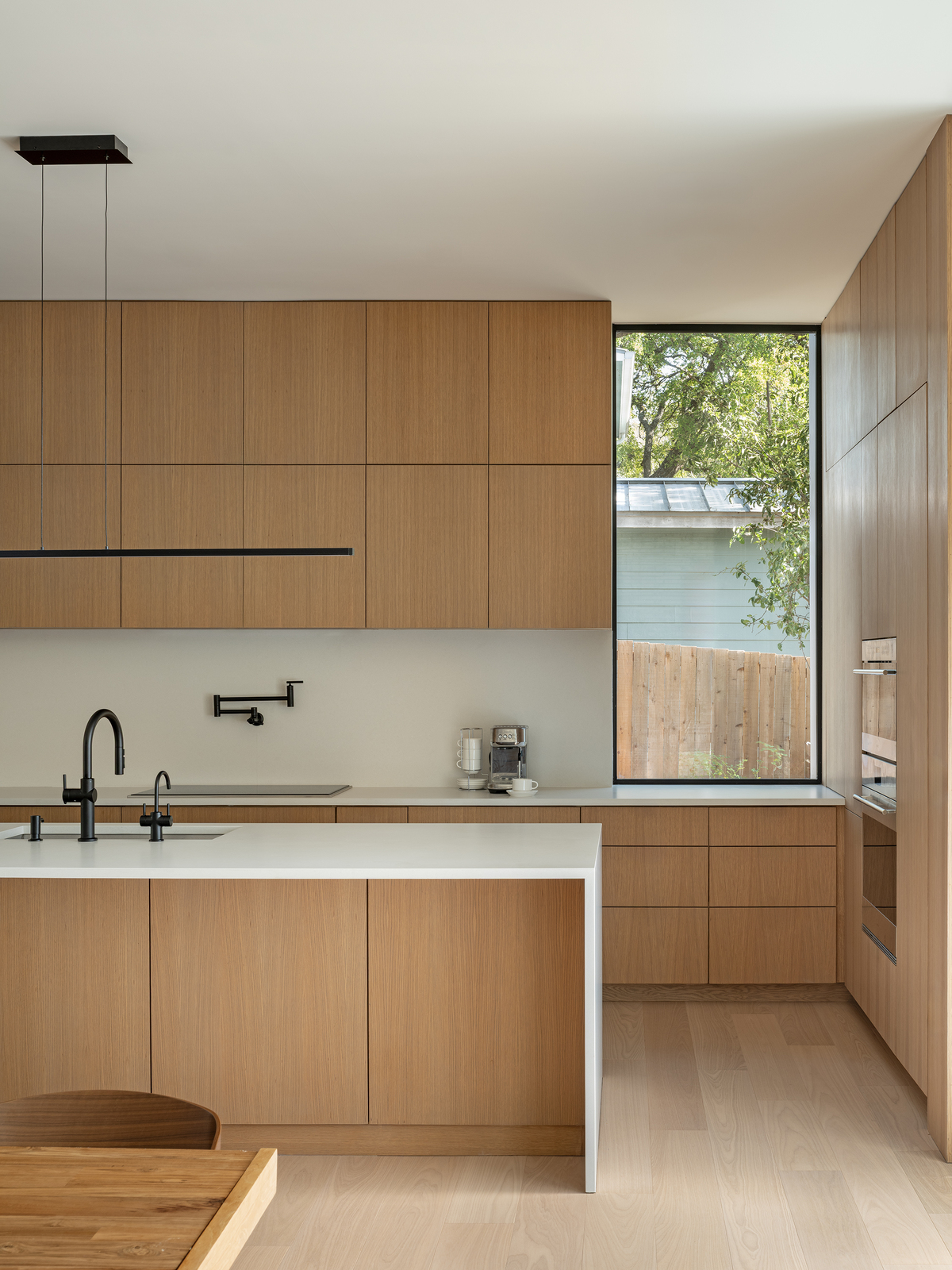
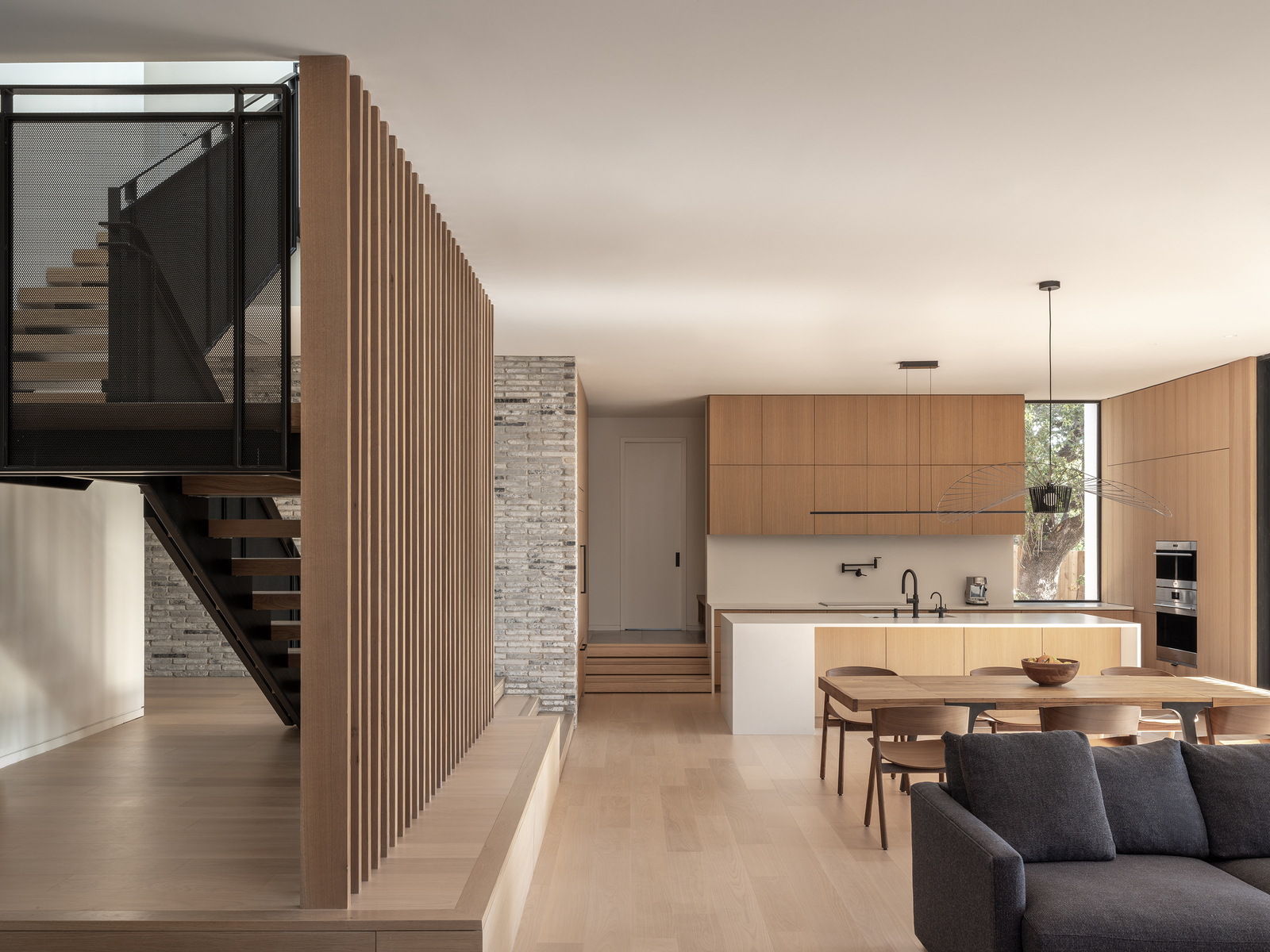
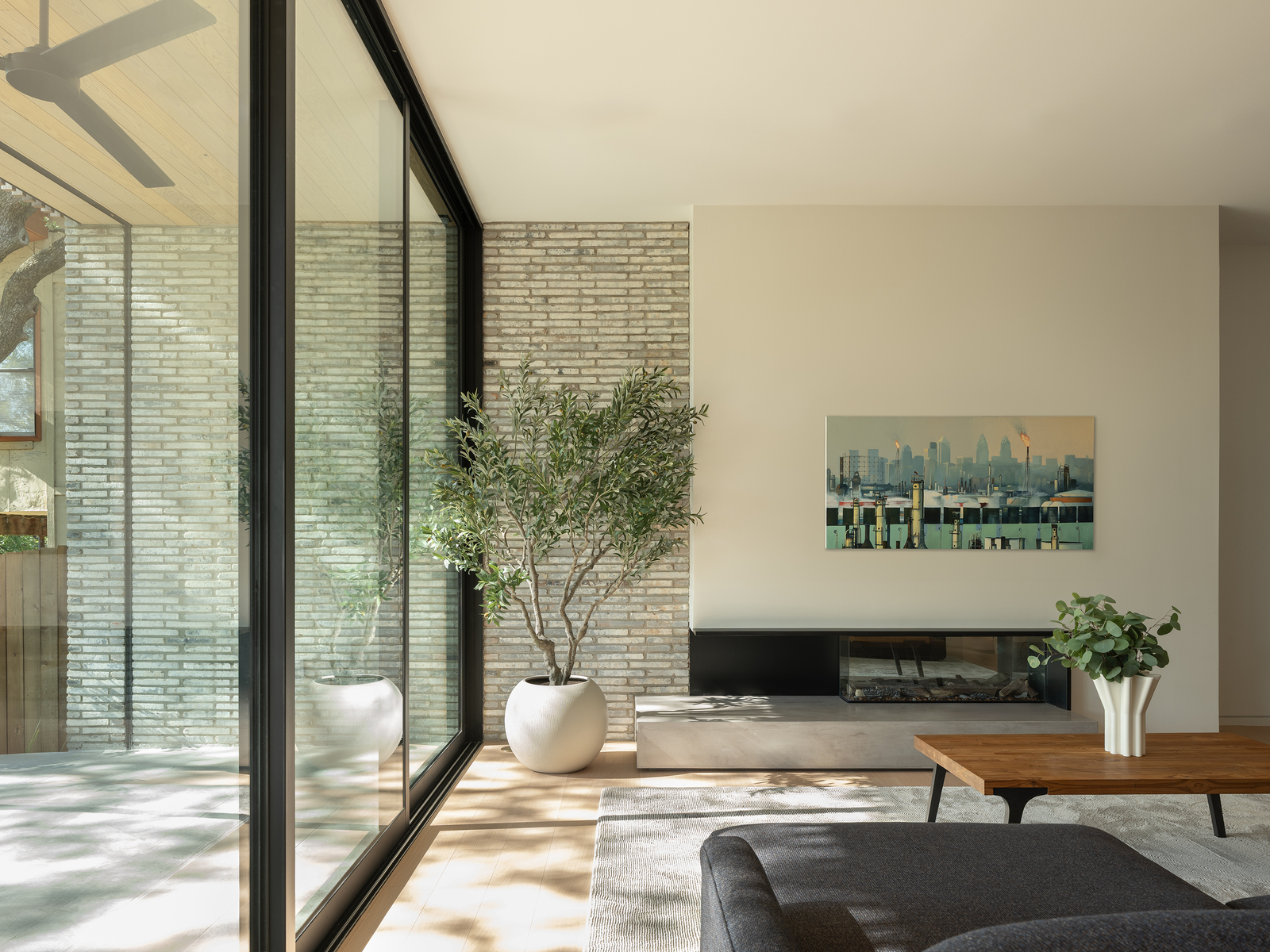
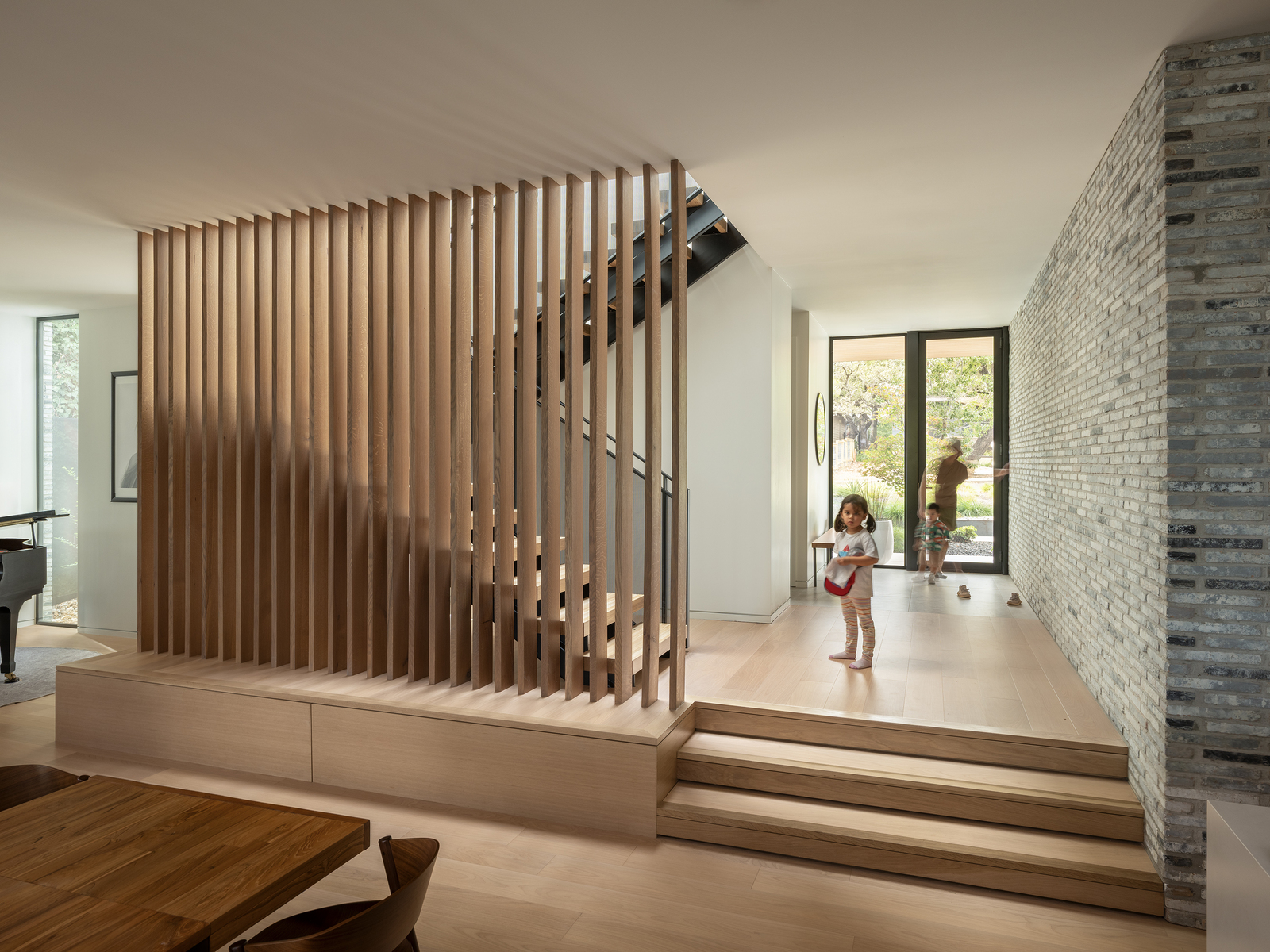
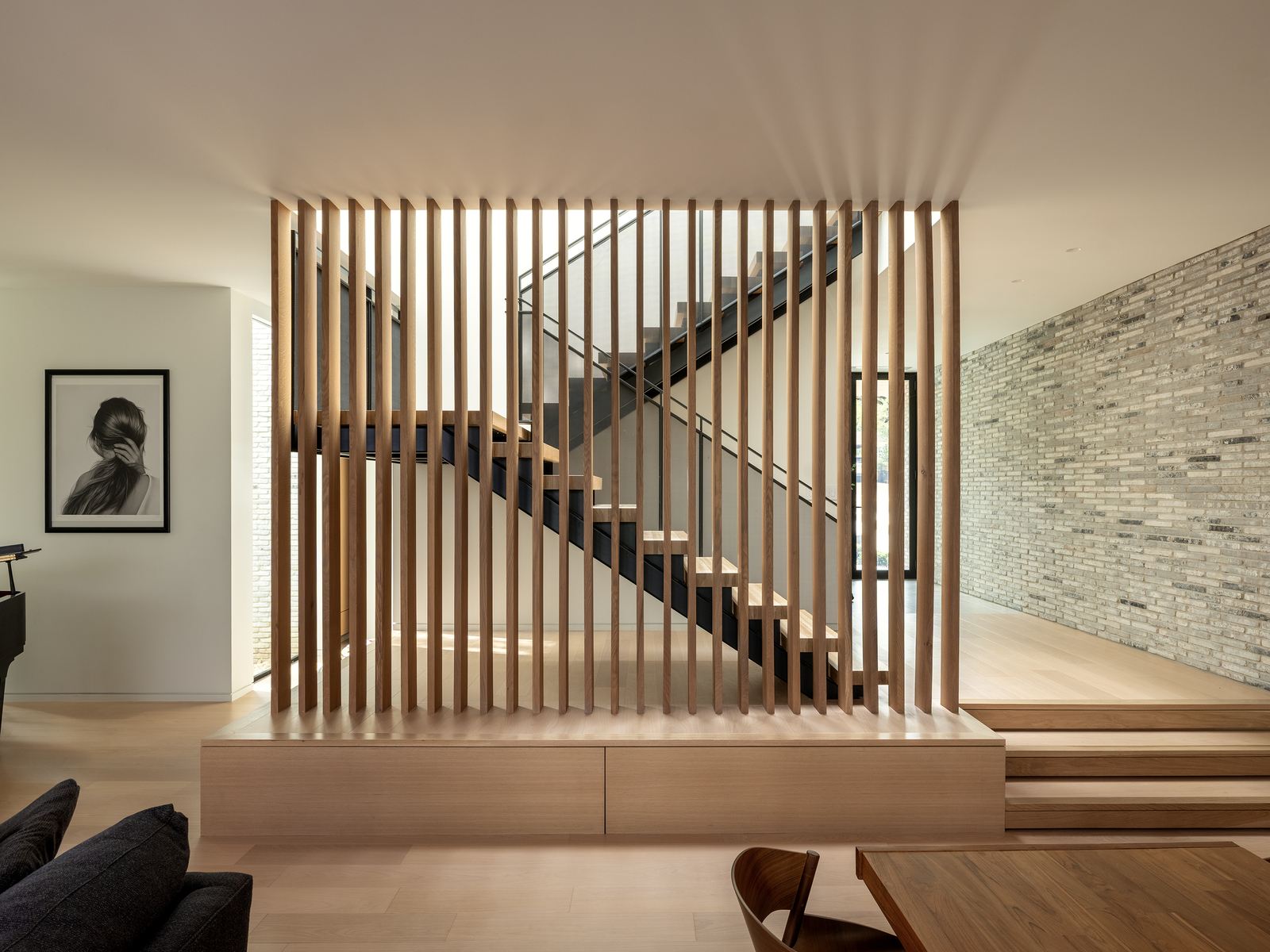
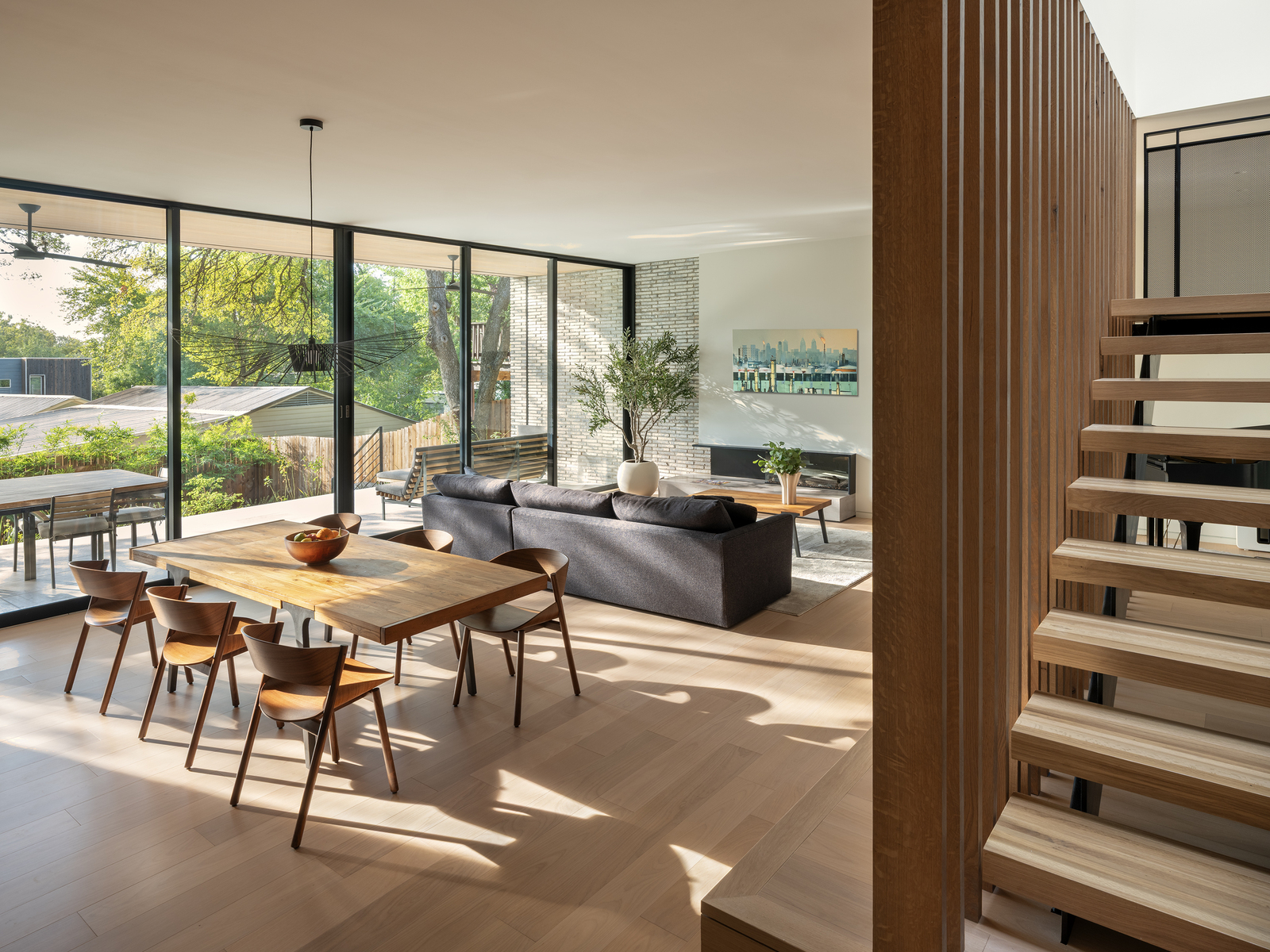
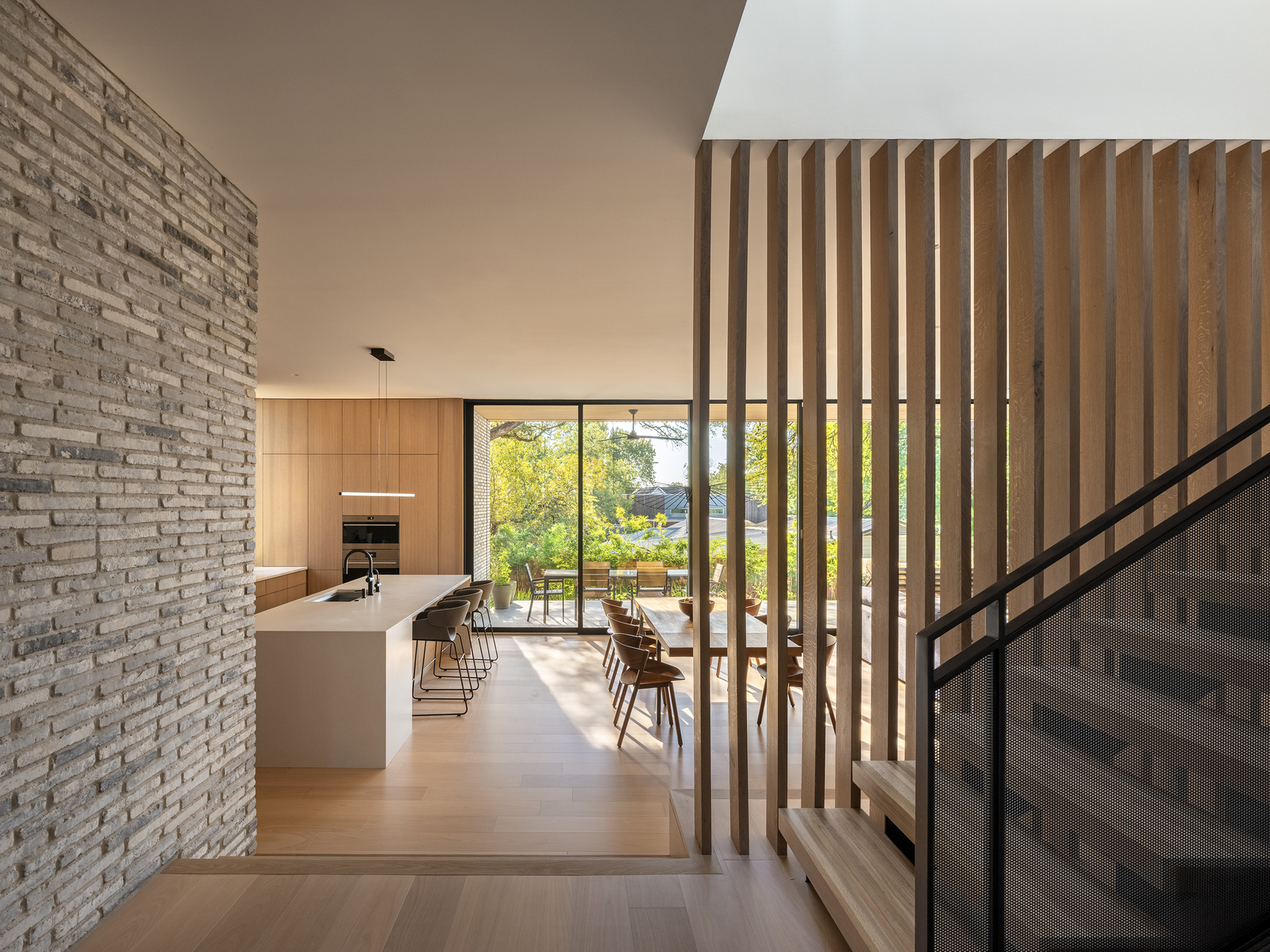
Material expression reinforces the project’s contextual sensitivity. Texas brick lends weight and permanence, grounding the building in local tradition, while vertical wood battens and dark trim introduce texture and craft. These materials extend indoors, where brick surfaces and a vertical batten screen create continuity between exterior and interior. The screen encloses the stair core, filtering daylight from a central skylight and casting layered shadows that animate circulation spaces.
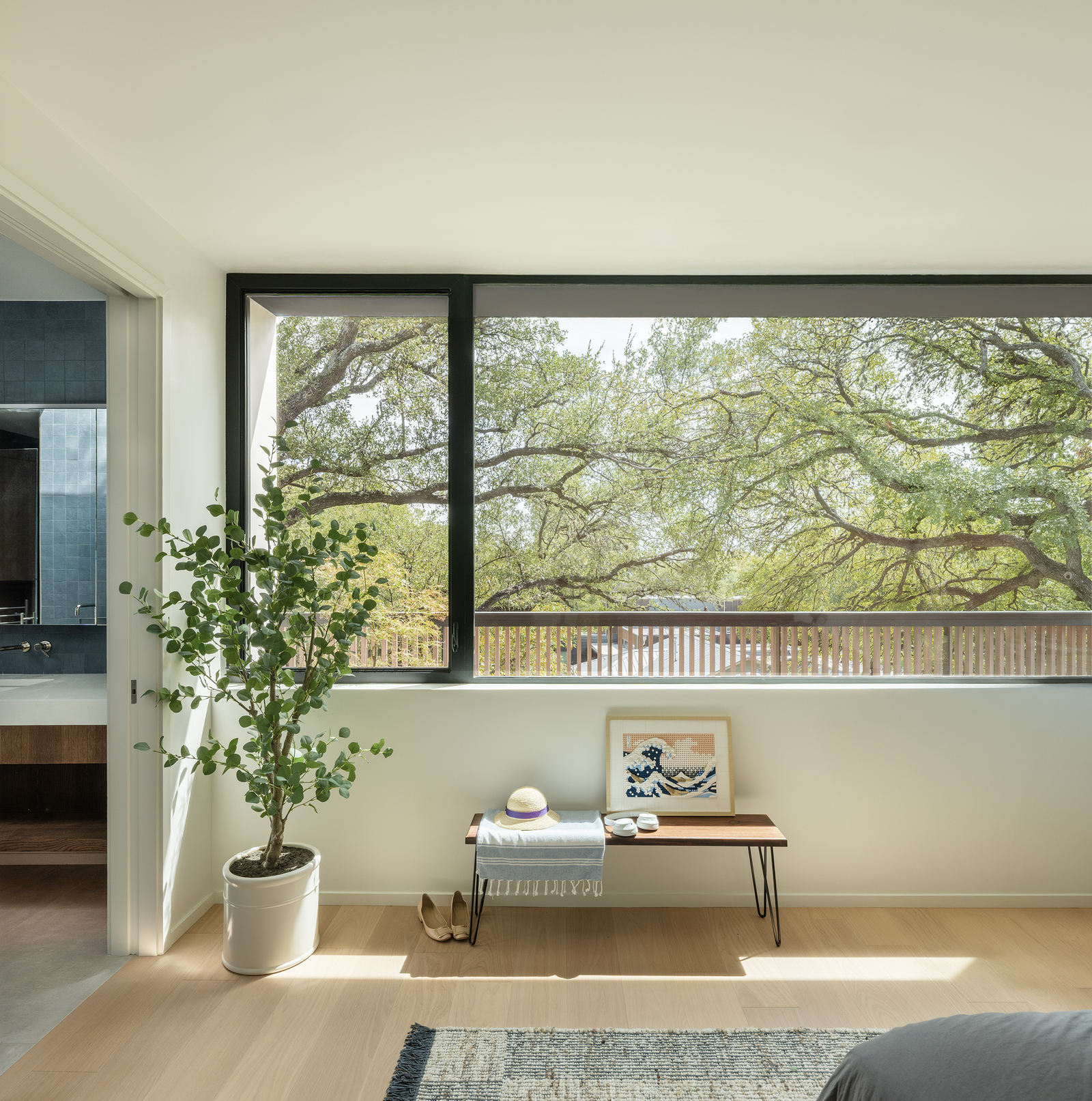
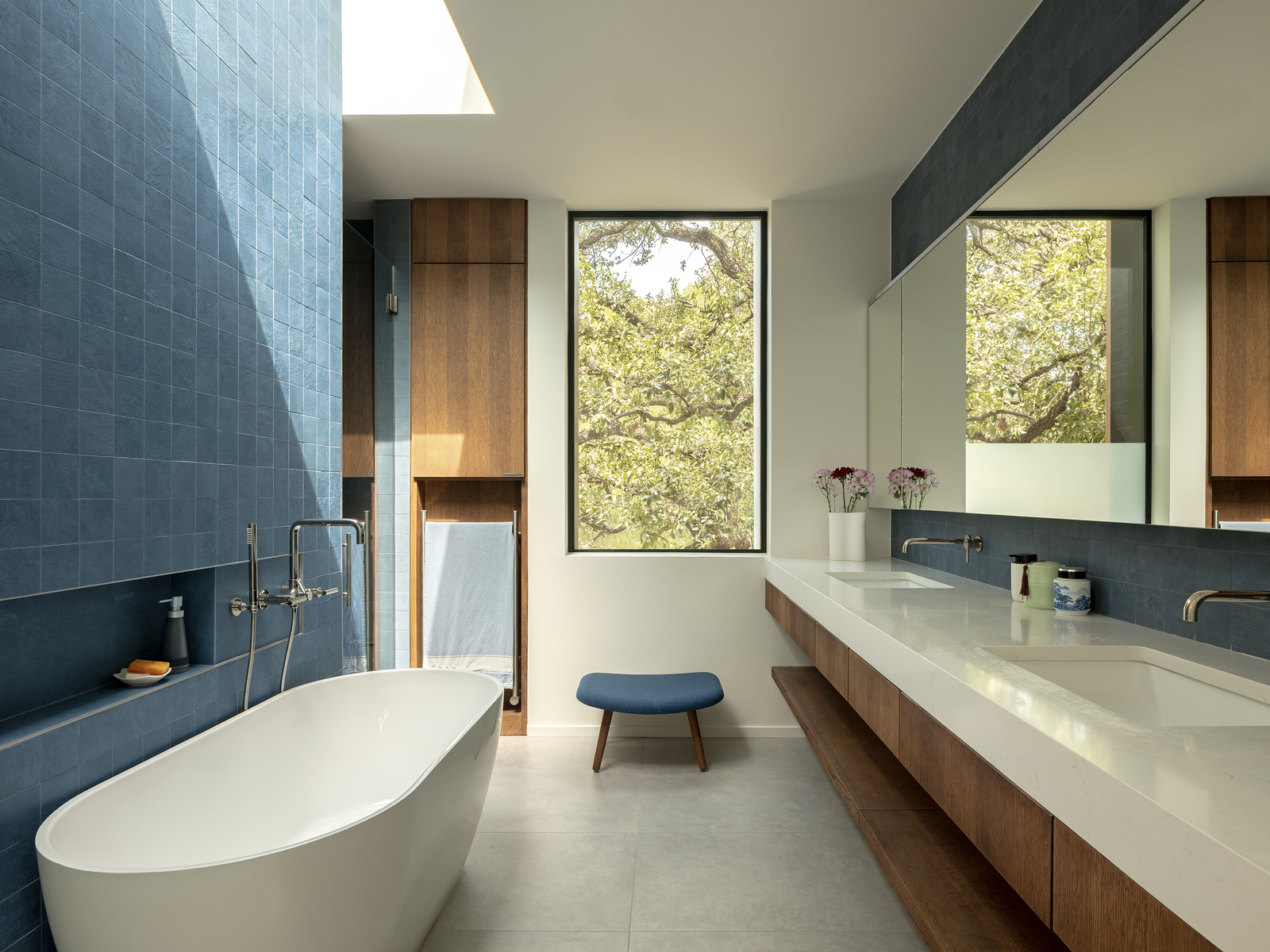
The pronounced slope across the site becomes an organizing principle for both plan and section. Interior levels step down from the entry through a recessed living area toward expansive operable glazing at the rear. Outside, xeriscaped terraces descend in tandem, forming a sequence of platforms that lead to a pool set within the landscape. This cascading arrangement transforms challenging terrain into an asset, preserving privacy from the street while opening long views to the tree canopy and the Austin skyline.
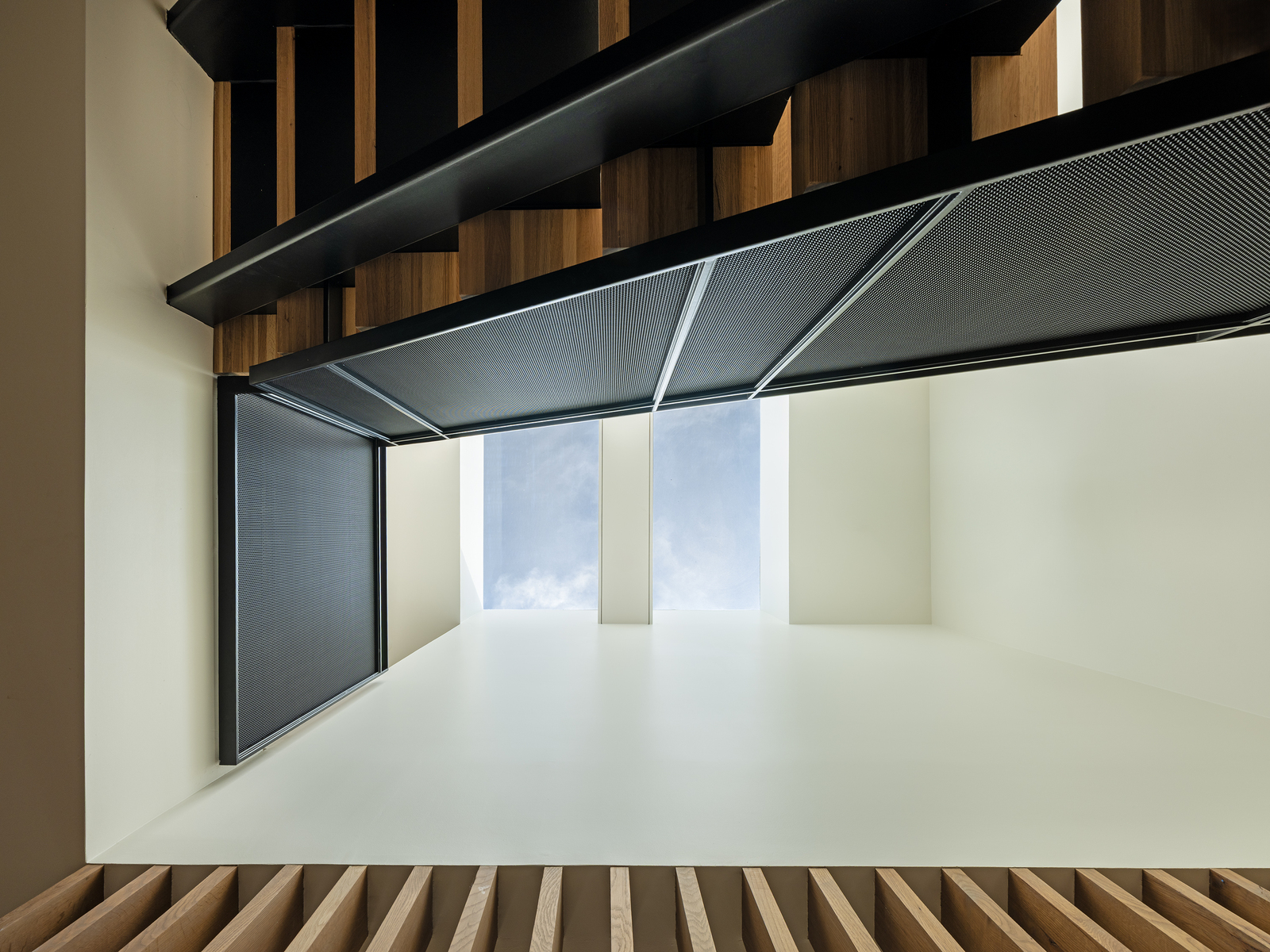
Through calibrated massing, material restraint, and careful engagement with topography, the Zilker Park House advances an alternative model for urban infill in Austin. It demonstrates that contemporary density can be reconciled with established neighborhood character through proportion, texture, and deliberate spatial sequencing.
Project Gallery
Project Location
Address: Austin, Texas, United States
The location specified is intended for general reference and may denote a city or country, but it does not identify a precise address.


Leonid Furmansky is the Architectural Photographer for this project
Hello Leonid Furmansky, your name is clearly mentioned at the beginning of the architect, as the main photographer. Please do let us know if you would like it displayed differently.