

Architects: Henning Grahn Architektur, Marc Flick – Architekt BDA, Christian Stock
Area: 196 m²
Year: 2018
Photography: David Schreyer
Consultants: Ingenieurbüro Ries, Henn Planungswerkstatt
Engineering: Ahrens Ingenieure
Clients: Anja Keller, Johannes Keller
Collaborators: Trinova GmbH, Schreinerei Vivendi
City: Mainz
Country: Germany
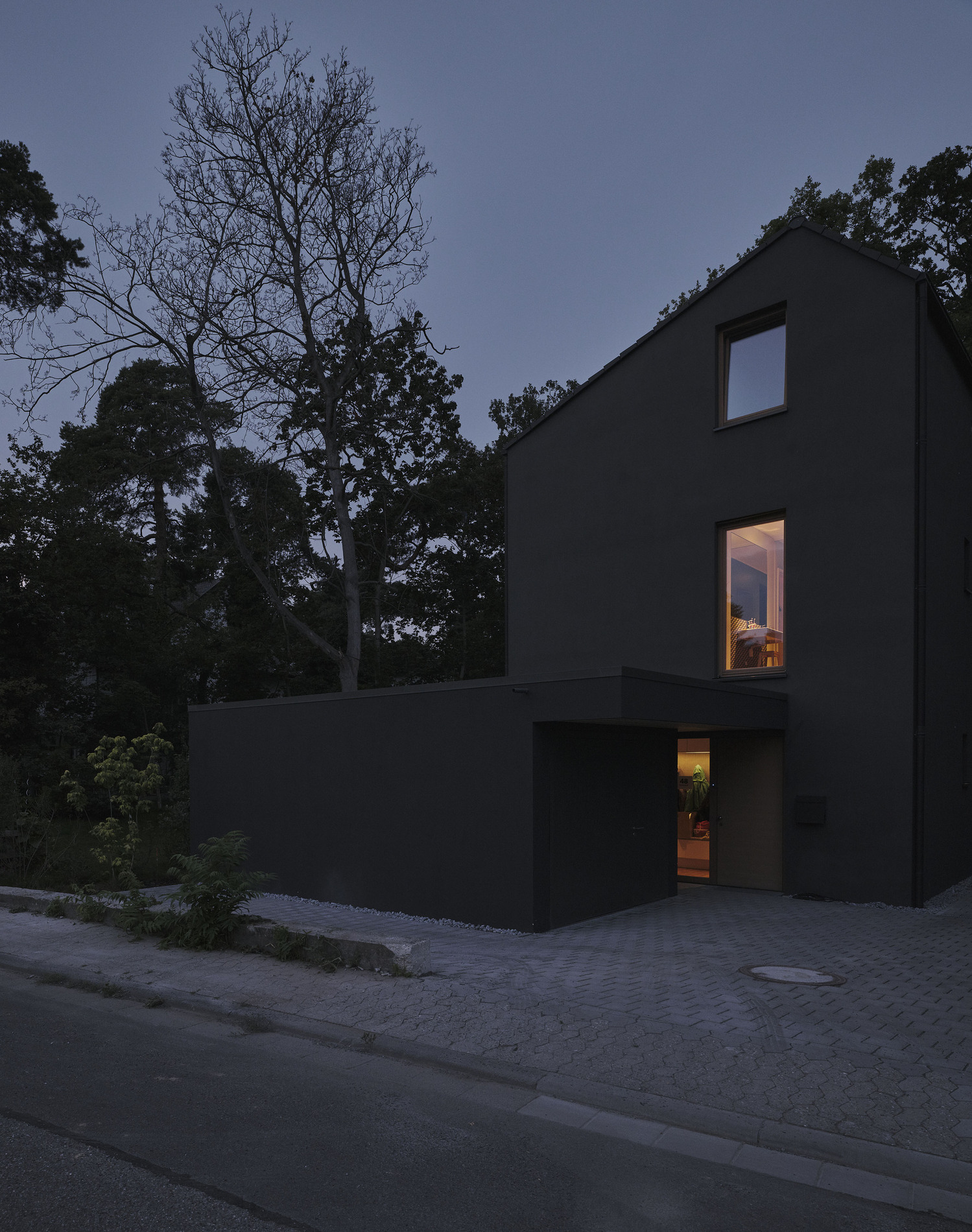
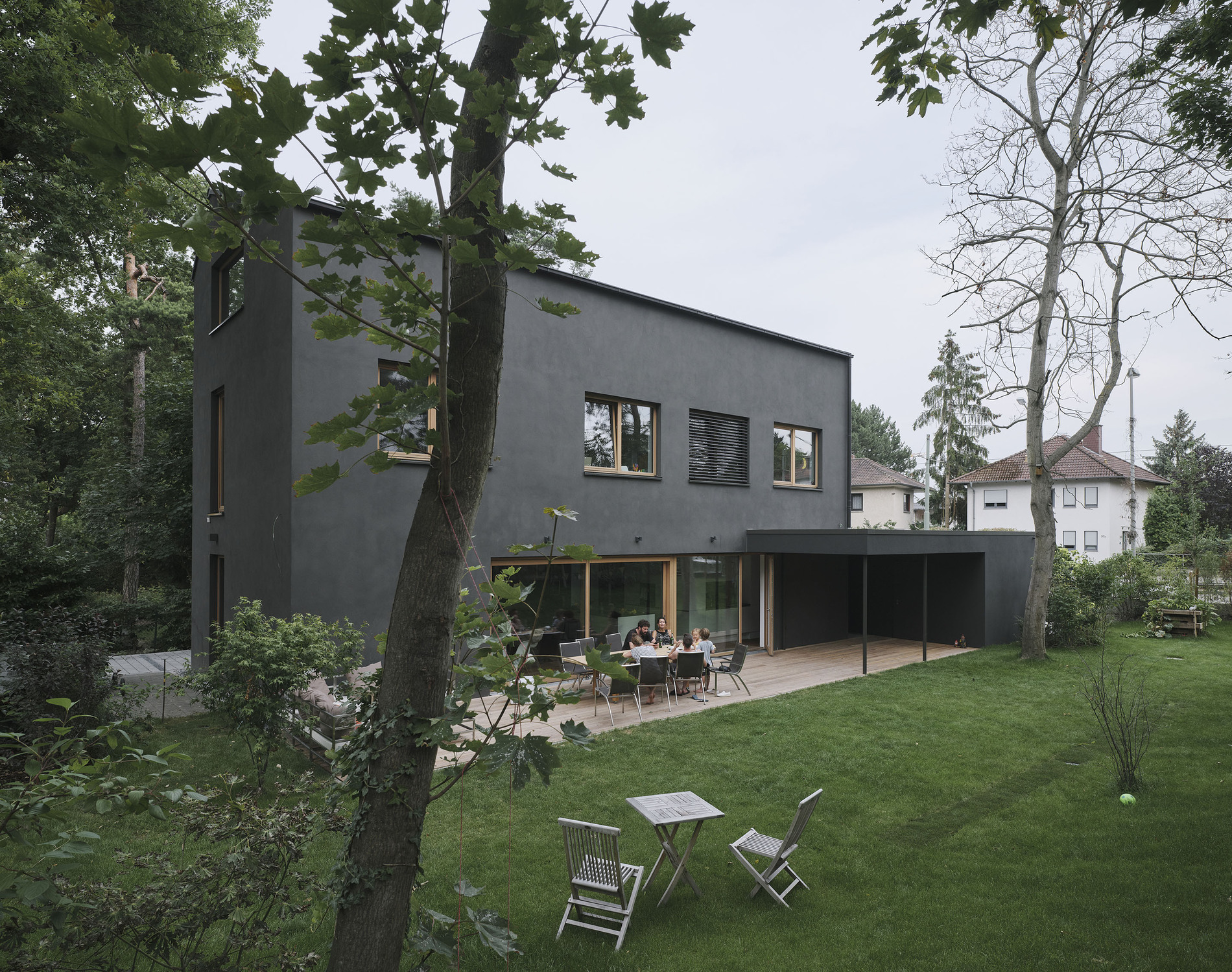
Black House is a compact single-family residence located in Mainz, Germany, designed as part of a dual-house ensemble within a suburban villa district. Responding to regulatory constraints such as required roof geometry and limited site area, the project balances spatial efficiency with architectural clarity. The house is organized into a ground floor defined by open-plan living and a service-oriented buffer zone, and a more compartmentalized upper level accommodating private family spaces. Generous glazing establishes a strong connection between interior living areas and the surrounding garden, while preserving existing mature trees. A monolithic exterior, achieved through the consistent use of dark roofing tiles and façade treatment, reinforces the building’s sculptural identity. The design emphasizes functional adaptability through features such as sliding partitions and integrated storage, while maintaining a cohesive architectural language. Together with its neighboring white counterpart, the house contributes to a deliberate visual dialogue within the landscape, where contrast and cohesion coexist.
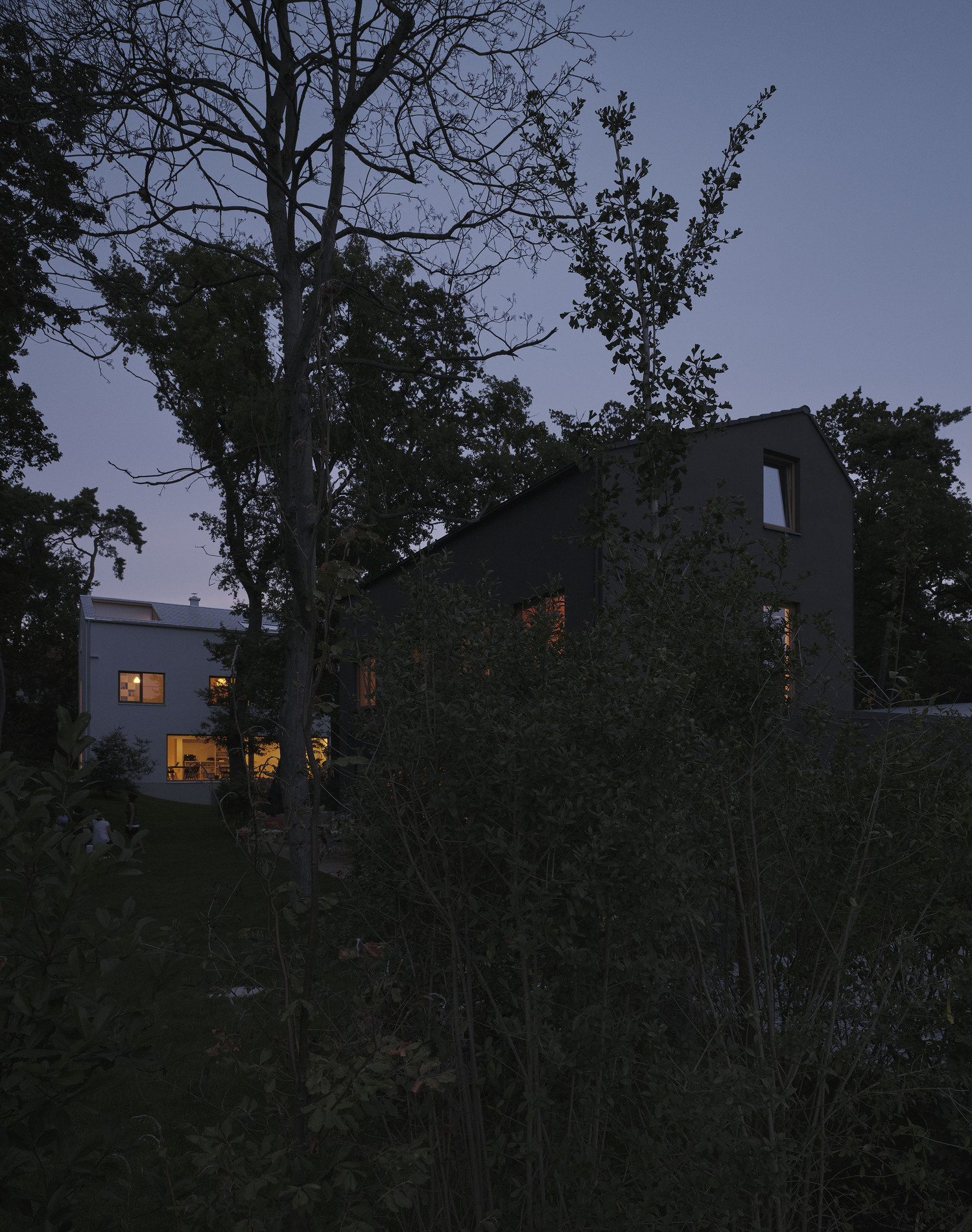
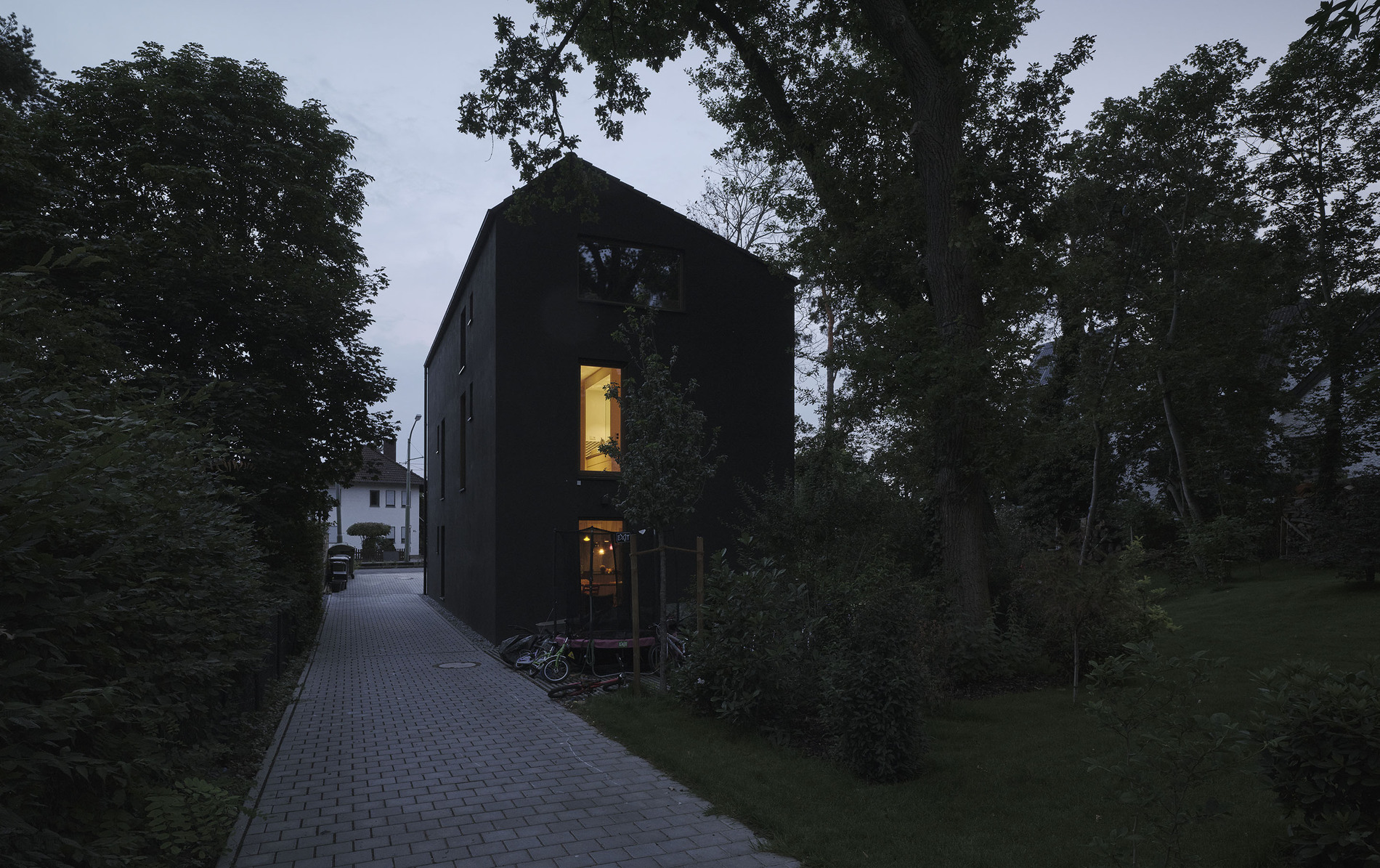
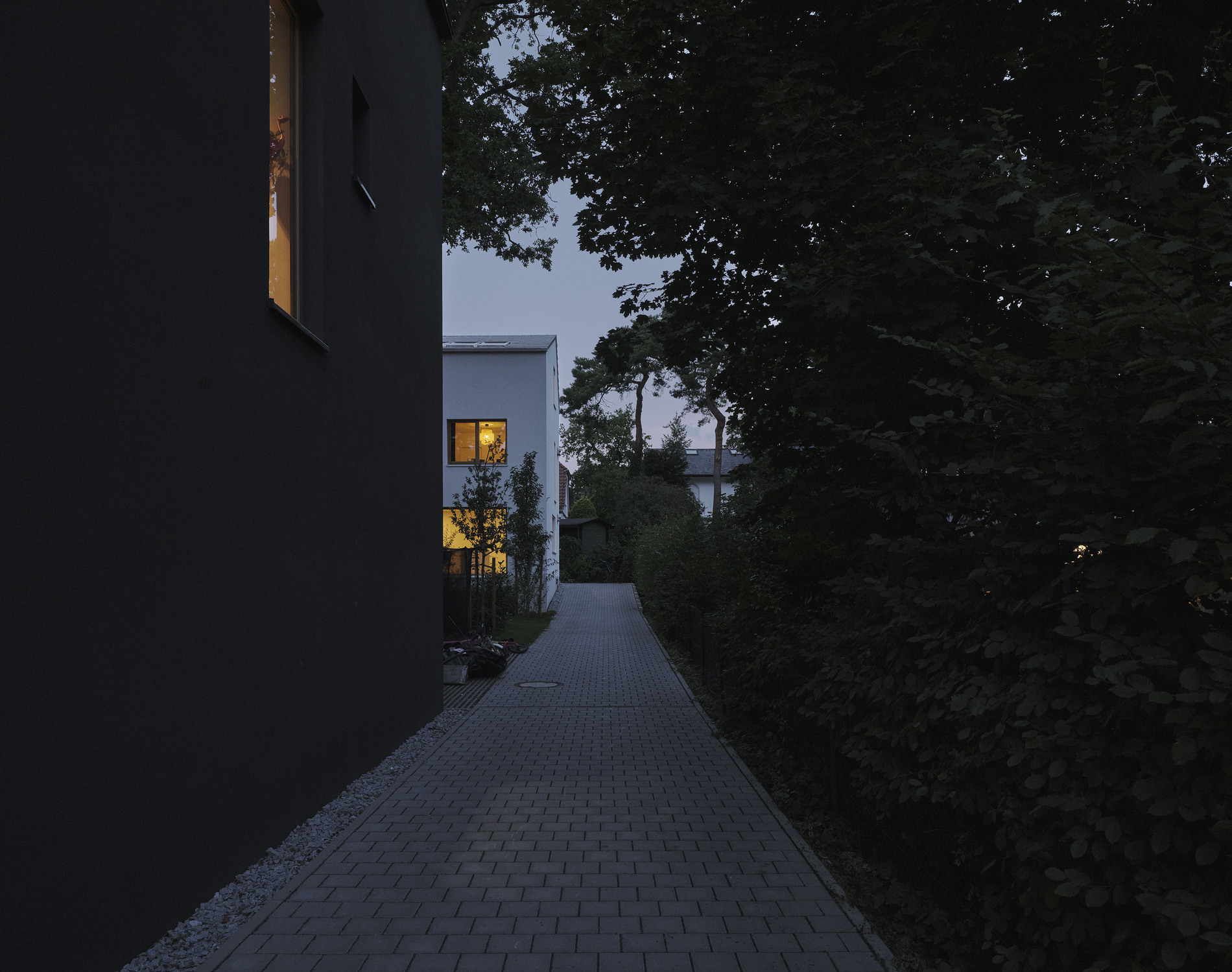
The ‘Black house’, with its conventional black roof, receives an unusual black facade, while the ‘White house‘, with its conventional white facade, receives an unusual white roof. This small intervention is sufficient to realize this outstanding design.
Interview with Henning Grahn of Henning Grahn Architektur
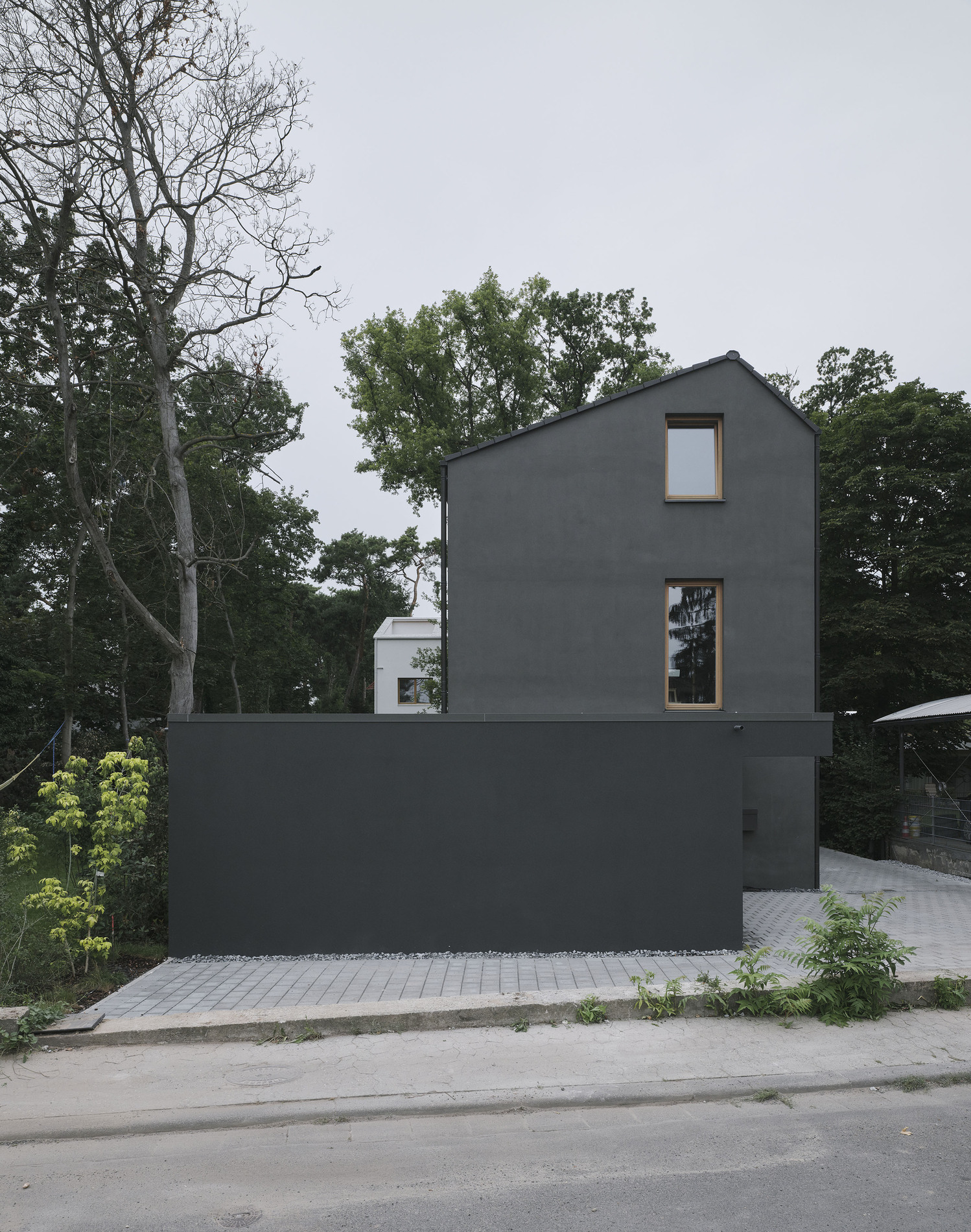
The Black House distinguishes itself through its careful negotiation between formal restraint and spatial generosity, using architectural clarity as a tool to enhance everyday domestic life. Rather than treating constraints as limitations, the design transforms them into drivers of spatial innovation, particularly evident in the manipulation of volume and circulation within a compact footprint.
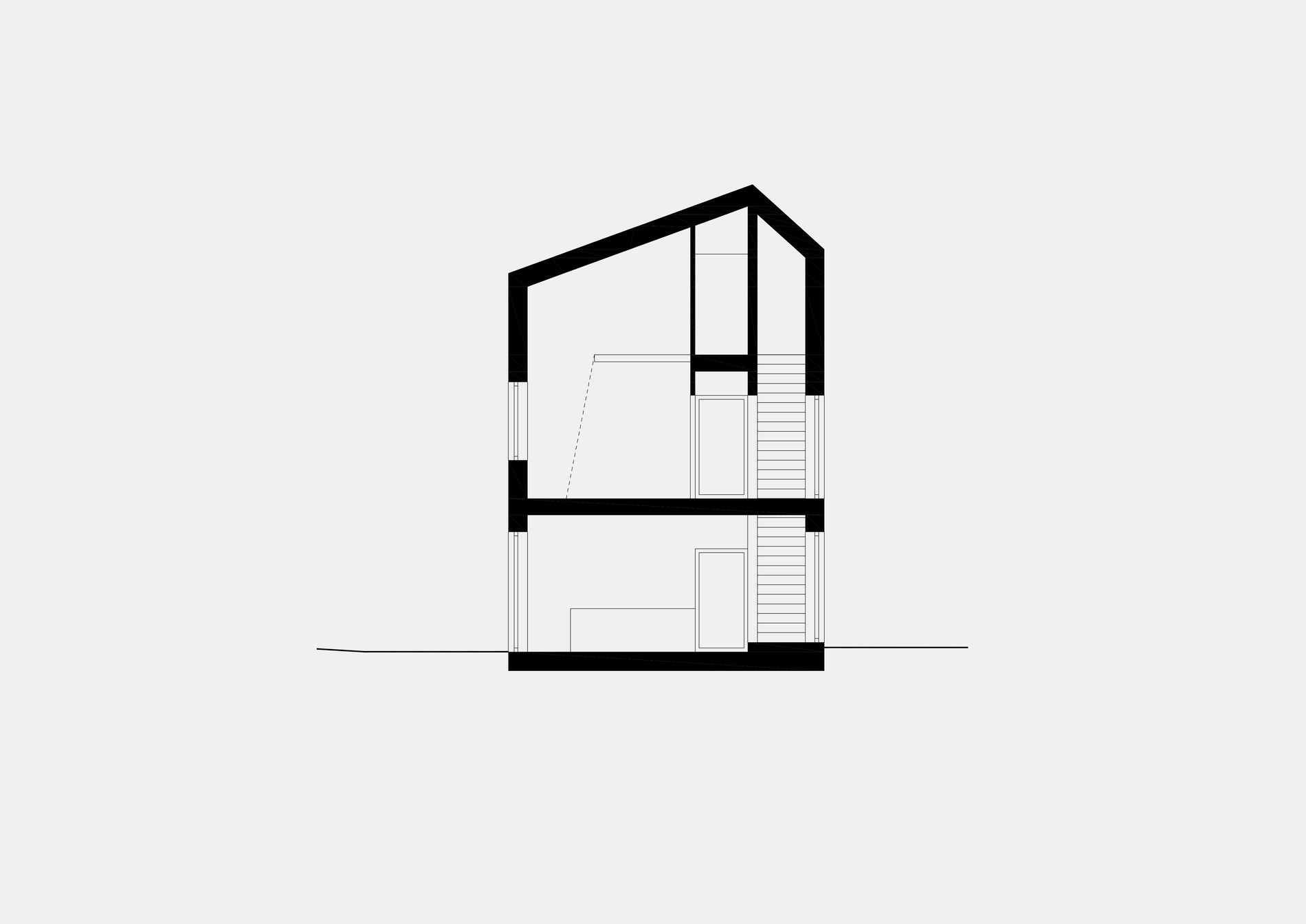
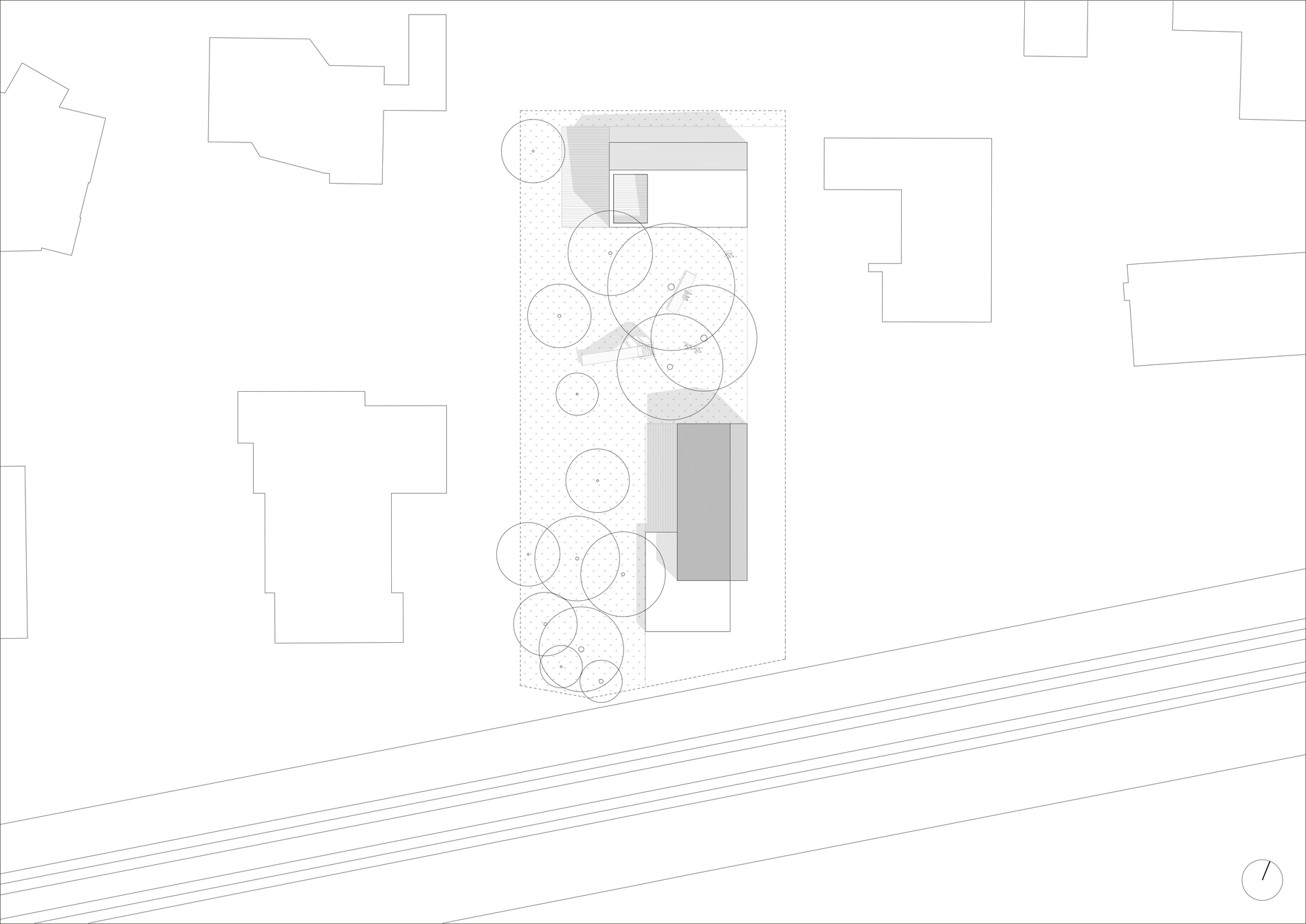
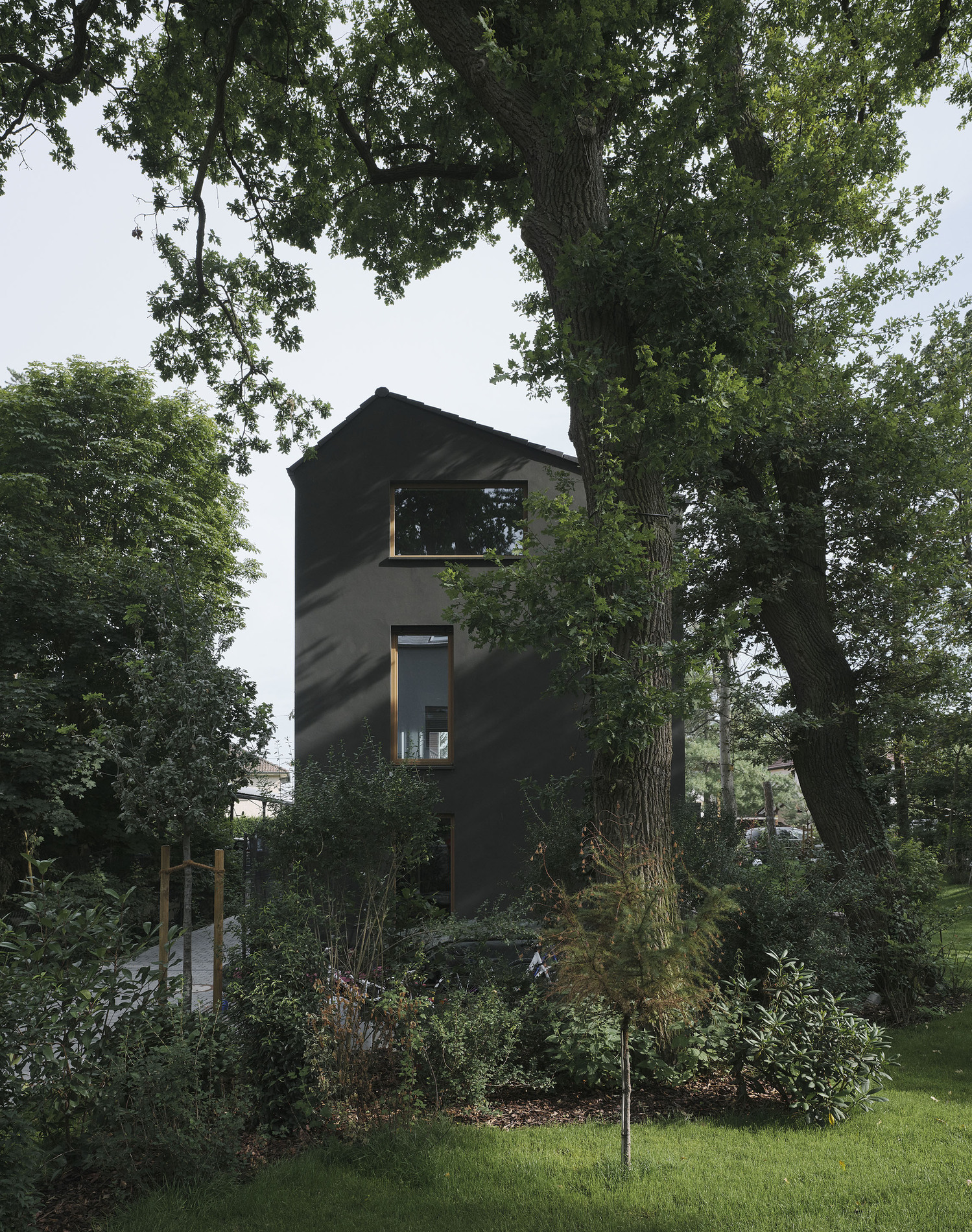
Positioned within Mainz’s Waldvillenviertel, the house engages its suburban context by preserving existing vegetation and shaping its footprint to maximize garden usability. Mature oak and pine trees are retained as central elements of the landscape composition, reinforcing a sense of continuity between built and natural environments. This sensitivity to site conditions extends to the overall ensemble, where the interplay between the black house and its white counterpart establishes a deliberate architectural tension that nonetheless reads as a cohesive whole.
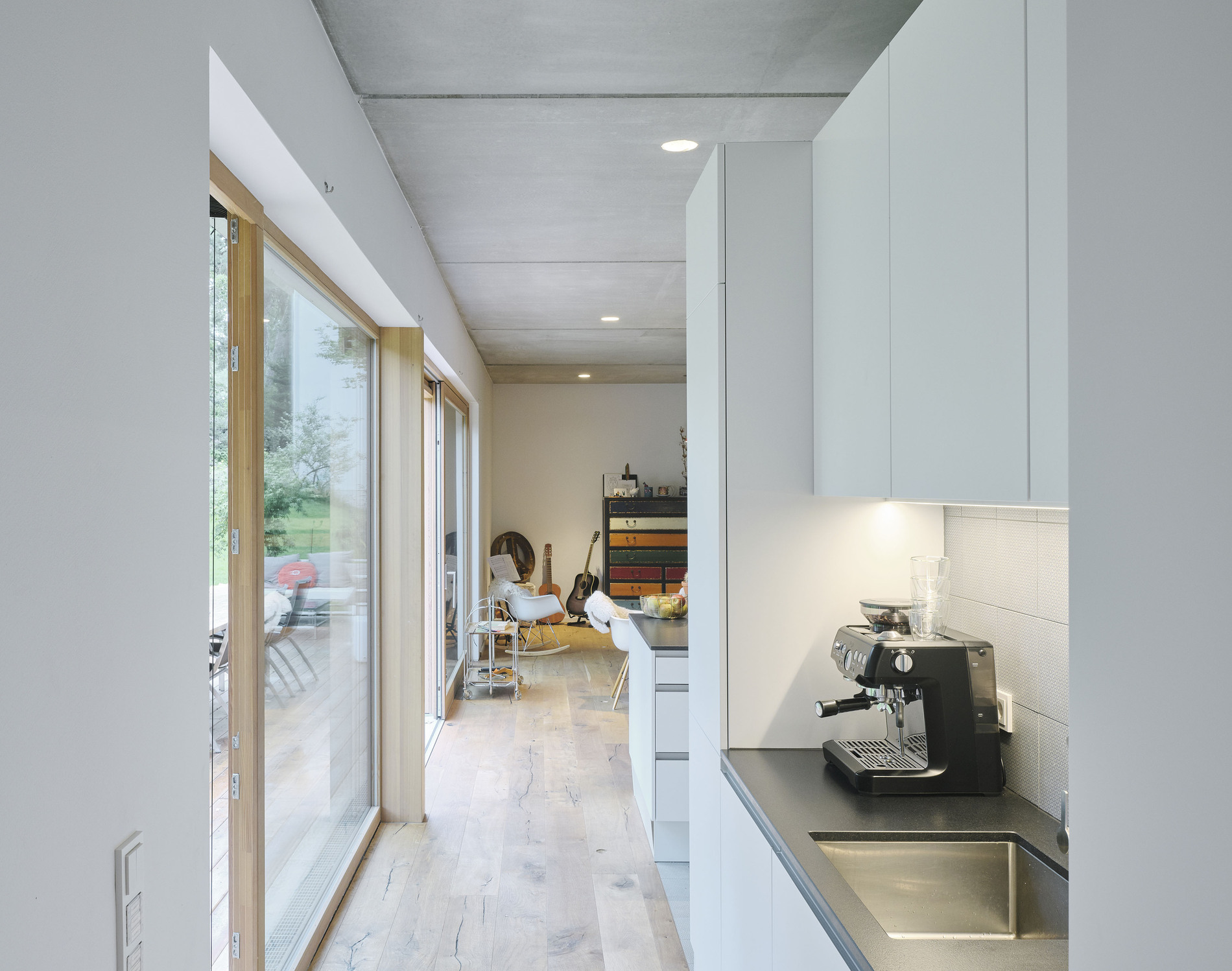
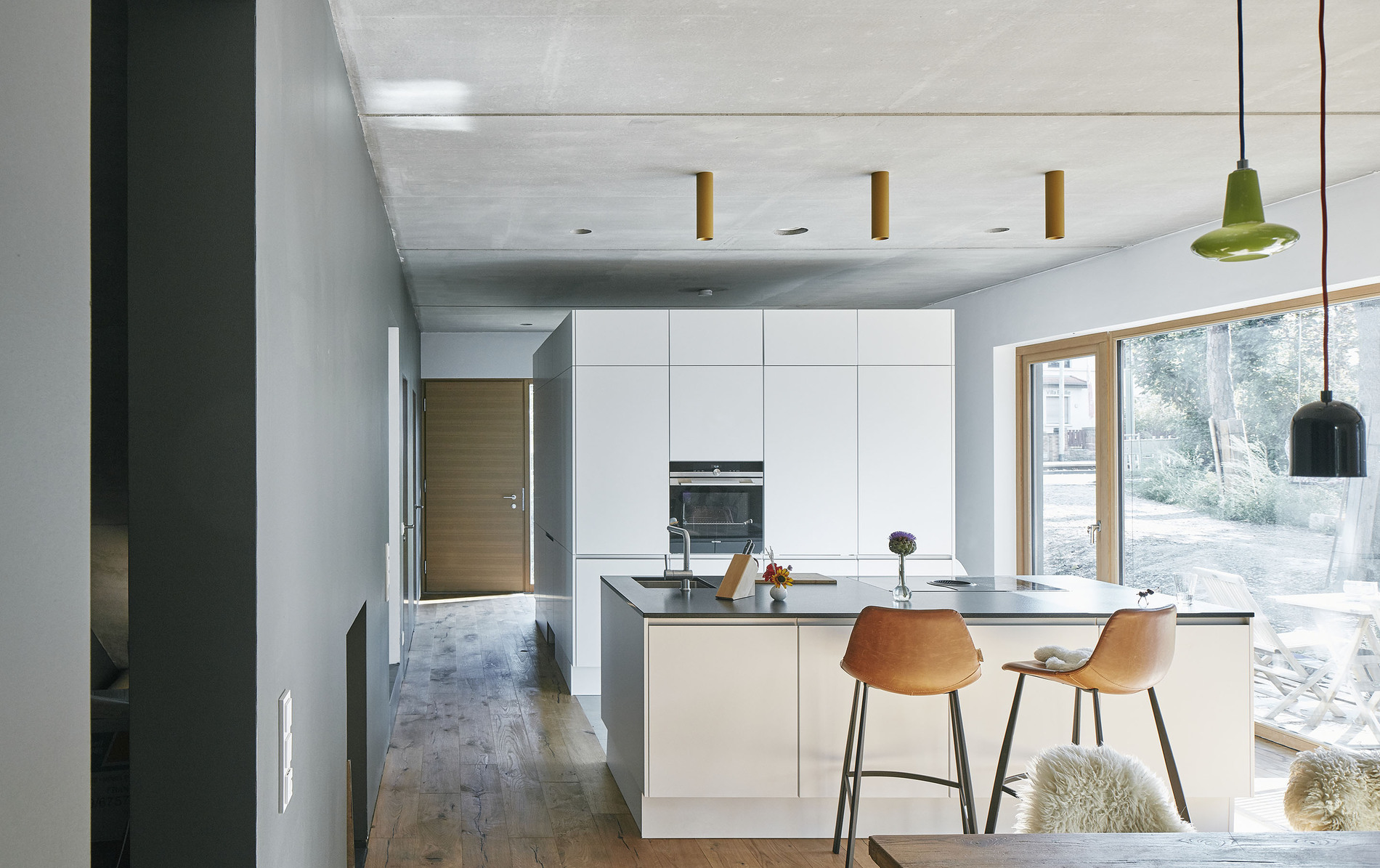
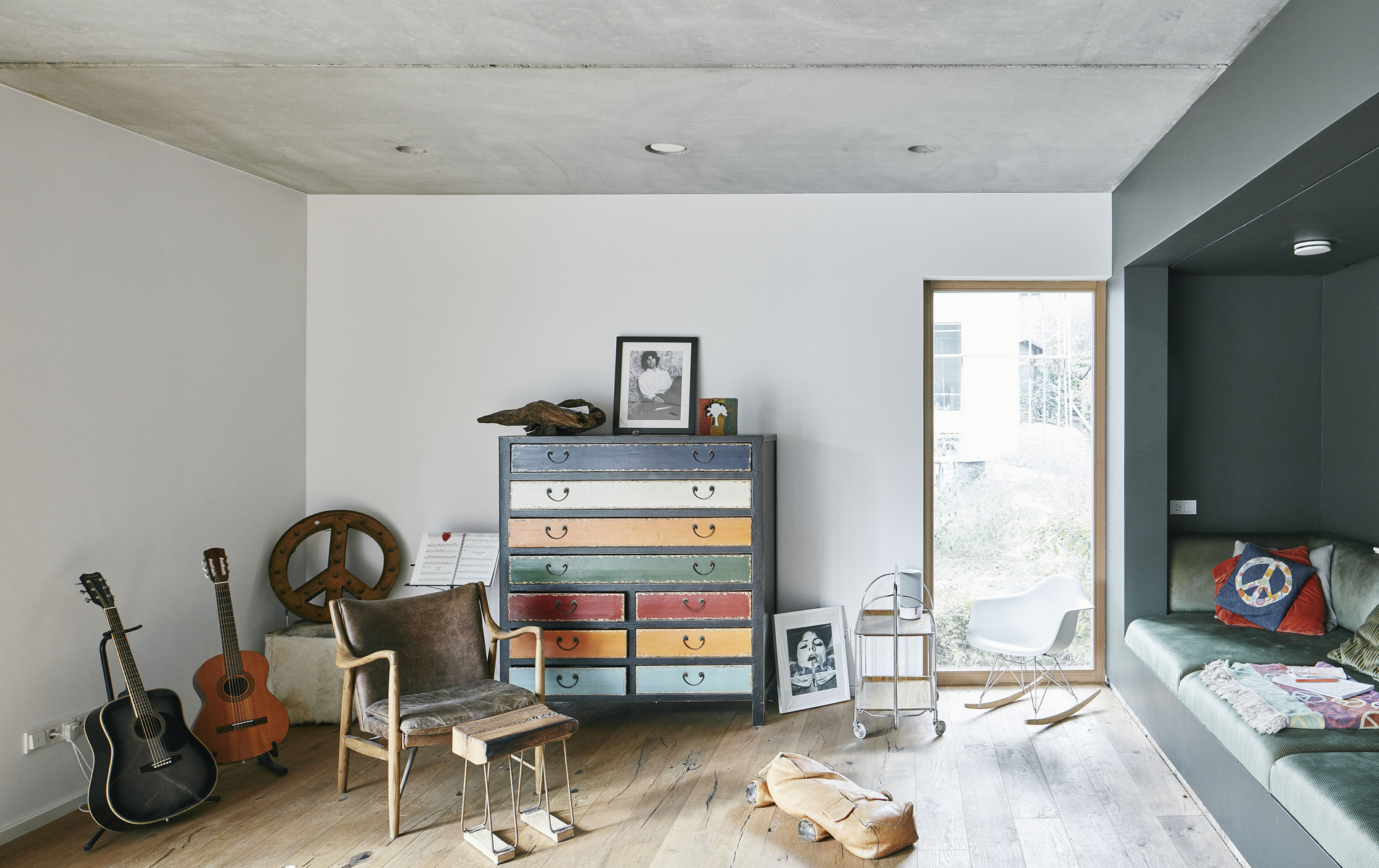
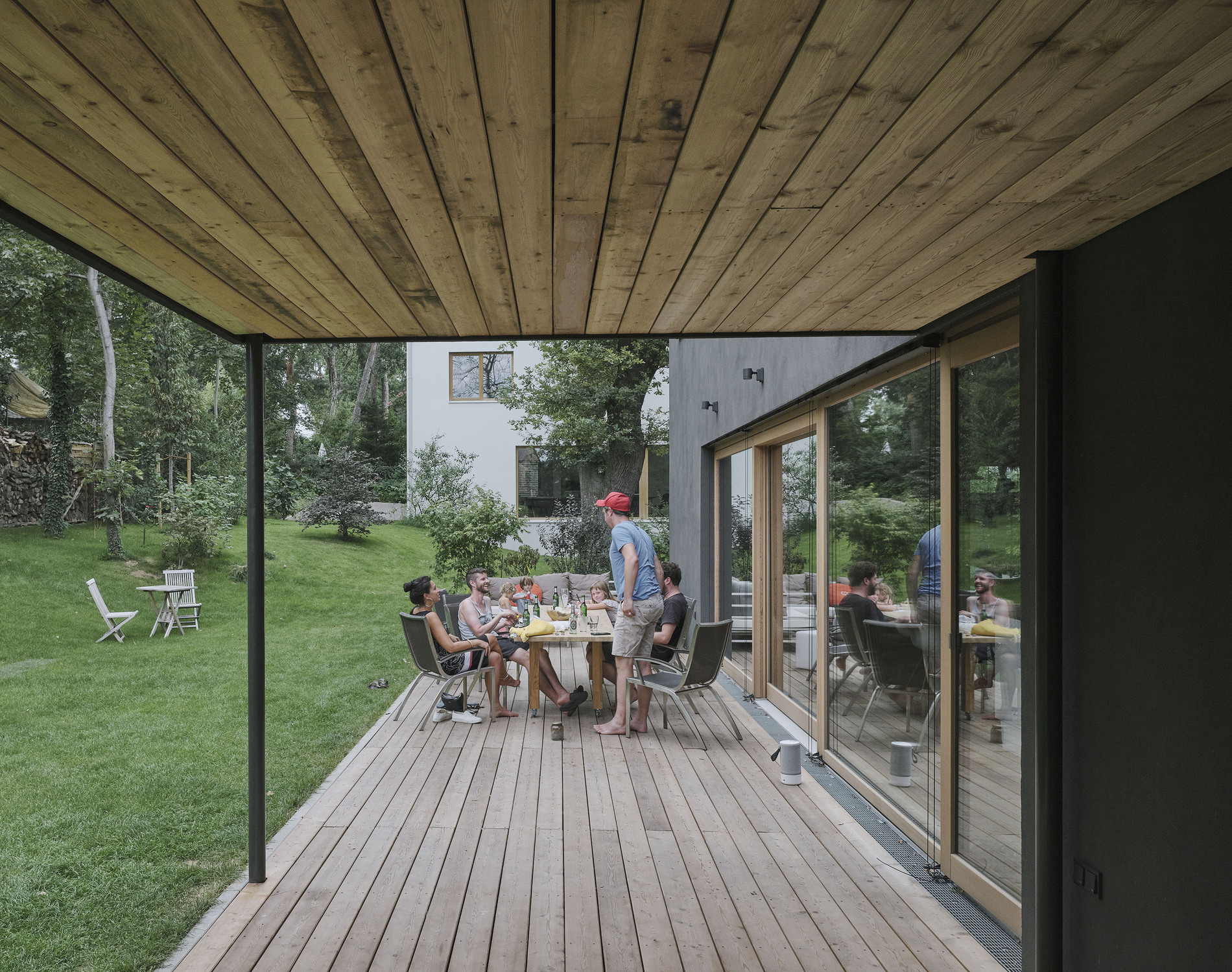
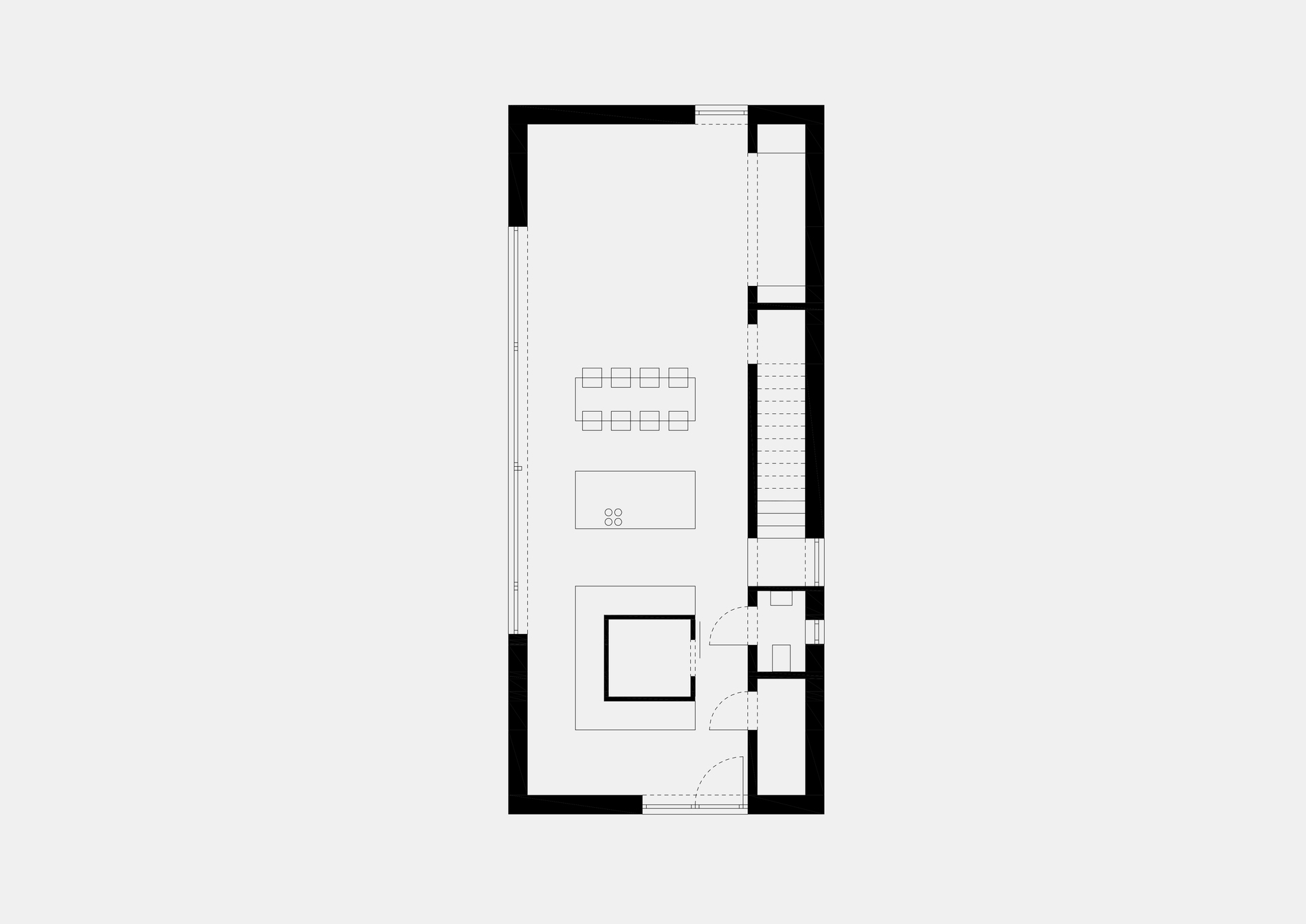
Internally, the spatial organization reflects a clear functional hierarchy. The ground floor is conceived as a fluid living environment, where kitchen, dining, and lounge areas merge under an increased ceiling height. A freestanding service core subtly structures the space, integrating storage and kitchen functions while defining the entrance sequence. Large sliding glass openings dissolve the boundary between interior and exterior, extending daily activities into the garden and terrace.
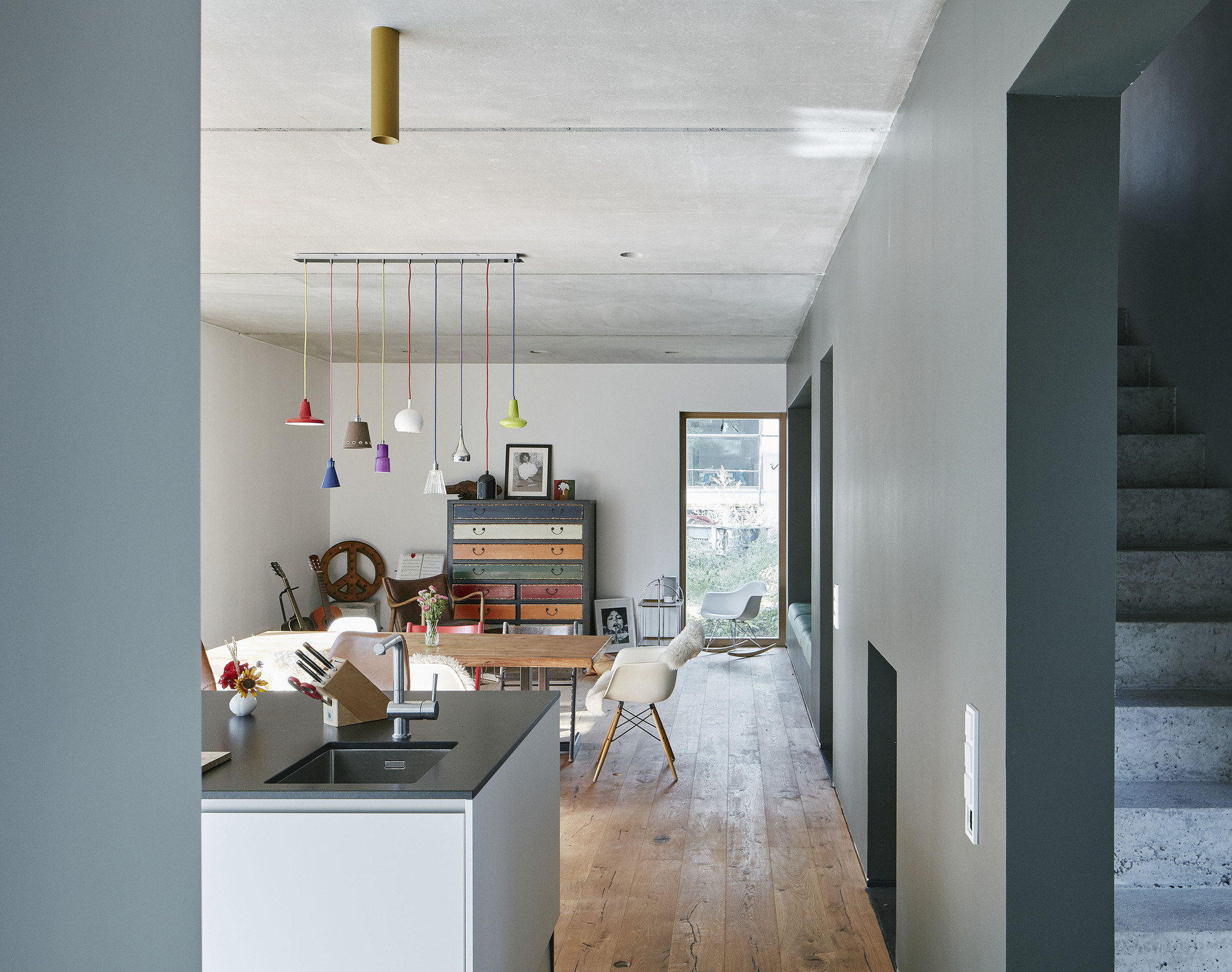
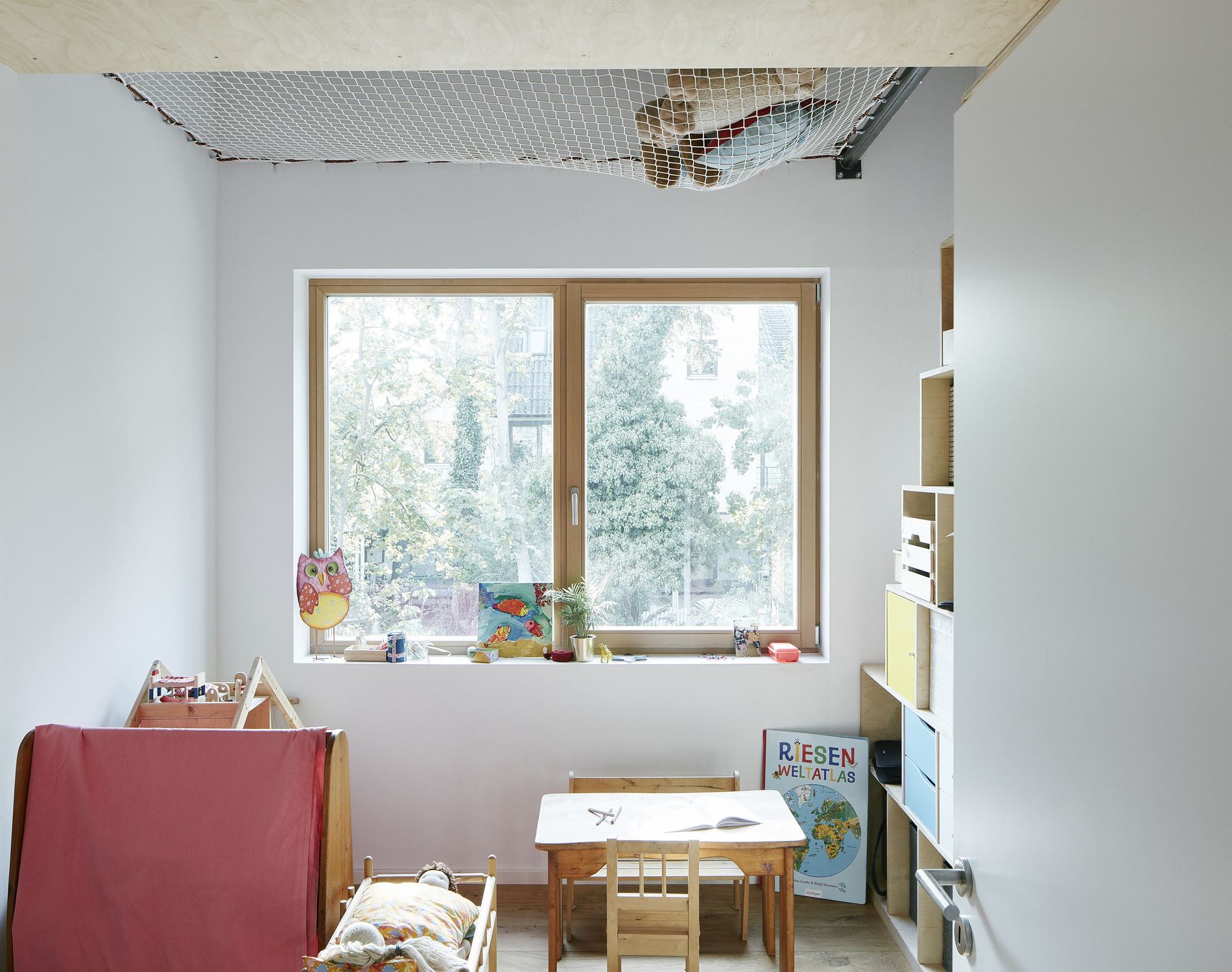
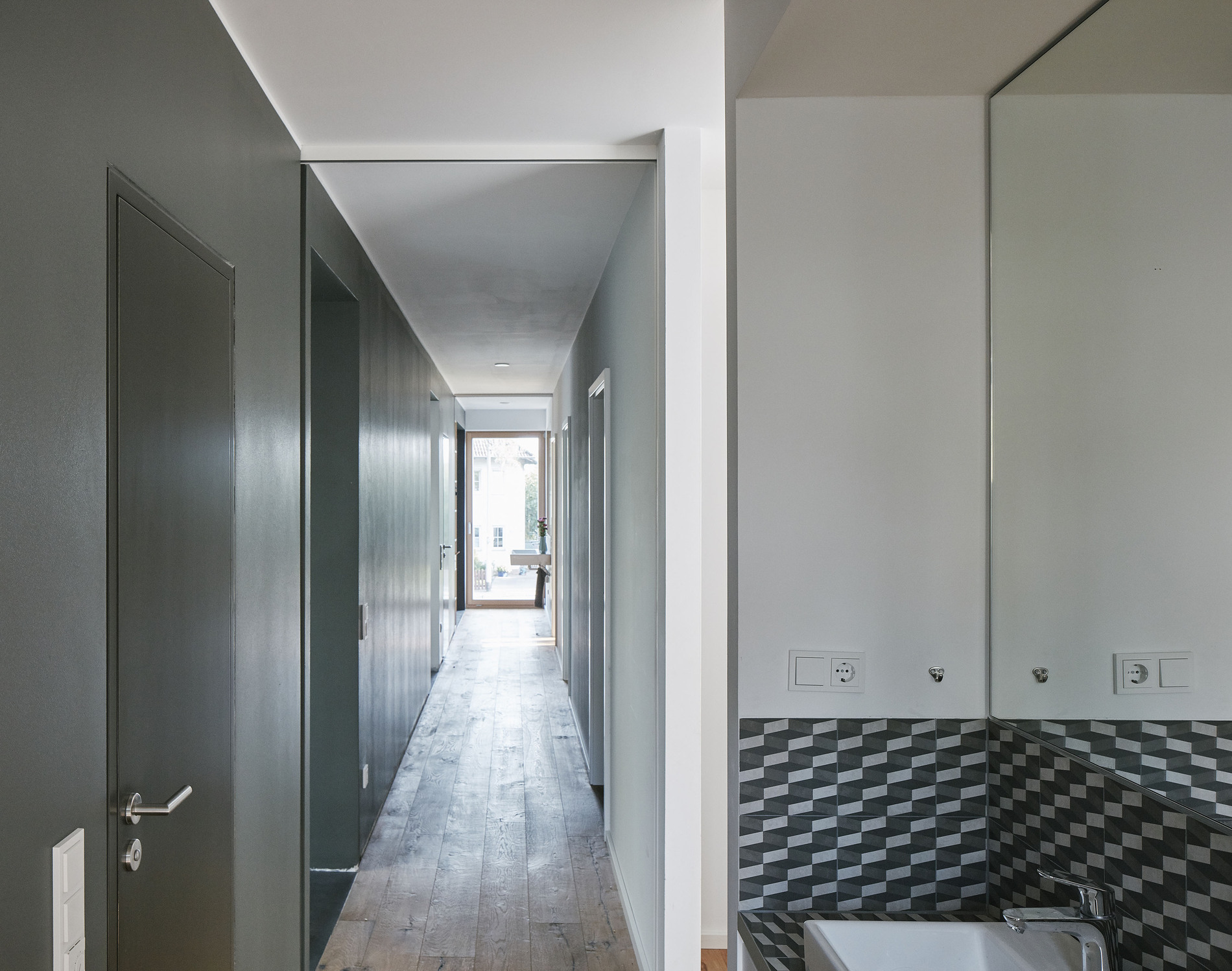
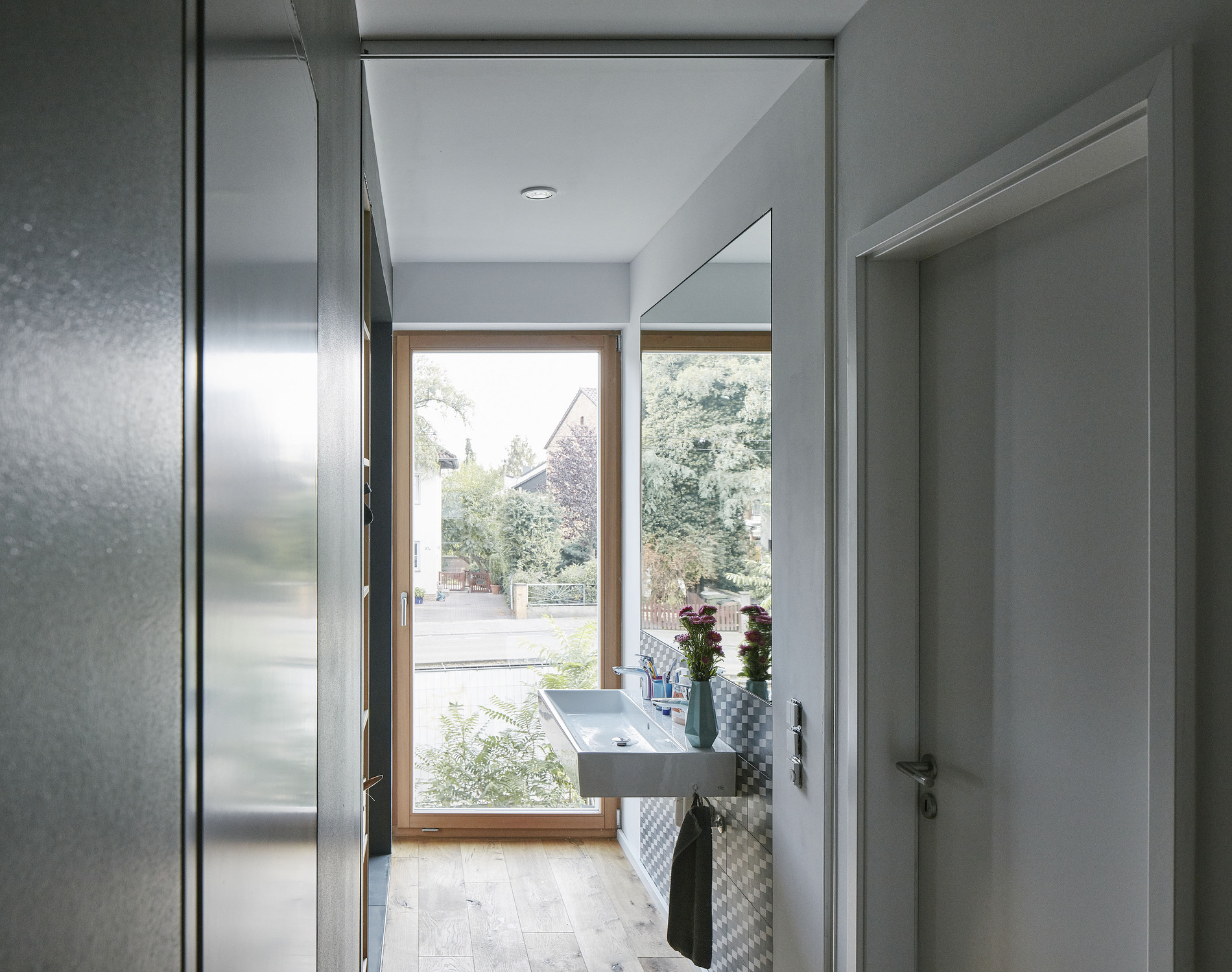
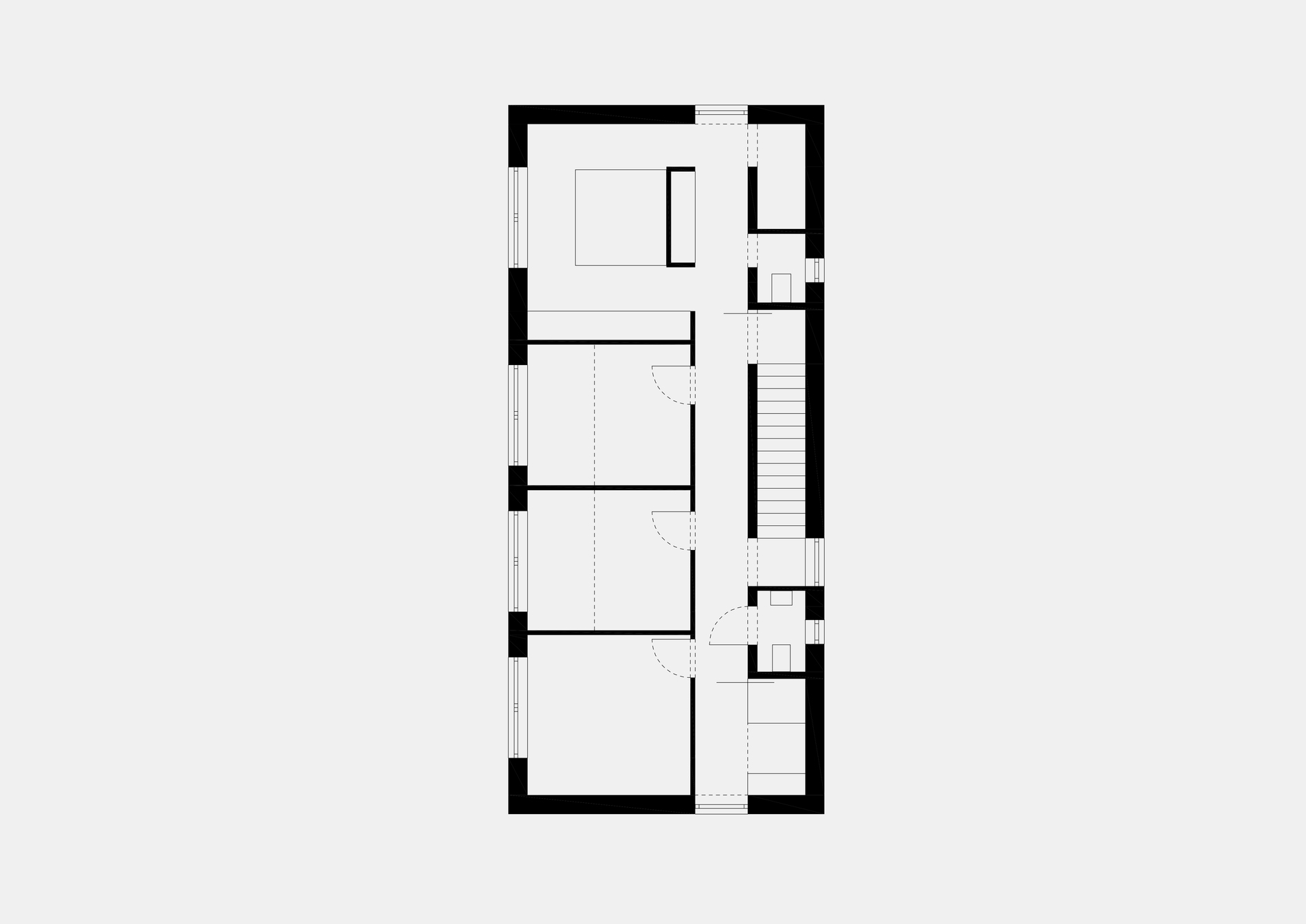
In contrast, the upper floor adopts a denser configuration to accommodate the needs of a growing family. Bedrooms for three children and a separate parental suite are arranged with efficiency, while concealed sliding elements introduce flexibility and spatial overlap, notably allowing the corridor to expand into the children’s bathroom. The inclusion of loft beds beneath the sloped roof further optimizes usable space within the constrained volume.
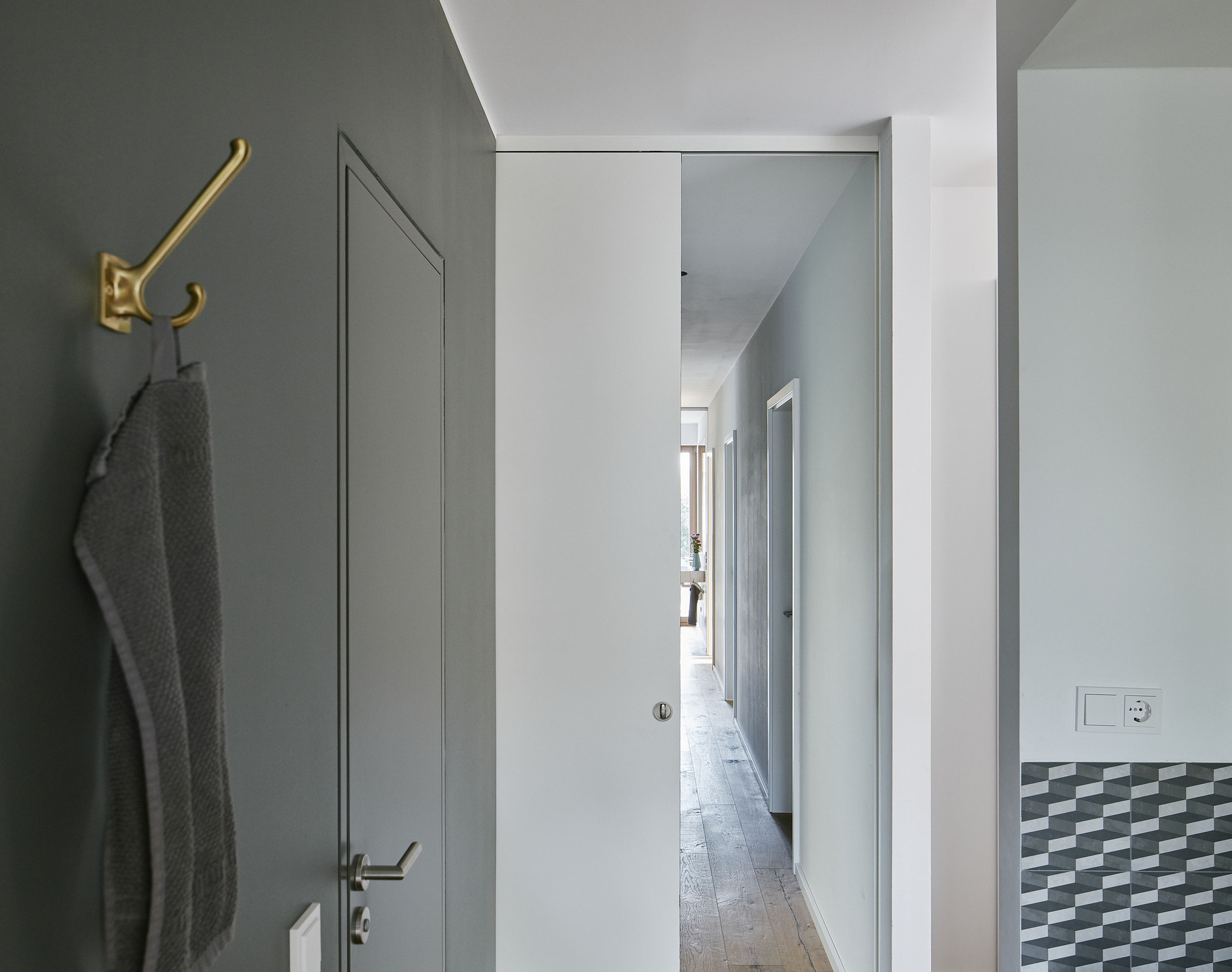
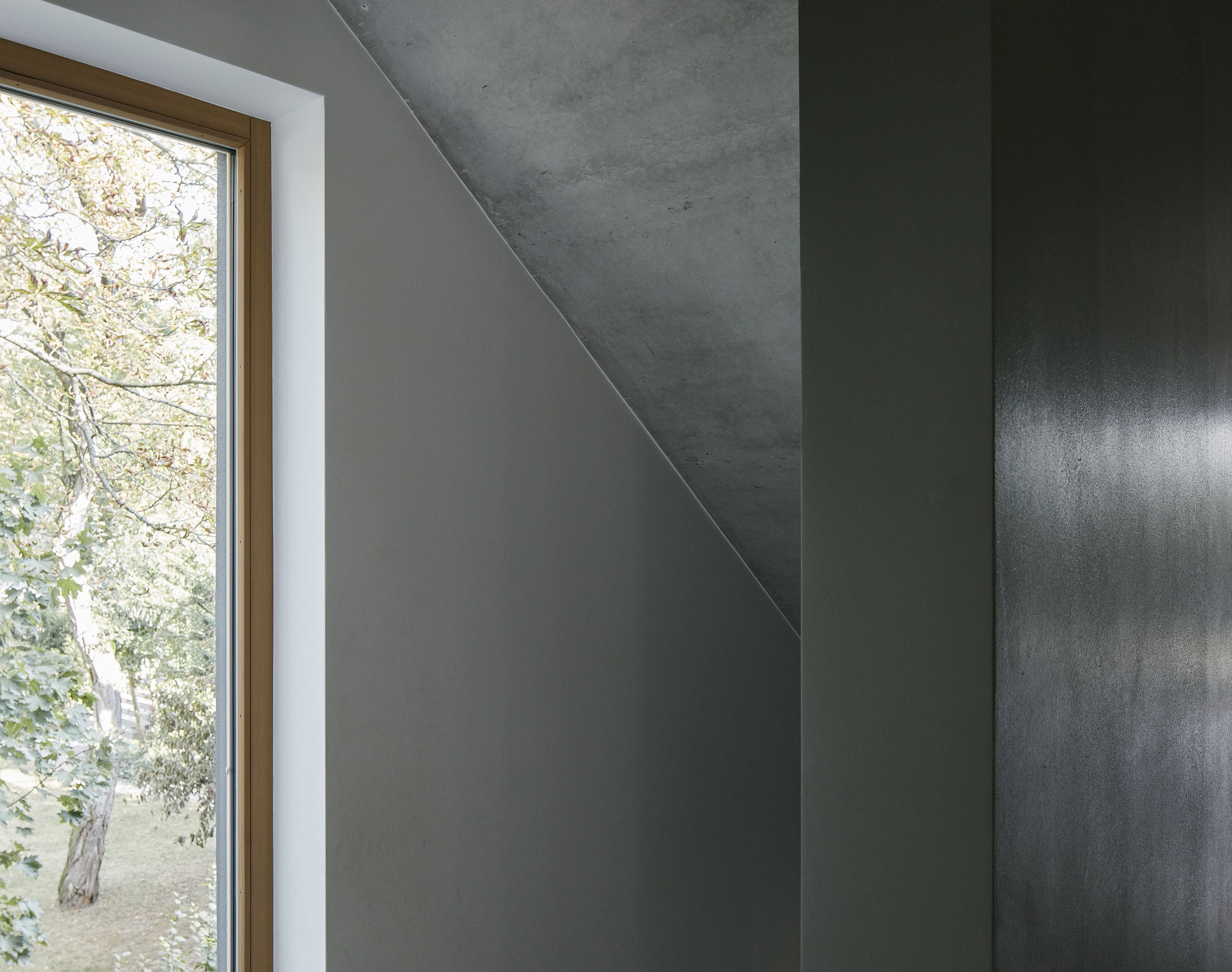
The building’s external expression is directly informed by its internal logic. An asymmetrically positioned roof ridge mirrors the division between open and service zones below, while the continuous dark cladding unifies roof and façade into a single volumetric gesture. Constructed with insulating brick load-bearing walls and fitted with larch-framed windows, the house employs refined yet economical detailing to reinforce its monolithic appearance.
Through its disciplined material palette and thoughtful spatial strategies, Black House demonstrates how modest residential architecture can achieve both functional richness and formal precision, contributing meaningfully to its immediate architectural and environmental context.
Project Gallery
Project Location
Address: Mainz, Germany
The location specified is intended for general reference and may denote a city or country, but it does not identify a precise address.

