

Henning Grahn is a German architect and founder of Henning Grahn Architektur, a practice working primarily across residential architecture in Germany. The studio develops projects through clear conceptual strategies, focusing on reduction, construction logic, and the precise use of standard building systems.
Projects such as Black and White House, Holzbox, Dunes, and Transformation House demonstrate an approach where minimal formal interventions generate identity, often through the recomposition of conventional elements and materials. The work emphasizes separable detailing, cost-aware construction, and the controlled use of everyday materials. Henning Grahn Architektur’s projects have been featured on Architecture Lab and regional architectural platforms.
What inspires you?
I am inspired by people who contribute to social cohesion and community, both on a small and large scale. Every day, buildings and, of course, a daily dose of architecture from all over the world.
What inspired you to become a designer?
From a young age, I wanted to study architecture, even though there was no connection to the profession in my family. I simply loved building things.
How would you describe your design philosophy?
In my opinion, there’s no specific philosophy here. We try to develop projects that pursue the clearest possible idea and approach in design and content. We welcome clients who support this and are open to experimental solutions.
What is your favorite project?
We like it when the idea is developed and implemented as extensively as possible, as is the case with the “Black and White House” and the “Holzbox”.
What is your favorite detail?
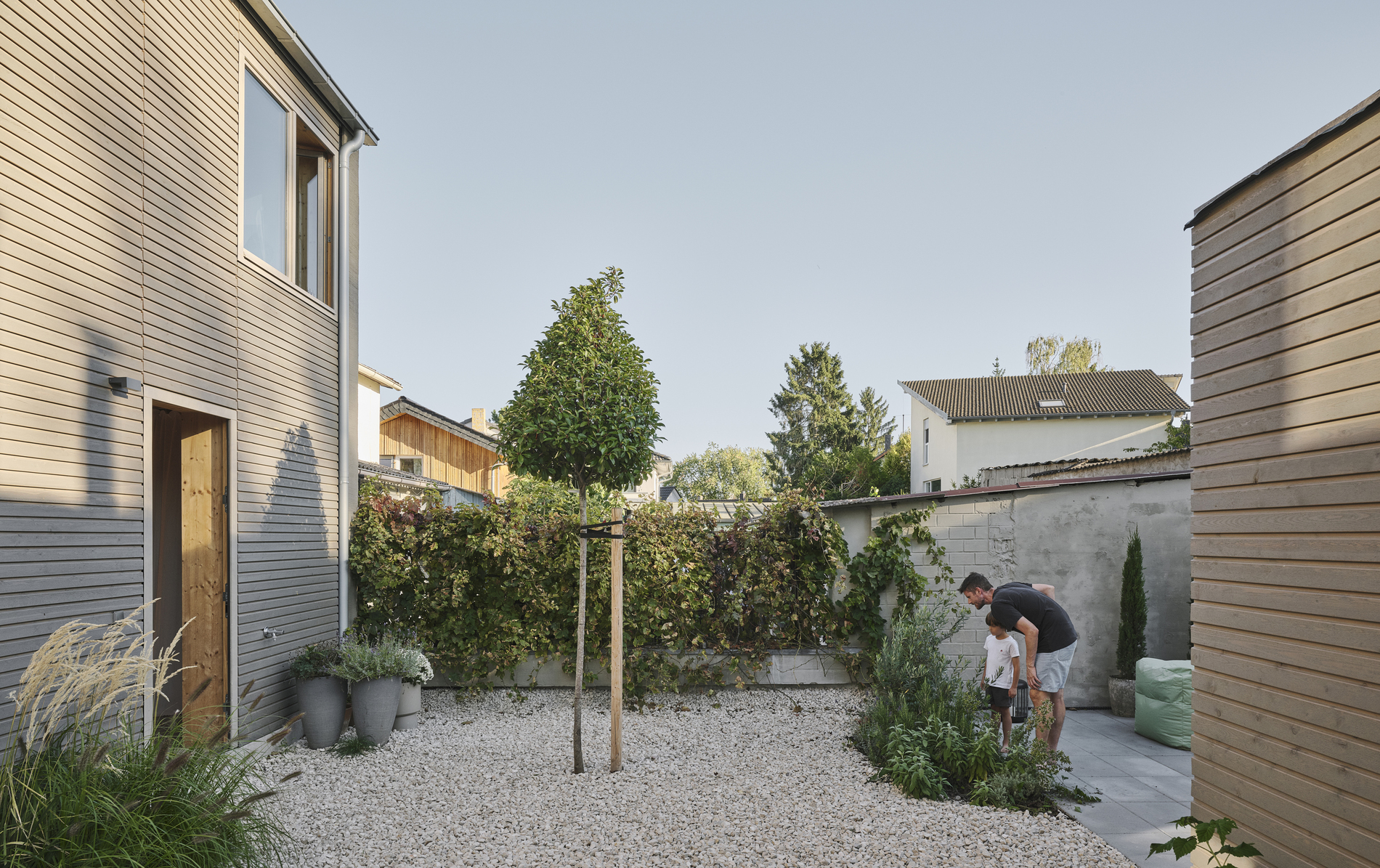
We appreciate details that are as separable as possible, such as those found on the facade of the “Holzbox”. We try to simplify elements where possible, as was implemented, for example, in the residential building “Dunes”, where the insulated ground slab is directly used as finished floor, and the floor slab consists only of a cross-laminated timber ceiling with carpet.
Do you have a favorite material?
We generally like all materials and select those that best suit the project. Of course, construction costs also play a major role, so we like to combine standard products with some special details and materials, for example, as with the “Transformation House,” where galvanized grating was used for various components.
What is your process for starting a new project?
After assessing the project environment, the client’s requirements and wishes, we initially approach the building structure very intuitively, and experience has shown that the first idea is often the “one”. Often, after testing other options, we present only this one idea, in which we are very confident.
How do you fuel your creativity?
Fortunately, no special “technique” is needed here so far. My everyday life with my family and three sons and the daily urban environment already provides balance and inspiration.
What inspired the Black and White House?
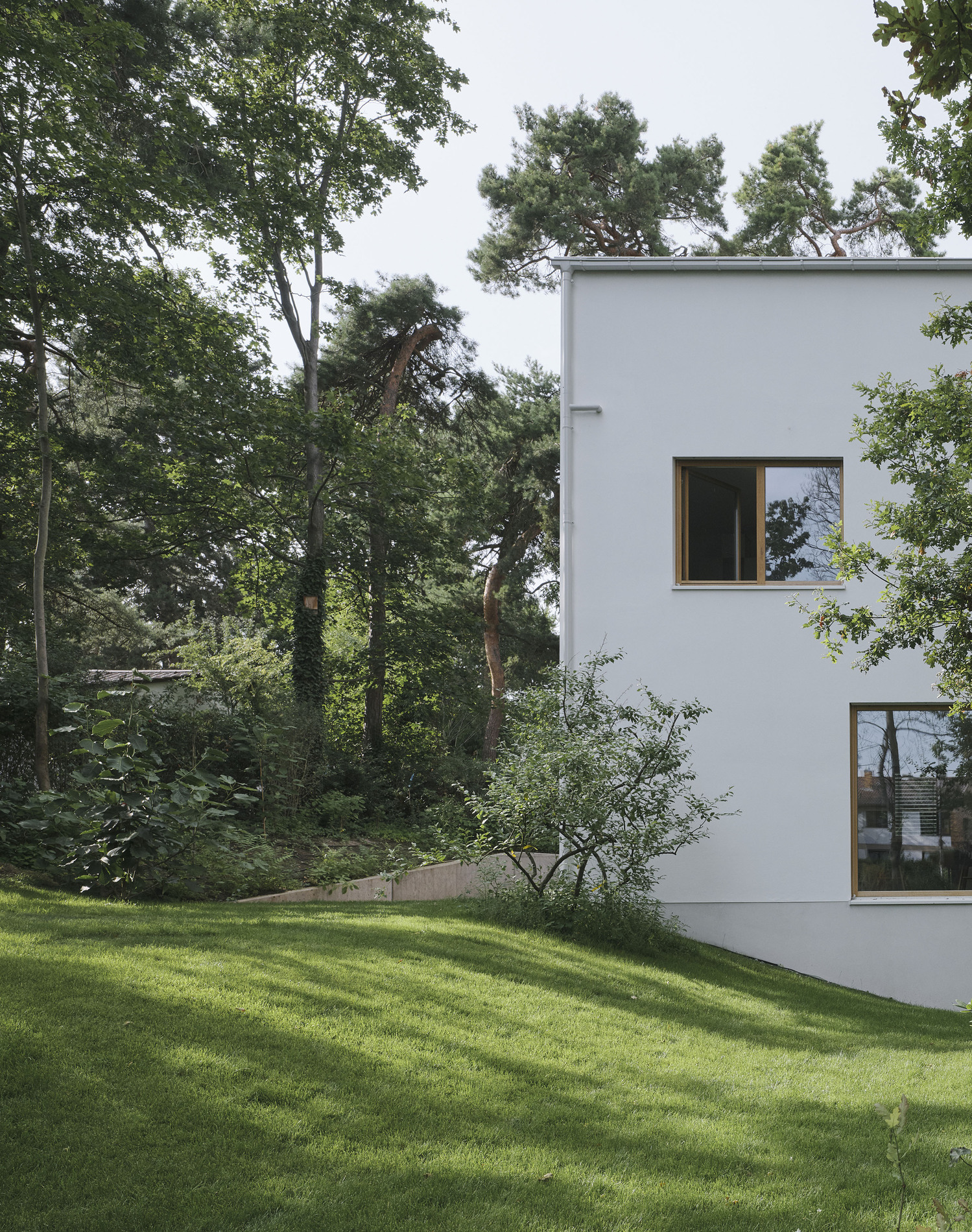
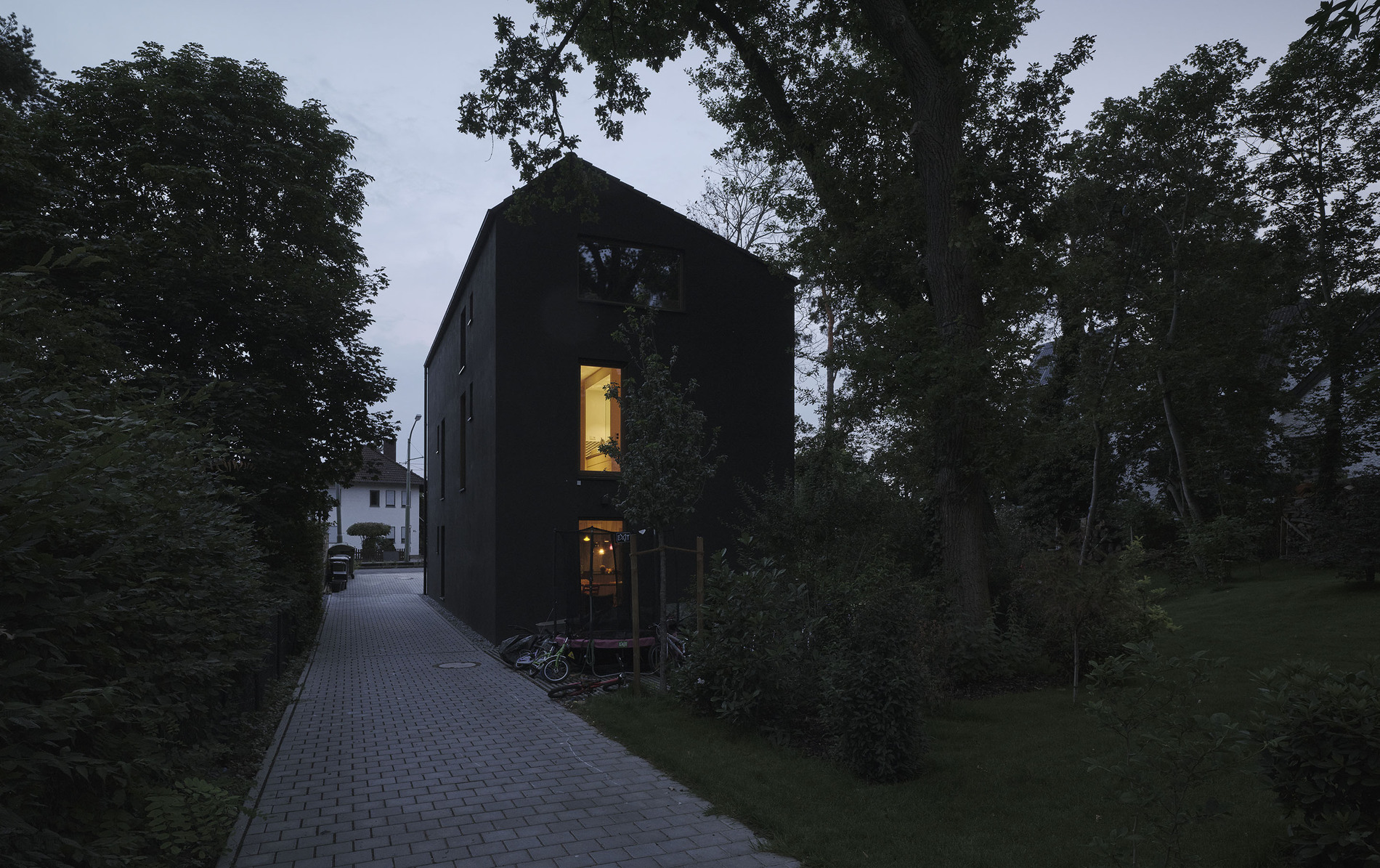
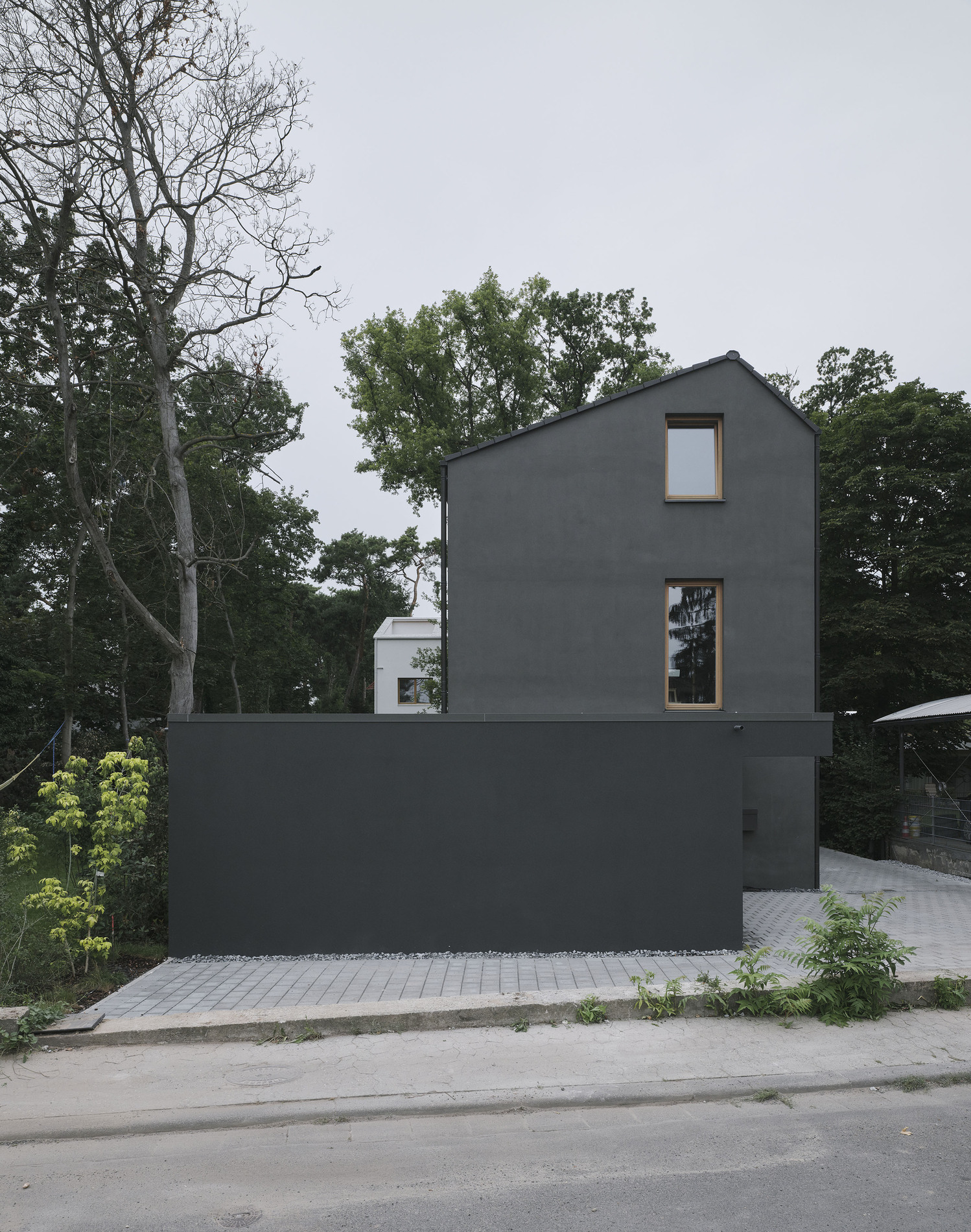
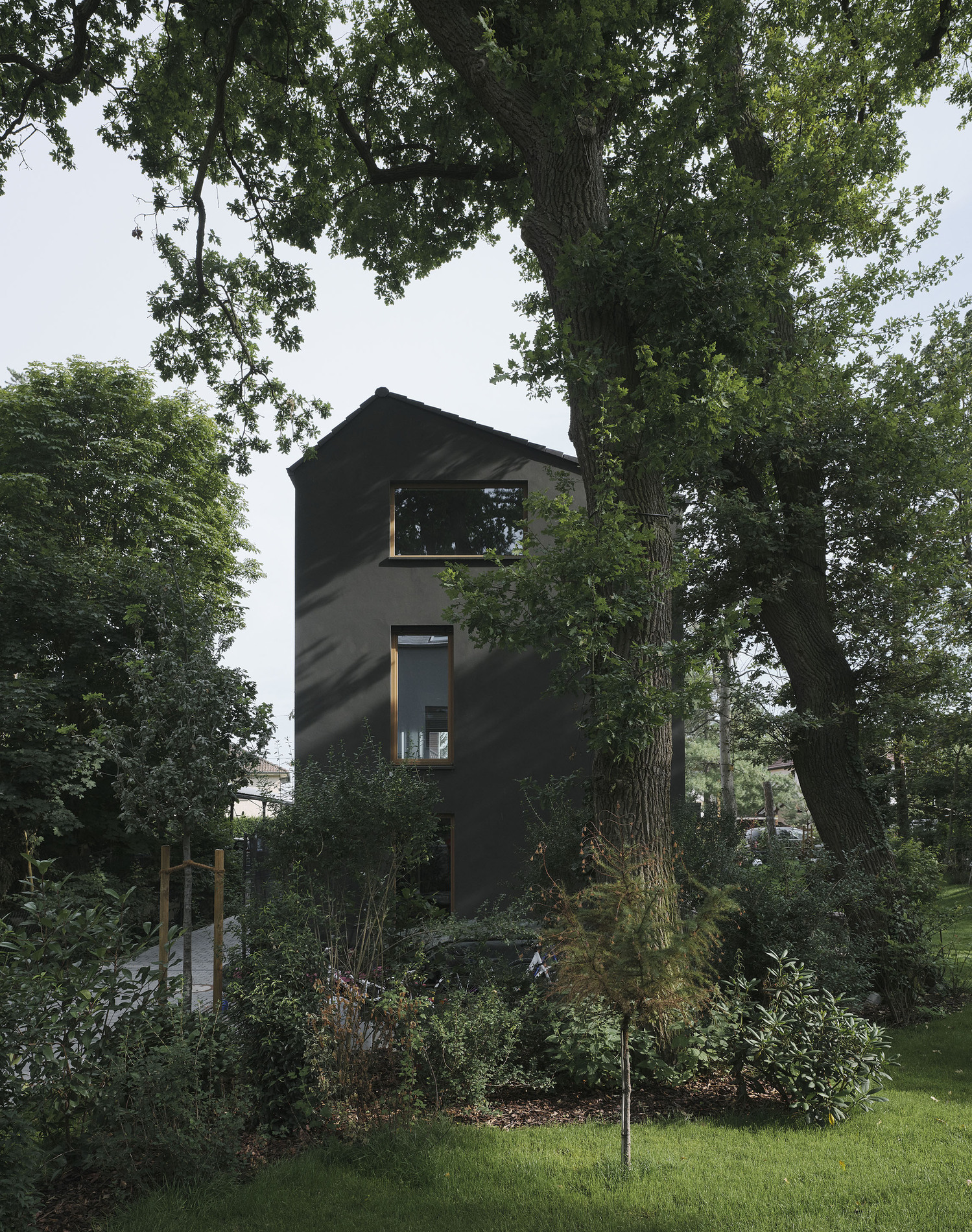
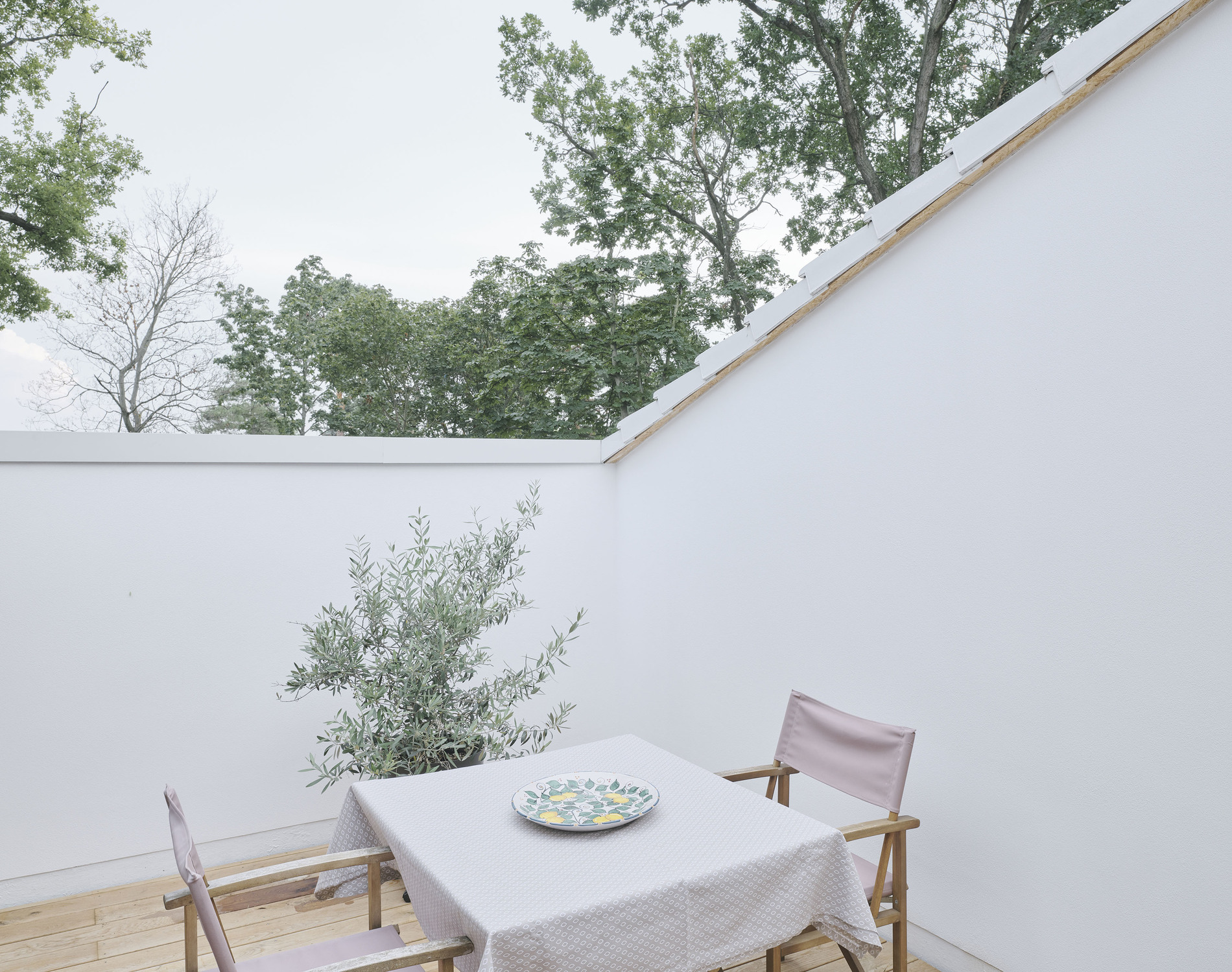
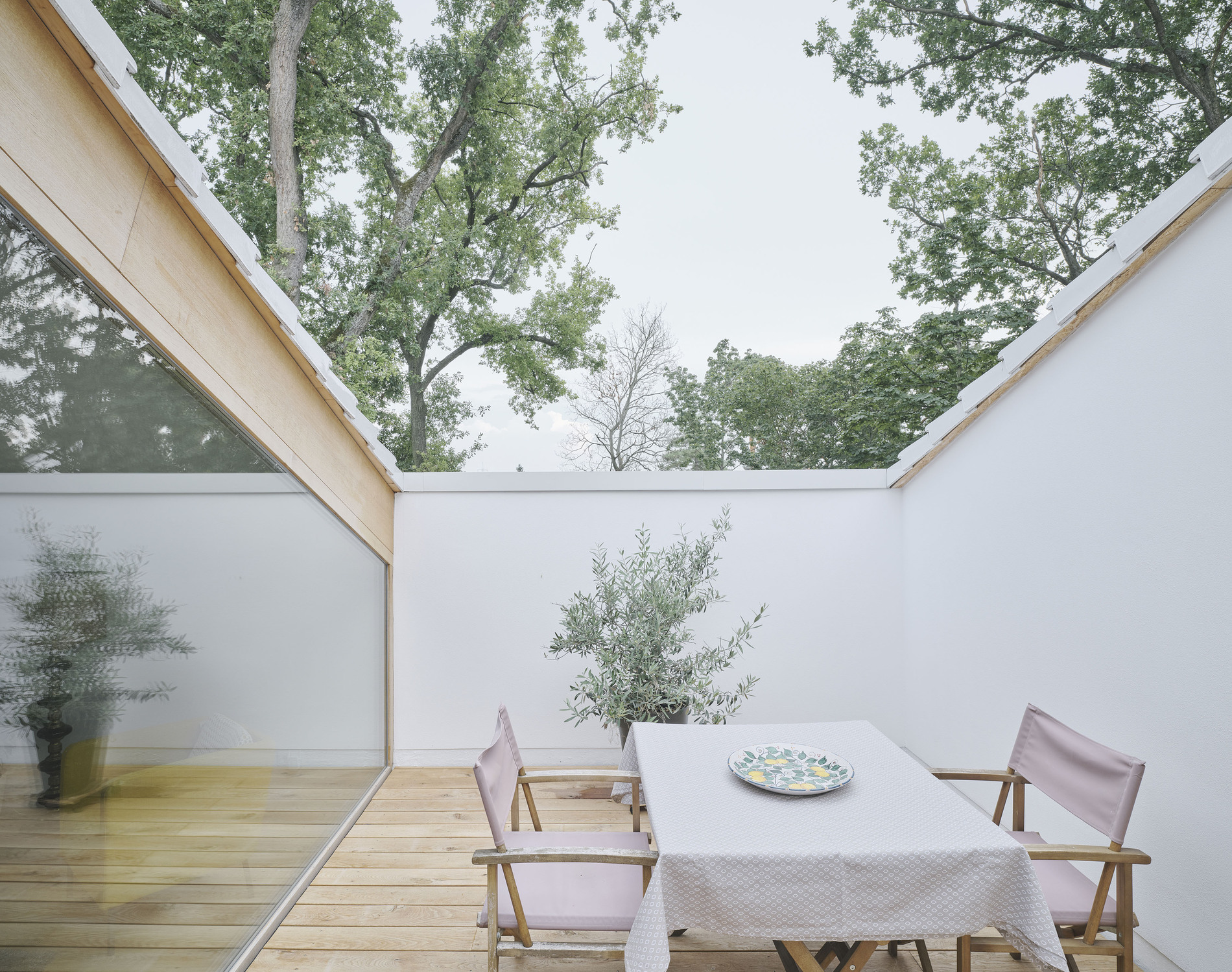
The “Black and White House” building complex employs minimal deviations from the norm to create a unique interplay: The “Black house”, with its conventional black roof, receives an unusual black facade, while the “White house”, with its conventional white facade, receives an unusual white roof. This small intervention is sufficient to realize this outstanding design.
How did materiality shape the Black and White House?
More than the materials themselves, both the “White House and the Black House” are characterized by the reflection of the floor plan structure in the asymmetrical ridge line; the materials, plaster and brick in combination with paint, are the simplest and most common option for implementation. In the project “Holzbox”, however, the materiality of the facade made of special MDF panels plays a crucial design role, which is also what gives the project its name.
What advice would you give to young architects?
We welcome the current transformation in the field of architecture, including a renewed appreciation for existing structures and the use of single-material construction methods. We don’t have any advice here; on the contrary, we would like to receive suggestions. We like projects that function well with standard products and through self-build efforts. While we appreciate buildings that impress with their elaborate craftsmanship, in our experience, they initially involve enormous budgets, placing them in an elitist realm which, in our opinion, should not be the essence of architecture.

