

Architects: Henning Grahn Architektur, Marc Flick – Architekt BDA, Christian Stock
Area: 317 m²
Year: 2019
Photography: David Schreyer
Consultants: Ingenieurbüro Ries, Henn Planungswerkstatt
Engineering: Ahrens Ingenieure
Collaborators: Trinova GmbH, Schreinerei Vivendi
City: Mainz
Country: Germany
The White House is a residential project developed as part of a paired architectural ensemble in a suburban district of Mainz. Conceived to accommodate two independent dwelling units, the building supports both private living and flexible work use. Its spatial organization separates open living areas from service functions, creating a balance between efficiency and spatial continuity. Large glazed surfaces strengthen the connection between interior and garden, while upper levels introduce varied spatial qualities, from compact rooms to an expansive attic. The design responds to site conditions, preserving existing vegetation and adapting to the natural topography. A restrained material palette reinforces a cohesive architectural expression, while energy systems contribute to high-performance standards. The project reflects a careful integration of functional clarity, environmental awareness, and formal consistency.
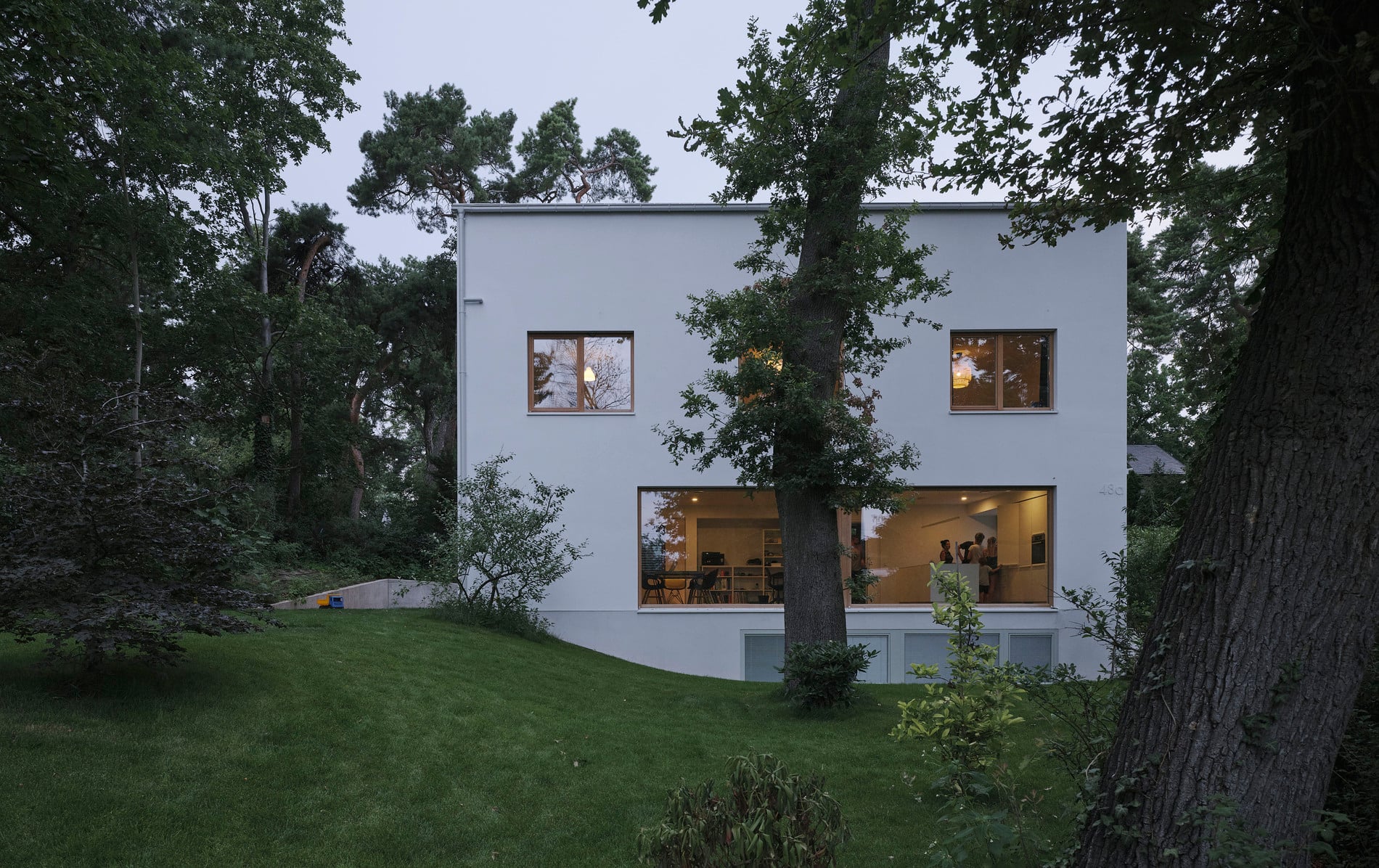
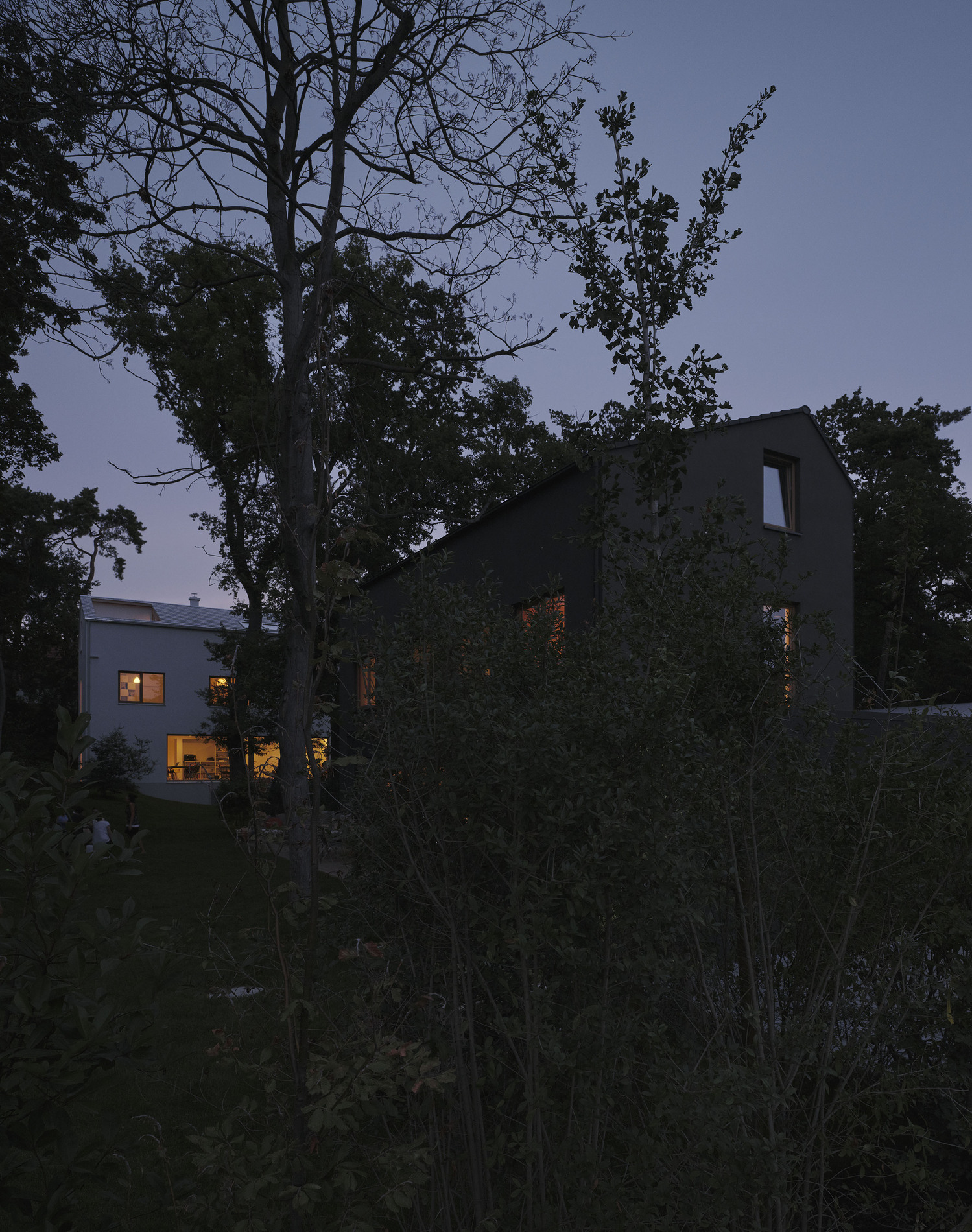
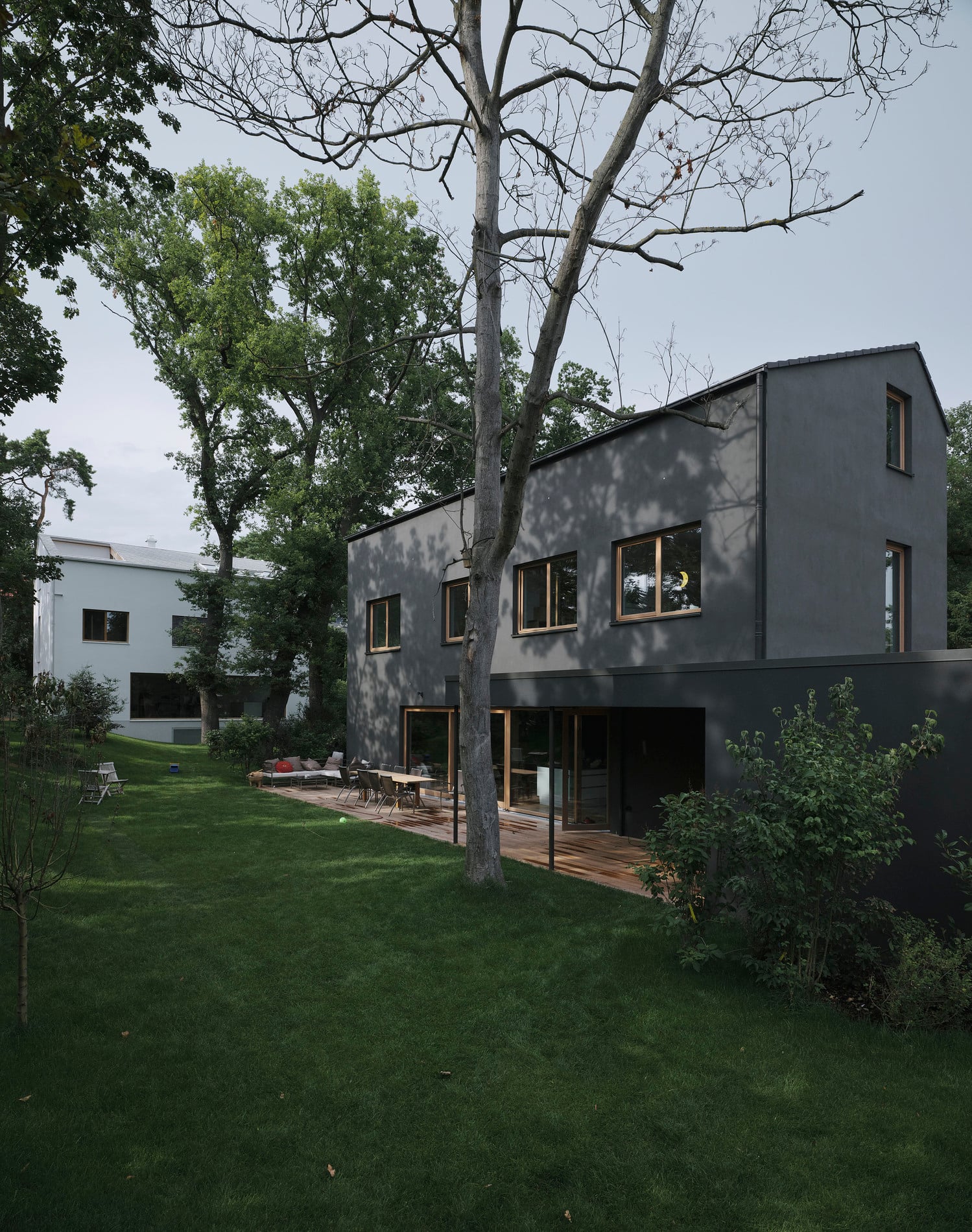
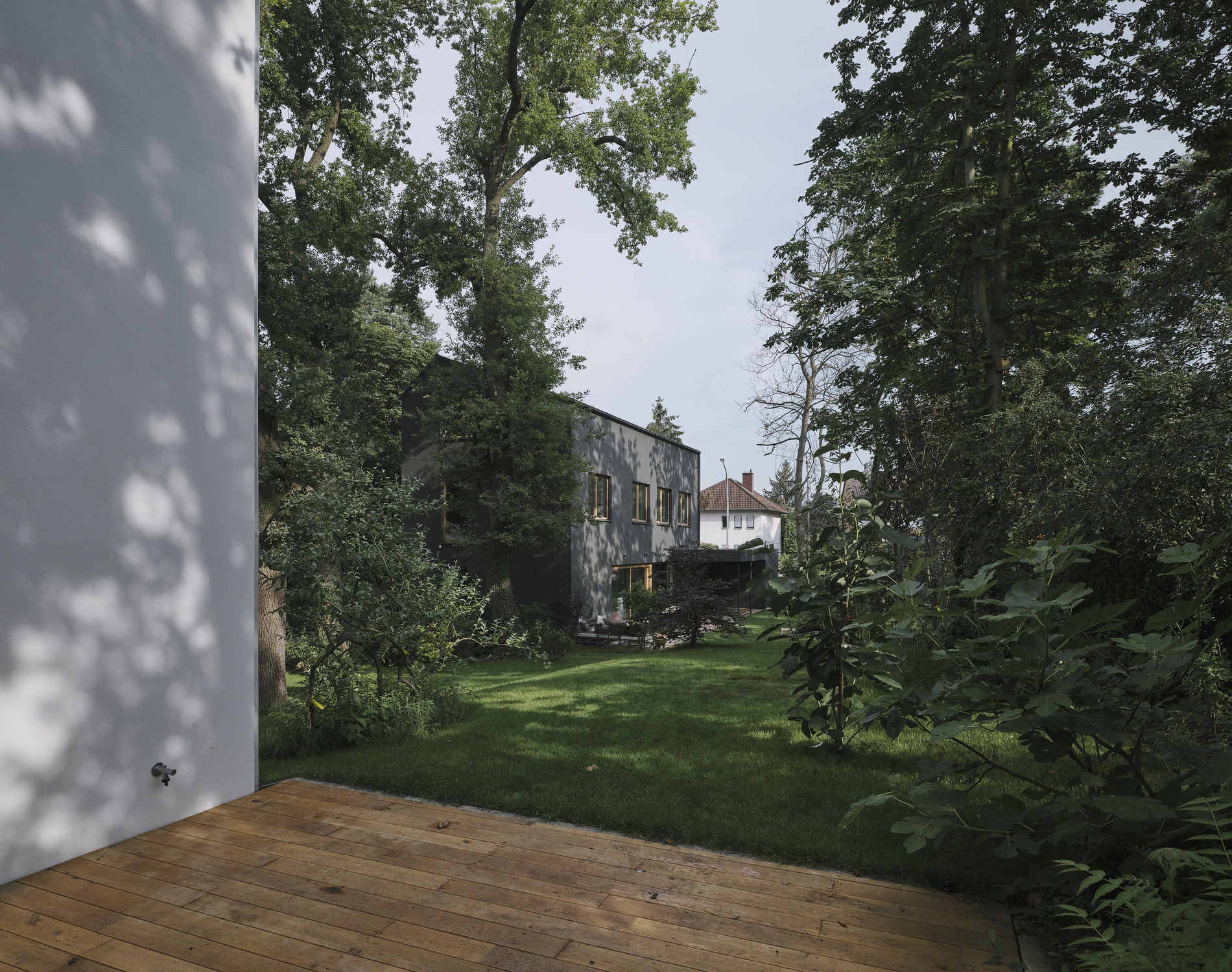
The ‘Black house‘, with its conventional black roof, receives an unusual black facade, while the ‘White house’, with its conventional white facade, receives an unusual white roof. This small intervention is sufficient to realize this outstanding design.
Interview with Henning Grahn of Henning Grahn Architektur
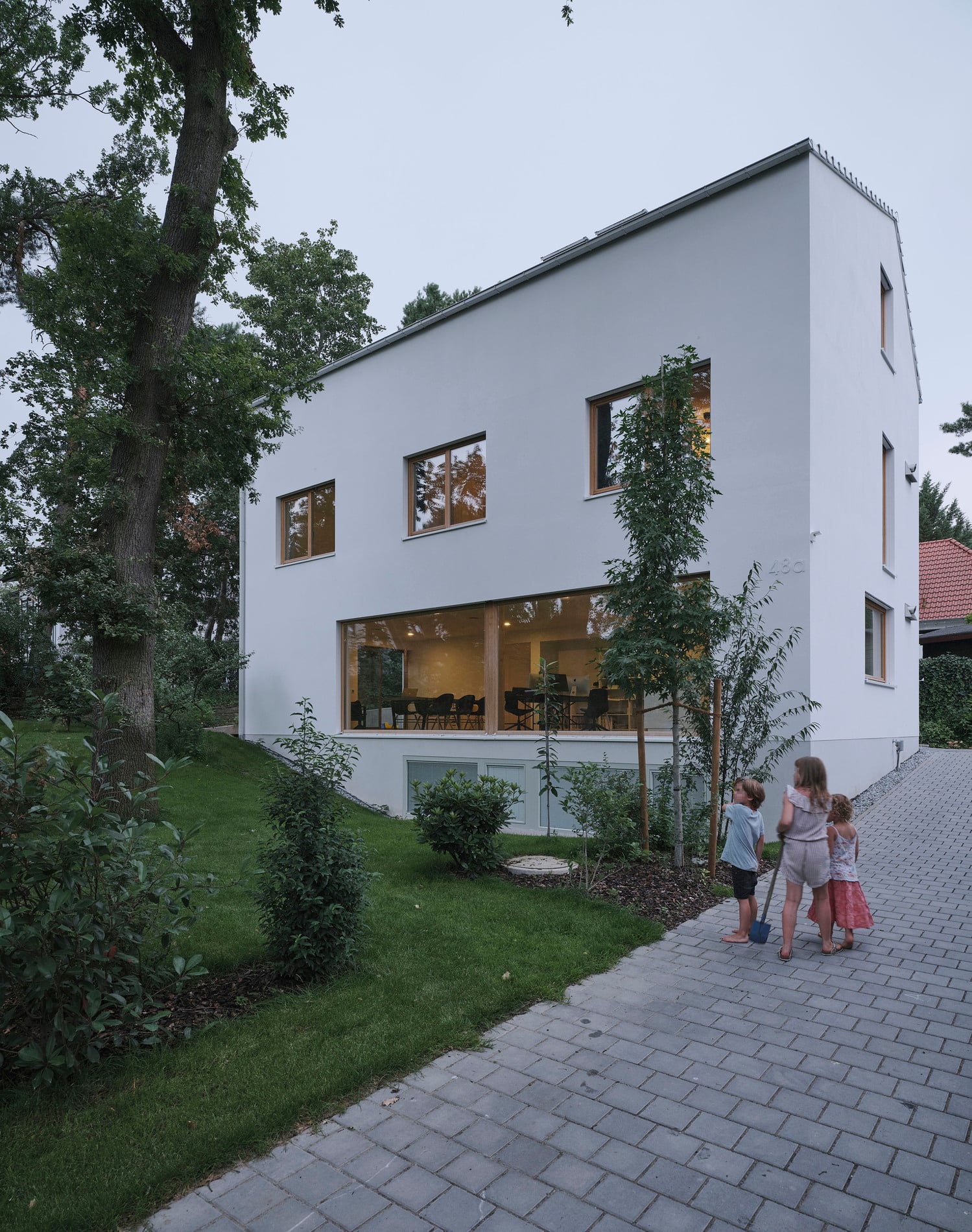
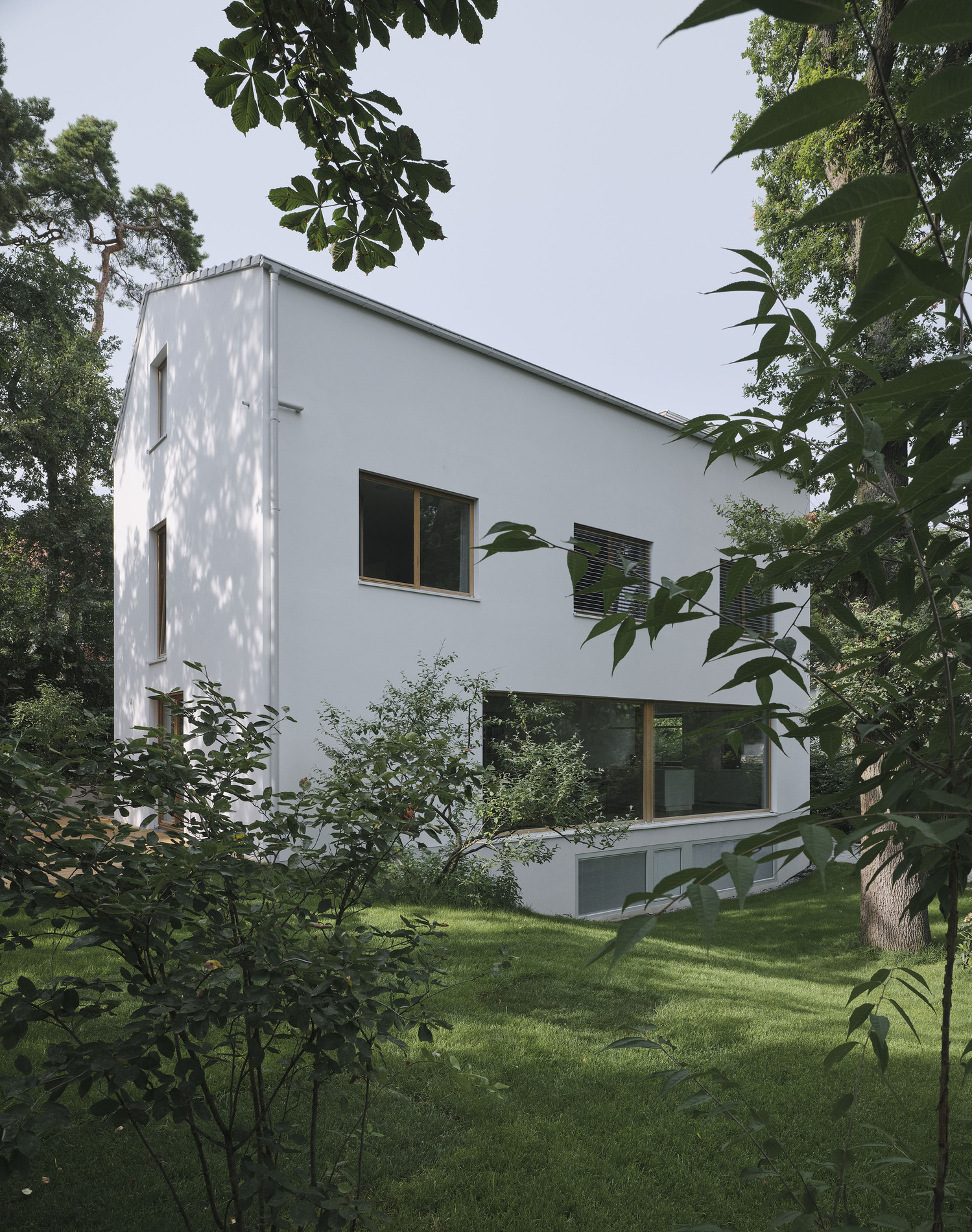
The White House, set within a green suburban fabric, establishes a distinct presence through its relationship with a neighboring structure, forming a composed architectural dialogue. The project interprets planning constraints, including prescribed building density and a required pitched roof, as generative elements that inform both form and spatial organization. Rather than limiting the design, these conditions are integrated into a cohesive architectural strategy.
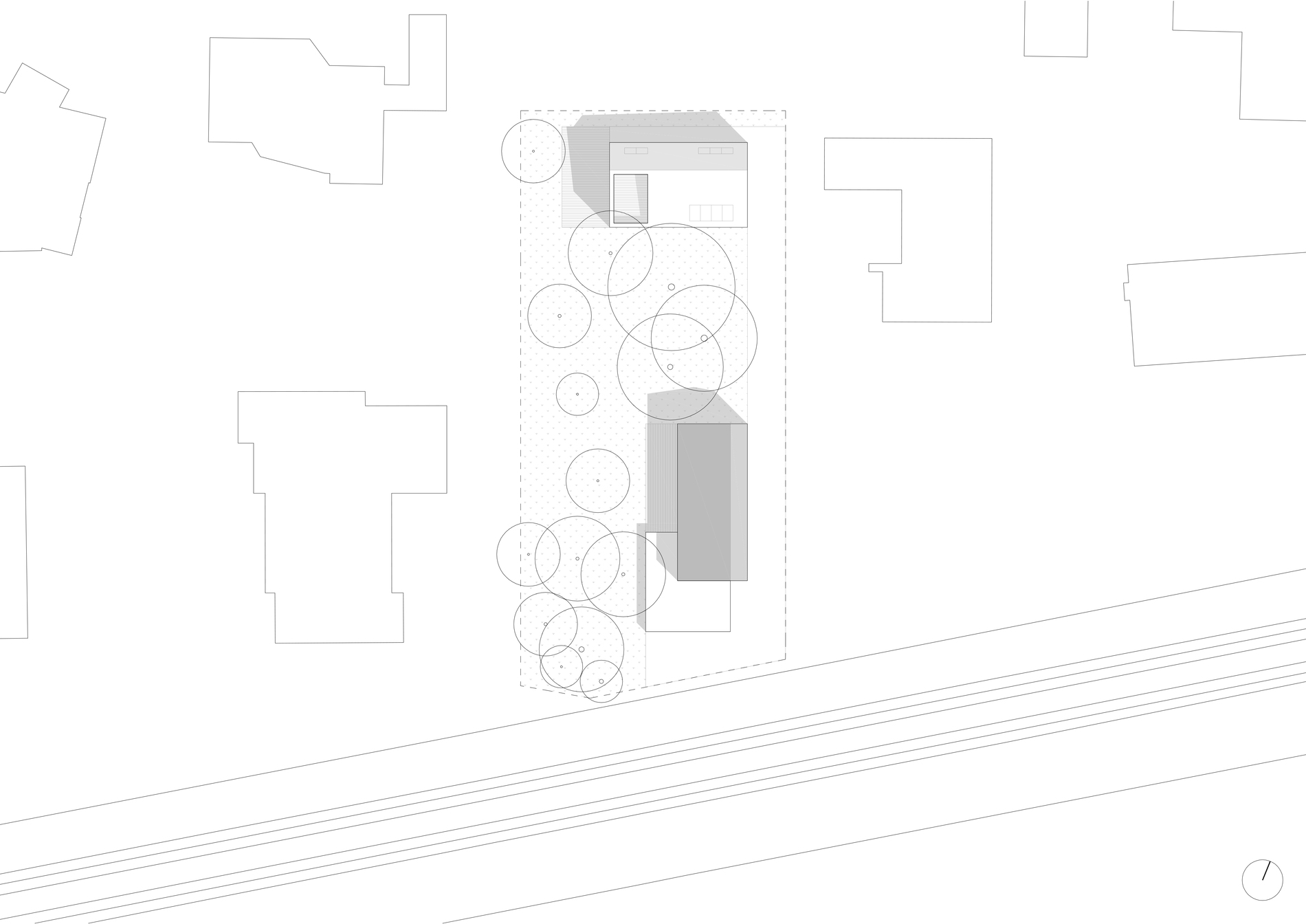
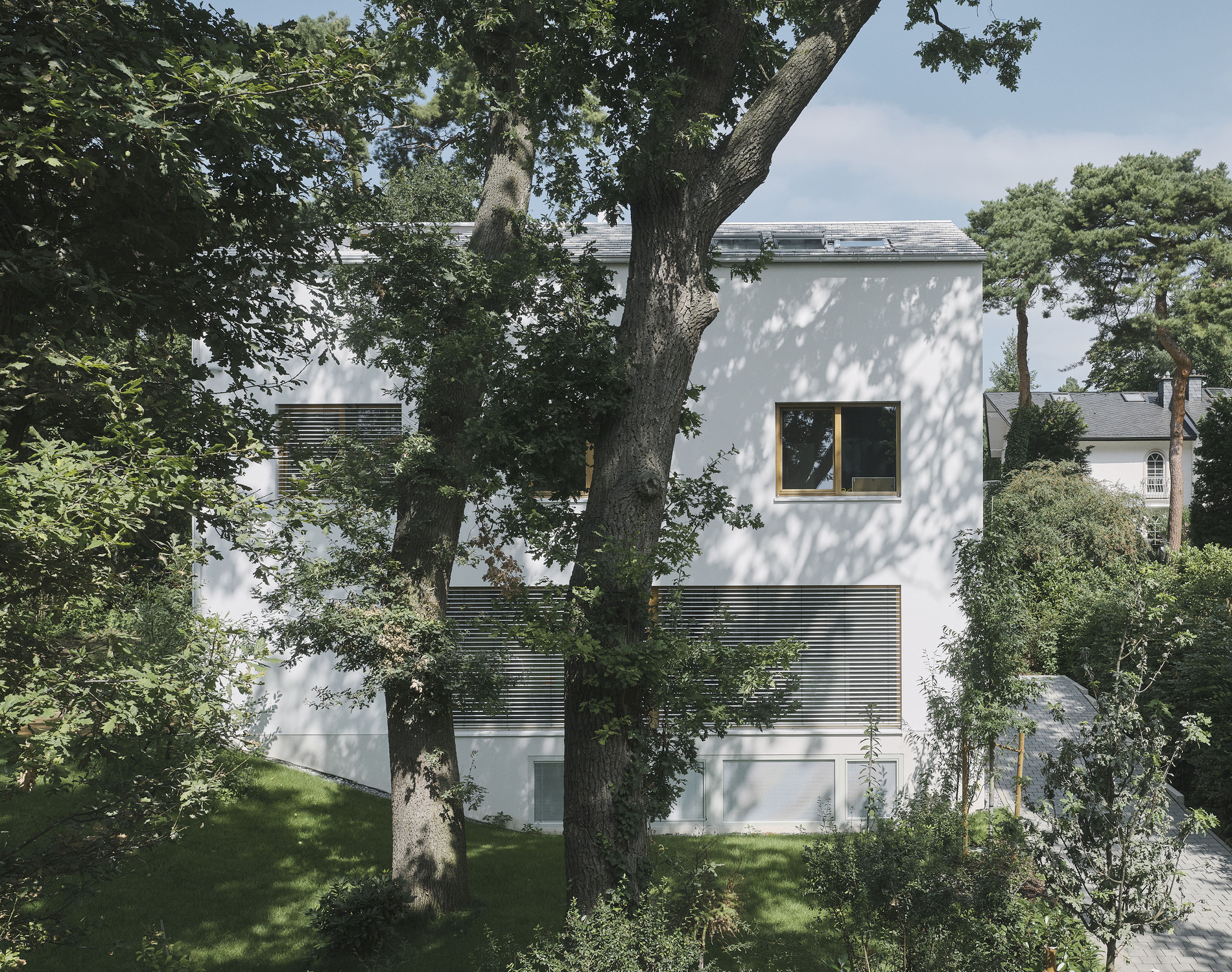
The building is carefully positioned to maintain and engage the existing landscape, particularly mature oak and pine trees that define the character of the site. The layout allows for an unobstructed use of the garden while preserving the natural topography. This approach strengthens the connection between architecture and environment, ensuring that the house remains embedded within its green surroundings rather than imposed upon them.
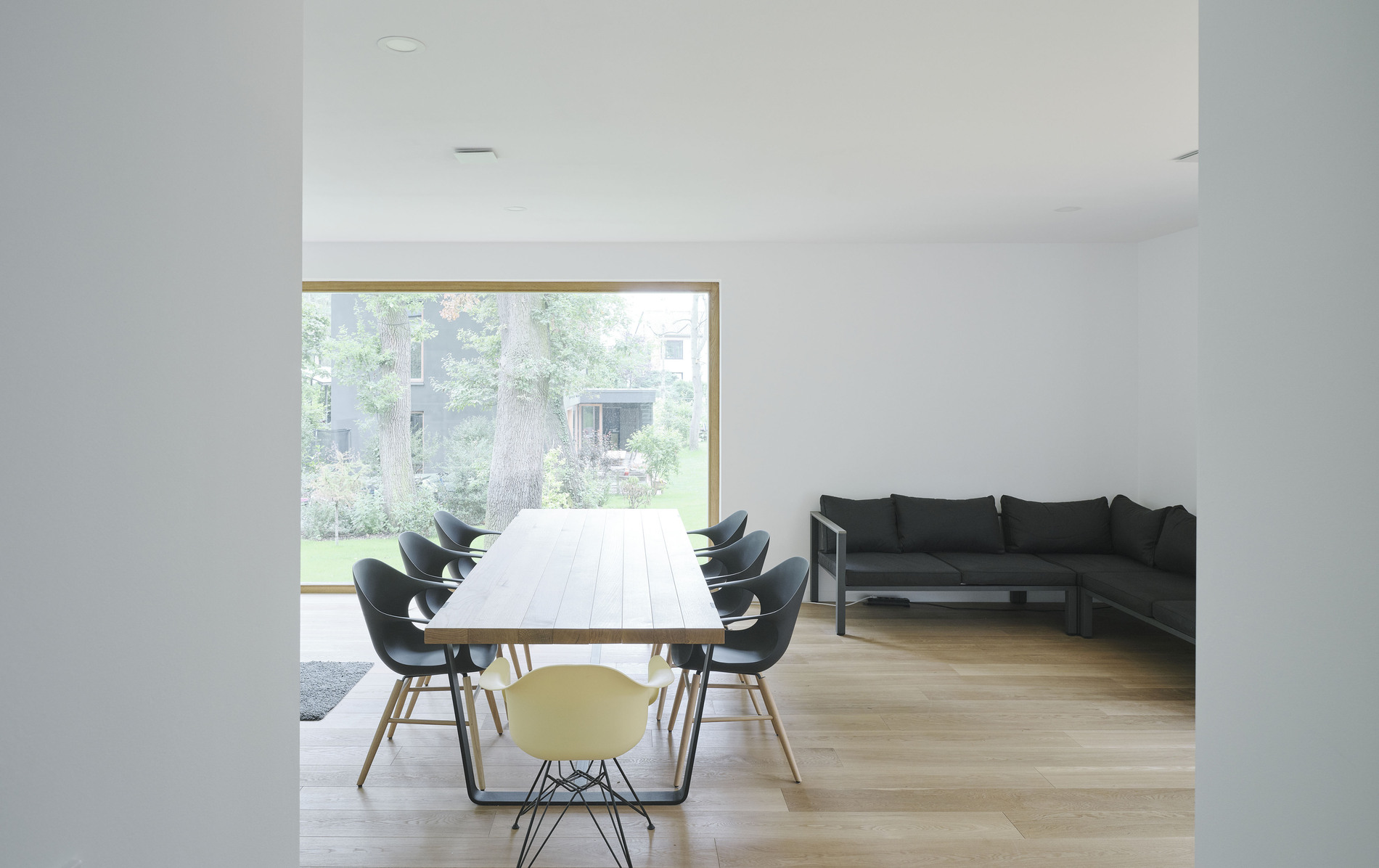
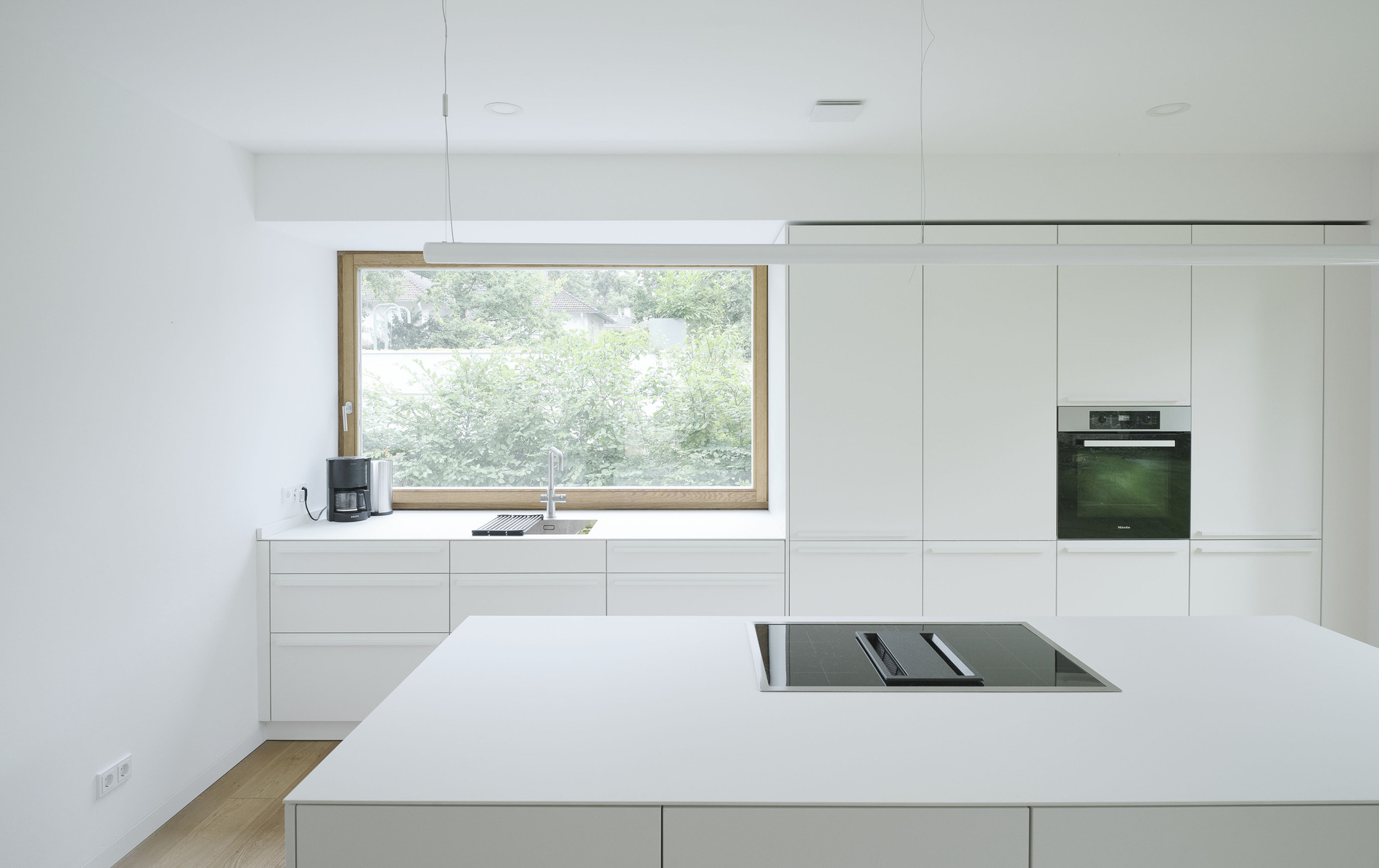
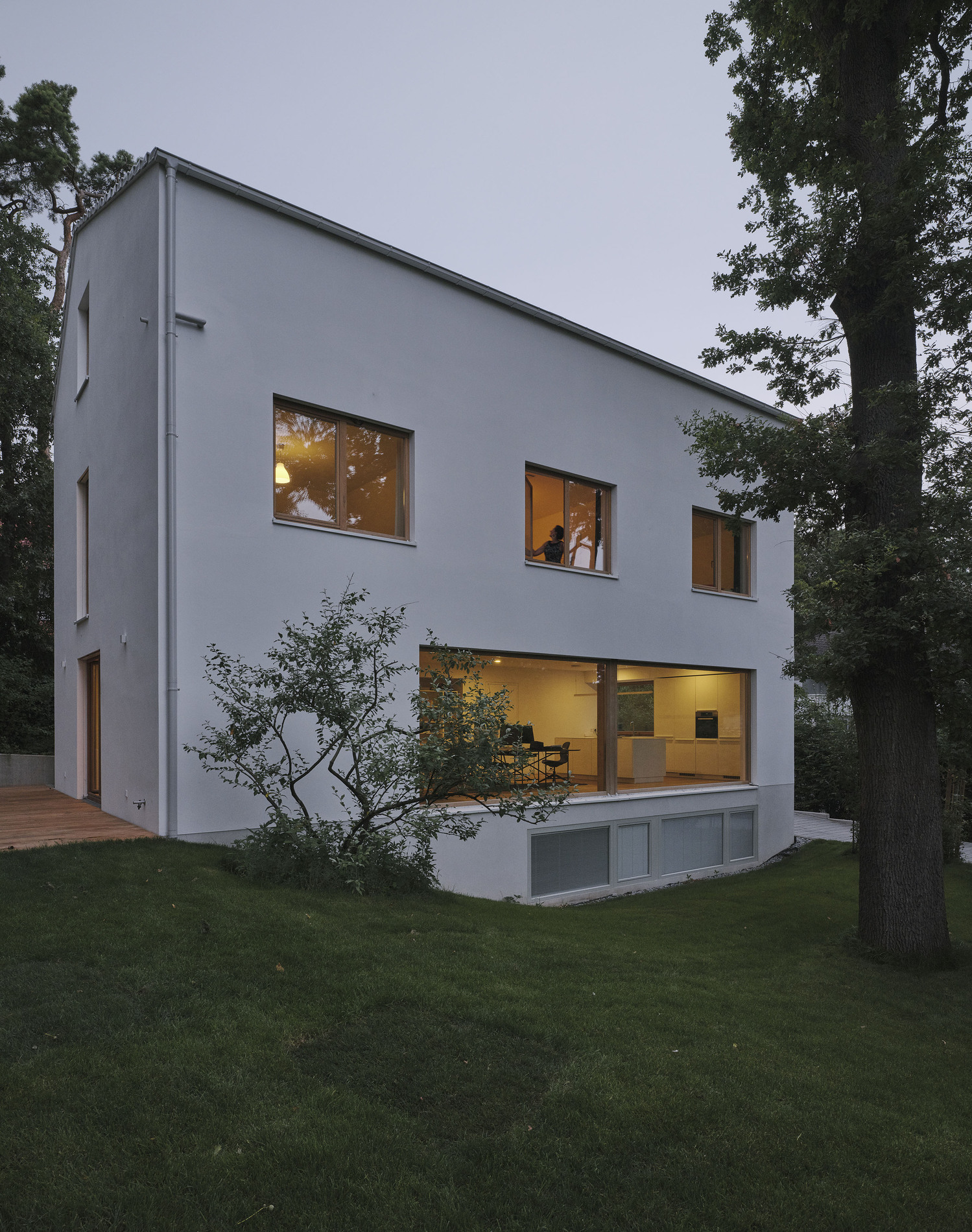
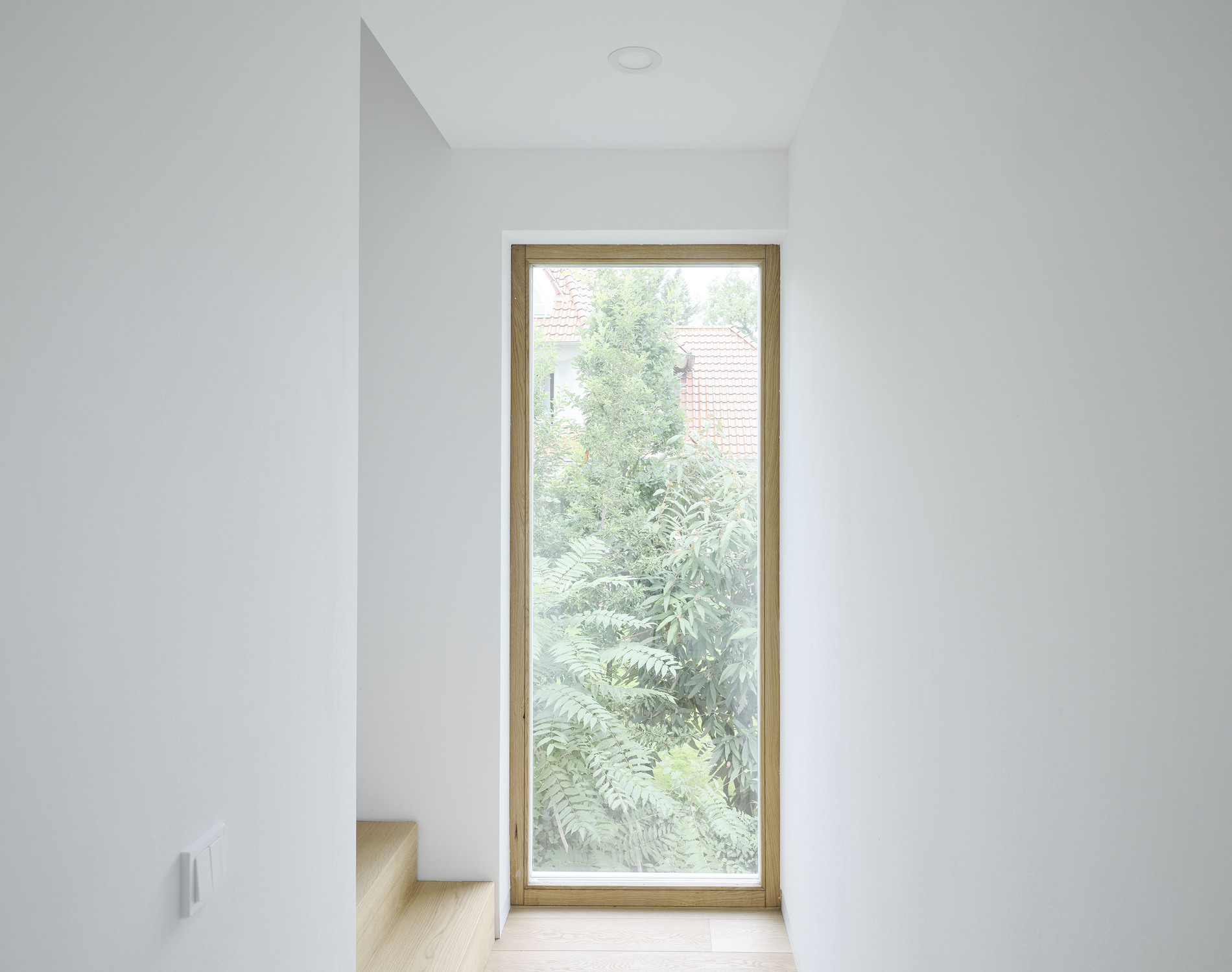
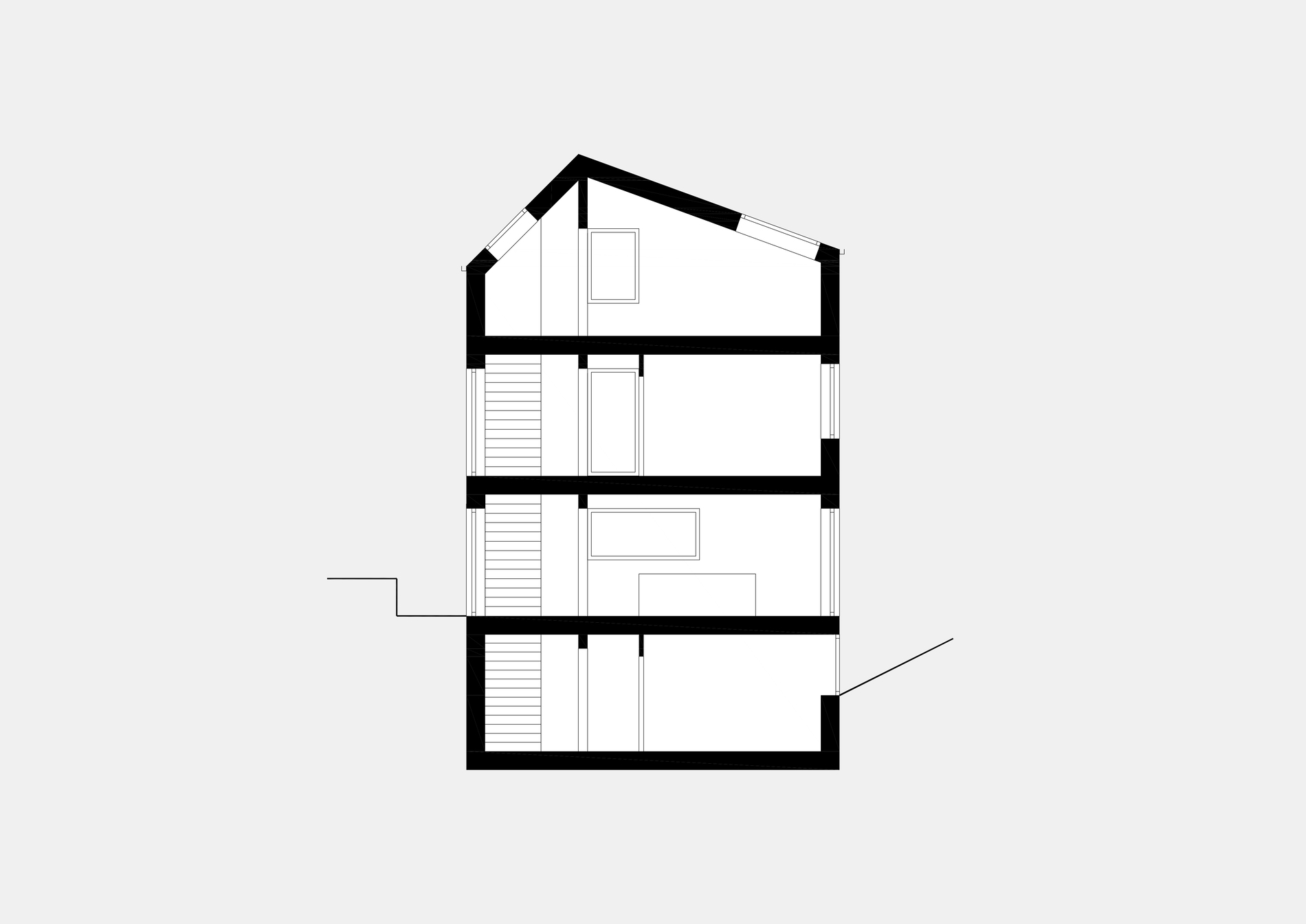
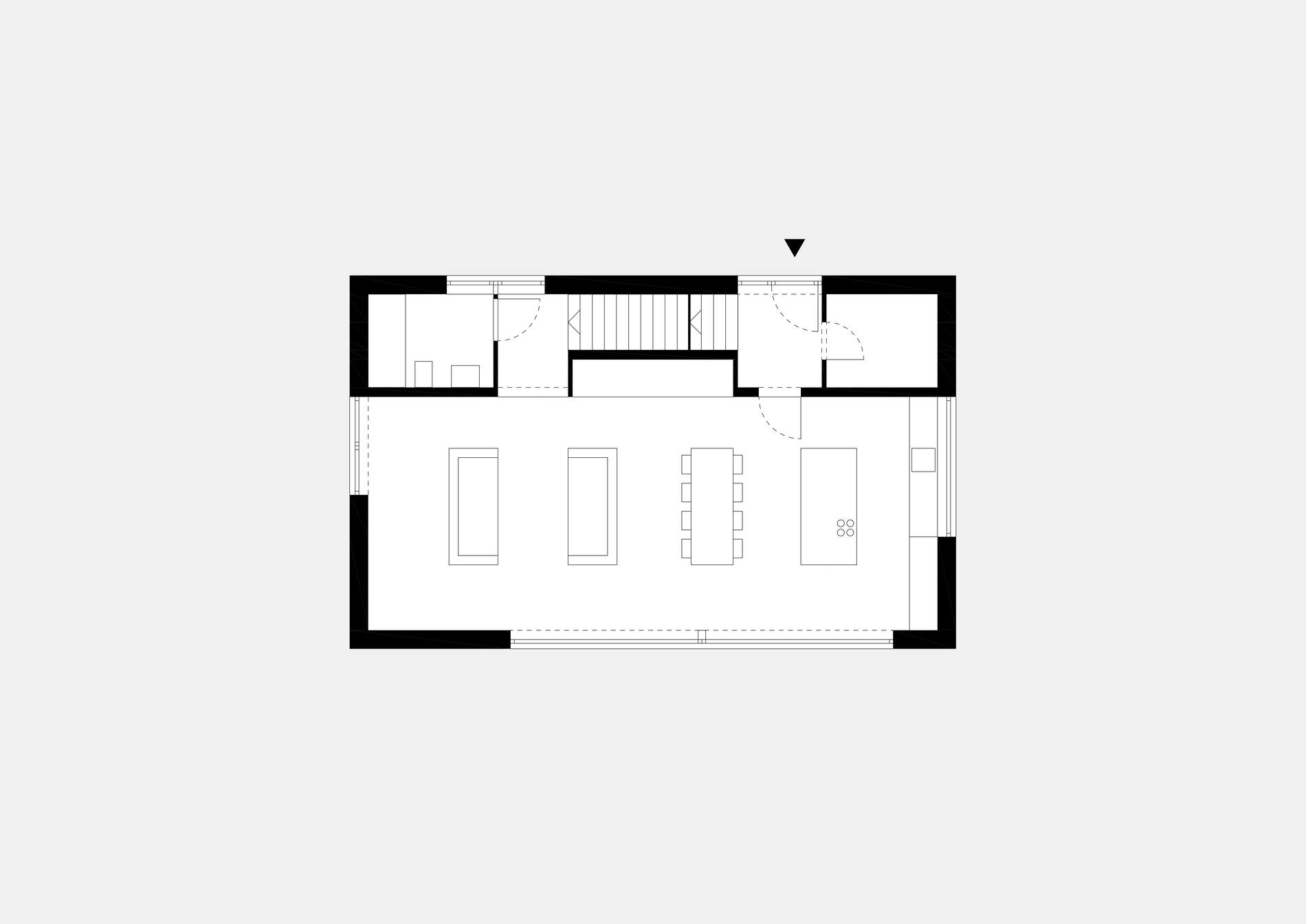
Internally, the house is organized through a clear functional division. The ground floor is conceived as an open and continuous living environment, where cooking, dining, and living areas flow into one another. A service zone containing technical, sanitary, and storage spaces provides a structured counterpoint, ensuring efficiency without compromising spatial openness. Extensive glazing enhances the relationship between interior and exterior, extending visual continuity into the garden.
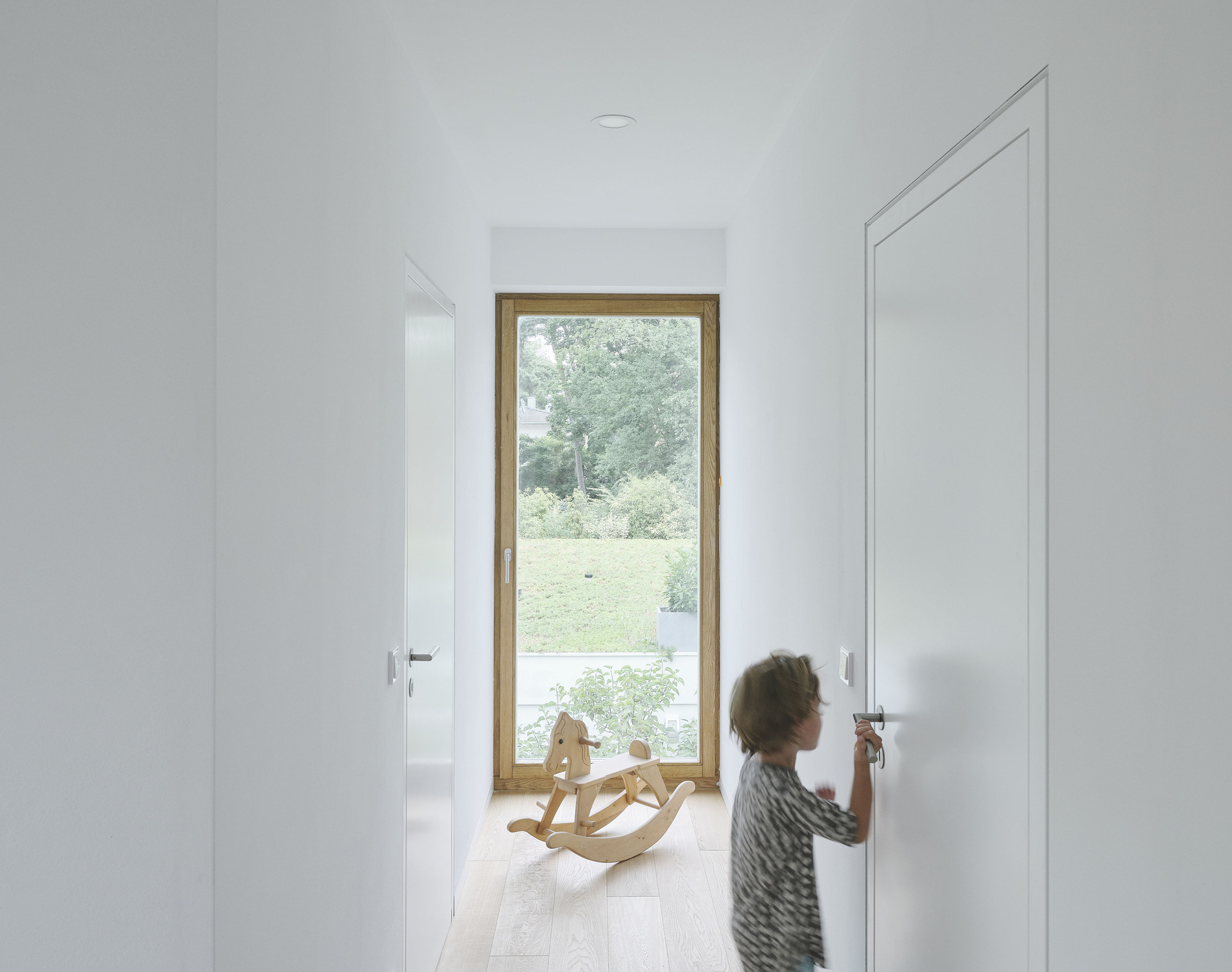
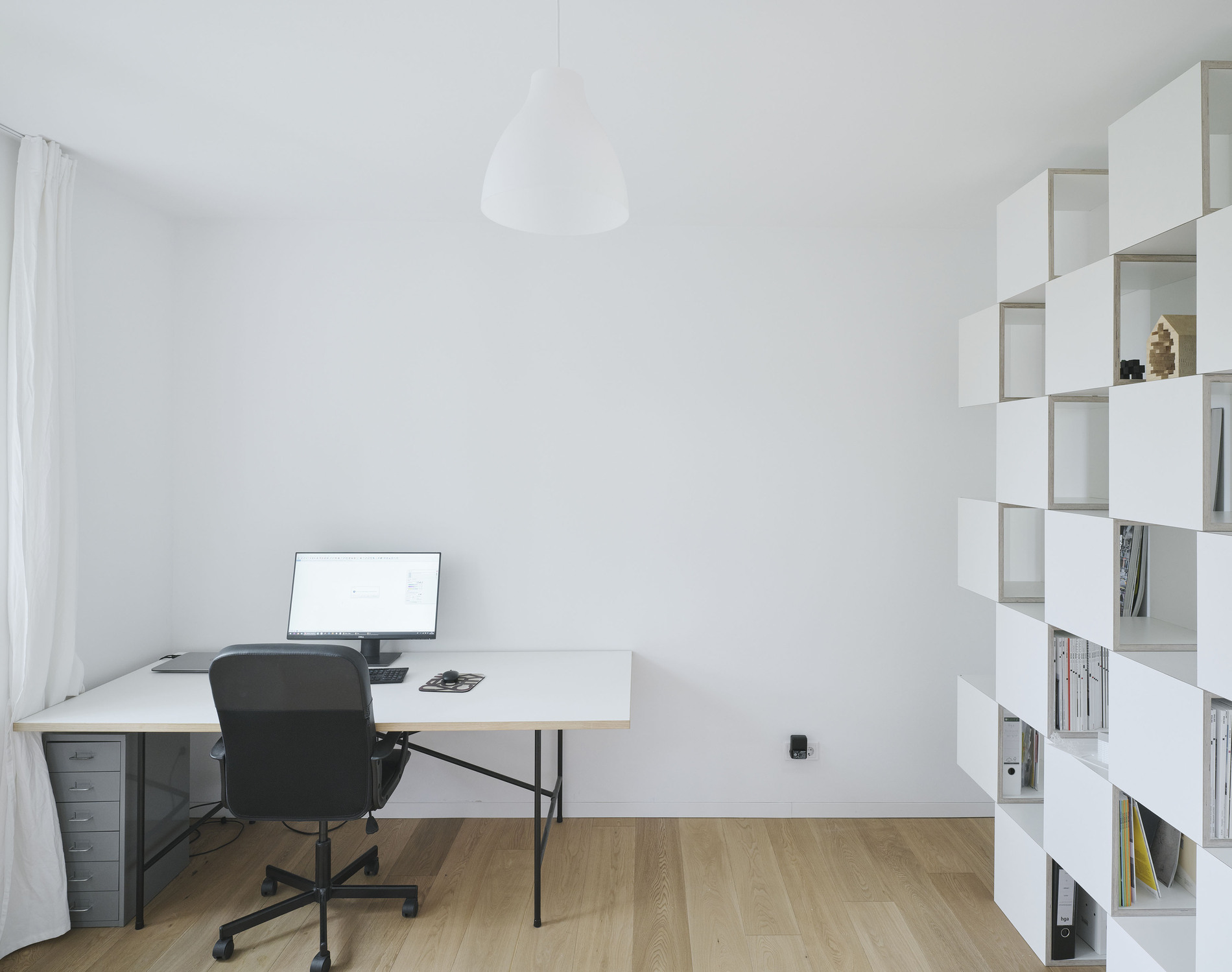
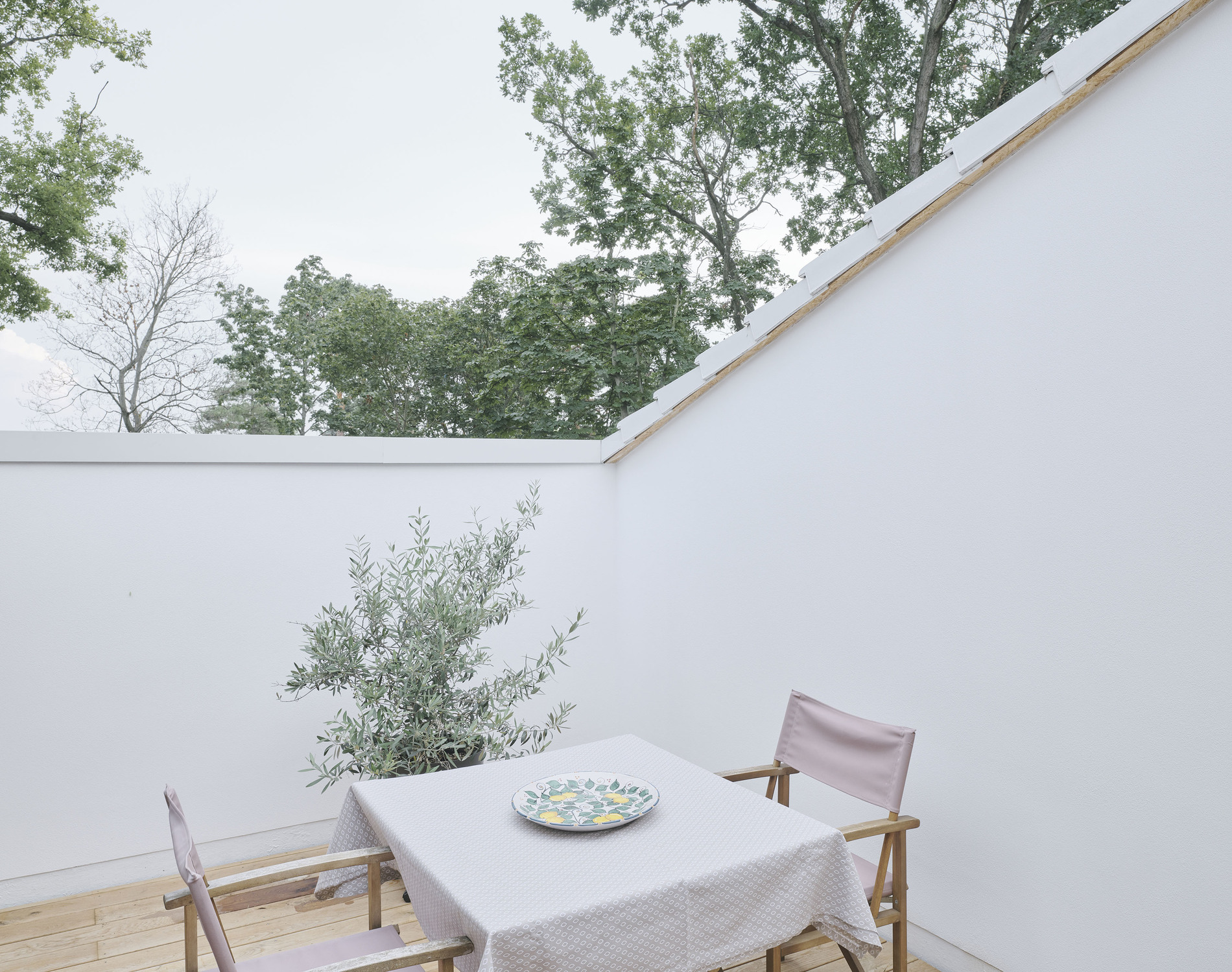
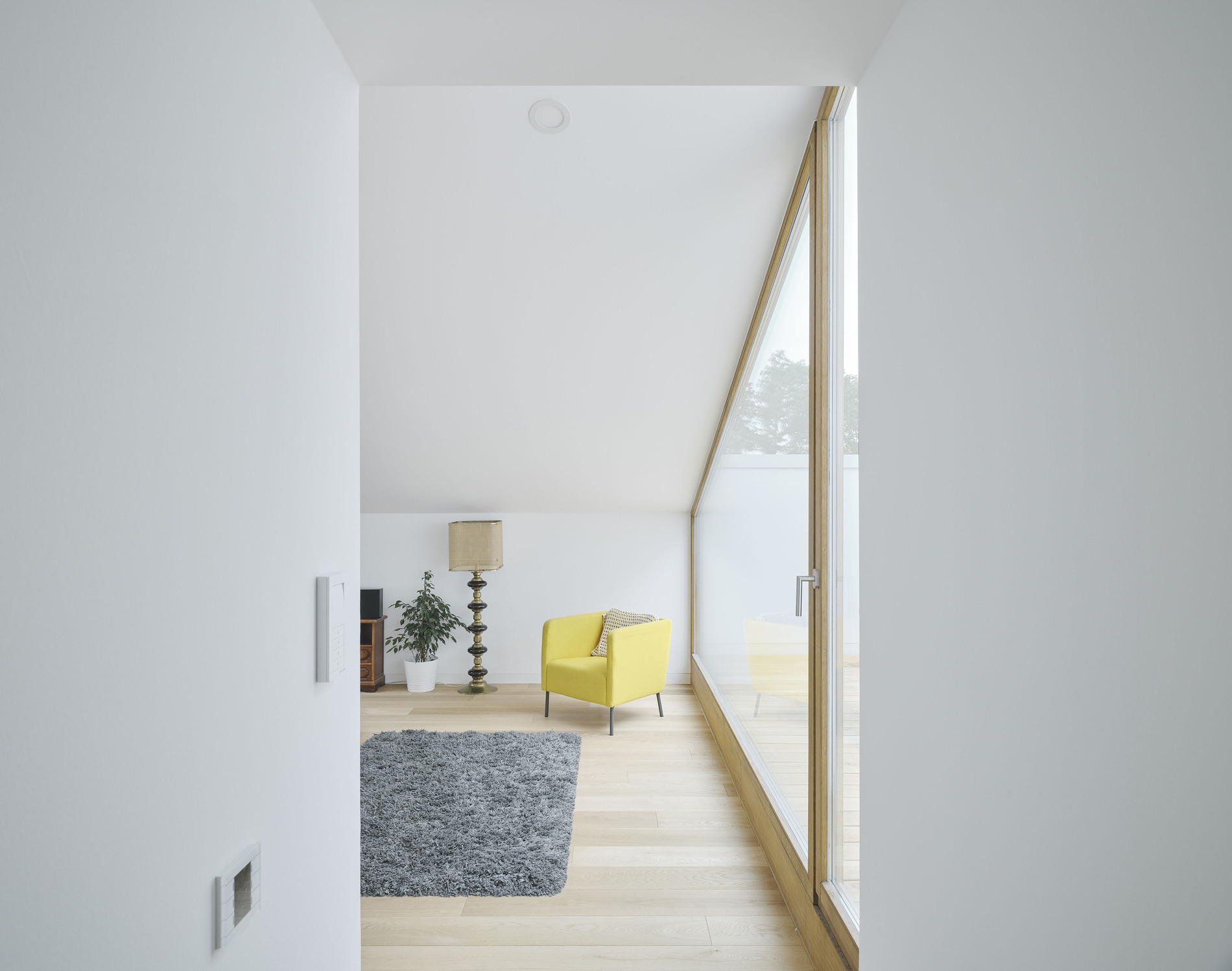
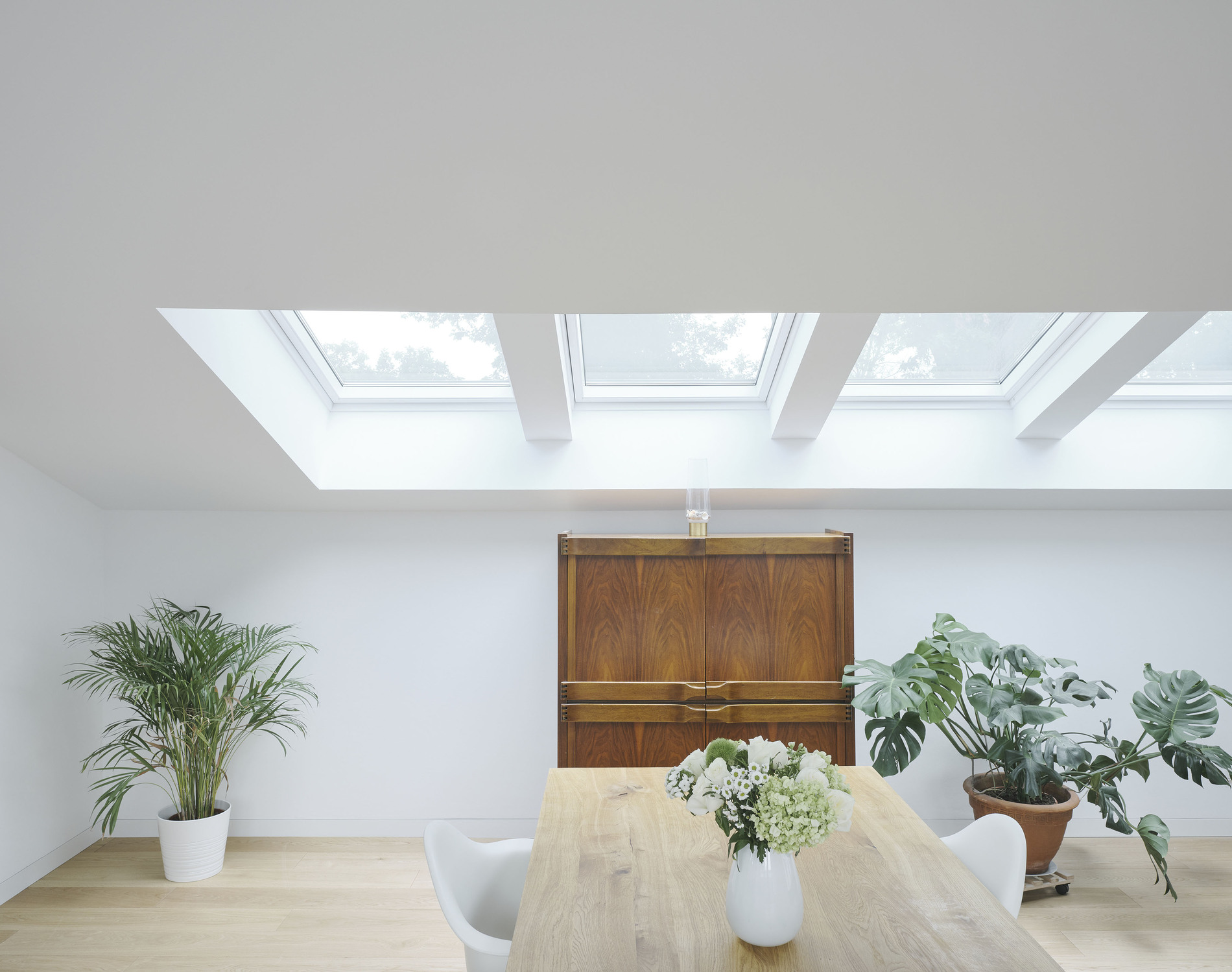
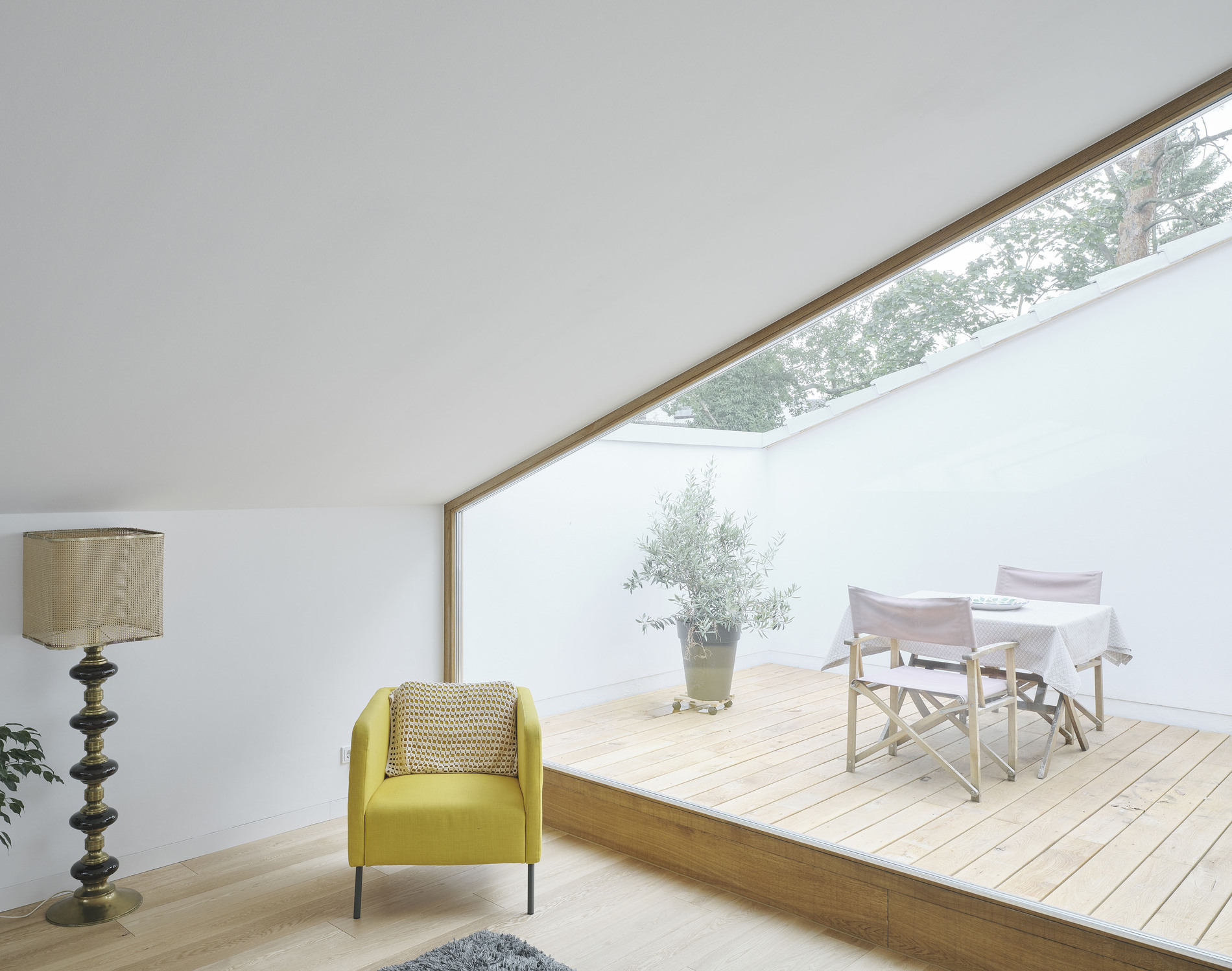
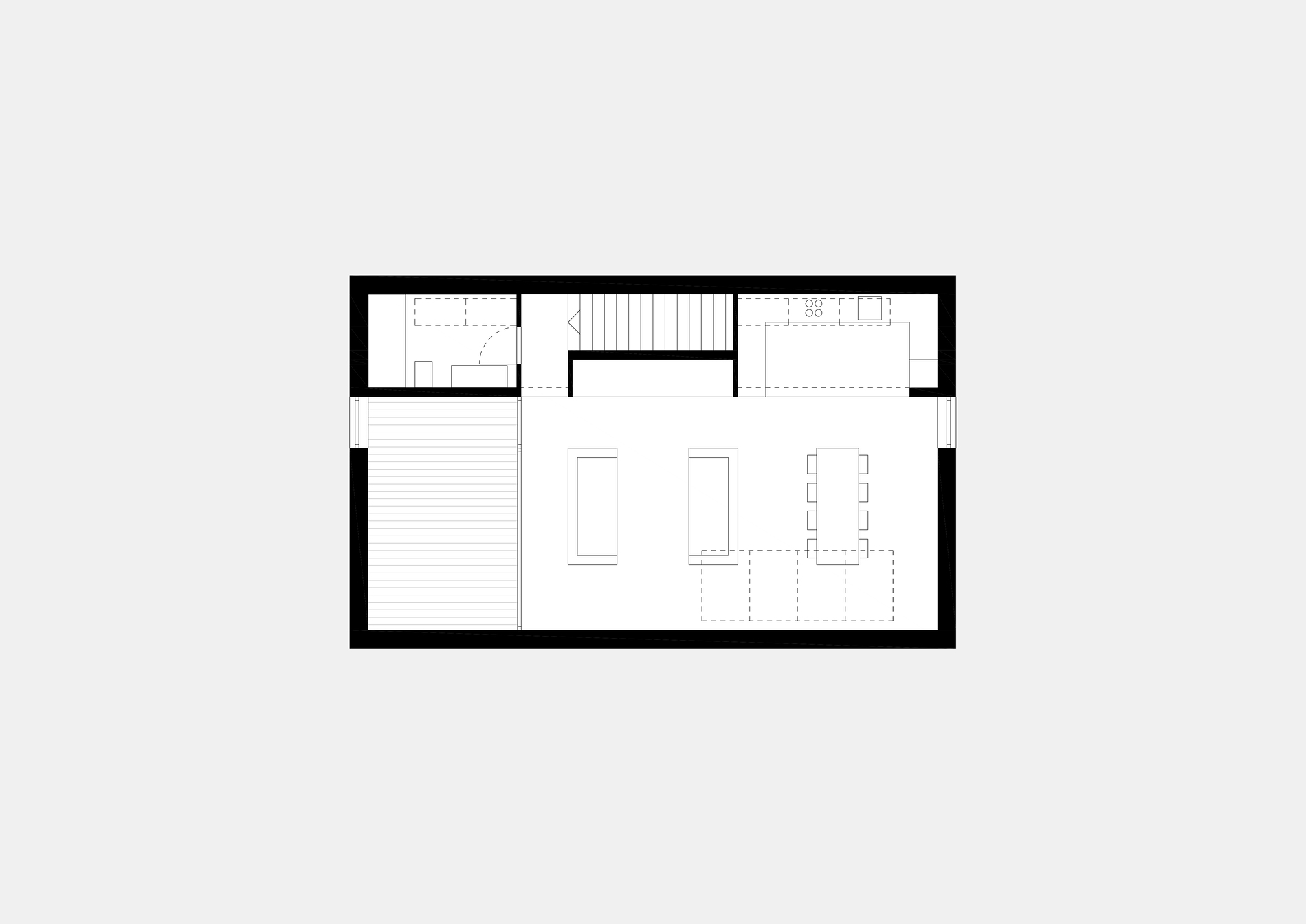
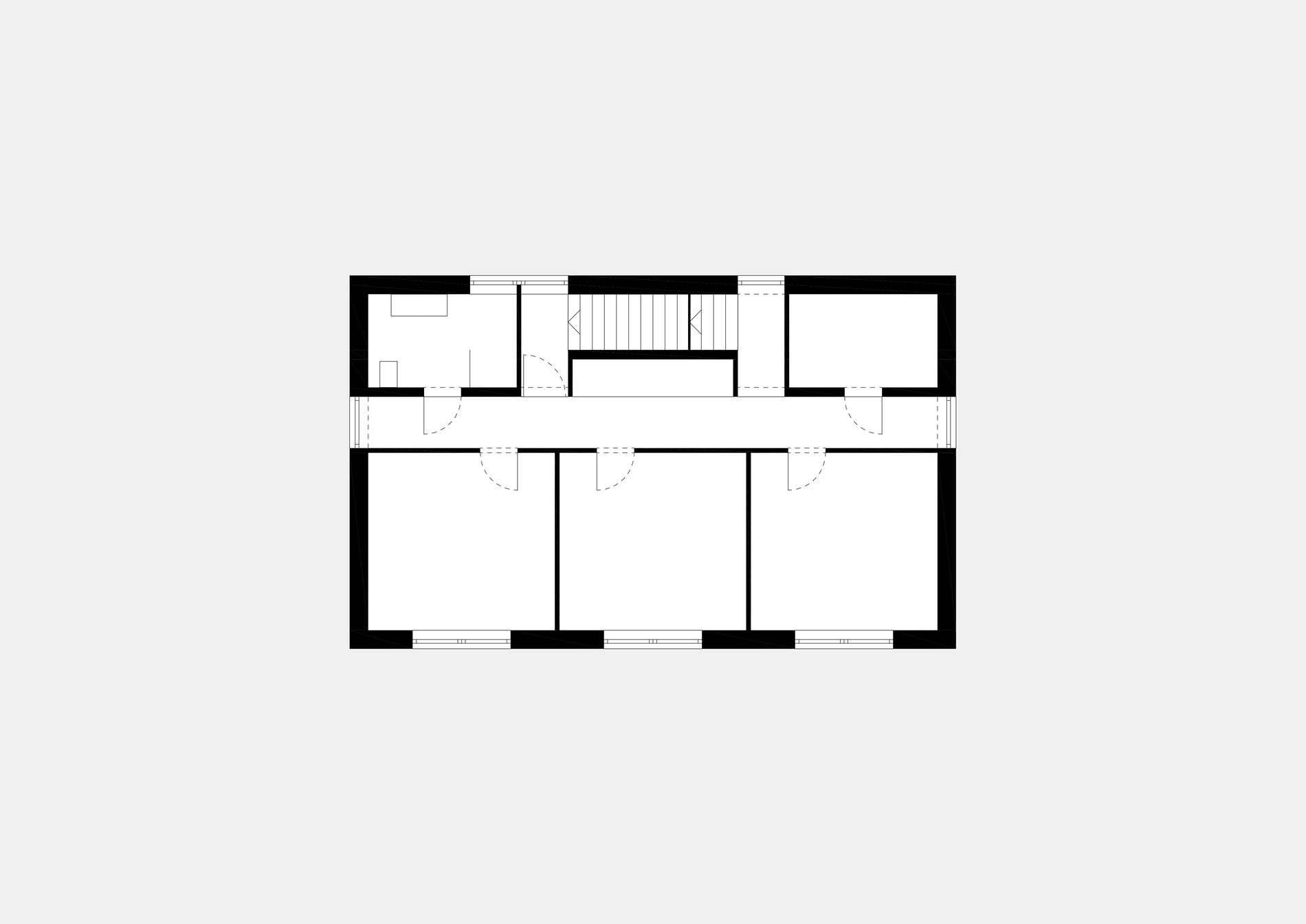
The upper levels introduce a shift in spatial character, reflecting the varied needs of domestic life. The first floor is arranged with more enclosed, individual rooms, offering privacy and separation. In contrast, the attic level is conceived as a generous and light-filled space, defined by roof windows that bring in natural illumination. This level also incorporates an inward-oriented roof patio, where glazing frames a secluded outdoor area elevated among the treetops.
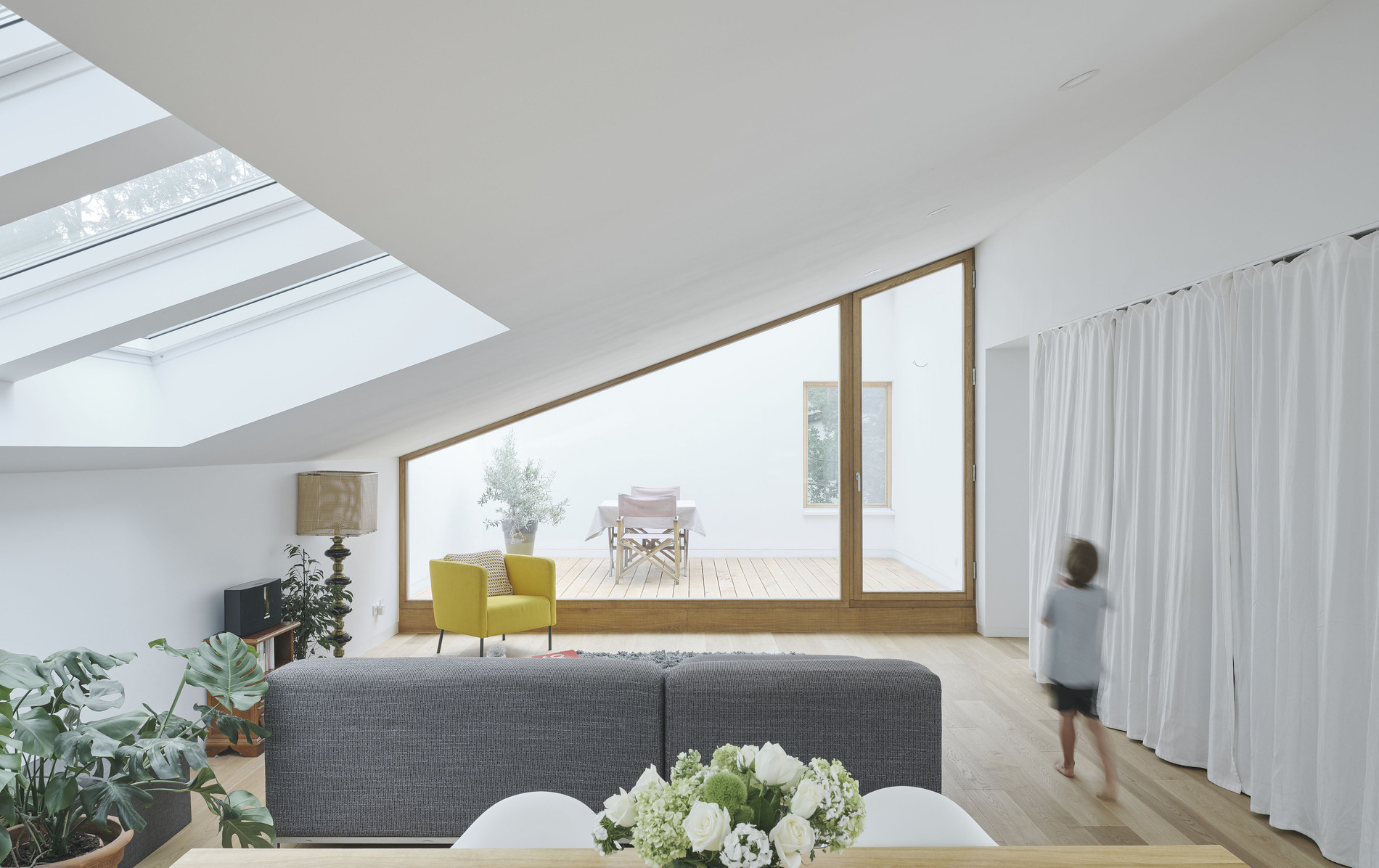
The external expression of the building reveals its internal logic through subtle formal articulation. An asymmetrical ridge line corresponds to the primary internal division, translating spatial organization into architectural form. The use of white roofing tiles that extend across both roof and façade creates a unified, monolithic appearance, reinforcing the clarity of the overall composition.
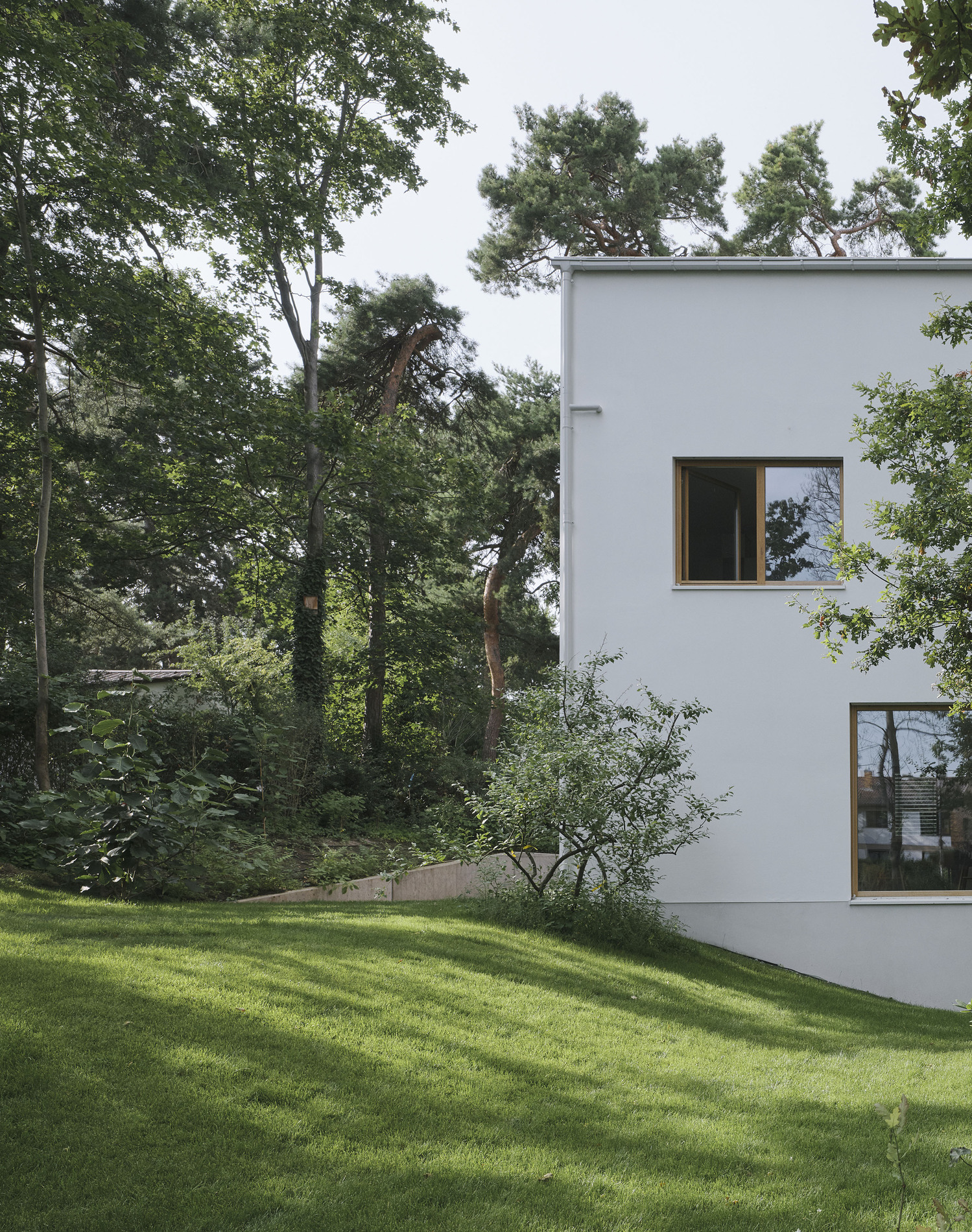
Material and construction strategies support both performance and atmosphere. Load-bearing walls made from insulating bricks contribute to thermal efficiency, while oak is used for window frames, flooring, and terraces to introduce a tactile quality. Construction details are developed with precision to maintain visual consistency. A fuel cell system enhances energy performance, aligning the project with contemporary sustainability standards while contributing to the overall coherence of the architectural concept.
Project Gallery
Project Location
Address: Mainz, Germany
The location specified is intended for general reference and may denote a city or country, but it does not identify a precise address.

